PRESENTED
BY
Vijayalakshmi J
AGENDA OF THE TOPIC
• What is E-waste?
• What are the different types of E-waste?
• Toxic contents in E-waste
• Effects of E-waste on Health and Environment.
• Reasons for E-waste
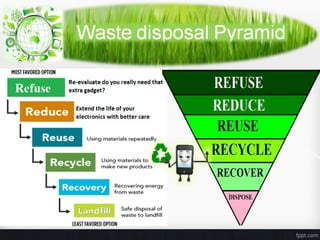
• Waste Disposal pyramid
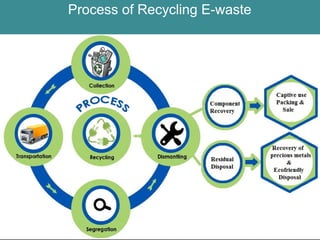
• Process of Recycling E-waste
• Impact of E-waste in India
• Conclusion
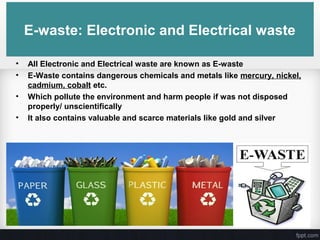
E-waste: Electronic and Electrical waste
• All Electronic and Electrical waste are known as E-waste
• E-Waste contains dangerous chemicals and metals like mercury, nickel,
cadmium, cobalt etc.
• Which pollute the environment and harm people if was not disposed
properly/ unscientifically
• It also contains valuable and scarce materials like gold and silver
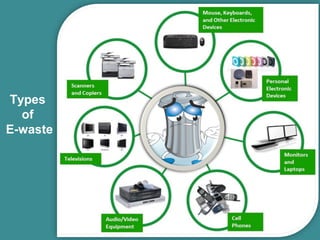
Types
of
E-waste
 
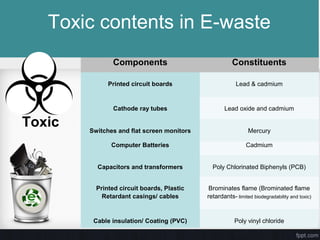
Components
 
Constituents
Printed circuit boards Lead & cadmium
Cathode ray tubes Lead oxide and cadmium
Switches and flat screen monitors Mercury
Computer Batteries Cadmium
Capacitors and transformers Poly Chlorinated Biphenyls (PCB)
Printed circuit boards, Plastic 
Retardant casings/ cables
Brominates flame (Brominated flame
retardants- limited biodegradability and toxic)
Cable insulation/ Coating (PVC) Poly vinyl chloride
Toxic contents in E-waste
Toxic
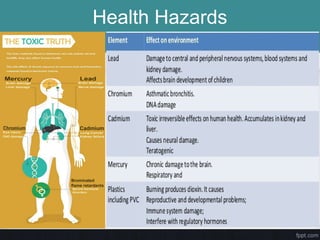
Health Hazards
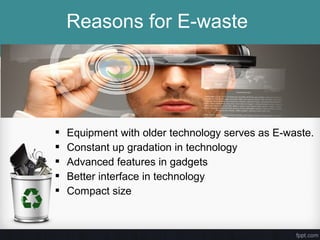
 Equipment with older technology serves as E-waste.
 Constant up gradation in technology
 Advanced features in gadgets
 Better interface in technology
 Compact size
Reasons for E-waste
Process of Recycling E-waste
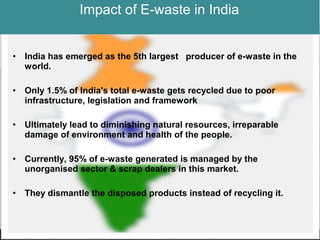
Impact of E-waste in India
• India has emerged as the 5th largest producer of e-waste in the
world.
• Only 1.5% of India's total e-waste gets recycled due to poor
infrastructure, legislation and framework
• Ultimately lead to diminishing natural resources, irreparable
damage of environment and health of the people.
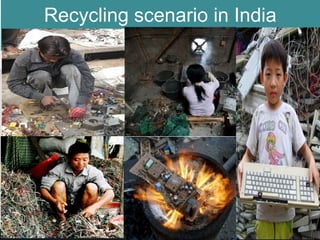
• Currently, 95% of e-waste generated is managed by the
unorganised sector & scrap dealers in this market.
• They dismantle the disposed products instead of recycling it.
Recycling scenario in India
• Be responsible today for the better future
tomorrow!
• Please don’t dispose the electronic waste
along with the regular garbage.
• Contact the authorized collection agencies or
centers and dispose it.
• Follow the Pyramid to minimize the waste
generated.
• Help the society by refurbishing the system
and donating them to NGOs or needy.
Conclusion
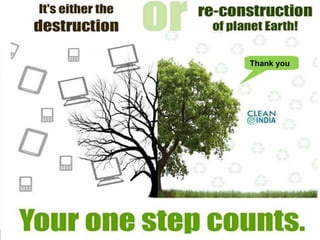
Thank you

E waste

  • 1.
  • 2.
    AGENDA OF THETOPIC • What is E-waste? • What are the different types of E-waste? • Toxic contents in E-waste • Effects of E-waste on Health and Environment. • Reasons for E-waste • Waste Disposal pyramid • Process of Recycling E-waste • Impact of E-waste in India • Conclusion
  • 3.
    E-waste: Electronic andElectrical waste • All Electronic and Electrical waste are known as E-waste • E-Waste contains dangerous chemicals and metals like mercury, nickel, cadmium, cobalt etc. • Which pollute the environment and harm people if was not disposed properly/ unscientifically • It also contains valuable and scarce materials like gold and silver
  • 4.
  • 6.
      Components   Constituents Printed circuit boards Lead &cadmium Cathode ray tubes Lead oxide and cadmium Switches and flat screen monitors Mercury Computer Batteries Cadmium Capacitors and transformers Poly Chlorinated Biphenyls (PCB) Printed circuit boards, Plastic  Retardant casings/ cables Brominates flame (Brominated flame retardants- limited biodegradability and toxic) Cable insulation/ Coating (PVC) Poly vinyl chloride Toxic contents in E-waste Toxic
  • 7.
  • 8.
     Equipment witholder technology serves as E-waste.  Constant up gradation in technology  Advanced features in gadgets  Better interface in technology  Compact size Reasons for E-waste
  • 11.
  • 12.
    Impact of E-wastein India • India has emerged as the 5th largest producer of e-waste in the world. • Only 1.5% of India's total e-waste gets recycled due to poor infrastructure, legislation and framework • Ultimately lead to diminishing natural resources, irreparable damage of environment and health of the people. • Currently, 95% of e-waste generated is managed by the unorganised sector & scrap dealers in this market. • They dismantle the disposed products instead of recycling it.
  • 13.
  • 14.
    • Be responsibletoday for the better future tomorrow! • Please don’t dispose the electronic waste along with the regular garbage. • Contact the authorized collection agencies or centers and dispose it. • Follow the Pyramid to minimize the waste generated. • Help the society by refurbishing the system and donating them to NGOs or needy. Conclusion
  • 15.