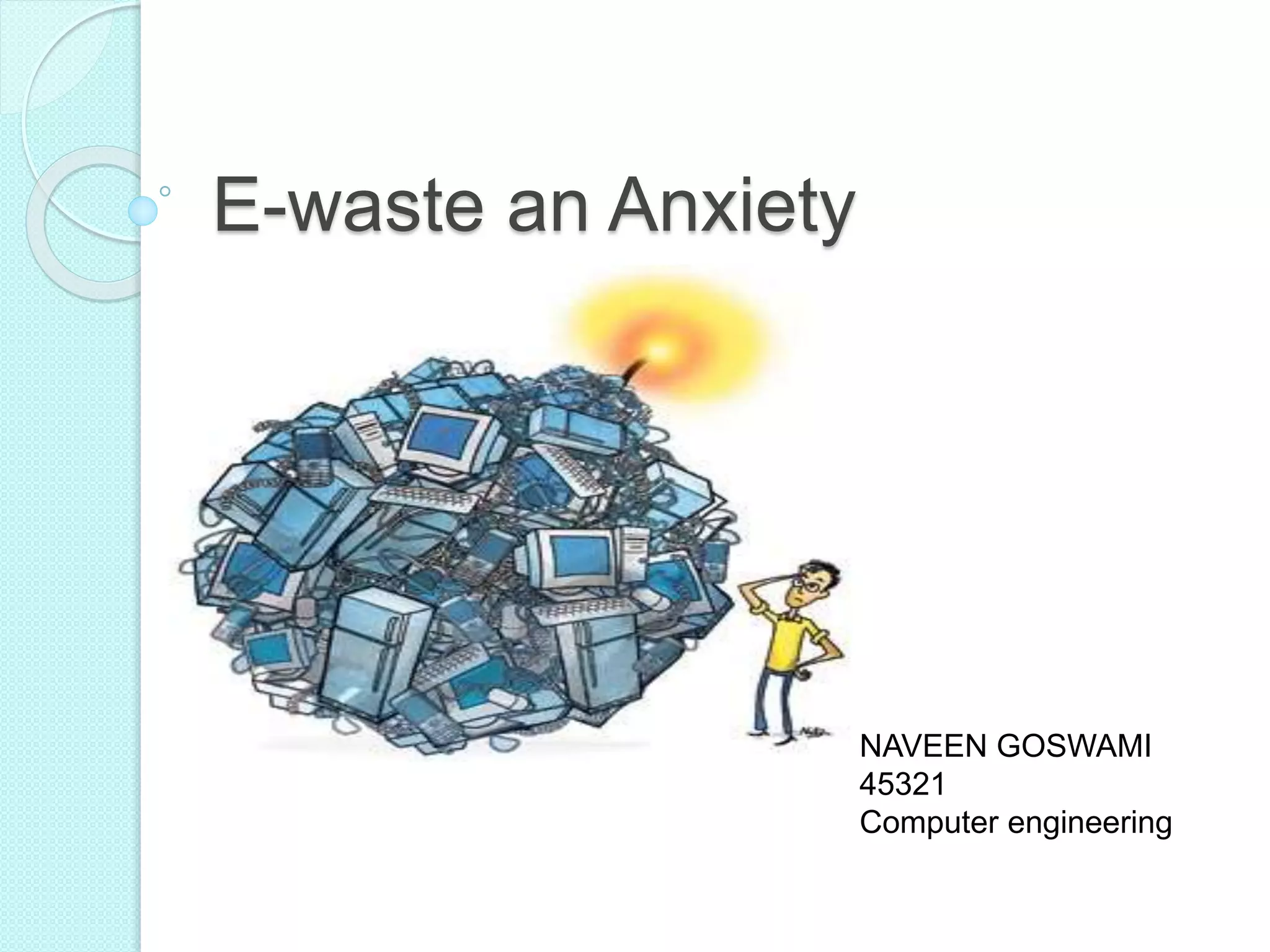
E-waste an Anxiety
NAVEEN GOSWAMI
45321
Computer engineering
Contents
Introduction
What is E-waste?
Equipments of E-waste
Causes of E-waste
Source of E-waste
Why E-waste an Anxiety?
E-waste generation in
INDIA
How to make E-waste free INDIA
conclusion
Introduction
E-Waste is a fastest growing waste on the planet.
The rapid growth of technology, upgradation of
technical innovation and high rate obsolescence in
Electronic industry have led to one of the fastest
growing waste streams in the world.
We know that electronic products have become an
integral part of our daily lives providing us easy and
faster acquisition and exchange of information. But on
the other hand it has also alarming waste generation.
What is E-waste
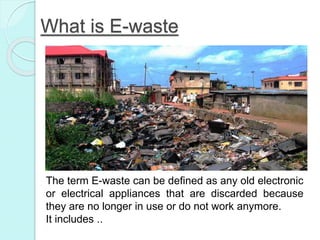
The term E-waste can be defined as any old electronic
or electrical appliances that are discarded because
they are no longer in use or do not work anymore.
It includes ..
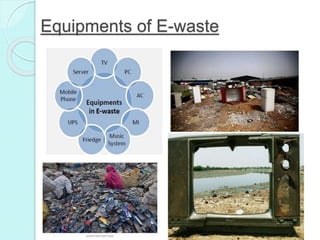
Equipments of E-waste
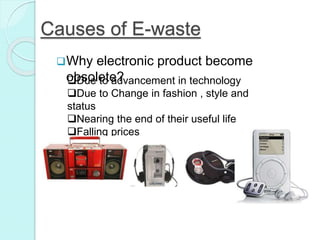
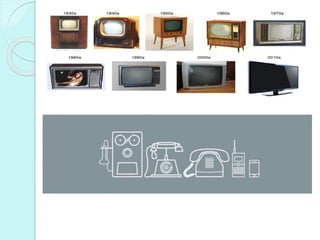
Causes of E-waste
Why electronic product become
obsolete?Due to advancement in technology
Due to Change in fashion , style and
status
Nearing the end of their useful life
Falling prices
Source of E-waste
Contd..
Formal Sector
Manufacturers
Retailers
Consumers
Traders
Informal Sector
Scrap dealers
Dissemblers
Smelters
Recyclers
E-waste being produce by various sources in the
country like Govt. Sector, manufacturing ,industrial
,commercial ,institutional ,household , R&D sector of the
country.
Why E-waste an Anxiety?
•India become dumping ground. About 80 percent of the
e-waste generated in the US is exported to India, China
and Pakistan.
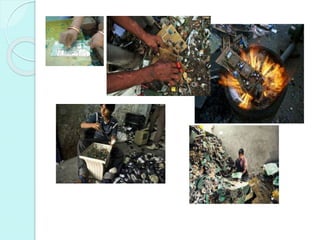
•Only 3% of total E-waste generated is recycled properly
in India. The rest of it is handled by workers who work
with bare hands, without masks under unhygienic
conditions.
•Many of India’s corporations burn e-waste such as PC
monitors, PCBs, CDs, motherboards, cables, cartridges,
light bulbs in the open along with garbage , releasing
large amounts of mercury and lead into the atmosphere
Contd..
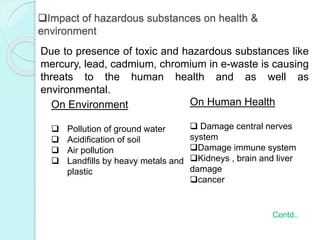
Impact of hazardous substances on health &
environment
Due to presence of toxic and hazardous substances like
mercury, lead, cadmium, chromium in e-waste is causing
threats to the human health and as well as
environmental.
On Environment
 Pollution of ground water
 Acidification of soil
 Air pollution
 Landfills by heavy metals and
plastic
On Human Health
 Damage central nerves
system
Damage immune system
Kidneys , brain and liver
damage
cancer
Contd..
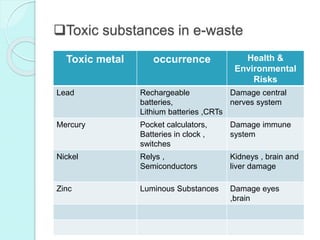
Toxic substances in e-waste
Toxic metal occurrence Health &
Environmental
Risks
Lead Rechargeable
batteries,
Lithium batteries ,CRTs
Damage central
nerves system
Mercury Pocket calculators,
Batteries in clock ,
switches
Damage immune
system
Nickel Relys ,
Semiconductors
Kidneys , brain and
liver damage
Zinc Luminous Substances Damage eyes
,brain
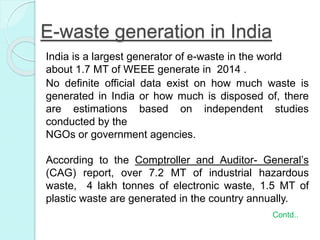
E-waste generation in India
No definite official data exist on how much waste is
generated in India or how much is disposed of, there
are estimations based on independent studies
conducted by the
NGOs or government agencies.
According to the Comptroller and Auditor- General’s
(CAG) report, over 7.2 MT of industrial hazardous
waste, 4 lakh tonnes of electronic waste, 1.5 MT of
plastic waste are generated in the country annually.
India is a largest generator of e-waste in the world
about 1.7 MT of WEEE generate in 2014 .
Contd..
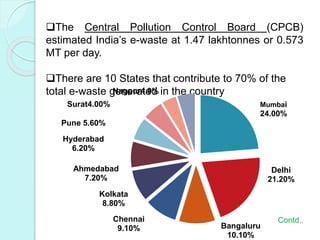
The Central Pollution Control Board (CPCB)
estimated India’s e-waste at 1.47 lakhtonnes or 0.573
MT per day.
There are 10 States that contribute to 70% of the
total e-waste generated in the country
Contd..
Mumbai
24.00%
Delhi
21.20%
Bangaluru
10.10%
Chennai
9.10%
Kolkata
8.80%
Ahmedabad
7.20%
Hyderabad
6.20%
Pune 5.60%
Surat4.00%
Nagpur4.9%
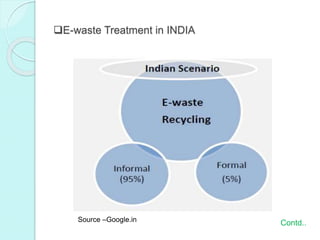
E-waste Treatment in INDIA
Source –Google.in Contd..
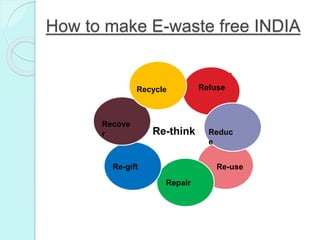
How to make E-waste free INDIA
Refuse
Re-gift Re-use
Repair
Reduc
e
Recove
r
Recycle
Re-think
The CLEAN e-INDIA Initiative, launched by Attero, aims
to establish an integrated eWaste Consumer Take Back
Program to help ensure organized collection,
management and recycling of electronic waste in a
responsible and sustainable manner
Attero is India’s largest electronic asset management
company
Unit: Roorkee. Owner: IIT Delhi Passout.
Some of the well renowned companies like Apple, Sony,
PCS, Philips, Microsoft, Panasonic, Sony Ericsson and
Toshiba, HCL have adopted take back policy option at
their production plant. HCL and WIPRO have the best
take back policy in India.
conclusion
The IT sector has been playing a leading role in the
growth of Indian economy.
Waste Management is crucial issue that needs
governmental attention immediately. At present very
little awareness exists amongst the stakeholders, it is
crucial to educate people and convince them to adopt
practices for reduce, reuse and recycle rather then
generating scrap.
For better tomorrow Recycle e-waste, drop your
unused mobile devices, unused charger and batteries
in write place.
Make wise choices.
Reference
ļ‚— www.cleaneindia.org
ļ‚— www.attero.in
ļ‚— www.karmarecycling.in
Thanking you

E waste an anxiety

  • 1.
    E-waste an Anxiety NAVEENGOSWAMI 45321 Computer engineering
  • 2.
    Contents Introduction What is E-waste? Equipmentsof E-waste Causes of E-waste Source of E-waste Why E-waste an Anxiety? E-waste generation in INDIA How to make E-waste free INDIA conclusion
  • 3.
    Introduction E-Waste is afastest growing waste on the planet. The rapid growth of technology, upgradation of technical innovation and high rate obsolescence in Electronic industry have led to one of the fastest growing waste streams in the world. We know that electronic products have become an integral part of our daily lives providing us easy and faster acquisition and exchange of information. But on the other hand it has also alarming waste generation.
  • 4.
    What is E-waste Theterm E-waste can be defined as any old electronic or electrical appliances that are discarded because they are no longer in use or do not work anymore. It includes ..
  • 5.
  • 6.
    Causes of E-waste Whyelectronic product become obsolete?Due to advancement in technology Due to Change in fashion , style and status Nearing the end of their useful life Falling prices
  • 8.
    Source of E-waste Contd.. FormalSector Manufacturers Retailers Consumers Traders Informal Sector Scrap dealers Dissemblers Smelters Recyclers E-waste being produce by various sources in the country like Govt. Sector, manufacturing ,industrial ,commercial ,institutional ,household , R&D sector of the country.
  • 9.
    Why E-waste anAnxiety? •India become dumping ground. About 80 percent of the e-waste generated in the US is exported to India, China and Pakistan. •Only 3% of total E-waste generated is recycled properly in India. The rest of it is handled by workers who work with bare hands, without masks under unhygienic conditions. •Many of India’s corporations burn e-waste such as PC monitors, PCBs, CDs, motherboards, cables, cartridges, light bulbs in the open along with garbage , releasing large amounts of mercury and lead into the atmosphere Contd..
  • 10.
    Impact of hazardoussubstances on health & environment Due to presence of toxic and hazardous substances like mercury, lead, cadmium, chromium in e-waste is causing threats to the human health and as well as environmental. On Environment  Pollution of ground water  Acidification of soil  Air pollution  Landfills by heavy metals and plastic On Human Health  Damage central nerves system Damage immune system Kidneys , brain and liver damage cancer Contd..
  • 11.
    Toxic substances ine-waste Toxic metal occurrence Health & Environmental Risks Lead Rechargeable batteries, Lithium batteries ,CRTs Damage central nerves system Mercury Pocket calculators, Batteries in clock , switches Damage immune system Nickel Relys , Semiconductors Kidneys , brain and liver damage Zinc Luminous Substances Damage eyes ,brain
  • 12.
    E-waste generation inIndia No definite official data exist on how much waste is generated in India or how much is disposed of, there are estimations based on independent studies conducted by the NGOs or government agencies. According to the Comptroller and Auditor- General’s (CAG) report, over 7.2 MT of industrial hazardous waste, 4 lakh tonnes of electronic waste, 1.5 MT of plastic waste are generated in the country annually. India is a largest generator of e-waste in the world about 1.7 MT of WEEE generate in 2014 . Contd..
  • 13.
    The Central PollutionControl Board (CPCB) estimated India’s e-waste at 1.47 lakhtonnes or 0.573 MT per day. There are 10 States that contribute to 70% of the total e-waste generated in the country Contd.. Mumbai 24.00% Delhi 21.20% Bangaluru 10.10% Chennai 9.10% Kolkata 8.80% Ahmedabad 7.20% Hyderabad 6.20% Pune 5.60% Surat4.00% Nagpur4.9%
  • 14.
    E-waste Treatment inINDIA Source –Google.in Contd..
  • 16.
    How to makeE-waste free INDIA Refuse Re-gift Re-use Repair Reduc e Recove r Recycle Re-think
  • 17.
    The CLEAN e-INDIAInitiative, launched by Attero, aims to establish an integrated eWaste Consumer Take Back Program to help ensure organized collection, management and recycling of electronic waste in a responsible and sustainable manner Attero is India’s largest electronic asset management company Unit: Roorkee. Owner: IIT Delhi Passout. Some of the well renowned companies like Apple, Sony, PCS, Philips, Microsoft, Panasonic, Sony Ericsson and Toshiba, HCL have adopted take back policy option at their production plant. HCL and WIPRO have the best take back policy in India.
  • 18.
    conclusion The IT sectorhas been playing a leading role in the growth of Indian economy. Waste Management is crucial issue that needs governmental attention immediately. At present very little awareness exists amongst the stakeholders, it is crucial to educate people and convince them to adopt practices for reduce, reuse and recycle rather then generating scrap. For better tomorrow Recycle e-waste, drop your unused mobile devices, unused charger and batteries in write place. Make wise choices.
  • 19.
  • 20.