DYSMENORRHOEA AND
PELVIC PAIN
Dr.Tarig Mahmoud
MD SUDAN
HAIL UNIVERSITY KSA
 Dysmenorrhoea is defined as painful
menstruation.
 It is experienced by 45–95 per cent of
women of reproductive age.
DYSMENORRHEA
 Primary[no underline disease]
 Secondary [secondary to pelvic disease]
PRIMARY DYSMENORRHEA
 Description: Pain associated with
ovulatory menses that usually start at or
just before the onsets of menses; and
last 1-3 days.
 Age group: 17-22 years.
 Etiology : due to uterine contraction with
ischemia and prostaglandin production.
 Symptoms: Crampy lower abdominal
pain; +/- nausea, emesis, diarrhea or
headache.
 normal physical examination.
TREATMENT
 Reassurance
 NSAIDS
 Hormonal Therapy (OCPs, progestagins,
Mirena IUD, Depo-Provera
 GnRH analogues
 acupuncture
 psychothearpy
 transcutaneous nerve stimulation
SECONDRY DYSMENORRHEA
Pathophysiology:
 depends on the underling secondary
cause
 Clinical feature
 Develop in older women.
 Can occur days before and after the
menses.
 Associated with dyspareunia, infertility
and abnormal uterine bleeding.
 Causes :
 Endometriosis
 Pelvic inflammation
 Adenomyosis
 cervical stenosis and haematometra (rare).
 Fibroid
 Ovarian congestion
 Ovarian cyst
 Treatment :
 Depend on the causes.
PELVIC PAIN
Can be:
 Acute pelvic pain
 Chronic pelvic pain
 The initial approach to the patient
with pelvic pain should include a
detailed history and physical
examination
The history should include
 characterize the pain [location, duration
(constant or intermittent),onset, radiation,
associated symptoms, severity sharp pains,
cramping, dull aching pain.
 alleviating and aggravating factors.
 system symptoms (eg, urinary,
gastrointestinal, and musculoskeletal) to
exclude non gynecological causes.
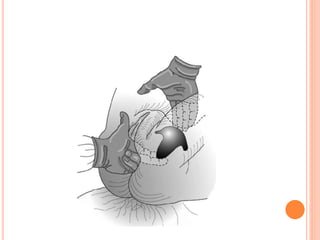
Examination
 abdominal examination
 pelvic examination
Performance of a pelvic examination is the
standard of care for women with lower
abdominal and pelvic symptoms
ACUTE PELVIC PAIN
 Pain of sudden onset
 Gynecological causes
 Non Gynecological causes
GYNECOLOGIC CAUSES OF ACUTE PELVIC PAIN
 Adnexal accidents[ torsion, Ruptured,
heamorrage].
 Pelvic inflammatory disease.
 Ectopic pregnancy, abortion.
NONGYNECOLOGIC CAUSES OF ACUTE
PELVIC PAIN
 Appendicitis ,Diverticulitis.
 Bowel obstruction.
 Adhesions.
 Hernia.
 Urinary tract infection.
 Urolithiasis.
 Pelvic thrombophlebitis.
CHRONIC PELVIC PAIN
Definition
Is pelvic pain for more than 6 month and
affect the quality of life.
 Difficult to diagnose.
 Difficult to treat.
 Associated great medical costs.
Incidence
 Common complain
 Affects 15-20% of women of reproductive age
GYNAECOLOGICAL CAUSES
 endometriosis, adhesions .
 fibroids, adenomyosis, endometritis.
 Pelvic congestion syndrome.
 PID/salpingitis, hydrosalpinx.
 IUD/infection.
 severe prolapse.
NON- GYNAECOLOGICAL CAUSES
 Urologic
UTI/urethritis, interstitial cystitis (IC), urine
retenion, urethral diverticulum, nephrolithiasis,
malignancy.
 GIT
constipation, IBS, Crohn’s disease, bowel
obstruction, diverticulitis, malignancy.
 Musculoskeletal
myalgia of pelvic floor, hernias, neuralgia, low
back pain.
 Other
psychiatric – depression, ; abdominal cutaneous
nerve entrapment in surgical scar.
DIAGNOSIS
Obtaining a
COMPLETE and DETAILED HISTORY
is the most important key to
formulating a diagnosis
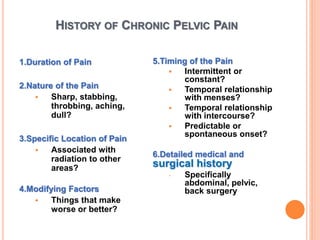
HISTORY OF CHRONIC PELVIC PAIN
1.Duration of Pain
2.Nature of the Pain
 Sharp, stabbing,
throbbing, aching,
dull?
3.Specific Location of Pain
 Associated with
radiation to other
areas?
4.Modifying Factors
 Things that make
worse or better?
5.Timing of the Pain
 Intermittent or
constant?
 Temporal relationship
with menses?
 Temporal relationship
with intercourse?
 Predictable or
spontaneous onset?
6.Detailed medical and
surgical history
 Specifically
abdominal, pelvic,
back surgery
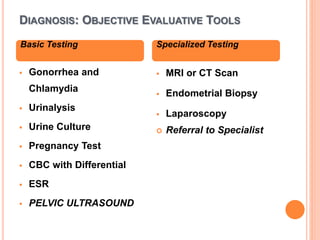
DIAGNOSIS: OBJECTIVE EVALUATIVE TOOLS
 Gonorrhea and
Chlamydia
 Urinalysis
 Urine Culture
 Pregnancy Test
 CBC with Differential
 ESR
 PELVIC ULTRASOUND
 MRI or CT Scan
 Endometrial Biopsy
 Laparoscopy
 Referral to Specialist
Basic Testing Specialized Testing
MANAGEMENT
 A team management
 Multidisciplinary team pain clinic [
gynecologist , psychologist expert in
pelvic pain , sexual & marital counseling
, physical therapist with pelvic floor
expertise .
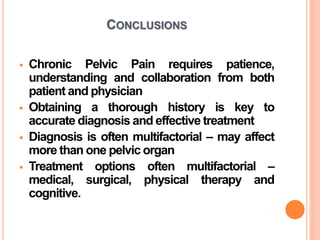
CONCLUSIONS
 Chronic Pelvic Pain requires patience,
understanding and collaboration from both
patient and physician
 Obtaining a thorough history is key to
accurate diagnosis and effective treatment
 Diagnosis is often multifactorial – may affect
more than one pelvic organ
 Treatment options often multifactorial –
medical, surgical, physical therapy and
cognitive.
Thank you

Dysmonrhhea and pelvic pain

  • 1.
    DYSMENORRHOEA AND PELVIC PAIN Dr.TarigMahmoud MD SUDAN HAIL UNIVERSITY KSA
  • 2.
     Dysmenorrhoea isdefined as painful menstruation.  It is experienced by 45–95 per cent of women of reproductive age.
  • 3.
    DYSMENORRHEA  Primary[no underlinedisease]  Secondary [secondary to pelvic disease]
  • 4.
    PRIMARY DYSMENORRHEA  Description:Pain associated with ovulatory menses that usually start at or just before the onsets of menses; and last 1-3 days.  Age group: 17-22 years.  Etiology : due to uterine contraction with ischemia and prostaglandin production.  Symptoms: Crampy lower abdominal pain; +/- nausea, emesis, diarrhea or headache.  normal physical examination.
  • 5.
    TREATMENT  Reassurance  NSAIDS Hormonal Therapy (OCPs, progestagins, Mirena IUD, Depo-Provera  GnRH analogues  acupuncture  psychothearpy  transcutaneous nerve stimulation
  • 6.
    SECONDRY DYSMENORRHEA Pathophysiology:  dependson the underling secondary cause  Clinical feature  Develop in older women.  Can occur days before and after the menses.  Associated with dyspareunia, infertility and abnormal uterine bleeding.
  • 7.
     Causes : Endometriosis  Pelvic inflammation  Adenomyosis  cervical stenosis and haematometra (rare).  Fibroid  Ovarian congestion  Ovarian cyst  Treatment :  Depend on the causes.
  • 8.
  • 9.
    Can be:  Acutepelvic pain  Chronic pelvic pain
  • 10.
     The initialapproach to the patient with pelvic pain should include a detailed history and physical examination
  • 11.
    The history shouldinclude  characterize the pain [location, duration (constant or intermittent),onset, radiation, associated symptoms, severity sharp pains, cramping, dull aching pain.  alleviating and aggravating factors.  system symptoms (eg, urinary, gastrointestinal, and musculoskeletal) to exclude non gynecological causes.
  • 12.
    Examination  abdominal examination pelvic examination Performance of a pelvic examination is the standard of care for women with lower abdominal and pelvic symptoms
  • 14.
    ACUTE PELVIC PAIN Pain of sudden onset  Gynecological causes  Non Gynecological causes
  • 15.
    GYNECOLOGIC CAUSES OFACUTE PELVIC PAIN  Adnexal accidents[ torsion, Ruptured, heamorrage].  Pelvic inflammatory disease.  Ectopic pregnancy, abortion.
  • 16.
    NONGYNECOLOGIC CAUSES OFACUTE PELVIC PAIN  Appendicitis ,Diverticulitis.  Bowel obstruction.  Adhesions.  Hernia.  Urinary tract infection.  Urolithiasis.  Pelvic thrombophlebitis.
  • 17.
    CHRONIC PELVIC PAIN Definition Ispelvic pain for more than 6 month and affect the quality of life.
  • 18.
     Difficult todiagnose.  Difficult to treat.  Associated great medical costs.
  • 19.
    Incidence  Common complain Affects 15-20% of women of reproductive age
  • 20.
    GYNAECOLOGICAL CAUSES  endometriosis,adhesions .  fibroids, adenomyosis, endometritis.  Pelvic congestion syndrome.  PID/salpingitis, hydrosalpinx.  IUD/infection.  severe prolapse.
  • 21.
    NON- GYNAECOLOGICAL CAUSES Urologic UTI/urethritis, interstitial cystitis (IC), urine retenion, urethral diverticulum, nephrolithiasis, malignancy.  GIT constipation, IBS, Crohn’s disease, bowel obstruction, diverticulitis, malignancy.  Musculoskeletal myalgia of pelvic floor, hernias, neuralgia, low back pain.  Other psychiatric – depression, ; abdominal cutaneous nerve entrapment in surgical scar.
  • 22.
    DIAGNOSIS Obtaining a COMPLETE andDETAILED HISTORY is the most important key to formulating a diagnosis
  • 23.
    HISTORY OF CHRONICPELVIC PAIN 1.Duration of Pain 2.Nature of the Pain  Sharp, stabbing, throbbing, aching, dull? 3.Specific Location of Pain  Associated with radiation to other areas? 4.Modifying Factors  Things that make worse or better? 5.Timing of the Pain  Intermittent or constant?  Temporal relationship with menses?  Temporal relationship with intercourse?  Predictable or spontaneous onset? 6.Detailed medical and surgical history  Specifically abdominal, pelvic, back surgery
  • 24.
    DIAGNOSIS: OBJECTIVE EVALUATIVETOOLS  Gonorrhea and Chlamydia  Urinalysis  Urine Culture  Pregnancy Test  CBC with Differential  ESR  PELVIC ULTRASOUND  MRI or CT Scan  Endometrial Biopsy  Laparoscopy  Referral to Specialist Basic Testing Specialized Testing
  • 25.
    MANAGEMENT  A teammanagement  Multidisciplinary team pain clinic [ gynecologist , psychologist expert in pelvic pain , sexual & marital counseling , physical therapist with pelvic floor expertise .
  • 26.
    CONCLUSIONS  Chronic PelvicPain requires patience, understanding and collaboration from both patient and physician  Obtaining a thorough history is key to accurate diagnosis and effective treatment  Diagnosis is often multifactorial – may affect more than one pelvic organ  Treatment options often multifactorial – medical, surgical, physical therapy and cognitive.
  • 27.