CHRONIC PELVIC PAIN
  ENDOMETRIOSIS

       RAED SAYED AHMED
   MBCHB, FRCSC, FACOG, MCHCH
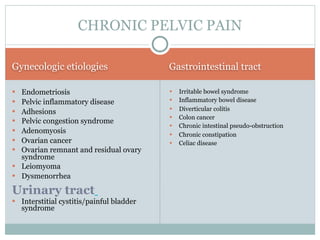
CHRONIC PELVIC PAIN

Gynecologic etiologies                    Gastrointestinal tract

 Endometriosis                              Irritable bowel syndrome
 Pelvic inflammatory disease                Inflammatory bowel disease
 Adhesions                                  Diverticular colitis
                                             Colon cancer
 Pelvic congestion syndrome
                                             Chronic intestinal pseudo-obstruction
 Adenomyosis
                                             Chronic constipation
 Ovarian cancer                             Celiac disease
 Ovarian remnant and residual ovary
  syndrome
 Leiomyoma
 Dysmenorrhea

Urinary tract
 Interstitial cystitis/painful bladder
   syndrome
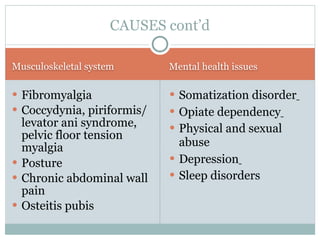
CAUSES cont’d

Musculoskeletal system      Mental health issues

 Fibromyalgia               Somatization disorder
 Coccydynia, piriformis/    Opiate dependency
  levator ani syndrome,      Physical and sexual
  pelvic floor tension
  myalgia                     abuse
 Posture                    Depression
 Chronic abdominal wall     Sleep disorders
  pain
 Osteitis pubis
ENDOMETRIOSIS

 A common health problem among women of
  reproductive age.
 Endometrial-like glands and stroma grow in an
  extrauterine site.
ETIOLOGY

 Various theories regarding its etiology.
 Menstrual flow that produces a greater volume of
  retrograde menstruation may increase the risk of
  developing the disease.
 Early menarche,
 Regular cycles (especially with an absence of
  amenorrhea caused by pregnancy),
 longer and heavier flow are also associated factors.
ETIOLOGY cont’d

 Endometriosis is an estrogen-dependent disease
 Factors that reduce estrogen levels (e.g., menstrual
 disorders, decreased body-fat content and smoking)
 are associated with a reduced risk for developing the
 condition.
SIGNS AND SYMPTOMS

 Clinical manifestations of endometriosis vary and
    may be unpredictable in presentation and course.
   Dysmenorrhea,
   chronic pelvic pain,
   Dyspareunia,
   Uterosacral ligament nodularity
   Adnexal mass.
   Asymptomatic in many women
Pelvic Pain

 Pelvic pain caused by endometriosis falls into three
  categories:
1. Secondary dysmenorrhea, with pain commencing
   before the onset of the menstrual cycle;
2. Deep dyspareunia that is exaggerated during
   menses; or
3. Sacral backache with menses.
Pain con’d

 The pain associated with endometriosis has little
  relationship to the type of lesions seen by
  laparoscopy.
 It has been shown that the depth of endometriosis
  lesions correlate with severity of pain.
 It is thought that painful lesions are those that
  involve peritoneal surfaces innervated by peripheral
  spinal nerves, not those innervated by the autonomic
  nervous system.
DIAGNOSIS

 A histologic examination should be done to confirm
 the presence of endometrial lesions.
TREATMENT

 Current evidence suggests that pain caused by
 endometriosis can be managed medically. Progestins,
 danazol, oral contraceptives, nonsteroidal anti-
 inflammatory drugs and gonadotropin-releasing
 hormone (GnRH) agonists.
 No medical therapy has been proved to eradicate the
 lesions.
SURGERY

 Surgery for women with endometrial pain is
  associated with significant reduction in pain during
  the first six months following surgery.
 up to 44 percent of women experience a recurrence of
  symptoms within one year.
 Data about whether surgical therapy influences long-
  term therapy are lacking, and there are no data to
  indicate whether medical or surgical therapy results
  in better fertility outcomes.

Endometriosis

  • 1.
    CHRONIC PELVIC PAIN ENDOMETRIOSIS RAED SAYED AHMED MBCHB, FRCSC, FACOG, MCHCH
  • 2.
    CHRONIC PELVIC PAIN Gynecologicetiologies Gastrointestinal tract  Endometriosis  Irritable bowel syndrome  Pelvic inflammatory disease  Inflammatory bowel disease  Adhesions  Diverticular colitis  Colon cancer  Pelvic congestion syndrome  Chronic intestinal pseudo-obstruction  Adenomyosis  Chronic constipation  Ovarian cancer  Celiac disease  Ovarian remnant and residual ovary syndrome  Leiomyoma  Dysmenorrhea Urinary tract  Interstitial cystitis/painful bladder syndrome
  • 3.
    CAUSES cont’d Musculoskeletal system Mental health issues  Fibromyalgia  Somatization disorder  Coccydynia, piriformis/  Opiate dependency levator ani syndrome,  Physical and sexual pelvic floor tension myalgia abuse  Posture  Depression  Chronic abdominal wall  Sleep disorders pain  Osteitis pubis
  • 4.
    ENDOMETRIOSIS  A commonhealth problem among women of reproductive age.  Endometrial-like glands and stroma grow in an extrauterine site.
  • 5.
    ETIOLOGY  Various theoriesregarding its etiology.  Menstrual flow that produces a greater volume of retrograde menstruation may increase the risk of developing the disease.  Early menarche,  Regular cycles (especially with an absence of amenorrhea caused by pregnancy),  longer and heavier flow are also associated factors.
  • 6.
    ETIOLOGY cont’d  Endometriosisis an estrogen-dependent disease  Factors that reduce estrogen levels (e.g., menstrual disorders, decreased body-fat content and smoking) are associated with a reduced risk for developing the condition.
  • 7.
    SIGNS AND SYMPTOMS Clinical manifestations of endometriosis vary and may be unpredictable in presentation and course.  Dysmenorrhea,  chronic pelvic pain,  Dyspareunia,  Uterosacral ligament nodularity  Adnexal mass.  Asymptomatic in many women
  • 8.
    Pelvic Pain  Pelvicpain caused by endometriosis falls into three categories: 1. Secondary dysmenorrhea, with pain commencing before the onset of the menstrual cycle; 2. Deep dyspareunia that is exaggerated during menses; or 3. Sacral backache with menses.
  • 9.
    Pain con’d  Thepain associated with endometriosis has little relationship to the type of lesions seen by laparoscopy.  It has been shown that the depth of endometriosis lesions correlate with severity of pain.  It is thought that painful lesions are those that involve peritoneal surfaces innervated by peripheral spinal nerves, not those innervated by the autonomic nervous system.
  • 10.
    DIAGNOSIS  A histologicexamination should be done to confirm the presence of endometrial lesions.
  • 11.
    TREATMENT  Current evidencesuggests that pain caused by endometriosis can be managed medically. Progestins, danazol, oral contraceptives, nonsteroidal anti- inflammatory drugs and gonadotropin-releasing hormone (GnRH) agonists.
  • 12.
     No medicaltherapy has been proved to eradicate the lesions.
  • 13.
    SURGERY  Surgery forwomen with endometrial pain is associated with significant reduction in pain during the first six months following surgery.  up to 44 percent of women experience a recurrence of symptoms within one year.  Data about whether surgical therapy influences long- term therapy are lacking, and there are no data to indicate whether medical or surgical therapy results in better fertility outcomes.

Editor's Notes