Theory of machines
Dynamometers
Prepared by :
Urvesh Dungarani 140050119506
Guided by :
Nirmal Kushwala
 Sometimes the brakes are not only used to retard or
stop the motion but may also be used to measure
power absorbed during braking. Such brakes which
have a provision to measure absorbed power are called
“Dynamometers”.
 Thus dynamometer is a device which is used to
measure the frictional resistance. By knowing
frictional resistance we can determine torque
transmitted and hence the power of engine.
 Dynamometer can be used either to measure
force, torque or power.
1. Absorption dynamometer
- Prony brake dynamometer
- Rope brake dynamometer
2. Transmission dynamometer
- Belt transmission dynamometer
- Epicyclic dynamometer
- Torsion dynamometer
In this type of dynamometer, the work done by
engine is absorbed by frictional resistance of
brake is converted into heat during process of
measurement.
These dynamometers can be used for
measurement of moderate powers only.
Various types of dynamometer are discussed
below…
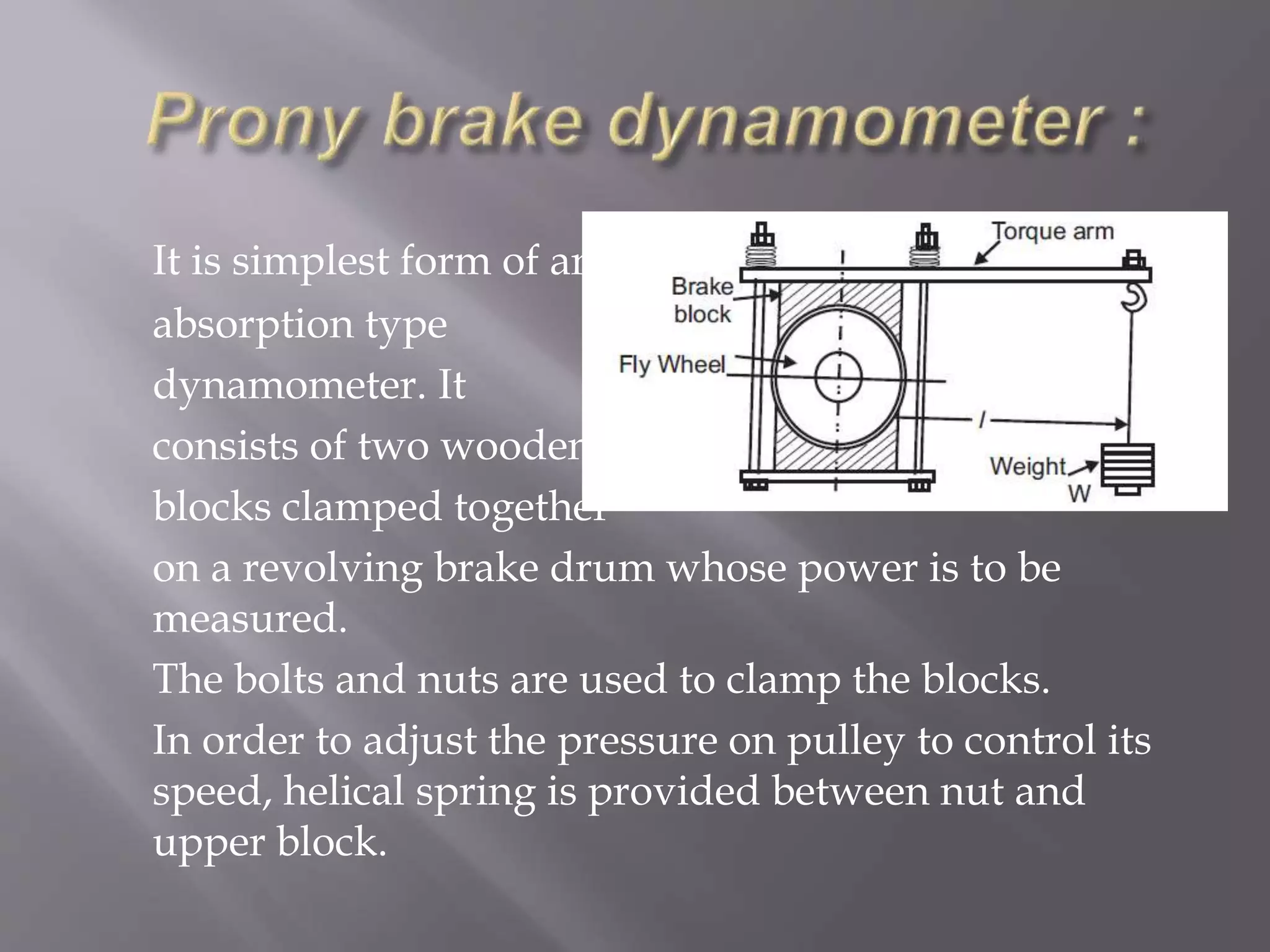
It is simplest form of an
absorption type
dynamometer. It
consists of two wooden
blocks clamped together
on a revolving brake drum whose power is to be
measured.
The bolts and nuts are used to clamp the blocks.
In order to adjust the pressure on pulley to control its
speed, helical spring is provided between nut and
upper block.
Friction between blocks and pulley tends to
rotate the blocks in the direction of rotation of
drum. Suspended weight W at the end of lever
prevents this tendency. Applied weight is so
adjusted that the lever remains in horizontal
position by tightening the nuts to get the
constant engine speed.
With the help of above equation, we can
calculate the brake power.
Brake Power P = 2π NT
where, T = Weight applied (W) × distance (l)
N = speed of shaft
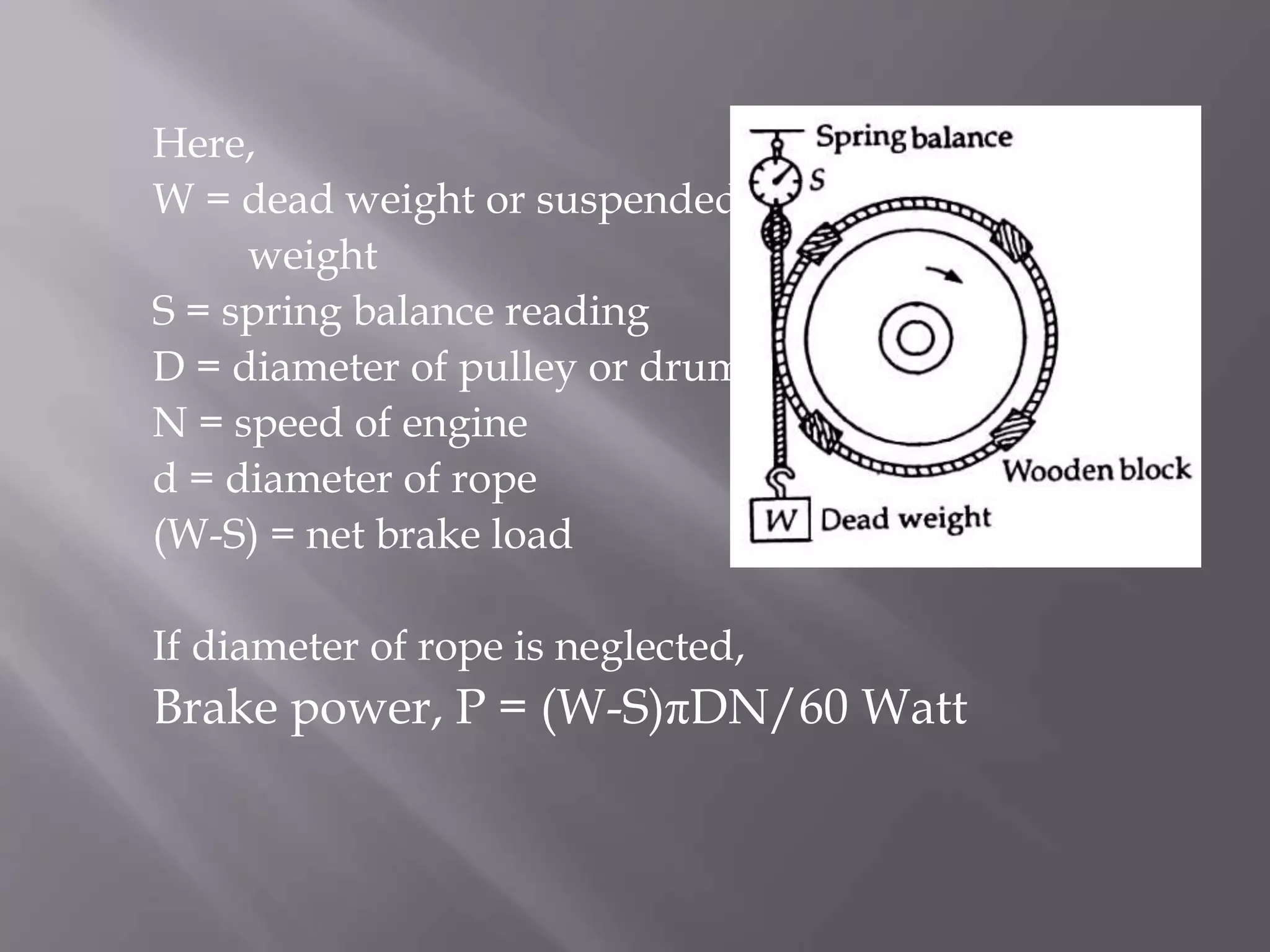
It consists of one, two or more ropes wrapped over
rim of a pulley keyed to shaft of engine. In order to
prevent slipping of rope over pulley, U shaped
wooden blocks are placed at certain intervals on
circumference of pulley.
The upper end of rope is attached to a spring
balance while the lower end carries a dead weight
W.
If high power is produced, then heat is generated
due to friction between rope and pulley or drum.
To prevent this, water is provided to cool the
pulley.
Here,
W = dead weight or suspended
weight
S = spring balance reading
D = diameter of pulley or drum
N = speed of engine
d = diameter of rope
(W-S) = net brake load
If diameter of rope is neglected,
Brake power, P = (W-S)πDN/60 Watt
Hydraulic dynamometer
consists of two elements
called rotating disc and
casing.
The rotating disc is
attached to engine shaft
whose power is to be
measured and revolves inside the casing.
The casing and rotating disk have semi
elliptical recesses forming a chamber through
which water is flowing.
When water flow through chamber with high
pressure the vertices are set up in the chamber
which tends to rotate the casing also.
This tendency of rotation of casing is restricted
by braking system that measure the torque and
hence
the power of engine.
It consists of endless or continuous belt run over the driving
pulley A, driven pulley B and intermediate pulleys C and D.
The driven pulley A is rigidly fixed to shaft of an engine
whose power is to be measured. The driven pulley B is fixed
to another shaft to which power is to be transmitted.
The intermediate pulleys C and D rotate on a pin fixed to a
lever having fulcrum at midpoint of two pulleys.
A balancing weight is provided in lever to initially keep it in
equilibrium. Two stops S1 and S2 are used to limit the
motion of lever.
The weight of suspended mass at one end of lever
balances
the difference in tensions of tight and slack sides of
belt.
Power of the engine :
P = (T1-T2)×πDN/60
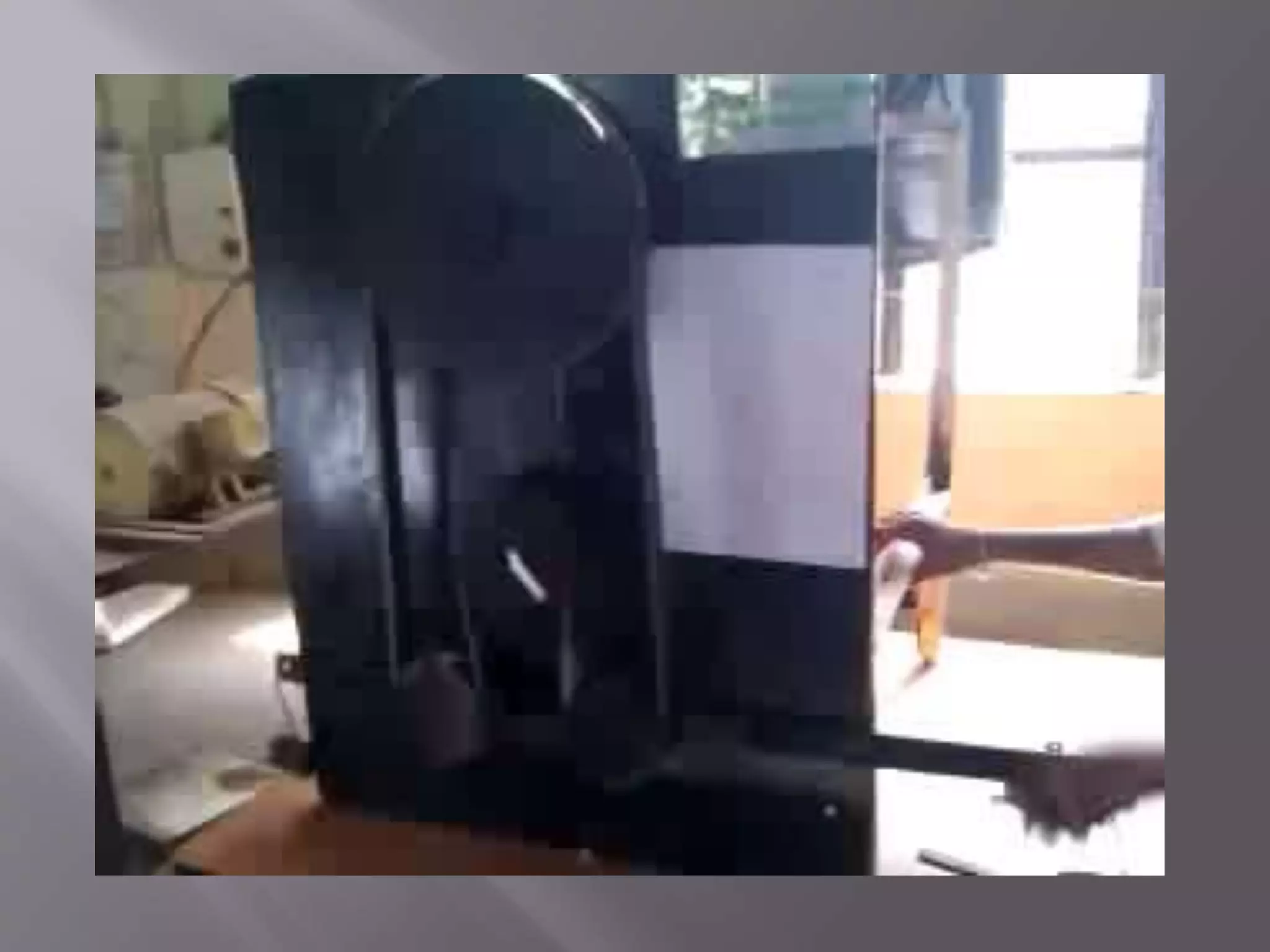
The working of belt transmission
dynamometer is shown in the video…
Epicyclic train dynamometer measures power
while it is being transmitted from driving to driven
shaft.
It consists of simple gear train .
The lever is pivoted about common axis of driving
and driven shaft.
The power is transmitted from one gear to another
through pinion. A balancing weight is adjusted to
one end of lever to keep it in equilibrium at rest.
Two stops are used to limit the movement of lever.
Power transmitted = WLR×π/(60×a)
where, W = dead weight
L = lever arm
N = speed of engine
When power is transmitted along a shaft, the driving end
shifts through a small angle relative to the driven end.
Torque transmitted is directly proportional to the angle of
twist. Therefore, a torsion dynamometer works on principle
of angle of twist.
Torsion dynamometer can measure large powers as in case
of power transmitted along the propeller shaft of a turbine
or a motor vessel.
Torsion equation is :
where θ = Angle of twist in radians, and
J = Polar moment of inertia of the shaft.
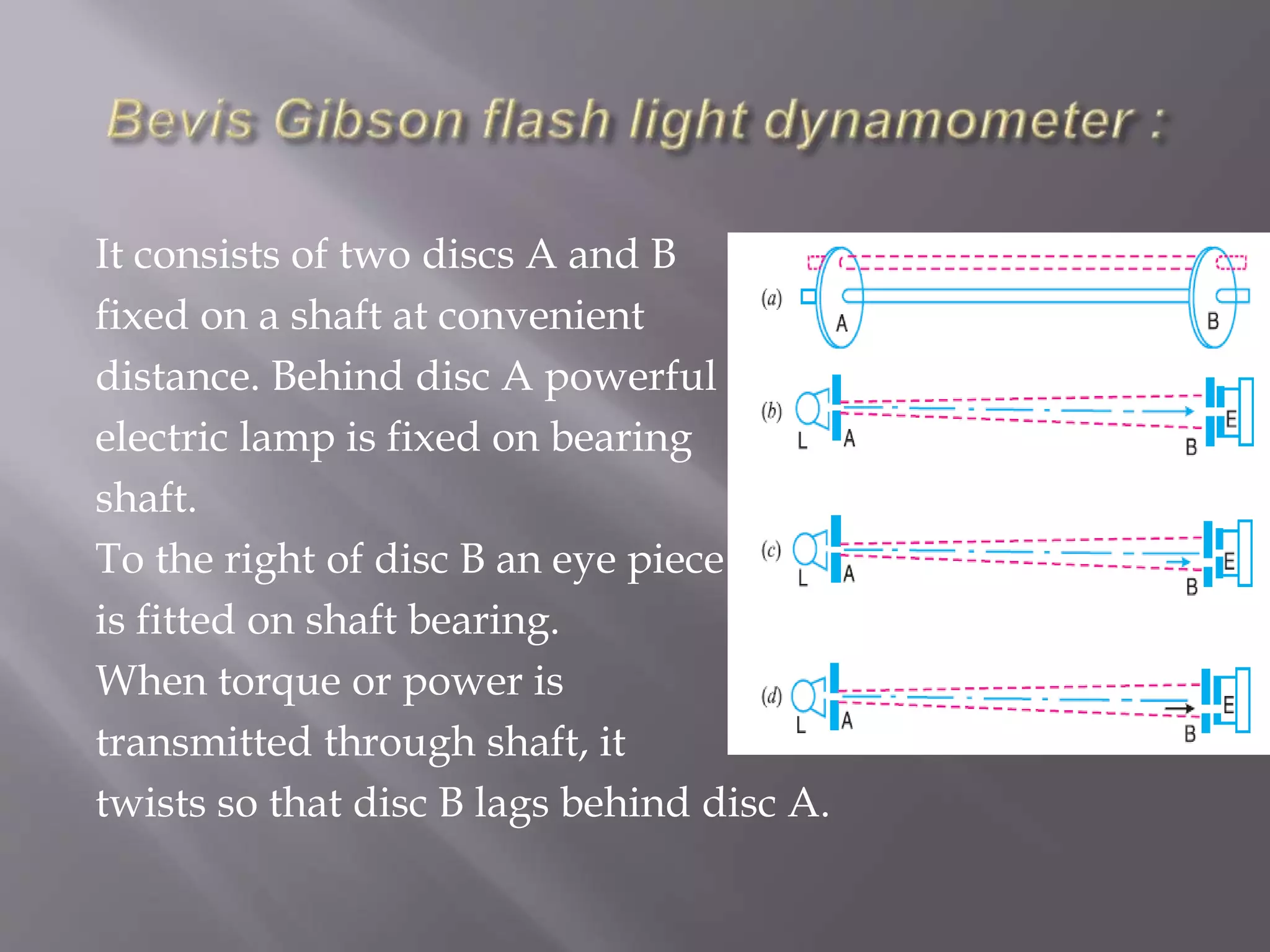
It consists of two discs A and B
fixed on a shaft at convenient
distance. Behind disc A powerful
electric lamp is fixed on bearing
shaft.
To the right of disc B an eye piece
is fitted on shaft bearing.
When torque or power is
transmitted through shaft, it
twists so that disc B lags behind disc A.
In this case, all four do not remain in same line,
hence the light of lamp is not visible through
the eye piece as shown in fig.
The eye piece is moved circumferentially so
that all four are again in same line and light of
lamp is visible through the eyepiece as shown
in fig.
The angle of twist can be measured up to
1/100th of a degree.
Dynamometers

Dynamometers

  • 1.
    Theory of machines Dynamometers Preparedby : Urvesh Dungarani 140050119506 Guided by : Nirmal Kushwala
  • 2.
     Sometimes thebrakes are not only used to retard or stop the motion but may also be used to measure power absorbed during braking. Such brakes which have a provision to measure absorbed power are called “Dynamometers”.  Thus dynamometer is a device which is used to measure the frictional resistance. By knowing frictional resistance we can determine torque transmitted and hence the power of engine.  Dynamometer can be used either to measure force, torque or power.
  • 3.
    1. Absorption dynamometer -Prony brake dynamometer - Rope brake dynamometer 2. Transmission dynamometer - Belt transmission dynamometer - Epicyclic dynamometer - Torsion dynamometer
  • 4.
    In this typeof dynamometer, the work done by engine is absorbed by frictional resistance of brake is converted into heat during process of measurement. These dynamometers can be used for measurement of moderate powers only. Various types of dynamometer are discussed below…
  • 5.
    It is simplestform of an absorption type dynamometer. It consists of two wooden blocks clamped together on a revolving brake drum whose power is to be measured. The bolts and nuts are used to clamp the blocks. In order to adjust the pressure on pulley to control its speed, helical spring is provided between nut and upper block.
  • 6.
    Friction between blocksand pulley tends to rotate the blocks in the direction of rotation of drum. Suspended weight W at the end of lever prevents this tendency. Applied weight is so adjusted that the lever remains in horizontal position by tightening the nuts to get the constant engine speed. With the help of above equation, we can calculate the brake power. Brake Power P = 2π NT where, T = Weight applied (W) × distance (l) N = speed of shaft
  • 7.
    It consists ofone, two or more ropes wrapped over rim of a pulley keyed to shaft of engine. In order to prevent slipping of rope over pulley, U shaped wooden blocks are placed at certain intervals on circumference of pulley. The upper end of rope is attached to a spring balance while the lower end carries a dead weight W. If high power is produced, then heat is generated due to friction between rope and pulley or drum. To prevent this, water is provided to cool the pulley.
  • 8.
    Here, W = deadweight or suspended weight S = spring balance reading D = diameter of pulley or drum N = speed of engine d = diameter of rope (W-S) = net brake load If diameter of rope is neglected, Brake power, P = (W-S)πDN/60 Watt
  • 9.
    Hydraulic dynamometer consists oftwo elements called rotating disc and casing. The rotating disc is attached to engine shaft whose power is to be measured and revolves inside the casing.
  • 10.
    The casing androtating disk have semi elliptical recesses forming a chamber through which water is flowing. When water flow through chamber with high pressure the vertices are set up in the chamber which tends to rotate the casing also. This tendency of rotation of casing is restricted by braking system that measure the torque and hence the power of engine.
  • 11.
    It consists ofendless or continuous belt run over the driving pulley A, driven pulley B and intermediate pulleys C and D. The driven pulley A is rigidly fixed to shaft of an engine whose power is to be measured. The driven pulley B is fixed to another shaft to which power is to be transmitted. The intermediate pulleys C and D rotate on a pin fixed to a lever having fulcrum at midpoint of two pulleys. A balancing weight is provided in lever to initially keep it in equilibrium. Two stops S1 and S2 are used to limit the motion of lever.
  • 12.
    The weight ofsuspended mass at one end of lever balances the difference in tensions of tight and slack sides of belt. Power of the engine : P = (T1-T2)×πDN/60 The working of belt transmission dynamometer is shown in the video…
  • 14.
    Epicyclic train dynamometermeasures power while it is being transmitted from driving to driven shaft. It consists of simple gear train . The lever is pivoted about common axis of driving and driven shaft. The power is transmitted from one gear to another through pinion. A balancing weight is adjusted to one end of lever to keep it in equilibrium at rest.
  • 15.
    Two stops areused to limit the movement of lever. Power transmitted = WLR×π/(60×a) where, W = dead weight L = lever arm N = speed of engine
  • 16.
    When power istransmitted along a shaft, the driving end shifts through a small angle relative to the driven end. Torque transmitted is directly proportional to the angle of twist. Therefore, a torsion dynamometer works on principle of angle of twist. Torsion dynamometer can measure large powers as in case of power transmitted along the propeller shaft of a turbine or a motor vessel. Torsion equation is : where θ = Angle of twist in radians, and J = Polar moment of inertia of the shaft.
  • 17.
    It consists oftwo discs A and B fixed on a shaft at convenient distance. Behind disc A powerful electric lamp is fixed on bearing shaft. To the right of disc B an eye piece is fitted on shaft bearing. When torque or power is transmitted through shaft, it twists so that disc B lags behind disc A.
  • 18.
    In this case,all four do not remain in same line, hence the light of lamp is not visible through the eye piece as shown in fig. The eye piece is moved circumferentially so that all four are again in same line and light of lamp is visible through the eyepiece as shown in fig. The angle of twist can be measured up to 1/100th of a degree.