Purgatives & Laxatives
(Pharmacology & Therapeutics-1)
Lecture By
Dr. Syed Baqir Raza Naqvi
(BSc, Pharm-D, M. Phil-Pharmacology)
Nazar College of Pharmacy
DAKSON Institute of Health Sciences, Islamabad
1
Purgatives & Laxatives
Drugs used for constipation are called purgatives & laxatives.
Constipation
It is infrequent or difficult evacuation of hard stool.
May also described as “ A sense of incomplete evacuation.”
Causes:
1. Irregular bowel habits
2. Spasm of small segments of sigmoid colon.
3. Irritable colon syndrome
4. Mega colon (Abnormally large dilated colon)
5. Hypothyroidism
Drugs causing Constipation
1. Opioids analgesics
2. Anti depressants
3. Ca, Aluminum containing
antacids
4. Anti inflammatory agents
2
Purgatives
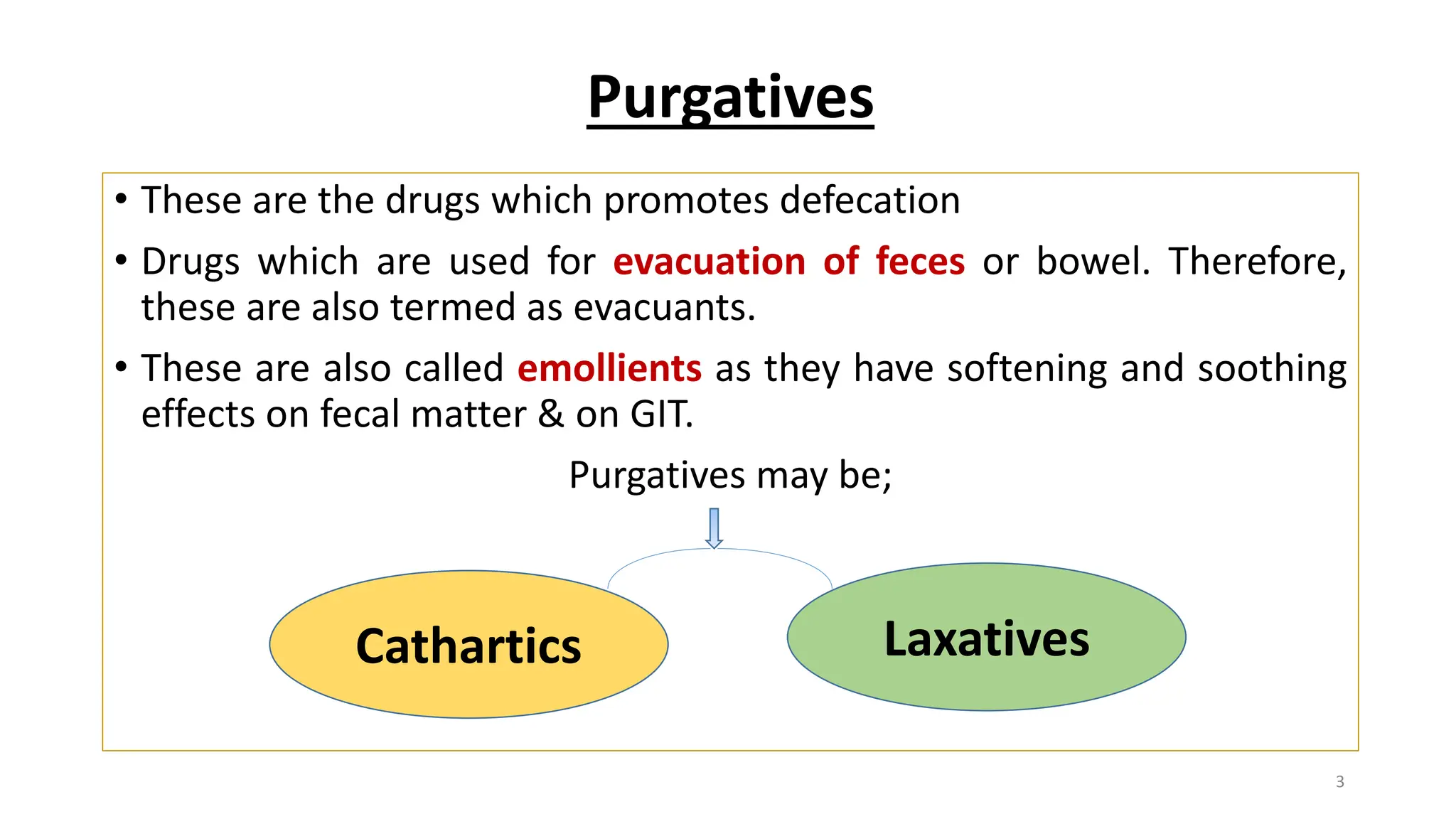
• These are the drugs which promotes defecation
• Drugs which are used for evacuation of feces or bowel. Therefore,
these are also termed as evacuants.
• These are also called emollients as they have softening and soothing
effects on fecal matter & on GIT.
Purgatives may be;
Cathartics Laxatives
3
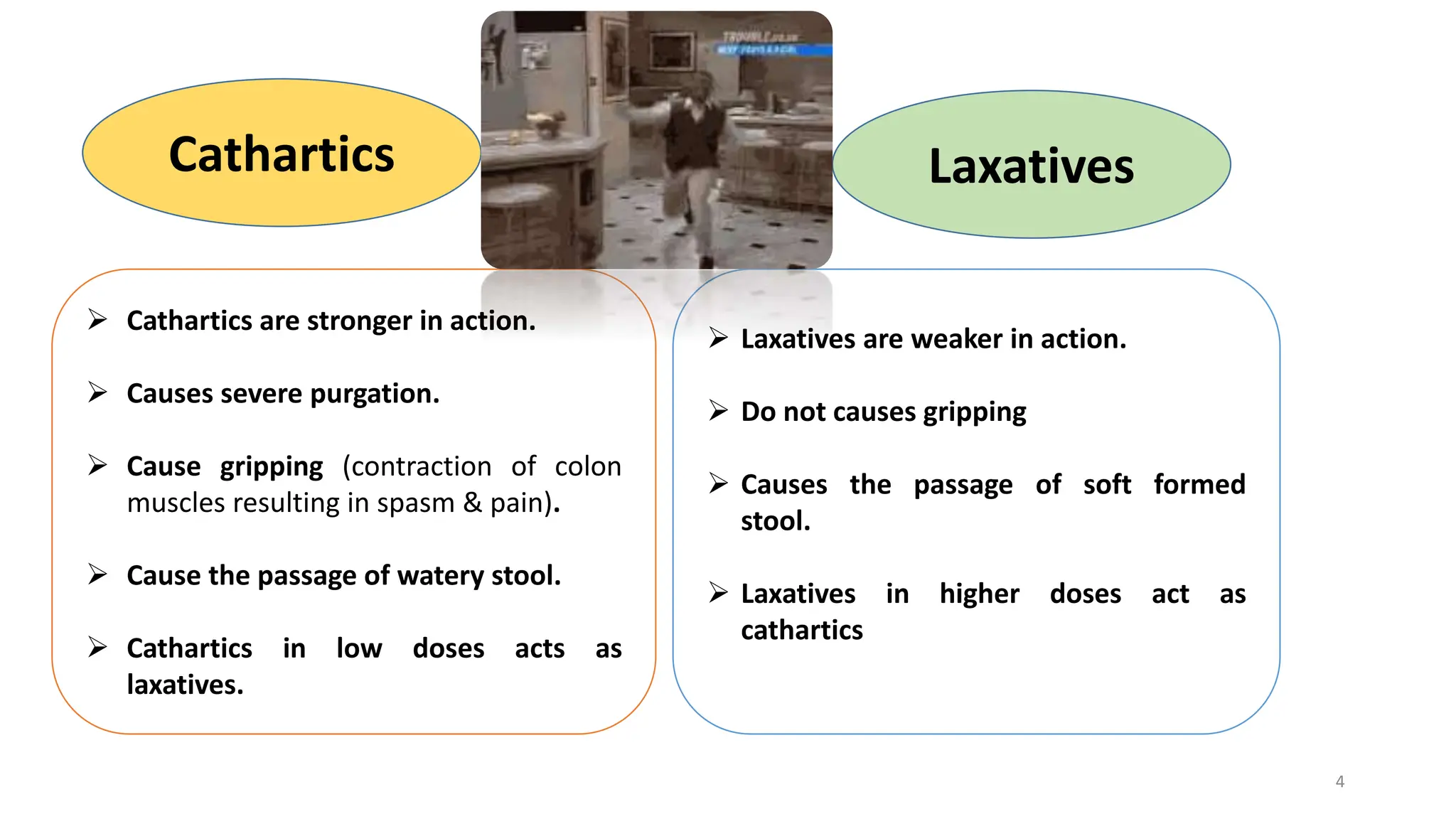
Cathartics Laxatives
 Cathartics are stronger in action.
 Causes severe purgation.
 Cause gripping (contraction of colon
muscles resulting in spasm & pain).
 Cause the passage of watery stool.
 Cathartics in low doses acts as
laxatives.
 Laxatives are weaker in action.
 Do not causes gripping
 Causes the passage of soft formed
stool.
 Laxatives in higher doses act as
cathartics
4
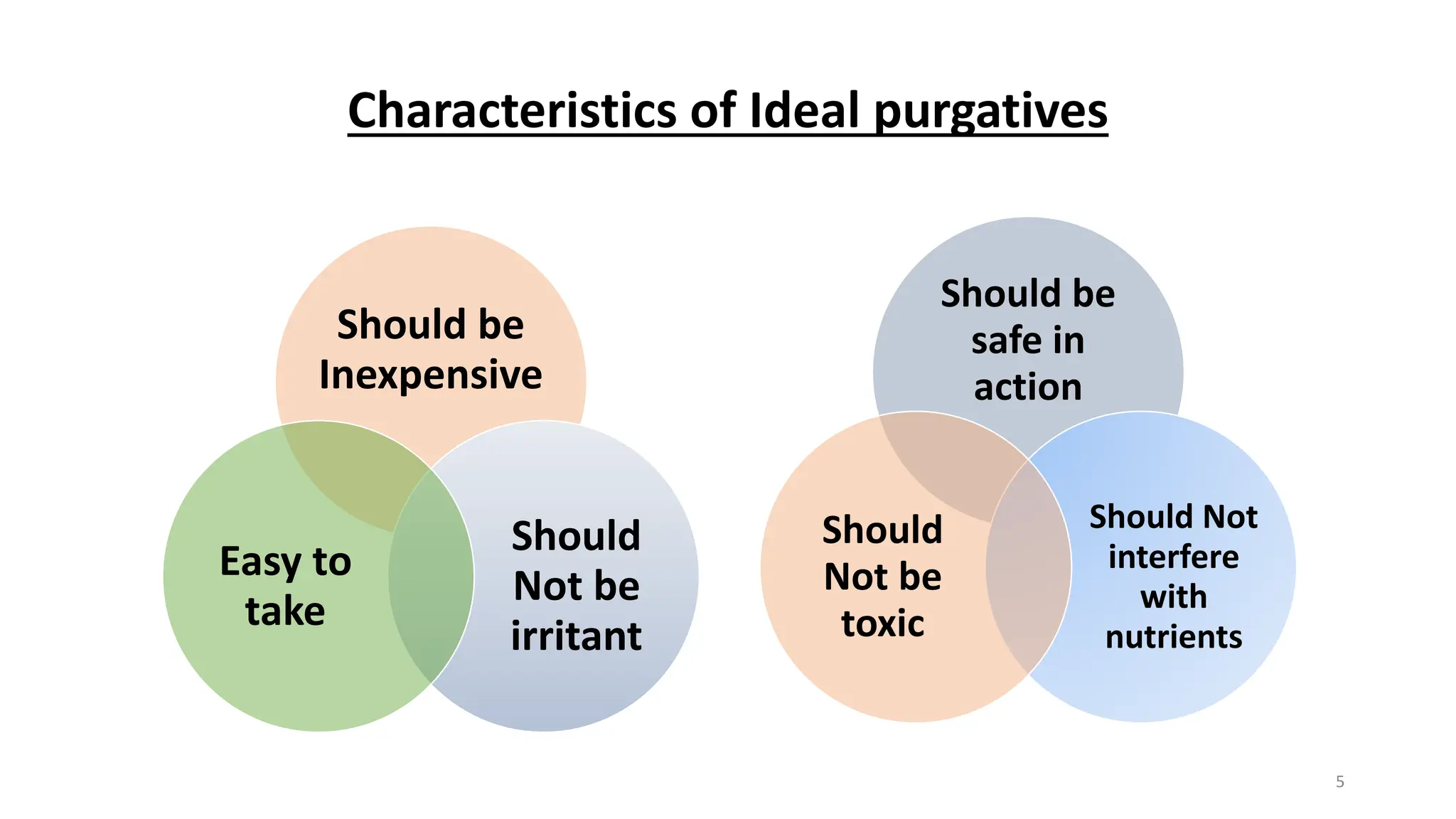
Characteristics of Ideal purgatives
Should be
Inexpensive
Should
Not be
irritant
Easy to
take
Should be
safe in
action
Should Not
interfere
with
nutrients
Should
Not be
toxic
5
On the bases of
mechanism of action
On the bases of
Site of action
On the bases of
onset of action
Classification of purgatives & laxatives
6
Classification on the basis of
mechanism of action
Colloidal purgatives
Saline purgatives
Disaccharides
• Agar, Bran, Figs, Ispaghula husk,
• Mg oxide, Mg hydroxide, Mg-
sulphate, Na citrate, K/Na titrate
• Lactulose
1. Bulk forming purgatives
1
7
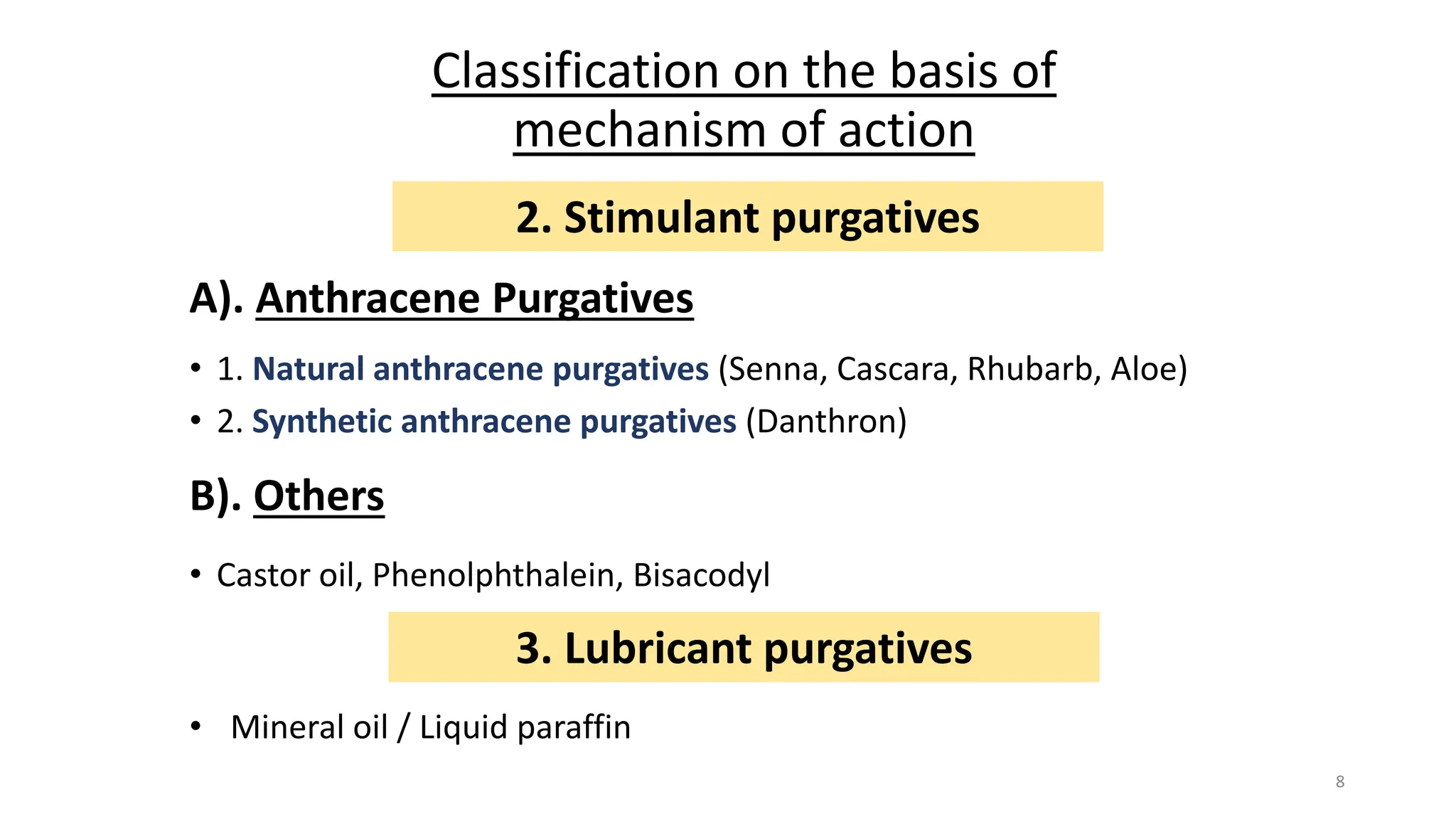
A). Anthracene Purgatives
• 1. Natural anthracene purgatives (Senna, Cascara, Rhubarb, Aloe)
• 2. Synthetic anthracene purgatives (Danthron)
B). Others
• Castor oil, Phenolphthalein, Bisacodyl
2. Stimulant purgatives
Classification on the basis of
mechanism of action
3. Lubricant purgatives
• Mineral oil / Liquid paraffin
8
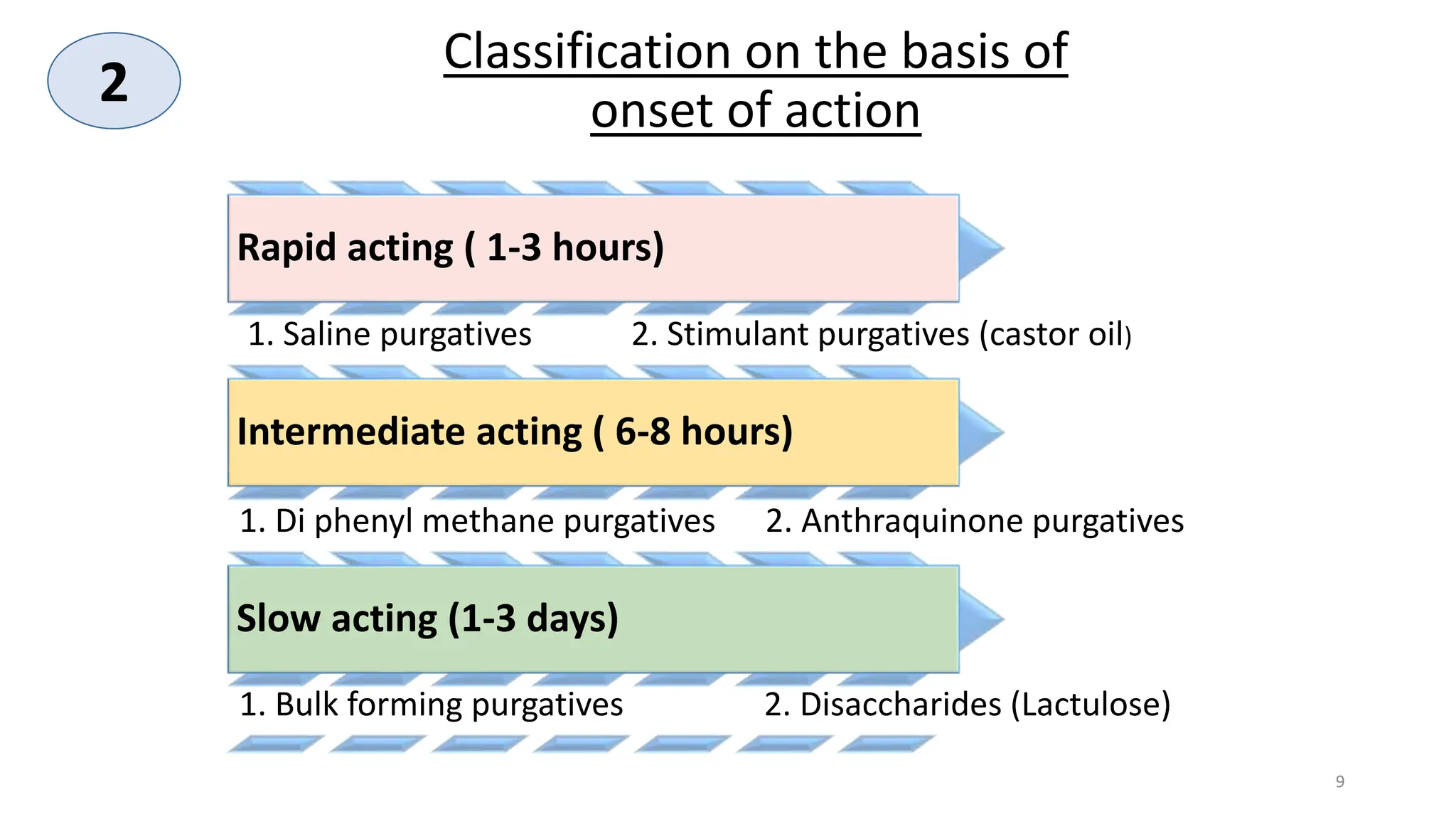
Rapid acting ( 1-3 hours)
1. Saline purgatives 2. Stimulant purgatives (castor oil)
Intermediate acting ( 6-8 hours)
1. Di phenyl methane purgatives 2. Anthraquinone purgatives
Slow acting (1-3 days)
1. Bulk forming purgatives 2. Disaccharides (Lactulose)
Classification on the basis of
onset of action
2
9
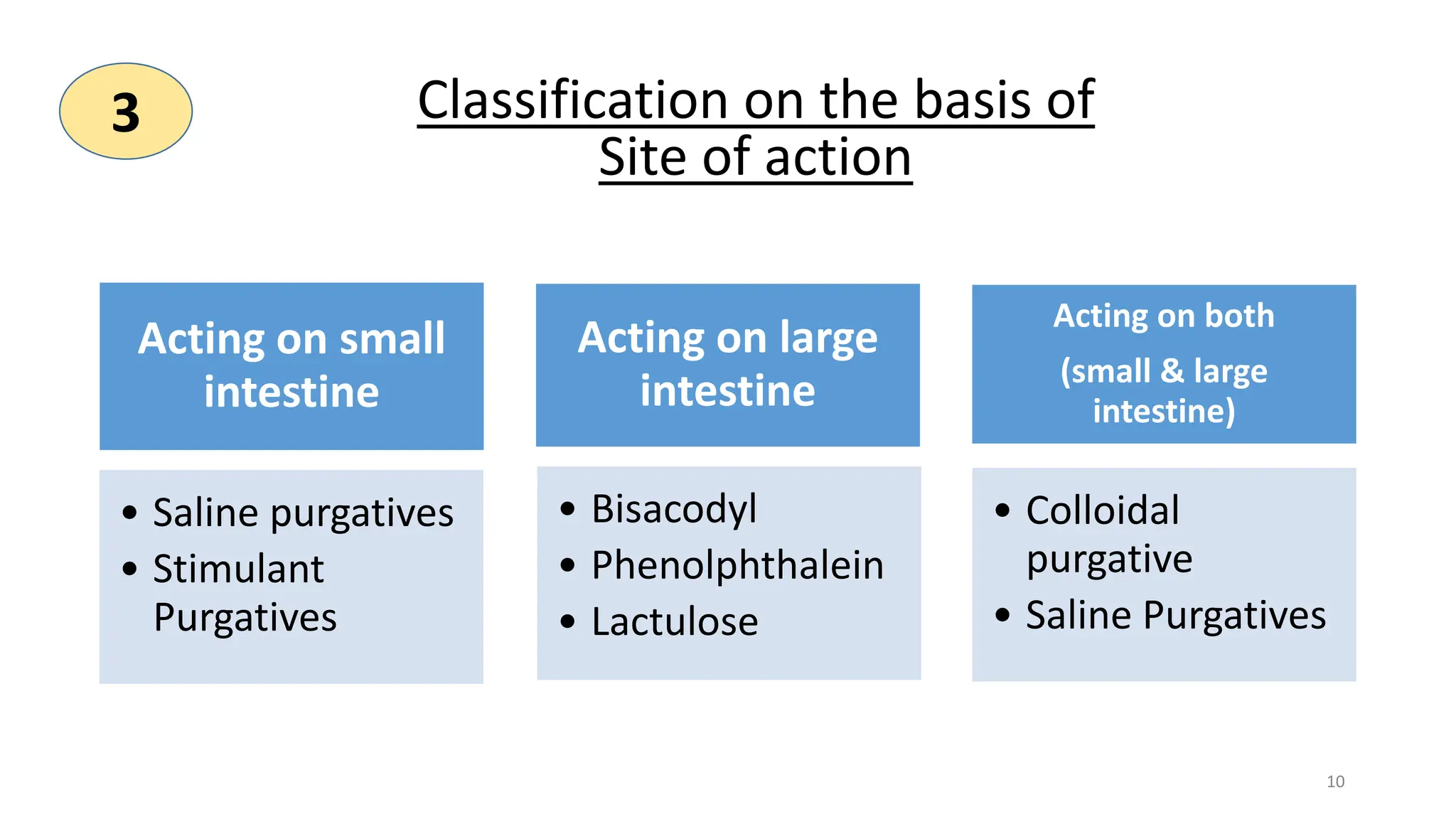
Acting on small
intestine
• Saline purgatives
• Stimulant
Purgatives
Acting on large
intestine
• Bisacodyl
• Phenolphthalein
• Lactulose
Acting on both
(small & large
intestine)
• Colloidal
purgative
• Saline Purgatives
Classification on the basis of
Site of action
3
10
Summary of commonly used laxatives
11
Book reference: Lippincott's illustrated review of Pharmacology (6th edition) Page # 410
12
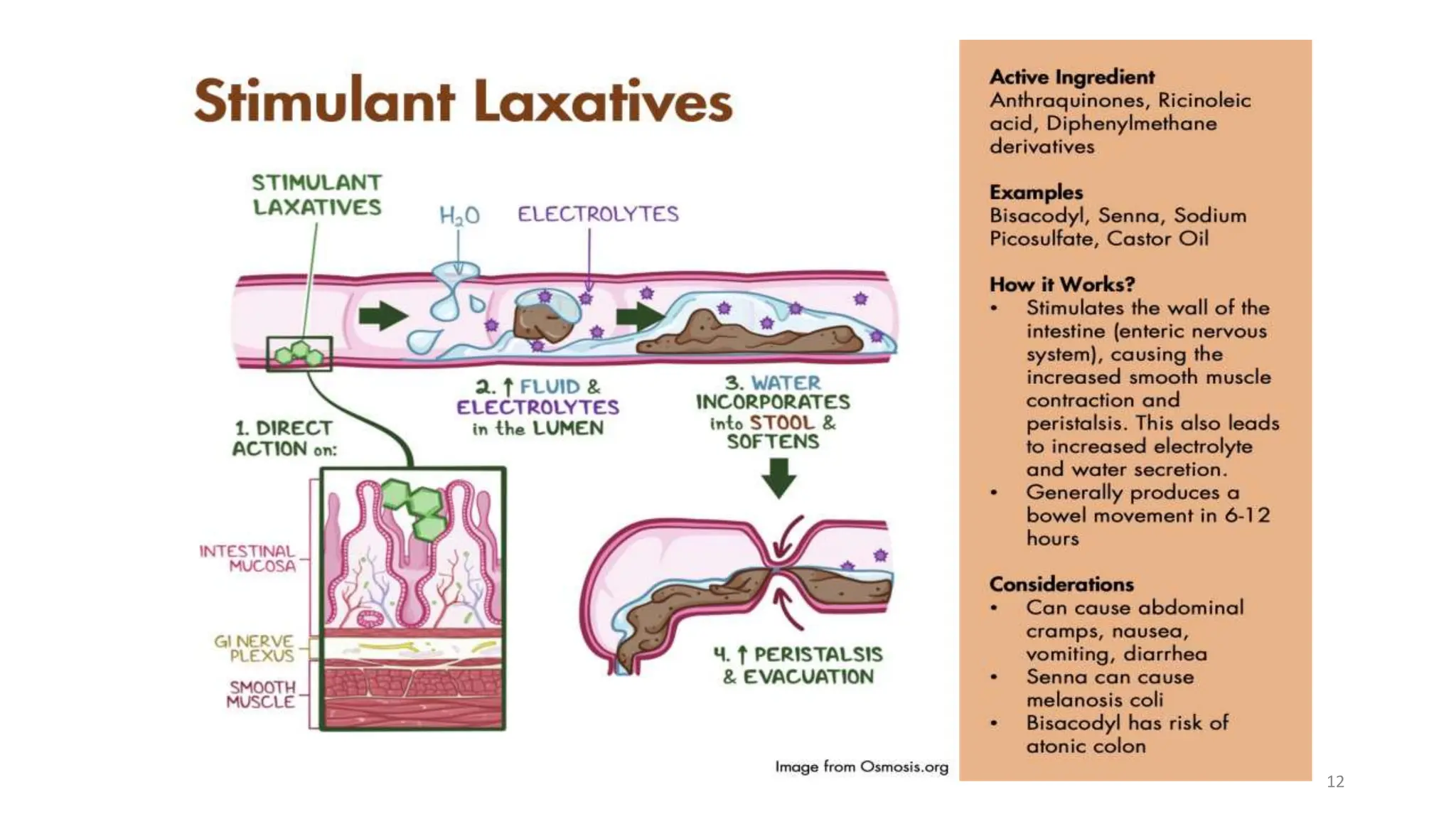
A. Stimulant Purgatives
1. Senna
 This agent is a widely used stimulant laxative.
 Its active ingredient is sennoside (a natural complex of anthraquinone
glycosides).
 Taken orally, senna causes evacuation of the bowels within 8-10
hours.
 It also causes water and electrolyte secretion into the bowel.
 In combination products with a docusate containing stool softener, it
is useful in treating opioid-induced constipation
13
2. Bisacodyl
It is a diphenyl methane derivative. It is stimulant &
irritant purgative.
Mode of action:
It is also called contact purgative because it shows its
effect by directly acting on mucosa. It reflexively
stimulate the colonic nerve fibers present in the
mucosa of large gut & increase peristaltic movements.
Dose: Rx’ Dulcolax by Merk 5 mg tablets.
14
Clinical Uses
1. It is an orally acting purgative &
especially effective in
constipation in elderly patients
& women after pregnancy.
2. To empty the gut before
proctoscopy & radiological
examination of gut.
3. Bisacodyl suppositories are used
in babies to remove constipation
15
Adverse effects
1. Abdominal pain Because
of contraction of colonic
muscles.
2. Bisacodyl suppositories
can cause rectal irritation.
Precautions
A Should not be chewed as it
leads to emesis because the
tablet is enteric coated.
Bisacodyl
3. Castor oil
• It is an irritant/stimulant purgative. It is a fixed oil extracted from castor
oil Plant (Ricinus communis).
• Seeds of castor oil contains two important constituents.
1. Racin (A toxic protein also called as tox-albumin)
2. Ricinolic acid (Important constituent responsible for drastic purgative
effects)
Mode of Action
1. In small intestine castor oil undergoes dissolution & is hydrolyzed by
pancreatic lipase into triglycerides & ricinolic acid.
Castor oil Triglycerides + Ricinolic acid
16
(Pancreatic lipase)
Mode of Action (continued)
2. Ricinolic acid then combine with Na & K salts present in small intestine to form
stimulant compounds i.e. Na & K ricinolate. These salts then intensify the
peristaltic movements in last part of small intestine by stimulating sensory nerve
endings. In this way it causes discharge of fecal matter abruptly.
3. It increases the movement of the muscles that push material through the
intestines, helping clear the bowels.
Clinical Uses:
• Limited use now a days.
• To empty the gut before proctoscopy (Visual examination of rectum or anus),
radiation or X-ray examinations
17
Adverse effects:
• Causes gripping
• May cause severe
nausea
• Its Prolong use may
interfere with
absorption of nutrients
across G.I.T.
18
Precautions
• Castor oil should not be
given at night time but
given at day time.
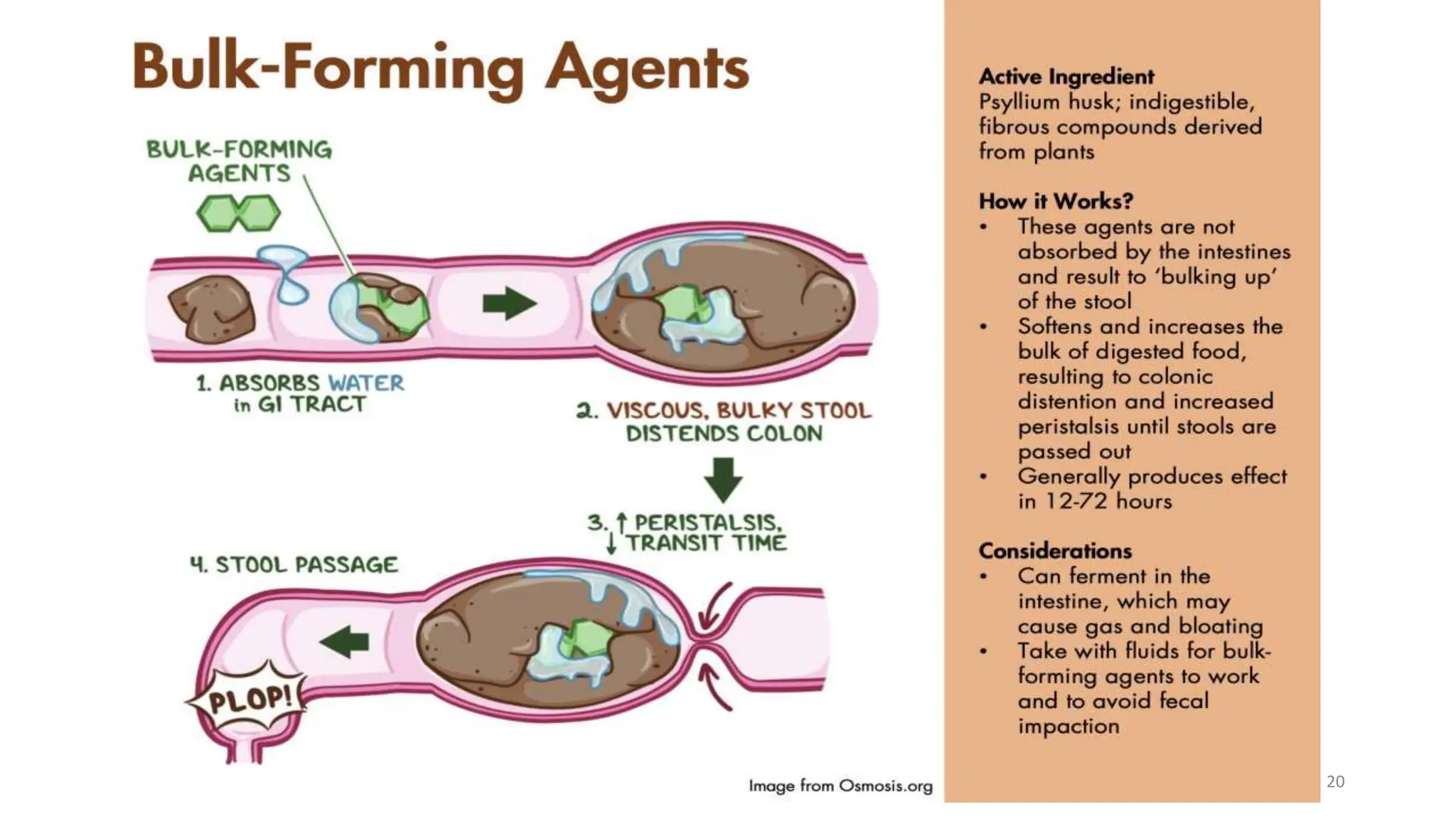
B. Bulk forming Purgatives
• Bulk forming purgatives gives bulk to the feces.
• They increase the volume of feces by attracting water molecules in
GIT, which leads to increase in feces volume that exerts pressure on
small and large intestine resulting in easy passage of stool.
Characteristics:
 Cause evacuation of soft form stool
 Do not cause gripping
 Have minimum side effects
19
20
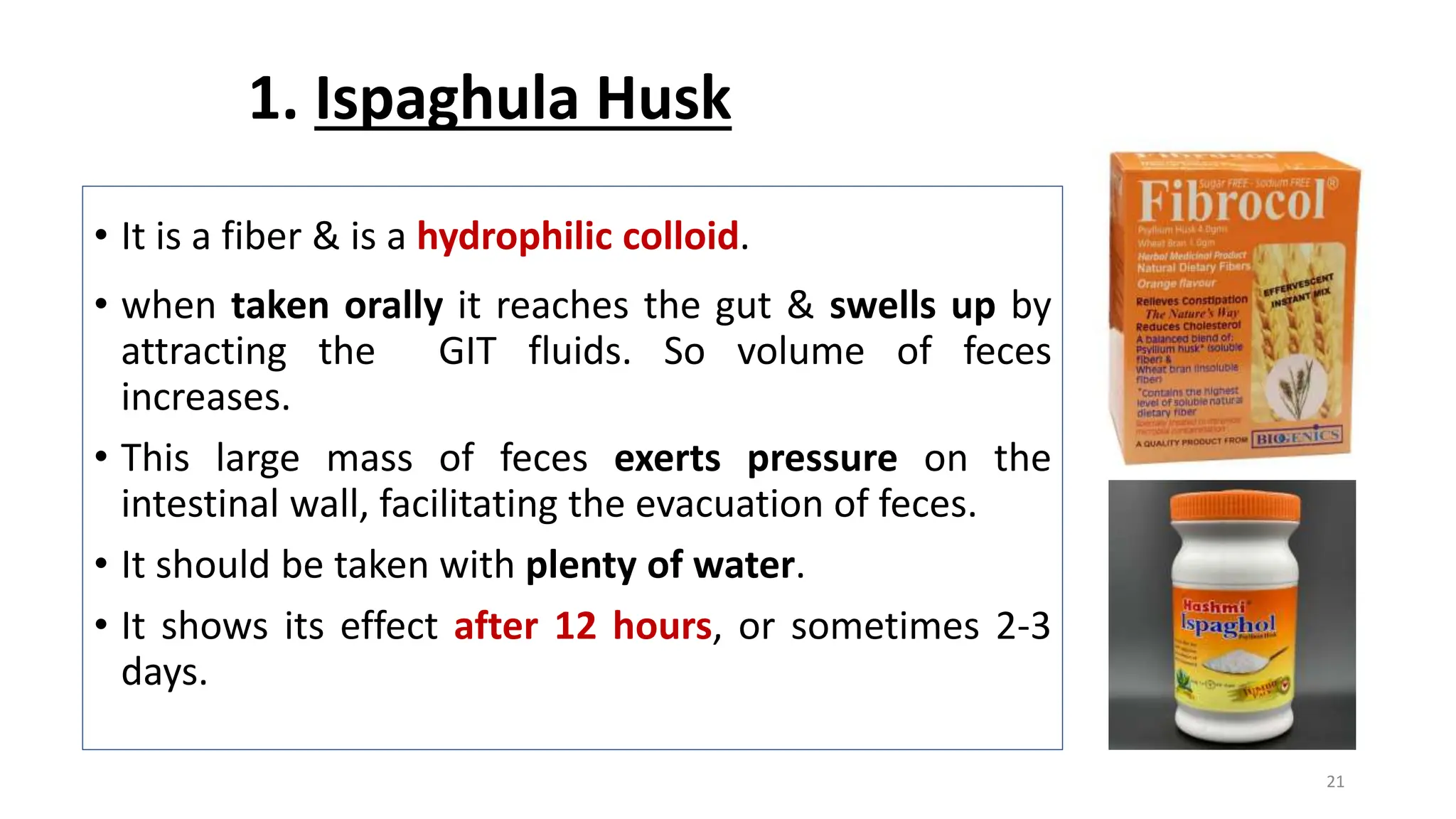
1. Ispaghula Husk
• It is a fiber & is a hydrophilic colloid.
• when taken orally it reaches the gut & swells up by
attracting the GIT fluids. So volume of feces
increases.
• This large mass of feces exerts pressure on the
intestinal wall, facilitating the evacuation of feces.
• It should be taken with plenty of water.
• It shows its effect after 12 hours, or sometimes 2-3
days.
21
2. Mg Sulphate
• Also called as Epsom salt & is crystalline in nature. Also has cooling effects.
Mode of action:
1. When given orally, it reaches the intestine & is not absorbed as it is a heavy
ion. It attracts the water from surroundings in the GIT. Thus the bulk of feces
increases that exerts pressure that leads to rapid peristaltic movements, results
in evacuation of stools.
2. Saline purgatives stimulate the release of Cholecystokinin (A hormone
which is secreted from duodenal mucosa. It stimulates the secretions of
pancreatic juice & enhances GI motility.) 22
3. Magnesium Hydroxide
• It is 7.1 - 8.5% aqueous solution of Mg(OH)₂.
• In addition to laxative effects it also has antacid
properties.
Mechanism of Action:
• All Saline purgatives have same mechanism of
action as of Mg sulphate.
Brand name:
Phillips (Milk of magnesia).
23
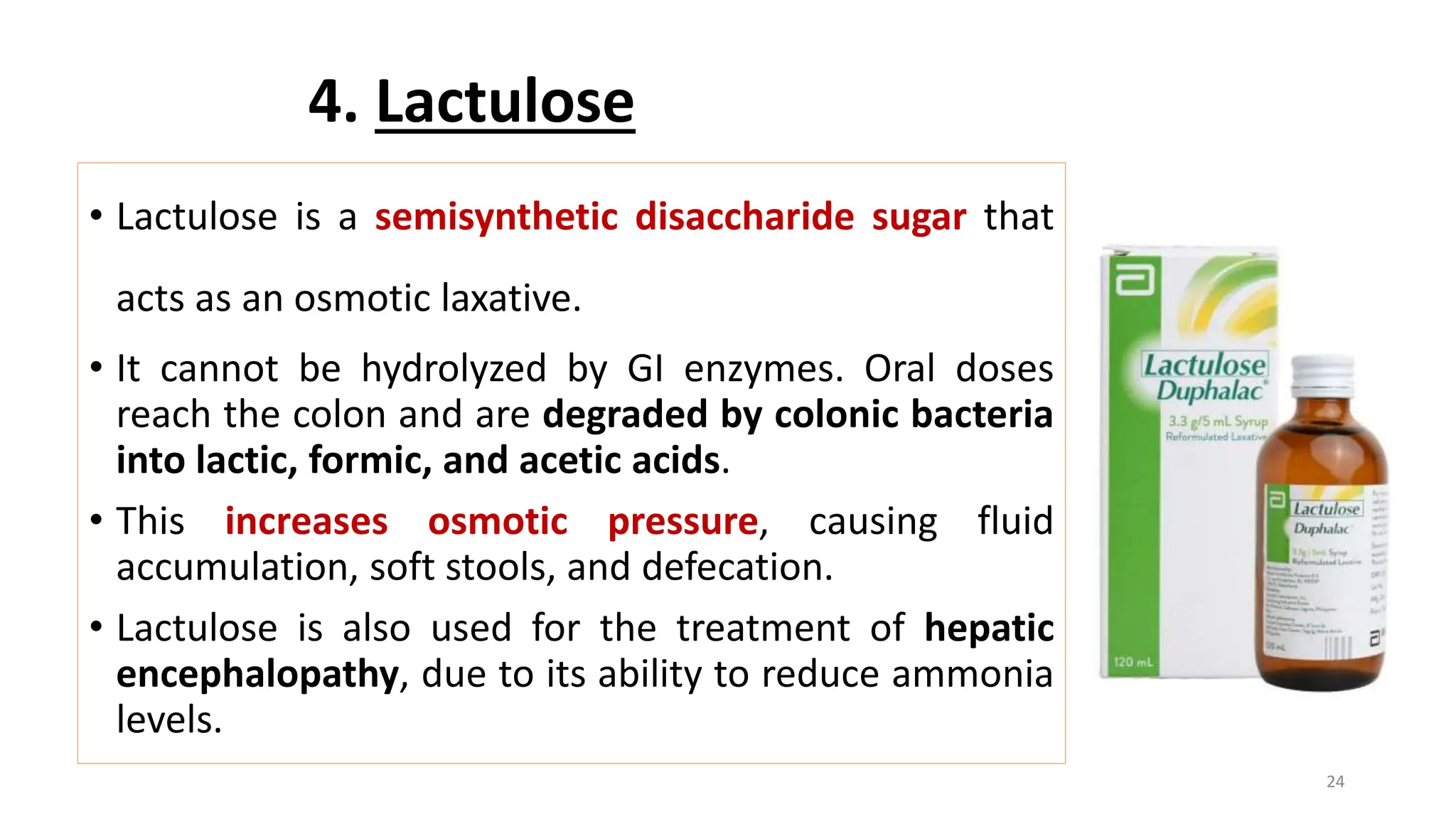
4. Lactulose
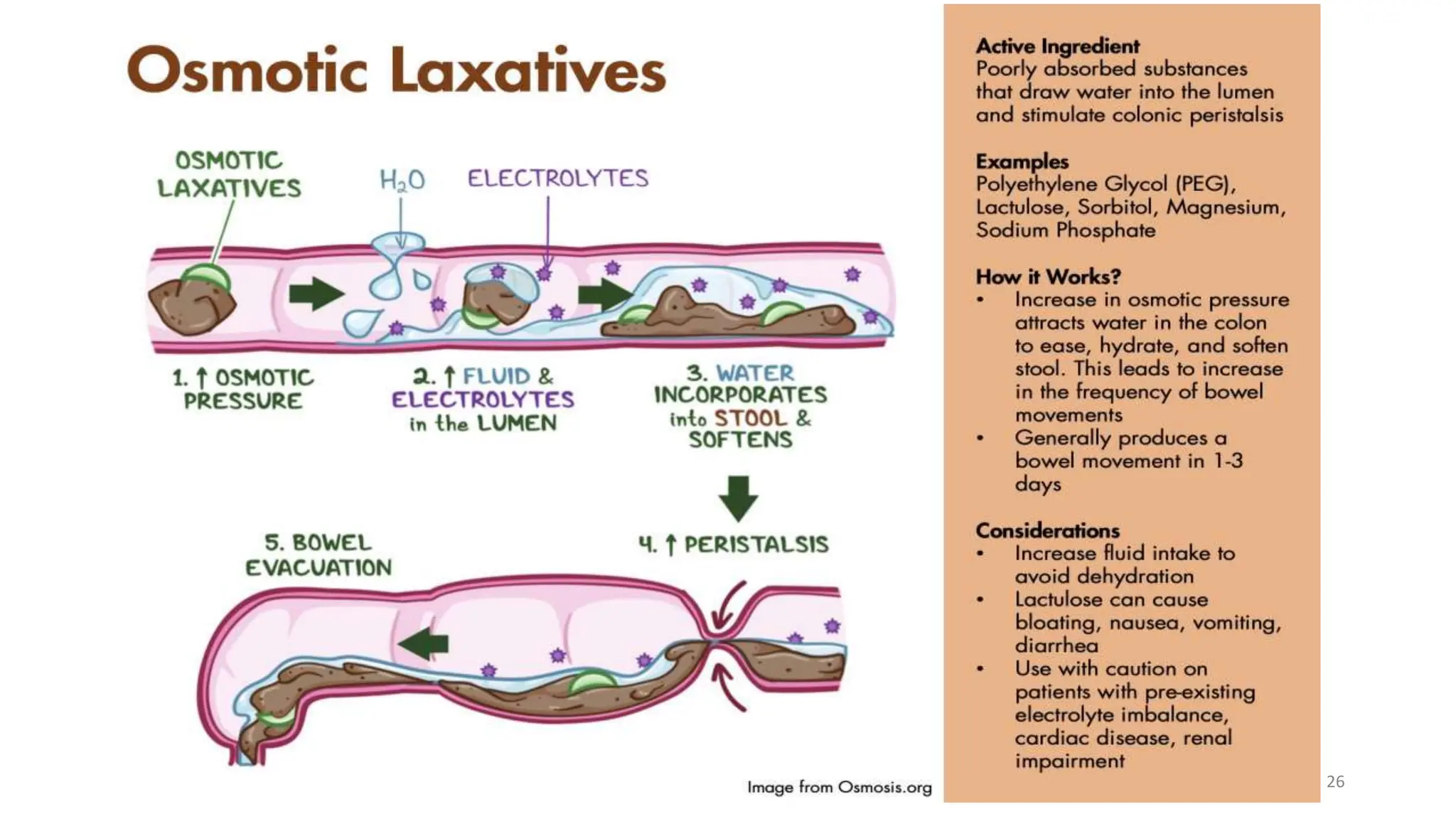
• Lactulose is a semisynthetic disaccharide sugar that
acts as an osmotic laxative.
• It cannot be hydrolyzed by GI enzymes. Oral doses
reach the colon and are degraded by colonic bacteria
into lactic, formic, and acetic acids.
• This increases osmotic pressure, causing fluid
accumulation, soft stools, and defecation.
• Lactulose is also used for the treatment of hepatic
encephalopathy, due to its ability to reduce ammonia
levels.
24
C. Lubricant Purgatives
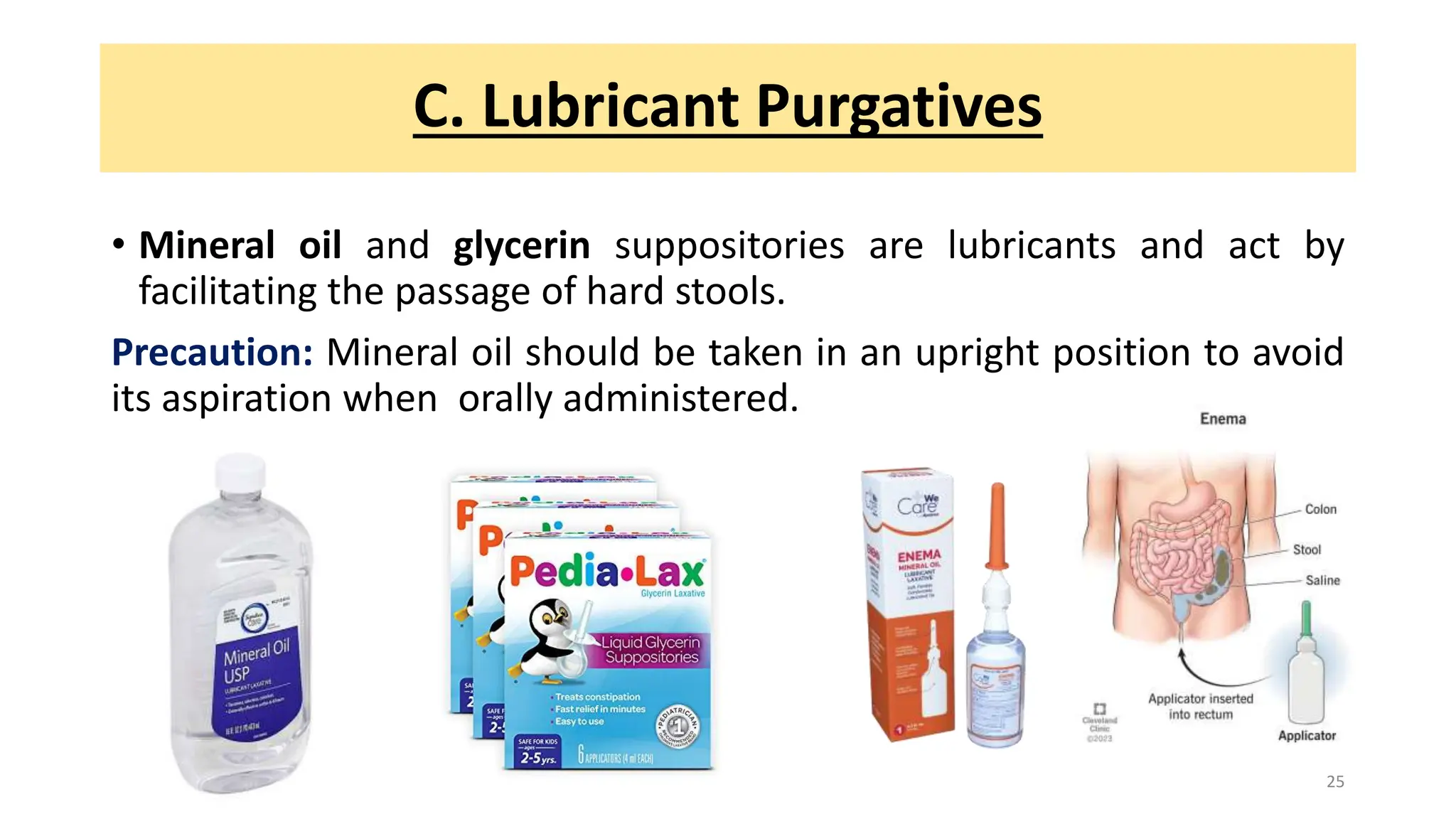
• Mineral oil and glycerin suppositories are lubricants and act by
facilitating the passage of hard stools.
Precaution: Mineral oil should be taken in an upright position to avoid
its aspiration when orally administered.
25
26
D. Stool softeners
(emollient laxatives or surfactants)
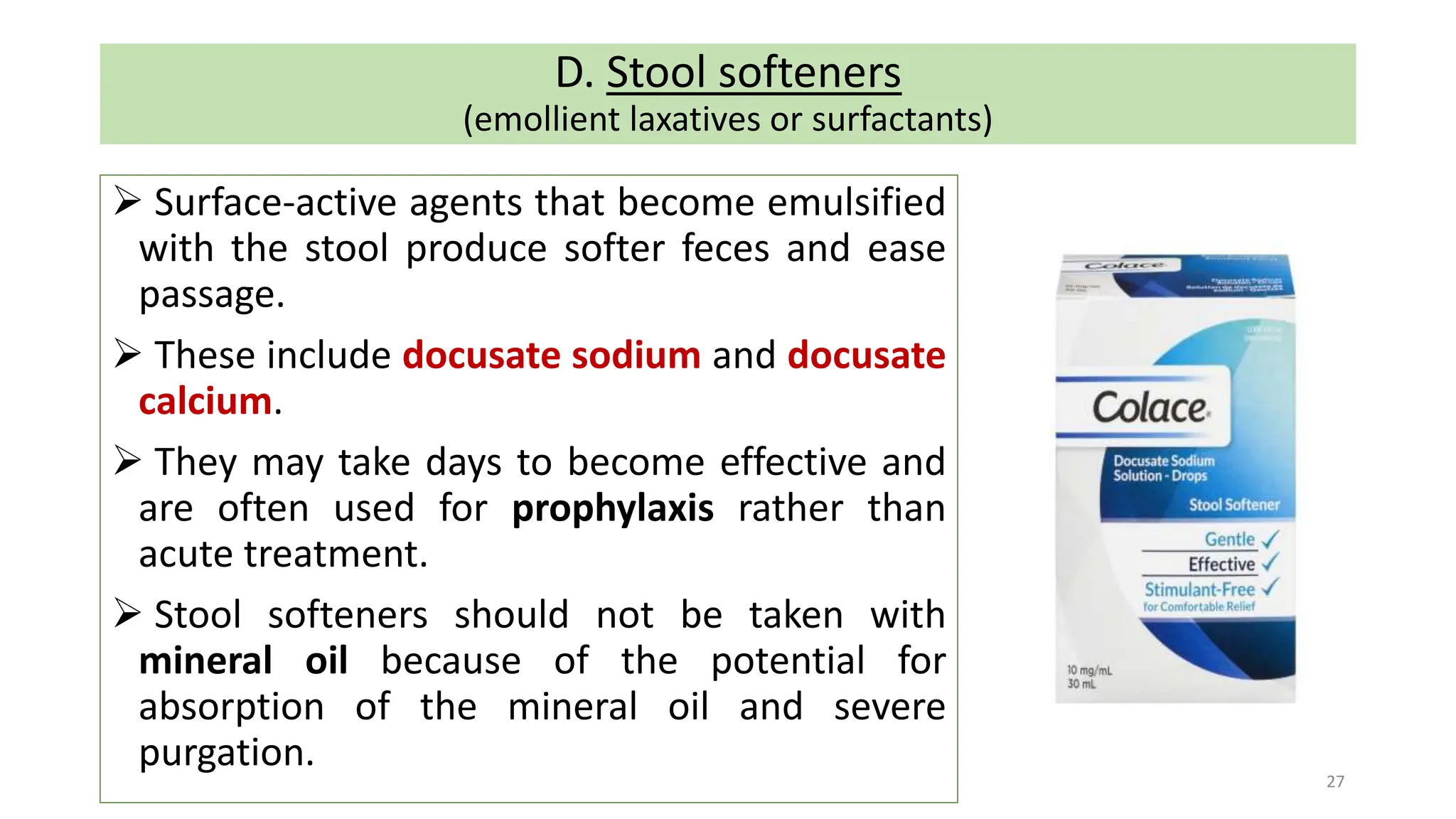
 Surface-active agents that become emulsified
with the stool produce softer feces and ease
passage.
 These include docusate sodium and docusate
calcium.
 They may take days to become effective and
are often used for prophylaxis rather than
acute treatment.
 Stool softeners should not be taken with
mineral oil because of the potential for
absorption of the mineral oil and severe
purgation.
27
28
E. Chloride Channel Activators
29
• Lubiprostone, is currently the only agent in this class, works by
activating chloride channels to increase fluid secretion in the intestinal
lumen.
• This eases the passage of stools and causes little change in electrolyte
balance.
• Lubiprostone is used in the treatment of chronic constipation, because
it does not causes tolerance or dependency.
• Also, it has minimum drug–drug interactions because its metabolism
occurs quickly in the stomach and jejunum.
Summary of commonly used laxatives
30
Book reference: Lippincott's illustrated review of Pharmacology (6th edition) Page # 410
31
Thank you !
32

Purgatives & Laxatives, by Baqir Naqvi.pptx

  • 1.
    Purgatives & Laxatives (Pharmacology& Therapeutics-1) Lecture By Dr. Syed Baqir Raza Naqvi (BSc, Pharm-D, M. Phil-Pharmacology) Nazar College of Pharmacy DAKSON Institute of Health Sciences, Islamabad 1
  • 2.
    Purgatives & Laxatives Drugsused for constipation are called purgatives & laxatives. Constipation It is infrequent or difficult evacuation of hard stool. May also described as “ A sense of incomplete evacuation.” Causes: 1. Irregular bowel habits 2. Spasm of small segments of sigmoid colon. 3. Irritable colon syndrome 4. Mega colon (Abnormally large dilated colon) 5. Hypothyroidism Drugs causing Constipation 1. Opioids analgesics 2. Anti depressants 3. Ca, Aluminum containing antacids 4. Anti inflammatory agents 2
  • 3.
    Purgatives • These arethe drugs which promotes defecation • Drugs which are used for evacuation of feces or bowel. Therefore, these are also termed as evacuants. • These are also called emollients as they have softening and soothing effects on fecal matter & on GIT. Purgatives may be; Cathartics Laxatives 3
  • 4.
    Cathartics Laxatives  Catharticsare stronger in action.  Causes severe purgation.  Cause gripping (contraction of colon muscles resulting in spasm & pain).  Cause the passage of watery stool.  Cathartics in low doses acts as laxatives.  Laxatives are weaker in action.  Do not causes gripping  Causes the passage of soft formed stool.  Laxatives in higher doses act as cathartics 4
  • 5.
    Characteristics of Idealpurgatives Should be Inexpensive Should Not be irritant Easy to take Should be safe in action Should Not interfere with nutrients Should Not be toxic 5
  • 6.
    On the basesof mechanism of action On the bases of Site of action On the bases of onset of action Classification of purgatives & laxatives 6
  • 7.
    Classification on thebasis of mechanism of action Colloidal purgatives Saline purgatives Disaccharides • Agar, Bran, Figs, Ispaghula husk, • Mg oxide, Mg hydroxide, Mg- sulphate, Na citrate, K/Na titrate • Lactulose 1. Bulk forming purgatives 1 7
  • 8.
    A). Anthracene Purgatives •1. Natural anthracene purgatives (Senna, Cascara, Rhubarb, Aloe) • 2. Synthetic anthracene purgatives (Danthron) B). Others • Castor oil, Phenolphthalein, Bisacodyl 2. Stimulant purgatives Classification on the basis of mechanism of action 3. Lubricant purgatives • Mineral oil / Liquid paraffin 8
  • 9.
    Rapid acting (1-3 hours) 1. Saline purgatives 2. Stimulant purgatives (castor oil) Intermediate acting ( 6-8 hours) 1. Di phenyl methane purgatives 2. Anthraquinone purgatives Slow acting (1-3 days) 1. Bulk forming purgatives 2. Disaccharides (Lactulose) Classification on the basis of onset of action 2 9
  • 10.
    Acting on small intestine •Saline purgatives • Stimulant Purgatives Acting on large intestine • Bisacodyl • Phenolphthalein • Lactulose Acting on both (small & large intestine) • Colloidal purgative • Saline Purgatives Classification on the basis of Site of action 3 10
  • 11.
    Summary of commonlyused laxatives 11 Book reference: Lippincott's illustrated review of Pharmacology (6th edition) Page # 410
  • 12.
  • 13.
    A. Stimulant Purgatives 1.Senna  This agent is a widely used stimulant laxative.  Its active ingredient is sennoside (a natural complex of anthraquinone glycosides).  Taken orally, senna causes evacuation of the bowels within 8-10 hours.  It also causes water and electrolyte secretion into the bowel.  In combination products with a docusate containing stool softener, it is useful in treating opioid-induced constipation 13
  • 14.
    2. Bisacodyl It isa diphenyl methane derivative. It is stimulant & irritant purgative. Mode of action: It is also called contact purgative because it shows its effect by directly acting on mucosa. It reflexively stimulate the colonic nerve fibers present in the mucosa of large gut & increase peristaltic movements. Dose: Rx’ Dulcolax by Merk 5 mg tablets. 14
  • 15.
    Clinical Uses 1. Itis an orally acting purgative & especially effective in constipation in elderly patients & women after pregnancy. 2. To empty the gut before proctoscopy & radiological examination of gut. 3. Bisacodyl suppositories are used in babies to remove constipation 15 Adverse effects 1. Abdominal pain Because of contraction of colonic muscles. 2. Bisacodyl suppositories can cause rectal irritation. Precautions A Should not be chewed as it leads to emesis because the tablet is enteric coated. Bisacodyl
  • 16.
    3. Castor oil •It is an irritant/stimulant purgative. It is a fixed oil extracted from castor oil Plant (Ricinus communis). • Seeds of castor oil contains two important constituents. 1. Racin (A toxic protein also called as tox-albumin) 2. Ricinolic acid (Important constituent responsible for drastic purgative effects) Mode of Action 1. In small intestine castor oil undergoes dissolution & is hydrolyzed by pancreatic lipase into triglycerides & ricinolic acid. Castor oil Triglycerides + Ricinolic acid 16 (Pancreatic lipase)
  • 17.
    Mode of Action(continued) 2. Ricinolic acid then combine with Na & K salts present in small intestine to form stimulant compounds i.e. Na & K ricinolate. These salts then intensify the peristaltic movements in last part of small intestine by stimulating sensory nerve endings. In this way it causes discharge of fecal matter abruptly. 3. It increases the movement of the muscles that push material through the intestines, helping clear the bowels. Clinical Uses: • Limited use now a days. • To empty the gut before proctoscopy (Visual examination of rectum or anus), radiation or X-ray examinations 17
  • 18.
    Adverse effects: • Causesgripping • May cause severe nausea • Its Prolong use may interfere with absorption of nutrients across G.I.T. 18 Precautions • Castor oil should not be given at night time but given at day time.
  • 19.
    B. Bulk formingPurgatives • Bulk forming purgatives gives bulk to the feces. • They increase the volume of feces by attracting water molecules in GIT, which leads to increase in feces volume that exerts pressure on small and large intestine resulting in easy passage of stool. Characteristics:  Cause evacuation of soft form stool  Do not cause gripping  Have minimum side effects 19
  • 20.
  • 21.
    1. Ispaghula Husk •It is a fiber & is a hydrophilic colloid. • when taken orally it reaches the gut & swells up by attracting the GIT fluids. So volume of feces increases. • This large mass of feces exerts pressure on the intestinal wall, facilitating the evacuation of feces. • It should be taken with plenty of water. • It shows its effect after 12 hours, or sometimes 2-3 days. 21
  • 22.
    2. Mg Sulphate •Also called as Epsom salt & is crystalline in nature. Also has cooling effects. Mode of action: 1. When given orally, it reaches the intestine & is not absorbed as it is a heavy ion. It attracts the water from surroundings in the GIT. Thus the bulk of feces increases that exerts pressure that leads to rapid peristaltic movements, results in evacuation of stools. 2. Saline purgatives stimulate the release of Cholecystokinin (A hormone which is secreted from duodenal mucosa. It stimulates the secretions of pancreatic juice & enhances GI motility.) 22
  • 23.
    3. Magnesium Hydroxide •It is 7.1 - 8.5% aqueous solution of Mg(OH)₂. • In addition to laxative effects it also has antacid properties. Mechanism of Action: • All Saline purgatives have same mechanism of action as of Mg sulphate. Brand name: Phillips (Milk of magnesia). 23
  • 24.
    4. Lactulose • Lactuloseis a semisynthetic disaccharide sugar that acts as an osmotic laxative. • It cannot be hydrolyzed by GI enzymes. Oral doses reach the colon and are degraded by colonic bacteria into lactic, formic, and acetic acids. • This increases osmotic pressure, causing fluid accumulation, soft stools, and defecation. • Lactulose is also used for the treatment of hepatic encephalopathy, due to its ability to reduce ammonia levels. 24
  • 25.
    C. Lubricant Purgatives •Mineral oil and glycerin suppositories are lubricants and act by facilitating the passage of hard stools. Precaution: Mineral oil should be taken in an upright position to avoid its aspiration when orally administered. 25
  • 26.
  • 27.
    D. Stool softeners (emollientlaxatives or surfactants)  Surface-active agents that become emulsified with the stool produce softer feces and ease passage.  These include docusate sodium and docusate calcium.  They may take days to become effective and are often used for prophylaxis rather than acute treatment.  Stool softeners should not be taken with mineral oil because of the potential for absorption of the mineral oil and severe purgation. 27
  • 28.
  • 29.
    E. Chloride ChannelActivators 29 • Lubiprostone, is currently the only agent in this class, works by activating chloride channels to increase fluid secretion in the intestinal lumen. • This eases the passage of stools and causes little change in electrolyte balance. • Lubiprostone is used in the treatment of chronic constipation, because it does not causes tolerance or dependency. • Also, it has minimum drug–drug interactions because its metabolism occurs quickly in the stomach and jejunum.
  • 30.
    Summary of commonlyused laxatives 30 Book reference: Lippincott's illustrated review of Pharmacology (6th edition) Page # 410
  • 31.
  • 32.