PEDIATRIC PAIN ASSESSMENT
PAIN ASSESSMENT
 Get detailed assessment
   History of primary illness

   Description of pain

   Experience with pain medications

   Use of non-pharmacologic approaches

   Parent personal experience with pain meds

   Social & spiritual factors
PAIN ASSESSMENT TOOLS:
SCALES DO NOT ALWAYS REPRESENT MULTIDIMENSIONAL ASPECT OF
PAIN
BIRTH - 2 YEARS
Pain Perception
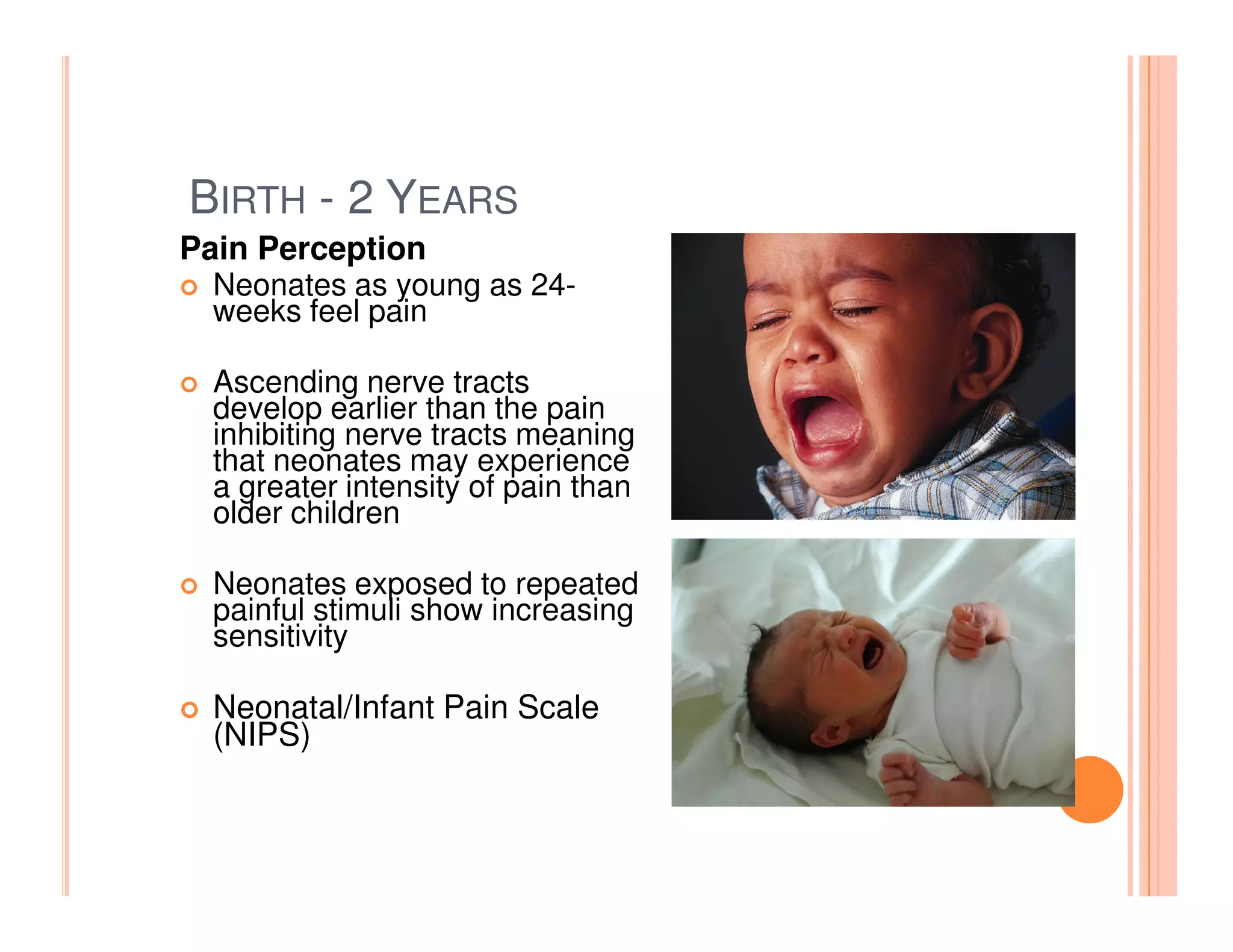
  Neonates as young as 24-
  weeks feel pain

  Ascending nerve tracts
  develop earlier than the pain
  inhibiting nerve tracts meaning
  that neonates may experience
  a greater intensity of pain than
  older children

  Neonates exposed to repeated
  painful stimuli show increasing
  sensitivity

  Neonatal/Infant Pain Scale
  (NIPS)
BIRTH - 2 YEARS (CONTINUED)
Cognition
 No “understanding” of pain and unable to provide a
 self-report
 12 to 18 months, beginning of reasoning and
 language (1- or 2-word statements)
 Major cognitive processing through senses (eyes,
 ears, hands)
 CHEOPS (1-7 years)
     Looks at types of pain behavior: cry, facial, verbal,
     torso, touch and legs.
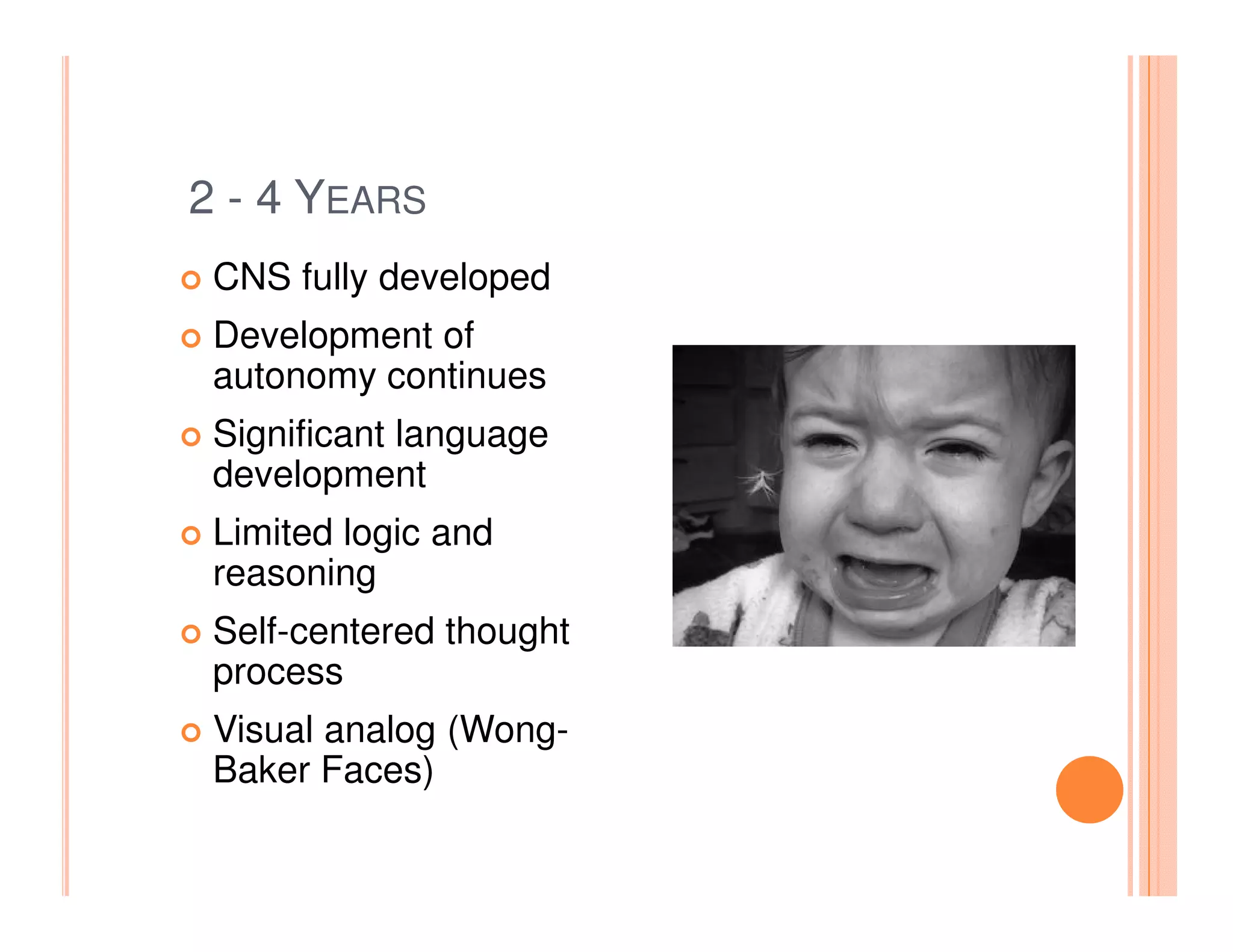
2 - 4 YEARS
 CNS fully developed
 Development of
 autonomy continues
 Significant language
 development
 Limited logic and
 reasoning
 Self-centered thought
 process
 Visual analog (Wong-
 Baker Faces)
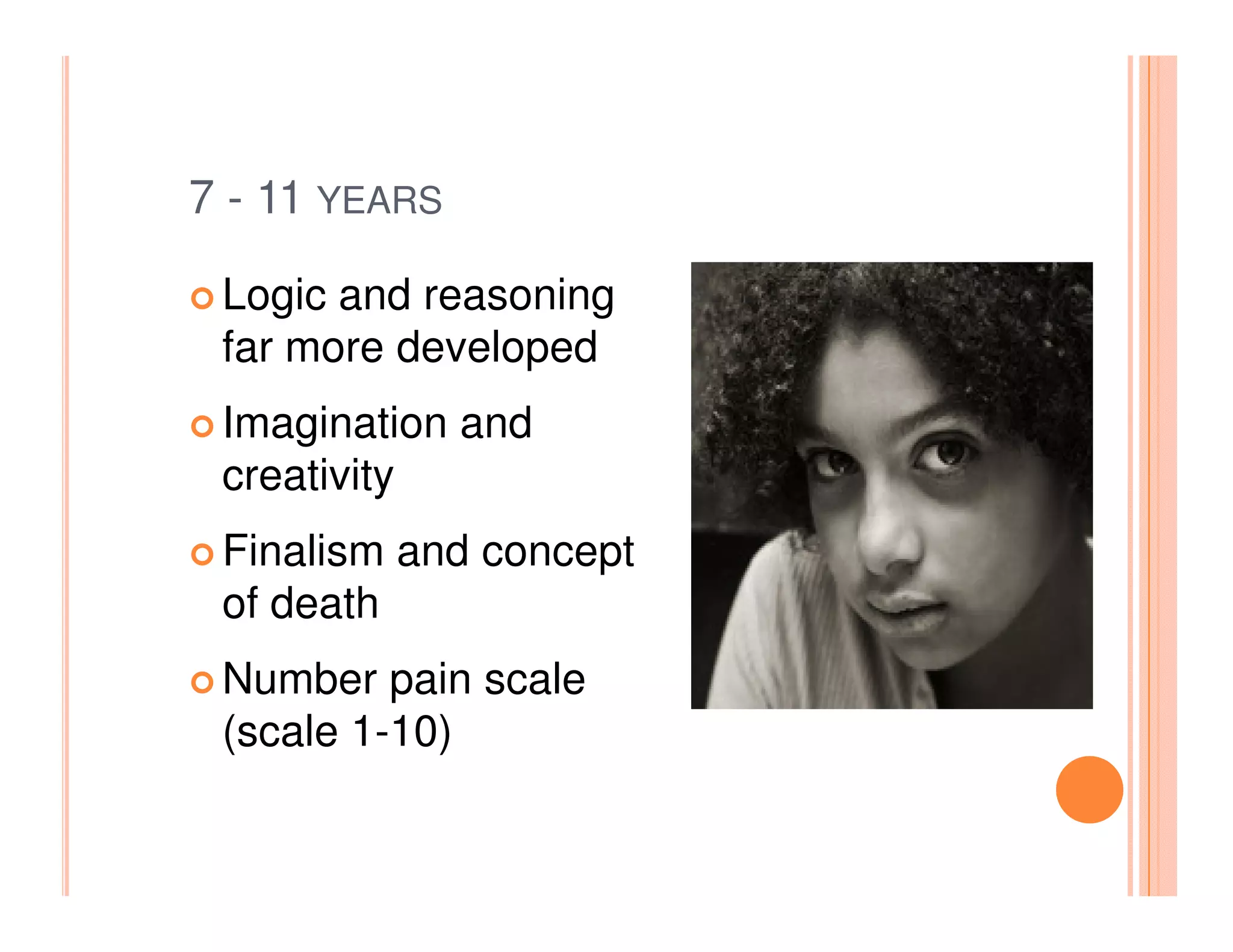
7 - 11 YEARS

 Logic and reasoning
 far more developed
 Imagination and
 creativity
 Finalism and concept
 of death
 Number pain scale
 (scale 1-10)
Adolescents (11+ years)

  Cognitively adults
    Same pain assessment methods as adults

  Abstract thinking and understanding hypothetical
  situations

  Emotional needs
    Include them in the process
    Respect their privacy
    Respect their pain reports
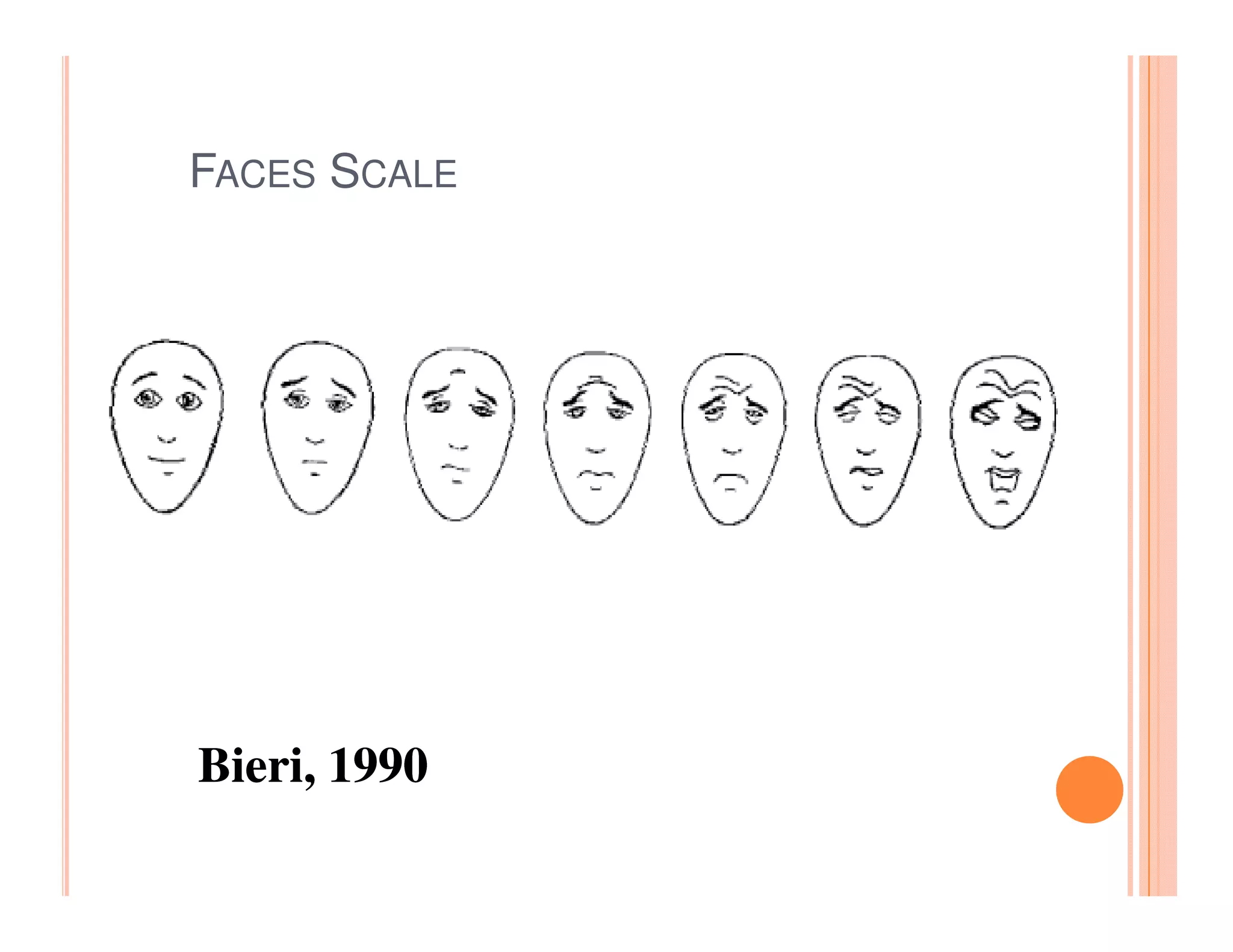
FACES SCALE


Bieri, 1990
NON-VERBAL CHILDREN
FLACC Scale
Pain Assessment
 Hospitals should use a standard pain scale for the
 various age groups to allow continuity.

 Self report scores (e.g. numerical rating scale) can
 mislead. A score of 4 may denote severe pain to
 one adolescent while 8 may be severe to another.

 Pain can be worsened by anxiety, depression and
 spiritual crisis. We must consider this in our
 assessment.
References
 Bieri D, Reeve RA, Champion GD, Addicoat L, Ziegler JB. The
 Faces Pain Scale for the self-assessment of the severity of
 pain experienced by children: development, initial validation,
 and preliminary investigation for ratio scale properties. Pain.
 1990; 41(2):139-50.
 Friedrichsdorf SJ, Kang TI. The management of pain in
 children with life-limiting illnesses. Pediatric clinics of North
 America. 2007; 54: 645-672.
 Tomlinson D, Baeyer CL, Stinson JN, Sung L.A systematic
 review of Faces scales for the self-report of pain intensity in
 children. Pediatrics. 2010; 126: e1168.

Pediatric pain assessment

  • 1.
  • 2.
    PAIN ASSESSMENT Getdetailed assessment History of primary illness Description of pain Experience with pain medications Use of non-pharmacologic approaches Parent personal experience with pain meds Social & spiritual factors
  • 3.
    PAIN ASSESSMENT TOOLS: SCALESDO NOT ALWAYS REPRESENT MULTIDIMENSIONAL ASPECT OF PAIN
  • 4.
    BIRTH - 2YEARS Pain Perception Neonates as young as 24- weeks feel pain Ascending nerve tracts develop earlier than the pain inhibiting nerve tracts meaning that neonates may experience a greater intensity of pain than older children Neonates exposed to repeated painful stimuli show increasing sensitivity Neonatal/Infant Pain Scale (NIPS)
  • 5.
    BIRTH - 2YEARS (CONTINUED) Cognition No “understanding” of pain and unable to provide a self-report 12 to 18 months, beginning of reasoning and language (1- or 2-word statements) Major cognitive processing through senses (eyes, ears, hands) CHEOPS (1-7 years) Looks at types of pain behavior: cry, facial, verbal, torso, touch and legs.
  • 6.
    2 - 4YEARS CNS fully developed Development of autonomy continues Significant language development Limited logic and reasoning Self-centered thought process Visual analog (Wong- Baker Faces)
  • 7.
    7 - 11YEARS Logic and reasoning far more developed Imagination and creativity Finalism and concept of death Number pain scale (scale 1-10)
  • 8.
    Adolescents (11+ years) Cognitively adults Same pain assessment methods as adults Abstract thinking and understanding hypothetical situations Emotional needs Include them in the process Respect their privacy Respect their pain reports
  • 9.
  • 10.
  • 11.
    Pain Assessment Hospitalsshould use a standard pain scale for the various age groups to allow continuity. Self report scores (e.g. numerical rating scale) can mislead. A score of 4 may denote severe pain to one adolescent while 8 may be severe to another. Pain can be worsened by anxiety, depression and spiritual crisis. We must consider this in our assessment.
  • 12.
    References Bieri D,Reeve RA, Champion GD, Addicoat L, Ziegler JB. The Faces Pain Scale for the self-assessment of the severity of pain experienced by children: development, initial validation, and preliminary investigation for ratio scale properties. Pain. 1990; 41(2):139-50. Friedrichsdorf SJ, Kang TI. The management of pain in children with life-limiting illnesses. Pediatric clinics of North America. 2007; 54: 645-672. Tomlinson D, Baeyer CL, Stinson JN, Sung L.A systematic review of Faces scales for the self-report of pain intensity in children. Pediatrics. 2010; 126: e1168.