Regulation of Intestinal Function
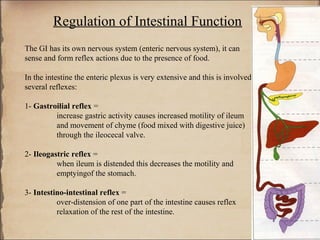
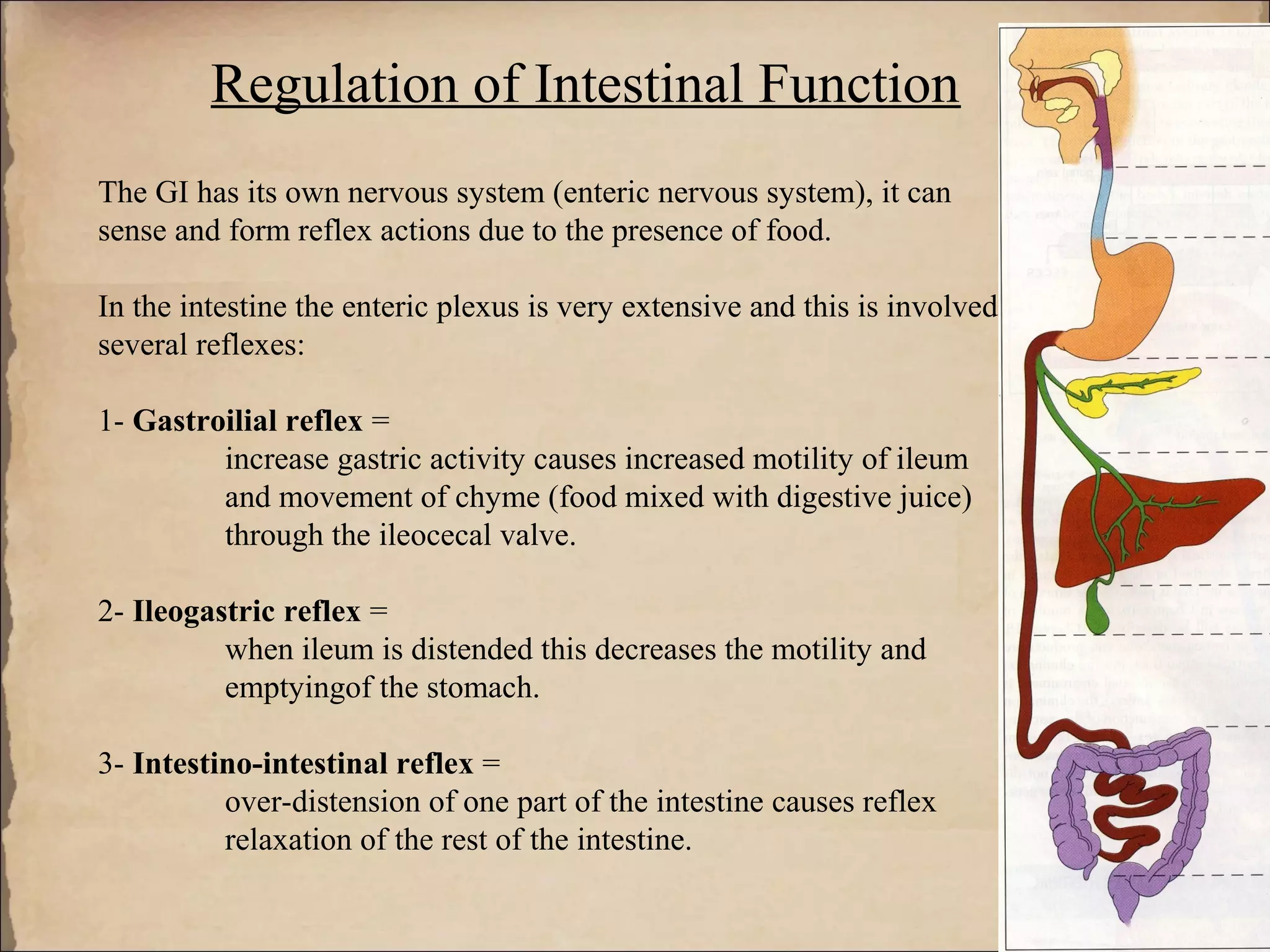
The GI has its own nervous system (enteric nervous system), it can
sense and form reflex actions due to the presence of food.

In the intestine the enteric plexus is very extensive and this is involved in
several reflexes:

1- Gastroilial reflex =
         increase gastric activity causes increased motility of ileum
         and movement of chyme (food mixed with digestive juice)
         through the ileocecal valve.

2- Ileogastric reflex =
          when ileum is distended this decreases the motility and
          emptyingof the stomach.

3- Intestino-intestinal reflex =
          over-distension of one part of the intestine causes reflex
          relaxation of the rest of the intestine.
Regulation of Pancreatic Secretion
HORMONES :
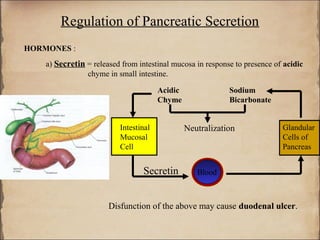
    a) Secretin = released from intestinal mucosa in response to presence of acidic
                chyme in small intestine.

                                       Acidic               Sodium
                                       Chyme                Bicarbonate


                          Intestinal            Neutralization              Glandular
                          Mucosal                                           Cells of
                          Cell                                              Pancreas


                                  Secretin         Blood


                       Disfunction of the above may cause duodenal ulcer.
Regulation of Pancreatic Secretion
HORMONES :
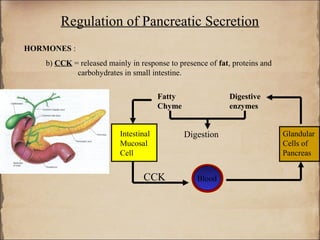
    b) CCK = released mainly in response to presence of fat, proteins and
            carbohydrates in small intestine.

                                       Fatty                Digestive
                                       Chyme                enzymes


                          Intestinal           Digestion                    Glandular
                          Mucosal                                           Cells of
                          Cell                                              Pancreas


                                 CCK              Blood
Gallbladder Emptying
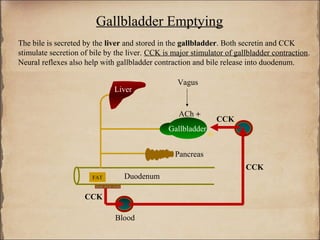
The bile is secreted by the liver and stored in the gallbladder. Both secretin and CCK
stimulate secretion of bile by the liver. CCK is major stimulator of gallbladder contraction.
Neural reflexes also help with gallbladder contraction and bile release into duodenum.

                                                  Vagus
                              Liver


                                                   ACh +
                                                                 CCK
                                               Gallbladder
                                                             +
                                                  Pancreas
                                                                        CCK
                       FAT       Duodenum
                         ...
                     CCK

                              Blood
Digestion and Absorption
Food mainly contains:

           Carbohydrates – mainly polysaccharides (starches) and disaccharides.
           Lipids (fat) – mainly triglycerids
           Proteins – polymers of amino acids


Also in small amounts food contains:

         - Nucleic acids, DNA and RNA
         - Salts and minerals, Na, Cl, Ca, Fe, PO4, Cu, etc.
         - Vitamins, C, D, Thiamin (B1), Riboflavin (B2), B12 etc.
Digestion
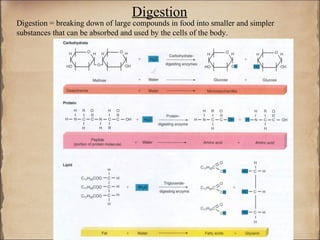
Digestion = breaking down of large compounds in food into smaller and simpler
substances that can be absorbed and used by the cells of the body.
= glucose
                Carbohydrates in Food                                   = fructose
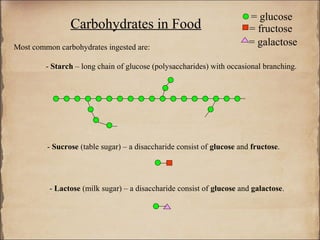
Most common carbohydrates ingested are:
                                                                        = galactose

         - Starch – long chain of glucose (polysaccharides) with occasional branching.


         - Sucrose (table sugar) – a disaccharide consist of glucose and fructose.


          - Lactose (milk sugar) – a disaccharide consist of glucose and galactose.
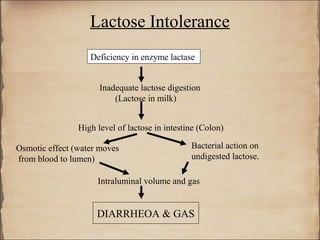
Lactose Intolerance
                   Deficiency in enzyme lactase


                      Inadequate lactose digestion
                          (Lactose in milk)


                High level of lactose in intestine (Colon)

Osmotic effect (water moves                     Bacterial action on
from blood to lumen)                            undigested lactose.

                     Intraluminal volume and gas


                     DIARRHEOA & GAS
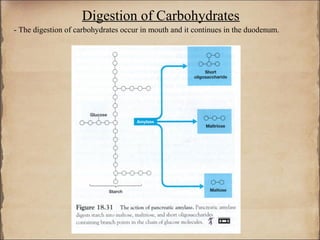
Digestion of Carbohydrates
- The digestion of carbohydrates occur in mouth and it continues in the duodenum.
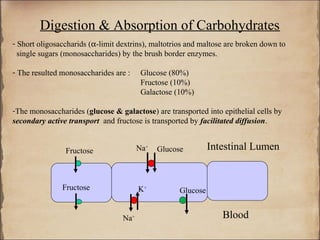
Digestion & Absorption of Carbohydrates
- Short oligosaccharids (α-limit dextrins), maltotrios and maltose are broken down to
  single sugars (monosaccharides) by the brush border enzymes.

- The resulted monosaccharides are :     Glucose (80%)
                                         Fructose (10%)
                                         Galactose (10%)

-The monosaccharides (glucose & galactose) are transported into epithelial cells by
secondary active transport and fructose is transported by facilitated diffusion.


                Fructose                Na+   Glucose         Intestinal Lumen


               Fructose                 K+          Glucose


                                  Na+                            Blood
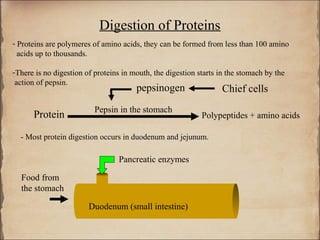
Digestion of Proteins
- Proteins are polymeres of amino acids, they can be formed from less than 100 amino
  acids up to thousands.

-There is no digestion of proteins in mouth, the digestion starts in the stomach by the
 action of pepsin.
                                       pepsinogen                  Chief cells
                          Pepsin in the stomach
      Protein                                               Polypeptides + amino acids

  - Most protein digestion occurs in duodenum and jejunum.

                                 Pancreatic enzymes

  Food from
  the stomach

                        Duodenum (small intestine)
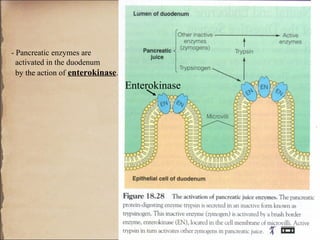
- Pancreatic enzymes are
  activated in the duodenum
  by the action of enterokinase.
                                   Enterokinase
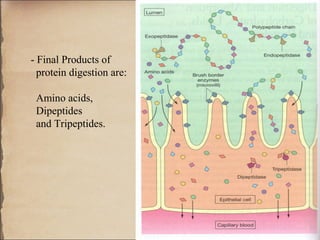
- Final Products of
  protein digestion are:

 Amino acids,
 Dipeptides
 and Tripeptides.
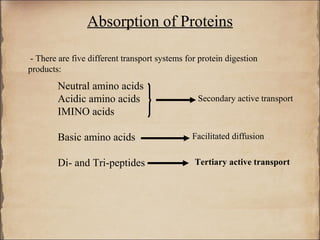
Absorption of Proteins

- There are five different transport systems for protein digestion
products:
        Neutral amino acids
        Acidic amino acids                      Secondary active transport
        IMINO acids

        Basic amino acids                      Facilitated diffusion


        Di- and Tri-peptides                   Tertiary active transport
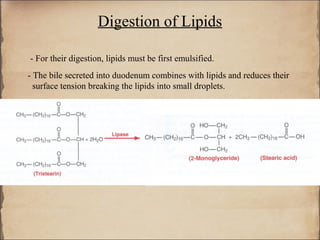
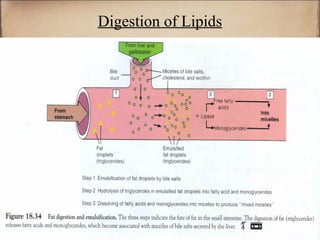
Digestion of Lipids

- For their digestion, lipids must be first emulsified.
- The bile secreted into duodenum combines with lipids and reduces their
  surface tension breaking the lipids into small droplets.
Digestion of Lipids
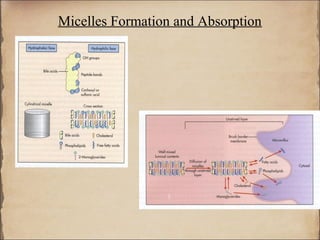
Micelles Formation and Absorption
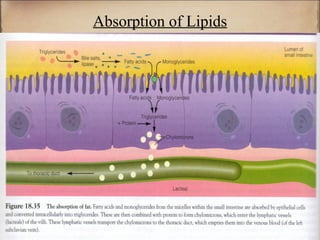
Absorption of Lipids
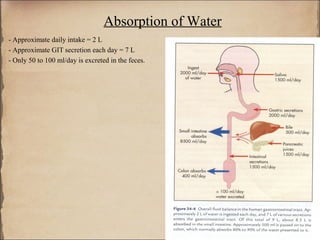
Absorption of Water
- Approximate daily intake = 2 L
- Approximate GIT secretion each day = 7 L
- Only 50 to 100 ml/day is excreted in the feces.

dr hameed lecture 17

  • 1.
    Regulation of IntestinalFunction The GI has its own nervous system (enteric nervous system), it can sense and form reflex actions due to the presence of food. In the intestine the enteric plexus is very extensive and this is involved in several reflexes: 1- Gastroilial reflex = increase gastric activity causes increased motility of ileum and movement of chyme (food mixed with digestive juice) through the ileocecal valve. 2- Ileogastric reflex = when ileum is distended this decreases the motility and emptyingof the stomach. 3- Intestino-intestinal reflex = over-distension of one part of the intestine causes reflex relaxation of the rest of the intestine.
  • 2.
    Regulation of PancreaticSecretion HORMONES : a) Secretin = released from intestinal mucosa in response to presence of acidic chyme in small intestine. Acidic Sodium Chyme Bicarbonate Intestinal Neutralization Glandular Mucosal Cells of Cell Pancreas Secretin Blood Disfunction of the above may cause duodenal ulcer.
  • 3.
    Regulation of PancreaticSecretion HORMONES : b) CCK = released mainly in response to presence of fat, proteins and carbohydrates in small intestine. Fatty Digestive Chyme enzymes Intestinal Digestion Glandular Mucosal Cells of Cell Pancreas CCK Blood
  • 4.
    Gallbladder Emptying The bileis secreted by the liver and stored in the gallbladder. Both secretin and CCK stimulate secretion of bile by the liver. CCK is major stimulator of gallbladder contraction. Neural reflexes also help with gallbladder contraction and bile release into duodenum. Vagus Liver ACh + CCK Gallbladder + Pancreas CCK FAT Duodenum ... CCK Blood
  • 5.
    Digestion and Absorption Foodmainly contains: Carbohydrates – mainly polysaccharides (starches) and disaccharides. Lipids (fat) – mainly triglycerids Proteins – polymers of amino acids Also in small amounts food contains: - Nucleic acids, DNA and RNA - Salts and minerals, Na, Cl, Ca, Fe, PO4, Cu, etc. - Vitamins, C, D, Thiamin (B1), Riboflavin (B2), B12 etc.
  • 6.
    Digestion Digestion = breakingdown of large compounds in food into smaller and simpler substances that can be absorbed and used by the cells of the body.
  • 7.
    = glucose Carbohydrates in Food = fructose Most common carbohydrates ingested are: = galactose - Starch – long chain of glucose (polysaccharides) with occasional branching. - Sucrose (table sugar) – a disaccharide consist of glucose and fructose. - Lactose (milk sugar) – a disaccharide consist of glucose and galactose.
  • 8.
    Lactose Intolerance Deficiency in enzyme lactase Inadequate lactose digestion (Lactose in milk) High level of lactose in intestine (Colon) Osmotic effect (water moves Bacterial action on from blood to lumen) undigested lactose. Intraluminal volume and gas DIARRHEOA & GAS
  • 9.
    Digestion of Carbohydrates -The digestion of carbohydrates occur in mouth and it continues in the duodenum.
  • 10.
    Digestion & Absorptionof Carbohydrates - Short oligosaccharids (α-limit dextrins), maltotrios and maltose are broken down to single sugars (monosaccharides) by the brush border enzymes. - The resulted monosaccharides are : Glucose (80%) Fructose (10%) Galactose (10%) -The monosaccharides (glucose & galactose) are transported into epithelial cells by secondary active transport and fructose is transported by facilitated diffusion. Fructose Na+ Glucose Intestinal Lumen Fructose K+ Glucose Na+ Blood
  • 11.
    Digestion of Proteins -Proteins are polymeres of amino acids, they can be formed from less than 100 amino acids up to thousands. -There is no digestion of proteins in mouth, the digestion starts in the stomach by the action of pepsin. pepsinogen Chief cells Pepsin in the stomach Protein Polypeptides + amino acids - Most protein digestion occurs in duodenum and jejunum. Pancreatic enzymes Food from the stomach Duodenum (small intestine)
  • 12.
    - Pancreatic enzymesare activated in the duodenum by the action of enterokinase. Enterokinase
  • 13.
    - Final Productsof protein digestion are: Amino acids, Dipeptides and Tripeptides.
  • 14.
    Absorption of Proteins -There are five different transport systems for protein digestion products: Neutral amino acids Acidic amino acids Secondary active transport IMINO acids Basic amino acids Facilitated diffusion Di- and Tri-peptides Tertiary active transport
  • 15.
    Digestion of Lipids -For their digestion, lipids must be first emulsified. - The bile secreted into duodenum combines with lipids and reduces their surface tension breaking the lipids into small droplets.
  • 16.
  • 17.
  • 18.
  • 19.
    Absorption of Water -Approximate daily intake = 2 L - Approximate GIT secretion each day = 7 L - Only 50 to 100 ml/day is excreted in the feces.