Absorption in Small
Intestine
Submitted by: Irfan Khursheed
Studying DVM from The Islamia University
of Bahawalpur
Absorption
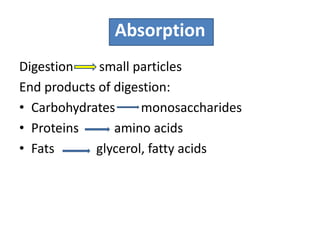
Digestion small particles
End products of digestion:
• Carbohydrates monosaccharides
• Proteins amino acids
• Fats glycerol, fatty acids
Absorption
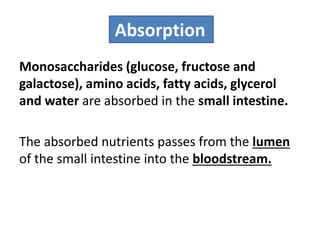
Monosaccharides (glucose, fructose and
galactose), amino acids, fatty acids, glycerol
and water are absorbed in the small intestine.
The absorbed nutrients passes from the lumen
of the small intestine into the bloodstream.
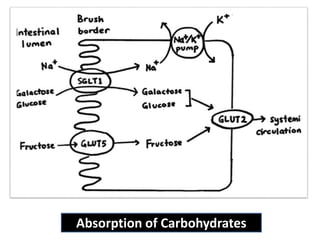
Absorption of Carbohydrates
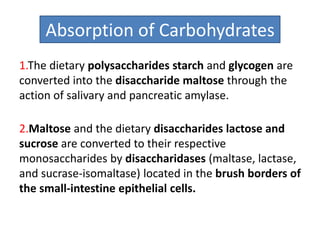
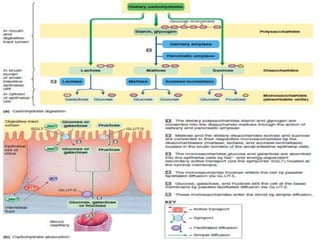
1.The dietary polysaccharides starch and glycogen are
converted into the disaccharide maltose through the
action of salivary and pancreatic amylase.
2.Maltose and the dietary disaccharides lactose and
sucrose are converted to their respective
monosaccharides by disaccharidases (maltase, lactase,
and sucrase-isomaltase) located in the brush borders of
the small-intestine epithelial cells.
3.The monosaccharides glucose and galactose
are absorbed into the epithelial cells by Na+ and
energy-dependent secondary active transport
(via the symporter SGLT) located at the luminal
membrane.
4.The monosaccharide fructose enters the cell
by passive facilitated diffusion via GLUT-5.
5.Glucose, galactose, and fructose exit the cell at
the basal membrane by passive facilitated
diffusion via GLUT-2.
6.These monosaccharides enter the blood by
simple diffusion.
Absorption of Carbohydrates
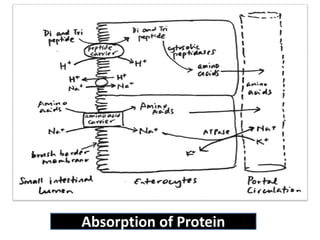
Absorption of Proteins
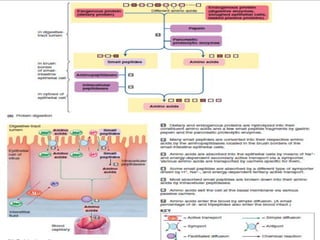
1.Dietary and endogenous proteins are hydrolyzed into
their constituent amino acids and a few small peptide
fragments by gastric pepsin and the pancreatic
proteolytic enzymes.
2.Many small peptides are converted into their
respective amino acids by the aminopeptidases located
in the brush borders of small-intestine epithelial cells.
3.Amino acids are absorbed into the epithelial cells by
means of Na+ and energy-dependent secondary active
transport via a symporter. Various amino acids are
transported by carriers specific for them.
4.Some small peptides are absorbed by a different type
of symporter driven by H+, Na+ and energy-dependent
tertiary active transport.
5.Most absorbed small peptides are broken down into
their amino acids by intracellular peptidases.
6.Amino acids exit the cell at the basal membrane via
various passive carriers.
7.Amino acids enter the blood by simple diffusion. (A
small percentage of α- and tripeptides also enter the
blood intact.)
Absorption of Protein
Absorption of Fats
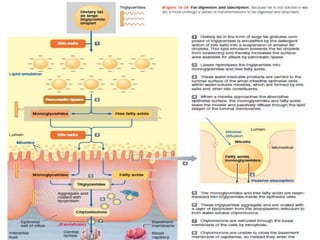
1.Dietary fat in the form of large fat globules composed
of triglycerides is emulsified by the detergent action of
bile salts into suspension of smaller fat droplets. This
lipid emulsion prevents the fat droplets from coalescing
and thereby increases the surface area available for
attack by pancreatic lipase.
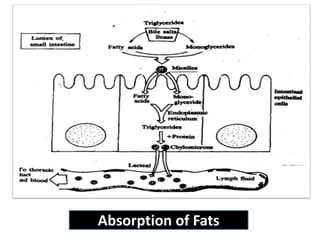
2.Lipase hydrolyzes the triglycerides into
monoglycerides and free fatty acids (hydrophobic in
nature).
3.These water-insoluble products are carried to the
luminal surface of the small-intestine epithelial cells
within water-soluble micelles, which are formed by
bile salts and other bile constituents.
4.When a micelle approaches the absorptive epithelial
surface, the monoglycerides and fatty acids leave the
micelle and passively diffuse through the lipid bilayer
of the luminal membranes.
5.The monoglycerides and free fatty acids are
resynthesized into triglycerides inside the epithelial
cells.
6.These triglycerides aggregate and are coated with a
layer of lipoprotein from the endoplasmic reticulum to
form water-soluble chylomicrons.
(Chylomicrons 75 to 500 nm in diameter as compared
to micelles which are 3 to 10nm in diameter).
7.Chylomicrons are extruded through the basal
membrane of the cells by exocytosis.
8.Chylomicrons are unable to cross the
basement membrane of capillaries, so instead
they enter the lymphatic vessels, the central
lacteals.
Absorption of Fats
Summary
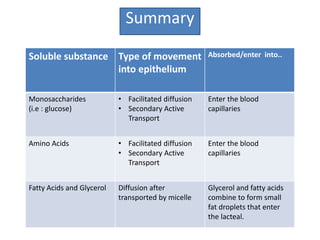
Soluble substance Type of movement
into epithelium
Absorbed/enter into..
Monosaccharides
(i.e : glucose)
• Facilitated diffusion
• Secondary Active
Transport
Enter the blood
capillaries
Amino Acids • Facilitated diffusion
• Secondary Active
Transport
Enter the blood
capillaries
Fatty Acids and Glycerol Diffusion after
transported by micelle
Glycerol and fatty acids
combine to form small
fat droplets that enter
the lacteal.
References:
Sherwood physiology
SlideShare

Absorption in small Intestine

  • 1.
    Absorption in Small Intestine Submittedby: Irfan Khursheed Studying DVM from The Islamia University of Bahawalpur
  • 2.
    Absorption Digestion small particles Endproducts of digestion: • Carbohydrates monosaccharides • Proteins amino acids • Fats glycerol, fatty acids
  • 3.
    Absorption Monosaccharides (glucose, fructoseand galactose), amino acids, fatty acids, glycerol and water are absorbed in the small intestine. The absorbed nutrients passes from the lumen of the small intestine into the bloodstream.
  • 4.
    Absorption of Carbohydrates 1.Thedietary polysaccharides starch and glycogen are converted into the disaccharide maltose through the action of salivary and pancreatic amylase. 2.Maltose and the dietary disaccharides lactose and sucrose are converted to their respective monosaccharides by disaccharidases (maltase, lactase, and sucrase-isomaltase) located in the brush borders of the small-intestine epithelial cells.
  • 5.
    3.The monosaccharides glucoseand galactose are absorbed into the epithelial cells by Na+ and energy-dependent secondary active transport (via the symporter SGLT) located at the luminal membrane. 4.The monosaccharide fructose enters the cell by passive facilitated diffusion via GLUT-5.
  • 6.
    5.Glucose, galactose, andfructose exit the cell at the basal membrane by passive facilitated diffusion via GLUT-2. 6.These monosaccharides enter the blood by simple diffusion.
  • 8.
  • 9.
    Absorption of Proteins 1.Dietaryand endogenous proteins are hydrolyzed into their constituent amino acids and a few small peptide fragments by gastric pepsin and the pancreatic proteolytic enzymes. 2.Many small peptides are converted into their respective amino acids by the aminopeptidases located in the brush borders of small-intestine epithelial cells.
  • 10.
    3.Amino acids areabsorbed into the epithelial cells by means of Na+ and energy-dependent secondary active transport via a symporter. Various amino acids are transported by carriers specific for them. 4.Some small peptides are absorbed by a different type of symporter driven by H+, Na+ and energy-dependent tertiary active transport.
  • 11.
    5.Most absorbed smallpeptides are broken down into their amino acids by intracellular peptidases. 6.Amino acids exit the cell at the basal membrane via various passive carriers. 7.Amino acids enter the blood by simple diffusion. (A small percentage of α- and tripeptides also enter the blood intact.)
  • 13.
  • 14.
    Absorption of Fats 1.Dietaryfat in the form of large fat globules composed of triglycerides is emulsified by the detergent action of bile salts into suspension of smaller fat droplets. This lipid emulsion prevents the fat droplets from coalescing and thereby increases the surface area available for attack by pancreatic lipase. 2.Lipase hydrolyzes the triglycerides into monoglycerides and free fatty acids (hydrophobic in nature).
  • 15.
    3.These water-insoluble productsare carried to the luminal surface of the small-intestine epithelial cells within water-soluble micelles, which are formed by bile salts and other bile constituents. 4.When a micelle approaches the absorptive epithelial surface, the monoglycerides and fatty acids leave the micelle and passively diffuse through the lipid bilayer of the luminal membranes.
  • 16.
    5.The monoglycerides andfree fatty acids are resynthesized into triglycerides inside the epithelial cells. 6.These triglycerides aggregate and are coated with a layer of lipoprotein from the endoplasmic reticulum to form water-soluble chylomicrons. (Chylomicrons 75 to 500 nm in diameter as compared to micelles which are 3 to 10nm in diameter).
  • 17.
    7.Chylomicrons are extrudedthrough the basal membrane of the cells by exocytosis. 8.Chylomicrons are unable to cross the basement membrane of capillaries, so instead they enter the lymphatic vessels, the central lacteals.
  • 19.
  • 20.
    Summary Soluble substance Typeof movement into epithelium Absorbed/enter into.. Monosaccharides (i.e : glucose) • Facilitated diffusion • Secondary Active Transport Enter the blood capillaries Amino Acids • Facilitated diffusion • Secondary Active Transport Enter the blood capillaries Fatty Acids and Glycerol Diffusion after transported by micelle Glycerol and fatty acids combine to form small fat droplets that enter the lacteal.
  • 21.