Tissue Biochemistry
by,
Miss Areesha Ahmad
Senior Lecturer
CONTENTS
Harper's Biochemistry, 28th Ed. 2
 Extracellular Matrix
 Functions of Extracellular Matrix
 Compositions of Extracellular Matrix
 Basic Structural Form of Extracellular Matrix
 Components of Extracellular Matrix
 Collagen
 Functions of Collagen
 Structure of Collagen
 Types of Collagen
 Elastin
 Structure of Elastin
 Functions of Elastin
 Summary
 References
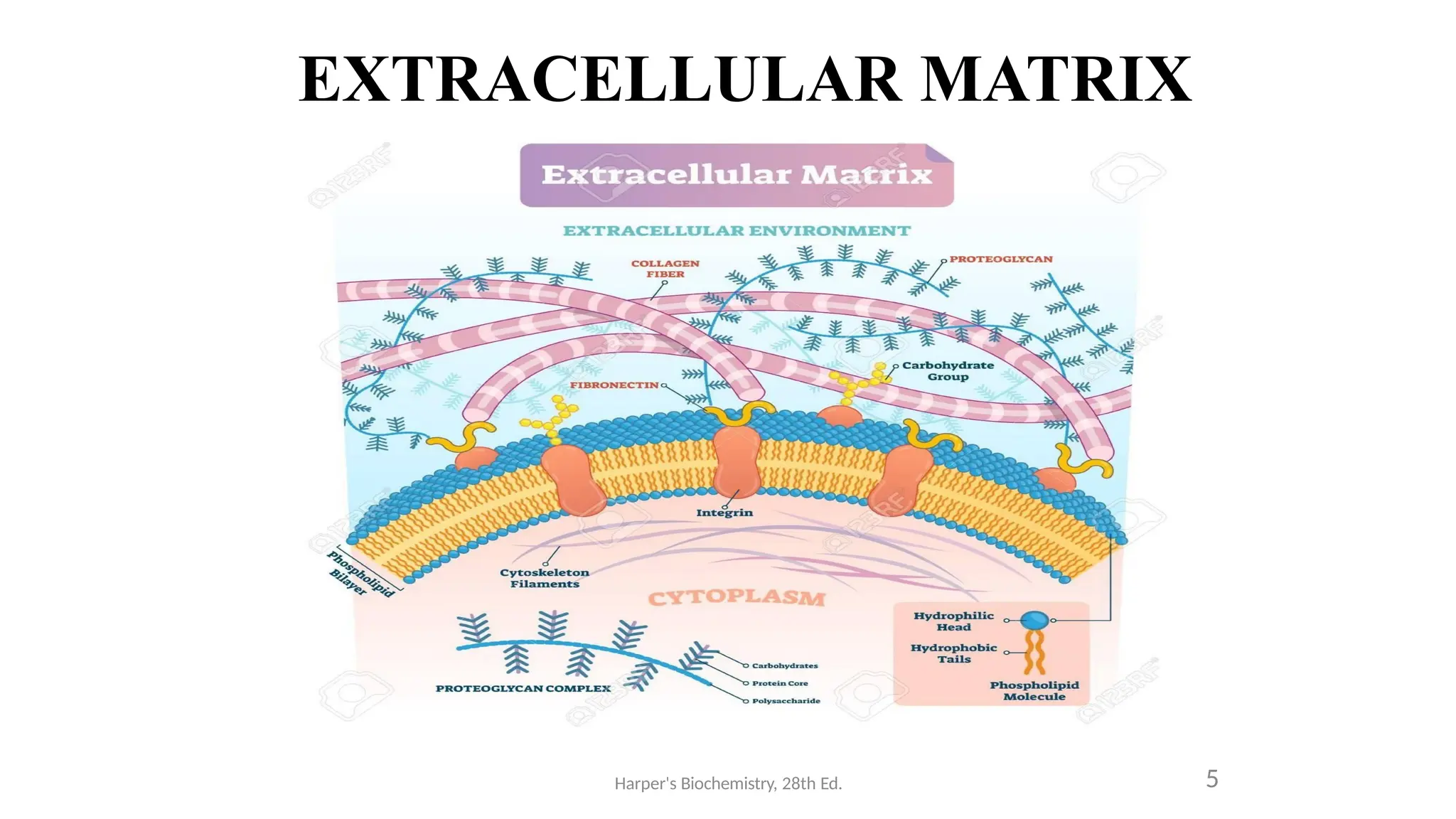
EXTRACELLULAR MATRIX
Harper's Biochemistry, 28th Ed. 3
• The Extracellular matrix (ECM) is a collection of extracellular molecules secreted by cells that
provide structural and biochemical support to the surrounding cells.
• The extracellular matrix (ECM) is the non-cellular component present within all tissues and
organs, and provides essential physical scaffolding for the cellular constituents.
• Initiates crucial biochemical and biomechanical cues that are required for tissue
morphogenesis, differentiation and homeostasis.
EXTRACELLULAR MATRIX
Harper's Biochemistry, 28th Ed. 4
 Complex arrangements of molecules filling in spaces between the cells.
 Not an amorphous jelly or glue but highly organized structure.
 Mostly found in connective tissues, such as tendon, cartilage, bone or
dermis of the skin.
 Diverse structures created by different amounts and organization of ECM components
 ECM is a local product for local cells. Cells secrete ECM that is finally assembled
outside the cell.
EXTRACELLULAR MATRIX
Harper's Biochemistry, 28th Ed. 5
FUNCTIONS OF
EXTRACELLULAR MATRIX
Harper's Biochemistry, 28th Ed. 6
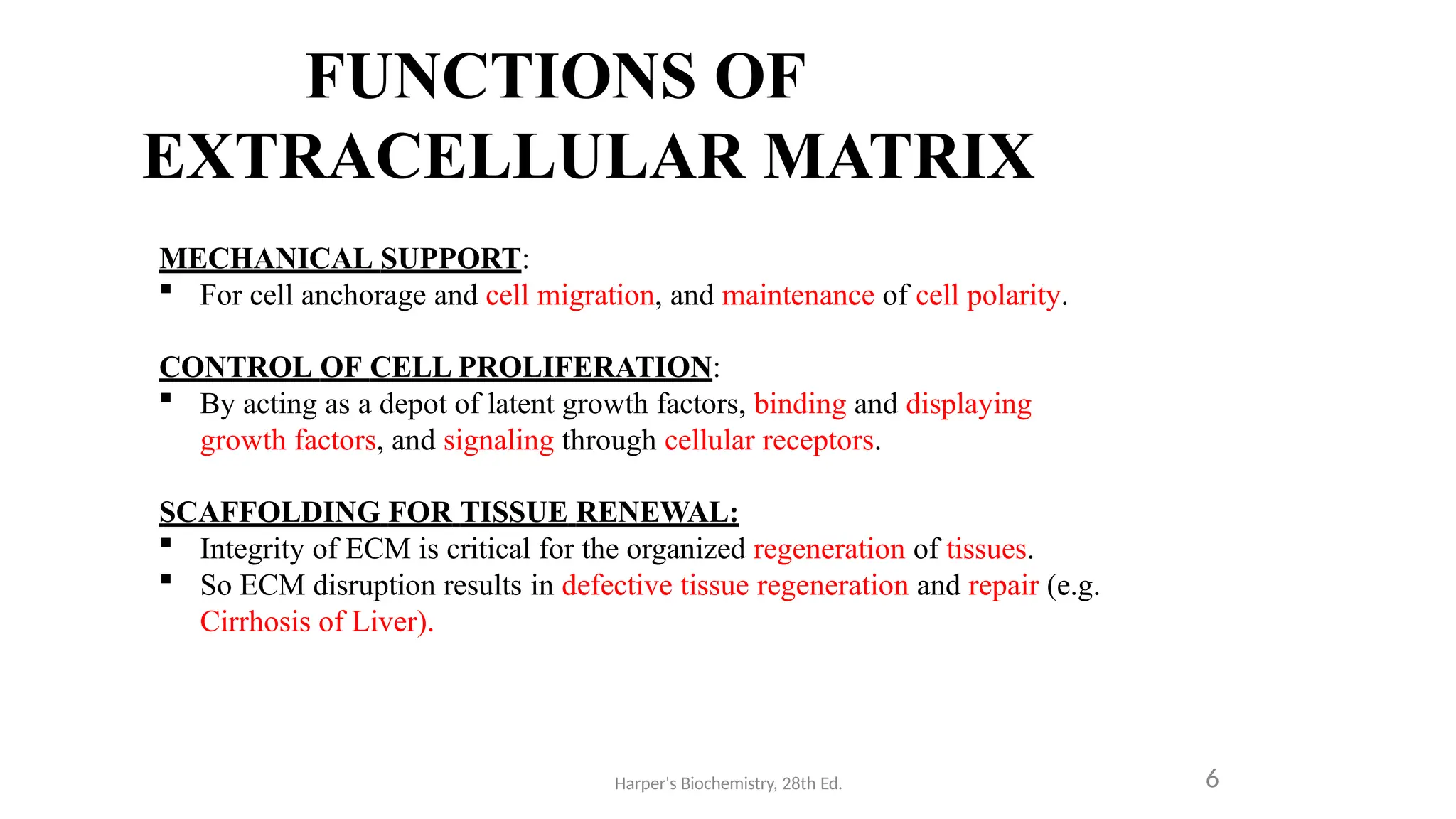
MECHANICAL SUPPORT:
 For cell anchorage and cell migration, and maintenance of cell polarity.
CONTROL OF CELL PROLIFERATION:
 By acting as a depot of latent growth factors, binding and displaying
growth factors, and signaling through cellular receptors.
SCAFFOLDING FOR TISSUE RENEWAL:
 Integrity of ECM is critical for the organized regeneration of tissues.
 So ECM disruption results in defective tissue regeneration and repair (e.g.
Cirrhosis of Liver).
FUNCTIONS OF
EXTRACELLULAR MATRIX
Harper's Biochemistry, 28th Ed. 7
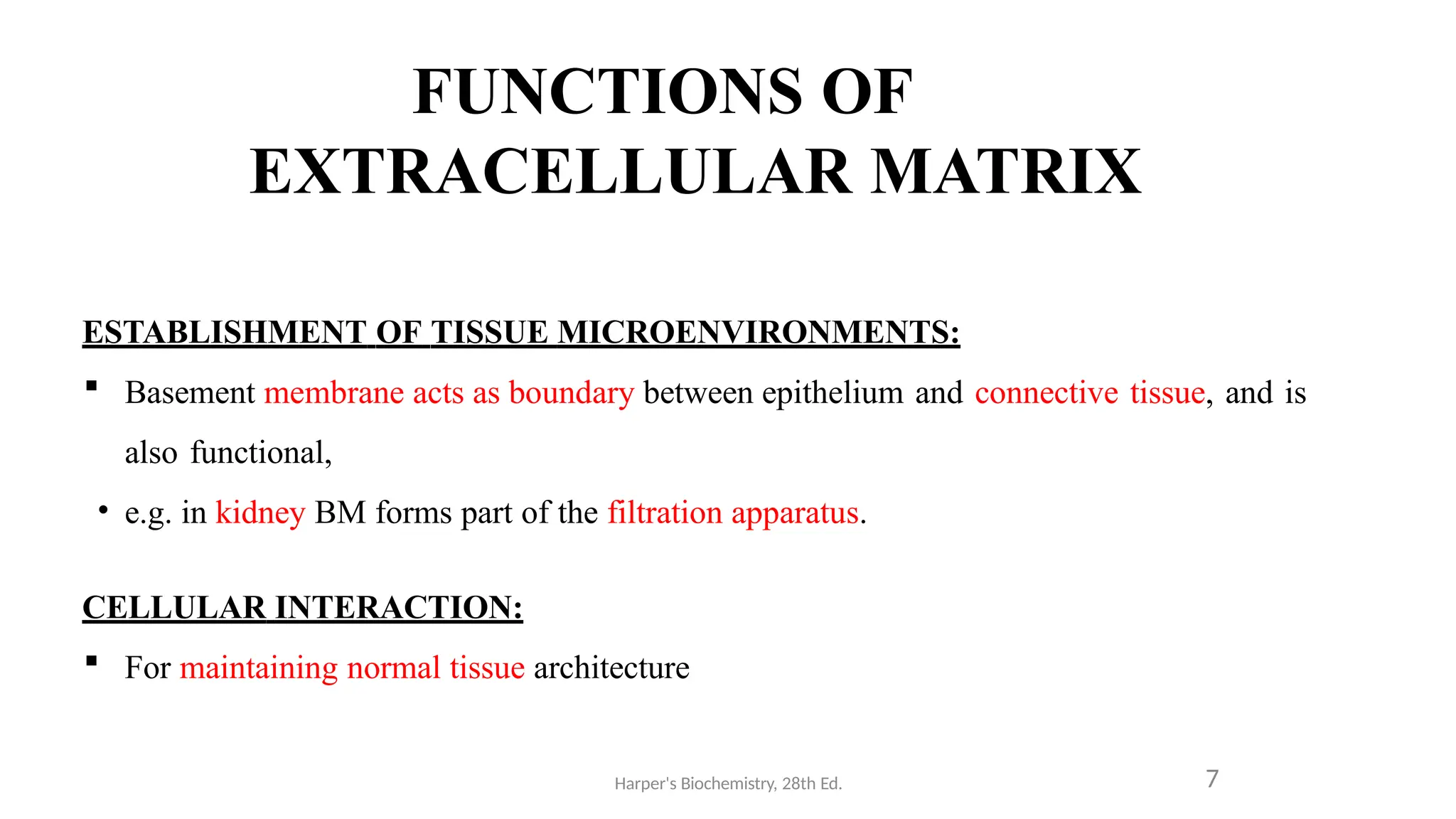
ESTABLISHMENT OF TISSUE MICROENVIRONMENTS:
 Basement membrane acts as boundary between epithelium and connective tissue, and is
also functional,
• e.g. in kidney BM forms part of the filtration apparatus.
CELLULAR INTERACTION:
 For maintaining normal tissue architecture
COMPOSITION OF ECM
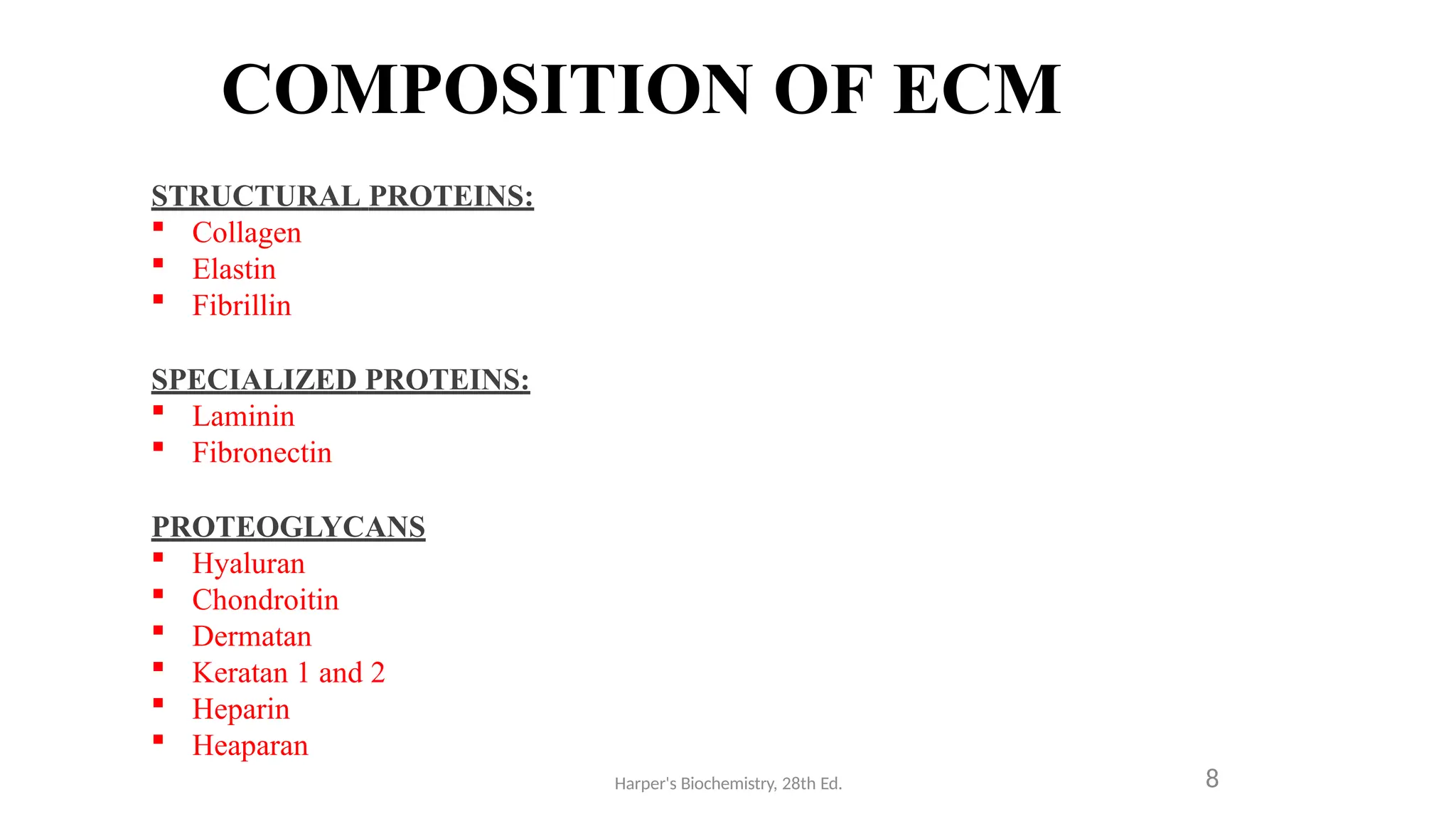
STRUCTURAL PROTEINS:
 Collagen
 Elastin
 Fibrillin
SPECIALIZED PROTEINS:
 Laminin
 Fibronectin
PROTEOGLYCANS
 Hyaluran
 Chondroitin
 Dermatan
 Keratan 1 and 2
 Heparin
 Heaparan
Harper's Biochemistry, 28th Ed. 8
BASIC STRUCTURAL
FORM OF ECM
Harper's Biochemistry, 28th Ed. 9
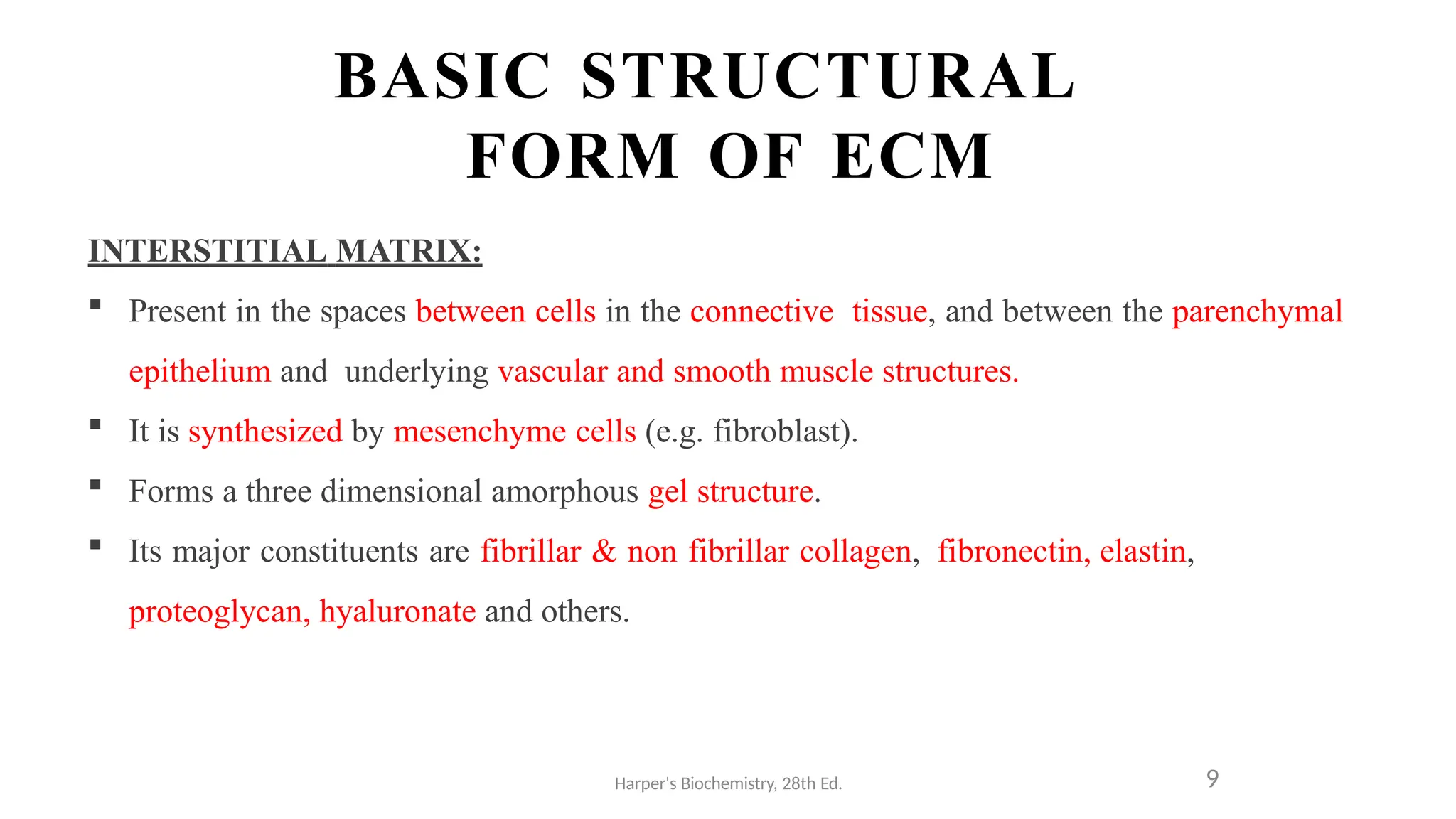
INTERSTITIAL MATRIX:
 Present in the spaces between cells in the connective tissue, and between the parenchymal
epithelium and underlying vascular and smooth muscle structures.
 It is synthesized by mesenchyme cells (e.g. fibroblast).
 Forms a three dimensional amorphous gel structure.
 Its major constituents are fibrillar & non fibrillar collagen, fibronectin, elastin,
proteoglycan, hyaluronate and others.
BASIC STRUCTURAL
FORM OF ECM
Harper's Biochemistry, 28th Ed. 10
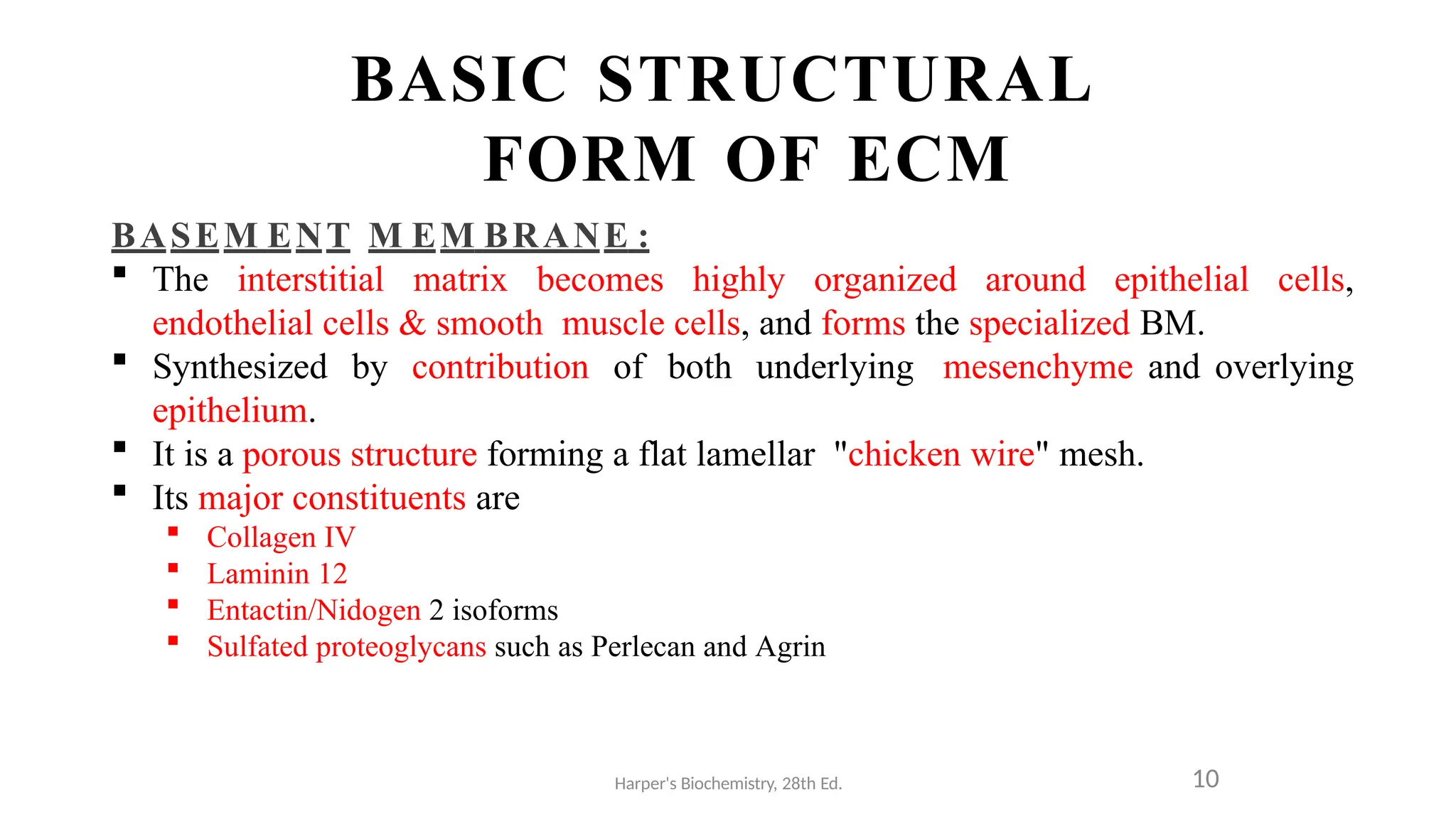
BASEM ENT M EM BRANE :
 The interstitial matrix becomes highly organized around epithelial cells,
endothelial cells & smooth muscle cells, and forms the specialized BM.
 Synthesized by contribution of both underlying mesenchyme and overlying
epithelium.
 It is a porous structure forming a flat lamellar "chicken wire" mesh.
 Its major constituents are
 Collagen IV
 Laminin 12
 Entactin/Nidogen 2 isoforms
 Sulfated proteoglycans such as Perlecan and Agrin
COMPONENTS OF ECM
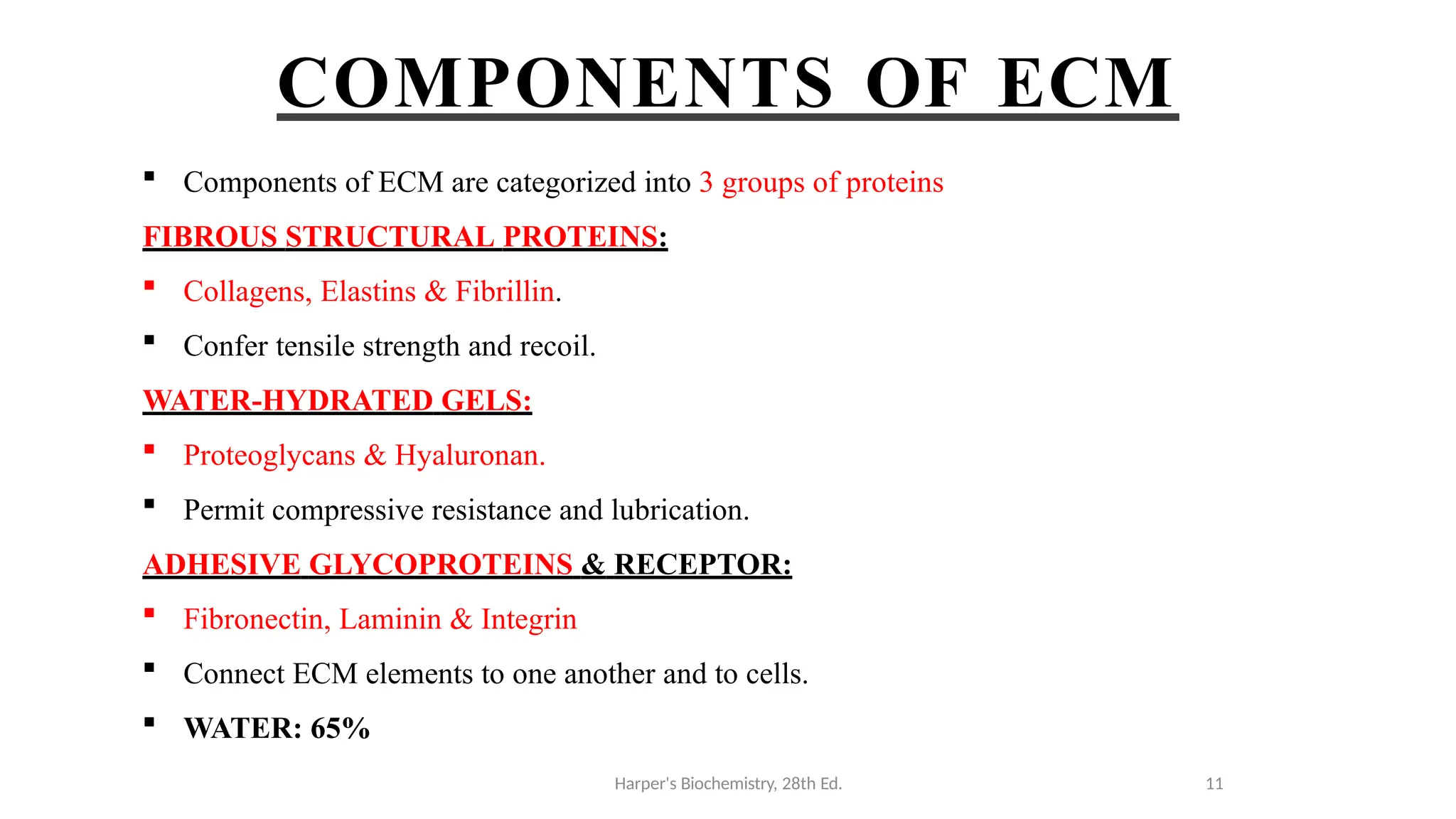
 Components of ECM are categorized into 3 groups of proteins
FIBROUS STRUCTURAL PROTEINS:
 Collagens, Elastins & Fibrillin.
 Confer tensile strength and recoil.
WATER-HYDRATED GELS:
 Proteoglycans & Hyaluronan.
 Permit compressive resistance and lubrication.
ADHESIVE GLYCOPROTEINS & RECEPTOR:
 Fibronectin, Laminin & Integrin
 Connect ECM elements to one another and to cells.
 WATER: 65%
Harper's Biochemistry, 28th Ed. 11
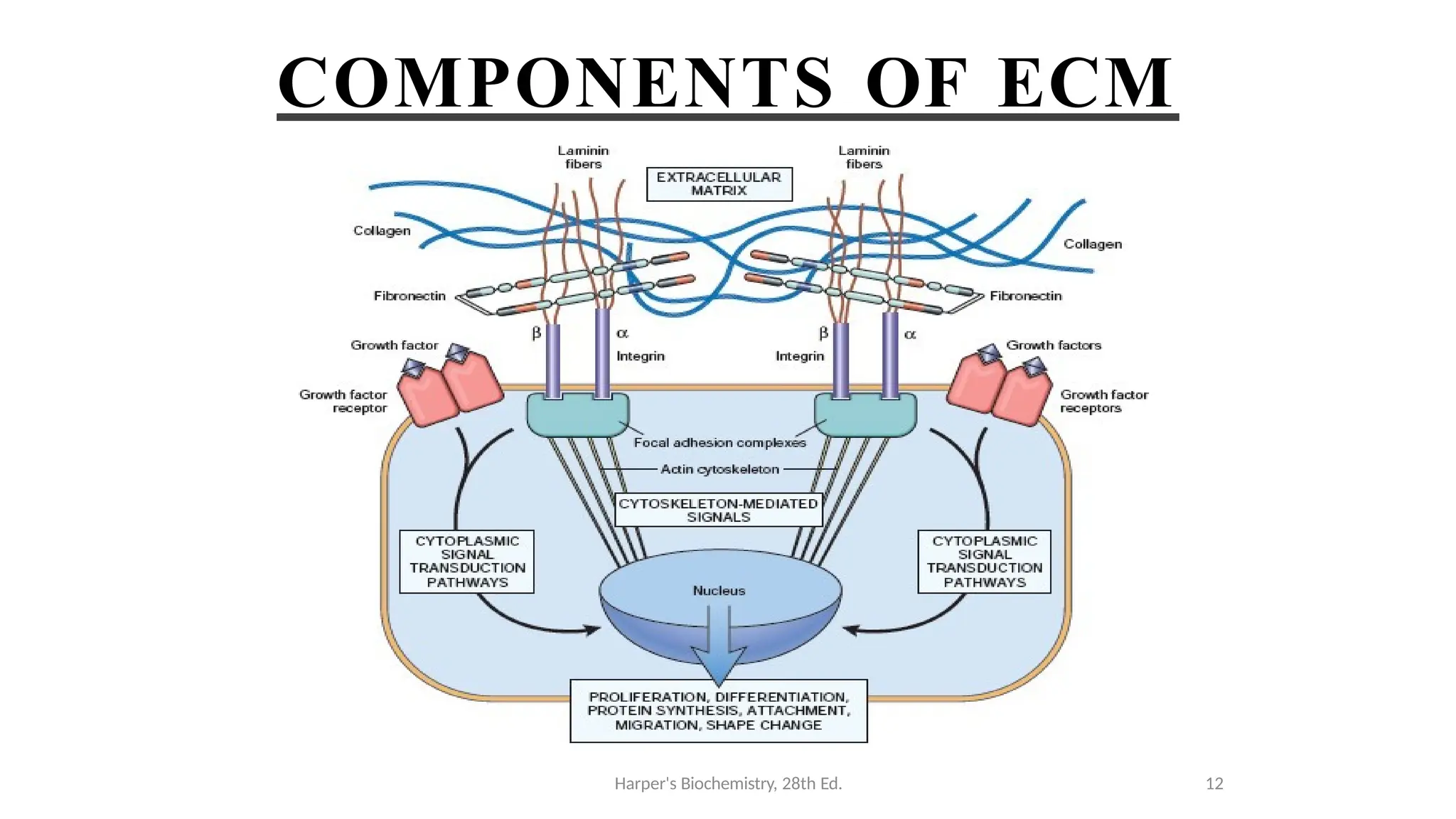
COMPONENTS OF ECM
Harper's Biochemistry, 28th Ed. 12
COLLAGEN
 Major insoluble fibrous protein of the extracellular matrix and
connective tissue
 Most abundant protein in animals
 Made by fibroblasts and some epithelial cells
 The most abundant protein in the body, making 25%-35% of all the
whole-body proteins.
 About 30 collagens type have been identified, some are unique to specific cells
and tissues.
Harper's Biochemistry, 28th Ed. 13
FUNCTIONS OF
COLLAGEN
Harper's Biochemistry, 28th Ed. 14
 Collagen contributes to the stability of tissues and organs.
 It maintains their structural integrity.
 Plays an important role in cell differentiation, polarity, movement.
 Plays an important role in tissue and organ development.
 Principal producers of collagen fibers are fibroblasts; epithelial and
smooth muscle cells also secrete their own type-IV collagen.
STRUCTURE OF COLLAGEN
Harper's Biochemistry, 28th Ed. 15
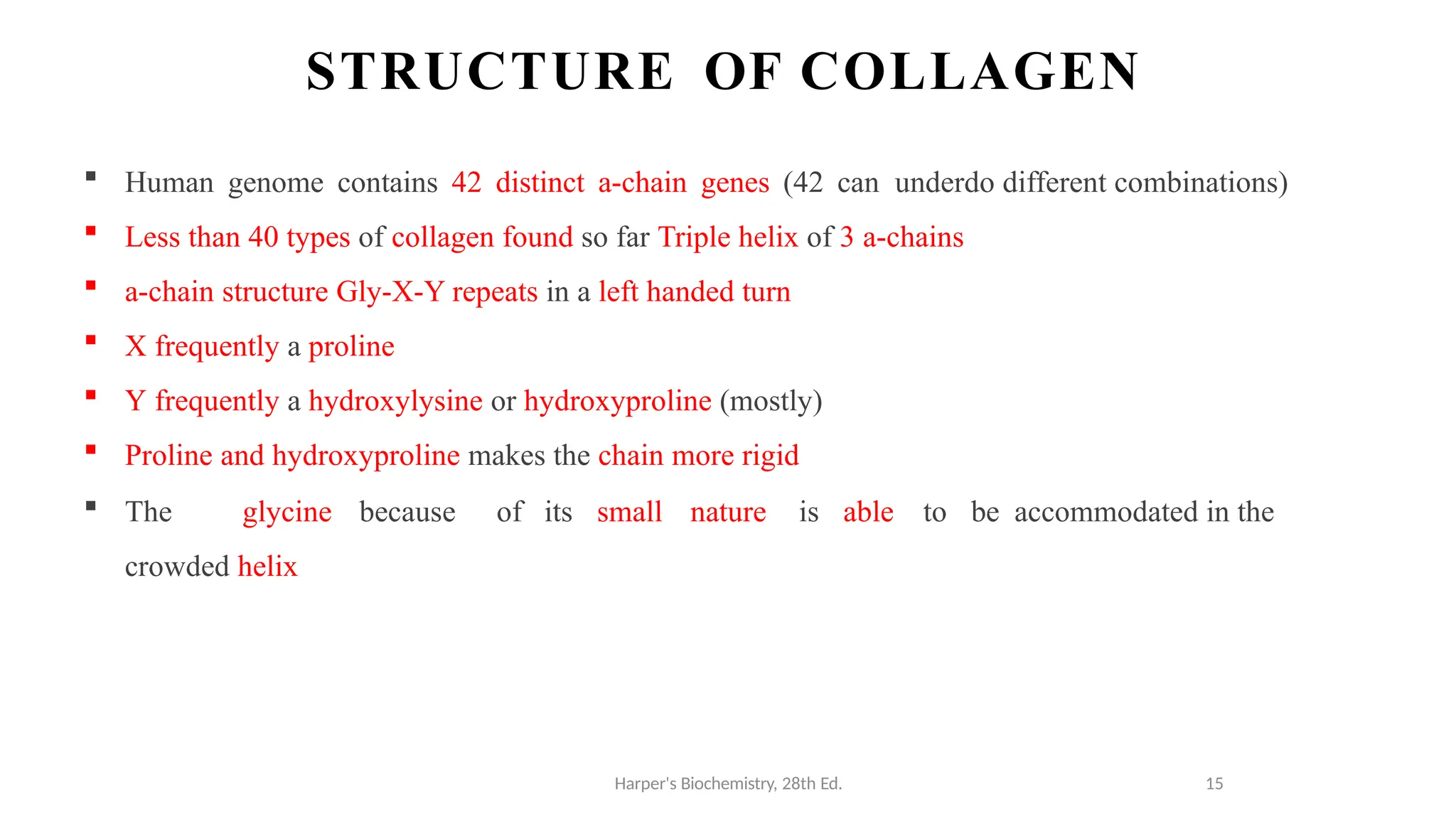
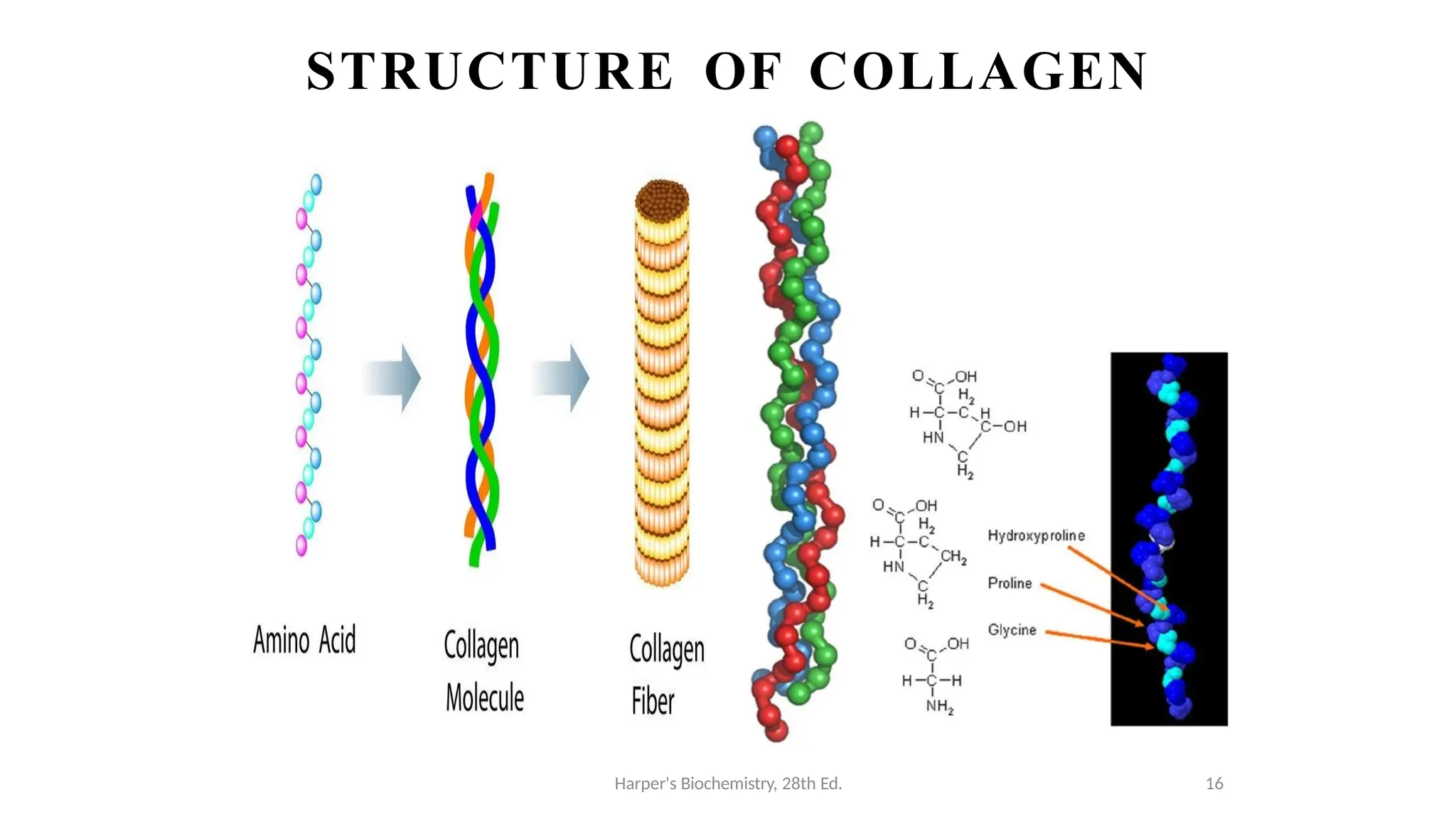
 Human genome contains 42 distinct a-chain genes (42 can underdo different combinations)
 Less than 40 types of collagen found so far Triple helix of 3 a-chains
 a-chain structure Gly-X-Y repeats in a left handed turn
 X frequently a proline
 Y frequently a hydroxylysine or hydroxyproline (mostly)
 Proline and hydroxyproline makes the chain more rigid
 The glycine because of its small nature is able to be accommodated in the
crowded helix
STRUCTURE OF COLLAGEN
Harper's Biochemistry, 28th Ed. 16
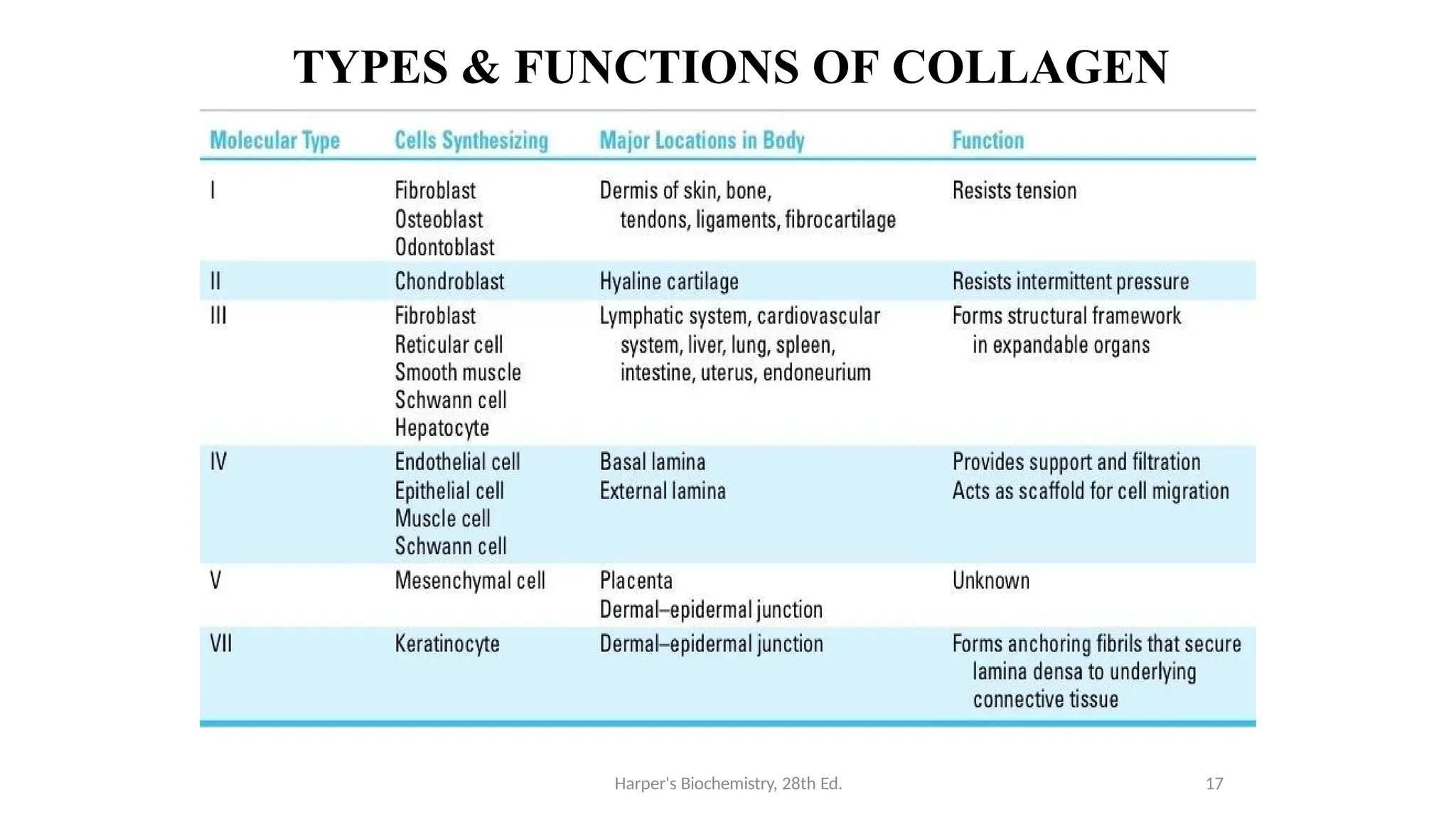
TYPES & FUNCTIONS OF COLLAGEN
Harper's Biochemistry, 28th Ed. 17
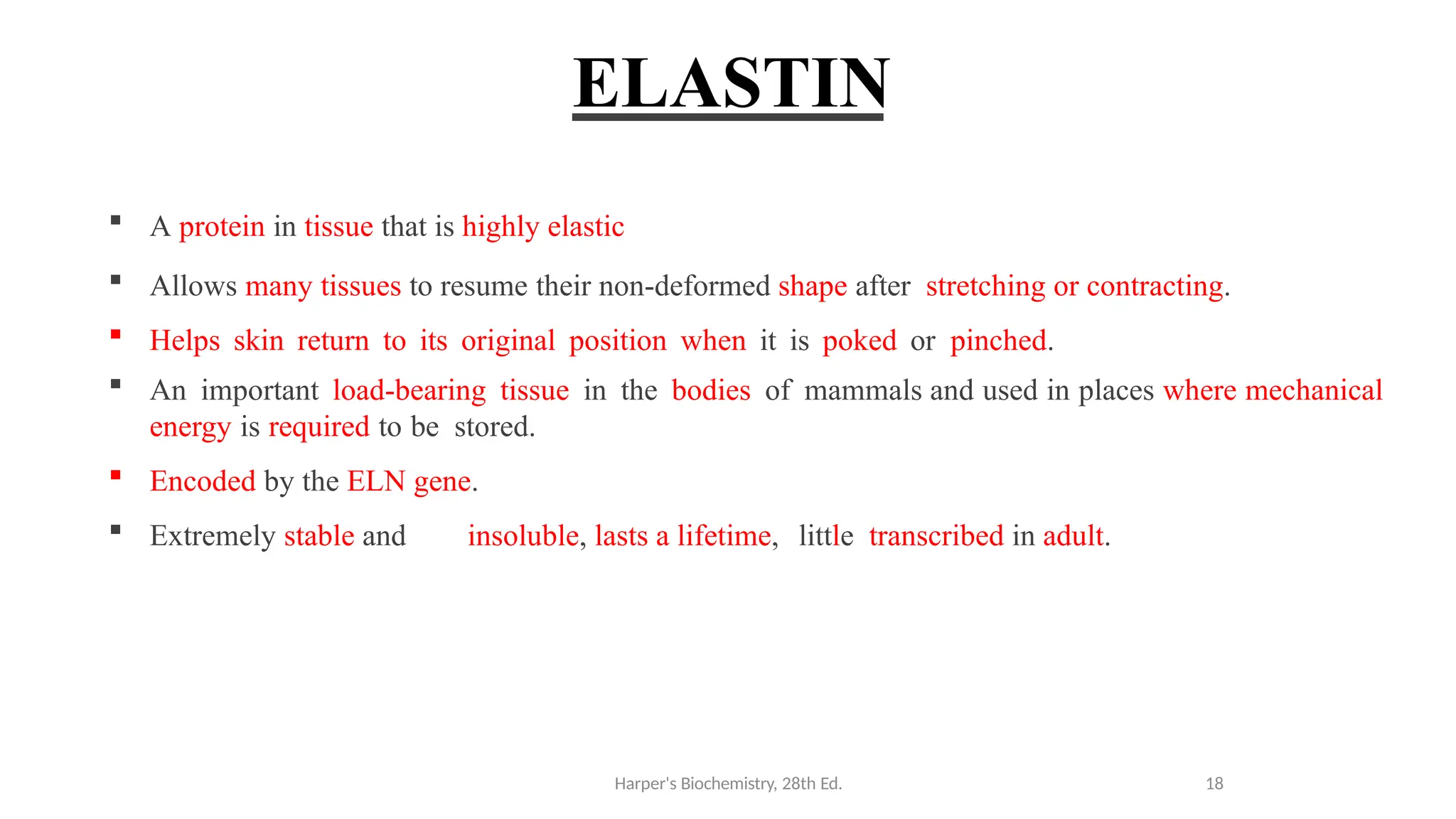
ELASTIN
 A protein in tissue that is highly elastic
 Allows many tissues to resume their non-deformed shape after stretching or contracting.
 Helps skin return to its original position when it is poked or pinched.
 An important load-bearing tissue in the bodies of mammals and used in places where mechanical
energy is required to be stored.
 Encoded by the ELN gene.
 Extremely stable and insoluble, lasts a lifetime, little transcribed in adult.
Harper's Biochemistry, 28th Ed. 18
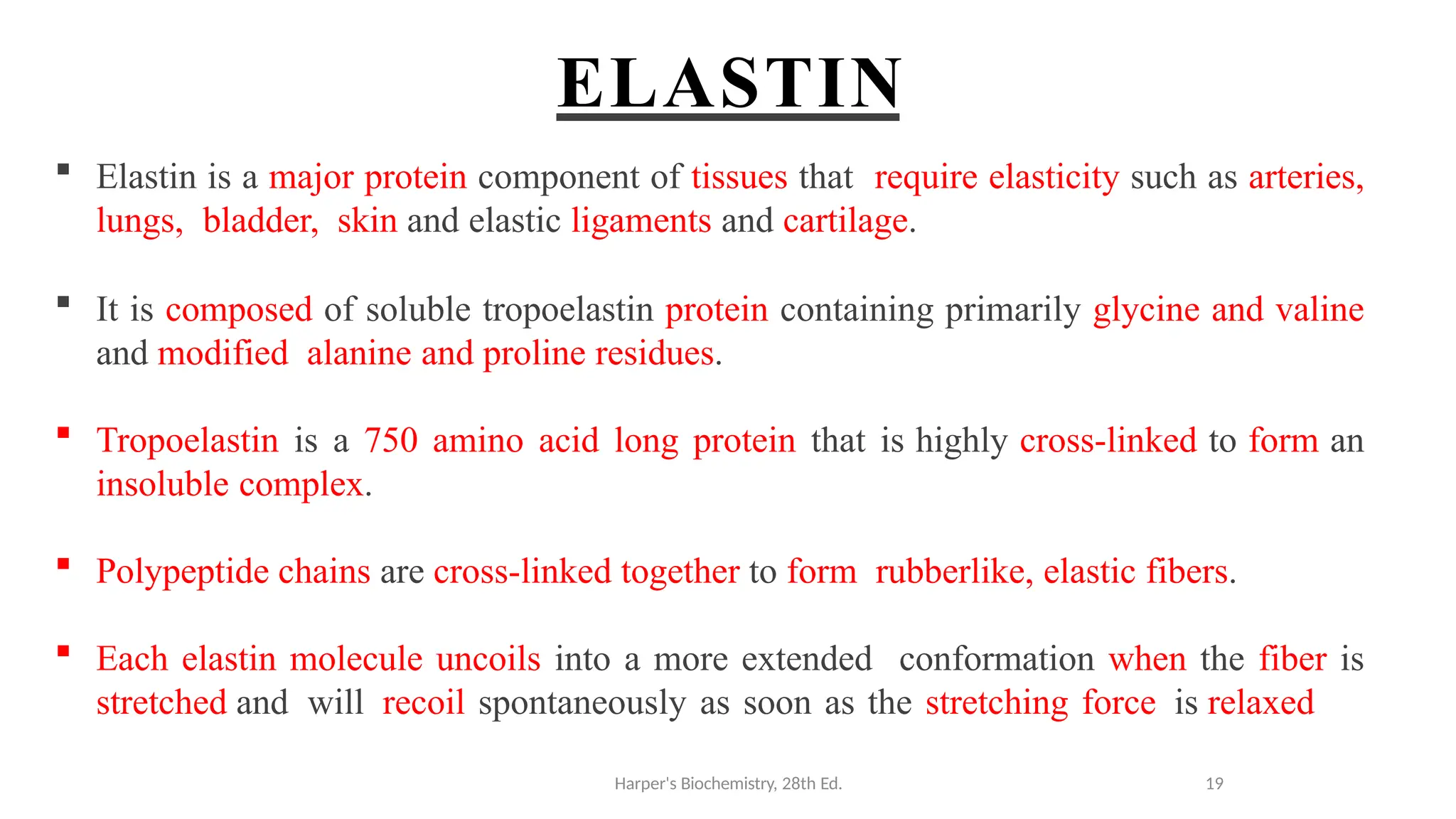
ELASTIN
 Elastin is a major protein component of tissues that require elasticity such as arteries,
lungs, bladder, skin and elastic ligaments and cartilage.
 It is composed of soluble tropoelastin protein containing primarily glycine and valine
and modified alanine and proline residues.
 Tropoelastin is a 750 amino acid long protein that is highly cross-linked to form an
insoluble complex.
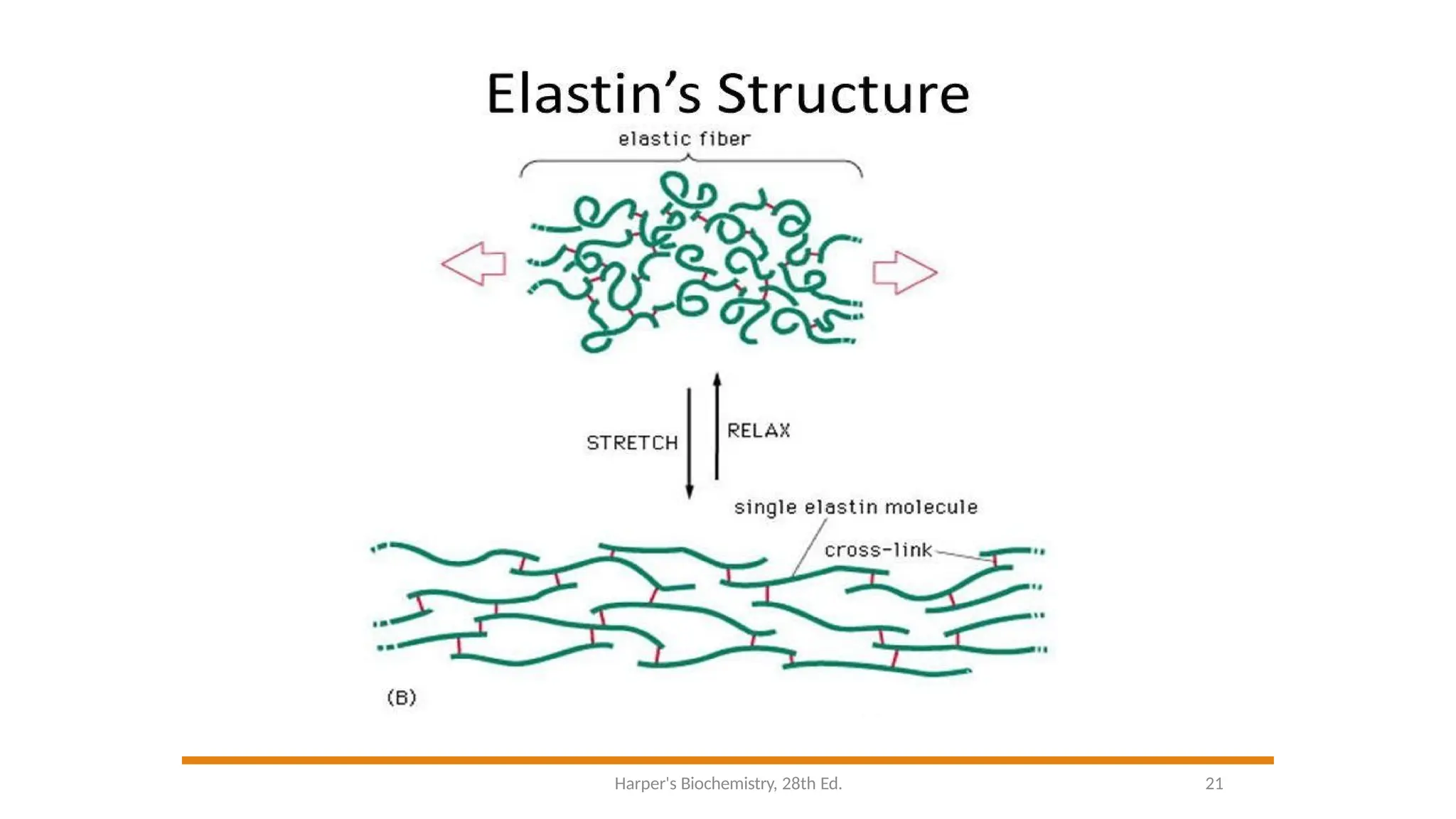
 Polypeptide chains are cross-linked together to form rubberlike, elastic fibers.
 Each elastin molecule uncoils into a more extended conformation when the fiber is
stretched and will recoil spontaneously as soon as the stretching force is relaxed
Harper's Biochemistry, 28th Ed. 19
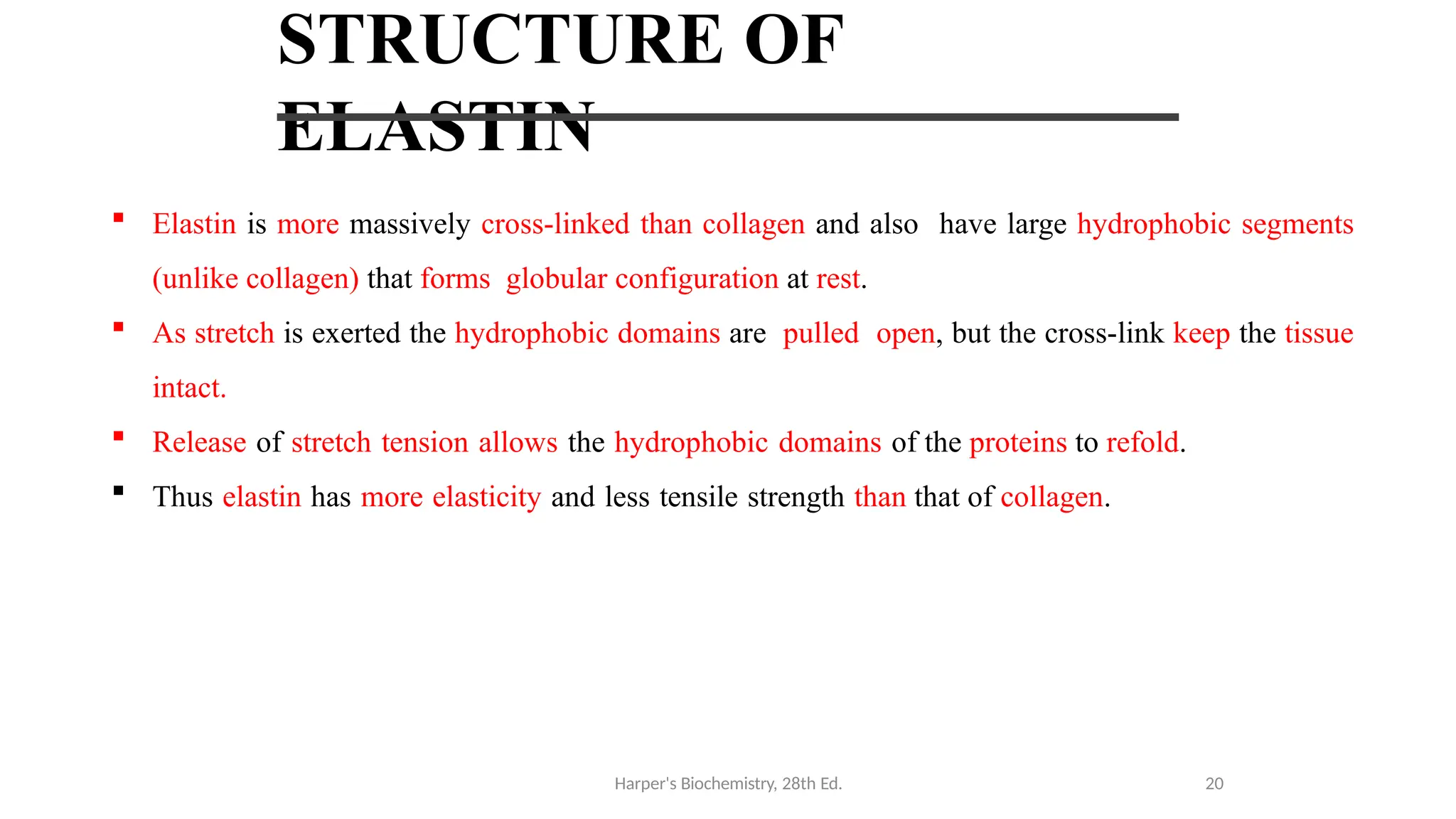
STRUCTURE OF
ELASTIN
 Elastin is more massively cross-linked than collagen and also have large hydrophobic segments
(unlike collagen) that forms globular configuration at rest.
 As stretch is exerted the hydrophobic domains are pulled open, but the cross-link keep the tissue
intact.
 Release of stretch tension allows the hydrophobic domains of the proteins to refold.
 Thus elastin has more elasticity and less tensile strength than that of collagen.
Harper's Biochemistry, 28th Ed. 20
Harper's Biochemistry, 28th Ed. 21
FUNCTIONS OF ELASTIN
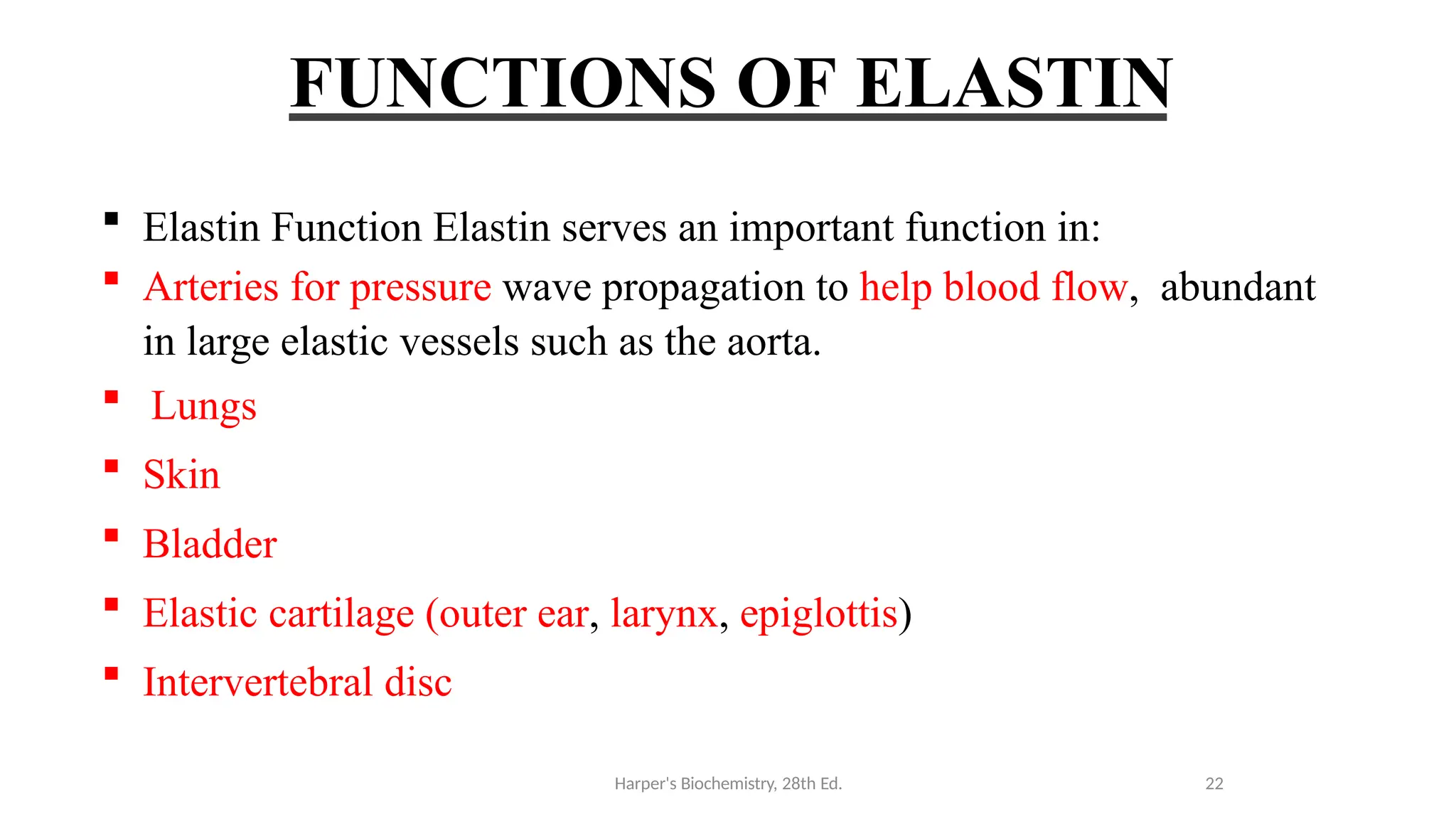
 Elastin Function Elastin serves an important function in:
 Arteries for pressure wave propagation to help blood flow, abundant
in large elastic vessels such as the aorta.
 Lungs
 Skin
 Bladder
 Elastic cartilage (outer ear, larynx, epiglottis)
 Intervertebral disc
Harper's Biochemistry, 28th Ed. 22
SUMMARY
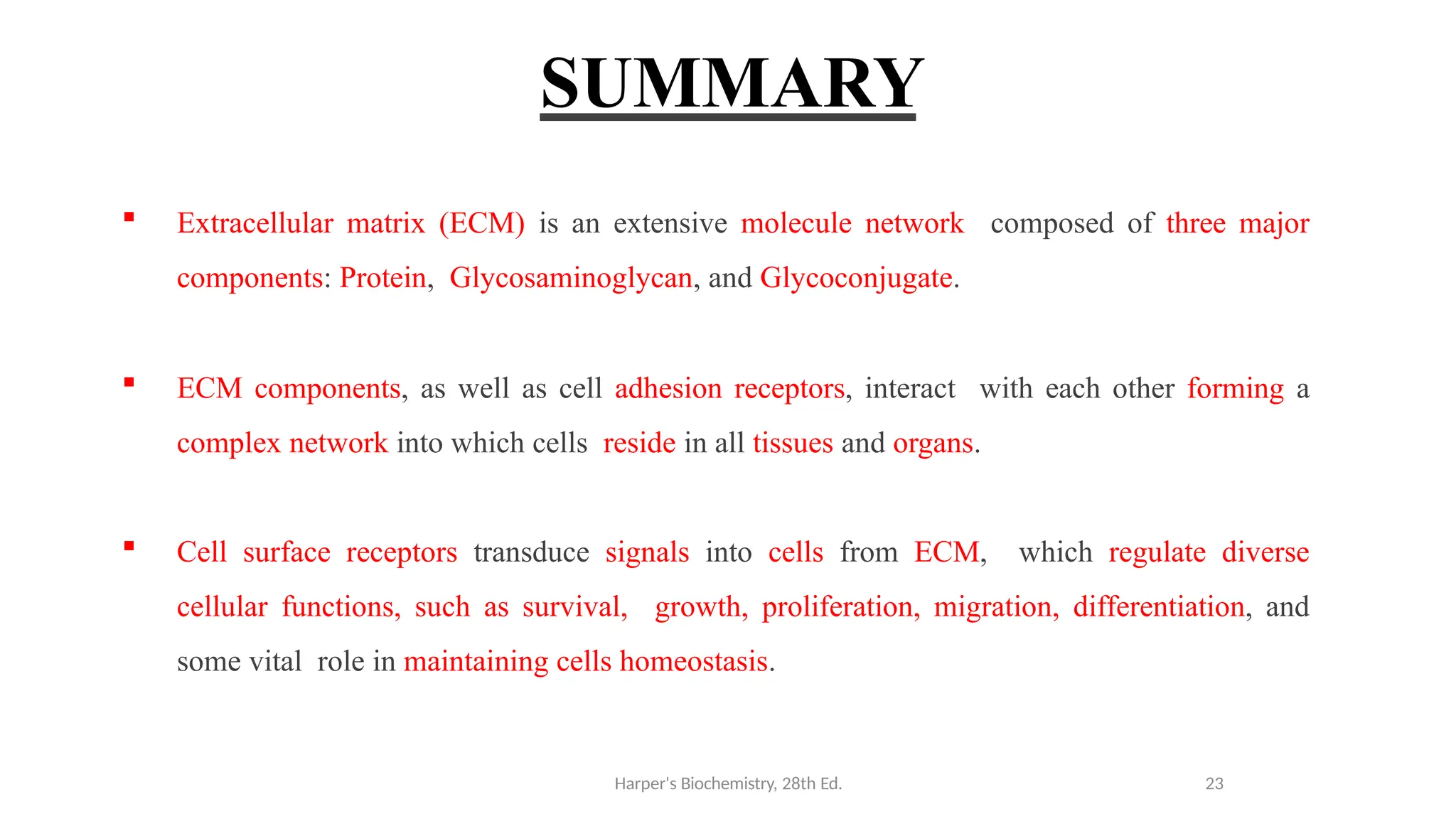
 Extracellular matrix (ECM) is an extensive molecule network composed of three major
components: Protein, Glycosaminoglycan, and Glycoconjugate.
 ECM components, as well as cell adhesion receptors, interact with each other forming a
complex network into which cells reside in all tissues and organs.
 Cell surface receptors transduce signals into cells from ECM, which regulate diverse
cellular functions, such as survival, growth, proliferation, migration, differentiation, and
some vital role in maintaining cells homeostasis.
Harper's Biochemistry, 28th Ed. 23
Harper's Biochemistry, 28th Ed. 25

DPT - Biochemistry & Genetics - II - Tissue Biochemistry (Part 1)

  • 1.
  • 2.
    CONTENTS Harper's Biochemistry, 28thEd. 2  Extracellular Matrix  Functions of Extracellular Matrix  Compositions of Extracellular Matrix  Basic Structural Form of Extracellular Matrix  Components of Extracellular Matrix  Collagen  Functions of Collagen  Structure of Collagen  Types of Collagen  Elastin  Structure of Elastin  Functions of Elastin  Summary  References
  • 3.
    EXTRACELLULAR MATRIX Harper's Biochemistry,28th Ed. 3 • The Extracellular matrix (ECM) is a collection of extracellular molecules secreted by cells that provide structural and biochemical support to the surrounding cells. • The extracellular matrix (ECM) is the non-cellular component present within all tissues and organs, and provides essential physical scaffolding for the cellular constituents. • Initiates crucial biochemical and biomechanical cues that are required for tissue morphogenesis, differentiation and homeostasis.
  • 4.
    EXTRACELLULAR MATRIX Harper's Biochemistry,28th Ed. 4  Complex arrangements of molecules filling in spaces between the cells.  Not an amorphous jelly or glue but highly organized structure.  Mostly found in connective tissues, such as tendon, cartilage, bone or dermis of the skin.  Diverse structures created by different amounts and organization of ECM components  ECM is a local product for local cells. Cells secrete ECM that is finally assembled outside the cell.
  • 5.
  • 6.
    FUNCTIONS OF EXTRACELLULAR MATRIX Harper'sBiochemistry, 28th Ed. 6 MECHANICAL SUPPORT:  For cell anchorage and cell migration, and maintenance of cell polarity. CONTROL OF CELL PROLIFERATION:  By acting as a depot of latent growth factors, binding and displaying growth factors, and signaling through cellular receptors. SCAFFOLDING FOR TISSUE RENEWAL:  Integrity of ECM is critical for the organized regeneration of tissues.  So ECM disruption results in defective tissue regeneration and repair (e.g. Cirrhosis of Liver).
  • 7.
    FUNCTIONS OF EXTRACELLULAR MATRIX Harper'sBiochemistry, 28th Ed. 7 ESTABLISHMENT OF TISSUE MICROENVIRONMENTS:  Basement membrane acts as boundary between epithelium and connective tissue, and is also functional, • e.g. in kidney BM forms part of the filtration apparatus. CELLULAR INTERACTION:  For maintaining normal tissue architecture
  • 8.
    COMPOSITION OF ECM STRUCTURALPROTEINS:  Collagen  Elastin  Fibrillin SPECIALIZED PROTEINS:  Laminin  Fibronectin PROTEOGLYCANS  Hyaluran  Chondroitin  Dermatan  Keratan 1 and 2  Heparin  Heaparan Harper's Biochemistry, 28th Ed. 8
  • 9.
    BASIC STRUCTURAL FORM OFECM Harper's Biochemistry, 28th Ed. 9 INTERSTITIAL MATRIX:  Present in the spaces between cells in the connective tissue, and between the parenchymal epithelium and underlying vascular and smooth muscle structures.  It is synthesized by mesenchyme cells (e.g. fibroblast).  Forms a three dimensional amorphous gel structure.  Its major constituents are fibrillar & non fibrillar collagen, fibronectin, elastin, proteoglycan, hyaluronate and others.
  • 10.
    BASIC STRUCTURAL FORM OFECM Harper's Biochemistry, 28th Ed. 10 BASEM ENT M EM BRANE :  The interstitial matrix becomes highly organized around epithelial cells, endothelial cells & smooth muscle cells, and forms the specialized BM.  Synthesized by contribution of both underlying mesenchyme and overlying epithelium.  It is a porous structure forming a flat lamellar "chicken wire" mesh.  Its major constituents are  Collagen IV  Laminin 12  Entactin/Nidogen 2 isoforms  Sulfated proteoglycans such as Perlecan and Agrin
  • 11.
    COMPONENTS OF ECM Components of ECM are categorized into 3 groups of proteins FIBROUS STRUCTURAL PROTEINS:  Collagens, Elastins & Fibrillin.  Confer tensile strength and recoil. WATER-HYDRATED GELS:  Proteoglycans & Hyaluronan.  Permit compressive resistance and lubrication. ADHESIVE GLYCOPROTEINS & RECEPTOR:  Fibronectin, Laminin & Integrin  Connect ECM elements to one another and to cells.  WATER: 65% Harper's Biochemistry, 28th Ed. 11
  • 12.
    COMPONENTS OF ECM Harper'sBiochemistry, 28th Ed. 12
  • 13.
    COLLAGEN  Major insolublefibrous protein of the extracellular matrix and connective tissue  Most abundant protein in animals  Made by fibroblasts and some epithelial cells  The most abundant protein in the body, making 25%-35% of all the whole-body proteins.  About 30 collagens type have been identified, some are unique to specific cells and tissues. Harper's Biochemistry, 28th Ed. 13
  • 14.
    FUNCTIONS OF COLLAGEN Harper's Biochemistry,28th Ed. 14  Collagen contributes to the stability of tissues and organs.  It maintains their structural integrity.  Plays an important role in cell differentiation, polarity, movement.  Plays an important role in tissue and organ development.  Principal producers of collagen fibers are fibroblasts; epithelial and smooth muscle cells also secrete their own type-IV collagen.
  • 15.
    STRUCTURE OF COLLAGEN Harper'sBiochemistry, 28th Ed. 15  Human genome contains 42 distinct a-chain genes (42 can underdo different combinations)  Less than 40 types of collagen found so far Triple helix of 3 a-chains  a-chain structure Gly-X-Y repeats in a left handed turn  X frequently a proline  Y frequently a hydroxylysine or hydroxyproline (mostly)  Proline and hydroxyproline makes the chain more rigid  The glycine because of its small nature is able to be accommodated in the crowded helix
  • 16.
    STRUCTURE OF COLLAGEN Harper'sBiochemistry, 28th Ed. 16
  • 17.
    TYPES & FUNCTIONSOF COLLAGEN Harper's Biochemistry, 28th Ed. 17
  • 18.
    ELASTIN  A proteinin tissue that is highly elastic  Allows many tissues to resume their non-deformed shape after stretching or contracting.  Helps skin return to its original position when it is poked or pinched.  An important load-bearing tissue in the bodies of mammals and used in places where mechanical energy is required to be stored.  Encoded by the ELN gene.  Extremely stable and insoluble, lasts a lifetime, little transcribed in adult. Harper's Biochemistry, 28th Ed. 18
  • 19.
    ELASTIN  Elastin isa major protein component of tissues that require elasticity such as arteries, lungs, bladder, skin and elastic ligaments and cartilage.  It is composed of soluble tropoelastin protein containing primarily glycine and valine and modified alanine and proline residues.  Tropoelastin is a 750 amino acid long protein that is highly cross-linked to form an insoluble complex.  Polypeptide chains are cross-linked together to form rubberlike, elastic fibers.  Each elastin molecule uncoils into a more extended conformation when the fiber is stretched and will recoil spontaneously as soon as the stretching force is relaxed Harper's Biochemistry, 28th Ed. 19
  • 20.
    STRUCTURE OF ELASTIN  Elastinis more massively cross-linked than collagen and also have large hydrophobic segments (unlike collagen) that forms globular configuration at rest.  As stretch is exerted the hydrophobic domains are pulled open, but the cross-link keep the tissue intact.  Release of stretch tension allows the hydrophobic domains of the proteins to refold.  Thus elastin has more elasticity and less tensile strength than that of collagen. Harper's Biochemistry, 28th Ed. 20
  • 21.
  • 22.
    FUNCTIONS OF ELASTIN Elastin Function Elastin serves an important function in:  Arteries for pressure wave propagation to help blood flow, abundant in large elastic vessels such as the aorta.  Lungs  Skin  Bladder  Elastic cartilage (outer ear, larynx, epiglottis)  Intervertebral disc Harper's Biochemistry, 28th Ed. 22
  • 23.
    SUMMARY  Extracellular matrix(ECM) is an extensive molecule network composed of three major components: Protein, Glycosaminoglycan, and Glycoconjugate.  ECM components, as well as cell adhesion receptors, interact with each other forming a complex network into which cells reside in all tissues and organs.  Cell surface receptors transduce signals into cells from ECM, which regulate diverse cellular functions, such as survival, growth, proliferation, migration, differentiation, and some vital role in maintaining cells homeostasis. Harper's Biochemistry, 28th Ed. 23
  • 25.