Lab Technician
by,
Miss Areesha Ahmad
Senior Lecturer
B.Sc (H), M.Sc, M.Phil and Ph.D scholar (Microbiology)
Lab Collection Point
(Roles and Responsibilities)
Essential Skills for Lab Technicians
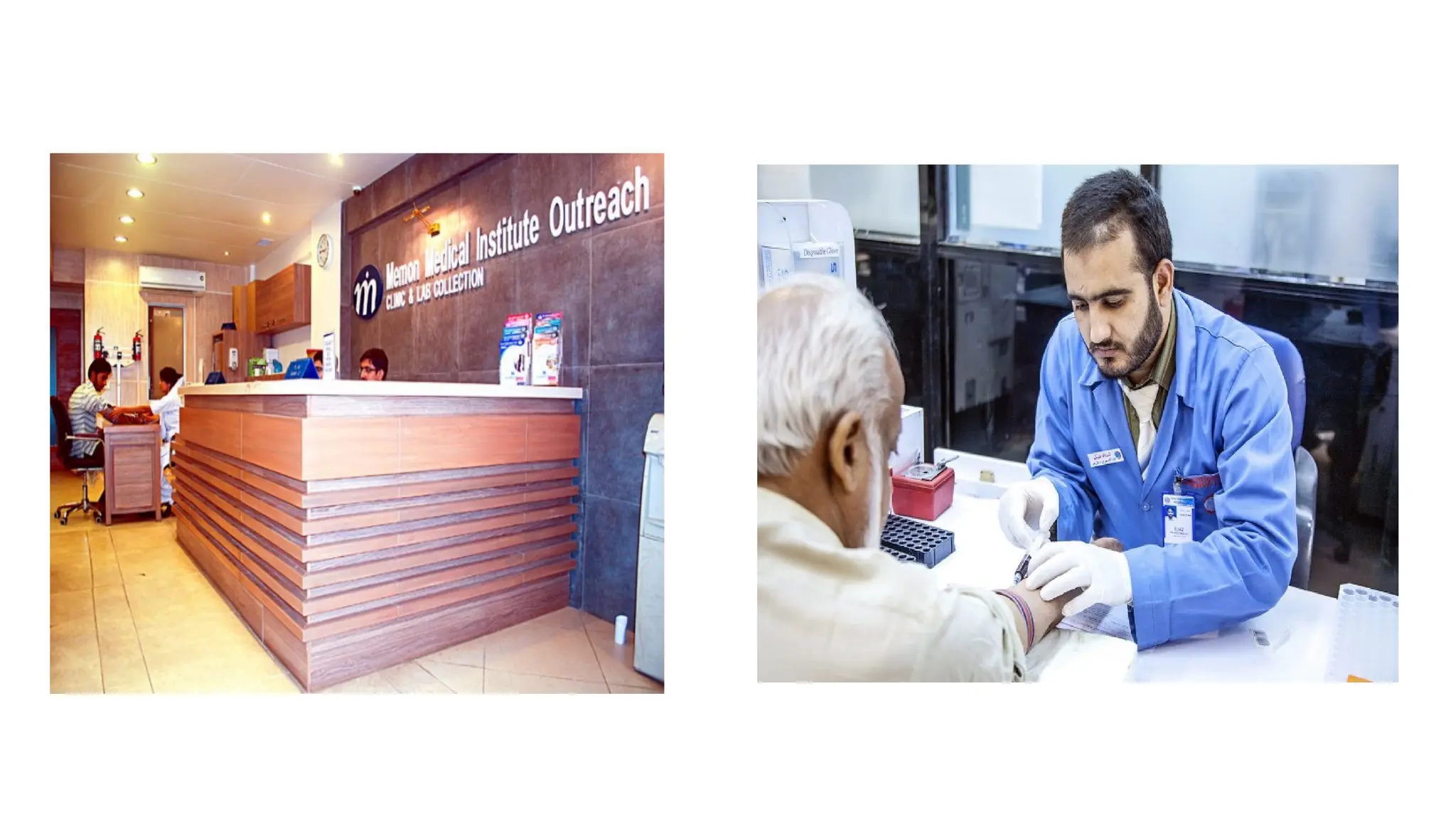
What is a Lab Counter?
A designated workspace in a laboratory where technicians manage
samples, documentation, and testing processes.
Purpose:
Ensures organized workflow in the lab.
• Serves as a central hub for receiving and processing samples.
Key Roles of a Lab Counter
1. Receiving Samples:
•Logging patient or research samples.
•Verifying sample labels and documentation.
2. Sample Processing:
•Sorting samples by test type (e.g., blood, urine, tissue).
•Preparing samples for analysis.
Equipment Management:
• Organizing and maintaining lab instruments and tools.
• Ensuring proper calibration before use.
Documentation and Record-Keeping
• Importance of Documentation:
• Recording sample details, patient IDs, and test requests.
• Ensures traceability and accuracy.
• Digital vs Manual Records:
• Using lab management software vs handwritten logs.
• Compliance:
• Following lab protocols and regulatory standards.
Communication and Coordination
• Internal Coordination:
• Communicating with technicians and pathologists about sample requirements.
• External Communication:
• Interacting with healthcare providers for test orders or clarifications.
• Time Management:
• Prioritizing urgent cases or STAT (short turnaround time) samples.
Quality Control at the Lab Counter
Steps to Ensure Quality:
•Proper labeling of all samples.
•Preventing contamination with sterile techniques.
•Monitoring storage conditions (temperature, light).
Troubleshooting:
•Identifying and resolving sample-related issues.
Safety and Hygiene Practices
Key Safety Measures:
•Wearing PPE (gloves, masks, lab coats).
•Disinfecting the workspace regularly.
•Proper disposal of biohazardous waste.
Hygiene Protocols:
•Washing hands before and after handling samples.
Challenges and Solutions
Common Challenges:
•Mislabeling of samples.
•Delays in sample processing.
•Equipment malfunction.
Solutions:
•Double-check labels and records.
•Regular equipment maintenance.
•Streamlined workflows and backups.
Applications in Lab Work
Examples of work done at the lab counter:
• Preparing blood smears for microscopy.
• Performing initial tests (e.g., centrifugation, sample staining).
• Managing specimen storage for long-term studies.
Importance of Blood Draw and Sample
Labeling
Why It's Important:
• Ensures accurate diagnostic.
• Prevents errors like sample mix-ups.
• Crucial for patient safety and effective treatment.
Role of Lab Technicians:
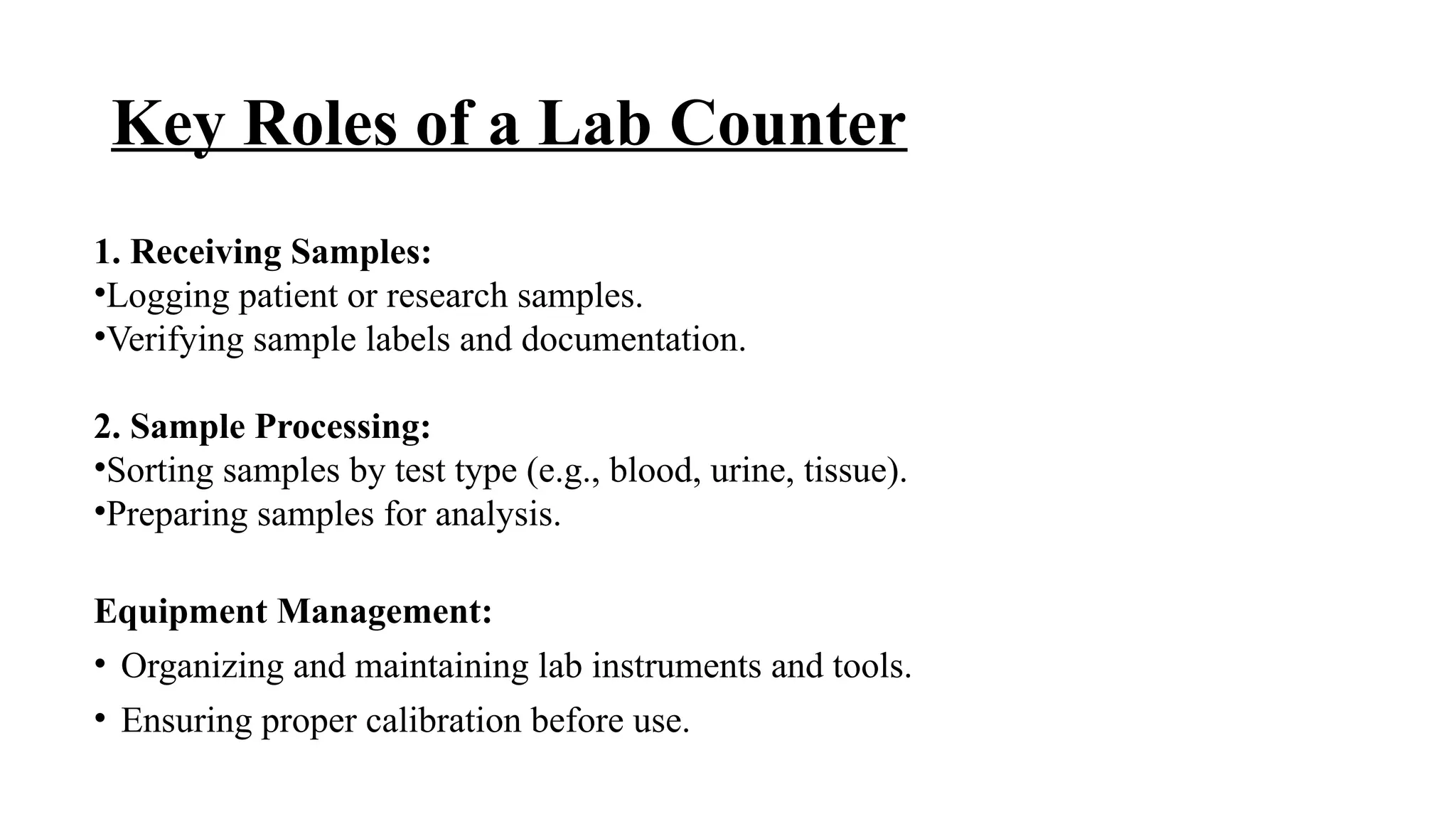
• Perform blood draws safely and professionally.
• Ensure proper identification and labeling of samples.
Equipment and Preparation
Essential Equipment:
•Sterile needles and syringes.
•Anticoagulant Tubes (with appropriate additives).
•Alcohol swabs and tourniquet.
•Cotton balls and bandages.
Preparation Steps:
•Verify patient identity and explain the procedure.
•Assemble all necessary equipment.
•Ensure proper hand hygiene and wear gloves.
Steps in Blood Draw (Phlebotomy)
•Patient Identification:
•Use two identifiers (e.g., name and date of birth).
•Apply the Tourniquet:
•Position 3-4 inches above the venipuncture site.
•Select the Venipuncture Site:
•Common site: Median cubital vein.
•Clean the Site:
•Use an alcohol swab in a circular motion.
•Insert the Needle:
•Insert at a 15-30° angle with the bevel facing up.
Steps in Blood Draw (Phlebotomy)
•Collect the Sample:
•Fill tubes in the correct order to avoid cross-contamination.
•Remove the Needle:
•Apply pressure with gauze after removing.
•Dispose of Equipment:
•Discard needle in a sharps container.
Sample Labeling
Why Labeling is Critical:
•Prevents diagnostic errors.
•Ensures the sample matches the patient’s record.
Information to Include on the Label:
•Patient’s full name.
•Date and time of collection.
•Unique patient ID or barcode.
•Technician’s initials (if required).
Label Placement:
•Attach securely to the tube without covering measurement lines.
Best Practices in Sample Labeling
Double-Check:
•Verify the label information matches the requisition form.
Label Immediately:
•Avoid labeling after leaving the patient.
Use Legible Writing:
•Ensure clarity if handwriting is used.
Barcode Systems:
•Use digital systems for accuracy and traceability.
Common Errors and How to Avoid Them
Blood Draw Errors:
• Hemolysis from improper handling or needle size.
• Missing veins due to incorrect angle.
Labeling Errors:
Mislabeling or incomplete labels.
• Solutions: Use checklists and standardized protocols.
Safety and Hygiene
For Blood Draw:
• Always use sterile equipment.
• Dispose of sharps immediately after use.
For Labeling:
• Avoid touching the label adhesive with gloves that have patient contact.
Applications in Diagnostics
Examples of Tests Requiring Blood Samples:
• Complete Blood Count (CBC).
• Blood Glucose Levels.
• Liver Function Tests (LFTs).
Impact of Proper Techniques:
Reliable results leading to accurate diagnoses.
Study of Different
Anticoagulant Tubes
What are Anticoagulant Tubes?
Blood collection tubes containing substances that prevent clotting by
inhibiting the coagulation cascade.
Purpose:
• Preserve the blood in its liquid state for specific tests.
• Importance for Lab Technicians:
• Proper tube selection ensures accurate results for laboratory diagnostics.
Types of Anticoagulants in Tubes
• Common Anticoagulants Used:
• EDTA (Ethylenediaminetetraacetic acid)
• Citrate
• Heparin
• Oxalate
• Sodium Fluoride (as a preservative)
EDTA Tubes (Purple/Lavender Cap)
Mechanism:
•Binds calcium ions, inhibiting clot formation.
Uses:
•Hematology tests (e.g., Complete Blood Count, Peripheral Smear).
•Molecular biology studies.
Advantages:
• Preserves cell morphology.
• Prevents platelet clumping.
Storage Note:
• Not suitable for coagulation tests (interferes with calcium).
Citrate Tubes (Light Blue Cap)
Mechanism:
• Binds calcium reversibly to prevent clotting.
Uses:
• Coagulation studies (e.g., Prothrombin time (PT), Partial thromboplastin time
(APTT), blood-clotting problems (D-dimer).
Advantages:
• Minimal interference with coagulation factors.
Precautions:
• Requires a 9:1 blood-to-anticoagulant ratio for accurate results.
Heparin Tubes (Green Cap)
Mechanism:
•Enhances antithrombin activity, inhibiting thrombin and other clotting factors.
Uses:
•Plasma biochemistry tests (e.g., electrolytes, cardiac enzymes).
•Suitable for blood gas analysis.
Advantages:
•Does not chelate calcium; preserves electrolyte balance.
Precautions:
•Not ideal for hematology (alters WBC morphology).
Oxalate Tubes (Gray Cap)
Mechanism:
•Binds calcium ions.
•Contain sodium fluoride as a preservative.
Uses:
•Blood glucose testing.
Advantages:
•Sodium fluoride prevents glycolysis, stabilizing glucose levels.
Precautions:
•Not suitable for enzyme or calcium analysis.
Comparison Table
Best Practices for Using Anticoagulant
Tubes
Proper Order of Draw:
• Avoid cross-contamination of additives.
• Blood Culture Bottles
• Citrate Tubes (Light Blue)
• Serum Tubes (Red/Gold)
• Heparin Tubes (Green)
• EDTA Tubes (Lavender)
• Oxalate/Fluoride Tubes (Gray)
Best Practices for Using Anticoagulant Tubes
• Mixing Technique:
• Gently invert tubes 8-10 times to mix blood and anticoagulant.
• Storage:
• Follow recommended temperatures and time limits for processing.
Common Errors and How to Avoid Them
Insufficient Filling:
• Results in incorrect anticoagulant-to-blood ratio.
Incorrect Tube for Test:
• Leads to unreliable results.
Hemolysis During Collection:
• Use appropriate needle size and gentle handling.
Sample Distribution to Different Lab
Departments
Importance of Sample Distribution
Why It Matters:
•Ensures timely and accurate diagnosis.
•Maintains the integrity of samples.
•Supports efficient lab operations.
Role of Lab Technicians:
•Correctly distribute samples to specialized departments based on test requirements.
Common Lab Departments and Their
Functions
Hematology Lab:
•Blood analysis (e.g., CBC, peripheral smear).
Biochemistry Lab:
•Chemical analysis of body fluids (e.g., glucose, enzymes, electrolytes).
Microbiology Lab:
•Detection of infectious agents (e.g., cultures, sensitivity tests).
Common Lab Departments and Their
Functions
Pathology Lab:
•Tissue analysis (e.g., biopsies, histopathology).
Immunology/Serology Lab:
•Antibody-antigen reactions (e.g., ELISA, autoantibody tests).
Blood Bank:
•Blood typing and cross-matching.
Workflow of Sample Distribution
Sample Collection:
•From patients (e.g., blood, urine, tissue).
Sample Identification:
•Ensure proper labeling with patient details and test orders.
Documentation:
•Match requisition forms with collected samples.
Distribution:
•Allocate samples to the respective departments.
Tracking:
•Use manual logs or lab management software to monitor sample flow.
Criteria for Sample Distribution
Test Type:
•Match the sample to the specific test requirements.
Sample Type:
•Blood, urine, sputum, stool, tissue, etc.
Additives in Tubes:
•EDTA tubes for hematology, heparin tubes for biochemistry, etc.
Department Specialization:
•Refer to the hospital or lab protocol for departmental responsibilities.
Handling and Transporting Samples
General Guidelines:
•Use leak-proof containers for transport.
•Maintain the appropriate temperature (e.g., chilled for certain tests).
•Protect samples from light if required (e.g., bilirubin tests).
• Critical Samples:
• Prioritize urgent or STAT “right now” samples (e.g., blood gases, cross-
matching).
Special Considerations for Departments
Hematology:
•Avoid hemolysis; ensure adequate anticoagulant.
Biochemistry:
•Timely processing to avoid analyte degradation.
Microbiology:
•Sterile handling to prevent contamination.
Pathology:
•Proper fixation for tissue samples (e.g., formalin for histology).
Quality Control in Sample Distribution
Double-Check Information:
•Verify labels and requisition forms.
Prevent Cross-Contamination:
•Separate biohazardous samples.
Monitor Chain of Custody:
•Record sample handoff between departments.
Temperature Maintenance:
•Ensure cold chain compliance where necessary.
Challenges in Sample Distribution
Common Issues:
•Mislabeling of samples.
•Delayed distribution.
•Loss of sample integrity.
Solutions:
•Adhere to standardized protocols.
•Use automated systems for tracking.
•Conduct regular staff training.
Sample Flow Diagram (Visual)
Example Flow:
• Collection Point → Central Lab Counter → Specialized Departments
• Add a flowchart showing how samples are distributed to hematology,
biochemistry, microbiology, etc.
Name of the Lab Test
1. Hematology Laboratory Tests
•Complete Blood Count (CBC)
•Erythrocyte Sedimentation Rate (ESR)
•Peripheral Smear Examination
•Coagulation Profile:
•Prothrombin Time (PT)
•Activated Partial Thromboplastin Time (APTT)
•International Normalized Ratio (INR)
•Reticulocyte Count (immature red blood cells (RBCs)
Clinical Biochemistry Laboratory Tests
Glucose Tests:
•Fasting Blood Sugar (FBS)
•Postprandial (period after dinner or lunch) blood Sugar (PPBS)
•HbA1c (Glycated Hemoglobin)
Liver Function Tests (LFT):
•Bilirubin (Total, Direct, Indirect)
•ALT/SGPT (Alanine Aminotransferase)
•AST/SGOT (Aspartate Aminotransferase)
•Alkaline Phosphatase (ALP)
Kidney Function Tests (KFT):
• Blood Urea Nitrogen (BUN)
• Serum Creatinine
• Uric Acid
Clinical Biochemistry Laboratory Tests
Lipid Profile:
•Total Cholesterol
•HDL/LDL Cholesterol
•Triglycerides
Electrolyte Tests:
•Sodium, Potassium, Chloride
Enzyme Tests:
•Amylase, Lipase
Microbiology Laboratory Tests
• Culture and Sensitivity Tests:
• Blood Culture
• Urine Culture
• Sputum Culture
• Wound Culture
• Microscopy:
• Gram Stain
• Acid-Fast Bacilli (AFB) Stain
• Serology:
• Widal Test (Typhoid)
• Rapid Malaria Test
• Dengue NS1 Antigen
• Virology Tests:
• Hepatitis Panel (HBsAg, Anti-HCV)
• HIV Testing (ELISA, Western Blot)
Pathology Laboratory Tests
Histopathology:
•Biopsy Examination
Cytopathology:
•Pap Smear
•Fine Needle Aspiration Cytology (FNAC)
Tumor Markers:
•Alpha-Fetoprotein (AFP)
•CA-125 (Ovarian Cancer)
•PSA (Prostate Cancer)
A Pap test is often used to look for
cervical cancer. Cervical cancer is
cancer that starts as a growth of cells in
the cervix. The cervix is the lower,
narrow end of the uterus that opens into
the vagina.
Fine needle aspiration is a type of biopsy
procedure. In fine needle aspiration, a thin
needle is inserted into an area of abnormal-
appearing tissue or body fluid.
Alpha fetoprotein (AFP) is a protein
produced by the liver and yolk sac of a
fetus)
Blood test to measure levels of a
tumor marker associated with ovarian
cancer, fallopian tube cancer
Immunology and Serology Tests
•Rheumatoid Factor (RF)
•Anti-Nuclear Antibody (ANA)
•C-Reactive Protein (CRP)
•Complement Levels (C3, C4)
•Immunoglobulin Levels (IgG, IgA, IgM)
6. Blood Bank Tests
•Blood Grouping and Rh Typing
•Cross-Matching
•Direct and Indirect Coombs Test
•Screening for Transfusion-Transmissible Infections:
•Hepatitis B and C
•HIV
•Syphilis
•Malaria
Clinical Chemistry Special Tests
Hormonal Tests:
•Thyroid Profile (TSH, T3, T4)
•Cortisol (Cortisol is a steroid hormone, stress hormone)
•Prolactin
Vitamins and Minerals:
•Vitamin D, Vitamin B12
•Calcium, Magnesium
•Drug Monitoring:
•Therapeutic Drug Levels (e.g., Lithium, Digoxin)
8. Molecular Biology Tests
PCR Tests:
•COVID-19 RT-PCR
•Tuberculosis GeneXpert
•Viral Load Testing (HIV, HBV, HCV)
Genetic Tests:
•BRCA Gene Test (Breast Cancer)
•Karyotyping
Microbial Identification:
•16S rRNA Sequencing
9. Clinical Immunology Tests
• Autoimmune Disease Markers:
• Anti-DS DNA (Lupus)
• Anti-CCP (Rheumatoid Arthritis)
• Allergy Testing:
• Total IgE Levels
• Specific Allergen Testing
10. Urine and Stool Analysis
Urine Tests:
•Routine and Microscopic Examination
•Urine Protein, Sugar, Ketones
•Urine Pregnancy Test (UPT)
Stool Tests:
•Blood Test
•Stool for Ova and Parasites
•Stool Culture
Lab Counter - Collection Point Roles and Responsibilities - for Lab Technicians

Lab Counter - Collection Point Roles and Responsibilities - for Lab Technicians

  • 1.
    Lab Technician by, Miss AreeshaAhmad Senior Lecturer B.Sc (H), M.Sc, M.Phil and Ph.D scholar (Microbiology) Lab Collection Point (Roles and Responsibilities) Essential Skills for Lab Technicians
  • 2.
    What is aLab Counter? A designated workspace in a laboratory where technicians manage samples, documentation, and testing processes. Purpose: Ensures organized workflow in the lab. • Serves as a central hub for receiving and processing samples.
  • 4.
    Key Roles ofa Lab Counter 1. Receiving Samples: •Logging patient or research samples. •Verifying sample labels and documentation. 2. Sample Processing: •Sorting samples by test type (e.g., blood, urine, tissue). •Preparing samples for analysis. Equipment Management: • Organizing and maintaining lab instruments and tools. • Ensuring proper calibration before use.
  • 5.
    Documentation and Record-Keeping •Importance of Documentation: • Recording sample details, patient IDs, and test requests. • Ensures traceability and accuracy. • Digital vs Manual Records: • Using lab management software vs handwritten logs. • Compliance: • Following lab protocols and regulatory standards.
  • 6.
    Communication and Coordination •Internal Coordination: • Communicating with technicians and pathologists about sample requirements. • External Communication: • Interacting with healthcare providers for test orders or clarifications. • Time Management: • Prioritizing urgent cases or STAT (short turnaround time) samples.
  • 7.
    Quality Control atthe Lab Counter Steps to Ensure Quality: •Proper labeling of all samples. •Preventing contamination with sterile techniques. •Monitoring storage conditions (temperature, light). Troubleshooting: •Identifying and resolving sample-related issues.
  • 8.
    Safety and HygienePractices Key Safety Measures: •Wearing PPE (gloves, masks, lab coats). •Disinfecting the workspace regularly. •Proper disposal of biohazardous waste. Hygiene Protocols: •Washing hands before and after handling samples.
  • 9.
    Challenges and Solutions CommonChallenges: •Mislabeling of samples. •Delays in sample processing. •Equipment malfunction. Solutions: •Double-check labels and records. •Regular equipment maintenance. •Streamlined workflows and backups.
  • 10.
    Applications in LabWork Examples of work done at the lab counter: • Preparing blood smears for microscopy. • Performing initial tests (e.g., centrifugation, sample staining). • Managing specimen storage for long-term studies.
  • 11.
    Importance of BloodDraw and Sample Labeling Why It's Important: • Ensures accurate diagnostic. • Prevents errors like sample mix-ups. • Crucial for patient safety and effective treatment. Role of Lab Technicians: • Perform blood draws safely and professionally. • Ensure proper identification and labeling of samples.
  • 12.
    Equipment and Preparation EssentialEquipment: •Sterile needles and syringes. •Anticoagulant Tubes (with appropriate additives). •Alcohol swabs and tourniquet. •Cotton balls and bandages. Preparation Steps: •Verify patient identity and explain the procedure. •Assemble all necessary equipment. •Ensure proper hand hygiene and wear gloves.
  • 13.
    Steps in BloodDraw (Phlebotomy) •Patient Identification: •Use two identifiers (e.g., name and date of birth). •Apply the Tourniquet: •Position 3-4 inches above the venipuncture site. •Select the Venipuncture Site: •Common site: Median cubital vein. •Clean the Site: •Use an alcohol swab in a circular motion. •Insert the Needle: •Insert at a 15-30° angle with the bevel facing up.
  • 14.
    Steps in BloodDraw (Phlebotomy) •Collect the Sample: •Fill tubes in the correct order to avoid cross-contamination. •Remove the Needle: •Apply pressure with gauze after removing. •Dispose of Equipment: •Discard needle in a sharps container.
  • 15.
    Sample Labeling Why Labelingis Critical: •Prevents diagnostic errors. •Ensures the sample matches the patient’s record. Information to Include on the Label: •Patient’s full name. •Date and time of collection. •Unique patient ID or barcode. •Technician’s initials (if required). Label Placement: •Attach securely to the tube without covering measurement lines.
  • 16.
    Best Practices inSample Labeling Double-Check: •Verify the label information matches the requisition form. Label Immediately: •Avoid labeling after leaving the patient. Use Legible Writing: •Ensure clarity if handwriting is used. Barcode Systems: •Use digital systems for accuracy and traceability.
  • 17.
    Common Errors andHow to Avoid Them Blood Draw Errors: • Hemolysis from improper handling or needle size. • Missing veins due to incorrect angle. Labeling Errors: Mislabeling or incomplete labels. • Solutions: Use checklists and standardized protocols.
  • 18.
    Safety and Hygiene ForBlood Draw: • Always use sterile equipment. • Dispose of sharps immediately after use. For Labeling: • Avoid touching the label adhesive with gloves that have patient contact.
  • 19.
    Applications in Diagnostics Examplesof Tests Requiring Blood Samples: • Complete Blood Count (CBC). • Blood Glucose Levels. • Liver Function Tests (LFTs). Impact of Proper Techniques: Reliable results leading to accurate diagnoses.
  • 20.
  • 21.
    What are AnticoagulantTubes? Blood collection tubes containing substances that prevent clotting by inhibiting the coagulation cascade. Purpose: • Preserve the blood in its liquid state for specific tests. • Importance for Lab Technicians: • Proper tube selection ensures accurate results for laboratory diagnostics.
  • 22.
    Types of Anticoagulantsin Tubes • Common Anticoagulants Used: • EDTA (Ethylenediaminetetraacetic acid) • Citrate • Heparin • Oxalate • Sodium Fluoride (as a preservative)
  • 23.
    EDTA Tubes (Purple/LavenderCap) Mechanism: •Binds calcium ions, inhibiting clot formation. Uses: •Hematology tests (e.g., Complete Blood Count, Peripheral Smear). •Molecular biology studies. Advantages: • Preserves cell morphology. • Prevents platelet clumping. Storage Note: • Not suitable for coagulation tests (interferes with calcium).
  • 24.
    Citrate Tubes (LightBlue Cap) Mechanism: • Binds calcium reversibly to prevent clotting. Uses: • Coagulation studies (e.g., Prothrombin time (PT), Partial thromboplastin time (APTT), blood-clotting problems (D-dimer). Advantages: • Minimal interference with coagulation factors. Precautions: • Requires a 9:1 blood-to-anticoagulant ratio for accurate results.
  • 25.
    Heparin Tubes (GreenCap) Mechanism: •Enhances antithrombin activity, inhibiting thrombin and other clotting factors. Uses: •Plasma biochemistry tests (e.g., electrolytes, cardiac enzymes). •Suitable for blood gas analysis. Advantages: •Does not chelate calcium; preserves electrolyte balance. Precautions: •Not ideal for hematology (alters WBC morphology).
  • 26.
    Oxalate Tubes (GrayCap) Mechanism: •Binds calcium ions. •Contain sodium fluoride as a preservative. Uses: •Blood glucose testing. Advantages: •Sodium fluoride prevents glycolysis, stabilizing glucose levels. Precautions: •Not suitable for enzyme or calcium analysis.
  • 27.
  • 28.
    Best Practices forUsing Anticoagulant Tubes Proper Order of Draw: • Avoid cross-contamination of additives. • Blood Culture Bottles • Citrate Tubes (Light Blue) • Serum Tubes (Red/Gold) • Heparin Tubes (Green) • EDTA Tubes (Lavender) • Oxalate/Fluoride Tubes (Gray)
  • 29.
    Best Practices forUsing Anticoagulant Tubes • Mixing Technique: • Gently invert tubes 8-10 times to mix blood and anticoagulant. • Storage: • Follow recommended temperatures and time limits for processing.
  • 30.
    Common Errors andHow to Avoid Them Insufficient Filling: • Results in incorrect anticoagulant-to-blood ratio. Incorrect Tube for Test: • Leads to unreliable results. Hemolysis During Collection: • Use appropriate needle size and gentle handling.
  • 31.
    Sample Distribution toDifferent Lab Departments
  • 32.
    Importance of SampleDistribution Why It Matters: •Ensures timely and accurate diagnosis. •Maintains the integrity of samples. •Supports efficient lab operations. Role of Lab Technicians: •Correctly distribute samples to specialized departments based on test requirements.
  • 33.
    Common Lab Departmentsand Their Functions Hematology Lab: •Blood analysis (e.g., CBC, peripheral smear). Biochemistry Lab: •Chemical analysis of body fluids (e.g., glucose, enzymes, electrolytes). Microbiology Lab: •Detection of infectious agents (e.g., cultures, sensitivity tests).
  • 34.
    Common Lab Departmentsand Their Functions Pathology Lab: •Tissue analysis (e.g., biopsies, histopathology). Immunology/Serology Lab: •Antibody-antigen reactions (e.g., ELISA, autoantibody tests). Blood Bank: •Blood typing and cross-matching.
  • 35.
    Workflow of SampleDistribution Sample Collection: •From patients (e.g., blood, urine, tissue). Sample Identification: •Ensure proper labeling with patient details and test orders. Documentation: •Match requisition forms with collected samples. Distribution: •Allocate samples to the respective departments. Tracking: •Use manual logs or lab management software to monitor sample flow.
  • 36.
    Criteria for SampleDistribution Test Type: •Match the sample to the specific test requirements. Sample Type: •Blood, urine, sputum, stool, tissue, etc. Additives in Tubes: •EDTA tubes for hematology, heparin tubes for biochemistry, etc. Department Specialization: •Refer to the hospital or lab protocol for departmental responsibilities.
  • 37.
    Handling and TransportingSamples General Guidelines: •Use leak-proof containers for transport. •Maintain the appropriate temperature (e.g., chilled for certain tests). •Protect samples from light if required (e.g., bilirubin tests). • Critical Samples: • Prioritize urgent or STAT “right now” samples (e.g., blood gases, cross- matching).
  • 38.
    Special Considerations forDepartments Hematology: •Avoid hemolysis; ensure adequate anticoagulant. Biochemistry: •Timely processing to avoid analyte degradation. Microbiology: •Sterile handling to prevent contamination. Pathology: •Proper fixation for tissue samples (e.g., formalin for histology).
  • 39.
    Quality Control inSample Distribution Double-Check Information: •Verify labels and requisition forms. Prevent Cross-Contamination: •Separate biohazardous samples. Monitor Chain of Custody: •Record sample handoff between departments. Temperature Maintenance: •Ensure cold chain compliance where necessary.
  • 40.
    Challenges in SampleDistribution Common Issues: •Mislabeling of samples. •Delayed distribution. •Loss of sample integrity. Solutions: •Adhere to standardized protocols. •Use automated systems for tracking. •Conduct regular staff training.
  • 41.
    Sample Flow Diagram(Visual) Example Flow: • Collection Point → Central Lab Counter → Specialized Departments • Add a flowchart showing how samples are distributed to hematology, biochemistry, microbiology, etc.
  • 42.
    Name of theLab Test
  • 43.
    1. Hematology LaboratoryTests •Complete Blood Count (CBC) •Erythrocyte Sedimentation Rate (ESR) •Peripheral Smear Examination •Coagulation Profile: •Prothrombin Time (PT) •Activated Partial Thromboplastin Time (APTT) •International Normalized Ratio (INR) •Reticulocyte Count (immature red blood cells (RBCs)
  • 44.
    Clinical Biochemistry LaboratoryTests Glucose Tests: •Fasting Blood Sugar (FBS) •Postprandial (period after dinner or lunch) blood Sugar (PPBS) •HbA1c (Glycated Hemoglobin) Liver Function Tests (LFT): •Bilirubin (Total, Direct, Indirect) •ALT/SGPT (Alanine Aminotransferase) •AST/SGOT (Aspartate Aminotransferase) •Alkaline Phosphatase (ALP) Kidney Function Tests (KFT): • Blood Urea Nitrogen (BUN) • Serum Creatinine • Uric Acid
  • 45.
    Clinical Biochemistry LaboratoryTests Lipid Profile: •Total Cholesterol •HDL/LDL Cholesterol •Triglycerides Electrolyte Tests: •Sodium, Potassium, Chloride Enzyme Tests: •Amylase, Lipase
  • 46.
    Microbiology Laboratory Tests •Culture and Sensitivity Tests: • Blood Culture • Urine Culture • Sputum Culture • Wound Culture • Microscopy: • Gram Stain • Acid-Fast Bacilli (AFB) Stain • Serology: • Widal Test (Typhoid) • Rapid Malaria Test • Dengue NS1 Antigen • Virology Tests: • Hepatitis Panel (HBsAg, Anti-HCV) • HIV Testing (ELISA, Western Blot)
  • 47.
    Pathology Laboratory Tests Histopathology: •BiopsyExamination Cytopathology: •Pap Smear •Fine Needle Aspiration Cytology (FNAC) Tumor Markers: •Alpha-Fetoprotein (AFP) •CA-125 (Ovarian Cancer) •PSA (Prostate Cancer) A Pap test is often used to look for cervical cancer. Cervical cancer is cancer that starts as a growth of cells in the cervix. The cervix is the lower, narrow end of the uterus that opens into the vagina. Fine needle aspiration is a type of biopsy procedure. In fine needle aspiration, a thin needle is inserted into an area of abnormal- appearing tissue or body fluid. Alpha fetoprotein (AFP) is a protein produced by the liver and yolk sac of a fetus) Blood test to measure levels of a tumor marker associated with ovarian cancer, fallopian tube cancer
  • 48.
    Immunology and SerologyTests •Rheumatoid Factor (RF) •Anti-Nuclear Antibody (ANA) •C-Reactive Protein (CRP) •Complement Levels (C3, C4) •Immunoglobulin Levels (IgG, IgA, IgM)
  • 49.
    6. Blood BankTests •Blood Grouping and Rh Typing •Cross-Matching •Direct and Indirect Coombs Test •Screening for Transfusion-Transmissible Infections: •Hepatitis B and C •HIV •Syphilis •Malaria
  • 50.
    Clinical Chemistry SpecialTests Hormonal Tests: •Thyroid Profile (TSH, T3, T4) •Cortisol (Cortisol is a steroid hormone, stress hormone) •Prolactin Vitamins and Minerals: •Vitamin D, Vitamin B12 •Calcium, Magnesium •Drug Monitoring: •Therapeutic Drug Levels (e.g., Lithium, Digoxin)
  • 51.
    8. Molecular BiologyTests PCR Tests: •COVID-19 RT-PCR •Tuberculosis GeneXpert •Viral Load Testing (HIV, HBV, HCV) Genetic Tests: •BRCA Gene Test (Breast Cancer) •Karyotyping Microbial Identification: •16S rRNA Sequencing
  • 52.
    9. Clinical ImmunologyTests • Autoimmune Disease Markers: • Anti-DS DNA (Lupus) • Anti-CCP (Rheumatoid Arthritis) • Allergy Testing: • Total IgE Levels • Specific Allergen Testing
  • 53.
    10. Urine andStool Analysis Urine Tests: •Routine and Microscopic Examination •Urine Protein, Sugar, Ketones •Urine Pregnancy Test (UPT) Stool Tests: •Blood Test •Stool for Ova and Parasites •Stool Culture