Dr. P.N. ANSIL, PhD
Faculty, Department of Biochemistry
Al Azhar MedicalCollege
Thodupuzha, Idukki,
Kerala, India
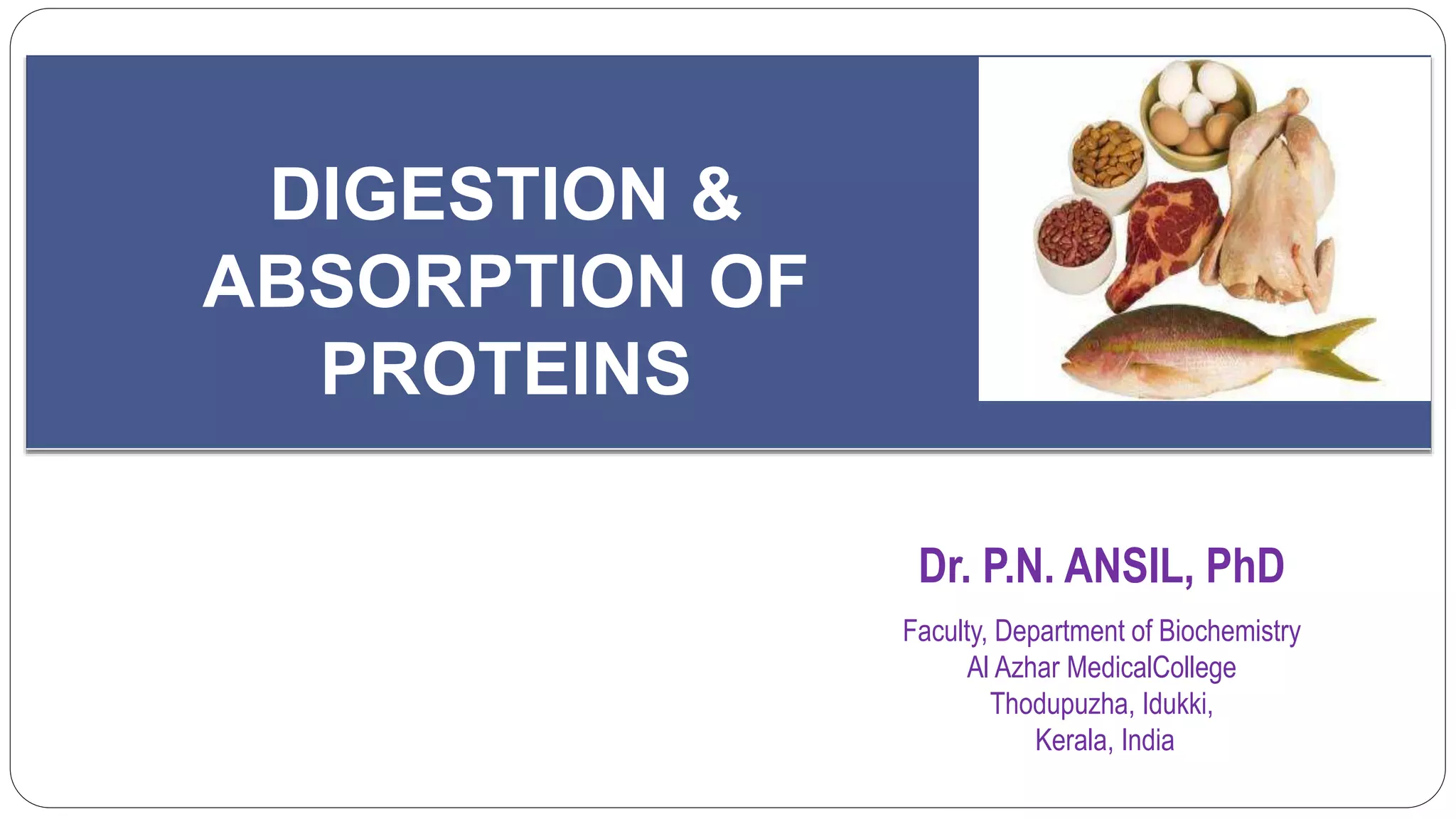
DIGESTION &
ABSORPTION OF
PROTEINS
 The proteins subjected to digestion and absorption are
obtained from two sources.
1.Exogenous
2.Endogenous
 The intake of dietary protein is in the range of 50-100 g/day
 Dietary proteins are denatured on cooking & easily digested
 About 30-100 g/day of endogenous protein is derived form the
digestive enzymes and worn out cells of the digestive tract
 The digestion and absorption of proteins is very efficient in healthy
humans, hence very little protein (about 5-10 g/day) is lost through
feces
 Proteolytic enzymes are secreted as inactive zymogens & are
converted to active form in the intestinal lumen
 Proteolytic enzymes include:
Endopeptidases
Exopeptidases
Endopeptidases:
 Act on peptide bonds inside the protein molecule, the protein
becomes successively smaller & smaller units
E.g.. Trypsin, Chymotrypsin, and Elastase
Exopeptidases:
 Act at the peptide bond, at the end region of the chain
E.g. Carboxypeptidase acts on the peptide bond only at the carboxy
terminal end
Aminopeptidase, which acts on the peptide bond only at amino
terminal end
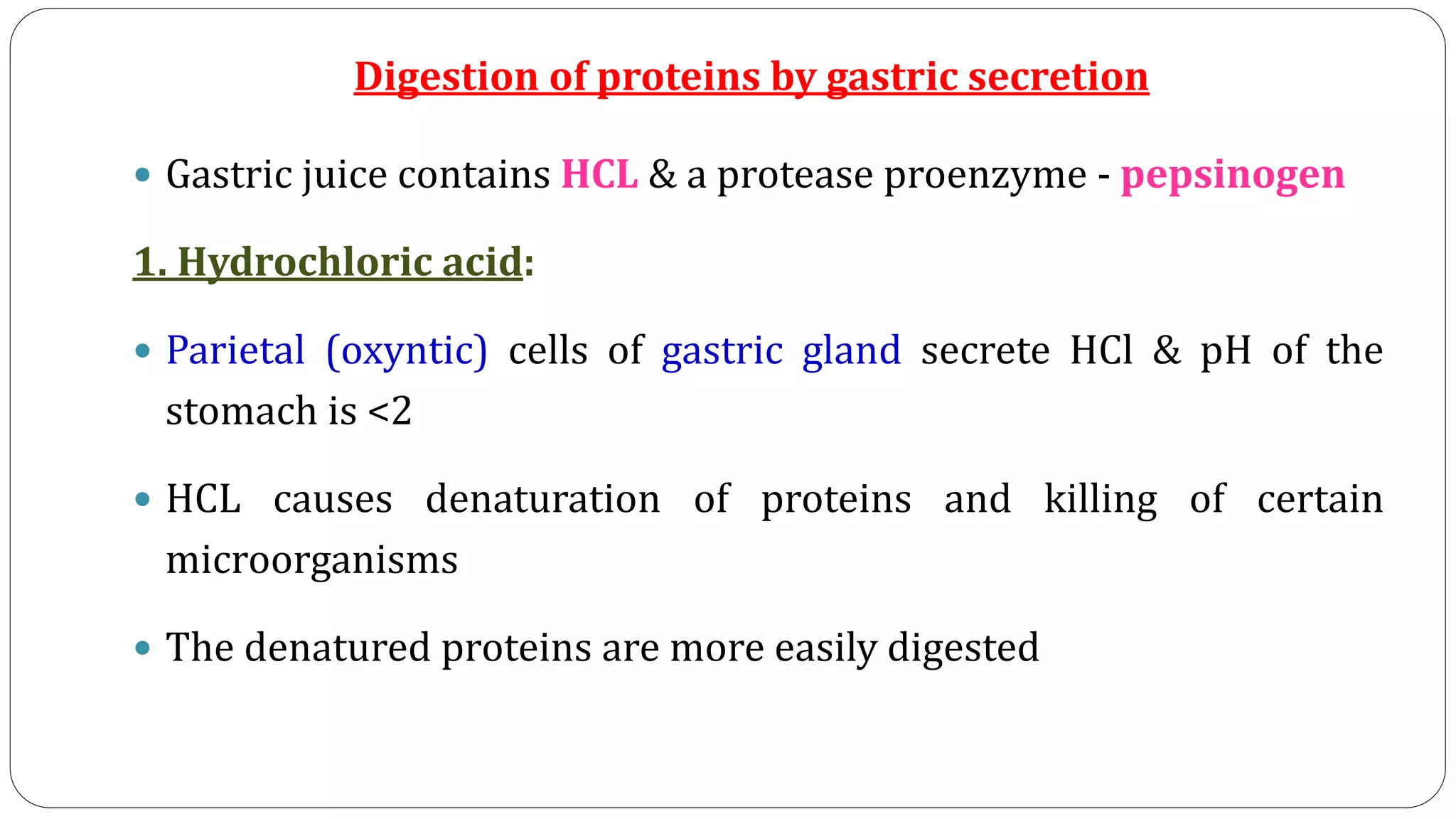
Digestion of proteins by gastric secretion
 Gastric juice contains HCL & a protease proenzyme - pepsinogen
1. Hydrochloric acid:
 Parietal (oxyntic) cells of gastric gland secrete HCl & pH of the
stomach is <2
 HCL causes denaturation of proteins and killing of certain
microorganisms
 The denatured proteins are more easily digested
2. Pepsin
 Secreted by the chief cells of stomach as inactive pepsinogen
 Pepsinogen is converted to pepsin by removal of 44 amino acids
from the N-terminal end, by the HCL
 Pepsin is an endopeptidase & its optimum pH is around 2
 It catalyses hydrolysis of the bonds formed by carboxyl groups of
Phe, Tyr, Trp and Met
 By the action of pepsin, proteins are broken into proteoses &
peptones
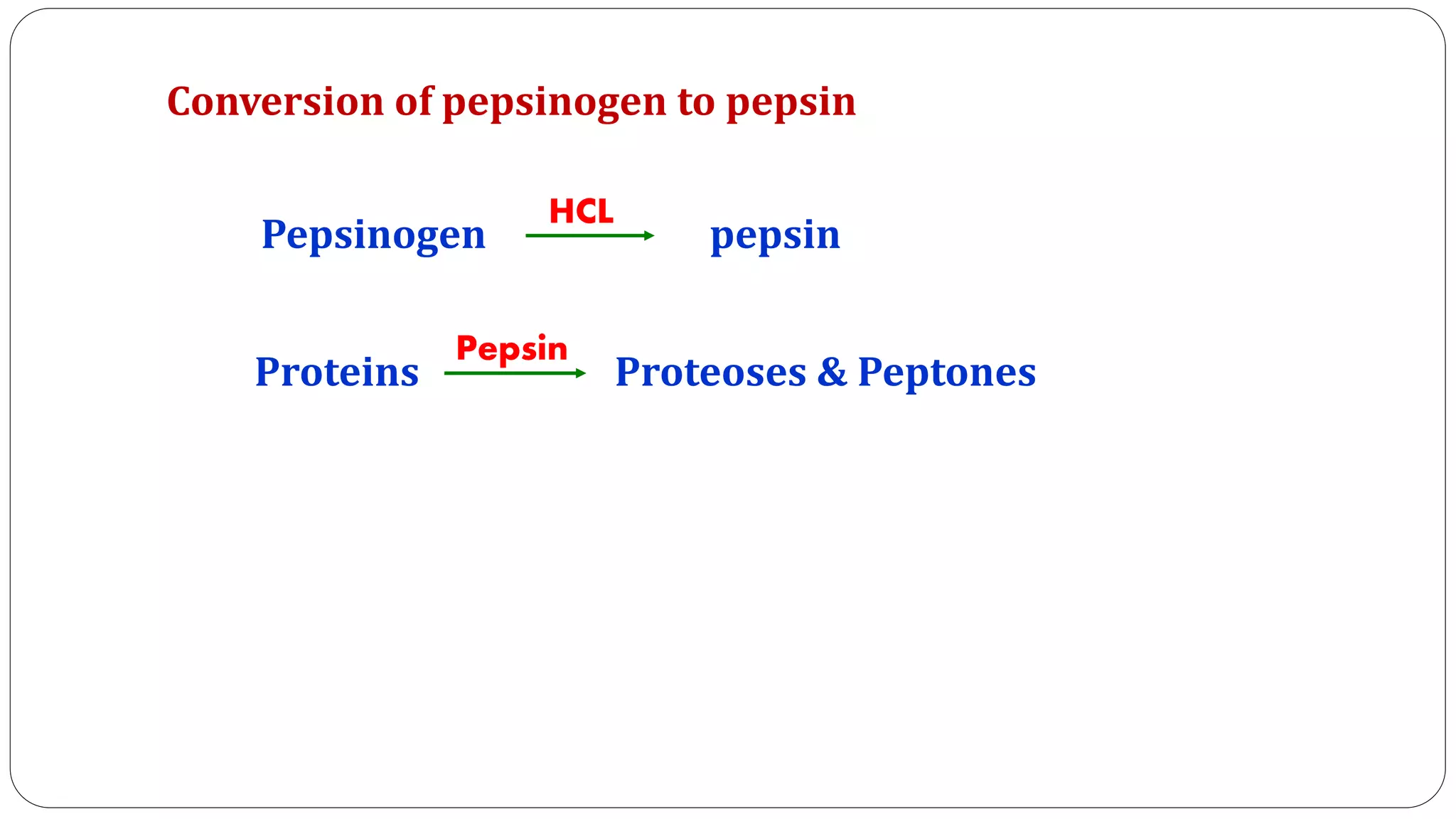
Conversion of pepsinogen to pepsin
Pepsinogen pepsin
Proteins Proteoses & Peptones
Pepsin
HCL
3. Rennin
 Also called chymosin, is found in the stomach of infants &
children
 It converts milk protein casein to calcium paracaseinate which
can be effectively digested by pepsin
 Rennin is absent in adults
Pancreatic Digestion of Proteins
 The optimum pH for the activity of pancreatic enzymes (pH 8) is
provided by the alkaline bile & pancreatic juice
 The secretion of pancreatic juice is stimulated by the peptide
hormones of digestive tract, Cholecystokinin and Pancreozymin
 Pancreatic juice contains endopeptidases - Trypsin, Chymotrypsin,
Elastase & exopeptidases - Carboxypeptidase
 Secreted as zymogens (trypsinogen, chymotrypsinogen, proelastase
& procarboxypptidases)
Release and activation of zymogens:
 The key enzyme for activation of zymogen is enteropeptidase
produced by intestinal (mostly duodenal) mucosal epithelial cells
 Enteropeptidase cleaves off a hexapeptide (6 amino acid fragment)
from the N-terminal end of trypsinogen to produce trypsin, the active
enzyme
 Trypsin is the common activator of all other pancreatic zymogens to
produce the active proteases - chymotrypsin, elastase and
carboxypeptidase (A & B)
 Trypsin, chymotrypsin and elastase are endopeptidases active at
neutral pH
 Gastric HCI is neutralized by pancreatic NaHCO3 in the intestine &
creates favourable pH for the action of proteases
 Serine proteases - The amino acid serine is essential at the active
centre to bring about the catalysis of all the three pancreatic
proteases.
Activation of inactive zymogens to active enzymes:
1. Trypsinogen Trypsin (active)
Enteropeptidase
2. Chymotrypsinogen Chymotrypsin (active)
Trypsin
3. Proelastase Elastase (active)
Trypsin
Carboxypeptidases
 Trypsin & chymotrypsin degrade the proteins into small peptides
 It is further hydrolysed into dipeptides & tripeptides by
carboxypeptidases present in the pancreatic juice
 The procarboxypeptidase is activated by trypsin
 They are metalloenzymes requiring zinc
 The pancreatic proteases results in formation of free amino acids
& small peptides (2-8 amino acids)
Carboxypeptidase A:
 It is a metallo-enzyme (Zn protein)
 Secreted as procarboxypeptidase & activated by trypsin
 Exopeptidase - cannot act on peptide bond inside the protein
 Hydrolyses carboxyterminal end & liberates free amino acids
Carboxypeptidase B:
 It is also an exopeptidase
 It hydrolyses carboxy terminal end of peptide bonds, connected with basic
amino acids
Action of proteolytic enzymes
Enzyme Hydrolysis of bonds formed
by carboxyl groups of
Pepsin Phe, Tyr, Trp, Met
Trypsin Arg, Lys
Chymotrypsin Phe, Tyr, Trp, Val, Leu
Elastase Ala, Gly, Ser
Carboxypeptidase
A
C-terminal aromatic amino acid
Carboxypeptidase C-terminal basic amino acid
Intestinal Digestion of Proteins
 The luminal surface of intestinal epithelial cells contains
aminopeptidases and dipeptidases
 Aminopeptidase is a non-specific exopeptidase, cleaves N-terminal
amino acids one by one to produce free amino acids & smaller
peptides
 Dipeptidases act on different dipeptides to liberate amino acids
Amino peptidases includes:
Leucine aminopeptidase (LAP)
 It releases the N-terminal basic amino acids and glycine
Proline amino peptidase or Prolidase
 It removes proline from the end of polypeptides
Dipeptidases and tripeptidases
 They will bring about the complete digestion of proteins
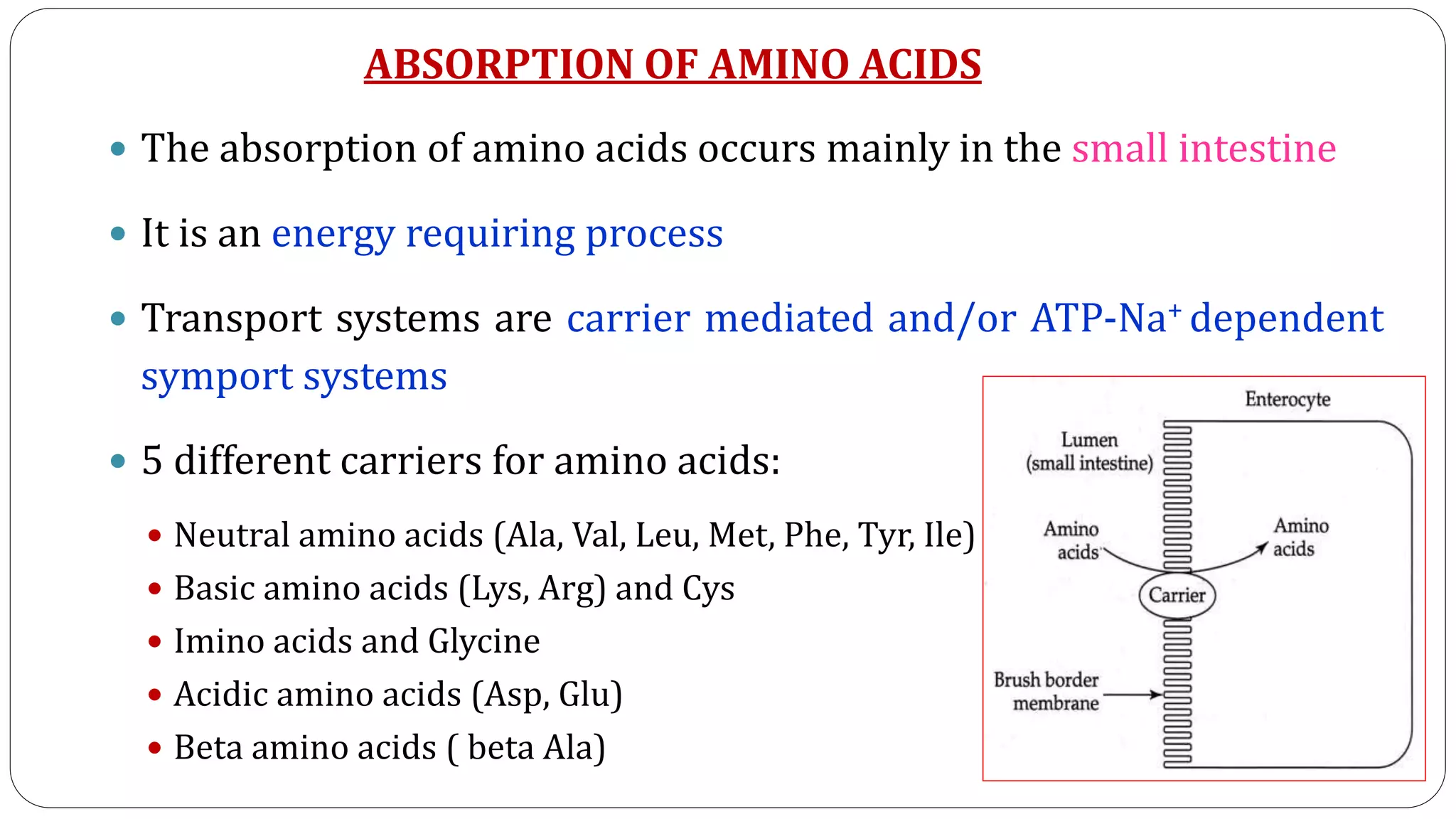
ABSORPTION OF AMINO ACIDS
 The absorption of amino acids occurs mainly in the small intestine
 It is an energy requiring process
 Transport systems are carrier mediated and/or ATP-Na+ dependent
symport systems
 5 different carriers for amino acids:
 Neutral amino acids (Ala, Val, Leu, Met, Phe, Tyr, Ile)
 Basic amino acids (Lys, Arg) and Cys
 Imino acids and Glycine
 Acidic amino acids (Asp, Glu)
 Beta amino acids ( beta Ala)
 The di- and tripeptides, after being absorbed are hydrolysed into
free amino acids in the cytosol of epithelial cells
 The activities of dipeptidases are high in these cells
Overview of carbohydrate digestion
 L-Amino acids are more rapidly absorbed than D-amino acids
 The transport of L-amino acids occurs by an active process
Mechanism of absorption of amino acids:
 Na+ dependent active process & requires ATP
 Na+ diffuses along the concentration gradient, the amino acid also
enters the intestinal cell
 Na+ & amino acids share a common carrier & transported together
 The compound cytochalasin Inhibits Na+ independent transport
system
Active transport
of Amino acids
Meister Cycle (Gamma Glutamyl Cycle)
 In intestines, kidney tubules and brain, the absorption of neutral
amino acids is effected by the gamma glutamyl cycle
 Tripeptide glutathione (GSH) (gamma glutamyl cysteinyl glycine) is
essential for Meister cycle
 It reacts with the amino acid to form gamma glutamyl amino acid
 This is catalyzed by gamma glutamyl transferase
 The glutamyl amino acid is then cleaved to give the free amino acid
 The net result is the transfer of an amino acid across the membrane
 The transport of one molecule of amino acid and regeneration of GSH
requires 3 molecules of ATP
Gamma glutamyl cycle (Meister cycle)
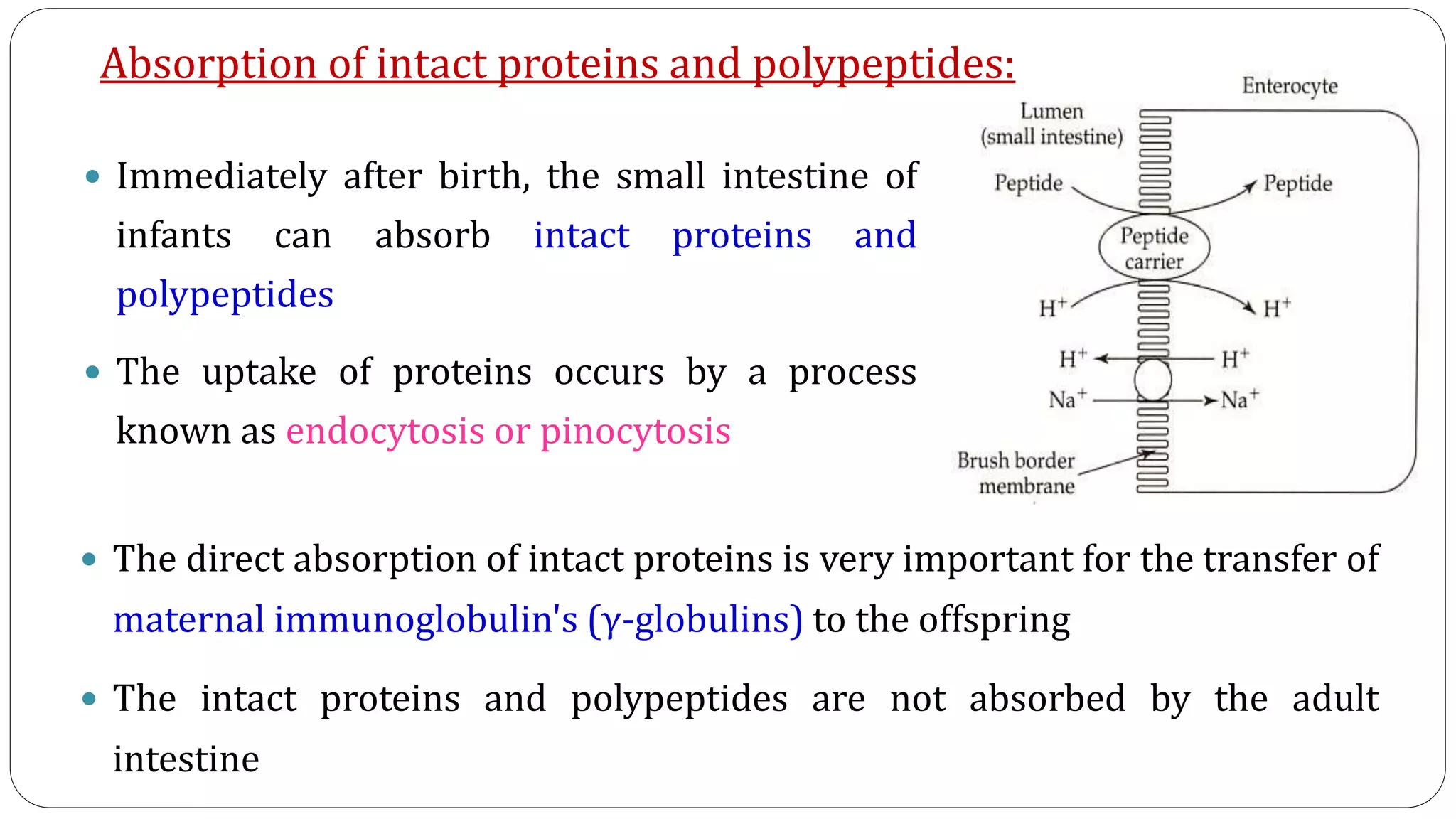
Absorption of intact proteins and polypeptides:
 The direct absorption of intact proteins is very important for the transfer of
maternal immunoglobulin's (γ-globulins) to the offspring
 The intact proteins and polypeptides are not absorbed by the adult
intestine
 Immediately after birth, the small intestine of
infants can absorb intact proteins and
polypeptides
 The uptake of proteins occurs by a process
known as endocytosis or pinocytosis
Food Allergy
 Dipeptides and tripeptides can enter the brush
border of mucosal cells & hydrolyzed into single
amino acids
 Then transported into portal vein
 Rarely, larger molecules may pass paracellularly
(between epithelial cells) & enter blood stream
 These are immunogenic, causing antibody
reaction, leading to food allery.
Abnormalities of protein digestion
 Defect in the pancreatic secretion impairs protein & fat digestion - Loss of
undigested protein in the feces along with the abnormal appearance of
lipids
 Acute pancreatitis: Premature activation of trypsinogen inside the pancreas
itself will result in the autodigestion of pancreatic cells
 Oxoprolinuria: Due to the deficiency of the enzyme 5-oxoprolinase
 Allergy to certain food proteins (milk, fish) result from absorption
of partially digested proteins
 Partial gastrectomy, pancreatitis, carcinoma of pancrease & cystic
fibrosis may affect the digestion and absorption of protein
 Protein losing enteropathy: Excessive loss of proteins through the
GI tract
 Defects in the intestinal amino acid transport systems are seen in inborn
errors of metabolism
 Hartnup’s disease
 Iminoglycinuria
 Cystinuria
 Oasthouse syndrome
 Characterized by the inability of intestinal & renal epithelial cells to
absorb neutral amino acids
 Tryptophan absorption is most severely affected, results in symptoms
of pellagra
 Impairment in the conversion of tryptophan to NAD+ & NADP+
THANK YOU

Digestion &amp; absorption of proteins

  • 1.
    Dr. P.N. ANSIL,PhD Faculty, Department of Biochemistry Al Azhar MedicalCollege Thodupuzha, Idukki, Kerala, India DIGESTION & ABSORPTION OF PROTEINS
  • 2.
     The proteinssubjected to digestion and absorption are obtained from two sources. 1.Exogenous 2.Endogenous
  • 3.
     The intakeof dietary protein is in the range of 50-100 g/day  Dietary proteins are denatured on cooking & easily digested  About 30-100 g/day of endogenous protein is derived form the digestive enzymes and worn out cells of the digestive tract  The digestion and absorption of proteins is very efficient in healthy humans, hence very little protein (about 5-10 g/day) is lost through feces
  • 4.
     Proteolytic enzymesare secreted as inactive zymogens & are converted to active form in the intestinal lumen  Proteolytic enzymes include: Endopeptidases Exopeptidases Endopeptidases:  Act on peptide bonds inside the protein molecule, the protein becomes successively smaller & smaller units E.g.. Trypsin, Chymotrypsin, and Elastase
  • 5.
    Exopeptidases:  Act atthe peptide bond, at the end region of the chain E.g. Carboxypeptidase acts on the peptide bond only at the carboxy terminal end Aminopeptidase, which acts on the peptide bond only at amino terminal end
  • 6.
    Digestion of proteinsby gastric secretion  Gastric juice contains HCL & a protease proenzyme - pepsinogen 1. Hydrochloric acid:  Parietal (oxyntic) cells of gastric gland secrete HCl & pH of the stomach is <2  HCL causes denaturation of proteins and killing of certain microorganisms  The denatured proteins are more easily digested
  • 7.
    2. Pepsin  Secretedby the chief cells of stomach as inactive pepsinogen  Pepsinogen is converted to pepsin by removal of 44 amino acids from the N-terminal end, by the HCL  Pepsin is an endopeptidase & its optimum pH is around 2  It catalyses hydrolysis of the bonds formed by carboxyl groups of Phe, Tyr, Trp and Met  By the action of pepsin, proteins are broken into proteoses & peptones
  • 8.
    Conversion of pepsinogento pepsin Pepsinogen pepsin Proteins Proteoses & Peptones Pepsin HCL
  • 9.
    3. Rennin  Alsocalled chymosin, is found in the stomach of infants & children  It converts milk protein casein to calcium paracaseinate which can be effectively digested by pepsin  Rennin is absent in adults
  • 10.
    Pancreatic Digestion ofProteins  The optimum pH for the activity of pancreatic enzymes (pH 8) is provided by the alkaline bile & pancreatic juice  The secretion of pancreatic juice is stimulated by the peptide hormones of digestive tract, Cholecystokinin and Pancreozymin  Pancreatic juice contains endopeptidases - Trypsin, Chymotrypsin, Elastase & exopeptidases - Carboxypeptidase  Secreted as zymogens (trypsinogen, chymotrypsinogen, proelastase & procarboxypptidases)
  • 11.
    Release and activationof zymogens:  The key enzyme for activation of zymogen is enteropeptidase produced by intestinal (mostly duodenal) mucosal epithelial cells  Enteropeptidase cleaves off a hexapeptide (6 amino acid fragment) from the N-terminal end of trypsinogen to produce trypsin, the active enzyme  Trypsin is the common activator of all other pancreatic zymogens to produce the active proteases - chymotrypsin, elastase and carboxypeptidase (A & B)
  • 12.
     Trypsin, chymotrypsinand elastase are endopeptidases active at neutral pH  Gastric HCI is neutralized by pancreatic NaHCO3 in the intestine & creates favourable pH for the action of proteases  Serine proteases - The amino acid serine is essential at the active centre to bring about the catalysis of all the three pancreatic proteases.
  • 13.
    Activation of inactivezymogens to active enzymes: 1. Trypsinogen Trypsin (active) Enteropeptidase 2. Chymotrypsinogen Chymotrypsin (active) Trypsin 3. Proelastase Elastase (active) Trypsin
  • 14.
    Carboxypeptidases  Trypsin &chymotrypsin degrade the proteins into small peptides  It is further hydrolysed into dipeptides & tripeptides by carboxypeptidases present in the pancreatic juice  The procarboxypeptidase is activated by trypsin  They are metalloenzymes requiring zinc  The pancreatic proteases results in formation of free amino acids & small peptides (2-8 amino acids)
  • 15.
    Carboxypeptidase A:  Itis a metallo-enzyme (Zn protein)  Secreted as procarboxypeptidase & activated by trypsin  Exopeptidase - cannot act on peptide bond inside the protein  Hydrolyses carboxyterminal end & liberates free amino acids Carboxypeptidase B:  It is also an exopeptidase  It hydrolyses carboxy terminal end of peptide bonds, connected with basic amino acids
  • 16.
    Action of proteolyticenzymes Enzyme Hydrolysis of bonds formed by carboxyl groups of Pepsin Phe, Tyr, Trp, Met Trypsin Arg, Lys Chymotrypsin Phe, Tyr, Trp, Val, Leu Elastase Ala, Gly, Ser Carboxypeptidase A C-terminal aromatic amino acid Carboxypeptidase C-terminal basic amino acid
  • 18.
    Intestinal Digestion ofProteins  The luminal surface of intestinal epithelial cells contains aminopeptidases and dipeptidases  Aminopeptidase is a non-specific exopeptidase, cleaves N-terminal amino acids one by one to produce free amino acids & smaller peptides  Dipeptidases act on different dipeptides to liberate amino acids
  • 19.
    Amino peptidases includes: Leucineaminopeptidase (LAP)  It releases the N-terminal basic amino acids and glycine Proline amino peptidase or Prolidase  It removes proline from the end of polypeptides Dipeptidases and tripeptidases  They will bring about the complete digestion of proteins
  • 21.
    ABSORPTION OF AMINOACIDS  The absorption of amino acids occurs mainly in the small intestine  It is an energy requiring process  Transport systems are carrier mediated and/or ATP-Na+ dependent symport systems  5 different carriers for amino acids:  Neutral amino acids (Ala, Val, Leu, Met, Phe, Tyr, Ile)  Basic amino acids (Lys, Arg) and Cys  Imino acids and Glycine  Acidic amino acids (Asp, Glu)  Beta amino acids ( beta Ala)
  • 22.
     The di-and tripeptides, after being absorbed are hydrolysed into free amino acids in the cytosol of epithelial cells  The activities of dipeptidases are high in these cells
  • 23.
  • 24.
     L-Amino acidsare more rapidly absorbed than D-amino acids  The transport of L-amino acids occurs by an active process
  • 25.
    Mechanism of absorptionof amino acids:  Na+ dependent active process & requires ATP  Na+ diffuses along the concentration gradient, the amino acid also enters the intestinal cell  Na+ & amino acids share a common carrier & transported together  The compound cytochalasin Inhibits Na+ independent transport system
  • 26.
  • 27.
    Meister Cycle (GammaGlutamyl Cycle)  In intestines, kidney tubules and brain, the absorption of neutral amino acids is effected by the gamma glutamyl cycle  Tripeptide glutathione (GSH) (gamma glutamyl cysteinyl glycine) is essential for Meister cycle  It reacts with the amino acid to form gamma glutamyl amino acid  This is catalyzed by gamma glutamyl transferase
  • 28.
     The glutamylamino acid is then cleaved to give the free amino acid  The net result is the transfer of an amino acid across the membrane  The transport of one molecule of amino acid and regeneration of GSH requires 3 molecules of ATP
  • 29.
    Gamma glutamyl cycle(Meister cycle)
  • 30.
    Absorption of intactproteins and polypeptides:  The direct absorption of intact proteins is very important for the transfer of maternal immunoglobulin's (γ-globulins) to the offspring  The intact proteins and polypeptides are not absorbed by the adult intestine  Immediately after birth, the small intestine of infants can absorb intact proteins and polypeptides  The uptake of proteins occurs by a process known as endocytosis or pinocytosis
  • 31.
    Food Allergy  Dipeptidesand tripeptides can enter the brush border of mucosal cells & hydrolyzed into single amino acids  Then transported into portal vein  Rarely, larger molecules may pass paracellularly (between epithelial cells) & enter blood stream  These are immunogenic, causing antibody reaction, leading to food allery.
  • 32.
    Abnormalities of proteindigestion  Defect in the pancreatic secretion impairs protein & fat digestion - Loss of undigested protein in the feces along with the abnormal appearance of lipids  Acute pancreatitis: Premature activation of trypsinogen inside the pancreas itself will result in the autodigestion of pancreatic cells  Oxoprolinuria: Due to the deficiency of the enzyme 5-oxoprolinase
  • 33.
     Allergy tocertain food proteins (milk, fish) result from absorption of partially digested proteins  Partial gastrectomy, pancreatitis, carcinoma of pancrease & cystic fibrosis may affect the digestion and absorption of protein  Protein losing enteropathy: Excessive loss of proteins through the GI tract
  • 34.
     Defects inthe intestinal amino acid transport systems are seen in inborn errors of metabolism  Hartnup’s disease  Iminoglycinuria  Cystinuria  Oasthouse syndrome  Characterized by the inability of intestinal & renal epithelial cells to absorb neutral amino acids  Tryptophan absorption is most severely affected, results in symptoms of pellagra  Impairment in the conversion of tryptophan to NAD+ & NADP+
  • 35.