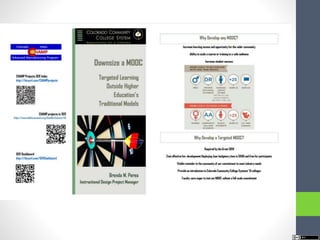
Downsize a MOOC
Brenda M. Perea
Instructional Design Project Manager
Targeted Learning
Outside Higher Ed’s
Traditional Models
Session Evaluations Contest
• Open OLC Conferences Mobile App
• Navigate to session to evaluate
• Click on "Rate this Session“
• Complete Session Evaluation*
(As part of our "green" initiatives, OLC is no longer using
paper forms for session evaluations.)
*Contact information required for contest entry but will not be shared with the presenters.
Winners will be contacted post-conference.
Each session evaluation completed (limited to one per session) = one contest entry
Five (5) $25 gift cards will be awarded to five (5) individuals
Must submit evals using the OLC Conferences mobile app
Expected Outcomes…..Hopefully
As a result of this session attendees will be
able to:
• Understand the potential benefits for institutions
to incorporate MOOCs into their educational
pathways
• Understand the benefits of higher ed. Institutions
partnering with industry to offer non-traditional
learning
• Discuss the benefits and challenges in building
MOOCs
Why Develop a MOOC?
• Learning access and opportunity
• Scale
• Student success
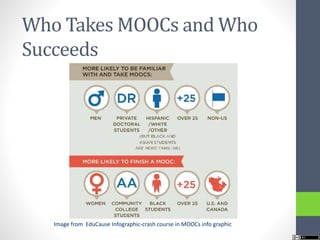
Who Takes MOOCs and Who
Succeeds
Image from EduCause Infographic-crash course in MOOCs info graphic
Why CCCS Developed 3 MOOCs
• Required in the SOW for the consortium’s TAACCCT3 grant
• Scale - Cost effective for participants (free resources)
• Student success - Flexible access, targeted learning and no
cost to the student
• Introduction to the Colorado Community College System
We Selected to build a . . .
sMOOC
smaller Massive Online Open Course
Why. . . .
• Industry request to accelerate the time
frame for their employees to become
certificate and degree completers.
• Specific participation group to identify
• Provided with $0 to build an of the MOOCs
• Learning access and opportunity -
community centered learning with world-
wide access
sMOOC Prep 101
What, why, when, who, how
Need to Recognize Challenges
• Launching a MOOC in a traditional community
college semester based system
• Developing “buy-in” from existing math faculty
to “accept” the MOOC vs. traditional semester
course
• Completers passing at a certain level what
does that mean for a participant
• What does this do to faculty FTE
Decisions to Make
•Credits, Credentials, and Certificates
• Badging? —Not yet, but estimate ETA SU15 for 1 sMOOC
• Do we want badges for skill attainment? all modules?
• Or identify what skills are high priority, backwards design
those skills to a competency, and award badge for
competency?
• Credentials—How and Why?
• Certificates?
• What is acceptable?
• Completing all modules?
• Completing at 70%, 80%?
Design Challenges
• Needed to be designed and launched within 6
months
• MOOC length 4-7 weeks?—settled for a 5 week
course
• Designing micro-learning “chunks” tied to
specific competencies
• Needed non-textbook based course material
• Required Content contextualized for Advanced
Manufacturing
sMOOC 1---A MOOC for
Technical Math Skills
Focus on supplementing math skills not on
replacing traditional MAT108 course
• Tool to “refresh” their math skills to test out of
MAT108
• Critically evaluated the “must” cover
• measurements, algebra, geometry,
trigonometry, graphs, and finance.
• Supplemental resource for struggling current
students
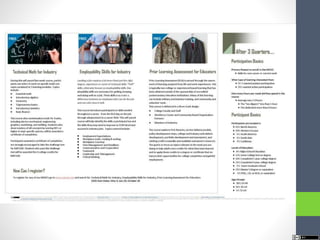
sMOOC 2- Employability Skills
• Focus on soft skills needed in the work
place whether new hire or current
employee
• Content based on
• Employer and industry advisory board,
Colorado 21st Century Workforce Skills
Report, Colorado Workforce Training
• Demand from business partners for
better prepared employees
sMOOC 3-Prior Learning
Assessment
• Change in SB Policy
• Need to build a standard level of
awareness of accessibility
• Effectively deliver professional
development to all Colorado Community
College employees (13 colleges spread
across the state)
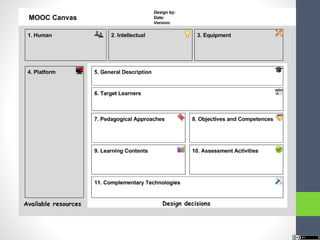
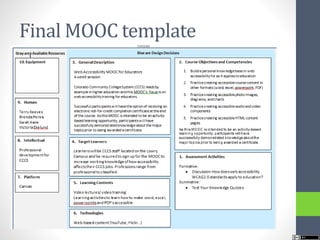
Final MOOC template
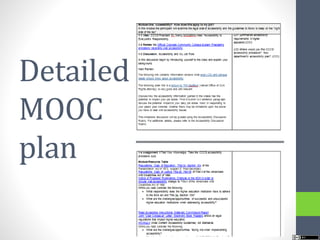
Detailed
MOOC
plan
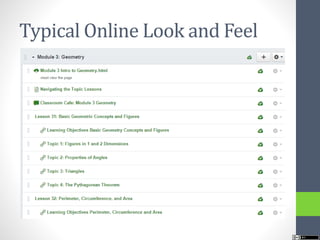
Typical Online Look and Feel
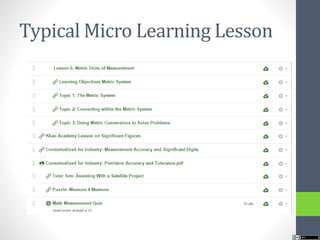
Typical Micro Learning Lesson
Content Designed to Create
“Stickiness”
• Easy to “jump in and around” content
• Each topic had a clear “golden nugget”
• Provide relevant content
• Embed the critical ideas throughout the
content
• Provide visuals
• Facilitate connection or relationship to
the content
Technical Bumps in the Road
• Lack of OER materials other than Khan Academy
• MOOC host requested us to change title and
refine course description to appeal to a broader
audience.
• Ideas on a “new” name was Career Math
• However, that was in direct conflict with an
existing CCCS courses which might lead
students to confuse the course with a credit
bearing course
QUESTIONS????
CC BY License
This Workforce Solution Downsize a MOOC by Brenda M. Perea is
licensed under a Creative Commons Attribution 4.0 International
License. Permissions beyond the scope of this license may be available
at www.cccs.edu.
This workforce solution was funded by a grant awarded by the U.S.
Department of Labor’s Employment and Training Administration. The
solution was created by the grantee and does not necessarily reflect
the official position of the U.S. Department of Labor. The Department
of Labor makes no guarantees, warranties, or assurances of any kind,
express or implied, with respect to such information, including any
information on linked sites, and including, but not limited to accuracy
of the information or its completeness, timeliness, usefulness,
adequacy, continued availability or ownership.

Downsizing a MOOC: Targeted Learning Outside Higher Education's Traditional Delivery Models

  • 1.
    Downsize a MOOC BrendaM. Perea Instructional Design Project Manager Targeted Learning Outside Higher Ed’s Traditional Models
  • 2.
    Session Evaluations Contest •Open OLC Conferences Mobile App • Navigate to session to evaluate • Click on "Rate this Session“ • Complete Session Evaluation* (As part of our "green" initiatives, OLC is no longer using paper forms for session evaluations.) *Contact information required for contest entry but will not be shared with the presenters. Winners will be contacted post-conference. Each session evaluation completed (limited to one per session) = one contest entry Five (5) $25 gift cards will be awarded to five (5) individuals Must submit evals using the OLC Conferences mobile app
  • 3.
    Expected Outcomes…..Hopefully As aresult of this session attendees will be able to: • Understand the potential benefits for institutions to incorporate MOOCs into their educational pathways • Understand the benefits of higher ed. Institutions partnering with industry to offer non-traditional learning • Discuss the benefits and challenges in building MOOCs
  • 4.
    Why Develop aMOOC? • Learning access and opportunity • Scale • Student success
  • 5.
    Who Takes MOOCsand Who Succeeds Image from EduCause Infographic-crash course in MOOCs info graphic
  • 6.
    Why CCCS Developed3 MOOCs • Required in the SOW for the consortium’s TAACCCT3 grant • Scale - Cost effective for participants (free resources) • Student success - Flexible access, targeted learning and no cost to the student • Introduction to the Colorado Community College System
  • 7.
    We Selected tobuild a . . . sMOOC smaller Massive Online Open Course Why. . . . • Industry request to accelerate the time frame for their employees to become certificate and degree completers. • Specific participation group to identify • Provided with $0 to build an of the MOOCs • Learning access and opportunity - community centered learning with world- wide access
  • 8.
    sMOOC Prep 101 What,why, when, who, how
  • 9.
    Need to RecognizeChallenges • Launching a MOOC in a traditional community college semester based system • Developing “buy-in” from existing math faculty to “accept” the MOOC vs. traditional semester course • Completers passing at a certain level what does that mean for a participant • What does this do to faculty FTE
  • 10.
    Decisions to Make •Credits,Credentials, and Certificates • Badging? —Not yet, but estimate ETA SU15 for 1 sMOOC • Do we want badges for skill attainment? all modules? • Or identify what skills are high priority, backwards design those skills to a competency, and award badge for competency? • Credentials—How and Why? • Certificates? • What is acceptable? • Completing all modules? • Completing at 70%, 80%?
  • 11.
    Design Challenges • Neededto be designed and launched within 6 months • MOOC length 4-7 weeks?—settled for a 5 week course • Designing micro-learning “chunks” tied to specific competencies • Needed non-textbook based course material • Required Content contextualized for Advanced Manufacturing
  • 12.
    sMOOC 1---A MOOCfor Technical Math Skills Focus on supplementing math skills not on replacing traditional MAT108 course • Tool to “refresh” their math skills to test out of MAT108 • Critically evaluated the “must” cover • measurements, algebra, geometry, trigonometry, graphs, and finance. • Supplemental resource for struggling current students
  • 13.
    sMOOC 2- EmployabilitySkills • Focus on soft skills needed in the work place whether new hire or current employee • Content based on • Employer and industry advisory board, Colorado 21st Century Workforce Skills Report, Colorado Workforce Training • Demand from business partners for better prepared employees
  • 14.
    sMOOC 3-Prior Learning Assessment •Change in SB Policy • Need to build a standard level of awareness of accessibility • Effectively deliver professional development to all Colorado Community College employees (13 colleges spread across the state)
  • 16.
  • 17.
  • 18.
  • 19.
  • 20.
    Content Designed toCreate “Stickiness” • Easy to “jump in and around” content • Each topic had a clear “golden nugget” • Provide relevant content • Embed the critical ideas throughout the content • Provide visuals • Facilitate connection or relationship to the content
  • 21.
    Technical Bumps inthe Road • Lack of OER materials other than Khan Academy • MOOC host requested us to change title and refine course description to appeal to a broader audience. • Ideas on a “new” name was Career Math • However, that was in direct conflict with an existing CCCS courses which might lead students to confuse the course with a credit bearing course
  • 22.
  • 25.
    CC BY License ThisWorkforce Solution Downsize a MOOC by Brenda M. Perea is licensed under a Creative Commons Attribution 4.0 International License. Permissions beyond the scope of this license may be available at www.cccs.edu. This workforce solution was funded by a grant awarded by the U.S. Department of Labor’s Employment and Training Administration. The solution was created by the grantee and does not necessarily reflect the official position of the U.S. Department of Labor. The Department of Labor makes no guarantees, warranties, or assurances of any kind, express or implied, with respect to such information, including any information on linked sites, and including, but not limited to accuracy of the information or its completeness, timeliness, usefulness, adequacy, continued availability or ownership.

Editor's Notes

  • #2 Page URL: http://commons.wikimedia.org/wiki/File%3ALogo_MOOC_GdP_d%C3%A9tour%C3%A9.png File URL: Attribution: By Ofol (Own work) [CC BY-SA 4.0 (http://creativecommons.org/licenses/by-sa/4.0)], via Wikimedia Commons
  • #4 Expected Outcomes…hopefully As a result of this session attendees will be able to: Understand the potential benefits for institutions to incorporate MOOCs into their educational pathways Understand the benefits of higher ed. Institutions partnering with industry to offer non-traditional learning Discuss the benefits and challenges in building MOOCs
  • #5 Why Develop a MOOC? Learning access and opportunity Scale Student success
  • #6 Average student: lurks in the first MOOC registered, usually doesn’t complete the MOOC predominately male currently employed; in this country they’re also older than you might expect. Far more enrollees view them as a diversion than they do as a means to a college degree or a new job Typically have a 2 or 4 year degree Only allots 2-3 hours per week in 15 to 20 minute increments Only completes 1 out of 4 MOOCs registered in To take advantage of a MOOC requires sufficient schooling to be able to follow college-level material, consistent access to the Web, reliable internet
  • #7 Why CCCS Developed 3 sMOOCs Required in the SOW for the consortium’s TAACCCT3 grant Learning access and opportunity-- community centered learning with world-wide access Scale - Cost effective for participants (free resources) Meeting Industry needs-- rapid prototype development avoids the year long process of traditional new program/course development while avoid 'reinventing the wheel' for time efficiency Student success -- Flexible access, targeted learning and no cost to the student Introduction to the Colorado Community College System
  • #8 We elected to build a … sMOOC—smaller Massive Online Open Course Part of our Statement of Work for the Trade Adjustment Assistance Community College and Career Training (TAACCCT grant) Industry request to accelerate the time frame for their employees to become certificate and degree completers. Specific participation group to identify Provided with $0 to build an of the MOOCs
  • #9 sMOOC Prep 101
  • #10 Need to recognize Challenges Launching a MOOC in a traditional community college semester based system Developing “buy-in” from existing math faculty to “accept” the MOOC vs. traditional semester course Completers passing at a certain level what does that mean for a participant What does this do to faculty FTE Design for a course running 4-7 weeks Cannot build the MOOC like an online course. Must be designed for mobile devices Compact Content with video length less than 3 minutes Total time on task is 30 minutes including practice drills.  Each learning “chunk” contains Context-grabbing the students interest as well as provide relevance to material Challenge- create small packages of learning which can be completed in 15 to 20 minutes Activity-showing that they understand the content Feedback-can be personal or automatic.
  • #11 Decisions to Make Credits, Credentials, and Certificates Badging? —Not yet, but estimate ETA SU15 for 1 sMOOC Do we want badges for skill attainment? all modules? Or identify what skills are high priority, backwards design those skills to a competency, and award badge for competency? Credentials—How and Why? Certificates? What is acceptable? Completing all modules? Completing at 70%, 80%?
  • #12 Design for a course running 4-7 weeks Cannot build the MOOC like an online course. Must be designed for mobile devices Compact Content with video length less than 3 minutes Total time on task is 30 minutes including practice drills.  Each learning “chunk” contains Context-grabbing the students interest as well as provide relevance to material Challenge- create small packages of learning which can be completed in 15 to 20 minutes Activity-showing that they understand the content Feedback-can be personal or automatic.
  • #13 sMOOC 1—Why a MOOC for Technical Math Skills Focus on supplementing math skills not on replacing traditional MAT108 course Tool to “refresh” their math skills to test out of MAT108 Critically evaluated the “must” cover measurements, algebra, geometry, trigonometry, graphs, and finance. Supplemental resource for struggling current students
  • #14 sMOOC 2—Employability Skills Focus on soft skills needed in the work place whether new hire or current employee Content based on Employer and industry advisory board, Colorado 21st Century Workforce Skills Report, Colorado Workforce Training Demand from business partners for better prepared employees
  • #15 sMOOC 3—Prior Learning Assessment Change in SB Policy Need to build a standard level of awareness of accessibility Effectively deliver professional development to all Colorado Community College employees (13 colleges spread across the state)
  • #19 Typical Online look and Feel
  • #20 Micro Learning
  • #21 Content Designed to Create “Stickiness” Each topic had a clear “golden nugget” Provide relevant content Embed the critical ideas throughout the content Provide visuals Facilitate connection or relationship to the content
  • #22 Technical Bumps in the Road Lack of OER materials other than Khan Academy MOOC host requested us to change title and refine course description to appeal to a broader audience. Ideas on a “new” name was Career Math However, that was in direct conflict with an existing CCCS courses which might lead students to confuse the course with a credit bearing course
  • #26 CC BY License This Workforce Solution Downsize a MOOC by Brenda M. Perea is licensed under a Creative Commons Attribution 4.0 International License. Permissions beyond the scope of this license may be available at www.cccs.edu.   This workforce solution was funded by a grant awarded by the U.S. Department of Labor’s Employment and Training Administration. The solution was created by the grantee and does not necessarily reflect the official position of the U.S. Department of Labor. The Department of Labor makes no guarantees, warranties, or assurances of any kind, express or implied, with respect to such information, including any information on linked sites, and including, but not limited to accuracy of the information or its completeness, timeliness, usefulness, adequacy, continued availability or ownership.