 Dove is a personal care brand owned by Unilever.
                 It started in 1957
         The brand came to India in 1995.
    It is imported and marketed by Hindustan
              Unilever Limited (HUL).
   By the end of the dove firming “Real Women”
  Campaign, dove has become a national talking
 point and was ranked number three in the body
     lotions market, ahead of L’oreal, Garnier,
               Neutrogena and Olay.
  In the year 2004, Unilever won the ‘marketer of
         the year’ award for its brand Dove
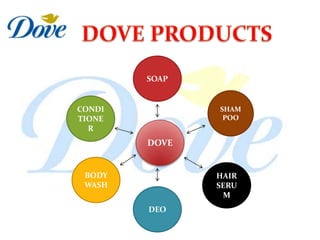
SOAP


CONDI          SHAM
TIONE           POO
  R
        DOVE


 BODY          HAIR
 WASH          SERU
                M
        DEO
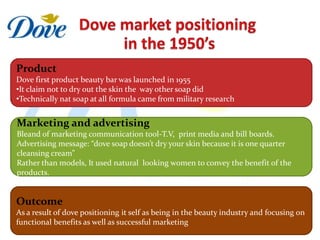
Product
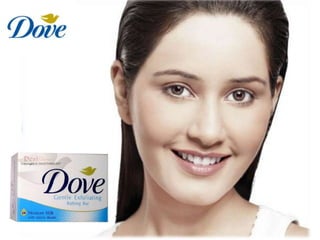
Dove first product beauty bar was launched in 1955
•It claim not to dry out the skin the way other soap did
•Technically nat soap at all formula came from military research


Marketing and advertising
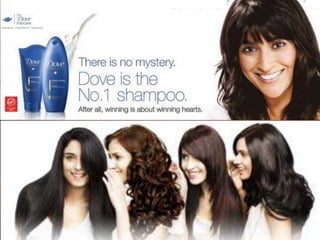
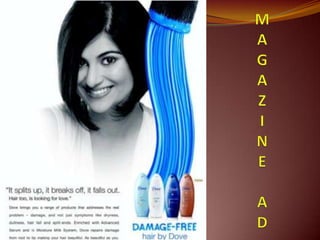
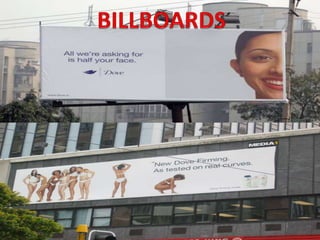
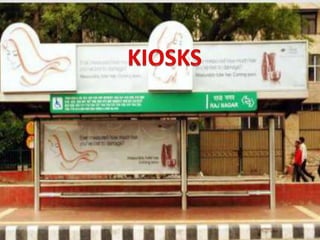
Bleand of marketing communication tool-T.V, print media and bill boards.
Advertising message: “dove soap doesn’t dry your skin because it is one quarter
cleansing cream”
Rather than models, It used natural looking women to convey the benefit of the
products.


Outcome
As a result of dove positioning it self as being in the beauty industry and focusing on
functional benefits as well as successful marketing
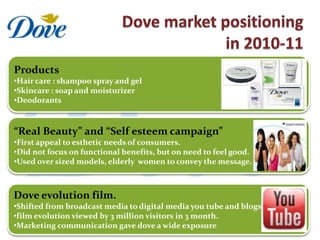
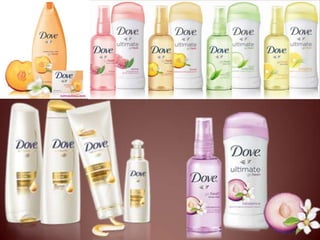
Products
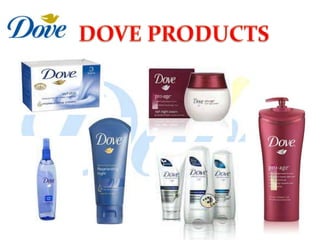
•Hair care : shampoo spray and gel
•Skincare : soap and moisturizer
•Deodorants


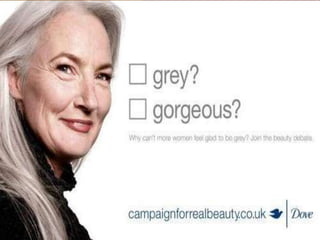
“Real Beauty” and “Self esteem campaign”
•First appeal to esthetic needs of consumers.
•Did not focus on functional benefits, but on need to feel good.
•Used over sized models, elderly women to convey the message.


Dove evolution film.
•Shifted from broadcast media to digital media you tube and blogs.
•film evolution viewed by 3 million visitors in 3 month.
•Marketing communication gave dove a wide exposure
 From long-established names like Lifebuoy, Sunlight and
Pond’s to new innovations such as the Pureit affordable
water purifier, our range of brands is as diverse as our
worldwide consumer base.
 Unilever has more than 400 brands, 12 of which generate
sales in excess of €1 billion a year.
 Many of these brands have long-standing, strong social
missions, including Lifebuoy’s drive to promote hygiene
through hand washing with soap, and Dove’s campaign for
real beauty.
 We’ve also won a wealth of advertising industry honours
at the prestigious Cannes Advertising Awards, including
being named 2010’s Advertiser of the Year.
 With more than 400 brands focused on health and
wellbeing, no company touches so many people’s lives in so
many different ways.

 Our portfolio ranges from nutritionally balanced foods to
indulgent ice creams, affordable soaps, luxurious shampoos
and everyday household care products.

 We produce world-leading brands including Lipton, Knorr,
Dove, Axe, Hellmann’s and Omo, alongside trusted local
names    such    as    Blue   Band,     Pureit   and   Suave.
 We realise innovation is key to our progress, and
through cutting-edge science we’re constantly enhancing
our brands, improving their nutritional properties, taste,
fragrance, or functionality.
 We invest nearly €1 billion every year in research and
development, and have established laboratories around
the world where our scientists explore new thinking and
techniques, applying their expertise to our products.
 Consumer research plays a vital role in this process.
Our unrivalled global reach allows us to get closer to
consumers in local markets, ensuring we understand
their diverse needs and priorities.
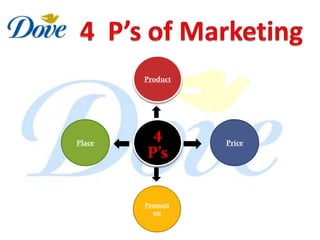
Product


Place
         4        Price
        P’s


        Promoti
          on
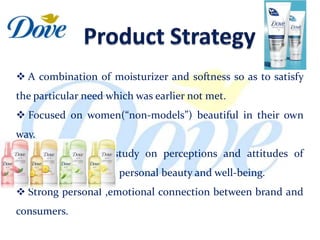
 A combination of moisturizer and softness so as to satisfy
the particular need which was earlier not met.
 Focused on women(“non-models”) beautiful in their own
way.
 Based on global study on perceptions and attitudes of
women with regard to personal beauty and well-being.
 Strong personal ,emotional connection between brand and
consumers.
 With the entry in Indian market in 1995 it was priced at
Rs.50 NOT SATISFACTORY FOR THE CONSUMERS.
 People with higher income level did not consider it
worth buying.
 DOVE then changed its strategy and lowered its price to
Rs.28 thereby attracting the upper middle class Indian
consumer.
 The distribution channels used is no different that of
HUL except “Kwality Walls”.
 Competition with home products like- Lux, Pears.
 Competitive advantage– using 1 distribution channel to
provide their various products to retailers.
 More popular in Metropolitan cities.
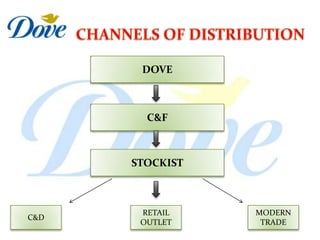
DOVE


        C&F


      STOCKIST


       RETAIL    MODERN
C&D
       OUTLET     TRADE
 Positioned as REAL BEAUTY and is considered to be good
  for people of all ages.
 Various promotional awareness :-
   - DOVE Self esteem fund in 2006.
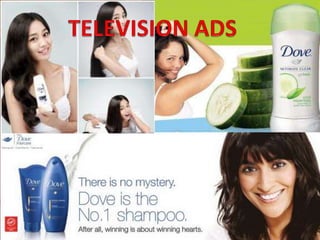
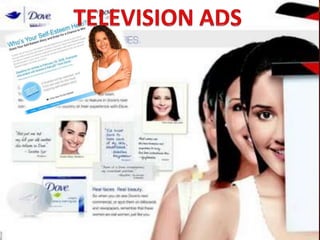
   - AD commercials on TV by doing comparison with other
  products of same range.
 REAL beauty campaign in 2008.
 Promotion with the help of study.
 A combination of moisturizer and softness so as to satisfy
  the particular need which was earlier not met.
 Focused no women (non model)-beautiful in their own
  way.
 Strong personal emotional connection between brand and
  consumer.
 Competition with home product like LUX ,PEARS.
 With the entry in indian market in 1995 it was priced at
   Rs. 50.
 People with higher income level did not consider it worth
  buying.
 AD commercail in T.V making comparision with different
  other brands
A Dove segment the market on the basis of :
 Demographic segmentation
         -Gender: female(working women)
         -Income: high income group & upper middle
class.
 Psychographic segmentation
         - It tries to change the psychology of an average
looking women that she can look equally beautiful.
 Targets girls and women of all ages , shapes and
sizes.
 Especially target the working women as they have
busy schedules and cannot take out time for
themselves so by using one soap the can get the
benefits of a soap as well as a moisturizer.
 Dove uses the market specialization.
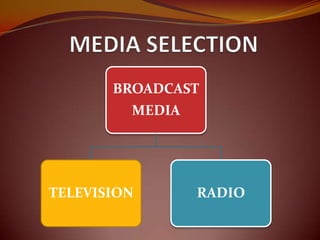
BROADCAST
         MEDIA


TELEVISION       RADIO
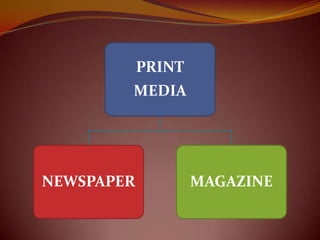
PRINT
        MEDIA


NEWSPAPER           MAGAZINE
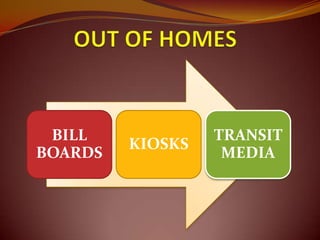
BILL             TRANSIT
         KIOSKS
BOARDS             MEDIA
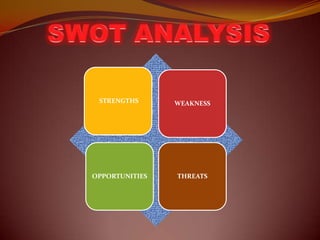
STRENGTHS      WEAKNESS


OPPORTUNITIES   THREATS
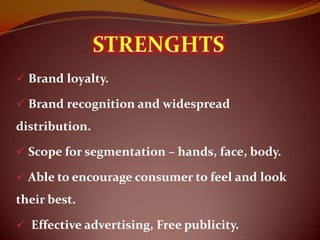
 Brand loyalty.

 Brand recognition and widespread
distribution.

 Scope for segmentation – hands, face, body.

 Able to encourage consumer to feel and look
their best.

 Effective advertising, Free publicity.
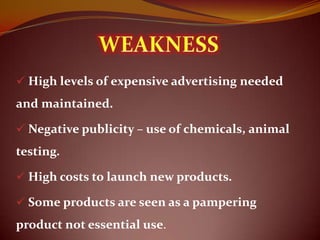
 High levels of expensive advertising needed
and maintained.

 Negative publicity – use of chemicals, animal
testing.

 High costs to launch new products.

 Some products are seen as a pampering
product not essential use.
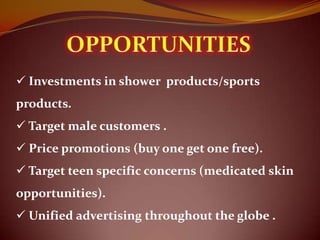
 Investments in shower products/sports
products.
 Target male customers .
 Price promotions (buy one get one free).
 Target teen specific concerns (medicated skin
opportunities).
 Unified advertising throughout the globe .
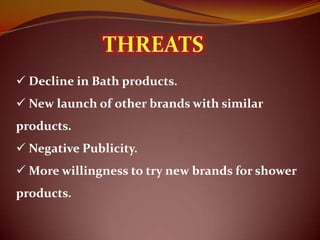
 Decline in Bath products.
 New launch of other brands with similar
products.
 Negative Publicity.
 More willingness to try new brands for shower
products.
 It is a quality product with reasonable price.
                                                   -Priya Arora
 I use this product because after using this product I don’t
have use anything else.
                                              -Udiksha Khare
 Dove soap are very helpful for dry and rough skin.
                                                   -Ankita Singh
 I used other brand shampoos but dove I think is the best.
                                                     -Nita Dayal
 Its is not worth buying because at the same price there are
other products available in the market which are better than
dove like L’oreal pears etc.
                                              -Komal Grover


 Clean, fresh feeling, moisturize my skin no over powering
smell.
                                                 -Nistha Sen
Dove_HUL

Dove_HUL

  • 5.
     Dove isa personal care brand owned by Unilever.  It started in 1957  The brand came to India in 1995.  It is imported and marketed by Hindustan Unilever Limited (HUL).  By the end of the dove firming “Real Women” Campaign, dove has become a national talking point and was ranked number three in the body lotions market, ahead of L’oreal, Garnier, Neutrogena and Olay.  In the year 2004, Unilever won the ‘marketer of the year’ award for its brand Dove
  • 6.
    SOAP CONDI SHAM TIONE POO R DOVE BODY HAIR WASH SERU M DEO
  • 8.
    Product Dove first productbeauty bar was launched in 1955 •It claim not to dry out the skin the way other soap did •Technically nat soap at all formula came from military research Marketing and advertising Bleand of marketing communication tool-T.V, print media and bill boards. Advertising message: “dove soap doesn’t dry your skin because it is one quarter cleansing cream” Rather than models, It used natural looking women to convey the benefit of the products. Outcome As a result of dove positioning it self as being in the beauty industry and focusing on functional benefits as well as successful marketing
  • 9.
    Products •Hair care :shampoo spray and gel •Skincare : soap and moisturizer •Deodorants “Real Beauty” and “Self esteem campaign” •First appeal to esthetic needs of consumers. •Did not focus on functional benefits, but on need to feel good. •Used over sized models, elderly women to convey the message. Dove evolution film. •Shifted from broadcast media to digital media you tube and blogs. •film evolution viewed by 3 million visitors in 3 month. •Marketing communication gave dove a wide exposure
  • 11.
     From long-establishednames like Lifebuoy, Sunlight and Pond’s to new innovations such as the Pureit affordable water purifier, our range of brands is as diverse as our worldwide consumer base.  Unilever has more than 400 brands, 12 of which generate sales in excess of €1 billion a year.  Many of these brands have long-standing, strong social missions, including Lifebuoy’s drive to promote hygiene through hand washing with soap, and Dove’s campaign for real beauty.  We’ve also won a wealth of advertising industry honours at the prestigious Cannes Advertising Awards, including being named 2010’s Advertiser of the Year.
  • 12.
     With morethan 400 brands focused on health and wellbeing, no company touches so many people’s lives in so many different ways.  Our portfolio ranges from nutritionally balanced foods to indulgent ice creams, affordable soaps, luxurious shampoos and everyday household care products.  We produce world-leading brands including Lipton, Knorr, Dove, Axe, Hellmann’s and Omo, alongside trusted local names such as Blue Band, Pureit and Suave.
  • 13.
     We realiseinnovation is key to our progress, and through cutting-edge science we’re constantly enhancing our brands, improving their nutritional properties, taste, fragrance, or functionality.  We invest nearly €1 billion every year in research and development, and have established laboratories around the world where our scientists explore new thinking and techniques, applying their expertise to our products.  Consumer research plays a vital role in this process. Our unrivalled global reach allows us to get closer to consumers in local markets, ensuring we understand their diverse needs and priorities.
  • 14.
    Product Place 4 Price P’s Promoti on
  • 15.
     A combinationof moisturizer and softness so as to satisfy the particular need which was earlier not met.  Focused on women(“non-models”) beautiful in their own way.  Based on global study on perceptions and attitudes of women with regard to personal beauty and well-being.  Strong personal ,emotional connection between brand and consumers.
  • 16.
     With theentry in Indian market in 1995 it was priced at Rs.50 NOT SATISFACTORY FOR THE CONSUMERS.  People with higher income level did not consider it worth buying.  DOVE then changed its strategy and lowered its price to Rs.28 thereby attracting the upper middle class Indian consumer.
  • 17.
     The distributionchannels used is no different that of HUL except “Kwality Walls”.  Competition with home products like- Lux, Pears.  Competitive advantage– using 1 distribution channel to provide their various products to retailers.  More popular in Metropolitan cities.
  • 18.
    DOVE C&F STOCKIST RETAIL MODERN C&D OUTLET TRADE
  • 19.
     Positioned asREAL BEAUTY and is considered to be good for people of all ages.  Various promotional awareness :- - DOVE Self esteem fund in 2006. - AD commercials on TV by doing comparison with other products of same range.  REAL beauty campaign in 2008.  Promotion with the help of study.
  • 20.
     A combinationof moisturizer and softness so as to satisfy the particular need which was earlier not met.  Focused no women (non model)-beautiful in their own way.  Strong personal emotional connection between brand and consumer.  Competition with home product like LUX ,PEARS.  With the entry in indian market in 1995 it was priced at Rs. 50.  People with higher income level did not consider it worth buying.  AD commercail in T.V making comparision with different other brands
  • 21.
    A Dove segmentthe market on the basis of :  Demographic segmentation -Gender: female(working women) -Income: high income group & upper middle class.  Psychographic segmentation - It tries to change the psychology of an average looking women that she can look equally beautiful.
  • 22.
     Targets girlsand women of all ages , shapes and sizes.  Especially target the working women as they have busy schedules and cannot take out time for themselves so by using one soap the can get the benefits of a soap as well as a moisturizer.  Dove uses the market specialization.
  • 24.
    BROADCAST MEDIA TELEVISION RADIO
  • 26.
    PRINT MEDIA NEWSPAPER MAGAZINE
  • 29.
    BILL TRANSIT KIOSKS BOARDS MEDIA
  • 35.
    STRENGTHS WEAKNESS OPPORTUNITIES THREATS
  • 36.
     Brand loyalty. Brand recognition and widespread distribution.  Scope for segmentation – hands, face, body.  Able to encourage consumer to feel and look their best.  Effective advertising, Free publicity.
  • 37.
     High levelsof expensive advertising needed and maintained.  Negative publicity – use of chemicals, animal testing.  High costs to launch new products.  Some products are seen as a pampering product not essential use.
  • 38.
     Investments inshower products/sports products.  Target male customers .  Price promotions (buy one get one free).  Target teen specific concerns (medicated skin opportunities).  Unified advertising throughout the globe .
  • 39.
     Decline inBath products.  New launch of other brands with similar products.  Negative Publicity.  More willingness to try new brands for shower products.
  • 41.
     It isa quality product with reasonable price. -Priya Arora  I use this product because after using this product I don’t have use anything else. -Udiksha Khare  Dove soap are very helpful for dry and rough skin. -Ankita Singh  I used other brand shampoos but dove I think is the best. -Nita Dayal
  • 42.
     Its isnot worth buying because at the same price there are other products available in the market which are better than dove like L’oreal pears etc. -Komal Grover  Clean, fresh feeling, moisturize my skin no over powering smell. -Nistha Sen