MEDIA PLANMADE BY: AMRITA CHATTERJEEBJMC-III
Beauty. It’s not about glamour or fame. It’s about every woman and the beauty that isin each of us. That’s what DOVE is all about.And that’s why More women trusttheir skin to DOVE.
ABOUT THE BRANDDove is a personal care brand owned by Unilever.It started in 1957.The brand came to India in 1995.It is imported and marketed by Hindustan Unilever Limited (HUL).By the end of the dove firming “Real Women” Campaign, dove has become a national talking point and was ranked number three in the body lotions market, ahead of L’oreal, Garnier, Neutrogena and Olay.In the year 2004, Unilever won the ‘Marketer of the Year’ award for its brand Dove.
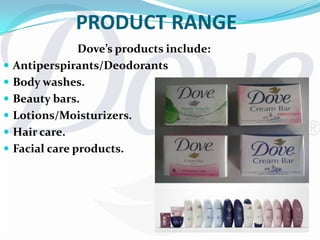
PRODUCT RANGEDove’s products include: Antiperspirants/DeodorantsBody washes.Beauty bars.Lotions/Moisturizers.Hair care. Facial care products.
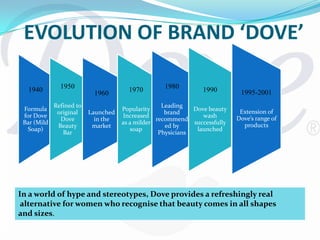
 EVOLUTION OF BRAND ‘DOVE’1995-2001Extension of Dove’s range of products1990Dove beauty wash successfully launched 1980Leading brand recommended by Physicians1940Formula for Dove Bar (Mild Soap)1970Popularity Increased as a milder soap1950Refined to original Dove Beauty Bar1960Launched in the marketIn a world of hype and stereotypes, Dove provides a refreshingly real alternative for women who recognise that beauty comes in all shapes and sizes.
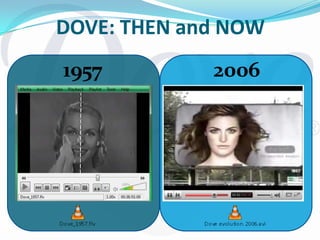
DOVE: THEN and NOW19572006
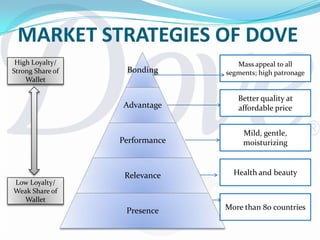
MARKET STRATEGIES OF DOVEMass appeal to all segments; high patronageHigh Loyalty/ Strong Share of WalletBetter quality at affordable priceMild, gentle, moisturizingHealth and beautyLow Loyalty/ Weak Share of WalletMore than 80 countries
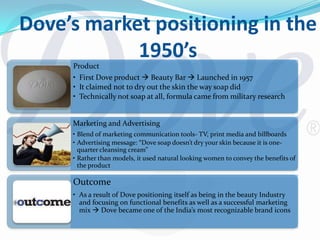
ProductFirst Dove product  Beauty Bar  Launched in 1957
It claimed not to dry out the skin the way soap did
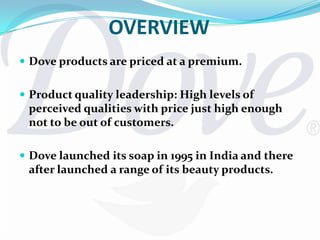
Technically not soap at all, formula came from military researchDove’s market positioning in the 1950’sMarketing and AdvertisingBlend of marketing communication tools- TV, print media and billboards
Advertising message: “Dove soap doesn’t dry your skin because it is one-quarter cleansing cream”
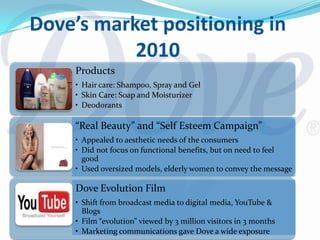
Rather than models, it used natural looking women to convey the benefits of the productOutcomeAs a result of Dove positioning itself as being in the beauty Industry and focusing on functional benefits as well as a successful marketing mix  Dove became one of the India’s most recognizable brand iconsProductsHair care: Shampoo, Spray and Gel
Skin Care: Soap and Moisturizer
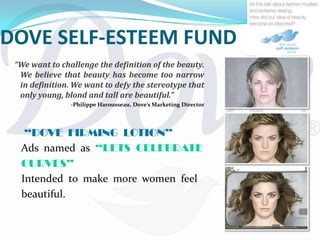
DeodorantsDove’s market positioning in 2010“Real Beauty” and “Self Esteem Campaign”Appealed to aesthetic needs of the consumers
Did not focus on functional benefits, but on need to feel good
Used oversized models, elderly women to convey the messageDove Evolution FilmShift from broadcast media to digital media, YouTube & Blogs
Film “evolution” viewed by 3 million visitors in 3 months
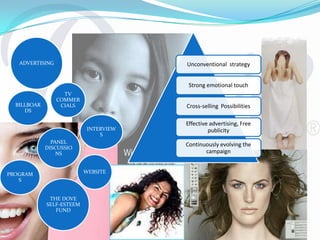
Marketing communications gave Dove a wide exposureADVERTISINGINTERVIEWSPROGRAMSBILLBOARDSTV COMMERCIALSPANEL DISCUSSIONSTHE DOVE SELF-ESTEEM FUNDWEBSITE
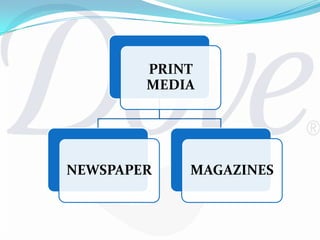
MEDIA PLAN FOR DOVE
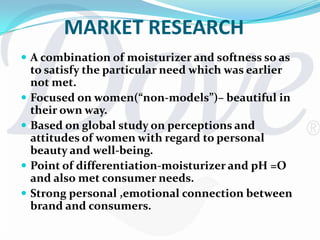
MARKET RESEARCHA combination of moisturizer and softness so as to satisfy the particular need which was earlier not met.Focused on women(“non-models”)– beautiful in their own way.Based on global study on perceptions and attitudes of women with regard to personal beauty and well-being.Point of differentiation-moisturizer and pH =O and also met consumer needs.Strong personal ,emotional connection between brand and consumers.
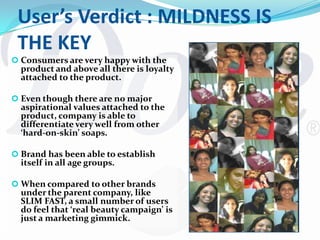
RESEARCH ANALYSISWith the entry in Indian market in 1995 it was priced at Rs.50— NOT SATISFACTORY FOR THE C0NSUMERS.People with higher income level did not consider it worth buying.DOVE then changed its strategy and lowered its price to Rs.28—thereby attracting the upper middle class Indian consumer.Works—WHY NOT PAY A LITTLE EXTRA IN ORDER TO HAVE GOOD MOISTURISER AND NOURISHMENT.
RESEARCH ANALYSISThe distribution channels used is no different that of HUL except “Kwality Walls”.Competition with home products like- Lux, Pears.Competitive advantage– using one distribution channel to provide their various products to retailers.More popular in Metropolitan cities.
RESEARCH ANALYSISPositioned as REAL BEAUTY and is considered to be good for people of all ages. Various promotional awareness included:-DOVE Self esteem fund in 2006.AD commercials on TV by doing comparison with other products of same range.REAL beauty campaign in 2008.Promotion with the help of study.The promotional video of dove was seen by over 30 lakhs internet user on the YouTube.
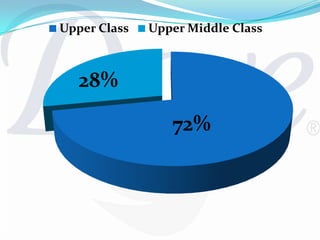
DEFINING TARGET AUDIENCETargets girls and women of all ages, shapes and sizes.Especially targets the working women as they have busy schedules and cannot take out time for themselves so by using one soap they can get the benefits of a soap as well as a moisturizer.Targets on the higher income groups because they are the only people who can afford a soap which is priced at a premium rate (Rs. 28).Dove uses the market specialization concept.
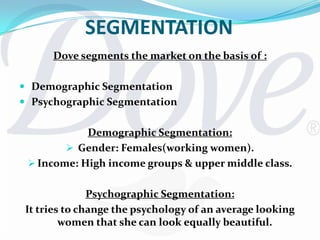
SEGMENTATIONDove segments the market on the basis of : Demographic SegmentationPsychographic SegmentationDemographic Segmentation: Gender: Females(working women).
Income: High income groups & upper middle class.Psychographic Segmentation: It tries to change the psychology of an average looking women that she can look equally beautiful.
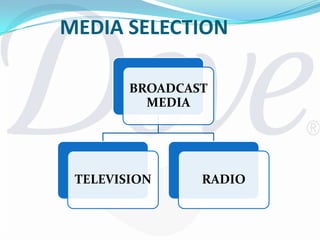
MEDIA SELECTION
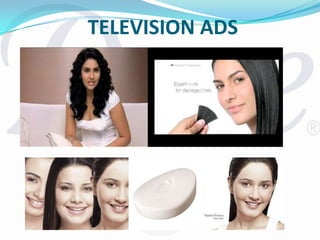
TELEVISION ADS
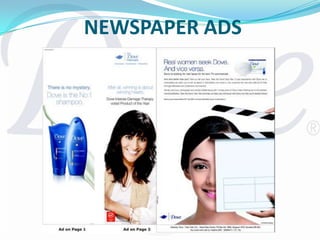
NEWSPAPER ADS
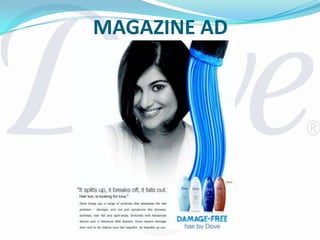
MAGAZINE AD
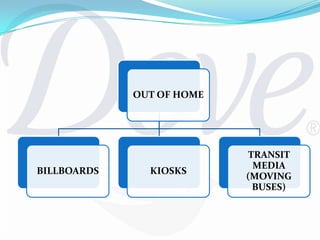
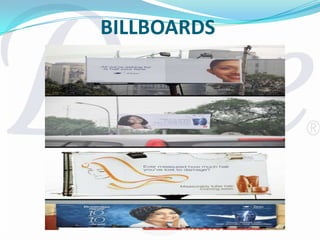
BILLBOARDS
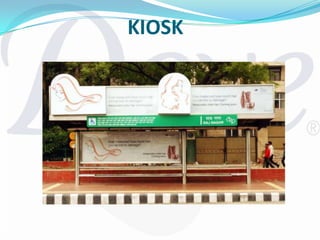
KIOSK
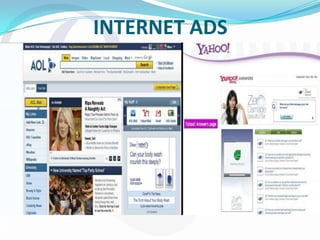
INTERNETADS
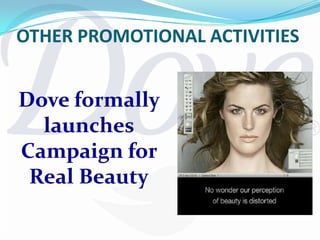
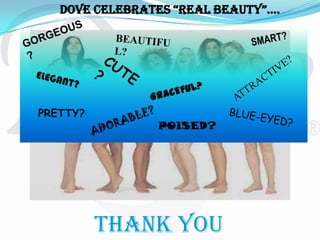
OTHER PROMOTIONAL ACTIVITIESDove formally launches Campaign for Real Beauty

Media Plan Of Dove

  • 1.
    MEDIA PLANMADE BY:AMRITA CHATTERJEEBJMC-III
  • 2.
    Beauty. It’s notabout glamour or fame. It’s about every woman and the beauty that isin each of us. That’s what DOVE is all about.And that’s why More women trusttheir skin to DOVE.
  • 3.
    ABOUT THE BRANDDoveis a personal care brand owned by Unilever.It started in 1957.The brand came to India in 1995.It is imported and marketed by Hindustan Unilever Limited (HUL).By the end of the dove firming “Real Women” Campaign, dove has become a national talking point and was ranked number three in the body lotions market, ahead of L’oreal, Garnier, Neutrogena and Olay.In the year 2004, Unilever won the ‘Marketer of the Year’ award for its brand Dove.
  • 4.
    PRODUCT RANGEDove’s productsinclude: Antiperspirants/DeodorantsBody washes.Beauty bars.Lotions/Moisturizers.Hair care. Facial care products.
  • 5.
    EVOLUTION OFBRAND ‘DOVE’1995-2001Extension of Dove’s range of products1990Dove beauty wash successfully launched 1980Leading brand recommended by Physicians1940Formula for Dove Bar (Mild Soap)1970Popularity Increased as a milder soap1950Refined to original Dove Beauty Bar1960Launched in the marketIn a world of hype and stereotypes, Dove provides a refreshingly real alternative for women who recognise that beauty comes in all shapes and sizes.
  • 6.
    DOVE: THEN andNOW19572006
  • 7.
    MARKET STRATEGIES OFDOVEMass appeal to all segments; high patronageHigh Loyalty/ Strong Share of WalletBetter quality at affordable priceMild, gentle, moisturizingHealth and beautyLow Loyalty/ Weak Share of WalletMore than 80 countries
  • 8.
    ProductFirst Dove product Beauty Bar  Launched in 1957
  • 9.
    It claimed notto dry out the skin the way soap did
  • 10.
    Technically not soapat all, formula came from military researchDove’s market positioning in the 1950’sMarketing and AdvertisingBlend of marketing communication tools- TV, print media and billboards
  • 11.
    Advertising message: “Dovesoap doesn’t dry your skin because it is one-quarter cleansing cream”
  • 12.
    Rather than models,it used natural looking women to convey the benefits of the productOutcomeAs a result of Dove positioning itself as being in the beauty Industry and focusing on functional benefits as well as a successful marketing mix  Dove became one of the India’s most recognizable brand iconsProductsHair care: Shampoo, Spray and Gel
  • 13.
    Skin Care: Soapand Moisturizer
  • 14.
    DeodorantsDove’s market positioningin 2010“Real Beauty” and “Self Esteem Campaign”Appealed to aesthetic needs of the consumers
  • 15.
    Did not focuson functional benefits, but on need to feel good
  • 16.
    Used oversized models,elderly women to convey the messageDove Evolution FilmShift from broadcast media to digital media, YouTube & Blogs
  • 17.
    Film “evolution” viewedby 3 million visitors in 3 months
  • 18.
    Marketing communications gaveDove a wide exposureADVERTISINGINTERVIEWSPROGRAMSBILLBOARDSTV COMMERCIALSPANEL DISCUSSIONSTHE DOVE SELF-ESTEEM FUNDWEBSITE
  • 19.
  • 20.
    MARKET RESEARCHA combinationof moisturizer and softness so as to satisfy the particular need which was earlier not met.Focused on women(“non-models”)– beautiful in their own way.Based on global study on perceptions and attitudes of women with regard to personal beauty and well-being.Point of differentiation-moisturizer and pH =O and also met consumer needs.Strong personal ,emotional connection between brand and consumers.
  • 21.
    RESEARCH ANALYSISWith theentry in Indian market in 1995 it was priced at Rs.50— NOT SATISFACTORY FOR THE C0NSUMERS.People with higher income level did not consider it worth buying.DOVE then changed its strategy and lowered its price to Rs.28—thereby attracting the upper middle class Indian consumer.Works—WHY NOT PAY A LITTLE EXTRA IN ORDER TO HAVE GOOD MOISTURISER AND NOURISHMENT.
  • 22.
    RESEARCH ANALYSISThe distributionchannels used is no different that of HUL except “Kwality Walls”.Competition with home products like- Lux, Pears.Competitive advantage– using one distribution channel to provide their various products to retailers.More popular in Metropolitan cities.
  • 23.
    RESEARCH ANALYSISPositioned asREAL BEAUTY and is considered to be good for people of all ages. Various promotional awareness included:-DOVE Self esteem fund in 2006.AD commercials on TV by doing comparison with other products of same range.REAL beauty campaign in 2008.Promotion with the help of study.The promotional video of dove was seen by over 30 lakhs internet user on the YouTube.
  • 24.
    DEFINING TARGET AUDIENCETargetsgirls and women of all ages, shapes and sizes.Especially targets the working women as they have busy schedules and cannot take out time for themselves so by using one soap they can get the benefits of a soap as well as a moisturizer.Targets on the higher income groups because they are the only people who can afford a soap which is priced at a premium rate (Rs. 28).Dove uses the market specialization concept.
  • 25.
    SEGMENTATIONDove segments themarket on the basis of : Demographic SegmentationPsychographic SegmentationDemographic Segmentation: Gender: Females(working women).
  • 26.
    Income: High incomegroups & upper middle class.Psychographic Segmentation: It tries to change the psychology of an average looking women that she can look equally beautiful.
  • 28.
  • 29.
  • 31.
  • 32.
  • 34.
  • 35.
  • 37.
  • 38.
    OTHER PROMOTIONAL ACTIVITIESDoveformally launches Campaign for Real Beauty