Diabetic Nephropathy
MEGAHID ABUELMAGD
ENDOCRINOLOGY AND DIABETES UNIT
MANSOURA UNIVERSITY
Epidemiology
the size of the problem:
the evidences
Diabetic nephropathy (ies) represents the
first and major cause of kidney deficiency
in western and now in many developing countries
Diabetic nephropathy (ies) represents
a subpopulation of diabetic subjects
with the highest risk of cardiovascular events
TRENDS IN INCIDENCE AND PREVALENCETRENDS IN INCIDENCE AND PREVALENCE
OF ESRDOF ESRD
DUE TO DIABETES IN WESTERNDUE TO DIABETES IN WESTERN
COUNTRIESCOUNTRIES
« Europe » 1966-90« Europe » 1966-90
ANNUAL CHANGE OF NUMBER (%) OFANNUAL CHANGE OF NUMBER (%) OF
PATIENTS STARTING DIALYSIS THERAPYPATIENTS STARTING DIALYSIS THERAPY
IN JAPAN 1984-2000IN JAPAN 1984-2000
SurvivalcurveCV
1
0.9
0.8
0.7
0.6
0.5
0
0 10 30 50 70 90 stroke Coronary events
(p < 0.001)Incidence(%)
Months
A
B
C
p < 0.001
0
10
20
30
40
A: U-Prot < 150 mg/l B: U-Prot 150–300 mg/l C: U-Prot > 300 mg/l
Miettinen H et al. Stroke 1996; 27: 2033-39
Proteinuria : predicitve marker of CV events
in type 2 DM
Natural history of diabetic
nephropathy
• Is it the same story in type 1 and in type 2
diabetic patients ?
• A majority of same features
Diabetic Nephropathy
Definition
Normal albuminuria
Microalbuminuria Proteinuria patent or clinical
(Macroalbuminuria)
30 mg/24h*
ou 20 µg/min**
300 mg/24h*
ou 200
µg/min**
* urines of 24 hours
** recueil sur 4
heures
40% des patients diabétiques de type 2 évoluent vers une néphropathie diabétique1
1
Hollenberg NK. J Hypertens 1997,15(S7): 7-13
Prevention Treatment Treatment
Natural history of type 1 diabetic nephropathy
Hyperglycaemia
Increased GFR
Microalbuminuria
Frank proteinuria
Decreased GFR
Possible development of
nephrotic syndrome
End-stage renal disease
NORMAL GFR
INCREASED GFR
DECLINING GFR
5–10years
Natural history of type 2 diabetic nephropathy
Clinical type 2 diabetes
Functional changes
Structural changes
Rising blood pressure
Microalbuminuria
Proteinuria
Rising serum
creatinine levels
End-stage renal
disease
Cardiovascular death
0 2 5 10 20 30Years
-3
120
1.0
15
0
150
0.8
10
3
150
0.8
10
15
120
1.0
15
20
60
> 2.0
> 30
25
< 10
> 10
< 100
-3
Prior to
Onset of
Diabetes
0
Onset
of
Diabetes
3
Onset of
Diabetic
Glomerulosclerosis
15
Onset
of
Proteinuria
20
Onset
of
Azotemia
25
End-stage
Renal
Failure
GFR (ml/min)
Serum creatinin (mg/dl)
Serum Urea Nitrogen
(mg/dl)
Time (Years)
Silent Period
Natural history of diabetic nephropathy
Incidence of DN (%) in type 1 DM according
to duration of diabetes
Maximum prevalence reachs 50% of the patients in both
diabetes (usually one third)
The
classical
lesions
have been
firstly
described
in type 2
DM
Normal
Diffuse mesangial expansion
reduction of open capillaries
KW nodules and thickened Bowman ’s
capsule and capillary basement membraneA
B
C
D
Normal capillary surface exchange
Mesangial expansion
Decrease of capillary surfaces
hyperfiltration
Effects on podocytes
arrangement
and nephron protection
Thickening of GBM
Capillary
GBM
Feets ’ podocytesUS
E
Nephrin
Deleterious effects on tubular function
and interstitiumSpecific protective antiproteinuric
effects of ACE inhibitors and
sartans
Negative relation between proteinuria and the loss of
kidney function
Yokoka et al. Risk Factors for
Progression of Diabetic Nephropathy
Am.J.N,1995;15:488
54 p/4,2 ans
0
-2
-4
-6
Curve
1/Creat/time
1 2 3
Grade
of proteinuria
Comparison of the slope of the regression line for the reciprocal of Cr concentration over time
among three groups of patients based on the degree of proteinuria. ANOVA showed a significant
difference among three groups (p<0,05), and the slope in patients with grade 3 of proteinuria in
dipstick test had greater negative value than in those with grade 1 of proteinuria
Natural course and pathogenic
role of
• Hyperglycemia
• high blood pressure levels
• and genotypes (s) DD/II/ID
Flux/Stretching/Pressure
Vasopeptidases: angiotensins
endothelins, NO synthases…..
TGFβ
VEGF
Glucose
Advanced glycation end
products (AGEs)
PKCβII
Polyols
Metabolic and Haemodynamic Interactions
Glomerulosclerosis
Interstitial Fibrosis
Proteinuria
Cross-linking
Extra-cellular Matrix (EMC)
ECM Vascular
permeability
O2-
Physiological effects of
angiotensin II on the kidney
VC
Vasodilatation
Vasodilatation
Vasodilatation
Angiotensin 2
P Cap
ACE Inhibitors
Glomerular &
Extra glomerular lesions
• Relation angiotensin II and TGF B
• tubular
• interstitial
• capillariy lesions
Colocalisation angio2 - TGFb
Major role of TGFb and Angiotensin II
Histo-morphometric aspect of the progression of the kidney
lesions at 2 years interval without ACE Inh57 years old woman
Cordonnier D, P Zaoui et S Halimi et al. JASN 1999 ; 10 : 1253
Int = + 16.97 %
Mésg = + 25.99 %
Tub = - 14.05 %
Alb = 3877 mg/24h Alb = 16100 mg/24h
Deterioration of vessels, renal tubules and interstitium
with massive proteinuria
Quantification of
glomerular and interstitial fibrosis
Magnification x 10 Ph. Zaoui and S Halimi
Renal Dysfunction Is Common in
Patients with Type 2 Diabetes
Russo E, et al. Diabetes Metab Syndr Obes. 2013; 6: 161–170.
Young patients with T2DM had greaterYoung patients with T2DM had greater
risks of developing ESRD compared withrisks of developing ESRD compared with
patients with T1DMpatients with T1DM
ESRD: End- Stage Renal Disease
Luk AO, et al. Diabetes Care. 2014 Jan;37(1):149-57
Rate of Kidney Diseases in Egypt isRate of Kidney Diseases in Egypt is
36.4* with About 5.19% Deaths36.4* with About 5.19% Deaths
*Per 100,000
http://www.worldlifeexpectancy.com/cause-of-death/kidney-disease/by-country/
accessed 2012 Oct.
Current proportional contribution of the mostCurrent proportional contribution of the most
common causes of end-stage renal disease in Northcommon causes of end-stage renal disease in North
African countriesAfrican countries
GN: Glomerulonephritis
Rashad S. Barsoum. Kidney International Supplements (2013) 3, 164–166
Kidney Dialysis & Transplantation in NorthKidney Dialysis & Transplantation in North
AfricaAfrica
● Dialysis:Dialysis:
 The dialysis population accounts for over 95% on hemodialysis.
 Regular dialysis treatment (RDT) has been available at a national level
in Egypt since 1964, Tunisia since 1969, Algeria since 1977, and Libya
and Morocco since 2004.
● Transplantation:Transplantation:
 About 600–650 live donor transplants are performed in NAF each year,
of which 500 are in Egypt.
● Renal transplantation from living related donorsliving related donors was started in Egypt
in 1976, Tunisia and Algeria in 1985, and Libya and Morocco in 1989.
● Living unrelated donorsLiving unrelated donors were accepted in Egypt in 1979, regulated by
the Egyptian Medical Association in 1982 and by the Ministry of Health
in 2010
NAF: North Africa.
Rashad S. Barsoum. Kidney International Supplements (2013) 3, 164–166
A1 A2 A3
Normal to
mildly
increased
Moderately
increased
Severely
increased
<30 mg/g
<3 mg/mmol
30-300 mg/g
3-30 mg/mmol
>300 mg/g
>30 mg/mmol
CURRENT CHRONIC KIDNEY DISEASECURRENT CHRONIC KIDNEY DISEASE
(CKD) NOMENCLATURE USED BY(CKD) NOMENCLATURE USED BY
KDIGOKDIGO
• CKD is defined as abnormalities of kidney structure or function, present for >3
months, with implications for health and CKD is classified based on cause, GFR
category, and albuminuria category (CGA).
KDIGO Clinical Practice Guideline for the Evaluation and Management of Chronic Kidney Disease. Kidney Int Suppl. 2013;3:136-150.
http://www.kdigo.org/clinical_practice_guidelines/pdf/CKD/KDIGO_2012_CKD_GL.pdf Accessed February 26, 2013
G1 Normal or high ≥90
G2 Mildly decreased 60-89
G3a
Mildly to moderately
decreased
45-59
G3b
Moderately to
severely decreased
30-44
G4 Severely decreased 15-29
G5 Kidney failure <15
Persistent albuminuria categories
Description and range
Green: low risk (if no other markers of kidney disease, no CKD); Yellow: moderately increased risk; Orange: high risk; Red, very high risk.
Prognosis of CKD by GFR
and Albuminuria Categories:
KDIGO 2012
ADA 2014 Definitions ofADA 2014 Definitions of
Abnormalities in Albumin ExcretionAbnormalities in Albumin Excretion
Category
Spot collection
(µg/mg creatinine)
Normal <30
Increased urinary albumin
excretion* ≥30
ADA. VI. Prevention, Management of Complications. Diabetes Care 2014;37(suppl 1):S44; Table 11
*Historically, ratios between 30 and 299 have been called microalbuminuria and those 300 or greater have been called
macroalbuminuria (or clinical albuminuria).
Stages of Chronic Kidney DiseaseStages of Chronic Kidney Disease
Stage Description
GFR (mL/min
per 1.73 m2
body surface
area)
1 Kidney damage*
with normal or
increased GFR
≥90
2 Kidney damage*
with mildly
decreased GFR
60–89
3 Moderately decreased GFR 30–59
4 Severely decreased GFR 15–29
5 Kidney failure <15 or dialysis
*Kidney damage defined as abnormalities on pathologic, urine, blood, or imaging tests.
GFR = glomerular filtration rate
ADA. VI. Prevention, Management of Complications. Diabetes Care 2014;37(suppl 1):S44; Table 12
Risk Factors of Diabetic NephropathyRisk Factors of Diabetic Nephropathy
Farag et al, Nephron Clin Pract 2011;119:c317–c323
Fox et al , Lancet 2012; 380: 1662–73
Increasing Mortality Risk 1·2–1·9 times inIncreasing Mortality Risk 1·2–1·9 times in
participants with diabetes than in those withoutparticipants with diabetes than in those without
diabetes across the entire range of eGFRdiabetes across the entire range of eGFR
Fox et al , Lancet 2012; 380: 1662–73
The Evidence Confirms That:The Evidence Confirms That:
• Both studies (UKPDS, DCCT)(UKPDS, DCCT) demonstrated consistent major
salutary effects of intensive therapy on microvascularsalutary effects of intensive therapy on microvascular
complications compared with conventional therapycomplications compared with conventional therapy, with the
benefits roughly proportional to the degree of HbA1c
separation achieved.
• Moreover, long-term follow- uplong-term follow- up of the DCCT and UKPDS
cohorts has shown durable effects of early interventiondurable effects of early intervention even
after the differences in glycaemia between the original
intervention groups had dissipated, referred to as metabolicmetabolic
memory (DCCT) and legacy effect (UKPDS).memory (DCCT) and legacy effect (UKPDS).
Nathan DM. Arch Intern Med. 2012 May 28;172(10):769-70.
Jindal A, et al. Endocrinol Metab Clin North Am. 2013 Dec2013 Dec;42(4):789-808
Cardio-Renal SyndromeCardio-Renal Syndrome
The interrelationship between adiposity andThe interrelationship between adiposity and
maladaptive changes in the heart and kidneymaladaptive changes in the heart and kidney
Jindal A, et al. Endocrinol Metab Clin North Am. 2013 Dec2013 Dec;42(4):789-808
ConclusionConclusion
• Better glycemic and blood pressure control can delay the onset
and slow the progression of kidney disease in patients with
diabetes.
• Older oral hypoglycemic agents is either contraindicated or
requires dosage adjustment in CKD.
• New medications for diabetes have been approved recently and
many can be used safely in patients with CKD, thus providing
treatment alternatives for better glycemic control in patients
who are reluctant to use insulin.
CKD: Chronic Kidney Disease.
Jindal A, et al. Endocrinol Metab Clin North Am. 2013 Dec2013 Dec;42(4):789-808
Coca, et al. Arch Intern Med. 2012;172(10):761-769
Objective:Objective:
To summarize the benefits of intensive vs conventional glucose control on kidney-
related outcomes for adults with type 2 diabetes.
Methods:Methods:
Evaluated 7 trials involving 28 065 adults for 2 to 15 years. Comparing
conventional control, with intensive glucose control in reducing the risk for
microalbuminuria and macroalbuminuria.
The Risk of Microalbuminuria Has BeenThe Risk of Microalbuminuria Has Been
Reduced by 14 % with Intensive TherapyReduced by 14 % with Intensive Therapy
Coca, et al. Arch Intern Med. 2012;172(10):761-769
The Risk of Macroalbuminuria Has BeenThe Risk of Macroalbuminuria Has Been
Reduced by 26 % with Intensive TherapyReduced by 26 % with Intensive Therapy
Coca, et al. Arch Intern Med. 2012;172(10):761-769
Glycemic Management in ESRD andGlycemic Management in ESRD and
Earlier Stages of CKDEarlier Stages of CKD
• The management of hyperglycemia in patients withThe management of hyperglycemia in patients with
kidney failure has special challenges. The difficulty is duekidney failure has special challenges. The difficulty is due
in part to thein part to the complexity of treatmentcomplexity of treatment and in part toand in part to lacklack
of convincing data supporting the benefits of tightof convincing data supporting the benefits of tight
glycemic controlglycemic control..
• Insulin resistance increasesInsulin resistance increases in CKD due to accumulationin CKD due to accumulation
ofof uremic toxinsuremic toxins,, chronic inflammationchronic inflammation,, excess visceralexcess visceral
fatfat,, oxidative stressoxidative stress,, metabolic acidosimetabolic acidosis, ands, and vitamin Dvitamin D
deficiencydeficiency..
• HbA1c level mayHbA1c level may overestimate glycemic controloverestimate glycemic control in kidneyin kidney
patients: HbA1c levelspatients: HbA1c levels appear to be lowerappear to be lower, leading to, leading to
underestimation of hyperglycemia.underestimation of hyperglycemia.
Williams ME, et al. Am J Kidney Dis. 2014 Feb2014 Feb;63(2 Suppl 2):S22-38.
Glycemic Management in ESRD andGlycemic Management in ESRD and
Earlier Stages of CKDEarlier Stages of CKD
• Other measures of glycemic control, such asOther measures of glycemic control, such as glycatedglycated
albuminalbumin, may be more useful in CKD. Glycated albumin, may be more useful in CKD. Glycated albumin
increasingly is proposed as aincreasingly is proposed as a better measure of glycemicbetter measure of glycemic
control in patients with diabetes and CKDcontrol in patients with diabetes and CKD
• aggressive glycemic control has been shown to alter theaggressive glycemic control has been shown to alter the
clinical course of early diabetic kidney disease, dataclinical course of early diabetic kidney disease, data
supporting the benefits of tight glycemic control onsupporting the benefits of tight glycemic control on
outcomes in patients with advanced CKD (includingoutcomes in patients with advanced CKD (including
ESRD) are lacking.ESRD) are lacking. In the absence of better clinical trialIn the absence of better clinical trial
datadata,, glycemic management continues to be based onglycemic management continues to be based on
individualized decision makingindividualized decision making..
Williams ME, et al. Am J Kidney Dis. 2014 Feb2014 Feb;63(2 Suppl 2):S22-38.
Higher Glycated Albumin Rates areHigher Glycated Albumin Rates are
Associated With Increased HospitalizationAssociated With Increased Hospitalization
Williams ME, et al. Am J Kidney Dis. 2014 Feb2014 Feb;63(2 Suppl 2):S22-38.
Use of conventional antidiabetic drugs inUse of conventional antidiabetic drugs in
T2DM with CKDT2DM with CKD
Russo E, et al. Diabetes Metab Syndr Obes. 2013; 6: 161–170.
The risk of hypoglycemia with Insulin limitsThe risk of hypoglycemia with Insulin limits
its effectivenessits effectiveness
SUs=sulfonylureas; T2DM=type 2 diabetes melllitus; *Requiring medical assistance or hospital admission
UK Prospective Diabetes Study Group. Diabetes.1995;44:1249–1258.
Cumulative Incidence of Hypoglycemia in T2DM over 6 Years in UKPDS
45
3.3
76
11.2
0
10
20
30
40
50
60
70
80
Sulfonylurea (n=922)
Insulin (n=689)
Sulfonylurea Insulin Sulfonylurea Insulin
Patients(%)
Any hypoglycema Major hypoglycemia*
HbA1c = 7.1% in all groups
70% increased risk
40% increased risk
Renal impairment is a well recognizedRenal impairment is a well recognized
predisposing factor to hypoglycemiapredisposing factor to hypoglycemia
• About 40% to 50% of the insulin reaching theAbout 40% to 50% of the insulin reaching the
circulation iscirculation is metabolizedmetabolized by the kidney , A processby the kidney , A process
that is obviouslythat is obviously compromised in patients with renalcompromised in patients with renal
failure.failure.
• GluconeogenesisGluconeogenesis occurs mainly in the liver with aoccurs mainly in the liver with a
small amount also occurring insmall amount also occurring in the cortex of thethe cortex of the
kidneykidney
• Accumulation of hypoglycemic agentsAccumulation of hypoglycemic agents
Russo E, et al. Diabetes Metab Syndr Obes. 2013; 6: 161–170.
http://www.medscape.org/viewarticle/437273
http://www.elmhurst.edu/~chm/vchembook/604glycogenesis.html
Accordingly, Recommended Goals forAccordingly, Recommended Goals for
Management of HyperglycemiaManagement of Hyperglycemia
– Target hemoglobin A1c (HbA1c) of 7.0%̴ to prevent or
delay progression of the microvascular complications of
diabetes, including DKD
– An HbA1c target of <7.0% in patients at risk of
hypoglycemia.
– Target HbA1c be extended above 7.0% in individuals with
co-morbidities or limited life expectancy and risk of
hypoglycemia
National Kidney Foundation. KDOQI Clinical Practice Guideline for Diabetes and CKD:
2012 update. Am J Kidney Dis. 2012;60(5):850-886.
The vicious circle leads to worsen of RIThe vicious circle leads to worsen of RI
Adapted from: Jindal A, et al. Endocrinol Metab Clin North Am. 2013 Dec;42(4):789-808
Effective Management of CKD inEffective Management of CKD in
DiabetesDiabetes
• Intensive control of blood glucose
• Control of blood pressure
• Treatment with Angiotensin Converting
Enzyme (ACE) Inhibitors and
Angiotensin Receptor Blockers (ARBs)
• Multifactorial interventions including a
combination of improved glucose
control, blood pressure control, lipid
lowering, aspirin, smoking cessation,
exercise programs and dietary
intervention
NICE Diabetes with Kidney Disease: Key Facts MARCH 2011
Current proportional contribution of the mostCurrent proportional contribution of the most
common causes of end-stage renal disease in Northcommon causes of end-stage renal disease in North
African countriesAfrican countries
GN: Glomerulonephritis
Rashad S. Barsoum. Kidney International Supplements (2013) 3, 164–166
Young patients with T2DM had greaterYoung patients with T2DM had greater
risks of developing ESRD compared withrisks of developing ESRD compared with
patients with T1DMpatients with T1DM
ESRD: End- Stage Renal Disease
Luk AO, et al. Diabetes Care. 2014 Jan;37(1):149-57
Control of Blood PressureControl of Blood Pressure
 CHEP 2014 (BP target)CHEP 2014 (BP target)¹¹
Target Blood pressure Should be less than 140/90 mmHg in most patients,Target Blood pressure Should be less than 140/90 mmHg in most patients,
including those with chronic kidney disease.including those with chronic kidney disease.
 ESC 2013 (BP target)ESC 2013 (BP target)²²
Target Blood pressure <140/90 mmHg should be considered in patients withTarget Blood pressure <140/90 mmHg should be considered in patients with
diabetic or non-diabetic CKD.diabetic or non-diabetic CKD.
 JNC IV (BP target)JNC IV (BP target)³³
In patients with CKD, initiate treatment at SBP ≥140 mmHg or DBP ≥90In patients with CKD, initiate treatment at SBP ≥140 mmHg or DBP ≥90
mmHg, and treat to achieve SBP <140 mmHg and DBP <90 mmHg.mmHg, and treat to achieve SBP <140 mmHg and DBP <90 mmHg.
Blood Pressure Target Goals in CKDBlood Pressure Target Goals in CKD
patientspatients
1: Canadian Hypertension Education Program (CHEP) 2014 Recommendation, adopted from: https://www.hypertension.ca/chep. Accessed at
5/2/2014
2: Mancia G, et al. J Hypertens. 2013 Jul;31(7):1281-357
3: James PA, et al. JAMA. 2013 Dec 18. [Epub ahead of print]
BP and RAAS interruptionBP and RAAS interruption 1/21/2
• Individualize BP targets and agents.
• Inquire about postural dizziness and check for postural
hypotension regularly when treating CKD patients with BP-lowering
drugs.
• We recommend that in both diabetic and non-diabetic adults with
CKD and urine albumin excretion ≥30 mg/ 24 hours whose office
BP is consistently >140/90mm Hg be treated with BP-lowering
drugs to maintain a BP that is consistently ≤140/90mm Hg
• We suggest that in both diabetic and non-diabetic adults with CKD
and with urine albumin excretion of ≥30 mg/24 hours whose office
BP is consistently >130/80mm Hg be treated with BP-lowering
drugs to maintain a BP that is consistently ≤130/80mm Hg
KDIGO Clinical Practice Guideline for the Evaluation and Management of Chronic Kidney Disease. Kidney Int Suppl. 2013;3:136-150.
http://www.kdigo.org/clinical_practice_guidelines/pdf/CKD/KDIGO_2012_CKD_GL.pdf Accessed February 26, 2013
BP and RAAS interruptionBP and RAAS interruption 2/22/2
• We suggest that an ARB or ACE-I be used in diabetic adults with
CKD and urine albumin excretion 30–300 mg/ 24 hours.
• We recommend that an ARB or ACE-I be used in both diabetic and
non-diabetic adults with CKD and urine albumin excretion >300
mg/24 hours
• There is insufficient evidence to recommend combining an ACE-I
with ARBs to prevent progression of CKD.
• We suggest that an ARB or ACE-I be used in children with CKD in
whom treatment with BP-lowering drugs is indicated, irrespective of
the level of proteinuria.
KDIGO Clinical Practice Guideline for the Evaluation and Management of Chronic Kidney Disease. Kidney Int Suppl. 2013;3:136-150.
http://www.kdigo.org/clinical_practice_guidelines/pdf/CKD/KDIGO_2012_CKD_GL.pdf Accessed February 26, 2013
RAAS System Blockers in DiabeticRAAS System Blockers in Diabetic
NephropathyNephropathy
National Kidney Foundation. KDOQI Clinical Practice Guideline for Diabetes and
CKD: 2012 update. Am J Kidney Dis. 2012;60(5):850-886.
ScreeningScreening
• Assess urine albumin excretion annually
– In type 1 diabetic patients with diabetes duration of ≥5
years
– In all type 2 diabetic patients at diagnosis
ADA 2014 Recommendations:ADA 2014 Recommendations:
Nephropathy (1)Nephropathy (1)
ADA. VI. Prevention, Management of Complications. Diabetes Care 2014;37(suppl 1):S42
Treatment (1)Treatment (1)
• ACE inhibitor, ARB not recommended in diabetic patients
with normal blood pressure, albumin excretion <30
mg/24 h for primary prevention of diabetic kidney disease
• Nonpregnant patient with modestly elevated (30–299
mg/day) or higher levels (>300 mg/day) of urinary
albumin excretion
– Use either ACE inhibitors or ARBs (not both)
ADA 2014 Recommendations:ADA 2014 Recommendations:
Nephropathy (2)Nephropathy (2)
ADA. VI. Prevention, Management of Complications. Diabetes Care 2014;37(suppl 1):S42
Treatment (2)Treatment (2)
• For people with diabetes and diabetic kidney disease
(albuminuria >30 mg/24 h), reducing dietary protein
below usual intake not recommended
– When ACE inhibitors, ARBs, or diuretics are used, monitor
serum creatinine, potassium levels for increased creatinine
or changes in potassium
ADA 2014 Recommendations:ADA 2014 Recommendations:
Nephropathy (3)Nephropathy (3)
ADA. VI. Prevention, Management of Complications. Diabetes Care 2014;37(suppl 1):S42–S43
Treatment (3)Treatment (3)
• Reasonable to continue monitoring urine albumin
excretion to assess both response to therapy and
disease progression
• When eGFR is <60 mL/min/1.73 m2, evaluate and
manage potential complications of CKD
• Consider referral to a physician experienced in care of
kidney disease
– Uncertainty about etiology; difficult management issues;
advanced kidney disease
ADA 2014 Recommendations:ADA 2014 Recommendations:
Nephropathy (4)Nephropathy (4)
ADA. VI. Prevention, Management of Complications. Diabetes Care 2014;37(suppl 1):S43
Management of Dyslipidemia inManagement of Dyslipidemia in
Diabetes and CKDDiabetes and CKD
Management of Dyslipidemia in DiabetesManagement of Dyslipidemia in Diabetes
and CKDand CKD
• NKF recommend using LDL-C lowering medicines, such as
statins or statin/ezetimibe combination, to reduce risk of
major atherosclerotic events in patients with diabetes and
CKD, including those who have received a kidney
transplant.
• NKF recommend not initiating statin therapy in patients with
diabetes who are treated by dialysis
NK: National Kidney Foundation. KDOQI Clinical Practice Guideline for
Diabetes and CKD: 2012 update. Am J Kidney Dis. 2012;60(5):850-886.
Thanks
Interstitial fibrosis Results of masks IAS animal models
0
10
20
30
40
50
control
D2 Untreated
Captopril
Omapatrilat
% of interstitial collagen
*
§ §
* p<0.01 vs CTRL
§ p<0.05 vs D2U
Ph. Zaoui and S Halimi
Genetic?
Angiotensin II
Apo E
eNOS
Glut 1 polymorphism...
Influence of the genotype DDon the angiotensin II
plasma concentrations after angiotensin I infusion
DD
II
Prevention & Treatment of early
and late DN
• Intensive control of glycemia and
• Blood pressure with all anti hypertensive
drugs ? BUT
• specific roles of angiotensin system acting
drugs: ACE I and Sartans
• Smoking
• Lipids
Type 1 DM
DCCT and EDIC study
• 1993 and 2002
• prevention of DN by tight blood glucose
control
• the benefit is still present 6 years after the
end of the trial
Renal lesions are reversed 10 years after
pancreatic transplantation
Fioretto P. N Engl J Med 1998; 339: 69
Thickness of the Glomerular Basement
Membrane, Thickness of the Tubular
Basement Membrane, Mesangial
Fractional Volume, and Mesangial-
Matrix Fractional Volume at Base Line
and 5 and 10 Years after Pancreas
Transplantation.
The mesangial fractional volume is the
proportion of the glomerulus occupied
by the mesangium; the mesangial-
matrix fractional volume is the
proportion of the glomerulus occupied
by mesangial matrix. The shaded areas
represent the normal ranges obtained
in the 66 age- and sex-matched normal
controls (means ±2 SD). Data for
individual patients are connected by
lines.
Type 1 DM
Type 2 DM Kumamoto study: effect of intensified
glycemic control
Developt of Microalbuminuria Incidence of all forms of DN:
micro and macro, proteinuria
Type 2 DM-UKPDS
-14
-12
-10
-8
-6
-4
-2
0
95 98 101 104 107 110 113 116 119
Mean BP (mmHg)
DFG
(ml/min/an)
130/85 140/90
Untreated Hypertension
Bakris GL. Am J Kidney Dis 2000; 36: 646-61
Blood pressure control and progression of DN
to ESRD
0
20
40
60
80
100
Albuminuria
(%)
(final vs basal
value)
- 27%
- 42%
Per/Ind
n= 233
Ena
n= 224
final
Ead : 0,76
95%CI : [0,62-0,92]
Pnoninf<0,001
Change inChange in
microalbuminuriamicroalbuminuria (ITT)(ITT)
n=457 Type 2 DM with microalbuminria
One year follow up Preterax vs Enalapril
Ead : estimated effect of treatment adjusted on the basal value and the
country
Psup=0,002
Coordinator: Carl-Erik MOGENSEN
Co-coordinator: Serge HALIMI
Expert Albuminuria : Giancarlo VIBERT
J of Hypertension in press 2003
CALM Study
Candesartan
16 mg
n=42
Lisinopril
20 mg
n=43
Candesartan
16 mg +
Lisinopril
20 mg
n=46
-60
-50
-40
-30
-20
-10
0
p=0.04
Mogensen CE et al, BMJ 2000;321:1440-
Decrease
albuminuria %
p=NSAdjusted for variation of
BP and BW
DN in type 2 DM
The same disease, the same
patients
• Time course of hypertension and DN
(microalbuminuria)
• same histological lesions
• presence of diabetic retinopathy
• presence of other histological lesions (other nephropathies)
• arterial stenosis
BP ≥ 140/ 90 mm Hg
Tarnow L et al. Diabetes Care 1994; 17: 1247-51
Normal (n = 323)
Micro-albuminuria (n = 151)
Macro-albuminuria (n = 75)
0
10
20
30
40
50
60
70
80
90
100
Prevalence
hypertension (%)
Prevalence of hypertension in type 2 diabetic patients
hypertension early present at the very beginning of type 2 DM
and often starts before
-10 -5 0 5 10 15 20 years
Type 2 diabetes preceded by components of the Metabolic Syndrome
Hypertension
Begining of diabetes:Begining of diabetes:
Chronic HyperglycemiaChronic Hyperglycemia
Begining of theBegining of the
metabolic syndromemetabolic syndrome
Insulin-resistanceInsulin-resistance
Hypertension -Hypertension -
Dyslipidemia- OthersDyslipidemia- Others
Hypertension
Ageing
Early presence of albuminuriaEarly presence of albuminuria
Begining of diabetes:Begining of diabetes:
Chronic HyperglycemiaChronic Hyperglycemia
Type 1 diabetes
Hypertension
µalb
Type 2 diabetes
HypertensionAgeing
µalb
µalb
Large heterogeneity of structural changes in glomeruli, vessels &
interstitial tissue in microalbuminuric type 2 diabetic patients P Fioretto t al
Blood Pressure / UAE in IGT Pima indians
0
5
10
15
20
25
30
35
< 140 149-159 > 160
Alb/Ceéat>0,1(%subjects)
SBP mmHg
(Ismaïl et al. Kidney Int. 1999; 55, 1-28)
Monoclonal IgM kappa
nephropathy
in an 71 years old man
From 10 to 50% of non DN in type 2
diabetic patients with proteinuria
Renal stenosis
and Type 2 DM
RECENT ASPECTS AND NEW
TREATMENTS
Statins
Sartans
Aminoguanidin
Diabetes feb 2003
Conclusion
• We must look for and to start the treatment of DN as soon
as possible
• optimal BG and BP control (new targets)
• specific effects of Renin angiotensin acting drugs on
albumin excretion rate and renal protection: ACE inh +
Sartans ?
• New drugs: acting on AGEs, TGFb, Oxidative stress, new
oral antidiabetic drugs, statins….
• Need for new markers and
• New values for the normal range of microalbuminuria and
BP, place of ambulatory BP measurements
• Do we prevent « DN Sd » in all diabetic patients ?
Therapeutic failure in diabetes
• When a patient reaches end stage renal failure
• When a patient becomes blind or severely visually
impaired
• When a patient has a leg or foot amputated
• When a patient suffers from MI or stroke
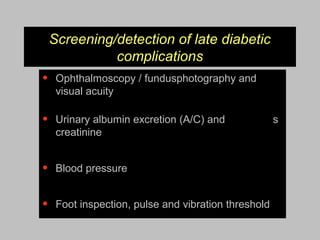
Screening/detection of late diabetic
complications
• Ophthalmoscopy / fundusphotography and
visual acuity
• Urinary albumin excretion (A/C) and s
creatinine
• Blood pressure
• Foot inspection, pulse and vibration threshold
Diabetic Nephropathy
40 %
Diabetic nephropathy
- costs
•Dialysis 75,000 $/year
•Transplantation 15,000 $/year
Prevention and treatment of
diabetic nephropathy
• Primary prevention:
• Secondary
prevention:
• Tertiary prevention:
↓ Progression from
normo- to
microalbuminuria
↓ Progression from
microalbuminuria to
DN
↓ Progression from DN
to ESRD
• Blood pressure reduction
• ↓ UAE
T1D: ACEi
T2D: A2A
• Improved metabolic control
• Low protein diet ?
Treatment modalities in normo- andTreatment modalities in normo- and
hypertensive patients with incipient andhypertensive patients with incipient and
overt diabetic nephropathyovert diabetic nephropathy
Treatment of patients with
diabetes and microalbuminuria
• Strict metabolic control
• Antihypertensive treatment
• Blockade of the angiotensin
system
– ACE – inhibition
– Angiotensin II receptor blocking
• 62 % reduction in progression to nephropathy
• 3 times ↑ in regression to normoalbuminuria
• 50 % reduction in UAE at 2 years
• Preservation of GFR
Should all Type 1 diabetic microalbuminuric patientsShould all Type 1 diabetic microalbuminuric patients
receive ACE inhibitors ?receive ACE inhibitors ?
- a meta regression analysis (n=698)- a meta regression analysis (n=698)
Chaturvedi, Ann Intern Med, 2001
Primary prevention ACEI vs placebo in
normoalbuminuria
Risk reduction for development
of MA / progression in UAE
EUCLID 12.7% ( -2.9 to 26%)
Ravid et al. 12.5% ( 2 to 23%)
MICRO-HOPE 9.0% ( - 4 to 20%)
In summary: primary prevention
of development of diabetic
nephropathy
• Strict metabolic control
• ACE – inhibition
• Lipid lowering drugs?
• Low protein diet?
• Higher prevalence of retinopathy,
neuropathy and foot ulcers
• Enhanced cardiovascular morbidity
• Enhanced all-cause mortality,
especially cardiovascular
• Predict development of diabetic
nephropathy
MicroalbuminuriaMicroalbuminuria
In summary: secondary prevention of
development of diabetic nephropathy
• Strict metabolic control
• Antihypertensive treatment
– ACE – inhibition
– Angiotensin receptor blockers
– Both ?
• Multifactorial intervention
In summary: tertiary prevention of
progression to ESRF
• Antihypertensive treatment
• Strict glucose control
• Low protein diet ?
• Lipid lowering drugs ?
• Stop smoking ?
Late diabetic complications
Prevention is better
than cure
ARBs in Type II Diabetic
Hypertensives with Renal
Disease
111
Deleterious effects of Angiotensin II
Ang II
Abnormal
vasoconstriction
Activate
SNS
↑Aldosterone
↑Vasopressin
↑Endothelin
↑PAI-1/
thrombosis
Platelet
aggregation
Superoxide
production
↑Collagen
Vascular
smooth muscle
growth
Myocyte
growth
Remodeling
Burnier M, Brunner HR. Lancet. 2000;355:637-45.
Brown NJ, Vaughn DE. Adv Intern Med. 2000;45:419-29.SNS = Sympathetic nervous system
Managing Hypertensive Patients with Chronic Kidney Disease
(ESH/ESC Guidelines)
 Renal protection in diabetes has two main requirements:
• Strict BP control (<130/80 mmHg and even lower if proteinuria >1 g/day is
present)
• Lowering proteinuria to values as near to normal as possible
 Microalbuminuria in Type 1 or 2 diabetics:
• RAAS blockers should be used
 Proteinuria:
• either an ARB, an ACE-I or both is required
 To achieve BP goal:
• combination therapy of several agents (including loop diuretics)
 An integrated therapeutic intervention involving various drug classes should
be considered in patients with renal damage
ESH/ESC = European Society ESH/ESC Task Force Memb
Managing Hypertensive Patients with Chronic Kidney Disease (JNC 7
Guidelines)
 In patients with either a GFR <60 mL/min per 1.73 m2
or
albuminuria (>300 mg/day or >200 mg albumin per g of
creatinine):
• Aggressive BP management is advocated, using 3 or more drugs
(including ACE-I or ARBs) to reach BP goals <130/80 mmHg
 In patients with advanced renal disease (GFR
<30 mL/min, corresponding to a serum creatinine of
2.5–3.0 mg/mL), increasing doses of loop diuretics are required in
combination with other drug classes
Chobanian et al. JAMAGFR = glomerular filtration rate
Microalbuminuria Reduction With Valsartan (MARVAL) Study:
Background
 Increased UAER is a modifiable risk factor for renal and CV disease in Type 2
diabetes (T2D)
 RAAS blockade lowers UAER, but whether this effect is independent of BP
reduction remains controversial
 MARVAL: designed to evaluate BP-independent effect of DIOVAN on UAER in
332 patients with T2D and microalbuminuria, with or without hypertension
 Patients randomised to 80 mg DIOVAN or 5 mg amlodipine for
24 weeks
 A target BP of 135/85 mmHg was aimed for by dose-doubling followed by
addition of bendrofluazide and doxazosin whenever needed
 The primary endpoint was the % change in UAER from baseline to
24 weeks
Viberti et al. Circulation 2002;106:UAER = urinary albumin excretion rate
MARVAL: Both DIOVAN and Amlodipine Reduce BP to a Similar
Extent
Decrease in BP from baseline in subgroup with
hypertension at Week 24
Adapted from Viberti et al. Circulation 2002;1
DIOVAN
80/160 mg
(n=169)
Amlodipine
5/10 mg
(n=163)
Tolerability:
7.4% of
amlodipine
patients
experienced ankle
oedema vs 1.2% of
DIOVAN patients
(difference 6.2%,
p=0.006)
DBP SBP
DecreaseinBP(mmHg)
p=NS
p=NS
–8
–6
–4
–2
0
–10
–12
–14
–16
–18
ients with Type 2 diabetes and microalbuminuria, with or without hypertens
Recommendation
ESH/ESC guidelines states that :
urinary protein excretion (including Microalbuminuria), eGFR, and ECG
should be considered routinely for total cardiovascular risk quantification
Sub-clinical organ damage should be assessed both at screening and
during treatment to evaluate whether the selected treatment is protecting
patients from progressing organ damage and potentially from
cardiovascular events.
Recommendation
ESH/ESC guidelines states that :
Diuretics, ACE inhibitors, CCB, ARBs, and B-blockers do not differ
significantly for their overall ability to reduce BP in hypertension.
Diuretics, ACE inhibitors, CCB, ARBs, and B-blockers can all be considered
suitable for initiation of antihypertensive treatment, as well as for its
maintenance.
The choice of drug(s) should be made according to the evidence.
i.e. The traditional ranking of drugs into first, second, third, and
subsequent choice, with an average patient as reference, has now little
scientific and practical justification and should be avoided.
Recommendation
ESH/ESC guidelines states that :
Tight blood glucose control (HbA1c to 6.5%) is beneficial, particularly on
microvascular complications. Both effective BG & BP control increases
protection
Tight blood glucose control should be monitored closely to avoid severe
hypoglycemic episodes.
Microvascular complications of diabetes in different organs are differently
affected by treatment. Antihypertensive treatment exerts a major
protective effect against renal complications, whereas evidence of a
similar effect on eye and neural complications is less consistent.
Recommendation
 The choice of drugs should be made according to the evidence
 Combination Therapy used for treatment initiation, particularly in patients at
high cardiovascular risk where early BP control is desirable.
 SPC is preferred for patients compliance
 For Diabetic Hypertensive patient an ARB should always be included because
of the evidence of its superior protective effect against initiation or progression
of nephropathy.
 BP Goal (Below 130/80mmHg) for diabetic patients is not supported by
outcome evidence from trials, as it’s very difficult to achieve in the majority of
the patients. So a sizeable BP reduction is recommended without indicating a
goal.
Recommendation
ESH/ESC guidelines states that :
When three drugs are required, the most rational
combination appears to be a RAAS blocker, a CCB, and a
diuretic at effective doses.
Thank you for your attention

diabetic nephropathy- prof-megahed

  • 1.
    Diabetic Nephropathy MEGAHID ABUELMAGD ENDOCRINOLOGYAND DIABETES UNIT MANSOURA UNIVERSITY
  • 2.
    Epidemiology the size ofthe problem: the evidences Diabetic nephropathy (ies) represents the first and major cause of kidney deficiency in western and now in many developing countries Diabetic nephropathy (ies) represents a subpopulation of diabetic subjects with the highest risk of cardiovascular events
  • 3.
    TRENDS IN INCIDENCEAND PREVALENCETRENDS IN INCIDENCE AND PREVALENCE OF ESRDOF ESRD DUE TO DIABETES IN WESTERNDUE TO DIABETES IN WESTERN COUNTRIESCOUNTRIES « Europe » 1966-90« Europe » 1966-90 ANNUAL CHANGE OF NUMBER (%) OFANNUAL CHANGE OF NUMBER (%) OF PATIENTS STARTING DIALYSIS THERAPYPATIENTS STARTING DIALYSIS THERAPY IN JAPAN 1984-2000IN JAPAN 1984-2000
  • 4.
    SurvivalcurveCV 1 0.9 0.8 0.7 0.6 0.5 0 0 10 3050 70 90 stroke Coronary events (p < 0.001)Incidence(%) Months A B C p < 0.001 0 10 20 30 40 A: U-Prot < 150 mg/l B: U-Prot 150–300 mg/l C: U-Prot > 300 mg/l Miettinen H et al. Stroke 1996; 27: 2033-39 Proteinuria : predicitve marker of CV events in type 2 DM
  • 5.
    Natural history ofdiabetic nephropathy • Is it the same story in type 1 and in type 2 diabetic patients ? • A majority of same features
  • 6.
    Diabetic Nephropathy Definition Normal albuminuria MicroalbuminuriaProteinuria patent or clinical (Macroalbuminuria) 30 mg/24h* ou 20 µg/min** 300 mg/24h* ou 200 µg/min** * urines of 24 hours ** recueil sur 4 heures 40% des patients diabétiques de type 2 évoluent vers une néphropathie diabétique1 1 Hollenberg NK. J Hypertens 1997,15(S7): 7-13 Prevention Treatment Treatment
  • 7.
    Natural history oftype 1 diabetic nephropathy Hyperglycaemia Increased GFR Microalbuminuria Frank proteinuria Decreased GFR Possible development of nephrotic syndrome End-stage renal disease NORMAL GFR INCREASED GFR DECLINING GFR 5–10years
  • 8.
    Natural history oftype 2 diabetic nephropathy Clinical type 2 diabetes Functional changes Structural changes Rising blood pressure Microalbuminuria Proteinuria Rising serum creatinine levels End-stage renal disease Cardiovascular death 0 2 5 10 20 30Years
  • 9.
    -3 120 1.0 15 0 150 0.8 10 3 150 0.8 10 15 120 1.0 15 20 60 > 2.0 > 30 25 <10 > 10 < 100 -3 Prior to Onset of Diabetes 0 Onset of Diabetes 3 Onset of Diabetic Glomerulosclerosis 15 Onset of Proteinuria 20 Onset of Azotemia 25 End-stage Renal Failure GFR (ml/min) Serum creatinin (mg/dl) Serum Urea Nitrogen (mg/dl) Time (Years) Silent Period Natural history of diabetic nephropathy
  • 10.
    Incidence of DN(%) in type 1 DM according to duration of diabetes Maximum prevalence reachs 50% of the patients in both diabetes (usually one third)
  • 11.
    The classical lesions have been firstly described in type2 DM Normal Diffuse mesangial expansion reduction of open capillaries KW nodules and thickened Bowman ’s capsule and capillary basement membraneA B C D
  • 12.
    Normal capillary surfaceexchange Mesangial expansion Decrease of capillary surfaces hyperfiltration Effects on podocytes arrangement and nephron protection Thickening of GBM
  • 13.
  • 14.
    Deleterious effects ontubular function and interstitiumSpecific protective antiproteinuric effects of ACE inhibitors and sartans
  • 16.
    Negative relation betweenproteinuria and the loss of kidney function Yokoka et al. Risk Factors for Progression of Diabetic Nephropathy Am.J.N,1995;15:488 54 p/4,2 ans 0 -2 -4 -6 Curve 1/Creat/time 1 2 3 Grade of proteinuria Comparison of the slope of the regression line for the reciprocal of Cr concentration over time among three groups of patients based on the degree of proteinuria. ANOVA showed a significant difference among three groups (p<0,05), and the slope in patients with grade 3 of proteinuria in dipstick test had greater negative value than in those with grade 1 of proteinuria
  • 17.
    Natural course andpathogenic role of • Hyperglycemia • high blood pressure levels • and genotypes (s) DD/II/ID
  • 18.
    Flux/Stretching/Pressure Vasopeptidases: angiotensins endothelins, NOsynthases….. TGFβ VEGF Glucose Advanced glycation end products (AGEs) PKCβII Polyols Metabolic and Haemodynamic Interactions Glomerulosclerosis Interstitial Fibrosis Proteinuria Cross-linking Extra-cellular Matrix (EMC) ECM Vascular permeability O2-
  • 19.
  • 20.
  • 21.
    Glomerular & Extra glomerularlesions • Relation angiotensin II and TGF B • tubular • interstitial • capillariy lesions
  • 22.
    Colocalisation angio2 -TGFb Major role of TGFb and Angiotensin II
  • 23.
    Histo-morphometric aspect ofthe progression of the kidney lesions at 2 years interval without ACE Inh57 years old woman Cordonnier D, P Zaoui et S Halimi et al. JASN 1999 ; 10 : 1253 Int = + 16.97 % Mésg = + 25.99 % Tub = - 14.05 % Alb = 3877 mg/24h Alb = 16100 mg/24h Deterioration of vessels, renal tubules and interstitium with massive proteinuria
  • 24.
    Quantification of glomerular andinterstitial fibrosis Magnification x 10 Ph. Zaoui and S Halimi
  • 25.
    Renal Dysfunction IsCommon in Patients with Type 2 Diabetes Russo E, et al. Diabetes Metab Syndr Obes. 2013; 6: 161–170.
  • 26.
    Young patients withT2DM had greaterYoung patients with T2DM had greater risks of developing ESRD compared withrisks of developing ESRD compared with patients with T1DMpatients with T1DM ESRD: End- Stage Renal Disease Luk AO, et al. Diabetes Care. 2014 Jan;37(1):149-57
  • 27.
    Rate of KidneyDiseases in Egypt isRate of Kidney Diseases in Egypt is 36.4* with About 5.19% Deaths36.4* with About 5.19% Deaths *Per 100,000 http://www.worldlifeexpectancy.com/cause-of-death/kidney-disease/by-country/ accessed 2012 Oct.
  • 29.
    Current proportional contributionof the mostCurrent proportional contribution of the most common causes of end-stage renal disease in Northcommon causes of end-stage renal disease in North African countriesAfrican countries GN: Glomerulonephritis Rashad S. Barsoum. Kidney International Supplements (2013) 3, 164–166
  • 30.
    Kidney Dialysis &Transplantation in NorthKidney Dialysis & Transplantation in North AfricaAfrica ● Dialysis:Dialysis:  The dialysis population accounts for over 95% on hemodialysis.  Regular dialysis treatment (RDT) has been available at a national level in Egypt since 1964, Tunisia since 1969, Algeria since 1977, and Libya and Morocco since 2004. ● Transplantation:Transplantation:  About 600–650 live donor transplants are performed in NAF each year, of which 500 are in Egypt. ● Renal transplantation from living related donorsliving related donors was started in Egypt in 1976, Tunisia and Algeria in 1985, and Libya and Morocco in 1989. ● Living unrelated donorsLiving unrelated donors were accepted in Egypt in 1979, regulated by the Egyptian Medical Association in 1982 and by the Ministry of Health in 2010 NAF: North Africa. Rashad S. Barsoum. Kidney International Supplements (2013) 3, 164–166
  • 31.
    A1 A2 A3 Normalto mildly increased Moderately increased Severely increased <30 mg/g <3 mg/mmol 30-300 mg/g 3-30 mg/mmol >300 mg/g >30 mg/mmol CURRENT CHRONIC KIDNEY DISEASECURRENT CHRONIC KIDNEY DISEASE (CKD) NOMENCLATURE USED BY(CKD) NOMENCLATURE USED BY KDIGOKDIGO • CKD is defined as abnormalities of kidney structure or function, present for >3 months, with implications for health and CKD is classified based on cause, GFR category, and albuminuria category (CGA). KDIGO Clinical Practice Guideline for the Evaluation and Management of Chronic Kidney Disease. Kidney Int Suppl. 2013;3:136-150. http://www.kdigo.org/clinical_practice_guidelines/pdf/CKD/KDIGO_2012_CKD_GL.pdf Accessed February 26, 2013 G1 Normal or high ≥90 G2 Mildly decreased 60-89 G3a Mildly to moderately decreased 45-59 G3b Moderately to severely decreased 30-44 G4 Severely decreased 15-29 G5 Kidney failure <15 Persistent albuminuria categories Description and range Green: low risk (if no other markers of kidney disease, no CKD); Yellow: moderately increased risk; Orange: high risk; Red, very high risk. Prognosis of CKD by GFR and Albuminuria Categories: KDIGO 2012
  • 32.
    ADA 2014 DefinitionsofADA 2014 Definitions of Abnormalities in Albumin ExcretionAbnormalities in Albumin Excretion Category Spot collection (µg/mg creatinine) Normal <30 Increased urinary albumin excretion* ≥30 ADA. VI. Prevention, Management of Complications. Diabetes Care 2014;37(suppl 1):S44; Table 11 *Historically, ratios between 30 and 299 have been called microalbuminuria and those 300 or greater have been called macroalbuminuria (or clinical albuminuria).
  • 33.
    Stages of ChronicKidney DiseaseStages of Chronic Kidney Disease Stage Description GFR (mL/min per 1.73 m2 body surface area) 1 Kidney damage* with normal or increased GFR ≥90 2 Kidney damage* with mildly decreased GFR 60–89 3 Moderately decreased GFR 30–59 4 Severely decreased GFR 15–29 5 Kidney failure <15 or dialysis *Kidney damage defined as abnormalities on pathologic, urine, blood, or imaging tests. GFR = glomerular filtration rate ADA. VI. Prevention, Management of Complications. Diabetes Care 2014;37(suppl 1):S44; Table 12
  • 34.
    Risk Factors ofDiabetic NephropathyRisk Factors of Diabetic Nephropathy Farag et al, Nephron Clin Pract 2011;119:c317–c323
  • 35.
    Fox et al, Lancet 2012; 380: 1662–73
  • 36.
    Increasing Mortality Risk1·2–1·9 times inIncreasing Mortality Risk 1·2–1·9 times in participants with diabetes than in those withoutparticipants with diabetes than in those without diabetes across the entire range of eGFRdiabetes across the entire range of eGFR Fox et al , Lancet 2012; 380: 1662–73
  • 39.
    The Evidence ConfirmsThat:The Evidence Confirms That: • Both studies (UKPDS, DCCT)(UKPDS, DCCT) demonstrated consistent major salutary effects of intensive therapy on microvascularsalutary effects of intensive therapy on microvascular complications compared with conventional therapycomplications compared with conventional therapy, with the benefits roughly proportional to the degree of HbA1c separation achieved. • Moreover, long-term follow- uplong-term follow- up of the DCCT and UKPDS cohorts has shown durable effects of early interventiondurable effects of early intervention even after the differences in glycaemia between the original intervention groups had dissipated, referred to as metabolicmetabolic memory (DCCT) and legacy effect (UKPDS).memory (DCCT) and legacy effect (UKPDS). Nathan DM. Arch Intern Med. 2012 May 28;172(10):769-70.
  • 40.
    Jindal A, etal. Endocrinol Metab Clin North Am. 2013 Dec2013 Dec;42(4):789-808
  • 41.
    Cardio-Renal SyndromeCardio-Renal Syndrome Theinterrelationship between adiposity andThe interrelationship between adiposity and maladaptive changes in the heart and kidneymaladaptive changes in the heart and kidney Jindal A, et al. Endocrinol Metab Clin North Am. 2013 Dec2013 Dec;42(4):789-808
  • 42.
    ConclusionConclusion • Better glycemicand blood pressure control can delay the onset and slow the progression of kidney disease in patients with diabetes. • Older oral hypoglycemic agents is either contraindicated or requires dosage adjustment in CKD. • New medications for diabetes have been approved recently and many can be used safely in patients with CKD, thus providing treatment alternatives for better glycemic control in patients who are reluctant to use insulin. CKD: Chronic Kidney Disease. Jindal A, et al. Endocrinol Metab Clin North Am. 2013 Dec2013 Dec;42(4):789-808
  • 43.
    Coca, et al.Arch Intern Med. 2012;172(10):761-769 Objective:Objective: To summarize the benefits of intensive vs conventional glucose control on kidney- related outcomes for adults with type 2 diabetes. Methods:Methods: Evaluated 7 trials involving 28 065 adults for 2 to 15 years. Comparing conventional control, with intensive glucose control in reducing the risk for microalbuminuria and macroalbuminuria.
  • 44.
    The Risk ofMicroalbuminuria Has BeenThe Risk of Microalbuminuria Has Been Reduced by 14 % with Intensive TherapyReduced by 14 % with Intensive Therapy Coca, et al. Arch Intern Med. 2012;172(10):761-769
  • 45.
    The Risk ofMacroalbuminuria Has BeenThe Risk of Macroalbuminuria Has Been Reduced by 26 % with Intensive TherapyReduced by 26 % with Intensive Therapy Coca, et al. Arch Intern Med. 2012;172(10):761-769
  • 46.
    Glycemic Management inESRD andGlycemic Management in ESRD and Earlier Stages of CKDEarlier Stages of CKD • The management of hyperglycemia in patients withThe management of hyperglycemia in patients with kidney failure has special challenges. The difficulty is duekidney failure has special challenges. The difficulty is due in part to thein part to the complexity of treatmentcomplexity of treatment and in part toand in part to lacklack of convincing data supporting the benefits of tightof convincing data supporting the benefits of tight glycemic controlglycemic control.. • Insulin resistance increasesInsulin resistance increases in CKD due to accumulationin CKD due to accumulation ofof uremic toxinsuremic toxins,, chronic inflammationchronic inflammation,, excess visceralexcess visceral fatfat,, oxidative stressoxidative stress,, metabolic acidosimetabolic acidosis, ands, and vitamin Dvitamin D deficiencydeficiency.. • HbA1c level mayHbA1c level may overestimate glycemic controloverestimate glycemic control in kidneyin kidney patients: HbA1c levelspatients: HbA1c levels appear to be lowerappear to be lower, leading to, leading to underestimation of hyperglycemia.underestimation of hyperglycemia. Williams ME, et al. Am J Kidney Dis. 2014 Feb2014 Feb;63(2 Suppl 2):S22-38.
  • 47.
    Glycemic Management inESRD andGlycemic Management in ESRD and Earlier Stages of CKDEarlier Stages of CKD • Other measures of glycemic control, such asOther measures of glycemic control, such as glycatedglycated albuminalbumin, may be more useful in CKD. Glycated albumin, may be more useful in CKD. Glycated albumin increasingly is proposed as aincreasingly is proposed as a better measure of glycemicbetter measure of glycemic control in patients with diabetes and CKDcontrol in patients with diabetes and CKD • aggressive glycemic control has been shown to alter theaggressive glycemic control has been shown to alter the clinical course of early diabetic kidney disease, dataclinical course of early diabetic kidney disease, data supporting the benefits of tight glycemic control onsupporting the benefits of tight glycemic control on outcomes in patients with advanced CKD (includingoutcomes in patients with advanced CKD (including ESRD) are lacking.ESRD) are lacking. In the absence of better clinical trialIn the absence of better clinical trial datadata,, glycemic management continues to be based onglycemic management continues to be based on individualized decision makingindividualized decision making.. Williams ME, et al. Am J Kidney Dis. 2014 Feb2014 Feb;63(2 Suppl 2):S22-38.
  • 48.
    Higher Glycated AlbuminRates areHigher Glycated Albumin Rates are Associated With Increased HospitalizationAssociated With Increased Hospitalization Williams ME, et al. Am J Kidney Dis. 2014 Feb2014 Feb;63(2 Suppl 2):S22-38.
  • 49.
    Use of conventionalantidiabetic drugs inUse of conventional antidiabetic drugs in T2DM with CKDT2DM with CKD Russo E, et al. Diabetes Metab Syndr Obes. 2013; 6: 161–170.
  • 50.
    The risk ofhypoglycemia with Insulin limitsThe risk of hypoglycemia with Insulin limits its effectivenessits effectiveness SUs=sulfonylureas; T2DM=type 2 diabetes melllitus; *Requiring medical assistance or hospital admission UK Prospective Diabetes Study Group. Diabetes.1995;44:1249–1258. Cumulative Incidence of Hypoglycemia in T2DM over 6 Years in UKPDS 45 3.3 76 11.2 0 10 20 30 40 50 60 70 80 Sulfonylurea (n=922) Insulin (n=689) Sulfonylurea Insulin Sulfonylurea Insulin Patients(%) Any hypoglycema Major hypoglycemia* HbA1c = 7.1% in all groups 70% increased risk 40% increased risk
  • 51.
    Renal impairment isa well recognizedRenal impairment is a well recognized predisposing factor to hypoglycemiapredisposing factor to hypoglycemia • About 40% to 50% of the insulin reaching theAbout 40% to 50% of the insulin reaching the circulation iscirculation is metabolizedmetabolized by the kidney , A processby the kidney , A process that is obviouslythat is obviously compromised in patients with renalcompromised in patients with renal failure.failure. • GluconeogenesisGluconeogenesis occurs mainly in the liver with aoccurs mainly in the liver with a small amount also occurring insmall amount also occurring in the cortex of thethe cortex of the kidneykidney • Accumulation of hypoglycemic agentsAccumulation of hypoglycemic agents Russo E, et al. Diabetes Metab Syndr Obes. 2013; 6: 161–170. http://www.medscape.org/viewarticle/437273 http://www.elmhurst.edu/~chm/vchembook/604glycogenesis.html
  • 52.
    Accordingly, Recommended GoalsforAccordingly, Recommended Goals for Management of HyperglycemiaManagement of Hyperglycemia – Target hemoglobin A1c (HbA1c) of 7.0%̴ to prevent or delay progression of the microvascular complications of diabetes, including DKD – An HbA1c target of <7.0% in patients at risk of hypoglycemia. – Target HbA1c be extended above 7.0% in individuals with co-morbidities or limited life expectancy and risk of hypoglycemia National Kidney Foundation. KDOQI Clinical Practice Guideline for Diabetes and CKD: 2012 update. Am J Kidney Dis. 2012;60(5):850-886.
  • 53.
    The vicious circleleads to worsen of RIThe vicious circle leads to worsen of RI Adapted from: Jindal A, et al. Endocrinol Metab Clin North Am. 2013 Dec;42(4):789-808
  • 54.
    Effective Management ofCKD inEffective Management of CKD in DiabetesDiabetes • Intensive control of blood glucose • Control of blood pressure • Treatment with Angiotensin Converting Enzyme (ACE) Inhibitors and Angiotensin Receptor Blockers (ARBs) • Multifactorial interventions including a combination of improved glucose control, blood pressure control, lipid lowering, aspirin, smoking cessation, exercise programs and dietary intervention NICE Diabetes with Kidney Disease: Key Facts MARCH 2011
  • 55.
    Current proportional contributionof the mostCurrent proportional contribution of the most common causes of end-stage renal disease in Northcommon causes of end-stage renal disease in North African countriesAfrican countries GN: Glomerulonephritis Rashad S. Barsoum. Kidney International Supplements (2013) 3, 164–166
  • 56.
    Young patients withT2DM had greaterYoung patients with T2DM had greater risks of developing ESRD compared withrisks of developing ESRD compared with patients with T1DMpatients with T1DM ESRD: End- Stage Renal Disease Luk AO, et al. Diabetes Care. 2014 Jan;37(1):149-57
  • 57.
    Control of BloodPressureControl of Blood Pressure
  • 58.
     CHEP 2014(BP target)CHEP 2014 (BP target)¹¹ Target Blood pressure Should be less than 140/90 mmHg in most patients,Target Blood pressure Should be less than 140/90 mmHg in most patients, including those with chronic kidney disease.including those with chronic kidney disease.  ESC 2013 (BP target)ESC 2013 (BP target)²² Target Blood pressure <140/90 mmHg should be considered in patients withTarget Blood pressure <140/90 mmHg should be considered in patients with diabetic or non-diabetic CKD.diabetic or non-diabetic CKD.  JNC IV (BP target)JNC IV (BP target)³³ In patients with CKD, initiate treatment at SBP ≥140 mmHg or DBP ≥90In patients with CKD, initiate treatment at SBP ≥140 mmHg or DBP ≥90 mmHg, and treat to achieve SBP <140 mmHg and DBP <90 mmHg.mmHg, and treat to achieve SBP <140 mmHg and DBP <90 mmHg. Blood Pressure Target Goals in CKDBlood Pressure Target Goals in CKD patientspatients 1: Canadian Hypertension Education Program (CHEP) 2014 Recommendation, adopted from: https://www.hypertension.ca/chep. Accessed at 5/2/2014 2: Mancia G, et al. J Hypertens. 2013 Jul;31(7):1281-357 3: James PA, et al. JAMA. 2013 Dec 18. [Epub ahead of print]
  • 59.
    BP and RAASinterruptionBP and RAAS interruption 1/21/2 • Individualize BP targets and agents. • Inquire about postural dizziness and check for postural hypotension regularly when treating CKD patients with BP-lowering drugs. • We recommend that in both diabetic and non-diabetic adults with CKD and urine albumin excretion ≥30 mg/ 24 hours whose office BP is consistently >140/90mm Hg be treated with BP-lowering drugs to maintain a BP that is consistently ≤140/90mm Hg • We suggest that in both diabetic and non-diabetic adults with CKD and with urine albumin excretion of ≥30 mg/24 hours whose office BP is consistently >130/80mm Hg be treated with BP-lowering drugs to maintain a BP that is consistently ≤130/80mm Hg KDIGO Clinical Practice Guideline for the Evaluation and Management of Chronic Kidney Disease. Kidney Int Suppl. 2013;3:136-150. http://www.kdigo.org/clinical_practice_guidelines/pdf/CKD/KDIGO_2012_CKD_GL.pdf Accessed February 26, 2013
  • 60.
    BP and RAASinterruptionBP and RAAS interruption 2/22/2 • We suggest that an ARB or ACE-I be used in diabetic adults with CKD and urine albumin excretion 30–300 mg/ 24 hours. • We recommend that an ARB or ACE-I be used in both diabetic and non-diabetic adults with CKD and urine albumin excretion >300 mg/24 hours • There is insufficient evidence to recommend combining an ACE-I with ARBs to prevent progression of CKD. • We suggest that an ARB or ACE-I be used in children with CKD in whom treatment with BP-lowering drugs is indicated, irrespective of the level of proteinuria. KDIGO Clinical Practice Guideline for the Evaluation and Management of Chronic Kidney Disease. Kidney Int Suppl. 2013;3:136-150. http://www.kdigo.org/clinical_practice_guidelines/pdf/CKD/KDIGO_2012_CKD_GL.pdf Accessed February 26, 2013
  • 61.
    RAAS System Blockersin DiabeticRAAS System Blockers in Diabetic NephropathyNephropathy National Kidney Foundation. KDOQI Clinical Practice Guideline for Diabetes and CKD: 2012 update. Am J Kidney Dis. 2012;60(5):850-886.
  • 62.
    ScreeningScreening • Assess urinealbumin excretion annually – In type 1 diabetic patients with diabetes duration of ≥5 years – In all type 2 diabetic patients at diagnosis ADA 2014 Recommendations:ADA 2014 Recommendations: Nephropathy (1)Nephropathy (1) ADA. VI. Prevention, Management of Complications. Diabetes Care 2014;37(suppl 1):S42
  • 63.
    Treatment (1)Treatment (1) •ACE inhibitor, ARB not recommended in diabetic patients with normal blood pressure, albumin excretion <30 mg/24 h for primary prevention of diabetic kidney disease • Nonpregnant patient with modestly elevated (30–299 mg/day) or higher levels (>300 mg/day) of urinary albumin excretion – Use either ACE inhibitors or ARBs (not both) ADA 2014 Recommendations:ADA 2014 Recommendations: Nephropathy (2)Nephropathy (2) ADA. VI. Prevention, Management of Complications. Diabetes Care 2014;37(suppl 1):S42
  • 64.
    Treatment (2)Treatment (2) •For people with diabetes and diabetic kidney disease (albuminuria >30 mg/24 h), reducing dietary protein below usual intake not recommended – When ACE inhibitors, ARBs, or diuretics are used, monitor serum creatinine, potassium levels for increased creatinine or changes in potassium ADA 2014 Recommendations:ADA 2014 Recommendations: Nephropathy (3)Nephropathy (3) ADA. VI. Prevention, Management of Complications. Diabetes Care 2014;37(suppl 1):S42–S43
  • 65.
    Treatment (3)Treatment (3) •Reasonable to continue monitoring urine albumin excretion to assess both response to therapy and disease progression • When eGFR is <60 mL/min/1.73 m2, evaluate and manage potential complications of CKD • Consider referral to a physician experienced in care of kidney disease – Uncertainty about etiology; difficult management issues; advanced kidney disease ADA 2014 Recommendations:ADA 2014 Recommendations: Nephropathy (4)Nephropathy (4) ADA. VI. Prevention, Management of Complications. Diabetes Care 2014;37(suppl 1):S43
  • 66.
    Management of DyslipidemiainManagement of Dyslipidemia in Diabetes and CKDDiabetes and CKD
  • 67.
    Management of Dyslipidemiain DiabetesManagement of Dyslipidemia in Diabetes and CKDand CKD • NKF recommend using LDL-C lowering medicines, such as statins or statin/ezetimibe combination, to reduce risk of major atherosclerotic events in patients with diabetes and CKD, including those who have received a kidney transplant. • NKF recommend not initiating statin therapy in patients with diabetes who are treated by dialysis NK: National Kidney Foundation. KDOQI Clinical Practice Guideline for Diabetes and CKD: 2012 update. Am J Kidney Dis. 2012;60(5):850-886.
  • 68.
  • 69.
    Interstitial fibrosis Resultsof masks IAS animal models 0 10 20 30 40 50 control D2 Untreated Captopril Omapatrilat % of interstitial collagen * § § * p<0.01 vs CTRL § p<0.05 vs D2U Ph. Zaoui and S Halimi
  • 71.
  • 72.
    Influence of thegenotype DDon the angiotensin II plasma concentrations after angiotensin I infusion DD II
  • 74.
    Prevention & Treatmentof early and late DN • Intensive control of glycemia and • Blood pressure with all anti hypertensive drugs ? BUT • specific roles of angiotensin system acting drugs: ACE I and Sartans • Smoking • Lipids
  • 75.
    Type 1 DM DCCTand EDIC study • 1993 and 2002 • prevention of DN by tight blood glucose control • the benefit is still present 6 years after the end of the trial
  • 76.
    Renal lesions arereversed 10 years after pancreatic transplantation Fioretto P. N Engl J Med 1998; 339: 69 Thickness of the Glomerular Basement Membrane, Thickness of the Tubular Basement Membrane, Mesangial Fractional Volume, and Mesangial- Matrix Fractional Volume at Base Line and 5 and 10 Years after Pancreas Transplantation. The mesangial fractional volume is the proportion of the glomerulus occupied by the mesangium; the mesangial- matrix fractional volume is the proportion of the glomerulus occupied by mesangial matrix. The shaded areas represent the normal ranges obtained in the 66 age- and sex-matched normal controls (means ±2 SD). Data for individual patients are connected by lines. Type 1 DM
  • 77.
    Type 2 DMKumamoto study: effect of intensified glycemic control Developt of Microalbuminuria Incidence of all forms of DN: micro and macro, proteinuria
  • 78.
  • 79.
    -14 -12 -10 -8 -6 -4 -2 0 95 98 101104 107 110 113 116 119 Mean BP (mmHg) DFG (ml/min/an) 130/85 140/90 Untreated Hypertension Bakris GL. Am J Kidney Dis 2000; 36: 646-61 Blood pressure control and progression of DN to ESRD
  • 80.
    0 20 40 60 80 100 Albuminuria (%) (final vs basal value) -27% - 42% Per/Ind n= 233 Ena n= 224 final Ead : 0,76 95%CI : [0,62-0,92] Pnoninf<0,001 Change inChange in microalbuminuriamicroalbuminuria (ITT)(ITT) n=457 Type 2 DM with microalbuminria One year follow up Preterax vs Enalapril Ead : estimated effect of treatment adjusted on the basal value and the country Psup=0,002 Coordinator: Carl-Erik MOGENSEN Co-coordinator: Serge HALIMI Expert Albuminuria : Giancarlo VIBERT J of Hypertension in press 2003
  • 81.
    CALM Study Candesartan 16 mg n=42 Lisinopril 20mg n=43 Candesartan 16 mg + Lisinopril 20 mg n=46 -60 -50 -40 -30 -20 -10 0 p=0.04 Mogensen CE et al, BMJ 2000;321:1440- Decrease albuminuria % p=NSAdjusted for variation of BP and BW
  • 82.
    DN in type2 DM The same disease, the same patients • Time course of hypertension and DN (microalbuminuria) • same histological lesions • presence of diabetic retinopathy • presence of other histological lesions (other nephropathies) • arterial stenosis
  • 83.
    BP ≥ 140/90 mm Hg Tarnow L et al. Diabetes Care 1994; 17: 1247-51 Normal (n = 323) Micro-albuminuria (n = 151) Macro-albuminuria (n = 75) 0 10 20 30 40 50 60 70 80 90 100 Prevalence hypertension (%) Prevalence of hypertension in type 2 diabetic patients hypertension early present at the very beginning of type 2 DM and often starts before
  • 84.
    -10 -5 05 10 15 20 years Type 2 diabetes preceded by components of the Metabolic Syndrome Hypertension Begining of diabetes:Begining of diabetes: Chronic HyperglycemiaChronic Hyperglycemia Begining of theBegining of the metabolic syndromemetabolic syndrome Insulin-resistanceInsulin-resistance Hypertension -Hypertension - Dyslipidemia- OthersDyslipidemia- Others Hypertension Ageing Early presence of albuminuriaEarly presence of albuminuria Begining of diabetes:Begining of diabetes: Chronic HyperglycemiaChronic Hyperglycemia Type 1 diabetes Hypertension µalb Type 2 diabetes HypertensionAgeing µalb µalb
  • 85.
    Large heterogeneity ofstructural changes in glomeruli, vessels & interstitial tissue in microalbuminuric type 2 diabetic patients P Fioretto t al
  • 86.
    Blood Pressure /UAE in IGT Pima indians 0 5 10 15 20 25 30 35 < 140 149-159 > 160 Alb/Ceéat>0,1(%subjects) SBP mmHg (Ismaïl et al. Kidney Int. 1999; 55, 1-28)
  • 87.
    Monoclonal IgM kappa nephropathy inan 71 years old man From 10 to 50% of non DN in type 2 diabetic patients with proteinuria
  • 88.
  • 89.
    RECENT ASPECTS ANDNEW TREATMENTS Statins Sartans Aminoguanidin
  • 91.
  • 92.
    Conclusion • We mustlook for and to start the treatment of DN as soon as possible • optimal BG and BP control (new targets) • specific effects of Renin angiotensin acting drugs on albumin excretion rate and renal protection: ACE inh + Sartans ? • New drugs: acting on AGEs, TGFb, Oxidative stress, new oral antidiabetic drugs, statins…. • Need for new markers and • New values for the normal range of microalbuminuria and BP, place of ambulatory BP measurements • Do we prevent « DN Sd » in all diabetic patients ?
  • 93.
    Therapeutic failure indiabetes • When a patient reaches end stage renal failure • When a patient becomes blind or severely visually impaired • When a patient has a leg or foot amputated • When a patient suffers from MI or stroke
  • 94.
    Screening/detection of latediabetic complications • Ophthalmoscopy / fundusphotography and visual acuity • Urinary albumin excretion (A/C) and s creatinine • Blood pressure • Foot inspection, pulse and vibration threshold
  • 95.
  • 96.
    Diabetic nephropathy - costs •Dialysis75,000 $/year •Transplantation 15,000 $/year
  • 97.
    Prevention and treatmentof diabetic nephropathy • Primary prevention: • Secondary prevention: • Tertiary prevention: ↓ Progression from normo- to microalbuminuria ↓ Progression from microalbuminuria to DN ↓ Progression from DN to ESRD
  • 98.
    • Blood pressurereduction • ↓ UAE T1D: ACEi T2D: A2A • Improved metabolic control • Low protein diet ? Treatment modalities in normo- andTreatment modalities in normo- and hypertensive patients with incipient andhypertensive patients with incipient and overt diabetic nephropathyovert diabetic nephropathy
  • 99.
    Treatment of patientswith diabetes and microalbuminuria • Strict metabolic control • Antihypertensive treatment • Blockade of the angiotensin system – ACE – inhibition – Angiotensin II receptor blocking
  • 100.
    • 62 %reduction in progression to nephropathy • 3 times ↑ in regression to normoalbuminuria • 50 % reduction in UAE at 2 years • Preservation of GFR Should all Type 1 diabetic microalbuminuric patientsShould all Type 1 diabetic microalbuminuric patients receive ACE inhibitors ?receive ACE inhibitors ? - a meta regression analysis (n=698)- a meta regression analysis (n=698) Chaturvedi, Ann Intern Med, 2001
  • 101.
    Primary prevention ACEIvs placebo in normoalbuminuria Risk reduction for development of MA / progression in UAE EUCLID 12.7% ( -2.9 to 26%) Ravid et al. 12.5% ( 2 to 23%) MICRO-HOPE 9.0% ( - 4 to 20%)
  • 102.
    In summary: primaryprevention of development of diabetic nephropathy • Strict metabolic control • ACE – inhibition • Lipid lowering drugs? • Low protein diet?
  • 103.
    • Higher prevalenceof retinopathy, neuropathy and foot ulcers • Enhanced cardiovascular morbidity • Enhanced all-cause mortality, especially cardiovascular • Predict development of diabetic nephropathy MicroalbuminuriaMicroalbuminuria
  • 104.
    In summary: secondaryprevention of development of diabetic nephropathy • Strict metabolic control • Antihypertensive treatment – ACE – inhibition – Angiotensin receptor blockers – Both ? • Multifactorial intervention
  • 105.
    In summary: tertiaryprevention of progression to ESRF • Antihypertensive treatment • Strict glucose control • Low protein diet ? • Lipid lowering drugs ? • Stop smoking ?
  • 106.
  • 107.
    ARBs in TypeII Diabetic Hypertensives with Renal Disease
  • 110.
    111 Deleterious effects ofAngiotensin II Ang II Abnormal vasoconstriction Activate SNS ↑Aldosterone ↑Vasopressin ↑Endothelin ↑PAI-1/ thrombosis Platelet aggregation Superoxide production ↑Collagen Vascular smooth muscle growth Myocyte growth Remodeling Burnier M, Brunner HR. Lancet. 2000;355:637-45. Brown NJ, Vaughn DE. Adv Intern Med. 2000;45:419-29.SNS = Sympathetic nervous system
  • 113.
    Managing Hypertensive Patientswith Chronic Kidney Disease (ESH/ESC Guidelines)  Renal protection in diabetes has two main requirements: • Strict BP control (<130/80 mmHg and even lower if proteinuria >1 g/day is present) • Lowering proteinuria to values as near to normal as possible  Microalbuminuria in Type 1 or 2 diabetics: • RAAS blockers should be used  Proteinuria: • either an ARB, an ACE-I or both is required  To achieve BP goal: • combination therapy of several agents (including loop diuretics)  An integrated therapeutic intervention involving various drug classes should be considered in patients with renal damage ESH/ESC = European Society ESH/ESC Task Force Memb
  • 114.
    Managing Hypertensive Patientswith Chronic Kidney Disease (JNC 7 Guidelines)  In patients with either a GFR <60 mL/min per 1.73 m2 or albuminuria (>300 mg/day or >200 mg albumin per g of creatinine): • Aggressive BP management is advocated, using 3 or more drugs (including ACE-I or ARBs) to reach BP goals <130/80 mmHg  In patients with advanced renal disease (GFR <30 mL/min, corresponding to a serum creatinine of 2.5–3.0 mg/mL), increasing doses of loop diuretics are required in combination with other drug classes Chobanian et al. JAMAGFR = glomerular filtration rate
  • 115.
    Microalbuminuria Reduction WithValsartan (MARVAL) Study: Background  Increased UAER is a modifiable risk factor for renal and CV disease in Type 2 diabetes (T2D)  RAAS blockade lowers UAER, but whether this effect is independent of BP reduction remains controversial  MARVAL: designed to evaluate BP-independent effect of DIOVAN on UAER in 332 patients with T2D and microalbuminuria, with or without hypertension  Patients randomised to 80 mg DIOVAN or 5 mg amlodipine for 24 weeks  A target BP of 135/85 mmHg was aimed for by dose-doubling followed by addition of bendrofluazide and doxazosin whenever needed  The primary endpoint was the % change in UAER from baseline to 24 weeks Viberti et al. Circulation 2002;106:UAER = urinary albumin excretion rate
  • 116.
    MARVAL: Both DIOVANand Amlodipine Reduce BP to a Similar Extent Decrease in BP from baseline in subgroup with hypertension at Week 24 Adapted from Viberti et al. Circulation 2002;1 DIOVAN 80/160 mg (n=169) Amlodipine 5/10 mg (n=163) Tolerability: 7.4% of amlodipine patients experienced ankle oedema vs 1.2% of DIOVAN patients (difference 6.2%, p=0.006) DBP SBP DecreaseinBP(mmHg) p=NS p=NS –8 –6 –4 –2 0 –10 –12 –14 –16 –18 ients with Type 2 diabetes and microalbuminuria, with or without hypertens
  • 117.
    Recommendation ESH/ESC guidelines statesthat : urinary protein excretion (including Microalbuminuria), eGFR, and ECG should be considered routinely for total cardiovascular risk quantification Sub-clinical organ damage should be assessed both at screening and during treatment to evaluate whether the selected treatment is protecting patients from progressing organ damage and potentially from cardiovascular events.
  • 118.
    Recommendation ESH/ESC guidelines statesthat : Diuretics, ACE inhibitors, CCB, ARBs, and B-blockers do not differ significantly for their overall ability to reduce BP in hypertension. Diuretics, ACE inhibitors, CCB, ARBs, and B-blockers can all be considered suitable for initiation of antihypertensive treatment, as well as for its maintenance. The choice of drug(s) should be made according to the evidence. i.e. The traditional ranking of drugs into first, second, third, and subsequent choice, with an average patient as reference, has now little scientific and practical justification and should be avoided.
  • 119.
    Recommendation ESH/ESC guidelines statesthat : Tight blood glucose control (HbA1c to 6.5%) is beneficial, particularly on microvascular complications. Both effective BG & BP control increases protection Tight blood glucose control should be monitored closely to avoid severe hypoglycemic episodes. Microvascular complications of diabetes in different organs are differently affected by treatment. Antihypertensive treatment exerts a major protective effect against renal complications, whereas evidence of a similar effect on eye and neural complications is less consistent.
  • 120.
    Recommendation  The choiceof drugs should be made according to the evidence  Combination Therapy used for treatment initiation, particularly in patients at high cardiovascular risk where early BP control is desirable.  SPC is preferred for patients compliance  For Diabetic Hypertensive patient an ARB should always be included because of the evidence of its superior protective effect against initiation or progression of nephropathy.  BP Goal (Below 130/80mmHg) for diabetic patients is not supported by outcome evidence from trials, as it’s very difficult to achieve in the majority of the patients. So a sizeable BP reduction is recommended without indicating a goal.
  • 121.
    Recommendation ESH/ESC guidelines statesthat : When three drugs are required, the most rational combination appears to be a RAAS blocker, a CCB, and a diuretic at effective doses.
  • 122.
    Thank you foryour attention

Editor's Notes

  • #12 Il y a encore seulement quelques années, il était admis que seule une proportion mineure de patients diabétiques de type 2 pouvait développer une néphropathie diabétique et qu’un faible nombre développait une IRT. Hasslacher a démontré que le risque cumulé de protéinurie était comparable chez les diabétiques de type 1 et les diabétiques de type 2. Il en est de même pour le risque d’insuffisance rénale chez les patients protéinuriques des deux types de diabète. Ces données ont été depuis confirmées par plusieurs autres études. D’autre part, la proportion des diabétiques de type 2 qui développe une protéinurie est encore plus élevée que chez les diabétiques de type 1.
  • #25 Evolution spontanée d&amp;apos;une Néphropathie diabétique sévère en dépit d&amp;apos;efforts thérapeutiques importants mais &amp;quot;conventionnels&amp;quot;, c&amp;apos;est à dire ne comportant pas de traitement inhibiteur du système Rénine-Angiotensine; chez cette diabétique de type 2 agée de 57 ans, deux biopsies rénales ont été réalisées à deux ans d&amp;apos;intervalle et étudiées par une méthode de morphométrie quantitative. Sur la première faite quand la protéinurie atteint déja près de 4 grammes,on constate que le volume du mésangium glomérulaire est notablement augmenté, mais que les artères, les tubes et le tissus interstitiel sont encore presque intacts: les tubes sont bien accolés les uns aux autres; seuls des capillaires péritubulaires sont visibles entre ces tubes; sur la seconde biopsie, à la partie D de la biopsie,les choses ont considérablement évolué; alors que la protéinurie a quadruplé,les lésions histologiques se sont beaucoup aggravées: le mésangium a considérablement crû au dépend des espaces libres des anses capillaires glomérulaires qu&amp;apos;il &amp;quot;étouffe&amp;quot;; les parois artérielles se sont hyalinisées et surtout le nombre de tubes a très significativement diminué: c&amp;apos;est le tissus interstitiel, visible en orangé, qui a pris sa place: si l&amp;apos;on parvient à diminuer la protéinurie,ou au moins à l&amp;apos;empêcher de croître, on limite parallèlement les diverses lésions tissulaires et par conséquent la dégradation fonctionnelle rénale. Dans l&amp;apos;étude IDNT,il n&amp;apos;a pas été réalisé de biopsies rénales; c&amp;apos;est la protéinurie qui est le reflet des lésions histologiques.
  • #27 Diabetic nephropathy occurs in 20–40% of patients with diabetes and is the single leading cause of ESRD.
  • #34 This table defines abnormalities of albumin excretion and the linkage between albumin-to-creatinine ratio and 24-hour albumin excretion Historically, ratios between 30 and 299 have been called microalbuminuria and those 300 or greater have been called macroalbuminuria (or clinical albuminuria) Because of variability in urinary albumin excretion, two of three specimens collected within a 3- to 6-month period should be abnormal before considering a patient to have developed increased urinary albumin excretion or had a progression in albuminuria Exercise within 24 hours, infection, fever, CHF, marked hyperglycemia, and marked hypertension may elevate urinary albumin excretion over baseline values
  • #35 The National Kidney Foundation classification of the stages of chronic kidney disease(Table 12;1 adapted from Levey et al2) is primarily based on GFR levels and may be superseded by other systems in which staging includes other variables such as urinary albumin excretion3 Studies have found decreased GFR in the absence of increased urine albumin excretion in a substantial percentage of adults with diabetes4 Substantial evidence shows that in patients with type 1 diabetes and persistent albumin levels 30–299 mg/24 h, screening with albumin excretion rate alone would miss &amp;gt;20% of progressive disease5 Serum creatinine with estimated GFR should therefore be assessed at least annually in all adults with diabetes, regardless of the degree of urine albumin excretion Serum creatinine should be used to estimate GFR and to stage the level of CKD, if present GFR calculators are available at http://www.nkdep.nih.gov
  • #38 HR for all-cause mortality and cardiovascular mortality at a given eGFR or ACR were 1·2–1·9 times higher in participants with diabetes than in those without diabetes across the entire range of eGFR Hazard ratios for all-cause and cardiovascular mortality in the combined general and high-risk populations according to eGFR in individuals with and without diabetes(A, B) All-cause mortality. (C, D) Cardiovascular mortality. Panels A and C use one reference point (diamond, eGFR of 95 mL/min per 1·73 m2 in the no diabetes group) for both individuals with and without diabetes to show the main effect of diabetes on risk.
  • #54 Intensive treatment of hyperglycemia prevents elevated albuminuria or delays its progression, but patients treated by approaches designed to achieve near normal glycemia may be at increased risk of severe hypoglycemia.
  • #64 Recommendations for screening patients with diabetes for nephropathy are highlighted on this slide Perform an annual test to quantitate urine albumin excretion in type 1 diabetic patients with diabetes duration of ≥5 years and in all type 2 diabetic patients starting at diagnosis (B) To be consistent with newer nomenclature intended to emphasize the continuous nature of albuminuria as a risk factor, the terms “microalbuminuria” (30–299 mg/24 h) and “macroalbuminuria” (&amp;gt;300 mg/24 h) will no longer be used, but rather referred to as persistent albuminuria at levels 30–299 mg/24 h and levels ≥300 mg/24 h. Normal albumin excretion is currently defined as &amp;lt;30 mg/24 h
  • #65 Recommendations for the treatment of nephropathy in patients with diabetes1 are summarized in three slides Slide 1 of 3 An ACE inhibitor or ARB for the primary prevention of diabetic kidney disease is not recommended in diabetic patients with normal blood pressure and albumin excretion &amp;lt;30 mg/24 h (B) Either ACE inhibitors or ARBs (but not both in combination) are recommended for the treatment of the nonpregnant patient with modestly elevated (30–299 mg/24 h) (C) or higher levels (&amp;gt;300 mg/24 h) of urinary albumin excretion (A) A number of interventions have been demonstrated to reduce the risk and slow the progression of renal disease. Intensive diabetes management with the goal of achieving near-normoglycemia has been shown in large prospective randomized studies to delay the onset and progression of increased urinary albumin excretion in patients with type 12 and type 23 diabetes The UKPDS provided strong evidence that blood pressure control can reduce the development of nephropathy4
  • #66 Recommendations for the treatment of nephropathy in patients with diabetes1 are summarized in three slides Slide 2 of 3 For people with diabetes and diabetic kidney disease (albuminuria &amp;gt;30 mg/ 24 h), reducing the amount of dietary protein below usual intake is not recommended because it does not alter glycemic measures, cardiovascular risk measures, or the course of GFR decline (A) When ACE inhibitors, ARBs, or diuretics are used, monitor serum creatinine and potassium levels for the development of increased creatinine or changes in potassium (E) ACE inhibitors have been shown to reduce major CVD outcomes (i.e., MI, stroke, death) in patients with diabetes,2 thus further supporting the use of these agents in patients with elevated albuminuria, a CVD risk factor ARBs do not prevent onset of elevated albuminuria in normotensive patients with type 1 or type 2 diabetes;3 however, ARBs have been shown to reduce the progression rate of albumin levels 4
  • #67 Recommendations for the treatment of nephropathy in patients with diabetes are summarized in three slides Slide 3 of 3 Continued monitoring of urine albumin excretion to assess both response to therapy and progression of disease is reasonable (E) When eGFR is &amp;lt;60 mL/min/1.73 m2,evaluate and manage potential complications of CKD (E) Consider referral to a physician experienced in the care of kidney disease for uncertainty about the etiology of kidney disease, difficult management issues, or advanced kidney disease (B)
  • #78 Fioretto et al, ont démontré que les lésions glomérulaires caractéristiques du diabète, incluant les nodules Kimmelstiel-Wilson ainsi que les lésions tubulaires, sont réversibles chez les diabétiques de type 1 ayant bénéficié d’une transplantation du pancréas. 10 ans de normoglycémie, après transplantation du pancréas, permettent d’améliorer les lésions glomérulaires et tubulaires chez les diabétiques de type 1 qui n’ont pas reçu de greffe du rein. Les effets bénéfiques de la transplantation du pancréas, incluant la réduction de l’épaisseur des membranes glomérulaires et tubulaires et de la matrice mésangiale (ainsi que la disparition des lésions nodulaires de Kimmelstiel-Wilson), se traduisent par un remodelage significatif de l’architecture glomérulaire.
  • #81 Dans un grand nombre d’études rétrospectives, une baisse plus rapide du DFG a été notée chez les patients hypertendus. L’importance du contrôle de la pression artérielle a été mise en avant par plusieurs consensus thérapeutiques. L’analyse des principales études prospectives à long terme, incluant un nombre significatif de diabétiques de type 2, a permis à Backris d’établir une corrélation entre le contrôle de la pression artérielle et l’influence sur la baisse du DFG.
  • #85 L’hypertension est très fréquente chez les patients diabétiques et sa prévalence est environ le double de celle rencontrée chez les non diabétiques (Epstein et Sowers, 1992). De plus, la présence d’hypertension accroît le risque déjà existant de complications cardiovasculaires associé au diabète de type 2 (Epstein et Sowers, 1992; The Hypertension in Diabetes Study Group, 1993b). Une étude de cohorte incluant 549 diabétiques de type 2 (âge moyen 60ans), a mis en évidence une prévalence élevée d’hypertension, sur la base d’une pression artérielle (PA) moyenne ≥ 140/90 mmHg pendant un suivi de trois ans. 80 % des patients ont été considérés comme hypertendus: la prévalence de l’hypertension va de 71 % chez les patients ayant une excrétion d’albumine urinaire normale (≤ 30 mg/24h) à 93 % pour les patients avec macroalbuminurie (≥ 300 mg/24h). Seuls 41 % des patients ont reçu un traitement anti-hypertenseur. Deux patients sur trois non traités pour l’hypertension présentaient une hypertension systolique isolée. La présence d’une micro-albuminurie et, plus encore, d’une macro-albuminurie augmente la probabilité d’observer une HTA chez un DT2 (ref 6). Même parmi les patients traités pour l’hypertension, 92 % de ceux avec normoalbuminurie, 92 % de ceux avec microalbuminurie et 88 % de ceux avec macroalbuminurie correspondaient toujours à la définition d’hypertendus (PA ≥ 140/90 mmHg) avec une PA moyenne de 163/90, 165/88 et 161/92 mmHg dans les trois groupes respectifs. L’hypertension artérielle (HTA) est très fréquente dans le DT2 et apparaît très précocement dans l’histoire du diabète. Diverses enquêtes en France indiquent qu’environ deux DT2 sur trois sont hypertendus. Parmi les hypertendus traités, près de la moitié ont un contrôle tensionnel insuffisant, l’objectif chez le diabétique étant d’amener les chiffres tensionnels à 140/80 mm Hg ou en dessous (réf 7).