Diabetic Nephropathy Dr Mohamed  Alamin Nephrology and Renal Transplant Specialist KAAH & OC Jiddah KSA
بسم الله الرحمن الرحيم
Diabetic  Nephropathy Major Microvascular Complication of diabetes. Leading Cause Of ESRD in Many Countries. Leading Cause Of CVS Morbidity& Mortality.  (20- to 40-fold increased risk for CV mortality) . Independent Risk Factor for Hospitalization Alarming increase % of ESRD pts. Caused by DM (in US from 27% in 1982, 36% in 92, 43% in 99 and 45% in 04).  USRDS. ADR 2006   Not all diabetic Pts will develop DN (only ~ 40%)
United States:   From 2000 – 2004 Total ESRD Patients = 497, 934    DM = 220,929 = 44.9%    Type 1  =  19,136   Type 2  =  201,739   Diabetic  Nephropathy
Diabetic  Nephropathy USRDS 2006
Diabetic  Nephropathy Saudi Arabia 2006
DN: Diagnosis What are the Diagnostic Criteria ? Who are the Susceptible Patients ?
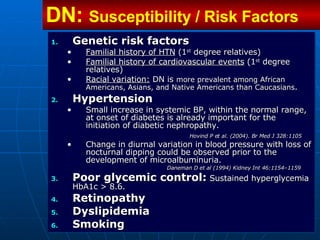
Genetic risk factors Familial history of HTN  (1 st  degree relatives) Familial history of cardiovascular events  (1 st  degree relatives) Racial variation:  DN is  more prevalent among African Americans, Asians, and Native Americans than Caucasians .   Hypertension Small increase in systemic BP, within the normal range, at onset of diabetes is already important for the initiation of diabetic nephropathy.   Hovind P et al. (2004). Br Med J 328:1105 Change in diurnal variation in blood pressure with loss of nocturnal dipping could be observed prior to the development of microalbuminuria.  Daneman D et al (1994) Kidney Int 46:1154–1159   Poor glycemic control:   Sustained hyperglycemia HbA1c > 8.6. Retinopathy   Dyslipidemia   Smoking DN:  Susceptibility / Risk Factors
|} Protein Overload:   With protein intakes greater than 20% of energy intake there is an association between protein with increased albumin excretion rate. Marion J et al.  Current Diabetes Reports 2003, 3:412-417   Slightly Elevated UAE:  at onset of diabetes already predicted the development of MA.  the risk of progression from normoalbuminuria to microalbuminuria and macroalbuminuria within 10 years was 70% if the patient had a combination of four risk factors, namely, retinopathy, urinary AER>10 mg/24 h, HbA1c>8.6% and smoking, as against only 10% risk of progression if none of these risk factors were present.   Rossing P et al. (2002). Diabetes Care 25: 859–864 . DN:  Susceptibility / Risk Factors
Low Birthweight:  is related to initiation of microalbuminuria and the presence of diabetic nephropathy.   Hovind P et al. (2004). Br Med J 328:1105 Oral Contraceptive :   activate RAS and increase risk of developing DN.  Ahmed SB et al (2005). Diabetes Care 28:1988–1994.   Cardiovascular Risk Markers DN:  Susceptibility / Risk Factors
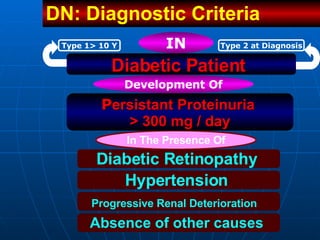
Diabetic Patient   IN Development Of In The Presence Of Diabetic Retinopathy  Hypertension  Progressive Renal Deterioration   Absence of other causes  P ersistant Proteinuria  > 300 mg / day DN: Diagnostic Criteria  Type 1> 10 Y Type 2 at Diagnosis
1.  Duration of Diabetes in DN Average  Type 1:  Overt DN Rarely occur before 10 yrs. Type 2:  May be present in newly diagnosed patients   .   Peak   Peak incidence    10 to 20 y duration   If duration > 30 y + Normoalbuminuria Risk is Very Low DN: Diagnostic Criteria  Decline   After 20 y    Progressive decline in incidence takes place.
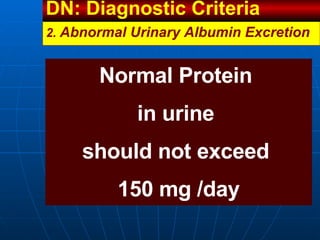
Normal Protein  in urine  should not exceed  150 mg /day 2.  Abnormal Urinary Albumin Excretion DN: Diagnostic Criteria
This 150 mg /day is composed of: Tamm Horsfall Protein 70 mg Protein of Blood group 35 mg Albumin (0-30mg) Others (enzymes, hormones, immunoglobulin ….etc)  29mg 2.  Abnormal Urinary Albumin Excretion DN: Diagnostic Criteria
The structural damage  in DN leads to  Albumin in urine = Albuminuria 2.  Abnormal Urinary Albumin Excretion DN: Diagnostic Criteria
Normoalbuminuria < 30 mg/day Microalbuminuria 30 - 300 mg / day Macroalbuminuria > 300 mg / day 2.  Abnormal Urinary Albumin Excretion DN: Diagnostic Criteria
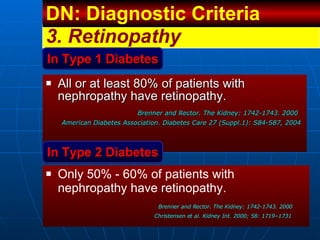
All or at least 80% of patients with nephropathy have retinopathy. Brenner and Rector. The Kidney: 1742-1743. 2000 American Diabetes Association. Diabetes Care 27 (Suppl.1): S84-S87, 2004 3.  Retinopathy In Type 1 Diabetes In Type 2 Diabetes Only 50% - 60% of patients with nephropathy have retinopathy. Brenner and Rector. The Kidney: 1742-1743. 2000 Christensen et al. Kidney Int. 2000; 58: 1719–1731 DN: Diagnostic Criteria
3.  Retinopathy DN: Diagnostic Criteria
Higher levels of blood pressure are associated with more rapid progression of diabetic kidney disease   Most patients with diabetic kidney disease  are hypertensive   Hypertension is both a cause and a consequence of renal disease and the kidney is both villain and victim in hypertension.   Critchley JA et al. Chin Med J (Engl). 2002 Jan;115(1):129-35. 4.  Hypertension DN: Diagnostic Criteria
4.  Hypertension DN: Diagnostic Criteria  With Macroalbuminuria: >90% With Microalbuminuria: 80% At Diagnosis: 50% Type 2 With Macroalbuminuria: 65-88% With Microalbuminuria: 30-50% At Diagnosis: 20-40% Type 1
Cause:  Usually renoparenchymal in origin.   Onset:  Typically with microalbuminuria.  American Diabetic Association. Diab Care 2004 In Type 1 Diabetes Cause:  Mainly due to insulin resistance (as a facet of MS) But may be due to underlying DN or other causes.   American Diabetic Association. Diab Care 2004 Onset:  Usually precedes the onset of nephropathy and even the onset of type 2 diabetes by years or decade  Ritz et al. J Int Med. 2001 ; 249: 215-223 In Type 2 Diabetes 4.  Hypertension
Systolic Blood Pressure is a Stronger predictor than diastolic blood pressure for both CVD and renal complications.  National Kidney Foundation: Guideline 8. Am J Kidney Dis 43 (Suppl. 1):S142 –S159, 2004.   Sowers JR et al. Hypertension 37:1053 –1059, 2001.   4.  Hypertension Systolic Or Diastolic
4.  Hypertension Effect On Glomerulus Hypertension Dilatation of Afferent Arteriole Increase Intraglomerular Pressure Hyperfiltration Hemodynamically Mediated Damage Evans CT. Clin Diab. VOL. 18 NO. 1   2000
The UK Prospective Diabetes Study Group (UKPDS) concluded that:  “  Not only is antihypertensive treatment more effective than tight blood glucose control; but also the beneficial effect comes sooner”   Mogensen et al.  BMJ. 1998 Sep 12;317(7160):693-4 4.  Hypertension Strong Or The Strongest  Aggravating Factor For DN Chinese Medical Journal 2002 : Hypertension is the most important aggravating risk factor in DN.  Effective antihypertensive therapy is the most important strategy in preserving renal function”.  Critchley JA et al. Chin Med J (Engl). 2002 Jan;115(1):129-35.
4.  Hypertension Strong Or The Strongest  Aggravating Factor For DN
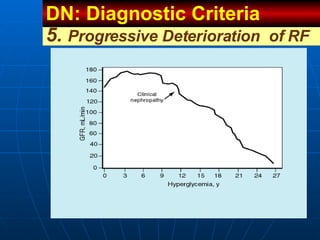
Initially GFR is increased due to hyperfiltration. Typically, SCr is normal till development of Overt DN (Macroalbuminuria). Once overt DN occurs, GFR start to decrease at a rate of 1ml/min/month (variable 2-20 ml/min/year).  5.  Progressive Deterioration  of RF DN: Diagnostic Criteria
5.  Progressive Deterioration  of RF DN: Diagnostic Criteria
Causes that may    Urinary Albumin Infection Fever Exercise within 24 h CHF Marked hyperglycemia Marked hypertension Pyuria Hematuria Menstruation Pregnancy 6.  Exclusion of Other Causes DN: Diagnostic Criteria
Lack of Retinopathy or Neuropathy Persistent Hematuria (microscopic or  macroscopic) Signs or symptoms of Systemic Disease Rapidly Rising Creatinine  High SCr with little or no Proteinuria F/H of Nondiabetic Renal Disease (e.g.  polycystic kidney disease or Alport  syndrome) Short Duration of Diabetes 6.  Exclusion of Other Causes Markers of Non Diabetic Renal Diseases Indications of Renal Biopsy in Diabetes 1 2 3 4 5 6 7
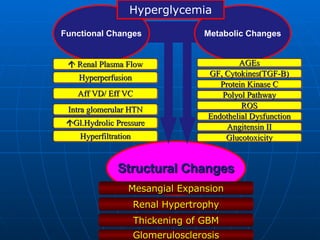
Diabetic  Nephropathy Pathogenesis of DN
Intra glomerular HTN Hyperperfusion Aff VD/ Eff VC Hyperfiltration Polyol Pathway Protein Kinase C GF, Cytokines(TGF-B) ROS  Gl.Hydrolic Pressure Endothelial Dysfunction Angitensin II Glucotoxicity Structural Changes Metabolic Changes Functional Changes AGEs    Renal Plasma Flow Glomerulosclerosis Thickening of GBM Mesangial Expansion Hyperglycemia Renal Hypertrophy
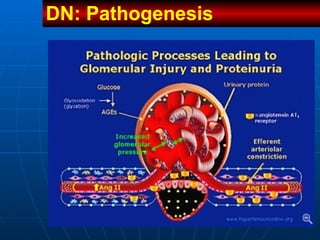
DN: Pathogenesis
DN: Pathogenesis
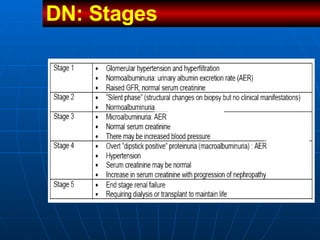
Diabetic  Nephropathy Stages of DN
<30mg/day 30-300mg/day >300mg/d DN: Stages
Natural History of Type 1 Diabetic Nephropathy DN: Natural History
Susceptibility Silent Silent Incipient Overt ESRD DN: Natural History   Natural History of Type 2 Diabetic Nephropathy
Diabetics with Macroalbuminuria are More Likely to Die than Develop ESRD C V D E A T H The United Kingdom Prospective Diabetes Study (approx. 5000 Type 2 Diabetics)  Newly diagnosed, predominantly white, medically treated  Adler et al.  Kid Int, 2003 Elevated Serum Creatinine 19% No albuminruia 1.4% Microalbuminruia 3.0% Macroalbuminruia 4.6%
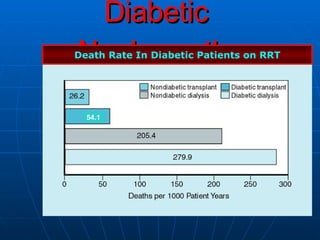
Diabetic  Nephropathy Death Rate In Diabetic Patients on RRT 54.1
Causes of Death DN: Causes of Death   Stroke Myocardial Infarction Heart Failure Sudden Death
Not all patients with Microalbuminuria will develop Macroalbuminuria. Not all patients with Macroalbuminuria will develop ESRD. DN: Prognosis
Microalbuminuria Macroalbuminuria 80%/10-15y Macroalbuminuria ESRD 50%/ 10y 75%/ 20y Without Specific Interventions in type 1 DM Microalbuminuria Macroalbuminuria Macroalbuminuria ESRD 20%/ 20y Without Specific Interventions in type 2 DM 20-40 % American Diabetic Association. Diab Care 2004 DN: Prognosis
DN:  Where to Meet the Patients? Susceptibility Silent Silent Incipient Overt ESRD Screening and Prevention of Type 2 Diabetes Screening and Prevention of Diabetic Nephropathy Natural History of Type 2 Diabetic Nephropathy Prevention of progression of MiA to overt DN
Preventive/ Pre-emptive  Strategies Screening For DN Prevention Of DN
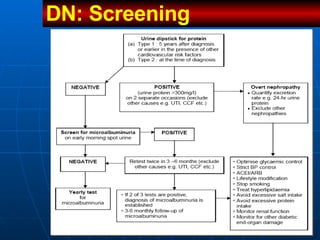
1 American Diabetes Association:   Nephropathy in Diabetes   (Position Statement).  Diabetes Care  27 (Suppl.1): S79-S83, 2004 BP UAE Lipid At Least Annually < 150mg/dl  TG < 100 mg/dl  LDL > 40mg/dl  HDL DN: Screening
DN: Screening
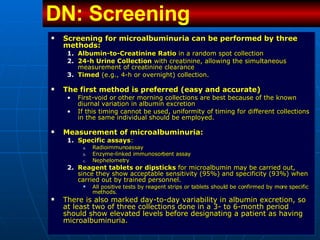
Screening for microalbuminuria can be performed by three methods:  Albumin-to-Creatinine Ratio  in a random spot collection 24-h Urine Collection  with creatinine, allowing the simultaneous measurement of creatinine clearance Timed  (e.g., 4-h or overnight) collection.  The first method is preferred (easy and accurate)  First-void or other morning collections are best because of the known diurnal variation in albumin excretion If this timing cannot be used, uniformity of timing for different collections in the same individual should be employed.  Measurement of microalbuminuria: Specific assays : Radioimmunoassay Enzyme-linked immunosorbent assay Nephelometry Reagent tablets or dipsticks  for microalbumin may be carried out, since they show acceptable sensitivity (95%) and specificity (93%) when carried out by trained personnel.  All positive tests by reagent strips or tablets should be confirmed by more specific methods.  There is also marked day-to-day variability in albumin excretion, so at least two of three collections done in a 3- to 6-month period should show elevated levels before designating a patient as having microalbuminuria.  DN: Screening
DN: Screening
Dietition Endocrinologist Physician Trained Diabetes Nurse General Practitioner Multiseciplinary Approach Prevention Of DN   Requirements DN:  Prevention/Preemptive St.
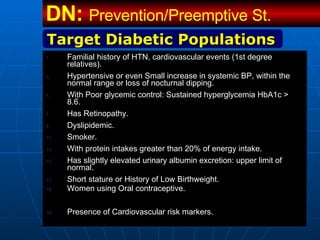
Familial history of HTN, cardiovascular events (1st degree relatives). Hypertensive or even Small increase in systemic BP, within the normal range or loss of nocturnal dipping.  With Poor glycemic control: Sustained hyperglycemia HbA1c > 8.6. Has Retinopathy.  Dyslipidemic.  Smoker. With protein intakes greater than 20% of energy intake.  Has slightly elevated urinary albumin excretion: upper limit of normal. Short stature or History of Low Birthweight. Women using Oral contraceptive.  Presence of Cardiovascular risk markers. Target Diabetic Populations DN:  Prevention/Preemptive St.
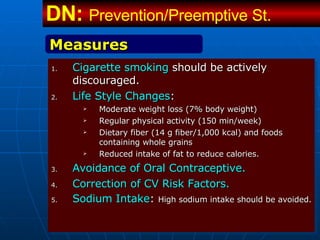
Cigarette smoking  should be actively discouraged.   Life Style Changes : Moderate weight loss (7% body weight) Regular physical activity (150 min/week) Dietary fiber (14 g fiber/1,000 kcal) and foods containing whole grains  Reduced intake of fat to reduce calories. Avoidance of Oral Contraceptive. Correction of CV Risk Factors. Sodium Intake :  High sodium intake should be avoided. Measures DN:  Prevention/Preemptive St.
Protein Intake Restriction Not to exceed a protein intake of 20% of total energy.   Toeller et al. Diabetologia. 1997 Oct;40(10):1219-26. Normal Protein Diet Fish and chicken are the only source Mollsten AV et al. Diabetes Care 24:805–810, 2001 Gross JL et al. Diabetes Care, April 1, 2002; 25(4): 645 - 651. Pecis M et al. Diabetes Care 17:665–672, 1994   Selection:  Robertson et al; 2007  suggested that six months therapeutic trial of protein restriction for all patient with DKD, with continuation only in those who responded best. Cochrane Database Syst Rev. 2007 Oct 17;(4):CD002181.   Measures DN:  Prevention/Preemptive St.
Glycaemic control  should be optimised, with FBS  <  6 mmol/l and/or HbA1c  <  7% Mentain Target BP   <  130/80 ACE-I / ARBs Mentian Lipid Profile : LDL<100 mg/dl (<2.6 mmol/l)     Triglycerides<150 mg/dl (<1.7 mmol/l)     HDL>40 mg/dl (>1.0 mmol/l)  Measures DN:  Prevention/Preemptive St.
Treatment of Overt DN
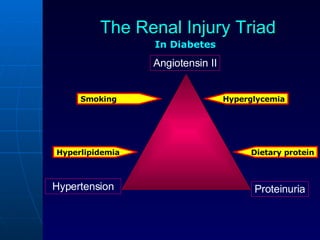
The Renal Injury Triad Angiotensin II Proteinuria Hypertension In Diabetes Smoking Hyperlipidemia Hyperglycemia Dietary protein
Tight Control of BP:   Proteinuria < 1 g/day    < 130/ 80 Proteinuria > 1 g/day    < 125/75 Tight Glycemic Control: FPG < 6 mmol/l HbA1c < 6.5-7 Blockage of RAS and control of P roteinuria: If there is microalbuminuria: ACE-I and ARBs in type 1 and type 2. If there is macroalbuminuria:  ACE-I preferred in type 1. ARBs preferred in type 2.   DN: Treatment
Either agent can be used as alternative agent if the preferred can not be used. Use moderate to high doses. If proteinuria > 1g/day: Maxmise the dose of ACE-I or ARBs. Use combination of both. For control of Proteinuria:  If ACE-I or ARBs not tolerated, Use NDCCBs. DCCBs is not proved to be effective. Multiple Risk Factors Intervention: Control of Dyslipidemia: LDL<100 mg/dl (<2.6 mmol/l), < 70 mg/dl if there is CVD.      Triglycerides<150 mg/dl (<1.7 mmol/l)     HDL>40 mg/dl (>1.0 mmol/l) Total Cholesterol < 175 mg/dl Smoking Cessation DN: Treatment
Diet control:   Protein  Restriction: 0.8-1mg/kg bw (controversial). Normal Protein with Chicken and fish the only source of protein. Fiber (14 g fiber/1,000 kcal) and foods containing whole grains.  Fat: Reduced intake of fat. Salt: Restriction to 2.4g/day. Life Style Changes: BMI < 25 kg/m 2 . Regular physical activity (150 min/week). Moderation of Alcohol.  Aspirin:   81 mg/day as preventive strategy in high risk Type 2 diabetic patients. DN: Treatment
Monitor Serum Potassium: ACE-I or ARBs may cause Hyperkalemia: Avoid other medications that cause hyperkalemia (K suppl, NSAIDs, Cox2 inhibitors, K sparing diuretics). Evaluate causes of hyperkalemia. Treat hyperkalemia with diuretics. Continuo ACE-I or ARBs if K < 5.5 mmol/l Diuretics may cause hypokalemia: Evaluate causes of hypokalemia. Treat hypokalemia with caution in CKD. Monitor GFR If GFR  >30% within 4 weeks, evaluate. Continuo ACE-I or ARBs if GFR  < 30% from baseline over 4 months. DN: Treatment
Avoidance of Nephrotoxicity: Nephrotoxic:   Radiocontrast agents – low ionic agents, avoid dehydration NSAID* – use paracetamol Needs adjustment if GFR is reduced Allopurinol – 100 mg/day per 30 mL/min of GFR Digoxin – check levels Sulphonamides – half dosage if GFR is <30 mL/min Not used if GFR <30 mL/min Some hypoglycaemics – glibenclamide, glimepiride, metformin Potassium sparing diuretics – amiloride, triamterene, spironolactone. Tetracyclines DN: Treatment
Continued Surveillance of Proteinuria:  to assess both response to therapy and progression of disease is recommended.  DN: Treatment
High doses of thiamine and its derivate benfotiamine:   retard the development of microalbuminuria in experimental diabetic nephropathy, probably due to decreased activation of protein kinase C, decreased protein glycation, and oxidative stress.   ALT-711 (cross-link breaker of the advanced glycation end products) :  has been shown to result in a significant reduction in UAE, blood pressure, and renal lesions in experimental diabetes.  DN:  Novel Therapeutic Strategies
Protein kinase C ß inhibitor (ruboxistaurin):   normalized GFR, decreased albumin excretion rate, and ameliorated glomerular lesions in diabetic rodents.   Sulodexide   (a glycosaminoglycan):   significantly reduced albuminuria in micro- or macroalbuminuric  type 1 and type 2 diabetic patients.   Pimagedine  (second-generation inhibitor of advanced glycation end products):  reduced urinary protein excretion and the decline in GFR in proteinuric type 1 diabetic patients in a randomized, placebo-controlled study.  DN:  Novel Therapeutic Strategies
Referrences Babaei-Jadidi R, Karachalias N, Ahmed N, Battah S, Thornalley PJ: Prevention of incipient diabetic nephropathy by high-dose thiamine and benfotiamine.  Diabetes  52:2110–2120, 2003. Forbes JM, Thallas V, Thomas MC, Founds HW, Burns WC, Jerums G, Cooper ME: The breakdown of preexisting advanced glycation end products is associated with reduced renal fibrosis in experimental diabetes.  FASEB J  17:1762–1764, 2003.  Kelly DJ, Zhang Y, Hepper C, Gow RM, Jaworski K, Kemp BE, Wilkinson-Berka JL, Gilbert RE: Protein kinase C ß inhibition attenuates the progression of experimental diabetic nephropathy in the presence of continued hypertension.  Diabetes  52:512–518, 2003 Gambaro G, Kinalska I, Oksa A, Pont’uch P, Hertlova M, Olsovsky J, Manitius J, Fedele D, Czekalski S, Perusicova J, Skrha J, Taton J, Grzeszczak W, Crepaldi G: Oral sulodexide reduces albuminuria in microalbuminuric and macroalbuminuric type 1 and type 2 diabetic patients: the Di.N.A.S. randomized trial.  J Am Soc Nephrol  13:1615–1625, 2002.  Bolton WK, Cattran DC, Williams ME, Adler SG, Appel GB, Cartwright K, Foiles PG, Freedman BI, Raskin P, Ratner RE, Spinowitz BS, Whittier FC, Wuerth JP: Randomized trial of an inhibitor of formation of advanced glycation end products in diabetic nephropathy.  Am J Nephrol  24:32–40, 2004.
Blood pressure should be measured at every routine diabetes visit.   Patients found to have systolic blood pressure >130 mmHg or diastolic blood pressure >80 mmHg should have blood pressure confirmed on a separate day.  Orthostatic measurement of blood pressure should be performed  to assess for the presence of autonomic neuropathy. Antihypertensive Drugs in DKD
Target BP  <130/80 mmHg and < 125/75 mmHg if proteinuria > 1g/day. If BP 130–139 / 80–89 mmHg       lifestyle/ behavioural therapy alone for a maximum of 3 months   If targets are not achieved, pharmacological therapy should be started. Antihypertensive Drugs in DKD
If BP ≥140/90 mmHg     Drug therapy in addition to lifestyle/behavioral therapy. Antihypertensive Drugs in Diabetes First and second lines agents: Antihypertensive Drugs in DKD
DKD with or without hypertension: ACE-I, ARBs. DKD  (either type 1 and type 2)  with MiA    ACE-I, ARBs. DKD  (type 1 diabetes)  with MaA   ACE-I. DKD  (type 2 diabetes)  with MaA    ARBs Antihypertensive Drugs in DKD
Drugs that has antiproteinuric effect than other antihypertensives:  ACE-I ARBs Nd CCBs BB. DCCBs are less effective in slowing progression of DKD and if needed, should combined with ACE-I or ARBs.   Antihypertensive Drugs in DKD
Spironolactone added to ACE inhibitor or ARB therapy provides additional reno- and CV protective benefits in patients with diabetic nephropathy.    Israili et al. Am J Ther. 2007 Jul-Aug;14(4):386-402.   Role of Spironolactone
Addition of spironolactone (25-50 mg OD) to an ACE inhibitor or AngII receptor blocker is associated with a marked and sustained antiproteinuric effect, which in part relates to the more pronounced reduction in GFR.  van den Meiracker et al. J Hypertens. 2006 Nov;24(11):2285-92.   Role of Spironolactone
Role of Spironolactone
THANKS Dr. Mohamed Alamin

Diabetic Nephropathy 1

  • 1.
    Diabetic Nephropathy DrMohamed Alamin Nephrology and Renal Transplant Specialist KAAH & OC Jiddah KSA
  • 2.
  • 3.
    Diabetic NephropathyMajor Microvascular Complication of diabetes. Leading Cause Of ESRD in Many Countries. Leading Cause Of CVS Morbidity& Mortality. (20- to 40-fold increased risk for CV mortality) . Independent Risk Factor for Hospitalization Alarming increase % of ESRD pts. Caused by DM (in US from 27% in 1982, 36% in 92, 43% in 99 and 45% in 04). USRDS. ADR 2006 Not all diabetic Pts will develop DN (only ~ 40%)
  • 4.
    United States: From 2000 – 2004 Total ESRD Patients = 497, 934 DM = 220,929 = 44.9% Type 1 = 19,136 Type 2 = 201,739 Diabetic Nephropathy
  • 5.
  • 6.
    Diabetic NephropathySaudi Arabia 2006
  • 7.
    DN: Diagnosis Whatare the Diagnostic Criteria ? Who are the Susceptible Patients ?
  • 8.
    DN: Diagnosis Whatare the Diagnostic Criteria ? Who are the Susceptible Patients ?
  • 9.
    Genetic risk factorsFamilial history of HTN (1 st degree relatives) Familial history of cardiovascular events (1 st degree relatives) Racial variation: DN is more prevalent among African Americans, Asians, and Native Americans than Caucasians . Hypertension Small increase in systemic BP, within the normal range, at onset of diabetes is already important for the initiation of diabetic nephropathy. Hovind P et al. (2004). Br Med J 328:1105 Change in diurnal variation in blood pressure with loss of nocturnal dipping could be observed prior to the development of microalbuminuria. Daneman D et al (1994) Kidney Int 46:1154–1159 Poor glycemic control: Sustained hyperglycemia HbA1c > 8.6. Retinopathy Dyslipidemia Smoking DN: Susceptibility / Risk Factors
  • 10.
    |} Protein Overload: With protein intakes greater than 20% of energy intake there is an association between protein with increased albumin excretion rate. Marion J et al. Current Diabetes Reports 2003, 3:412-417 Slightly Elevated UAE: at onset of diabetes already predicted the development of MA. the risk of progression from normoalbuminuria to microalbuminuria and macroalbuminuria within 10 years was 70% if the patient had a combination of four risk factors, namely, retinopathy, urinary AER>10 mg/24 h, HbA1c>8.6% and smoking, as against only 10% risk of progression if none of these risk factors were present. Rossing P et al. (2002). Diabetes Care 25: 859–864 . DN: Susceptibility / Risk Factors
  • 11.
    Low Birthweight: is related to initiation of microalbuminuria and the presence of diabetic nephropathy. Hovind P et al. (2004). Br Med J 328:1105 Oral Contraceptive : activate RAS and increase risk of developing DN. Ahmed SB et al (2005). Diabetes Care 28:1988–1994. Cardiovascular Risk Markers DN: Susceptibility / Risk Factors
  • 12.
    Diabetic Patient IN Development Of In The Presence Of Diabetic Retinopathy Hypertension Progressive Renal Deterioration Absence of other causes P ersistant Proteinuria > 300 mg / day DN: Diagnostic Criteria Type 1> 10 Y Type 2 at Diagnosis
  • 13.
    1. Durationof Diabetes in DN Average Type 1: Overt DN Rarely occur before 10 yrs. Type 2: May be present in newly diagnosed patients . Peak Peak incidence  10 to 20 y duration If duration > 30 y + Normoalbuminuria Risk is Very Low DN: Diagnostic Criteria Decline After 20 y  Progressive decline in incidence takes place.
  • 14.
    Normal Protein in urine should not exceed 150 mg /day 2. Abnormal Urinary Albumin Excretion DN: Diagnostic Criteria
  • 15.
    This 150 mg/day is composed of: Tamm Horsfall Protein 70 mg Protein of Blood group 35 mg Albumin (0-30mg) Others (enzymes, hormones, immunoglobulin ….etc) 29mg 2. Abnormal Urinary Albumin Excretion DN: Diagnostic Criteria
  • 16.
    The structural damage in DN leads to Albumin in urine = Albuminuria 2. Abnormal Urinary Albumin Excretion DN: Diagnostic Criteria
  • 17.
    Normoalbuminuria < 30mg/day Microalbuminuria 30 - 300 mg / day Macroalbuminuria > 300 mg / day 2. Abnormal Urinary Albumin Excretion DN: Diagnostic Criteria
  • 18.
    All or atleast 80% of patients with nephropathy have retinopathy. Brenner and Rector. The Kidney: 1742-1743. 2000 American Diabetes Association. Diabetes Care 27 (Suppl.1): S84-S87, 2004 3. Retinopathy In Type 1 Diabetes In Type 2 Diabetes Only 50% - 60% of patients with nephropathy have retinopathy. Brenner and Rector. The Kidney: 1742-1743. 2000 Christensen et al. Kidney Int. 2000; 58: 1719–1731 DN: Diagnostic Criteria
  • 19.
    3. RetinopathyDN: Diagnostic Criteria
  • 20.
    3. RetinopathyDN: Diagnostic Criteria
  • 21.
    Higher levels ofblood pressure are associated with more rapid progression of diabetic kidney disease Most patients with diabetic kidney disease are hypertensive Hypertension is both a cause and a consequence of renal disease and the kidney is both villain and victim in hypertension. Critchley JA et al. Chin Med J (Engl). 2002 Jan;115(1):129-35. 4. Hypertension DN: Diagnostic Criteria
  • 22.
    4. HypertensionDN: Diagnostic Criteria With Macroalbuminuria: >90% With Microalbuminuria: 80% At Diagnosis: 50% Type 2 With Macroalbuminuria: 65-88% With Microalbuminuria: 30-50% At Diagnosis: 20-40% Type 1
  • 23.
    Cause: Usuallyrenoparenchymal in origin. Onset: Typically with microalbuminuria. American Diabetic Association. Diab Care 2004 In Type 1 Diabetes Cause: Mainly due to insulin resistance (as a facet of MS) But may be due to underlying DN or other causes. American Diabetic Association. Diab Care 2004 Onset: Usually precedes the onset of nephropathy and even the onset of type 2 diabetes by years or decade Ritz et al. J Int Med. 2001 ; 249: 215-223 In Type 2 Diabetes 4. Hypertension
  • 24.
    Systolic Blood Pressureis a Stronger predictor than diastolic blood pressure for both CVD and renal complications. National Kidney Foundation: Guideline 8. Am J Kidney Dis 43 (Suppl. 1):S142 –S159, 2004. Sowers JR et al. Hypertension 37:1053 –1059, 2001. 4. Hypertension Systolic Or Diastolic
  • 25.
    4. HypertensionEffect On Glomerulus Hypertension Dilatation of Afferent Arteriole Increase Intraglomerular Pressure Hyperfiltration Hemodynamically Mediated Damage Evans CT. Clin Diab. VOL. 18 NO. 1 2000
  • 26.
    The UK ProspectiveDiabetes Study Group (UKPDS) concluded that: “ Not only is antihypertensive treatment more effective than tight blood glucose control; but also the beneficial effect comes sooner” Mogensen et al. BMJ. 1998 Sep 12;317(7160):693-4 4. Hypertension Strong Or The Strongest Aggravating Factor For DN Chinese Medical Journal 2002 : Hypertension is the most important aggravating risk factor in DN. Effective antihypertensive therapy is the most important strategy in preserving renal function”. Critchley JA et al. Chin Med J (Engl). 2002 Jan;115(1):129-35.
  • 27.
    4. HypertensionStrong Or The Strongest Aggravating Factor For DN
  • 28.
    Initially GFR isincreased due to hyperfiltration. Typically, SCr is normal till development of Overt DN (Macroalbuminuria). Once overt DN occurs, GFR start to decrease at a rate of 1ml/min/month (variable 2-20 ml/min/year). 5. Progressive Deterioration of RF DN: Diagnostic Criteria
  • 29.
    5. ProgressiveDeterioration of RF DN: Diagnostic Criteria
  • 30.
    Causes that may  Urinary Albumin Infection Fever Exercise within 24 h CHF Marked hyperglycemia Marked hypertension Pyuria Hematuria Menstruation Pregnancy 6. Exclusion of Other Causes DN: Diagnostic Criteria
  • 31.
    Lack of Retinopathyor Neuropathy Persistent Hematuria (microscopic or macroscopic) Signs or symptoms of Systemic Disease Rapidly Rising Creatinine High SCr with little or no Proteinuria F/H of Nondiabetic Renal Disease (e.g. polycystic kidney disease or Alport syndrome) Short Duration of Diabetes 6. Exclusion of Other Causes Markers of Non Diabetic Renal Diseases Indications of Renal Biopsy in Diabetes 1 2 3 4 5 6 7
  • 32.
    Diabetic NephropathyPathogenesis of DN
  • 33.
    Intra glomerular HTNHyperperfusion Aff VD/ Eff VC Hyperfiltration Polyol Pathway Protein Kinase C GF, Cytokines(TGF-B) ROS  Gl.Hydrolic Pressure Endothelial Dysfunction Angitensin II Glucotoxicity Structural Changes Metabolic Changes Functional Changes AGEs  Renal Plasma Flow Glomerulosclerosis Thickening of GBM Mesangial Expansion Hyperglycemia Renal Hypertrophy
  • 34.
  • 35.
  • 36.
  • 37.
  • 38.
    Natural History ofType 1 Diabetic Nephropathy DN: Natural History
  • 39.
    Susceptibility Silent SilentIncipient Overt ESRD DN: Natural History Natural History of Type 2 Diabetic Nephropathy
  • 40.
    Diabetics with Macroalbuminuriaare More Likely to Die than Develop ESRD C V D E A T H The United Kingdom Prospective Diabetes Study (approx. 5000 Type 2 Diabetics) Newly diagnosed, predominantly white, medically treated Adler et al. Kid Int, 2003 Elevated Serum Creatinine 19% No albuminruia 1.4% Microalbuminruia 3.0% Macroalbuminruia 4.6%
  • 41.
    Diabetic NephropathyDeath Rate In Diabetic Patients on RRT 54.1
  • 42.
    Causes of DeathDN: Causes of Death Stroke Myocardial Infarction Heart Failure Sudden Death
  • 43.
    Not all patientswith Microalbuminuria will develop Macroalbuminuria. Not all patients with Macroalbuminuria will develop ESRD. DN: Prognosis
  • 44.
    Microalbuminuria Macroalbuminuria 80%/10-15yMacroalbuminuria ESRD 50%/ 10y 75%/ 20y Without Specific Interventions in type 1 DM Microalbuminuria Macroalbuminuria Macroalbuminuria ESRD 20%/ 20y Without Specific Interventions in type 2 DM 20-40 % American Diabetic Association. Diab Care 2004 DN: Prognosis
  • 45.
    DN: Whereto Meet the Patients? Susceptibility Silent Silent Incipient Overt ESRD Screening and Prevention of Type 2 Diabetes Screening and Prevention of Diabetic Nephropathy Natural History of Type 2 Diabetic Nephropathy Prevention of progression of MiA to overt DN
  • 46.
    Preventive/ Pre-emptive Strategies Screening For DN Prevention Of DN
  • 47.
    1 American DiabetesAssociation: Nephropathy in Diabetes (Position Statement). Diabetes Care 27 (Suppl.1): S79-S83, 2004 BP UAE Lipid At Least Annually < 150mg/dl TG < 100 mg/dl LDL > 40mg/dl HDL DN: Screening
  • 48.
  • 49.
    Screening for microalbuminuriacan be performed by three methods: Albumin-to-Creatinine Ratio in a random spot collection 24-h Urine Collection with creatinine, allowing the simultaneous measurement of creatinine clearance Timed (e.g., 4-h or overnight) collection. The first method is preferred (easy and accurate) First-void or other morning collections are best because of the known diurnal variation in albumin excretion If this timing cannot be used, uniformity of timing for different collections in the same individual should be employed. Measurement of microalbuminuria: Specific assays : Radioimmunoassay Enzyme-linked immunosorbent assay Nephelometry Reagent tablets or dipsticks for microalbumin may be carried out, since they show acceptable sensitivity (95%) and specificity (93%) when carried out by trained personnel. All positive tests by reagent strips or tablets should be confirmed by more specific methods. There is also marked day-to-day variability in albumin excretion, so at least two of three collections done in a 3- to 6-month period should show elevated levels before designating a patient as having microalbuminuria. DN: Screening
  • 50.
  • 51.
    Dietition Endocrinologist PhysicianTrained Diabetes Nurse General Practitioner Multiseciplinary Approach Prevention Of DN Requirements DN: Prevention/Preemptive St.
  • 52.
    Familial history ofHTN, cardiovascular events (1st degree relatives). Hypertensive or even Small increase in systemic BP, within the normal range or loss of nocturnal dipping. With Poor glycemic control: Sustained hyperglycemia HbA1c > 8.6. Has Retinopathy. Dyslipidemic. Smoker. With protein intakes greater than 20% of energy intake. Has slightly elevated urinary albumin excretion: upper limit of normal. Short stature or History of Low Birthweight. Women using Oral contraceptive. Presence of Cardiovascular risk markers. Target Diabetic Populations DN: Prevention/Preemptive St.
  • 53.
    Cigarette smoking should be actively discouraged. Life Style Changes : Moderate weight loss (7% body weight) Regular physical activity (150 min/week) Dietary fiber (14 g fiber/1,000 kcal) and foods containing whole grains Reduced intake of fat to reduce calories. Avoidance of Oral Contraceptive. Correction of CV Risk Factors. Sodium Intake : High sodium intake should be avoided. Measures DN: Prevention/Preemptive St.
  • 54.
    Protein Intake RestrictionNot to exceed a protein intake of 20% of total energy. Toeller et al. Diabetologia. 1997 Oct;40(10):1219-26. Normal Protein Diet Fish and chicken are the only source Mollsten AV et al. Diabetes Care 24:805–810, 2001 Gross JL et al. Diabetes Care, April 1, 2002; 25(4): 645 - 651. Pecis M et al. Diabetes Care 17:665–672, 1994 Selection: Robertson et al; 2007 suggested that six months therapeutic trial of protein restriction for all patient with DKD, with continuation only in those who responded best. Cochrane Database Syst Rev. 2007 Oct 17;(4):CD002181. Measures DN: Prevention/Preemptive St.
  • 55.
    Glycaemic control should be optimised, with FBS < 6 mmol/l and/or HbA1c < 7% Mentain Target BP < 130/80 ACE-I / ARBs Mentian Lipid Profile : LDL<100 mg/dl (<2.6 mmol/l)     Triglycerides<150 mg/dl (<1.7 mmol/l)     HDL>40 mg/dl (>1.0 mmol/l) Measures DN: Prevention/Preemptive St.
  • 56.
  • 57.
    The Renal InjuryTriad Angiotensin II Proteinuria Hypertension In Diabetes Smoking Hyperlipidemia Hyperglycemia Dietary protein
  • 58.
    Tight Control ofBP: Proteinuria < 1 g/day  < 130/ 80 Proteinuria > 1 g/day  < 125/75 Tight Glycemic Control: FPG < 6 mmol/l HbA1c < 6.5-7 Blockage of RAS and control of P roteinuria: If there is microalbuminuria: ACE-I and ARBs in type 1 and type 2. If there is macroalbuminuria: ACE-I preferred in type 1. ARBs preferred in type 2. DN: Treatment
  • 59.
    Either agent canbe used as alternative agent if the preferred can not be used. Use moderate to high doses. If proteinuria > 1g/day: Maxmise the dose of ACE-I or ARBs. Use combination of both. For control of Proteinuria: If ACE-I or ARBs not tolerated, Use NDCCBs. DCCBs is not proved to be effective. Multiple Risk Factors Intervention: Control of Dyslipidemia: LDL<100 mg/dl (<2.6 mmol/l), < 70 mg/dl if there is CVD.      Triglycerides<150 mg/dl (<1.7 mmol/l)     HDL>40 mg/dl (>1.0 mmol/l) Total Cholesterol < 175 mg/dl Smoking Cessation DN: Treatment
  • 60.
    Diet control: Protein Restriction: 0.8-1mg/kg bw (controversial). Normal Protein with Chicken and fish the only source of protein. Fiber (14 g fiber/1,000 kcal) and foods containing whole grains. Fat: Reduced intake of fat. Salt: Restriction to 2.4g/day. Life Style Changes: BMI < 25 kg/m 2 . Regular physical activity (150 min/week). Moderation of Alcohol. Aspirin: 81 mg/day as preventive strategy in high risk Type 2 diabetic patients. DN: Treatment
  • 61.
    Monitor Serum Potassium:ACE-I or ARBs may cause Hyperkalemia: Avoid other medications that cause hyperkalemia (K suppl, NSAIDs, Cox2 inhibitors, K sparing diuretics). Evaluate causes of hyperkalemia. Treat hyperkalemia with diuretics. Continuo ACE-I or ARBs if K < 5.5 mmol/l Diuretics may cause hypokalemia: Evaluate causes of hypokalemia. Treat hypokalemia with caution in CKD. Monitor GFR If GFR >30% within 4 weeks, evaluate. Continuo ACE-I or ARBs if GFR < 30% from baseline over 4 months. DN: Treatment
  • 62.
    Avoidance of Nephrotoxicity:Nephrotoxic: Radiocontrast agents – low ionic agents, avoid dehydration NSAID* – use paracetamol Needs adjustment if GFR is reduced Allopurinol – 100 mg/day per 30 mL/min of GFR Digoxin – check levels Sulphonamides – half dosage if GFR is <30 mL/min Not used if GFR <30 mL/min Some hypoglycaemics – glibenclamide, glimepiride, metformin Potassium sparing diuretics – amiloride, triamterene, spironolactone. Tetracyclines DN: Treatment
  • 63.
    Continued Surveillance ofProteinuria: to assess both response to therapy and progression of disease is recommended. DN: Treatment
  • 64.
    High doses ofthiamine and its derivate benfotiamine: retard the development of microalbuminuria in experimental diabetic nephropathy, probably due to decreased activation of protein kinase C, decreased protein glycation, and oxidative stress. ALT-711 (cross-link breaker of the advanced glycation end products) : has been shown to result in a significant reduction in UAE, blood pressure, and renal lesions in experimental diabetes. DN: Novel Therapeutic Strategies
  • 65.
    Protein kinase Cß inhibitor (ruboxistaurin): normalized GFR, decreased albumin excretion rate, and ameliorated glomerular lesions in diabetic rodents. Sulodexide (a glycosaminoglycan): significantly reduced albuminuria in micro- or macroalbuminuric type 1 and type 2 diabetic patients. Pimagedine (second-generation inhibitor of advanced glycation end products): reduced urinary protein excretion and the decline in GFR in proteinuric type 1 diabetic patients in a randomized, placebo-controlled study. DN: Novel Therapeutic Strategies
  • 66.
    Referrences Babaei-Jadidi R,Karachalias N, Ahmed N, Battah S, Thornalley PJ: Prevention of incipient diabetic nephropathy by high-dose thiamine and benfotiamine. Diabetes 52:2110–2120, 2003. Forbes JM, Thallas V, Thomas MC, Founds HW, Burns WC, Jerums G, Cooper ME: The breakdown of preexisting advanced glycation end products is associated with reduced renal fibrosis in experimental diabetes. FASEB J 17:1762–1764, 2003. Kelly DJ, Zhang Y, Hepper C, Gow RM, Jaworski K, Kemp BE, Wilkinson-Berka JL, Gilbert RE: Protein kinase C ß inhibition attenuates the progression of experimental diabetic nephropathy in the presence of continued hypertension. Diabetes 52:512–518, 2003 Gambaro G, Kinalska I, Oksa A, Pont’uch P, Hertlova M, Olsovsky J, Manitius J, Fedele D, Czekalski S, Perusicova J, Skrha J, Taton J, Grzeszczak W, Crepaldi G: Oral sulodexide reduces albuminuria in microalbuminuric and macroalbuminuric type 1 and type 2 diabetic patients: the Di.N.A.S. randomized trial. J Am Soc Nephrol 13:1615–1625, 2002. Bolton WK, Cattran DC, Williams ME, Adler SG, Appel GB, Cartwright K, Foiles PG, Freedman BI, Raskin P, Ratner RE, Spinowitz BS, Whittier FC, Wuerth JP: Randomized trial of an inhibitor of formation of advanced glycation end products in diabetic nephropathy. Am J Nephrol 24:32–40, 2004.
  • 67.
    Blood pressure shouldbe measured at every routine diabetes visit. Patients found to have systolic blood pressure >130 mmHg or diastolic blood pressure >80 mmHg should have blood pressure confirmed on a separate day. Orthostatic measurement of blood pressure should be performed to assess for the presence of autonomic neuropathy. Antihypertensive Drugs in DKD
  • 68.
    Target BP <130/80 mmHg and < 125/75 mmHg if proteinuria > 1g/day. If BP 130–139 / 80–89 mmHg   lifestyle/ behavioural therapy alone for a maximum of 3 months  If targets are not achieved, pharmacological therapy should be started. Antihypertensive Drugs in DKD
  • 69.
    If BP ≥140/90mmHg  Drug therapy in addition to lifestyle/behavioral therapy. Antihypertensive Drugs in Diabetes First and second lines agents: Antihypertensive Drugs in DKD
  • 70.
    DKD with orwithout hypertension: ACE-I, ARBs. DKD (either type 1 and type 2) with MiA  ACE-I, ARBs. DKD (type 1 diabetes) with MaA  ACE-I. DKD (type 2 diabetes) with MaA  ARBs Antihypertensive Drugs in DKD
  • 71.
    Drugs that hasantiproteinuric effect than other antihypertensives: ACE-I ARBs Nd CCBs BB. DCCBs are less effective in slowing progression of DKD and if needed, should combined with ACE-I or ARBs. Antihypertensive Drugs in DKD
  • 72.
    Spironolactone added toACE inhibitor or ARB therapy provides additional reno- and CV protective benefits in patients with diabetic nephropathy. Israili et al. Am J Ther. 2007 Jul-Aug;14(4):386-402. Role of Spironolactone
  • 73.
    Addition of spironolactone(25-50 mg OD) to an ACE inhibitor or AngII receptor blocker is associated with a marked and sustained antiproteinuric effect, which in part relates to the more pronounced reduction in GFR. van den Meiracker et al. J Hypertens. 2006 Nov;24(11):2285-92. Role of Spironolactone
  • 74.
  • 75.
  • 76.