LADA & MODY 
Presented By 
Sriloy Mohanty
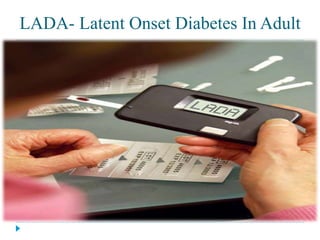
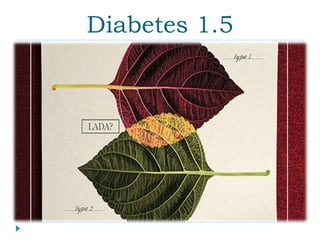
LADA- Latent Onset Diabetes In Adult
Introduction 
 Latent Autoimmune Diabetes in Adults (LADA) is a 
form of autoimmune (type 1 diabetes) which is 
diagnosed in individuals who are older than the 
usual age of onset of type 1 diabetes. 
 Often, patients with LADA are mistakenly thought to 
have type 2 diabetes, based on their age at the 
time of diagnosis. 
 Progress to insulin requirement within 6 years
Diabetes 1.5
History 
 1980s 
 San Raffaele Hospital 
 Milan (patient) 
 Stiff Mans Syndrome (SMS) 
 Type 1 DM 
 Anti GAD antibodies (Glutamic acid decarboxylase)
GAD 
 Glutamic acid decarboxylase 
 Present in cytoplasm of the human beta cells 
 Catalyses the Conversion of glutamic acid to GABA 
 GABA is involved in release of insulin from secretory 
granules
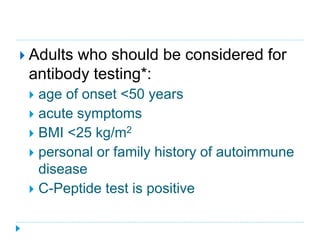
 Adults who should be considered for 
antibody testing*: 
 age of onset <50 years 
 acute symptoms 
 BMI <25 kg/m2 
 personal or family history of autoimmune 
disease 
 C-Peptide test is positive
Symptoms 
 Unusual thirst 
 Frequent urination 
 Weight loss despite an increase in appetite 
 Blurred vision 
 Nausea and vomiting 
 Extreme weakness and fatigue 
 Irritability and mood changes 
 Frequent bladder and skin infections that don't heal 
easily 
 High levels of sugar in the blood when tested 
 High levels of sugar in the urine when tested 
 Dry, itchy skin 
 Tingling or loss of feeling in the hands or feet
Diagnosis 
 C-peptide test (a measure of endogenous insulin) 
 If positive then…. 
 GAD antibody test 
 Islet cell antibodies (ICA) are also common 
 HDL to triglyceride ratio- it exceeds 4 then insulin 
resistance 
 If IR then no LADA
Rx for LADA 
 LADA often does not require insulin at the 
time of diagnosis and may be managed 
with diet and exercise 
 the avoidance of using metformin 
treatment 
 May require multiple daily Insulin 
injections(after 6 months)
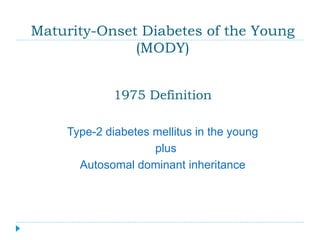
Maturity-Onset Diabetes of the Young 
(MODY) 
1975 Definition 
Type-2 diabetes mellitus in the young 
plus 
Autosomal dominant inheritance
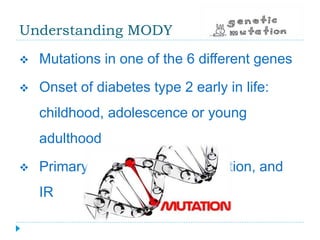
Understanding MODY 
 Mutations in one of the 6 different genes 
 Onset of diabetes type 2 early in life: 
childhood, adolescence or young 
adulthood 
 Primary defect in insulin secretion, and 
IR
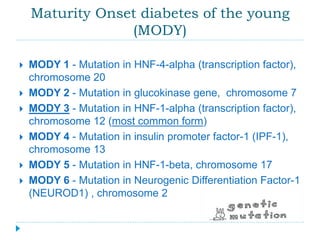
Maturity Onset diabetes of the young 
(MODY) 
 MODY 1 - Mutation in HNF-4-alpha (transcription factor), 
chromosome 20 
 MODY 2 - Mutation in glucokinase gene, chromosome 7 
 MODY 3 - Mutation in HNF-1-alpha (transcription factor), 
chromosome 12 (most common form) 
 MODY 4 - Mutation in insulin promoter factor-1 (IPF-1), 
chromosome 13 
 MODY 5 - Mutation in HNF-1-beta, chromosome 17 
 MODY 6 - Mutation in Neurogenic Differentiation Factor-1 
(NEUROD1) , chromosome 2
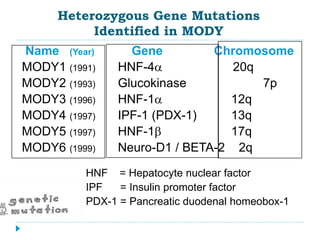
Heterozygous Gene Mutations 
Identified in MODY 
Name (Year) Gene Chromosome 
MODY1 (1991) HNF-4a 20q 
MODY2 (1993) Glucokinase 7p 
MODY3 (1996) HNF-1a 12q 
MODY4 (1997) IPF-1 (PDX-1) 13q 
MODY5 (1997) HNF-1b 17q 
MODY6 (1999) Neuro-D1 / BETA-2 2q 
HNF = Hepatocyte nuclear factor 
IPF = Insulin promoter factor 
PDX-1 = Pancreatic duodenal homeobox-1
MODY-Related Proteins 
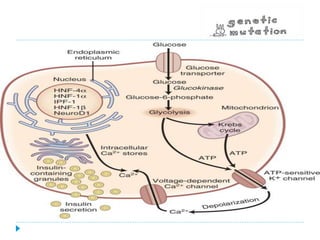
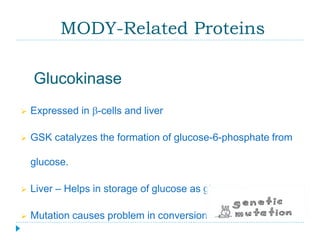
Glucokinase 
 Expressed in b-cells and liver 
 GSK catalyzes the formation of glucose-6-phosphate from 
glucose. 
 Liver – Helps in storage of glucose as glycogen 
 Mutation causes problem in conversion
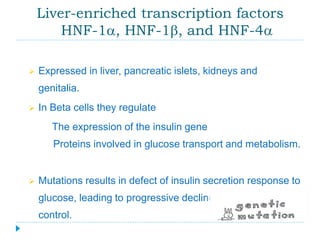
Liver-enriched transcription factors 
HNF-1a, HNF-1b, and HNF-4a 
 Expressed in liver, pancreatic islets, kidneys and 
genitalia. 
 In Beta cells they regulate 
The expression of the insulin gene 
Proteins involved in glucose transport and metabolism. 
 Mutations results in defect of insulin secretion response to 
glucose, leading to progressive decline in glycemic 
control.
Transcription factor IPF-1 
Rare 
Expressed in pancreatic islets 
Central role in development of pancreas. 
Mediates glucose-induced stimulation of 
insulin-gene transcription
Transcription factor Neuro-D1 
(BETA2) 
Rare 
Expressed in pancreatic islets 
Activates the transcription of the insulin 
gene 
Required for normal development of the 
pancreatic islets
Recognition at young age 
1.Mild, asymptomatic increase in blood glucose in 
a child, adolescent or young adult(<25 years) 
2. Prominent family history of diabetes in 2-3 
generations 
3. Usually not associated with obesity
When to suspect MODY 
 a “type 1″ diabetes patient who has negative blood 
testing for autoantibodies. 
 a “type 1″ diabetes patient who generates a significant 
amount of insulin for years beyond diagnosis (detectable 
blood levels of c-peptide, proinsulin, and/ or insulin) 
 a “type 2″ diabetes patient who is normal weight and 
shows no signs of insulin resistance. 
 a diabetes with family history of early onset diabetes for 
2-3 generations. 
 Diabetes paired with pancreatic insufficiency 
 Individual or family history of diabetes paired with 
developmental kidney disease or kidney cysts
Rx for MODY 
Rx depends on the involved gene and other factors 
 MODY 3 and 1 can be treated initially with 
sulfonylureas, prompts the body to produce 
insulin. 
Usually GCK-MODY requires no treatment at all. 
Other type of MODY Rx is unclear may require 
multiple daily Insulin injections.
Thank you…

Lada and mody

  • 2.
    LADA & MODY Presented By Sriloy Mohanty
  • 3.
    LADA- Latent OnsetDiabetes In Adult
  • 4.
    Introduction  LatentAutoimmune Diabetes in Adults (LADA) is a form of autoimmune (type 1 diabetes) which is diagnosed in individuals who are older than the usual age of onset of type 1 diabetes.  Often, patients with LADA are mistakenly thought to have type 2 diabetes, based on their age at the time of diagnosis.  Progress to insulin requirement within 6 years
  • 5.
  • 6.
    History  1980s  San Raffaele Hospital  Milan (patient)  Stiff Mans Syndrome (SMS)  Type 1 DM  Anti GAD antibodies (Glutamic acid decarboxylase)
  • 7.
    GAD  Glutamicacid decarboxylase  Present in cytoplasm of the human beta cells  Catalyses the Conversion of glutamic acid to GABA  GABA is involved in release of insulin from secretory granules
  • 8.
     Adults whoshould be considered for antibody testing*:  age of onset <50 years  acute symptoms  BMI <25 kg/m2  personal or family history of autoimmune disease  C-Peptide test is positive
  • 9.
    Symptoms  Unusualthirst  Frequent urination  Weight loss despite an increase in appetite  Blurred vision  Nausea and vomiting  Extreme weakness and fatigue  Irritability and mood changes  Frequent bladder and skin infections that don't heal easily  High levels of sugar in the blood when tested  High levels of sugar in the urine when tested  Dry, itchy skin  Tingling or loss of feeling in the hands or feet
  • 10.
    Diagnosis  C-peptidetest (a measure of endogenous insulin)  If positive then….  GAD antibody test  Islet cell antibodies (ICA) are also common  HDL to triglyceride ratio- it exceeds 4 then insulin resistance  If IR then no LADA
  • 11.
    Rx for LADA  LADA often does not require insulin at the time of diagnosis and may be managed with diet and exercise  the avoidance of using metformin treatment  May require multiple daily Insulin injections(after 6 months)
  • 14.
    Maturity-Onset Diabetes ofthe Young (MODY) 1975 Definition Type-2 diabetes mellitus in the young plus Autosomal dominant inheritance
  • 15.
    Understanding MODY Mutations in one of the 6 different genes  Onset of diabetes type 2 early in life: childhood, adolescence or young adulthood  Primary defect in insulin secretion, and IR
  • 16.
    Maturity Onset diabetesof the young (MODY)  MODY 1 - Mutation in HNF-4-alpha (transcription factor), chromosome 20  MODY 2 - Mutation in glucokinase gene, chromosome 7  MODY 3 - Mutation in HNF-1-alpha (transcription factor), chromosome 12 (most common form)  MODY 4 - Mutation in insulin promoter factor-1 (IPF-1), chromosome 13  MODY 5 - Mutation in HNF-1-beta, chromosome 17  MODY 6 - Mutation in Neurogenic Differentiation Factor-1 (NEUROD1) , chromosome 2
  • 17.
    Heterozygous Gene Mutations Identified in MODY Name (Year) Gene Chromosome MODY1 (1991) HNF-4a 20q MODY2 (1993) Glucokinase 7p MODY3 (1996) HNF-1a 12q MODY4 (1997) IPF-1 (PDX-1) 13q MODY5 (1997) HNF-1b 17q MODY6 (1999) Neuro-D1 / BETA-2 2q HNF = Hepatocyte nuclear factor IPF = Insulin promoter factor PDX-1 = Pancreatic duodenal homeobox-1
  • 19.
    MODY-Related Proteins Glucokinase  Expressed in b-cells and liver  GSK catalyzes the formation of glucose-6-phosphate from glucose.  Liver – Helps in storage of glucose as glycogen  Mutation causes problem in conversion
  • 20.
    Liver-enriched transcription factors HNF-1a, HNF-1b, and HNF-4a  Expressed in liver, pancreatic islets, kidneys and genitalia.  In Beta cells they regulate The expression of the insulin gene Proteins involved in glucose transport and metabolism.  Mutations results in defect of insulin secretion response to glucose, leading to progressive decline in glycemic control.
  • 21.
    Transcription factor IPF-1 Rare Expressed in pancreatic islets Central role in development of pancreas. Mediates glucose-induced stimulation of insulin-gene transcription
  • 22.
    Transcription factor Neuro-D1 (BETA2) Rare Expressed in pancreatic islets Activates the transcription of the insulin gene Required for normal development of the pancreatic islets
  • 23.
    Recognition at youngage 1.Mild, asymptomatic increase in blood glucose in a child, adolescent or young adult(<25 years) 2. Prominent family history of diabetes in 2-3 generations 3. Usually not associated with obesity
  • 24.
    When to suspectMODY  a “type 1″ diabetes patient who has negative blood testing for autoantibodies.  a “type 1″ diabetes patient who generates a significant amount of insulin for years beyond diagnosis (detectable blood levels of c-peptide, proinsulin, and/ or insulin)  a “type 2″ diabetes patient who is normal weight and shows no signs of insulin resistance.  a diabetes with family history of early onset diabetes for 2-3 generations.  Diabetes paired with pancreatic insufficiency  Individual or family history of diabetes paired with developmental kidney disease or kidney cysts
  • 25.
    Rx for MODY Rx depends on the involved gene and other factors  MODY 3 and 1 can be treated initially with sulfonylureas, prompts the body to produce insulin. Usually GCK-MODY requires no treatment at all. Other type of MODY Rx is unclear may require multiple daily Insulin injections.
  • 26.