Hypothalamus
Madanmohan and Jai Ganesh
Department of Physiology, MGMC & RI
Hypothalamus: introduction
• Below thalamus
• Forms lower lateral wall and floor of 3rd ventricle
• Each side:
preoptic, supraoptic, tuberal and mammillary
areas
• Many smaller nuclei, diverse functions.
Learning objectives
• Name the nuclei of hypothalamus.
• Name their afferent and efferent connections.
• Briefly describe the role of hypothalamus in regulation of:
1. autonomic nervous system and homeostasis
2. secretion of hormones of anterior pituitary
3. body temperature
4. food intake
5. water intake
• State the causes and consequences of disordered
hypothalamic function
Location of hypothalamus
Nuclei of hypothalamus
Hypothalamus: functions
1. Cyclic phenomena, biological clock:
circadian (24 h) rhythm, e.g. sleep-wake cycle.
2. Autonomic nervous system, visceral function.
3. Endocrine: anterior pituitary – releasing Hs
posterior pituitary hormones
4. Emotional, reproductive and maternal behavior.
5. Regulation of body temperature.
6. Regulation of food and water intake.
Circadian (24 h) rhythms
Suprachiasmatic nucleus:
endogenous biological clock
Sleep-wake cycle.
Ventrolateral preoptic area: facilitates sleep
Posterior hypothalamus: waking centre
Autonomic control
Head ganglion
Anterior hypothalamus: parasymp. responses
Posterior hypothalamus: symp. responses
Regulation of visceral functions: homeostasis
Endocrine function
Ant. pituitary releasing & inhibiting hormones:
CRH
GHRH
GHIH
TRH
PRH
PIH
GnRH
Post. Pituitary: ADH, oxytocin
Motivation and emotional behaviour
Principal outlet for effects of limbic system
Fear and rage
Reward and punishment areas
Regulation of body temperature
Heat gain Heat loss
Anterior hypothalamus
(exposure to heat)
Posterior hypothalamus
(exposure to cold)
Cutaneous vasodilatation
Sweating, hyperventilation
heat production
Cutaneous vasoconstriction
Release of CAs, TSH
activity, hunger
Shivering
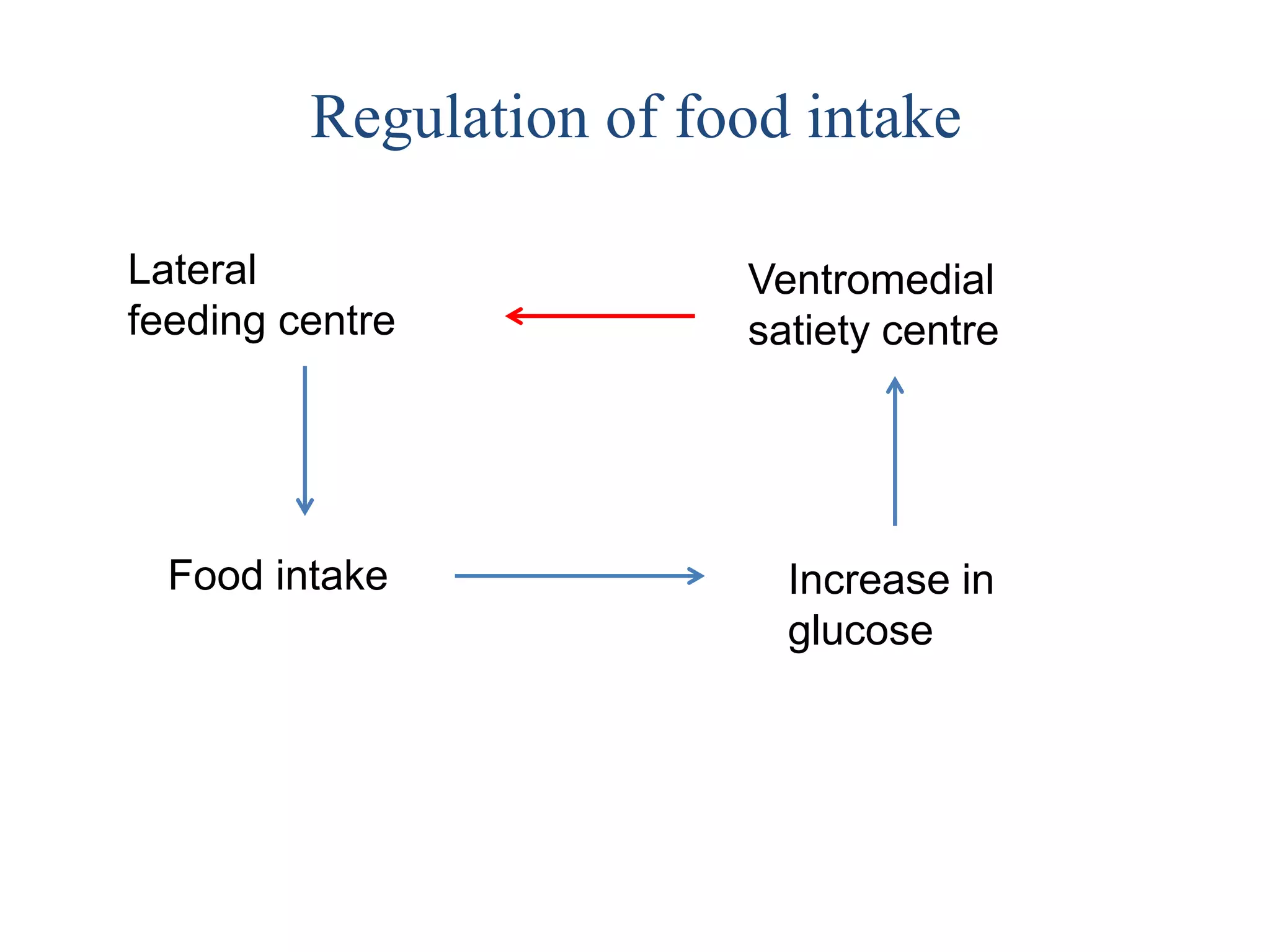
Regulation of food intake
Lateral
feeding centre
Food intake
Ventromedial
satiety centre
Increase in
glucose
Regulation of water balance
Hyperosmolarity Hypovolemia
Angiotensin II
Subfornical organ
Osmoreceptors
(supraoptic)
Thirst + ADH
Increased water intake Decreased urinary volume
Osmolarity restored Blood volume restored
Regulation of water balance
Preoptic area
Disorders/syndromes
Etiology: infection, vascular, tumors, compression.
• Narcolepsy: sleep disorder
• Endocrine: diabetes insipidus, sexual disorders.
• Lesion of VM satiety centre: obesity.
• Lesion of lateral feeding centre: emaciation.
• Temperature regulation.
Hypothalamus: summary
• Small area, many nuclei, diverse functions.
• Regulates cyclic phenomena: sleep-wake cycle.
• Controls autonomic functions.
• Neuro-endocrine integration.
• Regulates food and water intake.
• Regulates body temperature.
• Regulation of many functions: homeostasis.
• Disordered function:
infection, tumors, compression, vascular

Hypothalamus 15 apr 2016

  • 1.
    Hypothalamus Madanmohan and JaiGanesh Department of Physiology, MGMC & RI
  • 2.
    Hypothalamus: introduction • Belowthalamus • Forms lower lateral wall and floor of 3rd ventricle • Each side: preoptic, supraoptic, tuberal and mammillary areas • Many smaller nuclei, diverse functions.
  • 3.
    Learning objectives • Namethe nuclei of hypothalamus. • Name their afferent and efferent connections. • Briefly describe the role of hypothalamus in regulation of: 1. autonomic nervous system and homeostasis 2. secretion of hormones of anterior pituitary 3. body temperature 4. food intake 5. water intake • State the causes and consequences of disordered hypothalamic function
  • 5.
  • 6.
  • 8.
    Hypothalamus: functions 1. Cyclicphenomena, biological clock: circadian (24 h) rhythm, e.g. sleep-wake cycle. 2. Autonomic nervous system, visceral function. 3. Endocrine: anterior pituitary – releasing Hs posterior pituitary hormones 4. Emotional, reproductive and maternal behavior. 5. Regulation of body temperature. 6. Regulation of food and water intake.
  • 9.
    Circadian (24 h)rhythms Suprachiasmatic nucleus: endogenous biological clock Sleep-wake cycle. Ventrolateral preoptic area: facilitates sleep Posterior hypothalamus: waking centre
  • 10.
    Autonomic control Head ganglion Anteriorhypothalamus: parasymp. responses Posterior hypothalamus: symp. responses Regulation of visceral functions: homeostasis
  • 11.
    Endocrine function Ant. pituitaryreleasing & inhibiting hormones: CRH GHRH GHIH TRH PRH PIH GnRH Post. Pituitary: ADH, oxytocin
  • 12.
    Motivation and emotionalbehaviour Principal outlet for effects of limbic system Fear and rage Reward and punishment areas
  • 13.
    Regulation of bodytemperature Heat gain Heat loss Anterior hypothalamus (exposure to heat) Posterior hypothalamus (exposure to cold) Cutaneous vasodilatation Sweating, hyperventilation heat production Cutaneous vasoconstriction Release of CAs, TSH activity, hunger Shivering
  • 14.
    Regulation of foodintake Lateral feeding centre Food intake Ventromedial satiety centre Increase in glucose
  • 15.
  • 16.
    Hyperosmolarity Hypovolemia Angiotensin II Subfornicalorgan Osmoreceptors (supraoptic) Thirst + ADH Increased water intake Decreased urinary volume Osmolarity restored Blood volume restored Regulation of water balance Preoptic area
  • 17.
    Disorders/syndromes Etiology: infection, vascular,tumors, compression. • Narcolepsy: sleep disorder • Endocrine: diabetes insipidus, sexual disorders. • Lesion of VM satiety centre: obesity. • Lesion of lateral feeding centre: emaciation. • Temperature regulation.
  • 18.
    Hypothalamus: summary • Smallarea, many nuclei, diverse functions. • Regulates cyclic phenomena: sleep-wake cycle. • Controls autonomic functions. • Neuro-endocrine integration. • Regulates food and water intake. • Regulates body temperature. • Regulation of many functions: homeostasis. • Disordered function: infection, tumors, compression, vascular