DISCREPANCY IN
          UTERINE SIZE
An understanding of the issues involved when a
uterus doesn’t correspond to its gestational age
By

Associate Professor Dr
      Hanifullah Khan
Objectives


 To understand the       To understand the       The important points to
  definitions involved     implications of this
                                situation           consider
Discrepancy – what is
it?
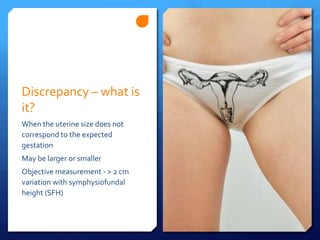
When the uterine size does not
correspond to the expected
gestation
May be larger or smaller
Objective measurement - > 2 cm
variation with symphysiofundal
height (SFH)
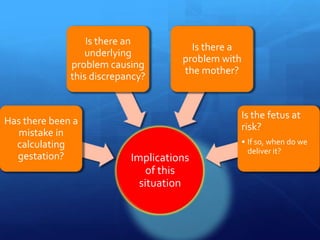
Is there an
                                       Is there a
                 underlying
                                     problem with
              problem causing
                                     the mother?
              this discrepancy?


                                                Is the fetus at
Has there been a
                                                risk?
  mistake in
  calculating                                   • If so, when do we
                                                  deliver it?
  gestation?               Implications
                               of this
                             situation
Points to consider
 The patient has been found to
  have a gestation which does
  not correspond to
  calculations.
 This may be a feature of an
  underlying problem
 The problem may be related
  to the mother, fetus or
  placenta
 It is our job to determine the
  underlying cause of this
  problem
In all cases, always begin by
Dates                                                confirming the dates


Be absolutely positive
   The mother remembers the exact LMP
   (1st day)
   The periods have been regular
   The onset of pregnancy symptoms &
   quickening correspond to the dates
   That an early pregnancy ultrasound (if
   done), confirmed the dates
   Subsequent antenatal check ups have
   noted previous corresponding growth of
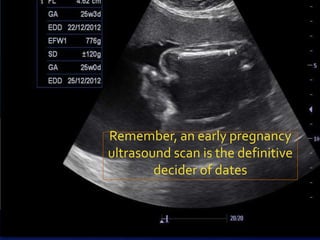
Remember, an early pregnancy
ultrasound scan is the definitive
        decider of dates
IUGR

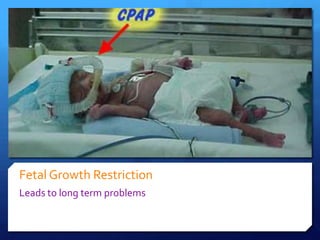
 Intrauterine growth restriction or Fetal growth restriction

 Leads to uterus < dates
    A manifestation of underlying problem
    Maternal, fetal or placental
    Most commonly caused by placental insufficiency (unknown
      cause), hypertensive disease, maternal disease, fetal anomaly

 Most non-fetal causes lead to asymmetrical FGR (the so-
   called head-sparing effect)
Fetal Growth Restriction
Leads to long term problems
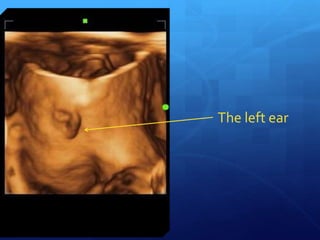
The left ear
Big baby
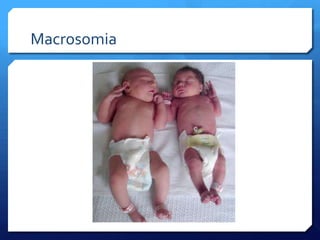
• If fetal macrosomia is the
  cause in an uterus >
  dates, it is most often a
  consequence of
  gestational diabetes
• GDM can also lead to
  polyhydramnios on its
  own
• It is mandatory to look
  hard for GDM in such
  cases
Macrosomia
Fetal anomalies

 Any discrepancy in uterine size must lead to an extensive
  search for fetal anomalies
Multiples

 Any large uterus may be caused by more than one passenger
  in it

 See for yourself
The diagnosis of SGA

 A constitutionally small fetus is a diagnosis of exclusion
    This is the last diagnosis in your list of differentials

 Always rule out disease before you can say its normal

 These fetuses display linear growth despite being small

 Usually, the mother is also small (this is logical)
Summary
Discrepancy in uterine size

 This denotes a uterine size not corresponding to gestational
   age

 It may be a sign of an underlying problem

 This problem could be of maternal, fetal or placental origin

 One common cause is wrong dates

 Rule out disease before diagnosing a constitutionally small
   fetus
THE END
 Thank You Very Much

Discrepancy in Uterine Size

  • 1.
    DISCREPANCY IN UTERINE SIZE An understanding of the issues involved when a uterus doesn’t correspond to its gestational age
  • 2.
  • 3.
    Objectives  To understandthe  To understand the  The important points to definitions involved implications of this situation consider
  • 4.
    Discrepancy – whatis it? When the uterine size does not correspond to the expected gestation May be larger or smaller Objective measurement - > 2 cm variation with symphysiofundal height (SFH)
  • 5.
    Is there an Is there a underlying problem with problem causing the mother? this discrepancy? Is the fetus at Has there been a risk? mistake in calculating • If so, when do we deliver it? gestation? Implications of this situation
  • 6.
    Points to consider The patient has been found to have a gestation which does not correspond to calculations.  This may be a feature of an underlying problem  The problem may be related to the mother, fetus or placenta  It is our job to determine the underlying cause of this problem
  • 7.
    In all cases,always begin by Dates confirming the dates Be absolutely positive The mother remembers the exact LMP (1st day) The periods have been regular The onset of pregnancy symptoms & quickening correspond to the dates That an early pregnancy ultrasound (if done), confirmed the dates Subsequent antenatal check ups have noted previous corresponding growth of
  • 8.
    Remember, an earlypregnancy ultrasound scan is the definitive decider of dates
  • 9.
    IUGR  Intrauterine growthrestriction or Fetal growth restriction  Leads to uterus < dates  A manifestation of underlying problem  Maternal, fetal or placental  Most commonly caused by placental insufficiency (unknown cause), hypertensive disease, maternal disease, fetal anomaly  Most non-fetal causes lead to asymmetrical FGR (the so- called head-sparing effect)
  • 10.
    Fetal Growth Restriction Leadsto long term problems
  • 11.
  • 12.
    Big baby • Iffetal macrosomia is the cause in an uterus > dates, it is most often a consequence of gestational diabetes • GDM can also lead to polyhydramnios on its own • It is mandatory to look hard for GDM in such cases
  • 13.
  • 14.
    Fetal anomalies  Anydiscrepancy in uterine size must lead to an extensive search for fetal anomalies
  • 15.
    Multiples  Any largeuterus may be caused by more than one passenger in it  See for yourself
  • 16.
    The diagnosis ofSGA  A constitutionally small fetus is a diagnosis of exclusion  This is the last diagnosis in your list of differentials  Always rule out disease before you can say its normal  These fetuses display linear growth despite being small  Usually, the mother is also small (this is logical)
  • 17.
  • 18.
    Discrepancy in uterinesize  This denotes a uterine size not corresponding to gestational age  It may be a sign of an underlying problem  This problem could be of maternal, fetal or placental origin  One common cause is wrong dates  Rule out disease before diagnosing a constitutionally small fetus
  • 19.
    THE END  ThankYou Very Much