Diabetes in Pregnancy
Prof. Yasmin Raashid
MBBS, MCPS, FRCOG
King Edward Medical College Lahore
Diabetes in Pregnancy
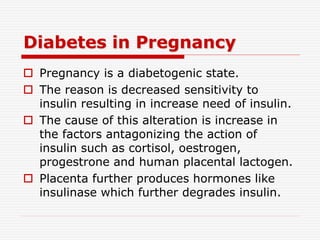
 Pregnancy is a diabetogenic state.
 The reason is decreased sensitivity to
insulin resulting in increase need of insulin.
 The cause of this alteration is increase in
the factors antagonizing the action of
insulin such as cortisol, oestrogen,
progestrone and human placental lactogen.
 Placenta further produces hormones like
insulinase which further degrades insulin.
Pathophysiology
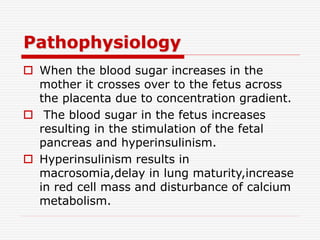
 When the blood sugar increases in the
mother it crosses over to the fetus across
the placenta due to concentration gradient.
 The blood sugar in the fetus increases
resulting in the stimulation of the fetal
pancreas and hyperinsulinism.
 Hyperinsulinism results in
macrosomia,delay in lung maturity,increase
in red cell mass and disturbance of calcium
metabolism.
Diagnosis of Diabetes in
Pregnancy
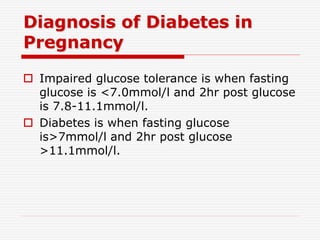
 Impaired glucose tolerance is when fasting
glucose is <7.0mmol/l and 2hr post glucose
is 7.8-11.1mmol/l.
 Diabetes is when fasting glucose
is>7mmol/l and 2hr post glucose
>11.1mmol/l.
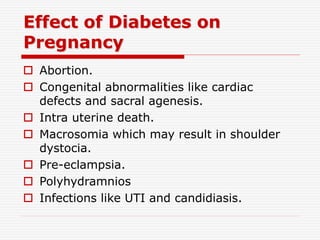
Effect of Diabetes on
Pregnancy
 Abortion.
 Congenital abnormalities like cardiac
defects and sacral agenesis.
 Intra uterine death.
 Macrosomia which may result in shoulder
dystocia.
 Pre-eclampsia.
 Polyhydramnios
 Infections like UTI and candidiasis.
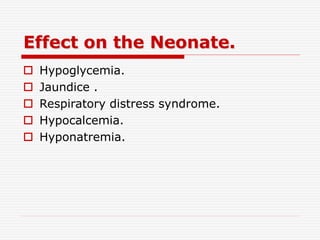
Effect on the Neonate.
 Hypoglycemia.
 Jaundice .
 Respiratory distress syndrome.
 Hypocalcemia.
 Hyponatremia.
Management of Diabetic
Pregnancy
 Management of diabetic pregnancy depends
on whether the patient is a known diabetic
or is diagnosed as gestational diabetic in
pregnancy for the first time.
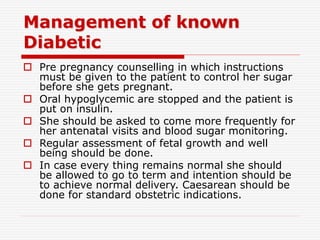
Management of known
Diabetic
 Pre pregnancy counselling in which instructions
must be given to the patient to control her sugar
before she gets pregnant.
 Oral hypoglycemic are stopped and the patient is
put on insulin.
 She should be asked to come more frequently for
her antenatal visits and blood sugar monitoring.
 Regular assessment of fetal growth and well
being should be done.
 In case every thing remains normal she should
be allowed to go to term and intention should be
to achieve normal delivery. Caesarean should be
done for standard obstetric indications.
Management of Gestational
Diabetic
 The most important part is diagnosis.
Always suspect diabetes if the patient gives
history of
 Previous unexplained intrauterine death.
 Previous congenital abnormality.
 Previous baby of 4.5kg or more.
 Diabetes in first degree relative.
Diagnosis of Gestational
Diabetic
 Always suspect diabetes if on examination
 Patient weighs more than 90kg.
 The fetus is macrosomic or large for dates.
 There is polyhydramnios.
 Glycosuria on two or more occasions on
routine testing particularly fasting
glycosuria.
 Glucose tolerance test is the best way to
diagnose gestational diabetes.
Management of Gestational
Diabetic
 First line of action is
 Diet and exercise. In case the blood sugar
is not controlled the patient must be
admitted into the hospital and blood sugar
should be controlled on insulin.
 Once her blood sugar is controlled on a
regimen then she can be given instructions
how to inject herself and sent home.
 She must come more frequently for
antenatal.
 Ultrasonography is an excellent module to
monitor sugar control.
Labour and Delivery
 Delivery at term is possible if sugar is
controlled.
 The intention should be to achieve a normal
delivery.
 Following delivery the insulin requirement
falls. Pre pregnancy dose should be started
after one day in known diabetics. In
majority of gestational diabetics no
medicine is required to control blood sugar,
it reverts back to normal, however they are
considered as potential diabetic.
Thank you

Diabetes in pregnancy.ppt

  • 1.
    Diabetes in Pregnancy Prof.Yasmin Raashid MBBS, MCPS, FRCOG King Edward Medical College Lahore
  • 2.
    Diabetes in Pregnancy Pregnancy is a diabetogenic state.  The reason is decreased sensitivity to insulin resulting in increase need of insulin.  The cause of this alteration is increase in the factors antagonizing the action of insulin such as cortisol, oestrogen, progestrone and human placental lactogen.  Placenta further produces hormones like insulinase which further degrades insulin.
  • 3.
    Pathophysiology  When theblood sugar increases in the mother it crosses over to the fetus across the placenta due to concentration gradient.  The blood sugar in the fetus increases resulting in the stimulation of the fetal pancreas and hyperinsulinism.  Hyperinsulinism results in macrosomia,delay in lung maturity,increase in red cell mass and disturbance of calcium metabolism.
  • 4.
    Diagnosis of Diabetesin Pregnancy  Impaired glucose tolerance is when fasting glucose is <7.0mmol/l and 2hr post glucose is 7.8-11.1mmol/l.  Diabetes is when fasting glucose is>7mmol/l and 2hr post glucose >11.1mmol/l.
  • 5.
    Effect of Diabeteson Pregnancy  Abortion.  Congenital abnormalities like cardiac defects and sacral agenesis.  Intra uterine death.  Macrosomia which may result in shoulder dystocia.  Pre-eclampsia.  Polyhydramnios  Infections like UTI and candidiasis.
  • 6.
    Effect on theNeonate.  Hypoglycemia.  Jaundice .  Respiratory distress syndrome.  Hypocalcemia.  Hyponatremia.
  • 7.
    Management of Diabetic Pregnancy Management of diabetic pregnancy depends on whether the patient is a known diabetic or is diagnosed as gestational diabetic in pregnancy for the first time.
  • 8.
    Management of known Diabetic Pre pregnancy counselling in which instructions must be given to the patient to control her sugar before she gets pregnant.  Oral hypoglycemic are stopped and the patient is put on insulin.  She should be asked to come more frequently for her antenatal visits and blood sugar monitoring.  Regular assessment of fetal growth and well being should be done.  In case every thing remains normal she should be allowed to go to term and intention should be to achieve normal delivery. Caesarean should be done for standard obstetric indications.
  • 9.
    Management of Gestational Diabetic The most important part is diagnosis. Always suspect diabetes if the patient gives history of  Previous unexplained intrauterine death.  Previous congenital abnormality.  Previous baby of 4.5kg or more.  Diabetes in first degree relative.
  • 10.
    Diagnosis of Gestational Diabetic Always suspect diabetes if on examination  Patient weighs more than 90kg.  The fetus is macrosomic or large for dates.  There is polyhydramnios.  Glycosuria on two or more occasions on routine testing particularly fasting glycosuria.  Glucose tolerance test is the best way to diagnose gestational diabetes.
  • 11.
    Management of Gestational Diabetic First line of action is  Diet and exercise. In case the blood sugar is not controlled the patient must be admitted into the hospital and blood sugar should be controlled on insulin.  Once her blood sugar is controlled on a regimen then she can be given instructions how to inject herself and sent home.  She must come more frequently for antenatal.  Ultrasonography is an excellent module to monitor sugar control.
  • 12.
    Labour and Delivery Delivery at term is possible if sugar is controlled.  The intention should be to achieve a normal delivery.  Following delivery the insulin requirement falls. Pre pregnancy dose should be started after one day in known diabetics. In majority of gestational diabetics no medicine is required to control blood sugar, it reverts back to normal, however they are considered as potential diabetic.
  • 13.