Disaster Management in School Prof. Suresh G. Isave, Tilak College of Education, Pune-30 INDIA
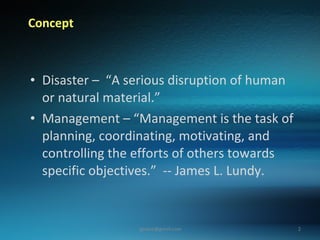
Concept  Disaster –  “A serious disruption of human or natural material.” Management – “Management is the task of planning, coordinating, motivating, and controlling the efforts of others towards specific objectives.”  -- James L. Lundy.
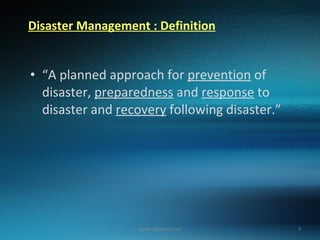
Disaster Management : Definition “A planned approach for  prevention  of disaster,  preparedness  and  response  to disaster and  recovery  following disaster.”
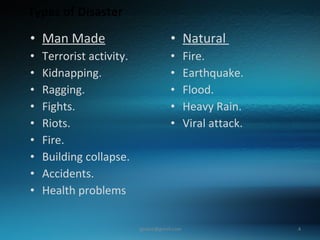
Types of Disaster Man Made Terrorist activity. Kidnapping. Ragging. Fights. Riots. Fire. Building collapse. Accidents. Health problems Natural  Fire. Earthquake. Flood. Heavy Rain. Viral attack.
Is it a new concept  ? Praying for God. Praying for natural powers like Fire, Rain, Lightning, Water, Wind etc. Society. Kingdom. Emperors like Napoleon, Akabar, Shivaji etc. Constitution, Government.
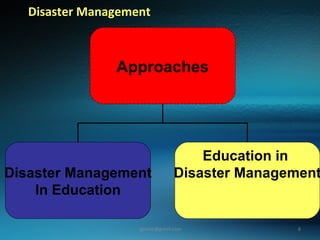
Disaster Management Approaches Disaster Management In Education Education in  Disaster Management
DISASTER MANAGEMENT IN EDUCATIONAL INSTITUTION
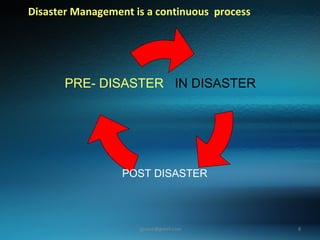
Disaster Management is a continuous  process IN DISASTER POST DISASTER PRE- DISASTER
PRE – DISASTER   Prevention. Risk assessment. Possibilities.
Risk Assessment Factors Geographical. Social. Physical. Human.
Geographical Factors Climate,  Landform,  Soil,  Vegetation,  Animal life etc.
Social Factors Race, Religion,  Caste,  Education,  Political, Tourism, Traffic, Industry
Physical Factors Building – protection wall, gates, parking, system, base, tiling, height, stories, staircase, air-light-water system, electric wiring, fire alarm system etc. Inflammable items – gas, chemicals, generators, vehicles etc Classrooms – size, benches, door, windows, fan, switches, bulb/tubes, speakers.
Physical Factors Risk rooms – canteen, mess, kitchen, storeroom, labs, library, main fuse room. Water – clean, maintained, emergency storage, buckets, pipes etc. Ground – size, soil, clean, entries, exits, parking.
Human Factors Teachers, students, parents, administrators, management, government etc. Alert and trained. Content of Training – knowledge of disaster-possibilities-institution's  condition, solutions etc. Drills.
Preparedness   Establishment of disaster management committee. Members – management, teachers, students representatives, parents, support staff, special member like doctors, advocates, media, police, psychologists etc.
Preparedness I.D.M.P. (institutional disaster management plan)  Orientations. List of possible disasters. Prevention measures. Division of duties and responsibilities. Possible actions. Documentation. Serious Rehearsals.
In The Disaster   Activation of plan of action decided. Take maximum care of students. Coordination. Communication. Documentation. First aids. Evacuation.
Post Disaster Management Recovery. Proper; on time communication. Health – physical, psychological. Alternatives. Research. Documentation.
Reasons of Disasters
Natural Reasons  Climate. Landslide. Flood. Fire. Earthquake etc.
Human Reasons Lack of scientific knowledge and attitude. Carelessness. Ignorance. Lack of planning. Administrative problems. Economical. Lack of training.
Possible Occasions Assemblies. Sports. Gathering. Excursion. Laboratory. Cooking. Social disorder. Extreme climatic conditions. Day celebrations. Participation in Social activities.
Institution’s Role in Disaster Management in Society
Pre-Disaster Situation Training of people. Awareness programs. Street plays, dramas, posters, runs etc. Publications. Researches. Active in social gatherings.
In Disaster and Post Disaster Educational help. Be an active member of a society. Play proper role on proper time. Give moral support. Provide material / economical / physical support. Help out in research and documentation.
TEACHER’S QUALITIES  Dedication. Determination. Scientific knowledge and attitude. Decision making. Cooperation. Matured and balanced. Leadership. Research and documentation.
Thanks !

Disaster Management

  • 1.
    Disaster Management inSchool Prof. Suresh G. Isave, Tilak College of Education, Pune-30 INDIA
  • 2.
    Concept Disaster– “A serious disruption of human or natural material.” Management – “Management is the task of planning, coordinating, motivating, and controlling the efforts of others towards specific objectives.” -- James L. Lundy.
  • 3.
    Disaster Management :Definition “A planned approach for prevention of disaster, preparedness and response to disaster and recovery following disaster.”
  • 4.
    Types of DisasterMan Made Terrorist activity. Kidnapping. Ragging. Fights. Riots. Fire. Building collapse. Accidents. Health problems Natural Fire. Earthquake. Flood. Heavy Rain. Viral attack.
  • 5.
    Is it anew concept ? Praying for God. Praying for natural powers like Fire, Rain, Lightning, Water, Wind etc. Society. Kingdom. Emperors like Napoleon, Akabar, Shivaji etc. Constitution, Government.
  • 6.
    Disaster Management ApproachesDisaster Management In Education Education in Disaster Management
  • 7.
    DISASTER MANAGEMENT INEDUCATIONAL INSTITUTION
  • 8.
    Disaster Management isa continuous process IN DISASTER POST DISASTER PRE- DISASTER
  • 9.
    PRE – DISASTER Prevention. Risk assessment. Possibilities.
  • 10.
    Risk Assessment FactorsGeographical. Social. Physical. Human.
  • 11.
    Geographical Factors Climate, Landform, Soil, Vegetation, Animal life etc.
  • 12.
    Social Factors Race,Religion, Caste, Education, Political, Tourism, Traffic, Industry
  • 13.
    Physical Factors Building– protection wall, gates, parking, system, base, tiling, height, stories, staircase, air-light-water system, electric wiring, fire alarm system etc. Inflammable items – gas, chemicals, generators, vehicles etc Classrooms – size, benches, door, windows, fan, switches, bulb/tubes, speakers.
  • 14.
    Physical Factors Riskrooms – canteen, mess, kitchen, storeroom, labs, library, main fuse room. Water – clean, maintained, emergency storage, buckets, pipes etc. Ground – size, soil, clean, entries, exits, parking.
  • 15.
    Human Factors Teachers,students, parents, administrators, management, government etc. Alert and trained. Content of Training – knowledge of disaster-possibilities-institution's condition, solutions etc. Drills.
  • 16.
    Preparedness Establishment of disaster management committee. Members – management, teachers, students representatives, parents, support staff, special member like doctors, advocates, media, police, psychologists etc.
  • 17.
    Preparedness I.D.M.P. (institutionaldisaster management plan) Orientations. List of possible disasters. Prevention measures. Division of duties and responsibilities. Possible actions. Documentation. Serious Rehearsals.
  • 18.
    In The Disaster Activation of plan of action decided. Take maximum care of students. Coordination. Communication. Documentation. First aids. Evacuation.
  • 19.
    Post Disaster ManagementRecovery. Proper; on time communication. Health – physical, psychological. Alternatives. Research. Documentation.
  • 20.
  • 21.
    Natural Reasons Climate. Landslide. Flood. Fire. Earthquake etc.
  • 22.
    Human Reasons Lackof scientific knowledge and attitude. Carelessness. Ignorance. Lack of planning. Administrative problems. Economical. Lack of training.
  • 23.
    Possible Occasions Assemblies.Sports. Gathering. Excursion. Laboratory. Cooking. Social disorder. Extreme climatic conditions. Day celebrations. Participation in Social activities.
  • 24.
    Institution’s Role inDisaster Management in Society
  • 25.
    Pre-Disaster Situation Trainingof people. Awareness programs. Street plays, dramas, posters, runs etc. Publications. Researches. Active in social gatherings.
  • 26.
    In Disaster andPost Disaster Educational help. Be an active member of a society. Play proper role on proper time. Give moral support. Provide material / economical / physical support. Help out in research and documentation.
  • 27.
    TEACHER’S QUALITIES Dedication. Determination. Scientific knowledge and attitude. Decision making. Cooperation. Matured and balanced. Leadership. Research and documentation.
  • 28.