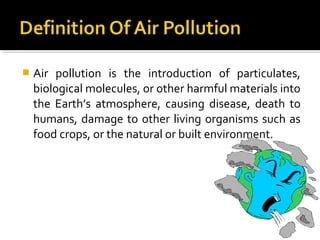
 Air pollution is the introduction of particulates,
biological molecules, or other harmful materials into
the Earth’s atmosphere, causing disease, death to
humans, damage to other living organisms such as
food crops, or the natural or built environment.
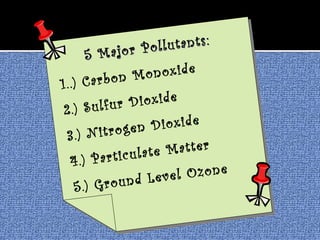
5 Major Pollutants:
5 Major Pollutants:
1..) Carbon Monoxide
2.) Sulfur Dioxide
3.) Nitrogen Dioxide
4.) Particulate Matter
5.) Ground Level Ozone
5 Major Pollutants:
5 Major Pollutants:
1..) Carbon Monoxide
2.) Sulfur Dioxide
3.) Nitrogen Dioxide
4.) Particulate Matter
5.) Ground Level Ozone
 Carbon monoxide is a colorless, odorless, toxic yet
non-irritating gas.
 It is a product by incomplete combustion of fuel
such as natural gas, coal or wood.
 present in car exhaust.
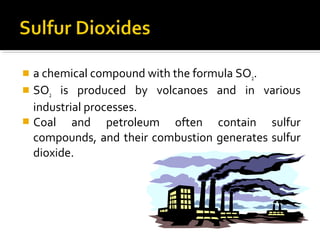
 a chemical compound with the formula SO2.
 SO2 is produced by volcanoes and in various
industrial processes.
 Coal and petroleum often contain sulfur
compounds, and their combustion generates sulfur
dioxide.
 are expelled from high
temperature combustion,
and are also produced during
thunderstorms by electric
discharge.
• present in car exhaust and
power plants;
• affects lungs and causes
wheezing; increases chance
of respiratory infection.
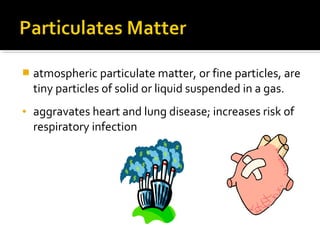
 atmospheric particulate matter, or fine particles, are
tiny particles of solid or liquid suspended in a gas.
• aggravates heart and lung disease; increases risk of
respiratory infection
 is a key constituent of the troposphere.
 It is also an important constituent of
certain regions of the stratosphere
commonly known as the Ozone layer.
 irritate respiratory system and asthma;
reduces lung function by inflaming and
damaging lining of lungs.
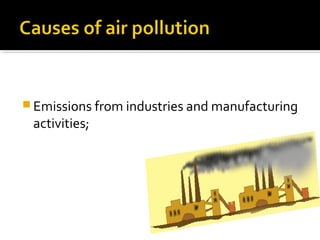
 Emissions from industries and manufacturing
activities;
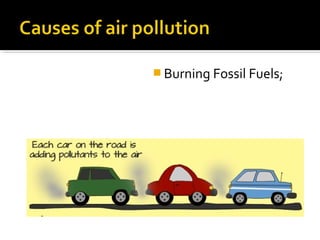
 Burning Fossil Fuels;
 Household and Farming Chemicals
The Below effect of carbon dioxide is termed as
“Green house effect”
 The excess concentration of carbon dioxide
increases the heat of atmosphere;
 Carbon dioxide is transparent for solar radiation, it
helps ultraviolet and Infra red radiations to reach on
the earth.
 Carbon dioxide is opaque for the thermal radiation
and therefore, absorbs the heat of the earth. Hence
the temperature of earth is increasing.
 Global warming occurs due to the “Green
house effect”.
 The cooler parts of the world like north pole
& south pole get melted day by day.
 Because of this, the lower parts of the world
go under water.
 Due to the increase amount of carbon dioxide at the
atmosphere, the ozone layer becoming thin day by
day.
 If the ozone layer get thin continuously, the harmful
elements from the sun will harm us.
 Like: Asthma, Bronchitis, Heart attack & other skin
diseases.
 Increased amounts of fine particulate matter in the
air do contribute to heart and lung problems
including asthma and bronchitis.
 Acid rain can damage buildings, historic
monuments, and statues, especially those made of
rocks, such as limestone and marble, that contain
large amounts of calcium carbonate.
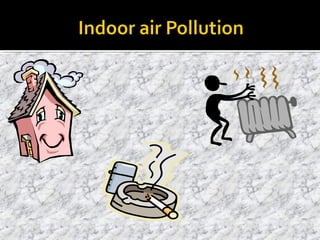
 The most dangerous indoor air pollution is
smog from household chores, smoking.
 Even if you are not a smoker, secondhand
smoke can cause many of the same health
problems as directly inhaling from cigarettes
- things like lung cancer, emphysema,
asthma and heart disease.
 Save energy around the
house. Switch off lights,
fan, heat, etc. when you
leave the room.
 Ride your bike & less use of
cars.
 Learn more; stay up
to date;
 Join a group to stop
pollution;
 Ride The School Bus;
 Tell your friends and
family about pollution;
 Make sure your parents
get pollution checks on
their cars
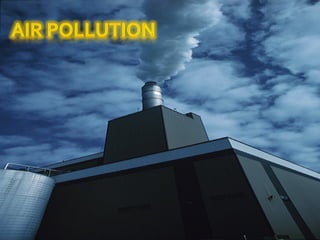
Air pollution

Air pollution

  • 2.
     Air pollutionis the introduction of particulates, biological molecules, or other harmful materials into the Earth’s atmosphere, causing disease, death to humans, damage to other living organisms such as food crops, or the natural or built environment.
  • 3.
    5 Major Pollutants: 5Major Pollutants: 1..) Carbon Monoxide 2.) Sulfur Dioxide 3.) Nitrogen Dioxide 4.) Particulate Matter 5.) Ground Level Ozone 5 Major Pollutants: 5 Major Pollutants: 1..) Carbon Monoxide 2.) Sulfur Dioxide 3.) Nitrogen Dioxide 4.) Particulate Matter 5.) Ground Level Ozone
  • 4.
     Carbon monoxideis a colorless, odorless, toxic yet non-irritating gas.  It is a product by incomplete combustion of fuel such as natural gas, coal or wood.  present in car exhaust.
  • 5.
     a chemicalcompound with the formula SO2.  SO2 is produced by volcanoes and in various industrial processes.  Coal and petroleum often contain sulfur compounds, and their combustion generates sulfur dioxide.
  • 6.
     are expelledfrom high temperature combustion, and are also produced during thunderstorms by electric discharge. • present in car exhaust and power plants; • affects lungs and causes wheezing; increases chance of respiratory infection.
  • 7.
     atmospheric particulatematter, or fine particles, are tiny particles of solid or liquid suspended in a gas. • aggravates heart and lung disease; increases risk of respiratory infection
  • 8.
     is akey constituent of the troposphere.  It is also an important constituent of certain regions of the stratosphere commonly known as the Ozone layer.  irritate respiratory system and asthma; reduces lung function by inflaming and damaging lining of lungs.
  • 9.
     Emissions fromindustries and manufacturing activities;
  • 10.
  • 11.
     Household andFarming Chemicals
  • 13.
    The Below effectof carbon dioxide is termed as “Green house effect”  The excess concentration of carbon dioxide increases the heat of atmosphere;  Carbon dioxide is transparent for solar radiation, it helps ultraviolet and Infra red radiations to reach on the earth.  Carbon dioxide is opaque for the thermal radiation and therefore, absorbs the heat of the earth. Hence the temperature of earth is increasing.
  • 15.
     Global warmingoccurs due to the “Green house effect”.  The cooler parts of the world like north pole & south pole get melted day by day.  Because of this, the lower parts of the world go under water.
  • 17.
     Due tothe increase amount of carbon dioxide at the atmosphere, the ozone layer becoming thin day by day.  If the ozone layer get thin continuously, the harmful elements from the sun will harm us.  Like: Asthma, Bronchitis, Heart attack & other skin diseases.
  • 19.
     Increased amountsof fine particulate matter in the air do contribute to heart and lung problems including asthma and bronchitis.  Acid rain can damage buildings, historic monuments, and statues, especially those made of rocks, such as limestone and marble, that contain large amounts of calcium carbonate.
  • 21.
     The mostdangerous indoor air pollution is smog from household chores, smoking.  Even if you are not a smoker, secondhand smoke can cause many of the same health problems as directly inhaling from cigarettes - things like lung cancer, emphysema, asthma and heart disease.
  • 22.
     Save energyaround the house. Switch off lights, fan, heat, etc. when you leave the room.  Ride your bike & less use of cars.
  • 23.
     Learn more;stay up to date;  Join a group to stop pollution;  Ride The School Bus;
  • 24.
     Tell yourfriends and family about pollution;  Make sure your parents get pollution checks on their cars