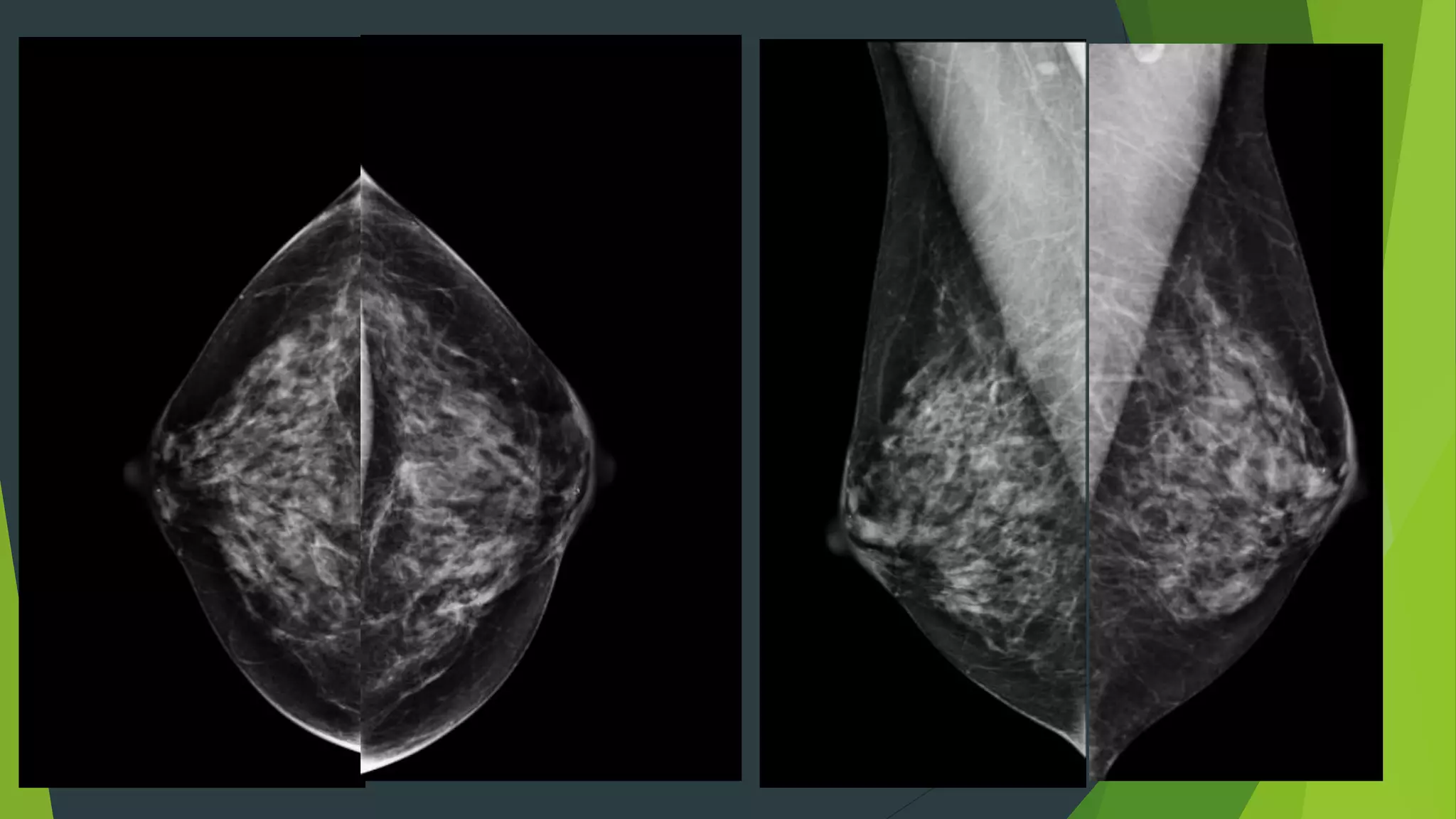
Digital Breast Tomosynthesis
3D Mammography
Trudi Parker M.D.
Breast Cancer Statistics
ACS Estimates for 2014
 Most common cancer among American women
 232,670 new cases of breast cancer diagnosed in women
 2nd. Leading cause of cancer death in women, exceeded only by lung cancer
 40,000 women will die from breast cancer
5-Year Relative Survival by Stage at Diagnosis
www.seer.cancer.gov
SEER 18 2004-2010, All Races, Females by SEER Summary Stage 2000
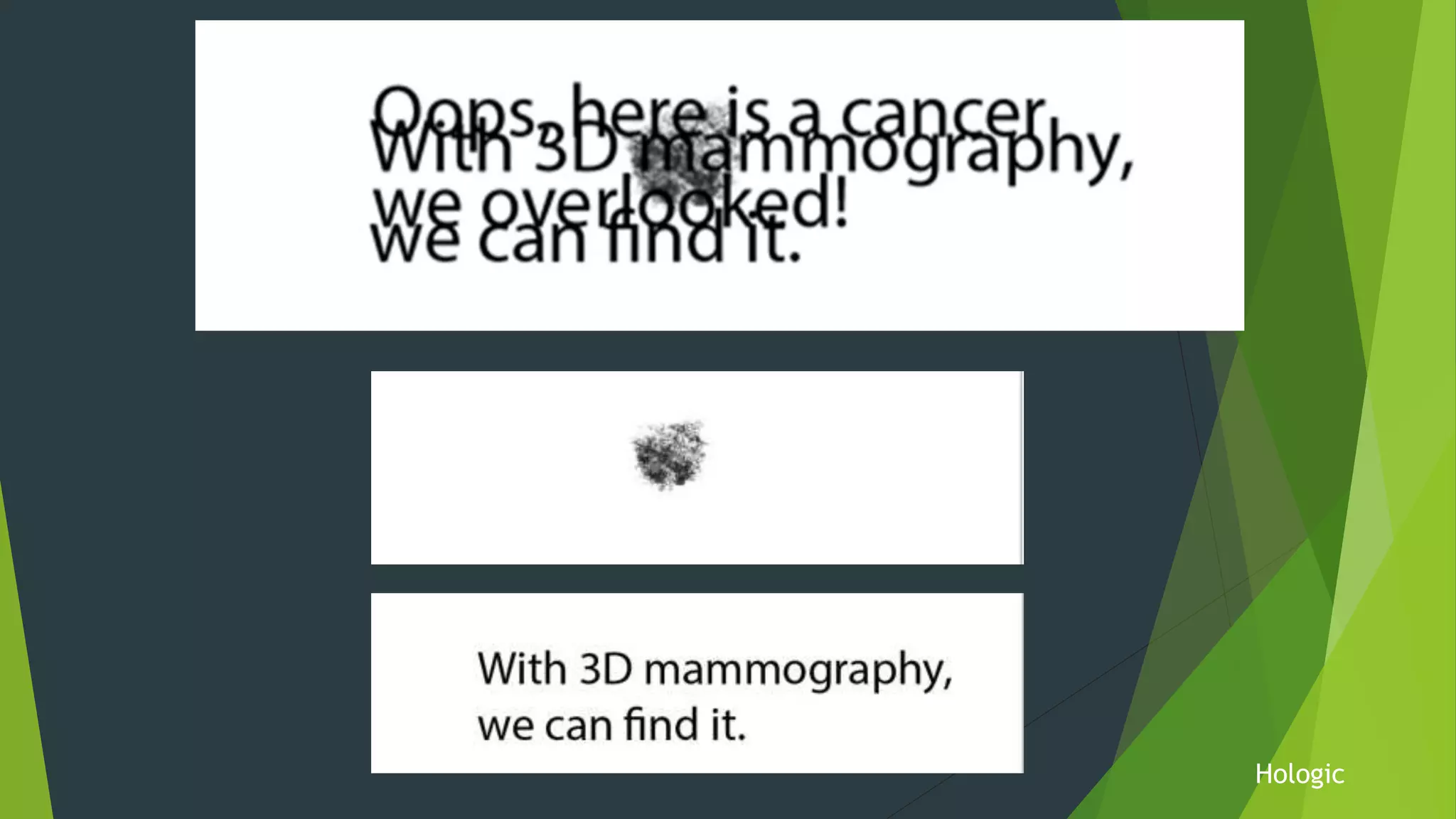
Hologic
Hologic
Limitations of 2D Mammography
 20% of cancers will be missed
 Sensitivity decreases significantly with increased breast density
 Approximately 10% will be recalled for additional work up
 75-80% of all breast biopsies will result in benign results
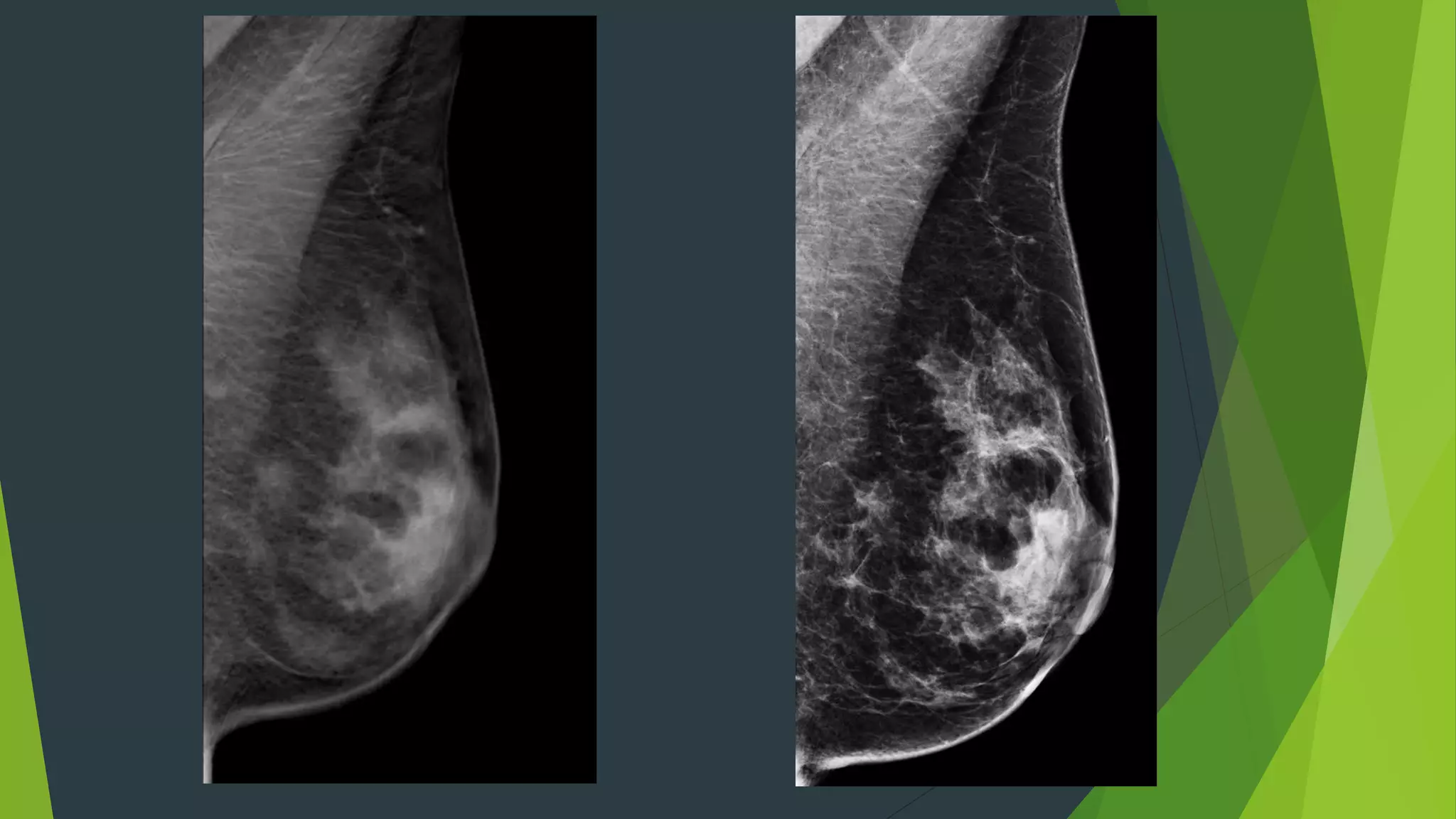
2D versus 3D Mammography
 Enhanced lesion detection – borders of lesion better defined
 Increased cancer detection rate
 Reduces false positive recalls
 Precise lesion localization
Technique:  2D and 3D images obtained with
one compression
 X-ray tube sweeps through a 15deg
arc acquiring 15 low dose
projections (~4secs)
 Mathematical reconstruction
generates 1mm slices through the
breast
 Radiation dose: ~2X the dose of a
mammogram
 Still very low, below MQSA
requirements
 C-view (synthesized 2D)
 2D will no longer be needed
 Dose reduction
Hologic
Hologic
Limitations of DBT
 Takes longer to read
 Cannot be read on demand or STAT
 Increased radiation
 Radiation dose: ~2X the dose of a mammogram
 Still very low, below MQSA requirements
 No CPT code
 Massive storage requirements
IT Storage Requirements for 20,000
Mammograms
 2D Storage for standard 4 View Mammogram = 1.74 Terabytes/year
 3D Storage for standard 4 View Mammogram = 10 Terabytes/year
2D 3D
Hologic
Hologic
Reducing False Positives
Oslo Norway DBT
Screening Trial
Prospective Trial : November 22,2010 to December 31,2011
4 Arms: 2D, 2D +CAD, 2D+3D, synthesized 2D+3D
12,621 sequentially recruited women
Exams interpreted with mammography alone and compared with
mammography + DBT
Oslo Norway DBT
Screening Trial
 Results:
 Cancer Detection Rate of Invasive Cancer +DCIS
 27% increase (p=.001)
 40% Increase detection of invasive cancers
 Increase observed across all breast densities
 2D Mammography alone: 6.1 cancers/1000 exams
 2D + Tomosynthesis : 8 cancers/1000 exams
Oslo Norway DBT
Screening Trial
 Results:
 False Positives ( Recalls from screening exams)
 Mammography alone : 61.1/1000 exams
 Mammography + Tomosynthesis : 53.1/1000
 15% Decrease
JAMA
Retrospective Trial : March 2010 – December 2012
454,850 examinations
13 sites (academic and nonacademic)
Compared mammography interpretation performance 1 year prior to
tomosynthesis implementation to performance following
tomosynthesis implementation
JAMA
Results:
454,850 examinations
281,187 2D exams
173,663 2D+3D exams
Recall Rate: 15%
Cancer Detection Rate: 41% (invasive cancers)
DCIS detection rate : no change
JAMA
Results:
PPV for recall : 49%
PPV for biopsy : 21%
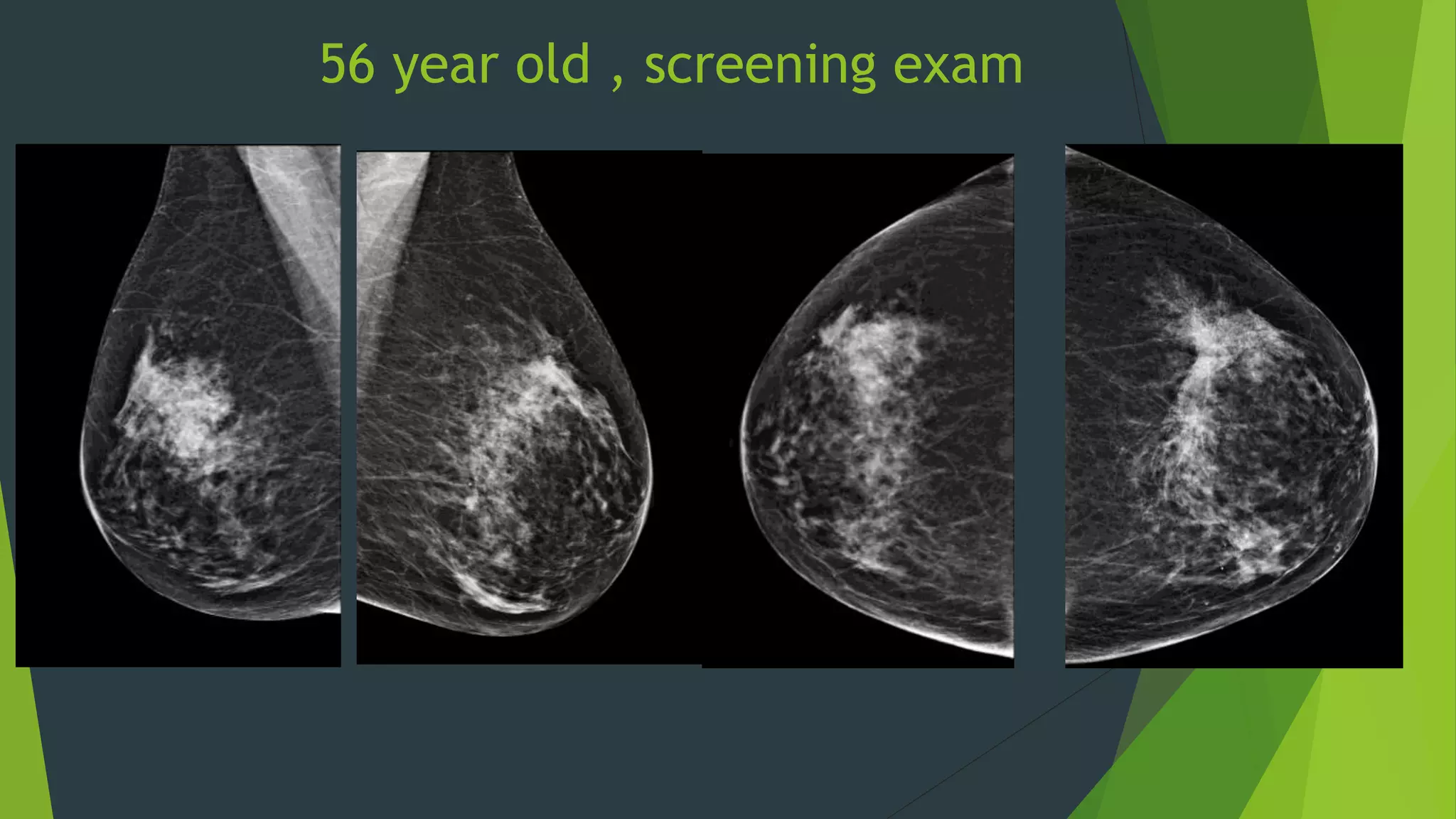
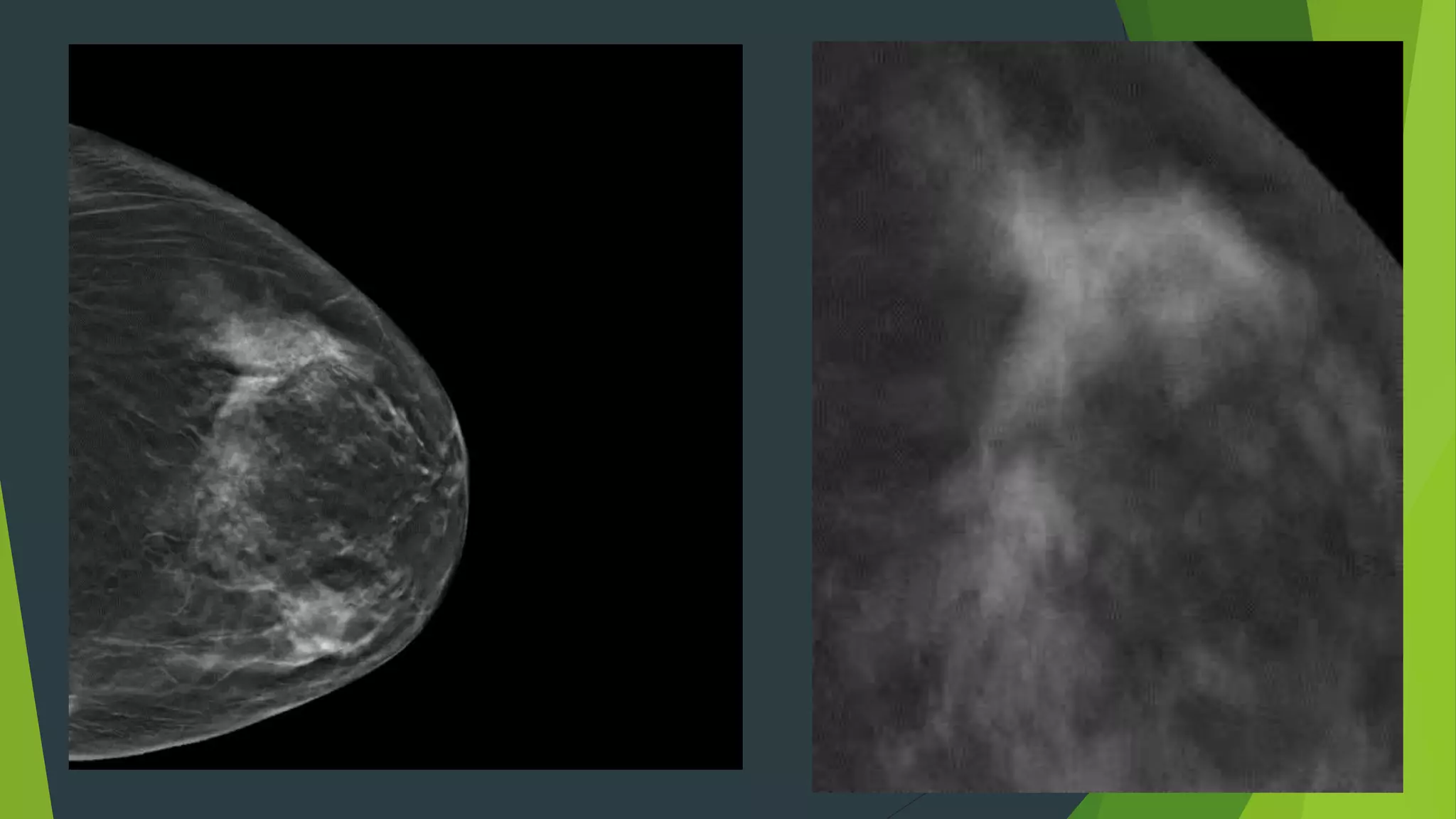
56 year old , screening exam
The Breast Density Legislation
 Effective August 1, 2014, a new law by the Minnesota State Legislature
requires all Minnesota mammography facilities to report breast density to
patients with dense breasts. This law was enacted for three reasons:
 1. Dense breasts slightly decrease the ability of mammography to find
breast cancer.
 2. Dense breasts slightly increase the risk of breast cancer.
 3. Patients may want to know about supplemental screening tests.
Supplemental Screening Options
 Breast MRI
 Expensive
 Requires IV contrast
 Recommended for select hi risk population (>20% lifetime risk of breast cancer)
 Screening US
 Slightly increased cancer detection but has high false positives
 Operator dependent, time consuming
 Digital Breast Tomosynthesis
 Only mammography has been shown to decrease mortality rates.
Summary
Summary Digital Breast Tomosynthesis
 Build on the success of the the
screening mammogram
 Increased Sensitivity AND
Specificity
 Right sizing breast imaging
 Replace 2D MammographyAllina website
THANK YOU

Digital Breast Tomosynthesis

  • 1.
    Digital Breast Tomosynthesis 3DMammography Trudi Parker M.D.
  • 2.
    Breast Cancer Statistics ACSEstimates for 2014  Most common cancer among American women  232,670 new cases of breast cancer diagnosed in women  2nd. Leading cause of cancer death in women, exceeded only by lung cancer  40,000 women will die from breast cancer
  • 3.
    5-Year Relative Survivalby Stage at Diagnosis www.seer.cancer.gov SEER 18 2004-2010, All Races, Females by SEER Summary Stage 2000
  • 4.
  • 5.
  • 6.
    Limitations of 2DMammography  20% of cancers will be missed  Sensitivity decreases significantly with increased breast density  Approximately 10% will be recalled for additional work up  75-80% of all breast biopsies will result in benign results
  • 7.
    2D versus 3DMammography  Enhanced lesion detection – borders of lesion better defined  Increased cancer detection rate  Reduces false positive recalls  Precise lesion localization
  • 8.
    Technique:  2Dand 3D images obtained with one compression  X-ray tube sweeps through a 15deg arc acquiring 15 low dose projections (~4secs)  Mathematical reconstruction generates 1mm slices through the breast  Radiation dose: ~2X the dose of a mammogram  Still very low, below MQSA requirements  C-view (synthesized 2D)  2D will no longer be needed  Dose reduction Hologic
  • 9.
  • 10.
    Limitations of DBT Takes longer to read  Cannot be read on demand or STAT  Increased radiation  Radiation dose: ~2X the dose of a mammogram  Still very low, below MQSA requirements  No CPT code  Massive storage requirements
  • 11.
    IT Storage Requirementsfor 20,000 Mammograms  2D Storage for standard 4 View Mammogram = 1.74 Terabytes/year  3D Storage for standard 4 View Mammogram = 10 Terabytes/year
  • 13.
  • 15.
  • 16.
  • 18.
    Oslo Norway DBT ScreeningTrial Prospective Trial : November 22,2010 to December 31,2011 4 Arms: 2D, 2D +CAD, 2D+3D, synthesized 2D+3D 12,621 sequentially recruited women Exams interpreted with mammography alone and compared with mammography + DBT
  • 19.
    Oslo Norway DBT ScreeningTrial  Results:  Cancer Detection Rate of Invasive Cancer +DCIS  27% increase (p=.001)  40% Increase detection of invasive cancers  Increase observed across all breast densities  2D Mammography alone: 6.1 cancers/1000 exams  2D + Tomosynthesis : 8 cancers/1000 exams
  • 20.
    Oslo Norway DBT ScreeningTrial  Results:  False Positives ( Recalls from screening exams)  Mammography alone : 61.1/1000 exams  Mammography + Tomosynthesis : 53.1/1000  15% Decrease
  • 21.
    JAMA Retrospective Trial :March 2010 – December 2012 454,850 examinations 13 sites (academic and nonacademic) Compared mammography interpretation performance 1 year prior to tomosynthesis implementation to performance following tomosynthesis implementation
  • 22.
    JAMA Results: 454,850 examinations 281,187 2Dexams 173,663 2D+3D exams Recall Rate: 15% Cancer Detection Rate: 41% (invasive cancers) DCIS detection rate : no change
  • 23.
    JAMA Results: PPV for recall: 49% PPV for biopsy : 21%
  • 24.
    56 year old, screening exam
  • 27.
    The Breast DensityLegislation  Effective August 1, 2014, a new law by the Minnesota State Legislature requires all Minnesota mammography facilities to report breast density to patients with dense breasts. This law was enacted for three reasons:  1. Dense breasts slightly decrease the ability of mammography to find breast cancer.  2. Dense breasts slightly increase the risk of breast cancer.  3. Patients may want to know about supplemental screening tests.
  • 28.
    Supplemental Screening Options Breast MRI  Expensive  Requires IV contrast  Recommended for select hi risk population (>20% lifetime risk of breast cancer)  Screening US  Slightly increased cancer detection but has high false positives  Operator dependent, time consuming  Digital Breast Tomosynthesis  Only mammography has been shown to decrease mortality rates.
  • 29.
  • 30.
    Summary Digital BreastTomosynthesis  Build on the success of the the screening mammogram  Increased Sensitivity AND Specificity  Right sizing breast imaging  Replace 2D MammographyAllina website
  • 31.

Editor's Notes