DIGESTIVE SYSTEM
- AYSHATH SAFWANA A
Physiology
FUNCTION OF DIGESTIVE SYSTEM
1. Ingestion involves:
(i)placing the food into the mouth;
(ii) chewing the food into smaller pieces
(mastication);
(iii) moistening the food with salivary secretions; and
(iv) swallowing the food (deglutition).
2. Digestion: During digestion, food is broken down
into small particles by the grinding action of the GIT
and then degraded by digestive enzymes into
utilizable nutrients.
3. Absorption: During absorption, nutrients, water
and electrolytes are transported from the GIT (mainly
from the small intestine) to the circulation.
4. Egestion: During egestion, the undigested food,
along with various secretions and sloughed-off
epithelial cells from the GIT, pass into the rectum and
constitute the faeces, which are removed through the
anus at periodic intervals.
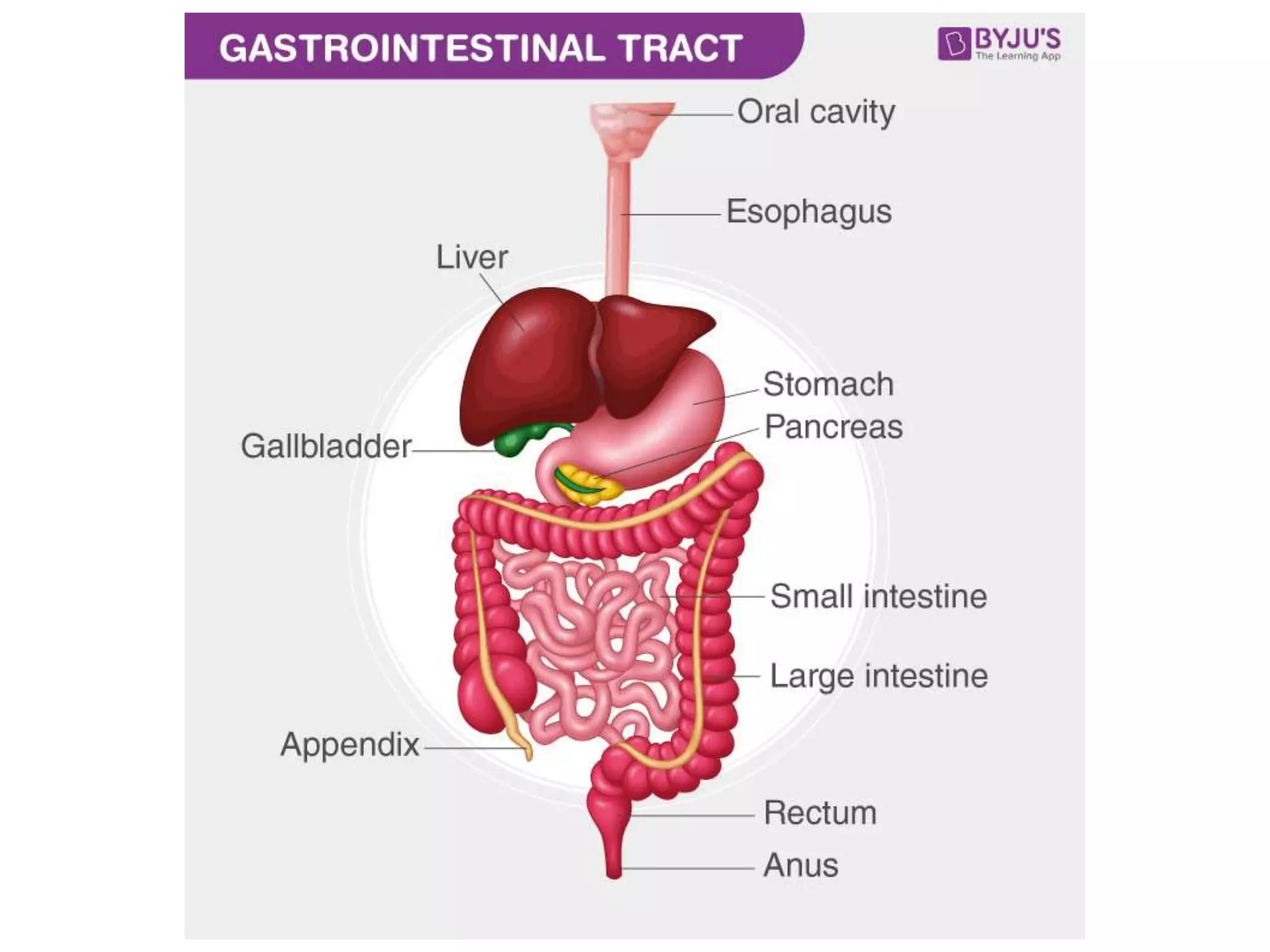
Physiological anatomy of
gastro intestinal tract
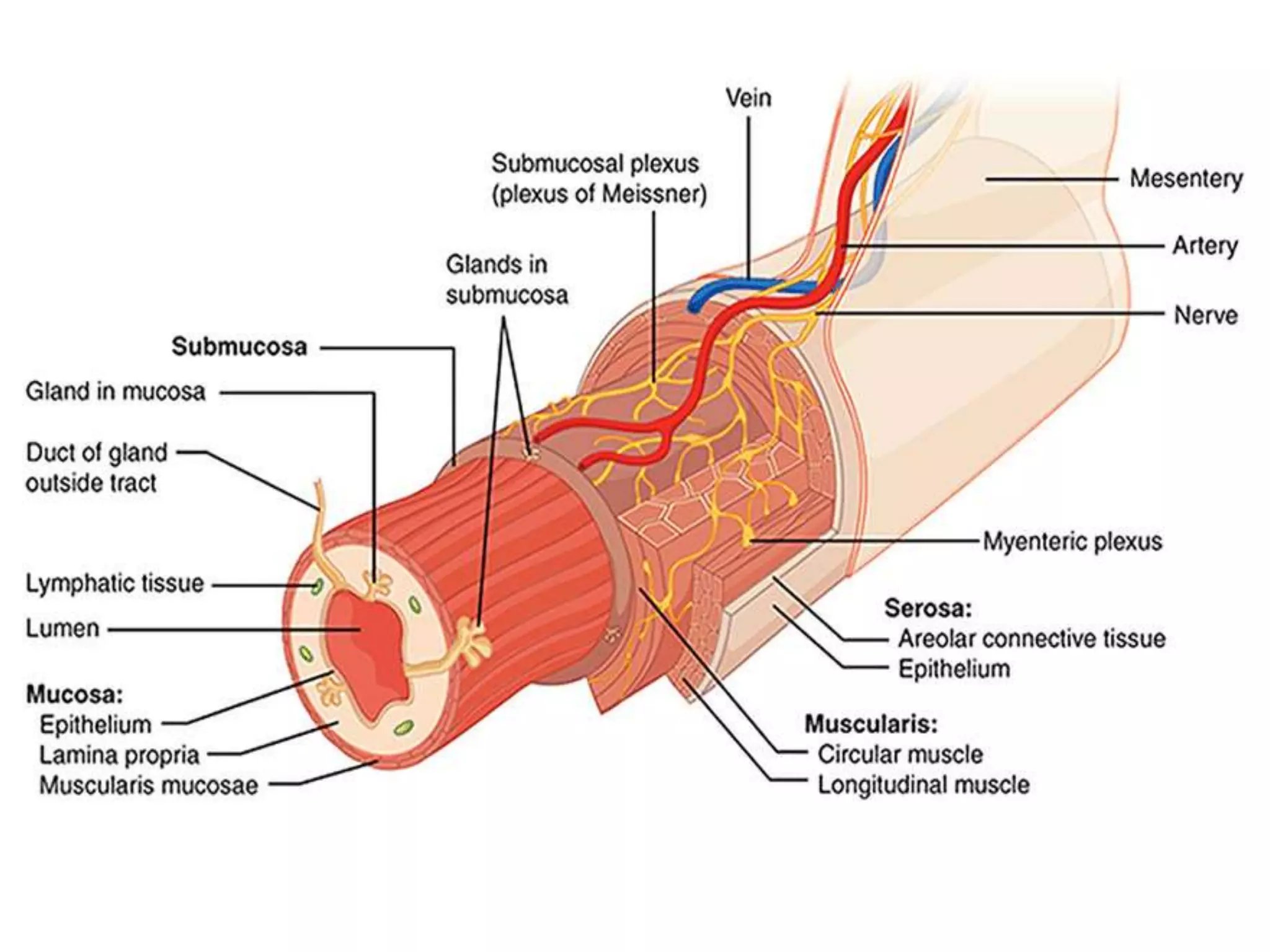
WALL OF GASTROINTESTINAL TRACT
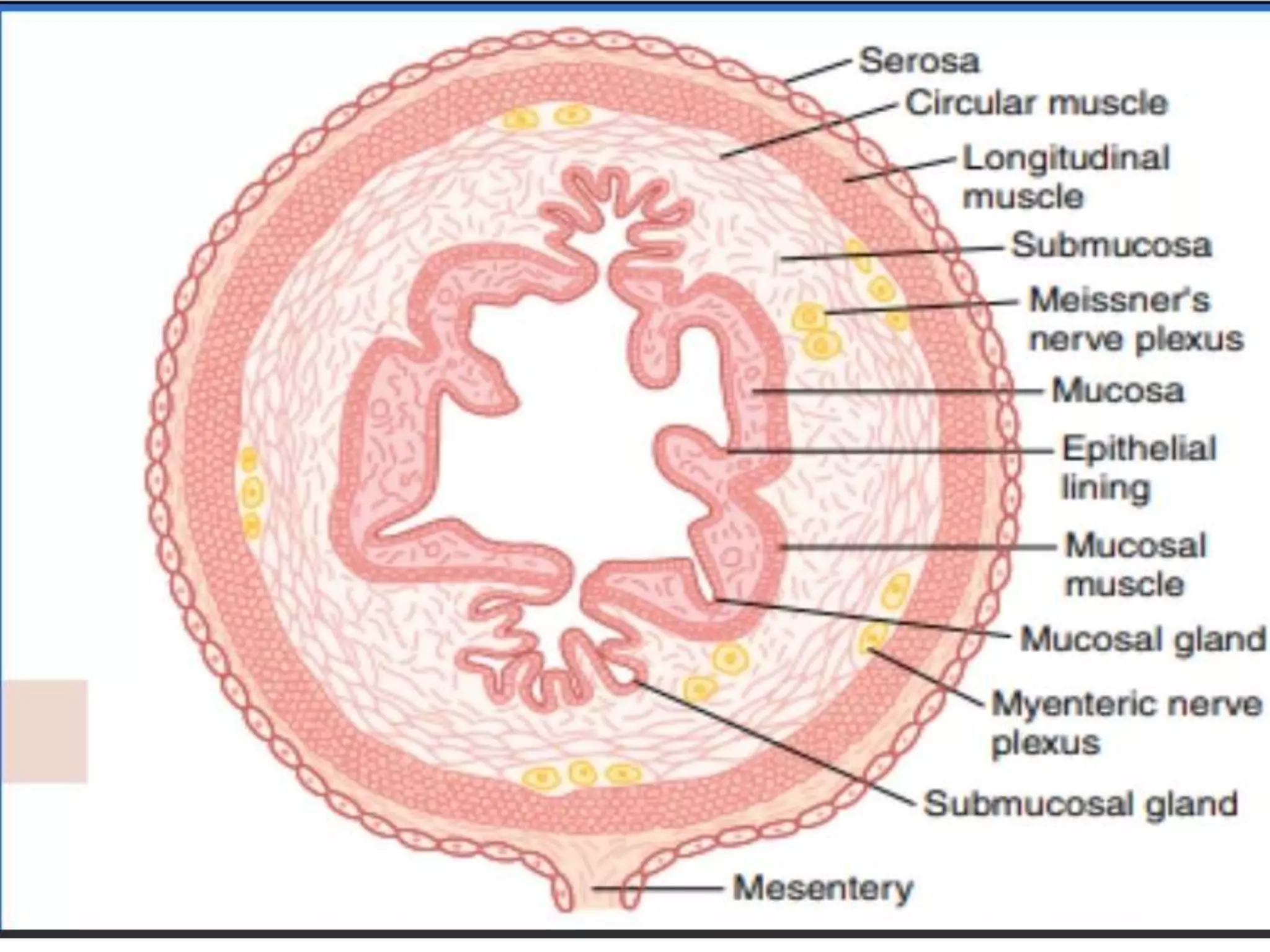
In general, wall of the GI tract is formed by four
layers which are from inside out:
1. Mucus layer(Mucosa)
2. Submucus layer(Submucosa)
3. Muscular layer(Muscularis)
4. Serous or fibrous layer.(Serosa)
1. MUCUS LAYER
Mucus layer is the innermost layer of the wall of
GI tract. It is also called gastrointestinal mucosa
or mucus membrane. It faces the cavity of GI
tract.
Mucosa has three layer of structures:
I.Epithelial lining
ii. Lamina propria
Ill Muscularis mucosa.
• Epithelial Lining
• Epithelial lining is in contact with the contents
of GI tract. The type of cells in this layer
varies in different parts of GI tract.
• The inner surface of mouth, surface of
tongue, inner surface of pharynx and
esophagus have stratified squamous
epithelialcells.
• However, mucus membrane lining the other
parts such as stomach, small intestine and
large intestine has columnar epithelial cells.
• Lamina Propria
• Lamina propria is formed by connective tissues,
which contain fibroblasts, macrophages,
lymphocytes and eosinophils.
• Muscularis Mucosa
• Muscularis mucosa layer consists of a thin layer
of smooth muscle fibers. It is absent in mouth
and pharynx.
• It is present from esophagus onwards.
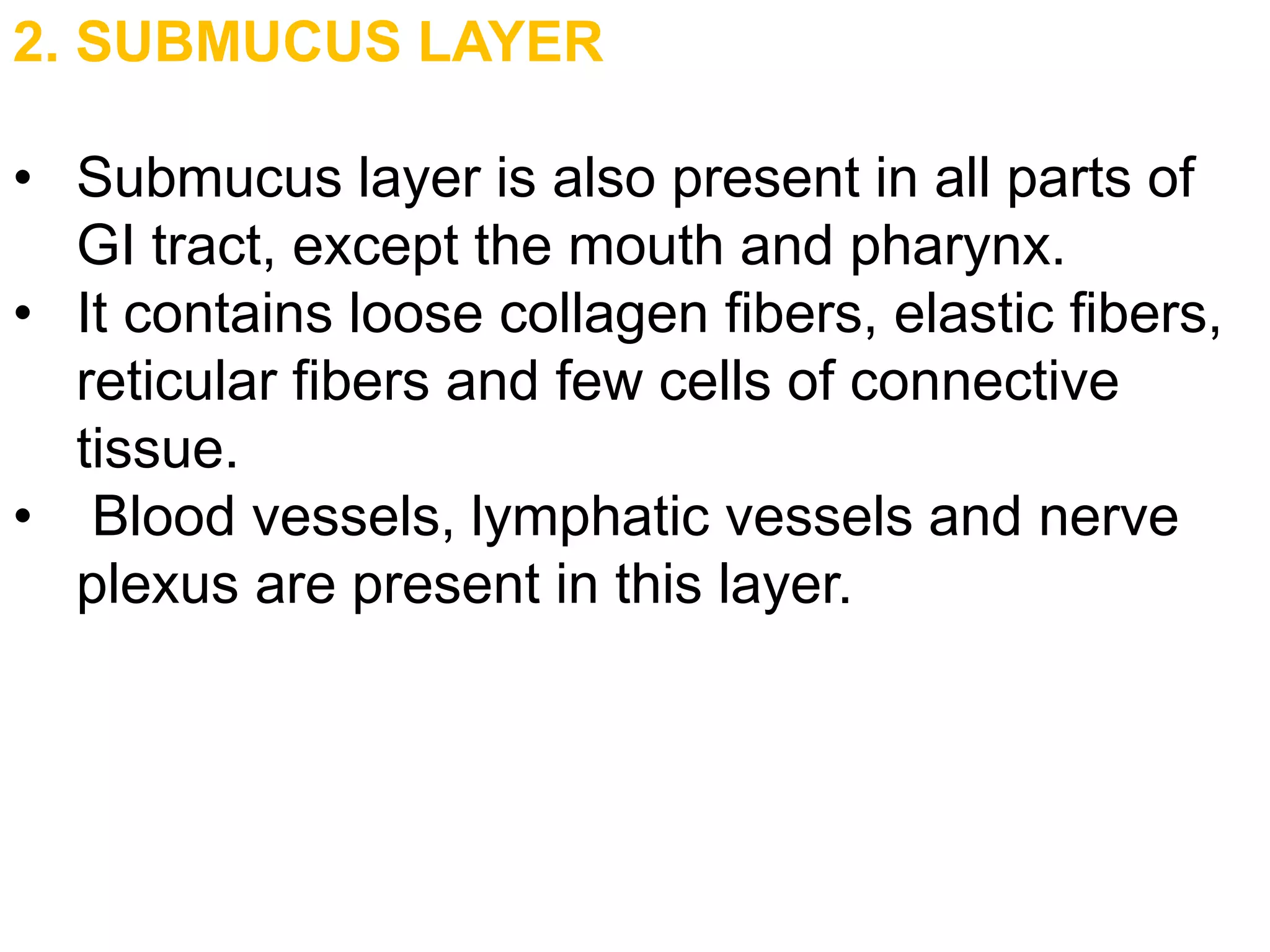
2. SUBMUCUS LAYER
• Submucus layer is also present in all parts of
GI tract, except the mouth and pharynx.
• It contains loose collagen fibers, elastic fibers,
reticular fibers and few cells of connective
tissue.
• Blood vessels, lymphatic vessels and nerve
plexus are present in this layer.
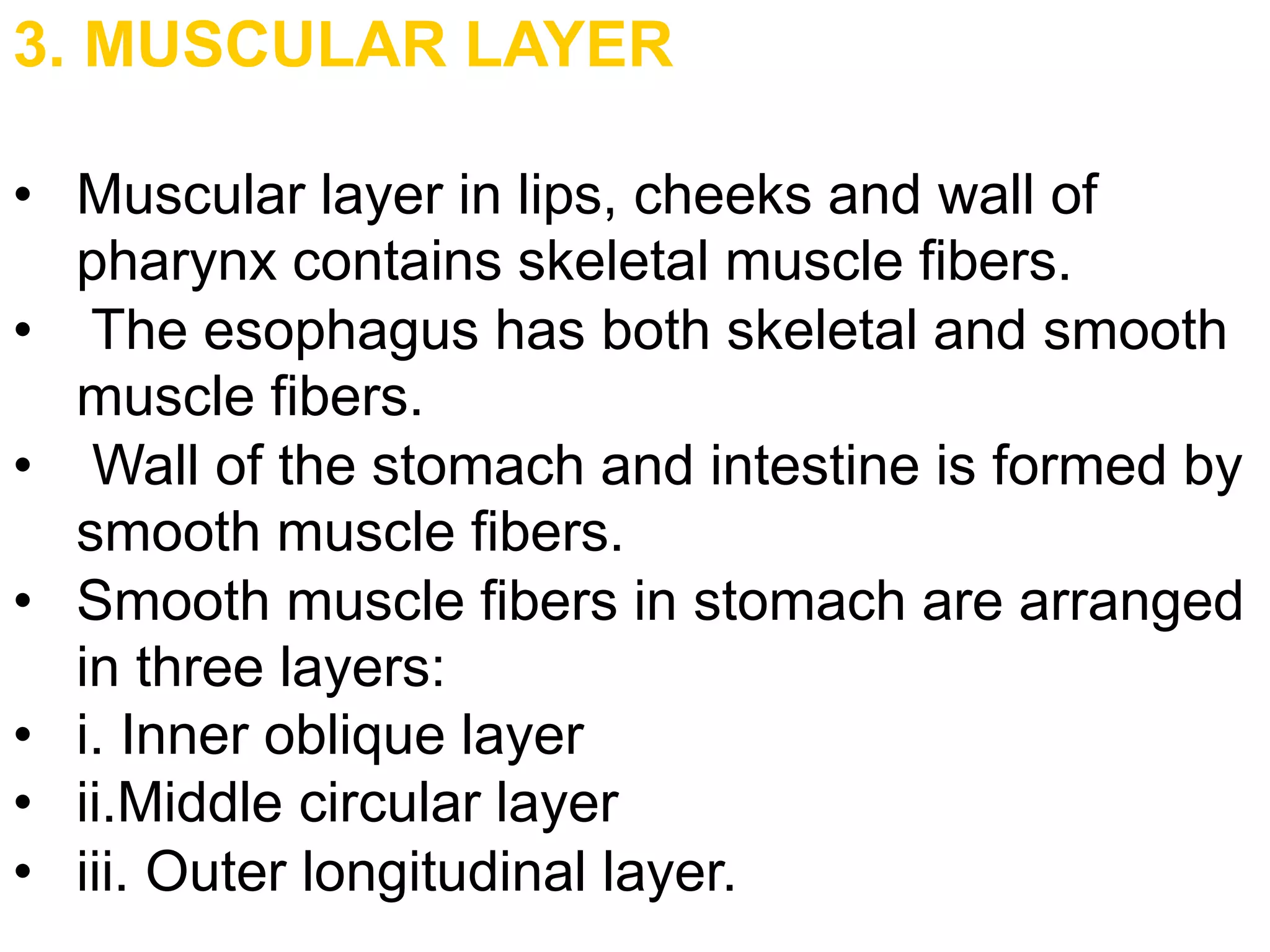
3. MUSCULAR LAYER
• Muscular layer in lips, cheeks and wall of
pharynx contains skeletal muscle fibers.
• The esophagus has both skeletal and smooth
muscle fibers.
• Wall of the stomach and intestine is formed by
smooth muscle fibers.
• Smooth muscle fibers in stomach are arranged
in three layers:
• i. Inner oblique layer
• ii.Middle circular layer
• iii. Outer longitudinal layer.
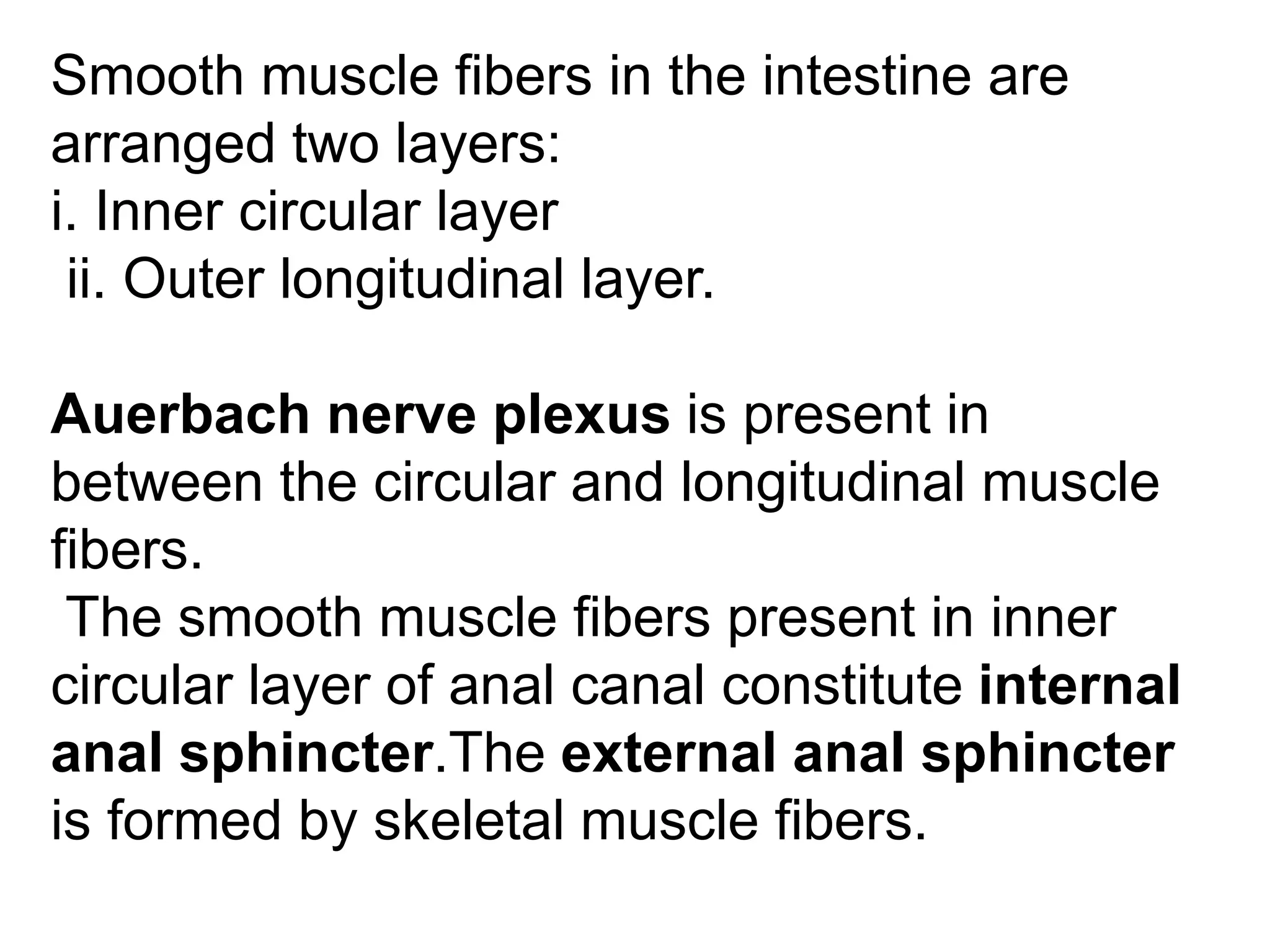
Smooth muscle fibers in the intestine are
arranged two layers:
i. Inner circular layer
ii. Outer longitudinal layer.
Auerbach nerve plexus is present in
between the circular and longitudinal muscle
fibers.
The smooth muscle fibers present in inner
circular layer of anal canal constitute internal
anal sphincter.The external anal sphincter
is formed by skeletal muscle fibers.
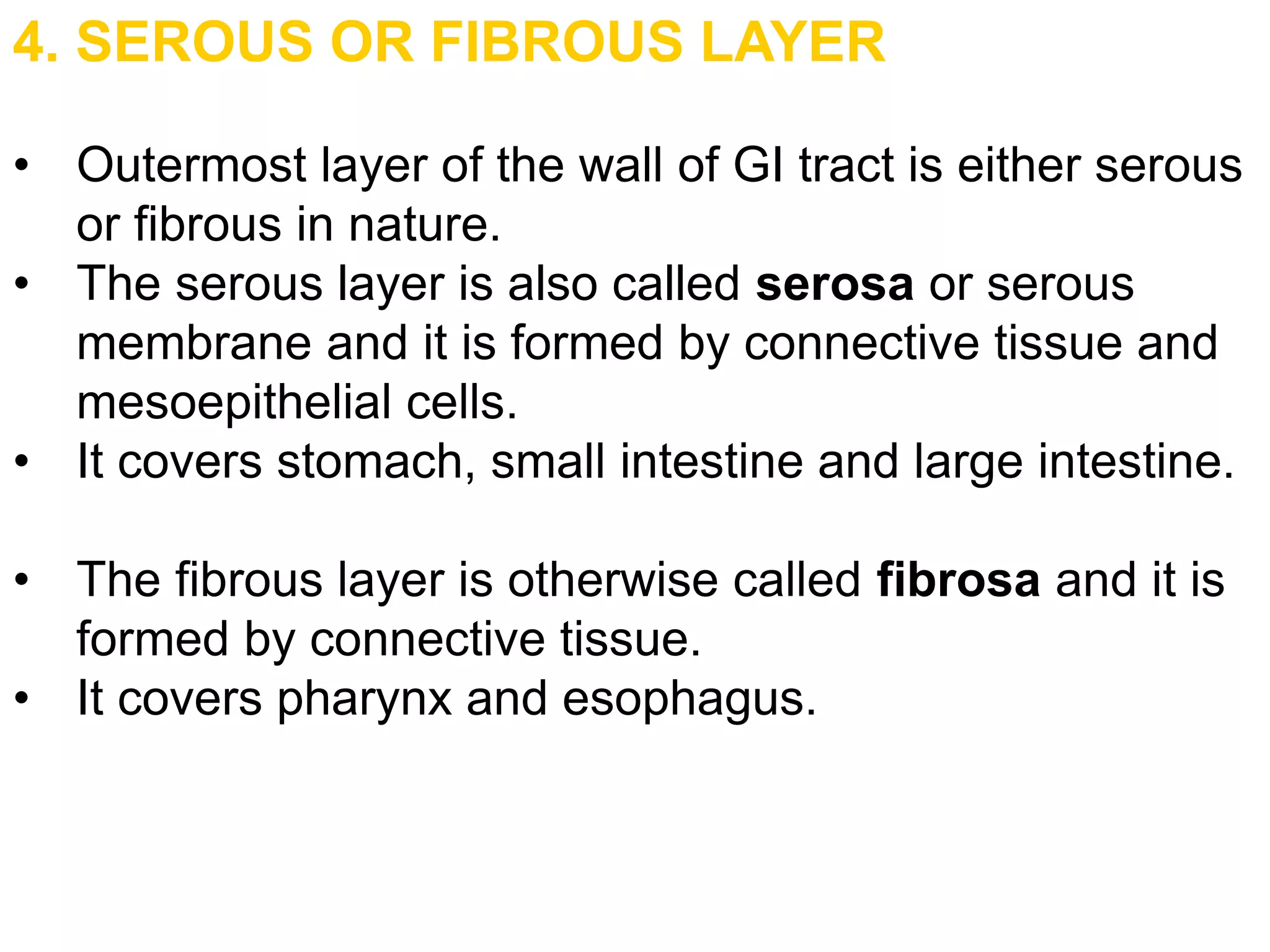
4. SEROUS OR FIBROUS LAYER
• Outermost layer of the wall of GI tract is either serous
or fibrous in nature.
• The serous layer is also called serosa or serous
membrane and it is formed by connective tissue and
mesoepithelial cells.
• It covers stomach, small intestine and large intestine.
• The fibrous layer is otherwise called fibrosa and it is
formed by connective tissue.
• It covers pharynx and esophagus.
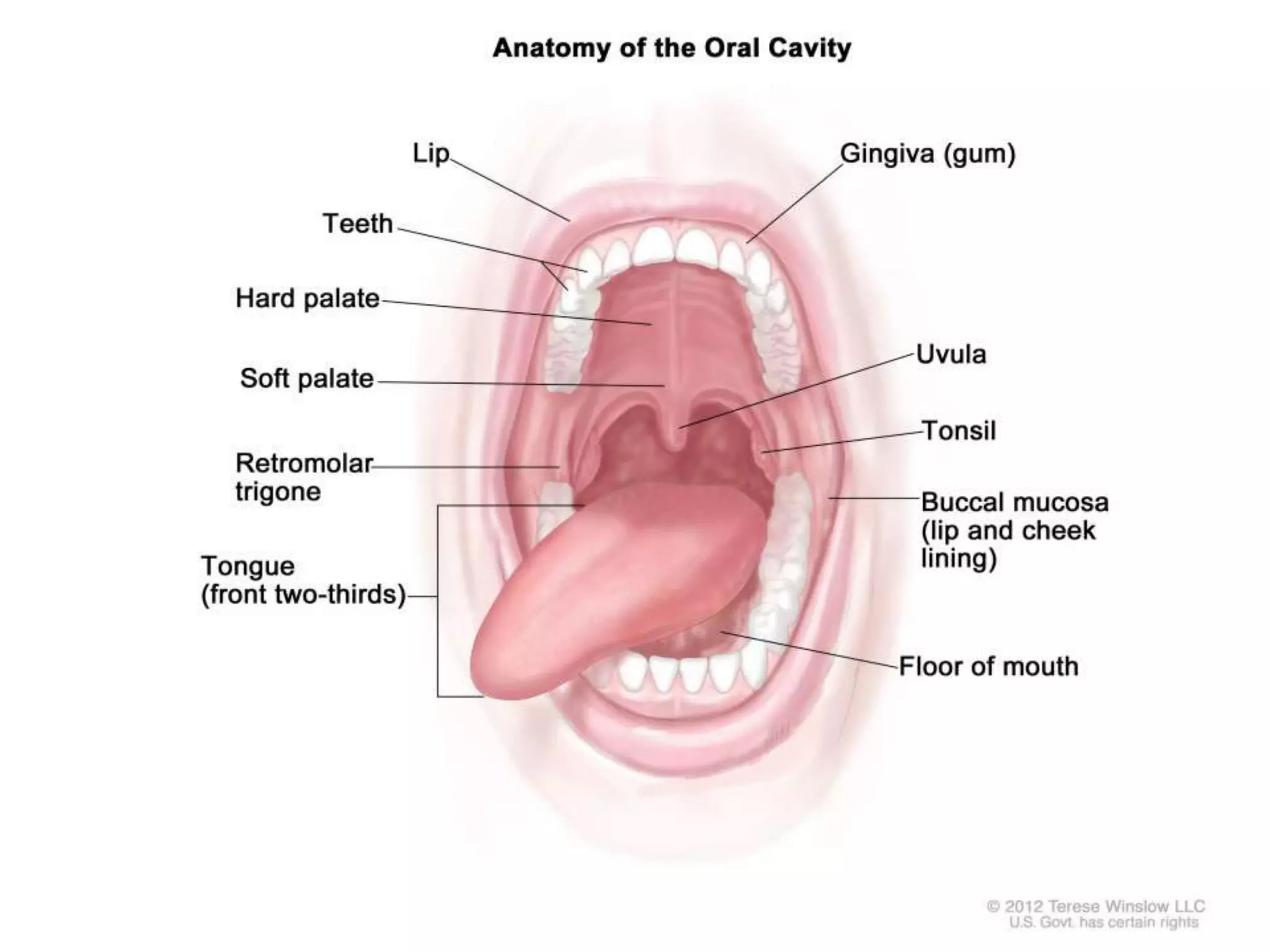
• Mouth is otherwise known as oral cavity or
buccal cavity. It is formed by cheeks, lips and
palate.
• It encloses the teeth, tongue and salivary
glands.
• Mouth opens anteriorly to the exterior through
lips and posteriorly through fauces into the
pharynx.
• Digestive juice present in the mouth is saliva,
which is secreted by the salivary glands.
MOUTH
FUNCTIONS OF MOUTH
Primary function of mouth is eating and it has
few other important functions also.
Functions of mouth include:
1. Ingestion of food materials
2. Chewing the food and mixing it with saliva
3. Appreciation of taste of the food
4. Transfer of food (bolus) to the esophagus by
swallowing.
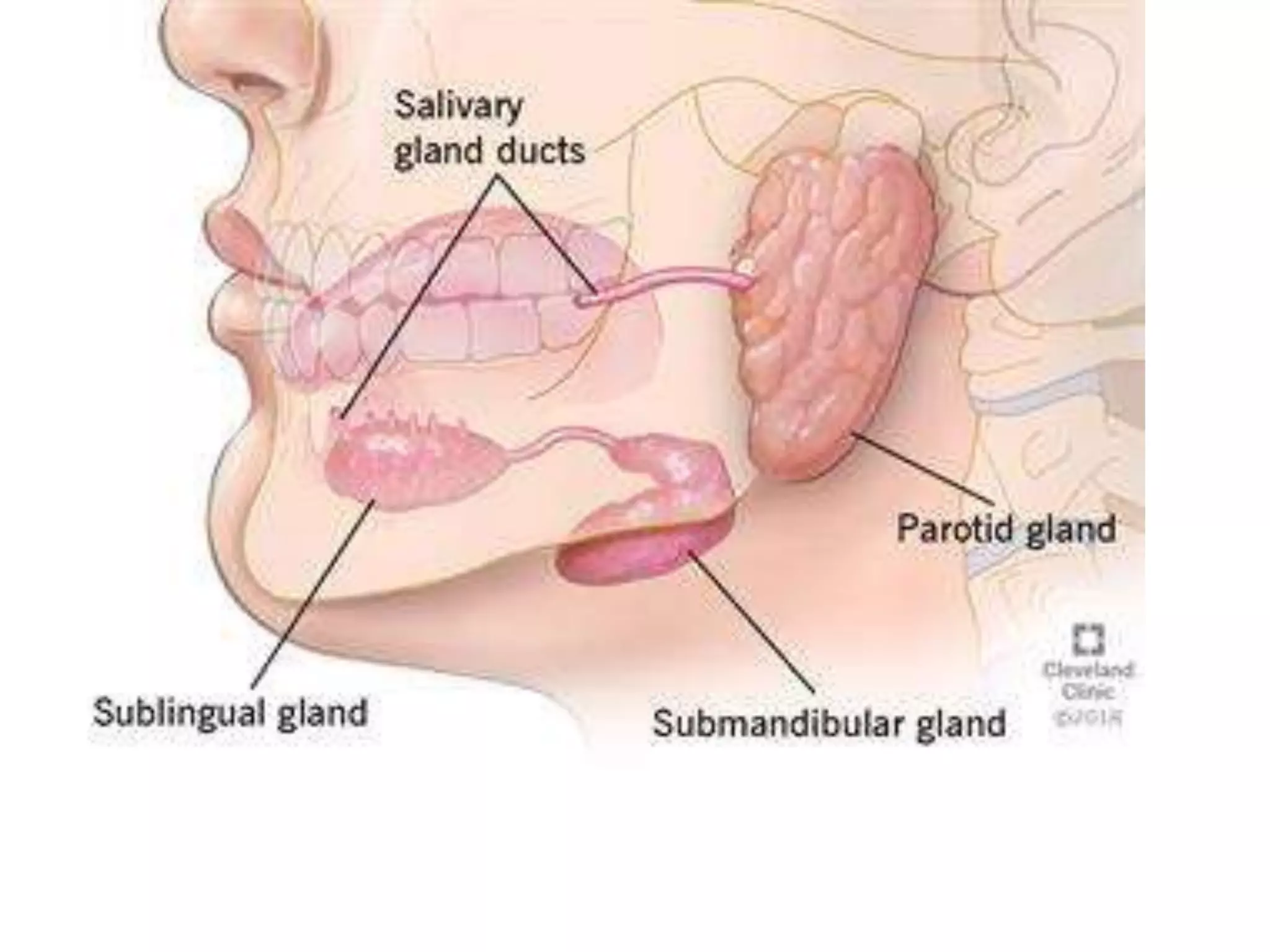
SALIVARY GLANDS
In humans, the saliva is secreted by three pairs of
major (larger) salivary glands.
MAJOR SALIVARY GLANDS
Major glands are:
1. Parotid glands
2. Submaxillary or submandibular glands
3. Sublingual glands.
1. Parotid Glands
Parotid glands are the largest of all salivary
glands, situated at the side of the face just
below and in front of the ear.
Secretions from these glands are emptied into
the oral cavity by Stensen duct.
2. Submaxillary Glands
Submaxillary glands or submandibular glands
are located in submaxillary triangle, medial to
mandible.
Saliva from these glands is emptied into the
oral cavity by Wharton duct.
3. Sublingual Glands
Sublingual glands are the smallest
salivary glands situated in the mucosa at
the floor of the mouth.
Saliva from these glands is poured into 5
to 15 small ducts called ducts of Rivinus.
These ducts open on small papillae
beneath the tongue.
One of the ducts is larger and it is called
Bartholin duct.
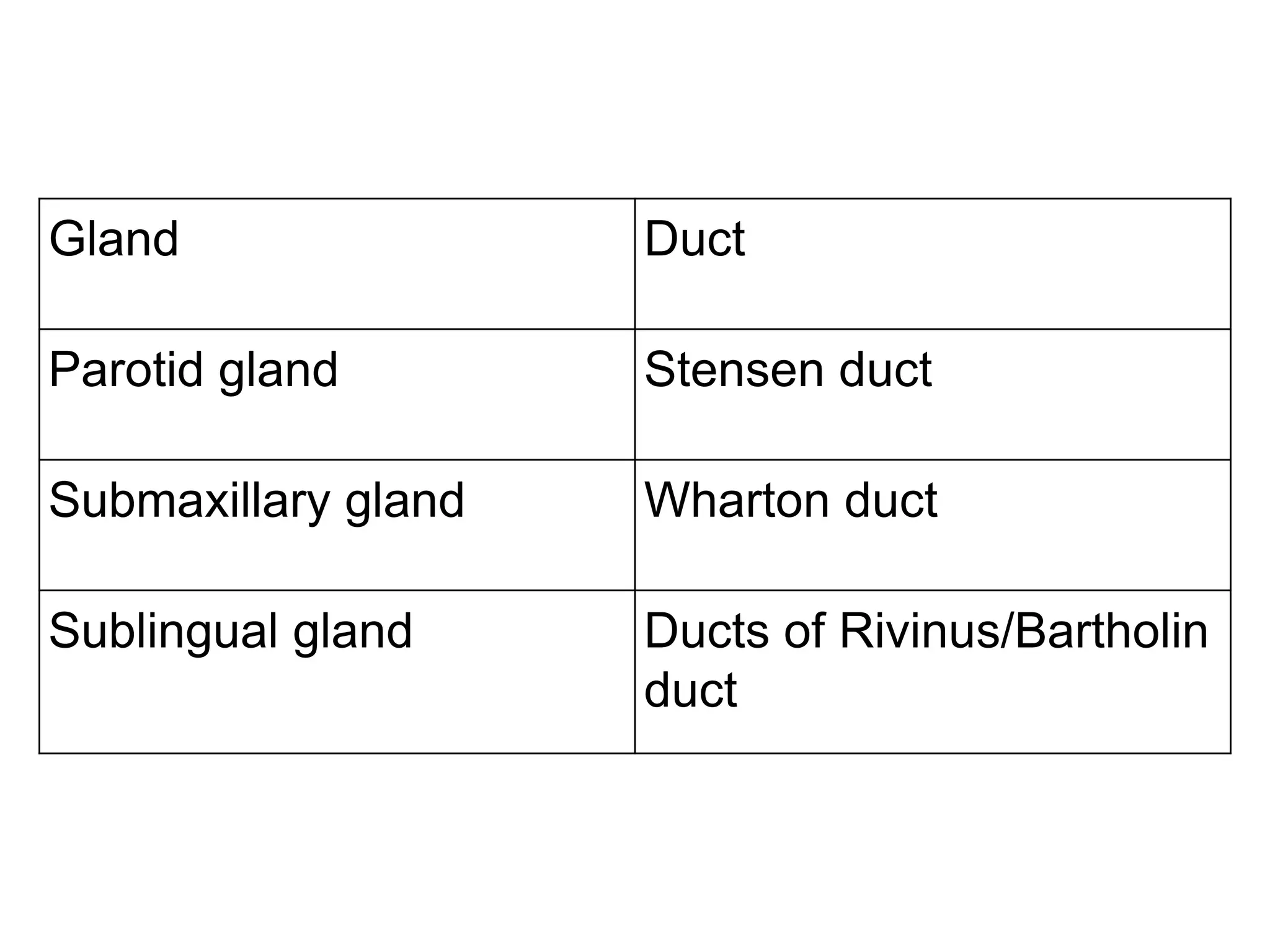
Gland Duct
Parotid gland Stensen duct
Submaxillary gland Wharton duct
Sublingual gland Ducts of Rivinus/Bartholin
duct
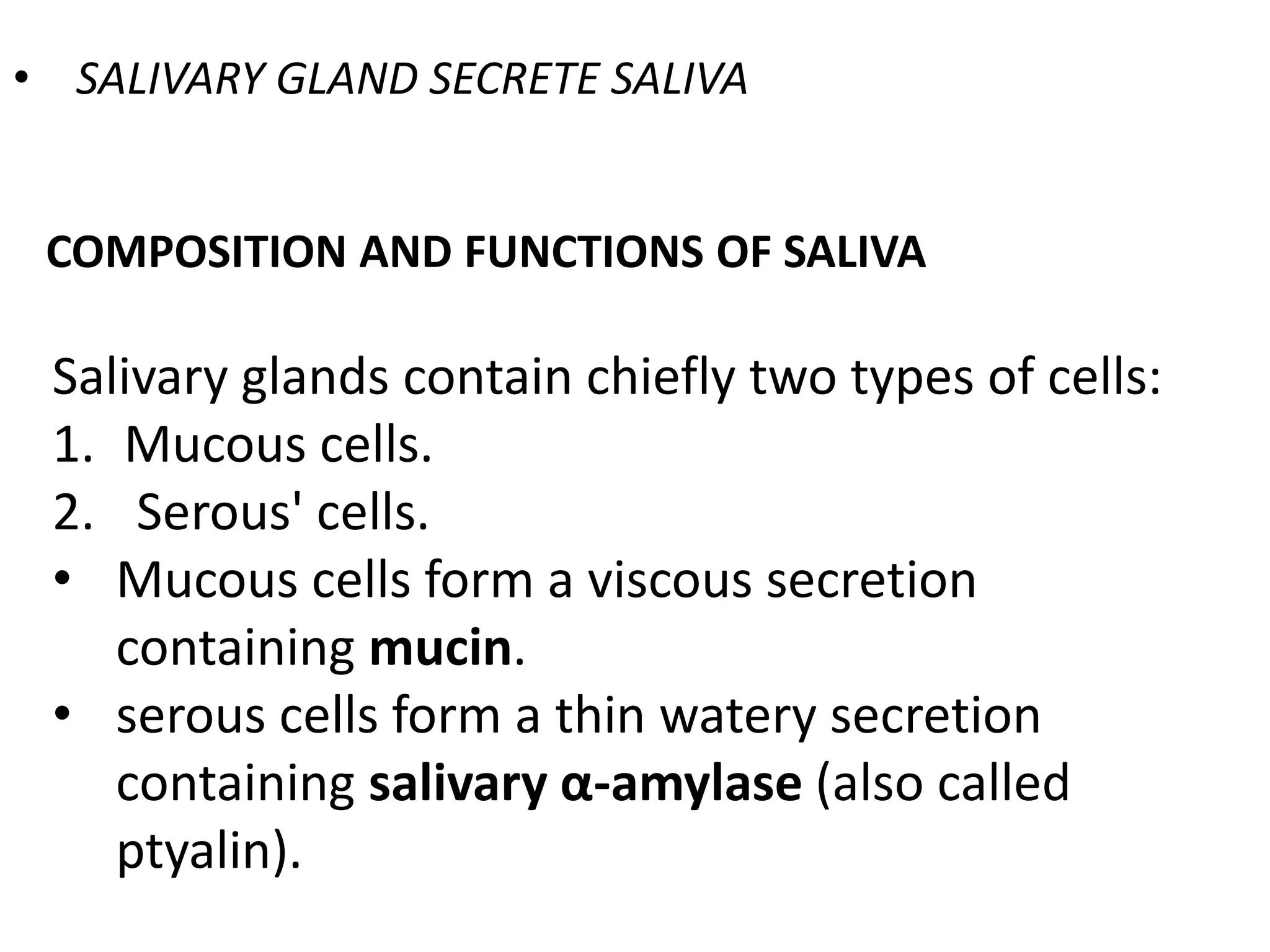
COMPOSITION AND FUNCTIONS OF SALIVA
• SALIVARY GLAND SECRETE SALIVA
Salivary glands contain chiefly two types of cells:
1. Mucous cells.
2. Serous' cells.
• Mucous cells form a viscous secretion
containing mucin.
• serous cells form a thin watery secretion
containing salivary α-amylase (also called
ptyalin).
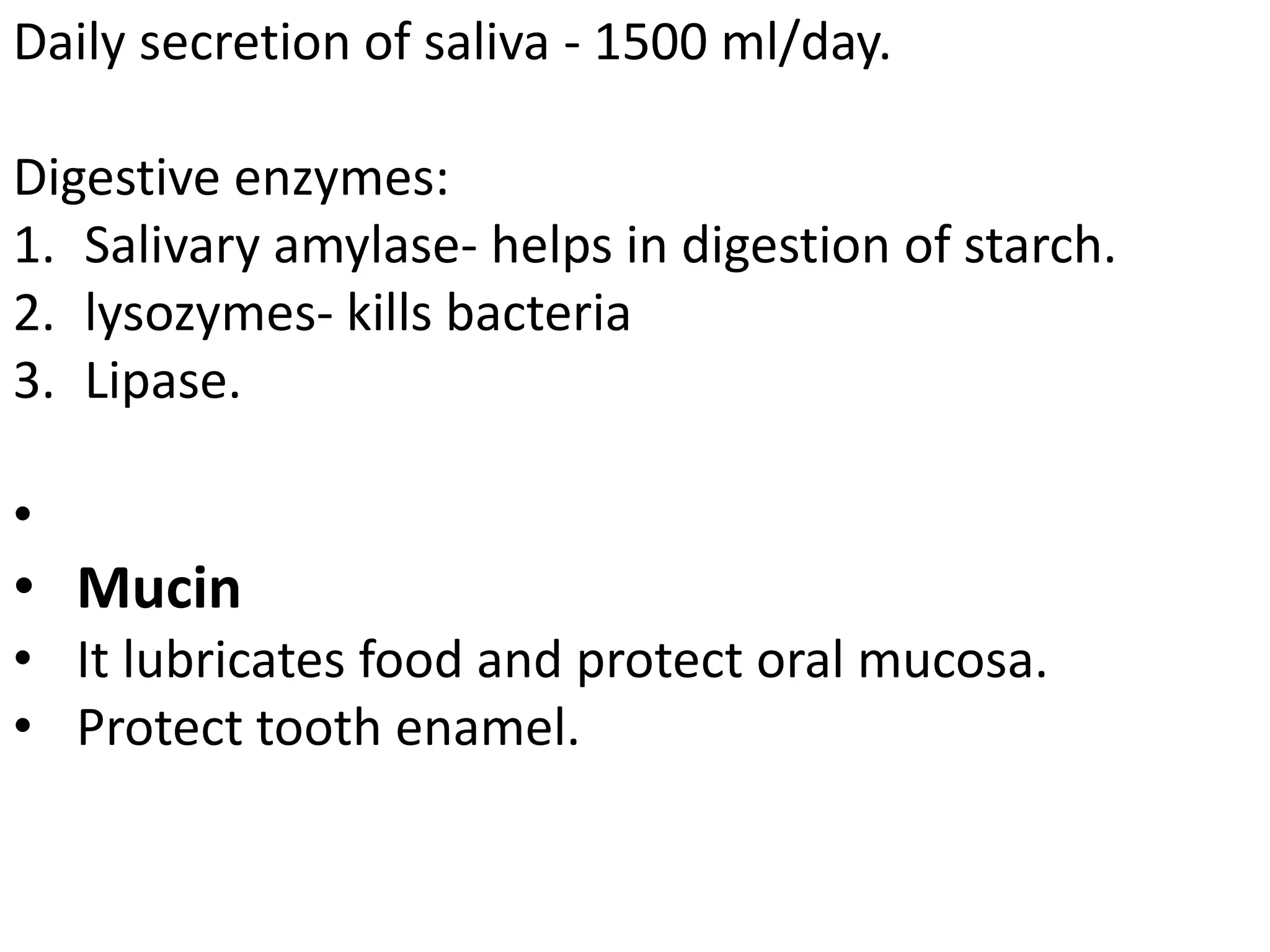
Daily secretion of saliva - 1500 ml/day.
Digestive enzymes:
1. Salivary amylase- helps in digestion of starch.
2. lysozymes- kills bacteria
3. Lipase.
•
• Mucin
• It lubricates food and protect oral mucosa.
• Protect tooth enamel.
It is a reflex response controlled via vagus (X) nerve
and its centre is located in the medulla oblongata.
It occurs in three stages:
Stage I: Oral stage - Voluntary stage
Stage II: Pharyngeal stage - Involuntary (reflex) stage
Stage III: Oesophageal stage - Involuntary (reflex)
stage
DEGLUTITION
(SWALLOWING)
Stage I - Oral Stage
Features
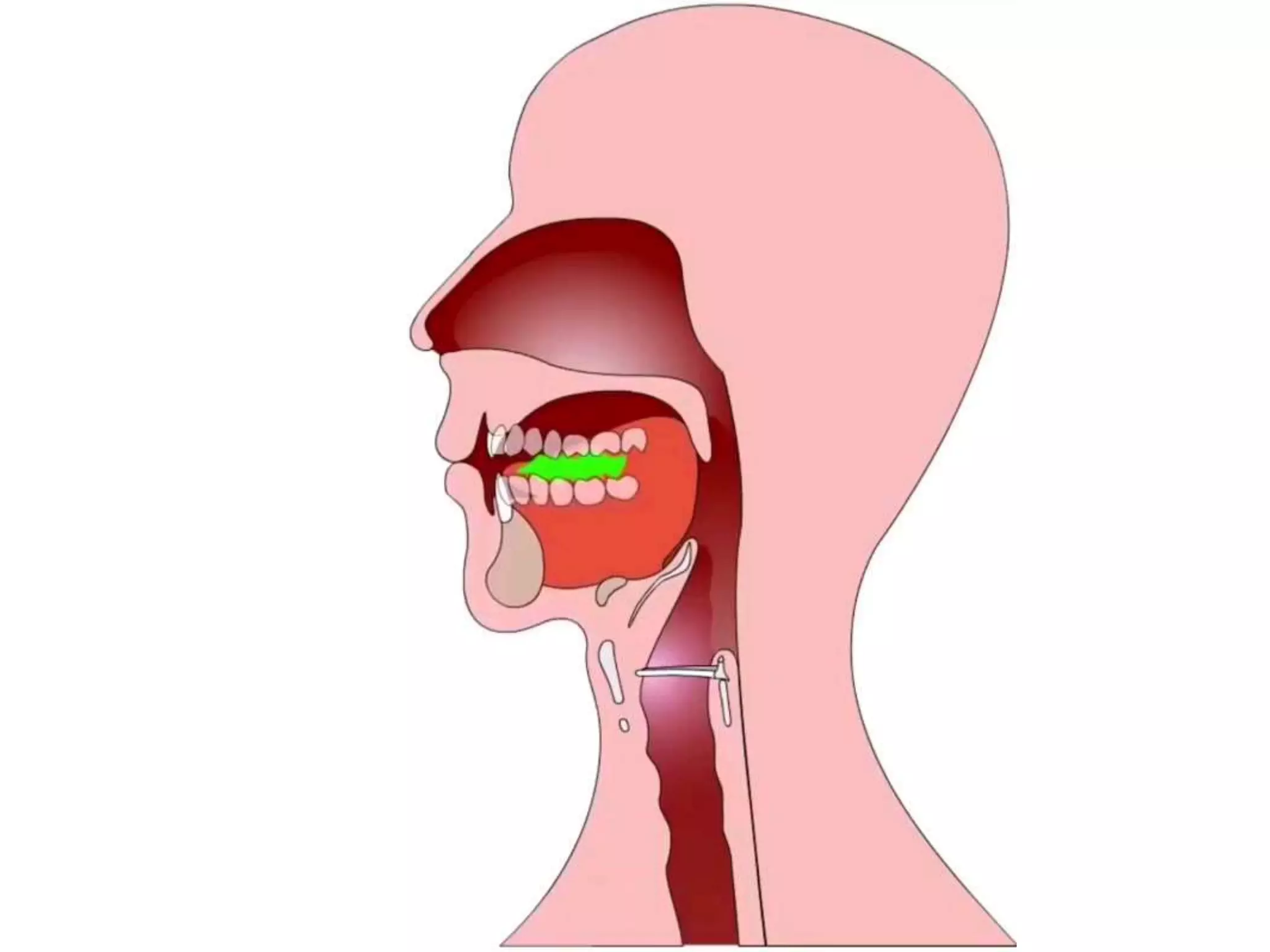
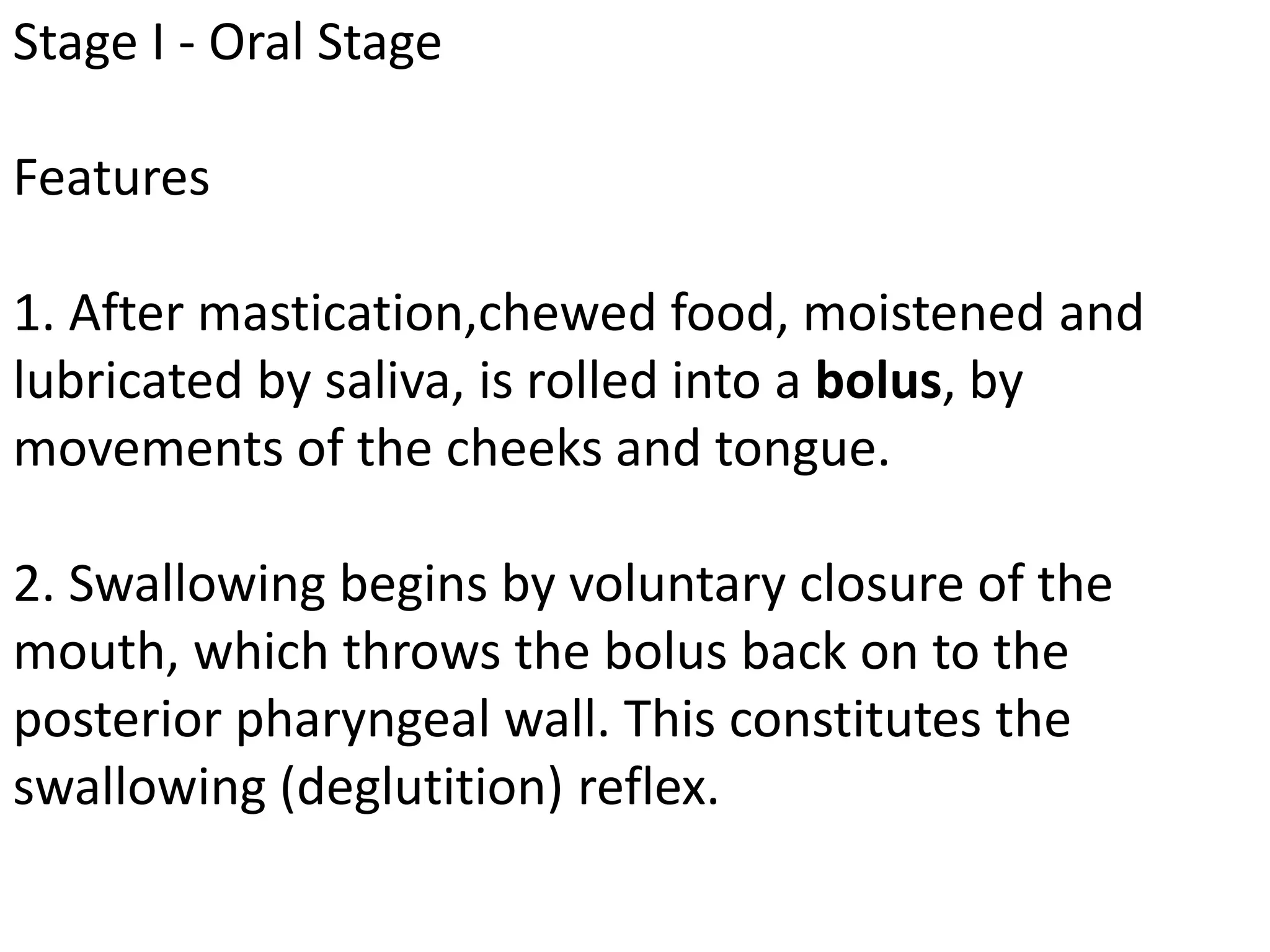
1. After mastication,chewed food, moistened and
lubricated by saliva, is rolled into a bolus, by
movements of the cheeks and tongue.
2. Swallowing begins by voluntary closure of the
mouth, which throws the bolus back on to the
posterior pharyngeal wall. This constitutes the
swallowing (deglutition) reflex.
Stage II - Pharyngeal Stage
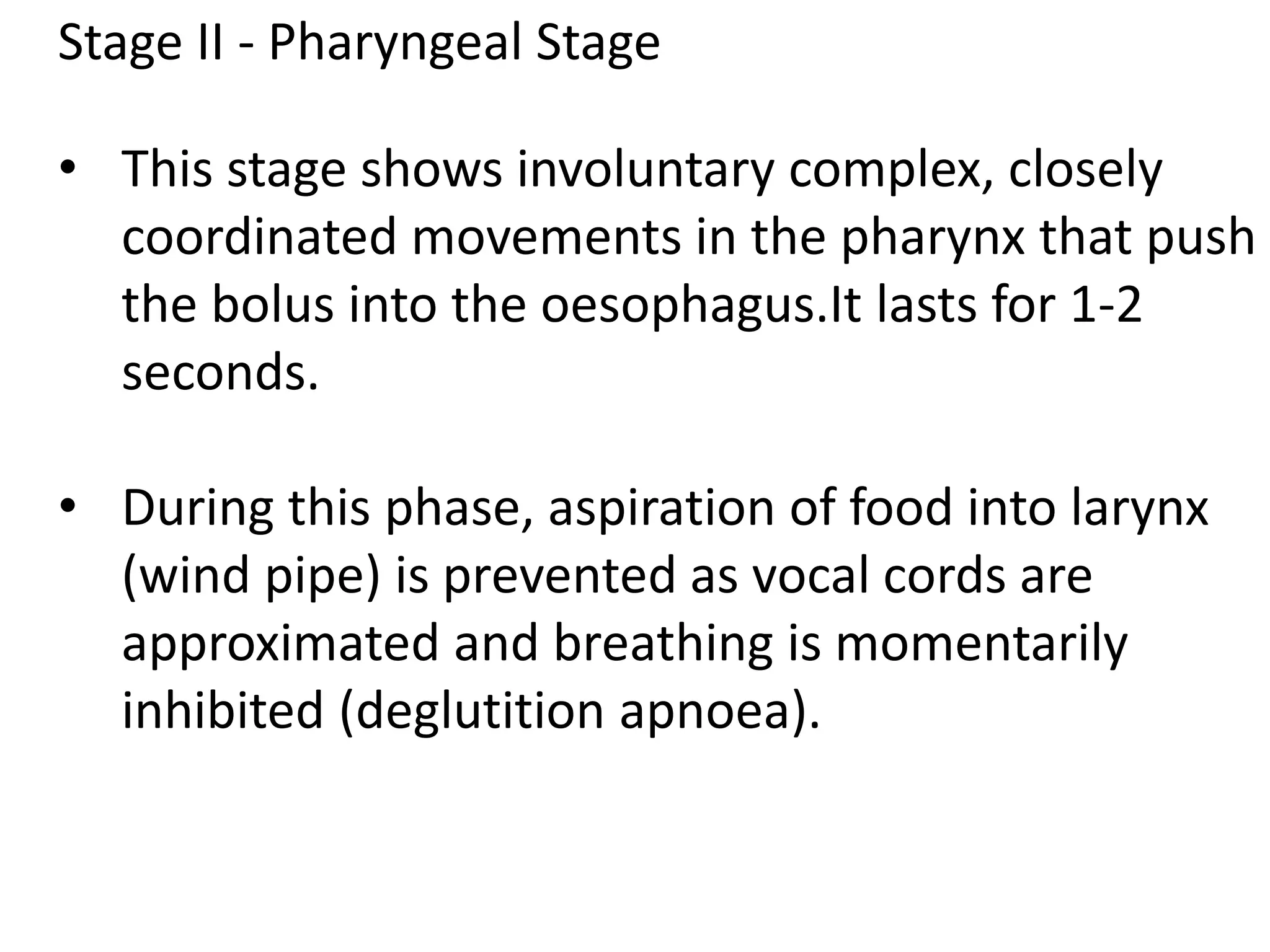
• This stage shows involuntary complex, closely
coordinated movements in the pharynx that push
the bolus into the oesophagus.It lasts for 1-2
seconds.
• During this phase, aspiration of food into larynx
(wind pipe) is prevented as vocal cords are
approximated and breathing is momentarily
inhibited (deglutition apnoea).
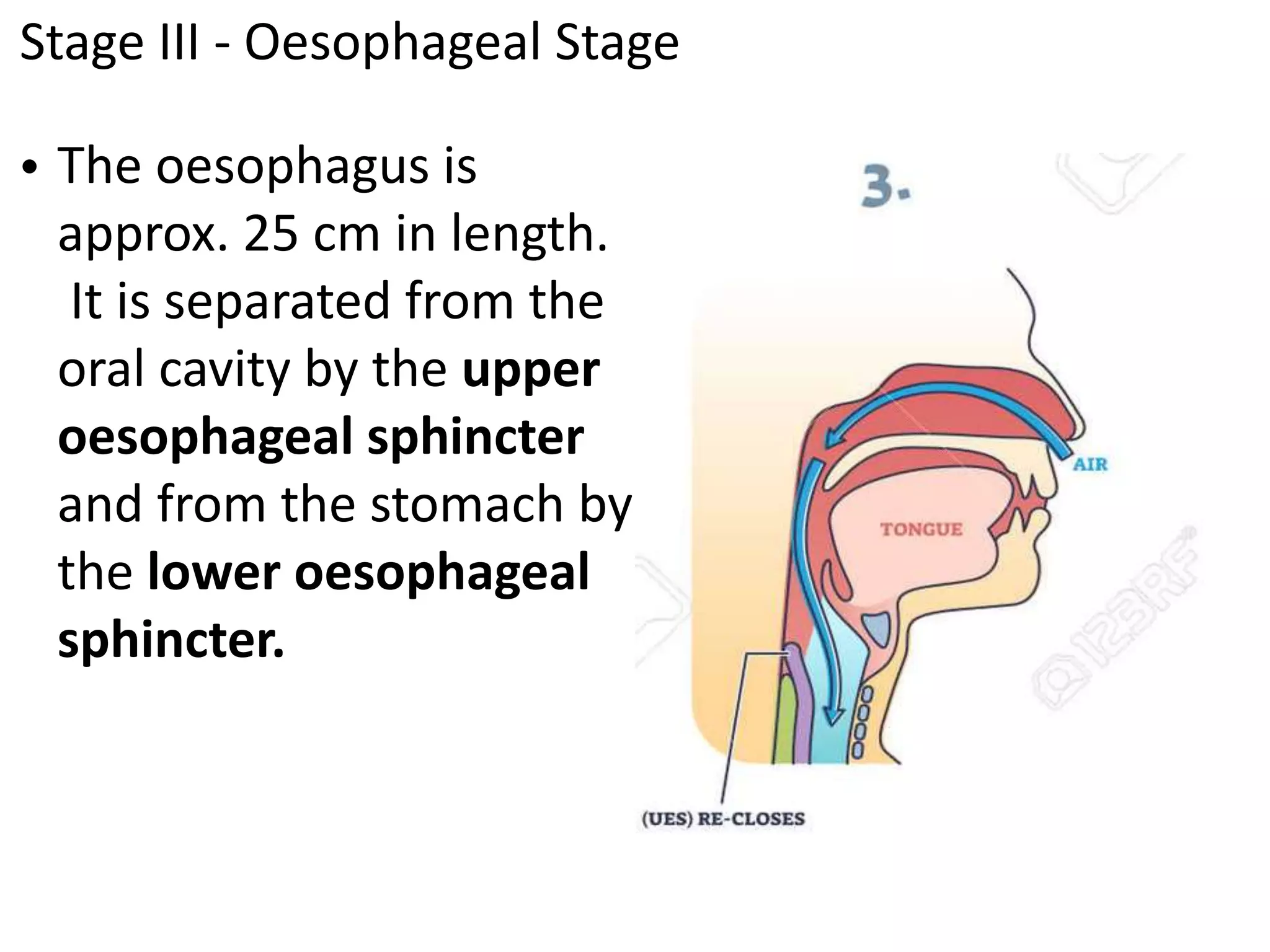
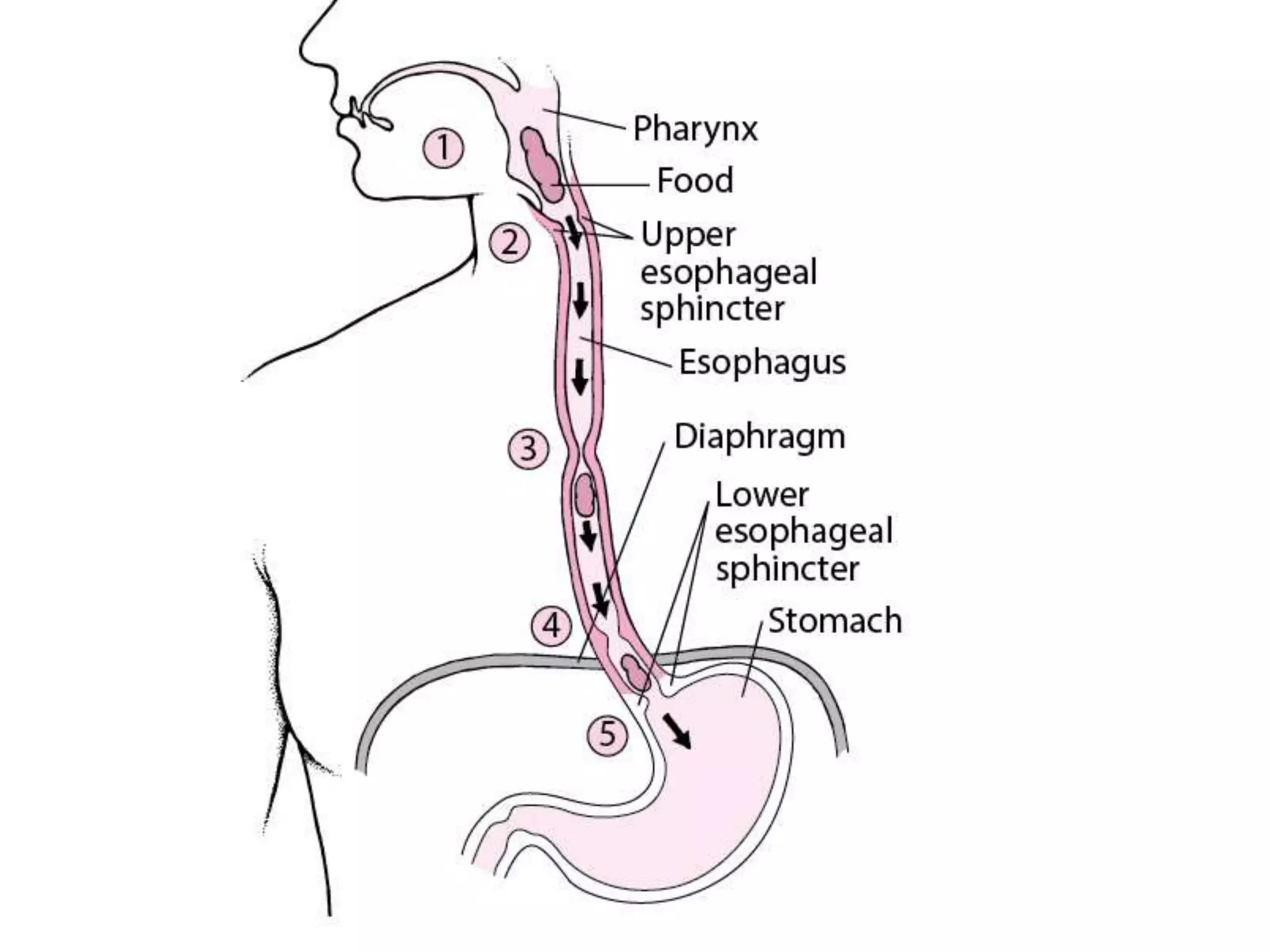
Stage III - Oesophageal Stage
• The oesophagus is
approx. 25 cm in length.
It is separated from the
oral cavity by the upper
oesophageal sphincter
and from the stomach by
the lower oesophageal
sphincter.
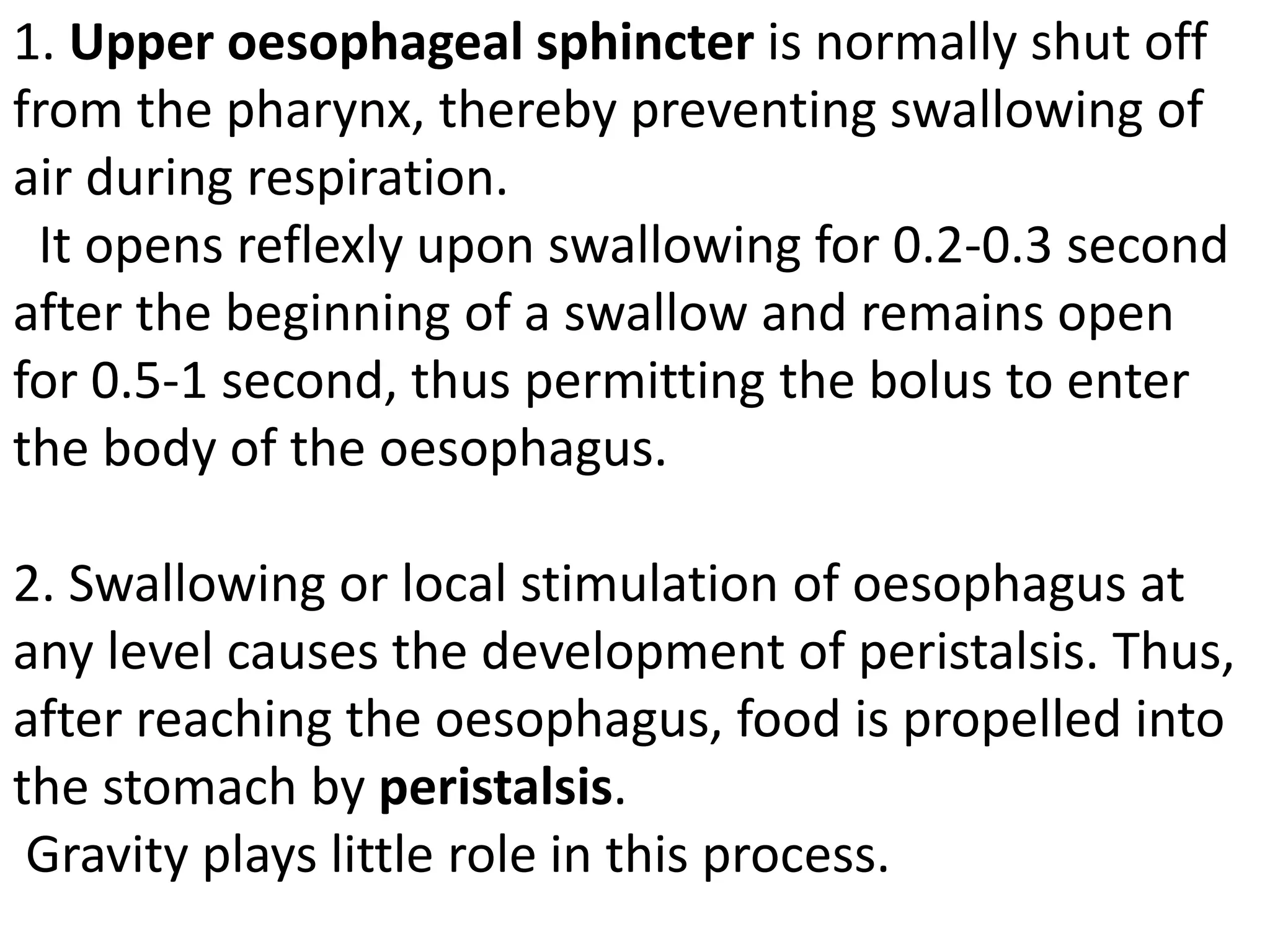
1. Upper oesophageal sphincter is normally shut off
from the pharynx, thereby preventing swallowing of
air during respiration.
It opens reflexly upon swallowing for 0.2-0.3 second
after the beginning of a swallow and remains open
for 0.5-1 second, thus permitting the bolus to enter
the body of the oesophagus.
2. Swallowing or local stimulation of oesophagus at
any level causes the development of peristalsis. Thus,
after reaching the oesophagus, food is propelled into
the stomach by peristalsis.
Gravity plays little role in this process.
3. Lower oesophageal sphincter or cardiac sphincter.
Swallowing of oesophagus with food causes reflex
relaxation of this sphincter. When peristaltic
contractions pass this region, the sphincter closes and
may undergo a strong and prolonged after contraction,
thereby preventing regurgitation (back flow) of food,
gastric juice and air.
4. The oesophageal stage for liquid food lasts for 1-2
seconds and for dry food it lasts for 10 seconds.
STOMACH
Structure and functions
FUNCTIONAL ANATOMY OF STOMACH
Stomach is a hollow organ situated just below the
diaphragm on the left side in the abdominal cavity.
Volume of empty stomach is 50 mL.
Under normal conditions, it can expand to
accommodate 1 L to 1.5 L of solids and liquids.
However, it is capable of expanding still further up to
4 L.
PARTS OF STOMACH
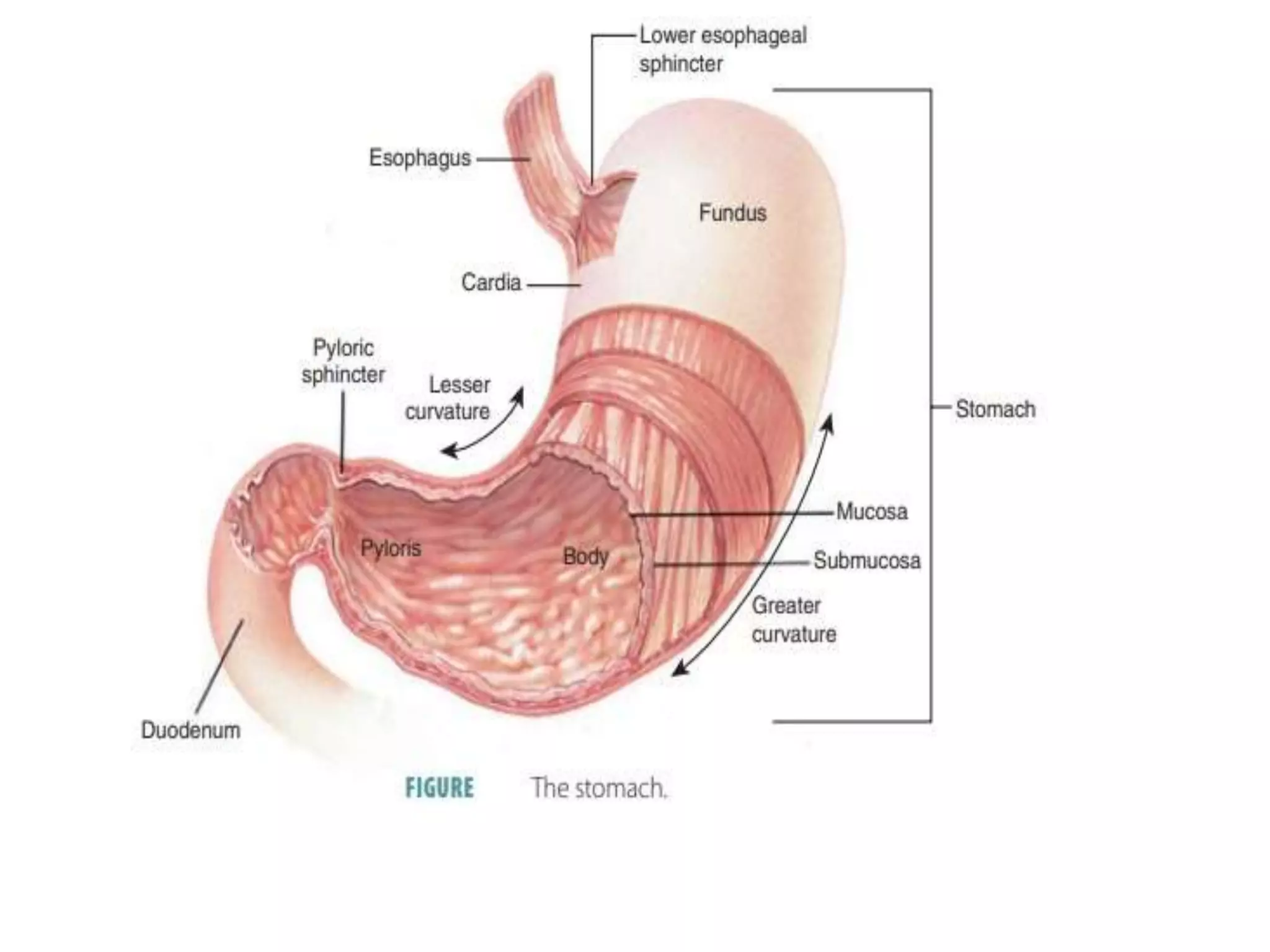
In humans, stomach has four parts:
1. Cardiac region
2. Fundus
3. Body or corpus
4. Pyloric region.
1. Cardiac Region
Cardiac region is the upper part of the stomach where
esophagus opens. The opening is guarded by a sphincter
called cardiac sphincter, which opens only towards
stomach. This portion is also known as cardiac end.
2. Fundus
Fundus is a small dome-shaped structure. It is elevated
above the level of esophageal opening.
• 3. Body or Corpus
•
• Body is the largest part of stomach forming about 75% to
80% of the whole stomach.
• It extends from just below the fundus up to the pyloric
region
• 4. Pyloric Region
•
• Pyloric region has two parts, antrum and pyloric canal.
The body of stomach ends in antrum.
• Junction between body and antrum is marked by an
angular notch called incisura angularis.
• Antrum is continued as the narrow canal, which is
called pyloric canal or pyloric end.
• Pyloric canal opens into first part of small
intestine called duodenum.
• The opening of pyloric canal is guarded by a
sphincter called pyloric sphincter. It opens
towards duodenum.
•
• Stomach has two curvatures. One on the right
side is lesser curvature and the other on left
side is greater curvature.
• Outer serous layer of stomach is peritoneum.
GLANDS OF STOMACH - GASTRIC GLANDS
Glands of the stomach or gastric glands are tubular
structures made up of different types of cells.
CLASSIFICATION OF GLANDS
1. Fundic glands,
2. Pyloric glands
3. Cardiac glands
Fundic glands, or main gastric glands:
Situated in body and fundus of stomach.
Pyloric glands: Present in the pyloric part of the
stomach
Cardiac glands: Located in the cardiac region of
the stomach.
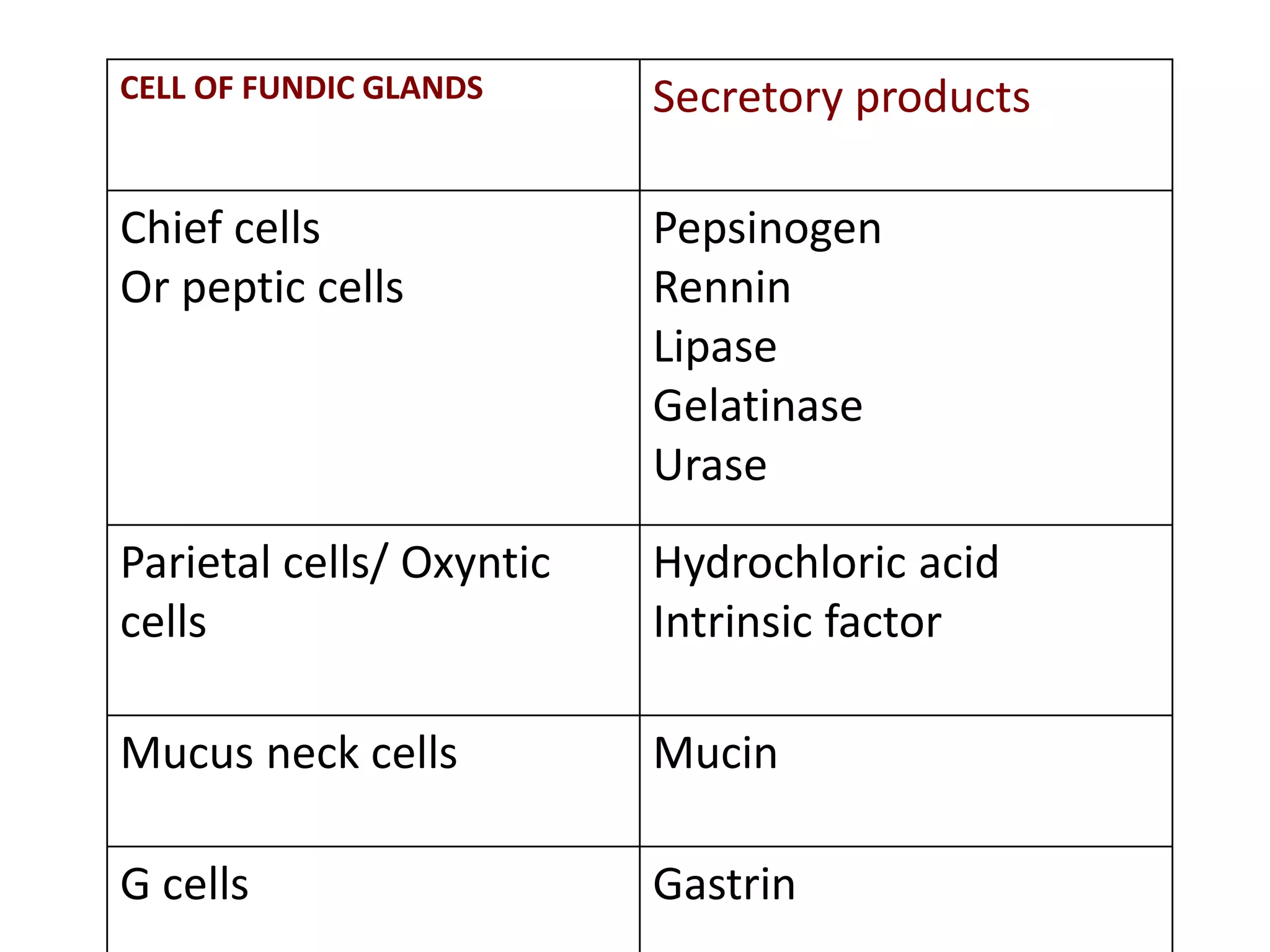
CELL OF FUNDIC GLANDS Secretory products
Chief cells
Or peptic cells
Pepsinogen
Rennin
Lipase
Gelatinase
Urase
Parietal cells/ Oxyntic
cells
Hydrochloric acid
Intrinsic factor
Mucus neck cells Mucin
G cells Gastrin
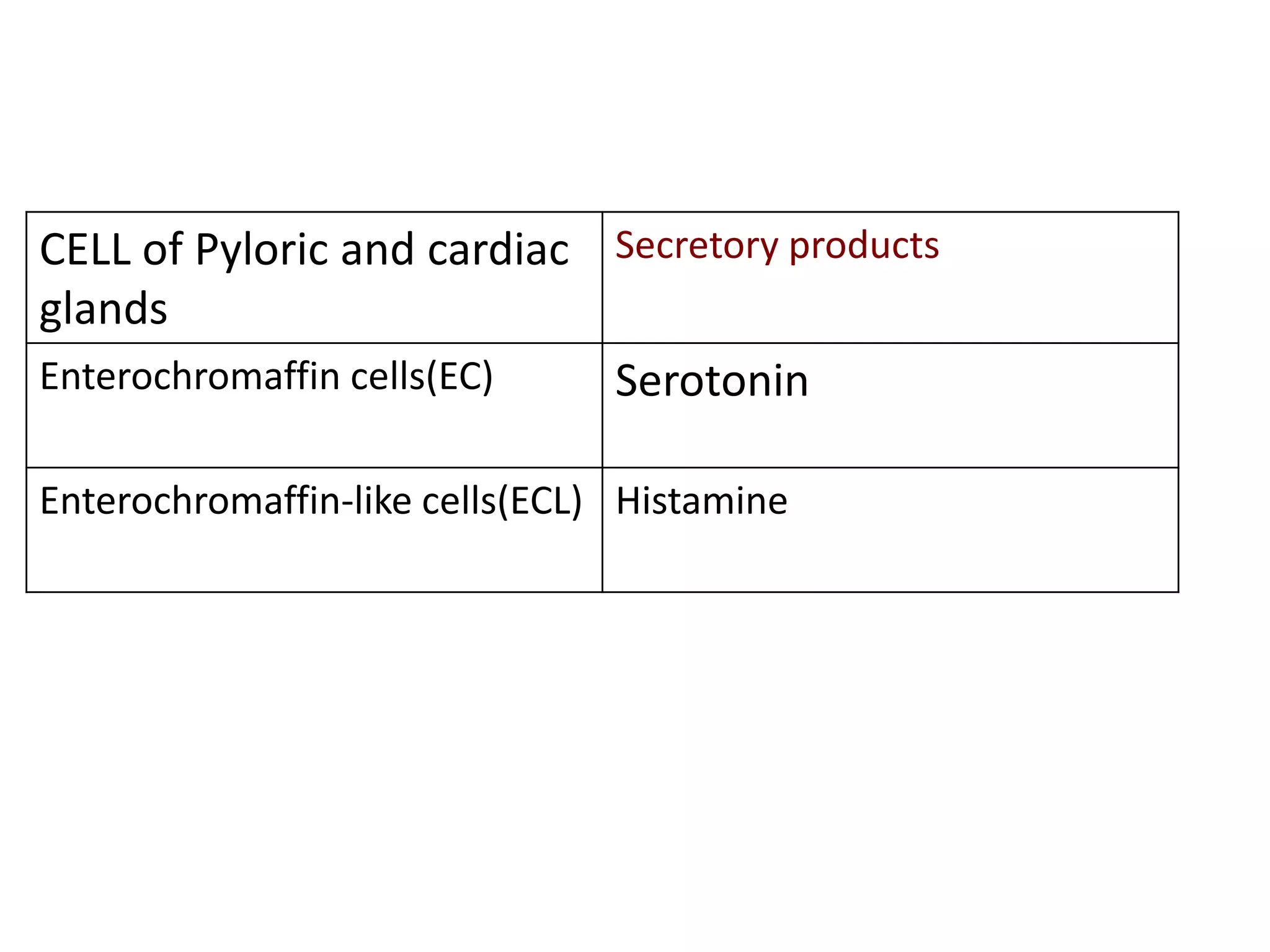
CELL of Pyloric and cardiac
glands
Secretory products
Enterochromaffin cells(EC) Serotonin
Enterochromaffin-like cells(ECL) Histamine
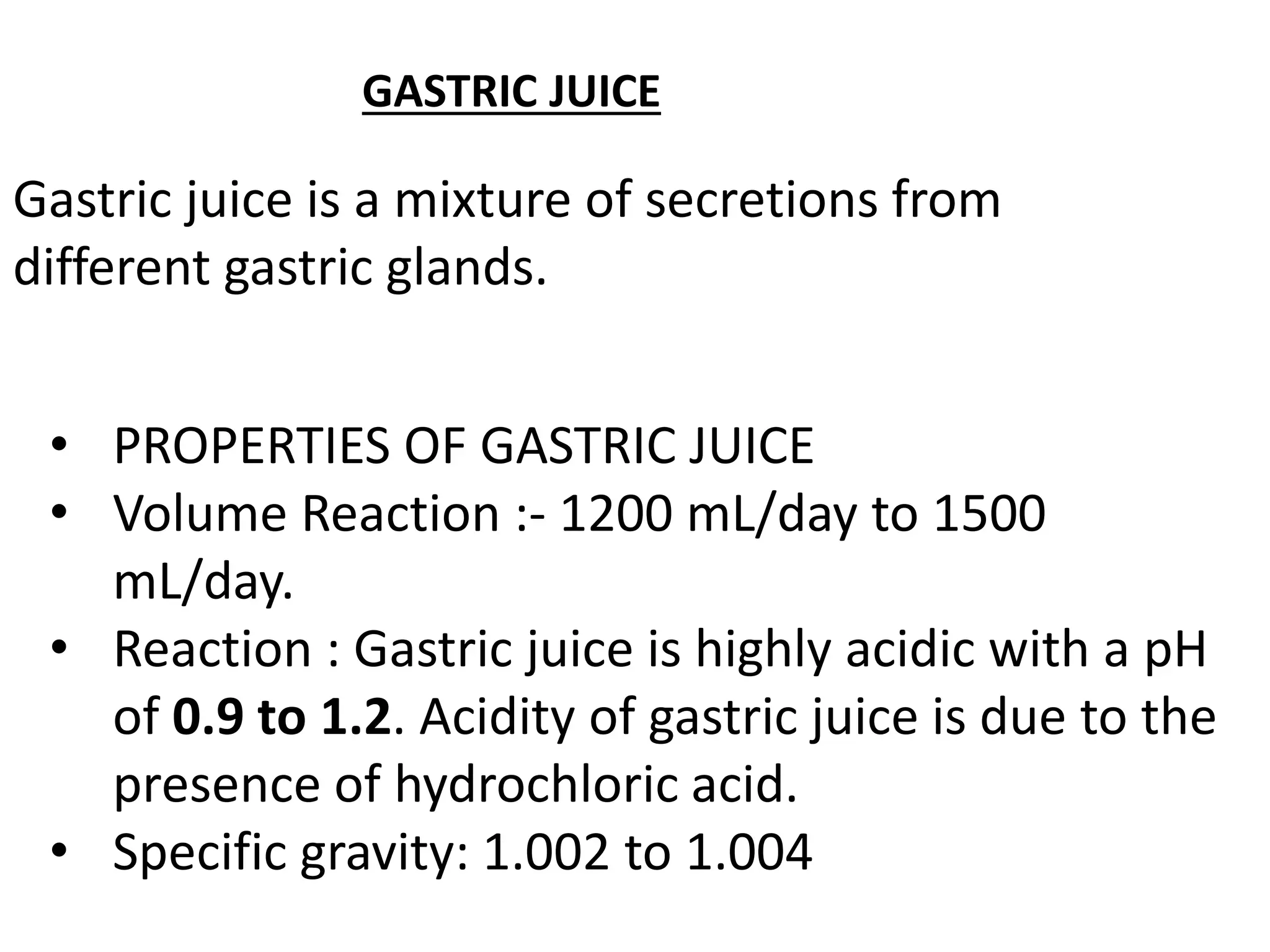
GASTRIC JUICE
Gastric juice is a mixture of secretions from
different gastric glands.
• PROPERTIES OF GASTRIC JUICE
• Volume Reaction :- 1200 mL/day to 1500
mL/day.
• Reaction : Gastric juice is highly acidic with a pH
of 0.9 to 1.2. Acidity of gastric juice is due to the
presence of hydrochloric acid.
• Specific gravity: 1.002 to 1.004
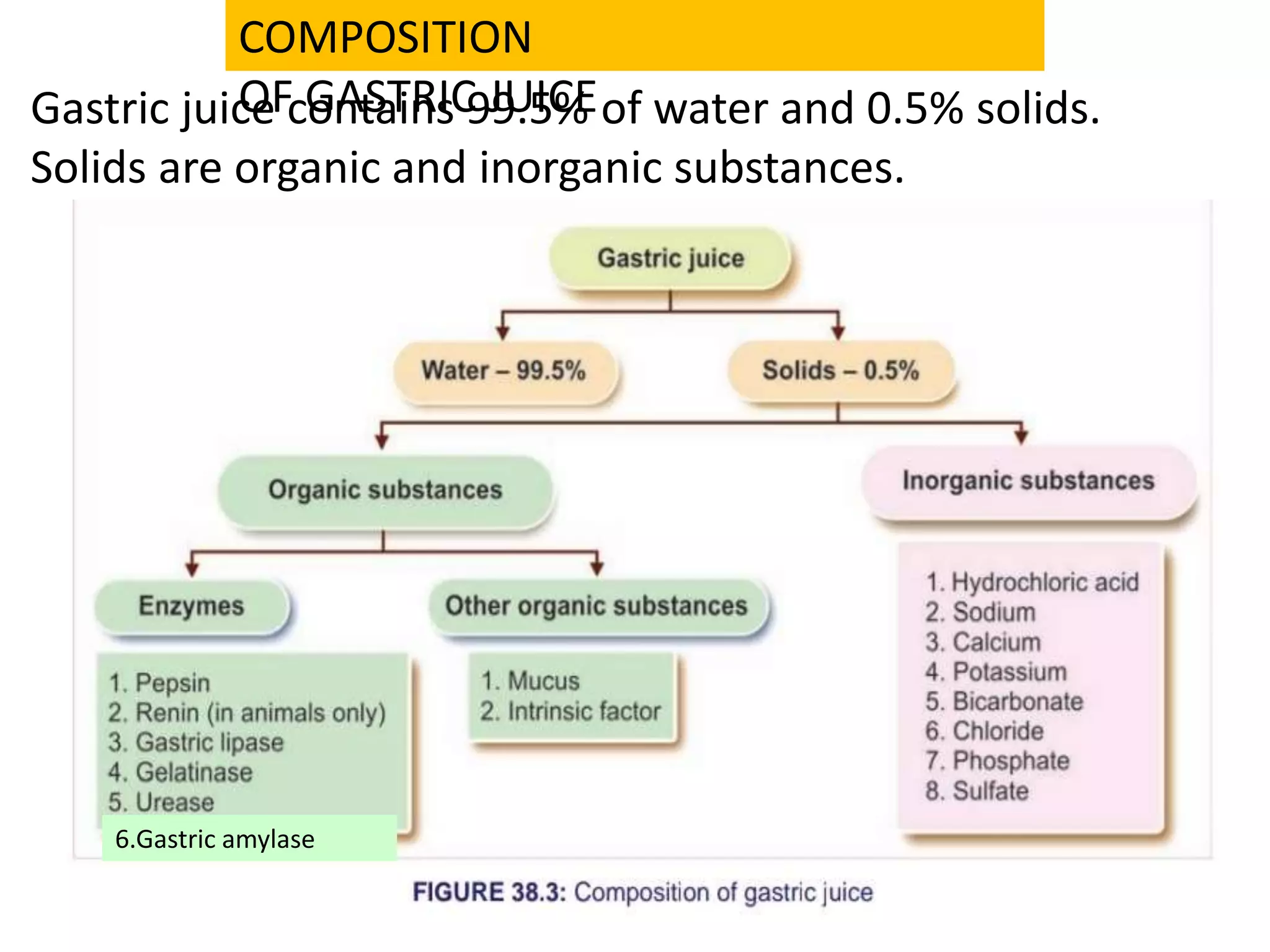
COMPOSITION
OF GASTRIC JUICE
Gastric juice contains 99.5% of water and 0.5% solids.
Solids are organic and inorganic substances.
6.Gastric amylase
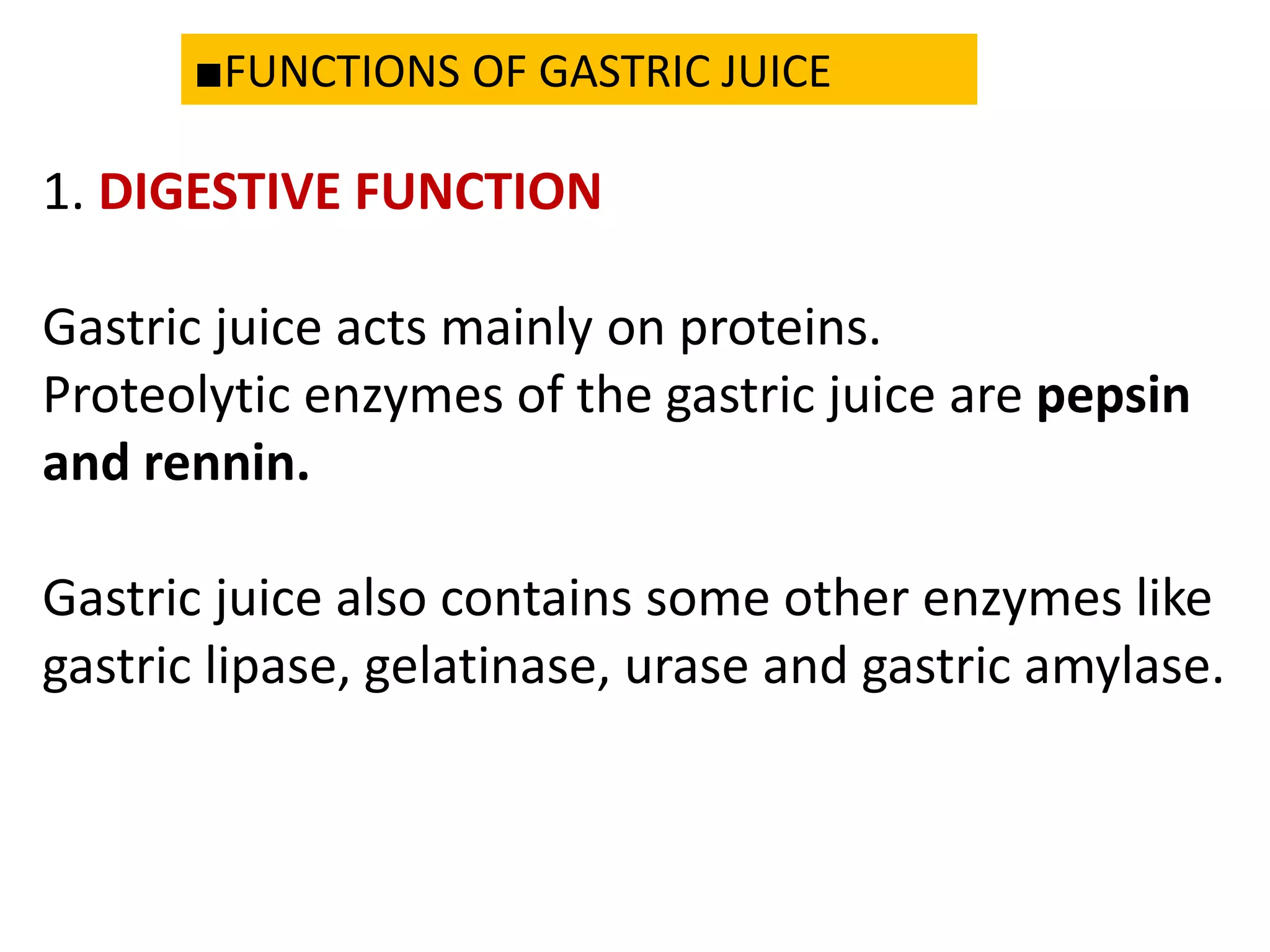
■FUNCTIONS OF GASTRIC JUICE
1. DIGESTIVE FUNCTION
Gastric juice acts mainly on proteins.
Proteolytic enzymes of the gastric juice are pepsin
and rennin.
Gastric juice also contains some other enzymes like
gastric lipase, gelatinase, urase and gastric amylase.
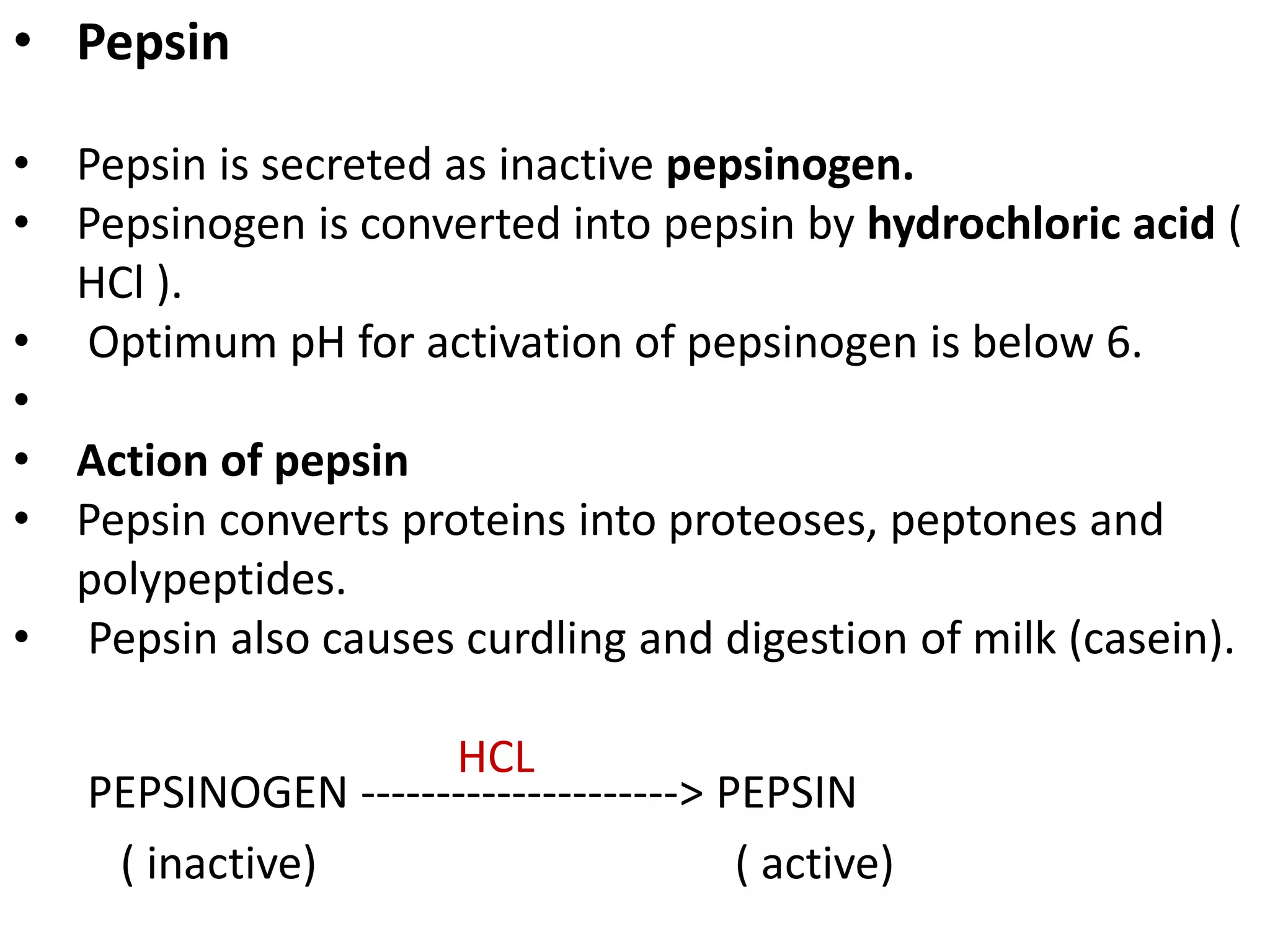
• Pepsin
• Pepsin is secreted as inactive pepsinogen.
• Pepsinogen is converted into pepsin by hydrochloric acid (
HCl ).
• Optimum pH for activation of pepsinogen is below 6.
•
• Action of pepsin
• Pepsin converts proteins into proteoses, peptones and
polypeptides.
• Pepsin also causes curdling and digestion of milk (casein).
PEPSINOGEN ---------------------> PEPSIN
( inactive) ( active)
HCL
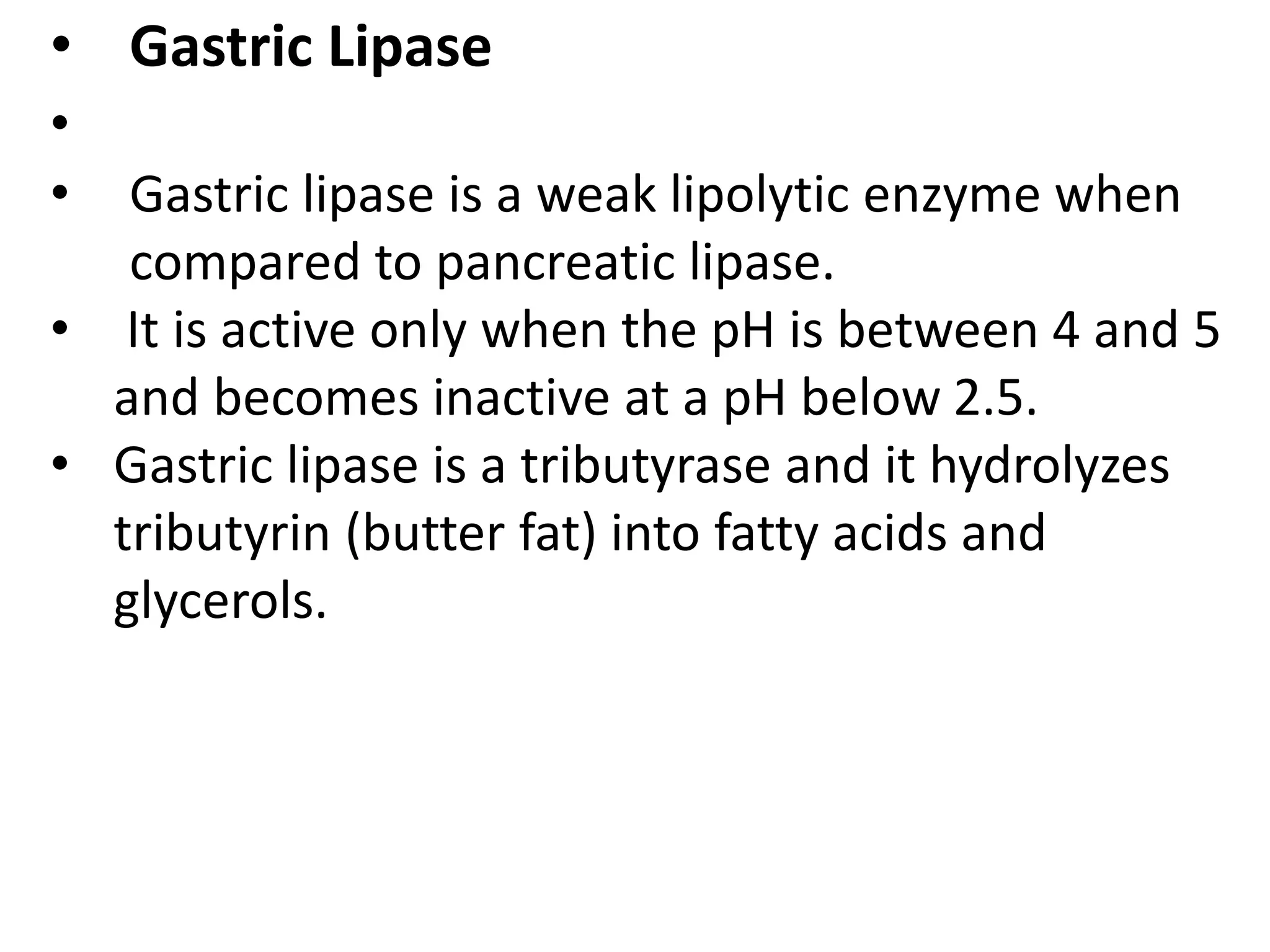
• Gastric Lipase
•
• Gastric lipase is a weak lipolytic enzyme when
compared to pancreatic lipase.
• It is active only when the pH is between 4 and 5
and becomes inactive at a pH below 2.5.
• Gastric lipase is a tributyrase and it hydrolyzes
tributyrin (butter fat) into fatty acids and
glycerols.
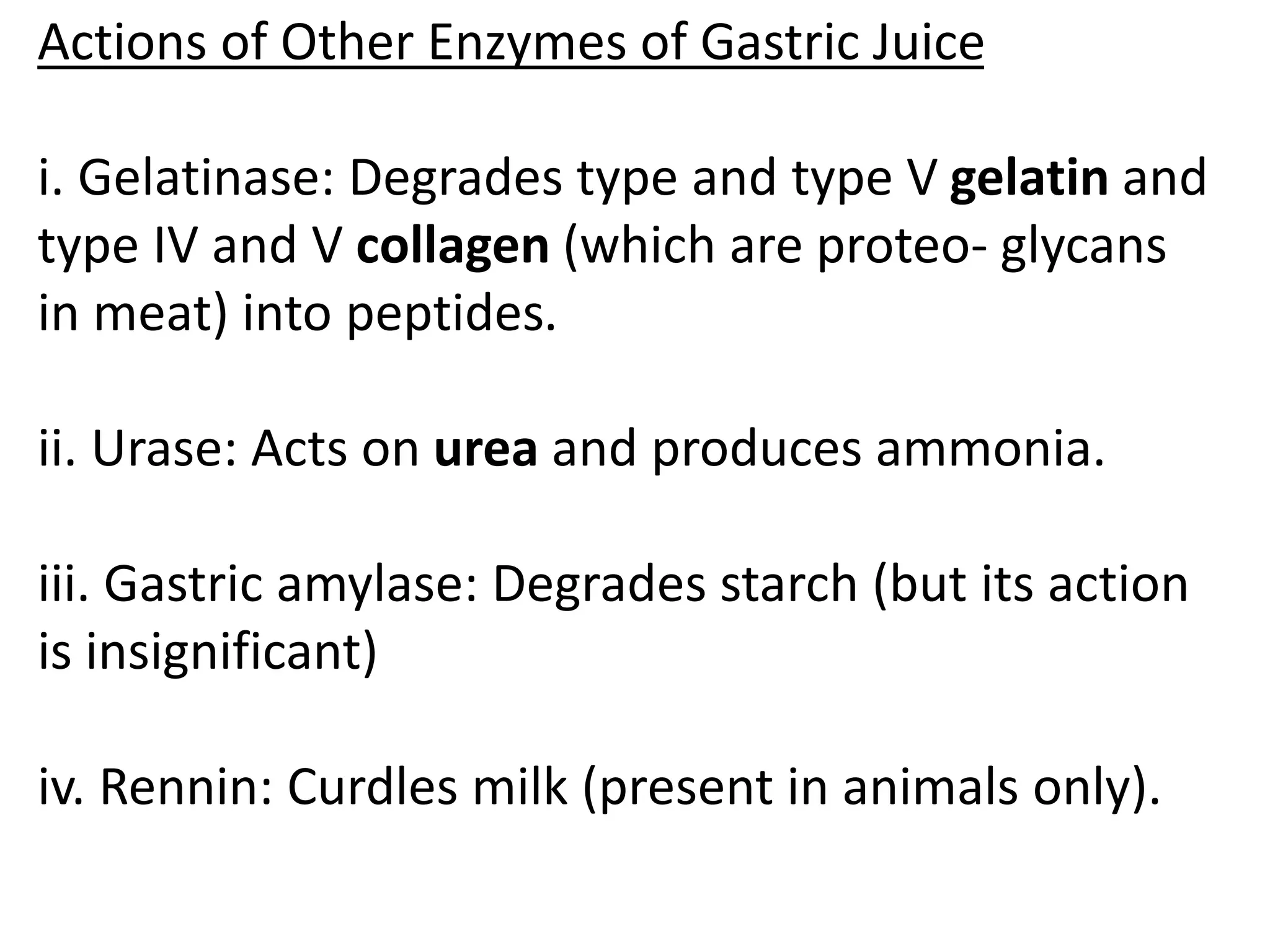
Actions of Other Enzymes of Gastric Juice
i. Gelatinase: Degrades type and type V gelatin and
type IV and V collagen (which are proteo- glycans
in meat) into peptides.
ii. Urase: Acts on urea and produces ammonia.
iii. Gastric amylase: Degrades starch (but its action
is insignificant)
iv. Rennin: Curdles milk (present in animals only).
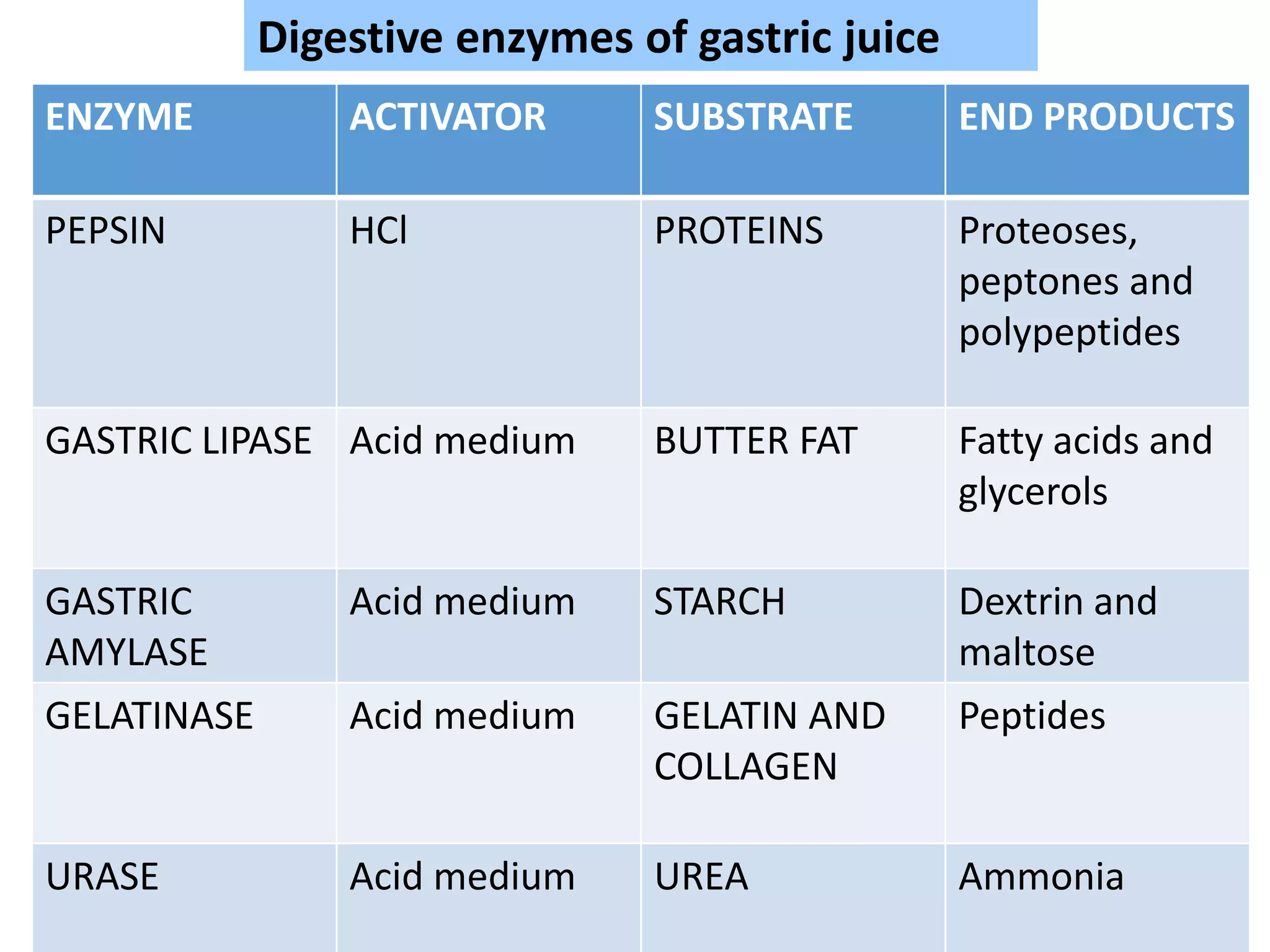
ENZYME ACTIVATOR SUBSTRATE END PRODUCTS
PEPSIN HCl PROTEINS Proteoses,
peptones and
polypeptides
GASTRIC LIPASE Acid medium BUTTER FAT Fatty acids and
glycerols
GASTRIC
AMYLASE
Acid medium STARCH Dextrin and
maltose
GELATINASE Acid medium GELATIN AND
COLLAGEN
Peptides
URASE Acid medium UREA Ammonia
Digestive enzymes of gastric juice
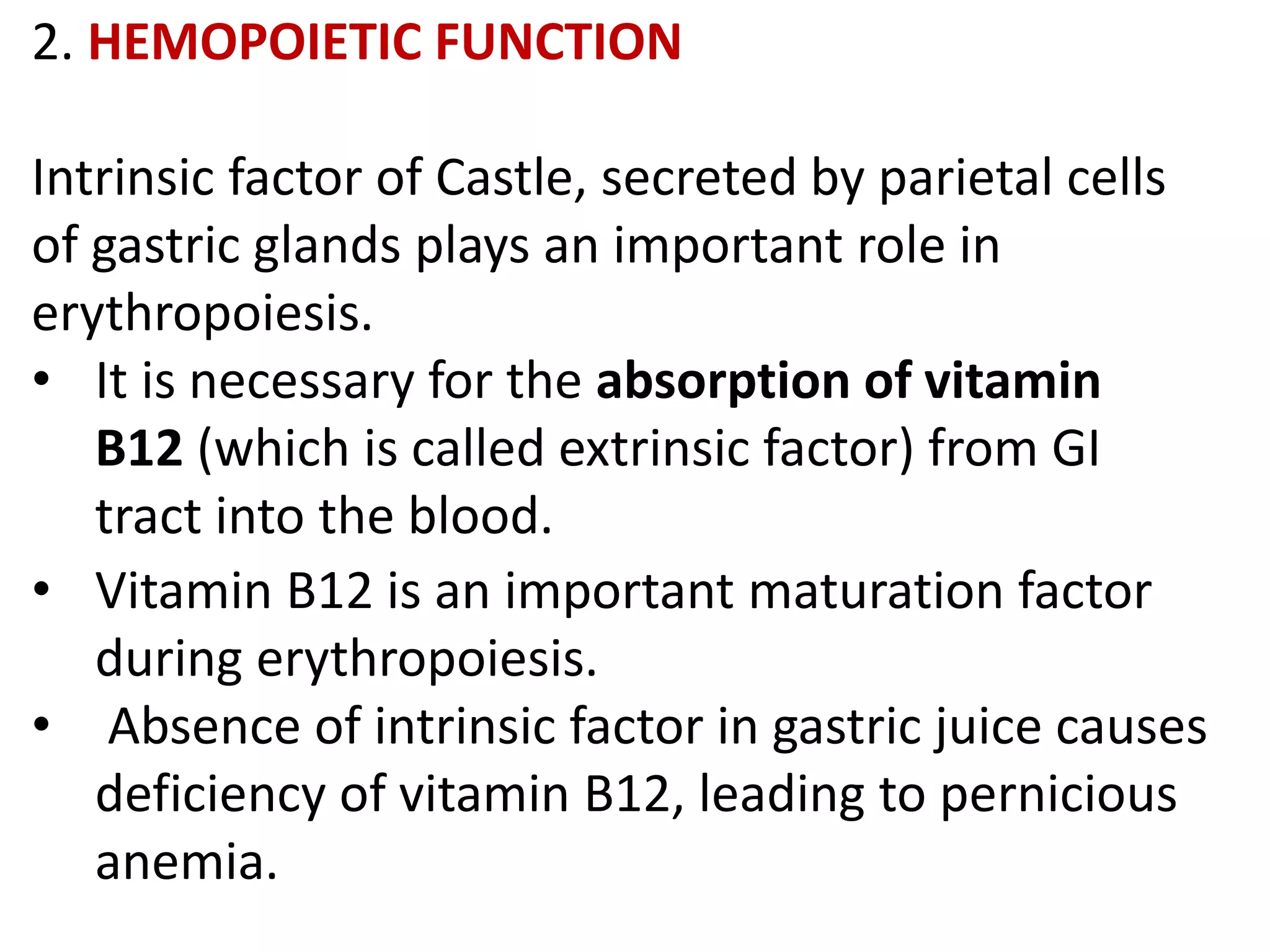
2. HEMOPOIETIC FUNCTION
Intrinsic factor of Castle, secreted by parietal cells
of gastric glands plays an important role in
erythropoiesis.
• It is necessary for the absorption of vitamin
B12 (which is called extrinsic factor) from GI
tract into the blood.
• Vitamin B12 is an important maturation factor
during erythropoiesis.
• Absence of intrinsic factor in gastric juice causes
deficiency of vitamin B12, leading to pernicious
anemia.
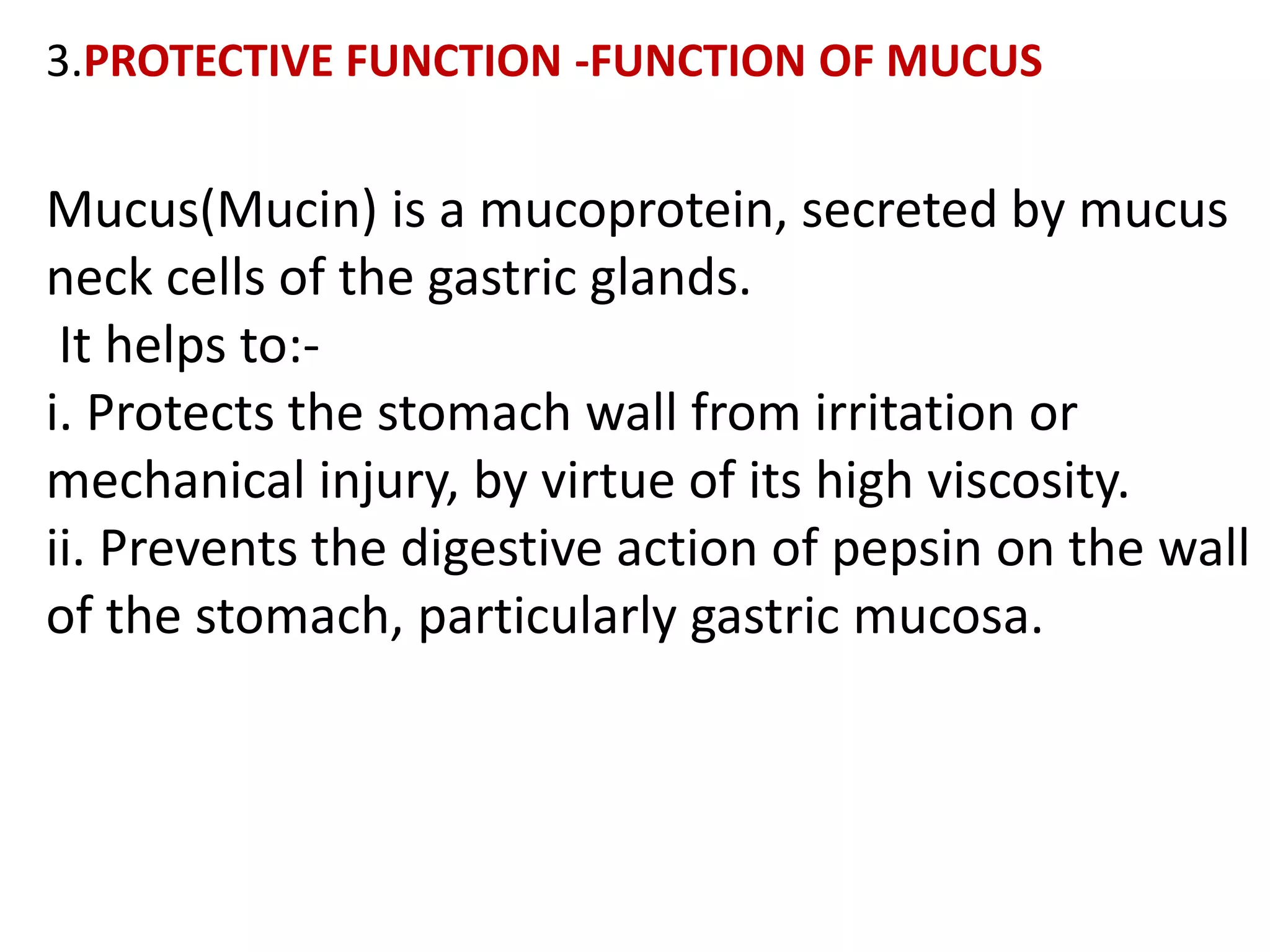
3.PROTECTIVE FUNCTION -FUNCTION OF MUCUS
Mucus(Mucin) is a mucoprotein, secreted by mucus
neck cells of the gastric glands.
It helps to:-
i. Protects the stomach wall from irritation or
mechanical injury, by virtue of its high viscosity.
ii. Prevents the digestive action of pepsin on the wall
of the stomach, particularly gastric mucosa.
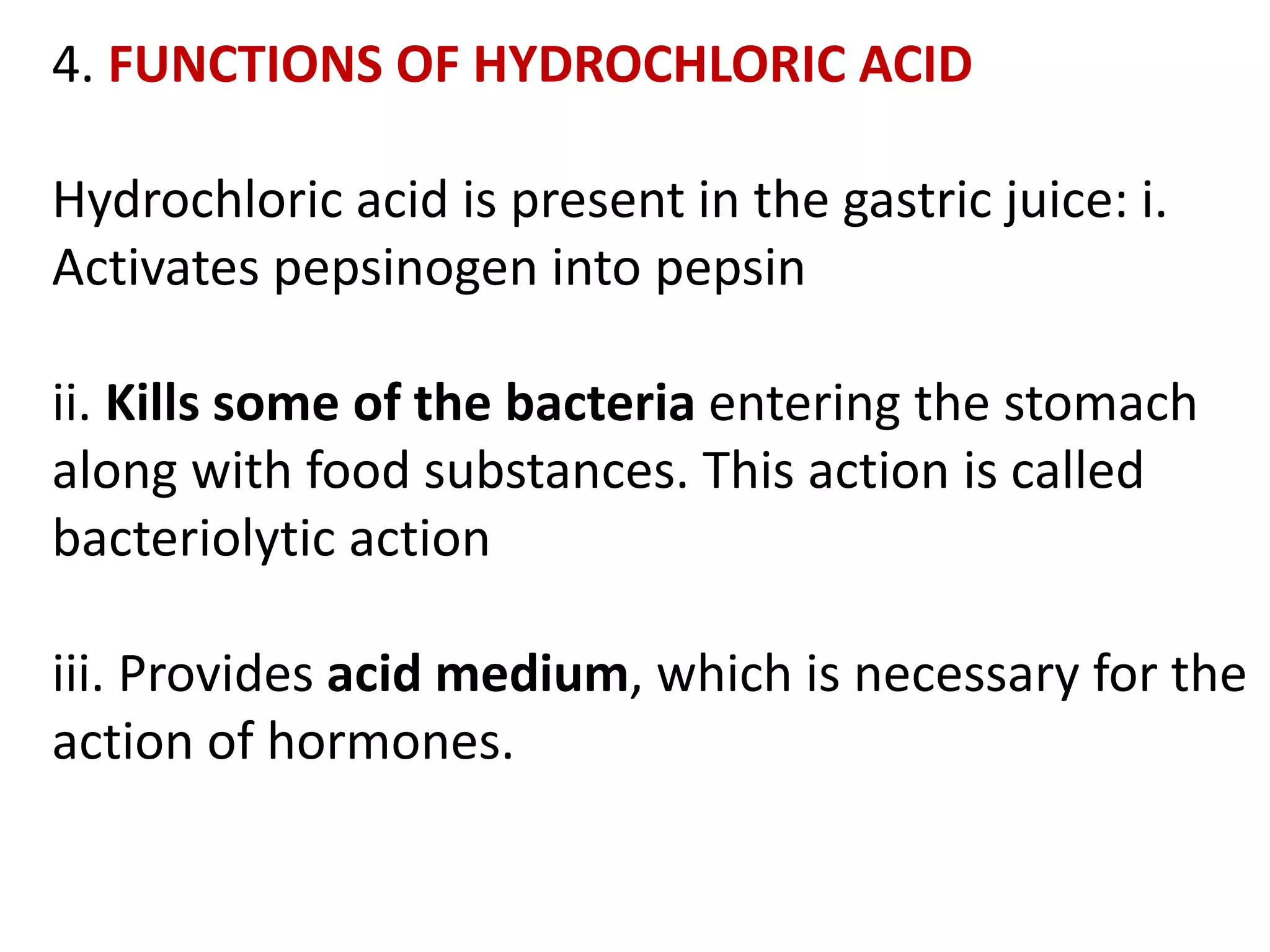
4. FUNCTIONS OF HYDROCHLORIC ACID
Hydrochloric acid is present in the gastric juice: i.
Activates pepsinogen into pepsin
ii. Kills some of the bacteria entering the stomach
along with food substances. This action is called
bacteriolytic action
iii. Provides acid medium, which is necessary for the
action of hormones.
FUNCTIONS OF STOMACH
1. MECHANICAL FUNCTION
i. Storage Function
Food is stored in the stomach for a long period, i.e.. for 3 to
4 hours and emptied into the intestine slowly.
The maximum capacity of stomach is up to 1.5 L.
Slow emptying of stomach provides enough time for proper
digestion and absorption of food substances in the small
intestine.
ii. Formation of Chyme
Peristaltic movements of stomach mix the bolus with
gastric juice and convert it into the semisolid material
known as chyme.
2.EXCRETORY FUNCTION
Many substances like toxins, alkaloids and metals are
excreted through gastric juice.
3. PROTECTIVE FUNCTION
Refer functions of gastric juice.
4. HEMOPOIETIC FUNCTION
Refer functions of gastric juice.
5.DIGESTIVE FUNCTION
Refer functions of gastric juice.
PANCREAS
• Pancreas is a dual organ having two functions,
namely
• endocrine function and exocrine function.
• Endocrine function is concerned with the
production of hormones.
• The exocrine function is concerned with
• the secretion of digestive juice called pancreatic
juice.
Structure of pancreas
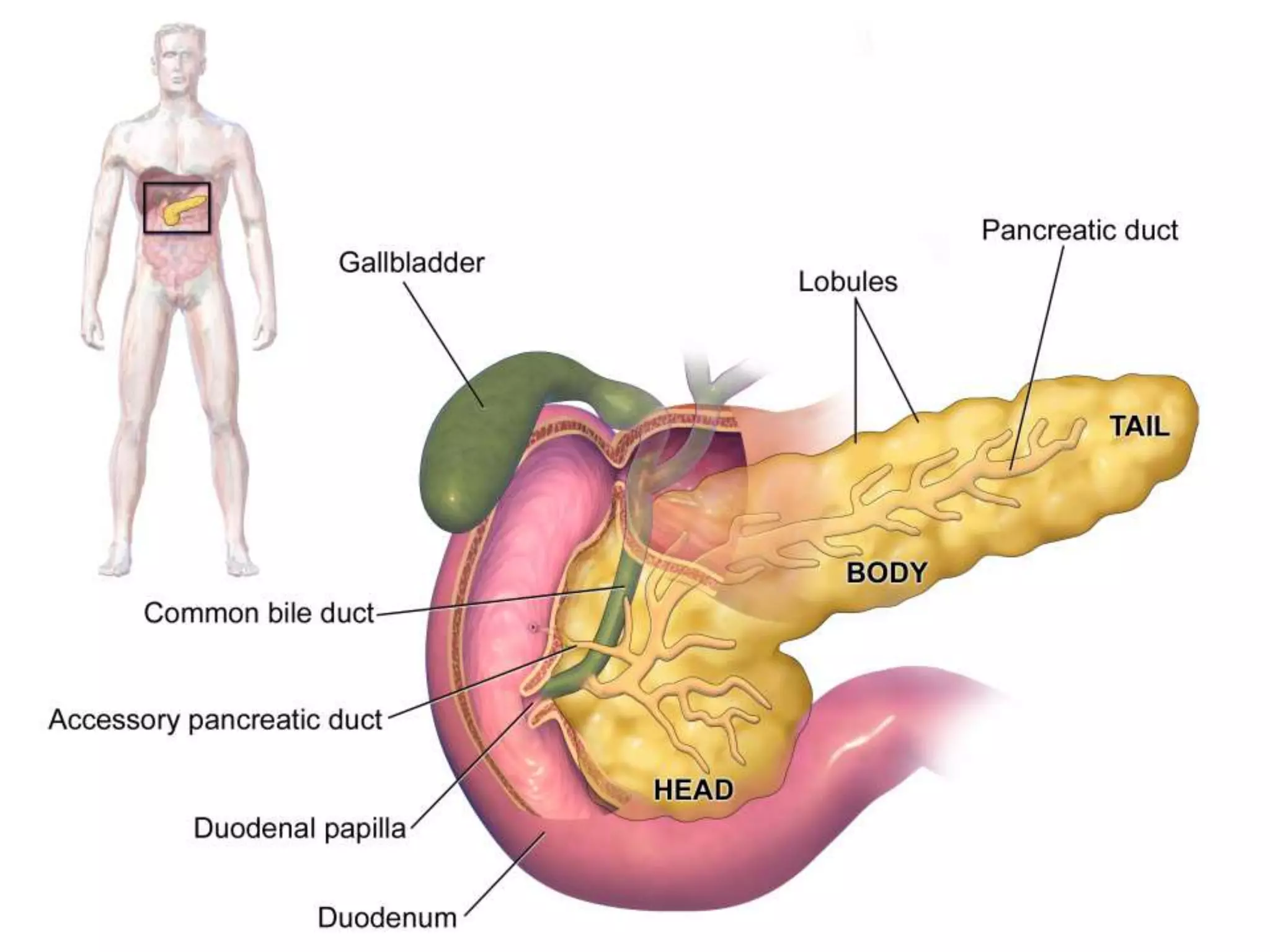
The pancreas is an elongated, tapered organ
located across the back of the belly, behind the
stomach.
The right side of the organ—called the head—is
the widest part of the organ and lies in the curve
of the duodenum, the first division of the small
intestine.
The tapered left side extends slightly upward—
called the body of the pancreas.
The ends near the spleen—called the tail.
• Exocrine part of pancreas resembles salivary gland
in
• structure.
• It is made up of acini or alveoli.
• Each acinus has a single layer of acinar cells with a
lumen in the center.
• Acinar cells contain zymogen granules, which
possess digestive enzymes.
• A small duct arises from lumen of each alveolus.
• Some of these ducts from neighboring alveoli unite
to form intralobular duct.
„PROPERTIES OF PANCREATIC JUICE
Volume : 500 to 800 mL/day
Reaction : Highly alkaline with a pH of 8 to 8.3
Specific gravity : 1.010 to 1.018
• PANCREAS SECRETE PANCREATIC JUICE
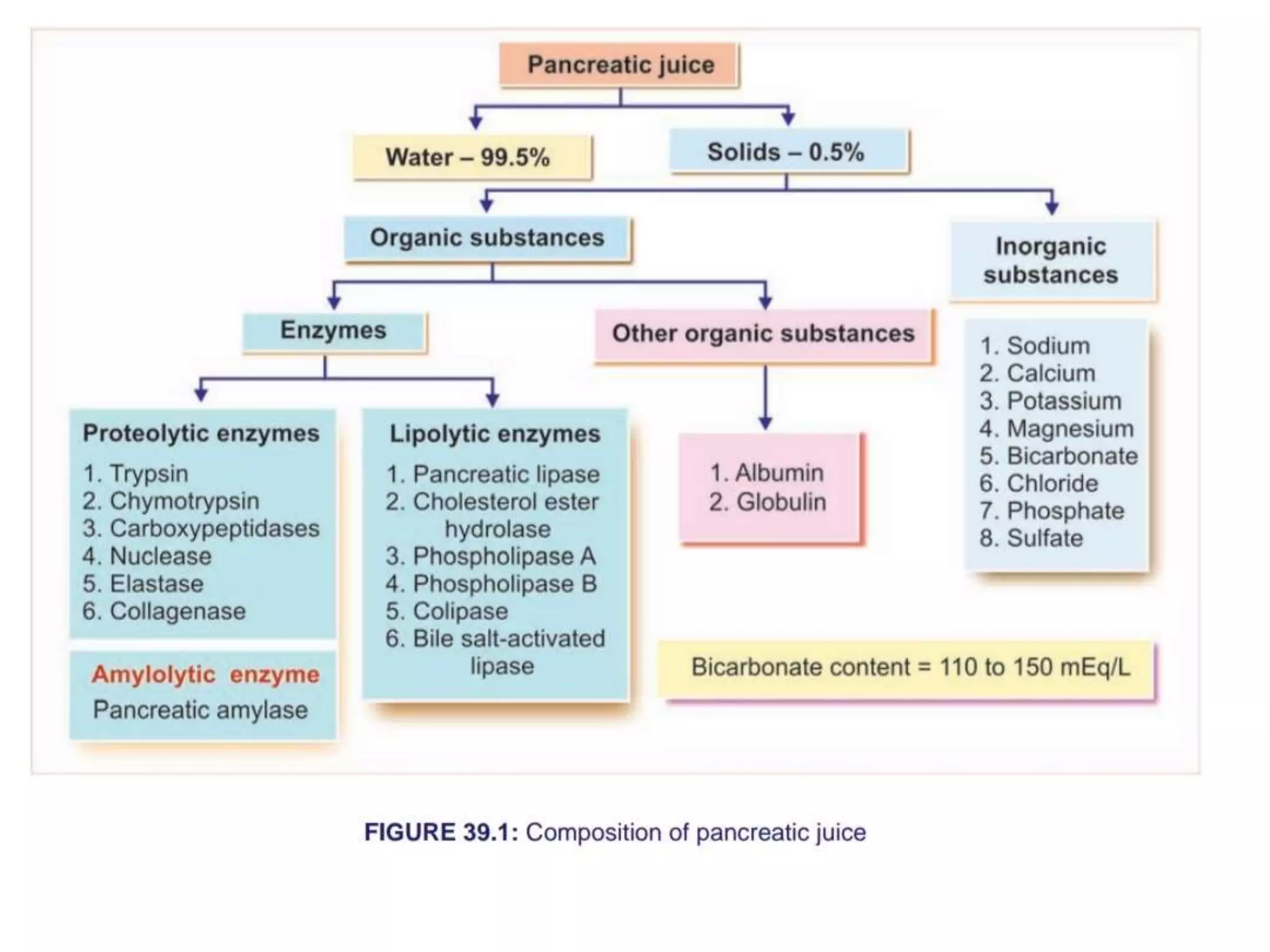
COMPOSITION OF PANCREATIC JUICE
• Pancreatic juice contains 99.5% of water and 0.5%
• of solids.
• Bicarbonate content is very high in pancreatic
juice.
High bicarbonate content of pancreatic juice
is important because of two reasons:
i. High bicarbonate content makes the pancreatic
juice highly alkaline, so that it protects the intestinal
mucosa from acid chyme by neutralizing it.
ii. Bicarbonate ions provide the required pH (7 to 9)
for the activation of pancreatic enzymes.
FUNCTIONS OF PANCREATIC JUICE
Pancreatic juice has digestive functions and
neutralizing action.
1.DIGESTIVE FUNCTIONS
• Pancreatic juice plays an important role in the
digestion of proteins and lipids.
• It also has mild digestive action
• on carbohydrates.
•
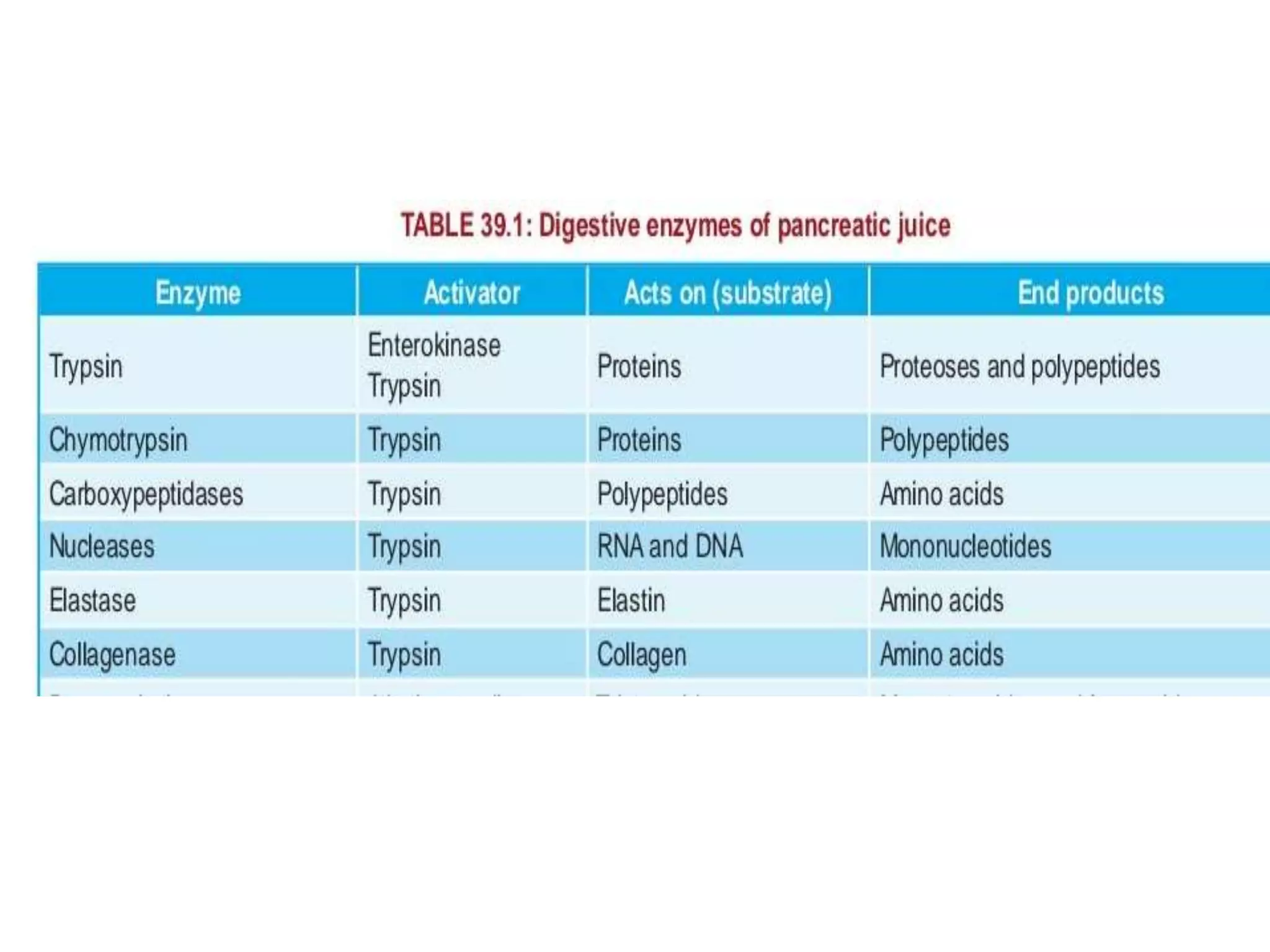
DIGESTION OF PROTEINS
Major proteolytic enzymes of pancreatic juice are
trypsin and chymotrypsin.
Other proteolytic enzymes are carboxypeptidases,
nuclease, elastase and collagenase.
1. Trypsin
Trypsin is a single polypeptide with a molecular
weight
of 25,000. It contains 229 amino acids.
It is secreted as inactive trypsinogen, which
is converted into active trypsin by enterokinase.
Actions of trypsin
i. Digestion of proteins: Trypsin is the most powerful
proteolytic enzyme. It is an endopeptidase and
breaks the interior bonds of the protein molecules
and converts proteins into proteoses and
polypeptides
ii. Curdling of milk: It converts caseinogen in the
milk into casein
iii. Blood clotting: It accelerates blood clotting
iv. It activates the other enzymes of pancreatic
juice,
a. Chymotrypsinogen into chymotrypsin
b. Procarboxypeptidases into carboxypeptidases
c. Proelastase into elastase
d. Procolipase into colipase
v. Trypsin also activates collagenase, phospholipase A
and phospholipase B
vi. Autocatalytic action: Once formed, trypsin itself
converts trypsinogen into trypsin.
2. Chymotrypsin
Chymotrypsin is a polypeptide with a molecular
weight of 25,700 and 246 amino acids. It is secreted
as inactive chymotrypsinogen, which is activated
into chymotrypsin by trypsin.
Actions of chymotrypsin
i. Digestion of proteins: Chymotrypsin is also an
endopeptidase and it converts proteins into
polypeptides.
ii. Digestion of milk: Chymotrypsin digests caseino-
gen faster than trypsin. Combination of both
enzymes causes rapid digestion of milk
3. Carboxypeptidases
Carboxypeptidases are carboxypeptidase and
carboxy- peptidase B.
Carboxypeptidase A is derived from the
precursor procarboxypeptidase A.
Carboxypeptidase B is derived from
procarboxypeptidase B.
Procarboxypeptidases are activated into
carboxypeptidases by trypsin.
Actions of carboxypeptidases
Carboxypeptidases are exopeptidases and break the
terminal bond of protein molecules. Exopeptidases
split the polypeptides and other proteins into amino
acids.
Carboxypeptidase A splits the proteins into amino
acids having aromatic or aliphatic side chains.
Carboxypeptidase B converts the proteins into
amino acids having basic side chains.
4. Nucleases
Nucleases of pancreatic juice are ribonuclease and
deoxyribonuclease, which are responsible for the
digestion of nucleic acids.
These enzymes convert the ribonucleic acid (RNA)
and deoxyribonucleic acid (DNA) into
mononucleotides.
5. Elastase
Elastase is secreted as inactive proelastase, which is
activated into elastase by trypsin. Elastase digests the
elastic fibers.
6. Collagenase
Collagenase is secreted as inactive procollagenase,
which is activated into collagenase by trypsin. It
digests collagen.
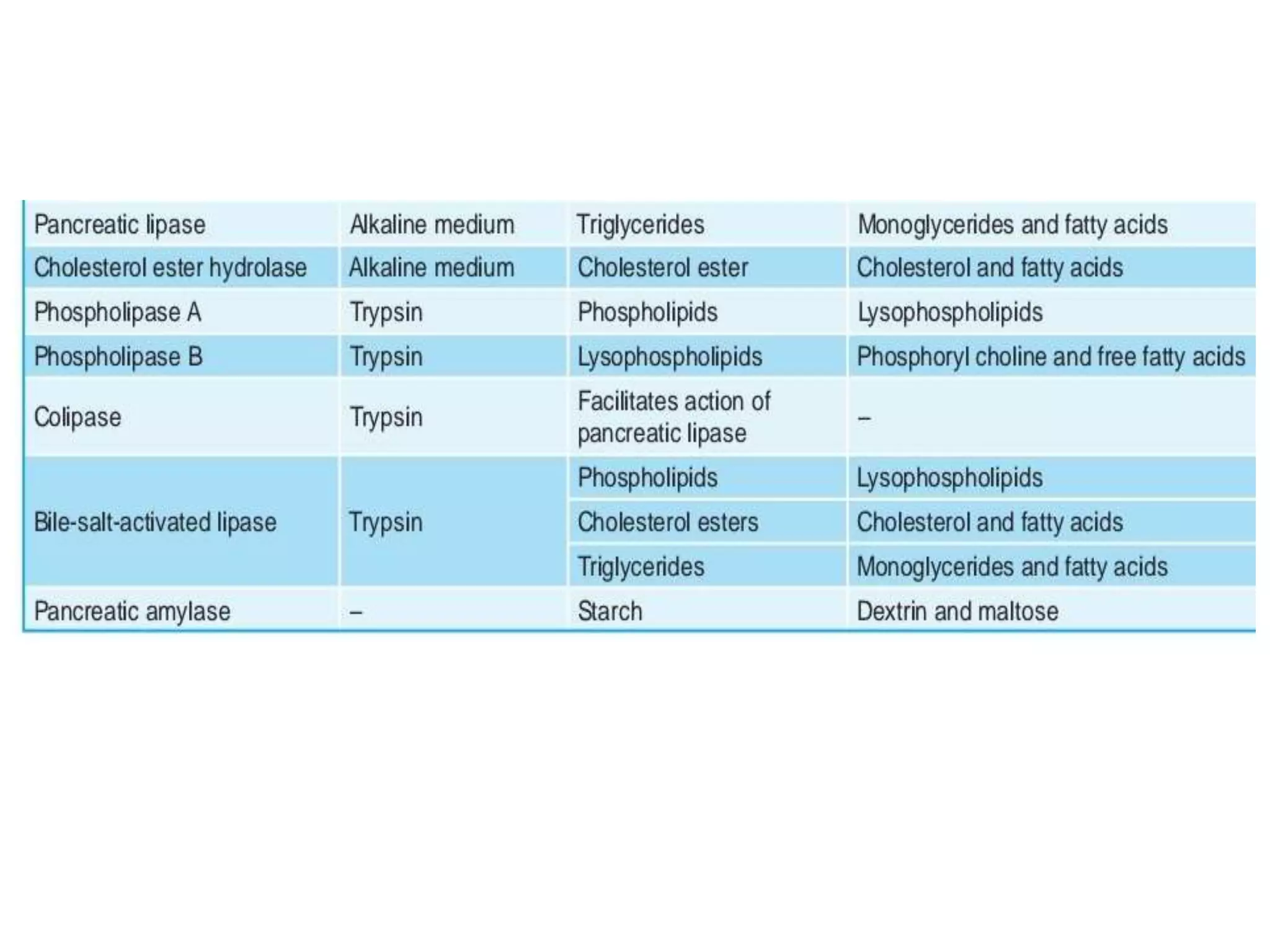
DIGESTION OF LIPIDS
Lipolytic enzymes in pancreatic juice are pancreatic
lipase, cholesterol ester hydrolase, phospholipase A,
phospholipase B, colipase and bile-salt-activated
lipase.
1. Pancreatic lipase
Pancreatic lipase is a powerful lipolytic enzyme.
It digests triglycerides into monoglycerides and fatty
acids.
2. Cholesterol ester hydrolase
Cholesterol ester hydrolase or cholesterol esterase
converts cholesterol ester into free cholesterol and
fatty acid by hydrolysis.
3. Phospholipase A
Phospholipase A is activated by trypsin. Phospholipase
A digests phospholipids, namely lecithin and cephalin
and converts them into lysophospholipids.
It converts lecithin into lysolecithin and cephalin into
lysocephalin.
4. Phospholipase B
Phospholipase B is also activated by trypsin. It
converts lysophospholipids (lysolecithin and
lysocephalin) to phosphoryl choline and free fatty
acids.
5. Colipase
Colipase is a small coenzyme, secreted as inactive
procolipase.
Procolipase is activated into colipase by trypsin.
Colipase facilitates digestive action of pancreatic
lipase on fats.
6. Bile-salt-activated lipase
Bilesaltactivated lipase is the lipolytic enzyme
activated by bile salt.
It is also called carboxyl ester lipase or
cholesterol esterase.
This enzyme has a weak lipolytic action than
pancreatic lipase.
But it hydrolyses a variety of lipids such as
phospholipids, cholesterol esters and
triglycerides.
DIGESTIVE SYSTEM -PHYSIOLOGY

DIGESTIVE SYSTEM -PHYSIOLOGY

  • 1.
    DIGESTIVE SYSTEM - AYSHATHSAFWANA A Physiology
  • 3.
    FUNCTION OF DIGESTIVESYSTEM 1. Ingestion involves: (i)placing the food into the mouth; (ii) chewing the food into smaller pieces (mastication); (iii) moistening the food with salivary secretions; and (iv) swallowing the food (deglutition). 2. Digestion: During digestion, food is broken down into small particles by the grinding action of the GIT and then degraded by digestive enzymes into utilizable nutrients.
  • 4.
    3. Absorption: Duringabsorption, nutrients, water and electrolytes are transported from the GIT (mainly from the small intestine) to the circulation. 4. Egestion: During egestion, the undigested food, along with various secretions and sloughed-off epithelial cells from the GIT, pass into the rectum and constitute the faeces, which are removed through the anus at periodic intervals.
  • 5.
  • 7.
    WALL OF GASTROINTESTINALTRACT In general, wall of the GI tract is formed by four layers which are from inside out: 1. Mucus layer(Mucosa) 2. Submucus layer(Submucosa) 3. Muscular layer(Muscularis) 4. Serous or fibrous layer.(Serosa)
  • 10.
    1. MUCUS LAYER Mucuslayer is the innermost layer of the wall of GI tract. It is also called gastrointestinal mucosa or mucus membrane. It faces the cavity of GI tract. Mucosa has three layer of structures: I.Epithelial lining ii. Lamina propria Ill Muscularis mucosa.
  • 11.
    • Epithelial Lining •Epithelial lining is in contact with the contents of GI tract. The type of cells in this layer varies in different parts of GI tract. • The inner surface of mouth, surface of tongue, inner surface of pharynx and esophagus have stratified squamous epithelialcells. • However, mucus membrane lining the other parts such as stomach, small intestine and large intestine has columnar epithelial cells.
  • 12.
    • Lamina Propria •Lamina propria is formed by connective tissues, which contain fibroblasts, macrophages, lymphocytes and eosinophils. • Muscularis Mucosa • Muscularis mucosa layer consists of a thin layer of smooth muscle fibers. It is absent in mouth and pharynx. • It is present from esophagus onwards.
  • 13.
    2. SUBMUCUS LAYER •Submucus layer is also present in all parts of GI tract, except the mouth and pharynx. • It contains loose collagen fibers, elastic fibers, reticular fibers and few cells of connective tissue. • Blood vessels, lymphatic vessels and nerve plexus are present in this layer.
  • 14.
    3. MUSCULAR LAYER •Muscular layer in lips, cheeks and wall of pharynx contains skeletal muscle fibers. • The esophagus has both skeletal and smooth muscle fibers. • Wall of the stomach and intestine is formed by smooth muscle fibers. • Smooth muscle fibers in stomach are arranged in three layers: • i. Inner oblique layer • ii.Middle circular layer • iii. Outer longitudinal layer.
  • 15.
    Smooth muscle fibersin the intestine are arranged two layers: i. Inner circular layer ii. Outer longitudinal layer. Auerbach nerve plexus is present in between the circular and longitudinal muscle fibers. The smooth muscle fibers present in inner circular layer of anal canal constitute internal anal sphincter.The external anal sphincter is formed by skeletal muscle fibers.
  • 16.
    4. SEROUS ORFIBROUS LAYER • Outermost layer of the wall of GI tract is either serous or fibrous in nature. • The serous layer is also called serosa or serous membrane and it is formed by connective tissue and mesoepithelial cells. • It covers stomach, small intestine and large intestine. • The fibrous layer is otherwise called fibrosa and it is formed by connective tissue. • It covers pharynx and esophagus.
  • 17.
    • Mouth isotherwise known as oral cavity or buccal cavity. It is formed by cheeks, lips and palate. • It encloses the teeth, tongue and salivary glands. • Mouth opens anteriorly to the exterior through lips and posteriorly through fauces into the pharynx. • Digestive juice present in the mouth is saliva, which is secreted by the salivary glands. MOUTH
  • 19.
    FUNCTIONS OF MOUTH Primaryfunction of mouth is eating and it has few other important functions also. Functions of mouth include: 1. Ingestion of food materials 2. Chewing the food and mixing it with saliva 3. Appreciation of taste of the food 4. Transfer of food (bolus) to the esophagus by swallowing.
  • 20.
    SALIVARY GLANDS In humans,the saliva is secreted by three pairs of major (larger) salivary glands. MAJOR SALIVARY GLANDS Major glands are: 1. Parotid glands 2. Submaxillary or submandibular glands 3. Sublingual glands.
  • 22.
    1. Parotid Glands Parotidglands are the largest of all salivary glands, situated at the side of the face just below and in front of the ear. Secretions from these glands are emptied into the oral cavity by Stensen duct.
  • 23.
    2. Submaxillary Glands Submaxillaryglands or submandibular glands are located in submaxillary triangle, medial to mandible. Saliva from these glands is emptied into the oral cavity by Wharton duct.
  • 24.
    3. Sublingual Glands Sublingualglands are the smallest salivary glands situated in the mucosa at the floor of the mouth. Saliva from these glands is poured into 5 to 15 small ducts called ducts of Rivinus. These ducts open on small papillae beneath the tongue. One of the ducts is larger and it is called Bartholin duct.
  • 25.
    Gland Duct Parotid glandStensen duct Submaxillary gland Wharton duct Sublingual gland Ducts of Rivinus/Bartholin duct
  • 26.
    COMPOSITION AND FUNCTIONSOF SALIVA • SALIVARY GLAND SECRETE SALIVA Salivary glands contain chiefly two types of cells: 1. Mucous cells. 2. Serous' cells. • Mucous cells form a viscous secretion containing mucin. • serous cells form a thin watery secretion containing salivary α-amylase (also called ptyalin).
  • 27.
    Daily secretion ofsaliva - 1500 ml/day. Digestive enzymes: 1. Salivary amylase- helps in digestion of starch. 2. lysozymes- kills bacteria 3. Lipase. • • Mucin • It lubricates food and protect oral mucosa. • Protect tooth enamel.
  • 28.
    It is areflex response controlled via vagus (X) nerve and its centre is located in the medulla oblongata. It occurs in three stages: Stage I: Oral stage - Voluntary stage Stage II: Pharyngeal stage - Involuntary (reflex) stage Stage III: Oesophageal stage - Involuntary (reflex) stage DEGLUTITION (SWALLOWING)
  • 31.
    Stage I -Oral Stage Features 1. After mastication,chewed food, moistened and lubricated by saliva, is rolled into a bolus, by movements of the cheeks and tongue. 2. Swallowing begins by voluntary closure of the mouth, which throws the bolus back on to the posterior pharyngeal wall. This constitutes the swallowing (deglutition) reflex.
  • 33.
    Stage II -Pharyngeal Stage • This stage shows involuntary complex, closely coordinated movements in the pharynx that push the bolus into the oesophagus.It lasts for 1-2 seconds. • During this phase, aspiration of food into larynx (wind pipe) is prevented as vocal cords are approximated and breathing is momentarily inhibited (deglutition apnoea).
  • 35.
    Stage III -Oesophageal Stage • The oesophagus is approx. 25 cm in length. It is separated from the oral cavity by the upper oesophageal sphincter and from the stomach by the lower oesophageal sphincter.
  • 37.
    1. Upper oesophagealsphincter is normally shut off from the pharynx, thereby preventing swallowing of air during respiration. It opens reflexly upon swallowing for 0.2-0.3 second after the beginning of a swallow and remains open for 0.5-1 second, thus permitting the bolus to enter the body of the oesophagus. 2. Swallowing or local stimulation of oesophagus at any level causes the development of peristalsis. Thus, after reaching the oesophagus, food is propelled into the stomach by peristalsis. Gravity plays little role in this process.
  • 38.
    3. Lower oesophagealsphincter or cardiac sphincter. Swallowing of oesophagus with food causes reflex relaxation of this sphincter. When peristaltic contractions pass this region, the sphincter closes and may undergo a strong and prolonged after contraction, thereby preventing regurgitation (back flow) of food, gastric juice and air. 4. The oesophageal stage for liquid food lasts for 1-2 seconds and for dry food it lasts for 10 seconds.
  • 39.
  • 40.
    FUNCTIONAL ANATOMY OFSTOMACH Stomach is a hollow organ situated just below the diaphragm on the left side in the abdominal cavity. Volume of empty stomach is 50 mL. Under normal conditions, it can expand to accommodate 1 L to 1.5 L of solids and liquids. However, it is capable of expanding still further up to 4 L.
  • 41.
    PARTS OF STOMACH Inhumans, stomach has four parts: 1. Cardiac region 2. Fundus 3. Body or corpus 4. Pyloric region.
  • 43.
    1. Cardiac Region Cardiacregion is the upper part of the stomach where esophagus opens. The opening is guarded by a sphincter called cardiac sphincter, which opens only towards stomach. This portion is also known as cardiac end. 2. Fundus Fundus is a small dome-shaped structure. It is elevated above the level of esophageal opening.
  • 44.
    • 3. Bodyor Corpus • • Body is the largest part of stomach forming about 75% to 80% of the whole stomach. • It extends from just below the fundus up to the pyloric region • 4. Pyloric Region • • Pyloric region has two parts, antrum and pyloric canal. The body of stomach ends in antrum. • Junction between body and antrum is marked by an angular notch called incisura angularis. • Antrum is continued as the narrow canal, which is called pyloric canal or pyloric end.
  • 45.
    • Pyloric canalopens into first part of small intestine called duodenum. • The opening of pyloric canal is guarded by a sphincter called pyloric sphincter. It opens towards duodenum. • • Stomach has two curvatures. One on the right side is lesser curvature and the other on left side is greater curvature. • Outer serous layer of stomach is peritoneum.
  • 46.
    GLANDS OF STOMACH- GASTRIC GLANDS Glands of the stomach or gastric glands are tubular structures made up of different types of cells. CLASSIFICATION OF GLANDS 1. Fundic glands, 2. Pyloric glands 3. Cardiac glands
  • 47.
    Fundic glands, ormain gastric glands: Situated in body and fundus of stomach. Pyloric glands: Present in the pyloric part of the stomach Cardiac glands: Located in the cardiac region of the stomach.
  • 48.
    CELL OF FUNDICGLANDS Secretory products Chief cells Or peptic cells Pepsinogen Rennin Lipase Gelatinase Urase Parietal cells/ Oxyntic cells Hydrochloric acid Intrinsic factor Mucus neck cells Mucin G cells Gastrin
  • 49.
    CELL of Pyloricand cardiac glands Secretory products Enterochromaffin cells(EC) Serotonin Enterochromaffin-like cells(ECL) Histamine
  • 50.
    GASTRIC JUICE Gastric juiceis a mixture of secretions from different gastric glands. • PROPERTIES OF GASTRIC JUICE • Volume Reaction :- 1200 mL/day to 1500 mL/day. • Reaction : Gastric juice is highly acidic with a pH of 0.9 to 1.2. Acidity of gastric juice is due to the presence of hydrochloric acid. • Specific gravity: 1.002 to 1.004
  • 51.
    COMPOSITION OF GASTRIC JUICE Gastricjuice contains 99.5% of water and 0.5% solids. Solids are organic and inorganic substances. 6.Gastric amylase
  • 52.
    ■FUNCTIONS OF GASTRICJUICE 1. DIGESTIVE FUNCTION Gastric juice acts mainly on proteins. Proteolytic enzymes of the gastric juice are pepsin and rennin. Gastric juice also contains some other enzymes like gastric lipase, gelatinase, urase and gastric amylase.
  • 53.
    • Pepsin • Pepsinis secreted as inactive pepsinogen. • Pepsinogen is converted into pepsin by hydrochloric acid ( HCl ). • Optimum pH for activation of pepsinogen is below 6. • • Action of pepsin • Pepsin converts proteins into proteoses, peptones and polypeptides. • Pepsin also causes curdling and digestion of milk (casein). PEPSINOGEN ---------------------> PEPSIN ( inactive) ( active) HCL
  • 54.
    • Gastric Lipase • •Gastric lipase is a weak lipolytic enzyme when compared to pancreatic lipase. • It is active only when the pH is between 4 and 5 and becomes inactive at a pH below 2.5. • Gastric lipase is a tributyrase and it hydrolyzes tributyrin (butter fat) into fatty acids and glycerols.
  • 55.
    Actions of OtherEnzymes of Gastric Juice i. Gelatinase: Degrades type and type V gelatin and type IV and V collagen (which are proteo- glycans in meat) into peptides. ii. Urase: Acts on urea and produces ammonia. iii. Gastric amylase: Degrades starch (but its action is insignificant) iv. Rennin: Curdles milk (present in animals only).
  • 56.
    ENZYME ACTIVATOR SUBSTRATEEND PRODUCTS PEPSIN HCl PROTEINS Proteoses, peptones and polypeptides GASTRIC LIPASE Acid medium BUTTER FAT Fatty acids and glycerols GASTRIC AMYLASE Acid medium STARCH Dextrin and maltose GELATINASE Acid medium GELATIN AND COLLAGEN Peptides URASE Acid medium UREA Ammonia Digestive enzymes of gastric juice
  • 57.
    2. HEMOPOIETIC FUNCTION Intrinsicfactor of Castle, secreted by parietal cells of gastric glands plays an important role in erythropoiesis. • It is necessary for the absorption of vitamin B12 (which is called extrinsic factor) from GI tract into the blood. • Vitamin B12 is an important maturation factor during erythropoiesis. • Absence of intrinsic factor in gastric juice causes deficiency of vitamin B12, leading to pernicious anemia.
  • 58.
    3.PROTECTIVE FUNCTION -FUNCTIONOF MUCUS Mucus(Mucin) is a mucoprotein, secreted by mucus neck cells of the gastric glands. It helps to:- i. Protects the stomach wall from irritation or mechanical injury, by virtue of its high viscosity. ii. Prevents the digestive action of pepsin on the wall of the stomach, particularly gastric mucosa.
  • 59.
    4. FUNCTIONS OFHYDROCHLORIC ACID Hydrochloric acid is present in the gastric juice: i. Activates pepsinogen into pepsin ii. Kills some of the bacteria entering the stomach along with food substances. This action is called bacteriolytic action iii. Provides acid medium, which is necessary for the action of hormones.
  • 60.
    FUNCTIONS OF STOMACH 1.MECHANICAL FUNCTION i. Storage Function Food is stored in the stomach for a long period, i.e.. for 3 to 4 hours and emptied into the intestine slowly. The maximum capacity of stomach is up to 1.5 L. Slow emptying of stomach provides enough time for proper digestion and absorption of food substances in the small intestine.
  • 61.
    ii. Formation ofChyme Peristaltic movements of stomach mix the bolus with gastric juice and convert it into the semisolid material known as chyme. 2.EXCRETORY FUNCTION Many substances like toxins, alkaloids and metals are excreted through gastric juice. 3. PROTECTIVE FUNCTION Refer functions of gastric juice. 4. HEMOPOIETIC FUNCTION Refer functions of gastric juice. 5.DIGESTIVE FUNCTION Refer functions of gastric juice.
  • 62.
    PANCREAS • Pancreas isa dual organ having two functions, namely • endocrine function and exocrine function. • Endocrine function is concerned with the production of hormones. • The exocrine function is concerned with • the secretion of digestive juice called pancreatic juice.
  • 63.
    Structure of pancreas Thepancreas is an elongated, tapered organ located across the back of the belly, behind the stomach. The right side of the organ—called the head—is the widest part of the organ and lies in the curve of the duodenum, the first division of the small intestine. The tapered left side extends slightly upward— called the body of the pancreas. The ends near the spleen—called the tail.
  • 64.
    • Exocrine partof pancreas resembles salivary gland in • structure. • It is made up of acini or alveoli. • Each acinus has a single layer of acinar cells with a lumen in the center. • Acinar cells contain zymogen granules, which possess digestive enzymes. • A small duct arises from lumen of each alveolus. • Some of these ducts from neighboring alveoli unite to form intralobular duct.
  • 66.
    „PROPERTIES OF PANCREATICJUICE Volume : 500 to 800 mL/day Reaction : Highly alkaline with a pH of 8 to 8.3 Specific gravity : 1.010 to 1.018 • PANCREAS SECRETE PANCREATIC JUICE
  • 67.
    COMPOSITION OF PANCREATICJUICE • Pancreatic juice contains 99.5% of water and 0.5% • of solids. • Bicarbonate content is very high in pancreatic juice. High bicarbonate content of pancreatic juice is important because of two reasons: i. High bicarbonate content makes the pancreatic juice highly alkaline, so that it protects the intestinal mucosa from acid chyme by neutralizing it. ii. Bicarbonate ions provide the required pH (7 to 9) for the activation of pancreatic enzymes.
  • 69.
    FUNCTIONS OF PANCREATICJUICE Pancreatic juice has digestive functions and neutralizing action. 1.DIGESTIVE FUNCTIONS • Pancreatic juice plays an important role in the digestion of proteins and lipids. • It also has mild digestive action • on carbohydrates. •
  • 70.
    DIGESTION OF PROTEINS Majorproteolytic enzymes of pancreatic juice are trypsin and chymotrypsin. Other proteolytic enzymes are carboxypeptidases, nuclease, elastase and collagenase. 1. Trypsin Trypsin is a single polypeptide with a molecular weight of 25,000. It contains 229 amino acids. It is secreted as inactive trypsinogen, which is converted into active trypsin by enterokinase.
  • 71.
    Actions of trypsin i.Digestion of proteins: Trypsin is the most powerful proteolytic enzyme. It is an endopeptidase and breaks the interior bonds of the protein molecules and converts proteins into proteoses and polypeptides ii. Curdling of milk: It converts caseinogen in the milk into casein iii. Blood clotting: It accelerates blood clotting
  • 72.
    iv. It activatesthe other enzymes of pancreatic juice, a. Chymotrypsinogen into chymotrypsin b. Procarboxypeptidases into carboxypeptidases c. Proelastase into elastase d. Procolipase into colipase v. Trypsin also activates collagenase, phospholipase A and phospholipase B vi. Autocatalytic action: Once formed, trypsin itself converts trypsinogen into trypsin.
  • 73.
    2. Chymotrypsin Chymotrypsin isa polypeptide with a molecular weight of 25,700 and 246 amino acids. It is secreted as inactive chymotrypsinogen, which is activated into chymotrypsin by trypsin. Actions of chymotrypsin i. Digestion of proteins: Chymotrypsin is also an endopeptidase and it converts proteins into polypeptides. ii. Digestion of milk: Chymotrypsin digests caseino- gen faster than trypsin. Combination of both enzymes causes rapid digestion of milk
  • 74.
    3. Carboxypeptidases Carboxypeptidases arecarboxypeptidase and carboxy- peptidase B. Carboxypeptidase A is derived from the precursor procarboxypeptidase A. Carboxypeptidase B is derived from procarboxypeptidase B. Procarboxypeptidases are activated into carboxypeptidases by trypsin.
  • 75.
    Actions of carboxypeptidases Carboxypeptidasesare exopeptidases and break the terminal bond of protein molecules. Exopeptidases split the polypeptides and other proteins into amino acids. Carboxypeptidase A splits the proteins into amino acids having aromatic or aliphatic side chains. Carboxypeptidase B converts the proteins into amino acids having basic side chains.
  • 76.
    4. Nucleases Nucleases ofpancreatic juice are ribonuclease and deoxyribonuclease, which are responsible for the digestion of nucleic acids. These enzymes convert the ribonucleic acid (RNA) and deoxyribonucleic acid (DNA) into mononucleotides.
  • 77.
    5. Elastase Elastase issecreted as inactive proelastase, which is activated into elastase by trypsin. Elastase digests the elastic fibers. 6. Collagenase Collagenase is secreted as inactive procollagenase, which is activated into collagenase by trypsin. It digests collagen.
  • 78.
    DIGESTION OF LIPIDS Lipolyticenzymes in pancreatic juice are pancreatic lipase, cholesterol ester hydrolase, phospholipase A, phospholipase B, colipase and bile-salt-activated lipase. 1. Pancreatic lipase Pancreatic lipase is a powerful lipolytic enzyme. It digests triglycerides into monoglycerides and fatty acids.
  • 79.
    2. Cholesterol esterhydrolase Cholesterol ester hydrolase or cholesterol esterase converts cholesterol ester into free cholesterol and fatty acid by hydrolysis. 3. Phospholipase A Phospholipase A is activated by trypsin. Phospholipase A digests phospholipids, namely lecithin and cephalin and converts them into lysophospholipids. It converts lecithin into lysolecithin and cephalin into lysocephalin.
  • 80.
    4. Phospholipase B PhospholipaseB is also activated by trypsin. It converts lysophospholipids (lysolecithin and lysocephalin) to phosphoryl choline and free fatty acids. 5. Colipase Colipase is a small coenzyme, secreted as inactive procolipase. Procolipase is activated into colipase by trypsin. Colipase facilitates digestive action of pancreatic lipase on fats.
  • 81.
    6. Bile-salt-activated lipase Bilesaltactivatedlipase is the lipolytic enzyme activated by bile salt. It is also called carboxyl ester lipase or cholesterol esterase. This enzyme has a weak lipolytic action than pancreatic lipase. But it hydrolyses a variety of lipids such as phospholipids, cholesterol esters and triglycerides.