CONSTITUENTS OF DIET
The essentials of our ‘diet’ are;
   1      carbohydrates
   2      proteins
   3      fats/oils
   4      vitamins
   5      minerals
   6      water
   7      fibre
   All these present in our ‘diet’ in the right amount make it a
   ‘balanced diet’.
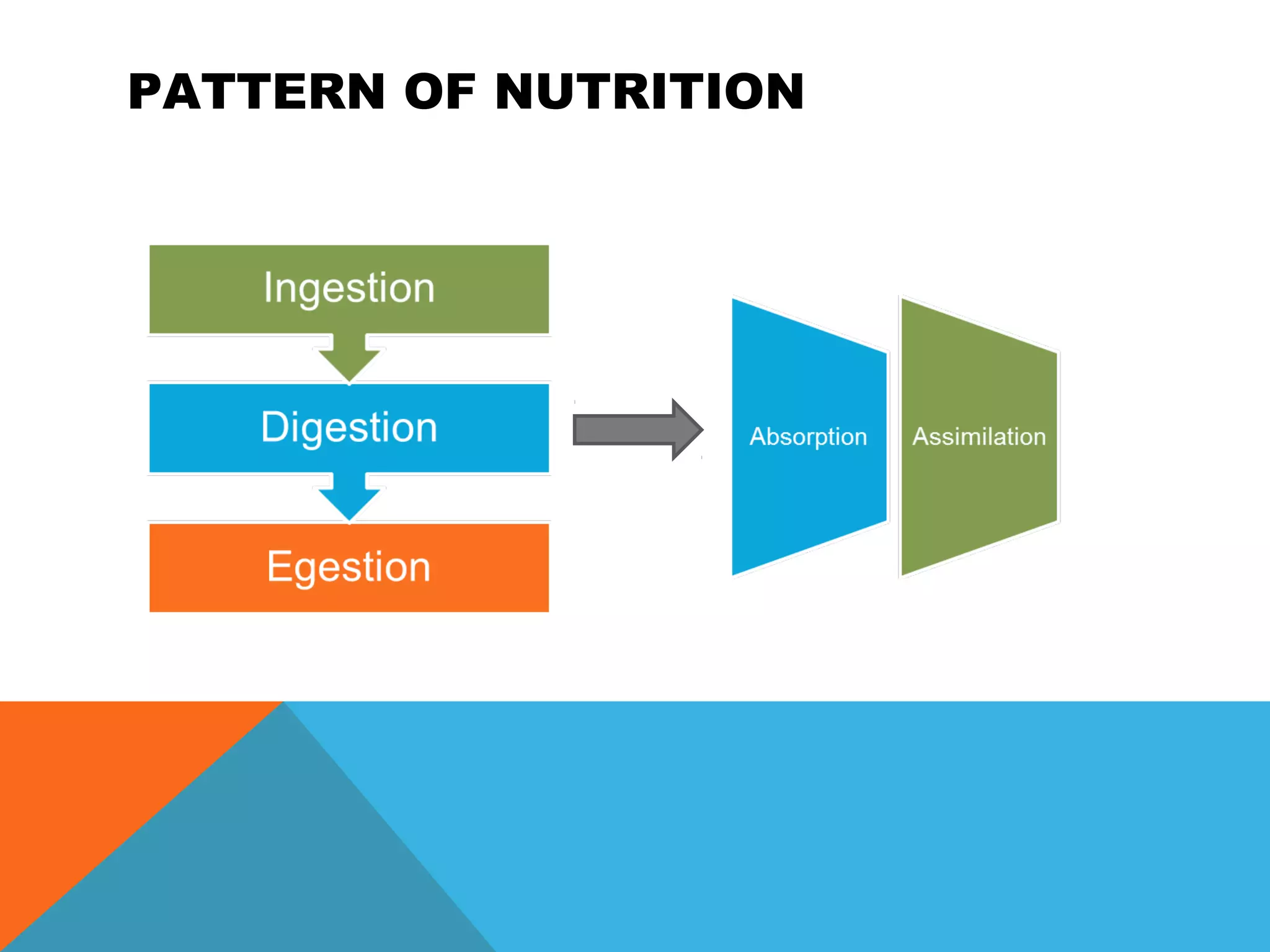
PATTERN OF NUTRITION
INGESTION AND ROLE OF MOUTH

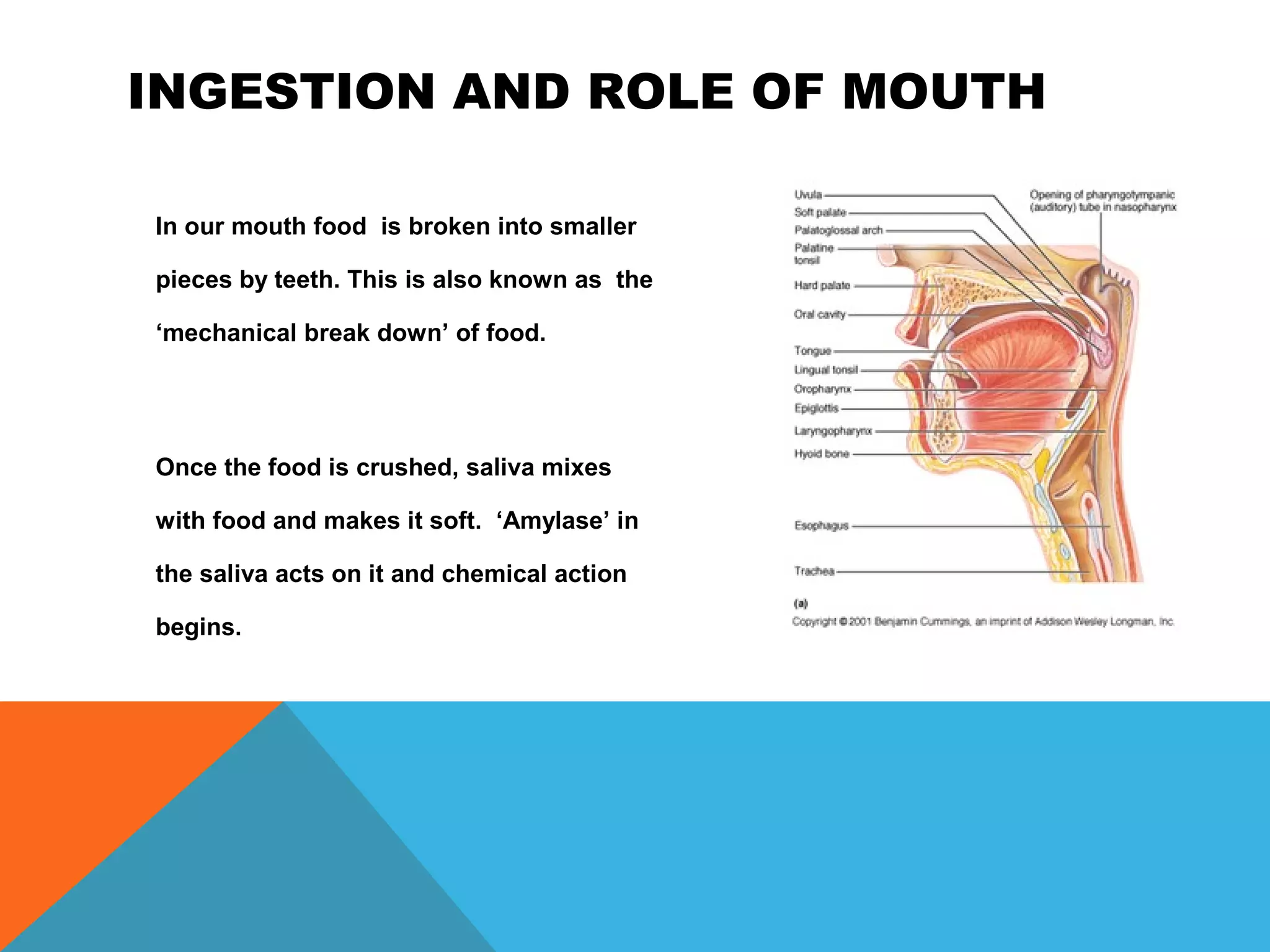
In our mouth food is broken into smaller

pieces by teeth. This is also known as the

‘mechanical break down’ of food.


Once the food is crushed, saliva mixes

with food and makes it soft. ‘Amylase’ in

the saliva acts on it and chemical action

begins.
ALIMENTARY CANAL
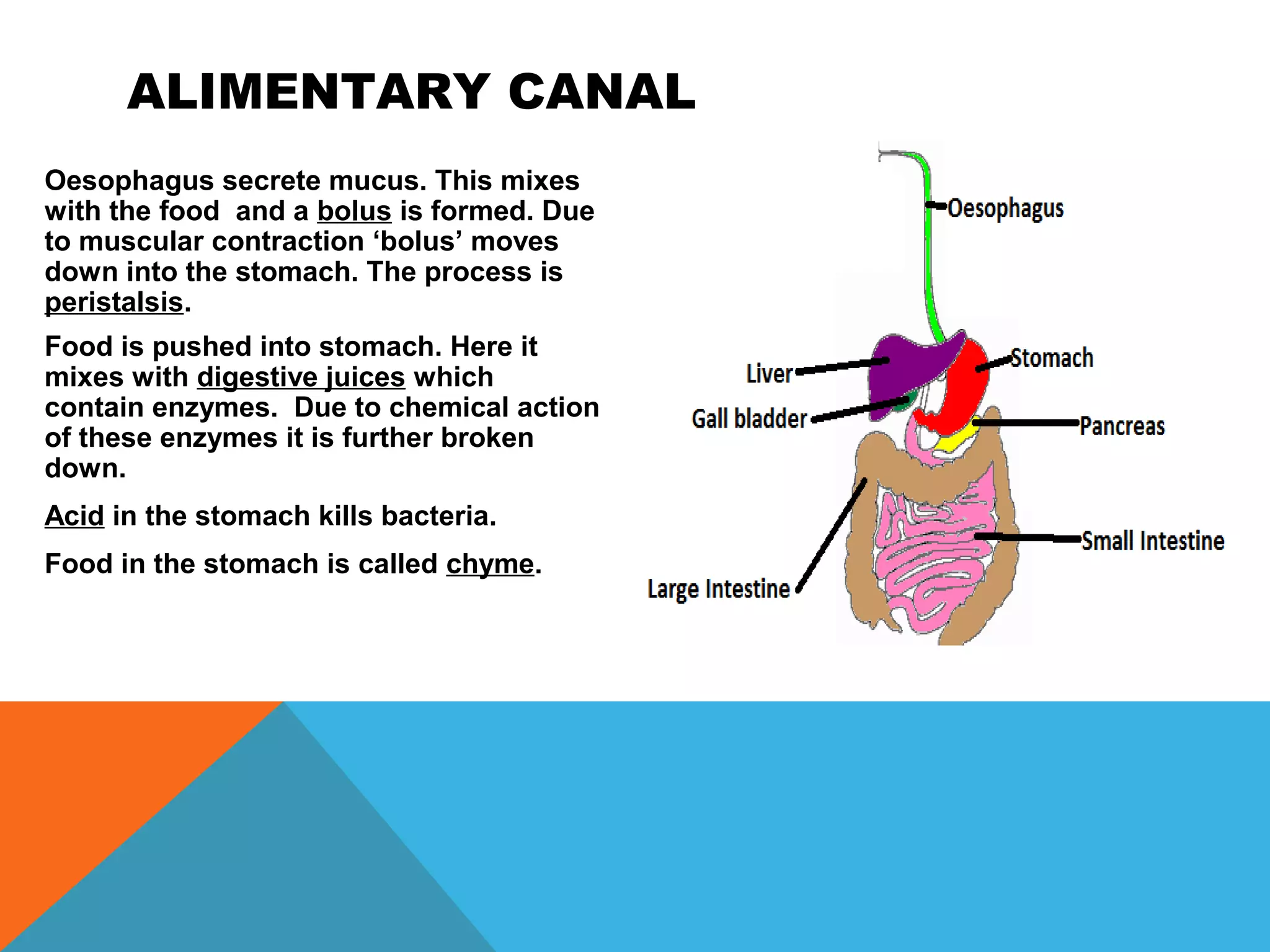
Oesophagus secrete mucus. This mixes
with the food and a bolus is formed. Due
to muscular contraction ‘bolus’ moves
down into the stomach. The process is
peristalsis.
Food is pushed into stomach. Here it
mixes with digestive juices which
contain enzymes. Due to chemical action
of these enzymes it is further broken
down.
Acid in the stomach kills bacteria.
Food in the stomach is called chyme.
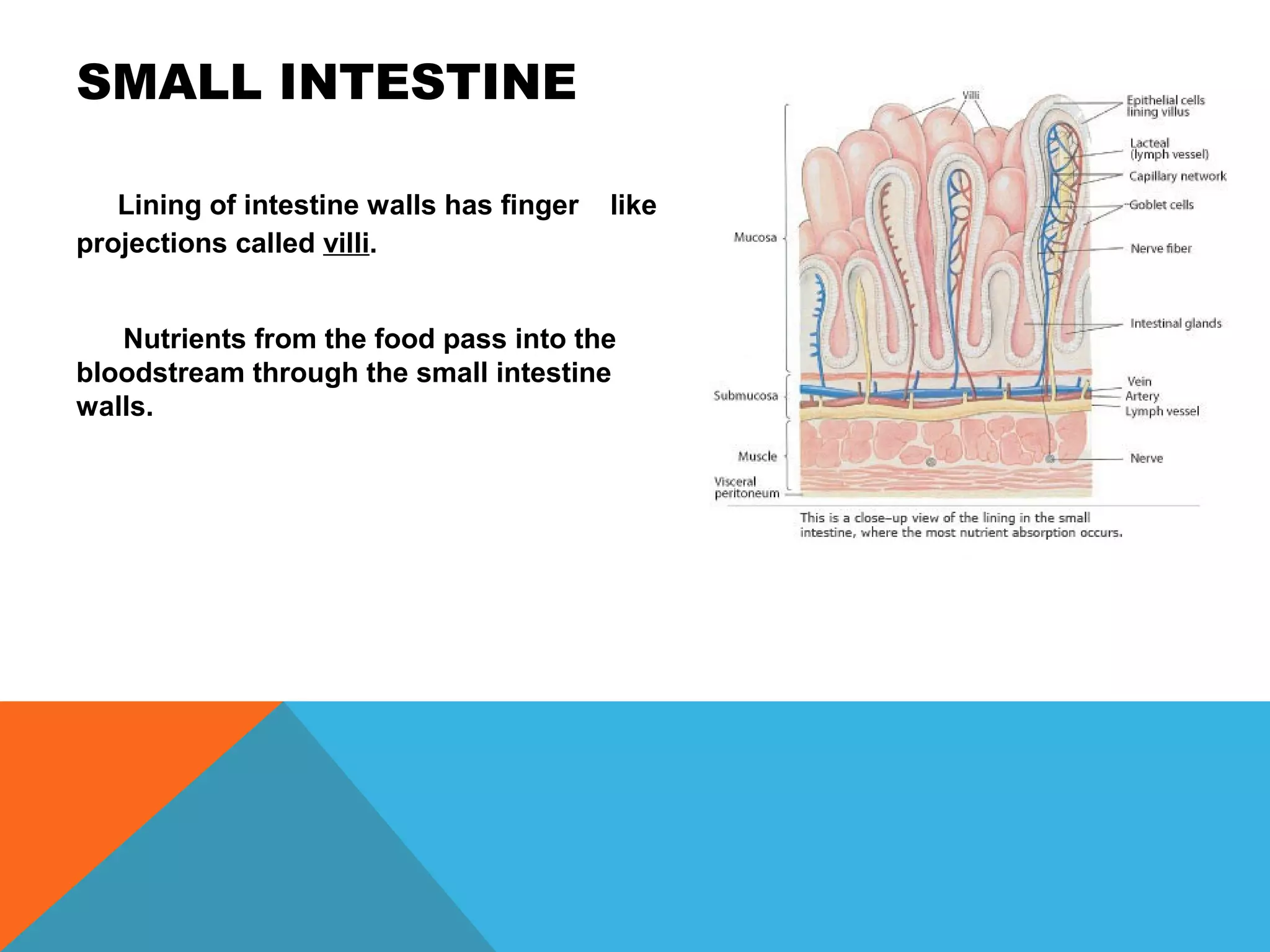
SMALL INTESTINE

   Lining of intestine walls has finger   like
projections called villi.


   Nutrients from the food pass into the
bloodstream through the small intestine
walls.
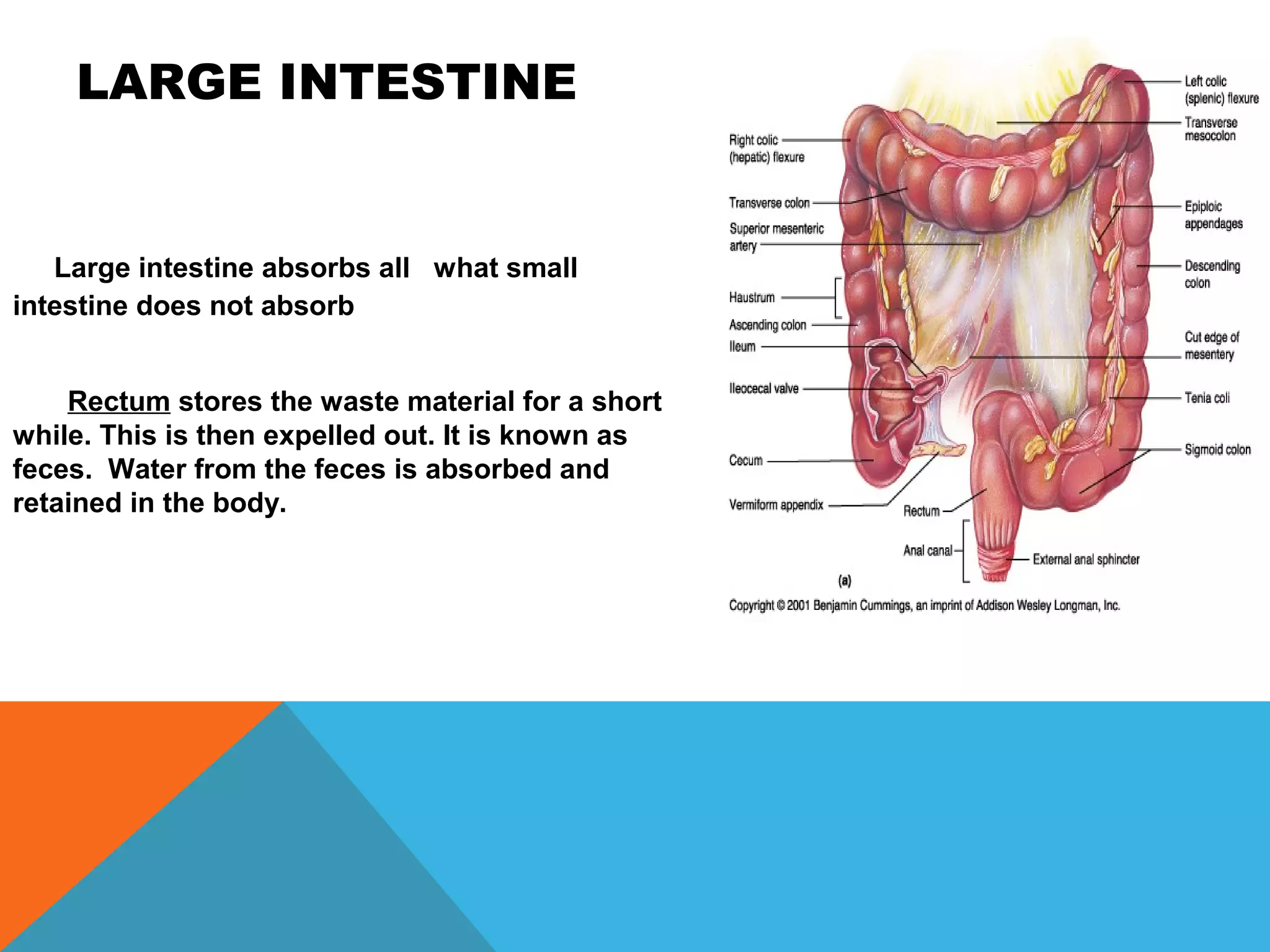
LARGE INTESTINE


   Large intestine absorbs all what small
intestine does not absorb


    Rectum stores the waste material for a short
while. This is then expelled out. It is known as
feces. Water from the feces is absorbed and
retained in the body.
ROLE OF LIVER, GALLBLADDER &
PANCREAS IN DIGESTION

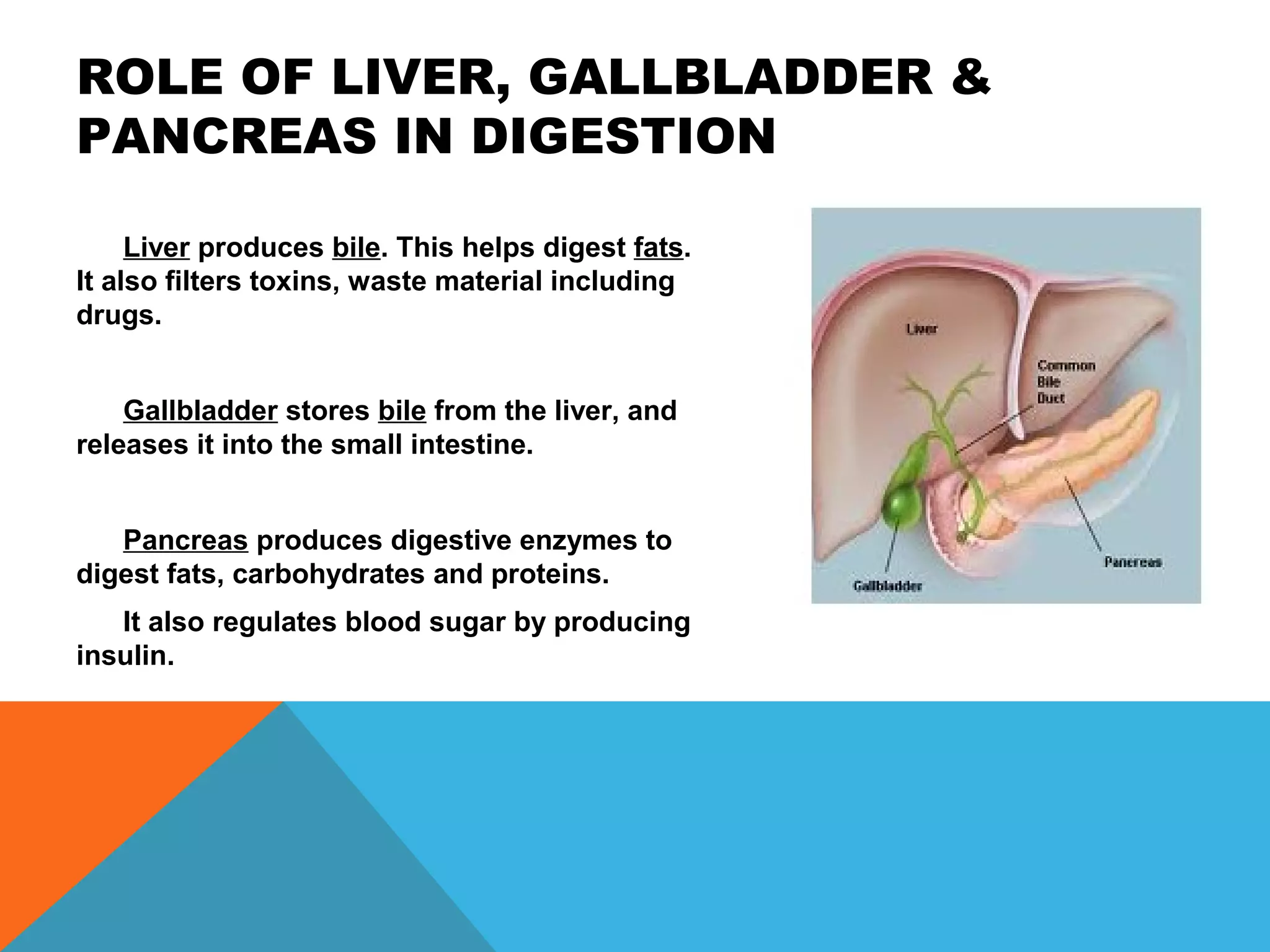
     Liver produces bile. This helps digest fats.
It also filters toxins, waste material including
drugs.


    Gallbladder stores bile from the liver, and
releases it into the small intestine.


   Pancreas produces digestive enzymes to
digest fats, carbohydrates and proteins.
   It also regulates blood sugar by producing
insulin.
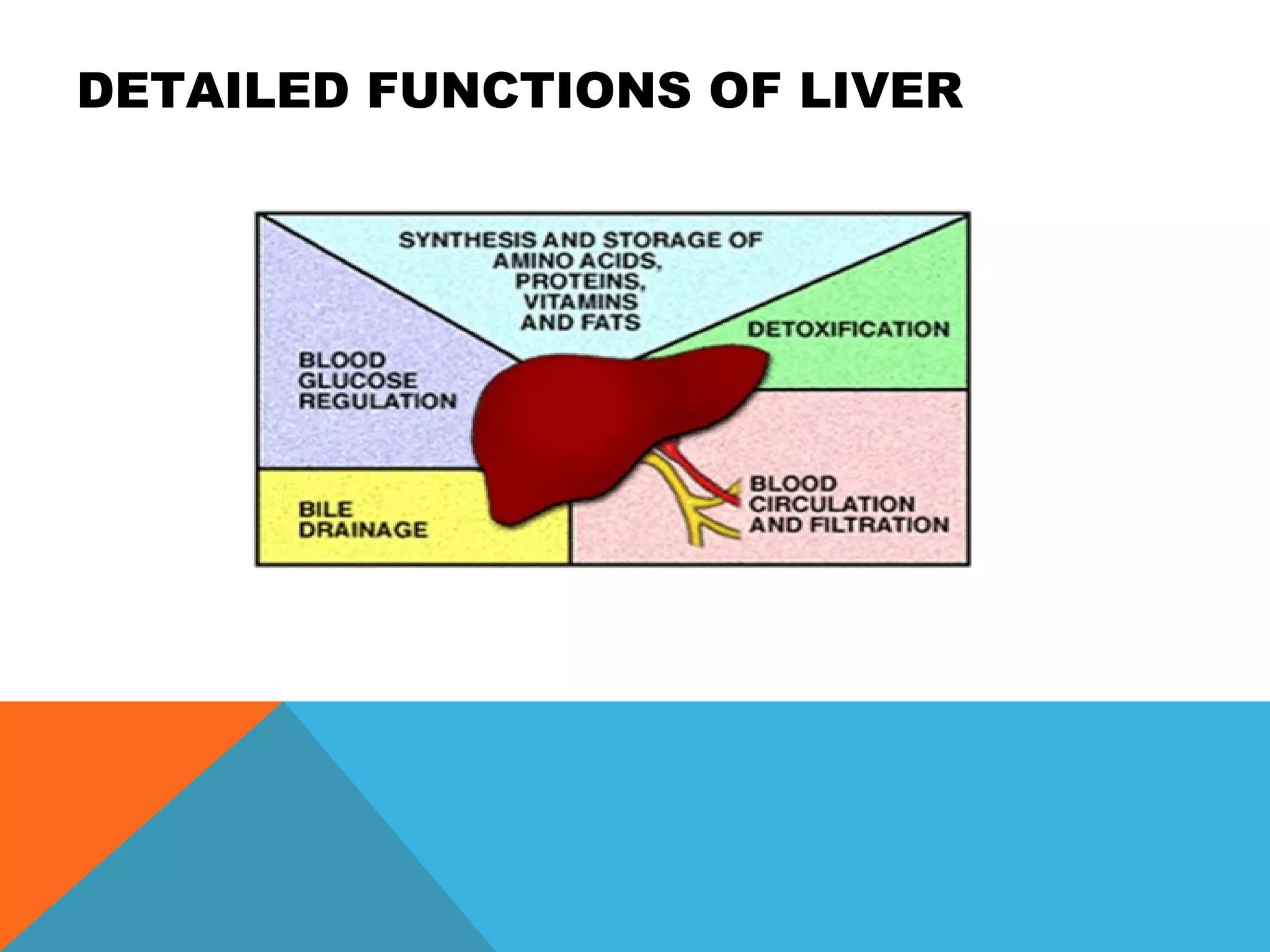
DETAILED FUNCTIONS OF LIVER

Digestive system

  • 1.
    CONSTITUENTS OF DIET Theessentials of our ‘diet’ are; 1 carbohydrates 2 proteins 3 fats/oils 4 vitamins 5 minerals 6 water 7 fibre All these present in our ‘diet’ in the right amount make it a ‘balanced diet’.
  • 2.
  • 3.
    INGESTION AND ROLEOF MOUTH In our mouth food is broken into smaller pieces by teeth. This is also known as the ‘mechanical break down’ of food. Once the food is crushed, saliva mixes with food and makes it soft. ‘Amylase’ in the saliva acts on it and chemical action begins.
  • 4.
    ALIMENTARY CANAL Oesophagus secretemucus. This mixes with the food and a bolus is formed. Due to muscular contraction ‘bolus’ moves down into the stomach. The process is peristalsis. Food is pushed into stomach. Here it mixes with digestive juices which contain enzymes. Due to chemical action of these enzymes it is further broken down. Acid in the stomach kills bacteria. Food in the stomach is called chyme.
  • 5.
    SMALL INTESTINE Lining of intestine walls has finger like projections called villi. Nutrients from the food pass into the bloodstream through the small intestine walls.
  • 6.
    LARGE INTESTINE Large intestine absorbs all what small intestine does not absorb Rectum stores the waste material for a short while. This is then expelled out. It is known as feces. Water from the feces is absorbed and retained in the body.
  • 7.
    ROLE OF LIVER,GALLBLADDER & PANCREAS IN DIGESTION Liver produces bile. This helps digest fats. It also filters toxins, waste material including drugs. Gallbladder stores bile from the liver, and releases it into the small intestine. Pancreas produces digestive enzymes to digest fats, carbohydrates and proteins. It also regulates blood sugar by producing insulin.
  • 8.

Editor's Notes

  • #7 Depending on the maturity of the group, you can talk about the feces leaving via the anus. Mention the appendix at the bottom of the ascending colon and that it might have been used long ago but is not today Mention the portions of the large intestine, ascending, transverse, descending, sigmoid, and rectum (last one if the audience is mature enough)