Dietary fibre & Water
Learning objectives

• To understand the functions and sources of dietary
fibre.

• To know the benefits of dietary fibre.

• To understand the functions and sources of water.

• To understand the principles of water balance.
Dietary fibre

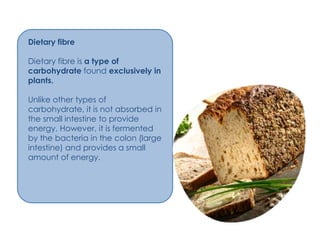
Dietary fibre is a type of
carbohydrate found exclusively in
plants.

Unlike other types of
carbohydrate, it is not absorbed in
the small intestine to provide
energy. However, it is fermented
by the bacteria in the colon (large
intestine) and provides a small
amount of energy.
Sources of dietary fibre

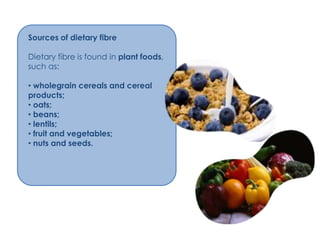
Dietary fibre is found in plant foods,
such as:

• wholegrain cereals and cereal
products;
• oats;
• beans;
• lentils;
• fruit and vegetables;
• nuts and seeds.
Fibre in the diet

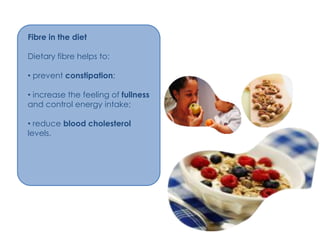
Dietary fibre helps to:

• prevent constipation;

• increase the feeling of fullness
and control energy intake;

• reduce blood cholesterol
levels.
How much fibre do we need?

Most people do not eat enough
dietary fibre.

The recommended average intake
for dietary fibre is 18g per day for
adults. Children need
proportionately less.

Did you know?
A diet rich in dietary fibre is usually
lower in fat and contains more
starchy foods, fruit and
vegetables.
Can you think of ways to increase fibre in your
diet?

Here are some ideas.

Eat a bowl of wholegrain cereal in the morning
with a handful of dried fruit.

Switch from white to wholemeal or granary
bread.

Add oats to fruit crumble toppings.

Serve a side salad with a sandwich or pasta dish.

Add beans and pulses to casseroles and soups.
Water

Our body is nearly two-thirds water,
so drinking enough fluid to stay
hydrated is very important.

Water is essential for life and it is
very important to get the right
amount of fluid to be healthy.

Did you know?
Humans can survive for a few weeks
without food, but they cannot go
without fluids for more than two to
three days.
Water in the diet

Water is the major component of body
fluid and has many functions in the
body:

• it acts as a lubricant for joints and
eyes;
• it is the main component of saliva;
• it helps get rid of waste;
• it helps regulate body temperature.

The body loses water all the time, when
we go to the toilet, from sweat and also
evaporation from skin. If we do not
consume enough water, we become
dehydrated.
Sources of water

Water is provided by food and
drinks.

It has been estimated that roughly
20% of water consumed is from
food (e.g. soups, yogurt, fruit and
vegetables), while 80% is from drinks
(water, milk and fruit juice).
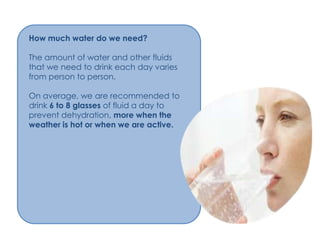
How much water do we need?

The amount of water and other fluids
that we need to drink each day varies
from person to person.

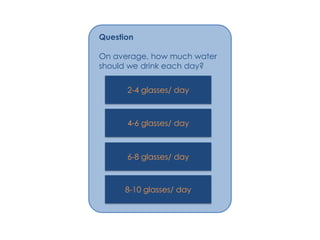
On average, we are recommended to
drink 6 to 8 glasses of fluid a day to
prevent dehydration, more when the
weather is hot or when we are active.
Question

True or false?
Dietary fibre is not digested in
the small intestine.


       True         False
True. Dietary fibre is not
digested in the small intestine
but may be fermented in the
colon.


                                   Next
                                  question
Question

True or false?
Dietary fibre is found in plant
foods only.


     True         False
True. Dietary fibre is a type of
carbohydrate found
exclusively in plants.


                                    Next
                                   question
Question

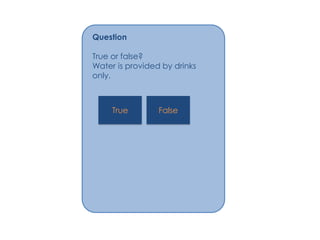
True or false?
Water is provided by drinks
only.


     True        False
False. Water is provided by
both food and drinks.


                               Next
                              question
Question

On average, how much water
should we drink each day?


      2-4 glasses/ day


      4-6 glasses/ day


      6-8 glasses/ day


      8-10 glasses/ day
Wrong answer.


                Try again   The end
Correct answer.


                  The end

Dietary fibre & water

  • 1.
  • 2.
    Learning objectives • Tounderstand the functions and sources of dietary fibre. • To know the benefits of dietary fibre. • To understand the functions and sources of water. • To understand the principles of water balance.
  • 3.
    Dietary fibre Dietary fibreis a type of carbohydrate found exclusively in plants. Unlike other types of carbohydrate, it is not absorbed in the small intestine to provide energy. However, it is fermented by the bacteria in the colon (large intestine) and provides a small amount of energy.
  • 4.
    Sources of dietaryfibre Dietary fibre is found in plant foods, such as: • wholegrain cereals and cereal products; • oats; • beans; • lentils; • fruit and vegetables; • nuts and seeds.
  • 5.
    Fibre in thediet Dietary fibre helps to: • prevent constipation; • increase the feeling of fullness and control energy intake; • reduce blood cholesterol levels.
  • 6.
    How much fibredo we need? Most people do not eat enough dietary fibre. The recommended average intake for dietary fibre is 18g per day for adults. Children need proportionately less. Did you know? A diet rich in dietary fibre is usually lower in fat and contains more starchy foods, fruit and vegetables.
  • 7.
    Can you thinkof ways to increase fibre in your diet? Here are some ideas. Eat a bowl of wholegrain cereal in the morning with a handful of dried fruit. Switch from white to wholemeal or granary bread. Add oats to fruit crumble toppings. Serve a side salad with a sandwich or pasta dish. Add beans and pulses to casseroles and soups.
  • 8.
    Water Our body isnearly two-thirds water, so drinking enough fluid to stay hydrated is very important. Water is essential for life and it is very important to get the right amount of fluid to be healthy. Did you know? Humans can survive for a few weeks without food, but they cannot go without fluids for more than two to three days.
  • 9.
    Water in thediet Water is the major component of body fluid and has many functions in the body: • it acts as a lubricant for joints and eyes; • it is the main component of saliva; • it helps get rid of waste; • it helps regulate body temperature. The body loses water all the time, when we go to the toilet, from sweat and also evaporation from skin. If we do not consume enough water, we become dehydrated.
  • 10.
    Sources of water Wateris provided by food and drinks. It has been estimated that roughly 20% of water consumed is from food (e.g. soups, yogurt, fruit and vegetables), while 80% is from drinks (water, milk and fruit juice).
  • 11.
    How much waterdo we need? The amount of water and other fluids that we need to drink each day varies from person to person. On average, we are recommended to drink 6 to 8 glasses of fluid a day to prevent dehydration, more when the weather is hot or when we are active.
  • 12.
    Question True or false? Dietaryfibre is not digested in the small intestine. True False
  • 13.
    True. Dietary fibreis not digested in the small intestine but may be fermented in the colon. Next question
  • 14.
    Question True or false? Dietaryfibre is found in plant foods only. True False
  • 15.
    True. Dietary fibreis a type of carbohydrate found exclusively in plants. Next question
  • 16.
    Question True or false? Wateris provided by drinks only. True False
  • 17.
    False. Water isprovided by both food and drinks. Next question
  • 18.
    Question On average, howmuch water should we drink each day? 2-4 glasses/ day 4-6 glasses/ day 6-8 glasses/ day 8-10 glasses/ day
  • 19.
    Wrong answer. Try again The end
  • 20.