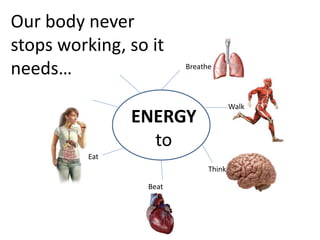
ENERGY 
to 
Eat 
Beat 
Think 
Walk 
Breathe 
Our body never 
stops working, so it 
needs…
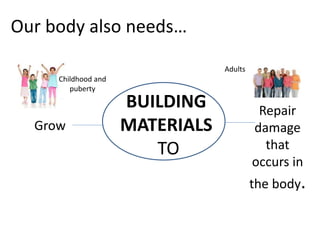
BUILDING 
MATERIALS 
TO 
Grow 
Repair 
damage 
that 
occurs in 
the body. 
Our body also needs… 
Childhood and 
puberty 
Adults
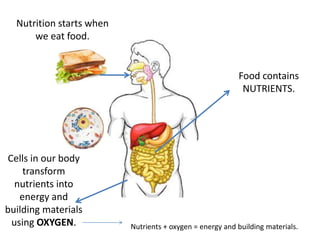
Nutrition starts when 
we eat food. 
Cells in our body 
transform 
nutrients into 
energy and 
building materials 
using OXYGEN. 
Food contains 
NUTRIENTS. 
Nutrients + oxygen = energy and building materials.
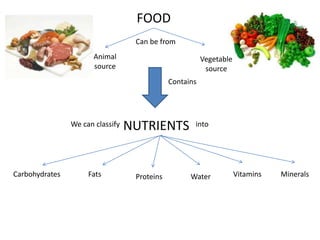
FOOD 
Can be from 
Animal 
source 
Vegetable 
source 
Contains 
NUTRIENTS 
We can classify into 
Carbohydrates Fats Proteins Water Vitamins Minerals
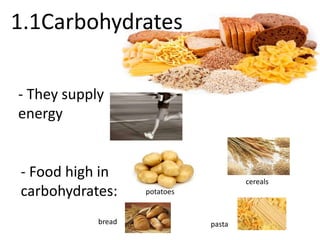
1.1Carbohydrates 
- They supply 
energy 
- Food high in 
carbohydrates: potatoes 
cereals 
bread pasta
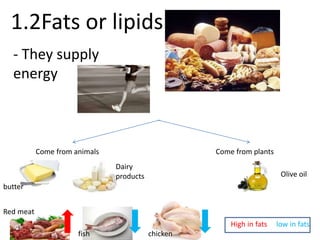
1.2Fats or lipids 
- They supply 
energy 
Come from animals Come from plants 
butter 
Red meat 
Dairy 
products Olive oil 
fish chicken 
High in fats low in fats
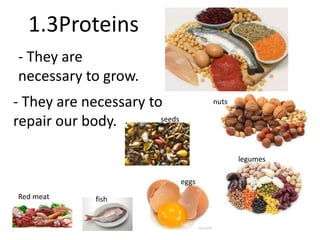
1.3Proteins 
- They are 
necessary to grow. 
- They are necessary to 
repair our body. 
Red meat fish 
eggs 
legumes 
nuts 
seeds
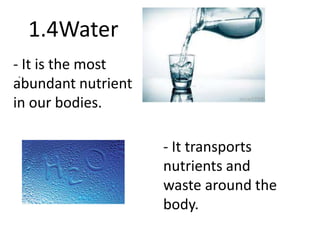
1.4Water 
- It is the most 
abundant - 
nutrient 
in our bodies. 
- It transports 
nutrients and 
waste around the 
body.
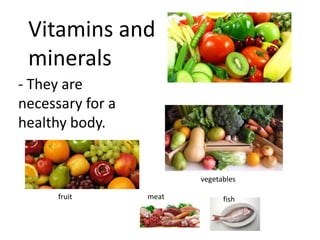
Vitamins and 
minerals 
- They are 
necessary for a 
healthy body. 
fruit 
vegetables 
meat fish
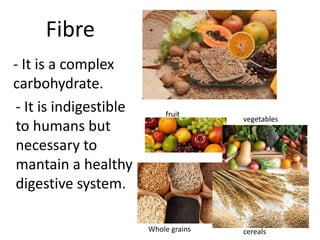
Fibre 
- It is a complex 
carbohydrate. 
- It is indigestible 
to humans but 
necessary to 
mantain a healthy 
digestive system. 
fruit 
vegetables 
Whole grains cereals
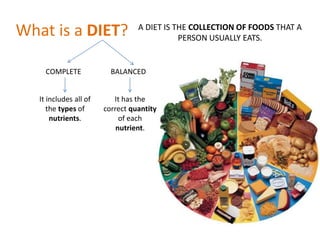
What is a DIET? A DIET IS THE COLLECTION OF FOODS THAT A 
PERSON USUALLY EATS. 
COMPLETE BALANCED 
It includes all of 
the types of 
nutrients. 
It has the 
correct quantity 
of each 
nutrient.
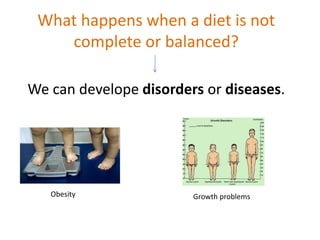
What happens when a diet is not 
complete or balanced? 
We can develope disorders or diseases. 
Obesity Growth problems
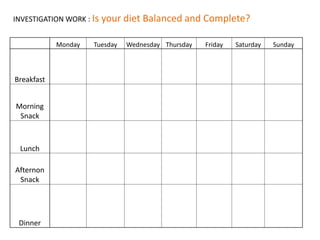
INVESTIGATION WORK : Is your diet Balanced and Complete? 
Monday Tuesday Wednesday Thursday Friday Saturday Sunday 
Breakfast 
Morning 
Snack 
Lunch 
Afternon 
Snack 
Dinner
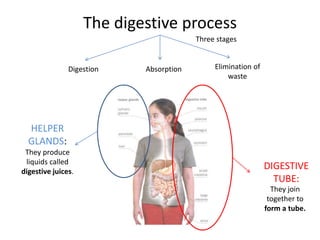
The digestive process 
Three stages 
Digestion Absorption Elimination of 
waste 
HELPER 
GLANDS: 
They produce 
liquids called 
digestive juices. 
DIGESTIVE 
TUBE: 
They join 
together to 
form a tube.
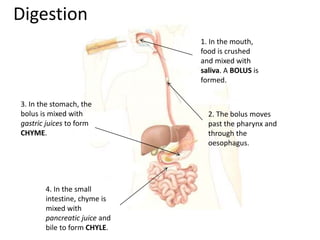
Digestion 
1. In the mouth, 
food is crushed 
and mixed with 
saliva. A BOLUS is 
formed. 
2. The bolus moves 
past the pharynx and 
through the 
oesophagus. 
3. In the stomach, the 
bolus is mixed with 
gastric juices to form 
CHYME. 
4. In the small 
intestine, chyme is 
mixed with 
pancreatic juice and 
bile to form CHYLE.
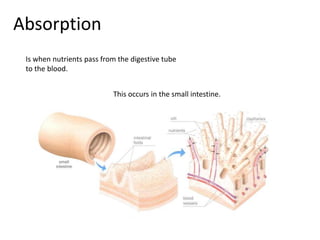
Absorption 
Is when nutrients pass from the digestive tube 
to the blood. 
This occurs in the small intestine.
Elimination of waste 
After absorption, the small intestine only 
contains those parts of food that cannot 
be digested. 
This waste moves into large intestine 
where it is transformed into faeces. 
Faeces are excreted out of the body.

Nutrition I

  • 1.
    ENERGY to Eat Beat Think Walk Breathe Our body never stops working, so it needs…
  • 2.
    BUILDING MATERIALS TO Grow Repair damage that occurs in the body. Our body also needs… Childhood and puberty Adults
  • 3.
    Nutrition starts when we eat food. Cells in our body transform nutrients into energy and building materials using OXYGEN. Food contains NUTRIENTS. Nutrients + oxygen = energy and building materials.
  • 5.
    FOOD Can befrom Animal source Vegetable source Contains NUTRIENTS We can classify into Carbohydrates Fats Proteins Water Vitamins Minerals
  • 6.
    1.1Carbohydrates - Theysupply energy - Food high in carbohydrates: potatoes cereals bread pasta
  • 7.
    1.2Fats or lipids - They supply energy Come from animals Come from plants butter Red meat Dairy products Olive oil fish chicken High in fats low in fats
  • 8.
    1.3Proteins - Theyare necessary to grow. - They are necessary to repair our body. Red meat fish eggs legumes nuts seeds
  • 9.
    1.4Water - Itis the most abundant - nutrient in our bodies. - It transports nutrients and waste around the body.
  • 10.
    Vitamins and minerals - They are necessary for a healthy body. fruit vegetables meat fish
  • 11.
    Fibre - Itis a complex carbohydrate. - It is indigestible to humans but necessary to mantain a healthy digestive system. fruit vegetables Whole grains cereals
  • 13.
    What is aDIET? A DIET IS THE COLLECTION OF FOODS THAT A PERSON USUALLY EATS. COMPLETE BALANCED It includes all of the types of nutrients. It has the correct quantity of each nutrient.
  • 14.
    What happens whena diet is not complete or balanced? We can develope disorders or diseases. Obesity Growth problems
  • 15.
    INVESTIGATION WORK :Is your diet Balanced and Complete? Monday Tuesday Wednesday Thursday Friday Saturday Sunday Breakfast Morning Snack Lunch Afternon Snack Dinner
  • 17.
    The digestive process Three stages Digestion Absorption Elimination of waste HELPER GLANDS: They produce liquids called digestive juices. DIGESTIVE TUBE: They join together to form a tube.
  • 18.
    Digestion 1. Inthe mouth, food is crushed and mixed with saliva. A BOLUS is formed. 2. The bolus moves past the pharynx and through the oesophagus. 3. In the stomach, the bolus is mixed with gastric juices to form CHYME. 4. In the small intestine, chyme is mixed with pancreatic juice and bile to form CHYLE.
  • 19.
    Absorption Is whennutrients pass from the digestive tube to the blood. This occurs in the small intestine.
  • 20.
    Elimination of waste After absorption, the small intestine only contains those parts of food that cannot be digested. This waste moves into large intestine where it is transformed into faeces. Faeces are excreted out of the body.