



Difficult Conversations 
for Business People 
With Neil Denny 
mediator, speaker and trainer
“Businesses invest in and long to see failure”
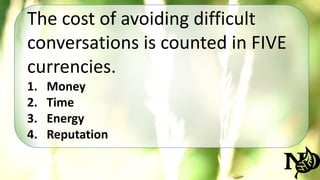
The cost of avoiding difficult 
conversations is counted in FIVE 
currencies. 
1. Money
The cost of avoiding difficult 
conversations is counted in FIVE 
currencies. 
1. Money 
2. Time
The cost of avoiding difficult 
conversations is counted in FIVE 
currencies. 
1. Money 
2. Time 
3. Energy
The cost of avoiding difficult 
conversations is counted in FIVE 
currencies. 
1. Money 
2. Time 
3. Energy 
4. Reputation
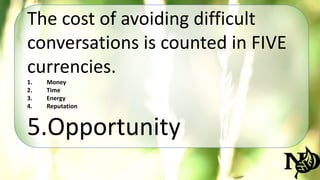
The cost of avoiding difficult 
conversations is counted in FIVE 
currencies. 
1. Money 
2. Time 
3. Energy 
4. Reputation 
5.Opportunity
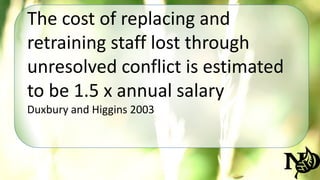
The cost of replacing and 
retraining staff lost through 
unresolved conflict is estimated 
to be 1.5 x annual salary 
Duxbury and Higgins 2003
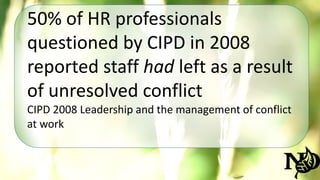
50% of HR professionals 
questioned by CIPD in 2008 
reported staff had left as a result 
of unresolved conflict 
CIPD 2008 Leadership and the management of conflict 
at work
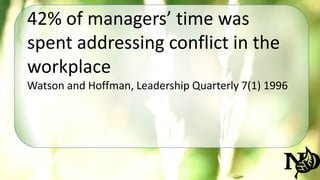
42% of managers’ time was 
spent addressing conflict in the 
workplace 
Watson and Hoffman, Leadership Quarterly 7(1) 1996
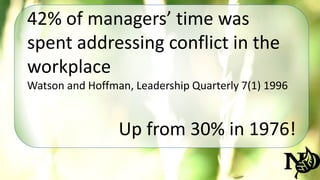
42% of managers’ time was 
spent addressing conflict in the 
workplace 
Watson and Hoffman, Leadership Quarterly 7(1) 1996 
Up from 30% in 1976!
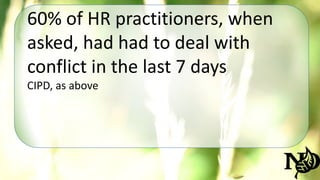
60% of HR practitioners, when 
asked, had had to deal with 
conflict in the last 7 days 
CIPD, as above
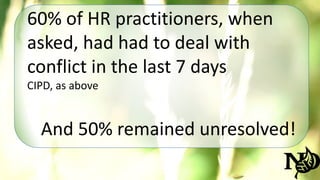
60% of HR practitioners, when 
asked, had had to deal with 
conflict in the last 7 days 
CIPD, as above 
And 50% remained unresolved!
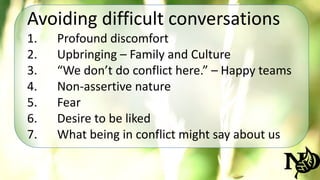
Avoiding difficult conversations 
1. Profound discomfort 
2. Upbringing – Family and Culture 
3. “We don’t do conflict here.” – Happy teams 
4. Non-assertive nature 
5. Fear 
6. Desire to be liked 
7. What being in conflict might say about us
Difficult conversations are like 
fish sauce. 
Sometimes you’ve got to face 
the stink.
Avoiding difficult conversations 
means sacrificing our long term 
needs and goals in exchange for 
the short term alleviation of 
discomfort.
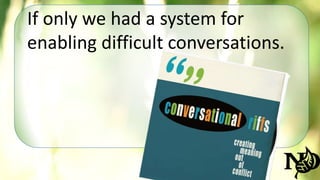
If only we had a system for 
enabling difficult conversations.
When we eventually engage 
with conflict we tend to do so in 
ways that are unhelpful. 
Attack. Defence. Counter-attack.
Less Status Quo, 
more Eric Clapton.
Six riffs to transform conflict into 
growth in your business. 
1. Invitation 
2. Encouragement 
3. Acknowledgement 
4. Agreement 
5. Agreeing differences 
6. Solutions
When we deal with difficult 
conversations better then we 
bear with and build one another 
up and strengthen relationships 
even as we resolve the things 
that we do not agree upon.
Go to 
www.neildenny.com/freebook 
sign up for the conflict 
leadership newsletter AND 
receive your free e-book version 
of Conversational Riffs
Take a copy of our September 
white paper detailing how we 
have worked with other small 
businesses and organisations in 
the UK, Europe and North 
America.
Contact me to explore how we 
can work together to develop 
your conflict leadership skills and 
start transforming conflict into 
growth in your organisation.
www.neildenny.com 
www.youtube.com/user/neilrdenny 
neil@neildenny.com 
07815 727693

Difficult conversations for businesses

  • 1.
    Difficult Conversations forBusiness People With Neil Denny mediator, speaker and trainer
  • 2.
    “Businesses invest inand long to see failure”
  • 3.
    The cost ofavoiding difficult conversations is counted in FIVE currencies. 1. Money
  • 4.
    The cost ofavoiding difficult conversations is counted in FIVE currencies. 1. Money 2. Time
  • 5.
    The cost ofavoiding difficult conversations is counted in FIVE currencies. 1. Money 2. Time 3. Energy
  • 6.
    The cost ofavoiding difficult conversations is counted in FIVE currencies. 1. Money 2. Time 3. Energy 4. Reputation
  • 7.
    The cost ofavoiding difficult conversations is counted in FIVE currencies. 1. Money 2. Time 3. Energy 4. Reputation 5.Opportunity
  • 8.
    The cost ofreplacing and retraining staff lost through unresolved conflict is estimated to be 1.5 x annual salary Duxbury and Higgins 2003
  • 9.
    50% of HRprofessionals questioned by CIPD in 2008 reported staff had left as a result of unresolved conflict CIPD 2008 Leadership and the management of conflict at work
  • 10.
    42% of managers’time was spent addressing conflict in the workplace Watson and Hoffman, Leadership Quarterly 7(1) 1996
  • 11.
    42% of managers’time was spent addressing conflict in the workplace Watson and Hoffman, Leadership Quarterly 7(1) 1996 Up from 30% in 1976!
  • 12.
    60% of HRpractitioners, when asked, had had to deal with conflict in the last 7 days CIPD, as above
  • 13.
    60% of HRpractitioners, when asked, had had to deal with conflict in the last 7 days CIPD, as above And 50% remained unresolved!
  • 14.
    Avoiding difficult conversations 1. Profound discomfort 2. Upbringing – Family and Culture 3. “We don’t do conflict here.” – Happy teams 4. Non-assertive nature 5. Fear 6. Desire to be liked 7. What being in conflict might say about us
  • 15.
    Difficult conversations arelike fish sauce. Sometimes you’ve got to face the stink.
  • 16.
    Avoiding difficult conversations means sacrificing our long term needs and goals in exchange for the short term alleviation of discomfort.
  • 17.
    If only wehad a system for enabling difficult conversations.
  • 18.
    When we eventuallyengage with conflict we tend to do so in ways that are unhelpful. Attack. Defence. Counter-attack.
  • 19.
    Less Status Quo, more Eric Clapton.
  • 20.
    Six riffs totransform conflict into growth in your business. 1. Invitation 2. Encouragement 3. Acknowledgement 4. Agreement 5. Agreeing differences 6. Solutions
  • 21.
    When we dealwith difficult conversations better then we bear with and build one another up and strengthen relationships even as we resolve the things that we do not agree upon.
  • 22.
    Go to www.neildenny.com/freebook sign up for the conflict leadership newsletter AND receive your free e-book version of Conversational Riffs
  • 23.
    Take a copyof our September white paper detailing how we have worked with other small businesses and organisations in the UK, Europe and North America.
  • 24.
    Contact me toexplore how we can work together to develop your conflict leadership skills and start transforming conflict into growth in your organisation.
  • 25.