






The first three steps in 
dealing with difficult 
clients 
With Neil Denny, conflict leadership speaker 
and trainer
The first three 
steps in dealing 
with difficult 
clients are not 
ready, aim, fire.
“But conflict feels so good!” 
Conflict seduces us to act in ways that 
reward us with a short-term pay-off at 
the cost of our businesses’ longer term 
needs and interests.
It costs between 7 to 20 times 
more to sell to a new customer 
than it does to sell to an existing 
one. 
Source: http://www.camfoundation.com/PDF/Cost-of-customer- 
acquisition-vs-customer-retention.pdf
Being seduced by conflict is expensive. 
You can count the cost in no less than 5 
currencies. 
1. Money 
2. Time 
3. Energy 
4. Reputation 
5. Opportunity
The first three steps, proper 
1. Change position 
2. Speak up 
3. Stop doing that thing that you 
do
Change position 
Difficult clients challenge us on 
three levels 
1. Competence 
2. Integrity 
3. Being appreciated
Change position/ Competence 
Aspire to do brilliant work 
always but give up on being 
perfect. That way, you can stop 
defending the impossible.
Change position/ Integrity 
“Are you calling me a liar?” 
Humans long to act to be seen to 
act in ways that are consistent 
with committed positions. 
See Influence by Robert Cialdini
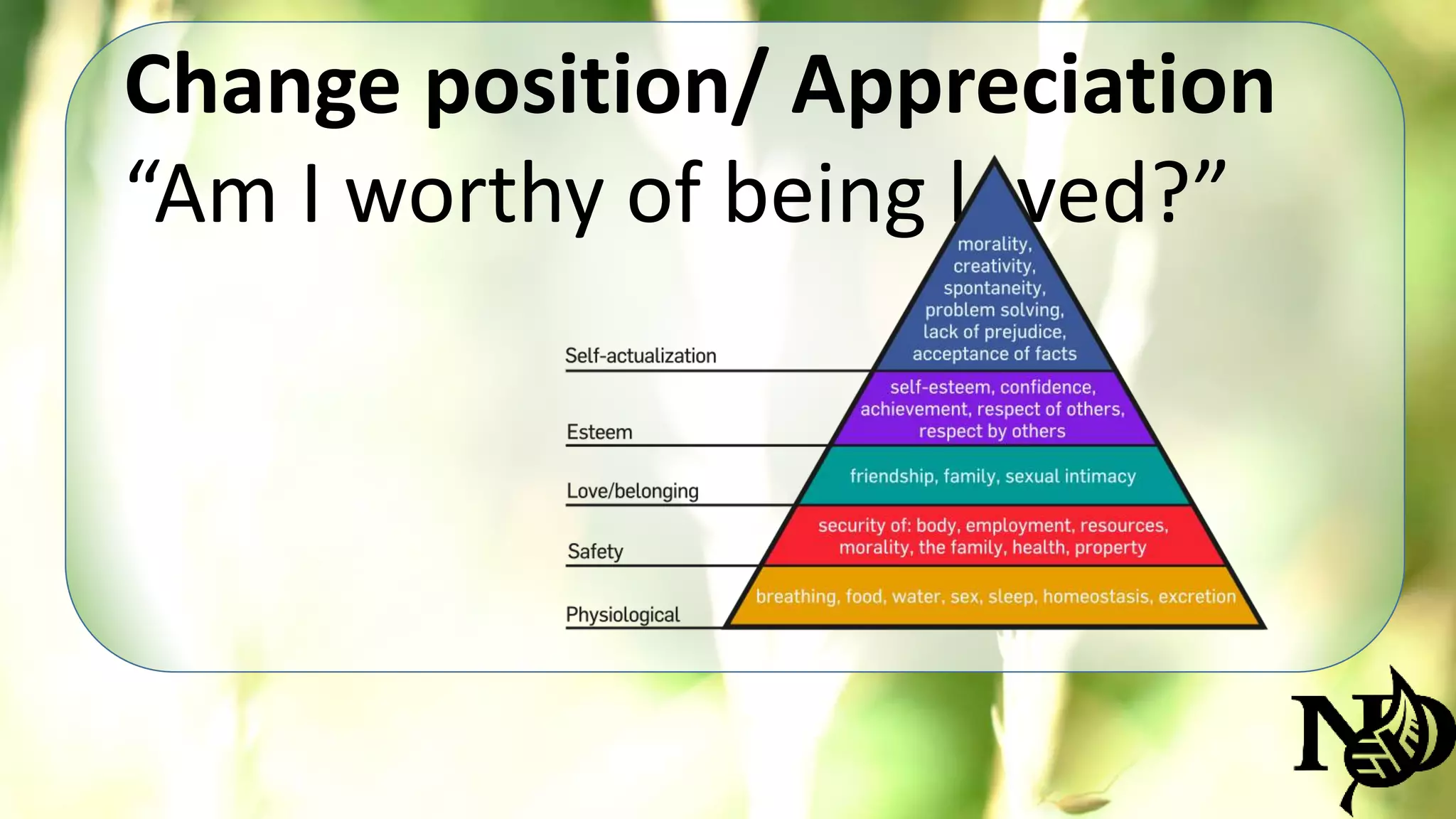
Change position/ Appreciation 
“Am I worthy of being loved?”
Change position/ Appreciation 
“And that’s the thanks I get?!” 
Wrong perspective – all about 
me. 
Need to shift to a “Being of 
service” mindset.
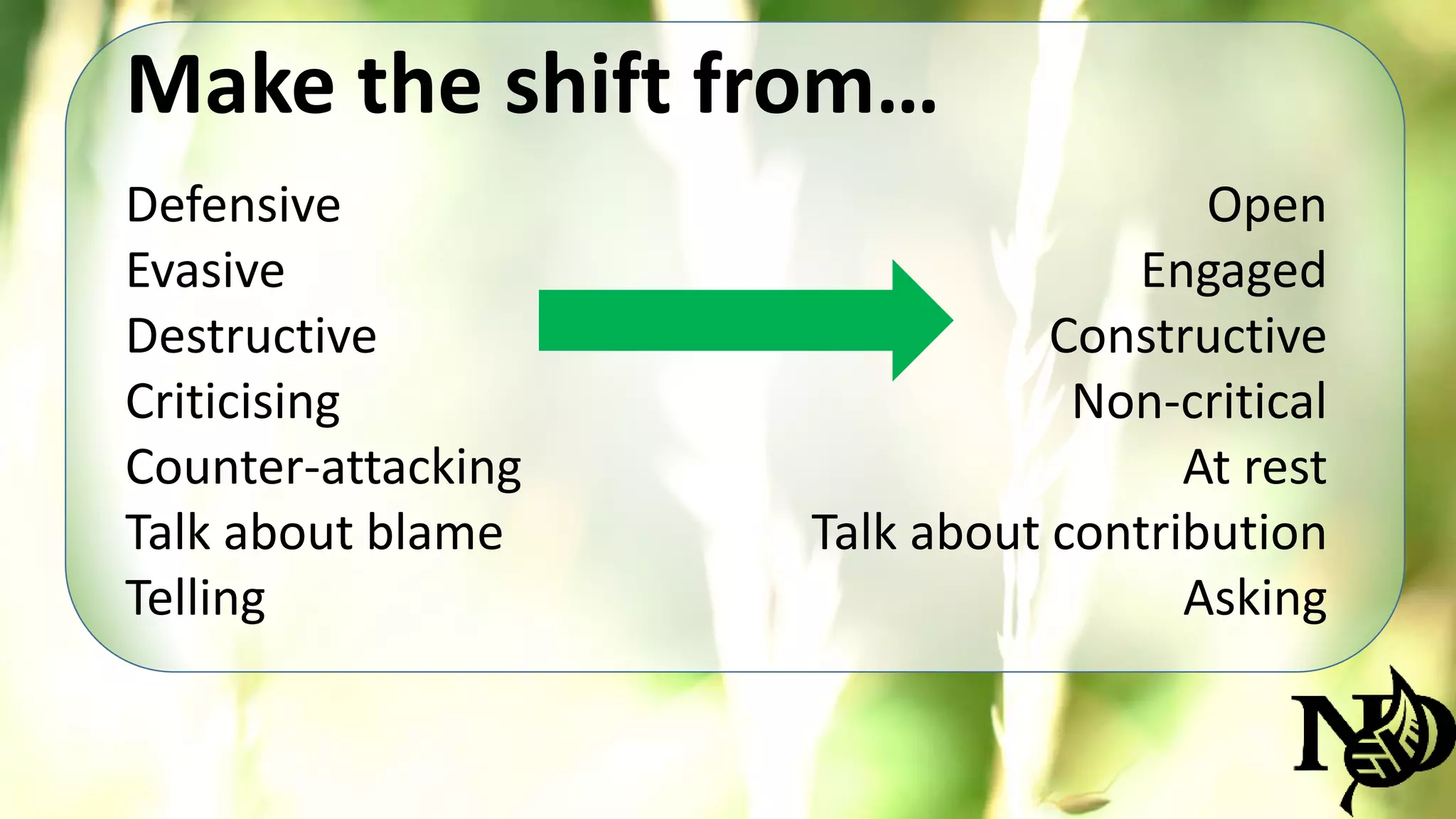
Make the shift from… 
Defensive 
Evasive 
Destructive 
Criticising 
Counter-attacking 
Talk about blame 
Telling 
Open 
Engaged 
Constructive 
Non-critical 
At rest 
Talk about contribution 
Asking
How to make the shift? 
Step 1. Tell me what happened. 
Step 2. Tell me what happened. 
Step 3. Let me check what you 
say happened.
Speak up/ Assert yourself 
Only when the other person 
knows they have been heard and 
understood will they be able to 
hear your version of events.
Speak up/ Assert yourself 
• Standing up for your own rights in such a way 
that you do not violate another person’s rights 
• Expressing your needs, wants, opinions, 
feelings and beliefs in direct, honest and 
appropriate ways 
Taken from Assertiveness at work by Back and Back
Speak up/ Assert yourself 
Do you know what you need in order to best serve 
your clients? 
Do you dare to let your clients know – in ways that `Do 
not violate’ their rights? 
Do you know who you do your best work with?
The 80/20 rule and 
the Red Velvet Rope 
Policy 
(see Michael Port’s Book Yourself Solid)
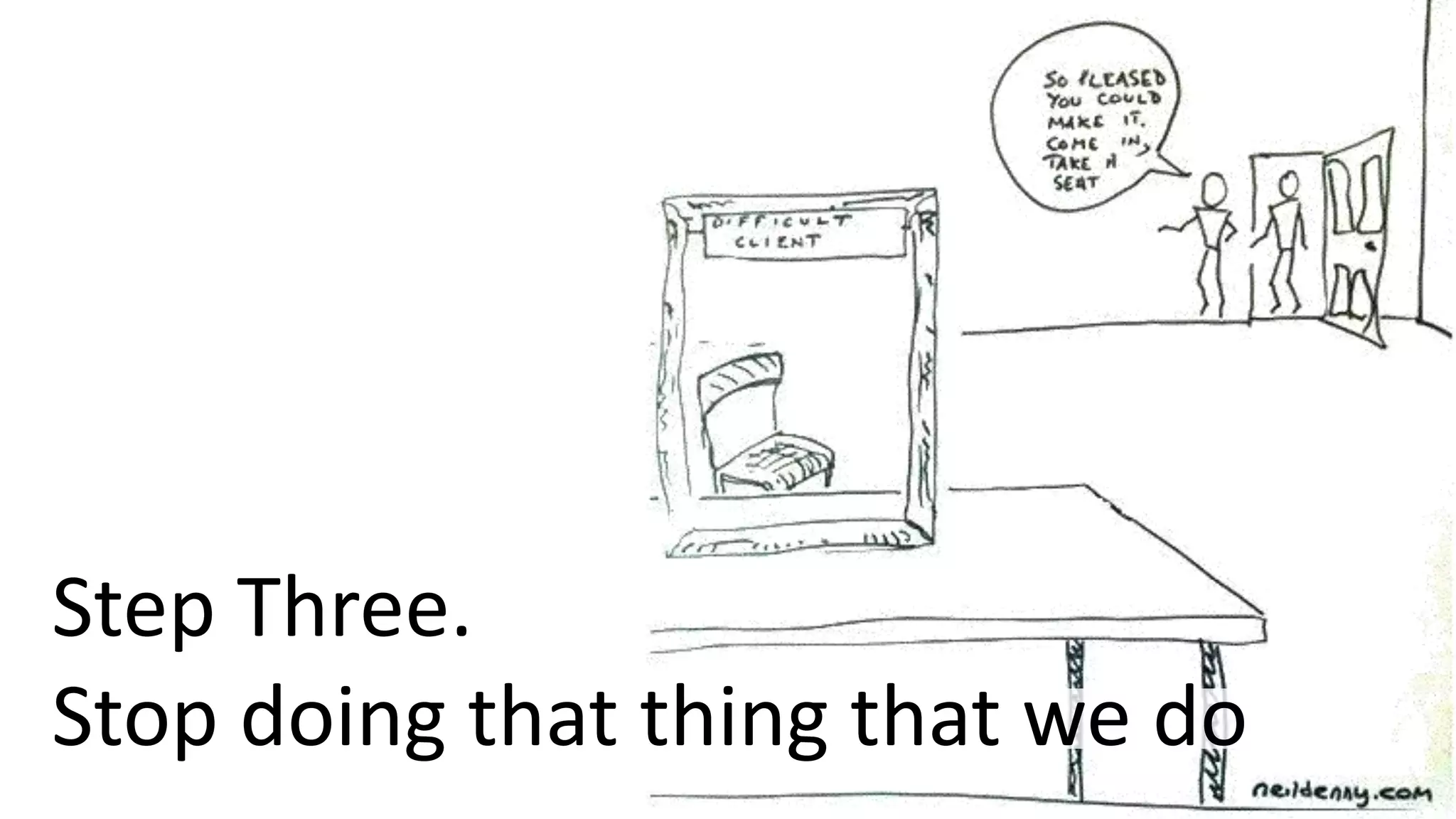
Step Three. 
Stop doing that thing that we do
Stop labelling difficult clients 
The halo effect cuts both ways. 
Kahnemann Thinking Fast and 
Slow
Stop labelling difficult clients 
When we give labels then we 
make it very difficult for 
individuals to implement the 
very changes we long to see.
What if there is no such thing as 
a difficult client? 
These are the people we longed 
to come, so that we could serve 
them and make a living doing so.
What if there is no such thing as 
a difficult client? 
Clients do not want to trick us, 
trap us or prove us wrong… 
Clients want us to delight them.
There is no such thing as a 
difficult client… 
Only the disappointed ones and 
the ones who are wrong for us. 
Ready for the good news?
…They are both in your control. 
Your next steps…
Or, grab me now or on 
neil@neildenny.com to discuss how 
conflict leadership coaching, 
keynotes or training can help your 
business to thrive.
T: 07815 727693 
E: neil@neildenny.com 
www.neildenny.com

The first 3 steps in dealing with difficult clients

  • 1.
    The first threesteps in dealing with difficult clients With Neil Denny, conflict leadership speaker and trainer
  • 2.
    The first three steps in dealing with difficult clients are not ready, aim, fire.
  • 3.
    “But conflict feelsso good!” Conflict seduces us to act in ways that reward us with a short-term pay-off at the cost of our businesses’ longer term needs and interests.
  • 4.
    It costs between7 to 20 times more to sell to a new customer than it does to sell to an existing one. Source: http://www.camfoundation.com/PDF/Cost-of-customer- acquisition-vs-customer-retention.pdf
  • 5.
    Being seduced byconflict is expensive. You can count the cost in no less than 5 currencies. 1. Money 2. Time 3. Energy 4. Reputation 5. Opportunity
  • 6.
    The first threesteps, proper 1. Change position 2. Speak up 3. Stop doing that thing that you do
  • 7.
    Change position Difficultclients challenge us on three levels 1. Competence 2. Integrity 3. Being appreciated
  • 8.
    Change position/ Competence Aspire to do brilliant work always but give up on being perfect. That way, you can stop defending the impossible.
  • 9.
    Change position/ Integrity “Are you calling me a liar?” Humans long to act to be seen to act in ways that are consistent with committed positions. See Influence by Robert Cialdini
  • 10.
    Change position/ Appreciation “Am I worthy of being loved?”
  • 11.
    Change position/ Appreciation “And that’s the thanks I get?!” Wrong perspective – all about me. Need to shift to a “Being of service” mindset.
  • 13.
    Make the shiftfrom… Defensive Evasive Destructive Criticising Counter-attacking Talk about blame Telling Open Engaged Constructive Non-critical At rest Talk about contribution Asking
  • 14.
    How to makethe shift? Step 1. Tell me what happened. Step 2. Tell me what happened. Step 3. Let me check what you say happened.
  • 15.
    Speak up/ Assertyourself Only when the other person knows they have been heard and understood will they be able to hear your version of events.
  • 16.
    Speak up/ Assertyourself • Standing up for your own rights in such a way that you do not violate another person’s rights • Expressing your needs, wants, opinions, feelings and beliefs in direct, honest and appropriate ways Taken from Assertiveness at work by Back and Back
  • 17.
    Speak up/ Assertyourself Do you know what you need in order to best serve your clients? Do you dare to let your clients know – in ways that `Do not violate’ their rights? Do you know who you do your best work with?
  • 18.
    The 80/20 ruleand the Red Velvet Rope Policy (see Michael Port’s Book Yourself Solid)
  • 19.
    Step Three. Stopdoing that thing that we do
  • 20.
    Stop labelling difficultclients The halo effect cuts both ways. Kahnemann Thinking Fast and Slow
  • 21.
    Stop labelling difficultclients When we give labels then we make it very difficult for individuals to implement the very changes we long to see.
  • 22.
    What if thereis no such thing as a difficult client? These are the people we longed to come, so that we could serve them and make a living doing so.
  • 23.
    What if thereis no such thing as a difficult client? Clients do not want to trick us, trap us or prove us wrong… Clients want us to delight them.
  • 24.
    There is nosuch thing as a difficult client… Only the disappointed ones and the ones who are wrong for us. Ready for the good news?
  • 25.
    …They are bothin your control. Your next steps…
  • 27.
    Or, grab menow or on neil@neildenny.com to discuss how conflict leadership coaching, keynotes or training can help your business to thrive.
  • 28.
    T: 07815 727693 E: neil@neildenny.com www.neildenny.com