BY
HANU PRATAP
Dietary Fiber
 Dietary Fiber also known as roughage, is the indigestible
portion of food derived from plants, which our body cannot
digest or absorb.
 It is type of a carbohydrate that helps keep our digestive
systems healthy.
 Sources:- It is found in edible plant foods such as cereals,
fruits, vegetables, dried peas, nuts, lentils and grains.
Types of dietary Fiber
 Fiber is commonly classified as soluble, which dissolves in water, or
insoluble, which doesn't dissolve.
Soluble Fiber
 Soluble fiber tends to slow the movement of food through the
Digestive System.
 It can help lower blood cholesterol and glucose levels.
 Soluble fiber is found in oats, peas, beans, apples, citrus fruits, carrots,
barley.
Insoluble Fiber
 Insoluble fiber tends to accelerate the movement of food through the
Digestive System.
 Whole-wheat flour, wheat bran, nuts, beans and vegetables, such as
cauliflower, green beans and potatoes, are good sources of insoluble
fiber.
Resistant starch
 Resistant starch is important in bowel health.
 Bacteria in the large bowel ferment and change the resistant
starch into short-chain fatty acids, which are important to
bowel health and may protect against cancer. These fatty
acids are also absorbed into the bloodstream and may play
role in lowering blood cholesterol levels.
 It is found in many unprocessed cereals and grains, under
ripe bananas, potatoes and lentils.
Benefits of Dietary Fiber
Prevent Constipation
 Insoluble dietary Fiber acts as a broom to sweep out the
digestive tract. It accelerates the passage of food through the
digestive system, which facilitates regular defecation.
 Adds bulk to the stool, which is easier to pass, hence
decreases the chance of constipation.
Lowers the Risk of Digestive Conditions
 A high-fiber diet may lower your risk of specific disorders,
such as Heartburn, Gastritis (Acidity), Hemorrhoids (Piles)
and Irritable Bowel Syndrome, etc.
Lowers the Blood Cholesterol Levels
 Soluble fiber may helps in reducing total blood Cholesterol
levels by lowering Low-Density Lipoprotein (LDL).
Controls the Blood Sugar Levels
 Dietary fiber, particularly soluble fiber, can slow the
absorption of sugar from the intestine.
Prevents Colorectal (Colon) Cancer
Weight Reduction
 Fiber helps you feel full longer because it stays in your gut
for longer periods of time.
 This helps to prevent overeating. High fiber diet is lower in
calories and fat. Fiber makes you chew food more, so you
tend to eat slower.
Lowers your Risk for Developing Heart Diseases
 High intake of dietary fiber lowers the risk of heart diseases.
 In a Harvard University study, researchers found that a high
dietary fiber intake has reduced 40 % risk of Coronary Heart
Disease.
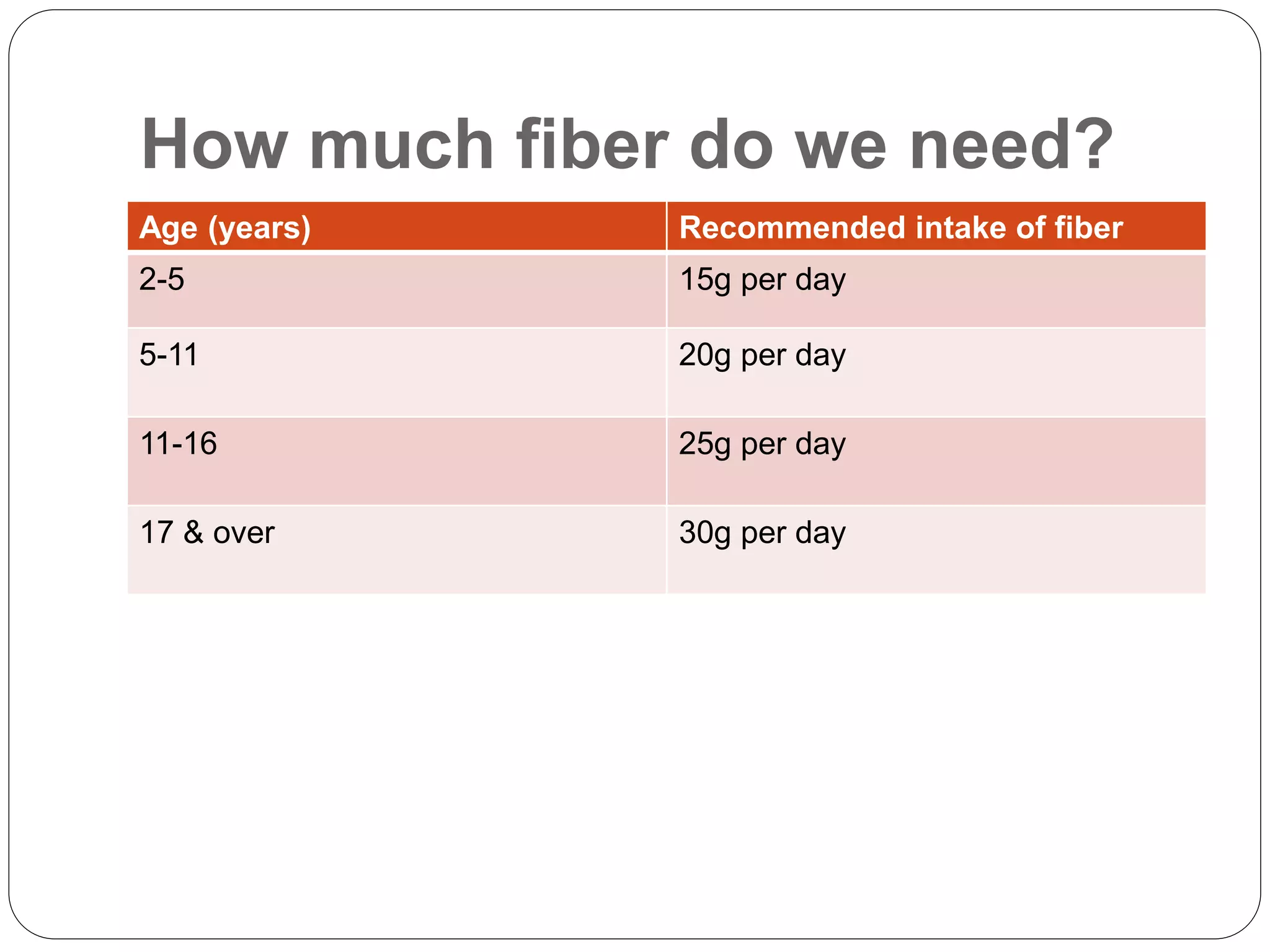
How much fiber do we need?
Age (years) Recommended intake of fiber
2-5 15g per day
5-11 20g per day
11-16 25g per day
17 & over 30g per day

Dietary fiber

  • 1.
  • 2.
     Dietary Fiberalso known as roughage, is the indigestible portion of food derived from plants, which our body cannot digest or absorb.  It is type of a carbohydrate that helps keep our digestive systems healthy.  Sources:- It is found in edible plant foods such as cereals, fruits, vegetables, dried peas, nuts, lentils and grains.
  • 3.
    Types of dietaryFiber  Fiber is commonly classified as soluble, which dissolves in water, or insoluble, which doesn't dissolve. Soluble Fiber  Soluble fiber tends to slow the movement of food through the Digestive System.  It can help lower blood cholesterol and glucose levels.  Soluble fiber is found in oats, peas, beans, apples, citrus fruits, carrots, barley. Insoluble Fiber  Insoluble fiber tends to accelerate the movement of food through the Digestive System.  Whole-wheat flour, wheat bran, nuts, beans and vegetables, such as cauliflower, green beans and potatoes, are good sources of insoluble fiber.
  • 4.
    Resistant starch  Resistantstarch is important in bowel health.  Bacteria in the large bowel ferment and change the resistant starch into short-chain fatty acids, which are important to bowel health and may protect against cancer. These fatty acids are also absorbed into the bloodstream and may play role in lowering blood cholesterol levels.  It is found in many unprocessed cereals and grains, under ripe bananas, potatoes and lentils.
  • 5.
    Benefits of DietaryFiber Prevent Constipation  Insoluble dietary Fiber acts as a broom to sweep out the digestive tract. It accelerates the passage of food through the digestive system, which facilitates regular defecation.  Adds bulk to the stool, which is easier to pass, hence decreases the chance of constipation. Lowers the Risk of Digestive Conditions  A high-fiber diet may lower your risk of specific disorders, such as Heartburn, Gastritis (Acidity), Hemorrhoids (Piles) and Irritable Bowel Syndrome, etc.
  • 6.
    Lowers the BloodCholesterol Levels  Soluble fiber may helps in reducing total blood Cholesterol levels by lowering Low-Density Lipoprotein (LDL). Controls the Blood Sugar Levels  Dietary fiber, particularly soluble fiber, can slow the absorption of sugar from the intestine. Prevents Colorectal (Colon) Cancer Weight Reduction  Fiber helps you feel full longer because it stays in your gut for longer periods of time.  This helps to prevent overeating. High fiber diet is lower in calories and fat. Fiber makes you chew food more, so you tend to eat slower.
  • 7.
    Lowers your Riskfor Developing Heart Diseases  High intake of dietary fiber lowers the risk of heart diseases.  In a Harvard University study, researchers found that a high dietary fiber intake has reduced 40 % risk of Coronary Heart Disease.
  • 8.
    How much fiberdo we need? Age (years) Recommended intake of fiber 2-5 15g per day 5-11 20g per day 11-16 25g per day 17 & over 30g per day