Komal Soni
M.sc.(Deptt. Of Nutrition Biology)
3rd Semester
Central University of Haryana
1
Introduction
Causes/ etiology of obesity
Markers of obesity
 Pathophysiology
Complications
Treatment
Underweight – causes
-signs & symptoms
-complications
- treatment
2
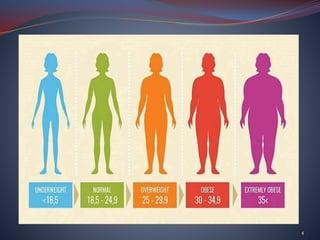
Obesity: condition in which excess fat is
accumulated in the body to an extent that it may have a
negative effect on health.
Overweight: simply means excess body weight.
Body is having more fat than in optimally healthy body.
Underweight: Body fat is too low than normal.
3
4
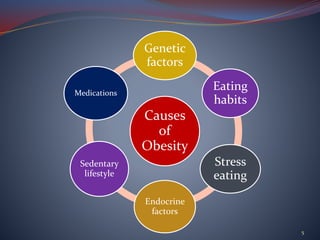
Causes
of
Obesity
Genetic
factors
Eating
habits
Stress
eating
Endocrine
factors
Sedentary
lifestyle
Medications
5
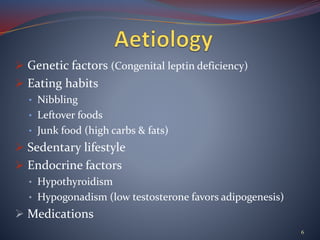
 Genetic factors (Congenital leptin deficiency)
 Eating habits
• Nibbling
• Leftover foods
• Junk food (high carbs & fats)
 Sedentary lifestyle
 Endocrine factors
• Hypothyroidism
• Hypogonadism (low testosterone favors adipogenesis)
 Medications
6
BMI
Waist Circumference
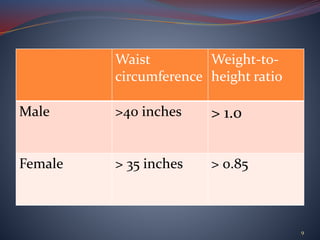
Waist-to-height ratio
7
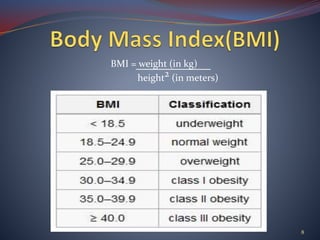
BMI = weight (in kg)
height2 (in meters)
8
9
Waist
circumference
Weight-to-
height ratio
Male >40 inches > 1.0
Female > 35 inches > 0.85
10
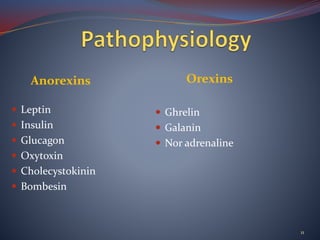
Anorexins Orexins
 Leptin
 Insulin
 Glucagon
 Oxytoxin
 Cholecystokinin
 Bombesin
 Ghrelin
 Galanin
 Nor adrenaline
11
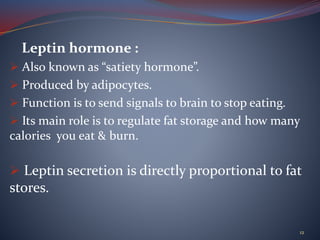
Leptin hormone :
 Also known as “satiety hormone”.
 Produced by adipocytes.
 Function is to send signals to brain to stop eating.
 Its main role is to regulate fat storage and how many
calories you eat & burn.
 Leptin secretion is directly proportional to fat
stores.
12
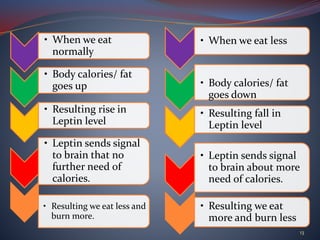
• When we eat
normally
• Body calories/ fat
goes up
• Resulting rise in
Leptin level
• Leptin sends signal
to brain that no
further need of
calories.
• Resulting we eat less and
burn more.
• When we eat less
• Body calories/ fat
goes down
• Resulting fall in
Leptin level
• Leptin sends signal
to brain about more
need of calories.
• Resulting we eat
more and burn less
13
More fat stores means more
Leptin………..
That means obese people have high
Leptin level which should be resulting
in less hunger or less food
intake…………
? ? ? 14
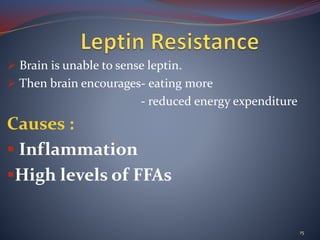
 Brain is unable to sense leptin.
 Then brain encourages- eating more
- reduced energy expenditure
Causes :
 Inflammation
High levels of FFAs
15
 CVDs
 Diabetes
 Hypertension
 Sleep Apnea
 Psychological problems (inferior)
 Fatty Liver disease
 Infertility (leptin interferes sex hormone production)
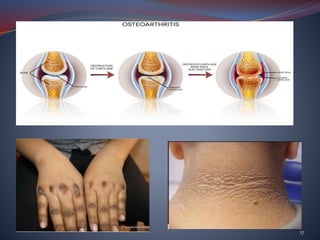
 Osteoarthritis
 Acanthosis nigricans
16
17
18
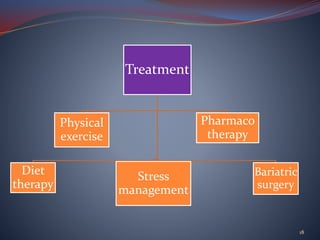
Treatment
Diet
therapy
Physical
exercise
Stress
management
Pharmaco
therapy
Bariatric
surgery
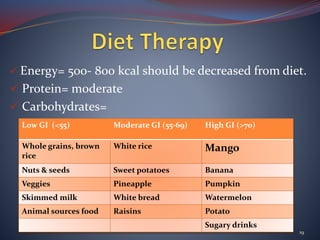
 Energy= 500- 800 kcal should be decreased from diet.
 Protein= moderate
 Carbohydrates=
19
Low GI (<55) Moderate GI (55-69) High GI (>70)
Whole grains, brown
rice
White rice Mango
Nuts & seeds Sweet potatoes Banana
Veggies Pineapple Pumpkin
Skimmed milk White bread Watermelon
Animal sources food Raisins Potato
Sugary drinks
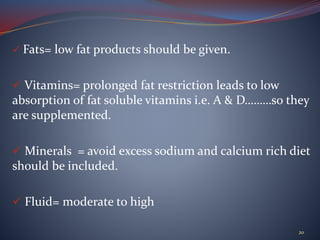
 Fats= low fat products should be given.
 Vitamins= prolonged fat restriction leads to low
absorption of fat soluble vitamins i.e. A & D………so they
are supplemented.
 Minerals = avoid excess sodium and calcium rich diet
should be included.
 Fluid= moderate to high
20
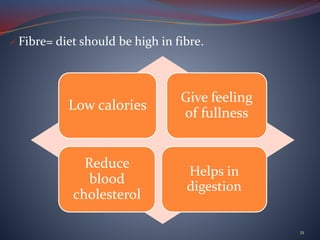
 Fibre= diet should be high in fibre.
21
Low calories
Give feeling
of fullness
Reduce
blood
cholesterol
Helps in
digestion
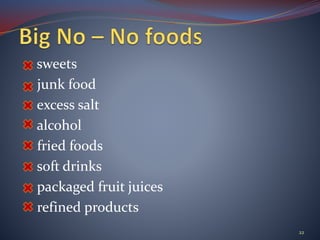
sweets
junk food
excess salt
alcohol
fried foods
soft drinks
packaged fruit juices
refined products
22
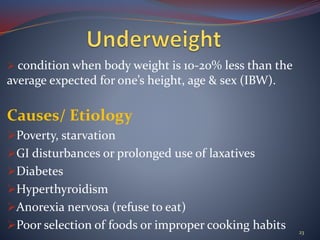
 condition when body weight is 10-20% less than the
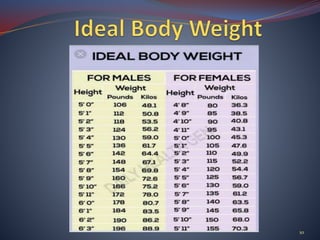
average expected for one’s height, age & sex (IBW).
Causes/ Etiology
Poverty, starvation
GI disturbances or prolonged use of laxatives
Diabetes
Hyperthyroidism
Anorexia nervosa (refuse to eat)
Poor selection of foods or improper cooking habits 23
24
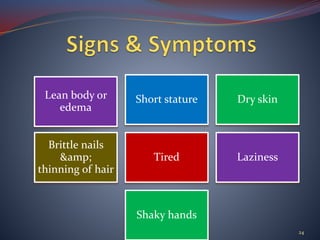
Lean body or
edema
Short stature Dry skin
Brittle nails
&amp;
thinning of hair
Tired Laziness
Shaky hands
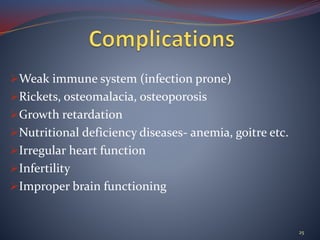
Weak immune system (infection prone)
Rickets, osteomalacia, osteoporosis
Growth retardation
Nutritional deficiency diseases- anemia, goitre etc.
Irregular heart function
Infertility
Improper brain functioning
25
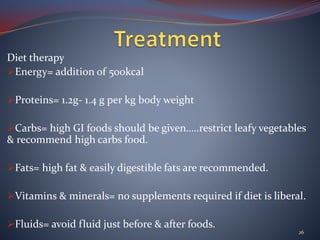
Diet therapy
Energy= addition of 500kcal
Proteins= 1.2g- 1.4 g per kg body weight
Carbs= high GI foods should be given…..restrict leafy vegetables
& recommend high carbs food.
Fats= high fat & easily digestible fats are recommended.
Vitamins & minerals= no supplements required if diet is liberal.
Fluids= avoid fluid just before & after foods.
26
27

Obesity, overweight & underweight

  • 1.
    Komal Soni M.sc.(Deptt. OfNutrition Biology) 3rd Semester Central University of Haryana 1
  • 2.
    Introduction Causes/ etiology ofobesity Markers of obesity  Pathophysiology Complications Treatment Underweight – causes -signs & symptoms -complications - treatment 2
  • 3.
    Obesity: condition inwhich excess fat is accumulated in the body to an extent that it may have a negative effect on health. Overweight: simply means excess body weight. Body is having more fat than in optimally healthy body. Underweight: Body fat is too low than normal. 3
  • 4.
  • 5.
  • 6.
     Genetic factors(Congenital leptin deficiency)  Eating habits • Nibbling • Leftover foods • Junk food (high carbs & fats)  Sedentary lifestyle  Endocrine factors • Hypothyroidism • Hypogonadism (low testosterone favors adipogenesis)  Medications 6
  • 7.
  • 8.
    BMI = weight(in kg) height2 (in meters) 8
  • 9.
    9 Waist circumference Weight-to- height ratio Male >40inches > 1.0 Female > 35 inches > 0.85
  • 10.
  • 11.
    Anorexins Orexins  Leptin Insulin  Glucagon  Oxytoxin  Cholecystokinin  Bombesin  Ghrelin  Galanin  Nor adrenaline 11
  • 12.
    Leptin hormone : Also known as “satiety hormone”.  Produced by adipocytes.  Function is to send signals to brain to stop eating.  Its main role is to regulate fat storage and how many calories you eat & burn.  Leptin secretion is directly proportional to fat stores. 12
  • 13.
    • When weeat normally • Body calories/ fat goes up • Resulting rise in Leptin level • Leptin sends signal to brain that no further need of calories. • Resulting we eat less and burn more. • When we eat less • Body calories/ fat goes down • Resulting fall in Leptin level • Leptin sends signal to brain about more need of calories. • Resulting we eat more and burn less 13
  • 14.
    More fat storesmeans more Leptin……….. That means obese people have high Leptin level which should be resulting in less hunger or less food intake………… ? ? ? 14
  • 15.
     Brain isunable to sense leptin.  Then brain encourages- eating more - reduced energy expenditure Causes :  Inflammation High levels of FFAs 15
  • 16.
     CVDs  Diabetes Hypertension  Sleep Apnea  Psychological problems (inferior)  Fatty Liver disease  Infertility (leptin interferes sex hormone production)  Osteoarthritis  Acanthosis nigricans 16
  • 17.
  • 18.
  • 19.
     Energy= 500-800 kcal should be decreased from diet.  Protein= moderate  Carbohydrates= 19 Low GI (<55) Moderate GI (55-69) High GI (>70) Whole grains, brown rice White rice Mango Nuts & seeds Sweet potatoes Banana Veggies Pineapple Pumpkin Skimmed milk White bread Watermelon Animal sources food Raisins Potato Sugary drinks
  • 20.
     Fats= lowfat products should be given.  Vitamins= prolonged fat restriction leads to low absorption of fat soluble vitamins i.e. A & D………so they are supplemented.  Minerals = avoid excess sodium and calcium rich diet should be included.  Fluid= moderate to high 20
  • 21.
     Fibre= dietshould be high in fibre. 21 Low calories Give feeling of fullness Reduce blood cholesterol Helps in digestion
  • 22.
    sweets junk food excess salt alcohol friedfoods soft drinks packaged fruit juices refined products 22
  • 23.
     condition whenbody weight is 10-20% less than the average expected for one’s height, age & sex (IBW). Causes/ Etiology Poverty, starvation GI disturbances or prolonged use of laxatives Diabetes Hyperthyroidism Anorexia nervosa (refuse to eat) Poor selection of foods or improper cooking habits 23
  • 24.
    24 Lean body or edema Shortstature Dry skin Brittle nails &amp; thinning of hair Tired Laziness Shaky hands
  • 25.
    Weak immune system(infection prone) Rickets, osteomalacia, osteoporosis Growth retardation Nutritional deficiency diseases- anemia, goitre etc. Irregular heart function Infertility Improper brain functioning 25
  • 26.
    Diet therapy Energy= additionof 500kcal Proteins= 1.2g- 1.4 g per kg body weight Carbs= high GI foods should be given…..restrict leafy vegetables & recommend high carbs food. Fats= high fat & easily digestible fats are recommended. Vitamins & minerals= no supplements required if diet is liberal. Fluids= avoid fluid just before & after foods. 26
  • 27.