Download as PPSX, PPTX
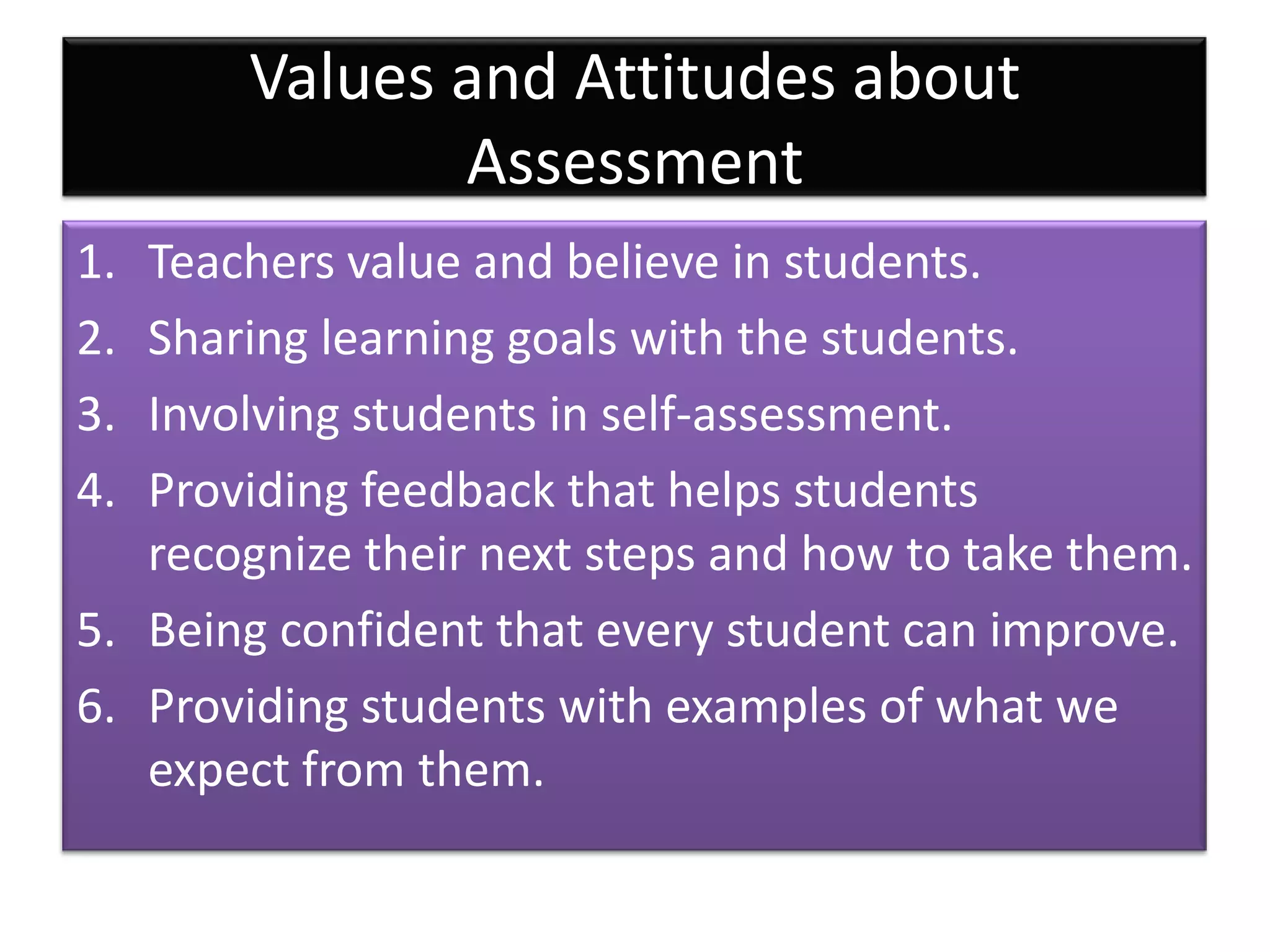
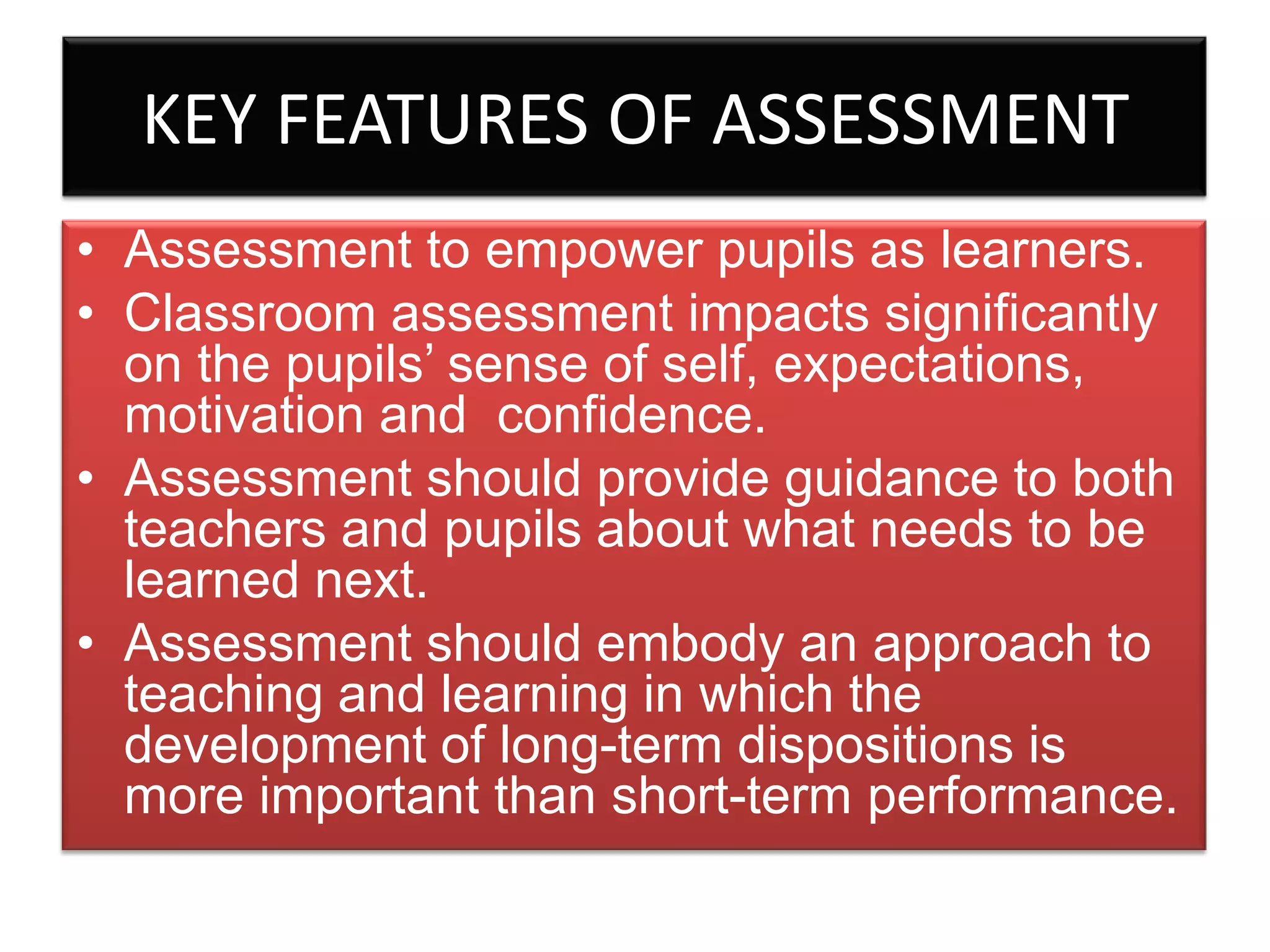
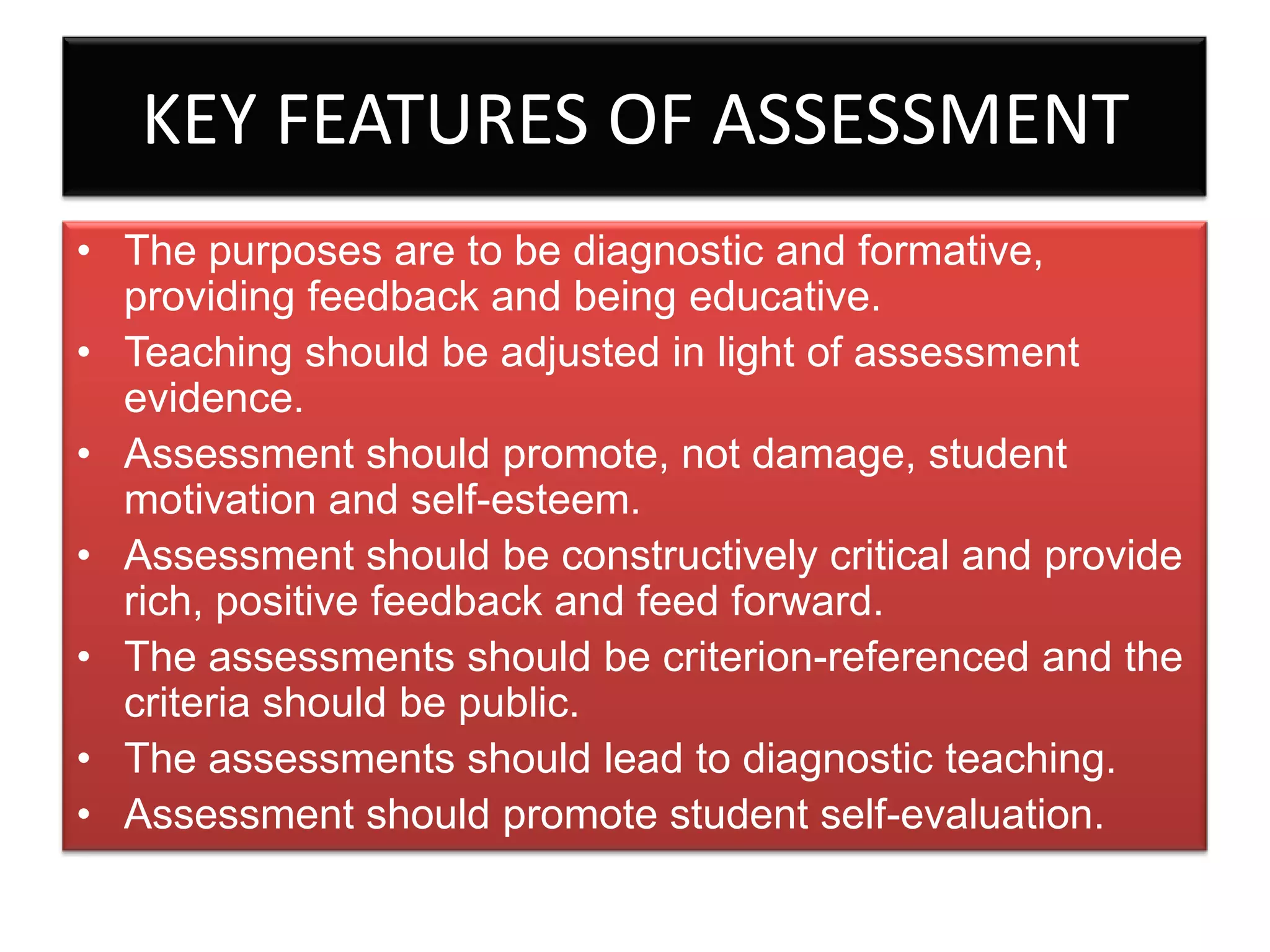
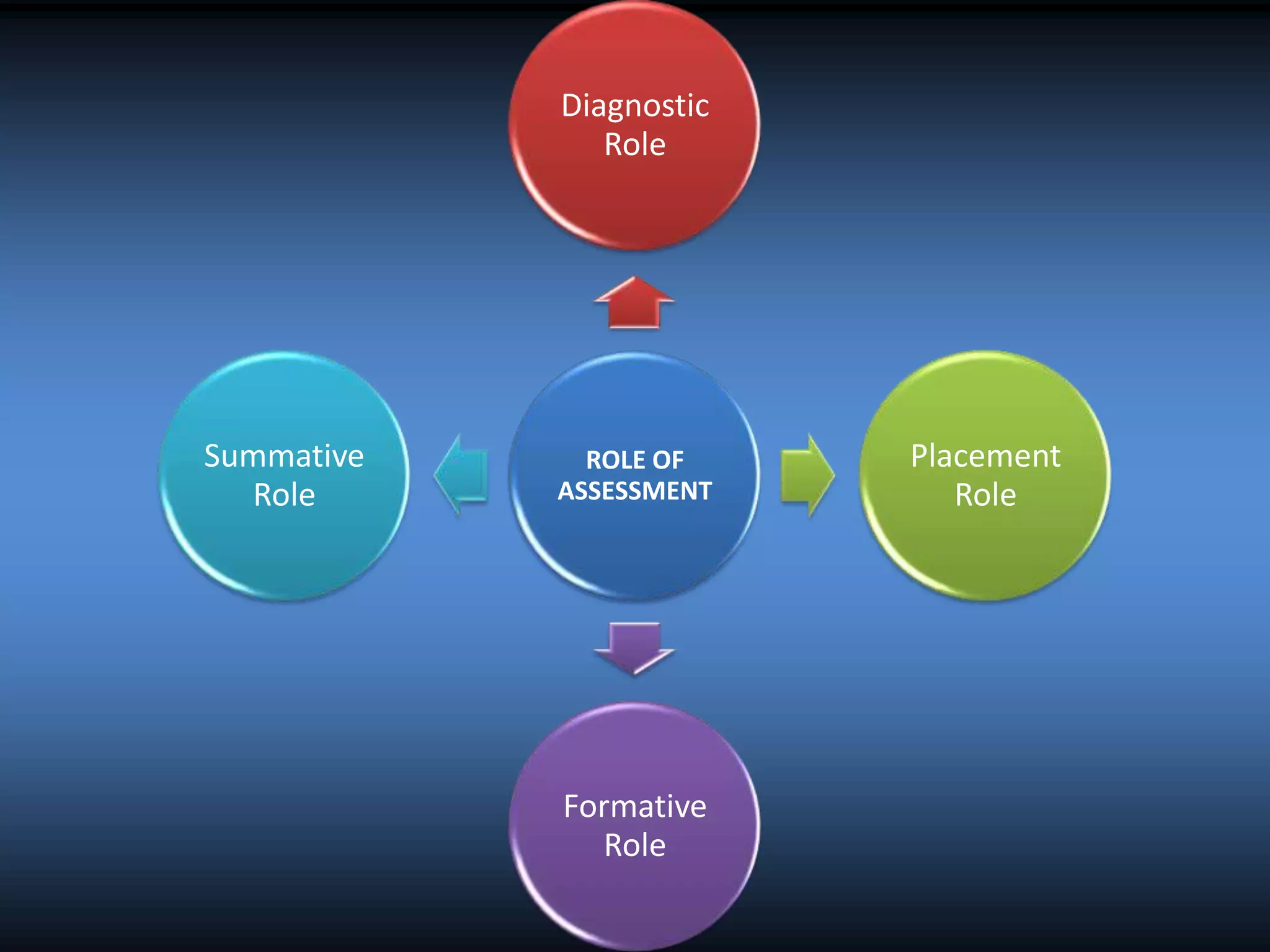
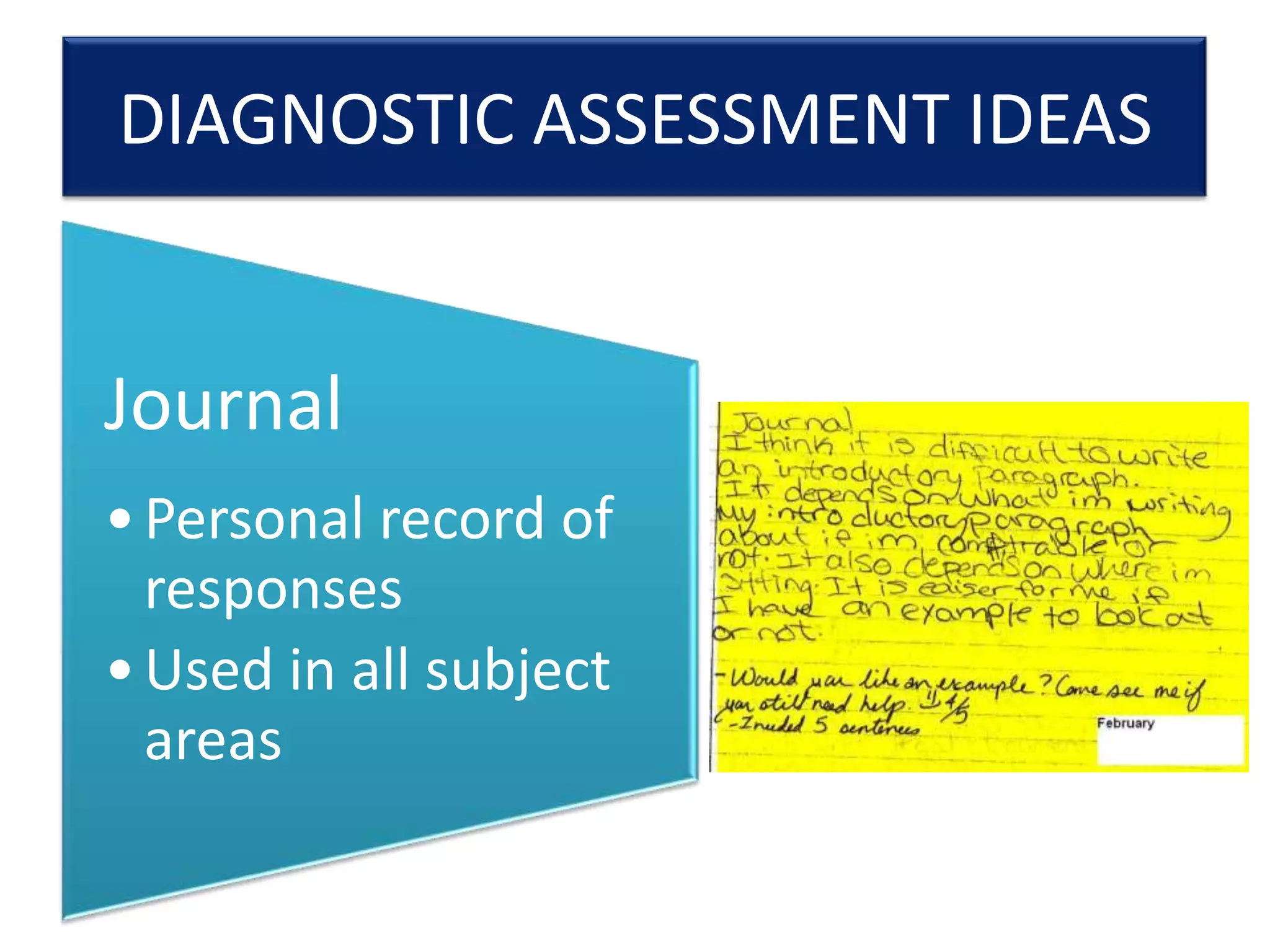
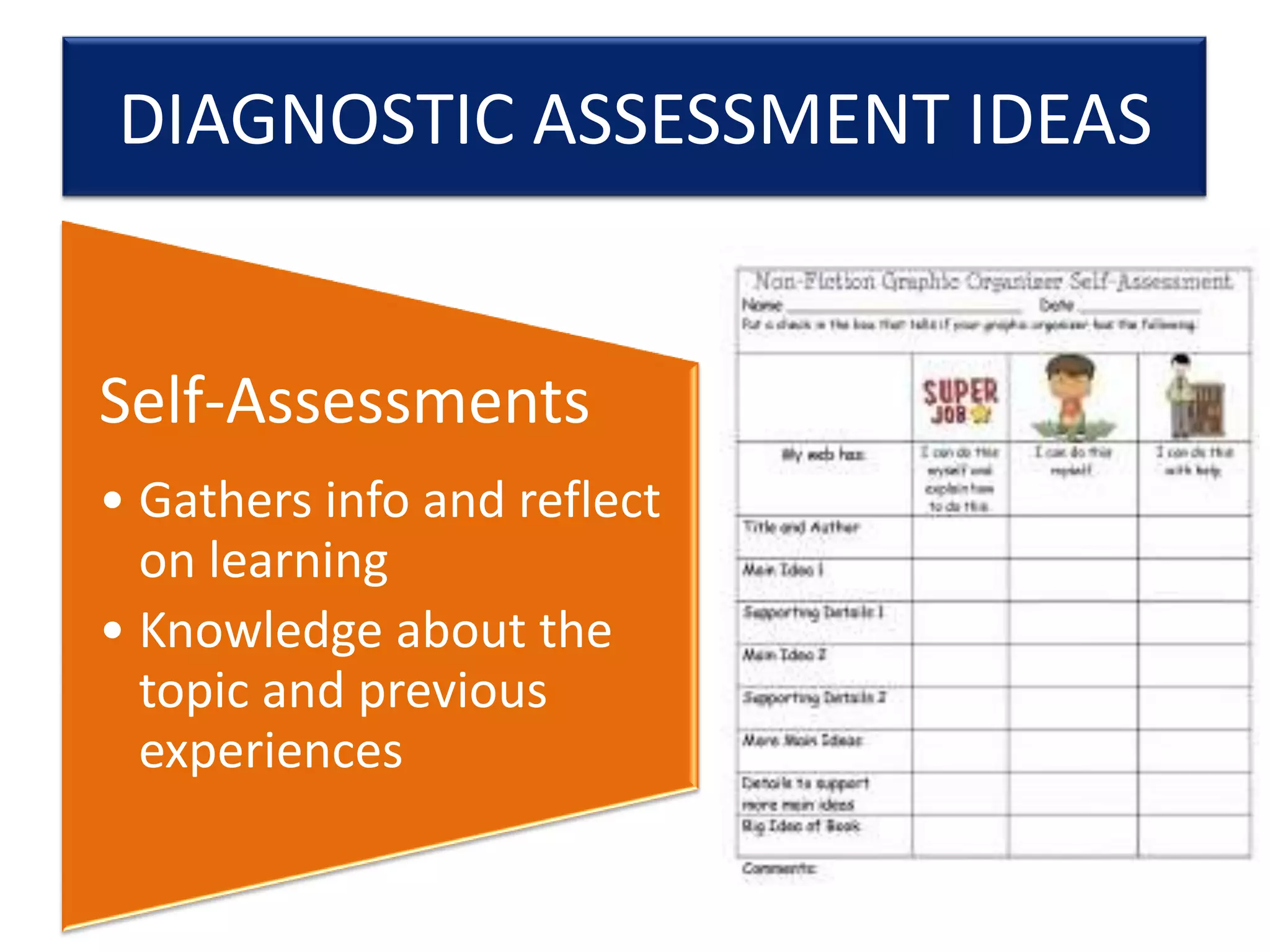
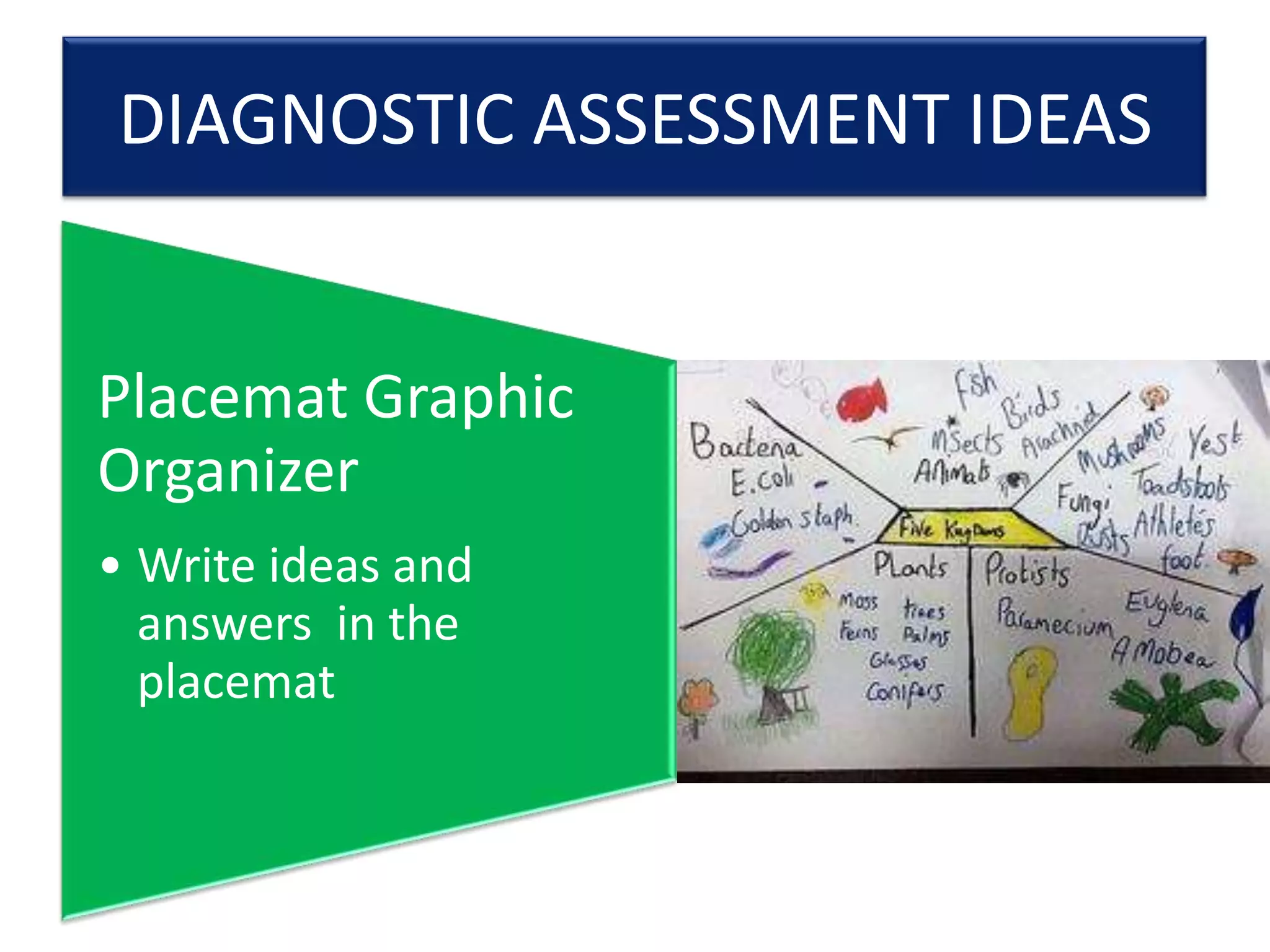
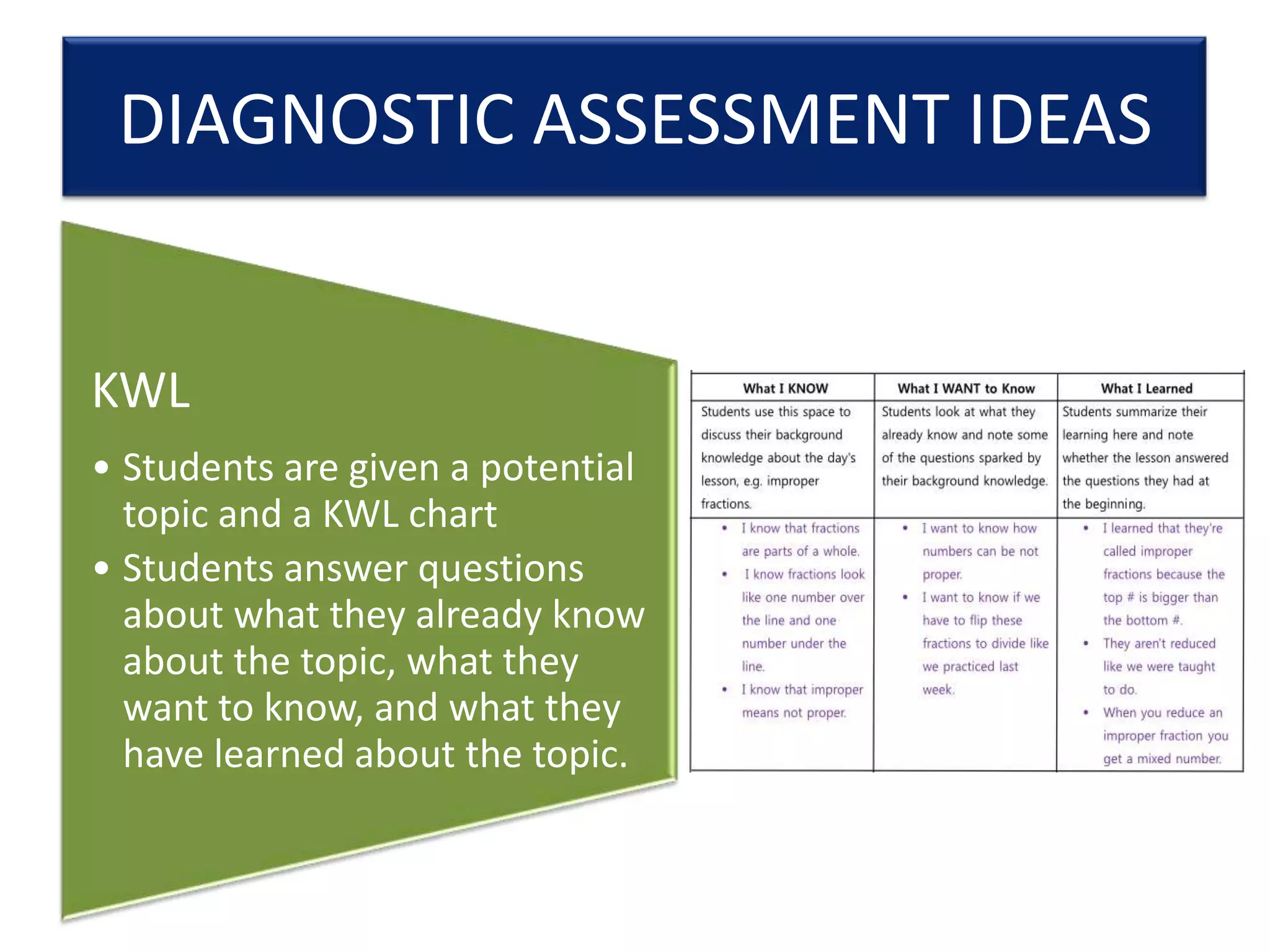
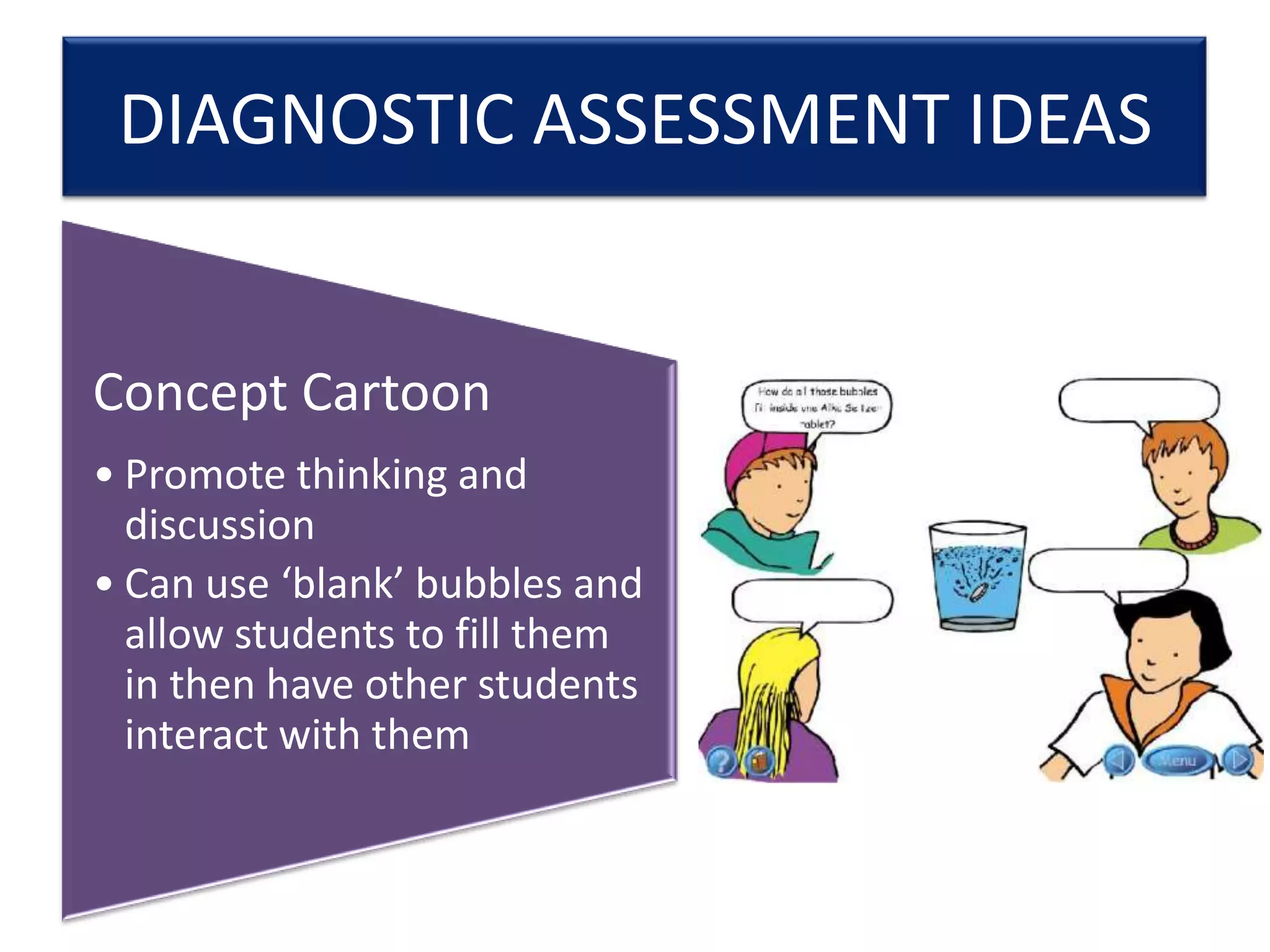
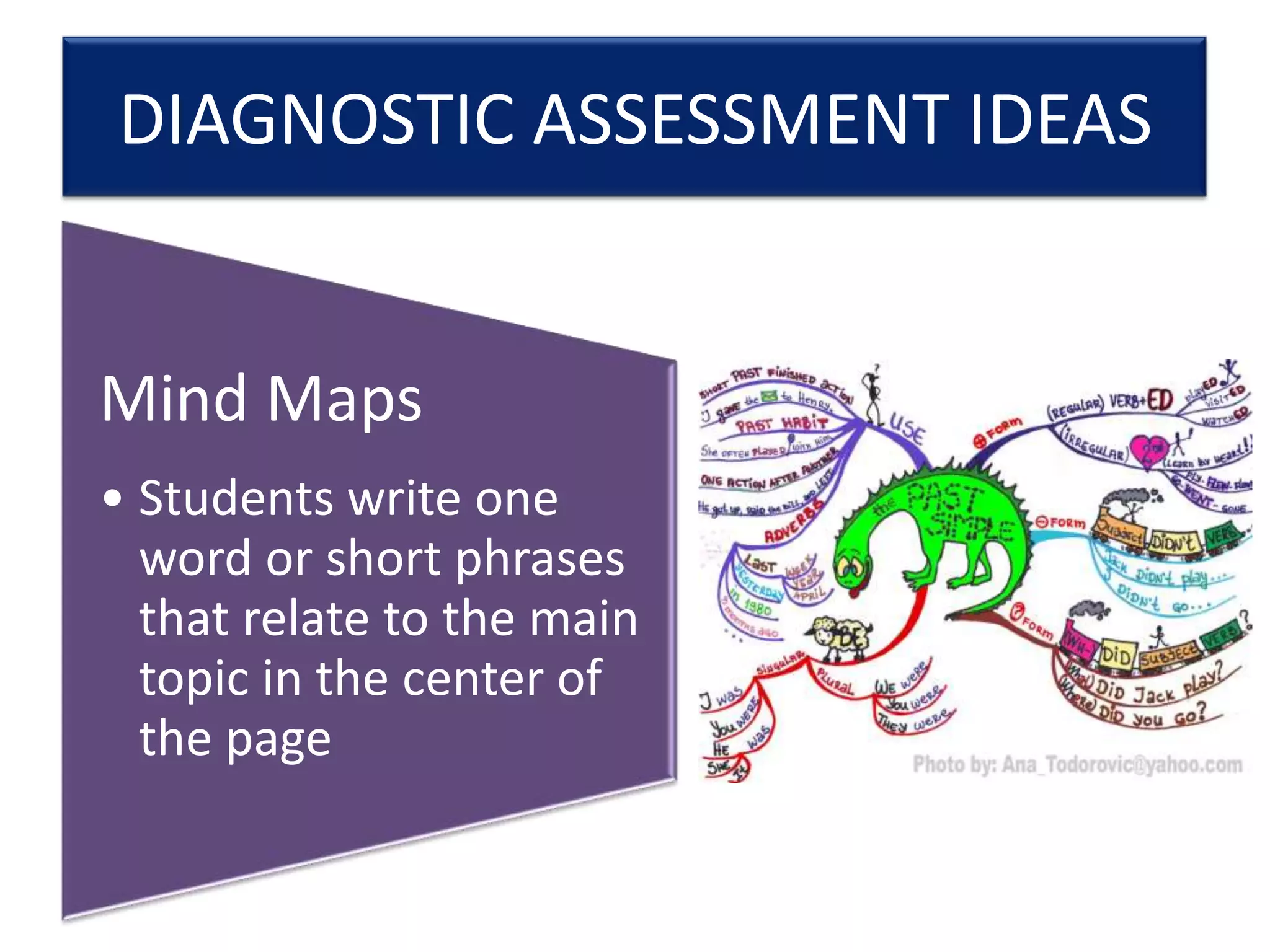

This document discusses key features and purposes of diagnostic assessment. It emphasizes that assessment should empower students as learners, provide guidance to teachers and students on next steps, and value developing long-term skills over short-term performance. Assessment should be formative, diagnostic, and promote self-esteem. It should use criteria-referenced and public standards to lead to diagnostic teaching and self-evaluation. Evidence comes from classroom activities. The document then provides examples of diagnostic assessment tools and strategies teachers can use, such as journals, self-assessments, interviews, and mind maps.


