Nurse Licensure Examination Review  Diabetes Mellitus pinoynursing.webkotoh.com
Diabetes Mellitus A group of metabolic diseases  characterized  by elevated levels of  glucose in the blood resulting from defects in insulin secretion, insulin action, insulin receptors or any combination of conditions.
Diabetes Mellitus A chronic disorder of impaired glucose metabolism, protein and fat metabolism
Diabetes Mellitus BASIC PATHOLOGY : Insulin problem (deficiency or impaired action)
Diabetes Mellitus Insulin is a hormone secreted by the BETA cells of the pancreas Stimulus of insulin- HYPERGLYCEMIA
Diabetes Mellitus Action of insulin: it promotes entry of Glucose into the body cells by binding to the insulin receptor in the cell membrane
INSULIN : Physiology Insulin Metabolic Functions: 1. Transports and metabolizes GLUCOSE 2. Promotes GLYCOGENESIS 3. Promotes GLYCOLYSIS 4. Enhances LIPOGENESIS 5. Accelerates PROTEIN SYNTHESIS
Diabetes Mellitus RISK FACTORS for Diabetes Mellitus 1. Family History of diabetes 2. Obesity 3. Race/Ethnicity
Diabetes Mellitus RISK FACTORS for Diabetes Mellitus 4. Age of more than 45 5. Previously unidentified IFG/IGT 6. Hypertension
Diabetes Mellitus RISK FACTORS for Diabetes Mellitus 7. Hyperlipidemia 8. History of Gestational Diabetes Mellitus
Diabetes Mellitus CLASSIFICATION OF DM 1. Type 1 DM Insulin dependent Diabetes Mellitus 2. Type 2 DM Non-insulin dependent Diabetes Mellitus 3. Gestational DM Diabetes Mellitus diagnosed during pregnancy 4. DM associated with other conditions or syndromes
Diabetes Mellitus CLASSIFICATION OF DM 1. Type 1 DM Insulin dependent Diabetes Mellitus
Diabetes Mellitus CLASSIFICATION OF DM 2. Type 2 DM Non-insulin dependent Diabetes Mellitus
Diabetes Mellitus CLASSIFICATION OF DM 3. Gestational DM Diabetes Mellitus diagnosed during pregnancy
Diabetes Mellitus CLASSIFICATION OF DM 4. DM associated with other conditions or syndromes
Diabetes Mellitus Other types of DM 1. Impaired Glucose Tolerance 2. Impaired Fasting Glucose 3. Pre-diabetes
TYPE 1- Diabetes Mellitus This type of DM is characterized by the destruction of the pancreatic beta cells
TYPE 1- Diabetes Mellitus Etiology: 1. Genetic susceptibility-  HLA DR3 and DR4 2. Autoimmune response 3. Toxins, unidentified viruses and environmental factors
TYPE 1- Diabetes Mellitus PATHOPHYSIOLOGY Destruction of BETA cells   decreased insulin production    uncontrolled glucose production by the liver   hyperglycemia    signs and symptoms
TYPE 1- Diabetes Mellitus PATHOPHYSIOLOGY CLASSIC P’s Polyuria Polydipsia Polyphagia
TYPE 2- Diabetes Mellitus A type of DM characterized by insulin resistance and impaired insulin production
TYPE 2- Diabetes Mellitus Etiology: 1. Unknown 2. Probably genetic and obesity
TYPE 2- Diabetes Mellitus PATHOPHYSIOLOGY Decreased sensitivity of insulin receptor to insulin    less uptake of glucose    HYPERGLYCEMIA
TYPE 2- Diabetes Mellitus PATHOPHYSIOLOGY Decreased insulin production    diminished insulin action    hyperglycemia    signs and symptoms
TYPE 2- Diabetes Mellitus PATHOPHYSIOLOGY BUT (+) insulin in small amount    prevent breakdown of fats    DKA is unusual
GESTATIONAL Diabetes Mellitus Any degree of glucose intolerance with its onset during pregnancy  Usually detected between 24-28 th  week gestation
GESTATIONAL Diabetes Mellitus Blood glucose returns to normal after delivery of the infant NEVER administer ORAL HYPOGLYCEMIC AGENTS to PREGNANT MOTHERS!
Diabetes Mellitus ASSESSMENT FINDINGS 1. Classic 3 P’s 2. Fatigue 3. Body weakness
Diabetes Mellitus ASSESSMENT FINDINGS 4. Visual changes 5. Slow wound healing 6. Recurrent skin and mucus membrane infections
Diabetes Mellitus DIAGNOSTIC TESTS 1. FBS- > 126 2. RBS- >200 3. OGTT- > 200
Diabetes Mellitus DIAGNOSTIC TESTS 4. HgbA1- for monitoring!! 5. Urine glucose 6. Urine ketones
Diabetes Mellitus DIAGNOSTIC CRITERIA 1. FBS equal to or greater than 126 mg/dL (7.0mmol/L)  (Normal 8 hour FBS- 80-109 mg/dL)
Diabetes Mellitus DIAGNOSTIC CRITERIA 2. OGTT value 1 and 2 hours post-prandial equal to or greater than 200 mg/dL Normal OGTT 1 and 2 hours post-prandial- is 140 mg/dL
Diabetes Mellitus DIAGNOSTIC CRITERIA 3. RBS of equal to or greater than 200 mg/dL  PLUS the 3 P’s
Diabetes Mellitus NURSING MANAGEMENT OF DM The main goal is to  NORMALIZE  insulin activity and  blood glucose level by:
Diabetes Mellitus NURSING MANAGEMENT OF DM 1. Nutritional modification 2. Regular Exercise 3. Regular Glucose Monitoring 4. Drug therapy 5. Client Education
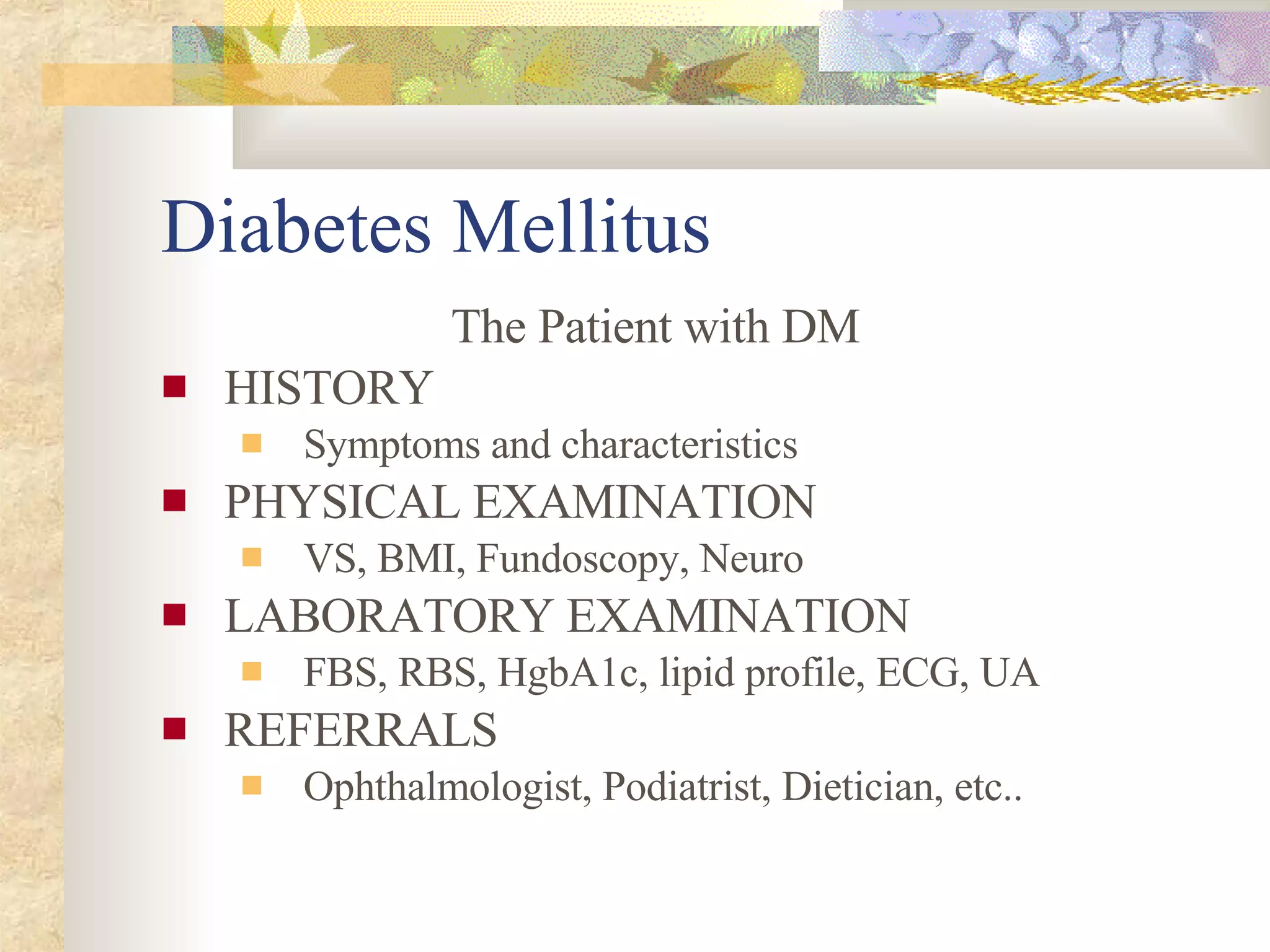
Diabetes Mellitus   The Patient with DM HISTORY Symptoms and characteristics PHYSICAL EXAMINATION VS, BMI, Fundoscopy, Neuro LABORATORY EXAMINATION FBS, RBS, HgbA1c, lipid profile, ECG, UA REFERRALS Ophthalmologist, Podiatrist, Dietician, etc..
Diabetes Mellitus The Patient with DM HISTORY Symptoms and characteristics PHYSICAL EXAMINATION VS, BMI, Fundoscopy, and Neuro assessment
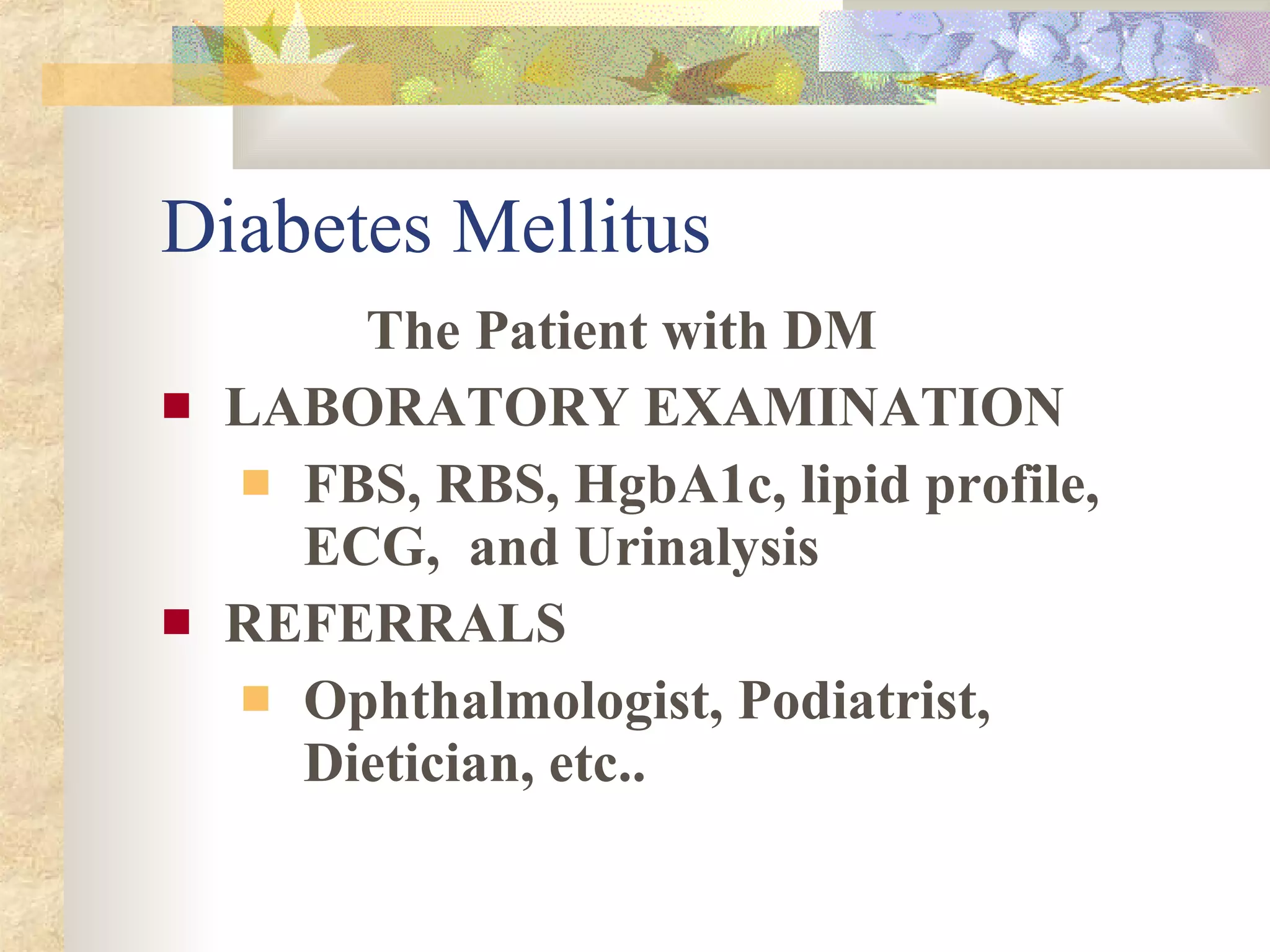
Diabetes Mellitus   The Patient with DM LABORATORY EXAMINATION FBS, RBS, HgbA1c, lipid profile, ECG,  and Urinalysis REFERRALS Ophthalmologist, Podiatrist, Dietician, etc..
DM Nutritional management
Diabetes Mellitus NUTRITIONAL MANAGEMENT 1.Review the patient’s diet history to identify eating habits and lifestyle 2. Coordinate with the dietician in meal planning for weight loss
Diabetes Mellitus NUTRITIONAL MANAGEMENT 3. Plan for the caloric intake distributed as follows- CHO 50-60%; Fats 20-30%; and Proteins  10-20% 4. Advise moderation in alcohol intake 5. Using artificial sweeteners is acceptable
DM Exercise management
Diabetes Mellitus EXERCISE Management 1. Teach that exercise can lower the blood glucose level 2. Diabetics must first control the glucose level before initiating exercise programs.
Diabetes Mellitus EXERCISE Management 3. Offer extra food /calories  before engaging in exercise 4. Offer snacks at the end of the exercise period if patient is on insulin treatment.
Diabetes Mellitus EXERCISE Management 5. Advise that exercise should be done at the same time every day, preferably when blood glucose levels are at their peak
Diabetes Mellitus EXERCISE Management 6. Regular exercise, not sporadic exercise, should be encouraged. 7. For most patient, WALKING is the safe and beneficial form of exercise
Glucose Self Monitoring
Diabetes Mellitus GLUCOSE MONITORING Self-monitoring of blood glucose (SMBG) enables the patient to adjust the treatment regimen to obtain optimal glucose control
Diabetes Mellitus GLUCOSE MONITORING Most common method involves obtaining a drop of capillary blood applied to a test strip.  The usual recommended frequency is TWO-FOUR times a day.
Diabetes Mellitus When is it done? At the peak action time of the medication to evaluate the need for adjustments.  To evaluate BASAL insulin    test before meals
Diabetes Mellitus When is it done? To titrate bolus or regular and lispro   test 2 hours after meals. To evaluate the glucose level of those taking ORAL hypoglycemics    test before and two hours after meals.
Diabetes Mellitus Monitoring therapy Testing the glycosylated hemoglobin (HbA1c) This glycosylated hemoglobin refers to the blood test that reflects the average blood glucose over a period of TWO to THREE months.
Diabetes Mellitus Monitoring therapy Normal value is 4 to 6 % No patient preparation is needed for this testing Done to monitor therapy
Diabetes Mellitus Urine testing for glucose Benedict’s test
Diabetes Mellitus Urine testing for ketones Ketones are by-products of fat breakdown
Diabetes Mellitus Urine testing for ketones This is performed whenever TYPE 1 DM have glucosuria or persistent elevation of blood glucose, during illness, and in gestational diabetes
DM Drug therapy
Diabetes Mellitus DRUG THERAPY and MANAGEMENT Usually, this type of management is employed if diet modification and exercise cannot control the blood glucose level.
Diabetes Mellitus DRUG THERAPY and MANAGEMENT Because the patient with TYPE 1 DM cannot produce insulin, exogenous insulin must be administered for life.
Diabetes Mellitus DRUG THERAPY and MANAGEMENT TYPE 2 DM may have decreased insulin production, ORAL agents that stimulate insulin production are usually employed.
Diabetes Mellitus PHARMACOLOGIC INSULIN This may be grouped into several categories according to: 1. Source- Human, pig, or cow 2. Onset of action- Rapid-acting, short-acting, intermediate-acting, long-acting and very long acting
Diabetes Mellitus PHARMACOLOGIC INSULIN This may be grouped into several categories according to: 3. Pure or mixed concentration 4. Manufacturer of drug
Diabetes Mellitus GENERALITIES 1. Human insulin preparations have a shorter duration of action than animal source
Diabetes Mellitus GENERALITIES 2. Animal sources of insulin have animal proteins that may trigger allergic reaction and they may stimulate antibody production that may bind the insulin, slowing the action
Diabetes Mellitus 3. ONLY Regular insulin can be used INTRAVENOUSLY!
Diabetes Mellitus 4. Insulin are measured in INTERNATIONAL UNITS or “iu” 5. There is a specified insulin injection calibrated in units
Diabetes Mellitus RAPID ACTING INSULIN Lispro (Humalog) and Insulin Aspart (Novolog) Produces a more rapid effect and with a shorter duration than any other insulin preparation
Diabetes Mellitus RAPID ACTING INSULIN ONSET- 5-15 minutes PEAK- 1 hour DURATION- 3 hours Instruct patient to eat within 5 to 15 minutes after injection
Diabetes Mellitus REGULAR INSULIN Also called Short-acting insulin “ R” Usually Clear solution administered 30 minutes before a meal
Diabetes Mellitus REGULAR INSULIN ONSET- 30 minutes to 1 hour PEAK- 2 to 3 hours DURATION- 4 to 6 hours
Diabetes Mellitus INTERMEDIATE ACTING INSULIN Called “NPH” or “LENTE” Appears white and cloudy
Diabetes Mellitus INTERMEDIATE ACTING INSULIN ONSET- 2-4 hours PEAK- 4 to 6-12 hours DURATION- 16-20 hours
Diabetes Mellitus LONG- ACTING INSULIN “ UltraLENTE” Referred to as “peakless” insulin
Diabetes Mellitus LONG- ACTING INSULIN ONSET- 6-8 hours PEAK- 12-16 hours DURATION- 20-30 hours
Diabetes Mellitus HEALTH TEACHING Regarding Insulin SELF- Administration 1. Insulin is administered at home  subcutaneously
Diabetes Mellitus HEALTH TEACHING Regarding Insulin SELF- Administration 2. Cloudy insulin should be thoroughly mixed by gently inverting the vial or  ROLLING between the hands
Diabetes Mellitus HEALTH TEACHING Regarding Insulin SELF- Administration 3. Insulin NOT IN USE should be stored in the refrigerator, BUT  avoid  freezing/extreme temperature
Diabetes Mellitus 4. Insulin IN USE should be kept at room temperature to reduce local irritation at the injection site
Diabetes Mellitus 5. INSULIN may be kept at room temperature up to 1 month
Diabetes Mellitus 6. Select syringes that match the insulin concentration. U-100 means 100 units per mL
Diabetes Mellitus 7. Instruct the client to draw up the REGULAR (clear) Insulin FIRST before drawing the intermediate acting (cloudy) insulin
Diabetes Mellitus 8. Pre-filled syringes can be prepared and should be kept in the refrigerator with the needle in the UPRIGHT position to avoid clogging the needle
Diabetes Mellitus 9. The four main areas for insulin injection are- ABDOMEN, UPPER ARMS, THIGHS and HIPS
 
Diabetes Mellitus Insulin is absorbed fastest in the abdomen  and slowest in the hips Instruct the client to rotate the areas of injection, but exhaust all available sites in one area first before moving into another area.
Diabetes Mellitus 10. Alcohol  may not  be used to cleanse the skin 11. Utilize the subcutaneous injection technique- commonly, a 45-90 degree angle.
Diabetes Mellitus 12. No need to instruct for aspirating the needle 13. Properly discard the syringe after use.
Diabetes Mellitus T-I-E T est blood    I nject insulin     E at food
Diabetes Mellitus COMPLICATIONS OF INSULIN THERAPY 1. Local allergic reactions Redness, swelling, tenderness and induration appearing 1-2 hours after injection Usually occurs in the beginning stage of therapy
Diabetes Mellitus COMPLICATIONS OF INSULIN THERAPY 1. Local allergic reactions Disappears with continued use Antihistamine can be given 1 hour before injection time Porcine and bovine insulin preparations have a higher tendency to produce this reaction.
2. SYSTEMIC ALLERGIC REACTIONS Very rare Generalized urticaria is the manifestation Treatment is desensitization Diabetes Mellitus
COMPLICATIONS OF INSULIN THERAPY 3. INSULIN DYSTROPHY A localized reaction in the form of lipo atrophy  or lipo hypertrophy  Diabetes Mellitus
Lipoatrophy- loss of subcutaneous fat usually caused by the utilization of animal insulin Diabetes Mellitus
Lipohypertrophy- development of fibrofatty masses, usually caused by repeated use of injection site Diabetes Mellitus
4. INSULIN RESISTANCE Most commonly caused by OBESITY Defined as daily insulin requirement of more than 200 units Management- Steroids and use of more concentrated insulin Diabetes Mellitus
5. MORNING HYPERGLYCEMIA Elevated blood sugar upon arising in the morning Caused by insufficient level of insulin DAWN phenomenon SOMOGYI effect INSULIN WANING Diabetes Mellitus
Diabetes Mellitus DAWN PHENOMENON Relatively normal blood glucose until about 3 am, when the glucose level begins to RISE Results from the nightly surges of GROWTH HORMONE secretion Management: Bedtime injection of NPH
Diabetes Mellitus SOMOGYI EFFECT Normal or elevated blood glucose at bedtime, decrease blood glucose at 2-3 am due to hypoglycemic levels and a subsequent increase in blood glucose (rebound hypergycemia)
Diabetes Mellitus SOMOGYI EFFECT Nocturnal hypoglycemia followed by rebound hyperglycemia
Diabetes Mellitus SOMOGYI EFFECT Due to the production of counter regulatory hormones- glucagon. cortisol and epinephrine Management- decrease evening dose of NPH or increase bedtime snack
Diabetes Mellitus INSULIN WANING Progressive rise in blood glucose from bedtime to morning Seen when the NPH evening dose is administered before dinner Management: Move the insulin injection to bedtime
Diabetes Mellitus ORAL HYPOGLYCEMIC AGENTS These may be effective when used in TYPE 2 DM that cannot be treated with diet and exercise These are NEVER used in pregnancy!
Diabetes Mellitus ORAL HYPOGLYCEMIC AGENTS There are several agents: Sulfonylureas Biguanides Alpha-glucosidase inhibitors Thiazolidinediones Meglitinides
Diabetes Mellitus SULFONYLUREAS MOA-  stimulates the beta cells of the pancreas to secrete insulin Classified as to generations- first and second generations
Diabetes Mellitus SULFONYLUREAS FIRST GENERATION- Acetoheximide, Chlorpropamide, Tolazamide and  Tolbutamide SECOND GENERATION- Glipizide, Glyburide, Glibenclamide, Glimepiride
Diabetes Mellitus: Sulfonylureas The most common side –effects of these medications are Gastro-intestinal upset and dermatologic reactions. HYPOGLYCEMIA is also a very important side-effect
Diabetes Mellitus: Sulfonylureas Chlorpropamide has a very long duration of action. This also produces a disulfiram-like reaction when taken with alcohol Second generation drugs have shorter duration with metabolism in the kidney and liver and are the choice for elderly patients
Diabetes Mellitus BIGUANIDES MOA- Facilitate the action of insulin on the peripheral receptors These can only be used in the presence of insulin
Diabetes Mellitus BIGUANIDES= “ formin” They have no effect on the beta cells of the pancreas  Metformin (Glucophage) and Phenformin are examples
Diabetes Mellitus: Biguanides The most important side effect is LACTIC ACIDOSIS! These are not given to patient with renal impairment
Diabetes Mellitus: Biguanides These drugs are usually given with a sulfonylurea to enhance the glucose-lowering effect more than the use of each drug individually
Diabetes Mellitus ALPHA-GLUCOSIDASE INHIBITORS MOA- Delay the absorption of glucose in the GIT  Result is a lower post-prandial blood glucose level They do not affect insulin secretion or action! Side-effect: DIARRHEA and FLATULENCE
Diabetes Mellitus Examples of AGI are Acarbose  and Miglitol They are not absorbed systemically and are very safe They can be used alone or in combination with other OHA
Diabetes Mellitus Side-effect if used with other drug is HYPOGLYCEMIA Note that sucrose absorption is impaired and IV glucose is the therapy for the hypoglycemia
Diabetes Mellitus THIAZOLIDINEDIONES MOA- Enhance insulin action at the receptor site They  do not  stimulate insulin secretion
Diabetes Mellitus THIAZOLIDINEDIONES Examples- Rosiglitazone, Pioglitazone These drugs affect LIVER FUNCTION Can cause resumption of OVULATION in peri-menopausal anovulatory women
Diabetes Mellitus MEGLITINIDES MOA- Stimulate the secretion of insulin by the beta cells Examples- Repaglinide and Nateglinide
Diabetes Mellitus MEGLITINIDES They have a shorter duration and fast action Should be taken BEFORE meals to stimulate the release of insulin from the pancreas
Diabetes Mellitus MEGLITINIDES Principal side-effect of meglitinides- hypoglycemia Can be used alone or in combination
Diabetes Mellitus ACUTE COMPLICATIONS OF DM Hypoglycemia Diabetic ketoacidosis Hyperglycemic hyperosmolar non-ketotic syndrome (HHNS)
Diabetes Mellitus CHRONIC COMPLICATIONS OF DM Macrovascular complications- MI, Stroke, Atherosclerosis, CAD, and  Peripheral vascular disease Microvascular complications- micro-angiopathy, retinopathy, nephropathy  Peripheral neuropathy
 
Diabetes Mellitus HYPOGLYCEMIA Blood glucose level less than 50 to 60  mg/dL Causes: Too much insulin/OHA, too little food and excessive physical activity Mild- 40-60 Moderate- 20-40 Severe- less than 20
HYPOGLYCEMIA ASSESSMENT FINDINGS 1. Sympathetic manifestations- sweating, tremors, palpitations, nervousness, tachycardia and hunger
HYPOGLYCEMIA ASSESSMENT FINDINGS 2. CNS manifestations- inability to concentrate, headache, lightheadedness, confusion, memory lapses, slurred speech, impaired coordination, behavioral changes, double vision and drowsiness
HYPOGLYCEMIA
HYPERGLYCEMIA
HYPOGLYCEMIA DIAGNOSTIC FINDINGS RBS- less than 50-60 mg/dL level
HYPOGLYCEMIA Nursing Interventions 1. Immediate treatment with the use of foods with simple sugar- glucose tablets, fruit juice, table sugar, honey or hard candies
HYPOGLYCEMIA Nursing Interventions 2. For  unconscious patients-  glucagon injection 1 mg IM/SQ; or IV 25 to 50 mL of D50/50
HYPOGLYCEMIA Nursing Interventions 3. re-test glucose level in 15 minutes and re-treat if less than 75 mg/dL  4. Teach patient to refrain from eating high-calorie, high-fat desserts
HYPOGLYCEMIA Nursing Interventions 5. Advise in-between snacks, especially when physical activity is increased 6. Teach the importance of compliance to medications
Diabetic Ketoacidosis This is cause by the absence of insulin leading to fat breakdown and production of ketone bodies Three main clinical features: 1. HYPERGLYCEMIA 2. DEHYDRATION & electrolyte loss 3. ACIDOSIS
DKA PATHOPHYSIOLOGY No insulin   reduced glucose breakdown and increased liver glucose production     Hyperglycemia
DKA PATHOPHYSIOLOGY Hyperglycemia   kidney attempts to excrete glucose    increased osmotic load    diuresis     Dehydration
DKA PATHOPHYSIOLOGY No glucose in the cell   fat is broken down for energy    ketone bodies are produced    Ketoacidosis
DKA Risk factors 1.  infection or illness- common 2. stress 3. undiagnosed DM 4. inadequate insulin, missed dose of insulin
DKA ASSESSMENT FINDINGS 1. 3 P’s 2. Headache, blurred vision and weakness 3. Orthostatic hypotension
DKA ASSESSMENT FINDINGS 4. Nausea, vomiting and abdominal pain 5. Acetone (fruity)  breath  6. Hyperventilation or KUSSMAUL’s breathing
HYPERGLYCEMIA
Hyperglycemia
DKA LABORATORY FINDINGS 1. Blood glucose level of 300-800 mg/dL 2. Urinary ketones
DKA LABORATORY FINDINGS 3. ABG result of metabolic acidosis- LOW pH, LOW pCO2 as a compensation, LOW bicarbonate 4. Electrolyte imbalances- potassium levels may be HIGH due to acidosis and dehydration
DKA NURSING INTERVENTIONS 1. Assist in the correction of dehydration Up to 6 liters of fluid may be ordered for infusion, initially NSS then D5W Monitor hydration status Monitor I and O Monitor for volume overload
DKA NURSING INTERVENTIONS 2. Assist in restoring Electrolytes Kidney function is FIRST determined  before  giving potassium supplements!
DKA NURSING INTERVENTIONS 3. Reverse the Acidosis REGULAR insulin injection is ordered IV bolus 5-10 units The insulin is followed by drip infusion in units per hour BICARBONATE is not used!
HHNS A serious condition in which hyperosmolarity and extreme hyperglycemia predominate Ketosis is minimal Onset is slow and takes hours to days to develop
HHNS PATHOPHYSIOLOGY Lack of insulin action or Insulin resistance    hyperglycemia Hyperglycemia   osmotic diuresis    loss of water and electrolytes
HHNS PATHOPHYSIOLOGY Insulin is too low to prevent hyperglycemia but enough to prevent fat breakdown Occurs most commonly in type 2 DM, ages 50-70
HHNS Precipitating factors 1. Infection 2. Stress 3. Surgery 4. Medication like thiazides 5. Treatment like dialysis
HHNS ASSESSMENT FINDINGS 1. Profound dehydration 2. Hypotension 3. Tachycardia 4. Altered sensorium 5. Seizures and hemiparesis
HHNS DIAGNOSTIC TESTS 1. Blood glucose- 600 to 1,200 mg/dL 2. Blood osmolality- 350 mOsm/L 3. Electrolyte abnormalities
HHNS NURSING INTERVENTIONS Approach is similar to the DKA 1. Correction of Dehydration by IVF 2. Correction of electrolyte imbalance by replacement therapy
HHNS NURSING INTERVENTIONS 3. Administration of insulin injection and drips 4. Continuous monitoring of urine output
MACROVASCULAR CX Nursing management 1. Diet modification 2. Exercise
MACROVASCULAR CX Nursing management 3. Prevention and treatment of underlying conditions such as MI, CAD and stroke 4. Administration of prescribed medications for hypertension, hyperlipidemia and obesity
MICROVASCULAR CX Retinopathy-  a painless deterioration of the small blood vessels in the retina, may be classified as to background retinopathy, pre-proliferative and proliferative retinopathy  Permanent vision changes and blindness can occur
MICROVASCULAR CX Retinopathy-ASSESSMENT FINDINGS Blurry vision Spotty vision Asymptomatic
MICROVASCULAR CX Retinopathy: Diagnostic findings 1. Fundoscopy 2. Fluorescein angiography Painless procedure Side-effects- discoloration of the skin and urine for 12 hours, some allergic reactions, nausea Flash of camera may be slightly uncomfortable
MICROVASCULAR CX NURSING INTERVENTIONS 1. Assist in diagnostic procedure 2. Assist in the preparation for surgery- laser photocoagulation
MICROVASCULAR CX NURSING INTERVENTIONS 3. Health teaching regarding prevention of retinopathy by regular ophthalmic examinations, good glucose control and self-management of eye care regimens 4. Maintain client safety
MICROVASCULAR CX DIABETIC NEPHROPATHY Progressive deterioration of kidney function
MICROVASCULAR CX DIABETIC NEPHROPATHY HYPERGLYCEMIA   causes the kidney filtration mechanism to be stressed    blood proteins leak into the urine Pressure in the kidney blood vessels increases   stimulate the development of nephropathy
MICROVASCULAR CX ASSESSMENT findings for diabetic nephropathy 1. Albuminuria 2. Anemia 3. Acidosis
MICROVASCULAR CX ASSESSMENT findings for diabetic nephropathy 4. Fluid volume overload 5. Oliguria 6. Hypertension 7. UTI
MICROVASCULAR CX NURSING MANAGEMENT 1. Assist in the control of hypertension-  use of ACE inhibitor 2. Provide a low sodium and low protein diet 3. Administer prescribed medication for UTI
MICROVASCULAR CX NURSING MANAGEMENT 4. Assist in dialysis 5. Prepare patient for renal transplantation, if indicated
MICROVASCULAR CX Diabetic Neuropathy A group of disorders that affect all type of nerves including the peripheral, autonomic and spinal nerves
MICROVASCULAR CX Diabetic Neuropathy Two most common types of Diabetic Neuropathy are sensori-motor polyneuropathy and autonomic neuropathy
MICROVASCULAR CX Peripheral neuropathy- ASSESSMENT findings  1. paresthesias- prickling, tingling or heightened sensation 2. decreased proprioception 3. decreased sensation of light touch 4. unsteady gait 5. decreased tendon reflexes
MICROVASCULAR CX Peripheral neuropathy- Nursing Management 1. Provide teaching that good glucose control is very important to prevent its development 2. Manage the pain by analgesics, antidepressants and nerve stimulation
MICROVASCULAR CX Autonomic Neuropathy- ASSESSMENT findings 1. Silent, painless ischemia 2. delayed gastric emptying 3. orthostatic hypotension 4. N/V and bloating sensation 5. urinary retention 6. sexual dysfunction
MICROVASCULAR CX Autonomic Neuropathy-Nursing management 1. Educate about the avoidance of strenuous physical activity 2. Stress the importance of good glucose control to delay the development
MICROVASCULAR CX Autonomic Neuropathy-Nursing management 3. Provide LOW-fat, small frequent feedings 4. Administer bulk-forming laxatives for diabetic diarrhea 5. Provide HIGH-fiber diet for diabetic constipation
MICROVASCULAR CX MANAGEMENT OF FOOT AND LEG PROBLEMS Soft tissue injury in the foot/leg   formation of fissures and callus    poor wound healing    foot/leg ulcer
MICROVASCULAR CX RISK FACTORS for the development of foot and leg ulcers 1. More than 10 years diabetic 2. Age of more than 40 3. Smoking 4. Anatomic deformities 5. History of previous leg ulcers or amputation
MICROVASCULAR CX MANAGEMENT of Foot Ulcers Teach patient proper care of the foot Daily assessment of the foot Use of mirror to inspect the bottom
MICROVASCULAR CX MANAGEMENT of Foot Ulcers Inspect the surface of shoes for any rough spots or foreign objects Properly dry the feet Instruct to wear closed-toe shoes that fit well, recommend use of low-heeled shoes
MICROVASCULAR CX MANAGEMENT Instruct patient NEVER to walk barefoot, never to use heating pads, open-toed shoes and soaking feet Trim toenails STRAIGHT ACROSS and file sharp corners Instruct to  avoid smoking and over-the counter medications  and home remedies for foot problems
End of DM

Diabetes Mellitus

  • 1.
    Nurse Licensure ExaminationReview Diabetes Mellitus pinoynursing.webkotoh.com
  • 2.
    Diabetes Mellitus Agroup of metabolic diseases characterized by elevated levels of glucose in the blood resulting from defects in insulin secretion, insulin action, insulin receptors or any combination of conditions.
  • 3.
    Diabetes Mellitus Achronic disorder of impaired glucose metabolism, protein and fat metabolism
  • 4.
    Diabetes Mellitus BASICPATHOLOGY : Insulin problem (deficiency or impaired action)
  • 5.
    Diabetes Mellitus Insulinis a hormone secreted by the BETA cells of the pancreas Stimulus of insulin- HYPERGLYCEMIA
  • 6.
    Diabetes Mellitus Actionof insulin: it promotes entry of Glucose into the body cells by binding to the insulin receptor in the cell membrane
  • 7.
    INSULIN : PhysiologyInsulin Metabolic Functions: 1. Transports and metabolizes GLUCOSE 2. Promotes GLYCOGENESIS 3. Promotes GLYCOLYSIS 4. Enhances LIPOGENESIS 5. Accelerates PROTEIN SYNTHESIS
  • 8.
    Diabetes Mellitus RISKFACTORS for Diabetes Mellitus 1. Family History of diabetes 2. Obesity 3. Race/Ethnicity
  • 9.
    Diabetes Mellitus RISKFACTORS for Diabetes Mellitus 4. Age of more than 45 5. Previously unidentified IFG/IGT 6. Hypertension
  • 10.
    Diabetes Mellitus RISKFACTORS for Diabetes Mellitus 7. Hyperlipidemia 8. History of Gestational Diabetes Mellitus
  • 11.
    Diabetes Mellitus CLASSIFICATIONOF DM 1. Type 1 DM Insulin dependent Diabetes Mellitus 2. Type 2 DM Non-insulin dependent Diabetes Mellitus 3. Gestational DM Diabetes Mellitus diagnosed during pregnancy 4. DM associated with other conditions or syndromes
  • 12.
    Diabetes Mellitus CLASSIFICATIONOF DM 1. Type 1 DM Insulin dependent Diabetes Mellitus
  • 13.
    Diabetes Mellitus CLASSIFICATIONOF DM 2. Type 2 DM Non-insulin dependent Diabetes Mellitus
  • 14.
    Diabetes Mellitus CLASSIFICATIONOF DM 3. Gestational DM Diabetes Mellitus diagnosed during pregnancy
  • 15.
    Diabetes Mellitus CLASSIFICATIONOF DM 4. DM associated with other conditions or syndromes
  • 16.
    Diabetes Mellitus Othertypes of DM 1. Impaired Glucose Tolerance 2. Impaired Fasting Glucose 3. Pre-diabetes
  • 17.
    TYPE 1- DiabetesMellitus This type of DM is characterized by the destruction of the pancreatic beta cells
  • 18.
    TYPE 1- DiabetesMellitus Etiology: 1. Genetic susceptibility- HLA DR3 and DR4 2. Autoimmune response 3. Toxins, unidentified viruses and environmental factors
  • 19.
    TYPE 1- DiabetesMellitus PATHOPHYSIOLOGY Destruction of BETA cells  decreased insulin production  uncontrolled glucose production by the liver  hyperglycemia  signs and symptoms
  • 20.
    TYPE 1- DiabetesMellitus PATHOPHYSIOLOGY CLASSIC P’s Polyuria Polydipsia Polyphagia
  • 21.
    TYPE 2- DiabetesMellitus A type of DM characterized by insulin resistance and impaired insulin production
  • 22.
    TYPE 2- DiabetesMellitus Etiology: 1. Unknown 2. Probably genetic and obesity
  • 23.
    TYPE 2- DiabetesMellitus PATHOPHYSIOLOGY Decreased sensitivity of insulin receptor to insulin  less uptake of glucose  HYPERGLYCEMIA
  • 24.
    TYPE 2- DiabetesMellitus PATHOPHYSIOLOGY Decreased insulin production  diminished insulin action  hyperglycemia  signs and symptoms
  • 25.
    TYPE 2- DiabetesMellitus PATHOPHYSIOLOGY BUT (+) insulin in small amount  prevent breakdown of fats  DKA is unusual
  • 26.
    GESTATIONAL Diabetes MellitusAny degree of glucose intolerance with its onset during pregnancy Usually detected between 24-28 th week gestation
  • 27.
    GESTATIONAL Diabetes MellitusBlood glucose returns to normal after delivery of the infant NEVER administer ORAL HYPOGLYCEMIC AGENTS to PREGNANT MOTHERS!
  • 28.
    Diabetes Mellitus ASSESSMENTFINDINGS 1. Classic 3 P’s 2. Fatigue 3. Body weakness
  • 29.
    Diabetes Mellitus ASSESSMENTFINDINGS 4. Visual changes 5. Slow wound healing 6. Recurrent skin and mucus membrane infections
  • 30.
    Diabetes Mellitus DIAGNOSTICTESTS 1. FBS- > 126 2. RBS- >200 3. OGTT- > 200
  • 31.
    Diabetes Mellitus DIAGNOSTICTESTS 4. HgbA1- for monitoring!! 5. Urine glucose 6. Urine ketones
  • 32.
    Diabetes Mellitus DIAGNOSTICCRITERIA 1. FBS equal to or greater than 126 mg/dL (7.0mmol/L) (Normal 8 hour FBS- 80-109 mg/dL)
  • 33.
    Diabetes Mellitus DIAGNOSTICCRITERIA 2. OGTT value 1 and 2 hours post-prandial equal to or greater than 200 mg/dL Normal OGTT 1 and 2 hours post-prandial- is 140 mg/dL
  • 34.
    Diabetes Mellitus DIAGNOSTICCRITERIA 3. RBS of equal to or greater than 200 mg/dL PLUS the 3 P’s
  • 35.
    Diabetes Mellitus NURSINGMANAGEMENT OF DM The main goal is to NORMALIZE insulin activity and blood glucose level by:
  • 36.
    Diabetes Mellitus NURSINGMANAGEMENT OF DM 1. Nutritional modification 2. Regular Exercise 3. Regular Glucose Monitoring 4. Drug therapy 5. Client Education
  • 37.
    Diabetes Mellitus The Patient with DM HISTORY Symptoms and characteristics PHYSICAL EXAMINATION VS, BMI, Fundoscopy, Neuro LABORATORY EXAMINATION FBS, RBS, HgbA1c, lipid profile, ECG, UA REFERRALS Ophthalmologist, Podiatrist, Dietician, etc..
  • 38.
    Diabetes Mellitus ThePatient with DM HISTORY Symptoms and characteristics PHYSICAL EXAMINATION VS, BMI, Fundoscopy, and Neuro assessment
  • 39.
    Diabetes Mellitus The Patient with DM LABORATORY EXAMINATION FBS, RBS, HgbA1c, lipid profile, ECG, and Urinalysis REFERRALS Ophthalmologist, Podiatrist, Dietician, etc..
  • 40.
  • 41.
    Diabetes Mellitus NUTRITIONALMANAGEMENT 1.Review the patient’s diet history to identify eating habits and lifestyle 2. Coordinate with the dietician in meal planning for weight loss
  • 42.
    Diabetes Mellitus NUTRITIONALMANAGEMENT 3. Plan for the caloric intake distributed as follows- CHO 50-60%; Fats 20-30%; and Proteins 10-20% 4. Advise moderation in alcohol intake 5. Using artificial sweeteners is acceptable
  • 43.
  • 44.
    Diabetes Mellitus EXERCISEManagement 1. Teach that exercise can lower the blood glucose level 2. Diabetics must first control the glucose level before initiating exercise programs.
  • 45.
    Diabetes Mellitus EXERCISEManagement 3. Offer extra food /calories before engaging in exercise 4. Offer snacks at the end of the exercise period if patient is on insulin treatment.
  • 46.
    Diabetes Mellitus EXERCISEManagement 5. Advise that exercise should be done at the same time every day, preferably when blood glucose levels are at their peak
  • 47.
    Diabetes Mellitus EXERCISEManagement 6. Regular exercise, not sporadic exercise, should be encouraged. 7. For most patient, WALKING is the safe and beneficial form of exercise
  • 48.
  • 49.
    Diabetes Mellitus GLUCOSEMONITORING Self-monitoring of blood glucose (SMBG) enables the patient to adjust the treatment regimen to obtain optimal glucose control
  • 50.
    Diabetes Mellitus GLUCOSEMONITORING Most common method involves obtaining a drop of capillary blood applied to a test strip. The usual recommended frequency is TWO-FOUR times a day.
  • 51.
    Diabetes Mellitus Whenis it done? At the peak action time of the medication to evaluate the need for adjustments. To evaluate BASAL insulin  test before meals
  • 52.
    Diabetes Mellitus Whenis it done? To titrate bolus or regular and lispro  test 2 hours after meals. To evaluate the glucose level of those taking ORAL hypoglycemics  test before and two hours after meals.
  • 53.
    Diabetes Mellitus Monitoringtherapy Testing the glycosylated hemoglobin (HbA1c) This glycosylated hemoglobin refers to the blood test that reflects the average blood glucose over a period of TWO to THREE months.
  • 54.
    Diabetes Mellitus Monitoringtherapy Normal value is 4 to 6 % No patient preparation is needed for this testing Done to monitor therapy
  • 55.
    Diabetes Mellitus Urinetesting for glucose Benedict’s test
  • 56.
    Diabetes Mellitus Urinetesting for ketones Ketones are by-products of fat breakdown
  • 57.
    Diabetes Mellitus Urinetesting for ketones This is performed whenever TYPE 1 DM have glucosuria or persistent elevation of blood glucose, during illness, and in gestational diabetes
  • 58.
  • 59.
    Diabetes Mellitus DRUGTHERAPY and MANAGEMENT Usually, this type of management is employed if diet modification and exercise cannot control the blood glucose level.
  • 60.
    Diabetes Mellitus DRUGTHERAPY and MANAGEMENT Because the patient with TYPE 1 DM cannot produce insulin, exogenous insulin must be administered for life.
  • 61.
    Diabetes Mellitus DRUGTHERAPY and MANAGEMENT TYPE 2 DM may have decreased insulin production, ORAL agents that stimulate insulin production are usually employed.
  • 62.
    Diabetes Mellitus PHARMACOLOGICINSULIN This may be grouped into several categories according to: 1. Source- Human, pig, or cow 2. Onset of action- Rapid-acting, short-acting, intermediate-acting, long-acting and very long acting
  • 63.
    Diabetes Mellitus PHARMACOLOGICINSULIN This may be grouped into several categories according to: 3. Pure or mixed concentration 4. Manufacturer of drug
  • 64.
    Diabetes Mellitus GENERALITIES1. Human insulin preparations have a shorter duration of action than animal source
  • 65.
    Diabetes Mellitus GENERALITIES2. Animal sources of insulin have animal proteins that may trigger allergic reaction and they may stimulate antibody production that may bind the insulin, slowing the action
  • 66.
    Diabetes Mellitus 3.ONLY Regular insulin can be used INTRAVENOUSLY!
  • 67.
    Diabetes Mellitus 4.Insulin are measured in INTERNATIONAL UNITS or “iu” 5. There is a specified insulin injection calibrated in units
  • 68.
    Diabetes Mellitus RAPIDACTING INSULIN Lispro (Humalog) and Insulin Aspart (Novolog) Produces a more rapid effect and with a shorter duration than any other insulin preparation
  • 69.
    Diabetes Mellitus RAPIDACTING INSULIN ONSET- 5-15 minutes PEAK- 1 hour DURATION- 3 hours Instruct patient to eat within 5 to 15 minutes after injection
  • 70.
    Diabetes Mellitus REGULARINSULIN Also called Short-acting insulin “ R” Usually Clear solution administered 30 minutes before a meal
  • 71.
    Diabetes Mellitus REGULARINSULIN ONSET- 30 minutes to 1 hour PEAK- 2 to 3 hours DURATION- 4 to 6 hours
  • 72.
    Diabetes Mellitus INTERMEDIATEACTING INSULIN Called “NPH” or “LENTE” Appears white and cloudy
  • 73.
    Diabetes Mellitus INTERMEDIATEACTING INSULIN ONSET- 2-4 hours PEAK- 4 to 6-12 hours DURATION- 16-20 hours
  • 74.
    Diabetes Mellitus LONG-ACTING INSULIN “ UltraLENTE” Referred to as “peakless” insulin
  • 75.
    Diabetes Mellitus LONG-ACTING INSULIN ONSET- 6-8 hours PEAK- 12-16 hours DURATION- 20-30 hours
  • 76.
    Diabetes Mellitus HEALTHTEACHING Regarding Insulin SELF- Administration 1. Insulin is administered at home subcutaneously
  • 77.
    Diabetes Mellitus HEALTHTEACHING Regarding Insulin SELF- Administration 2. Cloudy insulin should be thoroughly mixed by gently inverting the vial or ROLLING between the hands
  • 78.
    Diabetes Mellitus HEALTHTEACHING Regarding Insulin SELF- Administration 3. Insulin NOT IN USE should be stored in the refrigerator, BUT avoid freezing/extreme temperature
  • 79.
    Diabetes Mellitus 4.Insulin IN USE should be kept at room temperature to reduce local irritation at the injection site
  • 80.
    Diabetes Mellitus 5.INSULIN may be kept at room temperature up to 1 month
  • 81.
    Diabetes Mellitus 6.Select syringes that match the insulin concentration. U-100 means 100 units per mL
  • 82.
    Diabetes Mellitus 7.Instruct the client to draw up the REGULAR (clear) Insulin FIRST before drawing the intermediate acting (cloudy) insulin
  • 83.
    Diabetes Mellitus 8.Pre-filled syringes can be prepared and should be kept in the refrigerator with the needle in the UPRIGHT position to avoid clogging the needle
  • 84.
    Diabetes Mellitus 9.The four main areas for insulin injection are- ABDOMEN, UPPER ARMS, THIGHS and HIPS
  • 85.
  • 86.
    Diabetes Mellitus Insulinis absorbed fastest in the abdomen and slowest in the hips Instruct the client to rotate the areas of injection, but exhaust all available sites in one area first before moving into another area.
  • 87.
    Diabetes Mellitus 10.Alcohol may not be used to cleanse the skin 11. Utilize the subcutaneous injection technique- commonly, a 45-90 degree angle.
  • 88.
    Diabetes Mellitus 12.No need to instruct for aspirating the needle 13. Properly discard the syringe after use.
  • 89.
    Diabetes Mellitus T-I-ET est blood  I nject insulin  E at food
  • 90.
    Diabetes Mellitus COMPLICATIONSOF INSULIN THERAPY 1. Local allergic reactions Redness, swelling, tenderness and induration appearing 1-2 hours after injection Usually occurs in the beginning stage of therapy
  • 91.
    Diabetes Mellitus COMPLICATIONSOF INSULIN THERAPY 1. Local allergic reactions Disappears with continued use Antihistamine can be given 1 hour before injection time Porcine and bovine insulin preparations have a higher tendency to produce this reaction.
  • 92.
    2. SYSTEMIC ALLERGICREACTIONS Very rare Generalized urticaria is the manifestation Treatment is desensitization Diabetes Mellitus
  • 93.
    COMPLICATIONS OF INSULINTHERAPY 3. INSULIN DYSTROPHY A localized reaction in the form of lipo atrophy or lipo hypertrophy Diabetes Mellitus
  • 94.
    Lipoatrophy- loss ofsubcutaneous fat usually caused by the utilization of animal insulin Diabetes Mellitus
  • 95.
    Lipohypertrophy- development offibrofatty masses, usually caused by repeated use of injection site Diabetes Mellitus
  • 96.
    4. INSULIN RESISTANCEMost commonly caused by OBESITY Defined as daily insulin requirement of more than 200 units Management- Steroids and use of more concentrated insulin Diabetes Mellitus
  • 97.
    5. MORNING HYPERGLYCEMIAElevated blood sugar upon arising in the morning Caused by insufficient level of insulin DAWN phenomenon SOMOGYI effect INSULIN WANING Diabetes Mellitus
  • 98.
    Diabetes Mellitus DAWNPHENOMENON Relatively normal blood glucose until about 3 am, when the glucose level begins to RISE Results from the nightly surges of GROWTH HORMONE secretion Management: Bedtime injection of NPH
  • 99.
    Diabetes Mellitus SOMOGYIEFFECT Normal or elevated blood glucose at bedtime, decrease blood glucose at 2-3 am due to hypoglycemic levels and a subsequent increase in blood glucose (rebound hypergycemia)
  • 100.
    Diabetes Mellitus SOMOGYIEFFECT Nocturnal hypoglycemia followed by rebound hyperglycemia
  • 101.
    Diabetes Mellitus SOMOGYIEFFECT Due to the production of counter regulatory hormones- glucagon. cortisol and epinephrine Management- decrease evening dose of NPH or increase bedtime snack
  • 102.
    Diabetes Mellitus INSULINWANING Progressive rise in blood glucose from bedtime to morning Seen when the NPH evening dose is administered before dinner Management: Move the insulin injection to bedtime
  • 103.
    Diabetes Mellitus ORALHYPOGLYCEMIC AGENTS These may be effective when used in TYPE 2 DM that cannot be treated with diet and exercise These are NEVER used in pregnancy!
  • 104.
    Diabetes Mellitus ORALHYPOGLYCEMIC AGENTS There are several agents: Sulfonylureas Biguanides Alpha-glucosidase inhibitors Thiazolidinediones Meglitinides
  • 105.
    Diabetes Mellitus SULFONYLUREASMOA- stimulates the beta cells of the pancreas to secrete insulin Classified as to generations- first and second generations
  • 106.
    Diabetes Mellitus SULFONYLUREASFIRST GENERATION- Acetoheximide, Chlorpropamide, Tolazamide and Tolbutamide SECOND GENERATION- Glipizide, Glyburide, Glibenclamide, Glimepiride
  • 107.
    Diabetes Mellitus: SulfonylureasThe most common side –effects of these medications are Gastro-intestinal upset and dermatologic reactions. HYPOGLYCEMIA is also a very important side-effect
  • 108.
    Diabetes Mellitus: SulfonylureasChlorpropamide has a very long duration of action. This also produces a disulfiram-like reaction when taken with alcohol Second generation drugs have shorter duration with metabolism in the kidney and liver and are the choice for elderly patients
  • 109.
    Diabetes Mellitus BIGUANIDESMOA- Facilitate the action of insulin on the peripheral receptors These can only be used in the presence of insulin
  • 110.
    Diabetes Mellitus BIGUANIDES=“ formin” They have no effect on the beta cells of the pancreas Metformin (Glucophage) and Phenformin are examples
  • 111.
    Diabetes Mellitus: BiguanidesThe most important side effect is LACTIC ACIDOSIS! These are not given to patient with renal impairment
  • 112.
    Diabetes Mellitus: BiguanidesThese drugs are usually given with a sulfonylurea to enhance the glucose-lowering effect more than the use of each drug individually
  • 113.
    Diabetes Mellitus ALPHA-GLUCOSIDASEINHIBITORS MOA- Delay the absorption of glucose in the GIT Result is a lower post-prandial blood glucose level They do not affect insulin secretion or action! Side-effect: DIARRHEA and FLATULENCE
  • 114.
    Diabetes Mellitus Examplesof AGI are Acarbose and Miglitol They are not absorbed systemically and are very safe They can be used alone or in combination with other OHA
  • 115.
    Diabetes Mellitus Side-effectif used with other drug is HYPOGLYCEMIA Note that sucrose absorption is impaired and IV glucose is the therapy for the hypoglycemia
  • 116.
    Diabetes Mellitus THIAZOLIDINEDIONESMOA- Enhance insulin action at the receptor site They do not stimulate insulin secretion
  • 117.
    Diabetes Mellitus THIAZOLIDINEDIONESExamples- Rosiglitazone, Pioglitazone These drugs affect LIVER FUNCTION Can cause resumption of OVULATION in peri-menopausal anovulatory women
  • 118.
    Diabetes Mellitus MEGLITINIDESMOA- Stimulate the secretion of insulin by the beta cells Examples- Repaglinide and Nateglinide
  • 119.
    Diabetes Mellitus MEGLITINIDESThey have a shorter duration and fast action Should be taken BEFORE meals to stimulate the release of insulin from the pancreas
  • 120.
    Diabetes Mellitus MEGLITINIDESPrincipal side-effect of meglitinides- hypoglycemia Can be used alone or in combination
  • 121.
    Diabetes Mellitus ACUTECOMPLICATIONS OF DM Hypoglycemia Diabetic ketoacidosis Hyperglycemic hyperosmolar non-ketotic syndrome (HHNS)
  • 122.
    Diabetes Mellitus CHRONICCOMPLICATIONS OF DM Macrovascular complications- MI, Stroke, Atherosclerosis, CAD, and Peripheral vascular disease Microvascular complications- micro-angiopathy, retinopathy, nephropathy Peripheral neuropathy
  • 123.
  • 124.
    Diabetes Mellitus HYPOGLYCEMIABlood glucose level less than 50 to 60 mg/dL Causes: Too much insulin/OHA, too little food and excessive physical activity Mild- 40-60 Moderate- 20-40 Severe- less than 20
  • 125.
    HYPOGLYCEMIA ASSESSMENT FINDINGS1. Sympathetic manifestations- sweating, tremors, palpitations, nervousness, tachycardia and hunger
  • 126.
    HYPOGLYCEMIA ASSESSMENT FINDINGS2. CNS manifestations- inability to concentrate, headache, lightheadedness, confusion, memory lapses, slurred speech, impaired coordination, behavioral changes, double vision and drowsiness
  • 127.
  • 128.
  • 129.
    HYPOGLYCEMIA DIAGNOSTIC FINDINGSRBS- less than 50-60 mg/dL level
  • 130.
    HYPOGLYCEMIA Nursing Interventions1. Immediate treatment with the use of foods with simple sugar- glucose tablets, fruit juice, table sugar, honey or hard candies
  • 131.
    HYPOGLYCEMIA Nursing Interventions2. For unconscious patients- glucagon injection 1 mg IM/SQ; or IV 25 to 50 mL of D50/50
  • 132.
    HYPOGLYCEMIA Nursing Interventions3. re-test glucose level in 15 minutes and re-treat if less than 75 mg/dL 4. Teach patient to refrain from eating high-calorie, high-fat desserts
  • 133.
    HYPOGLYCEMIA Nursing Interventions5. Advise in-between snacks, especially when physical activity is increased 6. Teach the importance of compliance to medications
  • 134.
    Diabetic Ketoacidosis Thisis cause by the absence of insulin leading to fat breakdown and production of ketone bodies Three main clinical features: 1. HYPERGLYCEMIA 2. DEHYDRATION & electrolyte loss 3. ACIDOSIS
  • 135.
    DKA PATHOPHYSIOLOGY Noinsulin  reduced glucose breakdown and increased liver glucose production  Hyperglycemia
  • 136.
    DKA PATHOPHYSIOLOGY Hyperglycemia kidney attempts to excrete glucose  increased osmotic load  diuresis  Dehydration
  • 137.
    DKA PATHOPHYSIOLOGY Noglucose in the cell  fat is broken down for energy  ketone bodies are produced  Ketoacidosis
  • 138.
    DKA Risk factors1. infection or illness- common 2. stress 3. undiagnosed DM 4. inadequate insulin, missed dose of insulin
  • 139.
    DKA ASSESSMENT FINDINGS1. 3 P’s 2. Headache, blurred vision and weakness 3. Orthostatic hypotension
  • 140.
    DKA ASSESSMENT FINDINGS4. Nausea, vomiting and abdominal pain 5. Acetone (fruity) breath 6. Hyperventilation or KUSSMAUL’s breathing
  • 141.
  • 142.
  • 143.
    DKA LABORATORY FINDINGS1. Blood glucose level of 300-800 mg/dL 2. Urinary ketones
  • 144.
    DKA LABORATORY FINDINGS3. ABG result of metabolic acidosis- LOW pH, LOW pCO2 as a compensation, LOW bicarbonate 4. Electrolyte imbalances- potassium levels may be HIGH due to acidosis and dehydration
  • 145.
    DKA NURSING INTERVENTIONS1. Assist in the correction of dehydration Up to 6 liters of fluid may be ordered for infusion, initially NSS then D5W Monitor hydration status Monitor I and O Monitor for volume overload
  • 146.
    DKA NURSING INTERVENTIONS2. Assist in restoring Electrolytes Kidney function is FIRST determined before giving potassium supplements!
  • 147.
    DKA NURSING INTERVENTIONS3. Reverse the Acidosis REGULAR insulin injection is ordered IV bolus 5-10 units The insulin is followed by drip infusion in units per hour BICARBONATE is not used!
  • 148.
    HHNS A seriouscondition in which hyperosmolarity and extreme hyperglycemia predominate Ketosis is minimal Onset is slow and takes hours to days to develop
  • 149.
    HHNS PATHOPHYSIOLOGY Lackof insulin action or Insulin resistance  hyperglycemia Hyperglycemia  osmotic diuresis  loss of water and electrolytes
  • 150.
    HHNS PATHOPHYSIOLOGY Insulinis too low to prevent hyperglycemia but enough to prevent fat breakdown Occurs most commonly in type 2 DM, ages 50-70
  • 151.
    HHNS Precipitating factors1. Infection 2. Stress 3. Surgery 4. Medication like thiazides 5. Treatment like dialysis
  • 152.
    HHNS ASSESSMENT FINDINGS1. Profound dehydration 2. Hypotension 3. Tachycardia 4. Altered sensorium 5. Seizures and hemiparesis
  • 153.
    HHNS DIAGNOSTIC TESTS1. Blood glucose- 600 to 1,200 mg/dL 2. Blood osmolality- 350 mOsm/L 3. Electrolyte abnormalities
  • 154.
    HHNS NURSING INTERVENTIONSApproach is similar to the DKA 1. Correction of Dehydration by IVF 2. Correction of electrolyte imbalance by replacement therapy
  • 155.
    HHNS NURSING INTERVENTIONS3. Administration of insulin injection and drips 4. Continuous monitoring of urine output
  • 156.
    MACROVASCULAR CX Nursingmanagement 1. Diet modification 2. Exercise
  • 157.
    MACROVASCULAR CX Nursingmanagement 3. Prevention and treatment of underlying conditions such as MI, CAD and stroke 4. Administration of prescribed medications for hypertension, hyperlipidemia and obesity
  • 158.
    MICROVASCULAR CX Retinopathy- a painless deterioration of the small blood vessels in the retina, may be classified as to background retinopathy, pre-proliferative and proliferative retinopathy Permanent vision changes and blindness can occur
  • 159.
    MICROVASCULAR CX Retinopathy-ASSESSMENTFINDINGS Blurry vision Spotty vision Asymptomatic
  • 160.
    MICROVASCULAR CX Retinopathy:Diagnostic findings 1. Fundoscopy 2. Fluorescein angiography Painless procedure Side-effects- discoloration of the skin and urine for 12 hours, some allergic reactions, nausea Flash of camera may be slightly uncomfortable
  • 161.
    MICROVASCULAR CX NURSINGINTERVENTIONS 1. Assist in diagnostic procedure 2. Assist in the preparation for surgery- laser photocoagulation
  • 162.
    MICROVASCULAR CX NURSINGINTERVENTIONS 3. Health teaching regarding prevention of retinopathy by regular ophthalmic examinations, good glucose control and self-management of eye care regimens 4. Maintain client safety
  • 163.
    MICROVASCULAR CX DIABETICNEPHROPATHY Progressive deterioration of kidney function
  • 164.
    MICROVASCULAR CX DIABETICNEPHROPATHY HYPERGLYCEMIA  causes the kidney filtration mechanism to be stressed  blood proteins leak into the urine Pressure in the kidney blood vessels increases  stimulate the development of nephropathy
  • 165.
    MICROVASCULAR CX ASSESSMENTfindings for diabetic nephropathy 1. Albuminuria 2. Anemia 3. Acidosis
  • 166.
    MICROVASCULAR CX ASSESSMENTfindings for diabetic nephropathy 4. Fluid volume overload 5. Oliguria 6. Hypertension 7. UTI
  • 167.
    MICROVASCULAR CX NURSINGMANAGEMENT 1. Assist in the control of hypertension- use of ACE inhibitor 2. Provide a low sodium and low protein diet 3. Administer prescribed medication for UTI
  • 168.
    MICROVASCULAR CX NURSINGMANAGEMENT 4. Assist in dialysis 5. Prepare patient for renal transplantation, if indicated
  • 169.
    MICROVASCULAR CX DiabeticNeuropathy A group of disorders that affect all type of nerves including the peripheral, autonomic and spinal nerves
  • 170.
    MICROVASCULAR CX DiabeticNeuropathy Two most common types of Diabetic Neuropathy are sensori-motor polyneuropathy and autonomic neuropathy
  • 171.
    MICROVASCULAR CX Peripheralneuropathy- ASSESSMENT findings 1. paresthesias- prickling, tingling or heightened sensation 2. decreased proprioception 3. decreased sensation of light touch 4. unsteady gait 5. decreased tendon reflexes
  • 172.
    MICROVASCULAR CX Peripheralneuropathy- Nursing Management 1. Provide teaching that good glucose control is very important to prevent its development 2. Manage the pain by analgesics, antidepressants and nerve stimulation
  • 173.
    MICROVASCULAR CX AutonomicNeuropathy- ASSESSMENT findings 1. Silent, painless ischemia 2. delayed gastric emptying 3. orthostatic hypotension 4. N/V and bloating sensation 5. urinary retention 6. sexual dysfunction
  • 174.
    MICROVASCULAR CX AutonomicNeuropathy-Nursing management 1. Educate about the avoidance of strenuous physical activity 2. Stress the importance of good glucose control to delay the development
  • 175.
    MICROVASCULAR CX AutonomicNeuropathy-Nursing management 3. Provide LOW-fat, small frequent feedings 4. Administer bulk-forming laxatives for diabetic diarrhea 5. Provide HIGH-fiber diet for diabetic constipation
  • 176.
    MICROVASCULAR CX MANAGEMENTOF FOOT AND LEG PROBLEMS Soft tissue injury in the foot/leg  formation of fissures and callus  poor wound healing  foot/leg ulcer
  • 177.
    MICROVASCULAR CX RISKFACTORS for the development of foot and leg ulcers 1. More than 10 years diabetic 2. Age of more than 40 3. Smoking 4. Anatomic deformities 5. History of previous leg ulcers or amputation
  • 178.
    MICROVASCULAR CX MANAGEMENTof Foot Ulcers Teach patient proper care of the foot Daily assessment of the foot Use of mirror to inspect the bottom
  • 179.
    MICROVASCULAR CX MANAGEMENTof Foot Ulcers Inspect the surface of shoes for any rough spots or foreign objects Properly dry the feet Instruct to wear closed-toe shoes that fit well, recommend use of low-heeled shoes
  • 180.
    MICROVASCULAR CX MANAGEMENTInstruct patient NEVER to walk barefoot, never to use heating pads, open-toed shoes and soaking feet Trim toenails STRAIGHT ACROSS and file sharp corners Instruct to avoid smoking and over-the counter medications and home remedies for foot problems
  • 181.