DIABETUS
MELLITUS
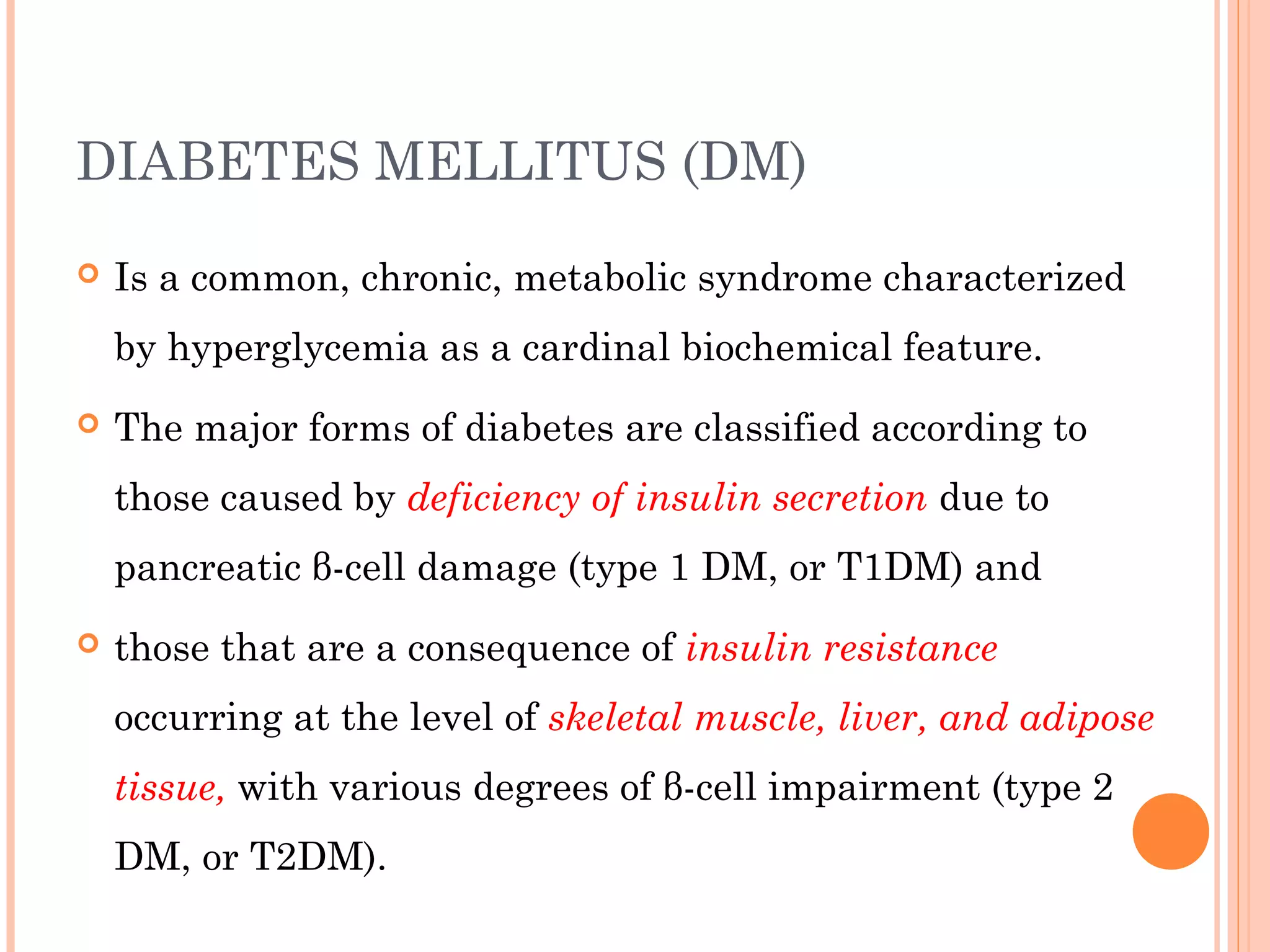
DIABETES MELLITUS (DM)
 Is a common, chronic, metabolic syndrome characterized
by hyperglycemia as a cardinal biochemical feature.
 The major forms of diabetes are classified according to
those caused by deficiency of insulin secretion due to
pancreatic β-cell damage (type 1 DM, or T1DM) and
 those that are a consequence of insulin resistance
occurring at the level of skeletal muscle, liver, and adipose
tissue, with various degrees of β-cell impairment (type 2
DM, or T2DM).
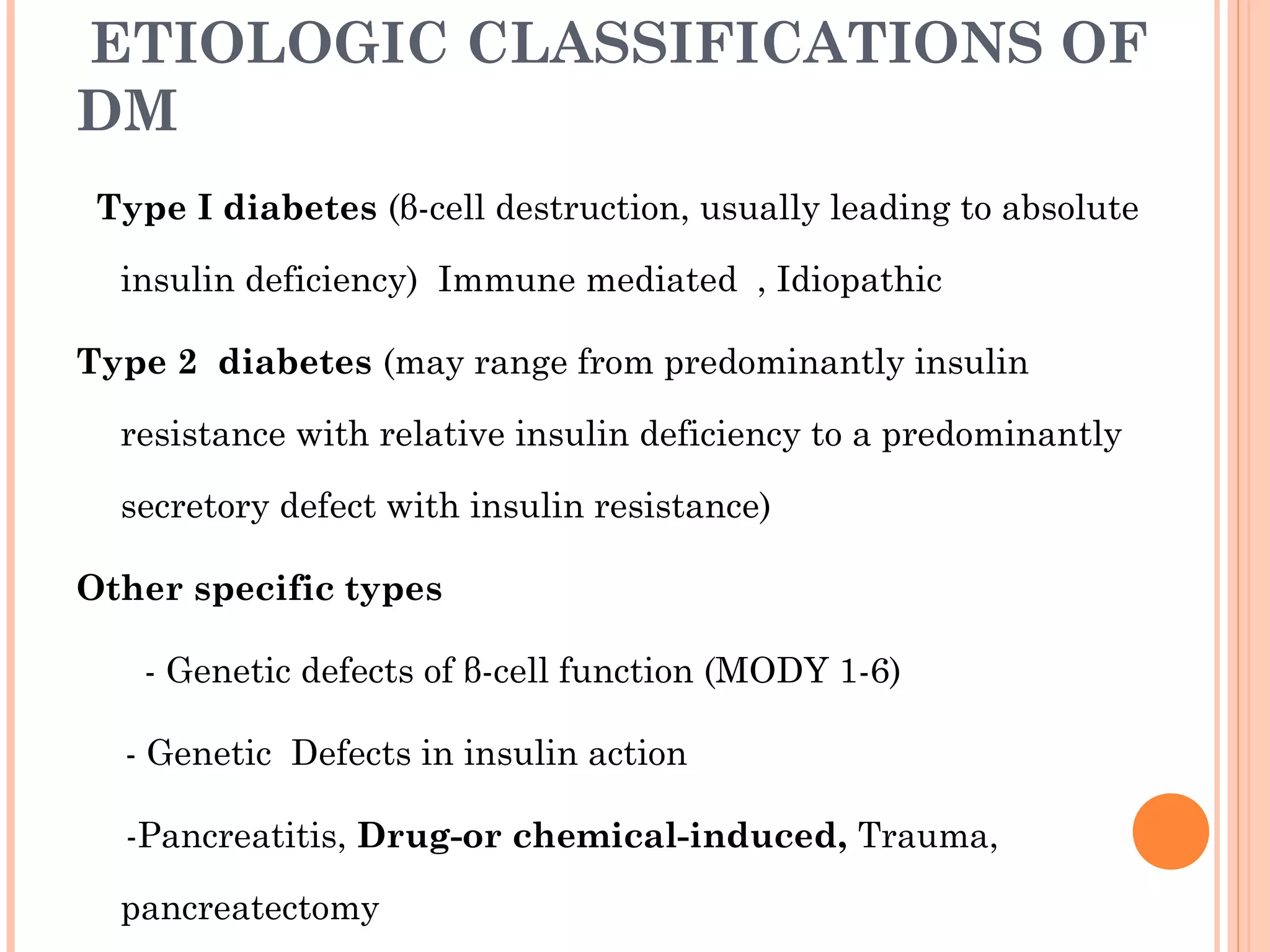
 ETIOLOGIC CLASSIFICATIONS OF
DM
 Type I diabetes (β-cell destruction, usually leading to absolute
insulin deficiency) Immune mediated , Idiopathic
Type 2 diabetes (may range from predominantly insulin
resistance with relative insulin deficiency to a predominantly
secretory defect with insulin resistance)
Other specific types
- Genetic defects of β-cell function (MODY 1-6)
- Genetic Defects in insulin action
   -Pancreatitis, Drug-or chemical-induced, Trauma,
pancreatectomy
DIABETES MELLITUS
Infections
   Congenital rubella, coxackie virus
   Cytomegalovirus
Other genetic syndromes associated with
diabetes
   Down syndrome
   Klinefelter syndrome
   Turner syndrome
prader will syndrome
DIABETES MELLITUS
 Gestational diabetes mellitus
 Neonatal diabetes mellitus
 Transient—without recurrence
 Transient—recurrence 7–20 yr later
 Permanent from onset
THE NATURAL HISTORY
INCLUDES 4 DISTINCT STAGES:
1. preclinical β-cell autoimmunity with progressive
defect of insulin secretion,
2. onset of clinical diabetes,
3. transient remission “honeymoon period,” and
4.established diabetes associated with acute and
chronic complications and decreased life
expectancy.
IMPAIRED GLUCOSE TOLERANCE.
 The term impaired glucose tolerance (IGT) refers to a
metabolic stage that is intermediate between normal
glucose homeostasis and diabetes.
 A fasting glucose concentration of 99 mg/dL is the
upper limit of “normal.”
 This choice is near the level above which acute-phase
insulin secretion is lost in response to IV
administration of glucose and is associated with a
progressively greater risk of the development of
microvascular and macrovascular complications.
PATHOGENESIS
 The autoimmune attack on the pancreatic islets leads
to a gradual and progressive destruction of β cells,
with loss of insulin secretion.
 It is estimated that, at the onset of clinical diabetes,
80–90% of the pancreatic islets are destroyed.
PATHOGENESIS
 Regeneration of new islets has been detected at onset
of T1DM, and it is thought to be responsible for the
honeymoon phase (a transient decrease in insulin
requirement associated with improved β-cell
function).
PATHOPHYSIOLOGY
 Insulin is our most important anabolic hormone!
 Saving , storing and up building of carbohydrate , protein
and fat.
 Carbohydrate -Insulin stimulates the insulin receptor on
the cell surface Glut 4 , a glucose transporter, is sent to the
cell surface of the muscle to pick up glucose by endocytosis.
The more insulin the more transporter!!
 Glucose is phosphorylated and ready for either storing as
glycogen or glycolysis and energy production (ATP)
PATHOPHYSIOLOGY
 Fat -Insulin preservs the fat stores (It antagonizes
the adrenaline sensitive lipase in fat tissue)
 Protein -Aminoacid uptake in the cells is stimulated
and breakdown of protein is reduced.
PATHOPHYSIOLOGY.
 Insulin levels must be lowered to then mobilize stored
energy during the fasted state.
 Thus, in normal metabolism, there are regular
swings between the postprandial, high-insulin
anabolic state and the fasted, low-insulin
catabolic state that affect liver, muscle, and adipose
tissue .
PATHOPHYSIOLOGY.
 T1DM is a progressive low-insulin catabolic state in which
feeding does not reverse but rather exaggerates these
catabolic processes.
 With moderate insulinopenia, glucose utilization by muscle
and fat decreases and postprandial hyperglycemia appears
 At even lower insulin levels, the liver produces excessive
glucose via glycogenolysis and gluconeogenesis, and fasting
hyperglycemia begins.
 Postprandial hyperglycemia then fasting
hyperglycemia will occur
PATHOPHYSIOLOGY.
 Hyperglycemia produces an osmotic diuresis
(glycosuria) when the renal threshold is exceeded (180
mg/dL; 10 mmol/L).
 The resulting loss of calories and electrolytes, as well
as the persistent dehydration, produce a physiologic
stress with hypersecretion of stress hormones
(epinephrine, cortisol, growth hormone, and glucagon).
 These hormones, in turn, contribute to the metabolic
decompensation by further impairing insulin secretion
(epinephrine),
 by antagonizing its action (epinephrine, cortisol, growth
hormone), a
 by promoting glycogenolysis, gluconeogenesis, lipolysis, and
ketogenesis (glucagon, epinephrine, growth hormone, and
cortisol)
 Impairing insulin secretion , antagonizing insulin action ,
decrease glucose utilization , increase glucosneogenesis
and ketogenesis
PATHOPHYSIOLOGY
CLINICAL PRESENTATION
Childhood type 1 diabetes can present in several different ways.
 Classic new onset
 Diabetic ketoacidosis
 Silent (asymptomatic) incidental discovery
 Classic new onset - Hyperglycemia without acidosis is the
most common presentation of childhood type 1 diabetes.
Symptoms are caused by hyperglycemia and include polyuria,
polydipsia, weight loss despite increased appetite initially
(polyphagia), and lethargy.
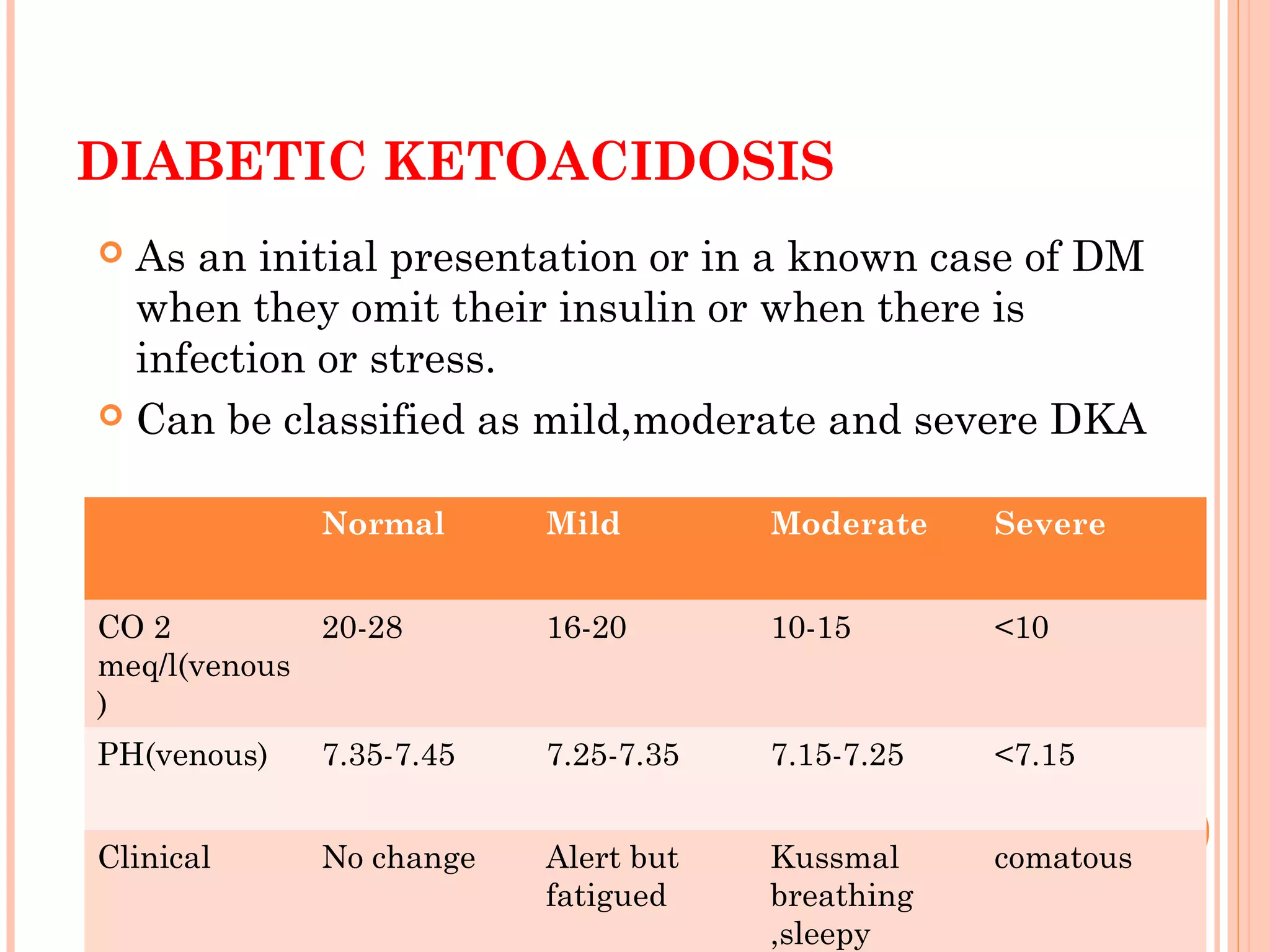
DIABETIC KETOACIDOSIS
 As an initial presentation or in a known case of DM
when they omit their insulin or when there is
infection or stress.
 Can be classified as mild,moderate and severe DKA
Normal Mild Moderate Severe
CO 2
meq/l(venous
)
20-28 16-20 10-15 <10
PH(venous) 7.35-7.45 7.25-7.35 7.15-7.25 <7.15
Clinical No change Alert but
fatigued
Kussmal
breathing
,sleepy
comatous
DIABETIC KETOACIDOSIS
 When extremely low insulin levels are reached, keto
acids accumulate. Keto acids produce abdominal
discomfort, nausea, and emesis.
 Dehydration accelerates, causing weakness and
polyuria persists. As in any hyperosmotic state, the
degree of dehydration may be clinically
underestimated
 Ketoacidosis exacerbates prior symptoms and leads to
Kussmaul respirations (deep, heavy, rapid breathing),
fruity breath odor (acetone), diminished
neurocognitive function, and possible coma.
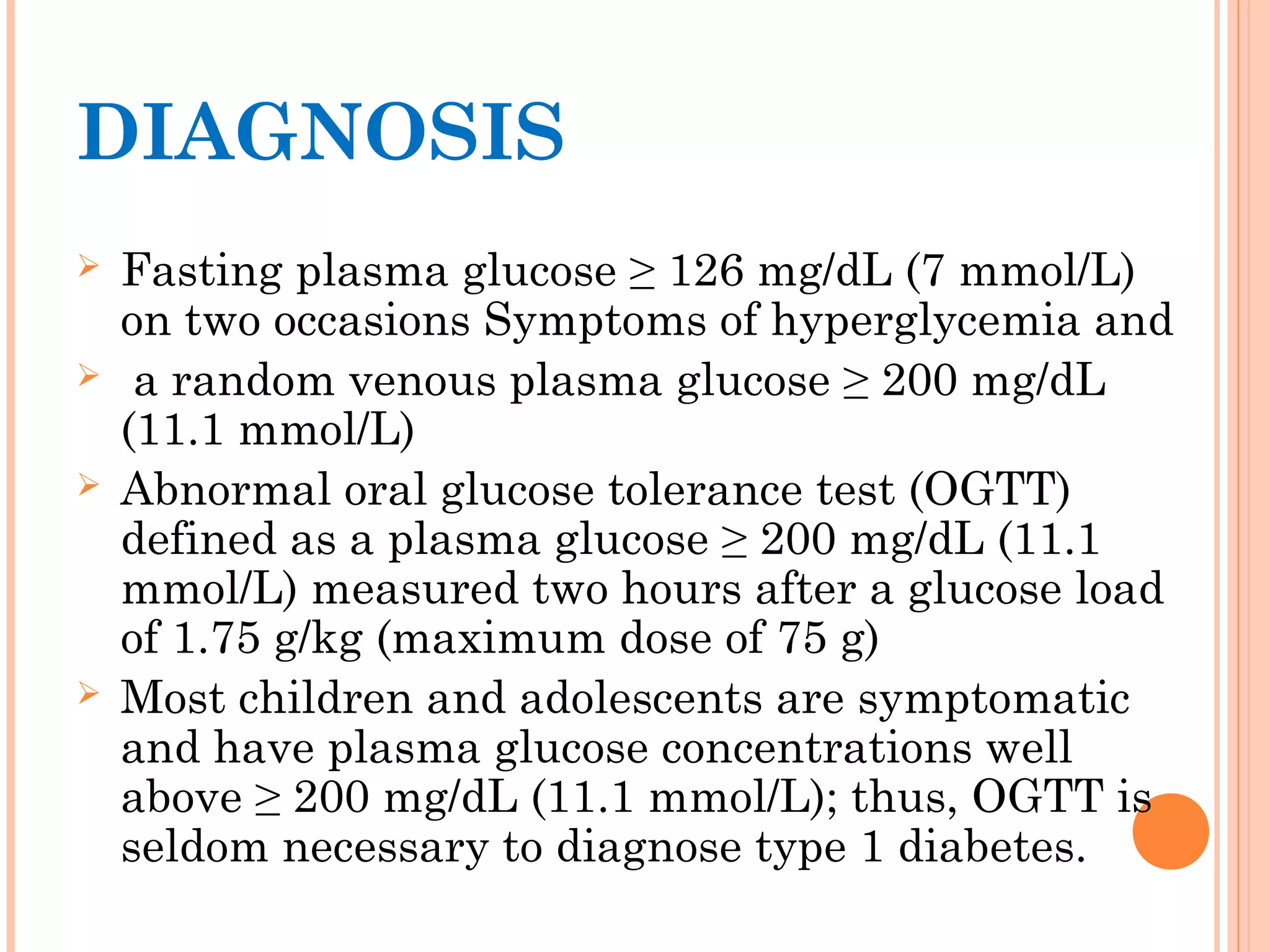
DIAGNOSIS
 Fasting plasma glucose ≥ 126 mg/dL (7 mmol/L)
on two occasions Symptoms of hyperglycemia and
 a random venous plasma glucose ≥ 200 mg/dL
(11.1 mmol/L)
 Abnormal oral glucose tolerance test (OGTT)
defined as a plasma glucose ≥ 200 mg/dL (11.1
mmol/L) measured two hours after a glucose load
of 1.75 g/kg (maximum dose of 75 g)
 Most children and adolescents are symptomatic
and have plasma glucose concentrations well
above ≥ 200 mg/dL (11.1 mmol/L); thus, OGTT is
seldom necessary to diagnose type 1 diabetes.
CHALLENGES IN PEDIATRICS DM
 There are unique challenges in caring for children
and adolescents with diabetes that differentiate
pediatric from adult care.
 These include the obvious differences in the size of
the patients, developmental issues such as the
unpredictability of a toddler's dietary intake and
activity level, and medical issues such as the
increased risk of hypoglycemia and diabetic
ketoacidosis.
 Because of these considerations, the management
of a child with type 1 diabetes must take into
account the age and developmental maturity of the
child.
GOALS 
 Successful management of children with
diabetes includes the following :
 Balancing strict glycemic control, which
reduces the risk of long-term sequelae, and
avoidance of severe hypoglycemia, which is
more likely with stricter control.
 In children, targeted glycemic goals define
what is thought to be the best balance between
these long- and short-term complications.
GOALS 
 Maintaining normal growth, development, and
emotional maturation.
 Increasing self-independent management as the child
grows is an ongoing goal.
 Training the patient and family to provide appropriate
daily diabetes care in order to attain glucose control
within the range of predetermined goals, and to
recognize and treat hypoglycemia.
DKA MANAGEMENT
1.Volume expansion
10-20 ml/kg R/L or N/S over 1 hour
2.Insulin therapy and K+ replacement
- 0.1u /kg/hr continuous insulin mxt
-0.5 u/kg/ every 4-6 hourly intermittent insulin mxt
-K + 20-40 meq/L of fluid
3. Fluid mxt 85 ml/kg + maintenance fluid –bolus/23
hrs(0.45 % N/S and when glucose is < 250 mg/dl
change the fluid to 5 % D/W
DKA MXT RISKS
 Hypoglycemia
 Cerebral edema
 Hypokalemia
 So we need to follow the child with V/S, frequent
glucose and electrolyte measurement to act
accordingly.
 Bed side mannitol 1gm/kg is important
Treatment
 Insulin Therapy.
Children with long-standing diabetes and no insulin
reserve require about 0.7 U/kg/d if prepubertal, 1.0
U/kg/d at midpuberty, and 1.2 U/kg/d by the end of
puberty
 Basic education – about the insulin injection , meal
planning ,exercise, about symptoms of
hypo/hyperglycemia and importance of SMBG and the
impact of poor control of DM.
EXERCISE
 No form of exercise, including competitive sports,
should be forbidden to the diabetic child.
 But the risk of hypoglycemia is there during or
within hours after exercise so BG measurement
is important .
 They have to take candy or carbonated juice to
take immediately if there are symptoms of
hypoglycemia
Onset of action
30-60 minutes
5-15 minutes
1-2 hours
1-3 hours
0.5-1 hours
Peak of action
2-4 hours
1-2 hours
5-7 hours
4-8 hours
dual
Duration of action
6-8 hours
4-5 hours
13-18 hours
13-20 hours
10-16 hours
Insulin
Soluble - Regular
Lispro- Aspart
NPH
Glargine-Detemir
Combinations
Insulin Preparations
Kinetics following s.c. injection
T2DM MANAGEMENT
 Weight loss and physical exercise are said to be
the main strategies in controlling glucose level in
T2DM patients
 Oral hypoglycemic agents like metiformin can be
tried
 Insulin if they have ketonuria
Long term complications of DM
-Micro vascular
complications( Retinopathy,
nephropathy)
-Macro vascular complication
-Growth failure and delayed puberty
INJECTION MODELS
Repeted injections
Future
intelligent
pumps
with reliable
sensors for
glucose levels
= mechanical
pancreas

Pediatrics diabetic mellitus

  • 1.
  • 2.
    DIABETES MELLITUS (DM) Is a common, chronic, metabolic syndrome characterized by hyperglycemia as a cardinal biochemical feature.  The major forms of diabetes are classified according to those caused by deficiency of insulin secretion due to pancreatic β-cell damage (type 1 DM, or T1DM) and  those that are a consequence of insulin resistance occurring at the level of skeletal muscle, liver, and adipose tissue, with various degrees of β-cell impairment (type 2 DM, or T2DM).
  • 3.
     ETIOLOGIC CLASSIFICATIONS OF DM  TypeI diabetes (β-cell destruction, usually leading to absolute insulin deficiency) Immune mediated , Idiopathic Type 2 diabetes (may range from predominantly insulin resistance with relative insulin deficiency to a predominantly secretory defect with insulin resistance) Other specific types - Genetic defects of β-cell function (MODY 1-6) - Genetic Defects in insulin action    -Pancreatitis, Drug-or chemical-induced, Trauma, pancreatectomy
  • 4.
    DIABETES MELLITUS Infections    Congenitalrubella, coxackie virus    Cytomegalovirus Other genetic syndromes associated with diabetes    Down syndrome    Klinefelter syndrome    Turner syndrome prader will syndrome
  • 5.
    DIABETES MELLITUS  Gestationaldiabetes mellitus  Neonatal diabetes mellitus  Transient—without recurrence  Transient—recurrence 7–20 yr later  Permanent from onset
  • 6.
    THE NATURAL HISTORY INCLUDES4 DISTINCT STAGES: 1. preclinical β-cell autoimmunity with progressive defect of insulin secretion, 2. onset of clinical diabetes, 3. transient remission “honeymoon period,” and 4.established diabetes associated with acute and chronic complications and decreased life expectancy.
  • 7.
    IMPAIRED GLUCOSE TOLERANCE. The term impaired glucose tolerance (IGT) refers to a metabolic stage that is intermediate between normal glucose homeostasis and diabetes.  A fasting glucose concentration of 99 mg/dL is the upper limit of “normal.”  This choice is near the level above which acute-phase insulin secretion is lost in response to IV administration of glucose and is associated with a progressively greater risk of the development of microvascular and macrovascular complications.
  • 8.
    PATHOGENESIS  The autoimmuneattack on the pancreatic islets leads to a gradual and progressive destruction of β cells, with loss of insulin secretion.  It is estimated that, at the onset of clinical diabetes, 80–90% of the pancreatic islets are destroyed.
  • 9.
    PATHOGENESIS  Regeneration ofnew islets has been detected at onset of T1DM, and it is thought to be responsible for the honeymoon phase (a transient decrease in insulin requirement associated with improved β-cell function).
  • 10.
    PATHOPHYSIOLOGY  Insulin isour most important anabolic hormone!  Saving , storing and up building of carbohydrate , protein and fat.  Carbohydrate -Insulin stimulates the insulin receptor on the cell surface Glut 4 , a glucose transporter, is sent to the cell surface of the muscle to pick up glucose by endocytosis. The more insulin the more transporter!!  Glucose is phosphorylated and ready for either storing as glycogen or glycolysis and energy production (ATP)
  • 11.
    PATHOPHYSIOLOGY  Fat -Insulinpreservs the fat stores (It antagonizes the adrenaline sensitive lipase in fat tissue)  Protein -Aminoacid uptake in the cells is stimulated and breakdown of protein is reduced.
  • 12.
    PATHOPHYSIOLOGY.  Insulin levelsmust be lowered to then mobilize stored energy during the fasted state.  Thus, in normal metabolism, there are regular swings between the postprandial, high-insulin anabolic state and the fasted, low-insulin catabolic state that affect liver, muscle, and adipose tissue .
  • 13.
    PATHOPHYSIOLOGY.  T1DM isa progressive low-insulin catabolic state in which feeding does not reverse but rather exaggerates these catabolic processes.  With moderate insulinopenia, glucose utilization by muscle and fat decreases and postprandial hyperglycemia appears  At even lower insulin levels, the liver produces excessive glucose via glycogenolysis and gluconeogenesis, and fasting hyperglycemia begins.  Postprandial hyperglycemia then fasting hyperglycemia will occur
  • 14.
    PATHOPHYSIOLOGY.  Hyperglycemia producesan osmotic diuresis (glycosuria) when the renal threshold is exceeded (180 mg/dL; 10 mmol/L).  The resulting loss of calories and electrolytes, as well as the persistent dehydration, produce a physiologic stress with hypersecretion of stress hormones (epinephrine, cortisol, growth hormone, and glucagon).
  • 15.
     These hormones,in turn, contribute to the metabolic decompensation by further impairing insulin secretion (epinephrine),  by antagonizing its action (epinephrine, cortisol, growth hormone), a  by promoting glycogenolysis, gluconeogenesis, lipolysis, and ketogenesis (glucagon, epinephrine, growth hormone, and cortisol)  Impairing insulin secretion , antagonizing insulin action , decrease glucose utilization , increase glucosneogenesis and ketogenesis
  • 16.
  • 17.
    CLINICAL PRESENTATION Childhood type1 diabetes can present in several different ways.  Classic new onset  Diabetic ketoacidosis  Silent (asymptomatic) incidental discovery  Classic new onset - Hyperglycemia without acidosis is the most common presentation of childhood type 1 diabetes. Symptoms are caused by hyperglycemia and include polyuria, polydipsia, weight loss despite increased appetite initially (polyphagia), and lethargy.
  • 18.
    DIABETIC KETOACIDOSIS  Asan initial presentation or in a known case of DM when they omit their insulin or when there is infection or stress.  Can be classified as mild,moderate and severe DKA Normal Mild Moderate Severe CO 2 meq/l(venous ) 20-28 16-20 10-15 <10 PH(venous) 7.35-7.45 7.25-7.35 7.15-7.25 <7.15 Clinical No change Alert but fatigued Kussmal breathing ,sleepy comatous
  • 19.
    DIABETIC KETOACIDOSIS  Whenextremely low insulin levels are reached, keto acids accumulate. Keto acids produce abdominal discomfort, nausea, and emesis.  Dehydration accelerates, causing weakness and polyuria persists. As in any hyperosmotic state, the degree of dehydration may be clinically underestimated  Ketoacidosis exacerbates prior symptoms and leads to Kussmaul respirations (deep, heavy, rapid breathing), fruity breath odor (acetone), diminished neurocognitive function, and possible coma.
  • 20.
    DIAGNOSIS  Fasting plasmaglucose ≥ 126 mg/dL (7 mmol/L) on two occasions Symptoms of hyperglycemia and  a random venous plasma glucose ≥ 200 mg/dL (11.1 mmol/L)  Abnormal oral glucose tolerance test (OGTT) defined as a plasma glucose ≥ 200 mg/dL (11.1 mmol/L) measured two hours after a glucose load of 1.75 g/kg (maximum dose of 75 g)  Most children and adolescents are symptomatic and have plasma glucose concentrations well above ≥ 200 mg/dL (11.1 mmol/L); thus, OGTT is seldom necessary to diagnose type 1 diabetes.
  • 21.
    CHALLENGES IN PEDIATRICSDM  There are unique challenges in caring for children and adolescents with diabetes that differentiate pediatric from adult care.  These include the obvious differences in the size of the patients, developmental issues such as the unpredictability of a toddler's dietary intake and activity level, and medical issues such as the increased risk of hypoglycemia and diabetic ketoacidosis.  Because of these considerations, the management of a child with type 1 diabetes must take into account the age and developmental maturity of the child.
  • 22.
    GOALS   Successful managementof children with diabetes includes the following :  Balancing strict glycemic control, which reduces the risk of long-term sequelae, and avoidance of severe hypoglycemia, which is more likely with stricter control.  In children, targeted glycemic goals define what is thought to be the best balance between these long- and short-term complications.
  • 23.
    GOALS   Maintaining normalgrowth, development, and emotional maturation.  Increasing self-independent management as the child grows is an ongoing goal.  Training the patient and family to provide appropriate daily diabetes care in order to attain glucose control within the range of predetermined goals, and to recognize and treat hypoglycemia.
  • 24.
    DKA MANAGEMENT 1.Volume expansion 10-20ml/kg R/L or N/S over 1 hour 2.Insulin therapy and K+ replacement - 0.1u /kg/hr continuous insulin mxt -0.5 u/kg/ every 4-6 hourly intermittent insulin mxt -K + 20-40 meq/L of fluid 3. Fluid mxt 85 ml/kg + maintenance fluid –bolus/23 hrs(0.45 % N/S and when glucose is < 250 mg/dl change the fluid to 5 % D/W
  • 25.
    DKA MXT RISKS Hypoglycemia  Cerebral edema  Hypokalemia  So we need to follow the child with V/S, frequent glucose and electrolyte measurement to act accordingly.  Bed side mannitol 1gm/kg is important
  • 26.
    Treatment  Insulin Therapy. Childrenwith long-standing diabetes and no insulin reserve require about 0.7 U/kg/d if prepubertal, 1.0 U/kg/d at midpuberty, and 1.2 U/kg/d by the end of puberty  Basic education – about the insulin injection , meal planning ,exercise, about symptoms of hypo/hyperglycemia and importance of SMBG and the impact of poor control of DM.
  • 27.
    EXERCISE  No formof exercise, including competitive sports, should be forbidden to the diabetic child.  But the risk of hypoglycemia is there during or within hours after exercise so BG measurement is important .  They have to take candy or carbonated juice to take immediately if there are symptoms of hypoglycemia
  • 28.
    Onset of action 30-60minutes 5-15 minutes 1-2 hours 1-3 hours 0.5-1 hours Peak of action 2-4 hours 1-2 hours 5-7 hours 4-8 hours dual Duration of action 6-8 hours 4-5 hours 13-18 hours 13-20 hours 10-16 hours Insulin Soluble - Regular Lispro- Aspart NPH Glargine-Detemir Combinations Insulin Preparations Kinetics following s.c. injection
  • 29.
    T2DM MANAGEMENT  Weightloss and physical exercise are said to be the main strategies in controlling glucose level in T2DM patients  Oral hypoglycemic agents like metiformin can be tried  Insulin if they have ketonuria
  • 30.
    Long term complicationsof DM -Micro vascular complications( Retinopathy, nephropathy) -Macro vascular complication -Growth failure and delayed puberty
  • 31.
    INJECTION MODELS Repeted injections Future intelligent pumps withreliable sensors for glucose levels = mechanical pancreas