DIABETIC KETOACIDOSIS IN
CHILDREN
D:MH RADI
SENIOR REGESTRAR OF PEDIATRICS
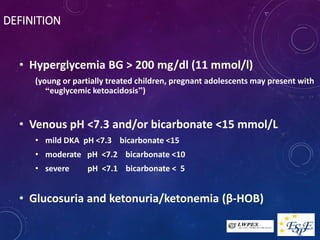
DEFINITION
• Hyperglycemia BG > 200 mg/dl (11 mmol/l)
(young or partially treated children, pregnant adolescents may present with
“euglycemic ketoacidosis”)
• Venous pH <7.3 and/or bicarbonate <15 mmol/L
• mild DKA pH <7.3 bicarbonate <15
• moderate pH <7.2 bicarbonate <10
• severe pH <7.1 bicarbonate < 5
• Glucosuria and ketonuria/ketonemia (β-HOB)
INCIDENCE OF DKA AT ONSET
• Wide geographic variation in DKA rates at diabetes
onset: 15 -70%
• More common in developing countries
• DKA rates inversely related to incidence of type 1
diabetes
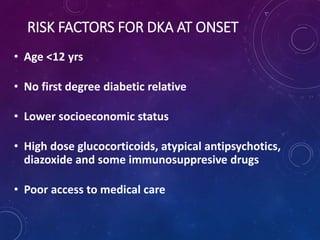
RISK FACTORS FOR DKA AT ONSET
• Age <12 yrs
• No first degree diabetic relative
• Lower socioeconomic status
• High dose glucocorticoids, atypical antipsychotics,
diazoxide and some immunosuppresive drugs
• Poor access to medical care
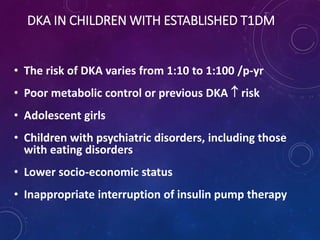
DKA IN CHILDREN WITH ESTABLISHED T1DM
• The risk of DKA varies from 1:10 to 1:100 /p-yr
• Poor metabolic control or previous DKA  risk
• Adolescent girls
• Children with psychiatric disorders, including those
with eating disorders
• Lower socio-economic status
• Inappropriate interruption of insulin pump therapy
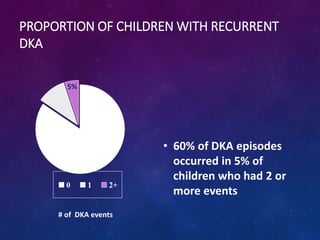
PROPORTION OF CHILDREN WITH RECURRENT
DKA
0 1 2+
• 60% of DKA episodes
occurred in 5% of
children who had 2 or
more events
# of DKA events
5%
Diabetes Care 2006 29:1150-1159
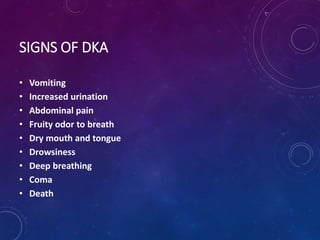
SIGNS OF DKA
• Vomiting
• Increased urination
• Abdominal pain
• Fruity odor to breath
• Dry mouth and tongue
• Drowsiness
• Deep breathing
• Coma
• Death
PHYSICAL EXAM
• Perfusion
• Vital Signs - including weight
• Hydration
• Mental Status
• Evidence for insulin resistance
CEREBRAL EDEMA
• Know what to look for
• Altered mental status/ severe headache
• Recurrence of vomiting
• Changes in pupil size, seizures, bradycardia
• Clinical worsening despite improving lab values
• CT/ MRI changes may not be seen in early cerebral edema
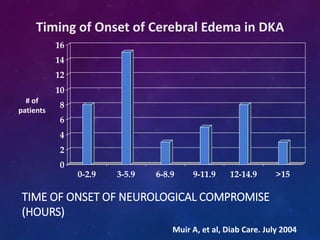
TIME OF ONSET OF NEUROLOGICAL COMPROMISE
(HOURS)
0
2
4
6
8
10
12
14
16
0-2.9 3-5.9 6-8.9 9-11.9 12-14.9 >15
# of
patients
Muir A, et al, Diab Care. July 2004
Timing of Onset of Cerebral Edema in DKA
CALCULATIONS
SERUM OSMOLALITY:
2[NA+K]+ (GLUCOSE/18) + BUN/2.8
SERUM NA:
CORRECTED NA =
MEASURED NA + (1.6)(GLUCOSE - 100)/100
ANION GAP:
[NA] – ([CL]+[HCO3])
NORMALLY 12+/-2 MMOL/L
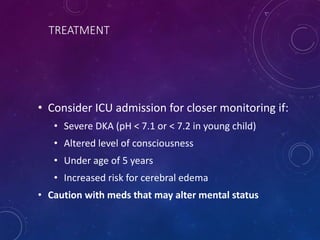
TREATMENT
• Consider ICU admission for closer monitoring if:
• Severe DKA (pH < 7.1 or < 7.2 in young child)
• Altered level of consciousness
• Under age of 5 years
• Increased risk for cerebral edema
• Caution with meds that may alter mental status
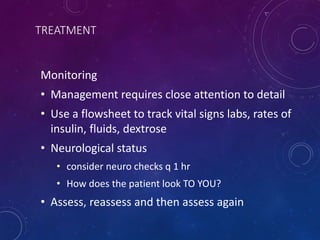
TREATMENT
Monitoring
• Management requires close attention to detail
• Use a flowsheet to track vital signs labs, rates of
insulin, fluids, dextrose
• Neurological status
• consider neuro checks q 1 hr
• How does the patient look TO YOU?
• Assess, reassess and then assess again
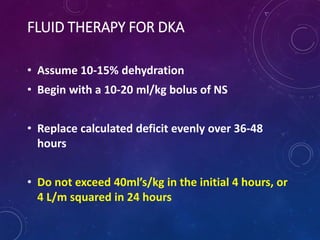
FLUID THERAPY FOR DKA
• Assume 10-15% dehydration
• Begin with a 10-20 ml/kg bolus of NS
• Replace calculated deficit evenly over 36-48
hours
• Do not exceed 40ml’s/kg in the initial 4 hours, or
4 L/m squared in 24 hours
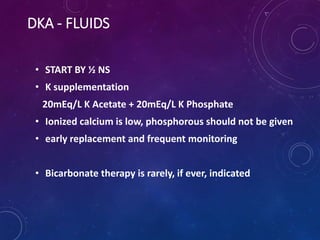
DKA - FLUIDS
• START BY ½ NS
• K supplementation
20mEq/L K Acetate + 20mEq/L K Phosphate
• Ionized calcium is low, phosphorous should not be given
• early replacement and frequent monitoring
• Bicarbonate therapy is rarely, if ever, indicated
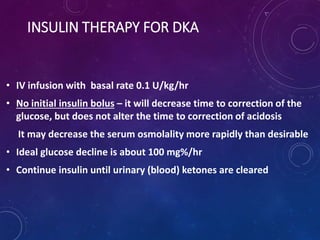
INSULIN THERAPY FOR DKA
• IV infusion with basal rate 0.1 U/kg/hr
• No initial insulin bolus – it will decrease time to correction of the
glucose, but does not alter the time to correction of acidosis
It may decrease the serum osmolality more rapidly than desirable
• Ideal glucose decline is about 100 mg%/hr
• Continue insulin until urinary (blood) ketones are cleared
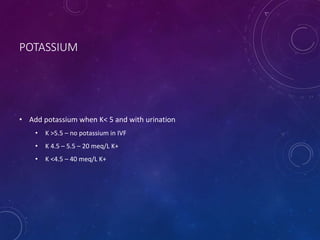
POTASSIUM
• Add potassium when K< 5 and with urination
• K >5.5 – no potassium in IVF
• K 4.5 – 5.5 – 20 meq/L K+
• K <4.5 – 40 meq/L K+
USE OF BICARBONATE IN DKA
• Bicarbonate should be used only when
there is severe depression of the
circulatory system or cellular metabolism...
• Not recommended unless pH <7.0, not even then, unless above true
TREATMENT OF CEREBRAL EDEMA
• Mannitol: 1 gram/ kg IV over 30 minutes
• Elevate the head of the bed
• Decrease IVF rate and insulin infusion rate
• Pediatric ICU management
• Do not delay treatment until radiographic evidence
SUCCESSFUL MANAGEMENT
• Careful attention to detail
• Careful record keeping
• A detailed flow chart is essential
• Following the data recorded is also essential
• Repeated examination of the patient
THANK YOU

DKA in children

  • 1.
    DIABETIC KETOACIDOSIS IN CHILDREN D:MHRADI SENIOR REGESTRAR OF PEDIATRICS
  • 2.
    DEFINITION • Hyperglycemia BG> 200 mg/dl (11 mmol/l) (young or partially treated children, pregnant adolescents may present with “euglycemic ketoacidosis”) • Venous pH <7.3 and/or bicarbonate <15 mmol/L • mild DKA pH <7.3 bicarbonate <15 • moderate pH <7.2 bicarbonate <10 • severe pH <7.1 bicarbonate < 5 • Glucosuria and ketonuria/ketonemia (β-HOB)
  • 3.
    INCIDENCE OF DKAAT ONSET • Wide geographic variation in DKA rates at diabetes onset: 15 -70% • More common in developing countries • DKA rates inversely related to incidence of type 1 diabetes
  • 4.
    RISK FACTORS FORDKA AT ONSET • Age <12 yrs • No first degree diabetic relative • Lower socioeconomic status • High dose glucocorticoids, atypical antipsychotics, diazoxide and some immunosuppresive drugs • Poor access to medical care
  • 5.
    DKA IN CHILDRENWITH ESTABLISHED T1DM • The risk of DKA varies from 1:10 to 1:100 /p-yr • Poor metabolic control or previous DKA  risk • Adolescent girls • Children with psychiatric disorders, including those with eating disorders • Lower socio-economic status • Inappropriate interruption of insulin pump therapy
  • 6.
    PROPORTION OF CHILDRENWITH RECURRENT DKA 0 1 2+ • 60% of DKA episodes occurred in 5% of children who had 2 or more events # of DKA events 5%
  • 7.
    Diabetes Care 200629:1150-1159
  • 8.
    SIGNS OF DKA •Vomiting • Increased urination • Abdominal pain • Fruity odor to breath • Dry mouth and tongue • Drowsiness • Deep breathing • Coma • Death
  • 9.
    PHYSICAL EXAM • Perfusion •Vital Signs - including weight • Hydration • Mental Status • Evidence for insulin resistance
  • 10.
    CEREBRAL EDEMA • Knowwhat to look for • Altered mental status/ severe headache • Recurrence of vomiting • Changes in pupil size, seizures, bradycardia • Clinical worsening despite improving lab values • CT/ MRI changes may not be seen in early cerebral edema
  • 11.
    TIME OF ONSETOF NEUROLOGICAL COMPROMISE (HOURS) 0 2 4 6 8 10 12 14 16 0-2.9 3-5.9 6-8.9 9-11.9 12-14.9 >15 # of patients Muir A, et al, Diab Care. July 2004 Timing of Onset of Cerebral Edema in DKA
  • 12.
    CALCULATIONS SERUM OSMOLALITY: 2[NA+K]+ (GLUCOSE/18)+ BUN/2.8 SERUM NA: CORRECTED NA = MEASURED NA + (1.6)(GLUCOSE - 100)/100 ANION GAP: [NA] – ([CL]+[HCO3]) NORMALLY 12+/-2 MMOL/L
  • 13.
    TREATMENT • Consider ICUadmission for closer monitoring if: • Severe DKA (pH < 7.1 or < 7.2 in young child) • Altered level of consciousness • Under age of 5 years • Increased risk for cerebral edema • Caution with meds that may alter mental status
  • 14.
    TREATMENT Monitoring • Management requiresclose attention to detail • Use a flowsheet to track vital signs labs, rates of insulin, fluids, dextrose • Neurological status • consider neuro checks q 1 hr • How does the patient look TO YOU? • Assess, reassess and then assess again
  • 15.
    FLUID THERAPY FORDKA • Assume 10-15% dehydration • Begin with a 10-20 ml/kg bolus of NS • Replace calculated deficit evenly over 36-48 hours • Do not exceed 40ml’s/kg in the initial 4 hours, or 4 L/m squared in 24 hours
  • 16.
    DKA - FLUIDS •START BY ½ NS • K supplementation 20mEq/L K Acetate + 20mEq/L K Phosphate • Ionized calcium is low, phosphorous should not be given • early replacement and frequent monitoring • Bicarbonate therapy is rarely, if ever, indicated
  • 17.
    INSULIN THERAPY FORDKA • IV infusion with basal rate 0.1 U/kg/hr • No initial insulin bolus – it will decrease time to correction of the glucose, but does not alter the time to correction of acidosis It may decrease the serum osmolality more rapidly than desirable • Ideal glucose decline is about 100 mg%/hr • Continue insulin until urinary (blood) ketones are cleared
  • 18.
    POTASSIUM • Add potassiumwhen K< 5 and with urination • K >5.5 – no potassium in IVF • K 4.5 – 5.5 – 20 meq/L K+ • K <4.5 – 40 meq/L K+
  • 19.
    USE OF BICARBONATEIN DKA • Bicarbonate should be used only when there is severe depression of the circulatory system or cellular metabolism... • Not recommended unless pH <7.0, not even then, unless above true
  • 20.
    TREATMENT OF CEREBRALEDEMA • Mannitol: 1 gram/ kg IV over 30 minutes • Elevate the head of the bed • Decrease IVF rate and insulin infusion rate • Pediatric ICU management • Do not delay treatment until radiographic evidence
  • 21.
    SUCCESSFUL MANAGEMENT • Carefulattention to detail • Careful record keeping • A detailed flow chart is essential • Following the data recorded is also essential • Repeated examination of the patient
  • 22.