


Learning Objectives:
At the end of this lecture, you will be able to:
1. Differentiate between type 1 and type 2 diabetes.
2. Describe etiologic factors associated with diabetes.
3. Relate the clinical manifestations of diabetes to the
associated pathophysiologic alterations.
JOFRED M. MARTINEZ, RN
4. Identify the diagnostic and clinical significance of
blood glucose tests.
5. Explain the dietary modifications used for
management of people diabetes.
6. Describe the relationship between diet, exercise, and
medication (ie, insulin or oral hypoglycemic agents)
for people with diabetes.
7. Develop a plan for teaching insulin self-
administration.
8. Identify the role of oral antidiabetic agents in diabetic
therapy.
Learning Objectives (Cont’d.):
9. Differentiate between hypoglycemia and diabetic
ketoacidosis, and hyperosmolar nonketotic syndrome.
10.Describe management strategies for a person with
diabetes to use during “sick days.”
11.Describe the major macrovascular, microvascular,
and neuropathic complications of diabetes and the
self-care behaviors important in their prevention.
12.Identify the teaching aids and community support
groups available for people with diabetes.
13.Use the nursing process as a framework for care of
the patient with diabetes.
Learning Objectives (Cont’d.):
• Diabetes mellitus is a group of metabolic diseases
characterized by elevated levels of glucose in the blood
resulting from defects in insulin secretion, insulin action,
or both.
American Diabetes Association, Expert Committee on the Diagnosis and
Classification of Diabetes Mellitus, 2003
• Insulin, a hormone produced by the pancreas, controls
the level of glucose in the blood by regulating the
production and storage of glucose.
• Long-term effects of hyperglycemia contribute to
macrovascular complications, chronic microvascular
complications, and neuropathic complications.
Diabetes Mellitus
RISK FACTORS FOR DIABETES MELLITUS
• Family history of diabetes
• Obesity (ie, ≥20% over desired body weight or BMI ≥27
kg/m2)
• Race/ethnicity (eg, African Americans, Hispanic
Americans, Native Americans, Asian Americans, Pacific
Islanders)
• Age ≥45 years
• Previously identified impaired fasting glucose or
impaired glucose tolerance
• Hypertension (≥140/90 mm Hg)

Diabetes Mellitus
RISK FACTORS FOR DIABETES MELLITUS
• HDL cholesterol level ≤35 mg/dL (0.90 mmol/L) and/or
triglyceride level ≥250 mg/dL (2.8 mmol/L)
• History of gestational diabetes or delivery of babies over
9 lbs
Diabetes Mellitus
CLASSIFICATION OF DIABETES
The major classifications of diabetes are:
• Type 1 diabetes
• Type 2 diabetes
• Gestational diabetes mellitus
• Diabetes mellitus associated with other conditions or
syndromes
Diabetes Mellitus
TYPE 1 DIABETES
• Approximately 5% to 10% of people with diabetes have
type 1 diabetes, in which the insulin-producing
pancreatic beta cells are destroyed by an autoimmune
process.
• As a result, they produce little or no insulin and require
insulin injections to control their blood glucose levels.
• Type 1 diabetes is characterized by an acute onset,
usually before age 30.
Diabetes Mellitus
TYPE 2 DIABETES
• Approximately 90% to 95% of people with diabetes have
type 2 diabetes, which results from decreased sensitivity
to insulin (called insulin resistance) and impaired beta
cell functioning resulting in decreased insulin production.
• Type 2 diabetes is first treated with diet and exercise.
• If elevated glucose levels persist, diet and exercise are
supplemented with oral hypoglycemic agents, and
insulin injections are required.
• Type 2 diabetes occurs more among people who are
older than 30 years and obese.
Diabetes Mellitus
TYPE 2 DIABETES
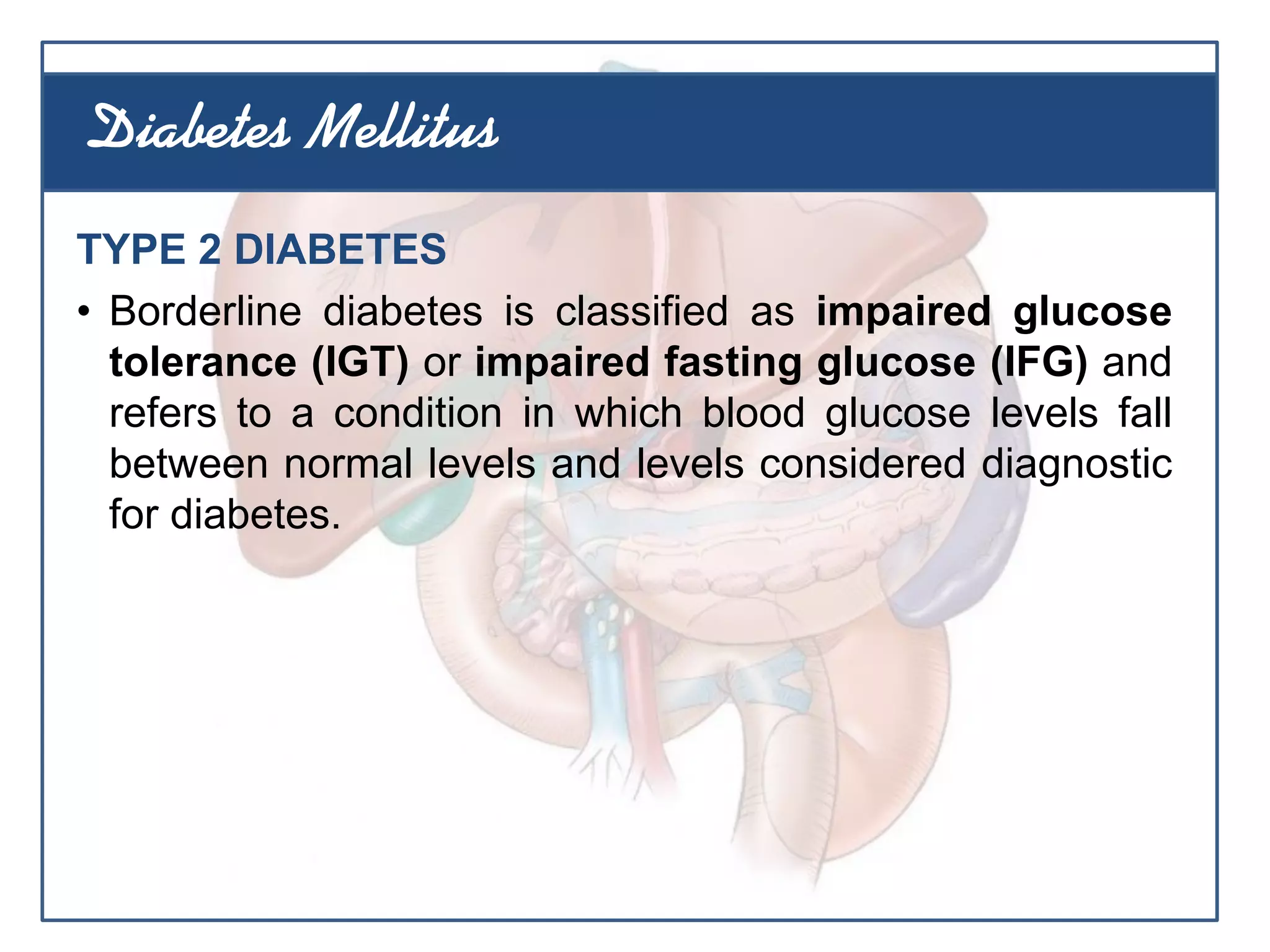
• Borderline diabetes is classified as impaired glucose
tolerance (IGT) or impaired fasting glucose (IFG) and
refers to a condition in which blood glucose levels fall
between normal levels and levels considered diagnostic
for diabetes.
Diabetes Mellitus
Pathophysiology
GESTATIONAL DIABETES
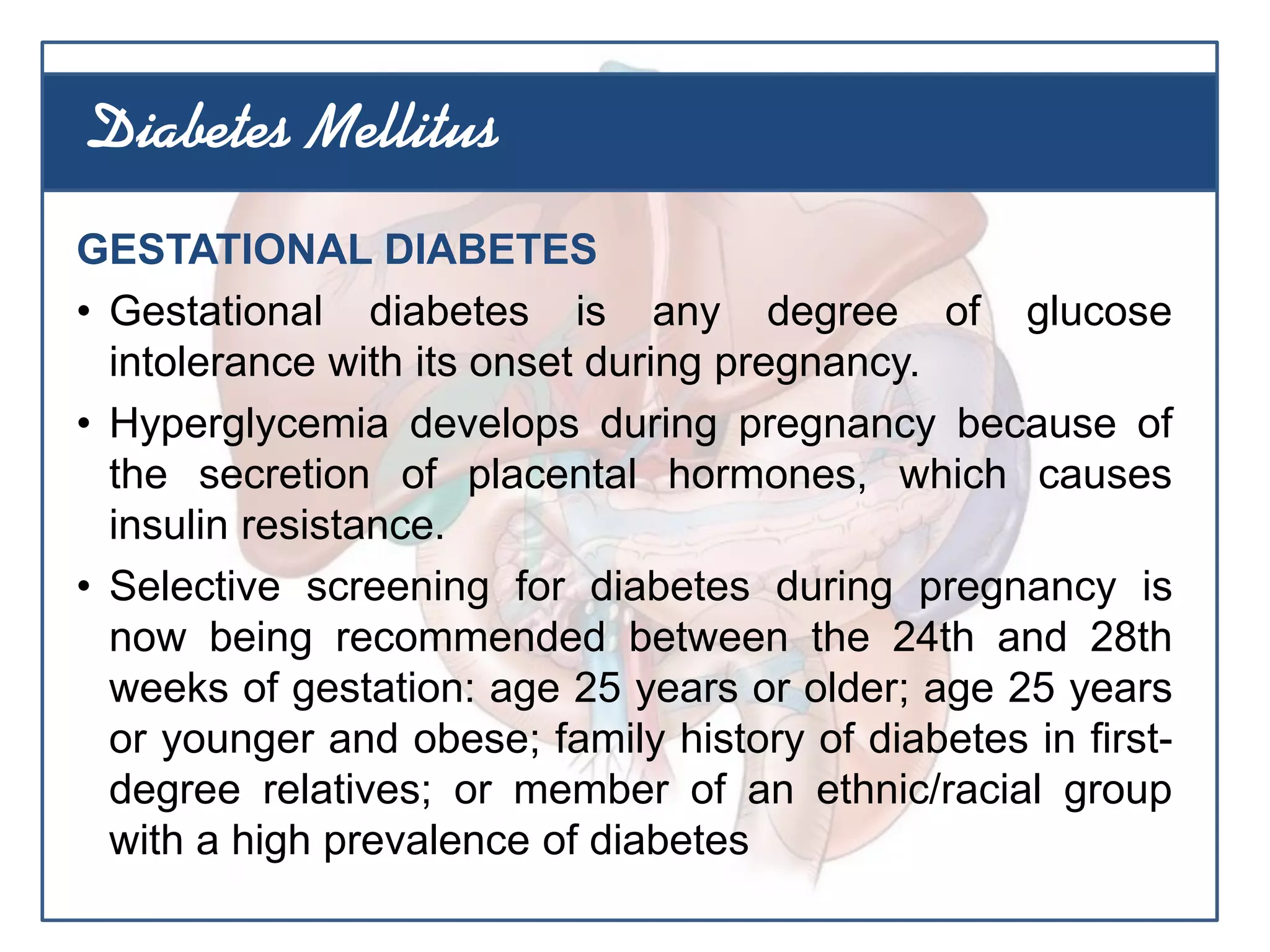
• Gestational diabetes is any degree of glucose
intolerance with its onset during pregnancy.
• Hyperglycemia develops during pregnancy because of
the secretion of placental hormones, which causes
insulin resistance.
• Selective screening for diabetes during pregnancy is
now being recommended between the 24th and 28th
weeks of gestation: age 25 years or older; age 25 years
or younger and obese; family history of diabetes in first-
degree relatives; or member of an ethnic/racial group
with a high prevalence of diabetes
Diabetes Mellitus
GESTATIONAL DIABETES
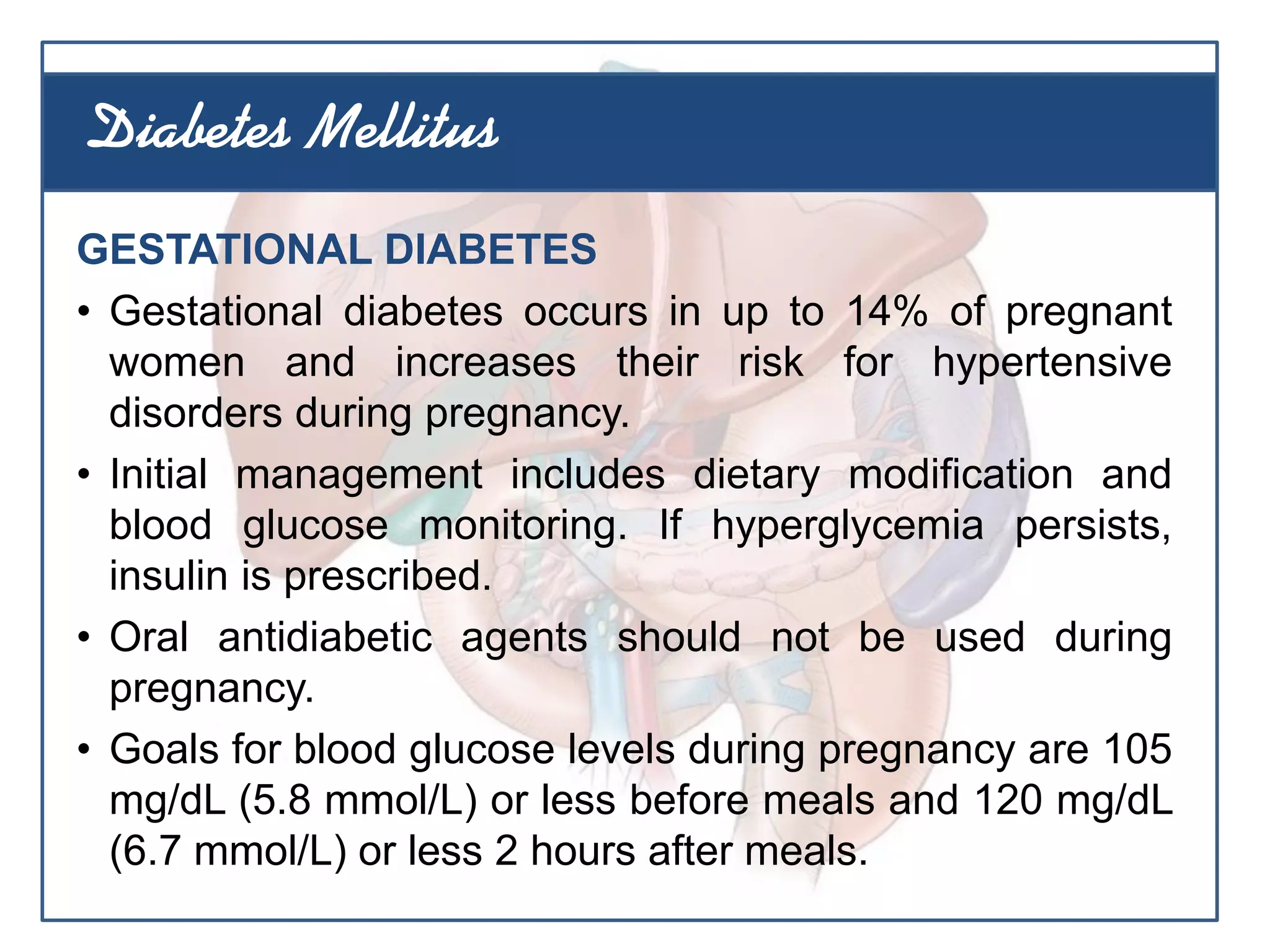
• Gestational diabetes occurs in up to 14% of pregnant
women and increases their risk for hypertensive
disorders during pregnancy.
• Initial management includes dietary modification and
blood glucose monitoring. If hyperglycemia persists,
insulin is prescribed.
• Oral antidiabetic agents should not be used during
pregnancy.
• Goals for blood glucose levels during pregnancy are 105
mg/dL (5.8 mmol/L) or less before meals and 120 mg/dL
(6.7 mmol/L) or less 2 hours after meals.
Diabetes Mellitus
GESTATIONAL DIABETES
• After delivery of the infant, blood glucose levels in the
woman with gestational diabetes return to normal.
• All women who have had gestational diabetes should be
counseled to maintain their ideal body weight and to
exercise regularly to reduce their risk for type 2
diabetes.
Diabetes Mellitus
CLINICAL MANIFESTATIONS
• Three Ps”: polyuria, polydipsia, and polyphagia.
• Other symptoms include fatigue and weakness, sudden
vision changes, tingling or numbness in hands or feet,
dry skin, skin lesions or wounds that are slow to heal,
and recurrent infections.
• The onset of type 1 diabetes may also be associated
with sudden weight loss or nausea, vomiting, or
abdominal pains, if DKA has developed.
Diabetes Mellitus
ASSESSMENT AND DIAGNOSTIC FINDINGS
• An abnormally high blood glucose level is the basic
criterion for the diabetes diagnosis.
• Fasting plasma glucose (FPG) levels of 126 mg/dL (7.0
mmol/L) or more or random plasma glucose levels
exceeding 200 mg/dL (11.1 mmol/L) on more than one
occasion are diagnostic of diabetes.
Diabetes Mellitus
DIAGNOSIS OF DIABETES MELLITUS
• Symptoms of diabetes plus casual plasma glucose
concentration equal to or greater than 200 mg/dL (11.1
mmol/L). The classic symptoms of diabetes include
polyuria, polydipsia, and unexplained weight loss.
• Fasting plasma glucose greater than or equal to 126
mg/dL (7.0 mmol/L).
• 2-hour postload glucose equal to or greater than 200
mg/dL (11.1 mmol/L) during an oral glucose tolerance
test. The test should be performed using a glucose load
containing the equivalent of 75 g anhydrous glucose
dissolved in water.
Diabetes Mellitus
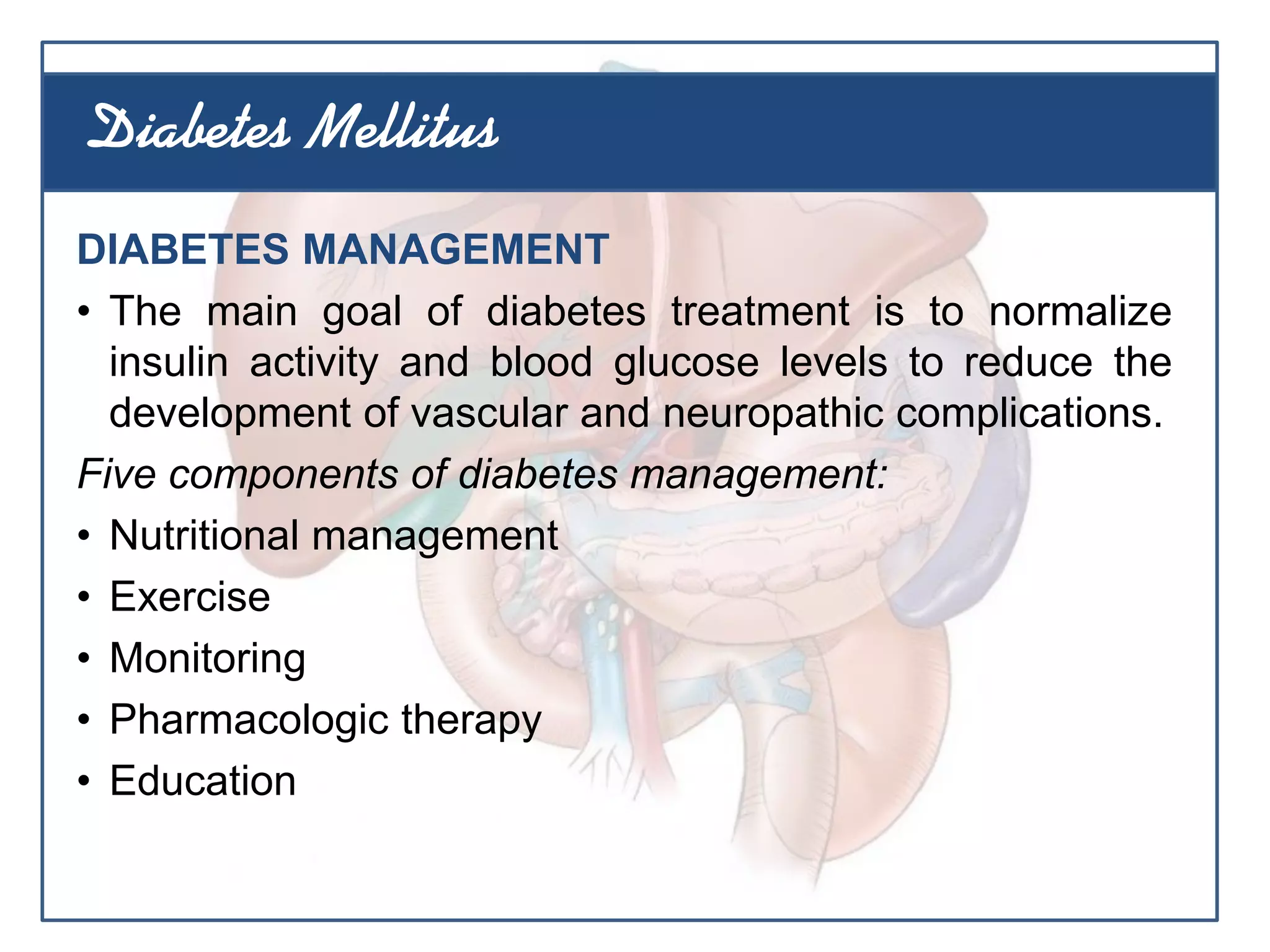
DIABETES MANAGEMENT
• The main goal of diabetes treatment is to normalize
insulin activity and blood glucose levels to reduce the
development of vascular and neuropathic complications.
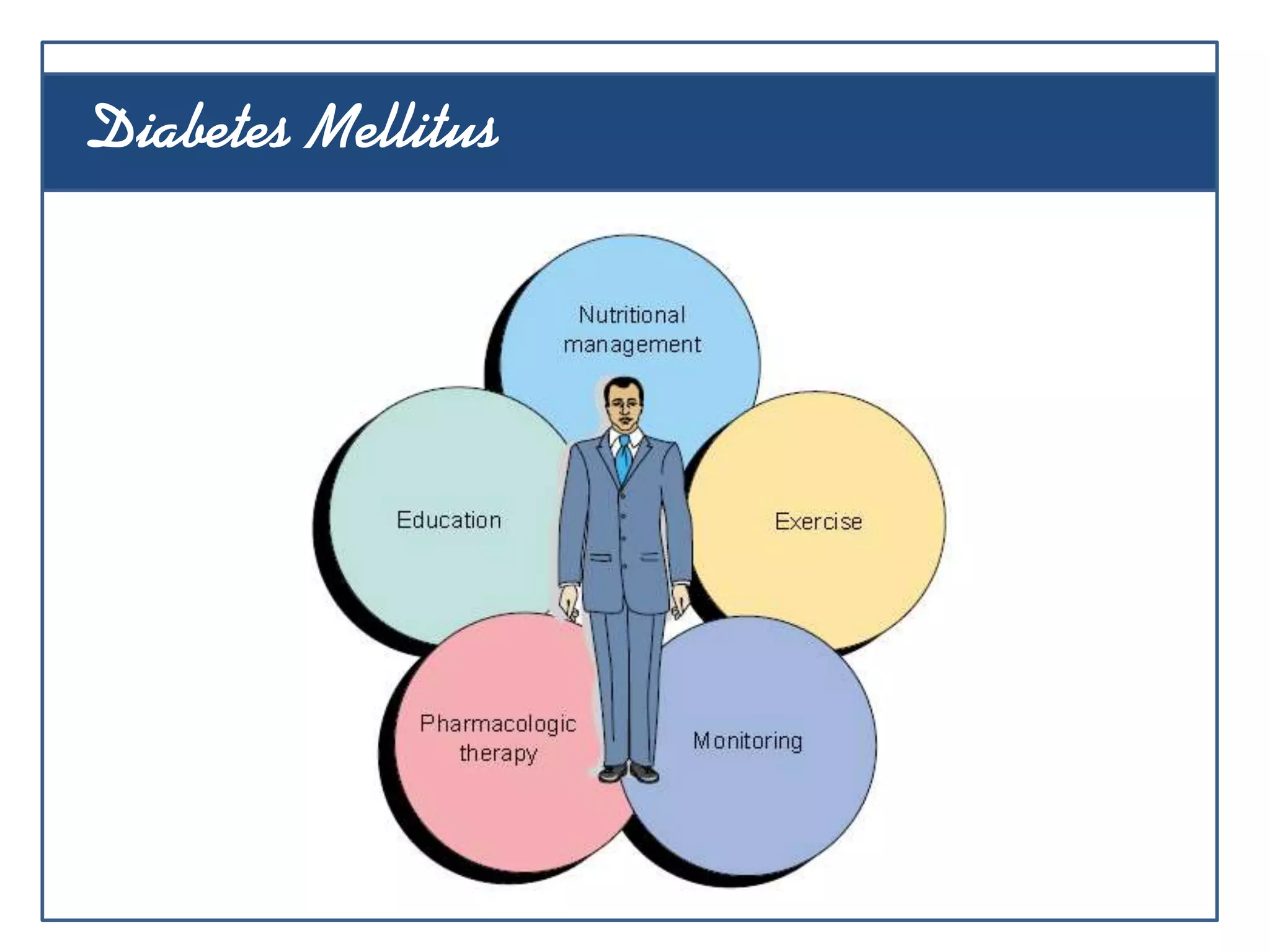
Five components of diabetes management:
• Nutritional management
• Exercise
• Monitoring
• Pharmacologic therapy
• Education
Diabetes Mellitus
Diabetes Mellitus
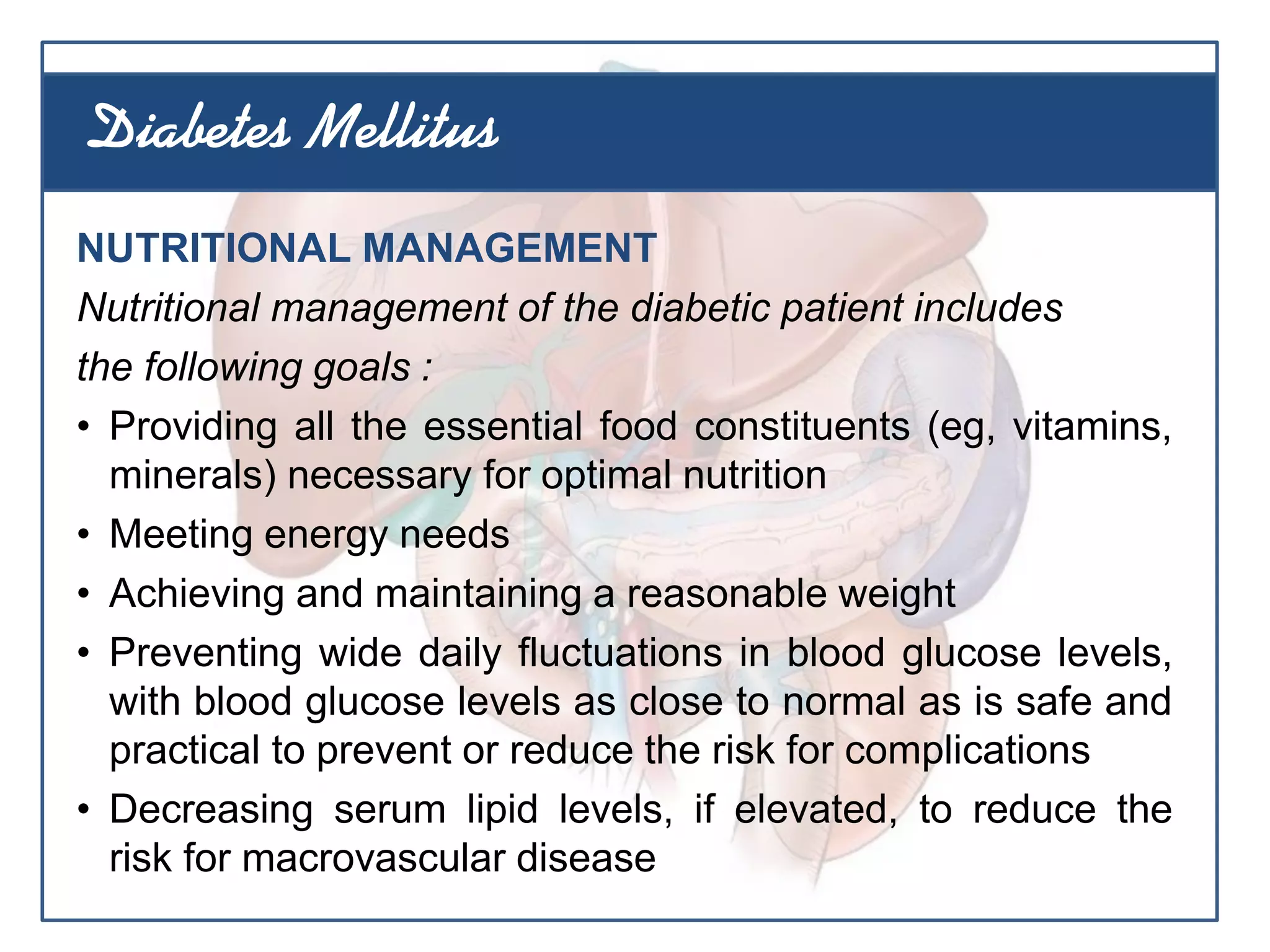
NUTRITIONAL MANAGEMENT
Nutritional management of the diabetic patient includes
the following goals :
• Providing all the essential food constituents (eg, vitamins,
minerals) necessary for optimal nutrition
• Meeting energy needs
• Achieving and maintaining a reasonable weight
• Preventing wide daily fluctuations in blood glucose levels,
with blood glucose levels as close to normal as is safe and
practical to prevent or reduce the risk for complications
• Decreasing serum lipid levels, if elevated, to reduce the
risk for macrovascular disease
Diabetes Mellitus
NUTRITIONAL MANAGEMENT
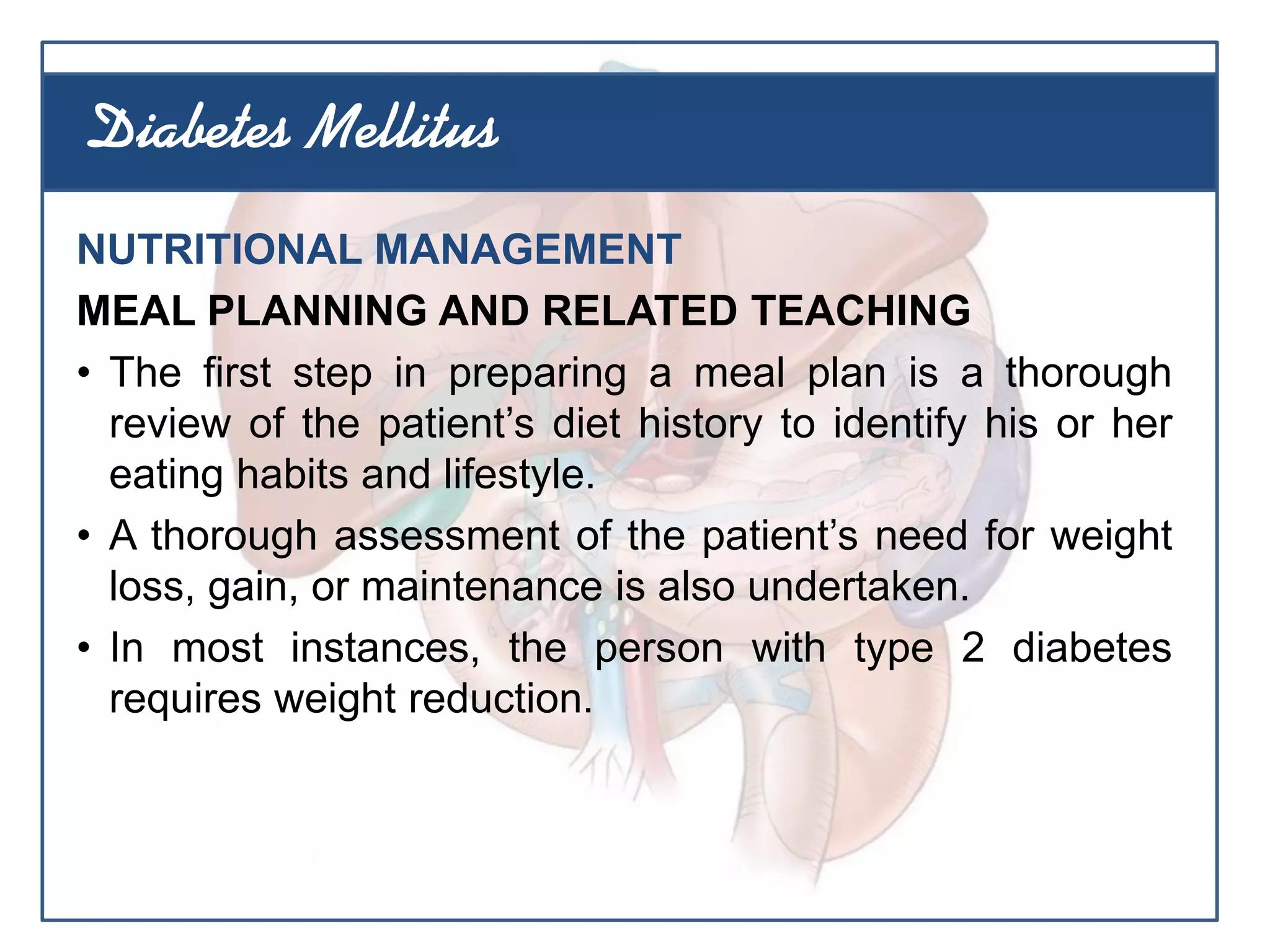
MEAL PLANNING AND RELATED TEACHING
• The first step in preparing a meal plan is a thorough
review of the patient’s diet history to identify his or her
eating habits and lifestyle.
• A thorough assessment of the patient’s need for weight
loss, gain, or maintenance is also undertaken.
• In most instances, the person with type 2 diabetes
requires weight reduction.
Diabetes Mellitus
NUTRITIONAL MANAGEMENT
MEAL PLANNING AND RELATED TEACHING
• Initial education addresses the importance of consistent
eating habits, the relationship of food and insulin, and
the provision of an individualized meal plan.
• Follow-up education then focuses on management
skills, such as eating at restaurants, reading food labels,
and adjusting the meal plan for exercise, illness, and
special occasions.
• The nurse plays an important role in communicating
pertinent information to the dietitian and reinforcing the
patient’s understanding.
Diabetes Mellitus
NUTRITIONAL MANAGEMENT
CALORIC REQUIREMENTS
• Calorie-controlled diets are planned by first calculating
the individual’s energy needs and caloric requirements
based on the patient’s age, gender, height, and weight.
• An activity element is then factored in to provide the
actual number of calories required for weight
maintenance.
• To promote a 1- to 2-pound weight loss per week, 500 to
1,000 calories are subtracted from the daily total.
• The calories are distributed into carbohydrates, proteins,
and fats, and a meal plan is then developed.
Diabetes Mellitus
NUTRITIONAL MANAGEMENT
CALORIC REQUIREMENTS
• The caloric distribution currently recommended is higher
in carbohydrates than in fat and protein.
• Currently, the ADA and the American Dietetic
Association recommend that for all levels of caloric
intake, 50% to 60% of calories should be derived from
carbohydrates, 20% to 30% from fat, and the remaining
10% to 20% from protein.
Diabetes Mellitus
NUTRITIONAL MANAGEMENT
CALORIC REQUIREMENTS
• The use of fiber in diabetic diets plays a role in lowering
total cholesterol and low-density lipoprotein cholesterol
in the blood.
• Increasing fiber in the diet may also improve blood
glucose levels and decrease the need for exogenous
insulin.
• There are two types of dietary fibers: soluble and
insoluble.
Diabetes Mellitus
NUTRITIONAL MANAGEMENT
CALORIC REQUIREMENTS
• Soluble fiber in foods such as legumes, oats, and some
fruits plays more of a role in lowering blood glucose and
lipid levels than does insoluble fiber.
• Insoluble fiber is found in whole-grain breads and
cereals and in some vegetables. This type of fiber plays
more of a role in increasing stool bulk and preventing
constipation.
Diabetes Mellitus
EXERCISE
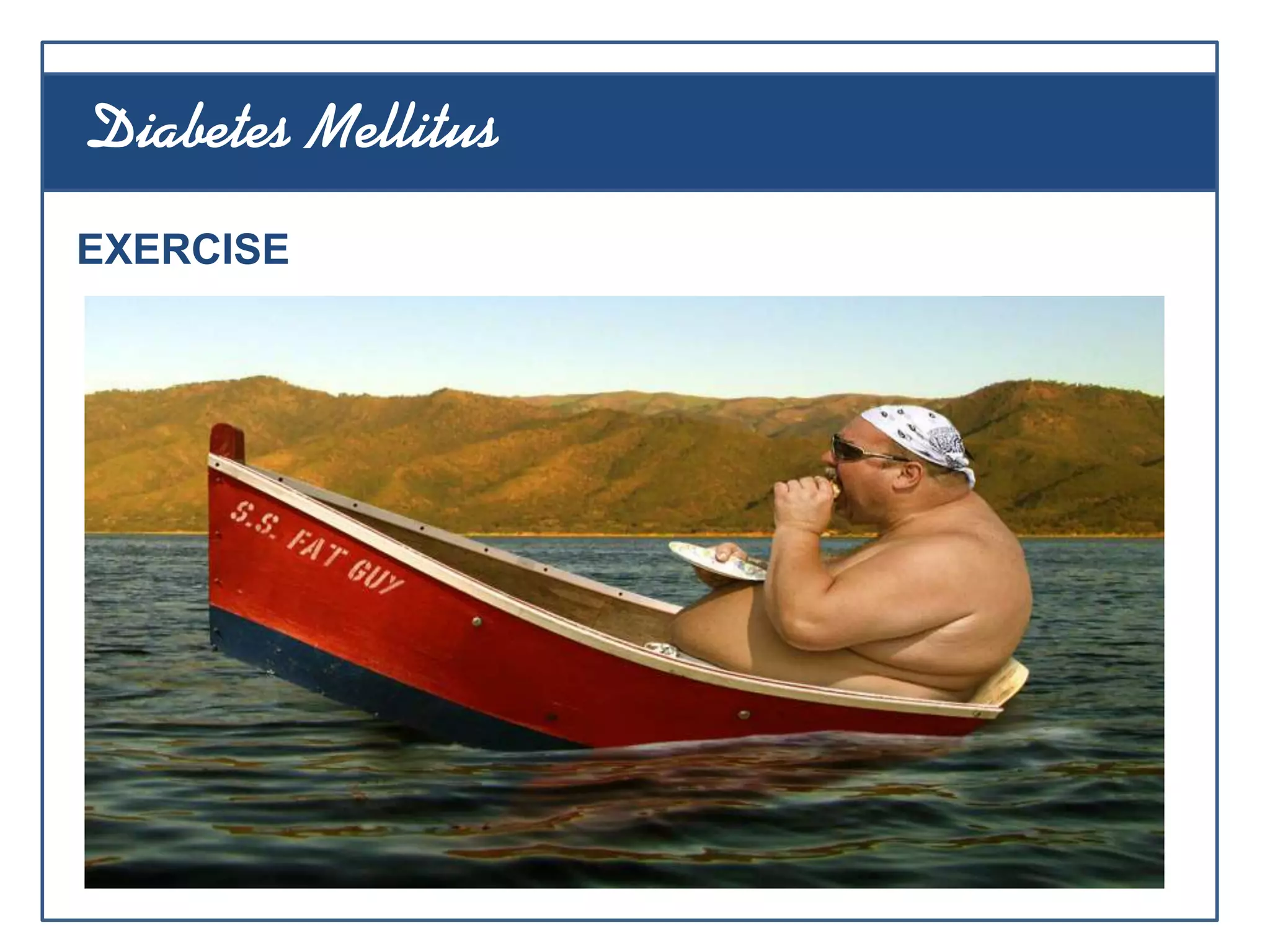
• Exercise is extremely important in managing diabetes
because of its effects on lowering blood glucose and
reducing cardiovascular risk factors.
• Exercise lowers the blood glucose level by increasing
the uptake of glucose by body muscles and by
improving insulin utilization. It also improves circulation
and muscle tone.
• Resistance (strength) training, such as weight lifting, can
increase lean muscle mass, thereby increasing the
resting metabolic rate.
Diabetes Mellitus
EXERCISE
Diabetes Mellitus
EXERCISE
Diabetes Mellitus
EXERCISE
Diabetes Mellitus
EXERCISE
• Patients who have blood glucose levels exceeding 250
mg/dL (14 mmol/L) and who have ketones in their urine
should not begin exercising until the urine tests negative
for ketones and the blood glucose level is closer to
normal.
• Exercising with elevated blood glucose levels increases
the secretion of glucagon, growth hormone, and
catecholamines. The liver then releases more glucose,
and the result is an increase in the blood glucose level.
• Another potential problem for patients who take insulin is
hypoglycemia that occurs many hours after exercise.
Diabetes Mellitus
EXERCISE
General Precautions for Exercise in Diabetics:
• Use proper footwear and, if appropriate, other protective
equipment.
• Avoid exercise in extreme heat or cold.
• Inspect feet daily after exercise.
• Avoid exercise during periods of poor metabolic control.
Diabetes Mellitus
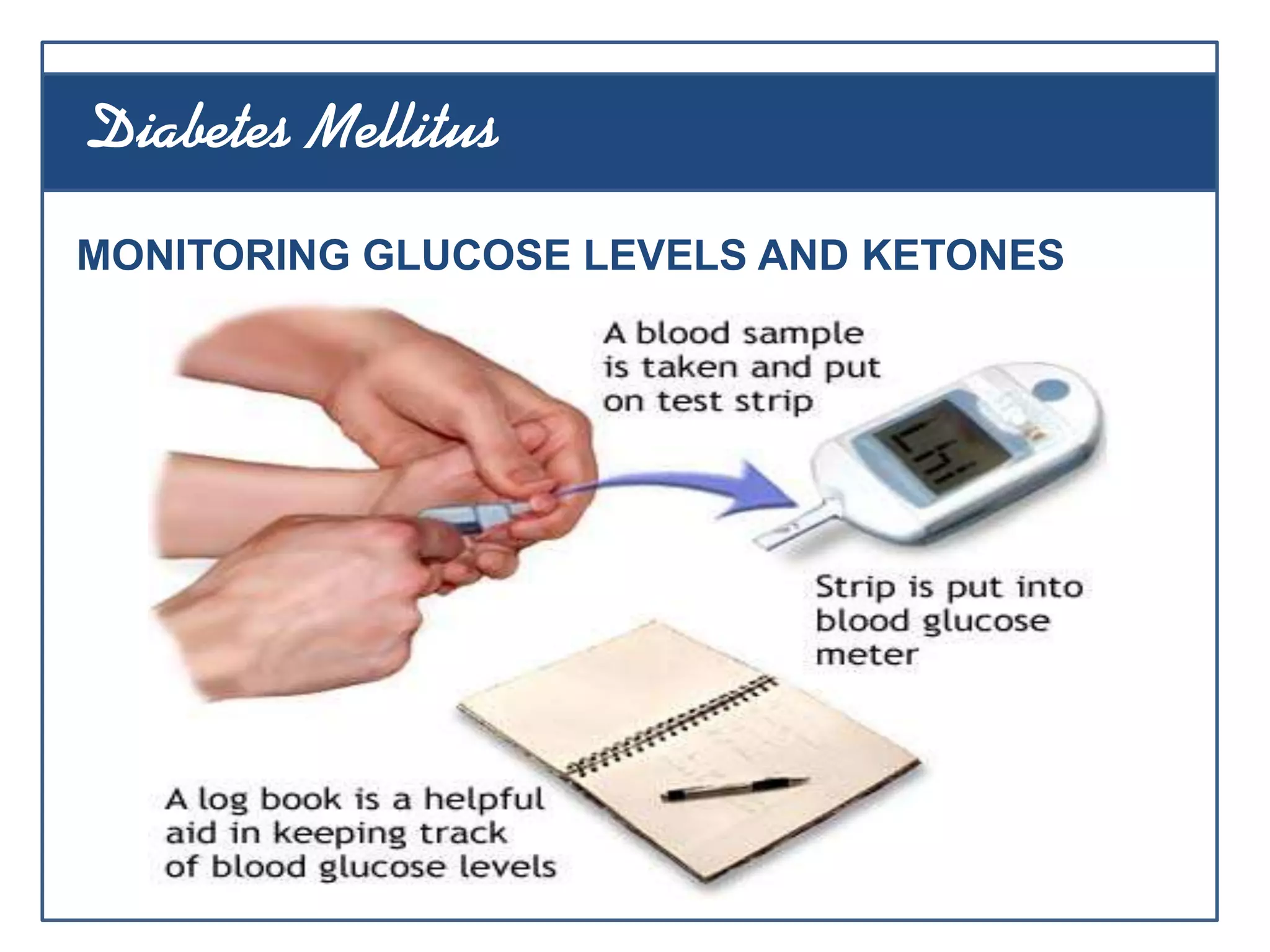
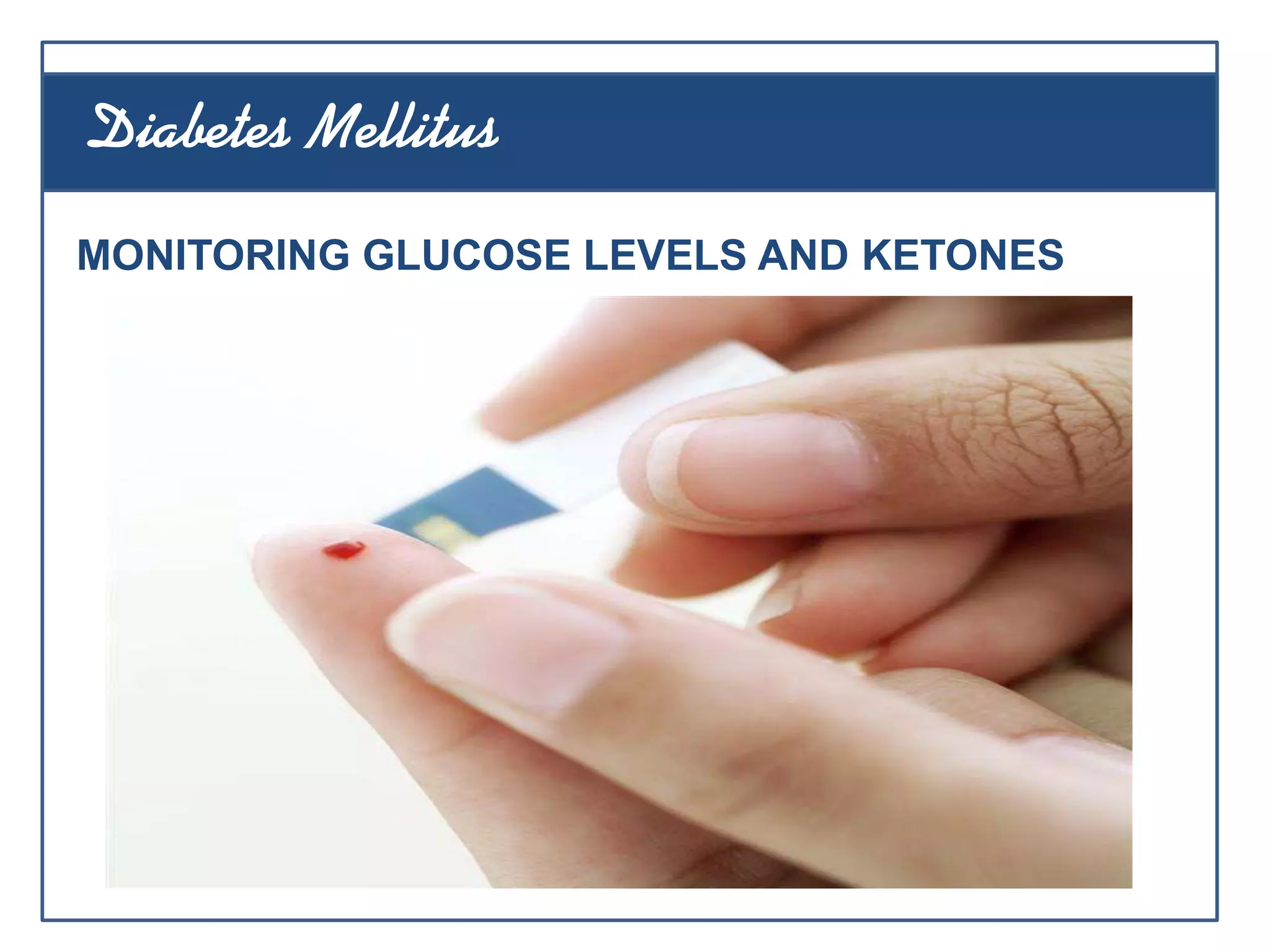
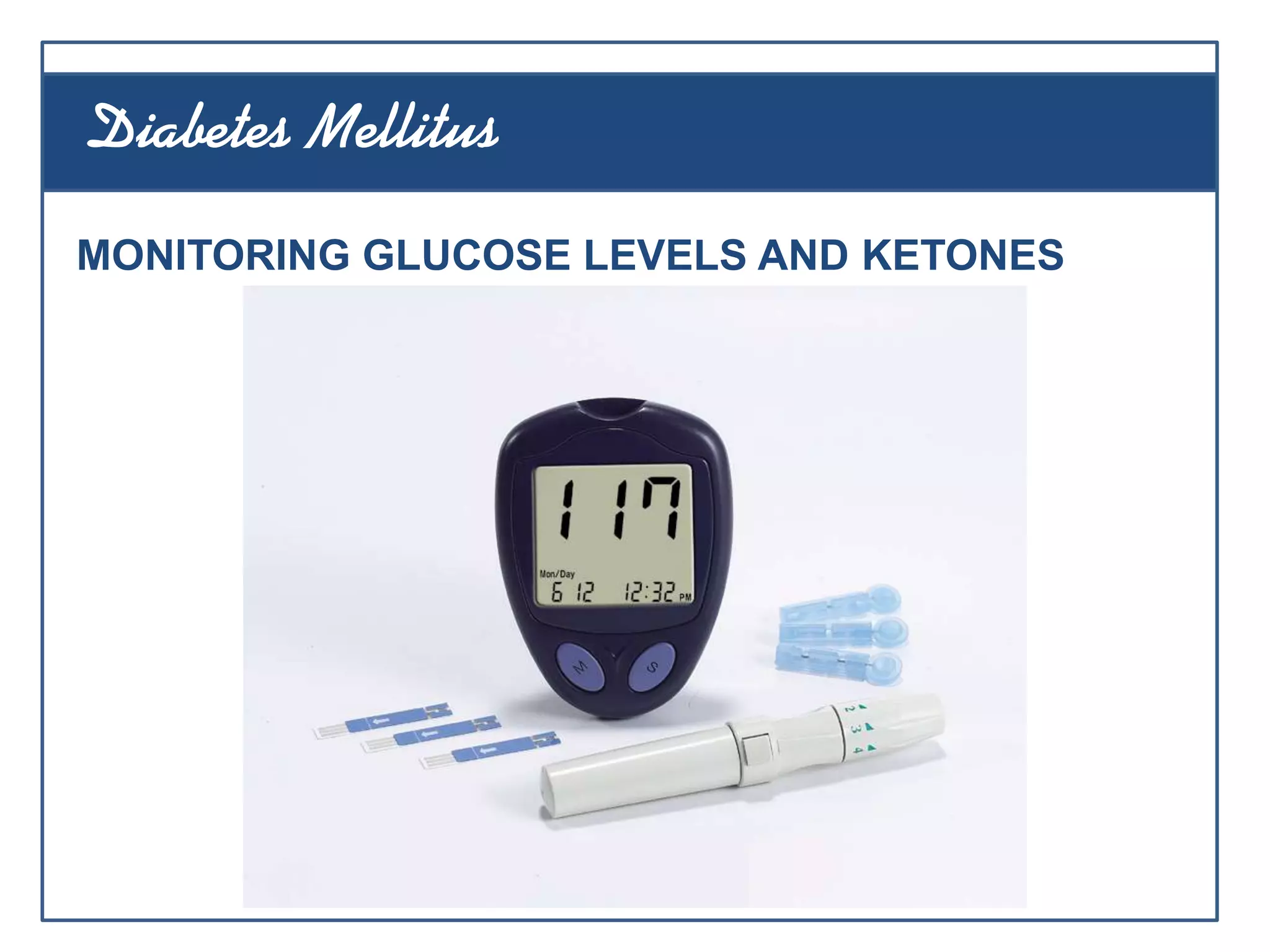
MONITORING GLUCOSE LEVELS AND KETONES
• Blood glucose monitoring and self-monitoring of blood
glucose (SMBG) levels by patients has dramatically
altered diabetes care.
• Frequent SMBG enables people with diabetes to adjust
the treatment regimen to obtain optimal blood glucose
control.
• This allows for detection and prevention of
hypoglycemia and hyperglycemia and plays a crucial
role in normalizing blood glucose levels, which in turn
may reduce the risk of long-term diabetic complications.
Diabetes Mellitus
MONITORING GLUCOSE LEVELS AND KETONES
Diabetes Mellitus
MONITORING GLUCOSE LEVELS AND KETONES
Diabetes Mellitus
MONITORING GLUCOSE LEVELS AND KETONES
Diabetes Mellitus
MONITORING GLUCOSE LEVELS AND KETONES
• For most patients who require insulin, SMBG is
recommended two to four times daily (usually before
meals and at bedtime).
• For patients who take insulin before each meal, SMBG
is required at least three times daily before meals to
determine each dose.
• Patients not receiving insulin may be instructed to
assess their blood glucose levels at least two or three
times per week, including a 2-hour postprandial test.
Diabetes Mellitus
MONITORING GLUCOSE LEVELS AND KETONES
GLYCOSYLATED HEMOGLOBIN
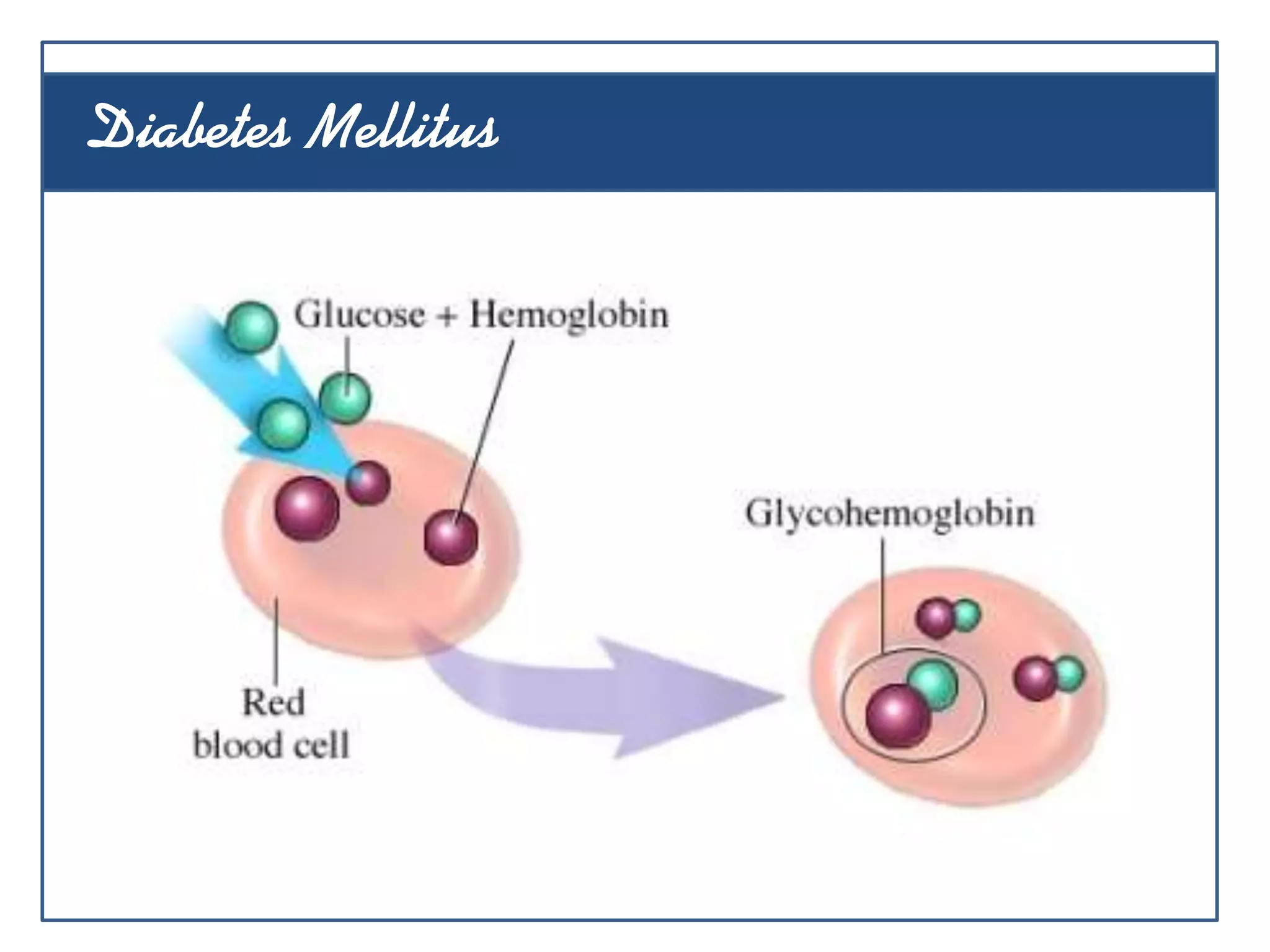
• Glycosylated hemoglobin (referred to as HgbA1C or
A1C) is a blood test that reflects average blood glucose
levels over a period of approximately 2 to 3 months.
• The longer the amount of glucose in the blood remains
above normal, the more glucose binds to the red blood
cell and the higher the glycosylated hemoglobin level.
• The normal values differ slightly from test to test and
from laboratory to laboratory and normally range from
4% to 6%.
Diabetes Mellitus
Diabetes Mellitus
MONITORING GLUCOSE LEVELS AND KETONES
TESTING FOR KETONES
• Ketones in the urine signal that control of type 1
diabetes is deteriorating, and the risk of DKA is high.
• When there is almost no effective insulin available, the
body starts to break down stored fat for energy.
• Urine testing is the most common method used for self-
testing of ketone bodies by patients.
• Most commonly, patients use a urine dipstick (Ketostix
or Chemstrip uK) to detect ketonuria.
• The reagent pad on the strip turns purplish when
ketones are present.
Diabetes Mellitus
MONITORING GLUCOSE LEVELS AND KETONES
TESTING FOR KETONES
• Other strips are available for measuring both urine
glucose and ketones (Keto-Diastix or Chemstrip uGK).
• Urine ketone testing should be performed whenever
patients with type 1 diabetes have glucosuria or
persistently elevated blood glucose levels (more than
240 mg/dL or 13.2 mmol/L for two testing periods in a
row) and during illness, in pregnancy with pre-existing
diabetes, and in gestational diabetes.
Diabetes Mellitus
PHARMACOLOGIC THERAPY
INSULIN THERAPY AND INSULIN PREPARATIONS
• Because the body loses the ability to produce insulin in
type 1 diabetes, exogenous insulin must be
administered for life.
• In type 2 diabetes, insulin may be necessary on a long-
term basis to control glucose levels if diet and oral
agents fail.
• Some patients in whom type 2 diabetes is usually
controlled by diet alone or by diet and an oral agent may
require insulin temporarily during illness, infection,
pregnancy, surgery, or some other stressful event.
Diabetes Mellitus
PHARMACOLOGIC THERAPY
INSULIN THERAPY AND INSULIN PREPARATIONS
• In many cases, insulin injections are administered two or
more times daily to control the blood glucose level.
• Because the insulin dose required by the individual
patient is determined by the level of glucose in the
blood, accurate monitoring of blood glucose levels is
essential; thus, SMBG has become a cornerstone of
insulin therapy.
Diabetes Mellitus
PHARMACOLOGIC THERAPY
INSULIN THERAPY AND INSULIN PREPARATIONS
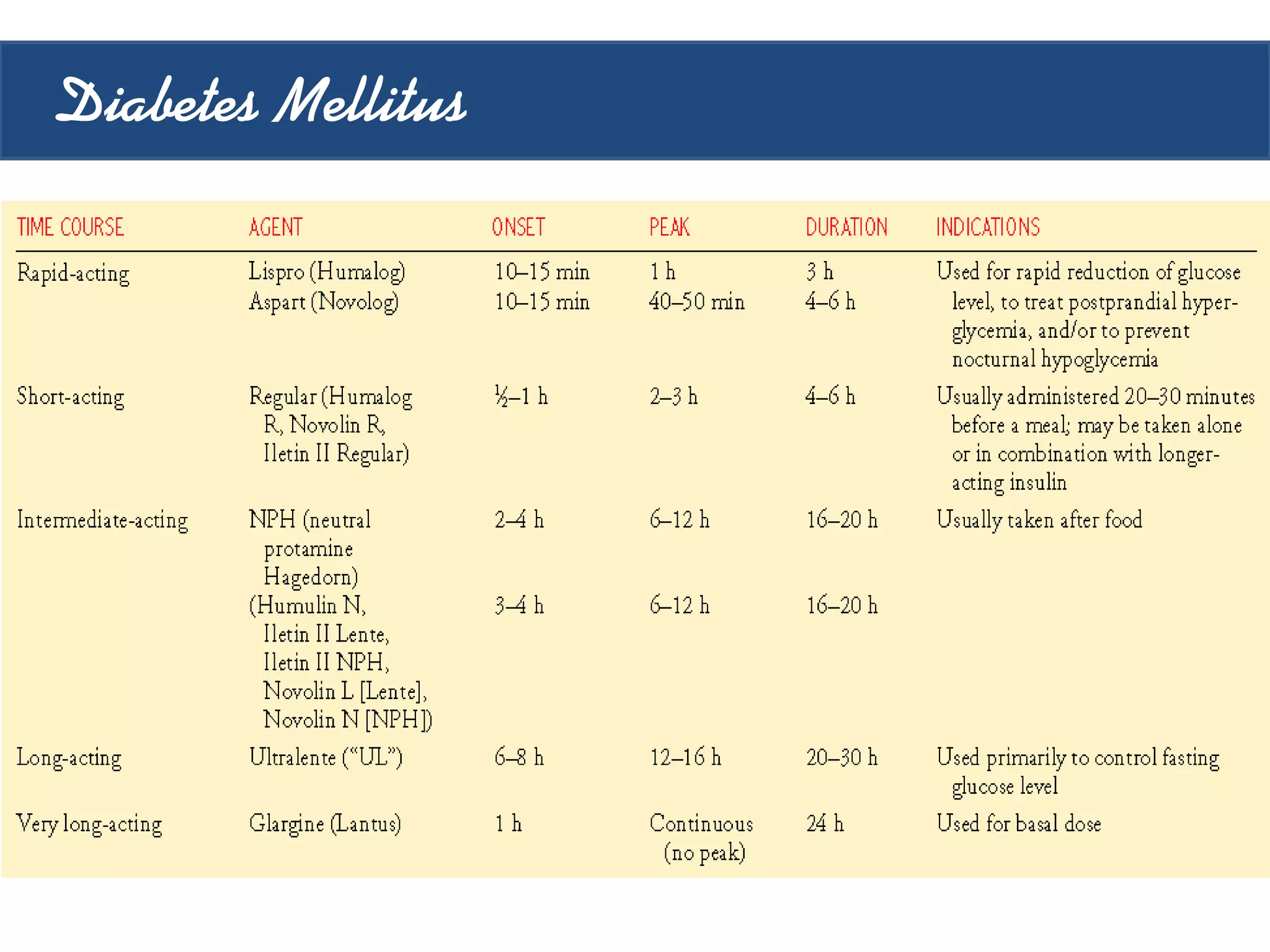
• Insulin preparations vary according to three main
characteristics: time course of action, species (source),
and manufacturer.
Diabetes Mellitus
PHARMACOLOGIC THERAPY
INSULIN THERAPY AND INSULIN PREPARATIONS
• Insulin preparations vary according to three main
characteristics: time course of action, species (source),
and manufacturer.
Diabetes Mellitus
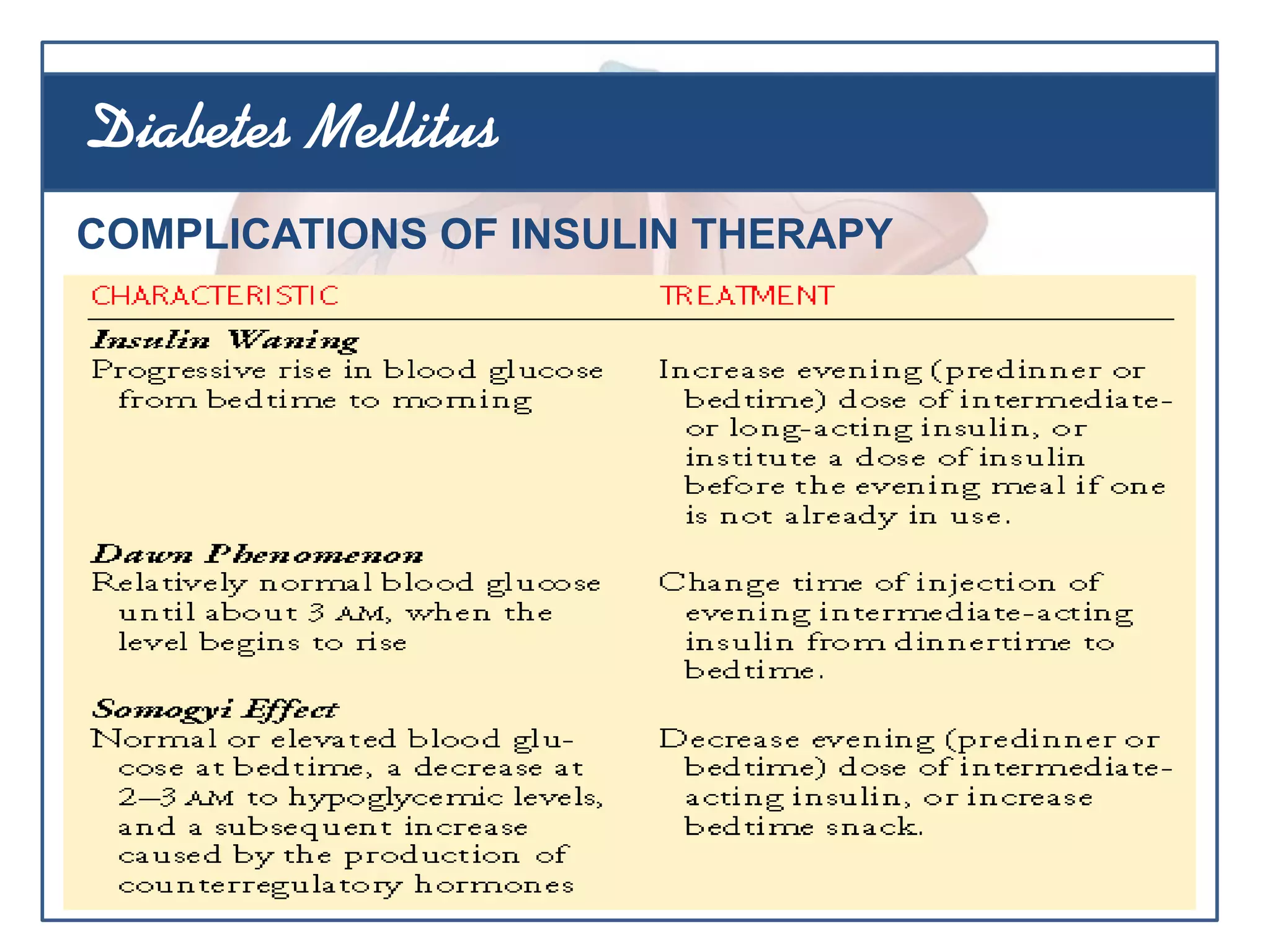
COMPLICATIONS OF INSULIN THERAPY
• A local allergic reaction (redness, swelling, tenderness,
and induration or a 2- to 4-cm wheal) may appear at the
injection site 1 to 2 hours after the insulin administration.
• The physician may prescribe an antihistamine to be
taken 1 hour before the injection if such a local reaction
occurs.
SYSTEMIC ALLERGIC REACTIONS
• Immediate local skin reaction that gradually spreads into
generalized urticaria (hives).
Diabetes Mellitus
COMPLICATIONS OF INSULIN THERAPY
• The treatment is desensitization, with small doses of
insulin administered in gradually increasing amounts
using a desensitization kit.
• These rare reactions are occasionally associated with
generalized edema or anaphylaxis.
INSULIN LIPODYSTROPHY
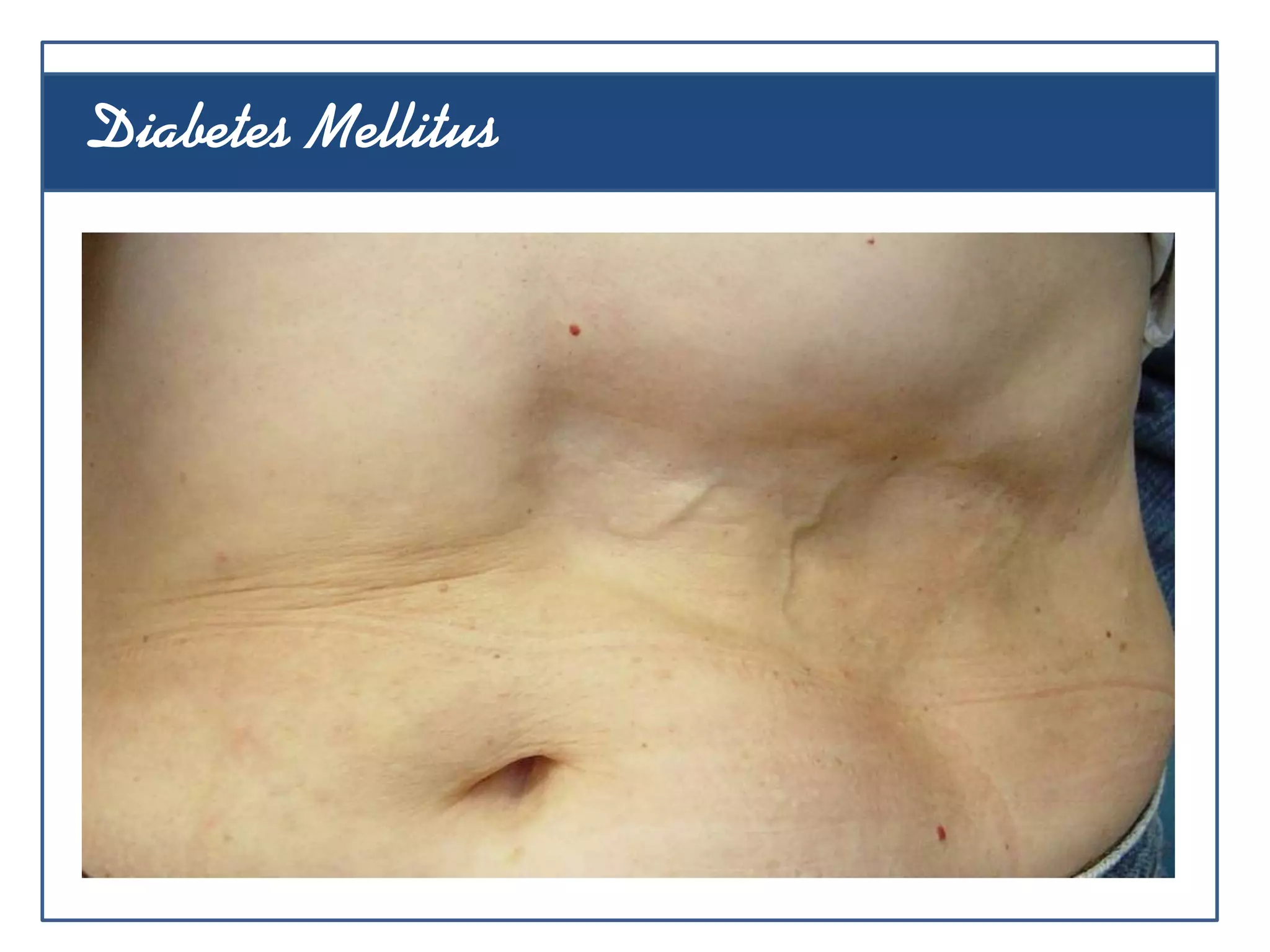
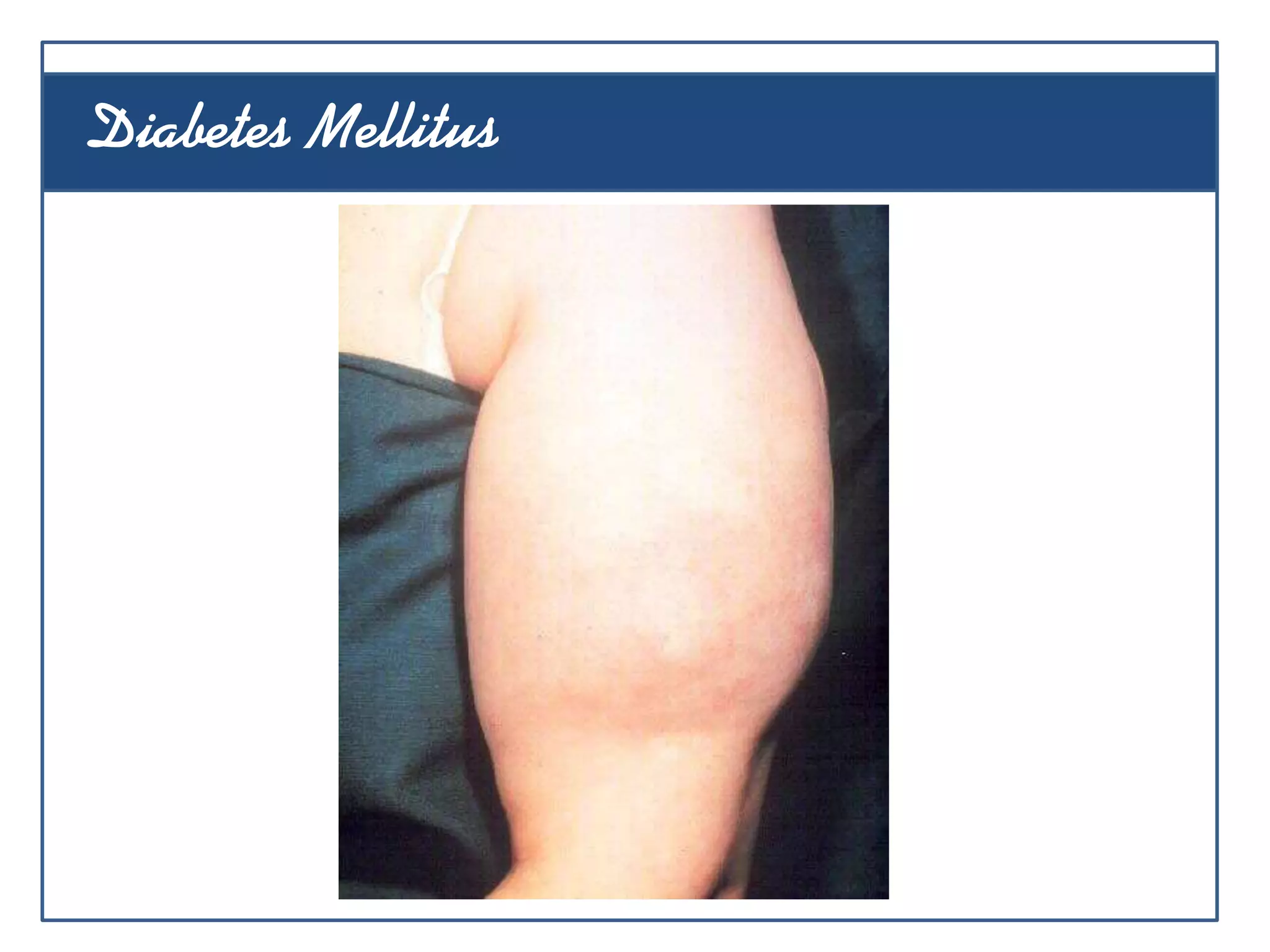
• Lipodystrophy refers to a localized reaction, in the form
of either lipoatrophy or lipohypertrophy, occurring at the
site of insulin injections.
Diabetes Mellitus
Diabetes Mellitus
COMPLICATIONS OF INSULIN THERAPY
• Lipoatrophy is loss of subcutaneous fat and appears as
slight dimpling or more serious pitting of subcutaneous
fat.
• Lipohypertrophy, the development of fibrofatty masses at
the injection site, is caused by the repeated use of an
injection site.
• If insulin is injected into scarred areas, absorption may
be delayed.
• This is one reason that rotation of injection sites is so
important.
Diabetes Mellitus
Diabetes Mellitus
COMPLICATIONS OF INSULIN THERAPY
INSULIN RESISTANCE
• Clinical insulin resistance has been defined as a daily
insulin requirement of 200 units or more.
• In most diabetic patients taking insulin, immune
antibodies develop and bind the insulin, thereby
decreasing the insulin available for use.
• Treatment consists of administering a more
concentrated insulin preparation, such as U500, which is
available by special order.
Diabetes Mellitus
COMPLICATIONS OF INSULIN THERAPY
INSULIN RESISTANCE
• Occasionally, prednisone is needed to block the
production of antibodies.
• This may be followed by a gradual reduction in insulin
requirement.
Diabetes Mellitus
COMPLICATIONS OF INSULIN THERAPY
Diabetes Mellitus
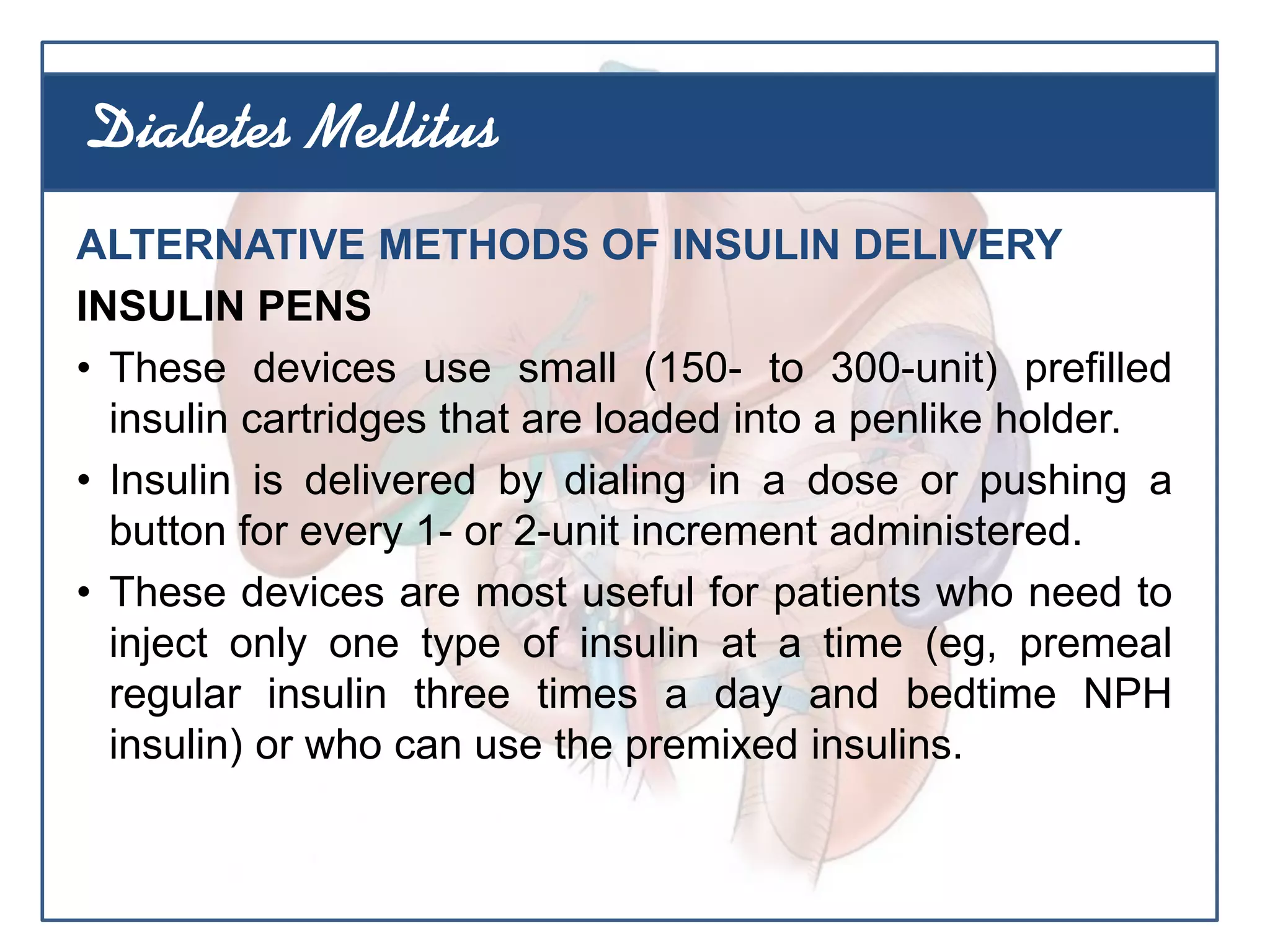
ALTERNATIVE METHODS OF INSULIN DELIVERY
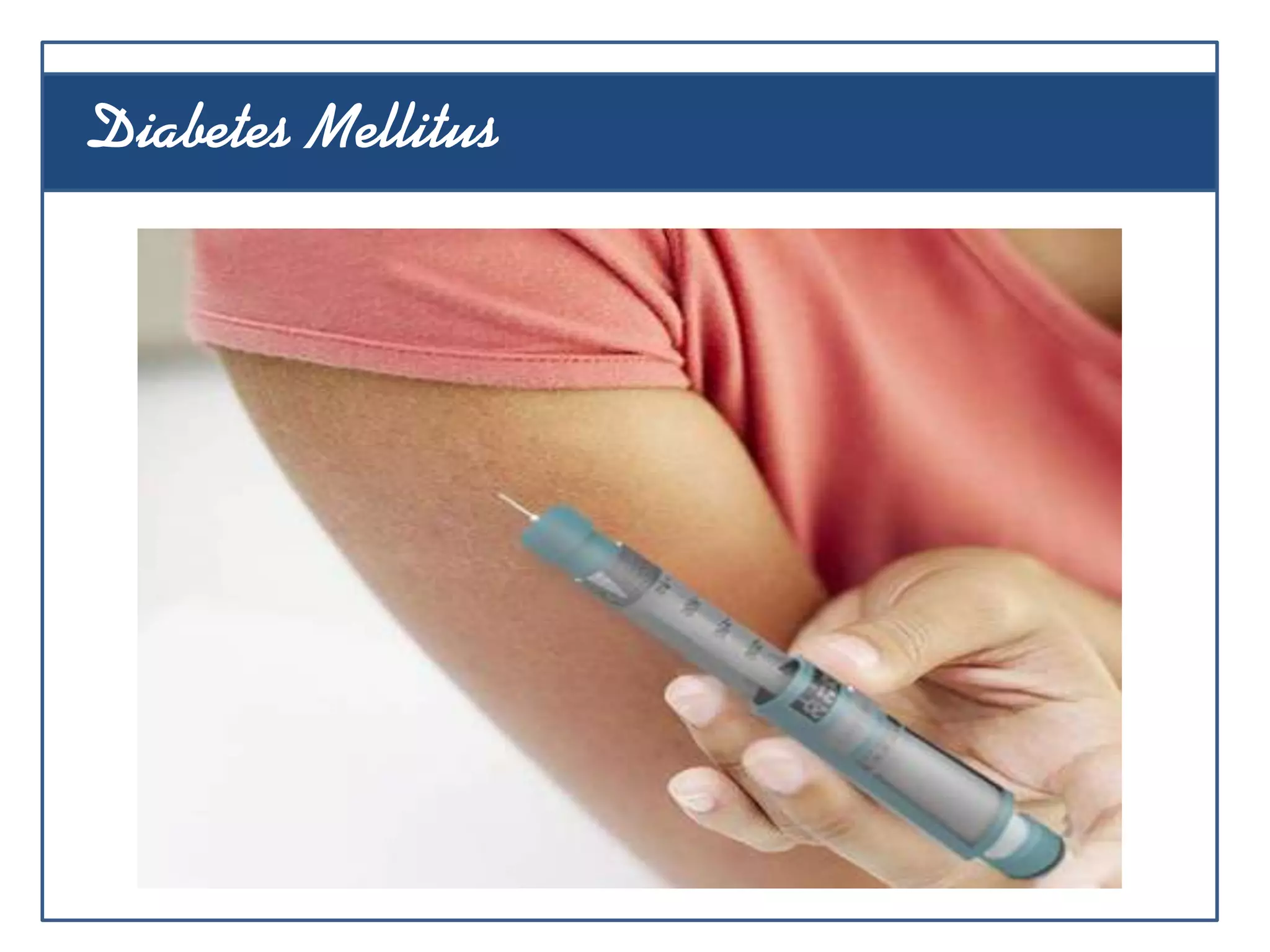
INSULIN PENS
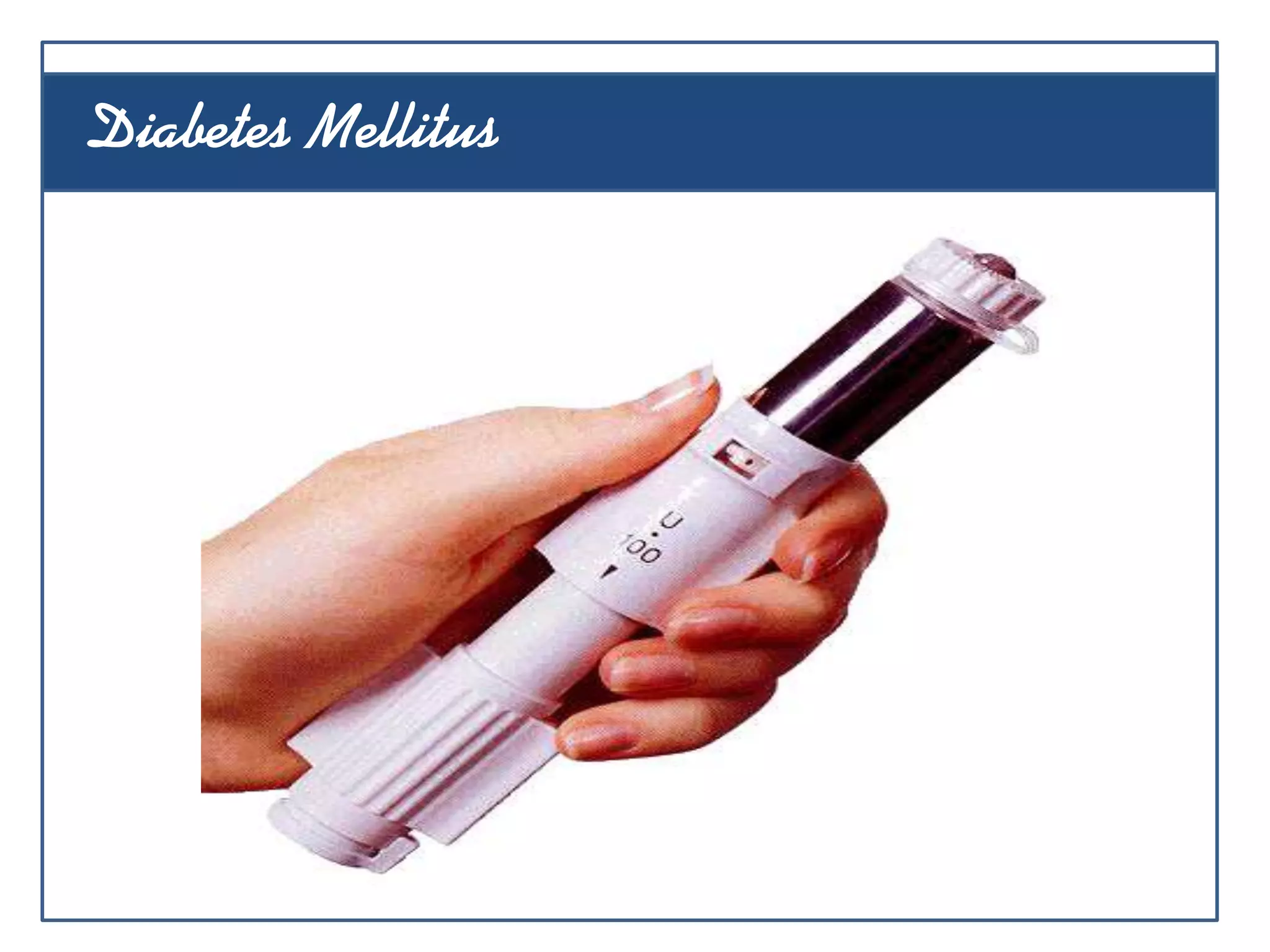
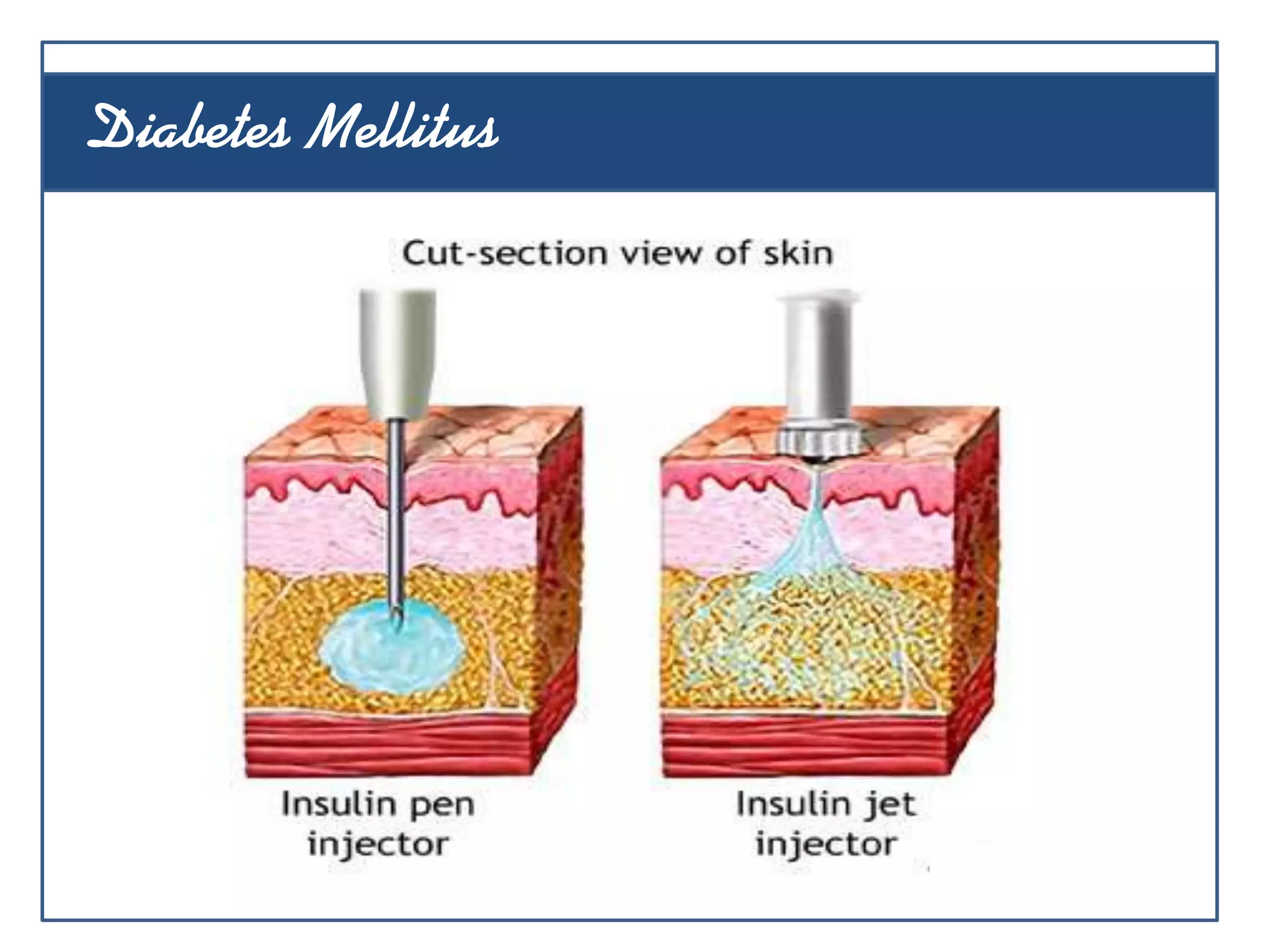
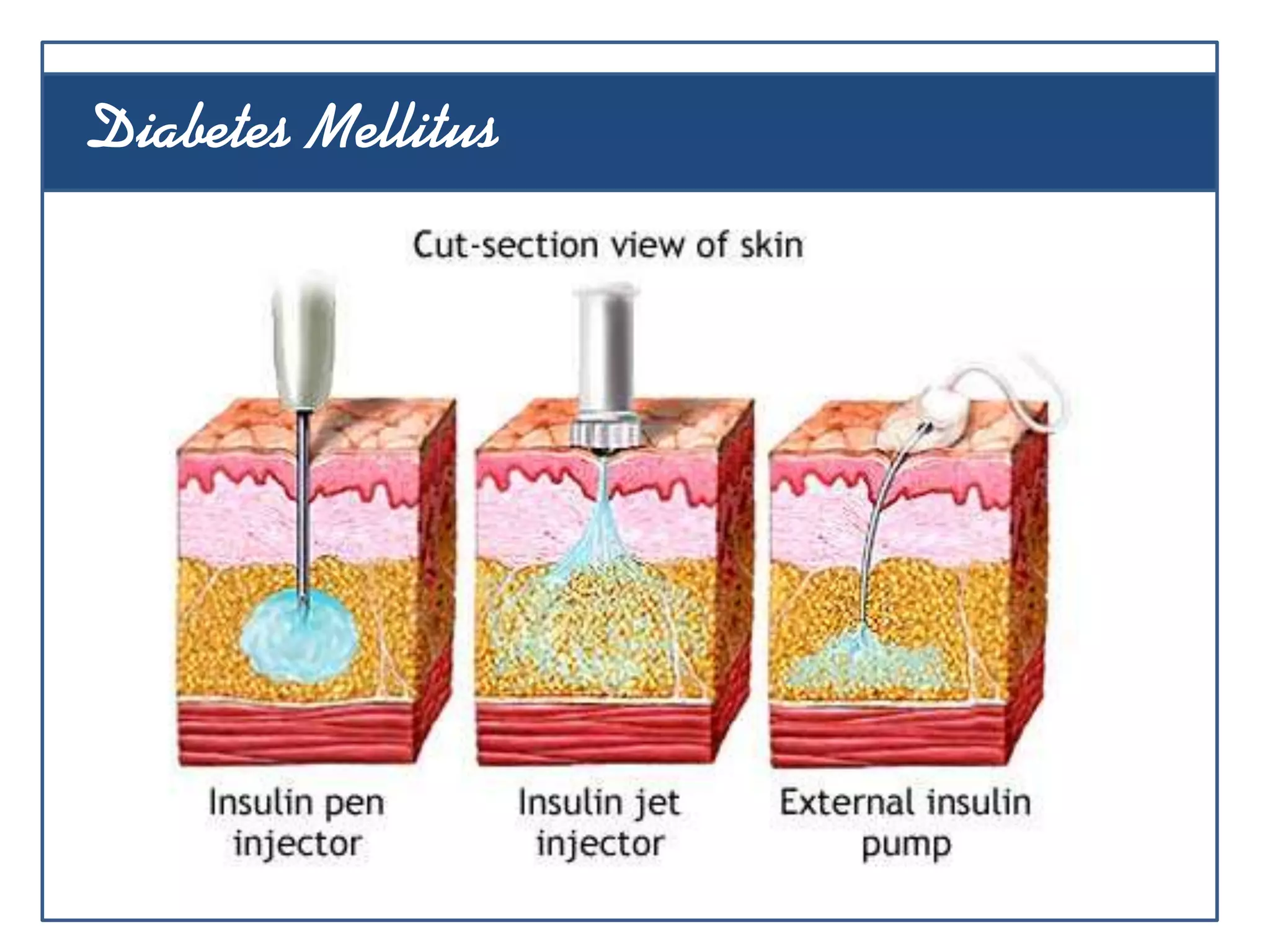
• These devices use small (150- to 300-unit) prefilled
insulin cartridges that are loaded into a penlike holder.
• Insulin is delivered by dialing in a dose or pushing a
button for every 1- or 2-unit increment administered.
• These devices are most useful for patients who need to
inject only one type of insulin at a time (eg, premeal
regular insulin three times a day and bedtime NPH
insulin) or who can use the premixed insulins.
Diabetes Mellitus
Diabetes Mellitus
Diabetes Mellitus
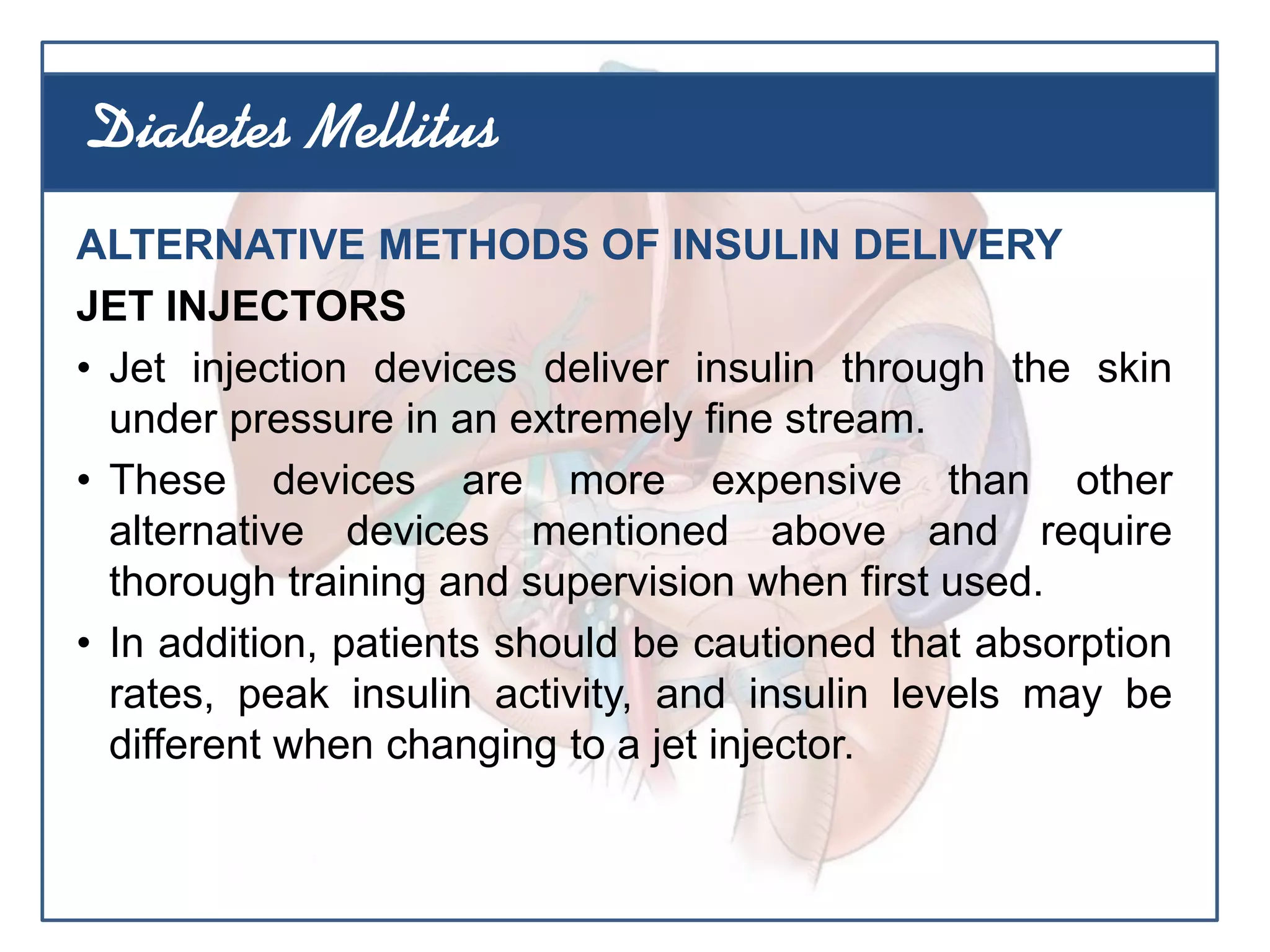
ALTERNATIVE METHODS OF INSULIN DELIVERY
JET INJECTORS
• Jet injection devices deliver insulin through the skin
under pressure in an extremely fine stream.
• These devices are more expensive than other
alternative devices mentioned above and require
thorough training and supervision when first used.
• In addition, patients should be cautioned that absorption
rates, peak insulin activity, and insulin levels may be
different when changing to a jet injector.
Diabetes Mellitus
Diabetes Mellitus
Diabetes Mellitus
ALTERNATIVE METHODS OF INSULIN DELIVERY
INSULIN PUMPS
• Continuous subcutaneous insulin infusion involves the
use of small, externally worn devices that closely mimic
the functioning of the normal pancreas.
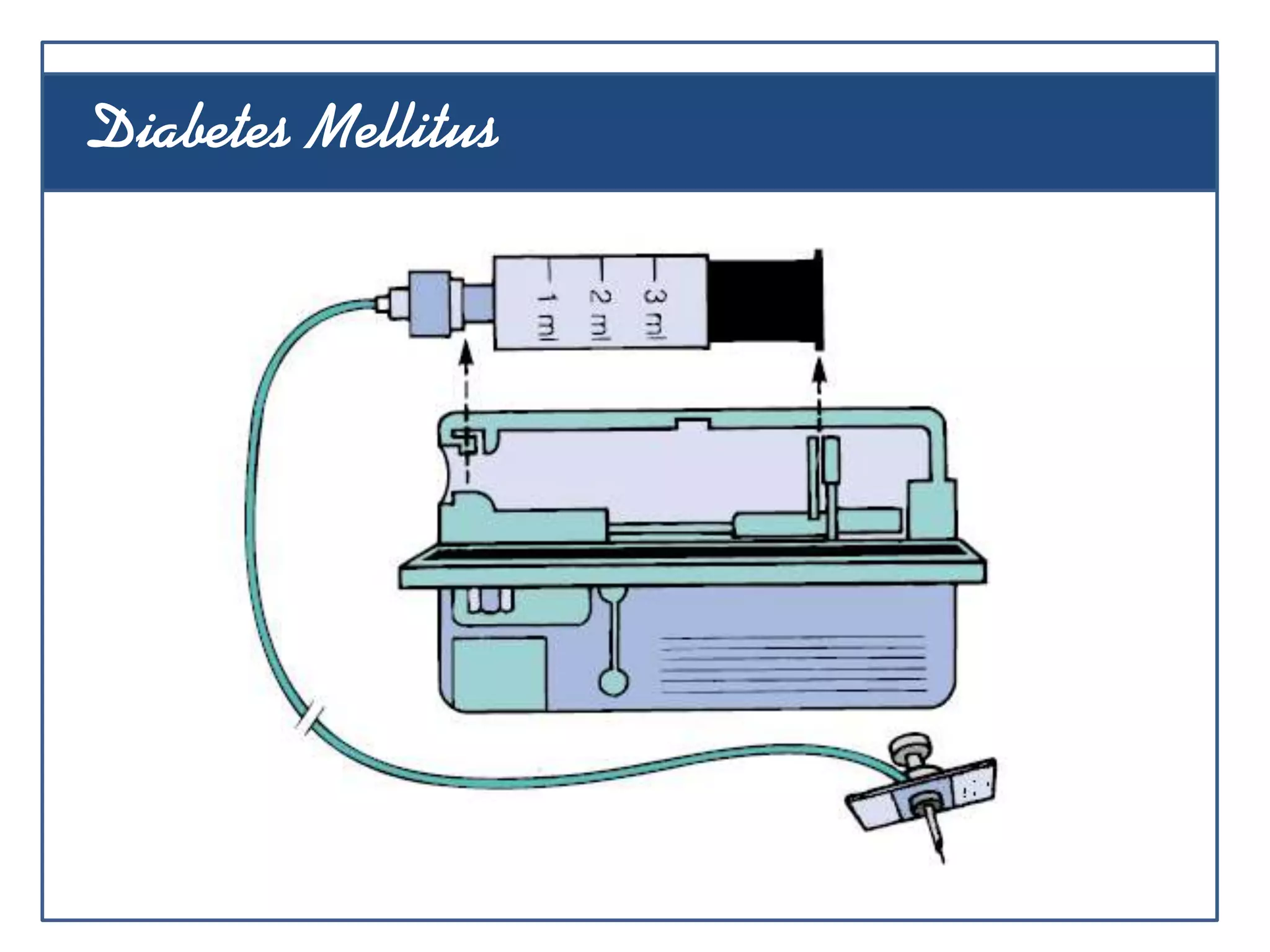
• Insulin pumps contain a 3-mL syringe attached to a long
(24- to 42-in), thin, narrow-lumen tube with a needle or
Teflon catheter attached to the end.
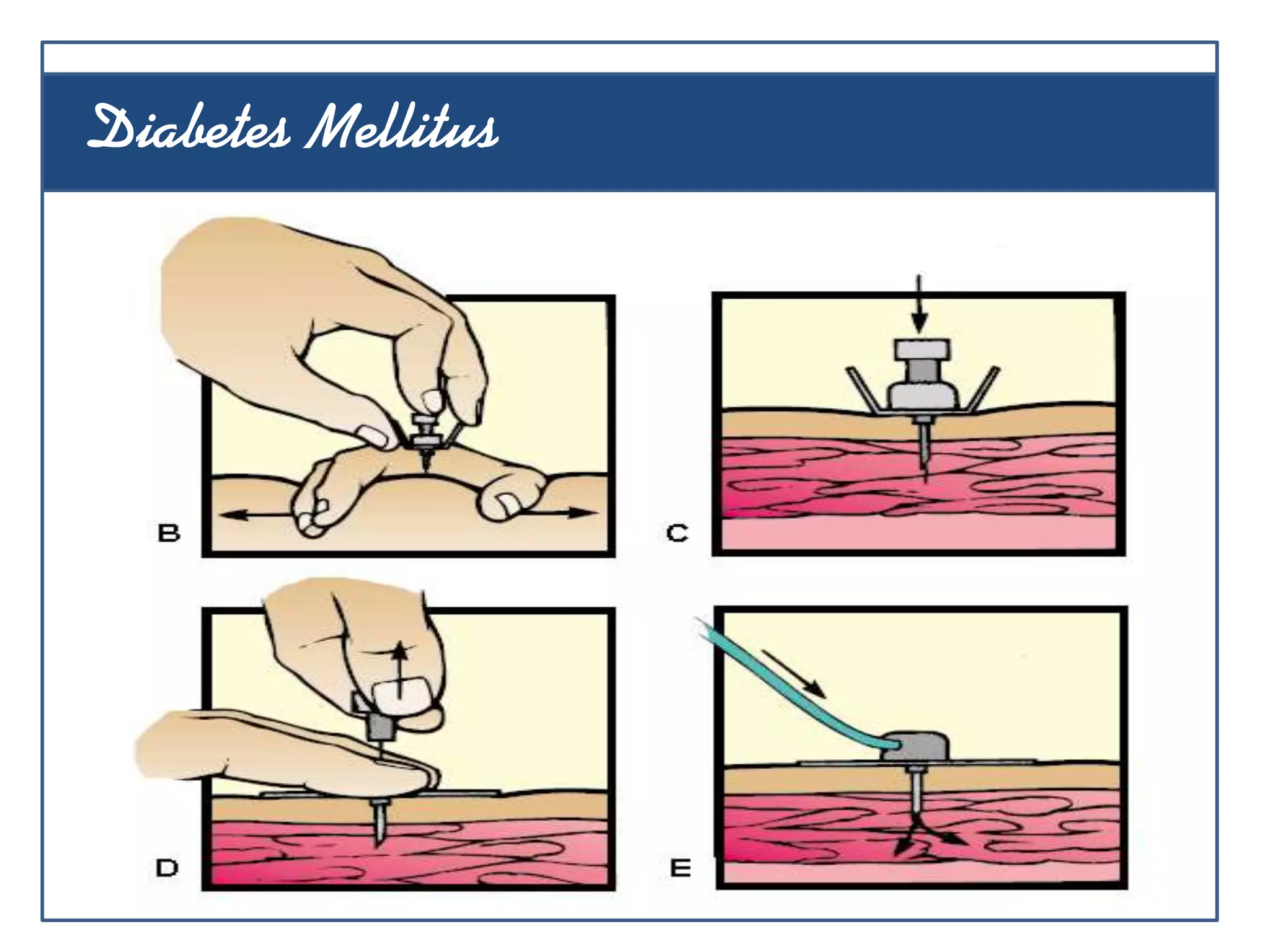
• The patient inserts the needle or catheter into the
subcutaneous tissue and secures it with tape or a
transparent dressing.
• The needle or catheter is changed at least every 3 days.
Diabetes Mellitus
ALTERNATIVE METHODS OF INSULIN DELIVERY
INSULIN PUMPS
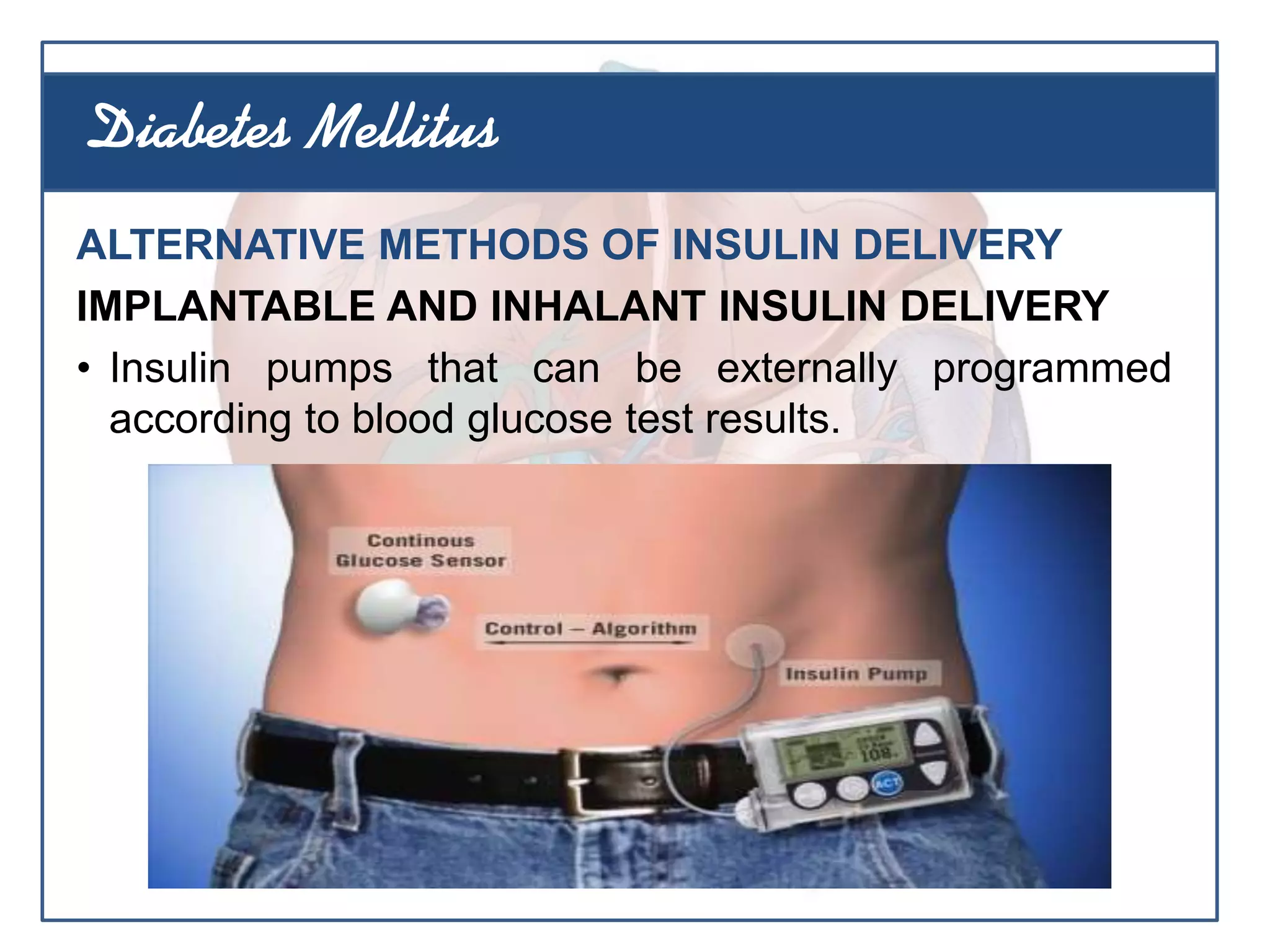
• The pump is then worn either on a belt or in a pocket.
• The rapid-acting lispro insulin is used in the insulin pump
and is delivered at a basal rate and as a bolus with
meals.
• A continuous basal rate of insulin is typically 0.5 to 2.0
units/hour, depending on the patient’s needs.
Diabetes Mellitus
Diabetes Mellitus
Diabetes Mellitus
ALTERNATIVE METHODS OF INSULIN DELIVERY
IMPLANTABLE AND INHALANT INSULIN DELIVERY
• Insulin pumps that can be externally programmed
according to blood glucose test results.
Diabetes Mellitus
Diabetes Mellitus
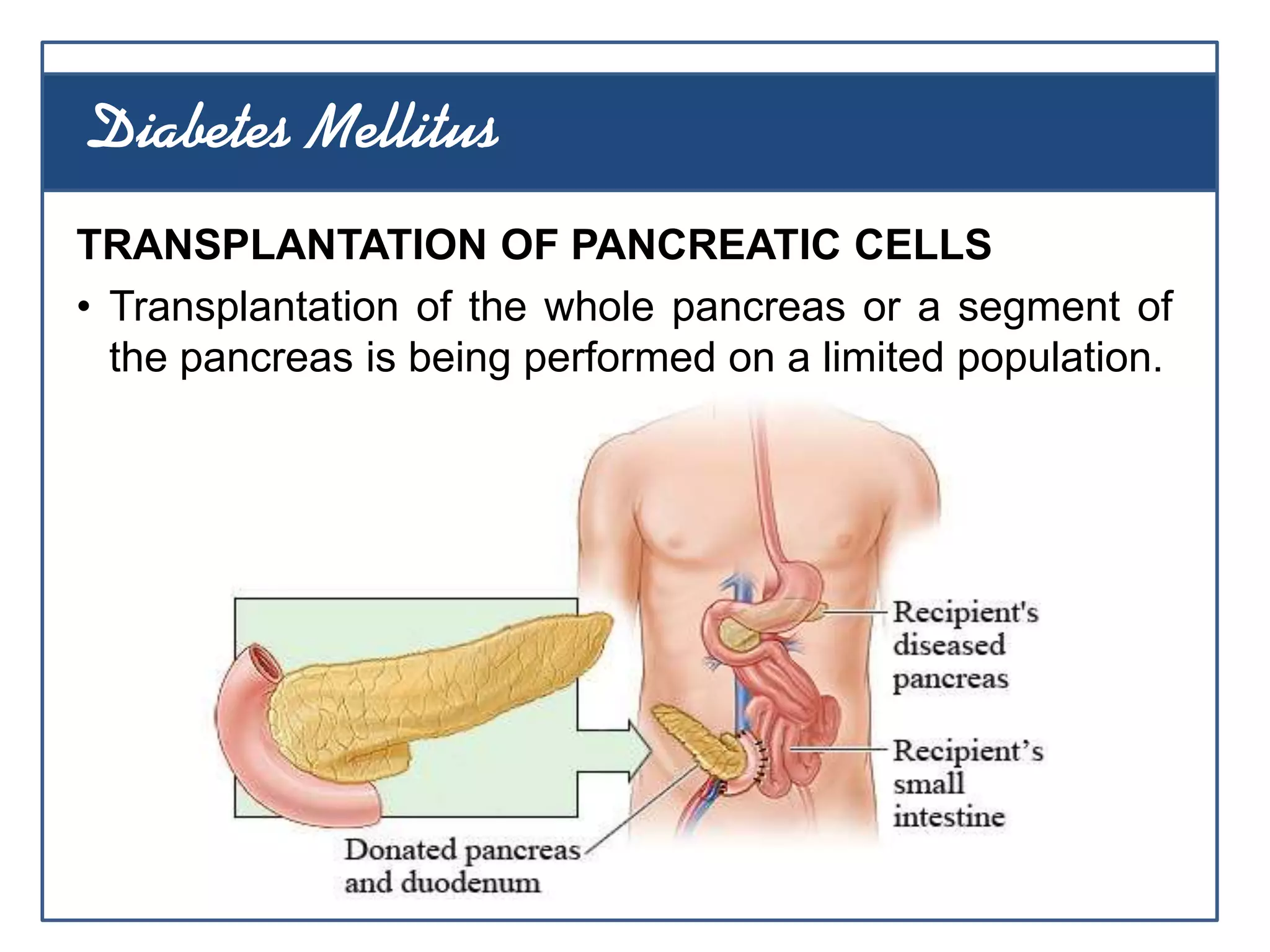
TRANSPLANTATION OF PANCREATIC CELLS
• Transplantation of the whole pancreas or a segment of
the pancreas is being performed on a limited population.
Diabetes Mellitus
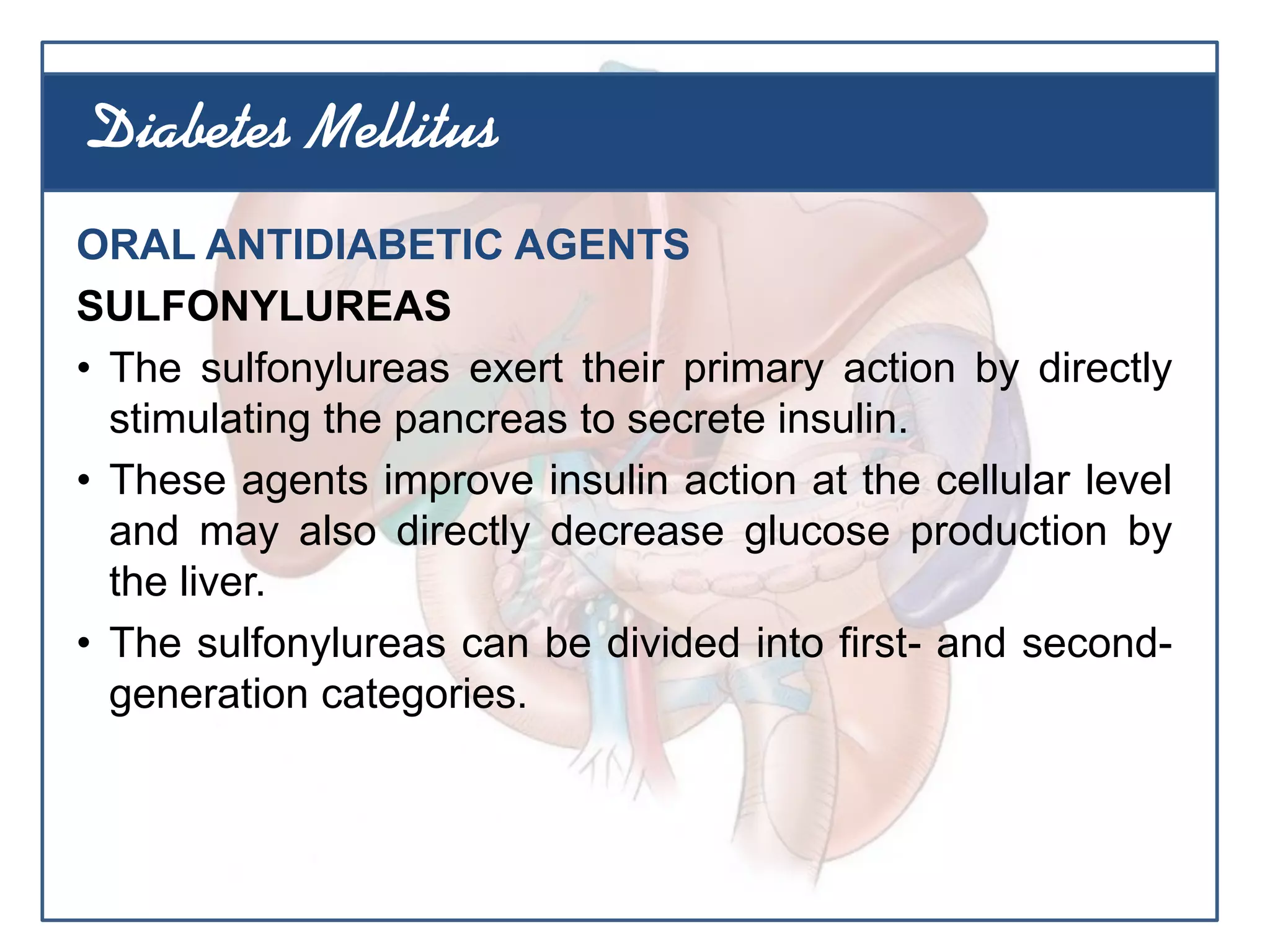
ORAL ANTIDIABETIC AGENTS
SULFONYLUREAS
• The sulfonylureas exert their primary action by directly
stimulating the pancreas to secrete insulin.
• These agents improve insulin action at the cellular level
and may also directly decrease glucose production by
the liver.
• The sulfonylureas can be divided into first- and second-
generation categories.
Diabetes Mellitus
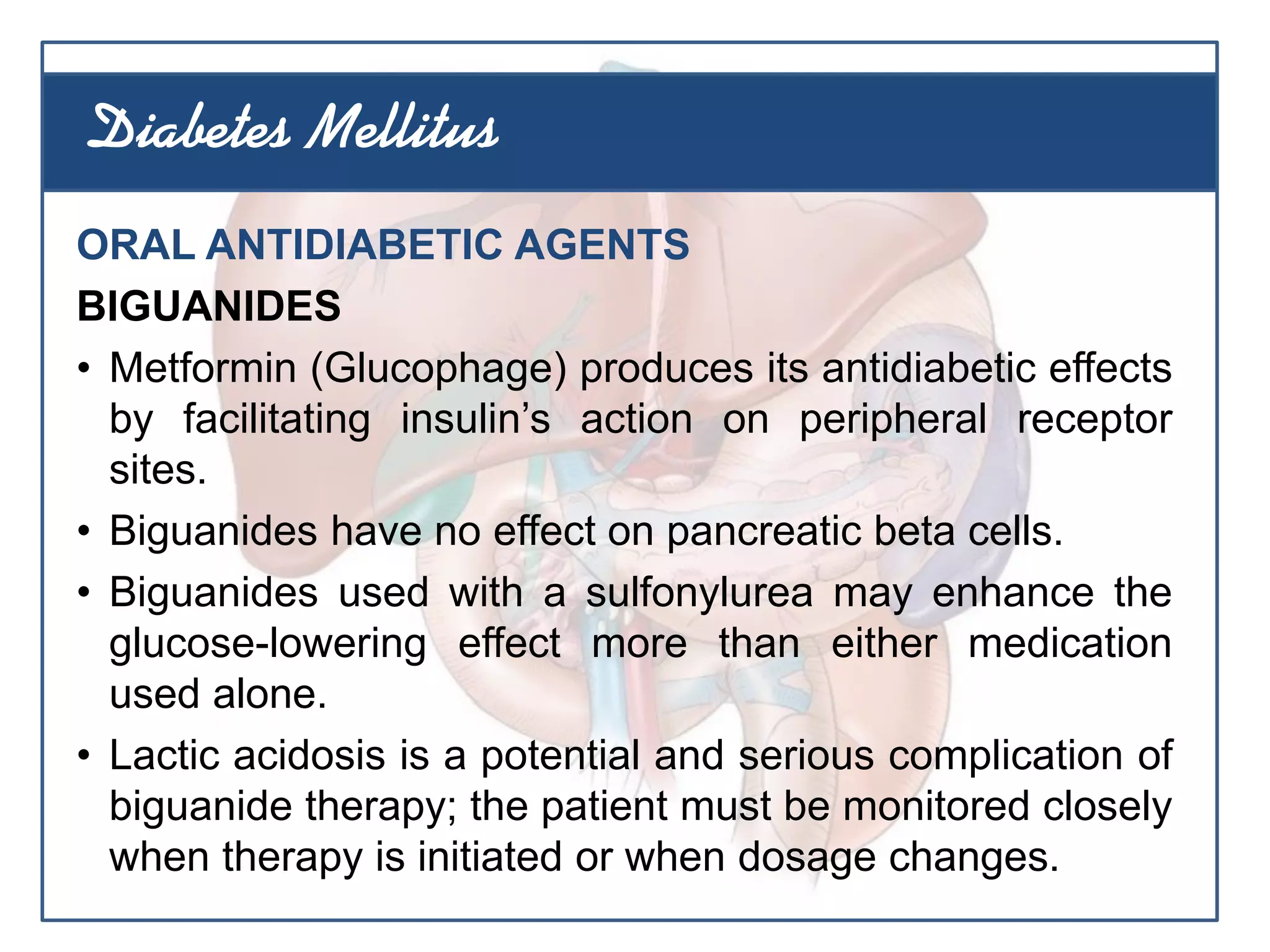
ORAL ANTIDIABETIC AGENTS
BIGUANIDES
• Metformin (Glucophage) produces its antidiabetic effects
by facilitating insulin’s action on peripheral receptor
sites.
• Biguanides have no effect on pancreatic beta cells.
• Biguanides used with a sulfonylurea may enhance the
glucose-lowering effect more than either medication
used alone.
• Lactic acidosis is a potential and serious complication of
biguanide therapy; the patient must be monitored closely
when therapy is initiated or when dosage changes.
Diabetes Mellitus
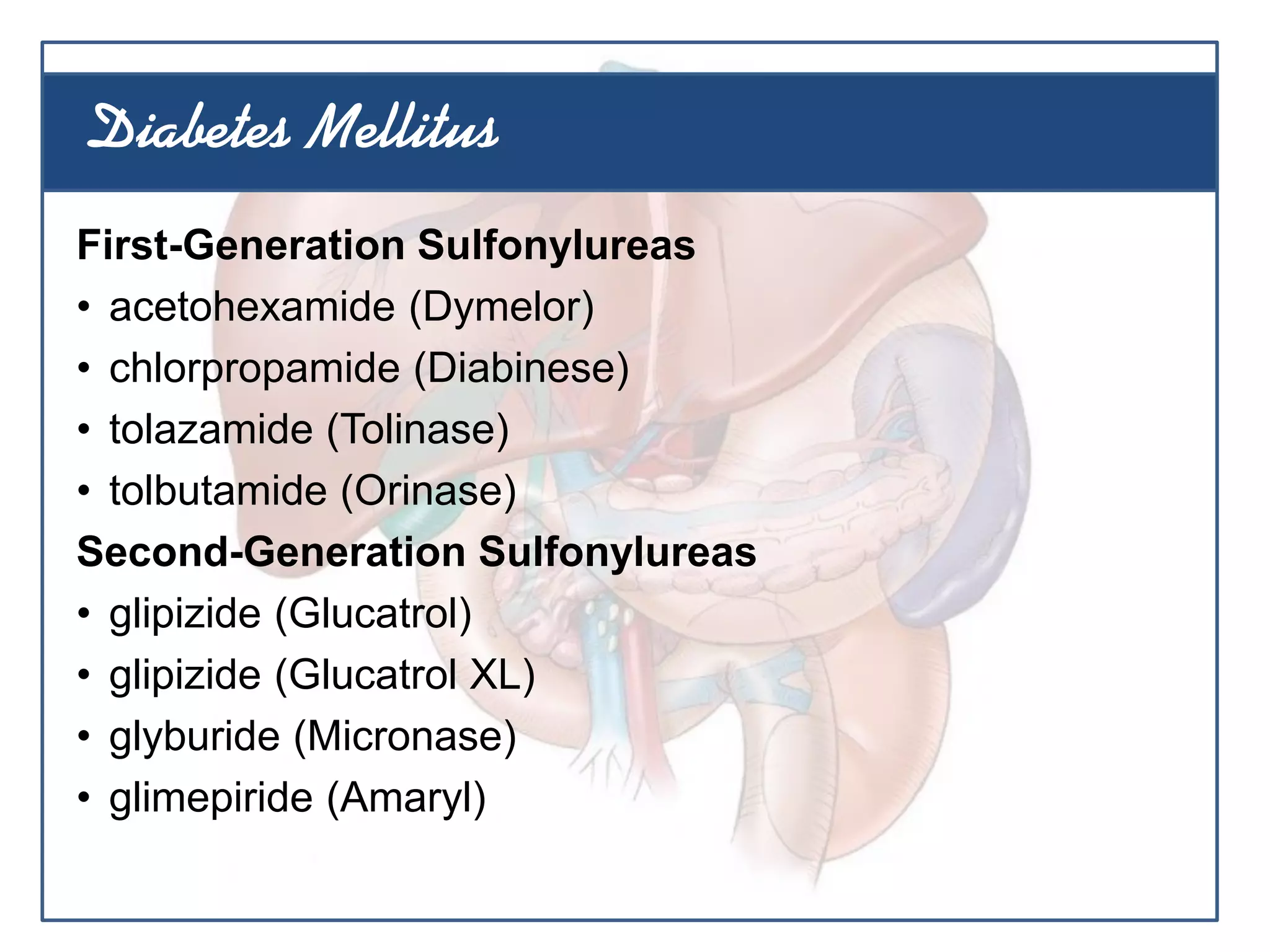
First-Generation Sulfonylureas
• acetohexamide (Dymelor)
• chlorpropamide (Diabinese)
• tolazamide (Tolinase)
• tolbutamide (Orinase)
Second-Generation Sulfonylureas
• glipizide (Glucatrol)
• glipizide (Glucatrol XL)
• glyburide (Micronase)
• glimepiride (Amaryl)
Diabetes Mellitus
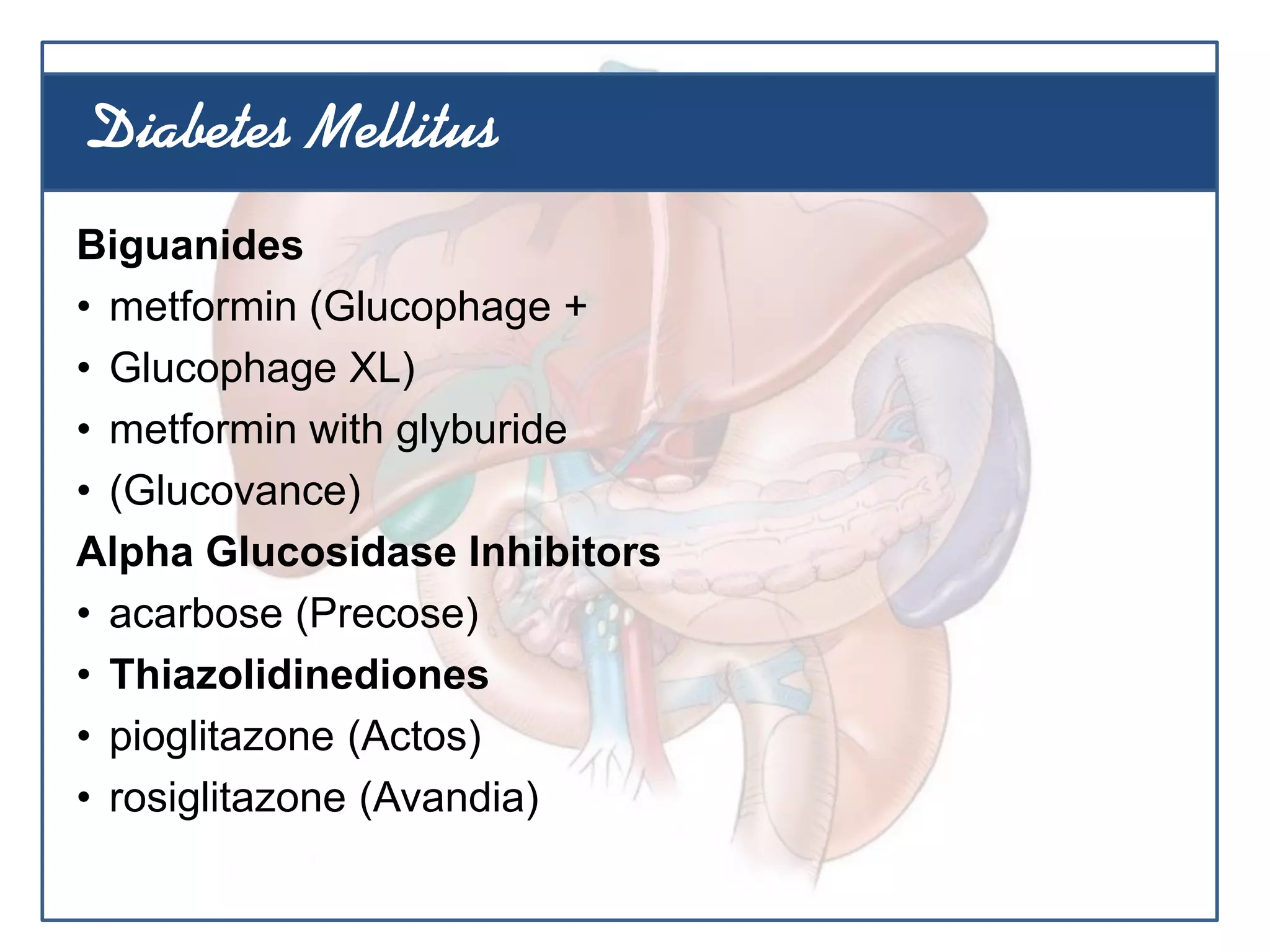
Biguanides
• metformin (Glucophage +
• Glucophage XL)
• metformin with glyburide
• (Glucovance)
Alpha Glucosidase Inhibitors
• acarbose (Precose)
• Thiazolidinediones
• pioglitazone (Actos)
• rosiglitazone (Avandia)
Diabetes Mellitus
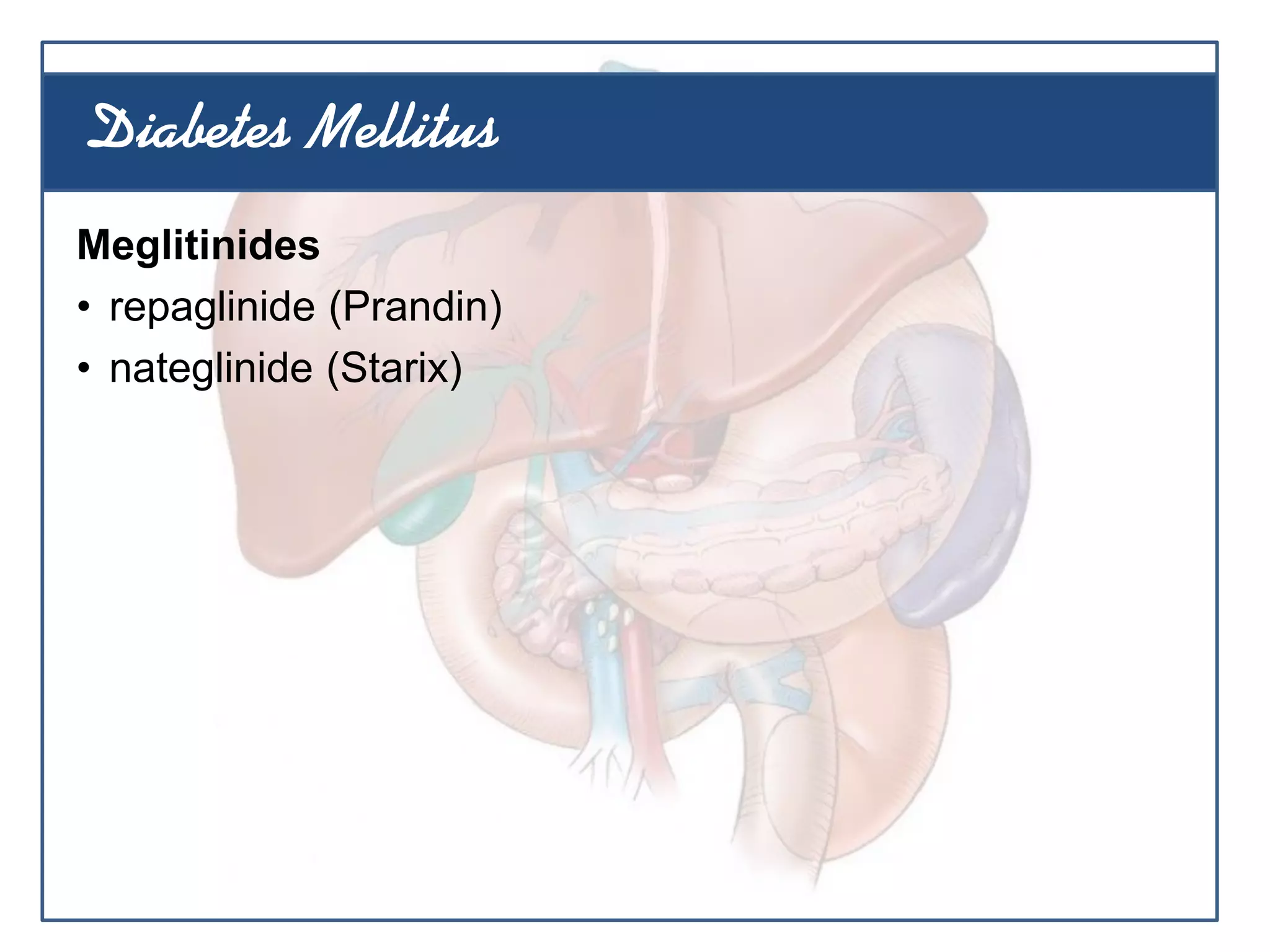
Meglitinides
• repaglinide (Prandin)
• nateglinide (Starix)
Diabetes Mellitus
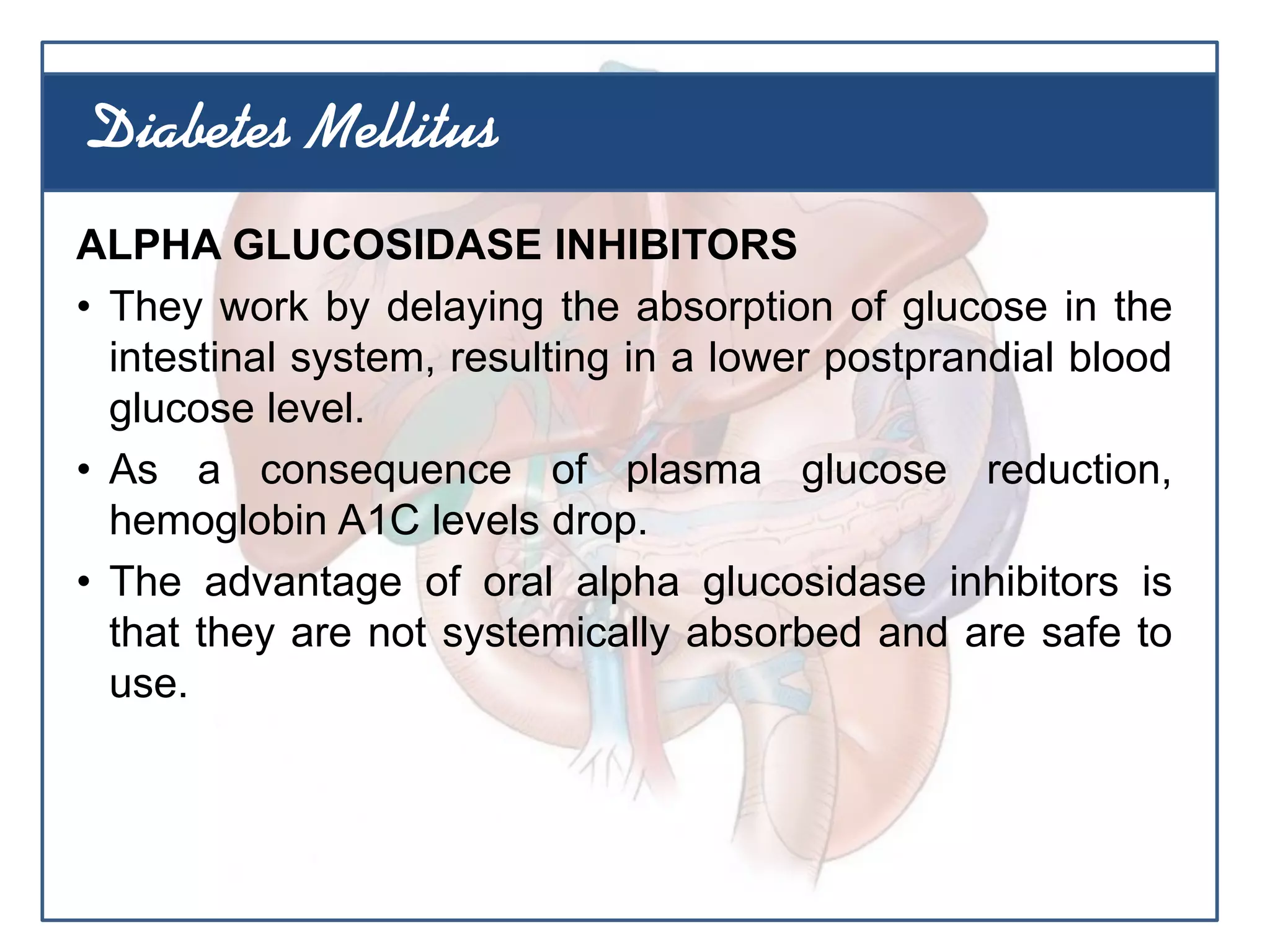
ALPHA GLUCOSIDASE INHIBITORS
• They work by delaying the absorption of glucose in the
intestinal system, resulting in a lower postprandial blood
glucose level.
• As a consequence of plasma glucose reduction,
hemoglobin A1C levels drop.
• The advantage of oral alpha glucosidase inhibitors is
that they are not systemically absorbed and are safe to
use.
Diabetes Mellitus
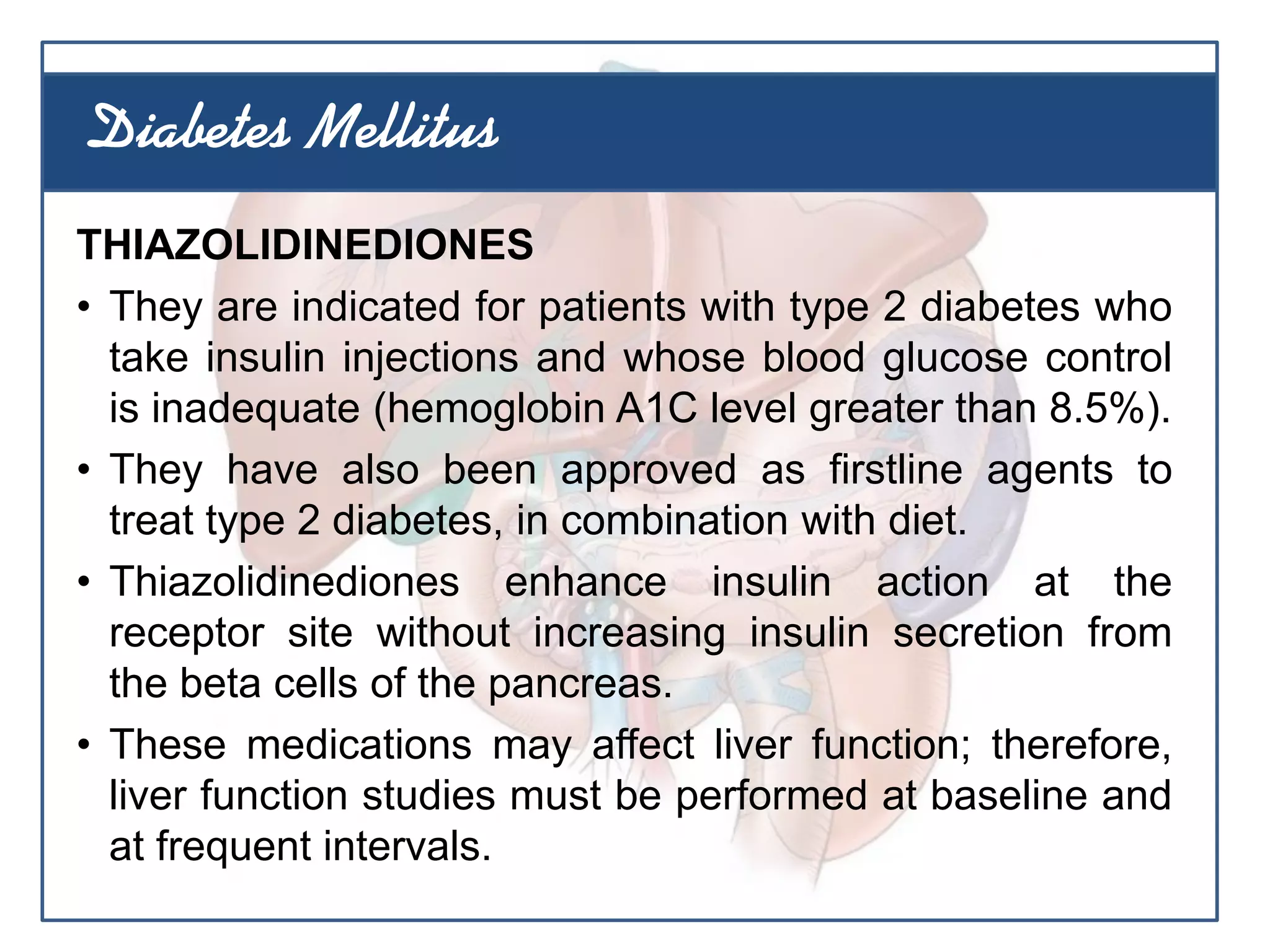
THIAZOLIDINEDIONES
• They are indicated for patients with type 2 diabetes who
take insulin injections and whose blood glucose control
is inadequate (hemoglobin A1C level greater than 8.5%).
• They have also been approved as firstline agents to
treat type 2 diabetes, in combination with diet.
• Thiazolidinediones enhance insulin action at the
receptor site without increasing insulin secretion from
the beta cells of the pancreas.
• These medications may affect liver function; therefore,
liver function studies must be performed at baseline and
at frequent intervals.
Diabetes Mellitus
MEGLITINIDES
• Lowers the blood glucose level by stimulating insulin
release from the pancreatic beta cells. Its effectiveness
depends on the presence of functioning beta cells.
• Patients must be taught the signs and symptoms of
hypoglycemia and should understand that the
medication should not be taken unless the patient eats a
meal.
Diabetes Mellitus
NURSING MANAGEMENT
EDUCATION
• Patients must learn daily self-care skills to prevent
acute fluctuations in blood glucose, and they must also
incorporate into their lifestyle many preventive behaviors
for avoidance of long-term diabetic complications.
• Diabetic patients must become knowledgeable about
nutrition, medication effects and side effects, exercise,
disease progression, prevention strategies, blood
glucose monitoring techniques, and medication
adjustment.
Diabetes Mellitus
NURSING MANAGEMENT
EDUCATION
• In addition, they must learn the skills associated with
monitoring and managing diabetes and must incorporate
many new activities into their daily routines.
Diabetes Mellitus
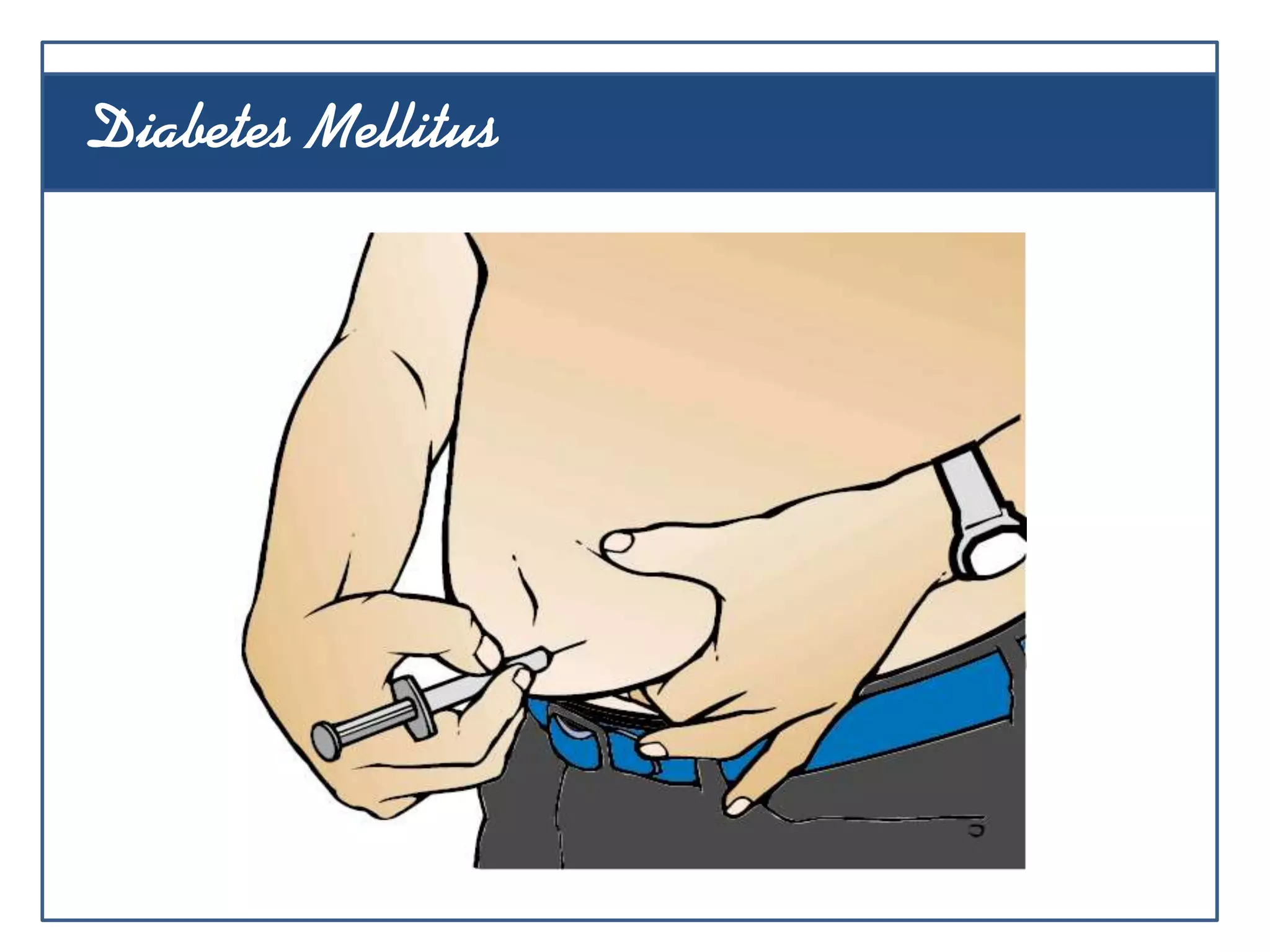
TEACHING PATIENTS TO SELF-ADMINISTER INSULIN
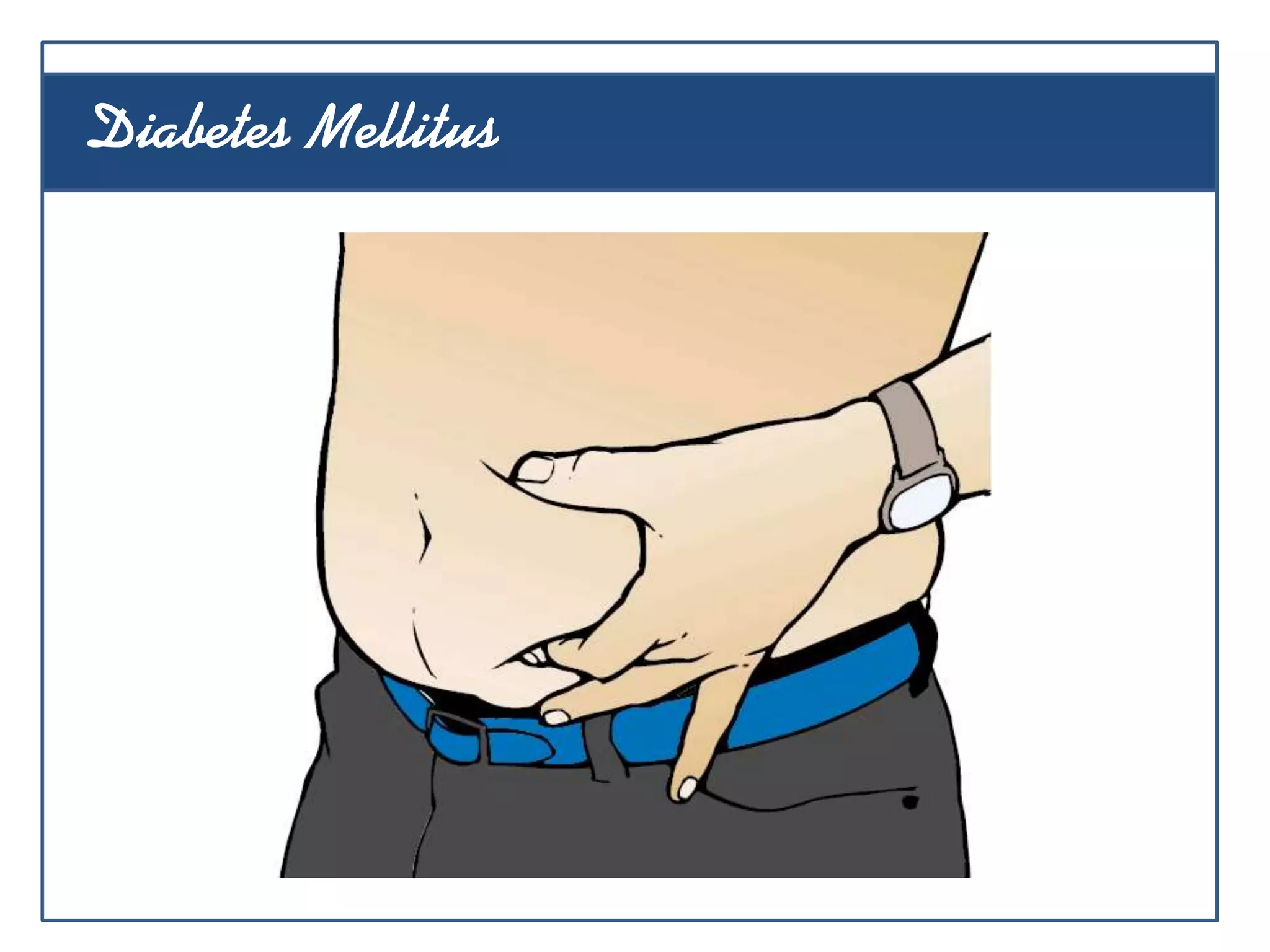
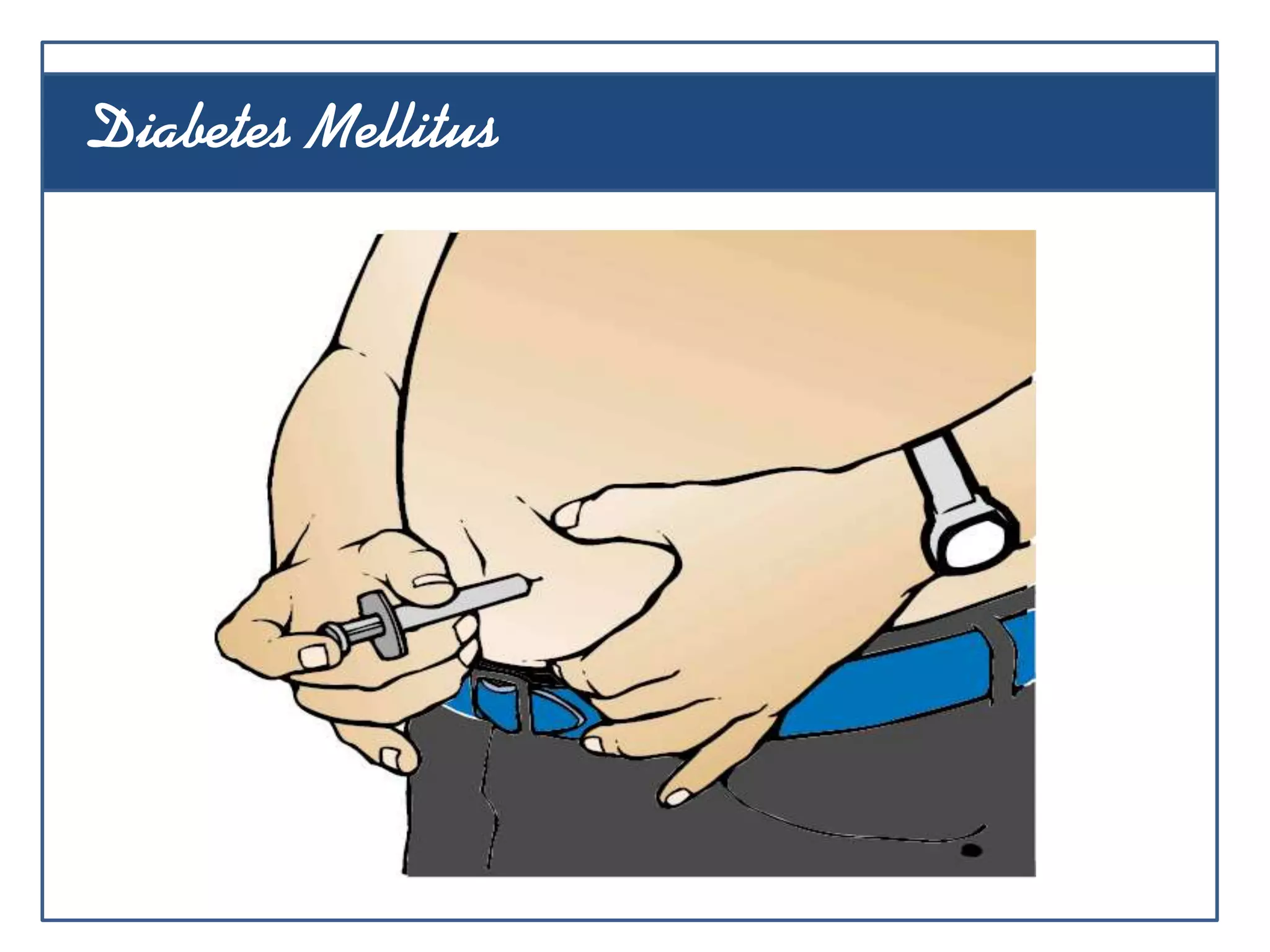
• Insulin injections are administered into the
subcutaneous tissue with the use of special insulin
syringes.
STORING INSULIN
• Cloudy insulins should be thoroughly mixed by gently
inverting the vial or rolling it between the hands before
drawing the solution into a syringe or a pen.
• Whether insulin is the short- or long-acting preparation,
the vials not in use should be refrigerated and extremes
of temperature should be avoided; insulin should not be
allowed to freeze and should not be kept in direct
sunlight or in a hot car.
Diabetes Mellitus
TEACHING PATIENTS TO SELF-ADMINISTER INSULIN
STORING INSULIN
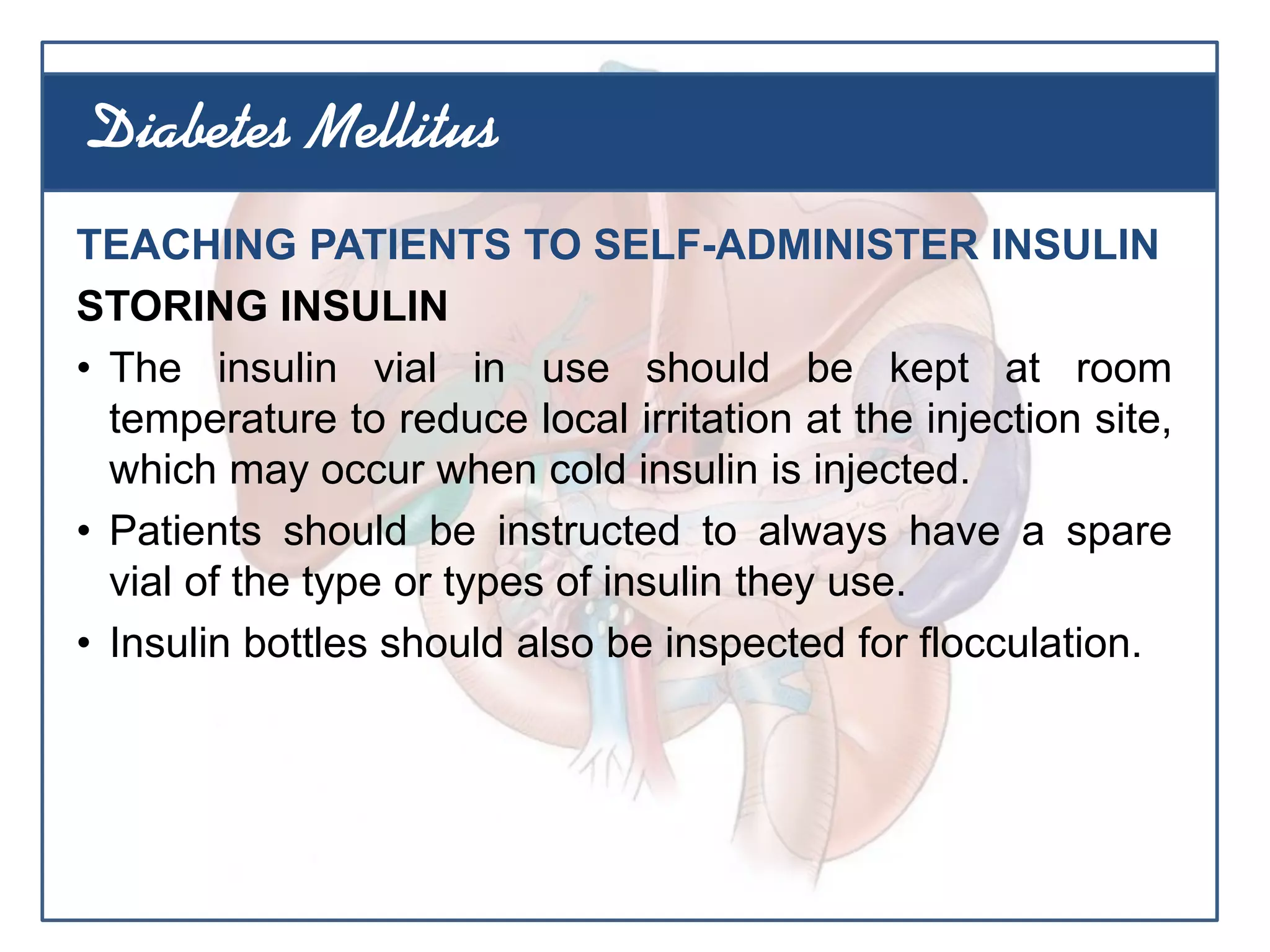
• The insulin vial in use should be kept at room
temperature to reduce local irritation at the injection site,
which may occur when cold insulin is injected.
• Patients should be instructed to always have a spare
vial of the type or types of insulin they use.
• Insulin bottles should also be inspected for flocculation.
Diabetes Mellitus
TEACHING PATIENTS TO SELF-ADMINISTER INSULIN
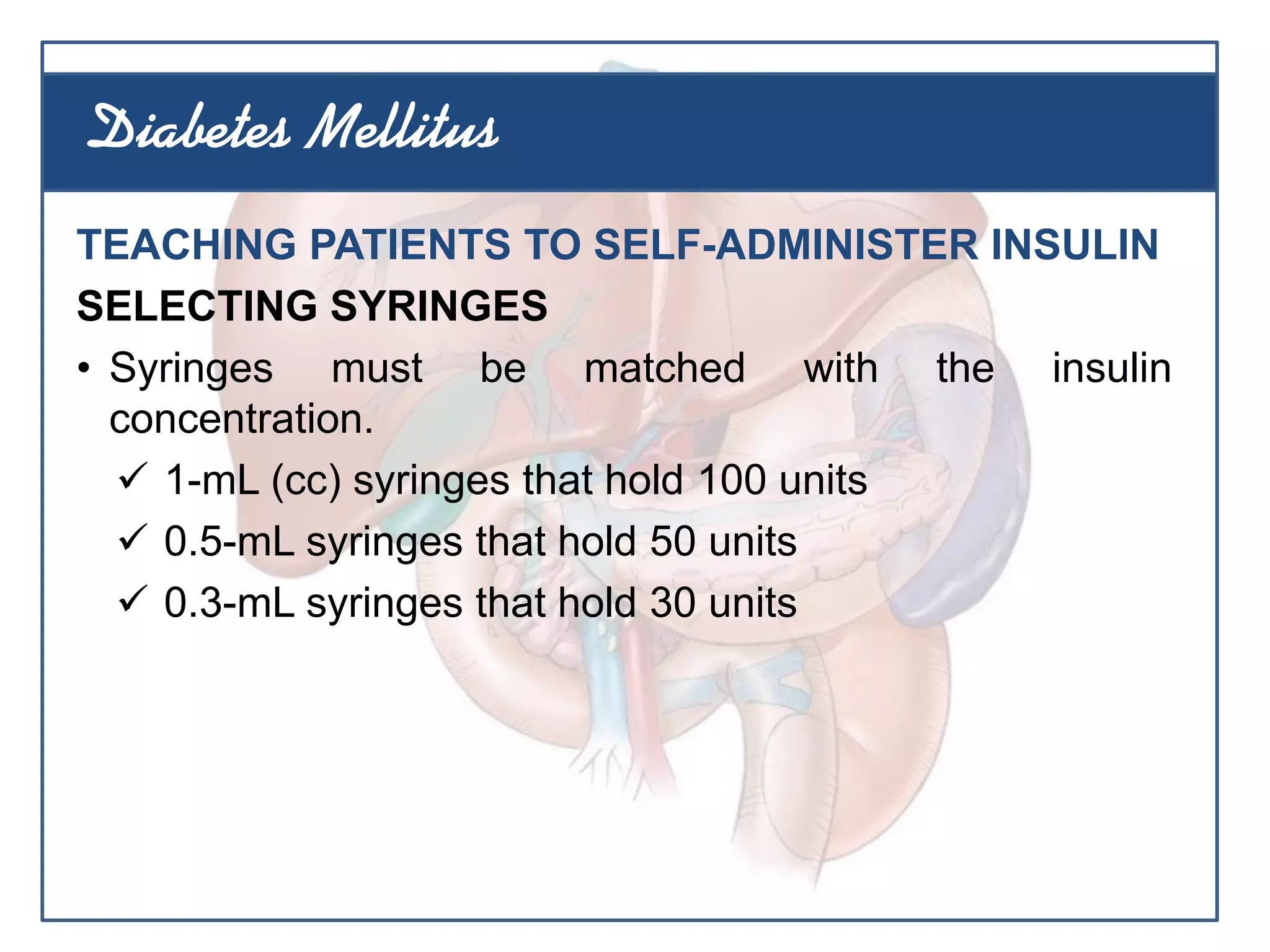
SELECTING SYRINGES
• Syringes must be matched with the insulin
concentration.
 1-mL (cc) syringes that hold 100 units
 0.5-mL syringes that hold 50 units
 0.3-mL syringes that hold 30 units
Diabetes Mellitus
TEACHING PATIENTS TO SELF-ADMINISTER INSULIN
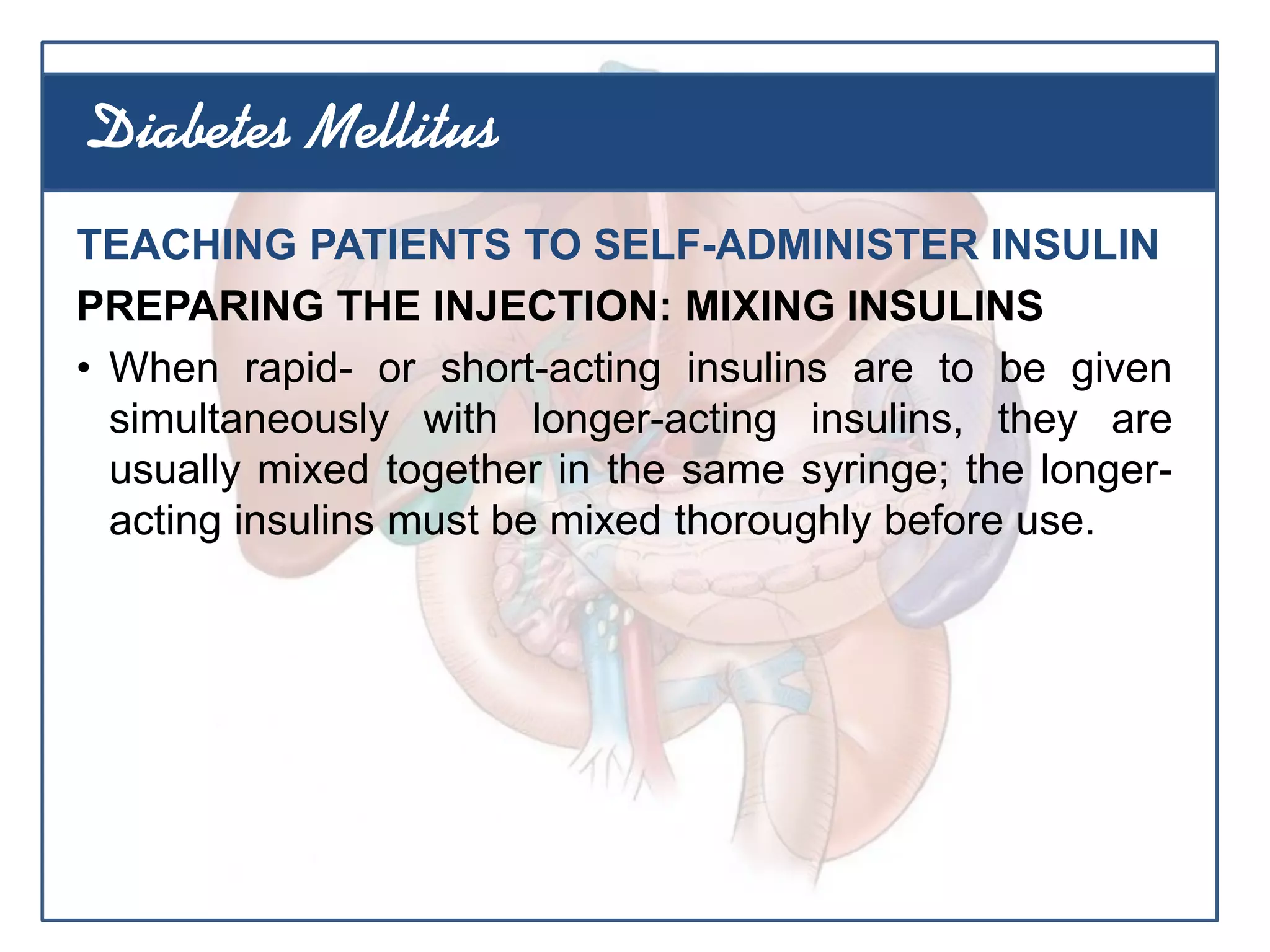
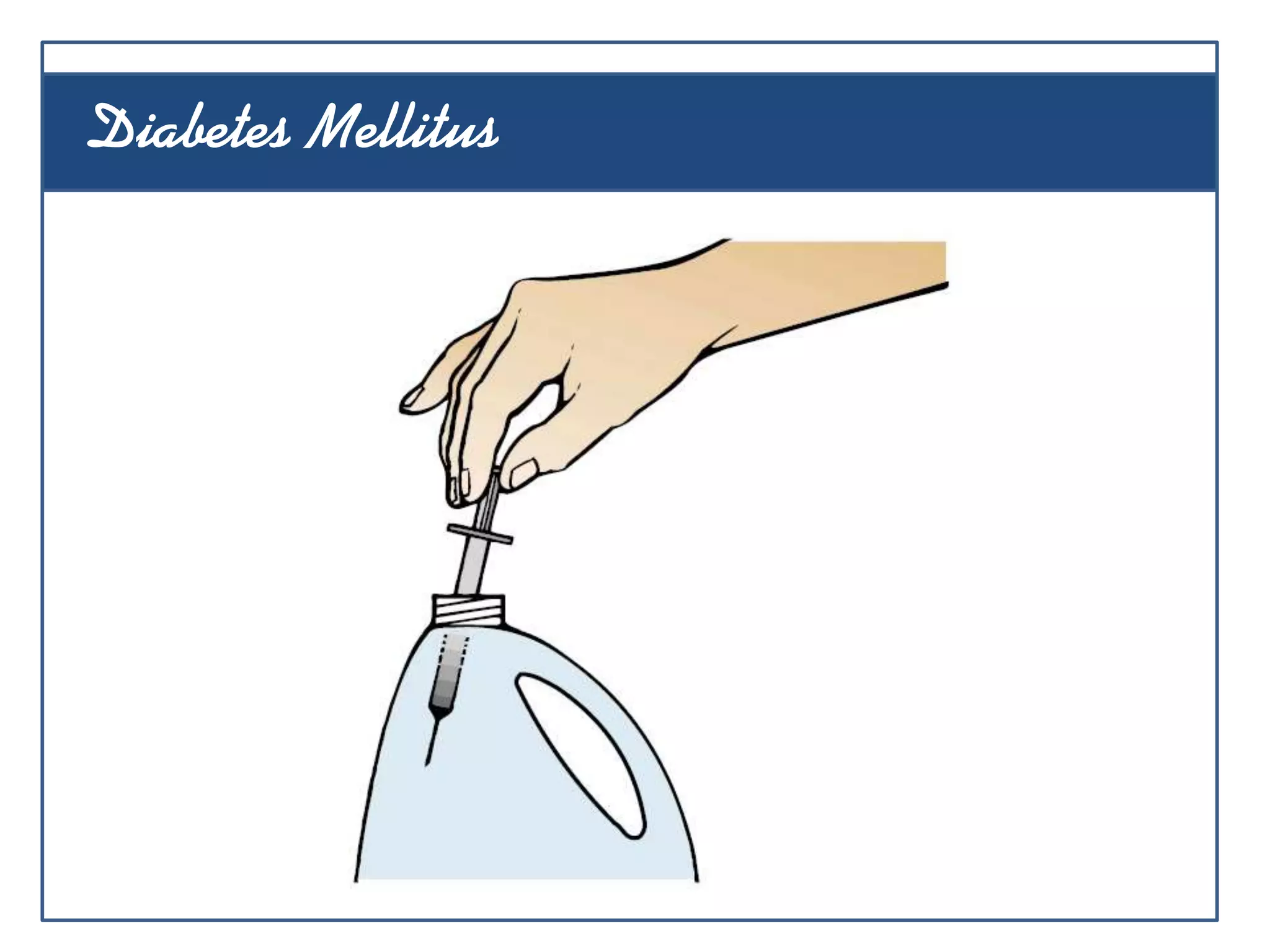
PREPARING THE INJECTION: MIXING INSULINS
• When rapid- or short-acting insulins are to be given
simultaneously with longer-acting insulins, they are
usually mixed together in the same syringe; the longer-
acting insulins must be mixed thoroughly before use.
Diabetes Mellitus
TEACHING PATIENTS TO SELF-ADMINISTER INSULIN
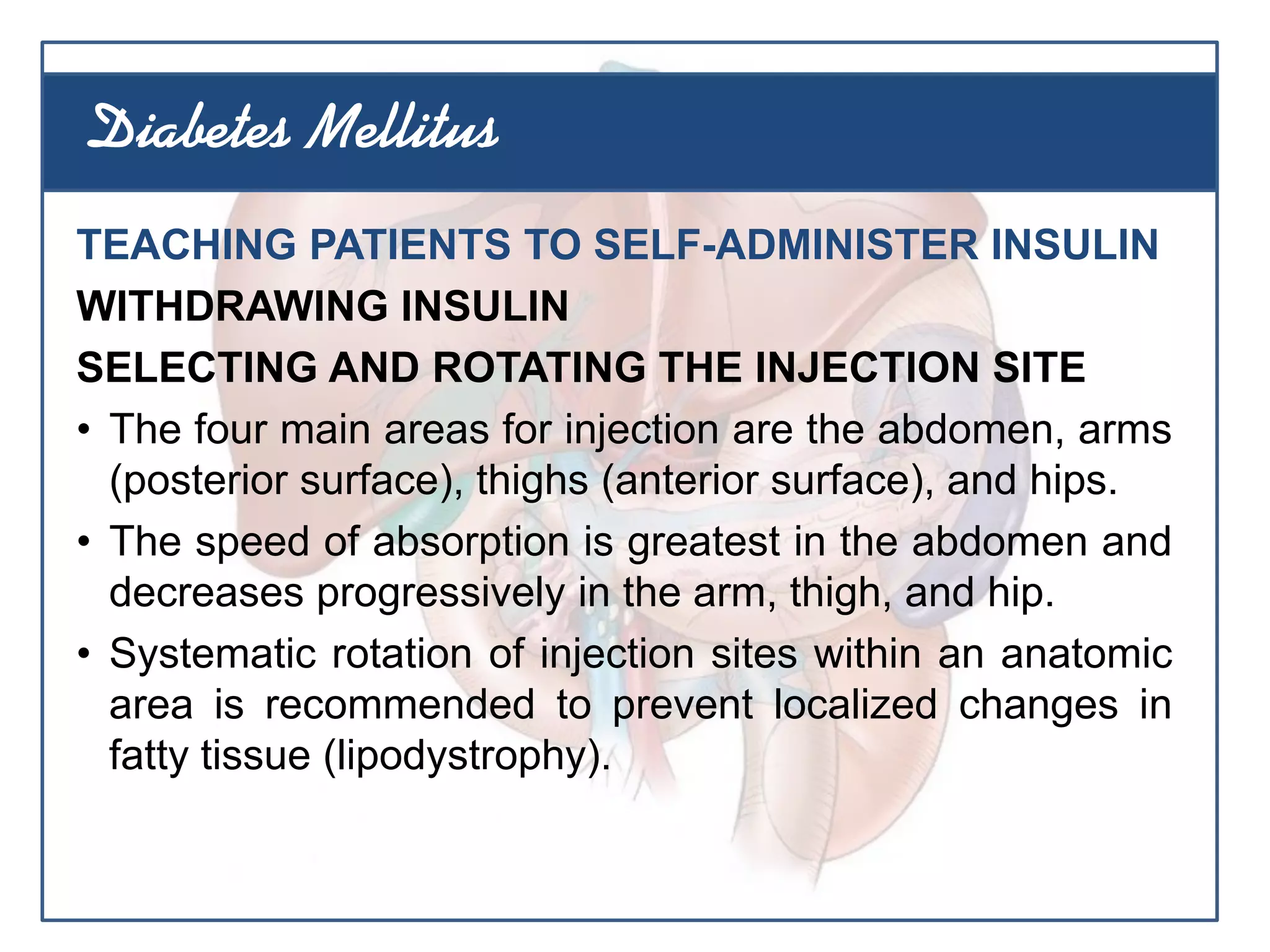
WITHDRAWING INSULIN
SELECTING AND ROTATING THE INJECTION SITE
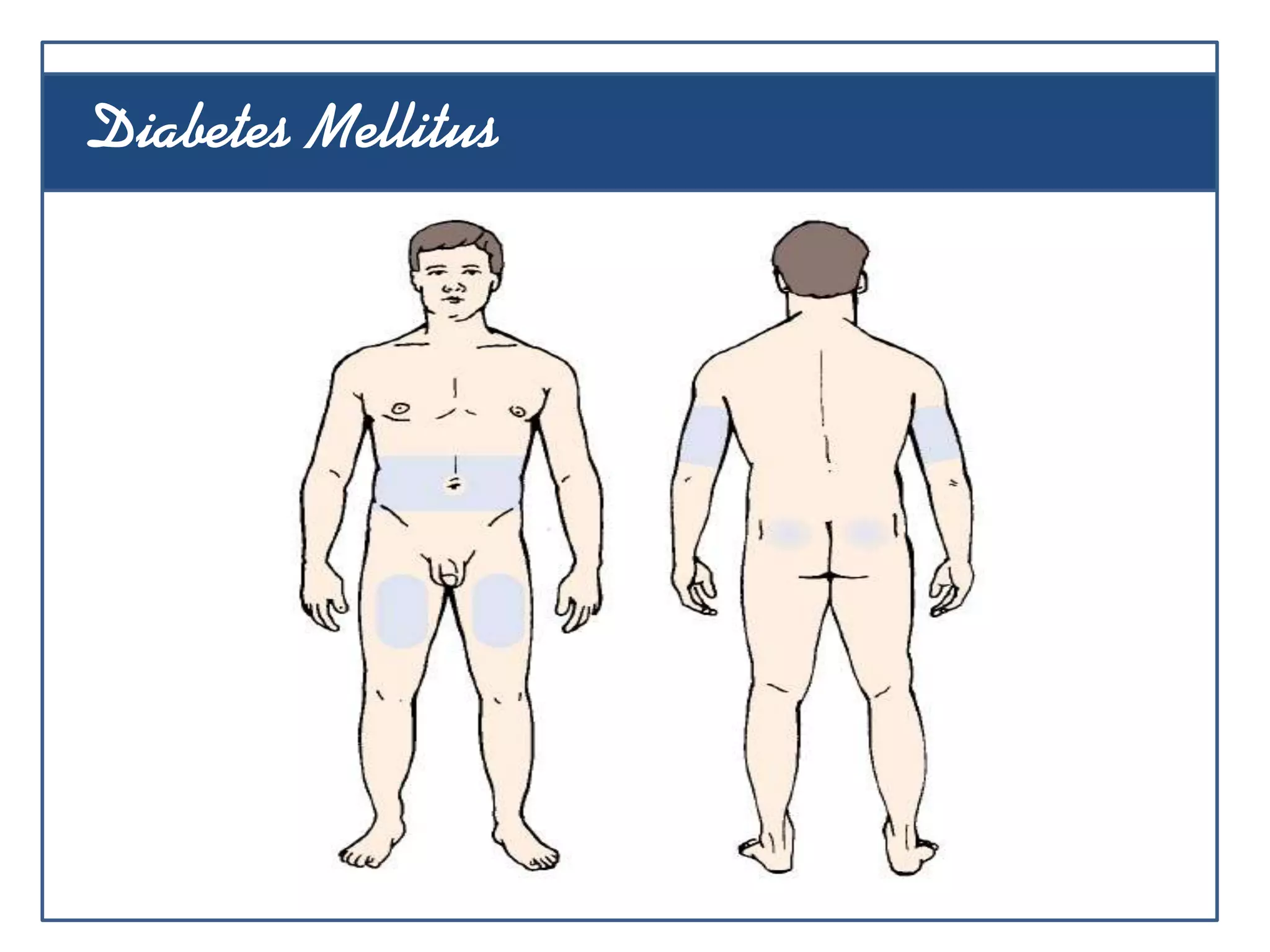
• The four main areas for injection are the abdomen, arms
(posterior surface), thighs (anterior surface), and hips.
• The speed of absorption is greatest in the abdomen and
decreases progressively in the arm, thigh, and hip.
• Systematic rotation of injection sites within an anatomic
area is recommended to prevent localized changes in
fatty tissue (lipodystrophy).
Diabetes Mellitus
Diabetes Mellitus
TEACHING PATIENTS TO SELF-ADMINISTER INSULIN
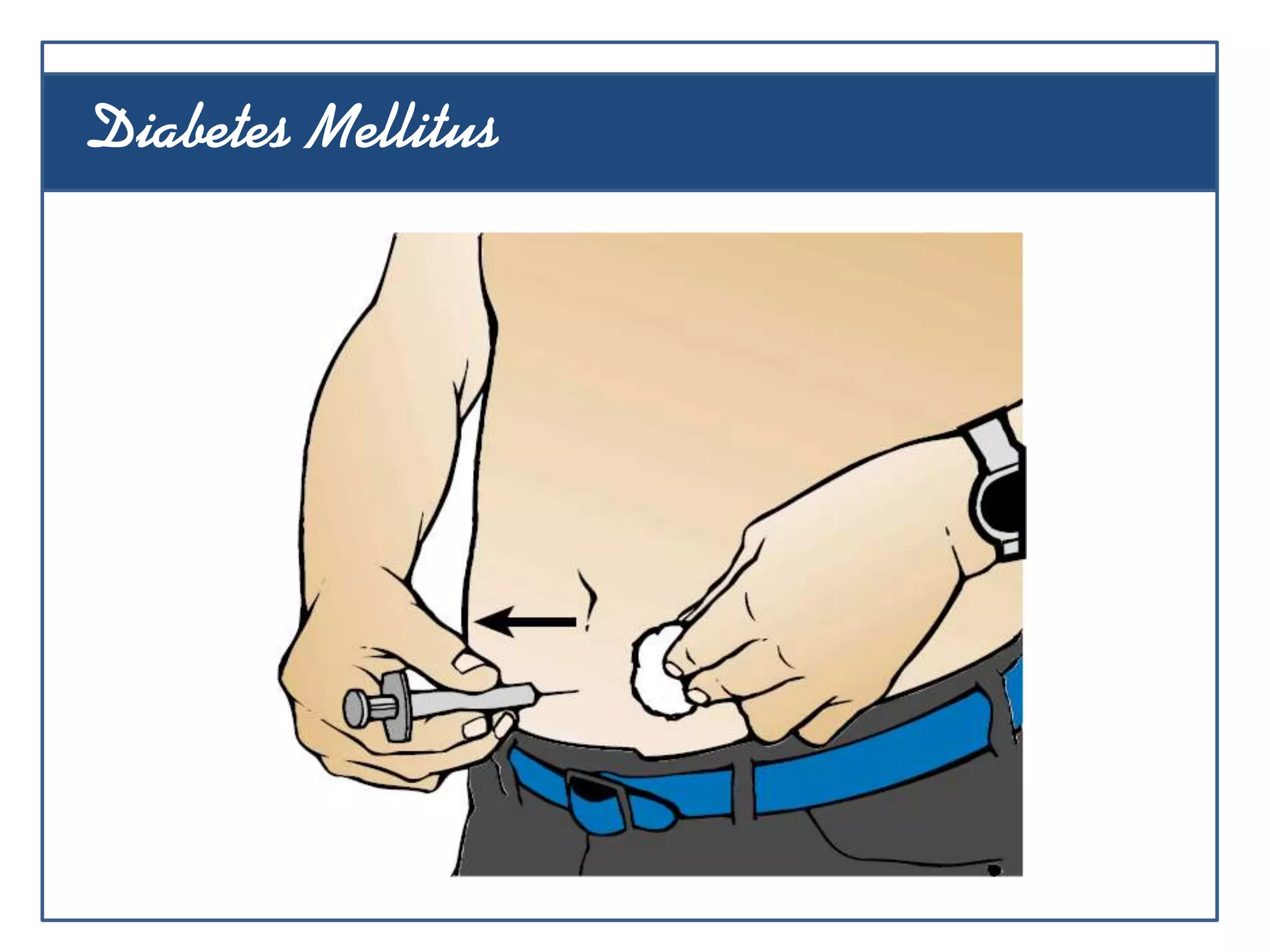
PREPARING THE SKIN
• Use of alcohol to cleanse the skin is not recommended.
INSERTING THE NEEDLE
• Injection that is too deep or too shallow may affect the
rate of absorption of the insulin.
• Aspiration is generally not recommended with self-
injection of insulin.
Diabetes Mellitus
Diabetes Mellitus
Diabetes Mellitus
Diabetes Mellitus
Diabetes Mellitus
Diabetes Mellitus
ACUTE COMPLICATIONS OF DIABETES
HYPOGLYCEMIA
• Hypoglycemia (abnormally low blood glucose level)
occurs when the blood glucose falls to less than 50 to 60
mg/dL (2.7 to 3.3 mmol/L).
• It can be caused by too much insulin or oral
hypoglycemic agents, too little food, or excessive
physical activity.
Diabetes Mellitus
CLINICAL MANIFESTATIONS
• The clinical manifestations of hypoglycemia may be
grouped into two categories: adrenergic symptoms and
central nervous system symptoms.
• In mild hypoglycemia, as the blood glucose level falls,
the sympathetic nervous system is stimulated, resulting
in a surge of epinephrine and norepinephrine. This
causes symptoms such as sweating, tremor,
tachycardia, palpitation, nervousness, and hunger.
• In moderate hypoglycemia, the fall in blood glucose level
deprives the brain cells of needed fuel for functioning.
Diabetes Mellitus
CLINICAL MANIFESTATIONS
• Signs of impaired function of the CNS may include
inability to concentrate, headache, lightheadedness,
confusion, memory lapses, numbness of the lips and
tongue, slurred speech, impaired coordination,
emotional changes, irrational or combative behavior,
double vision, and drowsiness.
• In severe hypoglycemia, CNS function is so impaired
that the patient needs the assistance of another person
for treatment of hypoglycemia.
• Symptoms may include disoriented behavior, seizures,
difficulty arousing from sleep, or loss of consciousness
Diabetes Mellitus
MANAGEMENT
• The usual recommendation is for 15 g of a fast-acting
concentrated source of carbohydrate such as the
following, given orally:
 Three or four commercially prepared glucose tablets
 4 to 6 oz of fruit juice or regular soda
 6 to 10 Life Savers or other hard candies
 2 to 3 teaspoons of sugar or honey
• Once the symptoms resolve, a snack containing protein
and starch is recommended unless the patient plans to
eat a regular meal or snack within 30 to 60 minutes.
Diabetes Mellitus
INITIATING EMERGENCY MEASURES
• For patients who are unconscious and cannot swallow,
an injection of glucagon 1 mg can be administered either
subcutaneously or intramuscularly.
• Injectable glucagon is packaged as a powder in 1-mg
vials and must be mixed with a diluent before being
injected.
• After injection of glucagon, it may take up to 20 minutes
for the patient to regain consciousness.
• A concentrated source of carbohydrate followed by a
snack should be given to the patient on awakening to
prevent recurrence of hypoglycemia.
Diabetes Mellitus
INITIATING EMERGENCY MEASURES
• In the hospital or emergency department, patients who
are unconscious or cannot swallow may be treated with
25 to 50 mL 50% dextrose in water (D50W)
administered intravenously.
• The effect is usually seen within minutes.
Diabetes Mellitus
DIABETIC KETOACIDOSIS
• DKA is caused by an absence or markedly inadequate
amount of insulin. This deficit in available insulin results
in disorders in the metabolism of carbohydrate, protein,
and fat.
• The three main clinical features of DKA are:
 Hyperglycemia
 Dehydration and electrolyte loss
 Acidosis
Diabetes Mellitus
DIABETIC KETOACIDOSIS
CLINICAL MANIFESTATIONS
• The hyperglycemia of DKA leads to polyuria and
polydipsia.
• In addition, patients may experience blurred vision,
weakness, and headache.
• Patients with marked intravascular volume depletion
may have orthostatic hypotension. It may also lead to
frank hypotension with a weak, rapid pulse.
• The ketosis and acidosis of DKA lead to GI symptoms
such as anorexia, nausea, vomiting, and abdominal
pain.
Diabetes Mellitus
DIABETIC KETOACIDOSIS
CLINICAL MANIFESTATIONS
• The abdominal pain and physical findings on
examination can be so severe that they resemble an
acute abdominal disorder that requires surgery.
• Patients may have acetone breath, which occurs with
elevated ketone levels. In addition, hyperventilation (with
very deep, but not labored, respirations) may occur.
• Patients may be alert, lethargic, or comatose, most likely
depending on the plasma osmolarity.
Diabetes Mellitus
DIABETIC KETOACIDOSIS
PREVENTION
• The most important issue to teach patients is not to
eliminate insulin doses when nausea and vomiting
occur.
• They should take their usual insulin dose and then
attempt to consume frequent small portions of
carbohydrates .
• Drinking fluids every hour is important to prevent
dehydration.
• Blood glucose and urine ketones must be assessed
every 3 to 4 hours.
Diabetes Mellitus
DIABETIC KETOACIDOSIS
PREVENTION
• If the patient cannot take fluids without vomiting, or if
elevated glucose or ketone levels persist, the physician
must be contacted.
Diabetes Mellitus
MEDICAL MANAGEMENT
REHYDRATION
• In dehydrated patients, rehydration is important for
maintaining tissue perfusion.
• Patients may need up to 6 to 10 liters of IV fluid to
replace fluid losses caused by polyuria, hyperventilation,
diarrhea, and vomiting.
• Initially, 0.9% sodium chloride (normal saline) solution is
administered at a rapid rate, usually 0.5 to 1 L per hour
for 2 to 3 hours.
Diabetes Mellitus
MEDICAL MANAGEMENT
REHYDRATION
• Half-strength normal saline (0.45%) solution (also known
as hypotonic saline solution) may be used for patients
with hypertension or hypernatremia or those at risk for
heart failure.
• Monitoring fluid volume status involves frequent
measurements of vital signs, lung assessment, and
monitoring intake and output.
• Monitoring for signs of fluid overload is especially
important for older patients, those with renal impairment,
or those at risk for heart failure.
Diabetes Mellitus
MEDICAL MANAGEMENT
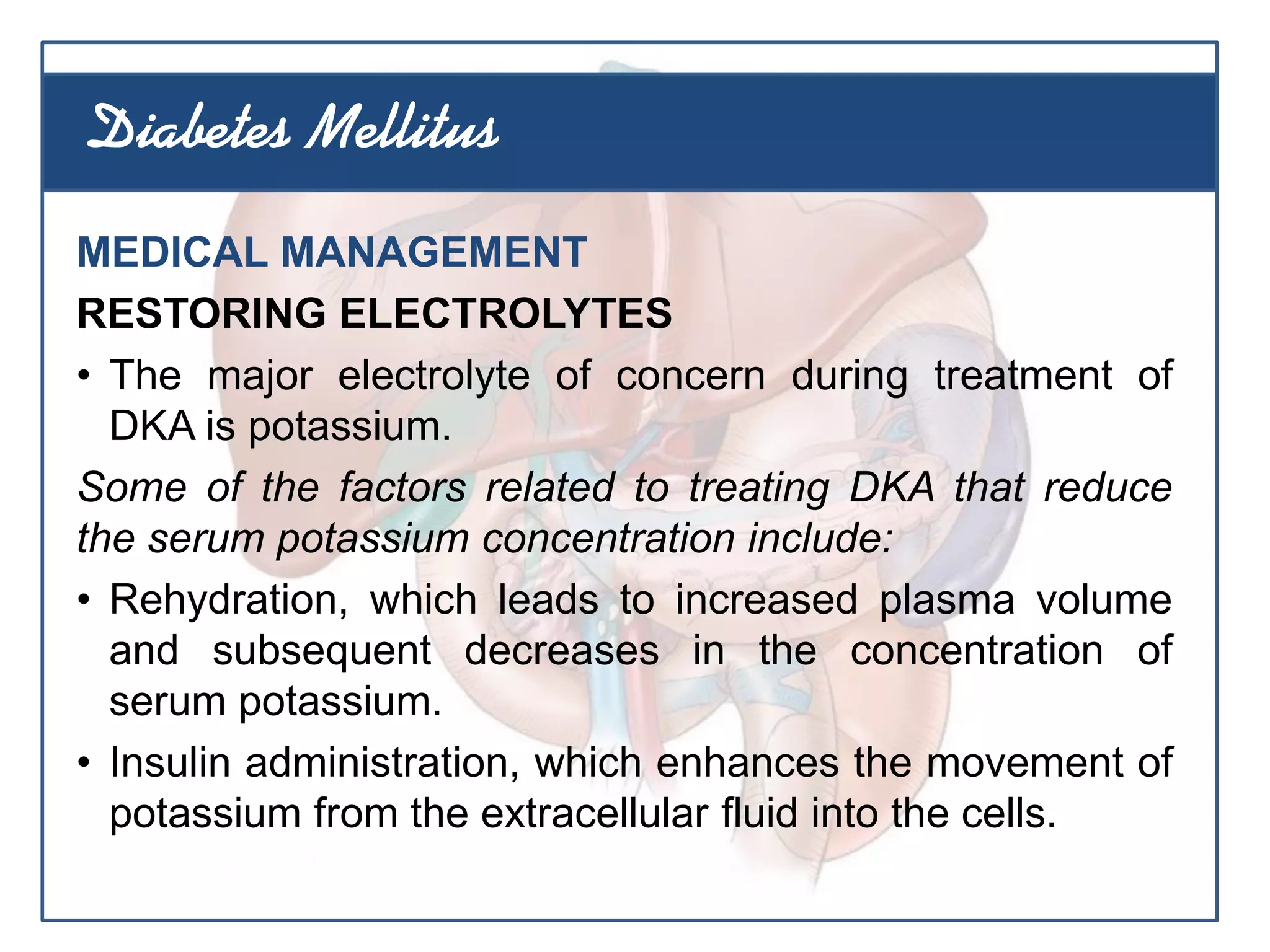
RESTORING ELECTROLYTES
• The major electrolyte of concern during treatment of
DKA is potassium.
Some of the factors related to treating DKA that reduce
the serum potassium concentration include:
• Rehydration, which leads to increased plasma volume
and subsequent decreases in the concentration of
serum potassium.
• Insulin administration, which enhances the movement of
potassium from the extracellular fluid into the cells.
Diabetes Mellitus
MEDICAL MANAGEMENT
RESTORING ELECTROLYTES
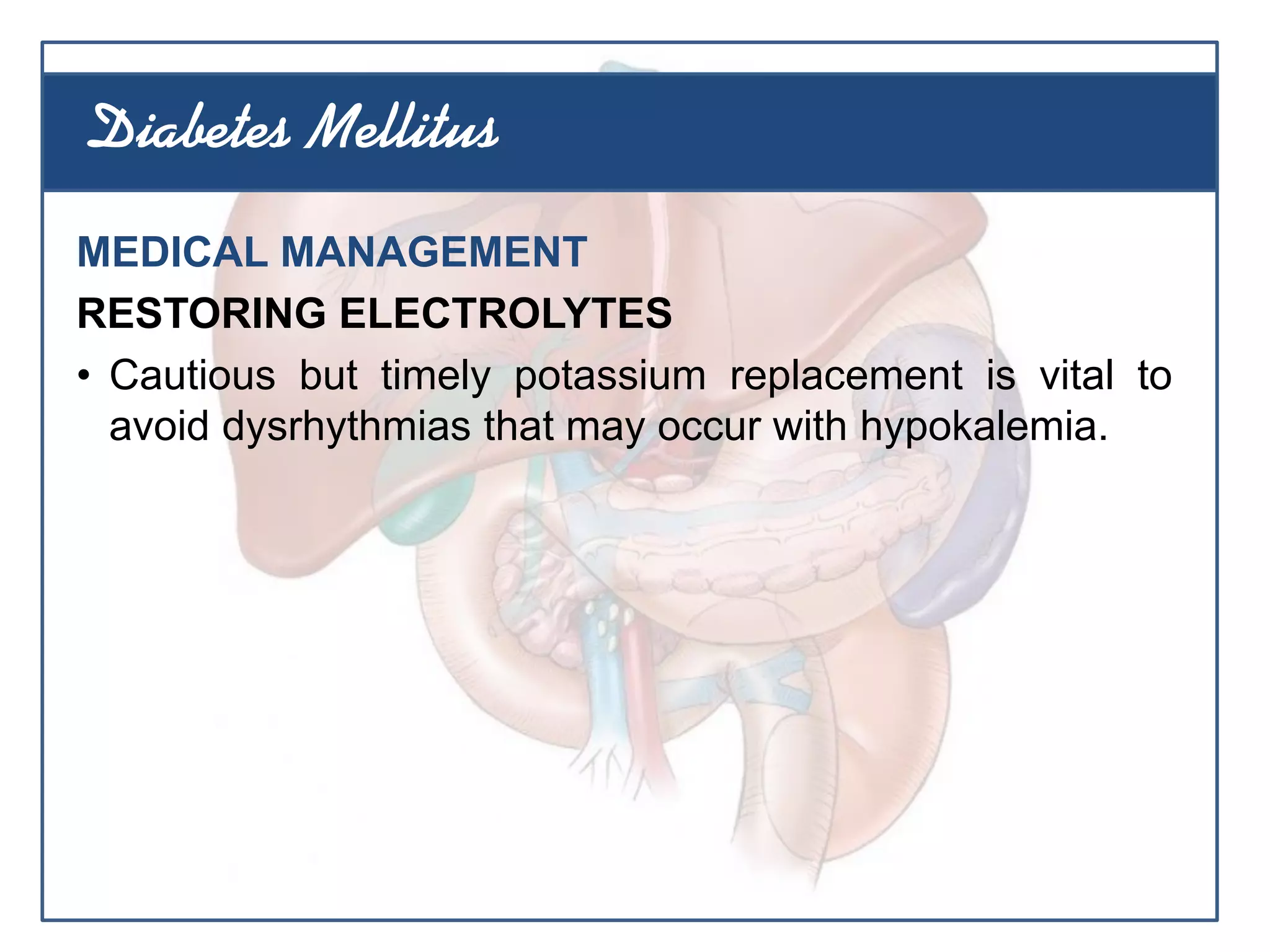
• Cautious but timely potassium replacement is vital to
avoid dysrhythmias that may occur with hypokalemia.
Diabetes Mellitus
MEDICAL MANAGEMENT
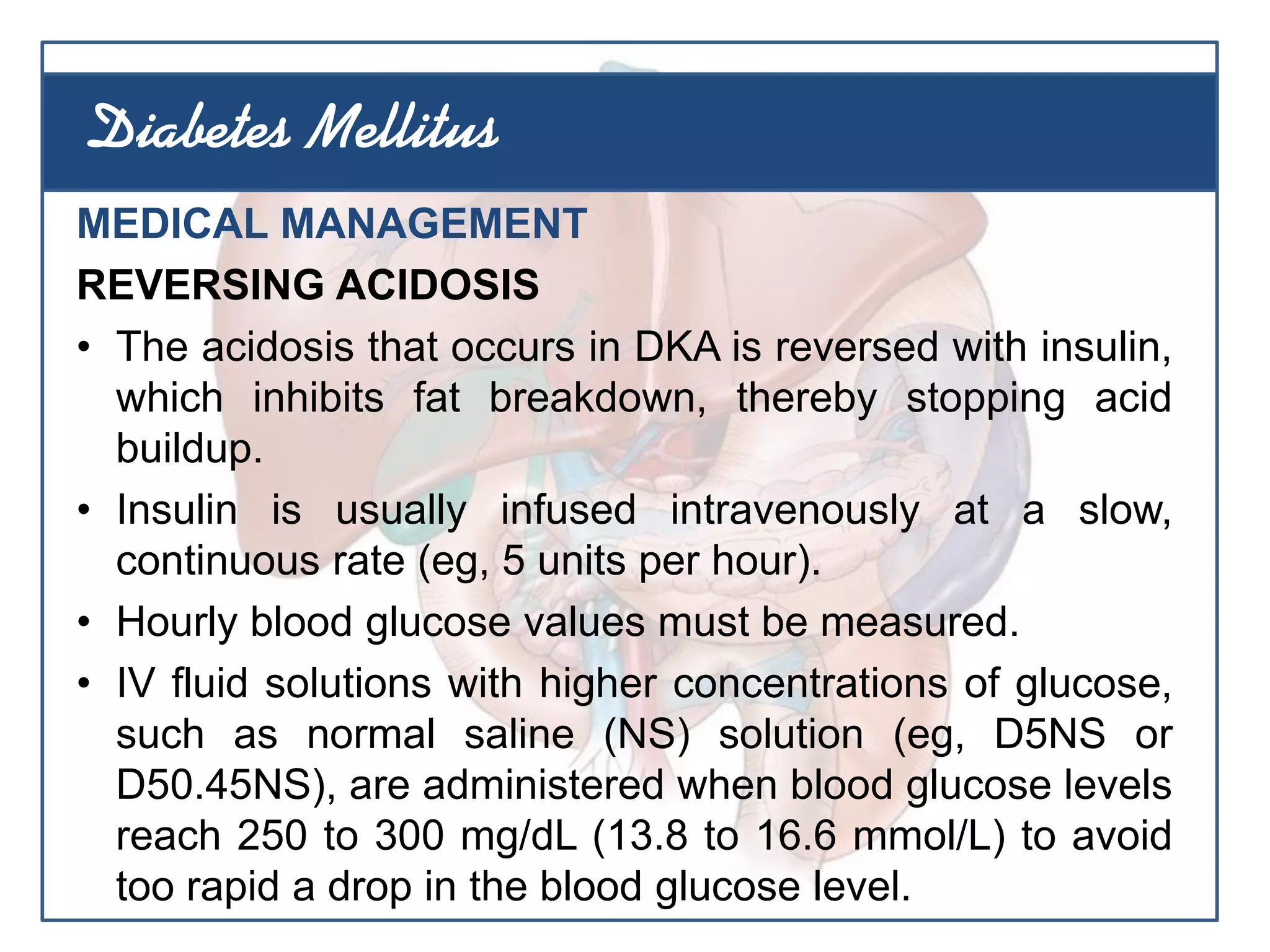
REVERSING ACIDOSIS
• The acidosis that occurs in DKA is reversed with insulin,
which inhibits fat breakdown, thereby stopping acid
buildup.
• Insulin is usually infused intravenously at a slow,
continuous rate (eg, 5 units per hour).
• Hourly blood glucose values must be measured.
• IV fluid solutions with higher concentrations of glucose,
such as normal saline (NS) solution (eg, D5NS or
D50.45NS), are administered when blood glucose levels
reach 250 to 300 mg/dL (13.8 to 16.6 mmol/L) to avoid
too rapid a drop in the blood glucose level.
Diabetes Mellitus
MEDICAL MANAGEMENT
NURSING MANAGEMENT
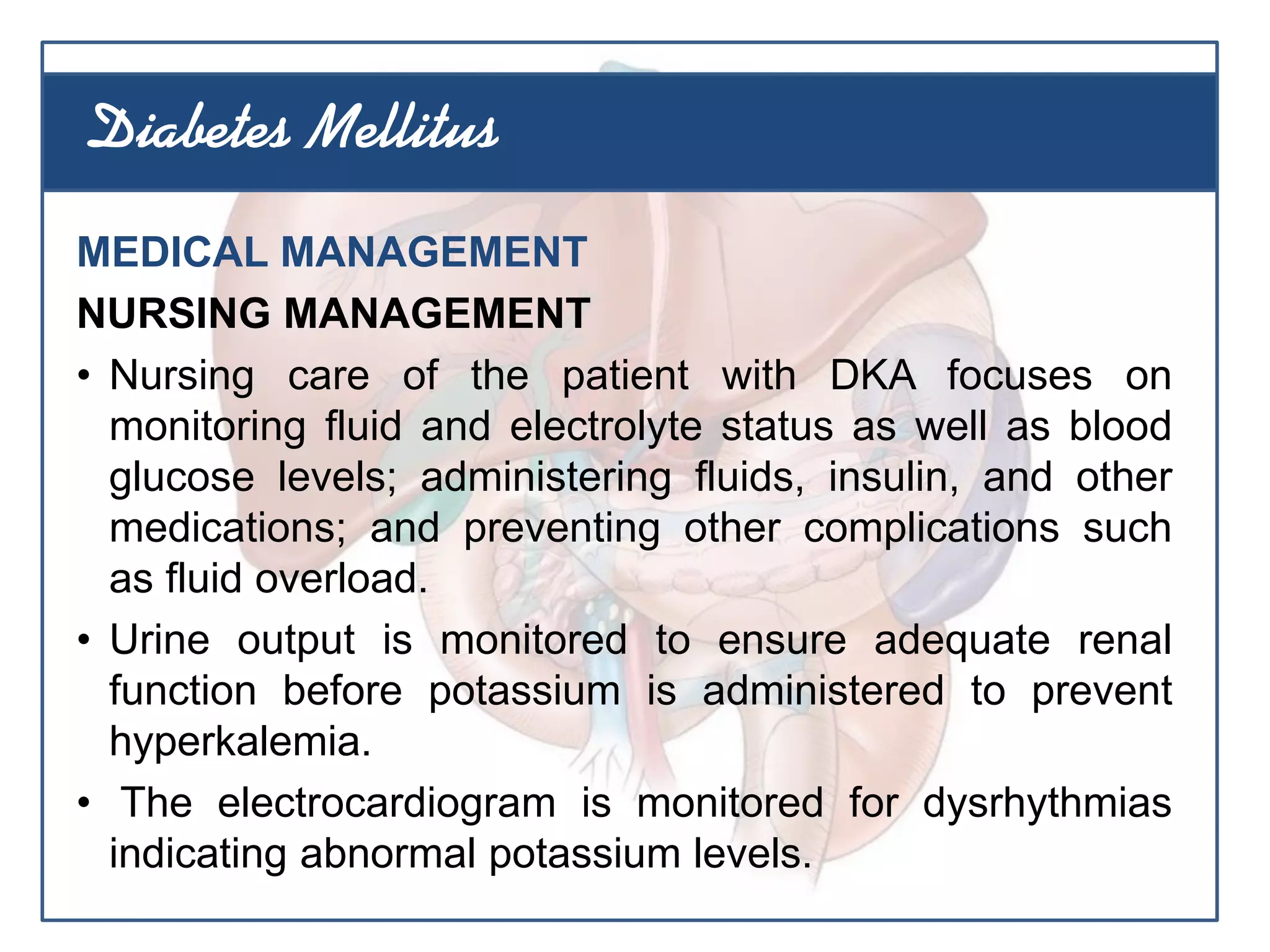
• Nursing care of the patient with DKA focuses on
monitoring fluid and electrolyte status as well as blood
glucose levels; administering fluids, insulin, and other
medications; and preventing other complications such
as fluid overload.
• Urine output is monitored to ensure adequate renal
function before potassium is administered to prevent
hyperkalemia.
• The electrocardiogram is monitored for dysrhythmias
indicating abnormal potassium levels.
Diabetes Mellitus
MEDICAL MANAGEMENT
NURSING MANAGEMENT
• Vital signs, arterial blood gases, and other clinical
findings are recorded on a flow sheet.
• The nurse documents the patient’s laboratory values
and the frequent changes in fluids and medications that
are prescribed and monitors the patient’s responses.
• The nurse makes sure that there are no signs of
hyperkalemia on the electrocardiogram, the laboratory
values of potassium are normal or low and, the patient is
urinating (ie, no renal shutdown).
Diabetes Mellitus
HYPERGLYCEMIC HYPEROSMOLAR NONKETOTIC SYNDROME
• HHNS is a serious condition in which hyperosmolarity and
hyperglycemia predominate, with alterations of the
sensorium.
• The basic biochemical defect is lack of effective insulin.
• The patient’s persistent hyperglycemia causes osmotic
diuresis, resulting in losses of water and electrolytes.
• This condition occurs most often in older people (ages 50
to 70) with no known history of diabetes or with mild type 2
diabetes.
• HHNS can be traced to a precipitating event such as an
acute illness, medications that exacerbate hyperglycemia
(thiazides), or treatments, such as dialysis.
Diabetes Mellitus
• The history includes days to weeks of polyuria with
adequate fluid intake.
• What distinguishes HHNS from DKA is that ketosis and
acidosis do not occur in HHNS partly because of
differences in insulin levels.
• In DKA no insulin is present, and this promotes the
breakdown of stored glucose, protein, and fat, which
leads to the production of ketone bodies and
ketoacidosis.
Diabetes Mellitus
CLINICAL MANIFESTATIONS
• The clinical picture of HHNS is one of hypotension,
profound dehydration (dry mucous membranes, poor
skin turgor), tachycardia, and variable neurologic signs
(eg, alteration of sensorium, seizures, hemiparesis).
• The mortality rate ranges from 10% to 40%, usually
related to an underlying illness.
Diabetes Mellitus
ASSESSMENT AND DIAGNOSTIC FINDINGS
• Diagnostic assessment includes a range of laboratory
tests, including blood glucose, electrolytes, BUN,
complete blood count, serum osmolality, and arterial
blood gas analysis.
• The blood glucose level is usually 600 to 1,200 mg/dL,
and the osmolality exceeds 350 mOsm/kg.
• Electrolyte and BUN levels are consistent with the
clinical picture of severe dehydration.
• Mental status changes, focal neurologic deficits, and
hallucinations are common secondary to the cerebral
dehydration that results from extreme hyperosmolality.
Diabetes Mellitus
MEDICAL MANAGEMENT
• The overall approach to the treatment of HHNS is similar
to that of DKA: fluid replacement, correction of
electrolyte imbalances, and insulin administration.
• Close monitoring of volume and electrolyte status is
important for prevention of fluid overload, heart failure,
and cardiac dysrhythmias.
• Fluid treatment is started with 0.9% or 0.45% NS,
depending on the patient’s sodium level and the severity
of volume depletion.
• Central venous or arterial pressure monitoring guides
fluid replacement.
Diabetes Mellitus
MEDICAL MANAGEMENT
• Potassium is added to IV fluids when urinary output is
adequate and is guided by continuous
electrocardiographic monitoring and frequent laboratory
determinations of potassium.
• Other therapeutic modalities are determined by the
underlying illness of the patient and the results of
continuing clinical and laboratory evaluation.
• Treatment is continued until metabolic abnormalities are
corrected and neurologic symptoms clear
Diabetes Mellitus
NURSING MANAGEMENT
• Nursing care of the patient with HHNS includes close
monitoring of vital signs, fluid status, and laboratory
values.
• Strategies are implemented to maintain safety and
prevent injury related to changes in the patient’s
sensorium secondary to HHNS.
• Fluid status and urine output are closely monitored
because of the high risk for renal failure secondary to
severe dehydration.
Diabetes Mellitus
MACROVASCULAR COMPLICATIONS
• Blood vessel walls thicken, sclerose, and become
occluded by plaque that adheres to the vessel walls.
Eventually, blood flow is blocked.
• These atherosclerotic changes are indistinguishable
from atherosclerotic changes in people without diabetes,
but they tend to occur more often and at an earlier age
in diabetes.
• Coronary artery disease, cerebrovascular disease, and
peripheral vascular disease are the three main types of
macrovascular complications that occur more frequently
in the diabetic population.
Diabetes Mellitus
MACROVASCULAR COMPLICATIONS
• Myocardial infarction is twice as common in diabetic
men and three times as common in diabetic women.
• Coronary artery disease may account for 50% to 60% of
all deaths in patients with diabetes.
• One unique feature of coronary artery disease in
patients with diabetes is that the typical ischemic
symptoms may be absent. Thus, patients may not
experience the early warning signs of decreased
coronary blood flow and may have “silent” myocardial
infarctions.
Diabetes Mellitus
MACROVASCULAR COMPLICATIONS
• Occlusive changes or the formation of an embolus
elsewhere in the vasculature that lodges in a cerebral
blood vessel can lead to transient ischemic attacks and
strokes.
• Atherosclerotic changes in the large blood vessels of the
lower extremities are responsible for the increased
incidence of occlusive peripheral arterial disease in
patients with diabetes.
• Signs and symptoms of peripheral vascular disease
include diminished peripheral pulses and intermittent
claudication.
Diabetes Mellitus
MACROVASCULAR COMPLICATIONS
• The severe form of arterial occlusive disease in the
lower extremities is largely responsible for the increased
incidence of gangrene and subsequent amputation in
diabetic patients.
• Neuropathy and impairments in wound healing also play
a role in diabetic foot disease.
Diabetes Mellitus
MANAGEMENT
• Management of macrovascular complications involves
prevention and treatment of the commonly accepted risk
factors for atherosclerosis.
• Diet and exercise are important in managing obesity,
hypertension, and hyperlipidemia.
• The use of medications to control hypertension and
hyperlipidemia may be indicated.
• Smoking cessation is essential.
• Control of blood glucose levels may reduce triglyceride
levels and can significantly reduce the incidence of
complications.
Diabetes Mellitus
MICROVASCULAR COMPLICATIONS
DIABETIC RETINOPATHY
• Diabetic microvascular disease is characterized by
capillary basement membrane thickening.
• Two areas affected by these changes are the retina and
the kidneys.
• The eye pathology referred to as diabetic retinopathy is
caused by changes in the small blood vessels in the
retina.
• There are three main stages of retinopathy:
nonproliferative retinopathy, preproliferative retinopathy,
and proliferative retinopathy.
Diabetes Mellitus
MICROVASCULAR COMPLICATIONS
DIABETIC RETINOPATHY
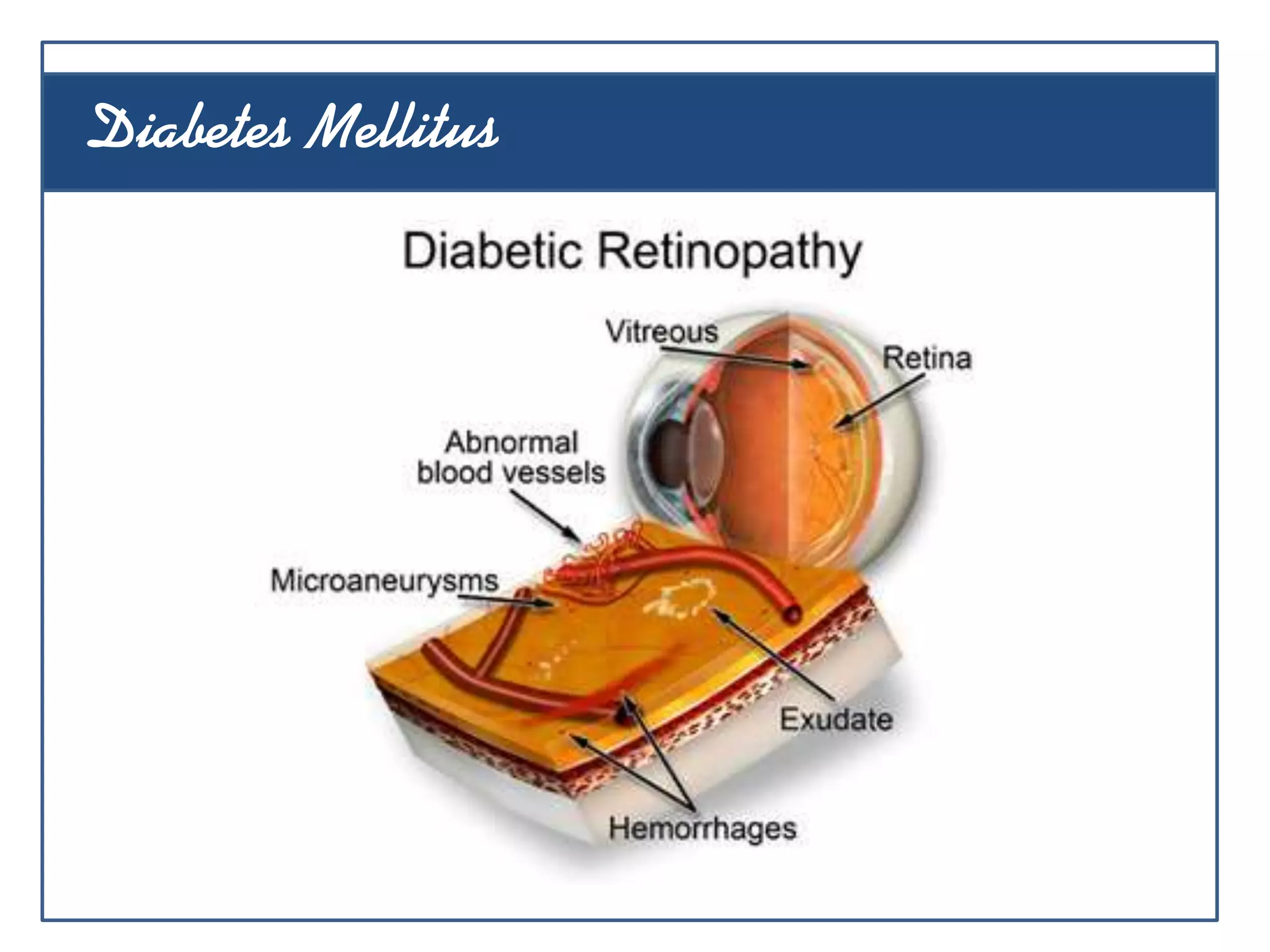
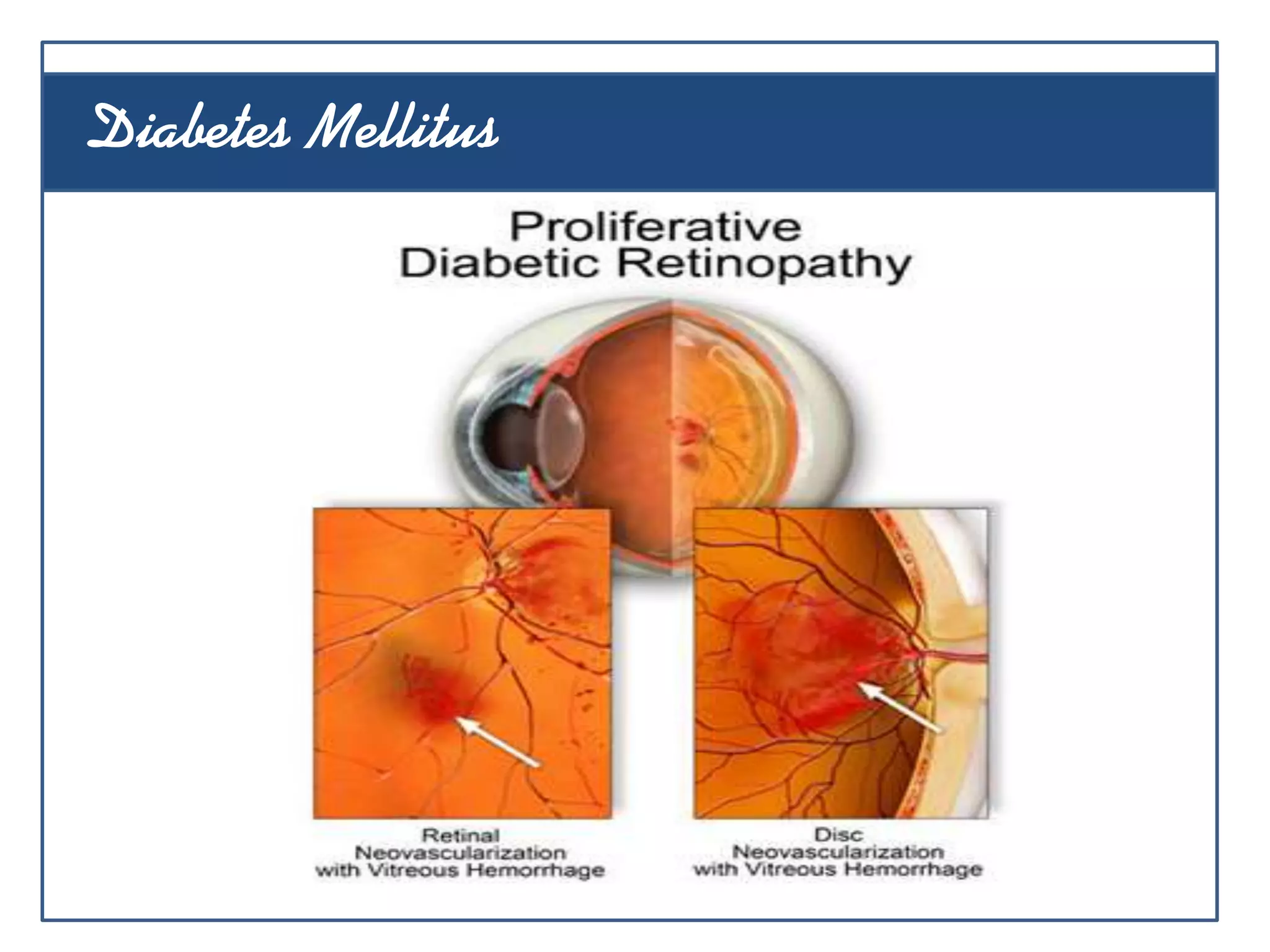
• Changes in the microvasculature include
microaneurysms, intraretinal hemorrhage, hard
exudates, and focal capillary closure.
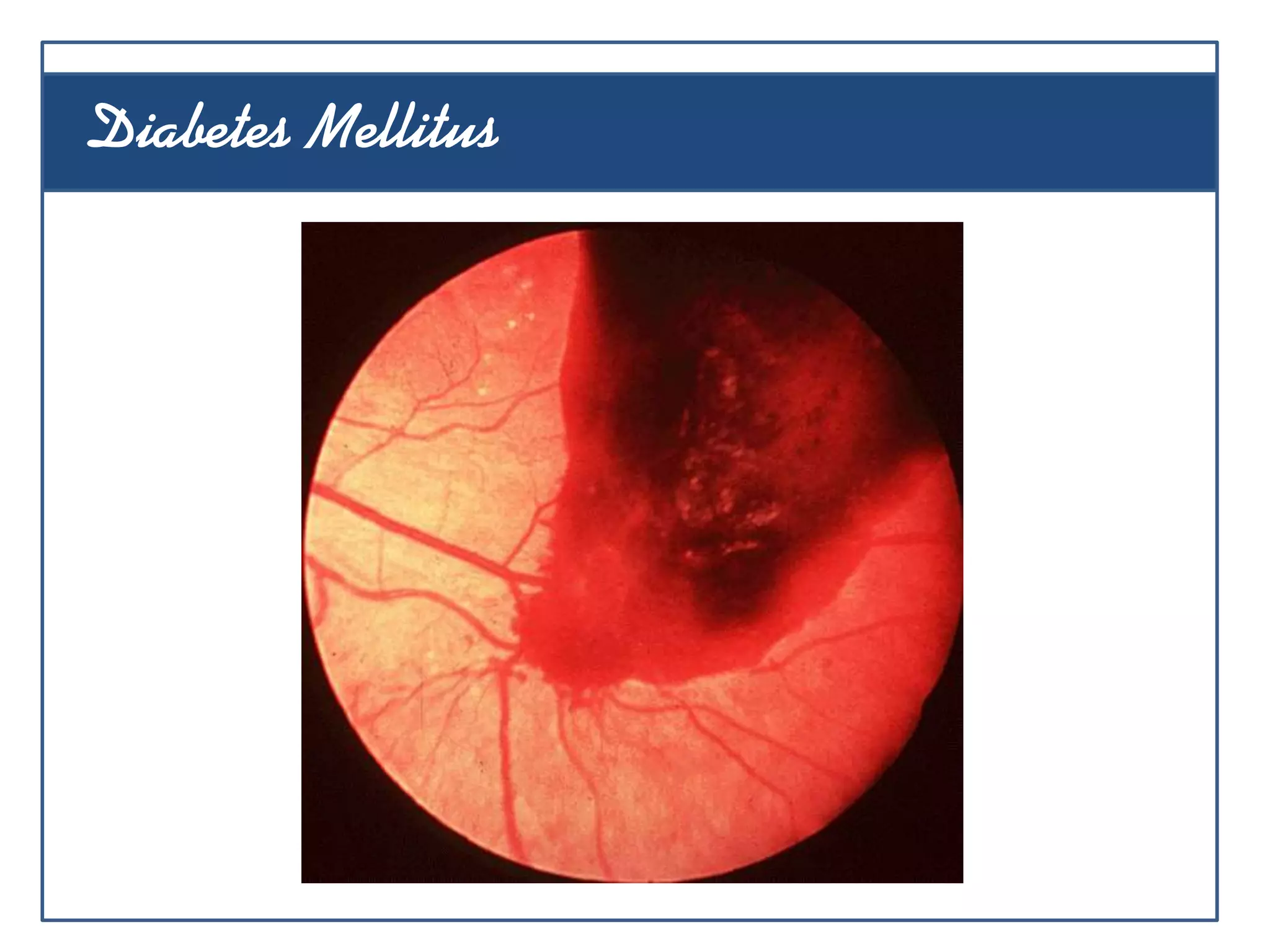
• Proliferative retinopathy is characterized by the
proliferation of new blood vessels growing from the
retina into the vitreous.
Diabetes Mellitus
Diabetes Mellitus
Diabetes Mellitus
Diabetes Mellitus
CLINICAL MANIFESTATIONS
• In nonproliferative and preproliferative retinopathy, blurry
vision secondary to macular edema occurs in some
patients, although many patients are asymptomatic.
• Even patients with a significant degree of proliferative
retinopathy and some hemorrhaging may not experience
major visual changes.
• Symptoms indicative of hemorrhaging include floaters or
cobwebs in the visual field, or sudden visual changes
including spotty or hazy vision, or complete loss of
vision.
Diabetes Mellitus
ASSESSMENT AND DIAGNOSTIC FINDINGS
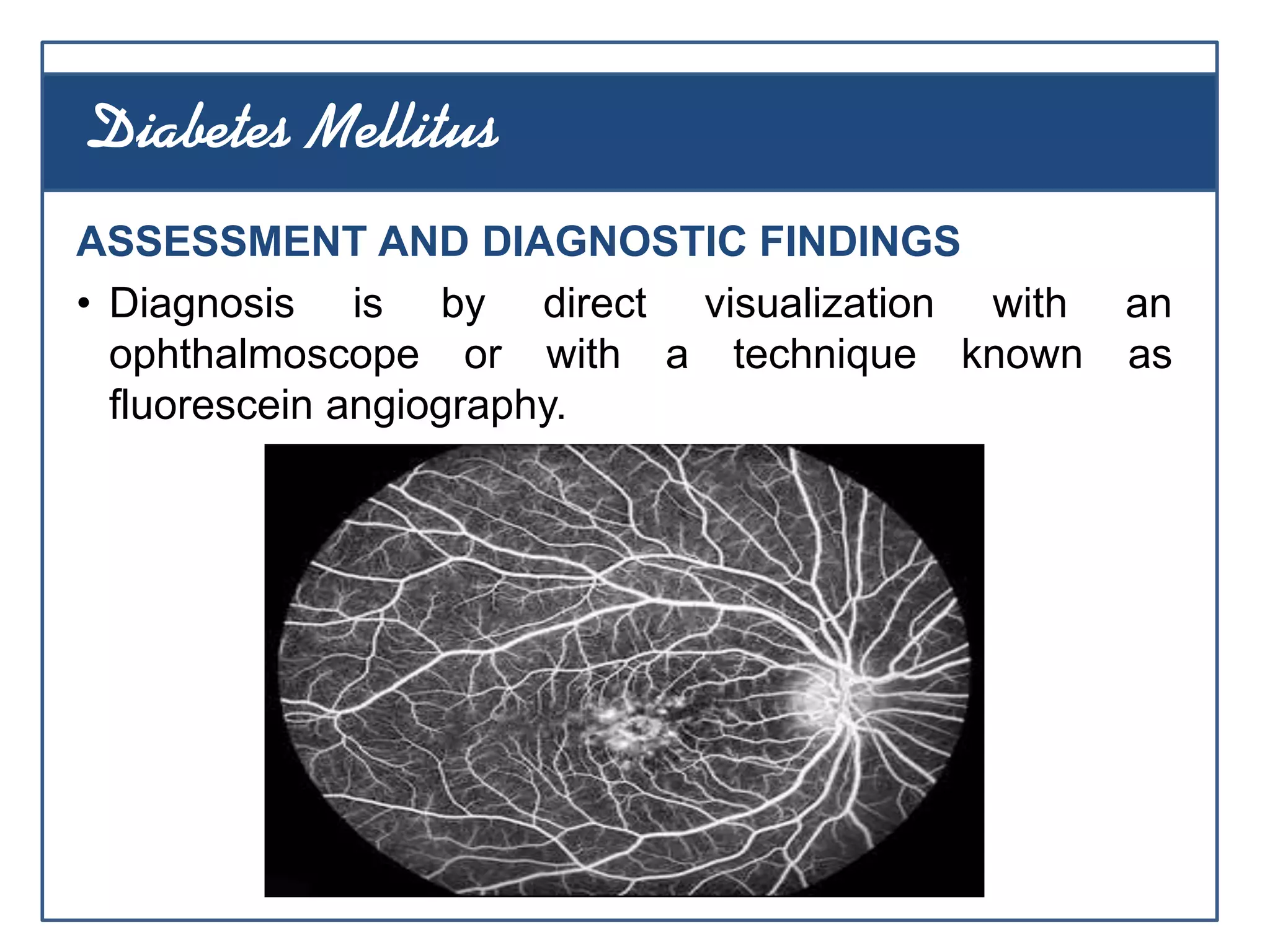
• Diagnosis is by direct visualization with an
ophthalmoscope or with a technique known as
fluorescein angiography.
Diabetes Mellitus
MEDICAL MANAGEMENT
• The first focus of management is on primary and
secondary prevention.
• Maintenance of blood glucose to a normal or near-
normal level in type 1 diabetes through intensive insulin
therapy and patient education decreased the risk for
development of retinopathy by 76% when compared
with conventional therapy in patients without preexisting
retinopathy.
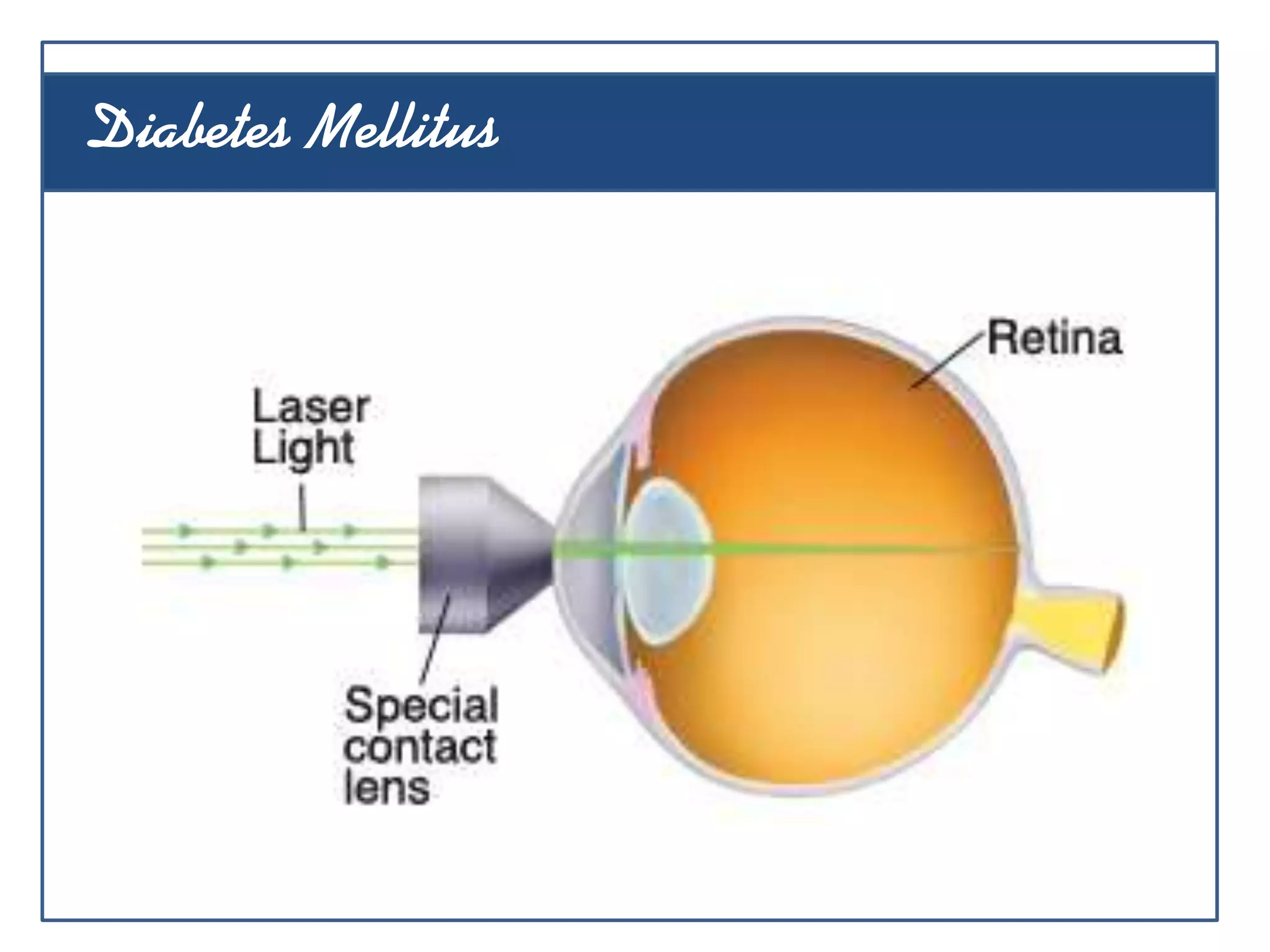
• For advanced cases, the main treatment of diabetic
retinopathy is argon laser photocoagulation.
Diabetes Mellitus
Diabetes Mellitus
NURSING MANAGEMENT
• Education focuses on prevention through regular
ophthalmologic examinations and blood glucose control
and self-management of eye care regimens.
• The effectiveness of early diagnosis and prompt
treatment is emphasized in teaching the patient and
family.
• If vision loss occurs, nursing care must also address the
patient’s adjustment to impaired vision and use of
adaptive devices for diabetes self-care as well as
activities of daily living.
Diabetes Mellitus
NEPHROPATHY
• Nephropathy, or renal disease secondary to diabetic
microvascular changes in the kidney, is a common
complication of diabetes.
• About 20% to 30% of people with type 1 or type 2
diabetes develop nephropathy, but fewer of those with
type 2 diabetes progress to ESRD.
Diabetes Mellitus
CLINICAL MANIFESTATIONS
• As renal failure progresses, the catabolism of both
exogenous and endogenous insulin decreases, and
frequent hypoglycemic episodes may result.
• The stress of renal disease affects self-esteem, family
relationships, marital relations, and virtually all aspects
of daily life.
• As renal function decreases, the patient commonly has
multiple-system failure (eg, declining visual acuity,
impotence, foot ulcerations, heart failure, and nocturnal
diarrhea).
Diabetes Mellitus
ASSESSMENT AND DIAGNOSTIC FINDINGS
• Early microalbuminuria may also be discovered in a 24-
hour urine sample.
• When a urine dipstick test reads consistently positive for
significant amounts of albumin, serum creatinine and
BUN levels are obtained.
• Hypertension often develops in patients (both diabetic
and nondiabetic) who are in the early stages of renal
disease.
Diabetes Mellitus
MEDICAL MANAGEMENT
• Control of hypertension (the use of angiotensin-
converting enzyme [ACE] inhibitors, such as captopril,
because control of hypertension may also decrease or
delay the onset of early proteinuria)
• Prevention or vigorous treatment of urinary tract
infections
• Avoidance of nephrotoxic substances
• Adjustment of medications as renal function changes
• Low-sodium diet
• Low-protein diet
Diabetes Mellitus
DIABETIC NEUROPATHIES
• Diabetic neuropathy refers to a group of diseases that
affect all types of nerves, including peripheral
(sensorimotor), autonomic, and spinal nerves.
• The prevalence increases with the age of the patient
and the duration of the disease and may be as high as
50% in patients who have had diabetes for 25 years.
• Capillary basement membrane thickening and capillary
closure may be present.
• There may be demyelinization of the nerves, which is
thought to be related to hyperglycemia. Nerve
conduction is disrupted when there are aberrations of
the myelin sheaths.
Diabetes Mellitus
DIABETIC NEUROPATHIES
• The two most common types of diabetic neuropathy are
sensorimotor polyneuropathy and autonomic
neuropathy.
• Cranial mononeuropathies, for example, those affecting
the oculomotor nerve, also occur in diabetes, especially
among the elderly.
• Sensorimotor polyneuropathy is a diabetic neuropathy
also called peripheral neuropathy. It most commonly
affects the distal portions of the nerves, especially the
nerves of the lower extremities.It affects both sides of
the body symmetrically and may spread in a proximal
direction.
Diabetes Mellitus
PERIPHERAL NEUROPATHY
CLINICAL MANIFESTATIONS
• Initial symptoms include paresthesias (prickling, tingling,
or heightened sensation) and burning sensations
(especially at night).
• As the neuropathy progresses, the feet become numb.
• In addition, a decrease in proprioception and a
decreased sensation of light touch may lead to an
unsteady gait.
• Decreased sensations of pain and temperature place
patients with neuropathy at increased risk for injury and
undetected foot infections.
Diabetes Mellitus
PERIPHERAL NEUROPATHY
CLINICAL MANIFESTATIONS
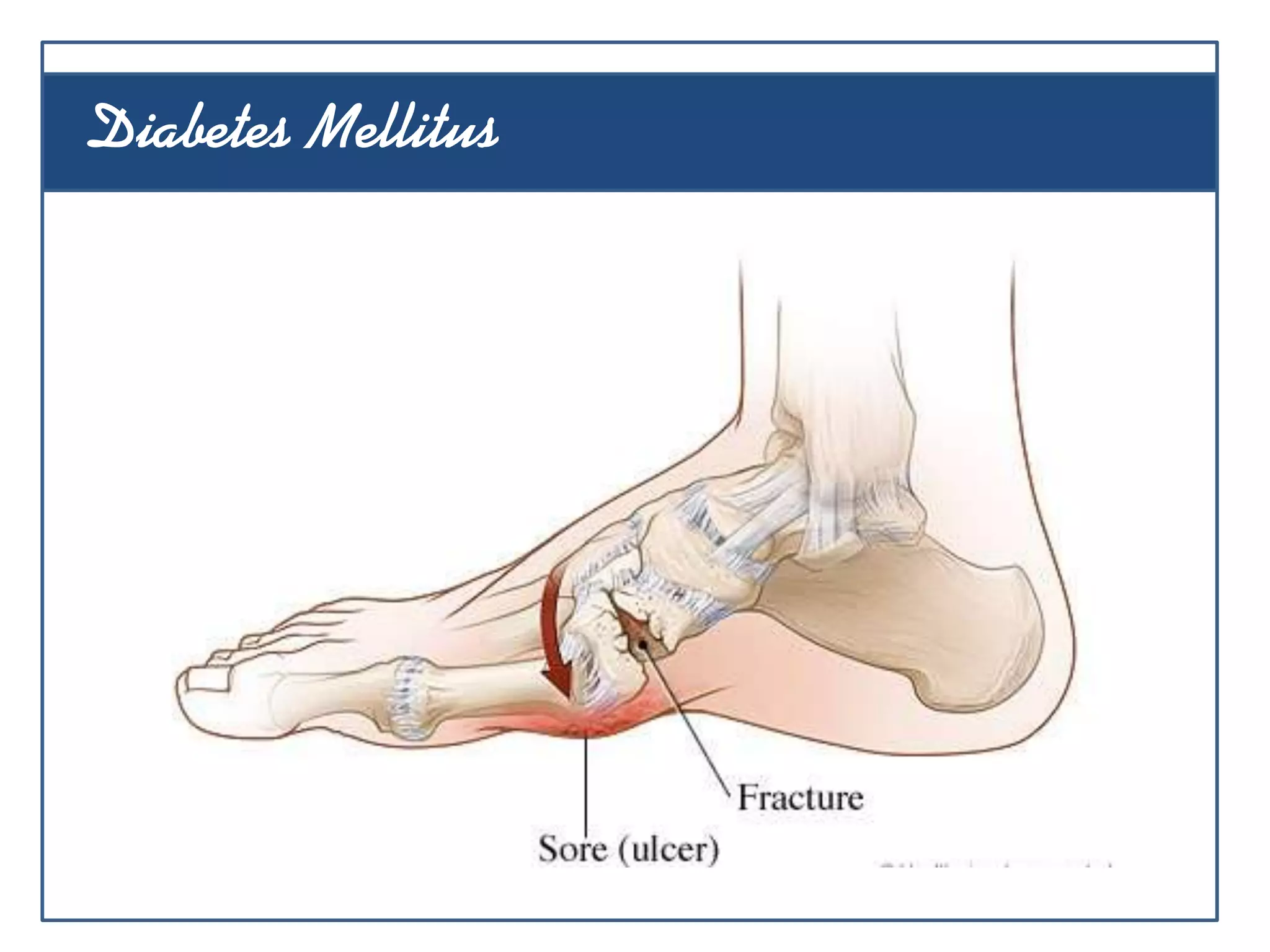
• Deformities of the foot may also occur, with neuropathy-
related joint changes producing Charcot joints. These
joint deformities result from the abnormal weight
distribution on joints due to lack of proprioception.
• On physical examination, a decrease in deep tendon
reflexes and vibratory sensation is found.
Diabetes Mellitus
Diabetes Mellitus
Diabetes Mellitus
PERIPHERAL NEUROPATHY
MANAGEMENT
• Intensive insulin therapy and control of blood glucose
levels delay the onset and slow the progression of
neuropathy.
• Various approaches to pain management can be tried.
These include analgesics (preferably nonopioid); tricyclic
antidepressants; phenytoin, carbamazepine, or
gabapentin (antiseizure medications); mexiletine (an
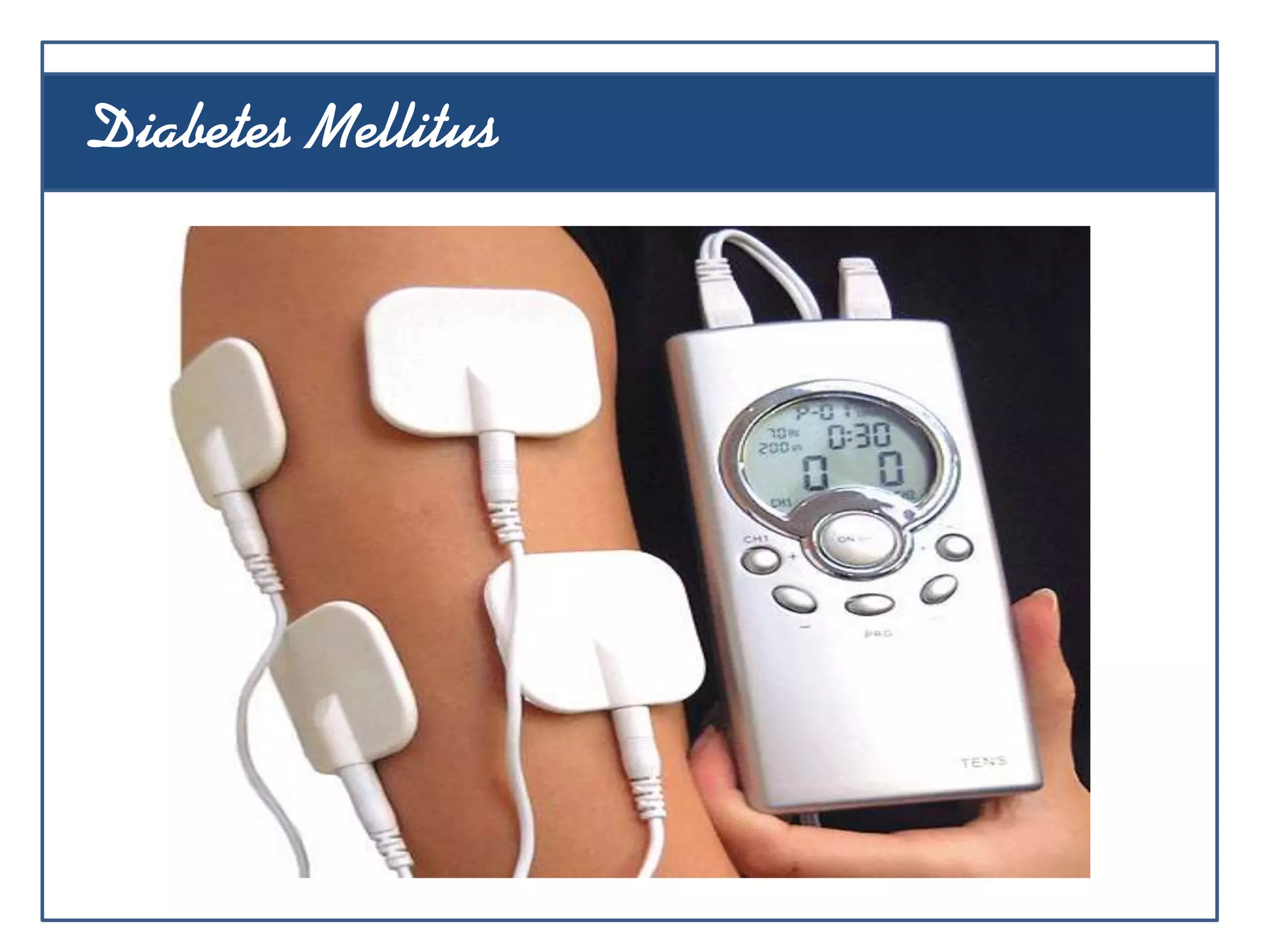
antiarrhythmic); or transcutaneous electrical nerve
stimulation (TENS).
Diabetes Mellitus
PERIPHERAL NEUROPATHY
MANAGEMENT
• The topical medication capsaicin (Axscain) also has
been shown in preliminary reports to decrease lower-
extremity neuropathic pain.
Diabetes Mellitus
Diabetes Mellitus
AUTONOMIC NEUROPATHIES
• Neuropathy of the autonomic nervous system results in
a broad range of dysfunctions affecting almost every
organ system of the body.
• Three manifestations of autonomic neuropathy are
related to the cardiac, GI, and renal systems
• Cardiovascular symptoms range from fixed, slightly
tachycardic heart rate; orthostatic hypotension; and
silent, or painless, myocardial ischemia and infarction.
• Delayed gastric emptying may occur with the typical
symptoms of early satiety, bloating, nausea, and
vomiting.
Diabetes Mellitus
AUTONOMIC NEUROPATHIES
• Urinary retention, a decreased sensation of bladder
fullness, and other urinary symptoms of neurogenic
bladder result from autonomic neuropathy.
• Patients with a neurogenic bladder are predisposed to
developing urinary tract infections due to inability to
completely empty the bladder.
Diabetes Mellitus
AUTONOMIC NEUROPATHIES
HYPOGLYCEMIC UNAWARENESS
• Autonomic neuropathy of the adrenal medulla is
responsible for diminished or absent adrenergic
symptoms of hypoglycemia.
• Patients may report that they no longer feel the typical
shakiness, sweating, nervousness, and palpitations
associated with hypoglycemia.
SUDOMOTOR NEUROPATHY
• This neuropathic condition refers to a decrease or
absence of sweating (anhidrosis) of the extremities, with
a compensatory increase in upper body sweating.
Diabetes Mellitus
AUTONOMIC NEUROPATHIES
• Dryness of the feet increases the risk for the
development of foot ulcers.
SEXUAL DYSFUNCTION
• Sexual dysfunction, especially impotence in men, is a
complication of diabetes.
• Reduced vaginal lubrication has been mentioned as a
possible neuropathic effect; other possible changes in
sexual function in women with diabetes include
decreased libido and lack of orgasm.
• Vaginal infection, increased in incidence in women with
diabetes, may be associated with decreased lubrication
and vaginal itching and tenderness.
Diabetes Mellitus
MANAGEMENT
• There is no treatment for painless cardiac ischemia, and
the prognosis is poor. Detection, however, is important
so that education about avoiding strenuous exercise can
be provided.
• Orthostatic hypotension may respond to a diet high in
sodium, the discontinuation of medications that impede
autonomic nervous system responses, the use of
sympathomimetics and other agents (eg, caffeine) that
stimulate an autonomic response, and the use of lower-
body elastic garments that maximize venous return and
prevent pooling of blood in the extremities.
Diabetes Mellitus
MANAGEMENT
• Treatment of delayed gastric emptying includes a low-fat
diet, frequent small meals, close blood glucose control,
and use of agents that increase gastric motility (eg,
metoclopramide, bethanechol).
• Treatment of diabetic diarrhea may include bulkforming
laxatives or antidiarrheal agents.
• Constipation is treated with a high-fiber diet and
adequate hydration; medications, laxatives, and enemas
may be necessary when constipation is severe.
• Treatment of sudomotor dysfunction focuses on
education about skin care and heat intolerance.
Diabetes Mellitus
FOOT AND LEG PROBLEMS
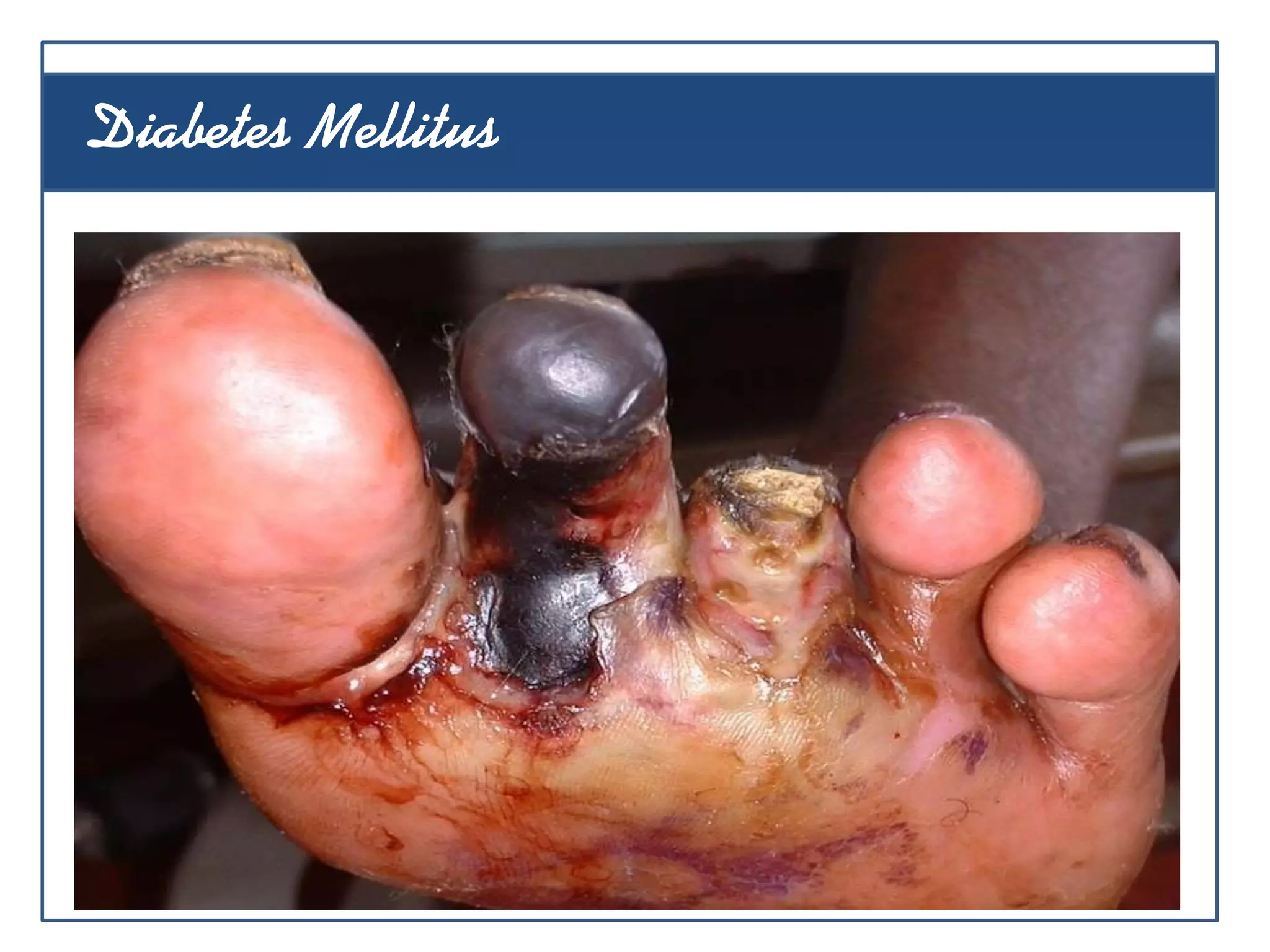
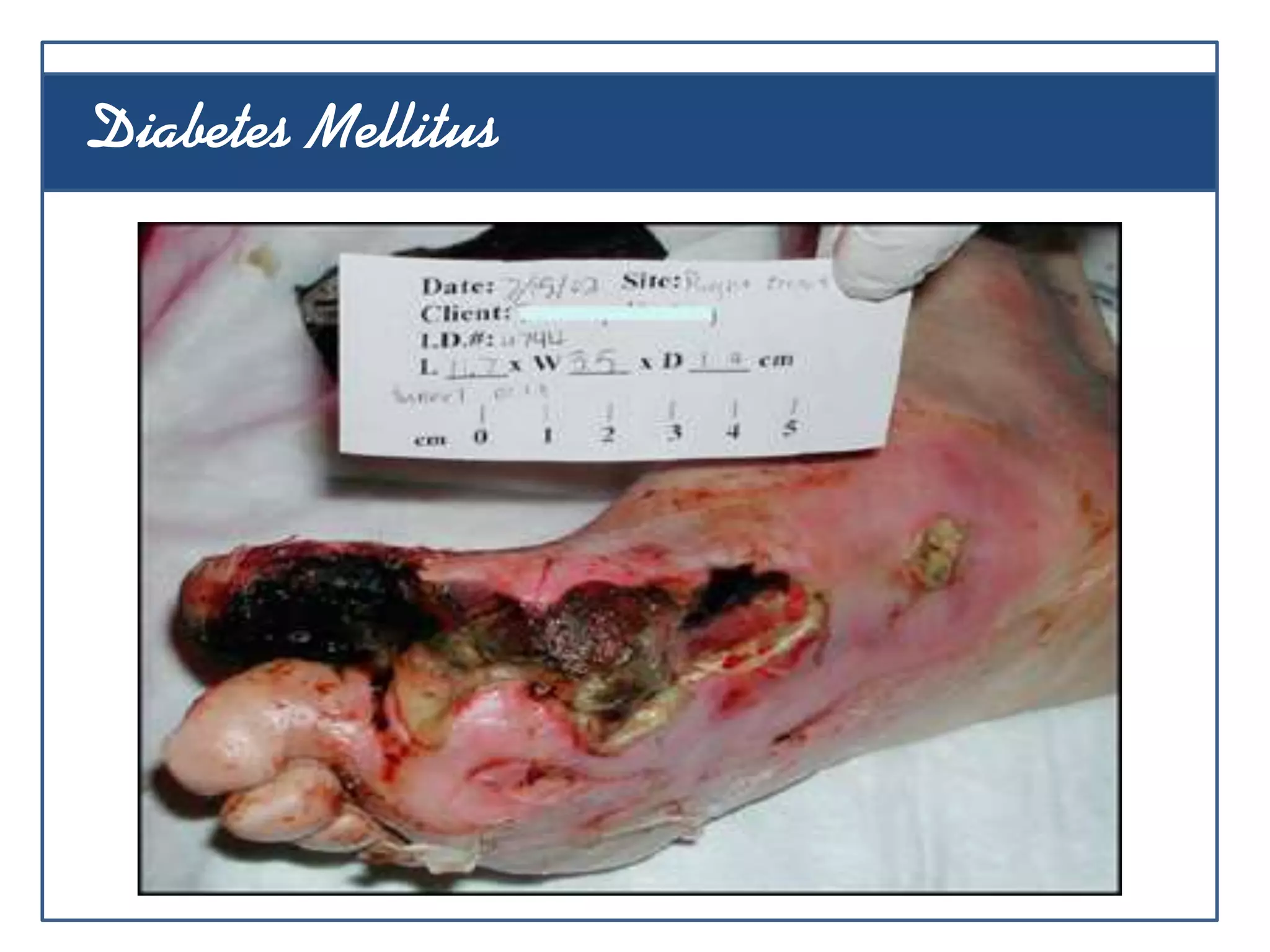
• From 50% to 75% of lower extremity amputations are
performed on people with diabetes.
Increased risk of foot infections include:
• Neuropathy: Sensory neuropathy leads to loss of pain
and pressure sensation, and autonomic neuropathy
leads to increased dryness and fissuring of the skin.
Motor neuropathy results in muscular atrophy, which
may lead to changes in the shape of the foot.
• Peripheral vascular disease: Poor circulation of the
lower extremities contributes to poor wound healing and
the development of gangrene.
Diabetes Mellitus
FOOT AND LEG PROBLEMS
• Immunocompromise: Hyperglycemia impairs the ability
of specialized leukocytes to destroy bacteria. Thus, in
poorly controlled diabetes, there is a lowered resistance
to certain infections.
Diabetes Mellitus
Diabetes Mellitus
Diabetes Mellitus
FOOT AND LEG PROBLEMS
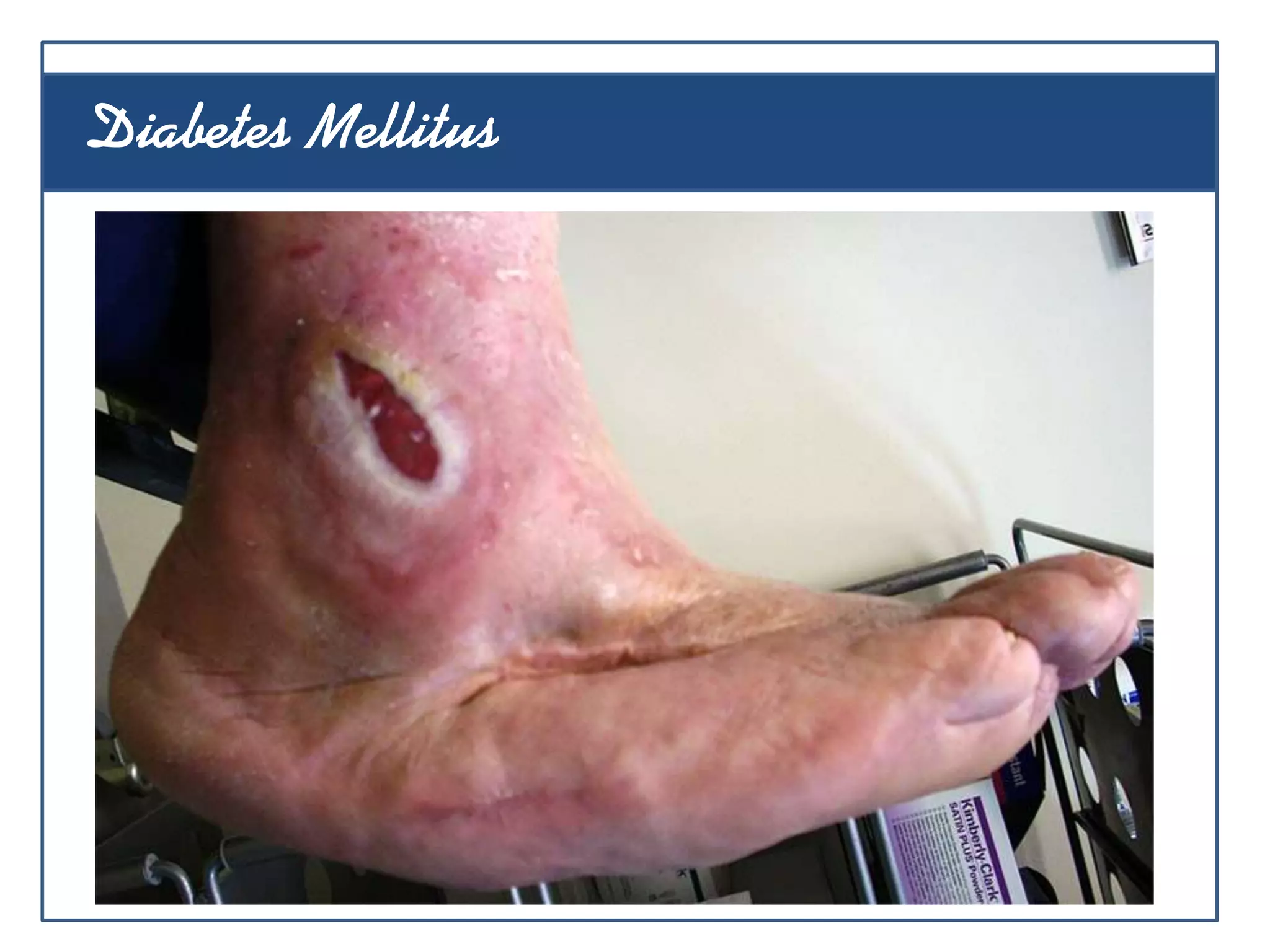
• The typical sequence of events in the development of a
diabetic foot ulcer begins with a soft tissue injury of the
foot, formation of a fissure between the toes or in an
area of dry skin, or formation of a callus.
• Injuries are not felt by the patient with an insensitive foot
and may be thermal, chemical, or traumatic.
Diabetes Mellitus
MANAGEMENT
• Teaching patients proper foot care is a nursing
intervention that can prevent costly, painful, and
debilitating complications.
• Preventive foot care begins with careful daily
assessment of the feet.
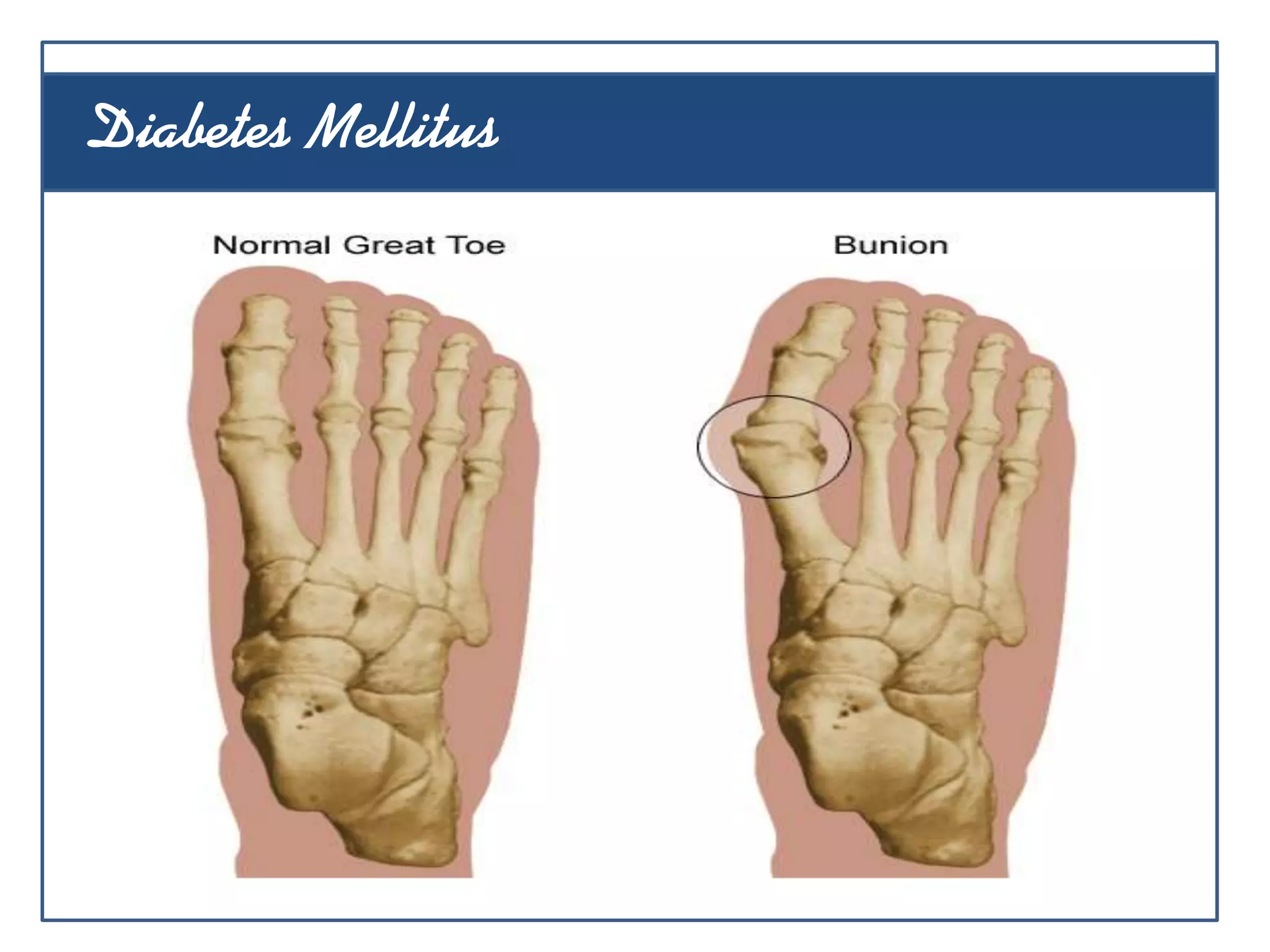
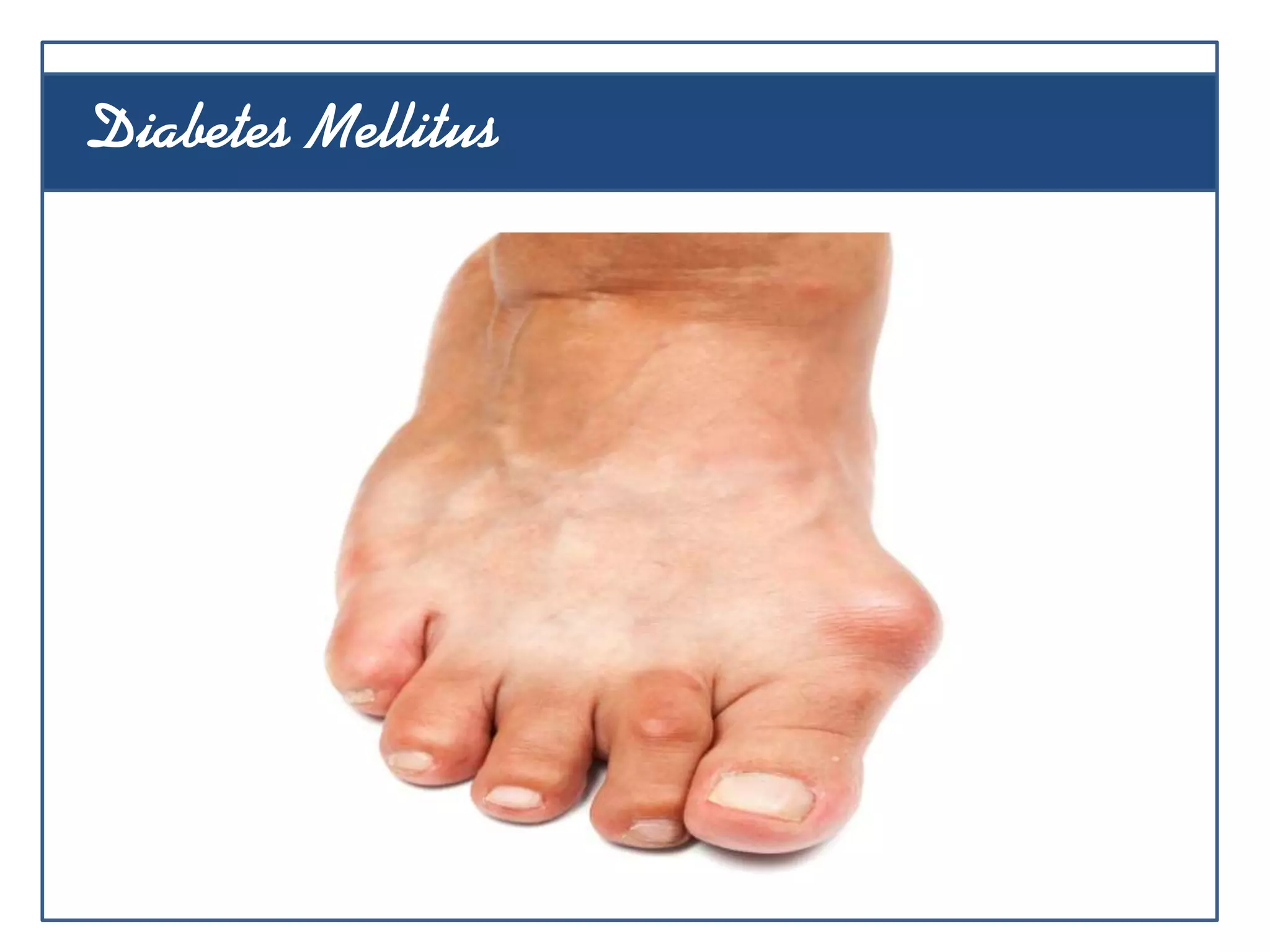
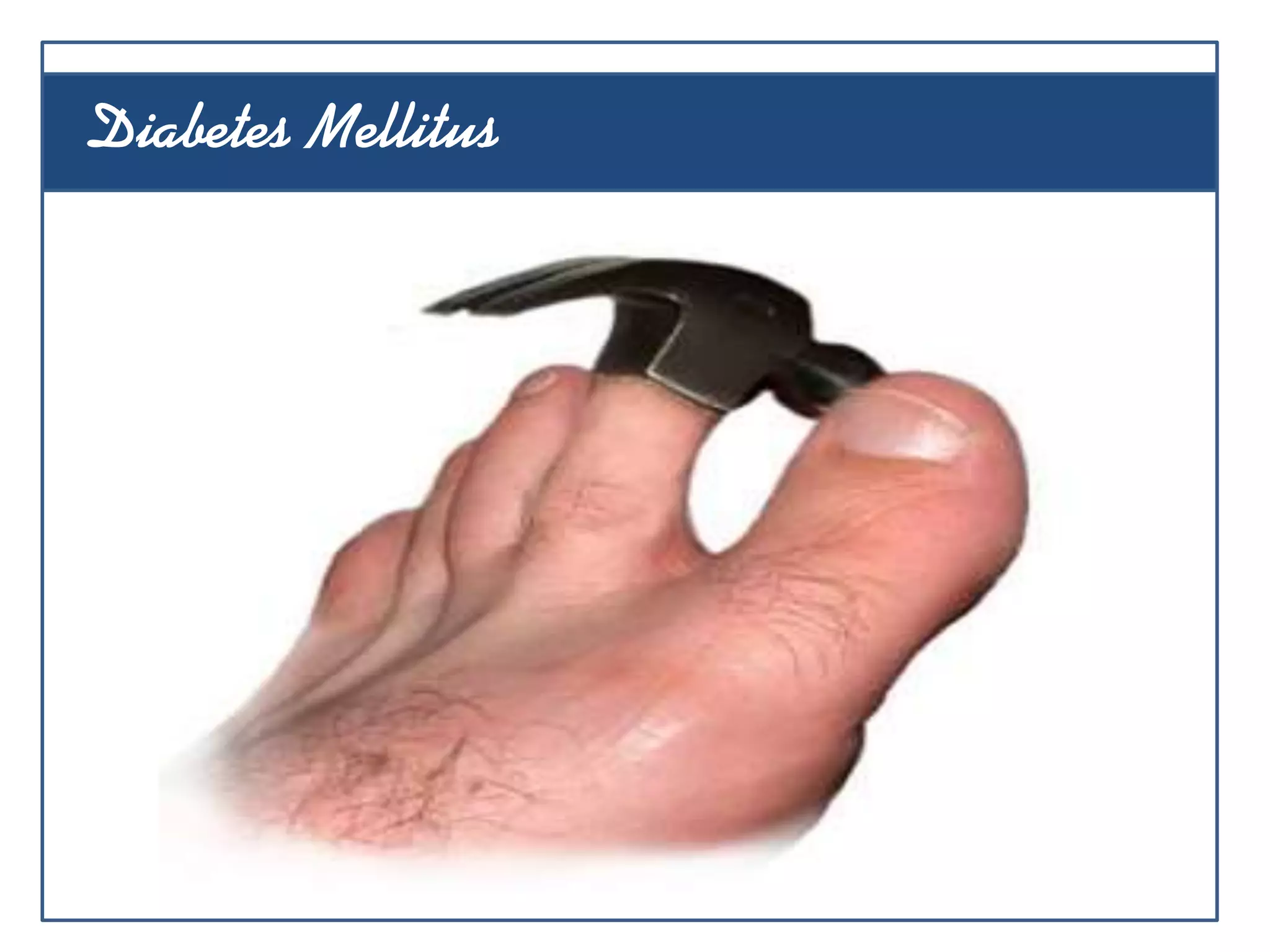
• The feet must be inspected on a daily basis for any
redness, blisters, fissures, calluses, ulcerations,
changes in skin temperature, and the development of
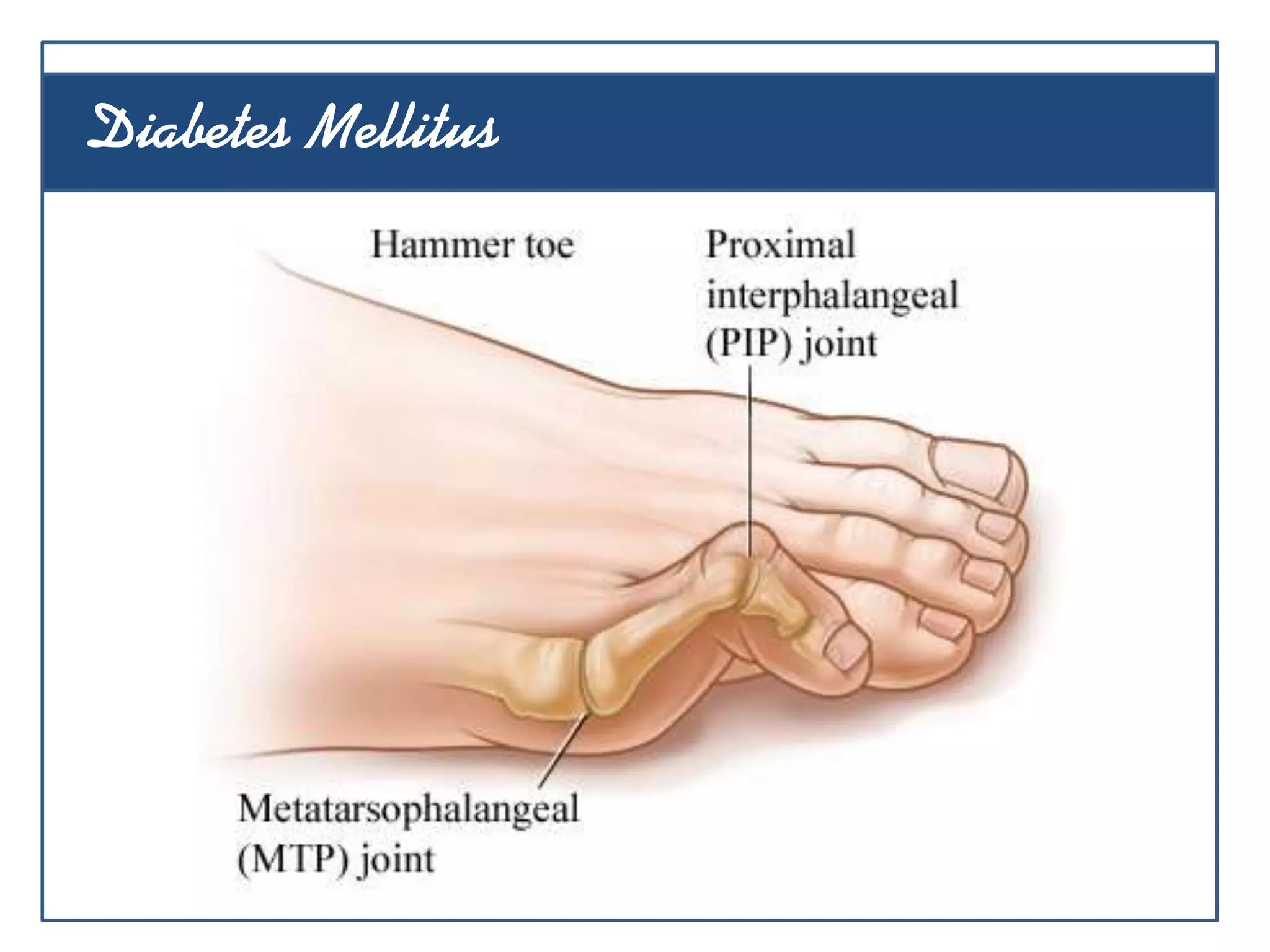
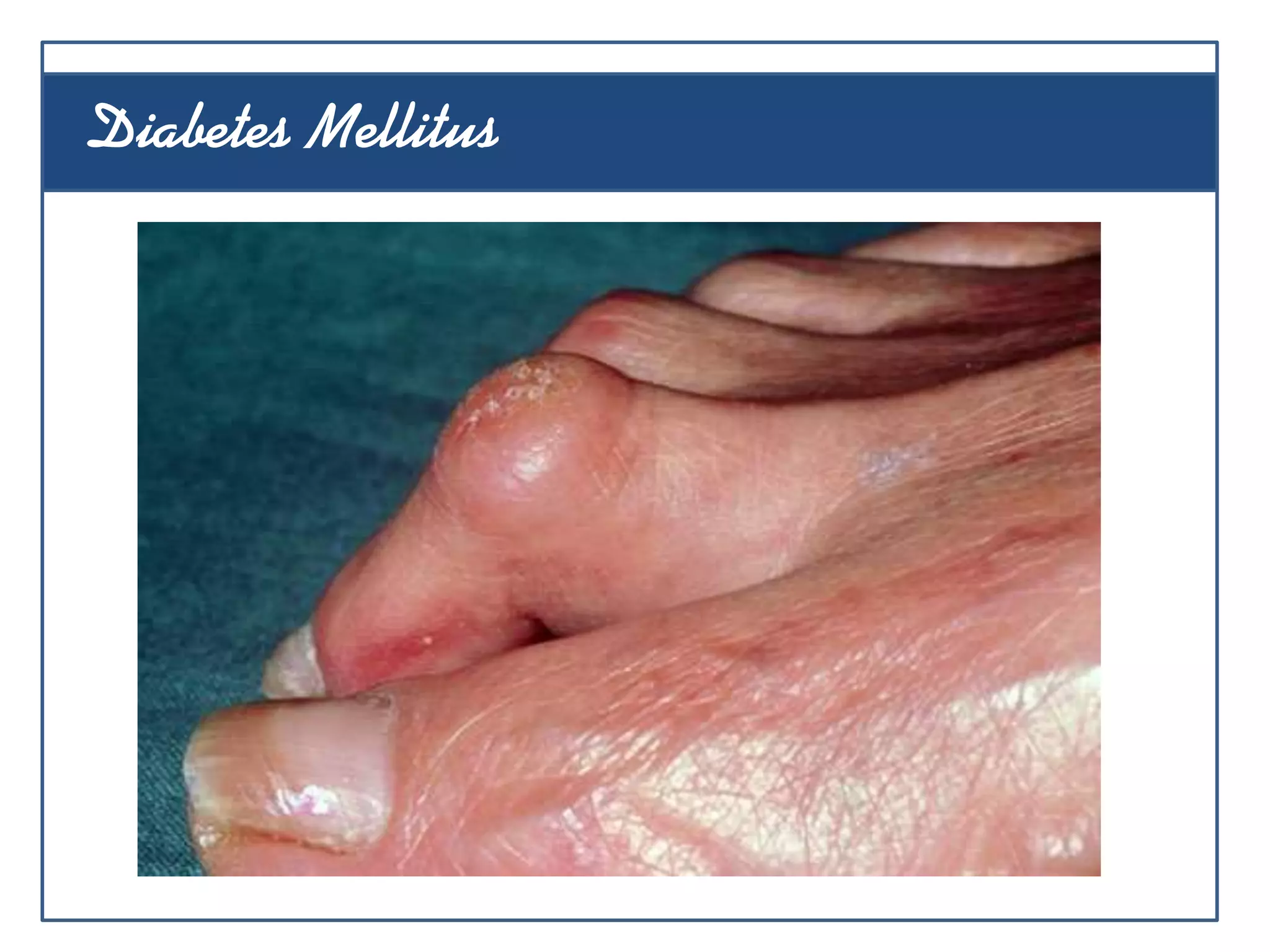
foot deformities (ie, hammer toes, bunions).
• The interior surfaces of shoes should be inspected for
any rough spots or foreign objects.
Diabetes Mellitus
Diabetes Mellitus
Diabetes Mellitus
Diabetes Mellitus
Diabetes Mellitus
Diabetes Mellitus
MANAGEMENT
• In addition to the daily visual and manual inspection of
the feet, the feet should be examined during every
health care visit or at least once per year by a podiatrist,
physician, or nurse.
• Patients with neuropathy should also undergo evaluation
of neurologic status using a monofilament device by an
experienced examiner
Additional aspects of preventive foot care that are taught
to the patient and family include the following:
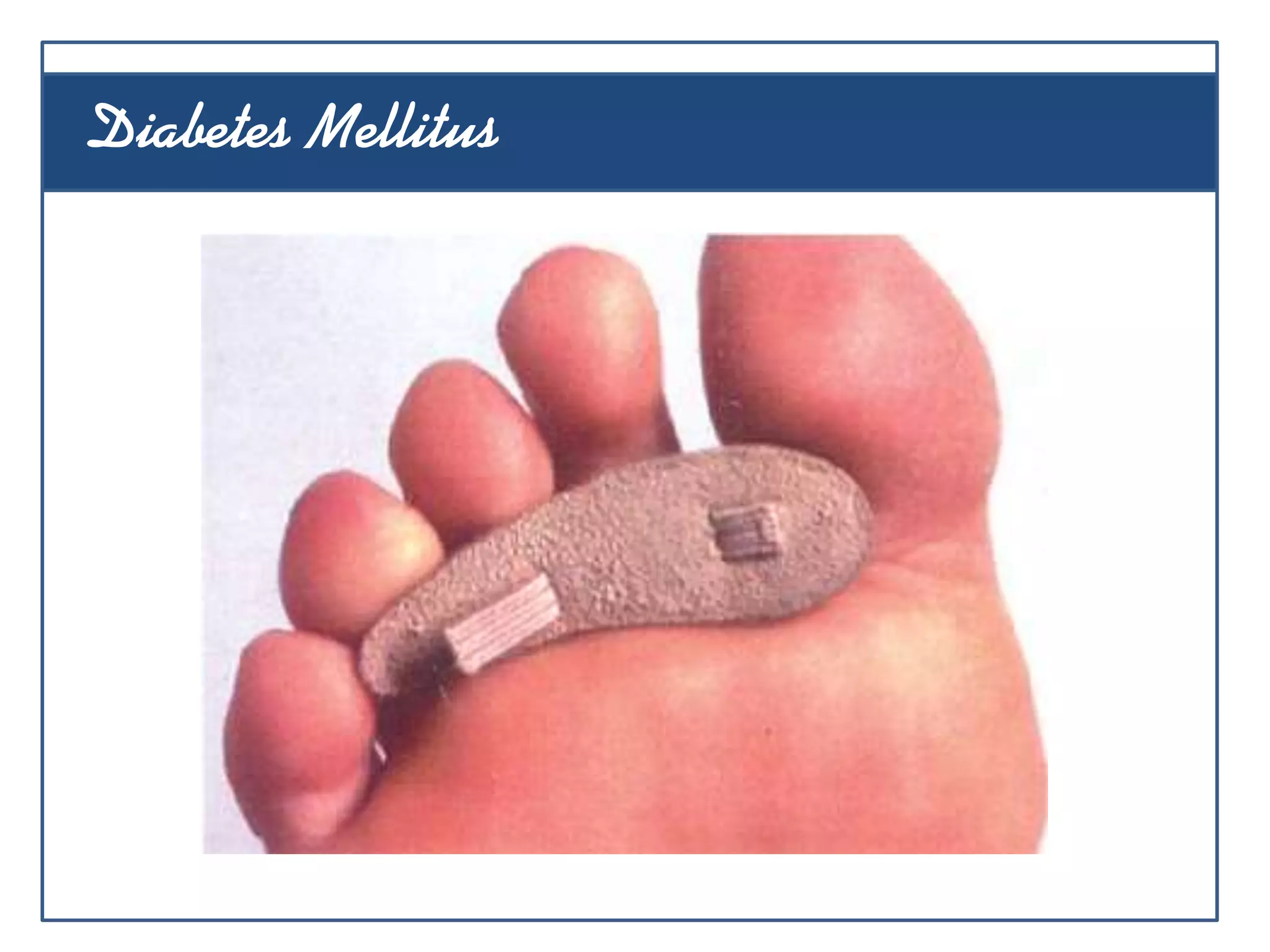
• Properly bathing, drying, and lubricating the feet, taking
care not to allow moisture (water or lotion) to
accumulate between the toes
Diabetes Mellitus
Diabetes Mellitus
MANAGEMENT
• Wearing closed-toe shoes that fit well. Podiatrists can
provide patients with inserts (orthotics) to remove
pressure from pressure points on the foot.
• High-risk behaviors should be avoided, such as walking
barefoot, using heating pads on the feet, wearing open-
toed shoes, soaking the feet, and shaving calluses.
• Trimming toenails straight across and filing sharp
corners to follow the contour of the toe
• Reducing risk factors, such as smoking and elevated
blood lipids, that contribute to peripheral vascular
disease
Diabetes Mellitus
MANAGEMENT
• Avoiding home remedies or over-the-counter agents or
selfmedicating to treat foot problems
• Blood glucose control is important for avoiding
decreased resistance to infections and for preventing
diabetic neuropathy.
• The patient may be referred by the physician to a wound
care center for managing persistent wounds of the feet
or legs.
Diabetes Mellitus
…although the days are busy and the workload is
always growing, there are still those special
moments when someone says or does something
and you know you’ve made a difference in
someone’s life.
That’s why I became a nurse.
- Diane McKenty
1. The non-insulin-dependent diabetic who is
obese is best controlled by weight loss
because obesity
a. Reduces the number of insulin receptors.
b. Causes pancreatic islet cell exhaustion.
c. Reduces pancreatic insulin production.
d. Reduces insulin binding at receptor sites.
Exam 4
2. For a client with the diagnosis of acute
pancreatitis, the nurse would plan for which
critical component of his care?
a. Testing for Homan's sign.
b. Measuring the abdominal girth.
c. Straining the urine.
d. Performing a glucometer test.
Exam 4
3. A person with a diagnosis of adult diabetes,
type 2, should understand the symptoms of a
hyperglycemic reaction. The nurse will know
this client understands if she says these
symptoms are
a. Weight gain, normal breath, and thirst.
b. Nausea, vomiting, and diarrhea.
c. Thirst, polyuria, and decreased appetite.
d. Flushed cheeks, acetone breath, and
increased thirst.
Exam 4
4. A client has a bile duct obstruction and is
jaundiced. Which intervention will be most
effective in controlling the itching associated
with his jaundice?
a. Keep the client's nails clean and short.
b. Provide tepid water for bathing.
c. Maintain the client's room temperature at
72 to 75°F.
d. Use alcohol for back rubs.
Exam 4
5. A female client had a laparoscopic
cholecystectomy this morning. She is now
complaining of right shoulder pain. The nurse
would explain to the client this symptom is
a. Unusual and will be reported to the
surgeon.
b. Common following this operation.
c. Expected after general anesthesia.
d. Indicative of a need to use the incentive
spirometer.
Exam 4
6. The nurse explains to a client who has just received
the diagnosis of type 2 non-insulin-dependent
diabetes mellitus (NIDDM) that sulfonylureas, one
group of oral hypoglycemic agents, act by
a. Stimulating the pancreas to produce or release
insulin.
b. Making the insulin that is produced more
available for use.
c. Altering both fat and protein metabolism.
d. Lowering the blood sugar by facilitating the
uptake and utilization of glucose.
Exam 4
7. A client with a history of cholecystitis is now being
admitted to the hospital for possible surgical
intervention. The orders include NPO, IV therapy,
and bedrest. In addition to assessing for nausea,
vomiting and anorexia, the nurse should observe for
pain
a. In the right lower quadrant.
b. Radiating to the left shoulder.
c. After ingesting food.
d. In the right upper quadrant.
Exam 4
8. When a client is in liver failure, which of the
following behavioral changes is the most
important assessment to report?
a. Nausea.
b. Fatigue.
c. Shortness of breath.
d. Lethargy.
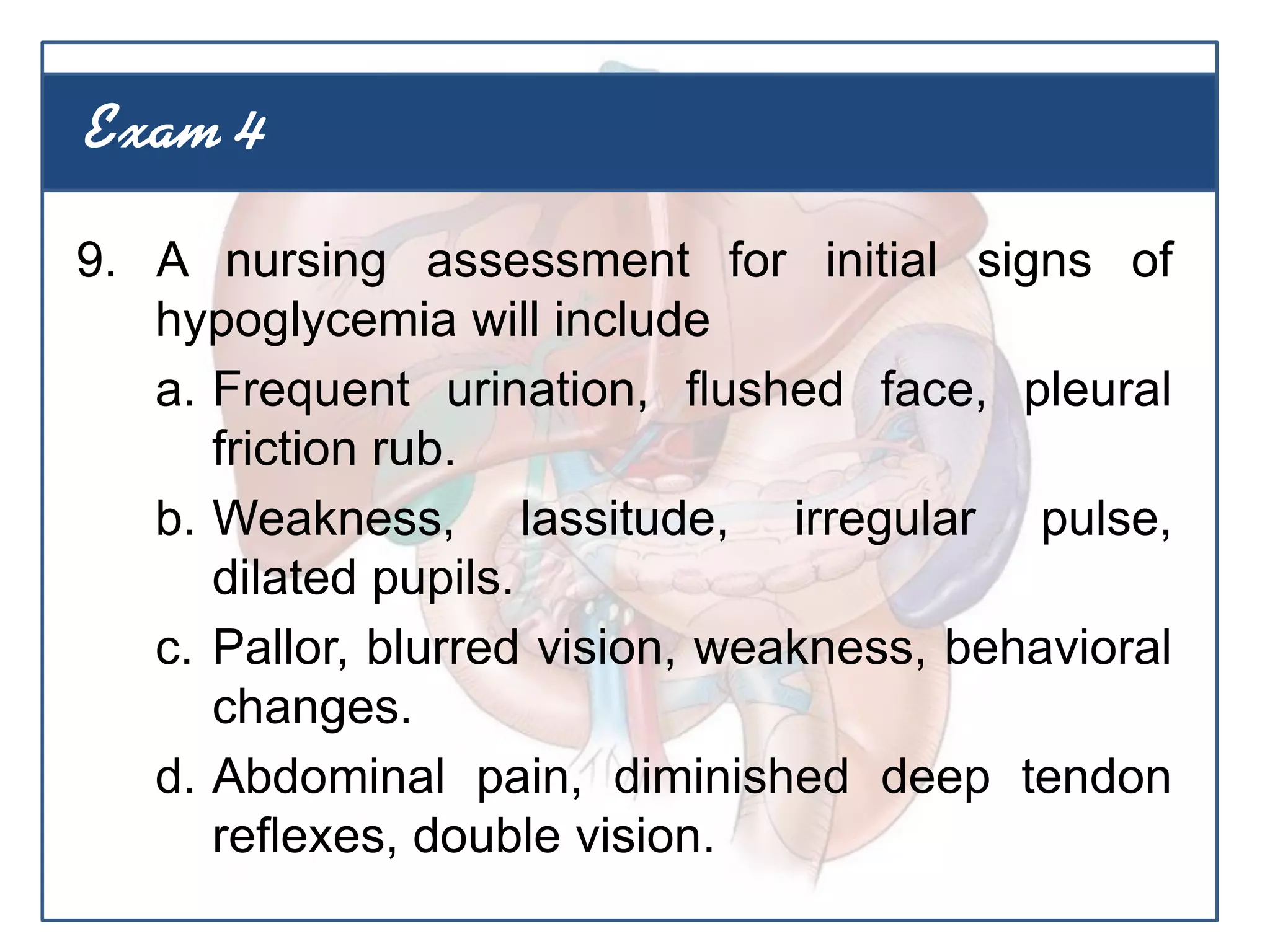
Exam 4
9. A nursing assessment for initial signs of
hypoglycemia will include
a. Frequent urination, flushed face, pleural
friction rub.
b. Weakness, lassitude, irregular pulse,
dilated pupils.
c. Pallor, blurred vision, weakness, behavioral
changes.
d. Abdominal pain, diminished deep tendon
reflexes, double vision.
Exam 4
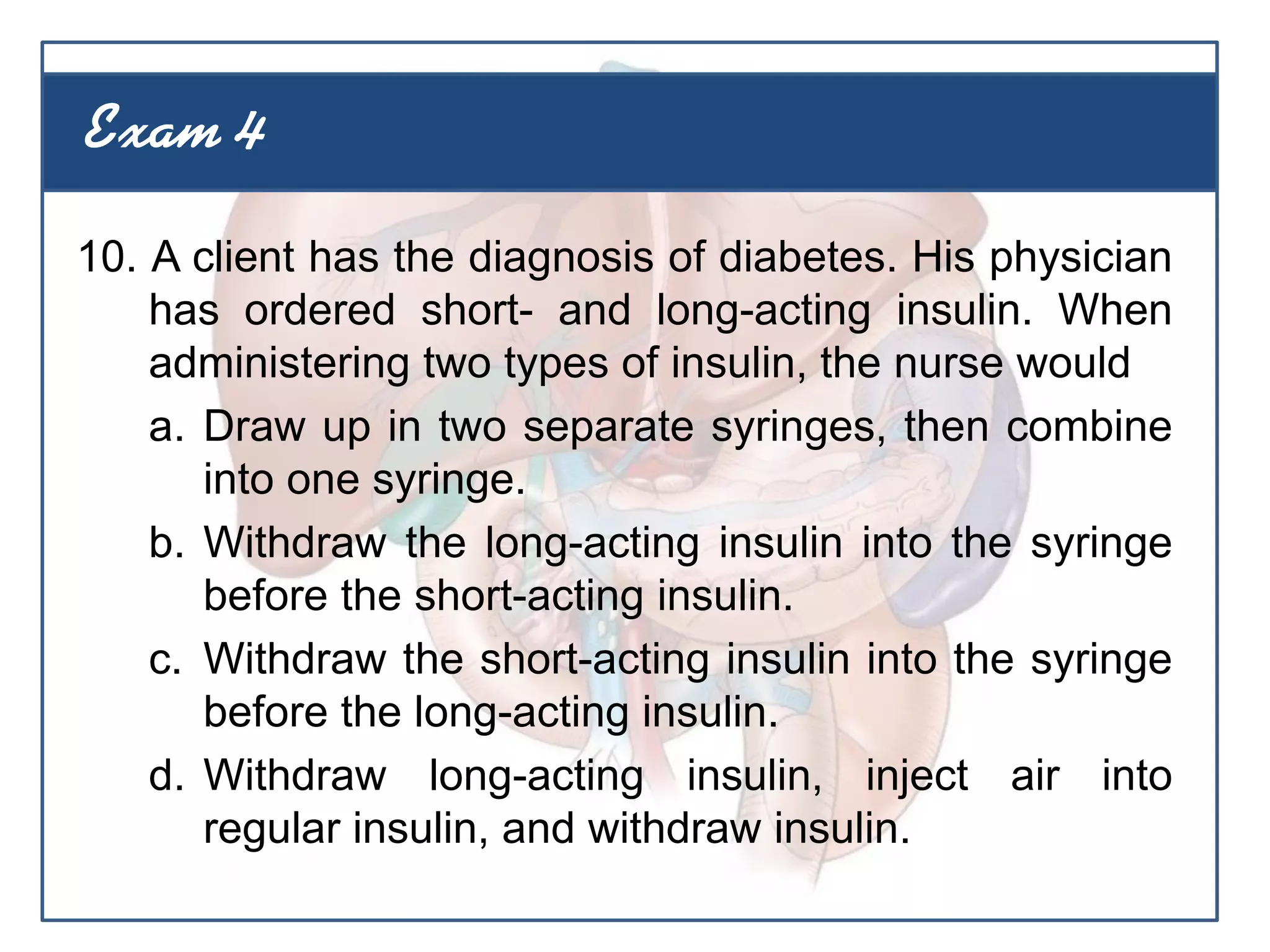
10. A client has the diagnosis of diabetes. His physician
has ordered short- and long-acting insulin. When
administering two types of insulin, the nurse would
a. Draw up in two separate syringes, then combine
into one syringe.
b. Withdraw the long-acting insulin into the syringe
before the short-acting insulin.
c. Withdraw the short-acting insulin into the syringe
before the long-acting insulin.
d. Withdraw long-acting insulin, inject air into
regular insulin, and withdraw insulin.
Exam 4
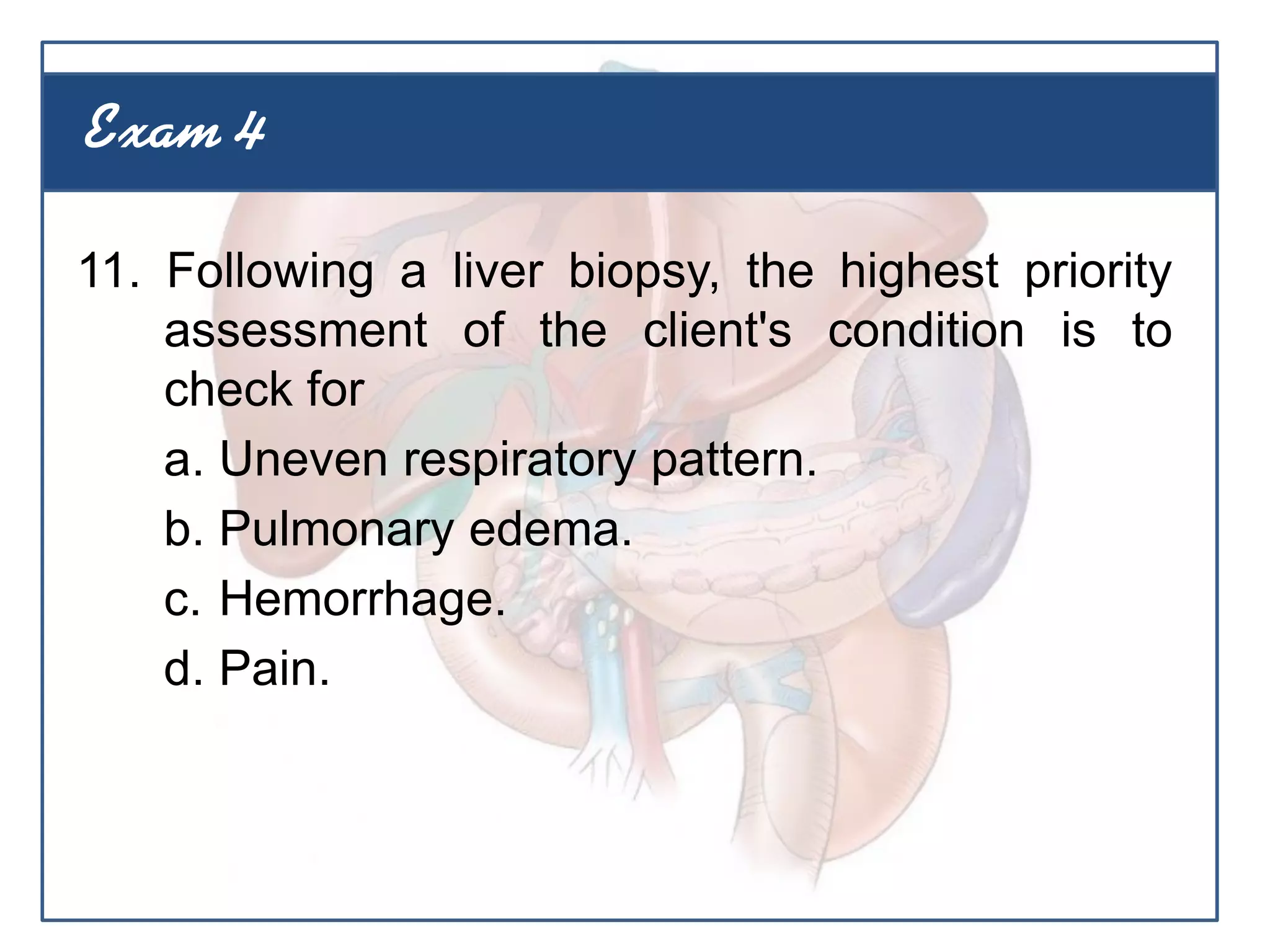
11. Following a liver biopsy, the highest priority
assessment of the client's condition is to
check for
a. Uneven respiratory pattern.
b. Pulmonary edema.
c. Hemorrhage.
d. Pain.
Exam 4
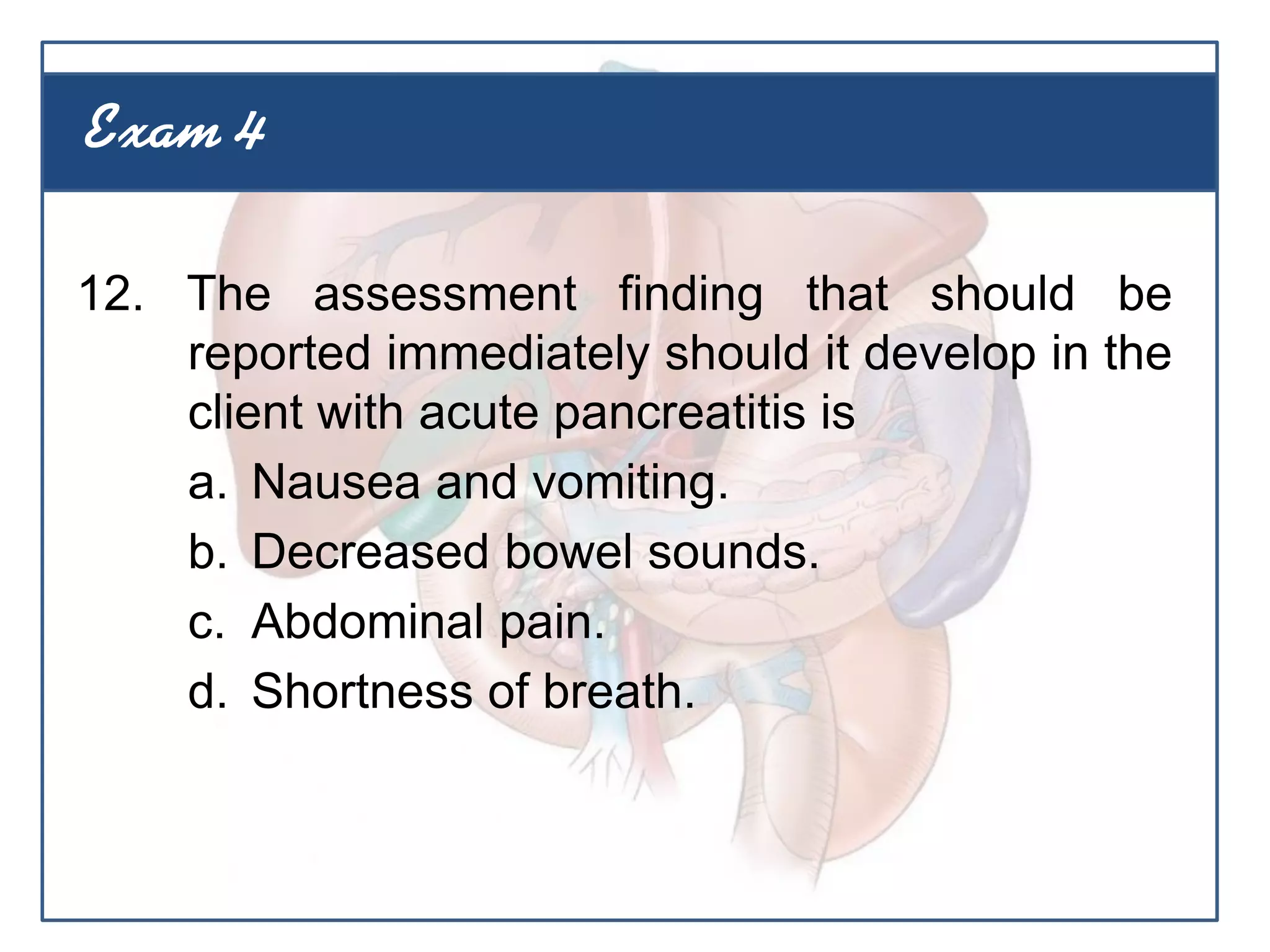
12. The assessment finding that should be
reported immediately should it develop in the
client with acute pancreatitis is
a. Nausea and vomiting.
b. Decreased bowel sounds.
c. Abdominal pain.
d. Shortness of breath.
Exam 4
13. Peritoneal reaction to acute pancreatitis
results in a shift of fluid from the vascular
space into the peritoneal cavity. If this
occurs, the nurse would evaluate for
a. Decreased serum albumin.
b. Oliguria.
c. Abdominal pain.
d. Peritonitis.
Exam 4
14. The nurse is teaching a diabetic client to monitor
her blood glucose using a glucometer. The nurse
will know the client is competent in performing her
finger-stick to obtain blood when she
a. Avoids using the thumbs as puncture sites.
b. Uses the side of a fingertip as the puncture
site.
c. Uses the ball of a finger as the puncture site.
d. Avoids using the fingers of her dominant hand
as puncture sites.
Exam 4
15. The nurse analyzes the results of the blood
chemistry tests done on a client with acute
pancreatitis. Which of the following results would
the nurse expect to find?
a. Low glucose.
b. Elevated amylase.
c. Elevated creatinine.
d. Low alkaline phosphatase.
Exam 4
16. Which instruction about insulin administration
should a nurse give to a client?
a. “Always follow the same order when drawing
the different insulin into the syringe.”
b. “Shake the vials before drawing the insulin.”
c. “Store unopened vials in the freezer at
temperatures well below freezing.”
d. “Discard the intermediate acting insulin if it
appears to be cloudy.”
Exam 4
17. A client with advanced cirrhosis has a prothrombin
time (PT) of 15 secsonds, compared with a
controlled time of 11 seconds. The nurse expects
to administer?
a. Spironolactone (Aldactone)
b. Phytonadione (Mephyton)
c. Furosemide (Lasix)
d. Warfarin (Coumadin)
Exam 4
18. Which statement indicates that a client with
diabetes understands proper foot care?
a. “I’ll schedule an appointment with my
physician if my foot starts to ache.”
b. “I’ll rotate insulin injection sites from my left
foot to my right foot.”
c. “I’ll go barefoot around the house to avoid
pressure areas on my feet.”
d. “I’ll wear cotton socks with well fitting shoes.”
Exam 4
19. A physician orders spironolactone (Aldactone), 50
mg per orem four times a day, for a client with
fluid retention caused by cirrhosis. Which finding
indicates that the drug is having its therapeutic
effect?
a. Serum potassium level of 3.5 mEq/L
b. Loss of 2.2 lbs (1 kg) in 24 hours
c. Serum sodium level of 135 mEq/L
d. Blood pH of 7.25
Exam 4
20. After undergoing a liver biopsy, a client should
be placed in what position?
a. Semi-Fowler’s position
b. Right lateral decubitus position
c. Supine position
d. Prone position
Exam 4

Diabetes Lecture

  • 1.
    Learning Objectives: At theend of this lecture, you will be able to: 1. Differentiate between type 1 and type 2 diabetes. 2. Describe etiologic factors associated with diabetes. 3. Relate the clinical manifestations of diabetes to the associated pathophysiologic alterations. JOFRED M. MARTINEZ, RN
  • 2.
    4. Identify thediagnostic and clinical significance of blood glucose tests. 5. Explain the dietary modifications used for management of people diabetes. 6. Describe the relationship between diet, exercise, and medication (ie, insulin or oral hypoglycemic agents) for people with diabetes. 7. Develop a plan for teaching insulin self- administration. 8. Identify the role of oral antidiabetic agents in diabetic therapy. Learning Objectives (Cont’d.):
  • 3.
    9. Differentiate betweenhypoglycemia and diabetic ketoacidosis, and hyperosmolar nonketotic syndrome. 10.Describe management strategies for a person with diabetes to use during “sick days.” 11.Describe the major macrovascular, microvascular, and neuropathic complications of diabetes and the self-care behaviors important in their prevention. 12.Identify the teaching aids and community support groups available for people with diabetes. 13.Use the nursing process as a framework for care of the patient with diabetes. Learning Objectives (Cont’d.):
  • 4.
    • Diabetes mellitusis a group of metabolic diseases characterized by elevated levels of glucose in the blood resulting from defects in insulin secretion, insulin action, or both. American Diabetes Association, Expert Committee on the Diagnosis and Classification of Diabetes Mellitus, 2003 • Insulin, a hormone produced by the pancreas, controls the level of glucose in the blood by regulating the production and storage of glucose. • Long-term effects of hyperglycemia contribute to macrovascular complications, chronic microvascular complications, and neuropathic complications. Diabetes Mellitus
  • 5.
    RISK FACTORS FORDIABETES MELLITUS • Family history of diabetes • Obesity (ie, ≥20% over desired body weight or BMI ≥27 kg/m2) • Race/ethnicity (eg, African Americans, Hispanic Americans, Native Americans, Asian Americans, Pacific Islanders) • Age ≥45 years • Previously identified impaired fasting glucose or impaired glucose tolerance • Hypertension (≥140/90 mm Hg) Diabetes Mellitus
  • 6.
    RISK FACTORS FORDIABETES MELLITUS • HDL cholesterol level ≤35 mg/dL (0.90 mmol/L) and/or triglyceride level ≥250 mg/dL (2.8 mmol/L) • History of gestational diabetes or delivery of babies over 9 lbs Diabetes Mellitus
  • 7.
    CLASSIFICATION OF DIABETES Themajor classifications of diabetes are: • Type 1 diabetes • Type 2 diabetes • Gestational diabetes mellitus • Diabetes mellitus associated with other conditions or syndromes Diabetes Mellitus
  • 8.
    TYPE 1 DIABETES •Approximately 5% to 10% of people with diabetes have type 1 diabetes, in which the insulin-producing pancreatic beta cells are destroyed by an autoimmune process. • As a result, they produce little or no insulin and require insulin injections to control their blood glucose levels. • Type 1 diabetes is characterized by an acute onset, usually before age 30. Diabetes Mellitus
  • 9.
    TYPE 2 DIABETES •Approximately 90% to 95% of people with diabetes have type 2 diabetes, which results from decreased sensitivity to insulin (called insulin resistance) and impaired beta cell functioning resulting in decreased insulin production. • Type 2 diabetes is first treated with diet and exercise. • If elevated glucose levels persist, diet and exercise are supplemented with oral hypoglycemic agents, and insulin injections are required. • Type 2 diabetes occurs more among people who are older than 30 years and obese. Diabetes Mellitus
  • 10.
    TYPE 2 DIABETES •Borderline diabetes is classified as impaired glucose tolerance (IGT) or impaired fasting glucose (IFG) and refers to a condition in which blood glucose levels fall between normal levels and levels considered diagnostic for diabetes. Diabetes Mellitus
  • 11.
  • 12.
    GESTATIONAL DIABETES • Gestationaldiabetes is any degree of glucose intolerance with its onset during pregnancy. • Hyperglycemia develops during pregnancy because of the secretion of placental hormones, which causes insulin resistance. • Selective screening for diabetes during pregnancy is now being recommended between the 24th and 28th weeks of gestation: age 25 years or older; age 25 years or younger and obese; family history of diabetes in first- degree relatives; or member of an ethnic/racial group with a high prevalence of diabetes Diabetes Mellitus
  • 13.
    GESTATIONAL DIABETES • Gestationaldiabetes occurs in up to 14% of pregnant women and increases their risk for hypertensive disorders during pregnancy. • Initial management includes dietary modification and blood glucose monitoring. If hyperglycemia persists, insulin is prescribed. • Oral antidiabetic agents should not be used during pregnancy. • Goals for blood glucose levels during pregnancy are 105 mg/dL (5.8 mmol/L) or less before meals and 120 mg/dL (6.7 mmol/L) or less 2 hours after meals. Diabetes Mellitus
  • 14.
    GESTATIONAL DIABETES • Afterdelivery of the infant, blood glucose levels in the woman with gestational diabetes return to normal. • All women who have had gestational diabetes should be counseled to maintain their ideal body weight and to exercise regularly to reduce their risk for type 2 diabetes. Diabetes Mellitus
  • 15.
    CLINICAL MANIFESTATIONS • ThreePs”: polyuria, polydipsia, and polyphagia. • Other symptoms include fatigue and weakness, sudden vision changes, tingling or numbness in hands or feet, dry skin, skin lesions or wounds that are slow to heal, and recurrent infections. • The onset of type 1 diabetes may also be associated with sudden weight loss or nausea, vomiting, or abdominal pains, if DKA has developed. Diabetes Mellitus
  • 16.
    ASSESSMENT AND DIAGNOSTICFINDINGS • An abnormally high blood glucose level is the basic criterion for the diabetes diagnosis. • Fasting plasma glucose (FPG) levels of 126 mg/dL (7.0 mmol/L) or more or random plasma glucose levels exceeding 200 mg/dL (11.1 mmol/L) on more than one occasion are diagnostic of diabetes. Diabetes Mellitus
  • 17.
    DIAGNOSIS OF DIABETESMELLITUS • Symptoms of diabetes plus casual plasma glucose concentration equal to or greater than 200 mg/dL (11.1 mmol/L). The classic symptoms of diabetes include polyuria, polydipsia, and unexplained weight loss. • Fasting plasma glucose greater than or equal to 126 mg/dL (7.0 mmol/L). • 2-hour postload glucose equal to or greater than 200 mg/dL (11.1 mmol/L) during an oral glucose tolerance test. The test should be performed using a glucose load containing the equivalent of 75 g anhydrous glucose dissolved in water. Diabetes Mellitus
  • 18.
    DIABETES MANAGEMENT • Themain goal of diabetes treatment is to normalize insulin activity and blood glucose levels to reduce the development of vascular and neuropathic complications. Five components of diabetes management: • Nutritional management • Exercise • Monitoring • Pharmacologic therapy • Education Diabetes Mellitus
  • 19.
  • 20.
    NUTRITIONAL MANAGEMENT Nutritional managementof the diabetic patient includes the following goals : • Providing all the essential food constituents (eg, vitamins, minerals) necessary for optimal nutrition • Meeting energy needs • Achieving and maintaining a reasonable weight • Preventing wide daily fluctuations in blood glucose levels, with blood glucose levels as close to normal as is safe and practical to prevent or reduce the risk for complications • Decreasing serum lipid levels, if elevated, to reduce the risk for macrovascular disease Diabetes Mellitus
  • 21.
    NUTRITIONAL MANAGEMENT MEAL PLANNINGAND RELATED TEACHING • The first step in preparing a meal plan is a thorough review of the patient’s diet history to identify his or her eating habits and lifestyle. • A thorough assessment of the patient’s need for weight loss, gain, or maintenance is also undertaken. • In most instances, the person with type 2 diabetes requires weight reduction. Diabetes Mellitus
  • 22.
    NUTRITIONAL MANAGEMENT MEAL PLANNINGAND RELATED TEACHING • Initial education addresses the importance of consistent eating habits, the relationship of food and insulin, and the provision of an individualized meal plan. • Follow-up education then focuses on management skills, such as eating at restaurants, reading food labels, and adjusting the meal plan for exercise, illness, and special occasions. • The nurse plays an important role in communicating pertinent information to the dietitian and reinforcing the patient’s understanding. Diabetes Mellitus
  • 23.
    NUTRITIONAL MANAGEMENT CALORIC REQUIREMENTS •Calorie-controlled diets are planned by first calculating the individual’s energy needs and caloric requirements based on the patient’s age, gender, height, and weight. • An activity element is then factored in to provide the actual number of calories required for weight maintenance. • To promote a 1- to 2-pound weight loss per week, 500 to 1,000 calories are subtracted from the daily total. • The calories are distributed into carbohydrates, proteins, and fats, and a meal plan is then developed. Diabetes Mellitus
  • 24.
    NUTRITIONAL MANAGEMENT CALORIC REQUIREMENTS •The caloric distribution currently recommended is higher in carbohydrates than in fat and protein. • Currently, the ADA and the American Dietetic Association recommend that for all levels of caloric intake, 50% to 60% of calories should be derived from carbohydrates, 20% to 30% from fat, and the remaining 10% to 20% from protein. Diabetes Mellitus
  • 25.
    NUTRITIONAL MANAGEMENT CALORIC REQUIREMENTS •The use of fiber in diabetic diets plays a role in lowering total cholesterol and low-density lipoprotein cholesterol in the blood. • Increasing fiber in the diet may also improve blood glucose levels and decrease the need for exogenous insulin. • There are two types of dietary fibers: soluble and insoluble. Diabetes Mellitus
  • 26.
    NUTRITIONAL MANAGEMENT CALORIC REQUIREMENTS •Soluble fiber in foods such as legumes, oats, and some fruits plays more of a role in lowering blood glucose and lipid levels than does insoluble fiber. • Insoluble fiber is found in whole-grain breads and cereals and in some vegetables. This type of fiber plays more of a role in increasing stool bulk and preventing constipation. Diabetes Mellitus
  • 27.
    EXERCISE • Exercise isextremely important in managing diabetes because of its effects on lowering blood glucose and reducing cardiovascular risk factors. • Exercise lowers the blood glucose level by increasing the uptake of glucose by body muscles and by improving insulin utilization. It also improves circulation and muscle tone. • Resistance (strength) training, such as weight lifting, can increase lean muscle mass, thereby increasing the resting metabolic rate. Diabetes Mellitus
  • 28.
  • 29.
  • 30.
  • 31.
    EXERCISE • Patients whohave blood glucose levels exceeding 250 mg/dL (14 mmol/L) and who have ketones in their urine should not begin exercising until the urine tests negative for ketones and the blood glucose level is closer to normal. • Exercising with elevated blood glucose levels increases the secretion of glucagon, growth hormone, and catecholamines. The liver then releases more glucose, and the result is an increase in the blood glucose level. • Another potential problem for patients who take insulin is hypoglycemia that occurs many hours after exercise. Diabetes Mellitus
  • 32.
    EXERCISE General Precautions forExercise in Diabetics: • Use proper footwear and, if appropriate, other protective equipment. • Avoid exercise in extreme heat or cold. • Inspect feet daily after exercise. • Avoid exercise during periods of poor metabolic control. Diabetes Mellitus
  • 33.
    MONITORING GLUCOSE LEVELSAND KETONES • Blood glucose monitoring and self-monitoring of blood glucose (SMBG) levels by patients has dramatically altered diabetes care. • Frequent SMBG enables people with diabetes to adjust the treatment regimen to obtain optimal blood glucose control. • This allows for detection and prevention of hypoglycemia and hyperglycemia and plays a crucial role in normalizing blood glucose levels, which in turn may reduce the risk of long-term diabetic complications. Diabetes Mellitus
  • 34.
    MONITORING GLUCOSE LEVELSAND KETONES Diabetes Mellitus
  • 35.
    MONITORING GLUCOSE LEVELSAND KETONES Diabetes Mellitus
  • 36.
    MONITORING GLUCOSE LEVELSAND KETONES Diabetes Mellitus
  • 37.
    MONITORING GLUCOSE LEVELSAND KETONES • For most patients who require insulin, SMBG is recommended two to four times daily (usually before meals and at bedtime). • For patients who take insulin before each meal, SMBG is required at least three times daily before meals to determine each dose. • Patients not receiving insulin may be instructed to assess their blood glucose levels at least two or three times per week, including a 2-hour postprandial test. Diabetes Mellitus
  • 38.
    MONITORING GLUCOSE LEVELSAND KETONES GLYCOSYLATED HEMOGLOBIN • Glycosylated hemoglobin (referred to as HgbA1C or A1C) is a blood test that reflects average blood glucose levels over a period of approximately 2 to 3 months. • The longer the amount of glucose in the blood remains above normal, the more glucose binds to the red blood cell and the higher the glycosylated hemoglobin level. • The normal values differ slightly from test to test and from laboratory to laboratory and normally range from 4% to 6%. Diabetes Mellitus
  • 39.
  • 40.
    MONITORING GLUCOSE LEVELSAND KETONES TESTING FOR KETONES • Ketones in the urine signal that control of type 1 diabetes is deteriorating, and the risk of DKA is high. • When there is almost no effective insulin available, the body starts to break down stored fat for energy. • Urine testing is the most common method used for self- testing of ketone bodies by patients. • Most commonly, patients use a urine dipstick (Ketostix or Chemstrip uK) to detect ketonuria. • The reagent pad on the strip turns purplish when ketones are present. Diabetes Mellitus
  • 41.
    MONITORING GLUCOSE LEVELSAND KETONES TESTING FOR KETONES • Other strips are available for measuring both urine glucose and ketones (Keto-Diastix or Chemstrip uGK). • Urine ketone testing should be performed whenever patients with type 1 diabetes have glucosuria or persistently elevated blood glucose levels (more than 240 mg/dL or 13.2 mmol/L for two testing periods in a row) and during illness, in pregnancy with pre-existing diabetes, and in gestational diabetes. Diabetes Mellitus
  • 42.
    PHARMACOLOGIC THERAPY INSULIN THERAPYAND INSULIN PREPARATIONS • Because the body loses the ability to produce insulin in type 1 diabetes, exogenous insulin must be administered for life. • In type 2 diabetes, insulin may be necessary on a long- term basis to control glucose levels if diet and oral agents fail. • Some patients in whom type 2 diabetes is usually controlled by diet alone or by diet and an oral agent may require insulin temporarily during illness, infection, pregnancy, surgery, or some other stressful event. Diabetes Mellitus
  • 43.
    PHARMACOLOGIC THERAPY INSULIN THERAPYAND INSULIN PREPARATIONS • In many cases, insulin injections are administered two or more times daily to control the blood glucose level. • Because the insulin dose required by the individual patient is determined by the level of glucose in the blood, accurate monitoring of blood glucose levels is essential; thus, SMBG has become a cornerstone of insulin therapy. Diabetes Mellitus
  • 44.
    PHARMACOLOGIC THERAPY INSULIN THERAPYAND INSULIN PREPARATIONS • Insulin preparations vary according to three main characteristics: time course of action, species (source), and manufacturer. Diabetes Mellitus
  • 45.
    PHARMACOLOGIC THERAPY INSULIN THERAPYAND INSULIN PREPARATIONS • Insulin preparations vary according to three main characteristics: time course of action, species (source), and manufacturer. Diabetes Mellitus
  • 46.
    COMPLICATIONS OF INSULINTHERAPY • A local allergic reaction (redness, swelling, tenderness, and induration or a 2- to 4-cm wheal) may appear at the injection site 1 to 2 hours after the insulin administration. • The physician may prescribe an antihistamine to be taken 1 hour before the injection if such a local reaction occurs. SYSTEMIC ALLERGIC REACTIONS • Immediate local skin reaction that gradually spreads into generalized urticaria (hives). Diabetes Mellitus
  • 47.
    COMPLICATIONS OF INSULINTHERAPY • The treatment is desensitization, with small doses of insulin administered in gradually increasing amounts using a desensitization kit. • These rare reactions are occasionally associated with generalized edema or anaphylaxis. INSULIN LIPODYSTROPHY • Lipodystrophy refers to a localized reaction, in the form of either lipoatrophy or lipohypertrophy, occurring at the site of insulin injections. Diabetes Mellitus
  • 48.
  • 49.
    COMPLICATIONS OF INSULINTHERAPY • Lipoatrophy is loss of subcutaneous fat and appears as slight dimpling or more serious pitting of subcutaneous fat. • Lipohypertrophy, the development of fibrofatty masses at the injection site, is caused by the repeated use of an injection site. • If insulin is injected into scarred areas, absorption may be delayed. • This is one reason that rotation of injection sites is so important. Diabetes Mellitus
  • 50.
  • 51.
    COMPLICATIONS OF INSULINTHERAPY INSULIN RESISTANCE • Clinical insulin resistance has been defined as a daily insulin requirement of 200 units or more. • In most diabetic patients taking insulin, immune antibodies develop and bind the insulin, thereby decreasing the insulin available for use. • Treatment consists of administering a more concentrated insulin preparation, such as U500, which is available by special order. Diabetes Mellitus
  • 52.
    COMPLICATIONS OF INSULINTHERAPY INSULIN RESISTANCE • Occasionally, prednisone is needed to block the production of antibodies. • This may be followed by a gradual reduction in insulin requirement. Diabetes Mellitus
  • 53.
    COMPLICATIONS OF INSULINTHERAPY Diabetes Mellitus
  • 54.
    ALTERNATIVE METHODS OFINSULIN DELIVERY INSULIN PENS • These devices use small (150- to 300-unit) prefilled insulin cartridges that are loaded into a penlike holder. • Insulin is delivered by dialing in a dose or pushing a button for every 1- or 2-unit increment administered. • These devices are most useful for patients who need to inject only one type of insulin at a time (eg, premeal regular insulin three times a day and bedtime NPH insulin) or who can use the premixed insulins. Diabetes Mellitus
  • 55.
  • 56.
  • 57.
    ALTERNATIVE METHODS OFINSULIN DELIVERY JET INJECTORS • Jet injection devices deliver insulin through the skin under pressure in an extremely fine stream. • These devices are more expensive than other alternative devices mentioned above and require thorough training and supervision when first used. • In addition, patients should be cautioned that absorption rates, peak insulin activity, and insulin levels may be different when changing to a jet injector. Diabetes Mellitus
  • 58.
  • 59.
  • 60.
    ALTERNATIVE METHODS OFINSULIN DELIVERY INSULIN PUMPS • Continuous subcutaneous insulin infusion involves the use of small, externally worn devices that closely mimic the functioning of the normal pancreas. • Insulin pumps contain a 3-mL syringe attached to a long (24- to 42-in), thin, narrow-lumen tube with a needle or Teflon catheter attached to the end. • The patient inserts the needle or catheter into the subcutaneous tissue and secures it with tape or a transparent dressing. • The needle or catheter is changed at least every 3 days. Diabetes Mellitus
  • 61.
    ALTERNATIVE METHODS OFINSULIN DELIVERY INSULIN PUMPS • The pump is then worn either on a belt or in a pocket. • The rapid-acting lispro insulin is used in the insulin pump and is delivered at a basal rate and as a bolus with meals. • A continuous basal rate of insulin is typically 0.5 to 2.0 units/hour, depending on the patient’s needs. Diabetes Mellitus
  • 62.
  • 63.
  • 64.
    ALTERNATIVE METHODS OFINSULIN DELIVERY IMPLANTABLE AND INHALANT INSULIN DELIVERY • Insulin pumps that can be externally programmed according to blood glucose test results. Diabetes Mellitus
  • 65.
  • 66.
    TRANSPLANTATION OF PANCREATICCELLS • Transplantation of the whole pancreas or a segment of the pancreas is being performed on a limited population. Diabetes Mellitus
  • 67.
    ORAL ANTIDIABETIC AGENTS SULFONYLUREAS •The sulfonylureas exert their primary action by directly stimulating the pancreas to secrete insulin. • These agents improve insulin action at the cellular level and may also directly decrease glucose production by the liver. • The sulfonylureas can be divided into first- and second- generation categories. Diabetes Mellitus
  • 68.
    ORAL ANTIDIABETIC AGENTS BIGUANIDES •Metformin (Glucophage) produces its antidiabetic effects by facilitating insulin’s action on peripheral receptor sites. • Biguanides have no effect on pancreatic beta cells. • Biguanides used with a sulfonylurea may enhance the glucose-lowering effect more than either medication used alone. • Lactic acidosis is a potential and serious complication of biguanide therapy; the patient must be monitored closely when therapy is initiated or when dosage changes. Diabetes Mellitus
  • 69.
    First-Generation Sulfonylureas • acetohexamide(Dymelor) • chlorpropamide (Diabinese) • tolazamide (Tolinase) • tolbutamide (Orinase) Second-Generation Sulfonylureas • glipizide (Glucatrol) • glipizide (Glucatrol XL) • glyburide (Micronase) • glimepiride (Amaryl) Diabetes Mellitus
  • 70.
    Biguanides • metformin (Glucophage+ • Glucophage XL) • metformin with glyburide • (Glucovance) Alpha Glucosidase Inhibitors • acarbose (Precose) • Thiazolidinediones • pioglitazone (Actos) • rosiglitazone (Avandia) Diabetes Mellitus
  • 71.
    Meglitinides • repaglinide (Prandin) •nateglinide (Starix) Diabetes Mellitus
  • 72.
    ALPHA GLUCOSIDASE INHIBITORS •They work by delaying the absorption of glucose in the intestinal system, resulting in a lower postprandial blood glucose level. • As a consequence of plasma glucose reduction, hemoglobin A1C levels drop. • The advantage of oral alpha glucosidase inhibitors is that they are not systemically absorbed and are safe to use. Diabetes Mellitus
  • 73.
    THIAZOLIDINEDIONES • They areindicated for patients with type 2 diabetes who take insulin injections and whose blood glucose control is inadequate (hemoglobin A1C level greater than 8.5%). • They have also been approved as firstline agents to treat type 2 diabetes, in combination with diet. • Thiazolidinediones enhance insulin action at the receptor site without increasing insulin secretion from the beta cells of the pancreas. • These medications may affect liver function; therefore, liver function studies must be performed at baseline and at frequent intervals. Diabetes Mellitus
  • 74.
    MEGLITINIDES • Lowers theblood glucose level by stimulating insulin release from the pancreatic beta cells. Its effectiveness depends on the presence of functioning beta cells. • Patients must be taught the signs and symptoms of hypoglycemia and should understand that the medication should not be taken unless the patient eats a meal. Diabetes Mellitus
  • 75.
    NURSING MANAGEMENT EDUCATION • Patientsmust learn daily self-care skills to prevent acute fluctuations in blood glucose, and they must also incorporate into their lifestyle many preventive behaviors for avoidance of long-term diabetic complications. • Diabetic patients must become knowledgeable about nutrition, medication effects and side effects, exercise, disease progression, prevention strategies, blood glucose monitoring techniques, and medication adjustment. Diabetes Mellitus
  • 76.
    NURSING MANAGEMENT EDUCATION • Inaddition, they must learn the skills associated with monitoring and managing diabetes and must incorporate many new activities into their daily routines. Diabetes Mellitus
  • 77.
    TEACHING PATIENTS TOSELF-ADMINISTER INSULIN • Insulin injections are administered into the subcutaneous tissue with the use of special insulin syringes. STORING INSULIN • Cloudy insulins should be thoroughly mixed by gently inverting the vial or rolling it between the hands before drawing the solution into a syringe or a pen. • Whether insulin is the short- or long-acting preparation, the vials not in use should be refrigerated and extremes of temperature should be avoided; insulin should not be allowed to freeze and should not be kept in direct sunlight or in a hot car. Diabetes Mellitus
  • 78.
    TEACHING PATIENTS TOSELF-ADMINISTER INSULIN STORING INSULIN • The insulin vial in use should be kept at room temperature to reduce local irritation at the injection site, which may occur when cold insulin is injected. • Patients should be instructed to always have a spare vial of the type or types of insulin they use. • Insulin bottles should also be inspected for flocculation. Diabetes Mellitus
  • 79.
    TEACHING PATIENTS TOSELF-ADMINISTER INSULIN SELECTING SYRINGES • Syringes must be matched with the insulin concentration.  1-mL (cc) syringes that hold 100 units  0.5-mL syringes that hold 50 units  0.3-mL syringes that hold 30 units Diabetes Mellitus
  • 80.
    TEACHING PATIENTS TOSELF-ADMINISTER INSULIN PREPARING THE INJECTION: MIXING INSULINS • When rapid- or short-acting insulins are to be given simultaneously with longer-acting insulins, they are usually mixed together in the same syringe; the longer- acting insulins must be mixed thoroughly before use. Diabetes Mellitus
  • 81.
    TEACHING PATIENTS TOSELF-ADMINISTER INSULIN WITHDRAWING INSULIN SELECTING AND ROTATING THE INJECTION SITE • The four main areas for injection are the abdomen, arms (posterior surface), thighs (anterior surface), and hips. • The speed of absorption is greatest in the abdomen and decreases progressively in the arm, thigh, and hip. • Systematic rotation of injection sites within an anatomic area is recommended to prevent localized changes in fatty tissue (lipodystrophy). Diabetes Mellitus
  • 82.
  • 83.
    TEACHING PATIENTS TOSELF-ADMINISTER INSULIN PREPARING THE SKIN • Use of alcohol to cleanse the skin is not recommended. INSERTING THE NEEDLE • Injection that is too deep or too shallow may affect the rate of absorption of the insulin. • Aspiration is generally not recommended with self- injection of insulin. Diabetes Mellitus
  • 84.
  • 85.
  • 86.
  • 87.
  • 88.
  • 89.
    ACUTE COMPLICATIONS OFDIABETES HYPOGLYCEMIA • Hypoglycemia (abnormally low blood glucose level) occurs when the blood glucose falls to less than 50 to 60 mg/dL (2.7 to 3.3 mmol/L). • It can be caused by too much insulin or oral hypoglycemic agents, too little food, or excessive physical activity. Diabetes Mellitus
  • 90.
    CLINICAL MANIFESTATIONS • Theclinical manifestations of hypoglycemia may be grouped into two categories: adrenergic symptoms and central nervous system symptoms. • In mild hypoglycemia, as the blood glucose level falls, the sympathetic nervous system is stimulated, resulting in a surge of epinephrine and norepinephrine. This causes symptoms such as sweating, tremor, tachycardia, palpitation, nervousness, and hunger. • In moderate hypoglycemia, the fall in blood glucose level deprives the brain cells of needed fuel for functioning. Diabetes Mellitus
  • 91.
    CLINICAL MANIFESTATIONS • Signsof impaired function of the CNS may include inability to concentrate, headache, lightheadedness, confusion, memory lapses, numbness of the lips and tongue, slurred speech, impaired coordination, emotional changes, irrational or combative behavior, double vision, and drowsiness. • In severe hypoglycemia, CNS function is so impaired that the patient needs the assistance of another person for treatment of hypoglycemia. • Symptoms may include disoriented behavior, seizures, difficulty arousing from sleep, or loss of consciousness Diabetes Mellitus
  • 92.
    MANAGEMENT • The usualrecommendation is for 15 g of a fast-acting concentrated source of carbohydrate such as the following, given orally:  Three or four commercially prepared glucose tablets  4 to 6 oz of fruit juice or regular soda  6 to 10 Life Savers or other hard candies  2 to 3 teaspoons of sugar or honey • Once the symptoms resolve, a snack containing protein and starch is recommended unless the patient plans to eat a regular meal or snack within 30 to 60 minutes. Diabetes Mellitus
  • 93.
    INITIATING EMERGENCY MEASURES •For patients who are unconscious and cannot swallow, an injection of glucagon 1 mg can be administered either subcutaneously or intramuscularly. • Injectable glucagon is packaged as a powder in 1-mg vials and must be mixed with a diluent before being injected. • After injection of glucagon, it may take up to 20 minutes for the patient to regain consciousness. • A concentrated source of carbohydrate followed by a snack should be given to the patient on awakening to prevent recurrence of hypoglycemia. Diabetes Mellitus
  • 94.
    INITIATING EMERGENCY MEASURES •In the hospital or emergency department, patients who are unconscious or cannot swallow may be treated with 25 to 50 mL 50% dextrose in water (D50W) administered intravenously. • The effect is usually seen within minutes. Diabetes Mellitus
  • 95.
    DIABETIC KETOACIDOSIS • DKAis caused by an absence or markedly inadequate amount of insulin. This deficit in available insulin results in disorders in the metabolism of carbohydrate, protein, and fat. • The three main clinical features of DKA are:  Hyperglycemia  Dehydration and electrolyte loss  Acidosis Diabetes Mellitus
  • 96.
    DIABETIC KETOACIDOSIS CLINICAL MANIFESTATIONS •The hyperglycemia of DKA leads to polyuria and polydipsia. • In addition, patients may experience blurred vision, weakness, and headache. • Patients with marked intravascular volume depletion may have orthostatic hypotension. It may also lead to frank hypotension with a weak, rapid pulse. • The ketosis and acidosis of DKA lead to GI symptoms such as anorexia, nausea, vomiting, and abdominal pain. Diabetes Mellitus
  • 97.
    DIABETIC KETOACIDOSIS CLINICAL MANIFESTATIONS •The abdominal pain and physical findings on examination can be so severe that they resemble an acute abdominal disorder that requires surgery. • Patients may have acetone breath, which occurs with elevated ketone levels. In addition, hyperventilation (with very deep, but not labored, respirations) may occur. • Patients may be alert, lethargic, or comatose, most likely depending on the plasma osmolarity. Diabetes Mellitus
  • 98.
    DIABETIC KETOACIDOSIS PREVENTION • Themost important issue to teach patients is not to eliminate insulin doses when nausea and vomiting occur. • They should take their usual insulin dose and then attempt to consume frequent small portions of carbohydrates . • Drinking fluids every hour is important to prevent dehydration. • Blood glucose and urine ketones must be assessed every 3 to 4 hours. Diabetes Mellitus
  • 99.
    DIABETIC KETOACIDOSIS PREVENTION • Ifthe patient cannot take fluids without vomiting, or if elevated glucose or ketone levels persist, the physician must be contacted. Diabetes Mellitus
  • 100.
    MEDICAL MANAGEMENT REHYDRATION • Indehydrated patients, rehydration is important for maintaining tissue perfusion. • Patients may need up to 6 to 10 liters of IV fluid to replace fluid losses caused by polyuria, hyperventilation, diarrhea, and vomiting. • Initially, 0.9% sodium chloride (normal saline) solution is administered at a rapid rate, usually 0.5 to 1 L per hour for 2 to 3 hours. Diabetes Mellitus
  • 101.
    MEDICAL MANAGEMENT REHYDRATION • Half-strengthnormal saline (0.45%) solution (also known as hypotonic saline solution) may be used for patients with hypertension or hypernatremia or those at risk for heart failure. • Monitoring fluid volume status involves frequent measurements of vital signs, lung assessment, and monitoring intake and output. • Monitoring for signs of fluid overload is especially important for older patients, those with renal impairment, or those at risk for heart failure. Diabetes Mellitus
  • 102.
    MEDICAL MANAGEMENT RESTORING ELECTROLYTES •The major electrolyte of concern during treatment of DKA is potassium. Some of the factors related to treating DKA that reduce the serum potassium concentration include: • Rehydration, which leads to increased plasma volume and subsequent decreases in the concentration of serum potassium. • Insulin administration, which enhances the movement of potassium from the extracellular fluid into the cells. Diabetes Mellitus
  • 103.
    MEDICAL MANAGEMENT RESTORING ELECTROLYTES •Cautious but timely potassium replacement is vital to avoid dysrhythmias that may occur with hypokalemia. Diabetes Mellitus
  • 104.
    MEDICAL MANAGEMENT REVERSING ACIDOSIS •The acidosis that occurs in DKA is reversed with insulin, which inhibits fat breakdown, thereby stopping acid buildup. • Insulin is usually infused intravenously at a slow, continuous rate (eg, 5 units per hour). • Hourly blood glucose values must be measured. • IV fluid solutions with higher concentrations of glucose, such as normal saline (NS) solution (eg, D5NS or D50.45NS), are administered when blood glucose levels reach 250 to 300 mg/dL (13.8 to 16.6 mmol/L) to avoid too rapid a drop in the blood glucose level. Diabetes Mellitus
  • 105.
    MEDICAL MANAGEMENT NURSING MANAGEMENT •Nursing care of the patient with DKA focuses on monitoring fluid and electrolyte status as well as blood glucose levels; administering fluids, insulin, and other medications; and preventing other complications such as fluid overload. • Urine output is monitored to ensure adequate renal function before potassium is administered to prevent hyperkalemia. • The electrocardiogram is monitored for dysrhythmias indicating abnormal potassium levels. Diabetes Mellitus
  • 106.
    MEDICAL MANAGEMENT NURSING MANAGEMENT •Vital signs, arterial blood gases, and other clinical findings are recorded on a flow sheet. • The nurse documents the patient’s laboratory values and the frequent changes in fluids and medications that are prescribed and monitors the patient’s responses. • The nurse makes sure that there are no signs of hyperkalemia on the electrocardiogram, the laboratory values of potassium are normal or low and, the patient is urinating (ie, no renal shutdown). Diabetes Mellitus
  • 107.
    HYPERGLYCEMIC HYPEROSMOLAR NONKETOTICSYNDROME • HHNS is a serious condition in which hyperosmolarity and hyperglycemia predominate, with alterations of the sensorium. • The basic biochemical defect is lack of effective insulin. • The patient’s persistent hyperglycemia causes osmotic diuresis, resulting in losses of water and electrolytes. • This condition occurs most often in older people (ages 50 to 70) with no known history of diabetes or with mild type 2 diabetes. • HHNS can be traced to a precipitating event such as an acute illness, medications that exacerbate hyperglycemia (thiazides), or treatments, such as dialysis. Diabetes Mellitus
  • 108.
    • The historyincludes days to weeks of polyuria with adequate fluid intake. • What distinguishes HHNS from DKA is that ketosis and acidosis do not occur in HHNS partly because of differences in insulin levels. • In DKA no insulin is present, and this promotes the breakdown of stored glucose, protein, and fat, which leads to the production of ketone bodies and ketoacidosis. Diabetes Mellitus
  • 109.
    CLINICAL MANIFESTATIONS • Theclinical picture of HHNS is one of hypotension, profound dehydration (dry mucous membranes, poor skin turgor), tachycardia, and variable neurologic signs (eg, alteration of sensorium, seizures, hemiparesis). • The mortality rate ranges from 10% to 40%, usually related to an underlying illness. Diabetes Mellitus
  • 110.
    ASSESSMENT AND DIAGNOSTICFINDINGS • Diagnostic assessment includes a range of laboratory tests, including blood glucose, electrolytes, BUN, complete blood count, serum osmolality, and arterial blood gas analysis. • The blood glucose level is usually 600 to 1,200 mg/dL, and the osmolality exceeds 350 mOsm/kg. • Electrolyte and BUN levels are consistent with the clinical picture of severe dehydration. • Mental status changes, focal neurologic deficits, and hallucinations are common secondary to the cerebral dehydration that results from extreme hyperosmolality. Diabetes Mellitus
  • 111.
    MEDICAL MANAGEMENT • Theoverall approach to the treatment of HHNS is similar to that of DKA: fluid replacement, correction of electrolyte imbalances, and insulin administration. • Close monitoring of volume and electrolyte status is important for prevention of fluid overload, heart failure, and cardiac dysrhythmias. • Fluid treatment is started with 0.9% or 0.45% NS, depending on the patient’s sodium level and the severity of volume depletion. • Central venous or arterial pressure monitoring guides fluid replacement. Diabetes Mellitus
  • 112.
    MEDICAL MANAGEMENT • Potassiumis added to IV fluids when urinary output is adequate and is guided by continuous electrocardiographic monitoring and frequent laboratory determinations of potassium. • Other therapeutic modalities are determined by the underlying illness of the patient and the results of continuing clinical and laboratory evaluation. • Treatment is continued until metabolic abnormalities are corrected and neurologic symptoms clear Diabetes Mellitus
  • 113.
    NURSING MANAGEMENT • Nursingcare of the patient with HHNS includes close monitoring of vital signs, fluid status, and laboratory values. • Strategies are implemented to maintain safety and prevent injury related to changes in the patient’s sensorium secondary to HHNS. • Fluid status and urine output are closely monitored because of the high risk for renal failure secondary to severe dehydration. Diabetes Mellitus
  • 114.
    MACROVASCULAR COMPLICATIONS • Bloodvessel walls thicken, sclerose, and become occluded by plaque that adheres to the vessel walls. Eventually, blood flow is blocked. • These atherosclerotic changes are indistinguishable from atherosclerotic changes in people without diabetes, but they tend to occur more often and at an earlier age in diabetes. • Coronary artery disease, cerebrovascular disease, and peripheral vascular disease are the three main types of macrovascular complications that occur more frequently in the diabetic population. Diabetes Mellitus
  • 115.
    MACROVASCULAR COMPLICATIONS • Myocardialinfarction is twice as common in diabetic men and three times as common in diabetic women. • Coronary artery disease may account for 50% to 60% of all deaths in patients with diabetes. • One unique feature of coronary artery disease in patients with diabetes is that the typical ischemic symptoms may be absent. Thus, patients may not experience the early warning signs of decreased coronary blood flow and may have “silent” myocardial infarctions. Diabetes Mellitus
  • 116.
    MACROVASCULAR COMPLICATIONS • Occlusivechanges or the formation of an embolus elsewhere in the vasculature that lodges in a cerebral blood vessel can lead to transient ischemic attacks and strokes. • Atherosclerotic changes in the large blood vessels of the lower extremities are responsible for the increased incidence of occlusive peripheral arterial disease in patients with diabetes. • Signs and symptoms of peripheral vascular disease include diminished peripheral pulses and intermittent claudication. Diabetes Mellitus
  • 117.
    MACROVASCULAR COMPLICATIONS • Thesevere form of arterial occlusive disease in the lower extremities is largely responsible for the increased incidence of gangrene and subsequent amputation in diabetic patients. • Neuropathy and impairments in wound healing also play a role in diabetic foot disease. Diabetes Mellitus
  • 118.
    MANAGEMENT • Management ofmacrovascular complications involves prevention and treatment of the commonly accepted risk factors for atherosclerosis. • Diet and exercise are important in managing obesity, hypertension, and hyperlipidemia. • The use of medications to control hypertension and hyperlipidemia may be indicated. • Smoking cessation is essential. • Control of blood glucose levels may reduce triglyceride levels and can significantly reduce the incidence of complications. Diabetes Mellitus
  • 119.
    MICROVASCULAR COMPLICATIONS DIABETIC RETINOPATHY •Diabetic microvascular disease is characterized by capillary basement membrane thickening. • Two areas affected by these changes are the retina and the kidneys. • The eye pathology referred to as diabetic retinopathy is caused by changes in the small blood vessels in the retina. • There are three main stages of retinopathy: nonproliferative retinopathy, preproliferative retinopathy, and proliferative retinopathy. Diabetes Mellitus
  • 120.
    MICROVASCULAR COMPLICATIONS DIABETIC RETINOPATHY •Changes in the microvasculature include microaneurysms, intraretinal hemorrhage, hard exudates, and focal capillary closure. • Proliferative retinopathy is characterized by the proliferation of new blood vessels growing from the retina into the vitreous. Diabetes Mellitus
  • 121.
  • 122.
  • 123.
  • 124.
    CLINICAL MANIFESTATIONS • Innonproliferative and preproliferative retinopathy, blurry vision secondary to macular edema occurs in some patients, although many patients are asymptomatic. • Even patients with a significant degree of proliferative retinopathy and some hemorrhaging may not experience major visual changes. • Symptoms indicative of hemorrhaging include floaters or cobwebs in the visual field, or sudden visual changes including spotty or hazy vision, or complete loss of vision. Diabetes Mellitus
  • 125.
    ASSESSMENT AND DIAGNOSTICFINDINGS • Diagnosis is by direct visualization with an ophthalmoscope or with a technique known as fluorescein angiography. Diabetes Mellitus
  • 126.
    MEDICAL MANAGEMENT • Thefirst focus of management is on primary and secondary prevention. • Maintenance of blood glucose to a normal or near- normal level in type 1 diabetes through intensive insulin therapy and patient education decreased the risk for development of retinopathy by 76% when compared with conventional therapy in patients without preexisting retinopathy. • For advanced cases, the main treatment of diabetic retinopathy is argon laser photocoagulation. Diabetes Mellitus
  • 127.
  • 128.
    NURSING MANAGEMENT • Educationfocuses on prevention through regular ophthalmologic examinations and blood glucose control and self-management of eye care regimens. • The effectiveness of early diagnosis and prompt treatment is emphasized in teaching the patient and family. • If vision loss occurs, nursing care must also address the patient’s adjustment to impaired vision and use of adaptive devices for diabetes self-care as well as activities of daily living. Diabetes Mellitus
  • 129.
    NEPHROPATHY • Nephropathy, orrenal disease secondary to diabetic microvascular changes in the kidney, is a common complication of diabetes. • About 20% to 30% of people with type 1 or type 2 diabetes develop nephropathy, but fewer of those with type 2 diabetes progress to ESRD. Diabetes Mellitus
  • 130.
    CLINICAL MANIFESTATIONS • Asrenal failure progresses, the catabolism of both exogenous and endogenous insulin decreases, and frequent hypoglycemic episodes may result. • The stress of renal disease affects self-esteem, family relationships, marital relations, and virtually all aspects of daily life. • As renal function decreases, the patient commonly has multiple-system failure (eg, declining visual acuity, impotence, foot ulcerations, heart failure, and nocturnal diarrhea). Diabetes Mellitus
  • 131.
    ASSESSMENT AND DIAGNOSTICFINDINGS • Early microalbuminuria may also be discovered in a 24- hour urine sample. • When a urine dipstick test reads consistently positive for significant amounts of albumin, serum creatinine and BUN levels are obtained. • Hypertension often develops in patients (both diabetic and nondiabetic) who are in the early stages of renal disease. Diabetes Mellitus
  • 132.
    MEDICAL MANAGEMENT • Controlof hypertension (the use of angiotensin- converting enzyme [ACE] inhibitors, such as captopril, because control of hypertension may also decrease or delay the onset of early proteinuria) • Prevention or vigorous treatment of urinary tract infections • Avoidance of nephrotoxic substances • Adjustment of medications as renal function changes • Low-sodium diet • Low-protein diet Diabetes Mellitus
  • 133.
    DIABETIC NEUROPATHIES • Diabeticneuropathy refers to a group of diseases that affect all types of nerves, including peripheral (sensorimotor), autonomic, and spinal nerves. • The prevalence increases with the age of the patient and the duration of the disease and may be as high as 50% in patients who have had diabetes for 25 years. • Capillary basement membrane thickening and capillary closure may be present. • There may be demyelinization of the nerves, which is thought to be related to hyperglycemia. Nerve conduction is disrupted when there are aberrations of the myelin sheaths. Diabetes Mellitus
  • 134.
    DIABETIC NEUROPATHIES • Thetwo most common types of diabetic neuropathy are sensorimotor polyneuropathy and autonomic neuropathy. • Cranial mononeuropathies, for example, those affecting the oculomotor nerve, also occur in diabetes, especially among the elderly. • Sensorimotor polyneuropathy is a diabetic neuropathy also called peripheral neuropathy. It most commonly affects the distal portions of the nerves, especially the nerves of the lower extremities.It affects both sides of the body symmetrically and may spread in a proximal direction. Diabetes Mellitus
  • 135.
    PERIPHERAL NEUROPATHY CLINICAL MANIFESTATIONS •Initial symptoms include paresthesias (prickling, tingling, or heightened sensation) and burning sensations (especially at night). • As the neuropathy progresses, the feet become numb. • In addition, a decrease in proprioception and a decreased sensation of light touch may lead to an unsteady gait. • Decreased sensations of pain and temperature place patients with neuropathy at increased risk for injury and undetected foot infections. Diabetes Mellitus
  • 136.
    PERIPHERAL NEUROPATHY CLINICAL MANIFESTATIONS •Deformities of the foot may also occur, with neuropathy- related joint changes producing Charcot joints. These joint deformities result from the abnormal weight distribution on joints due to lack of proprioception. • On physical examination, a decrease in deep tendon reflexes and vibratory sensation is found. Diabetes Mellitus
  • 137.
  • 138.
  • 139.
    PERIPHERAL NEUROPATHY MANAGEMENT • Intensiveinsulin therapy and control of blood glucose levels delay the onset and slow the progression of neuropathy. • Various approaches to pain management can be tried. These include analgesics (preferably nonopioid); tricyclic antidepressants; phenytoin, carbamazepine, or gabapentin (antiseizure medications); mexiletine (an antiarrhythmic); or transcutaneous electrical nerve stimulation (TENS). Diabetes Mellitus
  • 140.
    PERIPHERAL NEUROPATHY MANAGEMENT • Thetopical medication capsaicin (Axscain) also has been shown in preliminary reports to decrease lower- extremity neuropathic pain. Diabetes Mellitus
  • 141.
  • 142.
    AUTONOMIC NEUROPATHIES • Neuropathyof the autonomic nervous system results in a broad range of dysfunctions affecting almost every organ system of the body. • Three manifestations of autonomic neuropathy are related to the cardiac, GI, and renal systems • Cardiovascular symptoms range from fixed, slightly tachycardic heart rate; orthostatic hypotension; and silent, or painless, myocardial ischemia and infarction. • Delayed gastric emptying may occur with the typical symptoms of early satiety, bloating, nausea, and vomiting. Diabetes Mellitus
  • 143.
    AUTONOMIC NEUROPATHIES • Urinaryretention, a decreased sensation of bladder fullness, and other urinary symptoms of neurogenic bladder result from autonomic neuropathy. • Patients with a neurogenic bladder are predisposed to developing urinary tract infections due to inability to completely empty the bladder. Diabetes Mellitus
  • 144.
    AUTONOMIC NEUROPATHIES HYPOGLYCEMIC UNAWARENESS •Autonomic neuropathy of the adrenal medulla is responsible for diminished or absent adrenergic symptoms of hypoglycemia. • Patients may report that they no longer feel the typical shakiness, sweating, nervousness, and palpitations associated with hypoglycemia. SUDOMOTOR NEUROPATHY • This neuropathic condition refers to a decrease or absence of sweating (anhidrosis) of the extremities, with a compensatory increase in upper body sweating. Diabetes Mellitus
  • 145.
    AUTONOMIC NEUROPATHIES • Drynessof the feet increases the risk for the development of foot ulcers. SEXUAL DYSFUNCTION • Sexual dysfunction, especially impotence in men, is a complication of diabetes. • Reduced vaginal lubrication has been mentioned as a possible neuropathic effect; other possible changes in sexual function in women with diabetes include decreased libido and lack of orgasm. • Vaginal infection, increased in incidence in women with diabetes, may be associated with decreased lubrication and vaginal itching and tenderness. Diabetes Mellitus
  • 146.
    MANAGEMENT • There isno treatment for painless cardiac ischemia, and the prognosis is poor. Detection, however, is important so that education about avoiding strenuous exercise can be provided. • Orthostatic hypotension may respond to a diet high in sodium, the discontinuation of medications that impede autonomic nervous system responses, the use of sympathomimetics and other agents (eg, caffeine) that stimulate an autonomic response, and the use of lower- body elastic garments that maximize venous return and prevent pooling of blood in the extremities. Diabetes Mellitus
  • 147.
    MANAGEMENT • Treatment ofdelayed gastric emptying includes a low-fat diet, frequent small meals, close blood glucose control, and use of agents that increase gastric motility (eg, metoclopramide, bethanechol). • Treatment of diabetic diarrhea may include bulkforming laxatives or antidiarrheal agents. • Constipation is treated with a high-fiber diet and adequate hydration; medications, laxatives, and enemas may be necessary when constipation is severe. • Treatment of sudomotor dysfunction focuses on education about skin care and heat intolerance. Diabetes Mellitus
  • 148.
    FOOT AND LEGPROBLEMS • From 50% to 75% of lower extremity amputations are performed on people with diabetes. Increased risk of foot infections include: • Neuropathy: Sensory neuropathy leads to loss of pain and pressure sensation, and autonomic neuropathy leads to increased dryness and fissuring of the skin. Motor neuropathy results in muscular atrophy, which may lead to changes in the shape of the foot. • Peripheral vascular disease: Poor circulation of the lower extremities contributes to poor wound healing and the development of gangrene. Diabetes Mellitus
  • 149.
    FOOT AND LEGPROBLEMS • Immunocompromise: Hyperglycemia impairs the ability of specialized leukocytes to destroy bacteria. Thus, in poorly controlled diabetes, there is a lowered resistance to certain infections. Diabetes Mellitus
  • 150.
  • 151.
  • 152.
    FOOT AND LEGPROBLEMS • The typical sequence of events in the development of a diabetic foot ulcer begins with a soft tissue injury of the foot, formation of a fissure between the toes or in an area of dry skin, or formation of a callus. • Injuries are not felt by the patient with an insensitive foot and may be thermal, chemical, or traumatic. Diabetes Mellitus
  • 153.
    MANAGEMENT • Teaching patientsproper foot care is a nursing intervention that can prevent costly, painful, and debilitating complications. • Preventive foot care begins with careful daily assessment of the feet. • The feet must be inspected on a daily basis for any redness, blisters, fissures, calluses, ulcerations, changes in skin temperature, and the development of foot deformities (ie, hammer toes, bunions). • The interior surfaces of shoes should be inspected for any rough spots or foreign objects. Diabetes Mellitus
  • 154.
  • 155.
  • 156.
  • 157.
  • 158.
  • 159.
    MANAGEMENT • In additionto the daily visual and manual inspection of the feet, the feet should be examined during every health care visit or at least once per year by a podiatrist, physician, or nurse. • Patients with neuropathy should also undergo evaluation of neurologic status using a monofilament device by an experienced examiner Additional aspects of preventive foot care that are taught to the patient and family include the following: • Properly bathing, drying, and lubricating the feet, taking care not to allow moisture (water or lotion) to accumulate between the toes Diabetes Mellitus
  • 160.
  • 161.
    MANAGEMENT • Wearing closed-toeshoes that fit well. Podiatrists can provide patients with inserts (orthotics) to remove pressure from pressure points on the foot. • High-risk behaviors should be avoided, such as walking barefoot, using heating pads on the feet, wearing open- toed shoes, soaking the feet, and shaving calluses. • Trimming toenails straight across and filing sharp corners to follow the contour of the toe • Reducing risk factors, such as smoking and elevated blood lipids, that contribute to peripheral vascular disease Diabetes Mellitus
  • 162.
    MANAGEMENT • Avoiding homeremedies or over-the-counter agents or selfmedicating to treat foot problems • Blood glucose control is important for avoiding decreased resistance to infections and for preventing diabetic neuropathy. • The patient may be referred by the physician to a wound care center for managing persistent wounds of the feet or legs. Diabetes Mellitus
  • 163.
    …although the daysare busy and the workload is always growing, there are still those special moments when someone says or does something and you know you’ve made a difference in someone’s life. That’s why I became a nurse. - Diane McKenty
  • 164.
    1. The non-insulin-dependentdiabetic who is obese is best controlled by weight loss because obesity a. Reduces the number of insulin receptors. b. Causes pancreatic islet cell exhaustion. c. Reduces pancreatic insulin production. d. Reduces insulin binding at receptor sites. Exam 4
  • 165.
    2. For aclient with the diagnosis of acute pancreatitis, the nurse would plan for which critical component of his care? a. Testing for Homan's sign. b. Measuring the abdominal girth. c. Straining the urine. d. Performing a glucometer test. Exam 4
  • 166.
    3. A personwith a diagnosis of adult diabetes, type 2, should understand the symptoms of a hyperglycemic reaction. The nurse will know this client understands if she says these symptoms are a. Weight gain, normal breath, and thirst. b. Nausea, vomiting, and diarrhea. c. Thirst, polyuria, and decreased appetite. d. Flushed cheeks, acetone breath, and increased thirst. Exam 4
  • 167.
    4. A clienthas a bile duct obstruction and is jaundiced. Which intervention will be most effective in controlling the itching associated with his jaundice? a. Keep the client's nails clean and short. b. Provide tepid water for bathing. c. Maintain the client's room temperature at 72 to 75°F. d. Use alcohol for back rubs. Exam 4
  • 168.
    5. A femaleclient had a laparoscopic cholecystectomy this morning. She is now complaining of right shoulder pain. The nurse would explain to the client this symptom is a. Unusual and will be reported to the surgeon. b. Common following this operation. c. Expected after general anesthesia. d. Indicative of a need to use the incentive spirometer. Exam 4
  • 169.
    6. The nurseexplains to a client who has just received the diagnosis of type 2 non-insulin-dependent diabetes mellitus (NIDDM) that sulfonylureas, one group of oral hypoglycemic agents, act by a. Stimulating the pancreas to produce or release insulin. b. Making the insulin that is produced more available for use. c. Altering both fat and protein metabolism. d. Lowering the blood sugar by facilitating the uptake and utilization of glucose. Exam 4
  • 170.
    7. A clientwith a history of cholecystitis is now being admitted to the hospital for possible surgical intervention. The orders include NPO, IV therapy, and bedrest. In addition to assessing for nausea, vomiting and anorexia, the nurse should observe for pain a. In the right lower quadrant. b. Radiating to the left shoulder. c. After ingesting food. d. In the right upper quadrant. Exam 4
  • 171.
    8. When aclient is in liver failure, which of the following behavioral changes is the most important assessment to report? a. Nausea. b. Fatigue. c. Shortness of breath. d. Lethargy. Exam 4
  • 172.
    9. A nursingassessment for initial signs of hypoglycemia will include a. Frequent urination, flushed face, pleural friction rub. b. Weakness, lassitude, irregular pulse, dilated pupils. c. Pallor, blurred vision, weakness, behavioral changes. d. Abdominal pain, diminished deep tendon reflexes, double vision. Exam 4
  • 173.
    10. A clienthas the diagnosis of diabetes. His physician has ordered short- and long-acting insulin. When administering two types of insulin, the nurse would a. Draw up in two separate syringes, then combine into one syringe. b. Withdraw the long-acting insulin into the syringe before the short-acting insulin. c. Withdraw the short-acting insulin into the syringe before the long-acting insulin. d. Withdraw long-acting insulin, inject air into regular insulin, and withdraw insulin. Exam 4
  • 174.
    11. Following aliver biopsy, the highest priority assessment of the client's condition is to check for a. Uneven respiratory pattern. b. Pulmonary edema. c. Hemorrhage. d. Pain. Exam 4
  • 175.
    12. The assessmentfinding that should be reported immediately should it develop in the client with acute pancreatitis is a. Nausea and vomiting. b. Decreased bowel sounds. c. Abdominal pain. d. Shortness of breath. Exam 4
  • 176.
    13. Peritoneal reactionto acute pancreatitis results in a shift of fluid from the vascular space into the peritoneal cavity. If this occurs, the nurse would evaluate for a. Decreased serum albumin. b. Oliguria. c. Abdominal pain. d. Peritonitis. Exam 4
  • 177.
    14. The nurseis teaching a diabetic client to monitor her blood glucose using a glucometer. The nurse will know the client is competent in performing her finger-stick to obtain blood when she a. Avoids using the thumbs as puncture sites. b. Uses the side of a fingertip as the puncture site. c. Uses the ball of a finger as the puncture site. d. Avoids using the fingers of her dominant hand as puncture sites. Exam 4
  • 178.
    15. The nurseanalyzes the results of the blood chemistry tests done on a client with acute pancreatitis. Which of the following results would the nurse expect to find? a. Low glucose. b. Elevated amylase. c. Elevated creatinine. d. Low alkaline phosphatase. Exam 4
  • 179.
    16. Which instructionabout insulin administration should a nurse give to a client? a. “Always follow the same order when drawing the different insulin into the syringe.” b. “Shake the vials before drawing the insulin.” c. “Store unopened vials in the freezer at temperatures well below freezing.” d. “Discard the intermediate acting insulin if it appears to be cloudy.” Exam 4
  • 180.
    17. A clientwith advanced cirrhosis has a prothrombin time (PT) of 15 secsonds, compared with a controlled time of 11 seconds. The nurse expects to administer? a. Spironolactone (Aldactone) b. Phytonadione (Mephyton) c. Furosemide (Lasix) d. Warfarin (Coumadin) Exam 4
  • 181.
    18. Which statementindicates that a client with diabetes understands proper foot care? a. “I’ll schedule an appointment with my physician if my foot starts to ache.” b. “I’ll rotate insulin injection sites from my left foot to my right foot.” c. “I’ll go barefoot around the house to avoid pressure areas on my feet.” d. “I’ll wear cotton socks with well fitting shoes.” Exam 4
  • 182.
    19. A physicianorders spironolactone (Aldactone), 50 mg per orem four times a day, for a client with fluid retention caused by cirrhosis. Which finding indicates that the drug is having its therapeutic effect? a. Serum potassium level of 3.5 mEq/L b. Loss of 2.2 lbs (1 kg) in 24 hours c. Serum sodium level of 135 mEq/L d. Blood pH of 7.25 Exam 4
  • 183.
    20. After undergoinga liver biopsy, a client should be placed in what position? a. Semi-Fowler’s position b. Right lateral decubitus position c. Supine position d. Prone position Exam 4