DEVELOPING EFFECTIVE
COMMUNICATION SKILLS
SUNIL KUMAR
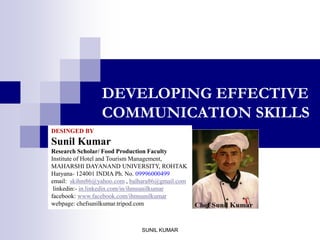
DESINGED BY
Sunil Kumar
Research Scholar/ Food Production Faculty
Institute of Hotel and Tourism Management,
MAHARSHI DAYANAND UNIVERSITY, ROHTAK
Haryana- 124001 INDIA Ph. No. 09996000499
email: skihm86@yahoo.com , balhara86@gmail.com
linkedin:- in.linkedin.com/in/ihmsunilkumar
facebook: www.facebook.com/ihmsunilkumar
webpage: chefsunilkumar.tripod.com
A module on :
 Basics of Communication
 Listening
 Questioning
SUNIL KUMAR
Basics of
Communication
Communication is simply a two way process of exchanging
ideas, information or transmitting verbal and non-verbal
messages.
SUNIL KUMAR
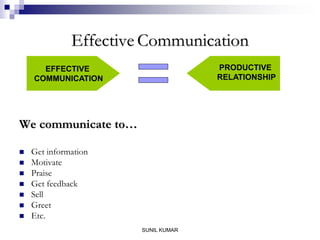
Effective Communication
EFFECTIVE
COMMUNICATION
PRODUCTIVE
RELATIONSHIP
We communicate to…
 Get information
 Motivate
 Praise
 Get feedback
 Sell
 Greet
 Etc.
SUNIL KUMAR
Barriers To Communication
 Premature evaluation
 Inattention
 Stereotyping
 Assumption
 Generalizing
 Poor listening skills
 Selective listening
 Fixed ideas
 Ignoring information contrary to our belief
 Noise
 Emotions
 Poor listening skills
SUNIL KUMAR
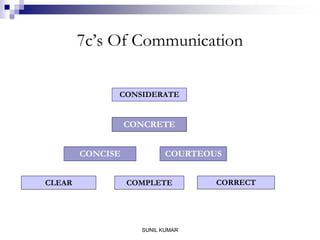
7c’s Of Communication
CLEAR COMPLETE CORRECT
CONCISE COURTEOUS
CONCRETE
CONSIDERATE
SUNIL KUMAR
Process Of Communication
SENDER
MEDIUM
RECIEVER
FEEDBACK
BARRIERS
Studies tell 70 % of mistakes in the workplace are a direct result of
poor communication…..
SUNIL KUMAR
Essentials Of Communication
Do’s
 Use precise, memorable and powerful words
 Support your words with visual aids
 Give examples
 Eye contact
 Active listening
 Paraphrase
 KISS – Keep it short and simple
 Avoid interrupting
 Appropriate facial expressions
 Exhibit affirmative head nods
SUNIL KUMAR
Essentials Of Communication
Don'ts
 Do not use technical terms and terminologies
not understood by majority of people
 Do not speak too fast or too slow
 Do not speak in inaudible surroundings as you
wont be heard
 Do not assume that everybody understands you
 Do not interrupt the speaker.
SUNIL KUMAR
Before communicating
Ask yourself…
 What is the main purpose/aim?
 Who will receive it?
 What is the likely attitude of the listener?
 How much does he need to know?
 Is my timing right?
 What is the main subject?
 Are the major points clear?
 Is there any ambiguity?
SUNIL KUMAR
Listening skills
SUNIL KUMAR
5 basic reasons we do not listen
 Listening is hard work
 Competition
 The rush for action
 Speed differences in the
rate of speaking and
understanding.
 Lack of training
SUNIL KUMAR
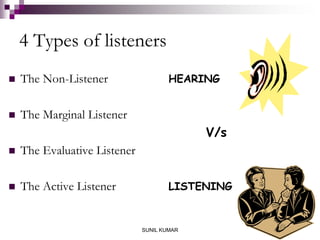
4 Types of listeners
 The Non-Listener HEARING
 The Marginal Listener
V/s
 The Evaluative Listener
 The Active Listener LISTENING
SUNIL KUMAR
How to improve your listening
skills?
 Maintain eye contact with the instructor
 Focus on content than on the way that it is being said.
 Avoid selective listening
 Avoid distractions
 Ask questions to stay active and interested.
 Face the speaker
 Maintain eye contact
 Respond appropriately – say yes, nod, etc.
 Do not be preoccupied with your own thoughts.
SUNIL KUMAR
Questioning
SUNIL KUMAR
Types of questions
CLOSE ENDED
Generally result in short yes/no or other one word answers.
They should be used only when you want precise, quick
answers. Otherwise, they inhibit thought.
OPEN ENDED
They invite an actual explanation for a response. Questions
that begin with “how”, “what” and “why” are typical open
ended questions.
SUNIL KUMAR
Closed Questions V/s Open Questions
 When did that happen?
 Was your trip successful?
 Did you like the candidate?
 Did you have a good
meeting?
 What led up to that?
 What did you manage to
accomplish on your trip?
 In what ways do you think
that candidate meets our
need?
 What happened at the
meeting?
SUNIL KUMAR
Probing Questions
 Can you be more specific?
 Can you give me an example of that?
 What happened then?
 How does this affect you?
 What might cause that, do you think?
 Can you fill me in on the details?
SUNIL KUMAR
Thank You
Open To Queries
SUNIL KUMAR

Developing effective communication skills

  • 1.
    DEVELOPING EFFECTIVE COMMUNICATION SKILLS SUNILKUMAR DESINGED BY Sunil Kumar Research Scholar/ Food Production Faculty Institute of Hotel and Tourism Management, MAHARSHI DAYANAND UNIVERSITY, ROHTAK Haryana- 124001 INDIA Ph. No. 09996000499 email: skihm86@yahoo.com , balhara86@gmail.com linkedin:- in.linkedin.com/in/ihmsunilkumar facebook: www.facebook.com/ihmsunilkumar webpage: chefsunilkumar.tripod.com
  • 2.
    A module on:  Basics of Communication  Listening  Questioning SUNIL KUMAR
  • 3.
    Basics of Communication Communication issimply a two way process of exchanging ideas, information or transmitting verbal and non-verbal messages. SUNIL KUMAR
  • 4.
    Effective Communication EFFECTIVE COMMUNICATION PRODUCTIVE RELATIONSHIP We communicateto…  Get information  Motivate  Praise  Get feedback  Sell  Greet  Etc. SUNIL KUMAR
  • 5.
    Barriers To Communication Premature evaluation  Inattention  Stereotyping  Assumption  Generalizing  Poor listening skills  Selective listening  Fixed ideas  Ignoring information contrary to our belief  Noise  Emotions  Poor listening skills SUNIL KUMAR
  • 6.
    7c’s Of Communication CLEARCOMPLETE CORRECT CONCISE COURTEOUS CONCRETE CONSIDERATE SUNIL KUMAR
  • 7.
    Process Of Communication SENDER MEDIUM RECIEVER FEEDBACK BARRIERS Studiestell 70 % of mistakes in the workplace are a direct result of poor communication….. SUNIL KUMAR
  • 8.
    Essentials Of Communication Do’s Use precise, memorable and powerful words  Support your words with visual aids  Give examples  Eye contact  Active listening  Paraphrase  KISS – Keep it short and simple  Avoid interrupting  Appropriate facial expressions  Exhibit affirmative head nods SUNIL KUMAR
  • 9.
    Essentials Of Communication Don'ts Do not use technical terms and terminologies not understood by majority of people  Do not speak too fast or too slow  Do not speak in inaudible surroundings as you wont be heard  Do not assume that everybody understands you  Do not interrupt the speaker. SUNIL KUMAR
  • 10.
    Before communicating Ask yourself… What is the main purpose/aim?  Who will receive it?  What is the likely attitude of the listener?  How much does he need to know?  Is my timing right?  What is the main subject?  Are the major points clear?  Is there any ambiguity? SUNIL KUMAR
  • 11.
  • 12.
    5 basic reasonswe do not listen  Listening is hard work  Competition  The rush for action  Speed differences in the rate of speaking and understanding.  Lack of training SUNIL KUMAR
  • 13.
    4 Types oflisteners  The Non-Listener HEARING  The Marginal Listener V/s  The Evaluative Listener  The Active Listener LISTENING SUNIL KUMAR
  • 14.
    How to improveyour listening skills?  Maintain eye contact with the instructor  Focus on content than on the way that it is being said.  Avoid selective listening  Avoid distractions  Ask questions to stay active and interested.  Face the speaker  Maintain eye contact  Respond appropriately – say yes, nod, etc.  Do not be preoccupied with your own thoughts. SUNIL KUMAR
  • 15.
  • 16.
    Types of questions CLOSEENDED Generally result in short yes/no or other one word answers. They should be used only when you want precise, quick answers. Otherwise, they inhibit thought. OPEN ENDED They invite an actual explanation for a response. Questions that begin with “how”, “what” and “why” are typical open ended questions. SUNIL KUMAR
  • 17.
    Closed Questions V/sOpen Questions  When did that happen?  Was your trip successful?  Did you like the candidate?  Did you have a good meeting?  What led up to that?  What did you manage to accomplish on your trip?  In what ways do you think that candidate meets our need?  What happened at the meeting? SUNIL KUMAR
  • 18.
    Probing Questions  Canyou be more specific?  Can you give me an example of that?  What happened then?  How does this affect you?  What might cause that, do you think?  Can you fill me in on the details? SUNIL KUMAR
  • 19.
    Thank You Open ToQueries SUNIL KUMAR