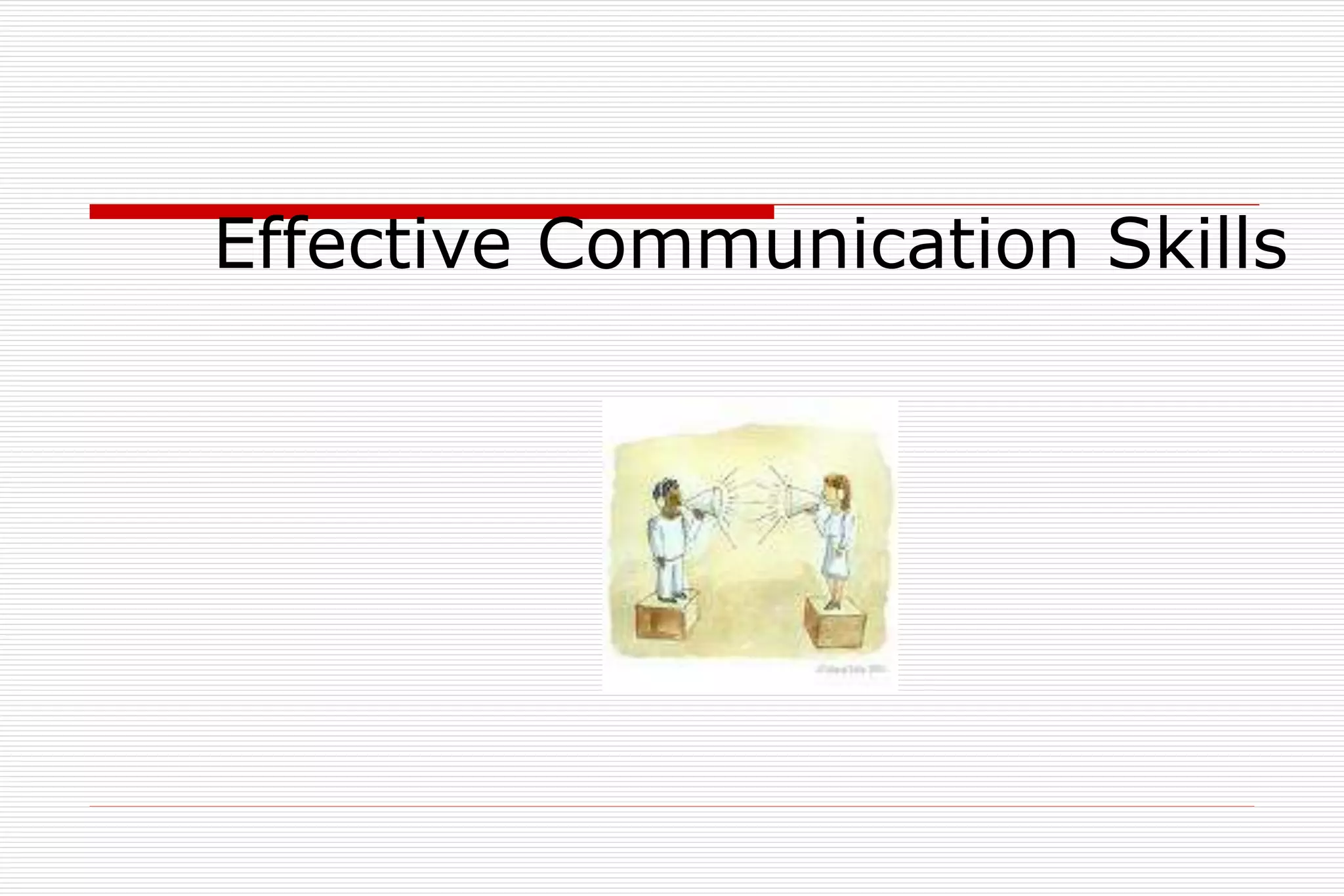
Effective Communication Skills
Objectives
 Define and understand communication and the
communication process
 List and overcome the filters/barriers in a
communication process
 Practice active listening
 Tips to improve verbal and non verbal
communication
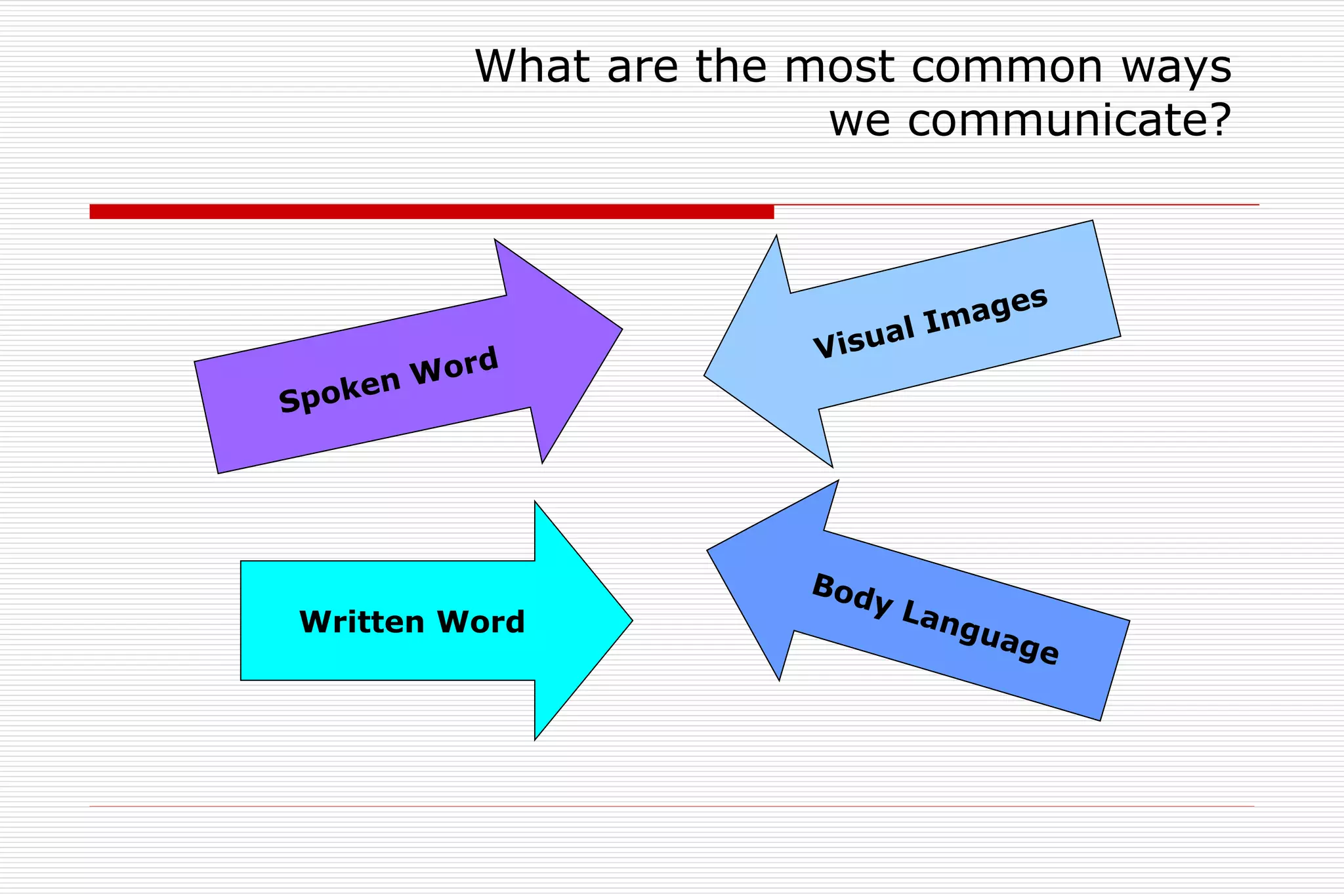
What are the most common ways
we communicate?
Written Word
What is Communication?
Communication is the transmission of an idea or feeling so
that the sender and receiver share the same
understanding.
Communication is not a mysterious process.
It takes place when the ideas from your mind are transferred to
another’s and arrive intact, complete, and coherent.
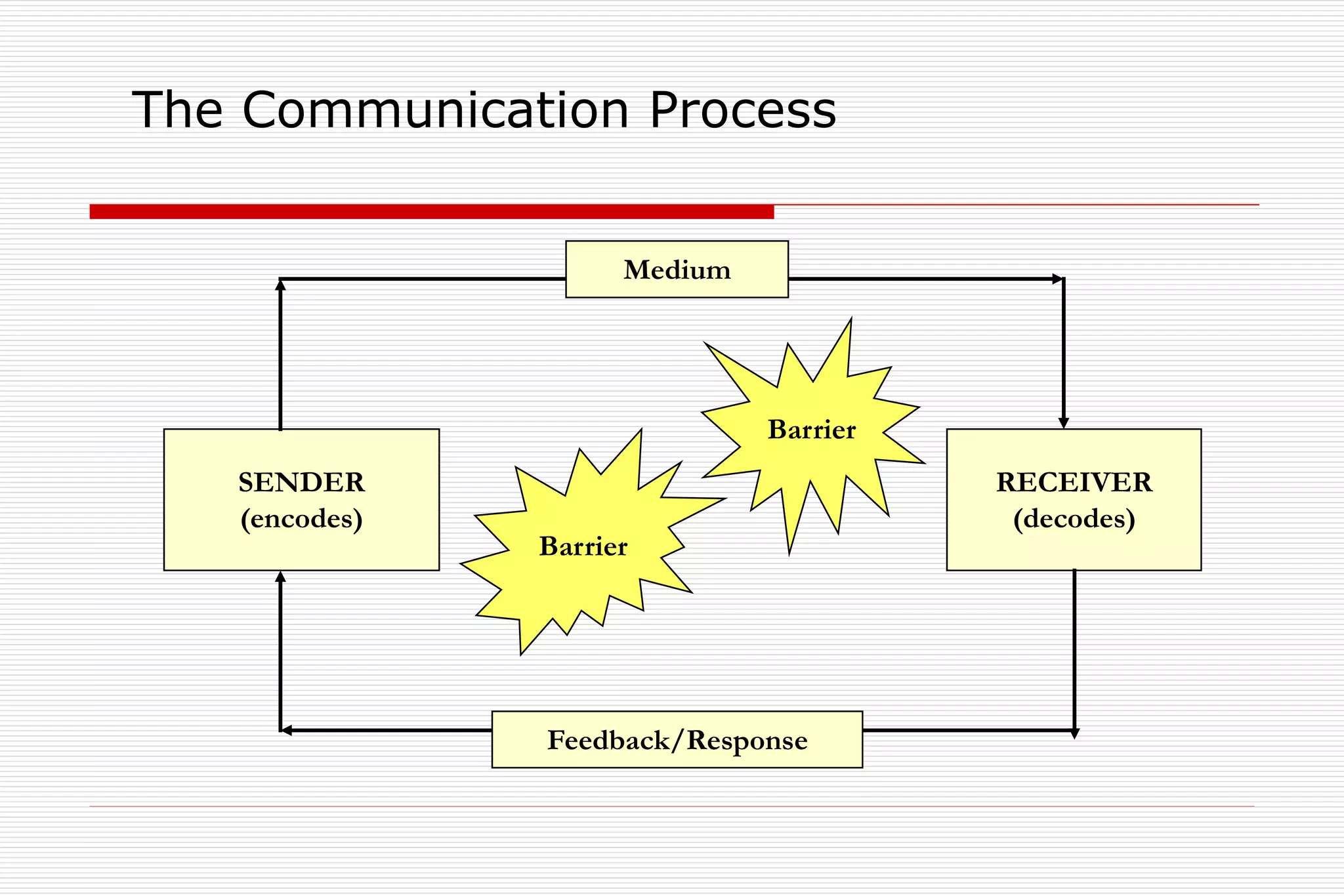
The Communication Process
SENDER
(encodes)
RECEIVER
(decodes)
Barrier
Barrier
Medium
Feedback/Response
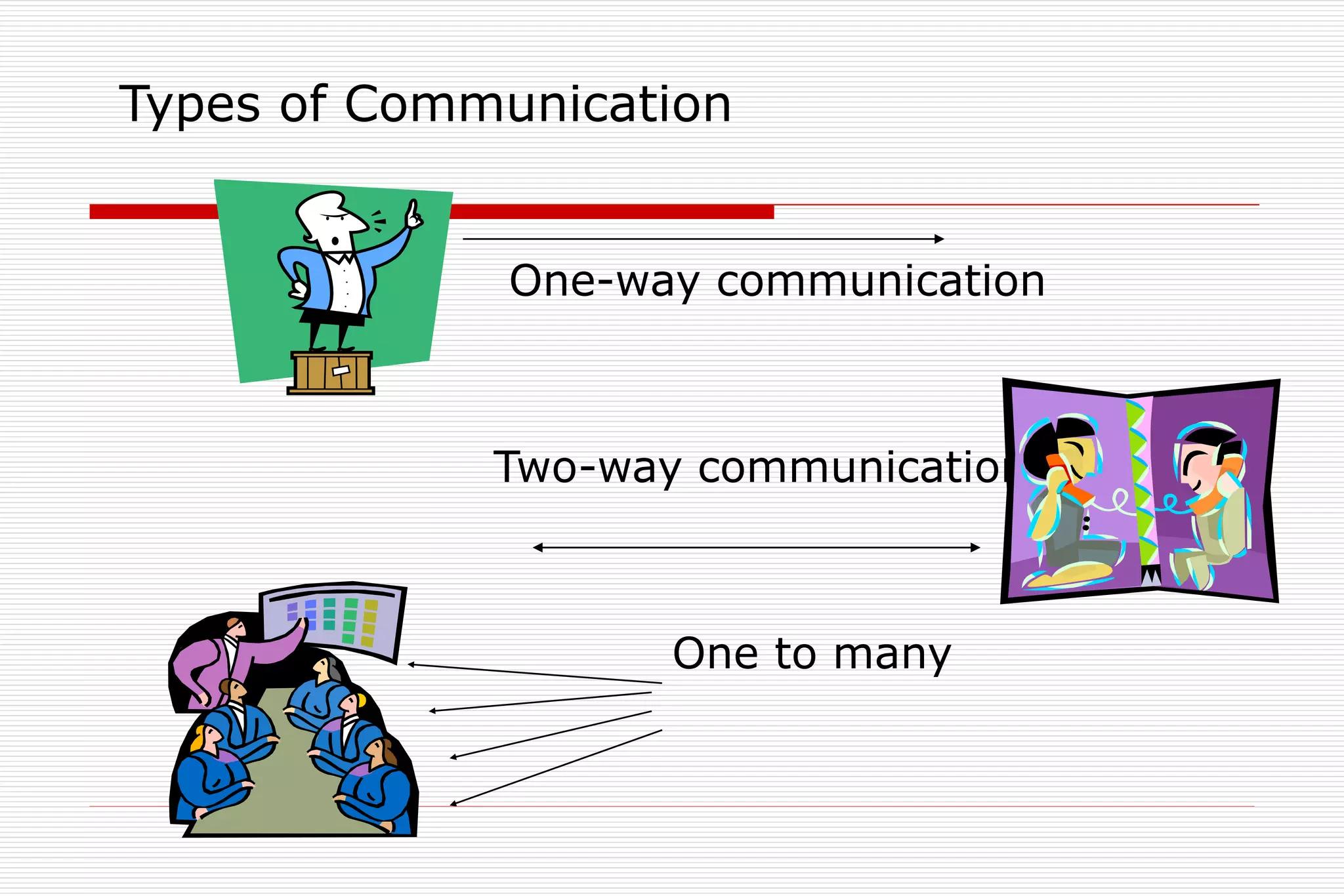
Types of Communication
One-way communication
Two-way communication
One to many
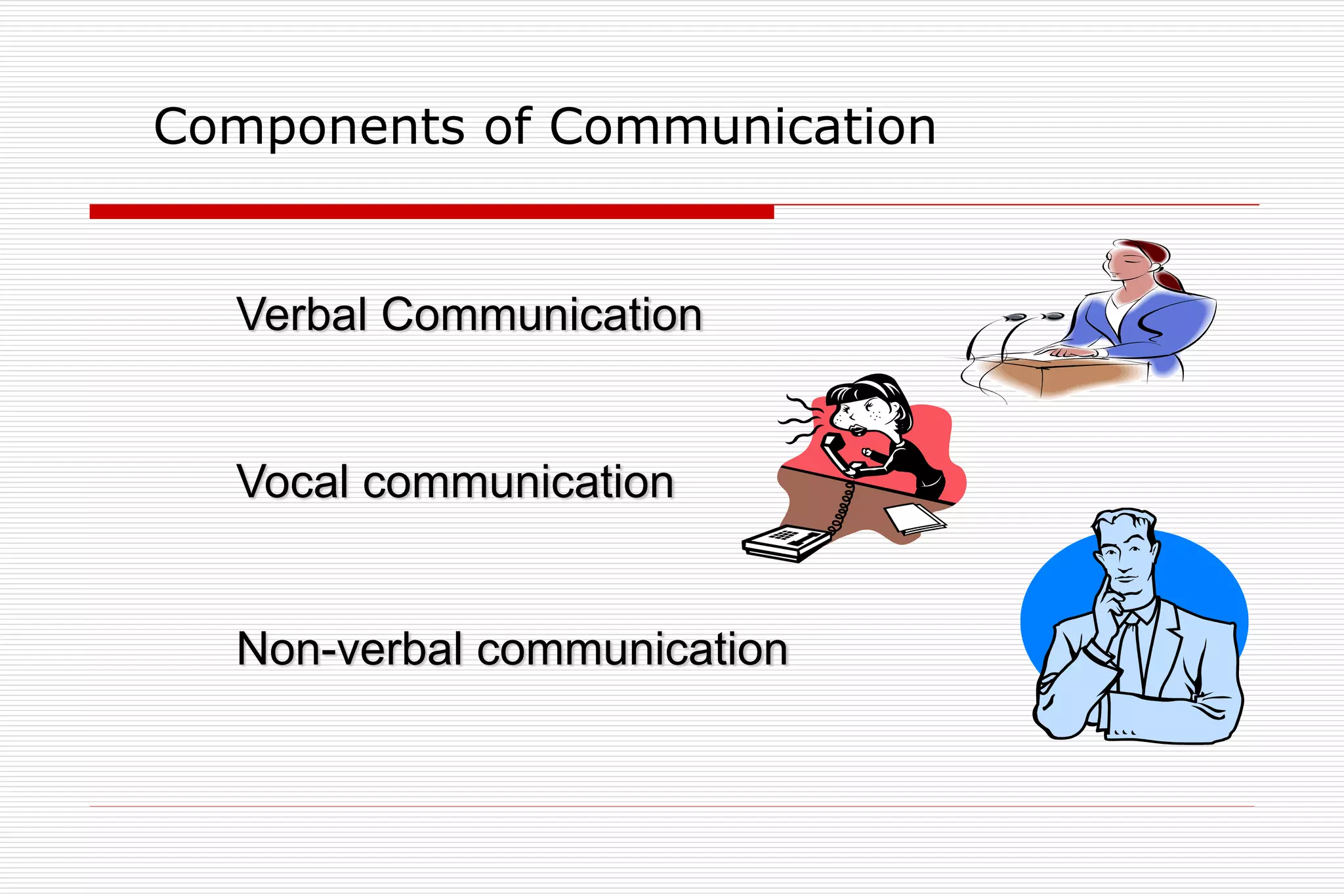
Components of Communication
Verbal Communication
Vocal communication
Non-verbal communication
Features of Effective Communication
 Active Listening
 Eye contact
 Posture
 Simple language
 Questioning skills
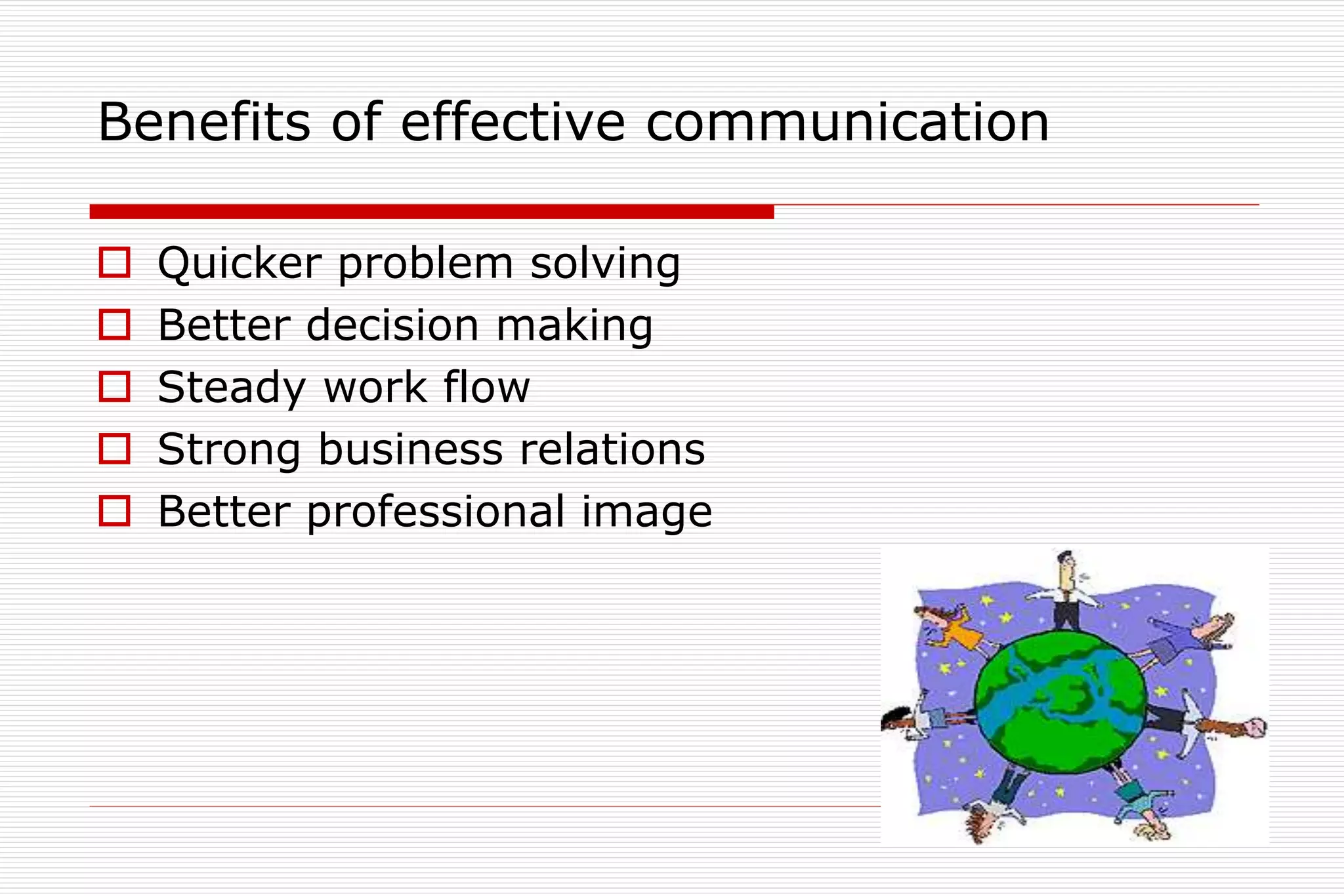
Benefits of effective communication
 Quicker problem solving
 Better decision making
 Steady work flow
 Strong business relations
 Better professional image
Barriers to communication
 Noise
 Inappropriate medium
 Assumptions/Misconceptions
 Emotions
 Language differences
 Cultural differences
 Poor listening skills
 Use of jargon
 Distractions
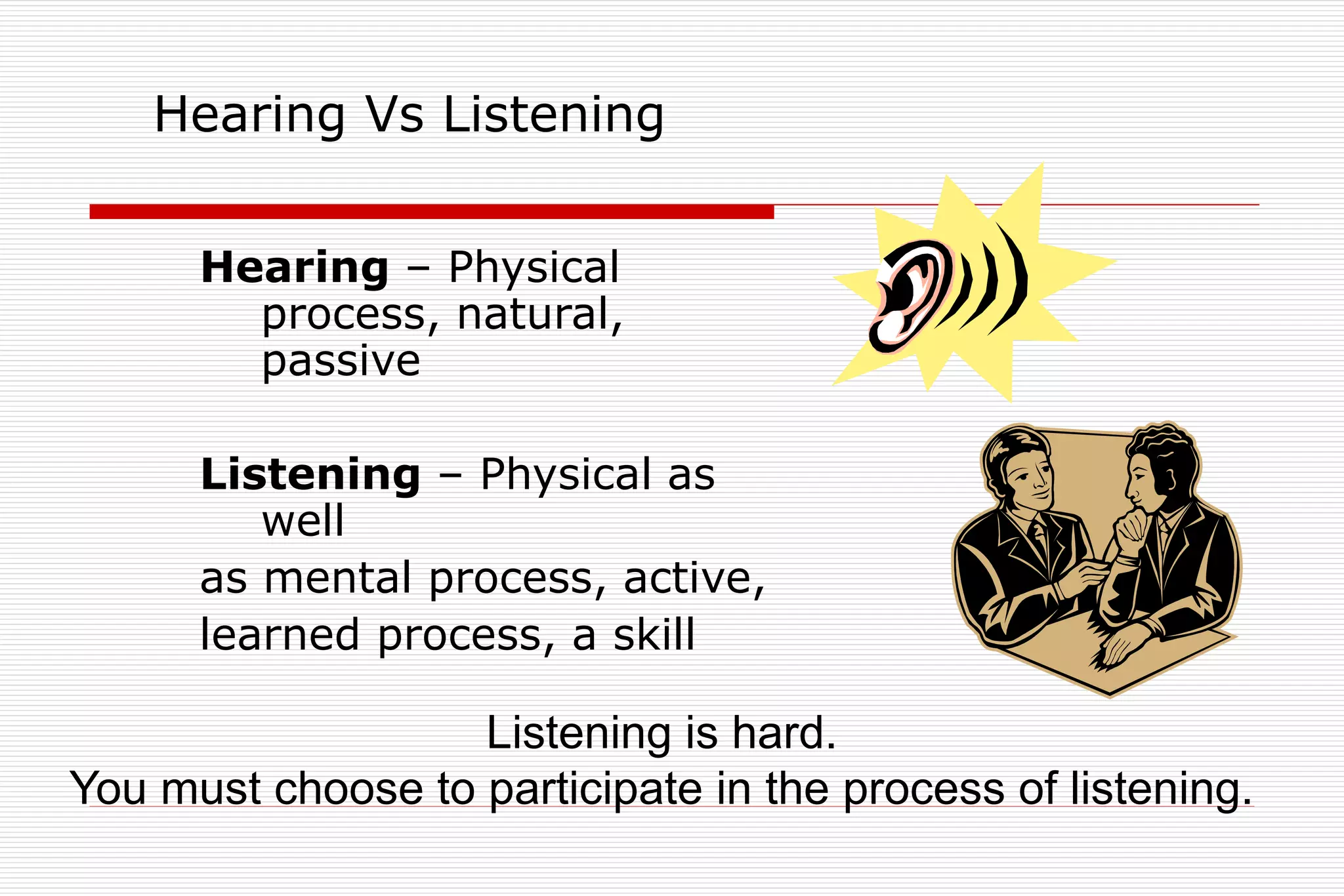
Hearing Vs Listening
Hearing – Physical
process, natural,
passive
Listening – Physical as
well
as mental process, active,
learned process, a skill
Listening is hard.
You must choose to participate in the process of listening.
Active Listening
The process of recognizing, understanding, and
accurately interpreting communicated messages
and responding to spoken and/or nonverbal
messages.
Steps to Effective Listening:
 Hearing
 Interpretation
 Evaluation
 Respond
o Eliminate Noise
o Get Feedback – Verbal & Body Signals
o Speak Slowly & Rephrase your
sentence
o Don’t Talk down to the other person
o Listen Carefully & Patiently
Improving Verbal Communication-Tips
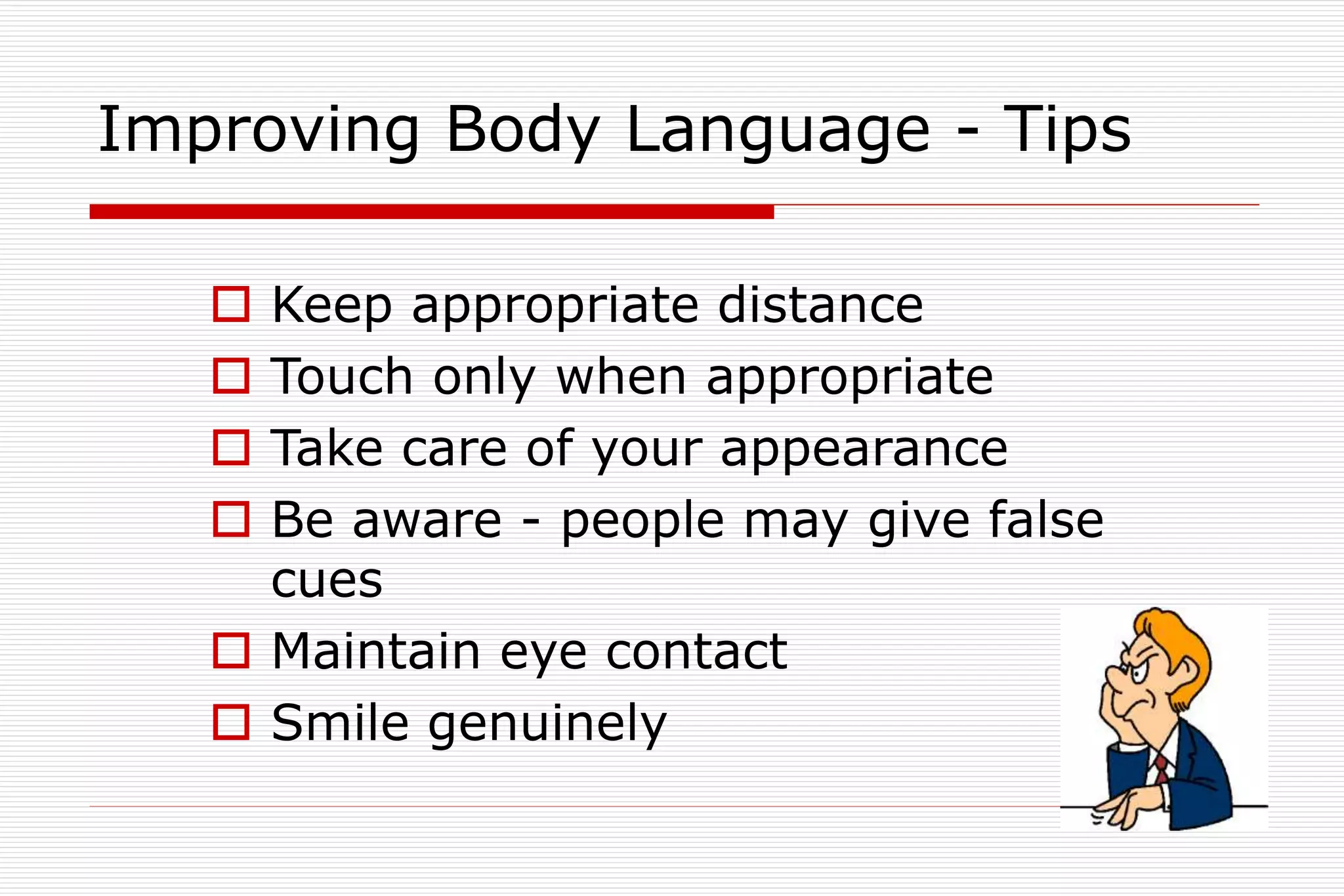
Improving Body Language - Tips
 Keep appropriate distance
 Touch only when appropriate
 Take care of your appearance
 Be aware - people may give false
cues
 Maintain eye contact
 Smile genuinely
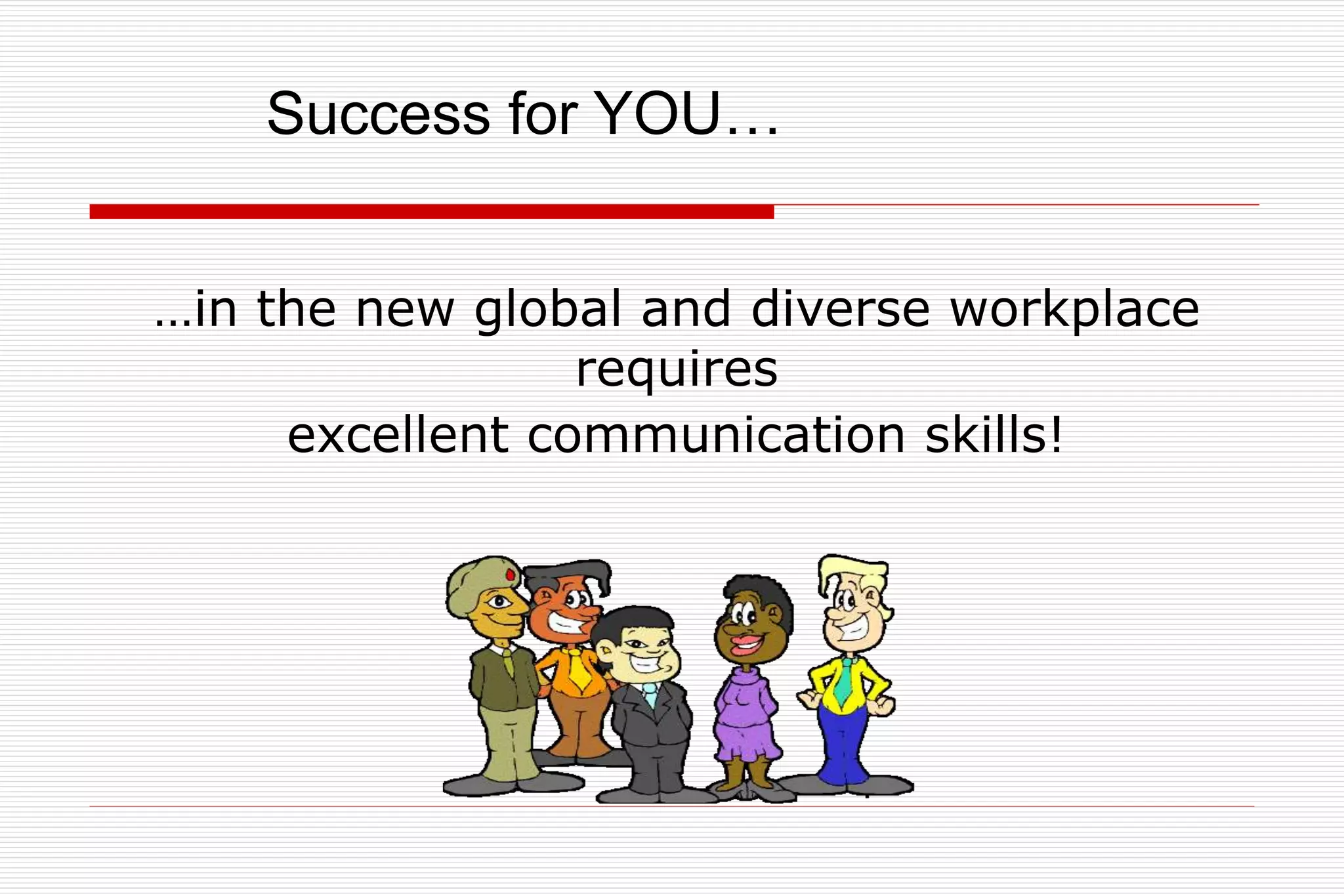
…in the new global and diverse workplace
requires
excellent communication skills!
Success for YOU…
THANK YOU

Effective Communication Skills.ppt

  • 1.
  • 2.
    Objectives  Define andunderstand communication and the communication process  List and overcome the filters/barriers in a communication process  Practice active listening  Tips to improve verbal and non verbal communication
  • 3.
    What are themost common ways we communicate? Written Word
  • 4.
    What is Communication? Communicationis the transmission of an idea or feeling so that the sender and receiver share the same understanding. Communication is not a mysterious process. It takes place when the ideas from your mind are transferred to another’s and arrive intact, complete, and coherent.
  • 5.
  • 6.
    Types of Communication One-waycommunication Two-way communication One to many
  • 7.
    Components of Communication VerbalCommunication Vocal communication Non-verbal communication
  • 8.
    Features of EffectiveCommunication  Active Listening  Eye contact  Posture  Simple language  Questioning skills
  • 9.
    Benefits of effectivecommunication  Quicker problem solving  Better decision making  Steady work flow  Strong business relations  Better professional image
  • 10.
    Barriers to communication Noise  Inappropriate medium  Assumptions/Misconceptions  Emotions  Language differences  Cultural differences  Poor listening skills  Use of jargon  Distractions
  • 11.
    Hearing Vs Listening Hearing– Physical process, natural, passive Listening – Physical as well as mental process, active, learned process, a skill Listening is hard. You must choose to participate in the process of listening.
  • 12.
    Active Listening The processof recognizing, understanding, and accurately interpreting communicated messages and responding to spoken and/or nonverbal messages. Steps to Effective Listening:  Hearing  Interpretation  Evaluation  Respond
  • 13.
    o Eliminate Noise oGet Feedback – Verbal & Body Signals o Speak Slowly & Rephrase your sentence o Don’t Talk down to the other person o Listen Carefully & Patiently Improving Verbal Communication-Tips
  • 14.
    Improving Body Language- Tips  Keep appropriate distance  Touch only when appropriate  Take care of your appearance  Be aware - people may give false cues  Maintain eye contact  Smile genuinely
  • 15.
    …in the newglobal and diverse workplace requires excellent communication skills! Success for YOU…
  • 16.