Downloaded 89 times



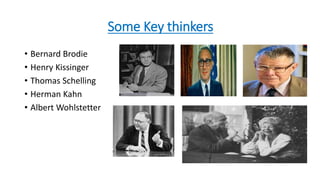

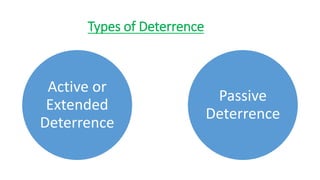





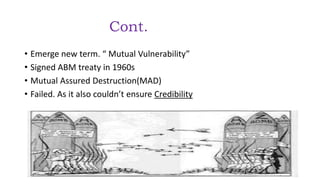



Deterrence aims to persuade opponents not to initiate action through psychological threats rather than physical involvement. It involves restricting actions, promising punishment, and threatening retaliation to deter attacks. Key thinkers on deterrence include Bernard Brodie, Henry Kissinger, and Thomas Schelling. For deterrence to succeed, it requires communication of capabilities and credibility of retaliation. Types of deterrence include active/extended deterrence involving direct threats and passive deterrence relying on enemy perceptions. Massive retaliation and flexible response were Cold War deterrence doctrines that struggled with credibility.


