

Presented By
SHEIKH ABIR AHMED
NAZIA JALIL JERIN
SAYED FAHIM AKTAB ALI
BIR-16; Sec: B
LEVELS OF ANALYSIS
CONCEPTS
 Perspective that suggests possible explanation to ‘WHY’
questions.
Helps us to explain an incident with multiple explanations.
Types of ‘Levels of Analysis’
Individual Level
Domestic Level
Interstate Level
Global Level
INDIVIDUAL LEVEL
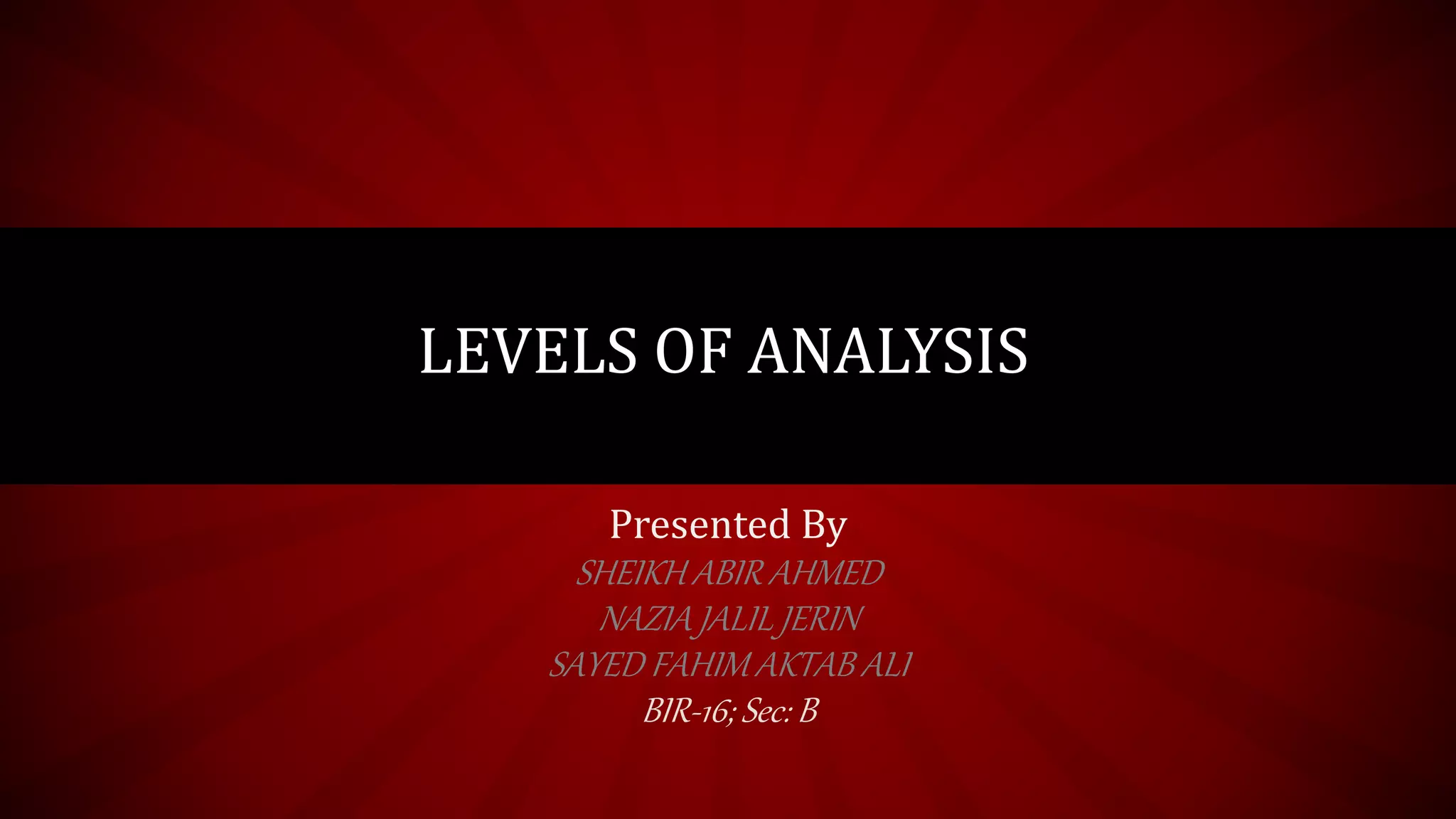
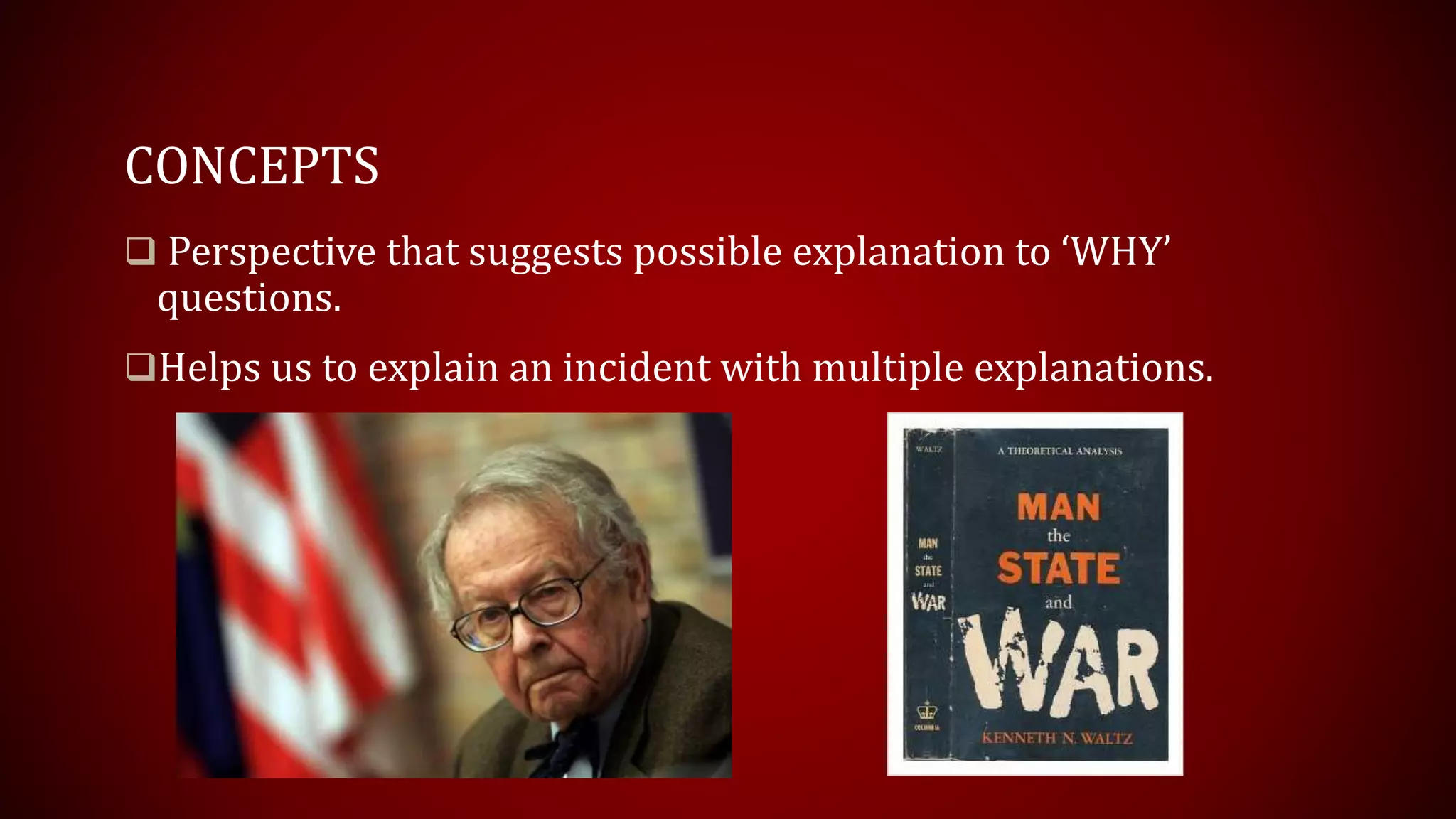
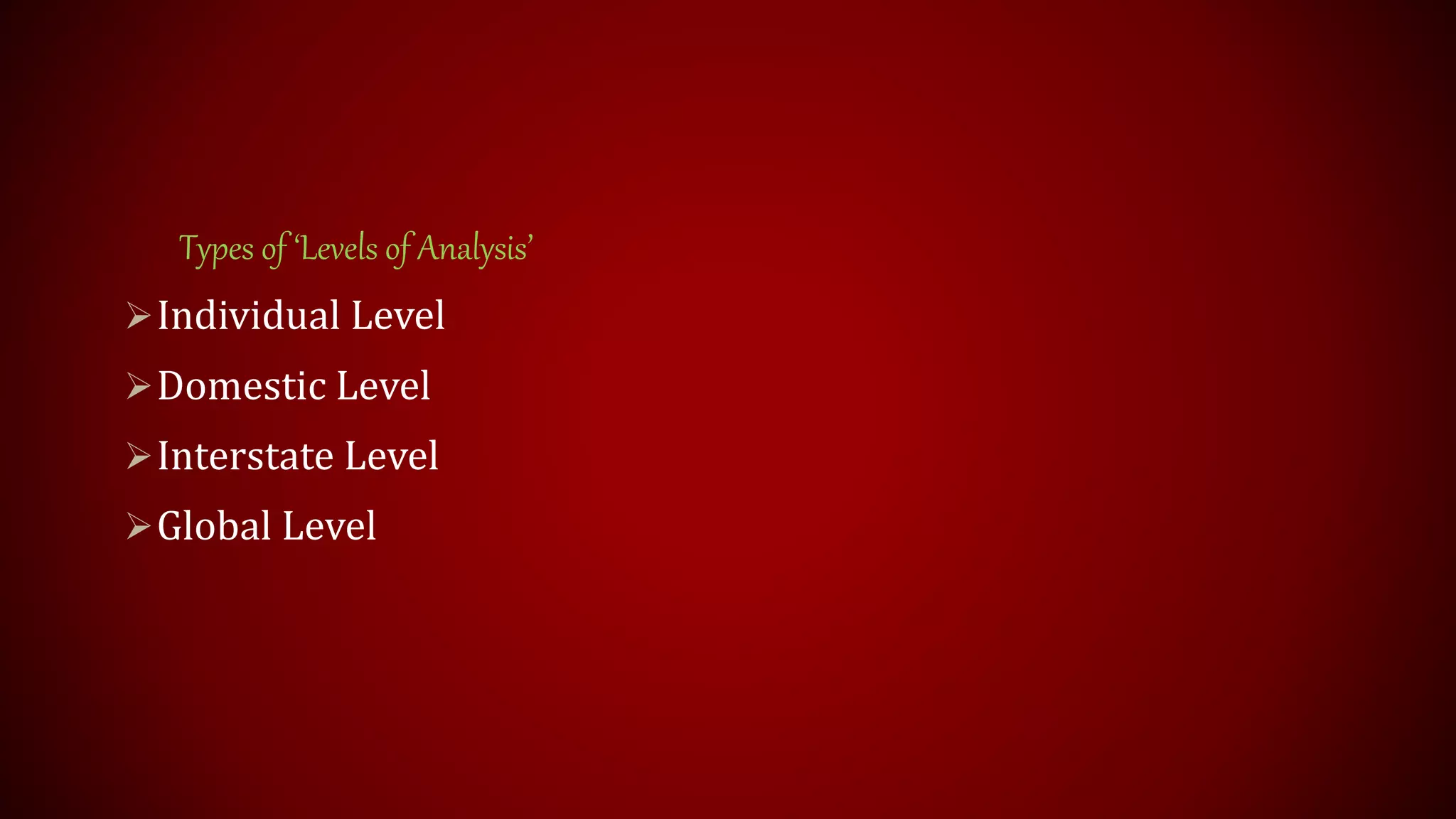
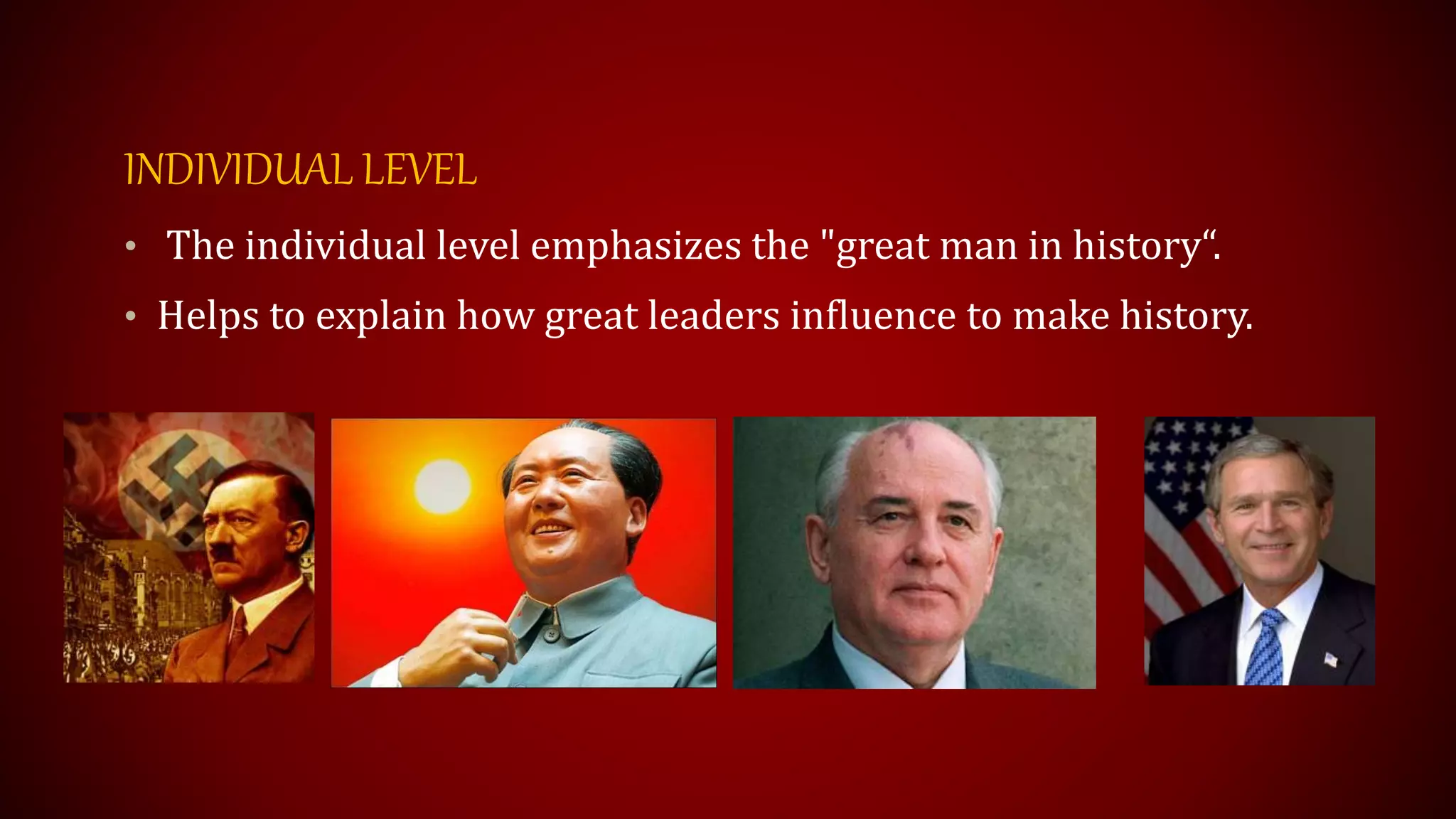
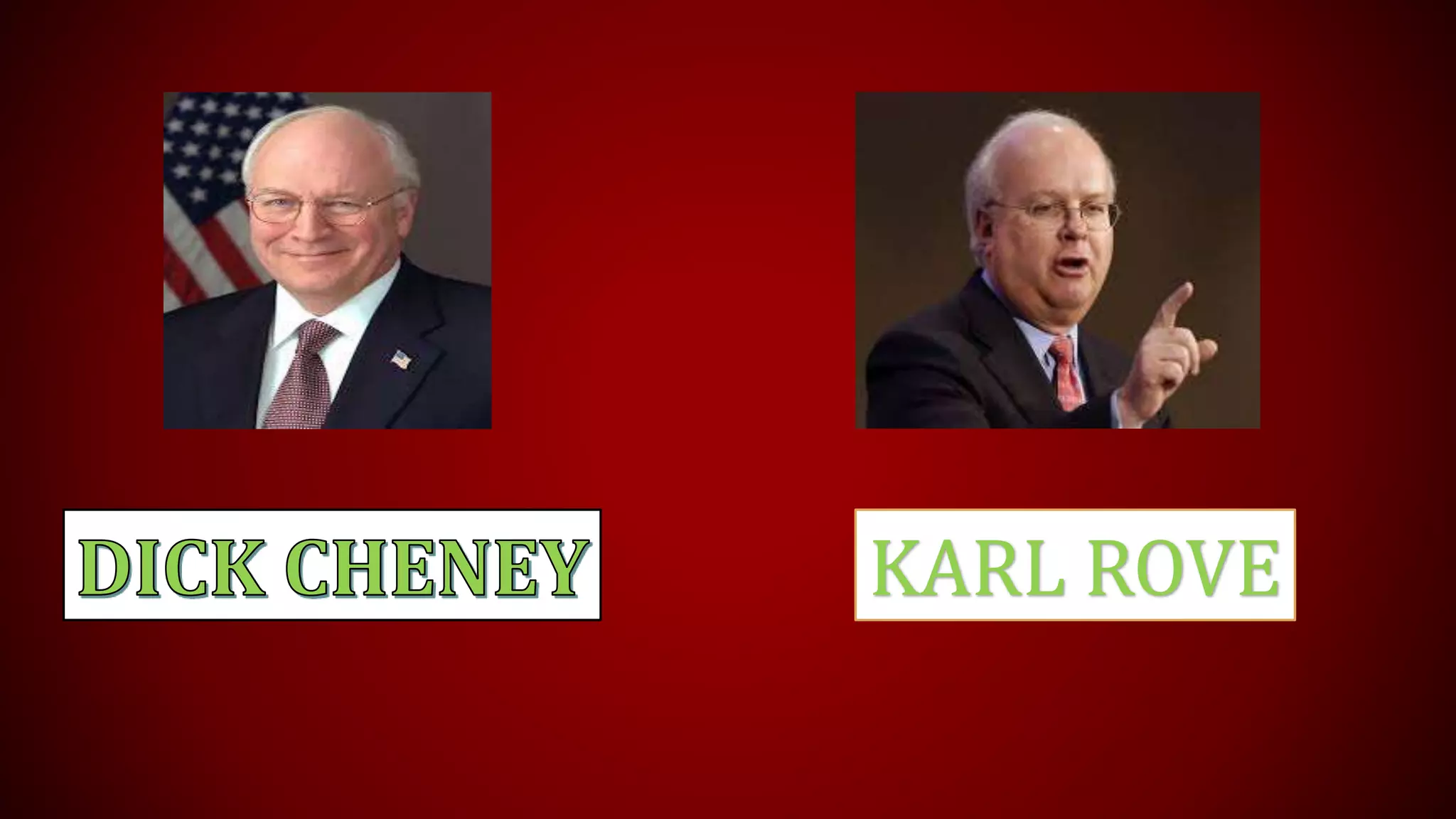
• The individual level emphasizes the "great man in history“.
• Helps to explain how great leaders influence to make history.
KARL ROVE
DOMESTIC LEVEL
SOCIETY
• Dominant Culture
• Ethnic Make-up
• Religion
• Econ. Development
GOVERNMENT
• Type of Government (Dictatorship
or Democracy)
• Organization (Presidential v.
Parliamentary System)
• Stability of System
INTERSTATE LEVEL
• Focuses on the interaction of the states themselves,
without regard to their internal makeup or the
particular individuals who lead them.
• Pays attention to states relative power positions in
the international system and the interactions (trade,
for example)among them.
• Traditionally the most important level of analysis.
GLOBAL LEVEL
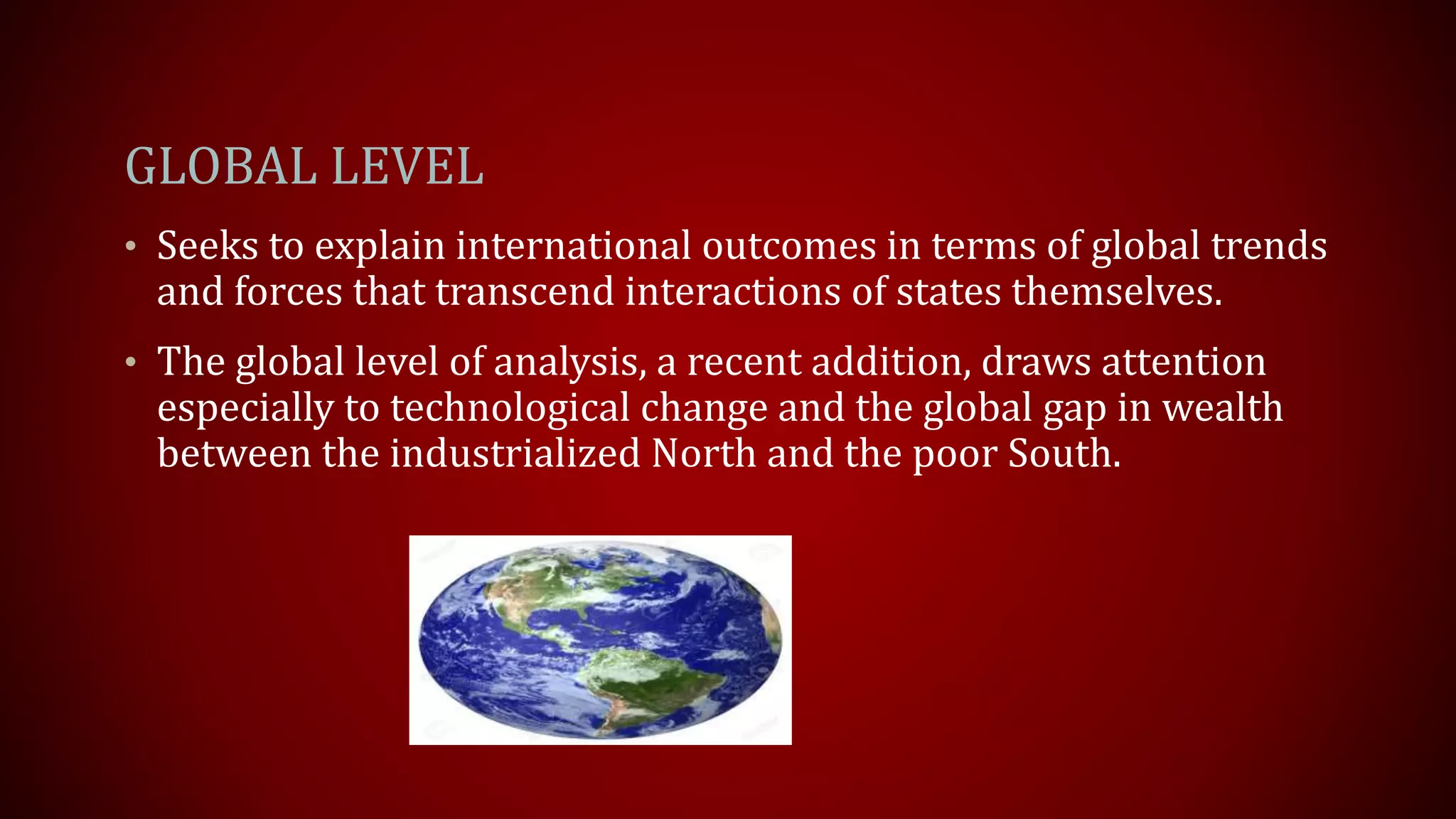
• Seeks to explain international outcomes in terms of global trends
and forces that transcend interactions of states themselves.
• The global level of analysis, a recent addition, draws attention
especially to technological change and the global gap in wealth
between the industrialized North and the poor South.
Levels of analysis
Levels of analysis

Levels of analysis

  • 1.
    Presented By SHEIKH ABIRAHMED NAZIA JALIL JERIN SAYED FAHIM AKTAB ALI BIR-16; Sec: B LEVELS OF ANALYSIS
  • 2.
    CONCEPTS  Perspective thatsuggests possible explanation to ‘WHY’ questions. Helps us to explain an incident with multiple explanations.
  • 3.
    Types of ‘Levelsof Analysis’ Individual Level Domestic Level Interstate Level Global Level
  • 4.
    INDIVIDUAL LEVEL • Theindividual level emphasizes the "great man in history“. • Helps to explain how great leaders influence to make history.
  • 5.
  • 6.
    DOMESTIC LEVEL SOCIETY • DominantCulture • Ethnic Make-up • Religion • Econ. Development GOVERNMENT • Type of Government (Dictatorship or Democracy) • Organization (Presidential v. Parliamentary System) • Stability of System
  • 7.
    INTERSTATE LEVEL • Focuseson the interaction of the states themselves, without regard to their internal makeup or the particular individuals who lead them. • Pays attention to states relative power positions in the international system and the interactions (trade, for example)among them. • Traditionally the most important level of analysis.
  • 8.
    GLOBAL LEVEL • Seeksto explain international outcomes in terms of global trends and forces that transcend interactions of states themselves. • The global level of analysis, a recent addition, draws attention especially to technological change and the global gap in wealth between the industrialized North and the poor South.