Managing Careers Chapter 10 Part 3  |  Training and Development
After studying this chapter, you should be able to: Compare employers’ traditional and career planning-oriented HR focuses. Explain the employee’s, manager’s, and employer’s career development roles. Describe the issues to consider when making promotion decisions. Describe the methods for enhancing diversity through career management. Answer the question: How can career development foster employee commitment?
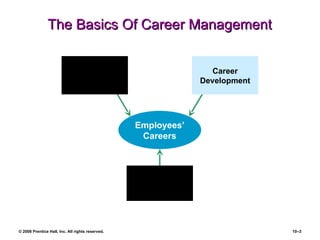
The Basics Of Career Management Career Management Career  Planning Career Development Employees’ Careers
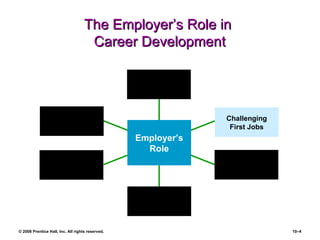
The Employer’s Role in  Career Development Realistic Job Previews Challenging First Jobs Networking and Interactions Mentoring Career-Oriented Appraisals Job  Rotation Employer’s Role
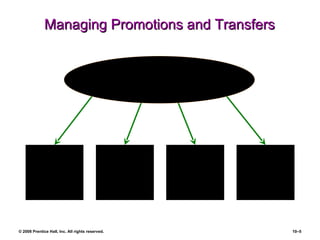
Managing Promotions and Transfers Decision 1:  Is Seniority or Competence the Rule? Decision 4: Vertical, Horizontal, or Other? Decision 2: How Should We Measure Competence? Decision 3: Is the Process Formal or Informal? Making Promotion Decisions
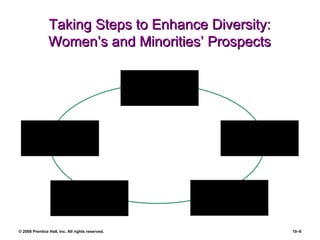
Taking Steps to Enhance Diversity: Women’s and Minorities’ Prospects Take Their Career Interests Seriously Eliminate Institutional Barriers Eliminate the Glass Ceiling Improve Networking and Mentoring Institute Flexible Schedules and Career Tracks
Career Management and Employee Commitment Old Contract:   “Do your best and be loyal to us, and we’ll take care of your career.”  New Contract:   “Do your best for us and be loyal to us for as long as you’re here, and we’ll provide you with the developmental opportunities you’ll need to move on and have a successful career.” Comparing Yesterday’s and Today’s  Employee-Employer Contract
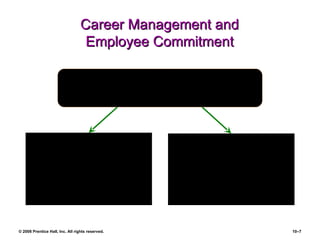
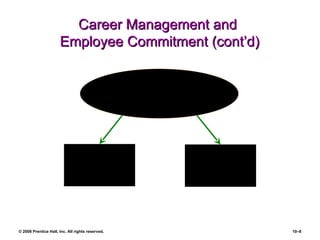
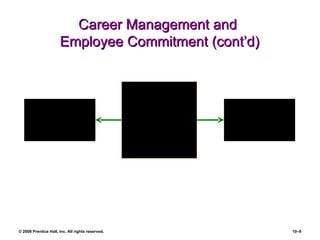
Career Management and  Employee Commitment (cont’d) Career Development Programs Career-Oriented Appraisals Commitment-oriented career development efforts
Career Management and  Employee Commitment (cont’d) Career Development Programs Career-Oriented Appraisals Commitment-Oriented Career Development Efforts
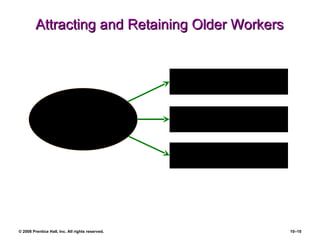
Attracting and Retaining Older Workers Create a Culture that Honors Experience Offer Flexible Work Offer Part-Time Work HR Practices for Older Workers
K E Y  T E R M S career career management career development career planning career planning and development reality shock job rotation mentoring promotions transfers retirement preretirement counseling career cycle growth stage exploration stage establishment stage trial substage stabilization substage midcareer crisis substage maintenance stage decline stage career anchors
Managing Careers Chapter 10 Appendix Part 3  |  Training and Development
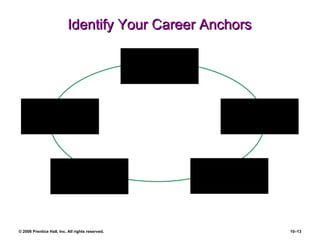
Identify Your Career Anchors Technical/ Functional Competence Managerial Competence Autonomy and Independence Creativity Security

Dessler 10

  • 1.
    Managing Careers Chapter10 Part 3 | Training and Development
  • 2.
    After studying thischapter, you should be able to: Compare employers’ traditional and career planning-oriented HR focuses. Explain the employee’s, manager’s, and employer’s career development roles. Describe the issues to consider when making promotion decisions. Describe the methods for enhancing diversity through career management. Answer the question: How can career development foster employee commitment?
  • 3.
    The Basics OfCareer Management Career Management Career Planning Career Development Employees’ Careers
  • 4.
    The Employer’s Rolein Career Development Realistic Job Previews Challenging First Jobs Networking and Interactions Mentoring Career-Oriented Appraisals Job Rotation Employer’s Role
  • 5.
    Managing Promotions andTransfers Decision 1: Is Seniority or Competence the Rule? Decision 4: Vertical, Horizontal, or Other? Decision 2: How Should We Measure Competence? Decision 3: Is the Process Formal or Informal? Making Promotion Decisions
  • 6.
    Taking Steps toEnhance Diversity: Women’s and Minorities’ Prospects Take Their Career Interests Seriously Eliminate Institutional Barriers Eliminate the Glass Ceiling Improve Networking and Mentoring Institute Flexible Schedules and Career Tracks
  • 7.
    Career Management andEmployee Commitment Old Contract: “Do your best and be loyal to us, and we’ll take care of your career.” New Contract: “Do your best for us and be loyal to us for as long as you’re here, and we’ll provide you with the developmental opportunities you’ll need to move on and have a successful career.” Comparing Yesterday’s and Today’s Employee-Employer Contract
  • 8.
    Career Management and Employee Commitment (cont’d) Career Development Programs Career-Oriented Appraisals Commitment-oriented career development efforts
  • 9.
    Career Management and Employee Commitment (cont’d) Career Development Programs Career-Oriented Appraisals Commitment-Oriented Career Development Efforts
  • 10.
    Attracting and RetainingOlder Workers Create a Culture that Honors Experience Offer Flexible Work Offer Part-Time Work HR Practices for Older Workers
  • 11.
    K E Y T E R M S career career management career development career planning career planning and development reality shock job rotation mentoring promotions transfers retirement preretirement counseling career cycle growth stage exploration stage establishment stage trial substage stabilization substage midcareer crisis substage maintenance stage decline stage career anchors
  • 12.
    Managing Careers Chapter10 Appendix Part 3 | Training and Development
  • 13.
    Identify Your CareerAnchors Technical/ Functional Competence Managerial Competence Autonomy and Independence Creativity Security