Manoj shaw
Rahul Pujari
Bikash sahoo
Anamika Patel
Ipsita Tripathy
Promotion
Advantages of
promotions
 Promotion ,paves the way for employee self

employment .
 It enhances employee to use his knowledge and skills.
 It inspires employees to compete and get ahead of

others.
 It encourages them to remain royal and commited to

their jobs and the organisation .
Bases of Promotion
 Merit – based Promotions
 Seniority –based Promotions
Merit-based Promotions


Advantages –
•

•

It motivates employees to work hard, improve their
knowledge, acquire new skills and contibute to organisational
efficiency.
It helps the employer to focous attention on talented
people, recognise and reward their meritorious contributions
in an appropriate way .
Limitations  Personal prejudices ,biases and union pressures may

come in the way of promoting the best performer.
 When young employee s get ahead of the senior

employees in an organisation , they may fell insecure
and may even quit the organisation.
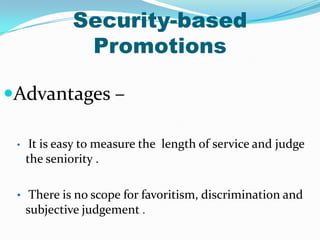
Security-based
Promotions
Advantages –
•

It is easy to measure the length of service and judge
the seniority .

• There is no scope for favoritism, discrimination and
subjective judgement .
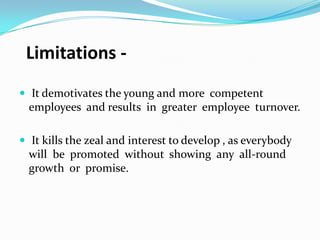
Limitations  It demotivates the young and more competent

employees and results in greater employee turnover.
 It kills the zeal and interest to develop , as everybody

will be promoted without showing any all-round
growth or promise.
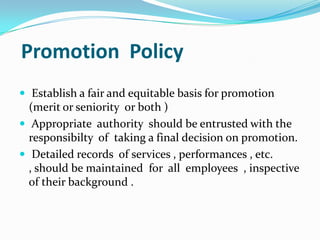
Promotion Policy
 Establish a fair and equitable basis for promotion

(merit or seniority or both )
 Appropriate authority should be entrusted with the
responsibilty of taking a final decision on promotion.
 Detailed records of services , performances , etc.
, should be maintained for all employees , inspective
of their background .
Transfer
Purposes of Transfer
 To meet the organisational requirements
 To satisfy the employee needs
 To utilise employees better

 To adjust the work force
 To provide relief
 To reduce conflicts
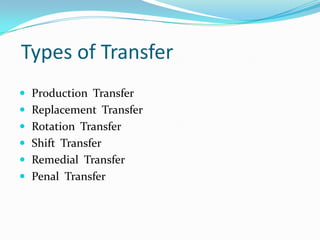
Types of Transfer
 Production Transfer
 Replacement Transfer
 Rotation Transfer

 Shift Transfer
 Remedial Transfer
 Penal Transfer
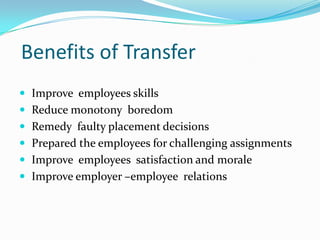
Benefits of Transfer
 Improve employees skills
 Reduce monotony boredom
 Remedy faulty placement decisions

 Prepared the employees for challenging assignments
 Improve employees satisfaction and morale
 Improve employer –employee relations
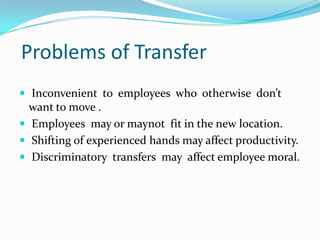
Problems of Transfer
 Inconvenient to employees who otherwise don’t

want to move .
 Employees may or maynot fit in the new location.
 Shifting of experienced hands may affect productivity.
 Discriminatory transfers may affect employee moral.
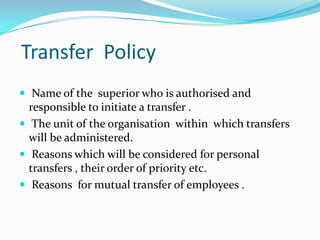
Transfer Policy
 Name of the superior who is authorised and

responsible to initiate a transfer .
 The unit of the organisation within which transfers
will be administered.
 Reasons which will be considered for personal
transfers , their order of priority etc.
 Reasons for mutual transfer of employees .
Conclusion

Hrm promotion & transfer

  • 1.
    Manoj shaw Rahul Pujari Bikashsahoo Anamika Patel Ipsita Tripathy
  • 2.
  • 3.
    Advantages of promotions  Promotion,paves the way for employee self employment .  It enhances employee to use his knowledge and skills.  It inspires employees to compete and get ahead of others.  It encourages them to remain royal and commited to their jobs and the organisation .
  • 4.
    Bases of Promotion Merit – based Promotions  Seniority –based Promotions
  • 5.
    Merit-based Promotions  Advantages – • • Itmotivates employees to work hard, improve their knowledge, acquire new skills and contibute to organisational efficiency. It helps the employer to focous attention on talented people, recognise and reward their meritorious contributions in an appropriate way .
  • 6.
    Limitations  Personalprejudices ,biases and union pressures may come in the way of promoting the best performer.  When young employee s get ahead of the senior employees in an organisation , they may fell insecure and may even quit the organisation.
  • 7.
    Security-based Promotions Advantages – • It iseasy to measure the length of service and judge the seniority . • There is no scope for favoritism, discrimination and subjective judgement .
  • 8.
    Limitations  Itdemotivates the young and more competent employees and results in greater employee turnover.  It kills the zeal and interest to develop , as everybody will be promoted without showing any all-round growth or promise.
  • 9.
    Promotion Policy  Establisha fair and equitable basis for promotion (merit or seniority or both )  Appropriate authority should be entrusted with the responsibilty of taking a final decision on promotion.  Detailed records of services , performances , etc. , should be maintained for all employees , inspective of their background .
  • 10.
  • 11.
    Purposes of Transfer To meet the organisational requirements  To satisfy the employee needs  To utilise employees better  To adjust the work force  To provide relief  To reduce conflicts
  • 12.
    Types of Transfer Production Transfer  Replacement Transfer  Rotation Transfer  Shift Transfer  Remedial Transfer  Penal Transfer
  • 13.
    Benefits of Transfer Improve employees skills  Reduce monotony boredom  Remedy faulty placement decisions  Prepared the employees for challenging assignments  Improve employees satisfaction and morale  Improve employer –employee relations
  • 14.
    Problems of Transfer Inconvenient to employees who otherwise don’t want to move .  Employees may or maynot fit in the new location.  Shifting of experienced hands may affect productivity.  Discriminatory transfers may affect employee moral.
  • 15.
    Transfer Policy  Nameof the superior who is authorised and responsible to initiate a transfer .  The unit of the organisation within which transfers will be administered.  Reasons which will be considered for personal transfers , their order of priority etc.  Reasons for mutual transfer of employees .
  • 16.