Human Resource
Management
ELEVENTH EDITION

1

GARY DESSLER

Part 1 | Introduction

Chapter 3

Strategic Human Resource Management
and the HR Scorecard
© 2008 Prentice Hall, Inc.
All rights reserved.

PowerPoint Presentation by Charlie Cook
The University of West Alabama
After studying this chapter, you should be able to:
1. Outline the steps in the strategic management
process.
2. Explain and give examples of each type of
companywide and competitive strategy.
3. Explain what a strategy-oriented human resource
management system is and why it is important.
4. Illustrate and explain each of the seven steps in the HR
Scorecard approach to creating human resource
management systems.

© 2008 Prentice Hall, Inc. All
rights reserved.

3–2
The Strategic Management Process
• Strategic Management
 The process of identifying and executing the

organization’s mission by matching its capabilities
with the demands of its environment.

• Strategy
 A chosen course of action.

• Strategic Plan
 How an organization intends to balance its internal

strengths and weaknesses with its external
opportunities and threats to maintain a competitive
advantage over the long-term.
© 2008 Prentice Hall, Inc. All
rights reserved.

3–3
Business Vision and Mission
• Vision
 A general statement of an organization’s intended

direction that evokes emotional feelings in
organization members.

• Mission
 Spells out who the company is, what it does, and

where it’s headed.

© 2008 Prentice Hall, Inc. All
rights reserved.

3–4
Types of Strategies
Corporate-Level
Strategies

Diversification
Strategy

Vertical
Integration
Strategy

© 2008 Prentice Hall, Inc. All
rights reserved.

Geographic
Expansion
Strategy

Consolidation
Strategy

3–5
Types of Strategies (cont’d)
Business-Level/
Competitive
Strategies

Cost Leadership

Differentiation

© 2008 Prentice Hall, Inc. All
rights reserved.

Focus/Niche

3–6
Achieving Strategic Fit
• The “Fit” Point of View (Porter)
 All of the firm’s activities must be tailored to or fit

the chosen strategy such that the firm’s functional
strategies support its corporate and competitive
strategies.

• Leveraging (Hamel and Prahalad)
 “Stretch” in leveraging resources—supplementing

what you have and doing more with what you have—
can be more important than just fitting the strategic
plan to current resources.

© 2008 Prentice Hall, Inc. All
rights reserved.

3–7
Strategic Human Resource Management
• Strategic Human Resource Management
 The linking of HRM with strategic goals and

objectives in order to improve business performance
and develop organizational cultures that foster
innovation and flexibility.


Involves formulating and executing HR systems—HR
policies and activities—that produce the employee
competencies and behaviors that the company needs
to achieve its strategic aims.

© 2008 Prentice Hall, Inc. All
rights reserved.

3–8
Strategic Human Resource Challenges
Basic Strategic
Challenges

Corporate
productivity and
performance
improvement
efforts

Expanded role of
employees in the
organization’s
performance
efforts

© 2008 Prentice Hall, Inc. All
rights reserved.

Increased HR
team involvement
in design of
strategic plans

3–9
Human Resource Management’s
Strategic Roles

Strategic
Planning
Roles

Strategy
Execution
Role

© 2008 Prentice Hall, Inc. All
rights reserved.

Strategy
Formulation
Role

3–10
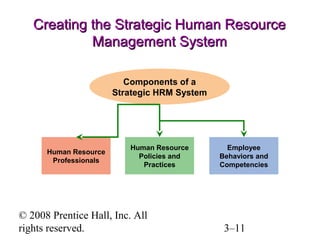
Creating the Strategic Human Resource
Management System
Components of a
Strategic HRM System

Human Resource
Professionals

Human Resource
Policies and
Practices

© 2008 Prentice Hall, Inc. All
rights reserved.

Employee
Behaviors and
Competencies

3–11
KEY TERMS
strategic plan
strategic management
vision
mission
SWOT analysis
strategy
strategic control
competitive advantage
leveraging
strategic human resource management
HR Scorecard
metrics
value chain analysis

© 2008 Prentice Hall, Inc. All
rights reserved.

3–12
Creating an HR Scorecard
The 10-Step HR Scorecard Process
1

Define the business strategy

6

Identify required HR policies
and activities

2

Outline value chain activities

7

Create HR Scorecard

3

Outline a strategy map

8

Choose HR Scorecard
measures

4

Identify strategically required
outcomes

9

Summarize Scorecard
measures on digital dashboard

5

Identify required workforce
competencies and behaviors

10

Monitor, predict, evaluate

© 2008 Prentice Hall, Inc. All
rights reserved.

3–13

HRM Dessler CH# 03

  • 1.
    Human Resource Management ELEVENTH EDITION 1 GARYDESSLER Part 1 | Introduction Chapter 3 Strategic Human Resource Management and the HR Scorecard © 2008 Prentice Hall, Inc. All rights reserved. PowerPoint Presentation by Charlie Cook The University of West Alabama
  • 2.
    After studying thischapter, you should be able to: 1. Outline the steps in the strategic management process. 2. Explain and give examples of each type of companywide and competitive strategy. 3. Explain what a strategy-oriented human resource management system is and why it is important. 4. Illustrate and explain each of the seven steps in the HR Scorecard approach to creating human resource management systems. © 2008 Prentice Hall, Inc. All rights reserved. 3–2
  • 3.
    The Strategic ManagementProcess • Strategic Management  The process of identifying and executing the organization’s mission by matching its capabilities with the demands of its environment. • Strategy  A chosen course of action. • Strategic Plan  How an organization intends to balance its internal strengths and weaknesses with its external opportunities and threats to maintain a competitive advantage over the long-term. © 2008 Prentice Hall, Inc. All rights reserved. 3–3
  • 4.
    Business Vision andMission • Vision  A general statement of an organization’s intended direction that evokes emotional feelings in organization members. • Mission  Spells out who the company is, what it does, and where it’s headed. © 2008 Prentice Hall, Inc. All rights reserved. 3–4
  • 5.
    Types of Strategies Corporate-Level Strategies Diversification Strategy Vertical Integration Strategy ©2008 Prentice Hall, Inc. All rights reserved. Geographic Expansion Strategy Consolidation Strategy 3–5
  • 6.
    Types of Strategies(cont’d) Business-Level/ Competitive Strategies Cost Leadership Differentiation © 2008 Prentice Hall, Inc. All rights reserved. Focus/Niche 3–6
  • 7.
    Achieving Strategic Fit •The “Fit” Point of View (Porter)  All of the firm’s activities must be tailored to or fit the chosen strategy such that the firm’s functional strategies support its corporate and competitive strategies. • Leveraging (Hamel and Prahalad)  “Stretch” in leveraging resources—supplementing what you have and doing more with what you have— can be more important than just fitting the strategic plan to current resources. © 2008 Prentice Hall, Inc. All rights reserved. 3–7
  • 8.
    Strategic Human ResourceManagement • Strategic Human Resource Management  The linking of HRM with strategic goals and objectives in order to improve business performance and develop organizational cultures that foster innovation and flexibility.  Involves formulating and executing HR systems—HR policies and activities—that produce the employee competencies and behaviors that the company needs to achieve its strategic aims. © 2008 Prentice Hall, Inc. All rights reserved. 3–8
  • 9.
    Strategic Human ResourceChallenges Basic Strategic Challenges Corporate productivity and performance improvement efforts Expanded role of employees in the organization’s performance efforts © 2008 Prentice Hall, Inc. All rights reserved. Increased HR team involvement in design of strategic plans 3–9
  • 10.
    Human Resource Management’s StrategicRoles Strategic Planning Roles Strategy Execution Role © 2008 Prentice Hall, Inc. All rights reserved. Strategy Formulation Role 3–10
  • 11.
    Creating the StrategicHuman Resource Management System Components of a Strategic HRM System Human Resource Professionals Human Resource Policies and Practices © 2008 Prentice Hall, Inc. All rights reserved. Employee Behaviors and Competencies 3–11
  • 12.
    KEY TERMS strategic plan strategicmanagement vision mission SWOT analysis strategy strategic control competitive advantage leveraging strategic human resource management HR Scorecard metrics value chain analysis © 2008 Prentice Hall, Inc. All rights reserved. 3–12
  • 13.
    Creating an HRScorecard The 10-Step HR Scorecard Process 1 Define the business strategy 6 Identify required HR policies and activities 2 Outline value chain activities 7 Create HR Scorecard 3 Outline a strategy map 8 Choose HR Scorecard measures 4 Identify strategically required outcomes 9 Summarize Scorecard measures on digital dashboard 5 Identify required workforce competencies and behaviors 10 Monitor, predict, evaluate © 2008 Prentice Hall, Inc. All rights reserved. 3–13