Design Thinking….
The Process in Action
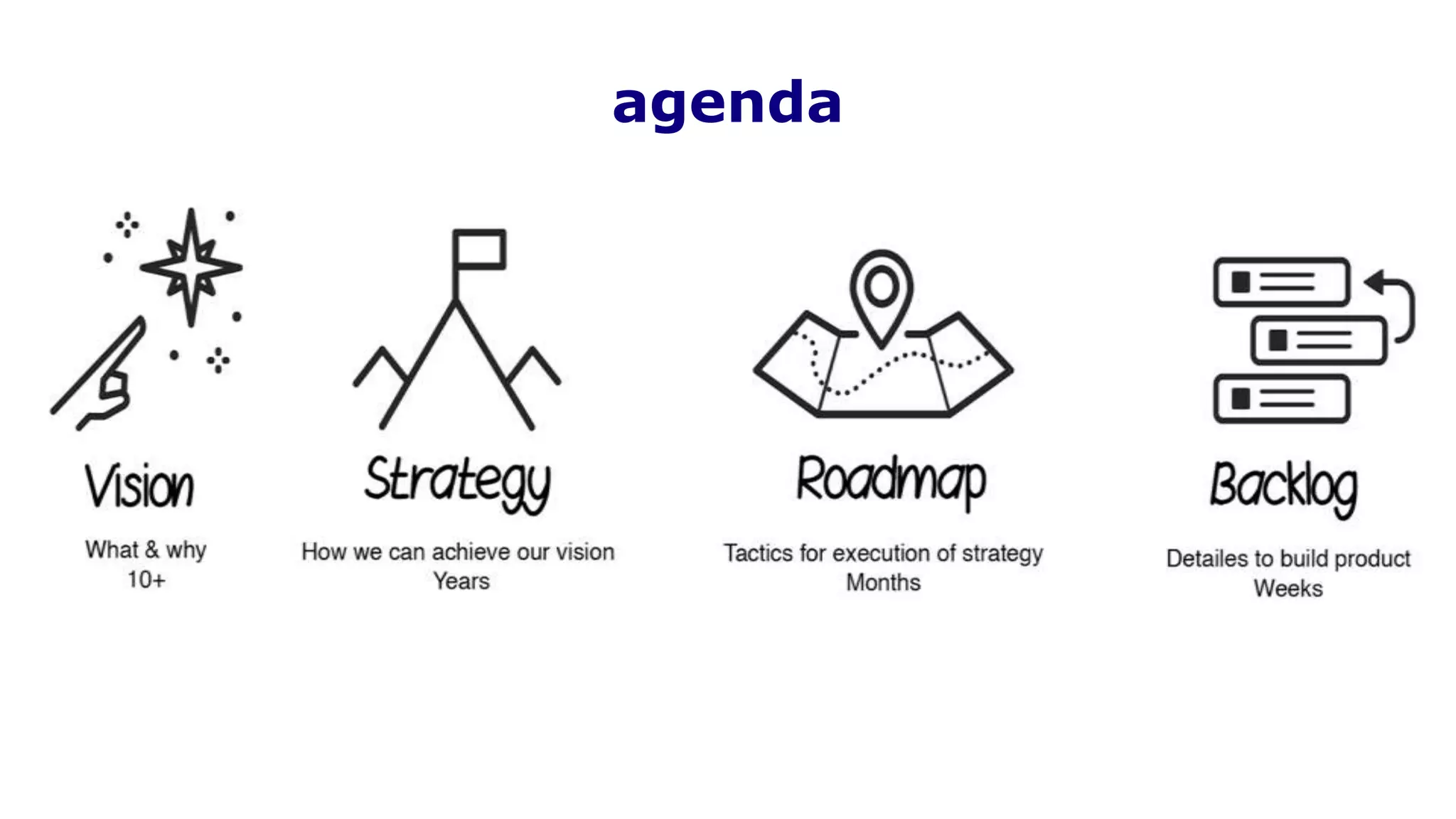
agenda
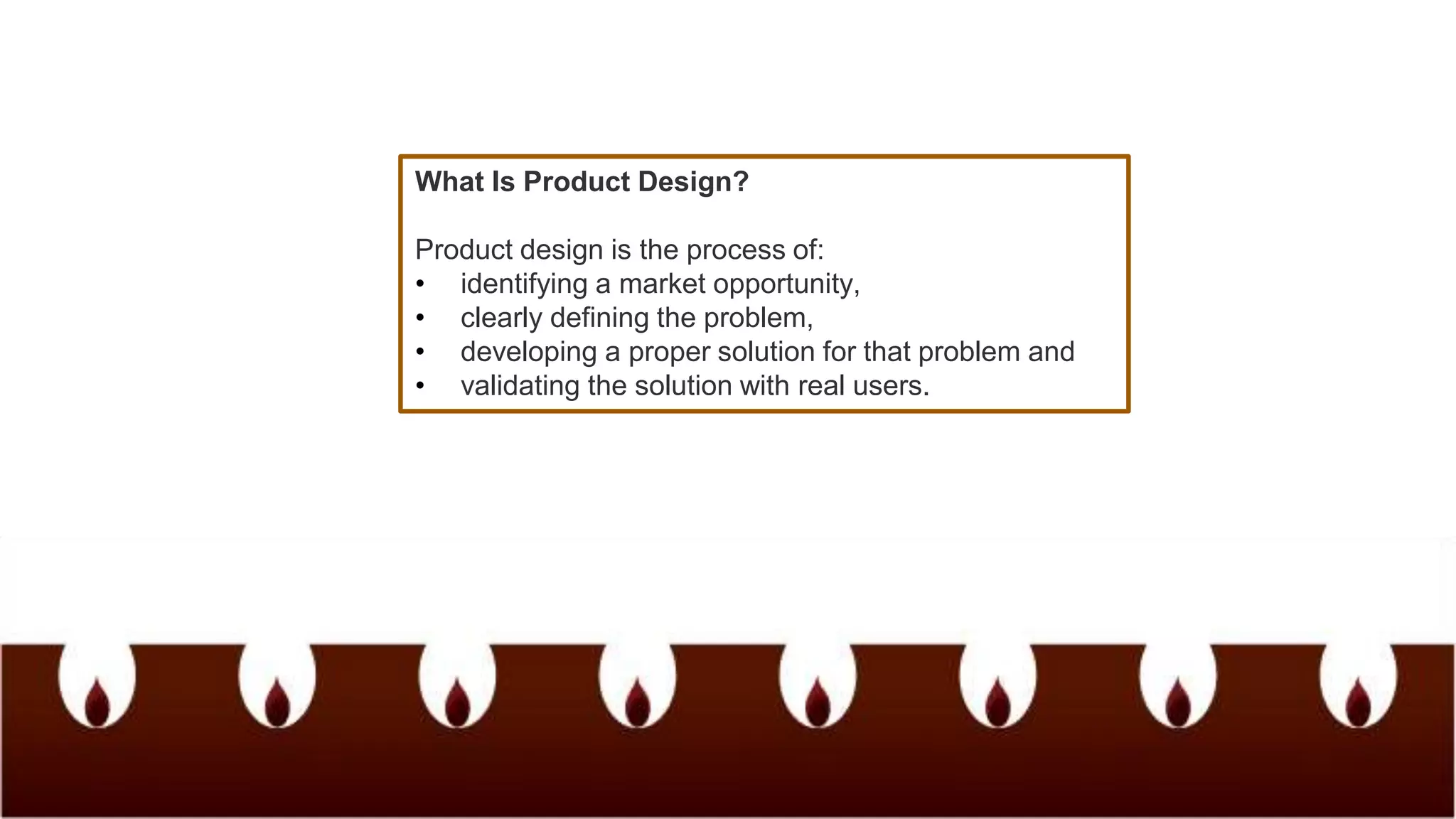
What Is Product Design?
Product design is the process of:
• identifying a market opportunity,
• clearly defining the problem,
• developing a proper solution for that problem and
• validating the solution with real users.
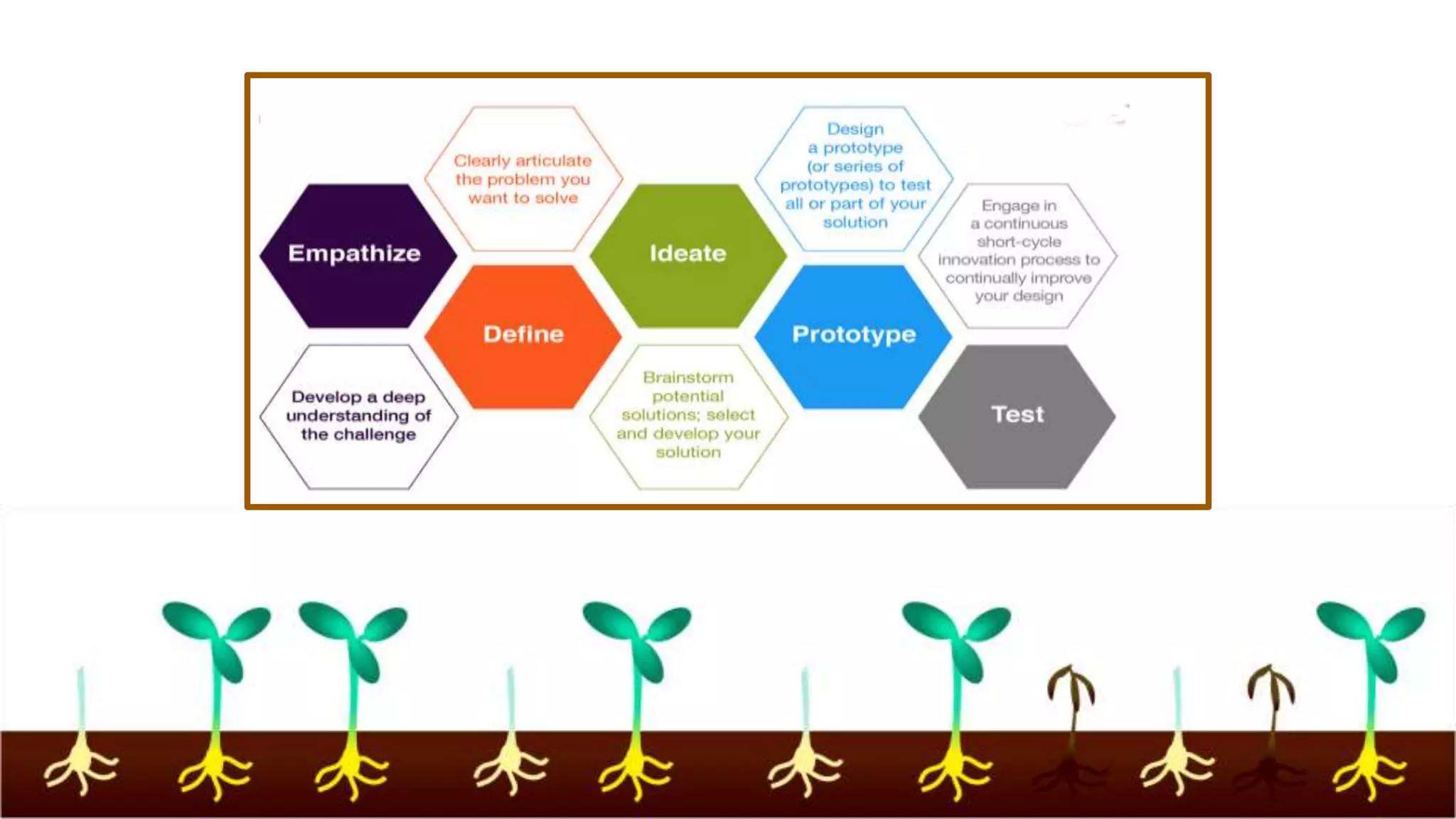
Finding a solution to a problem includes the following five phases:
Empathize
Learn about the people for whom you are designing. Conduct research to develop a deeper understanding of your
users.
Define
Create a point of view that is based on user needs and insights.
Ideate
Brainstorm and come up with as many creative solutions as possible. Generate a range of potential solutions by giving
yourself and your team total freedom.
Prototype
Build a prototype (or series of prototypes) to test your hypothesis. Creating a prototype lets designer see if they’re on
the right track, and it often sparks different ideas that you wouldn’t have come up with otherwise.
Test
Return to your users for feedback.
Empathize: Grading and responding to essays is a critical part of students’
learning, but it is time-consuming and difficult for educators to “grade”
and provide feedback in a way that is beneficial to students.
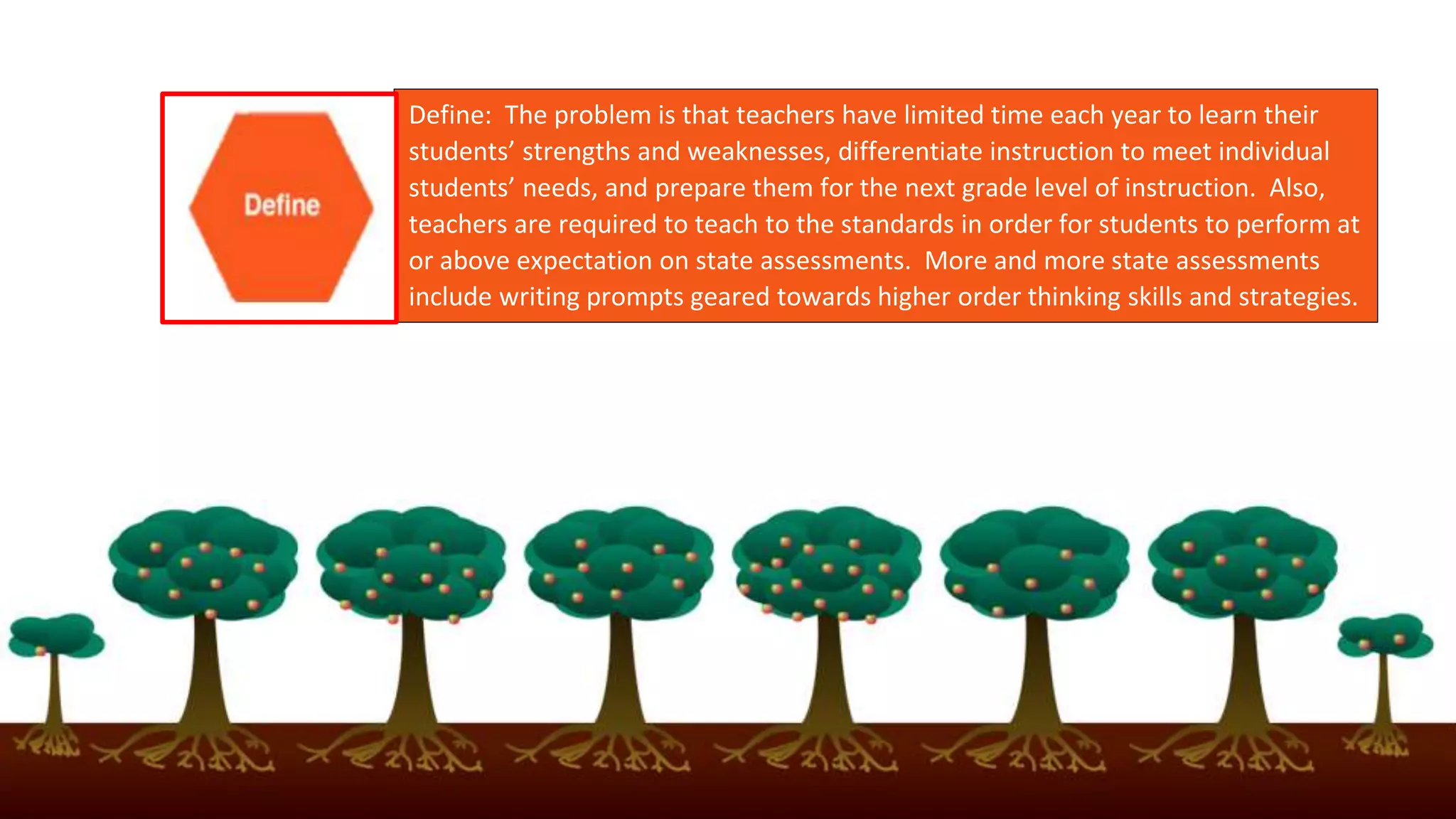
Define: The problem is that teachers have limited time each year to learn their
students’ strengths and weaknesses, differentiate instruction to meet individual
students’ needs, and prepare them for the next grade level of instruction. Also,
teachers are required to teach to the standards in order for students to perform at
or above expectation on state assessments. More and more state assessments
include writing prompts geared towards higher order thinking skills and strategies.
Ideate: Currently, many educators do not have the option to electronically archive students’
works from year to year. bulb provides them with this opportunity; therefore, condensing the
amount of time spent trying to assess and determine “next steps”. This also provides a clear
pathway for teachers to differentiate instruction within the classroom and to recommend
students for Tier 2 and 3 instruction. To provide them with a clear snapshot of where these
students are performing during the school year, we can create a tool within our platform that
will provide teachers with a way to highlight and comment on students’ writing throughout the
school year. This action can occur within the students’ portfolios on the page where the essay or
project occurs. The second step in this process should include a customizable rubric that
educators can embed within each students’ portfolio at point of use that can be used as a guide
for student self-assessment, during conferencing with students and parents, and as a measuring
stick to show student growth during data meetings.
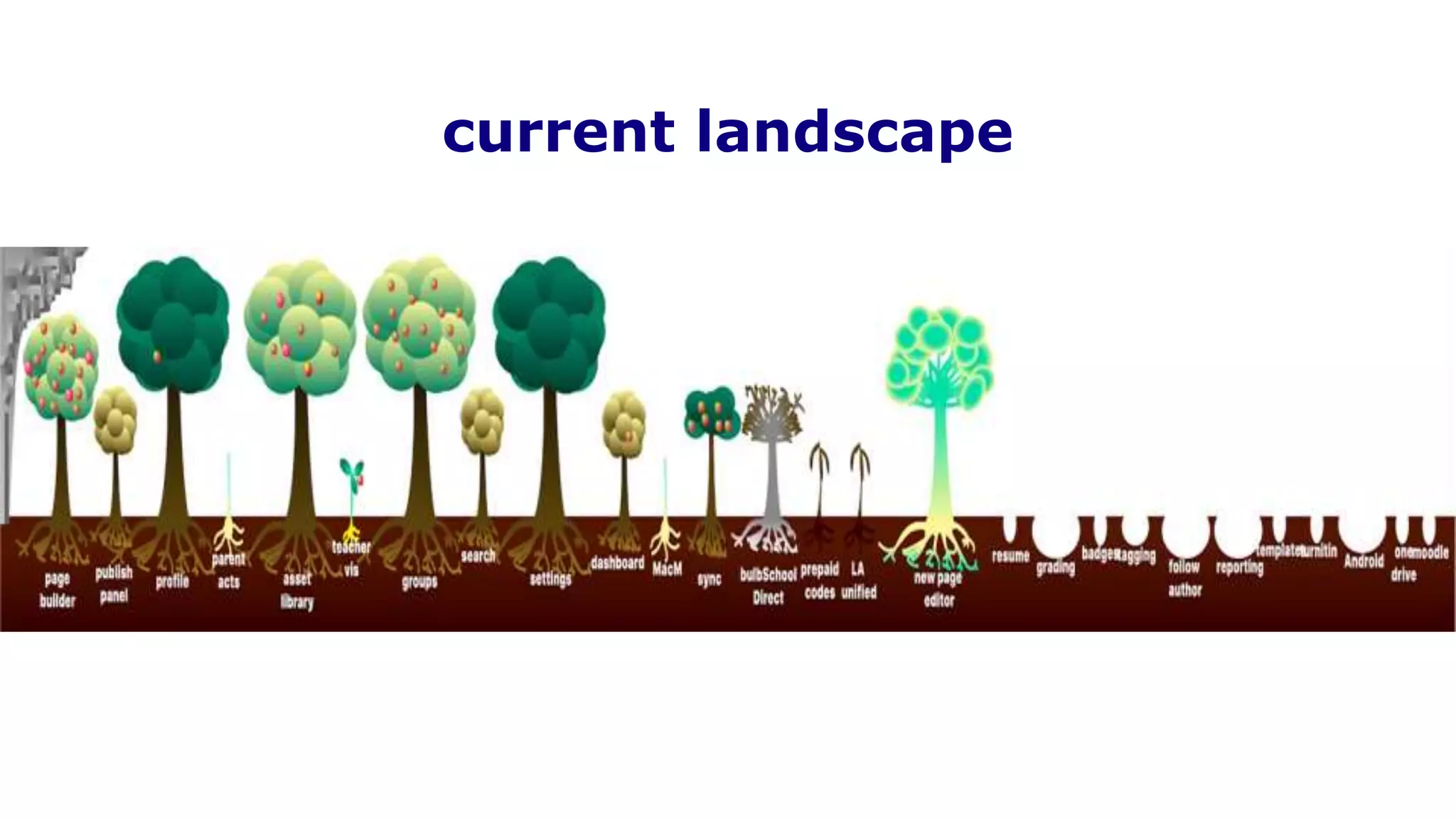
current landscape
What are your recommendations?
How would you test your prototype?
● risks are tackled up front, rather than at the
end.
● products are defined and designed
collaboratively, rather than sequentially.
● finally, it is all about solving problems, not
implementing features.
● ensures the solution solves a problem- “it is
about business results”
design thinking
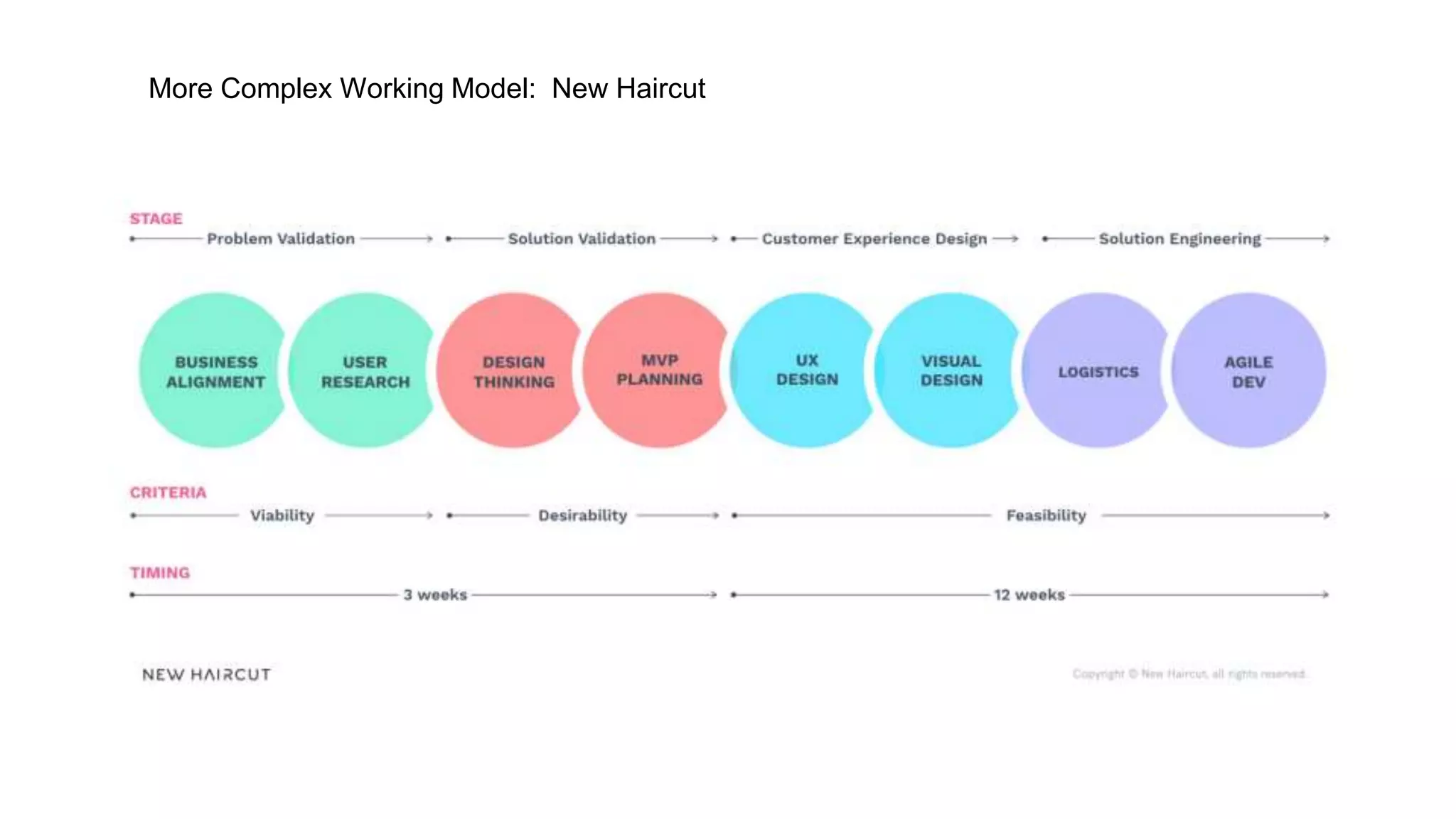
More Complex Working Model: New Haircut
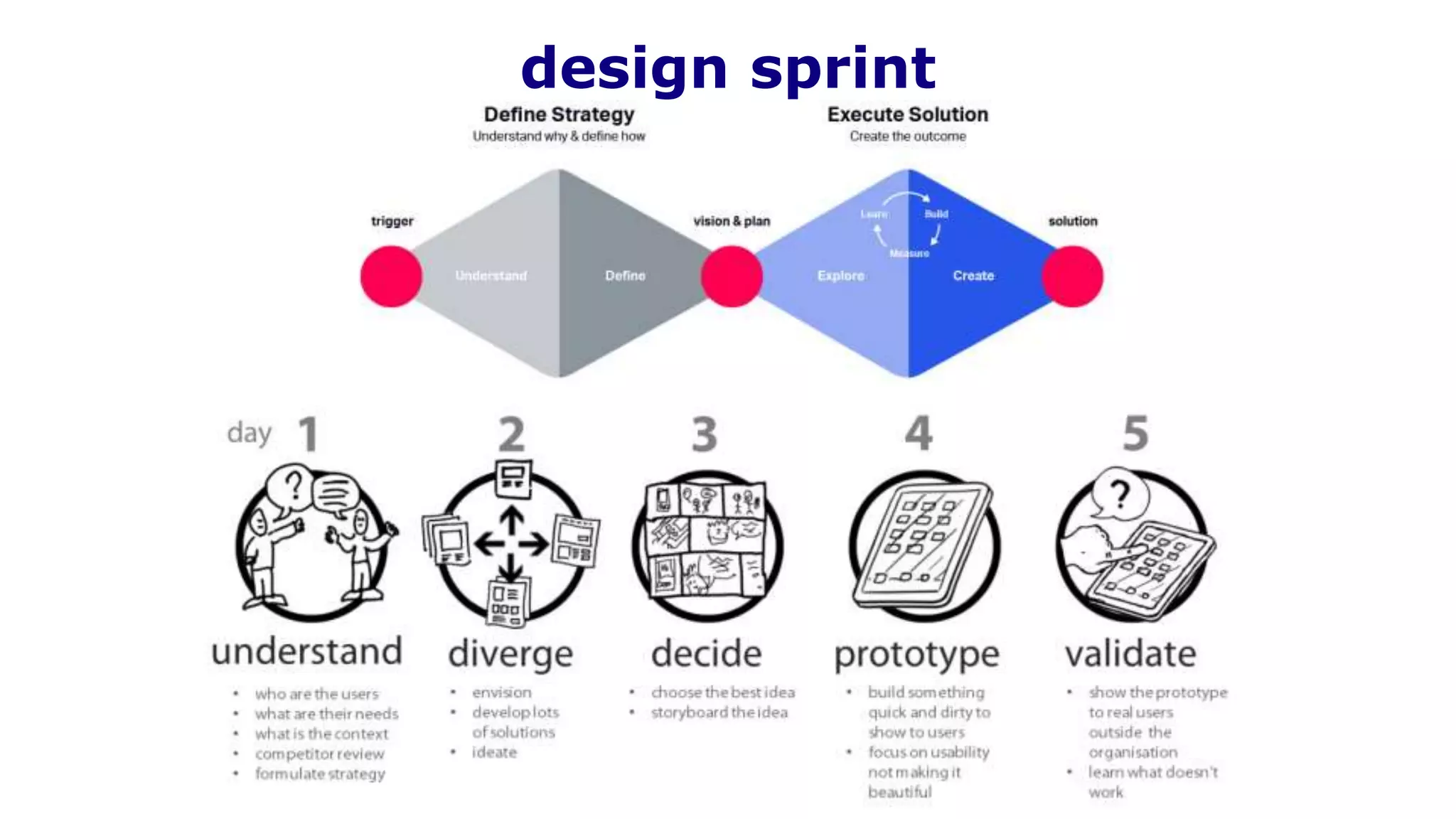
design sprint
output
becoming a design-led company
What is Your WHY?
HOW will You Get There?

Design Thinking

  • 1.
  • 2.
  • 3.
    What Is ProductDesign? Product design is the process of: • identifying a market opportunity, • clearly defining the problem, • developing a proper solution for that problem and • validating the solution with real users.
  • 4.
    Finding a solutionto a problem includes the following five phases: Empathize Learn about the people for whom you are designing. Conduct research to develop a deeper understanding of your users. Define Create a point of view that is based on user needs and insights. Ideate Brainstorm and come up with as many creative solutions as possible. Generate a range of potential solutions by giving yourself and your team total freedom. Prototype Build a prototype (or series of prototypes) to test your hypothesis. Creating a prototype lets designer see if they’re on the right track, and it often sparks different ideas that you wouldn’t have come up with otherwise. Test Return to your users for feedback.
  • 7.
    Empathize: Grading andresponding to essays is a critical part of students’ learning, but it is time-consuming and difficult for educators to “grade” and provide feedback in a way that is beneficial to students.
  • 8.
    Define: The problemis that teachers have limited time each year to learn their students’ strengths and weaknesses, differentiate instruction to meet individual students’ needs, and prepare them for the next grade level of instruction. Also, teachers are required to teach to the standards in order for students to perform at or above expectation on state assessments. More and more state assessments include writing prompts geared towards higher order thinking skills and strategies.
  • 9.
    Ideate: Currently, manyeducators do not have the option to electronically archive students’ works from year to year. bulb provides them with this opportunity; therefore, condensing the amount of time spent trying to assess and determine “next steps”. This also provides a clear pathway for teachers to differentiate instruction within the classroom and to recommend students for Tier 2 and 3 instruction. To provide them with a clear snapshot of where these students are performing during the school year, we can create a tool within our platform that will provide teachers with a way to highlight and comment on students’ writing throughout the school year. This action can occur within the students’ portfolios on the page where the essay or project occurs. The second step in this process should include a customizable rubric that educators can embed within each students’ portfolio at point of use that can be used as a guide for student self-assessment, during conferencing with students and parents, and as a measuring stick to show student growth during data meetings.
  • 10.
  • 11.
    What are yourrecommendations?
  • 13.
    How would youtest your prototype?
  • 14.
    ● risks aretackled up front, rather than at the end. ● products are defined and designed collaboratively, rather than sequentially. ● finally, it is all about solving problems, not implementing features. ● ensures the solution solves a problem- “it is about business results” design thinking
  • 15.
    More Complex WorkingModel: New Haircut
  • 16.
  • 17.
  • 18.
  • 20.
    What is YourWHY? HOW will You Get There?

Editor's Notes

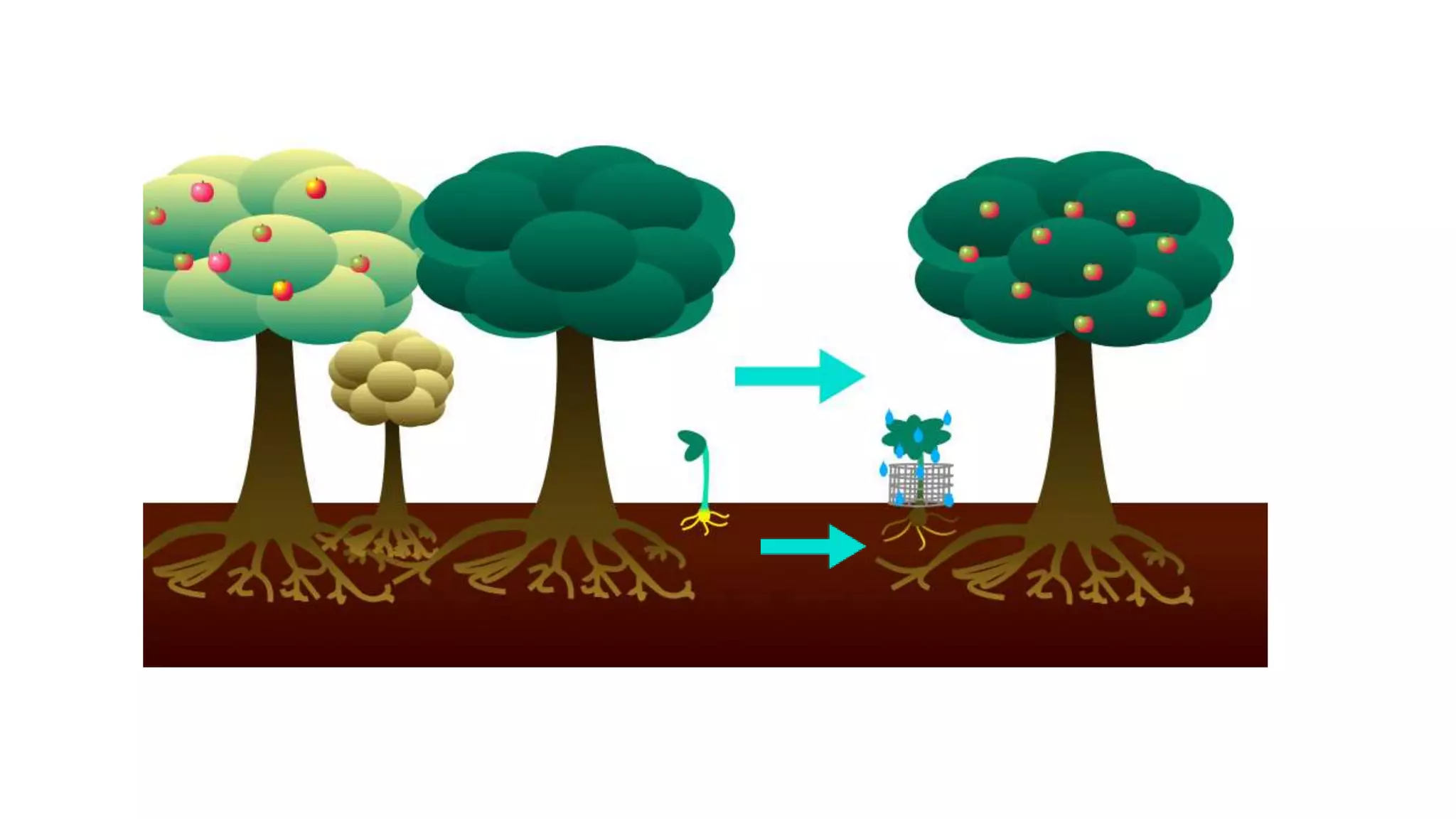
  • #4 Ideas are like seeds
  • #5 Some ideas continue to thrive, while others….