Facilitating Academic Conversations
with Diverse Learners
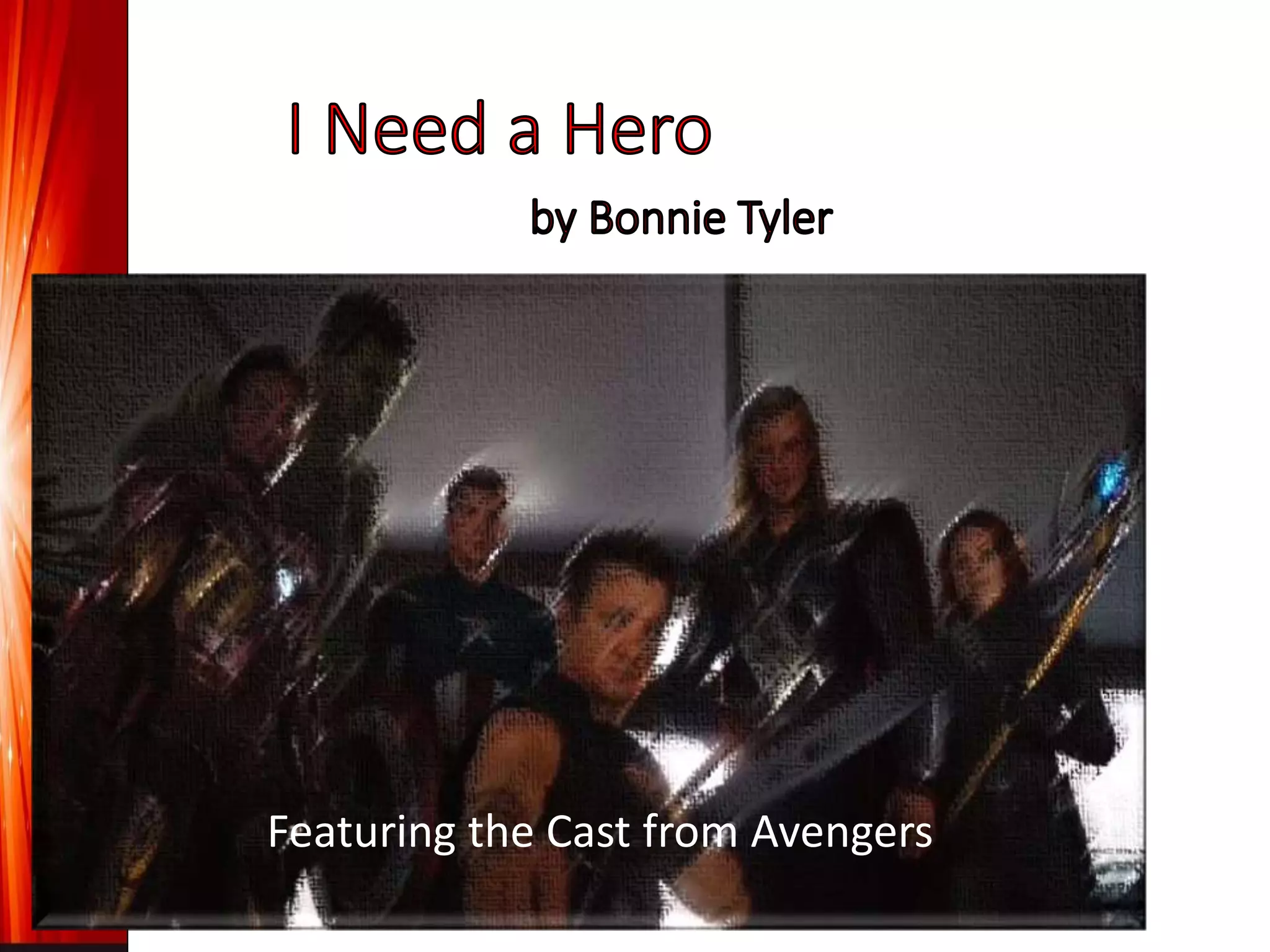
Featuring the Cast from Avengers
“With the world so set on tearing itself apart, it don’t
seem so bad to me to want to put it back together.”
Desmond Doss
Lived in Rising Fawn, GA
Essential Question: Who Can Be a Hero?
Cluster One: What Are Some Types of Heroes?—Classifying
Cluster Two: What Makes a Hero?—Analyzing
Cluster Three: Hero or Not?—Evaluating
Cluster Four: Thinking on Your Own—Synthesizing
In Implementing the Common Core State Standards: A Primer
on “Close Reading of Text,” the Aspen Institute provides a
formal definition of close reading:
Close Reading of text involves an investigation of a short piece
of text, with multiple readings done over multiple instructional
lessons. Through text-based questions and discussion,
students are guided to deeply analyze and appreciate various
aspects of the text, such as key vocabulary and how its
meaning is shaped by context; attention to form, tone,
imagery and/or rhetorical devices; the significance of word
choice and syntax; and the discovery of different levels of
meaning as passages are read multiple times.
• Short piece of text
• Multiple readings
• Text-based discussions and questions
• Deeply analyze and appreciate various aspects of the text
• Different levels of meaning
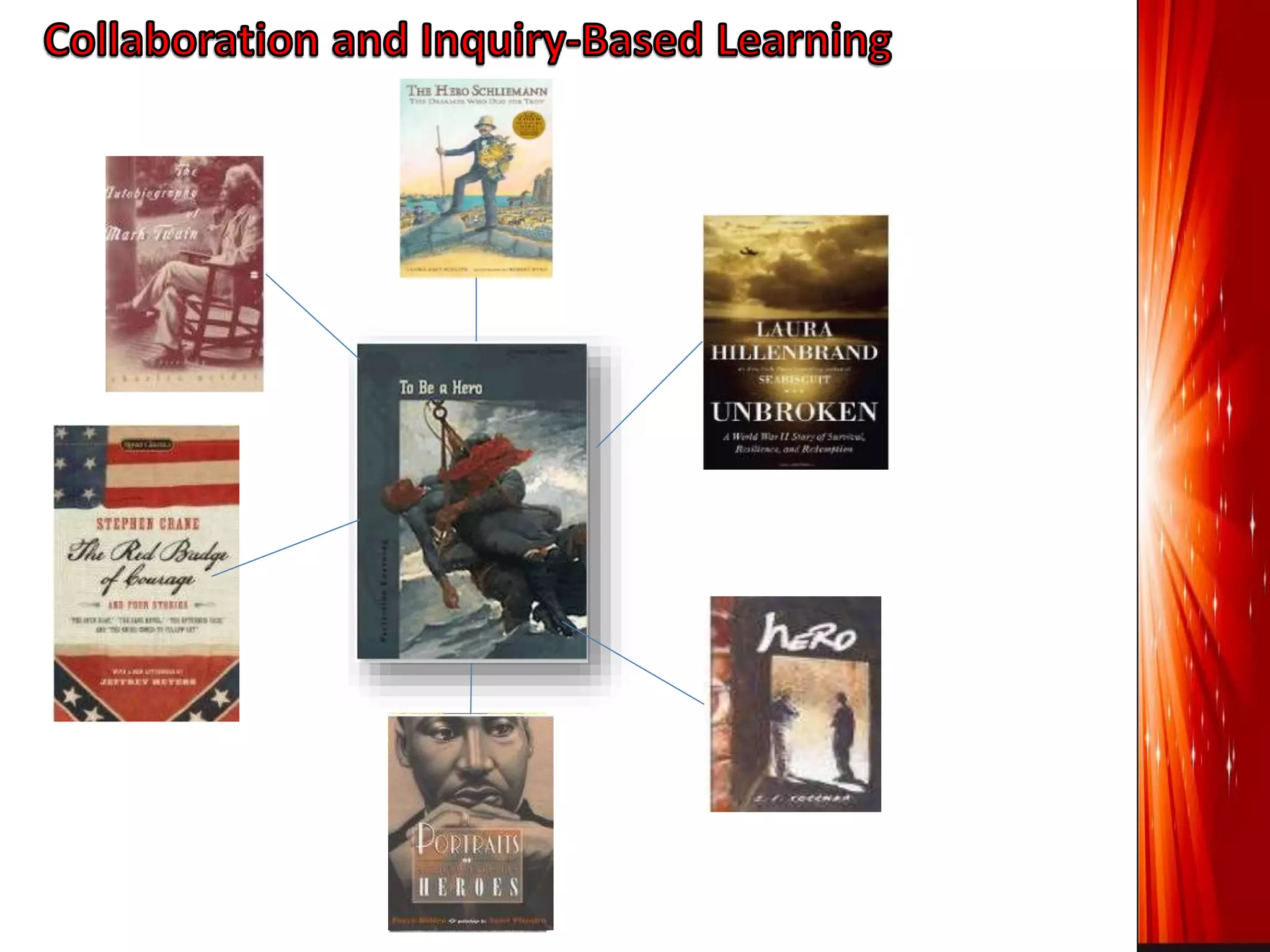
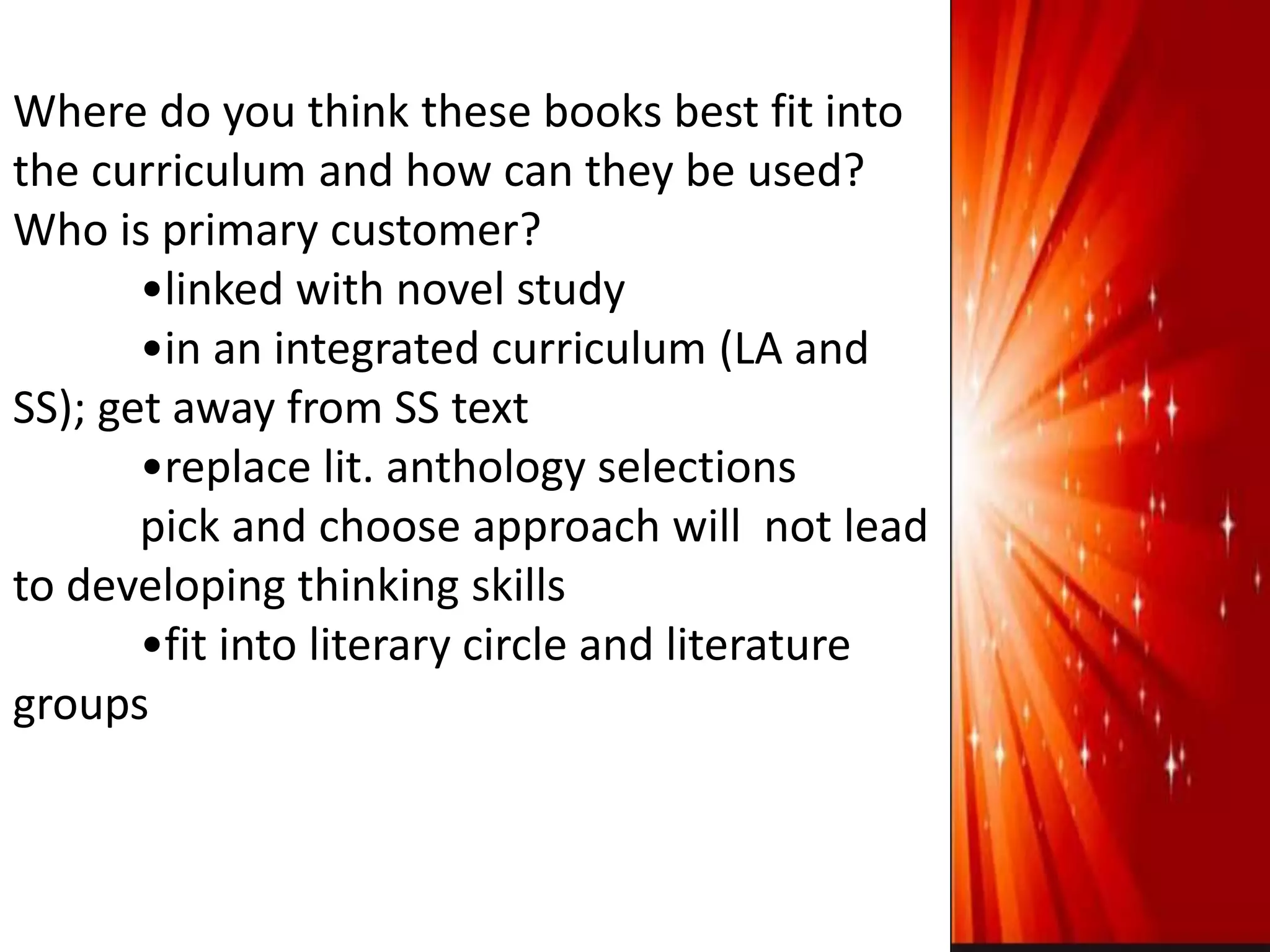
Where do you think these books best fit into
the curriculum and how can they be used?
Who is primary customer?
•linked with novel study
•in an integrated curriculum (LA and
SS); get away from SS text
•replace lit. anthology selections
pick and choose approach will not lead
to developing thinking skills
•fit into literary circle and literature
groups
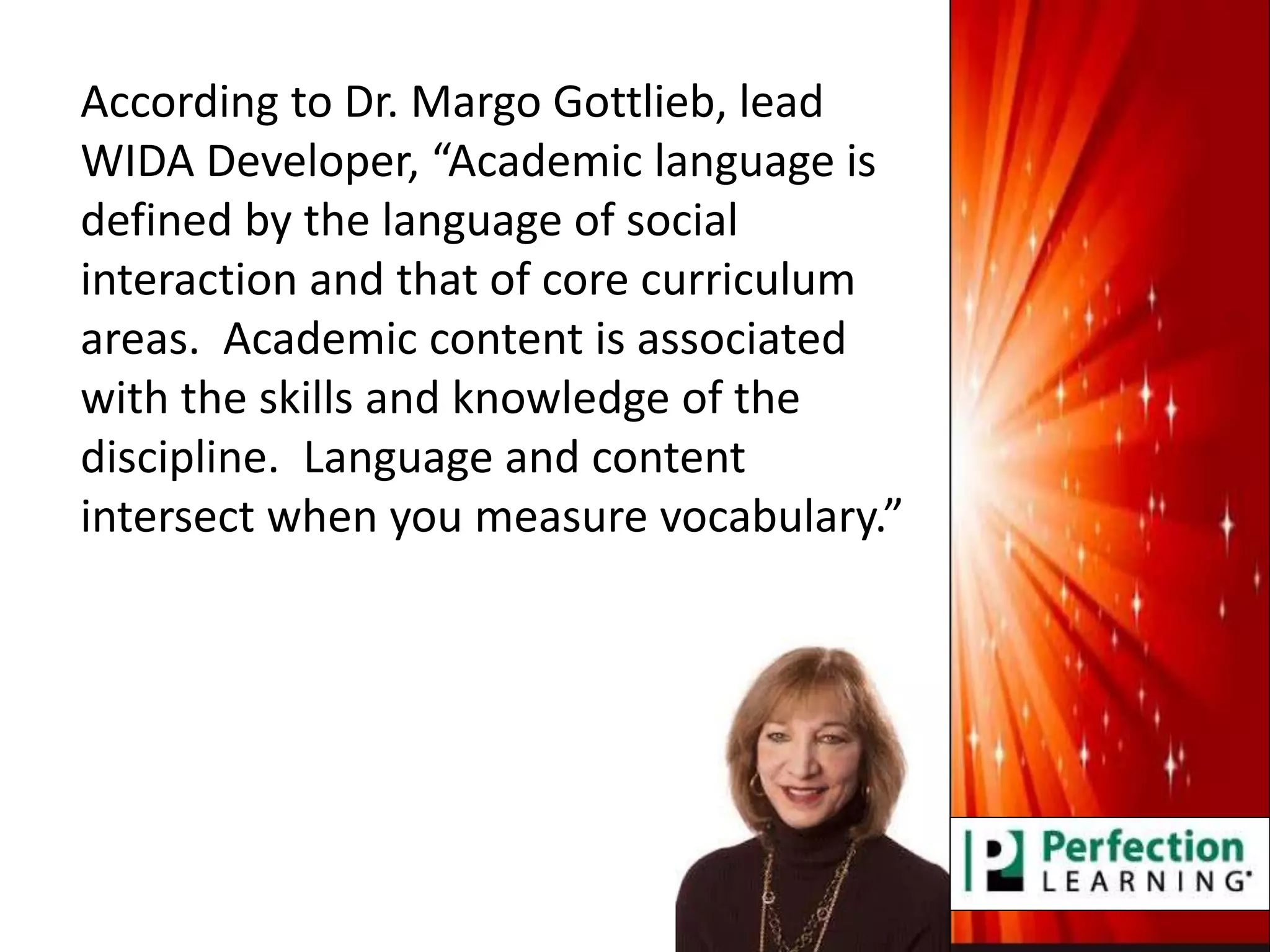
According to Dr. Margo Gottlieb, lead
WIDA Developer, “Academic language is
defined by the language of social
interaction and that of core curriculum
areas. Academic content is associated
with the skills and knowledge of the
discipline. Language and content
intersect when you measure vocabulary.”
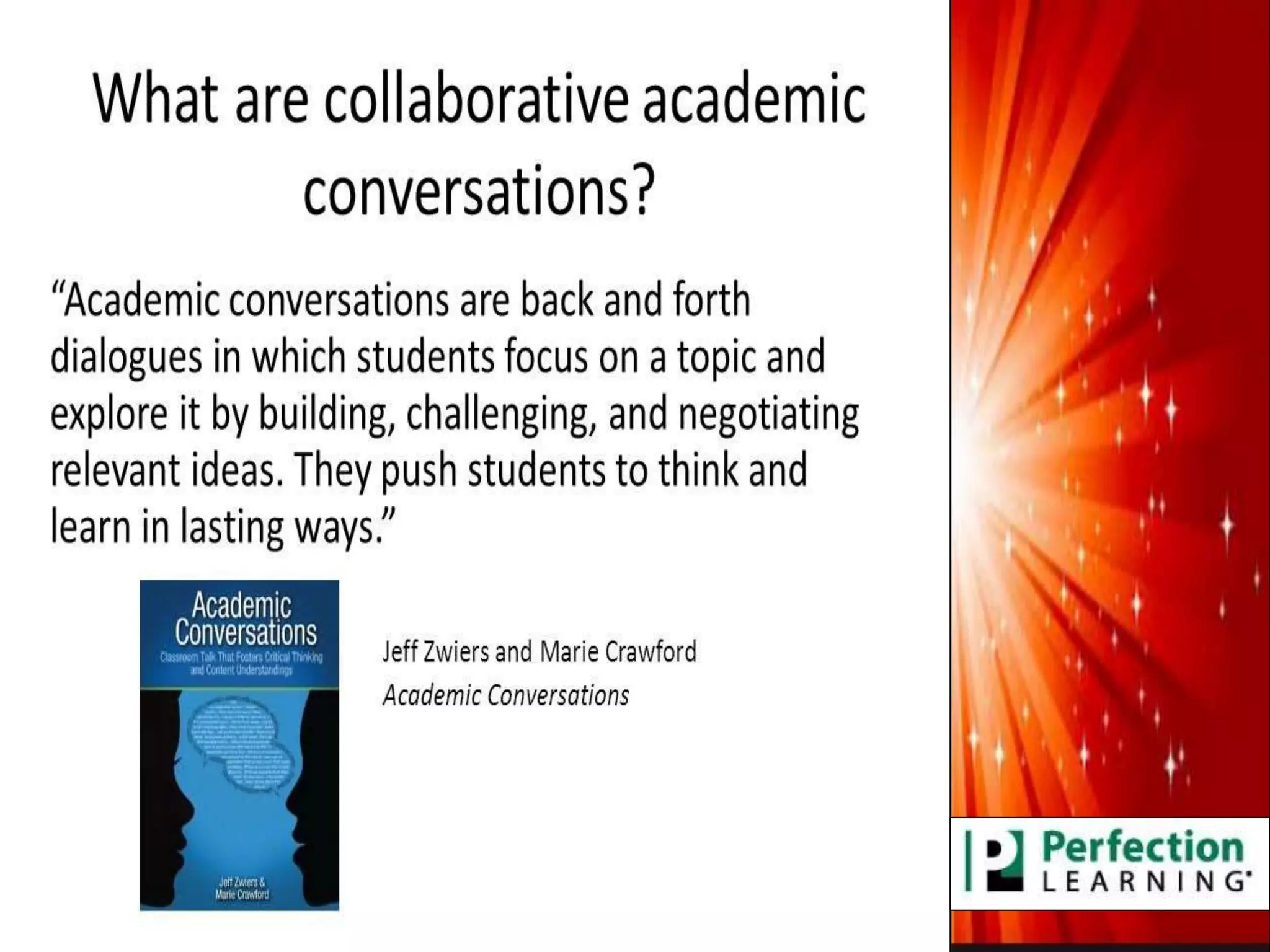
Create meaningful discussions that draw from
conversational language that includes
academic vocabulary.
Sharing and Listening while collaborating
in regards to something that is meaningful
to the student will result in great
conversations and discussions.
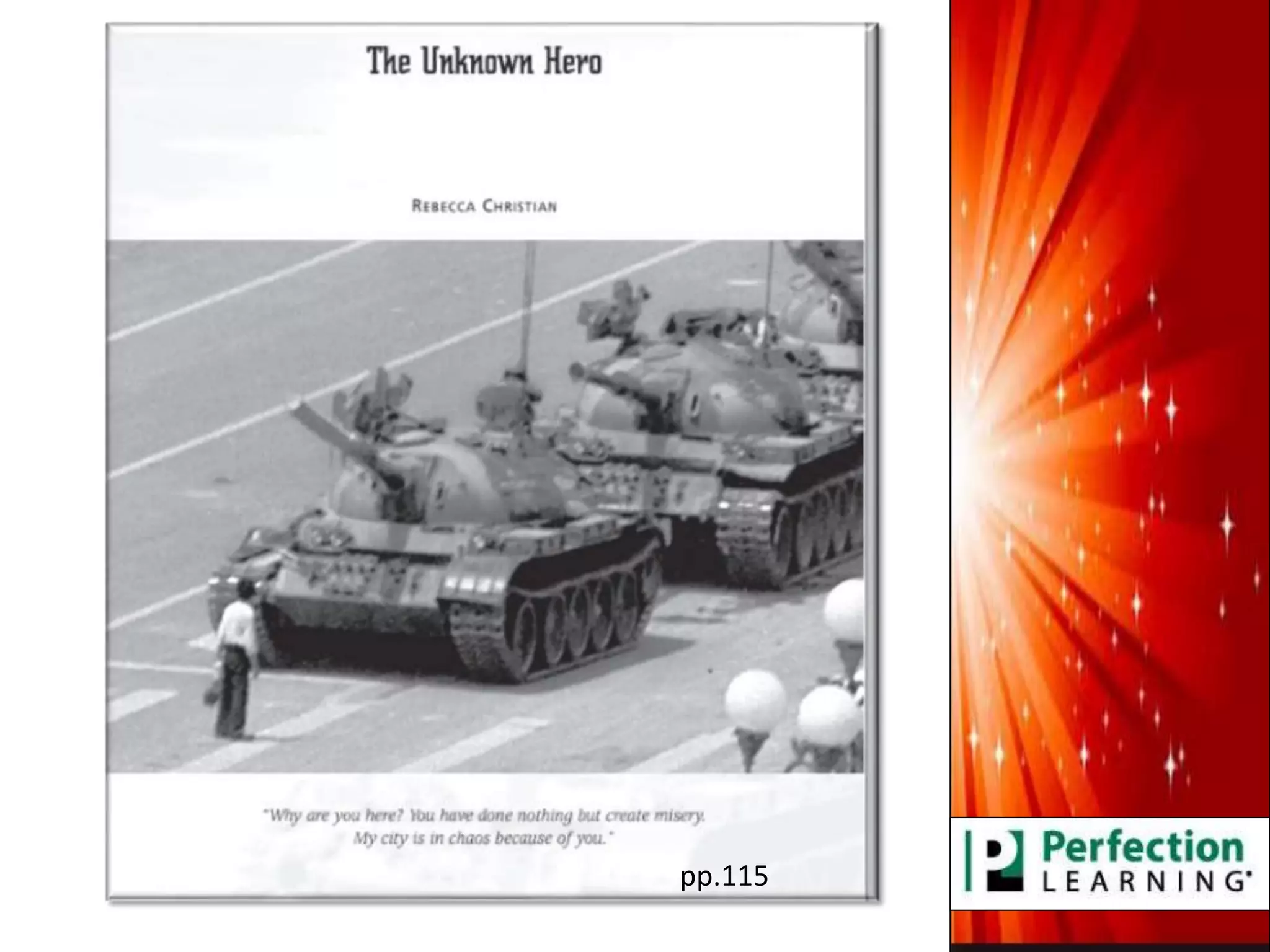
pp.115
Shared Inquiry™ is a method of teaching and
learning that enables people of all ages to
explore the ideas, meaning, and information
found in everything they read. It centers on
interpretive questions that have more than
one plausible answer and can lead to
engaging and insightful conversations
about the text. And it is based on the
conviction that participants can gain a deeper
understanding of a text when they work
together and are prompted by the skilled
questioning of their discussion leader.
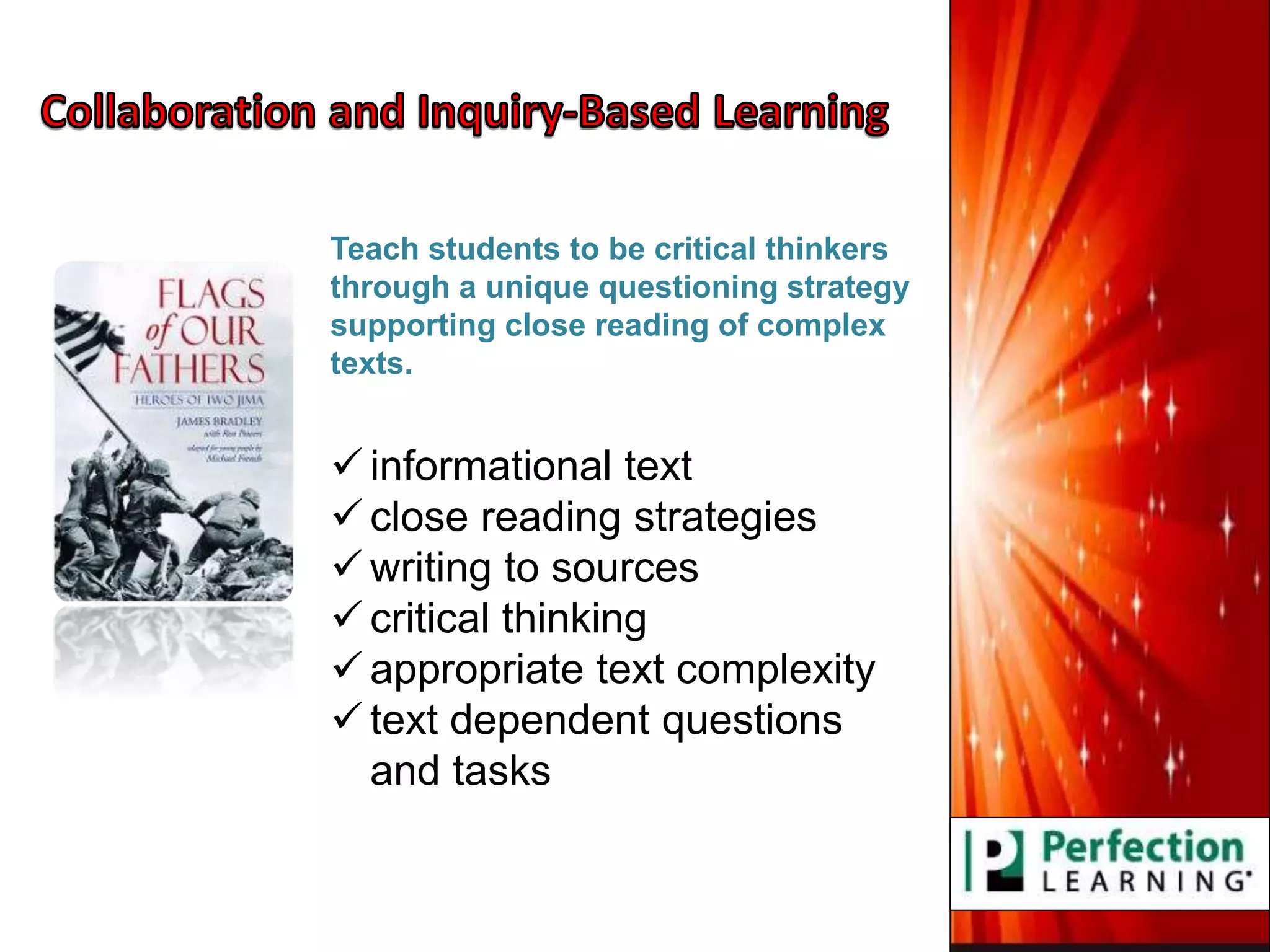
Teach students to be critical thinkers
through a unique questioning strategy
supporting close reading of complex
texts.
 informational text
 close reading strategies
 writing to sources
 critical thinking
 appropriate text complexity
 text dependent questions
and tasks
 Participants must read the selection carefully before the
discussion.
 The goal of the group is to discuss the ideas in the text
and explore them fully.
 Participants should support interpretations of the text
with evidence from the work.
 Everyone needs to listen carefully to the other
participants and respond to them directly.
 The leader is there to ask questions rather than offer
his/her own interpretations of the text.
Five key guidelines to engaging in a successful
Shared Inquiry discussion:
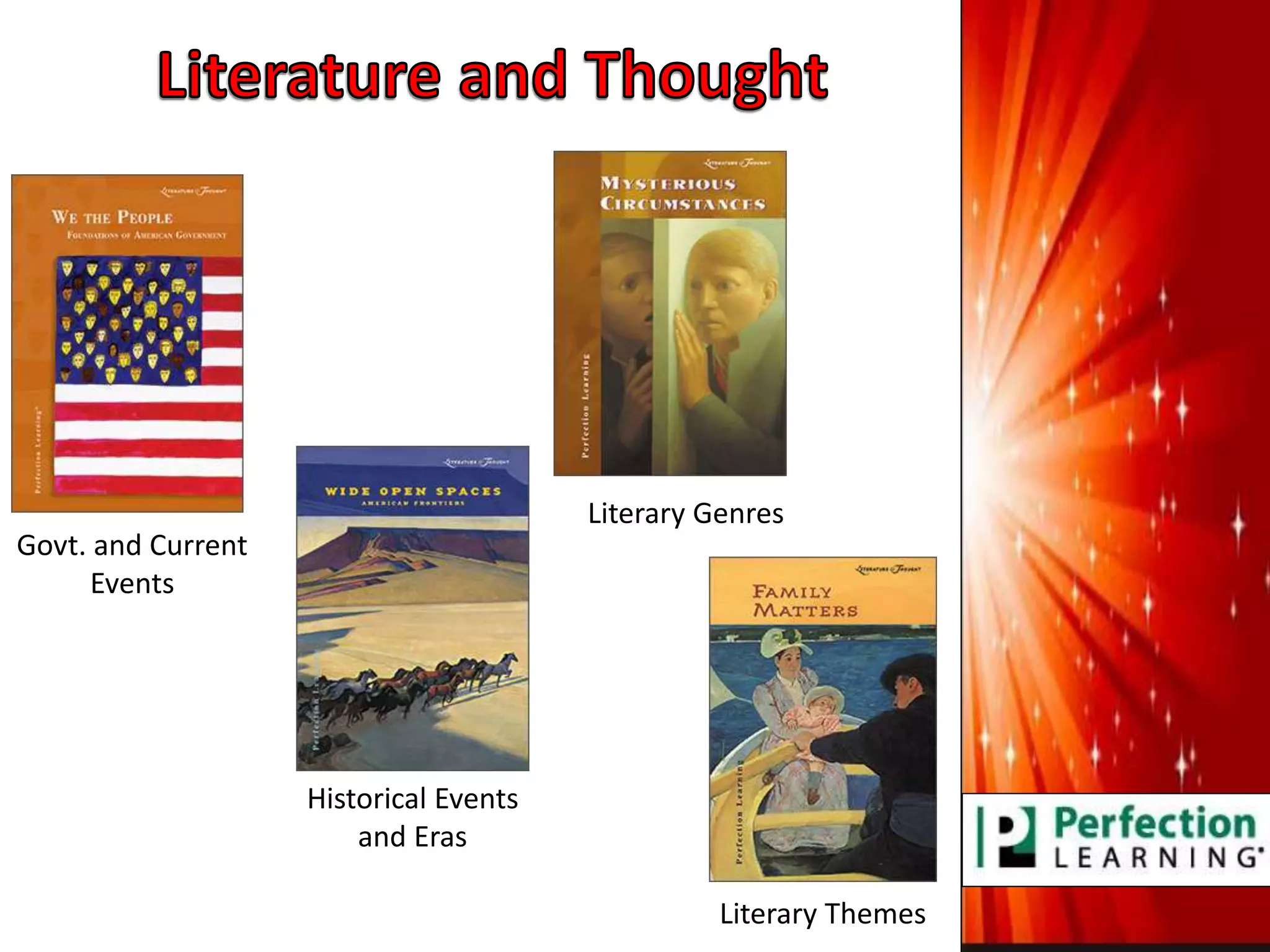
Govt. and Current
Events
Historical Events
and Eras
Literary Genres
Literary Themes
Insert Your Picture Here
Thank you for being a hero and touching the
lives of so many children!
For more information:
Kim Moore
kmoore@perfectionlearning.com
678-323-5500
Featuring the Cast from Big Hero 6
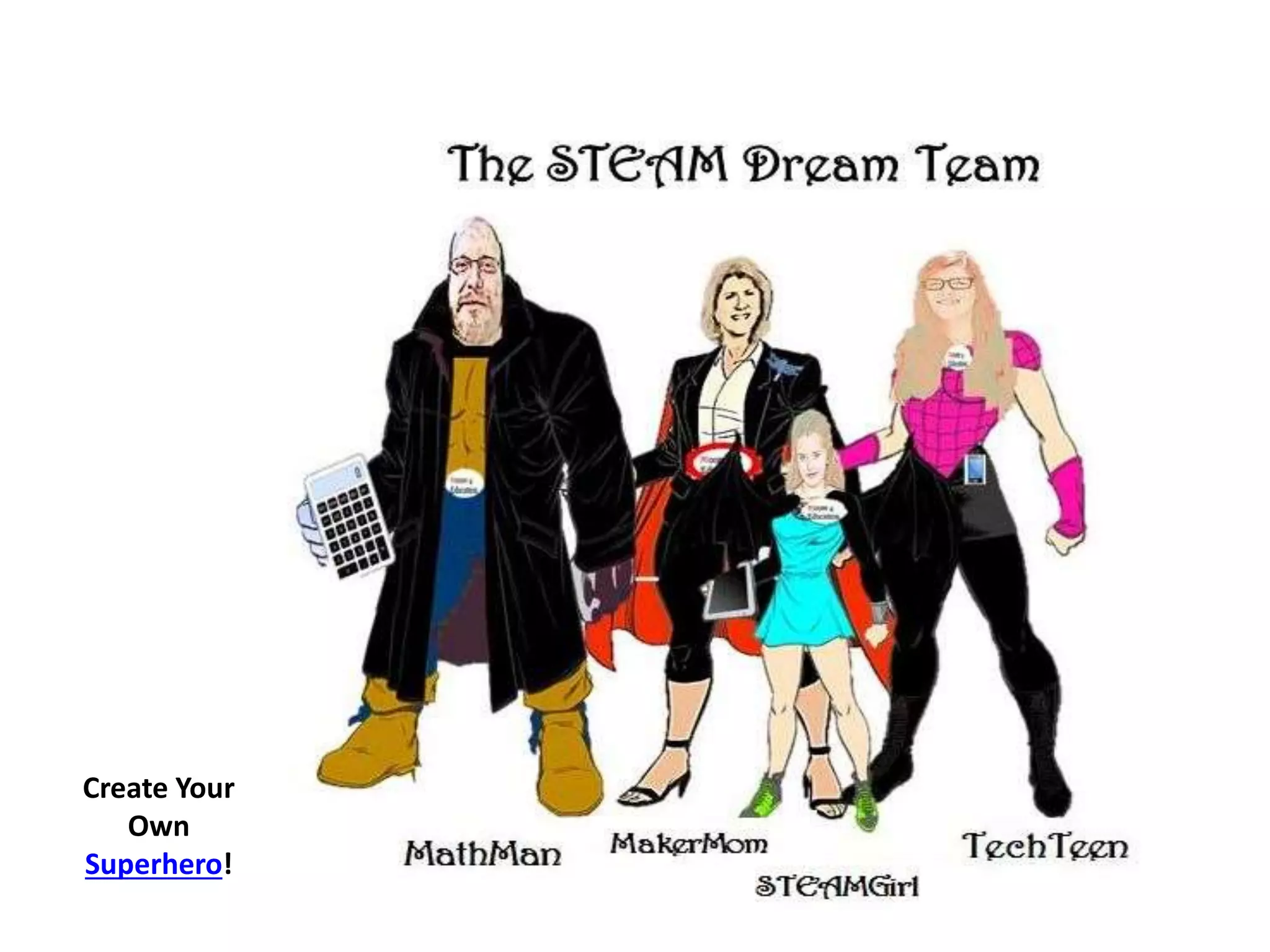
Create Your
Own
Superhero!

We Need a Hero: Facilitating Academic Conversations with Diverse Learners

  • 1.
  • 2.
    Featuring the Castfrom Avengers
  • 3.
    Featuring the Castfrom Avengers “With the world so set on tearing itself apart, it don’t seem so bad to me to want to put it back together.” Desmond Doss Lived in Rising Fawn, GA
  • 4.
    Essential Question: WhoCan Be a Hero? Cluster One: What Are Some Types of Heroes?—Classifying Cluster Two: What Makes a Hero?—Analyzing Cluster Three: Hero or Not?—Evaluating Cluster Four: Thinking on Your Own—Synthesizing
  • 5.
    In Implementing theCommon Core State Standards: A Primer on “Close Reading of Text,” the Aspen Institute provides a formal definition of close reading: Close Reading of text involves an investigation of a short piece of text, with multiple readings done over multiple instructional lessons. Through text-based questions and discussion, students are guided to deeply analyze and appreciate various aspects of the text, such as key vocabulary and how its meaning is shaped by context; attention to form, tone, imagery and/or rhetorical devices; the significance of word choice and syntax; and the discovery of different levels of meaning as passages are read multiple times. • Short piece of text • Multiple readings • Text-based discussions and questions • Deeply analyze and appreciate various aspects of the text • Different levels of meaning
  • 7.
    Where do youthink these books best fit into the curriculum and how can they be used? Who is primary customer? •linked with novel study •in an integrated curriculum (LA and SS); get away from SS text •replace lit. anthology selections pick and choose approach will not lead to developing thinking skills •fit into literary circle and literature groups
  • 9.
    According to Dr.Margo Gottlieb, lead WIDA Developer, “Academic language is defined by the language of social interaction and that of core curriculum areas. Academic content is associated with the skills and knowledge of the discipline. Language and content intersect when you measure vocabulary.”
  • 10.
    Create meaningful discussionsthat draw from conversational language that includes academic vocabulary. Sharing and Listening while collaborating in regards to something that is meaningful to the student will result in great conversations and discussions.
  • 12.
  • 13.
    Shared Inquiry™ isa method of teaching and learning that enables people of all ages to explore the ideas, meaning, and information found in everything they read. It centers on interpretive questions that have more than one plausible answer and can lead to engaging and insightful conversations about the text. And it is based on the conviction that participants can gain a deeper understanding of a text when they work together and are prompted by the skilled questioning of their discussion leader.
  • 14.
    Teach students tobe critical thinkers through a unique questioning strategy supporting close reading of complex texts.  informational text  close reading strategies  writing to sources  critical thinking  appropriate text complexity  text dependent questions and tasks
  • 15.
     Participants mustread the selection carefully before the discussion.  The goal of the group is to discuss the ideas in the text and explore them fully.  Participants should support interpretations of the text with evidence from the work.  Everyone needs to listen carefully to the other participants and respond to them directly.  The leader is there to ask questions rather than offer his/her own interpretations of the text. Five key guidelines to engaging in a successful Shared Inquiry discussion:
  • 17.
    Govt. and Current Events HistoricalEvents and Eras Literary Genres Literary Themes
  • 21.
    Insert Your PictureHere Thank you for being a hero and touching the lives of so many children! For more information: Kim Moore kmoore@perfectionlearning.com 678-323-5500
  • 22.
    Featuring the Castfrom Big Hero 6
  • 23.

Editor's Notes

  • #3 Do heroes have to have superpowers? Read first section of Hero by
  • #4 I believe that in some shape, form, or fashion, we are all searching for someone to “save the day”. I grew up in an era where some people just seemed larger than life, and even when I found out they were not perfect, human (just like me), they became even more incredible. This discovery didn’t make them appear less, it made me realize that I could be more. It gave me hope, and my hope for you today is that our discussion will inspire you to find your inner hero so that you can share what you have learned with others.