Dr. V.L.N. SEKHAR
JUNIOR RESIDENT
DEPT OF PSYCHIATRY
SRI VENKATESWARA MEDICAL COLLEGE
TIRUPATI
 INTRODUCTION
 EPIDEMIOLOGY
 DEFINITIONS
 AETIOLOGY OF DEPRESSION
 CLASSIFICATION AND DIAGNOSTIC CRITERIA
 TREATMENT MODALITIES
 CONCLUSION
 TAKE HOME MESSAGE
 According to WHO – Depression is the 3rd
LEADING CAUSE of disease burden in the world.
 Global burden of disease study shows unipolar
depression as 2nd to coronary artery disease by
2020 and 1st by 2030.
 WHO – Globally more than 350 million people of
all ages suffer from depression.
 Prevalence of Major Depression is 5%.
 15% population – major depressive episode at some
point of life.
 Male : female ratio – 1 : 2.
 Incidence increases with age in both sexes.
 10 – 15% of depression cases – secondary to general
medical illness or substance abuse.
 Approximately 15% of all depressed patients
commit Suicide.
 Ranging from mild to extremely severe, depressive symptoms were
present in 18.5% of the population, anxiety in 24.4%, and stress in
20%.
 Clinical depression was present in 12.1% and generalized anxiety
disorder in 19.0%.
 Comorbid anxiety and depression was high, with about 87% of those
having depression also suffering from anxiety disorder.
Prevalence of depression, anxiety, and stress among young male adults in India: A dimensional and
categorical diagnoses-based study. - Sahoo S, Khess CR - J Nerv Ment Dis. 2010 Dec;198(12):901-4.
 Prevalence
» About 1/3 of people experiencing major depression do not seek
treatment
» Approximately 1/3 to 1/2 of patients with depression who present in
primary care do not receive a diagnosis of depression
 Implications
» Increased time spent on history taking and physical examination
» Unnecessary diagnostic procedures, particularly in response to patients’
vague somatic complaints
Hirschfeld 1997; US Dept of Health and Human Services 1999; Simon 1999;Simon and Vonkorff 1995; Callahan 1996.
50% to 69% of depressed patients present with somatic
complaints that can complicate diagnosis, such as
» Joint pain
» Headaches
» Backaches
» Abdominal pain
Simon 1999; Depression in Primary Care, 1 1993.
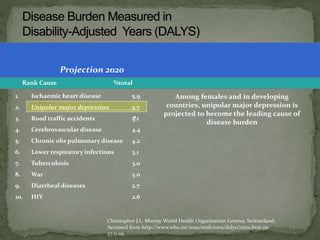
Projection 2020
Rank Cause %total
1. Ischaemic heart disease 5.9
2. Unipolar major depression 5.7
3. Road traffic accidents 5.1
4. Cerebrovascular disease 4.4
5. Chronic obs pulmonary disease 4.2
6. Lower respiratory infections 3.1
7. Tuberculosis 3.0
8. War 3.0
9. Diarrheal diseases 2.7
10. HIV 2.6
Among females and in developing
countries, unipolar major depression is
projected to become the leading cause of
disease burden
Christopher J.L. Murray World Health Organization Geneva, Switzerland.
Accessed from http://www.who.int/msa/mnh/ems/dalys/intro.htm on
27.11.02.
 Marital Status
 Poor interpersonal relationships
 Divorced or separated
 Socioeconomic and Cultural Factors
 No correlation for MDD
 BPD 1 : upper socioeconomic group
 Comorbidity
 MDD : increased risk of having one or more additional comorbid Axis I
disorders.
 Alcohol abuse or dependence,
 Panic disorder,
 Obsessive compulsive disorder (OCD),
 Social anxiety disorder.
 worsen the prognosis and increase - risk of suicide
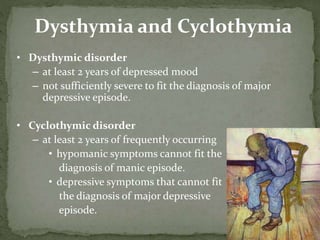
Dysthymia and Cyclothymia
• Dysthymic disorder
– at least 2 years of depressed mood
– not sufficiently severe to fit the diagnosis of major
depressive episode.
• Cyclothymic disorder
– at least 2 years of frequently occurring
• hypomanic symptoms cannot fit the
diagnosis of manic episode.
• depressive symptoms that cannot fit
the diagnosis of major depressive
episode.
 Treatment resistant depression – failure to achieve the
remission after 2 well established anti depressant
treatment courses known to have been of evidence
based acceptable dose and duration.
 Treatment refractory depression – The term
“treatment refractory depression” typically refers to
unipolar major depressive episodes that do not
respond satisfactorily to numerous sequential
treatment regimens.
 Double depression – an estimated 40 percent of
patients with MDD also meet the criteria for
dysthymia, a combination often referred to as double
depression.
 They have poorer prognosis than patients with only
MDD.
 Neurobiological theory of depression :
1. Monoamine theory { 1965 } –
the underlying biological or neuro-anatomical basis
for depression is the deficiency of central
noradrenergic and / or serotonergic transmission
in CNS.
2. Receptor theory :
the problem is in the up – regulation of post-
synaptic receptors and alterations in their
sensitivity.
The precise pathophysiology of depression remains
unsolved.
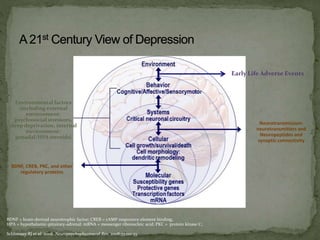
Neurotransmission:
neurotransmitters and
Neuropeptides and
synaptic connectivity
BDNF = brain-derived neurotrophic factor; CREB = cAMP responsive element binding;
HPA = hypothalamic-pituitary-adrenal; mRNA = messenger ribonucleic acid; PKC = protein kinase C;
Schloesser RJ et al. 2008. Neuropsychopharmacol Rev. 2008;33:110-33.
r
Early Life Adverse Events
Environmental factors
(including external
environment:
psychosocial stressors,
sleep deprivation, internal
environment:
gonadal/HPA steroids)
BDNF, CREB, PKC, and other
regulatory proteins
Stahl SM. Essential Psychopharmacology: Neuroscientific Basis and Practical Applications. 2nd
ed. Cambridge, UK: Cambridge University Press; 2000:152.
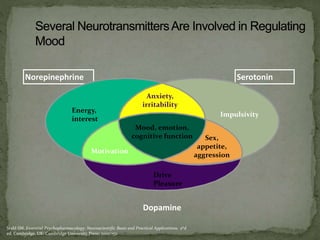
Norepinephrine Serotonin
Dopamine
Mood, emotion,
cognitive function
Motivation
Sex,
appetite,
aggression
Anxiety,
irritability
Energy,
interest
Impulsivity
Drive
Pleasure
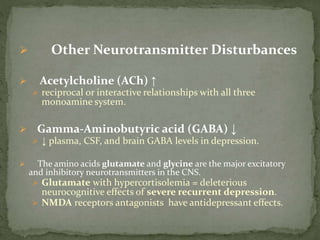
 Other Neurotransmitter Disturbances
 Acetylcholine (ACh) ↑
 reciprocal or interactive relationships with all three
monoamine system.
 Gamma-Aminobutyric acid (GABA) ↓
 ↓ plasma, CSF, and brain GABA levels in depression.
 The amino acids glutamate and glycine are the major excitatory
and inhibitory neurotransmitters in the CNS.
 Glutamate with hypercortisolemia = deleterious
neurocognitive effects of severe recurrent depression.
 NMDA receptors antagonists have antidepressant effects.
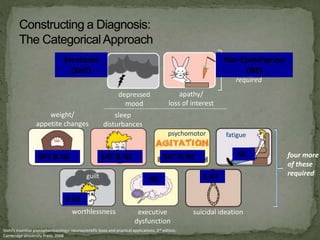
weight/
appetite changes
sleep
disturbances
psychomotor fatigue
worthlessness executive
dysfunction
suicidal ideation
four more
of these
requiredguilt
depressed
mood
apathy/
loss of interest
one of these
required
Stahl’s essential psycopharmacology: neuroscientific basis and practical applications, 3rd edition,
Cambridge University Press, 2008
Serotonin
(5HT)
Nor-Epinehprine
(NE)
5HT & NE5HT & NE5HT & NE NE
5 HTNE
5 HT
4. Second Messengers and Intracellular Cascades
 The binding of a neurotransmitters with postsynaptic receptor triggers a
cascade
 Receptors on cell membranes interact with the intracellular environment via G
proteins
 The G proteins, in turn, connect to various intracellular enzymes (e.g.,
adenylate cyclase, phospholipase C, and phosphodiesterase) that regulate
formation of second messengers, (cAMP,cGMP,IP3,DAG and calcium-
calmodulin).
 Second messengers regulate the function of neuronal membrane ion
channels.
 Increasing evidence also indicates that mood-stabilizing drugs act on G
proteins or other second messengers.
5. Alterations of Hormonal Regulation
 Activity of the gene coding for the neurokinin brain-derived
neurotrophic growth factor (BDNF) is decreased after chronic stress, as
is the process of neurogenesis.
 history of early trauma
 increased HPA activity – hallmark : Hypercortisolemia in depression
 structural changes (i.e., atrophy)
 Thyroid Axis Activity
 5 to 10 % : undetected thyroid dysfunction, (TSH)
 hormone replacement therapy
 unlike the dexamethasone suppression test (DST), blunted TSH response to
TRH does not usually normalize with effective treatment.
 Growth Hormone
 Growth hormone (GH) is secreted after
 stimulation by NE and Dopamine (DA).
 inhibited by somatostatin and CRH.
 Decreased CSF somatostatin =depression
 Prolactin
 released by serotonin
 no abnormalities of basal or circadian prolactin secretion
 a blunted prolactin response to various serotonin
(depression)
7.Alterations of Sleep Neurophysiology
 premature loss of deep (slow wave) sleep
 increase in nocturnal arousal.
 reduced REM latency = significant reduction
in the first period of non-REM (NREM) sleep
 persist after recovery of a depressive
episode.
 abnormal sleep profile = bad prognosis for
psychotherapy and may benefit
preferentially from pharmacotherapy.
8. Immunological Disturbance
 Depressive disorders are associated with several immunological abnormalities,
including decreased lymphocyte proliferation
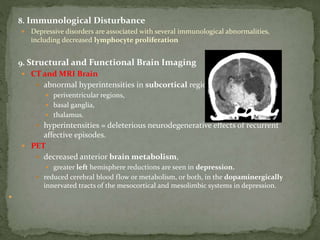
9. Structural and Functional Brain Imaging
 CT and MRI Brain
 abnormal hyperintensities in subcortical regions,
 periventricular regions,
 basal ganglia,
 thalamus.
 hyperintensities = deleterious neurodegenerative effects of recurrent
affective episodes.
 PET
 decreased anterior brain metabolism,
 greater left hemisphere reductions are seen in depression.
 reduced cerebral blood flow or metabolism, or both, in the dopaminergically
innervated tracts of the mesocortical and mesolimbic systems in depression.

10. Neuroanatomical Considerations
 four brain regions in the regulation of normal emotions:
 the prefrontal cortex (PFC) : representations of goals and
appropriate responses to obtain these goals = multiple, conflicting
behavioral responses
 the anterior cingulate: integration of attentional and emotional
inputs = facilitates control of emotional arousal, particularly when
goal attainment has been thwarted or when novel problems have
been encountered
 the hippocampus : learning and memory
 the amygdala : station for processing novel stimuli
11. Genetic Factors
 Recently, the primary focus of genetic studies = identify
specific susceptibility genes
Family Studies
 if one parent = 10 and 25 percent for mood disorder.
 If both parents = this risk roughly doubles.
Twin Studies
 concordance rate for mood disorder in the monozygotic (MZ)
twins of 70 to 90 percent compared with the same-sex
dizygotic (DZ) twins of 16 to 35 percent.
 most compelling data for genetic F.
Linkage Studies
 DNA markers are segments of DNA = track the segregation
of specific chromosomal regions within families affected with
a disorder.
Life Events and Environmental Stress
 One theory : stress = long-lasting changes in the brain's
biology = alter the functional states of various
neurotransmitter and intraneuronal signaling systems =
loss of neurons and an excessive reduction in synaptic
contacts.
 high risk of undergoing subsequent episodes even without an
external stressor.
 losing a parent before age 11,
 loss of a spouse
 Unemployment
13. Personality Factors
 Persons with certain personality disorders may be at
greater risk for depression
 OCD,
 histrionic,
 Borderline
 antisocial or paranoid personality disorder can use
projection and other externalizing defense
mechanisms to protect themselves from their inner
rage.
 Recent stressful events are the most powerful predictors
of the onset of a depressive episode.
14. Psychodynamic Factors in Depression
 Sigmund Freud and Karl Abraham is known as the classic view of depression.
(1) disturbances in the infant mother relationship during
the oral phase (the first 10 to 18 months of life) predispose to
subsequent vulnerability to depression;
(2) depression can be linked to real or imagined object loss;
(3) introjection of the departed objects is a defense
mechanism invoked to deal with the distress connected with
the object's loss
(4) because the lost object is regarded with a mixture of love
and hate, feelings of anger are directed inward at the self.
 Edward Bibring regarded depression as a phenomenon that sets in when a person
becomes aware of the discrepancy between extraordinarily high ideals and the inability
to meet those goals.
 Edith Jacobson saw the state of depression as similar to a powerless, helpless child
victimized by a tormenting parent.
Other Formulations of Depression
 Cognitive Theory
 Aaron Beck postulated a cognitive triad of
depression that consists of
(1) views about the self negative self-precept;
(2) about the environment tendency to
experience the world as hostile and demanding,
(3) about the future the expectation of suffering
and failure.
 Learned Helplessness
 experience of uncontrollable events.
 Chronic insomnia or fatigue
 Chronic pain
 Multiple or unexplained somatic complaints, “thick charts”
 Chronic medical illnesses (e.g., diabetes, arthritis)
 Acute cardiovascular events (myocardial infarction, stroke)
 Recent psychological or physical trauma
 Other psychiatric disorders
 Substance abuse disorders
 Family history of mood disorder
 Major criteria :
- Depressed mood
- Loss of interest and enjoyment
- Reduced energy leading to increased fatiguability
and diminished activity.
 Minor criteria :
- Reduced concentration and attention
- Reduced self esteem and self confidence
- Ideas of guilt and unworthiness
- Bleak and pessimistic views of the future.
- Ideas or acts of self harm or suicide
- Disturbed sleep
- Diminished appetite.
 Mild depressive episode – atlease 2 symptoms from
major criteria and atleast 2 symptoms from minor
criteria.
 Minimum duration of whole episode is about 2 weeks.
 Without somatic syndrome – criteria for mild
depressive episodes are fulfilled, and there are few or
none of the somatic symptoms present.
 With somatic syndrome- criteria for mild depressive
episodes present and four or more of the somatic
symptoms are present.
 Moderate depressive episode- atleast 2 of the 3
symptoms of major criteria plus atleast 3 symptoms of
minor criteria should be present.
 Without somatic syndrome- criteria for moderate
depressive episode plus few if any of the somatic
symptoms are present.
 With somatic syndrome- criteria for moderate
depressive episode plus 4 or more of the somatic
symptoms are present.
 Severe depressive episode- all 3 symptoms of major
criteria plus atleast 4 symptoms from minor criteria.
 With psychotic symptoms- severe depressive episode
with psychotic symptoms, psychotic depression,
psychogenic depressive psychosis,reactive depressive
psychosis.
 Without psychotic symptoms.
A) Reactive (neurotic) & endogenous
depression:
 Reactive depression- symptoms in response to
external stressful stimuli
 C/F: anxiety, irritability, phobia & early insomnia,
 Endogenous depression- caused by factors
within individual which are independent of
outside stimuli, more severe.
 C/F: Loss of appetite, weight loss, constipation,
decreased libido, amenorrhea, early morning
awakening (biological symptoms).
B) Primary & secondary: secondary because of
H/O previous non affective psychiatric illness
(schiz. , AN) or alcoholism, medical illness, or
taking certain drugs (e.g.. Steroids)
 No difference between them regarding prognosis &
A) Neurotic depression
B) Psychotic depression
 Cases of depression with so called biological
symptoms & severe forms come under Psychotic
depression
 Milder forms come under neurotic depression
MOST useful classification
A) Unipolar (recurrent)
 Having depressive phases only
 Some of them may have manic episode later
 Manic episode might remain under diagnosed
B) Bipolar-
 Both manic & depressive episode in cyclic pattern
 May have only manic episodes
C) Seasonal affective disorder-
 Repetitive depressive episodes at the same time of
year
 Symptoms- hypersomnia, increased appetite,
increased craving for carbohydrates.
 Onset- in winter
 Recovery- in spring or summer
 Cause: might be shortening in the day light
 Treatment; exposure to bright artificial light
during hours of darkness
D) Involutional depression:
 Occurs at the time of involution of sex glands.
 Occurs around 45 years of age
 C/F: agitation, hypochondriacal symptoms
TREATMENT MODALITIES
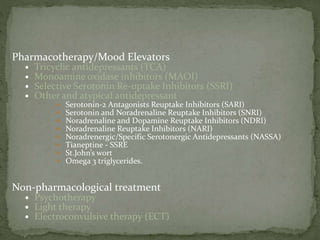
Pharmacotherapy/Mood Elevators
 Tricyclic antidepressants (TCA)
 Monoamine oxidase inhibitors (MAOI)
 Selective Serotonin Re-uptake Inhibitors (SSRI)
 Other and atypical antidepressant
 Serotonin-2 Antagonists Reuptake Inhibitors (SARI)
 Serotonin and Noradrenaline Reuptake Inhibitors (SNRI)
 Noradrenaline and Dopamine Reuptake Inhibitors (NDRI)
 Noradrenaline Reuptake Inhibitors (NARI)
 Noradrenergic/Specific Serotonergic Antidepressants (NASSA)
 Tianeptine - SSRE
 St.John’s wort
 Omega 3 triglycerides.
Non-pharmacological treatment
 Psychotherapy
 Light therapy
 Electroconvulsive therapy (ECT)
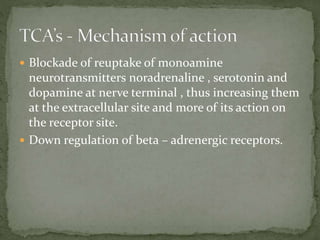
 Blockade of reuptake of monoamine
neurotransmitters noradrenaline , serotonin and
dopamine at nerve terminal , thus increasing them
at the extracellular site and more of its action on
the receptor site.
 Down regulation of beta – adrenergic receptors.
 It takes about 2-3 weeks before they has any
evident action on depression { although sleep and
agitation may respond earlier }.
 After remission of the symptoms , it is essential to
continue them for 6-12 months in the first episode
and longer duration in subsequent episodes to
prevent the recurrence of the symptoms.
 They should be started with low dose and
gradually increased to prevent adverse effects.
 When stopping the drug , taper the dose over 2-3
weeks period.
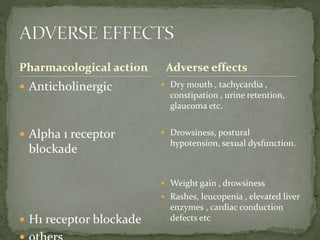
Pharmacological action
 Anticholinergic
 Alpha 1 receptor
blockade
 H1 receptor blockade
 Dry mouth , tachycardia ,
constipation , urine retention,
glaucoma etc.
 Drowsiness, postural
hypotension, sexual dysfunction.
 Weight gain , drowsiness
 Rashes, leucopenia , elevated liver
enzymes , cardiac conduction
defects etc
Adverse effects
 Lofepramine : has strong anti – cholinergic side
effect profile than amitriptyline and is less
sedating ; however it may cause anxiety and
insomnia.
 Irreversibly inhibit monoamine oxidase enzymes
 2 isoforms
 MAO-A (norepinephrine, serotonin, tyramine)
 MAO-B (dopamine)
 Effective for major depression, panic disorder, social
phobia
 Drug interactions and dietary restrictions limit use
 Irreversible, non-selective MAOIs
 phenelzine
 isocarboxazid
 tranylcypromine
 Selective MAO-B inhibitors
 deprenyl (selegiline)
 loses its specificity for MAO-B in antidepressant
doses
 Reversible monoamine oxidase inhibitors (RIMAs)
 Moclobemide
 Appears to be relatively free of food/drug
interactions.
 Phenelzine is more effective than tricyclics in
treating depressed patients with mood reactivity ,
extreme sensitivity to interpersonal loss or
rejection , prominent anergia ,hyperphagia and
hypersomnia .
 Evidence also indicates that these are more
effective than tricyclics as a treatment of bipolar
depression.
 Patients with panic disorder and social phobia
responds well .
 Used for bulimia nervosa , PTSD , anginal pain ,
migraine , ADHD , idiopathic orthostatic
hypotension and depression associated with
traumatic brain injury.
 This is the most worrisome side effect of MAOI’s.
 The aminoacid tyramine is normally transformed
via GI metabolism.
 MAOI’s inactivate GI metabolism of dietary
tyramine , thus allowing intact tyramine to enter
the circulation.
 A hypertensive crisis may subsequently occur as a
result of a powerful pressor effect of the
aminoacid.
 It is to allow resynthesis of adequate
concentrations of MAO’s that tyramine containing
foods should be avoided until 2 weeks after the last
dose of an irreversible MAOI.
- High tyramine content > 2mg of tyramine is
present in cheese , fish , sausages, alcoholic
beverages , concentrated yeast extracts.
- Moderate tyramine content – 0.5 to 1.99 mg is
present in cheese , chicken liver , fish , salmon
mousse , beer and red wine.
- Low tyramine content – 0.01 to > 0.49 mg is
present in cheese , smoked fish, scotch , redwine,
banana and avacado fruits
 When switching from one MAOI to another , the
clinician should taper and stop use of the first drug
for 10 – 14 days before beginning use of the second
drug.
 Persons with renal disease , cardiovascular disease
, hyperthroidism should use these drugs with
caution.
 Hepatic transaminase serum concentrations
should be monitored periodically because of the
potential for hepatotoxicity , especially with
phenelzine and isocarboxazid.
 More modern (1st drug fluoxetine available in 1988) and safe
antidepressants
 Principal mechanism of action:
 selective inhibition of 5-HT (serotonin) reuptake  more
extracellular seratonin → More action on seratonin receptors on
post synaptic → more stimulation
 Other indications of SSRI - anxiety disorders: generalized anxiety,
panic disorder, social anxiety disorder, obsessive-compulsive
disorder
+ bulimia nervosa, gambling
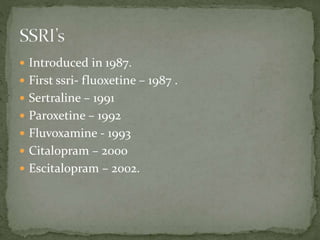
 Introduced in 1987.
 First ssri- fluoxetine – 1987 .
 Sertraline – 1991
 Paroxetine – 1992
 Fluvoxamine - 1993
 Citalopram – 2000
 Escitalopram – 2002.
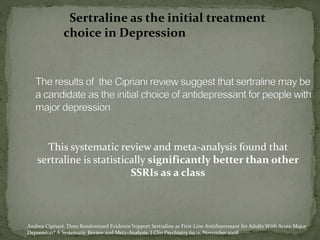
This systematic review and meta-analysis found that
sertraline is statistically significantly better than other
SSRIs as a class
Andrea Cipriani. Does Randomized Evidence Support Sertraline as First-Line Antidepressant for Adults With Acute Major
Depression? A Systematic Review and Meta-Analysis. J Clin Psychiatry 69:11, November 2008
Sertraline as the initial treatment
choice in Depression
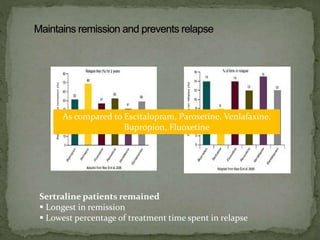
Sertraline patients remained
 Longest in remission
 Lowest percentage of treatment time spent in relapse
As compared to Escitalopram, Paroxetine, Venlafaxine,
Bupropion, Fluoxetine
 Study of safety & efficacy of Sertraline in moderate-to-severe major
depression in elderly:
 With current diagnosis of Hypertension but no other past/present CVD
 Current/past history of CVD, but excluding Hypertension
 Patients with no HTN & no other co-morbid vascular illness
 Elderly patients with vascular co-morbidity were on an average of 5
different concurrent medications
 Sertraline treatment was:
- Effective
- Well-tolerated with no inter-group differences in adverse
events, or in discontinuation due
K.R.R. Krishnan et al. Prog. Neuro-PsychopharmacoL &BioL Psychiat. 2001, Vol. 25, pp. 347-361
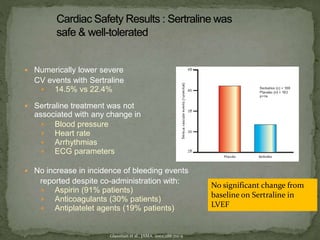
 Numerically lower severe
CV events with Sertraline
 14.5% vs 22.4%
 Sertraline treatment was not
associated with any change in
 Blood pressure
 Heart rate
 Arrhythmias
 ECG parameters
 No increase in incidence of bleeding events
reported despite co-administration with:
 Aspirin (91% patients)
 Anticoagulants (30% patients)
 Antiplatelet agents (19% patients)
Glassman et al., JAMA. 2002;288:701-9
No significant change from
baseline on Sertraline in
LVEF
 Generally safer .
 Less cardiotoxic when compared to TCA’s.
 Lack anti cholinergic side effects and non sedating.
 However few side effects are accounted.
 GIT : nausea , vomiting , diarrhoea.
 CNS : irritability , akathisia , EPS more common in
SSRI than TCA, tremors.
 Less Sexual dysfunction than TCA’s
 Serotonin syndrome
 SSRIs are contraindicated with concomitant use of MAOIs
(monoamine oxidase inhibitors). This can lead to increased
serotonin levels which could cause a serotonin syndrome.
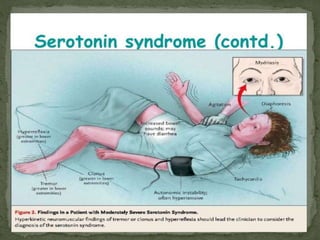
 CF:-
 NEURO: Myoclonus, Nystagmus, Headache, Tremors,
Rigidity, Seizures
 MENTAL STATE: Irritability, Confusions, Agitations,
Hypomania, Coma
 OTHERS: Hyperpyrexia, sweating, diarrhea, cardiac
arrythmia, death
 not as significant as benzodiazepines
 little to no abuse potential
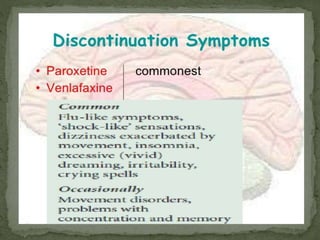
 Withdrawal symptoms: common descriptions include
dizziness, electric shock-like sensations, sweating,
nausea, insomnia, tremor, confusion, and vertigo
 SELECTIVE SEROTONIN – NOREPINEPHRINE
REUPTAKE INHIBITORS.
Venlafaxine
- Duloxetine
- Desvenlafaxine succinate
- Milnacipran
- Sibutramine
 Reboxetine :
- It is a norepinephrine reuptake inhibitor with non
cardiotoxic side effect profile.
- Safer drug alternative to Imipramine in the
treatment of childhood enuresis.
- Dose : 4 to 8mg at bedtime.
- Side effects : increased sweating , dry mouth ,
difficulty in sleeping, dizziness , headache, rash ,
palpitations, lack of appetite.
 Bupropion :
- it is a monocyclic aminoketone that resembles
amphetamine.
- It is norepinephrine dopamine reuptake inhibitor.
- It is used in smoking cessation therapy.
 Trazodone
 Nefazodone
Trazodone :
structurally related to nefazodone.
Peak plasma concentration – 1 hr
Half life – 5 to 9 hrs.
It is a weak inhibitor of serotonin reuptake and a potent
antagonist of serotonin 5HT2A and 5HT2C.
 VILAZODONE :
- It is a serotonin reuptake inhibitor and 5HT1A
receptors partial agonist.
- Because of its partial agonist activity, it helps to reduce
anxiety also.
 Indications :
- Depressive disorders
- Insomnia
- Erectile disorder
- Useful in low dosages { 50 mg a day } in children to
control severe agitation with developmental
disabilities and elderly persons with dementia.
- To treat depression in schizophrenics.
- PTSD
 Mirtazapine - NASSA
 2 antagonist
 5H2 and 5HT3 antagonist
 Net effect selective increase in 5HT1A function
 H1 antagonist
 Advantages: sedation, no adverse sexual effects
 Tianeptine :
-chemically it is a tricyclic antidepressant.
It produces its antidepressant effects through indirect
alteration of glutamate receptor activity.
It is antidepressant and also anxiolytic with relative lack
of sedative, anticholinergic and cardiovascular side
effects.
 St.John’s Wort :
- It is the popular name for the plant HYPERICUM
PERFORATUM.
- Constituents of it may inhibit MAO, inhibit the
reuptake of noradrenaline and serotonin, upregulate
serotonin receptor and decrease serotonin receptor
expression.
- There is less evidence of benefit in severe depression.
 Corticotropin-Releasing Hormone Receptor
Antagonists(CRH1, CRH2)
 Vasopresin Receptor Antagonists(V1A, V1B)
 Glucocorticoid Receptor Antagonists(GR, MR)
 Agomelatine
 Glutamate Blockers(AMPA blockers, NMDA blockers)
 Neuropeptides(substance P, Galanin, Orexigenic
Peptides)
 GSK 3 inhibitors
 Neurogenesis Enhancers(BDNF, GDNF)
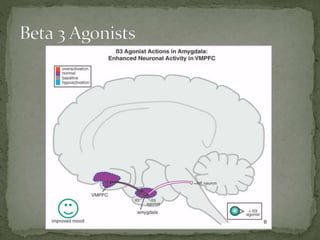
 Beta 3 agonists
 Several reports suggested that Mifeprestone (RU-486)
was beneficial in MDD with psychotic features
(DeBattista et al. 2006)
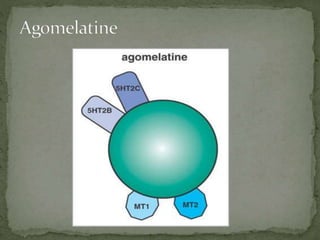
 Agomelatine – it is a melatonin receptor agonist and
5HT2c receptor antagonist.
 It resynchronises circadian rhythms in delayed sleep
phase syndrome.
 It is used in the treatment of MDD in adults.
 It has efficacy in treating atypical and melancholic
depression.
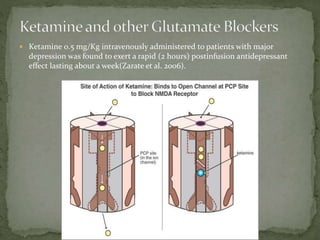
 Ketamine 0.5 mg/Kg intravenously administered to patients with major
depression was found to exert a rapid (2 hours) postinfusion antidepressant
effect lasting about a week(Zarate et al. 2006).
 Antidepressant induced hyponatremia :
 SSRI’s cause hyponatremia due to SIADH,
particularly among elderly.
- Risk factors are :
- Old age , females , low body weight, low baseline
sodium concentration , reduced renal function ,
medical comorbidities.
- Monitoring : serum sodium should be determined
{ at base line and 2 -4 weeks and then 3 monthly }.
 Post stroke depression:
- ssri’s , mirtazepine , nortryptiline are drugs of
choice.
- 30- 40 % stroke patients develop MDD.
- In Diabetes :
- Ssri’s , SNRI’s , mirtazepine. TCA’s should be
avoided.
 In elder people : SSRI’s
 In post MI people : SSRI’s , mirtazepine
 In pregnancy and lactation : fluoxetine , TCA’s ,
sertraline and paroxetine
 In renal impairment : citalopram and sertraline.
 In hepatic insufficiency : citalopram and
paroxetine.
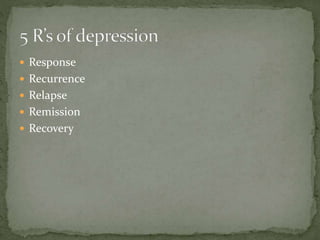
 Response
 Recurrence
 Relapse
 Remission
 Recovery
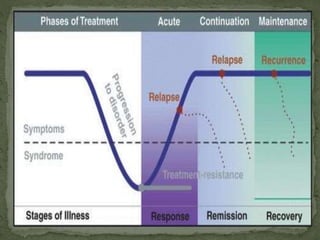
 Response – defined as an improvement from the initial
onset of an illness.
 In the past decades the goal of treatment in depression
was a response.
 Now the goal of treatment in depression is remission
and recovery.
 Remission- defined as the experience of being
symptom free from illness.
 Recovery – defined as the absence of symptoms for
atleast 4 months following the onset of remission.
 Relapse – defined as a full return of depressive
symptoms once remission has occurred – but before
recovery has taken hold.
 Recurrence – refers to another depressive episode after
recovery has been attained.
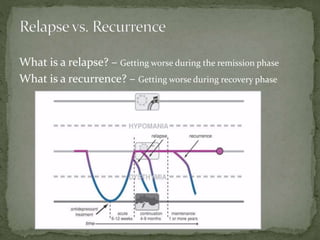
What is a relapse? – Getting worse during the remission phase
What is a recurrence? – Getting worse during recovery phase
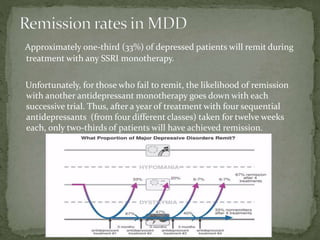
Approximately one-third (33%) of depressed patients will remit during
treatment with any SSRI monotherapy.
Unfortunately, for those who fail to remit, the likelihood of remission
with another antidepressant monotherapy goes down with each
successive trial. Thus, after a year of treatment with four sequential
antidepressants (from four different classes) taken for twelve weeks
each, only two-thirds of patients will have achieved remission.
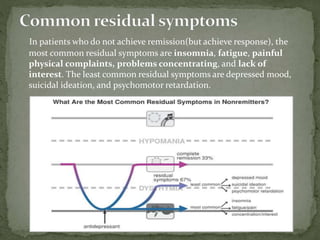
In patients who do not achieve remission(but achieve response), the
most common residual symptoms are insomnia, fatigue, painful
physical complaints, problems concentrating, and lack of
interest. The least common residual symptoms are depressed mood,
suicidal ideation, and psychomotor retardation.
A) Indication:
 Depression with suicidal ideation
 Depression with psychotic symptoms
 Resistant depression- not responding to various drug
combinations in full doses
B) Frequency & number of treatments:
 First 3 treatment on alternate day then twice a week
 6-12 depending upon response
 Identify automatic, maladaptive thoughts and
distorted beliefs that lead to depressive moods.
 Learn strategies to modify these beliefs and practice
adaptive thinking patterns.
 Use a systematic approach to reinforce positive coping
behaviours.
 8-12 sessions
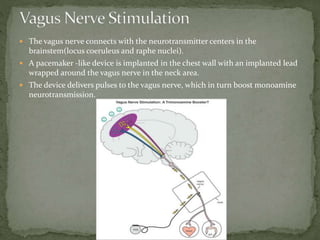
 The vagus nerve connects with the neurotransmitter centers in the
brainstem(locus coeruleus and raphe nuclei).
 A pacemaker -like device is implanted in the chest wall with an implanted lead
wrapped around the vagus nerve in the neck area.
 The device delivers pulses to the vagus nerve, which in turn boost monoamine
neurotransmission.
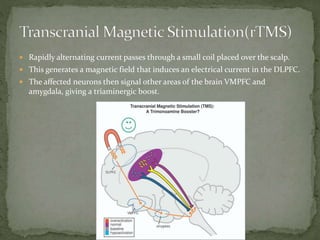
 Rapidly alternating current passes through a small coil placed over the scalp.
 This generates a magnetic field that induces an electrical current in the DLPFC.
 The affected neurons then signal other areas of the brain VMPFC and
amygdala, giving a triaminergic boost.
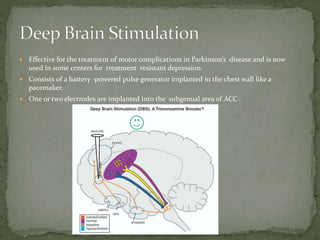
 Effective for the treatment of motor complications in Parkinson’s disease and is now
used in some centers for treatment resistant depression.
 Consists of a battery -powered pulse generator implanted in the chest wall like a
pacemaker.
 One or two electrodes are implanted into the subgenual area of ACC .
 Identify significant interpersonal/relationship issues
that led to, or arose from, depression (unresolved grief,
role disputes, role transitions, social isolation).
 Focus on 1 or 2 of these issues, using problem-solving,
dispute resolution, and social skills training.
 12-16 sessions
 Mild to moderately severe MDD-psychotherapies are
as effective as antidepressant medications.
 Combined treatment with pharmacotherapy and
psychotherapy-no more effective than either therapy
alone.
 Combined treatment-chronic or severe episodes,
patients with co-morbidity, and patients not
responding to monotherapy.(Level 1)
 Recommend lifestyle management for all patients with
depression.
 Regular exercise
 Adequate housing
 Healthy regular meals
 Stress management strategies
 Sleep hygiene
 Engaging in at least one pleasurable activity a day
 Avoiding substance use
 Keeping a daily mood chart
 Assess and discuss self-management goals, challenges and
progress.
 Provide patient education and self-management materials
plus community resources list.
 Review treatment plan and modify if no response to
antidepressants after 3-4 weeks
 At least three follow-up visits in first 12 weeks of
antidepressant treatment.
 At least one follow-up visit in first 12 weeks of referral for
psychotherapy
 Continued antidepressant treatment for 6 months after
remission, at least 2 years for those with risk factors.
 Encourage adherence to continued treatment even and
especially after remission.
 Discuss relapse risk factors, symptoms and prevention.
 Discuss and plan gradual discontinuation of
antidepressants.
 Discuss need for social network of family, friends and
community.
 Antidepressants are :
- non addictive
- effective
- not known to lose their efficacy over time.
- not known to cause new long term side effects.
Inspite of various theories of treatment modalities,
dealing with individual patient still need to be
improved by the clinicians.
HOPE THIS PRESENTATION IS NOT
DEPRESSIVE

MAJOR DEPRESSIVE DISORDER

  • 1.
    Dr. V.L.N. SEKHAR JUNIORRESIDENT DEPT OF PSYCHIATRY SRI VENKATESWARA MEDICAL COLLEGE TIRUPATI
  • 2.
     INTRODUCTION  EPIDEMIOLOGY DEFINITIONS  AETIOLOGY OF DEPRESSION  CLASSIFICATION AND DIAGNOSTIC CRITERIA  TREATMENT MODALITIES  CONCLUSION  TAKE HOME MESSAGE
  • 3.
     According toWHO – Depression is the 3rd LEADING CAUSE of disease burden in the world.  Global burden of disease study shows unipolar depression as 2nd to coronary artery disease by 2020 and 1st by 2030.
  • 4.
     WHO –Globally more than 350 million people of all ages suffer from depression.  Prevalence of Major Depression is 5%.  15% population – major depressive episode at some point of life.  Male : female ratio – 1 : 2.  Incidence increases with age in both sexes.
  • 5.
     10 –15% of depression cases – secondary to general medical illness or substance abuse.  Approximately 15% of all depressed patients commit Suicide.
  • 6.
     Ranging frommild to extremely severe, depressive symptoms were present in 18.5% of the population, anxiety in 24.4%, and stress in 20%.  Clinical depression was present in 12.1% and generalized anxiety disorder in 19.0%.  Comorbid anxiety and depression was high, with about 87% of those having depression also suffering from anxiety disorder. Prevalence of depression, anxiety, and stress among young male adults in India: A dimensional and categorical diagnoses-based study. - Sahoo S, Khess CR - J Nerv Ment Dis. 2010 Dec;198(12):901-4.
  • 7.
     Prevalence » About1/3 of people experiencing major depression do not seek treatment » Approximately 1/3 to 1/2 of patients with depression who present in primary care do not receive a diagnosis of depression  Implications » Increased time spent on history taking and physical examination » Unnecessary diagnostic procedures, particularly in response to patients’ vague somatic complaints Hirschfeld 1997; US Dept of Health and Human Services 1999; Simon 1999;Simon and Vonkorff 1995; Callahan 1996.
  • 8.
    50% to 69%of depressed patients present with somatic complaints that can complicate diagnosis, such as » Joint pain » Headaches » Backaches » Abdominal pain Simon 1999; Depression in Primary Care, 1 1993.
  • 9.
    Projection 2020 Rank Cause%total 1. Ischaemic heart disease 5.9 2. Unipolar major depression 5.7 3. Road traffic accidents 5.1 4. Cerebrovascular disease 4.4 5. Chronic obs pulmonary disease 4.2 6. Lower respiratory infections 3.1 7. Tuberculosis 3.0 8. War 3.0 9. Diarrheal diseases 2.7 10. HIV 2.6 Among females and in developing countries, unipolar major depression is projected to become the leading cause of disease burden Christopher J.L. Murray World Health Organization Geneva, Switzerland. Accessed from http://www.who.int/msa/mnh/ems/dalys/intro.htm on 27.11.02.
  • 10.
     Marital Status Poor interpersonal relationships  Divorced or separated  Socioeconomic and Cultural Factors  No correlation for MDD  BPD 1 : upper socioeconomic group  Comorbidity  MDD : increased risk of having one or more additional comorbid Axis I disorders.  Alcohol abuse or dependence,  Panic disorder,  Obsessive compulsive disorder (OCD),  Social anxiety disorder.  worsen the prognosis and increase - risk of suicide
  • 11.
    Dysthymia and Cyclothymia •Dysthymic disorder – at least 2 years of depressed mood – not sufficiently severe to fit the diagnosis of major depressive episode. • Cyclothymic disorder – at least 2 years of frequently occurring • hypomanic symptoms cannot fit the diagnosis of manic episode. • depressive symptoms that cannot fit the diagnosis of major depressive episode.
  • 12.
     Treatment resistantdepression – failure to achieve the remission after 2 well established anti depressant treatment courses known to have been of evidence based acceptable dose and duration.  Treatment refractory depression – The term “treatment refractory depression” typically refers to unipolar major depressive episodes that do not respond satisfactorily to numerous sequential treatment regimens.
  • 13.
     Double depression– an estimated 40 percent of patients with MDD also meet the criteria for dysthymia, a combination often referred to as double depression.  They have poorer prognosis than patients with only MDD.
  • 14.
     Neurobiological theoryof depression : 1. Monoamine theory { 1965 } – the underlying biological or neuro-anatomical basis for depression is the deficiency of central noradrenergic and / or serotonergic transmission in CNS.
  • 15.
    2. Receptor theory: the problem is in the up – regulation of post- synaptic receptors and alterations in their sensitivity. The precise pathophysiology of depression remains unsolved.
  • 16.
    Neurotransmission: neurotransmitters and Neuropeptides and synapticconnectivity BDNF = brain-derived neurotrophic factor; CREB = cAMP responsive element binding; HPA = hypothalamic-pituitary-adrenal; mRNA = messenger ribonucleic acid; PKC = protein kinase C; Schloesser RJ et al. 2008. Neuropsychopharmacol Rev. 2008;33:110-33. r Early Life Adverse Events Environmental factors (including external environment: psychosocial stressors, sleep deprivation, internal environment: gonadal/HPA steroids) BDNF, CREB, PKC, and other regulatory proteins
  • 17.
    Stahl SM. EssentialPsychopharmacology: Neuroscientific Basis and Practical Applications. 2nd ed. Cambridge, UK: Cambridge University Press; 2000:152. Norepinephrine Serotonin Dopamine Mood, emotion, cognitive function Motivation Sex, appetite, aggression Anxiety, irritability Energy, interest Impulsivity Drive Pleasure
  • 18.
     Other NeurotransmitterDisturbances  Acetylcholine (ACh) ↑  reciprocal or interactive relationships with all three monoamine system.  Gamma-Aminobutyric acid (GABA) ↓  ↓ plasma, CSF, and brain GABA levels in depression.  The amino acids glutamate and glycine are the major excitatory and inhibitory neurotransmitters in the CNS.  Glutamate with hypercortisolemia = deleterious neurocognitive effects of severe recurrent depression.  NMDA receptors antagonists have antidepressant effects.
  • 19.
    weight/ appetite changes sleep disturbances psychomotor fatigue worthlessnessexecutive dysfunction suicidal ideation four more of these requiredguilt depressed mood apathy/ loss of interest one of these required Stahl’s essential psycopharmacology: neuroscientific basis and practical applications, 3rd edition, Cambridge University Press, 2008 Serotonin (5HT) Nor-Epinehprine (NE) 5HT & NE5HT & NE5HT & NE NE 5 HTNE 5 HT
  • 20.
    4. Second Messengersand Intracellular Cascades  The binding of a neurotransmitters with postsynaptic receptor triggers a cascade  Receptors on cell membranes interact with the intracellular environment via G proteins  The G proteins, in turn, connect to various intracellular enzymes (e.g., adenylate cyclase, phospholipase C, and phosphodiesterase) that regulate formation of second messengers, (cAMP,cGMP,IP3,DAG and calcium- calmodulin).  Second messengers regulate the function of neuronal membrane ion channels.  Increasing evidence also indicates that mood-stabilizing drugs act on G proteins or other second messengers.
  • 21.
    5. Alterations ofHormonal Regulation  Activity of the gene coding for the neurokinin brain-derived neurotrophic growth factor (BDNF) is decreased after chronic stress, as is the process of neurogenesis.  history of early trauma  increased HPA activity – hallmark : Hypercortisolemia in depression  structural changes (i.e., atrophy)  Thyroid Axis Activity  5 to 10 % : undetected thyroid dysfunction, (TSH)  hormone replacement therapy  unlike the dexamethasone suppression test (DST), blunted TSH response to TRH does not usually normalize with effective treatment.
  • 22.
     Growth Hormone Growth hormone (GH) is secreted after  stimulation by NE and Dopamine (DA).  inhibited by somatostatin and CRH.  Decreased CSF somatostatin =depression  Prolactin  released by serotonin  no abnormalities of basal or circadian prolactin secretion  a blunted prolactin response to various serotonin (depression)
  • 23.
    7.Alterations of SleepNeurophysiology  premature loss of deep (slow wave) sleep  increase in nocturnal arousal.  reduced REM latency = significant reduction in the first period of non-REM (NREM) sleep  persist after recovery of a depressive episode.  abnormal sleep profile = bad prognosis for psychotherapy and may benefit preferentially from pharmacotherapy.
  • 24.
    8. Immunological Disturbance Depressive disorders are associated with several immunological abnormalities, including decreased lymphocyte proliferation 9. Structural and Functional Brain Imaging  CT and MRI Brain  abnormal hyperintensities in subcortical regions,  periventricular regions,  basal ganglia,  thalamus.  hyperintensities = deleterious neurodegenerative effects of recurrent affective episodes.  PET  decreased anterior brain metabolism,  greater left hemisphere reductions are seen in depression.  reduced cerebral blood flow or metabolism, or both, in the dopaminergically innervated tracts of the mesocortical and mesolimbic systems in depression. 
  • 25.
    10. Neuroanatomical Considerations four brain regions in the regulation of normal emotions:  the prefrontal cortex (PFC) : representations of goals and appropriate responses to obtain these goals = multiple, conflicting behavioral responses  the anterior cingulate: integration of attentional and emotional inputs = facilitates control of emotional arousal, particularly when goal attainment has been thwarted or when novel problems have been encountered  the hippocampus : learning and memory  the amygdala : station for processing novel stimuli
  • 26.
    11. Genetic Factors Recently, the primary focus of genetic studies = identify specific susceptibility genes Family Studies  if one parent = 10 and 25 percent for mood disorder.  If both parents = this risk roughly doubles. Twin Studies  concordance rate for mood disorder in the monozygotic (MZ) twins of 70 to 90 percent compared with the same-sex dizygotic (DZ) twins of 16 to 35 percent.  most compelling data for genetic F. Linkage Studies  DNA markers are segments of DNA = track the segregation of specific chromosomal regions within families affected with a disorder.
  • 27.
    Life Events andEnvironmental Stress  One theory : stress = long-lasting changes in the brain's biology = alter the functional states of various neurotransmitter and intraneuronal signaling systems = loss of neurons and an excessive reduction in synaptic contacts.  high risk of undergoing subsequent episodes even without an external stressor.  losing a parent before age 11,  loss of a spouse  Unemployment
  • 28.
    13. Personality Factors Persons with certain personality disorders may be at greater risk for depression  OCD,  histrionic,  Borderline  antisocial or paranoid personality disorder can use projection and other externalizing defense mechanisms to protect themselves from their inner rage.  Recent stressful events are the most powerful predictors of the onset of a depressive episode.
  • 29.
    14. Psychodynamic Factorsin Depression  Sigmund Freud and Karl Abraham is known as the classic view of depression. (1) disturbances in the infant mother relationship during the oral phase (the first 10 to 18 months of life) predispose to subsequent vulnerability to depression; (2) depression can be linked to real or imagined object loss; (3) introjection of the departed objects is a defense mechanism invoked to deal with the distress connected with the object's loss (4) because the lost object is regarded with a mixture of love and hate, feelings of anger are directed inward at the self.  Edward Bibring regarded depression as a phenomenon that sets in when a person becomes aware of the discrepancy between extraordinarily high ideals and the inability to meet those goals.  Edith Jacobson saw the state of depression as similar to a powerless, helpless child victimized by a tormenting parent.
  • 30.
    Other Formulations ofDepression  Cognitive Theory  Aaron Beck postulated a cognitive triad of depression that consists of (1) views about the self negative self-precept; (2) about the environment tendency to experience the world as hostile and demanding, (3) about the future the expectation of suffering and failure.  Learned Helplessness  experience of uncontrollable events.
  • 31.
     Chronic insomniaor fatigue  Chronic pain  Multiple or unexplained somatic complaints, “thick charts”  Chronic medical illnesses (e.g., diabetes, arthritis)  Acute cardiovascular events (myocardial infarction, stroke)  Recent psychological or physical trauma  Other psychiatric disorders  Substance abuse disorders  Family history of mood disorder
  • 33.
     Major criteria: - Depressed mood - Loss of interest and enjoyment - Reduced energy leading to increased fatiguability and diminished activity.
  • 34.
     Minor criteria: - Reduced concentration and attention - Reduced self esteem and self confidence - Ideas of guilt and unworthiness - Bleak and pessimistic views of the future. - Ideas or acts of self harm or suicide - Disturbed sleep - Diminished appetite.
  • 35.
     Mild depressiveepisode – atlease 2 symptoms from major criteria and atleast 2 symptoms from minor criteria.  Minimum duration of whole episode is about 2 weeks.  Without somatic syndrome – criteria for mild depressive episodes are fulfilled, and there are few or none of the somatic symptoms present.  With somatic syndrome- criteria for mild depressive episodes present and four or more of the somatic symptoms are present.
  • 36.
     Moderate depressiveepisode- atleast 2 of the 3 symptoms of major criteria plus atleast 3 symptoms of minor criteria should be present.  Without somatic syndrome- criteria for moderate depressive episode plus few if any of the somatic symptoms are present.  With somatic syndrome- criteria for moderate depressive episode plus 4 or more of the somatic symptoms are present.
  • 37.
     Severe depressiveepisode- all 3 symptoms of major criteria plus atleast 4 symptoms from minor criteria.  With psychotic symptoms- severe depressive episode with psychotic symptoms, psychotic depression, psychogenic depressive psychosis,reactive depressive psychosis.  Without psychotic symptoms.
  • 38.
    A) Reactive (neurotic)& endogenous depression:  Reactive depression- symptoms in response to external stressful stimuli  C/F: anxiety, irritability, phobia & early insomnia,  Endogenous depression- caused by factors within individual which are independent of outside stimuli, more severe.  C/F: Loss of appetite, weight loss, constipation, decreased libido, amenorrhea, early morning awakening (biological symptoms). B) Primary & secondary: secondary because of H/O previous non affective psychiatric illness (schiz. , AN) or alcoholism, medical illness, or taking certain drugs (e.g.. Steroids)  No difference between them regarding prognosis &
  • 39.
    A) Neurotic depression B)Psychotic depression  Cases of depression with so called biological symptoms & severe forms come under Psychotic depression  Milder forms come under neurotic depression
  • 40.
    MOST useful classification A)Unipolar (recurrent)  Having depressive phases only  Some of them may have manic episode later  Manic episode might remain under diagnosed B) Bipolar-  Both manic & depressive episode in cyclic pattern  May have only manic episodes
  • 41.
    C) Seasonal affectivedisorder-  Repetitive depressive episodes at the same time of year  Symptoms- hypersomnia, increased appetite, increased craving for carbohydrates.  Onset- in winter  Recovery- in spring or summer  Cause: might be shortening in the day light  Treatment; exposure to bright artificial light during hours of darkness D) Involutional depression:  Occurs at the time of involution of sex glands.  Occurs around 45 years of age  C/F: agitation, hypochondriacal symptoms
  • 43.
  • 44.
    Pharmacotherapy/Mood Elevators  Tricyclicantidepressants (TCA)  Monoamine oxidase inhibitors (MAOI)  Selective Serotonin Re-uptake Inhibitors (SSRI)  Other and atypical antidepressant  Serotonin-2 Antagonists Reuptake Inhibitors (SARI)  Serotonin and Noradrenaline Reuptake Inhibitors (SNRI)  Noradrenaline and Dopamine Reuptake Inhibitors (NDRI)  Noradrenaline Reuptake Inhibitors (NARI)  Noradrenergic/Specific Serotonergic Antidepressants (NASSA)  Tianeptine - SSRE  St.John’s wort  Omega 3 triglycerides. Non-pharmacological treatment  Psychotherapy  Light therapy  Electroconvulsive therapy (ECT)
  • 45.
     Blockade ofreuptake of monoamine neurotransmitters noradrenaline , serotonin and dopamine at nerve terminal , thus increasing them at the extracellular site and more of its action on the receptor site.  Down regulation of beta – adrenergic receptors.
  • 46.
     It takesabout 2-3 weeks before they has any evident action on depression { although sleep and agitation may respond earlier }.  After remission of the symptoms , it is essential to continue them for 6-12 months in the first episode and longer duration in subsequent episodes to prevent the recurrence of the symptoms.
  • 47.
     They shouldbe started with low dose and gradually increased to prevent adverse effects.  When stopping the drug , taper the dose over 2-3 weeks period.
  • 48.
    Pharmacological action  Anticholinergic Alpha 1 receptor blockade  H1 receptor blockade  Dry mouth , tachycardia , constipation , urine retention, glaucoma etc.  Drowsiness, postural hypotension, sexual dysfunction.  Weight gain , drowsiness  Rashes, leucopenia , elevated liver enzymes , cardiac conduction defects etc Adverse effects
  • 49.
     Lofepramine :has strong anti – cholinergic side effect profile than amitriptyline and is less sedating ; however it may cause anxiety and insomnia.
  • 50.
     Irreversibly inhibitmonoamine oxidase enzymes  2 isoforms  MAO-A (norepinephrine, serotonin, tyramine)  MAO-B (dopamine)  Effective for major depression, panic disorder, social phobia  Drug interactions and dietary restrictions limit use
  • 51.
     Irreversible, non-selectiveMAOIs  phenelzine  isocarboxazid  tranylcypromine  Selective MAO-B inhibitors  deprenyl (selegiline)  loses its specificity for MAO-B in antidepressant doses  Reversible monoamine oxidase inhibitors (RIMAs)  Moclobemide  Appears to be relatively free of food/drug interactions.
  • 52.
     Phenelzine ismore effective than tricyclics in treating depressed patients with mood reactivity , extreme sensitivity to interpersonal loss or rejection , prominent anergia ,hyperphagia and hypersomnia .  Evidence also indicates that these are more effective than tricyclics as a treatment of bipolar depression.
  • 53.
     Patients withpanic disorder and social phobia responds well .  Used for bulimia nervosa , PTSD , anginal pain , migraine , ADHD , idiopathic orthostatic hypotension and depression associated with traumatic brain injury.
  • 54.
     This isthe most worrisome side effect of MAOI’s.  The aminoacid tyramine is normally transformed via GI metabolism.  MAOI’s inactivate GI metabolism of dietary tyramine , thus allowing intact tyramine to enter the circulation.  A hypertensive crisis may subsequently occur as a result of a powerful pressor effect of the aminoacid.
  • 55.
     It isto allow resynthesis of adequate concentrations of MAO’s that tyramine containing foods should be avoided until 2 weeks after the last dose of an irreversible MAOI.
  • 56.
    - High tyraminecontent > 2mg of tyramine is present in cheese , fish , sausages, alcoholic beverages , concentrated yeast extracts. - Moderate tyramine content – 0.5 to 1.99 mg is present in cheese , chicken liver , fish , salmon mousse , beer and red wine. - Low tyramine content – 0.01 to > 0.49 mg is present in cheese , smoked fish, scotch , redwine, banana and avacado fruits
  • 57.
     When switchingfrom one MAOI to another , the clinician should taper and stop use of the first drug for 10 – 14 days before beginning use of the second drug.  Persons with renal disease , cardiovascular disease , hyperthroidism should use these drugs with caution.  Hepatic transaminase serum concentrations should be monitored periodically because of the potential for hepatotoxicity , especially with phenelzine and isocarboxazid.
  • 58.
     More modern(1st drug fluoxetine available in 1988) and safe antidepressants  Principal mechanism of action:  selective inhibition of 5-HT (serotonin) reuptake  more extracellular seratonin → More action on seratonin receptors on post synaptic → more stimulation  Other indications of SSRI - anxiety disorders: generalized anxiety, panic disorder, social anxiety disorder, obsessive-compulsive disorder + bulimia nervosa, gambling
  • 59.
     Introduced in1987.  First ssri- fluoxetine – 1987 .  Sertraline – 1991  Paroxetine – 1992  Fluvoxamine - 1993  Citalopram – 2000  Escitalopram – 2002.
  • 60.
    This systematic reviewand meta-analysis found that sertraline is statistically significantly better than other SSRIs as a class Andrea Cipriani. Does Randomized Evidence Support Sertraline as First-Line Antidepressant for Adults With Acute Major Depression? A Systematic Review and Meta-Analysis. J Clin Psychiatry 69:11, November 2008 Sertraline as the initial treatment choice in Depression
  • 61.
    Sertraline patients remained Longest in remission  Lowest percentage of treatment time spent in relapse As compared to Escitalopram, Paroxetine, Venlafaxine, Bupropion, Fluoxetine
  • 62.
     Study ofsafety & efficacy of Sertraline in moderate-to-severe major depression in elderly:  With current diagnosis of Hypertension but no other past/present CVD  Current/past history of CVD, but excluding Hypertension  Patients with no HTN & no other co-morbid vascular illness  Elderly patients with vascular co-morbidity were on an average of 5 different concurrent medications  Sertraline treatment was: - Effective - Well-tolerated with no inter-group differences in adverse events, or in discontinuation due K.R.R. Krishnan et al. Prog. Neuro-PsychopharmacoL &BioL Psychiat. 2001, Vol. 25, pp. 347-361
  • 63.
     Numerically lowersevere CV events with Sertraline  14.5% vs 22.4%  Sertraline treatment was not associated with any change in  Blood pressure  Heart rate  Arrhythmias  ECG parameters  No increase in incidence of bleeding events reported despite co-administration with:  Aspirin (91% patients)  Anticoagulants (30% patients)  Antiplatelet agents (19% patients) Glassman et al., JAMA. 2002;288:701-9 No significant change from baseline on Sertraline in LVEF
  • 64.
     Generally safer.  Less cardiotoxic when compared to TCA’s.  Lack anti cholinergic side effects and non sedating.  However few side effects are accounted.  GIT : nausea , vomiting , diarrhoea.  CNS : irritability , akathisia , EPS more common in SSRI than TCA, tremors.  Less Sexual dysfunction than TCA’s  Serotonin syndrome
  • 65.
     SSRIs arecontraindicated with concomitant use of MAOIs (monoamine oxidase inhibitors). This can lead to increased serotonin levels which could cause a serotonin syndrome.  CF:-  NEURO: Myoclonus, Nystagmus, Headache, Tremors, Rigidity, Seizures  MENTAL STATE: Irritability, Confusions, Agitations, Hypomania, Coma  OTHERS: Hyperpyrexia, sweating, diarrhea, cardiac arrythmia, death
  • 67.
     not assignificant as benzodiazepines  little to no abuse potential  Withdrawal symptoms: common descriptions include dizziness, electric shock-like sensations, sweating, nausea, insomnia, tremor, confusion, and vertigo
  • 69.
     SELECTIVE SEROTONIN– NOREPINEPHRINE REUPTAKE INHIBITORS. Venlafaxine - Duloxetine - Desvenlafaxine succinate - Milnacipran - Sibutramine
  • 70.
     Reboxetine : -It is a norepinephrine reuptake inhibitor with non cardiotoxic side effect profile. - Safer drug alternative to Imipramine in the treatment of childhood enuresis. - Dose : 4 to 8mg at bedtime. - Side effects : increased sweating , dry mouth , difficulty in sleeping, dizziness , headache, rash , palpitations, lack of appetite.
  • 71.
     Bupropion : -it is a monocyclic aminoketone that resembles amphetamine. - It is norepinephrine dopamine reuptake inhibitor. - It is used in smoking cessation therapy.
  • 72.
     Trazodone  Nefazodone Trazodone: structurally related to nefazodone. Peak plasma concentration – 1 hr Half life – 5 to 9 hrs. It is a weak inhibitor of serotonin reuptake and a potent antagonist of serotonin 5HT2A and 5HT2C.
  • 73.
     VILAZODONE : -It is a serotonin reuptake inhibitor and 5HT1A receptors partial agonist. - Because of its partial agonist activity, it helps to reduce anxiety also.
  • 74.
     Indications : -Depressive disorders - Insomnia - Erectile disorder - Useful in low dosages { 50 mg a day } in children to control severe agitation with developmental disabilities and elderly persons with dementia. - To treat depression in schizophrenics. - PTSD
  • 75.
     Mirtazapine -NASSA  2 antagonist  5H2 and 5HT3 antagonist  Net effect selective increase in 5HT1A function  H1 antagonist  Advantages: sedation, no adverse sexual effects
  • 76.
     Tianeptine : -chemicallyit is a tricyclic antidepressant. It produces its antidepressant effects through indirect alteration of glutamate receptor activity. It is antidepressant and also anxiolytic with relative lack of sedative, anticholinergic and cardiovascular side effects.
  • 77.
     St.John’s Wort: - It is the popular name for the plant HYPERICUM PERFORATUM. - Constituents of it may inhibit MAO, inhibit the reuptake of noradrenaline and serotonin, upregulate serotonin receptor and decrease serotonin receptor expression. - There is less evidence of benefit in severe depression.
  • 78.
     Corticotropin-Releasing HormoneReceptor Antagonists(CRH1, CRH2)  Vasopresin Receptor Antagonists(V1A, V1B)  Glucocorticoid Receptor Antagonists(GR, MR)  Agomelatine  Glutamate Blockers(AMPA blockers, NMDA blockers)  Neuropeptides(substance P, Galanin, Orexigenic Peptides)  GSK 3 inhibitors  Neurogenesis Enhancers(BDNF, GDNF)  Beta 3 agonists
  • 79.
     Several reportssuggested that Mifeprestone (RU-486) was beneficial in MDD with psychotic features (DeBattista et al. 2006)
  • 81.
     Agomelatine –it is a melatonin receptor agonist and 5HT2c receptor antagonist.  It resynchronises circadian rhythms in delayed sleep phase syndrome.  It is used in the treatment of MDD in adults.  It has efficacy in treating atypical and melancholic depression.
  • 83.
     Ketamine 0.5mg/Kg intravenously administered to patients with major depression was found to exert a rapid (2 hours) postinfusion antidepressant effect lasting about a week(Zarate et al. 2006).
  • 84.
     Antidepressant inducedhyponatremia :  SSRI’s cause hyponatremia due to SIADH, particularly among elderly. - Risk factors are : - Old age , females , low body weight, low baseline sodium concentration , reduced renal function , medical comorbidities. - Monitoring : serum sodium should be determined { at base line and 2 -4 weeks and then 3 monthly }.
  • 85.
     Post strokedepression: - ssri’s , mirtazepine , nortryptiline are drugs of choice. - 30- 40 % stroke patients develop MDD. - In Diabetes : - Ssri’s , SNRI’s , mirtazepine. TCA’s should be avoided.
  • 86.
     In elderpeople : SSRI’s  In post MI people : SSRI’s , mirtazepine  In pregnancy and lactation : fluoxetine , TCA’s , sertraline and paroxetine
  • 87.
     In renalimpairment : citalopram and sertraline.  In hepatic insufficiency : citalopram and paroxetine.
  • 93.
     Response  Recurrence Relapse  Remission  Recovery
  • 95.
     Response –defined as an improvement from the initial onset of an illness.  In the past decades the goal of treatment in depression was a response.  Now the goal of treatment in depression is remission and recovery.
  • 96.
     Remission- definedas the experience of being symptom free from illness.  Recovery – defined as the absence of symptoms for atleast 4 months following the onset of remission.
  • 97.
     Relapse –defined as a full return of depressive symptoms once remission has occurred – but before recovery has taken hold.  Recurrence – refers to another depressive episode after recovery has been attained.
  • 98.
    What is arelapse? – Getting worse during the remission phase What is a recurrence? – Getting worse during recovery phase
  • 99.
    Approximately one-third (33%)of depressed patients will remit during treatment with any SSRI monotherapy. Unfortunately, for those who fail to remit, the likelihood of remission with another antidepressant monotherapy goes down with each successive trial. Thus, after a year of treatment with four sequential antidepressants (from four different classes) taken for twelve weeks each, only two-thirds of patients will have achieved remission.
  • 100.
    In patients whodo not achieve remission(but achieve response), the most common residual symptoms are insomnia, fatigue, painful physical complaints, problems concentrating, and lack of interest. The least common residual symptoms are depressed mood, suicidal ideation, and psychomotor retardation.
  • 101.
    A) Indication:  Depressionwith suicidal ideation  Depression with psychotic symptoms  Resistant depression- not responding to various drug combinations in full doses B) Frequency & number of treatments:  First 3 treatment on alternate day then twice a week  6-12 depending upon response
  • 102.
     Identify automatic,maladaptive thoughts and distorted beliefs that lead to depressive moods.  Learn strategies to modify these beliefs and practice adaptive thinking patterns.  Use a systematic approach to reinforce positive coping behaviours.  8-12 sessions
  • 103.
     The vagusnerve connects with the neurotransmitter centers in the brainstem(locus coeruleus and raphe nuclei).  A pacemaker -like device is implanted in the chest wall with an implanted lead wrapped around the vagus nerve in the neck area.  The device delivers pulses to the vagus nerve, which in turn boost monoamine neurotransmission.
  • 104.
     Rapidly alternatingcurrent passes through a small coil placed over the scalp.  This generates a magnetic field that induces an electrical current in the DLPFC.  The affected neurons then signal other areas of the brain VMPFC and amygdala, giving a triaminergic boost.
  • 105.
     Effective forthe treatment of motor complications in Parkinson’s disease and is now used in some centers for treatment resistant depression.  Consists of a battery -powered pulse generator implanted in the chest wall like a pacemaker.  One or two electrodes are implanted into the subgenual area of ACC .
  • 106.
     Identify significantinterpersonal/relationship issues that led to, or arose from, depression (unresolved grief, role disputes, role transitions, social isolation).  Focus on 1 or 2 of these issues, using problem-solving, dispute resolution, and social skills training.  12-16 sessions
  • 107.
     Mild tomoderately severe MDD-psychotherapies are as effective as antidepressant medications.  Combined treatment with pharmacotherapy and psychotherapy-no more effective than either therapy alone.  Combined treatment-chronic or severe episodes, patients with co-morbidity, and patients not responding to monotherapy.(Level 1)
  • 108.
     Recommend lifestylemanagement for all patients with depression.  Regular exercise  Adequate housing  Healthy regular meals  Stress management strategies  Sleep hygiene  Engaging in at least one pleasurable activity a day  Avoiding substance use  Keeping a daily mood chart
  • 109.
     Assess anddiscuss self-management goals, challenges and progress.  Provide patient education and self-management materials plus community resources list.  Review treatment plan and modify if no response to antidepressants after 3-4 weeks  At least three follow-up visits in first 12 weeks of antidepressant treatment.  At least one follow-up visit in first 12 weeks of referral for psychotherapy  Continued antidepressant treatment for 6 months after remission, at least 2 years for those with risk factors.
  • 110.
     Encourage adherenceto continued treatment even and especially after remission.  Discuss relapse risk factors, symptoms and prevention.  Discuss and plan gradual discontinuation of antidepressants.  Discuss need for social network of family, friends and community.
  • 112.
     Antidepressants are: - non addictive - effective - not known to lose their efficacy over time. - not known to cause new long term side effects.
  • 114.
    Inspite of varioustheories of treatment modalities, dealing with individual patient still need to be improved by the clinicians.
  • 115.
    HOPE THIS PRESENTATIONIS NOT DEPRESSIVE