Depression could be defined as a state of 
‘sadness’ resulting from various situations such 
as, loss of a loved one, failure to achieve goals 
or disappointments in life (Feldman S. R., et al, 
1997).
DSM-IV characterized the major depressive 
episode with – 
a period of at least 2 weeks with depressed 
mood 
loss of interest or pleasure in almost all 
activities 
changes in appetite and sleep 
feeling of worthlessness, guilt, suicidal plans
negative self concept, self blame, 
worthlessness, guilt 
complaints or evidence of difficulty in 
concentrating, such as slowed thinking and 
indecisiveness 
recurrent thoughts of death and suicide
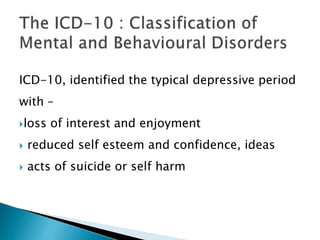
ICD-10, identified the typical depressive period 
with – 
loss of interest and enjoyment 
 reduced self esteem and confidence, ideas 
 acts of suicide or self harm
 Shouting, complaining, unexplained 
irritability, or crying 
 Being bored 
 Lack of interest in playing with friends 
 Alcohol or substance abuse 
 Social isolation, poor communication 
 Fear of death
 Family history 
 Abuse 
 Trauma and stress 
 Death or a loss 
 Pessimistic personality 
 Major events 
 Physical conditions 
 Social Isolation and other personal issues 
 Lack of exposure to sunlight 
 Hormones 
 Other psychological disorders 
 Alcohol consumption and ssubstance abuse
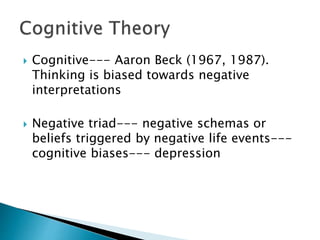
 Cognitive--- Aaron Beck (1967, 1987). 
Thinking is biased towards negative 
interpretations 
 Negative triad--- negative schemas or 
beliefs triggered by negative life events--- 
cognitive biases--- depression
Learned helplessness 
Uncontrollable aversive events--- sense of 
helplessness--- depression 
Hopelessness 
Aversive events--- attribution to global and 
stable factors--- sense of hopelessness--- 
depression
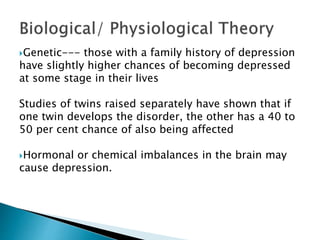
Genetic--- those with a family history of depression 
have slightly higher chances of becoming depressed 
at some stage in their lives 
Studies of twins raised separately have shown that if 
one twin develops the disorder, the other has a 40 to 
50 per cent chance of also being affected 
Hormonal or chemical imbalances in the brain may 
cause depression.
Postnatal depression (PND) has been classified 
as the fifth sub-type of major depressive 
disorder in the DSM-IV. The features and 
diagnostic criteria for postnatal depression are 
similar to other depressive disorders 
The key features of postnatal depression are 
the sleep deprivation, sad mood and suicidal 
thought
 DSM-IV stated that the features of onset of 
postnatal depression usually occurs within 4 
weeks after childbirth as the current major 
depressive disorders 
 Some researchers argued that it could be 
anytime during the first 1 year of childbirth 
 The key feature of postnatal depression is 
that in over 50% cases, the women usually 
recover within a period of 3 to 6 months
A 2006 report by the World Health 
Organisation (WHO) states that nearly a 
million people take their own lives every year, 
more than those murdered or killed in war. 
There are an estimated 10 to 20 million non-fatal 
attempted suicides every year worldwide.
 Almost 60,000 people commit suicide in 
Russia every year, approximately 30,000 
people die by suicide each year in the 
United States; over 30,000 kill themselves 
in Japan. 250,000 and 300,000 suicides 
every year in China. 
 Women are more prone to attempt suicide 
 Women tend to use less violent means 
 75 per cent of suicides in the UK are by 
males
In Bangladesh, the suicide rate was 7.3per 100,000 per 
year and the highest rate was found in the age group of 
60+ years. 
Adolescent suicide rate in rural areas was 20.1 per 
100,000. The rate was 17.7 and 22.7 among males and 
females respectively 
 Poisoning was found as the most frequent method of 
suicide 
The majority of the suicide victims were found to be very 
poor and illiterate. 
Age, place of residence, economic status and literacy were 
the major associating factors related to suicide. 
Adolescents, elderly and those residing in rural regions 
were the most vulnerable groups

Depression

  • 2.
    Depression could bedefined as a state of ‘sadness’ resulting from various situations such as, loss of a loved one, failure to achieve goals or disappointments in life (Feldman S. R., et al, 1997).
  • 3.
    DSM-IV characterized themajor depressive episode with – a period of at least 2 weeks with depressed mood loss of interest or pleasure in almost all activities changes in appetite and sleep feeling of worthlessness, guilt, suicidal plans
  • 4.
    negative self concept,self blame, worthlessness, guilt complaints or evidence of difficulty in concentrating, such as slowed thinking and indecisiveness recurrent thoughts of death and suicide
  • 5.
    ICD-10, identified thetypical depressive period with – loss of interest and enjoyment  reduced self esteem and confidence, ideas  acts of suicide or self harm
  • 6.
     Shouting, complaining,unexplained irritability, or crying  Being bored  Lack of interest in playing with friends  Alcohol or substance abuse  Social isolation, poor communication  Fear of death
  • 7.
     Family history  Abuse  Trauma and stress  Death or a loss  Pessimistic personality  Major events  Physical conditions  Social Isolation and other personal issues  Lack of exposure to sunlight  Hormones  Other psychological disorders  Alcohol consumption and ssubstance abuse
  • 8.
     Cognitive--- AaronBeck (1967, 1987). Thinking is biased towards negative interpretations  Negative triad--- negative schemas or beliefs triggered by negative life events--- cognitive biases--- depression
  • 9.
    Learned helplessness Uncontrollableaversive events--- sense of helplessness--- depression Hopelessness Aversive events--- attribution to global and stable factors--- sense of hopelessness--- depression
  • 10.
    Genetic--- those witha family history of depression have slightly higher chances of becoming depressed at some stage in their lives Studies of twins raised separately have shown that if one twin develops the disorder, the other has a 40 to 50 per cent chance of also being affected Hormonal or chemical imbalances in the brain may cause depression.
  • 11.
    Postnatal depression (PND)has been classified as the fifth sub-type of major depressive disorder in the DSM-IV. The features and diagnostic criteria for postnatal depression are similar to other depressive disorders The key features of postnatal depression are the sleep deprivation, sad mood and suicidal thought
  • 12.
     DSM-IV statedthat the features of onset of postnatal depression usually occurs within 4 weeks after childbirth as the current major depressive disorders  Some researchers argued that it could be anytime during the first 1 year of childbirth  The key feature of postnatal depression is that in over 50% cases, the women usually recover within a period of 3 to 6 months
  • 13.
    A 2006 reportby the World Health Organisation (WHO) states that nearly a million people take their own lives every year, more than those murdered or killed in war. There are an estimated 10 to 20 million non-fatal attempted suicides every year worldwide.
  • 14.
     Almost 60,000people commit suicide in Russia every year, approximately 30,000 people die by suicide each year in the United States; over 30,000 kill themselves in Japan. 250,000 and 300,000 suicides every year in China.  Women are more prone to attempt suicide  Women tend to use less violent means  75 per cent of suicides in the UK are by males
  • 15.
    In Bangladesh, thesuicide rate was 7.3per 100,000 per year and the highest rate was found in the age group of 60+ years. Adolescent suicide rate in rural areas was 20.1 per 100,000. The rate was 17.7 and 22.7 among males and females respectively  Poisoning was found as the most frequent method of suicide The majority of the suicide victims were found to be very poor and illiterate. Age, place of residence, economic status and literacy were the major associating factors related to suicide. Adolescents, elderly and those residing in rural regions were the most vulnerable groups