Neuropsychiatric Sequelae
of Stroke
Presenter - Dr. Sunil Suthar
DM Geriatric Mental Health,
SMS Medical College Jaipur
Index
• What is stroke- risk factors, pathophysiology, treatment.
• Neuropsychiatric sequelae –
Depression
Anxiety disorder
Apathy
Psychosis
Pathologic affect
Catastrophic reaction
Mania
Bipolar disorder
Delirium
Vascular Dementia
Stroke
• What is stroke -A stroke is a "brain attack". It can happen to anyone
at any time. It occurs when blood flow to an area of brain is cut off.
When this happens, brain cells are deprived of oxygen and begin to
die. When brain cells die during a stroke, abilities controlled by that
area of the brain such as memory and muscle control are lost.
• Stroke is leading cause of death and disability in elderly.
• Approximately 30% require assistance with activities of daily living,
20% require assistance with ambulation, and 16% require
institutional care.
Risk factors of stroke
Nonmodifiable Modifiable
Age Arterial hypertension
Gender TIA
Race/ethnicity Prior stroke
Family history Asymptomatic carotid bruit/stenosis
Genetics Cardiac disease
Aortic arch atheromatosis
Diabetes mellitus
Dyslipidemeia
Cigarette smoking
Alcohol consumption
Increased fibrinogen
Elevated homocysteine
Low serum folate
Elevated aticardiolipin antibodies
OCP
Obesity
Pathophysiology of ischemic stroke.
Post Stroke Neuropsychiatric Disorders
Prevalence of Post Stroke Neuropsychiatric
Disorders
• Depression: 35%
• Anxiety disorder: 25%
• Apathy : 20%
• Pathologic affect 20%
• Catastrophic reaction: 20%
• Mania: rare
• Bipolar disorder: rare
• Psychosis: rare
• Delirium: 13-48%
• Dementia: 30%
Most common are:
depression, anxiety,
emotional incontinence and
catastrophic reactions
Neuropsychiatric consequences of stroke
depend on
• Location and size of the stroke
• Preexisting brain pathology
• Baseline intellectual capacity and functioning
• Age
• Premorbid psychiatric history
Neuropsychiatric Symptoms and
Corresponding Neuroanatomy
Neuropsychiatric Symptoms and
Corresponding Neuroanatomy
Symptom Neuroanatomical Region
Apathy
Anterior cingulate gyrus, nucleus accumbens,
globus pallidus, thalamus
OCD
Orbital or medial frontal cortex, caudate nucleus,
globus pallidus
Disinhibition Orbitofrontal cortex, hypothalamus, septum
Psychosis
Frontal lobes, left temporal cortex, right
hemisphere
Neuropsychiatric Symptoms and
Corresponding Neuroanatomy
Post Stroke Depression
• Prevalence - In 30% to 40% of patients within the first year
• most develop within the first month (Ballard and O’Brien, 2002)
• If untreated duration of major PSD is about 9 months to 1 year
whereas the duration of minor depression is several years.
Post Stroke Depression - Risk factors
Consistent Controversial
Past Psych history
Dysphasia
Poor Social Support
Age
Gender
Impaired ADLs
Lesion Location
Lesion Volume
Premorbid diagnosis of depression
(5 to 6 times more likely) (Ried et al., 2010)
Causes of PSDBiological:
disruption of neural
circuits (Orbitofrontal–
basal ganglia–thalamic
circuit )
& neurochemicals.
Genetic cause.
Psychological:
presence of poor coping
skills
Social:
disability, limited social support,
loss of independence may
overwhelm coping skills
Post Stroke
Depression
Diagnosis of PSD is difficult sometimes
because of
• Language disorders - difficulty in expressing or comprehending
• Cognitive impairment - anosognosia or lack of insight or lack of
awareness of depressive symptoms
• Overlap between symptoms of depression & medical condition -
several symptoms of depression such as loss of energy, decreased
appetite, insomnia are found among non-depressed stroke patients
secondary to hospital environment, use of medications, other medical
conditions and stroke itself
Consequences of post stroke depression
• Longer hospital stays – affect rehabilitation
• Poorer recovery of activities of daily living
• Increased morbidity ( more with presence of executive dysfunction)
• Poorer quality of life, even when neurological symptoms and disability
are held constant
Post Stoke Depression and Lesion Location
• more with left anterior lesions
• esp nearer the left frontal pole or left caudate nucleus
More recent review articles have not supported a relationship between
lesion location and depression in poststroke patients (Bhogal et al., 2004)
Left prefrontal lesions are more apt to be associated with acute
depression and may be complicated by aphasia, resulting in the
patient’s inability to express the symptoms
Post Stoke Depression and Lesion Location
Screening for depression
• Sleep, Interest level, Guilt, Energy level, Concentration, Appetite,
Psychomotor activity level, and Suicidal thoughts
• presence of 5 or more of these symptoms (one of which must be
depressed mood or decreased interest level) for 2 weeks is the
threshold for a diagnosis of major depression
SIG E CAPS
Quantifying depressive symptoms
• Beck Depression Inventory (BDI)
• GDS (Geriatric Depression Scale)
• Hamilton Rating Scale for Depression (HDS)
• Post Stroke Depression Rating Scale (PSDRS) addresses the "major" and "minor" forms of PSD
• The Hospital Anxiety and Depression Scale (HADS)
• Stroke Aphasic Depression Questionnaire (SADQ-10)
Treatment of PSD
• Supportive psychotherapy and pharmacotherapy
• Antidepressants are well tolerated
• 60% respond to medications
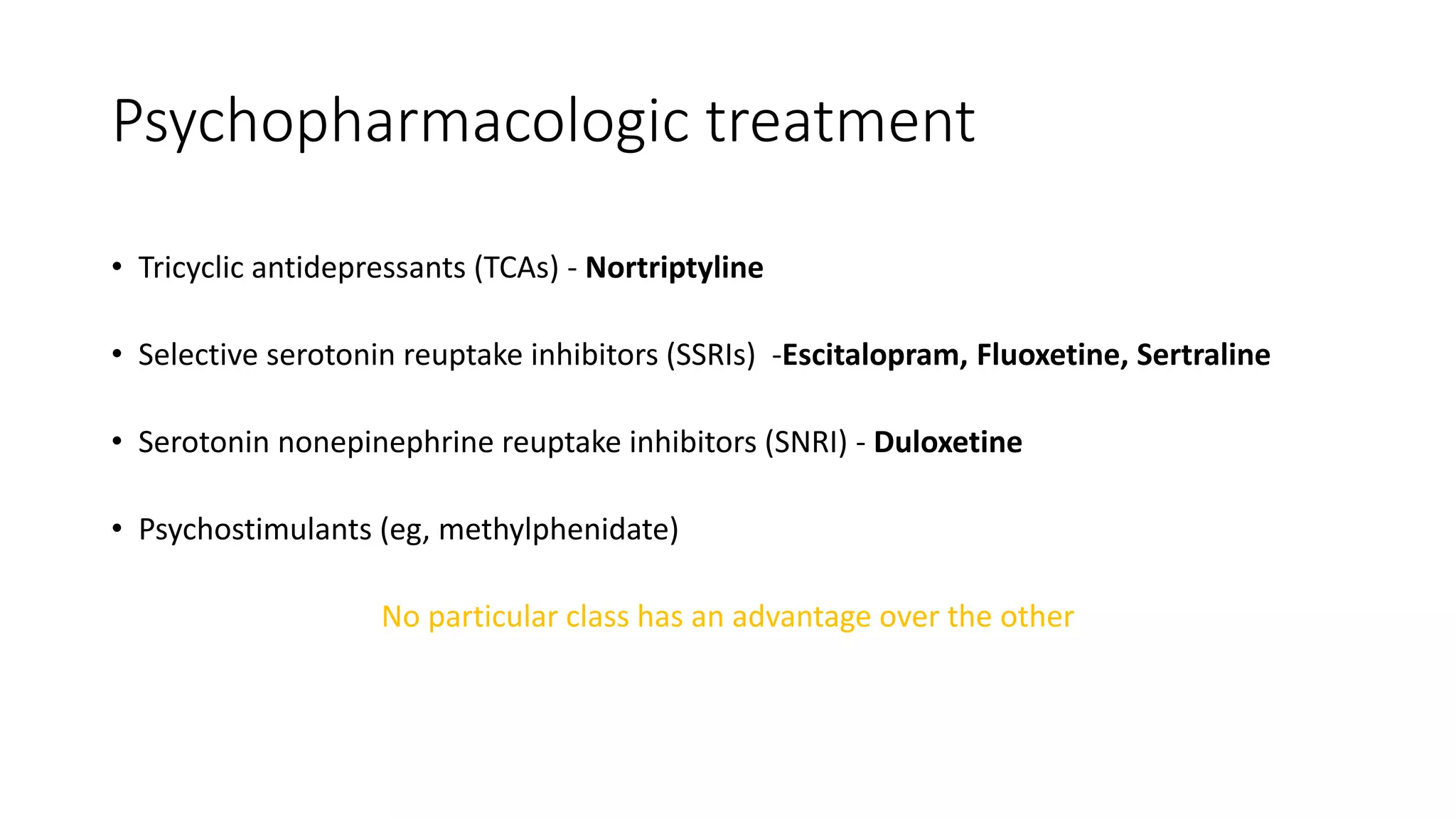
Psychopharmacologic treatment
• Tricyclic antidepressants (TCAs) - Nortriptyline
• Selective serotonin reuptake inhibitors (SSRIs) -Escitalopram, Fluoxetine, Sertraline
• Serotonin nonepinephrine reuptake inhibitors (SNRI) - Duloxetine
• Psychostimulants (eg, methylphenidate)
No particular class has an advantage over the other
Consider electroconvulsive therapy for
• Depression-related emergencies, such as repeated suicide attempts and
severe melancholic PSD
• Refractory to maximal medication management
• Complex psychopharmacologic regimens causing intolerable side effects
Prophylactic treatment with an
antidepressant
• High incidence of depression after stroke makes prophylaxis worthy of
consideration.
• Specially if patient has
• prior episodes of depression
• left-sided lesions
• history of other psychiatric illness
• strong family history of psychiatric illness
Prophylactic treatment with an
antidepressant
Advantages
• antidepressants, neurotropic, stabilize the chemical imbalance;
• increased compliance with vascular disease preventing regimens;
• they may have an effect on serotonin mediated platelet activation.
Antidepressants have side-effects such as falls, increased bleeding,
seizures, and sedation must be considered while prescribing to
patients.
Pathological Laughing and Crying
Prevalence - Between 11% and 35% after stroke (Parvizi et al., 2009).
Pathophysiology -
• associated with brainstem and cerebellar lesions (Disruption of
corticopontine–cerebellar circuits)
• primary neurotransmitters believed to be involved are serotonin and
glutamate.
Clinical features -
• sudden paroxysms of either laughter or crying, irrespective of the
ambient mood state
• can be triggered by nonspecific stimuli or by a low-threshold emotive
stimulus
• The degree of the emotional response by the patient is often striking,
with the crying or laughter persisting for a considerable period of time,
and unable to be suppressed by the patient.
D/D - mood disorder (commonly misidentified)
Other names: Emotional Incontinence; post-stroke emotionalism;
Pseudobulbar affect)
Assessment Scale - Pathological Laughter and Crying Scale (PLACS)
Management
• Dextromethorphan 20mg / quinidine 10mg combination (FDA
approved)
• Tricyclic and SSRI antidepressants
Pathological Laughing and Crying
Catastrophic reaction
• Catastrophic reaction is crying or withdrawal reaction
triggered by a task made difficult or impossible by a neurologic
deficit (e.g. moving a hemiplegic arm)
• associated with PSD & Basal Ganglia lesions
• may be a release phenomenon due to subcortical damage
• Catastrophic reactions occur more with left hemispheric lesions and
aphasia
Post-Stroke Mania
• Rare
• associated with right-sided stroke
• expansive and/or irritable mood, decreased need for sleep, increased
goal-directed activity, recklessness, disregard for social constraints,
talkativeness, racing thoughts, excessive laughter and poor judgment.
Post-Stroke Mania
Management
• mood stabilizer and/or an atypical antipsychotic
Witzelsucht Syndrome
• from the German witzeln, meaning to joke
• Rare syndrome
• Patient has a frequently and inappropriately elevated, ‘giddy,’ and
irritable/hostile affect in which the patient experiences most everything as
genuinely funny and frequently laughs and makes childish, facetious, or
sarcastic remarks.
• Most commonly seen in patients with frontal lobe disease (tumor, stroke)
or injury
• Frontal-subcortical circuit dysfunction has been found to promote
pathological joking as a compulsion. (Elias D et al., 2016)
Post-Stroke Anxiety Disorders
• Risks of 26% and 39% in men and women respectively
• more common in cortical than subcortical stroke
• discrete episodes of panic, tonic levels of increased anxiety, excessive
sweating, worrying, and decreased sleep
• majority also having PSD
• Anxiety Depression (AD) was associated with left cortical lesions and
anxiety alone with right hemisphere lesions
Management
• respond well to antidepressants (SSRIs )
• Avoidance of benzodiazepines is important; these agents may cause
cognitive decline, verging on PSDem
• If symptoms are incompletely responsive to antidepressant(s),
consider buspirone, either with an antidepressant or as monotherapy
Post-Stroke Anxiety Disorders
Post stroke psychosis
• rare complication
• include delusions, hallucinations (which may affect various sensory
modalities; auditory and visual hallucinations are the most common),
ideas of reference, thought disorganization, and regressed motor
behavior
• more prone to have comorbid epilepsy
• Psychotic episodes can also be a manifestation of complex partial
seizures secondary to stroke
• correlate with right-sided lesions and cortical/subcortical atrophy
Treatment of Post stroke psychosis
• Atypical antipsychotic, such as risperidone or olanzapine
• Close follow-up every 2 weeks and titration of antipsychotic dose to
effect is recommended
Apathy
• presents with profound lack of initiative without tearfulness,
sleep/appetite disturbance, hopelessness, or suicidality
• Apathy Evaluation Scale to assess apathy
• Treated with antidepressants and/or psychostimulants
Distinguishing post-stroke apathy from post-
stroke depression
Post Stroke Depression
• Loss of interest in activities, not
improved when others
encourage/facilitate
participation
• Patient describes mood as low.
Sad, or down
• Frequent tearfulness
• Patient distressed by symptoms
Post-Stroke Apathy
• Profound lack of initiative, but
may enjoy activities when others
initiate/facilitate participation
• Patient denies low mood or
sadness
• Mood generally unreactive
• Family more concerned than
patient about symptoms
Aggression
• associated with increased motor dysfunction and dysarthria
• Lesions in the area supplied by the subcortical middle cerebral artery
→ inability to control anger or aggression
• Lesions nearer to the frontal pole → irritability and aggression
Aggression
Management
• Fluoxetine reduce levels of poststroke anger (Choi-Kwon et al., 2006)
Post-stroke fatigue
• Frequency of post-stroke fatigue ranges from 29% to 77%
• Managed with Antidepressants and psychostimulants, particularly
those with effects on noradrenergic and/or dopaminergic activity (eg,
bupropion, venlafaxine, and mirtazapine).
Post Stroke Suicide
• Two times increased risk of suicide.
• Recurrent strokes, depressive symptoms, more disabling stroke and
right-sided stroke correlated to suicidal ideas.
Post Stroke Dementia
• Prevalence (in community-based studies) - is about 30%
• Incidence of new onset dementia after stroke increases from 7% after 1 year 48%
after 25 years.
• Stroke doubles the risk of dementia.
Post-Stroke Dementia
• A temporal relationship between a
stroke and the onset of dementia
• stepwise progression of cognitive
decline
• evidence of cerebrovascular disease
on examination
• Neuroimaging findings
No specific neuroimaging profile
exists that is diagnostic for pure
cerebrovascular disease-related
dementia.
Risk factors for Post Stroke Dementia
Demographic factors
Age (over 65 years)
Lower educational level
Female sex
Non-Caucasian origin
Pre-stroke factors
Physical impairment
Cognitive decline
Index stroke factors
Hemorrhagic stroke
Supratentorial stroke location
Dominant hemisphere stroke
Recurrent strokes
Post-stroke factors
Infection
Delirium
Early seizures
Neuroimaging factors
Cerebral small-vessel disease
Cortical atrophy
Medial temporal lobe atrophy
Post-Stroke Dementia
• When to say post stroke dementia- after 3months or after 6 months
of stroke?
• Patients present with prominent cortical, subcortical, or mixed
features
Post-Stroke Dementia
• Some cases of dementia diagnosed in the post-stroke period may
represent previously unrecognized cases of AD
• Memory difficulties tend to be less severe than in AD
• changes in instrumental activities of daily living that require complex
organizational and problem-solving skills (e.g., managing finances,
following directions, “figuring things out”) are likely more prominent
in a patient with VaD compared to one with AD
• apathy is a hallmark symptom
Post-Stroke Dementia
post-stoke dementia assessment scales
Hachinski ischemic score is used to differentiate vascular dementia from other types of dementia
IQCODE -Informant Questionnaire for Cognitive Decline in the Elderly, ACE-R -Addenbrookes Cognitive Evaluation
Revised, MMSE - Mini-Mental State Examination, MoCA - Montreal Cognitive Assessment, R-CAMCOG - Rotterdam CAMCOG
Treatment for post-stroke dementia
• may benefit from pharmacotherapy for AD (cholinesterase inhibitors and
Memantine) but role controversial
• Initiate antidepressants (SSRI) for agitated behavior
• Role of Aspirin, Atorvastatin in prevention of future episode of stroke but
ineffective in prevention of dementia.
• Manage Blood pressure, blood sugar level, dyslipidemia, cardiac illness if
present.
Treatment for post-stroke dementia
Multifactorial interventions
• Physical activity, weight control, smoking cessation, healthy diet with
better glycemic control, and cognitive stimulation.
• Increased physical activity/exercise after stroke improves cognitive
performance. (systemic review by Cumming TB et al., 2012)
• Cognitive remediation therapy (Cochrane Database Syst Rev. 2007 no
evidence to support or refute the effectiveness)
Summary
• Depression & anxiety are the 2 most common post-stroke syndromes.
• Both depression and anxiety increase morbidity and delay
rehabilitation.
• Treatment of neuropsychiatric post-stroke disorders have the greatest
potential for improving outcome and quality of life.
References
• Harrison's Principles of Internal Medicine, 18e. New York, NY: McGraw-Hill; 2012.
• Granadillo ED, Mendez MF. Pathological Joking or Witzelsucht Revisited. The
Journal of neuropsychiatry and clinical neurosciences. 2016;28(3):162-7.
• Nair RD, Lincoln NB. Cognitive rehabilitation for memory deficits following stroke.
Cochrane Database Syst Rev. 2007;3:CD002293
• Cumming TB, Tyedin K, Churilov L, Morris ME, Bernhardt J. The effect of physical
activity on cognitive function after stroke: a systematic review. Int Psychogeriatr.
2012;24(4):557–67.
• Morris PL, Robinson RG, Raphael B. Emotional lability after stroke.
Aust N Z J Psychiatry. 1993 Dec; 27(4):601-5.
• Robinson RG, Parikh RM, Lipsey JR, Starkstein SE, Price TR. Pathological laughing
and crying following stroke: validation of a measurement scale and a double-blind
treatment study. The American journal of psychiatry. 1993;150(2):286-93.
Thank you

Neuropsychiatric sequelae of stroke

  • 1.
    Neuropsychiatric Sequelae of Stroke Presenter- Dr. Sunil Suthar DM Geriatric Mental Health, SMS Medical College Jaipur
  • 2.
    Index • What isstroke- risk factors, pathophysiology, treatment. • Neuropsychiatric sequelae – Depression Anxiety disorder Apathy Psychosis Pathologic affect Catastrophic reaction Mania Bipolar disorder Delirium Vascular Dementia
  • 3.
    Stroke • What isstroke -A stroke is a "brain attack". It can happen to anyone at any time. It occurs when blood flow to an area of brain is cut off. When this happens, brain cells are deprived of oxygen and begin to die. When brain cells die during a stroke, abilities controlled by that area of the brain such as memory and muscle control are lost. • Stroke is leading cause of death and disability in elderly. • Approximately 30% require assistance with activities of daily living, 20% require assistance with ambulation, and 16% require institutional care.
  • 4.
    Risk factors ofstroke Nonmodifiable Modifiable Age Arterial hypertension Gender TIA Race/ethnicity Prior stroke Family history Asymptomatic carotid bruit/stenosis Genetics Cardiac disease Aortic arch atheromatosis Diabetes mellitus Dyslipidemeia Cigarette smoking Alcohol consumption Increased fibrinogen Elevated homocysteine Low serum folate Elevated aticardiolipin antibodies OCP Obesity
  • 6.
  • 7.
  • 8.
    Prevalence of PostStroke Neuropsychiatric Disorders • Depression: 35% • Anxiety disorder: 25% • Apathy : 20% • Pathologic affect 20% • Catastrophic reaction: 20% • Mania: rare • Bipolar disorder: rare • Psychosis: rare • Delirium: 13-48% • Dementia: 30% Most common are: depression, anxiety, emotional incontinence and catastrophic reactions
  • 9.
    Neuropsychiatric consequences ofstroke depend on • Location and size of the stroke • Preexisting brain pathology • Baseline intellectual capacity and functioning • Age • Premorbid psychiatric history
  • 10.
  • 11.
    Neuropsychiatric Symptoms and CorrespondingNeuroanatomy Symptom Neuroanatomical Region Apathy Anterior cingulate gyrus, nucleus accumbens, globus pallidus, thalamus OCD Orbital or medial frontal cortex, caudate nucleus, globus pallidus Disinhibition Orbitofrontal cortex, hypothalamus, septum Psychosis Frontal lobes, left temporal cortex, right hemisphere
  • 12.
  • 13.
    Post Stroke Depression •Prevalence - In 30% to 40% of patients within the first year • most develop within the first month (Ballard and O’Brien, 2002) • If untreated duration of major PSD is about 9 months to 1 year whereas the duration of minor depression is several years.
  • 14.
    Post Stroke Depression- Risk factors Consistent Controversial Past Psych history Dysphasia Poor Social Support Age Gender Impaired ADLs Lesion Location Lesion Volume Premorbid diagnosis of depression (5 to 6 times more likely) (Ried et al., 2010)
  • 15.
    Causes of PSDBiological: disruptionof neural circuits (Orbitofrontal– basal ganglia–thalamic circuit ) & neurochemicals. Genetic cause. Psychological: presence of poor coping skills Social: disability, limited social support, loss of independence may overwhelm coping skills Post Stroke Depression
  • 16.
    Diagnosis of PSDis difficult sometimes because of • Language disorders - difficulty in expressing or comprehending • Cognitive impairment - anosognosia or lack of insight or lack of awareness of depressive symptoms • Overlap between symptoms of depression & medical condition - several symptoms of depression such as loss of energy, decreased appetite, insomnia are found among non-depressed stroke patients secondary to hospital environment, use of medications, other medical conditions and stroke itself
  • 17.
    Consequences of poststroke depression • Longer hospital stays – affect rehabilitation • Poorer recovery of activities of daily living • Increased morbidity ( more with presence of executive dysfunction) • Poorer quality of life, even when neurological symptoms and disability are held constant
  • 18.
    Post Stoke Depressionand Lesion Location • more with left anterior lesions • esp nearer the left frontal pole or left caudate nucleus More recent review articles have not supported a relationship between lesion location and depression in poststroke patients (Bhogal et al., 2004)
  • 19.
    Left prefrontal lesionsare more apt to be associated with acute depression and may be complicated by aphasia, resulting in the patient’s inability to express the symptoms Post Stoke Depression and Lesion Location
  • 20.
    Screening for depression •Sleep, Interest level, Guilt, Energy level, Concentration, Appetite, Psychomotor activity level, and Suicidal thoughts • presence of 5 or more of these symptoms (one of which must be depressed mood or decreased interest level) for 2 weeks is the threshold for a diagnosis of major depression SIG E CAPS
  • 21.
    Quantifying depressive symptoms •Beck Depression Inventory (BDI) • GDS (Geriatric Depression Scale) • Hamilton Rating Scale for Depression (HDS) • Post Stroke Depression Rating Scale (PSDRS) addresses the "major" and "minor" forms of PSD • The Hospital Anxiety and Depression Scale (HADS) • Stroke Aphasic Depression Questionnaire (SADQ-10)
  • 22.
    Treatment of PSD •Supportive psychotherapy and pharmacotherapy • Antidepressants are well tolerated • 60% respond to medications
  • 23.
    Psychopharmacologic treatment • Tricyclicantidepressants (TCAs) - Nortriptyline • Selective serotonin reuptake inhibitors (SSRIs) -Escitalopram, Fluoxetine, Sertraline • Serotonin nonepinephrine reuptake inhibitors (SNRI) - Duloxetine • Psychostimulants (eg, methylphenidate) No particular class has an advantage over the other
  • 25.
    Consider electroconvulsive therapyfor • Depression-related emergencies, such as repeated suicide attempts and severe melancholic PSD • Refractory to maximal medication management • Complex psychopharmacologic regimens causing intolerable side effects
  • 27.
    Prophylactic treatment withan antidepressant • High incidence of depression after stroke makes prophylaxis worthy of consideration. • Specially if patient has • prior episodes of depression • left-sided lesions • history of other psychiatric illness • strong family history of psychiatric illness
  • 28.
    Prophylactic treatment withan antidepressant Advantages • antidepressants, neurotropic, stabilize the chemical imbalance; • increased compliance with vascular disease preventing regimens; • they may have an effect on serotonin mediated platelet activation. Antidepressants have side-effects such as falls, increased bleeding, seizures, and sedation must be considered while prescribing to patients.
  • 30.
    Pathological Laughing andCrying Prevalence - Between 11% and 35% after stroke (Parvizi et al., 2009). Pathophysiology - • associated with brainstem and cerebellar lesions (Disruption of corticopontine–cerebellar circuits) • primary neurotransmitters believed to be involved are serotonin and glutamate. Clinical features - • sudden paroxysms of either laughter or crying, irrespective of the ambient mood state • can be triggered by nonspecific stimuli or by a low-threshold emotive stimulus • The degree of the emotional response by the patient is often striking, with the crying or laughter persisting for a considerable period of time, and unable to be suppressed by the patient. D/D - mood disorder (commonly misidentified) Other names: Emotional Incontinence; post-stroke emotionalism; Pseudobulbar affect)
  • 31.
    Assessment Scale -Pathological Laughter and Crying Scale (PLACS) Management • Dextromethorphan 20mg / quinidine 10mg combination (FDA approved) • Tricyclic and SSRI antidepressants Pathological Laughing and Crying
  • 34.
    Catastrophic reaction • Catastrophicreaction is crying or withdrawal reaction triggered by a task made difficult or impossible by a neurologic deficit (e.g. moving a hemiplegic arm) • associated with PSD & Basal Ganglia lesions • may be a release phenomenon due to subcortical damage • Catastrophic reactions occur more with left hemispheric lesions and aphasia
  • 35.
    Post-Stroke Mania • Rare •associated with right-sided stroke • expansive and/or irritable mood, decreased need for sleep, increased goal-directed activity, recklessness, disregard for social constraints, talkativeness, racing thoughts, excessive laughter and poor judgment.
  • 38.
    Post-Stroke Mania Management • moodstabilizer and/or an atypical antipsychotic
  • 39.
    Witzelsucht Syndrome • fromthe German witzeln, meaning to joke • Rare syndrome • Patient has a frequently and inappropriately elevated, ‘giddy,’ and irritable/hostile affect in which the patient experiences most everything as genuinely funny and frequently laughs and makes childish, facetious, or sarcastic remarks. • Most commonly seen in patients with frontal lobe disease (tumor, stroke) or injury • Frontal-subcortical circuit dysfunction has been found to promote pathological joking as a compulsion. (Elias D et al., 2016)
  • 40.
    Post-Stroke Anxiety Disorders •Risks of 26% and 39% in men and women respectively • more common in cortical than subcortical stroke • discrete episodes of panic, tonic levels of increased anxiety, excessive sweating, worrying, and decreased sleep
  • 42.
    • majority alsohaving PSD • Anxiety Depression (AD) was associated with left cortical lesions and anxiety alone with right hemisphere lesions Management • respond well to antidepressants (SSRIs ) • Avoidance of benzodiazepines is important; these agents may cause cognitive decline, verging on PSDem • If symptoms are incompletely responsive to antidepressant(s), consider buspirone, either with an antidepressant or as monotherapy Post-Stroke Anxiety Disorders
  • 43.
    Post stroke psychosis •rare complication • include delusions, hallucinations (which may affect various sensory modalities; auditory and visual hallucinations are the most common), ideas of reference, thought disorganization, and regressed motor behavior • more prone to have comorbid epilepsy • Psychotic episodes can also be a manifestation of complex partial seizures secondary to stroke • correlate with right-sided lesions and cortical/subcortical atrophy
  • 44.
    Treatment of Poststroke psychosis • Atypical antipsychotic, such as risperidone or olanzapine • Close follow-up every 2 weeks and titration of antipsychotic dose to effect is recommended
  • 45.
    Apathy • presents withprofound lack of initiative without tearfulness, sleep/appetite disturbance, hopelessness, or suicidality • Apathy Evaluation Scale to assess apathy • Treated with antidepressants and/or psychostimulants
  • 46.
    Distinguishing post-stroke apathyfrom post- stroke depression Post Stroke Depression • Loss of interest in activities, not improved when others encourage/facilitate participation • Patient describes mood as low. Sad, or down • Frequent tearfulness • Patient distressed by symptoms Post-Stroke Apathy • Profound lack of initiative, but may enjoy activities when others initiate/facilitate participation • Patient denies low mood or sadness • Mood generally unreactive • Family more concerned than patient about symptoms
  • 47.
    Aggression • associated withincreased motor dysfunction and dysarthria • Lesions in the area supplied by the subcortical middle cerebral artery → inability to control anger or aggression • Lesions nearer to the frontal pole → irritability and aggression
  • 48.
    Aggression Management • Fluoxetine reducelevels of poststroke anger (Choi-Kwon et al., 2006)
  • 49.
    Post-stroke fatigue • Frequencyof post-stroke fatigue ranges from 29% to 77% • Managed with Antidepressants and psychostimulants, particularly those with effects on noradrenergic and/or dopaminergic activity (eg, bupropion, venlafaxine, and mirtazapine).
  • 50.
    Post Stroke Suicide •Two times increased risk of suicide. • Recurrent strokes, depressive symptoms, more disabling stroke and right-sided stroke correlated to suicidal ideas.
  • 52.
    Post Stroke Dementia •Prevalence (in community-based studies) - is about 30% • Incidence of new onset dementia after stroke increases from 7% after 1 year 48% after 25 years. • Stroke doubles the risk of dementia.
  • 53.
    Post-Stroke Dementia • Atemporal relationship between a stroke and the onset of dementia • stepwise progression of cognitive decline • evidence of cerebrovascular disease on examination • Neuroimaging findings No specific neuroimaging profile exists that is diagnostic for pure cerebrovascular disease-related dementia.
  • 54.
    Risk factors forPost Stroke Dementia Demographic factors Age (over 65 years) Lower educational level Female sex Non-Caucasian origin Pre-stroke factors Physical impairment Cognitive decline Index stroke factors Hemorrhagic stroke Supratentorial stroke location Dominant hemisphere stroke Recurrent strokes Post-stroke factors Infection Delirium Early seizures Neuroimaging factors Cerebral small-vessel disease Cortical atrophy Medial temporal lobe atrophy
  • 55.
    Post-Stroke Dementia • Whento say post stroke dementia- after 3months or after 6 months of stroke? • Patients present with prominent cortical, subcortical, or mixed features
  • 56.
    Post-Stroke Dementia • Somecases of dementia diagnosed in the post-stroke period may represent previously unrecognized cases of AD • Memory difficulties tend to be less severe than in AD
  • 57.
    • changes ininstrumental activities of daily living that require complex organizational and problem-solving skills (e.g., managing finances, following directions, “figuring things out”) are likely more prominent in a patient with VaD compared to one with AD • apathy is a hallmark symptom Post-Stroke Dementia
  • 58.
    post-stoke dementia assessmentscales Hachinski ischemic score is used to differentiate vascular dementia from other types of dementia IQCODE -Informant Questionnaire for Cognitive Decline in the Elderly, ACE-R -Addenbrookes Cognitive Evaluation Revised, MMSE - Mini-Mental State Examination, MoCA - Montreal Cognitive Assessment, R-CAMCOG - Rotterdam CAMCOG
  • 59.
    Treatment for post-strokedementia • may benefit from pharmacotherapy for AD (cholinesterase inhibitors and Memantine) but role controversial • Initiate antidepressants (SSRI) for agitated behavior • Role of Aspirin, Atorvastatin in prevention of future episode of stroke but ineffective in prevention of dementia. • Manage Blood pressure, blood sugar level, dyslipidemia, cardiac illness if present.
  • 60.
    Treatment for post-strokedementia Multifactorial interventions • Physical activity, weight control, smoking cessation, healthy diet with better glycemic control, and cognitive stimulation. • Increased physical activity/exercise after stroke improves cognitive performance. (systemic review by Cumming TB et al., 2012) • Cognitive remediation therapy (Cochrane Database Syst Rev. 2007 no evidence to support or refute the effectiveness)
  • 62.
    Summary • Depression &anxiety are the 2 most common post-stroke syndromes. • Both depression and anxiety increase morbidity and delay rehabilitation. • Treatment of neuropsychiatric post-stroke disorders have the greatest potential for improving outcome and quality of life.
  • 63.
    References • Harrison's Principlesof Internal Medicine, 18e. New York, NY: McGraw-Hill; 2012. • Granadillo ED, Mendez MF. Pathological Joking or Witzelsucht Revisited. The Journal of neuropsychiatry and clinical neurosciences. 2016;28(3):162-7. • Nair RD, Lincoln NB. Cognitive rehabilitation for memory deficits following stroke. Cochrane Database Syst Rev. 2007;3:CD002293 • Cumming TB, Tyedin K, Churilov L, Morris ME, Bernhardt J. The effect of physical activity on cognitive function after stroke: a systematic review. Int Psychogeriatr. 2012;24(4):557–67. • Morris PL, Robinson RG, Raphael B. Emotional lability after stroke. Aust N Z J Psychiatry. 1993 Dec; 27(4):601-5. • Robinson RG, Parikh RM, Lipsey JR, Starkstein SE, Price TR. Pathological laughing and crying following stroke: validation of a measurement scale and a double-blind treatment study. The American journal of psychiatry. 1993;150(2):286-93.
  • 64.