1
Heart of the matter
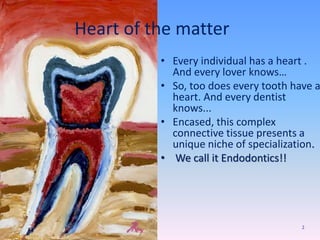
• Every individual has a heart .
And every lover knows…
• So, too does every tooth have a
heart. And every dentist
knows...
• Encased, this complex
connective tissue presents a
unique niche of specialization.
• We call it Endodontics!!
2
The situation of this tiny heart
• Development
• Structure & Components
• Function
• Significance
• Changes
Let us find out what makes this Pulp,
tick ->
3
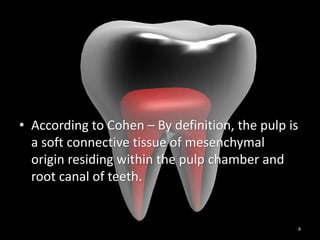
• According to Cohen – By definition, the pulp is
a soft connective tissue of mesenchymal
origin residing within the pulp chamber and
root canal of teeth.
4
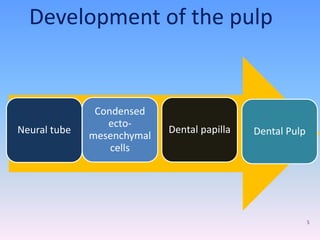
Neural tube
Condensed
ecto-
mesenchymal
cells
Dental papilla Dental Pulp
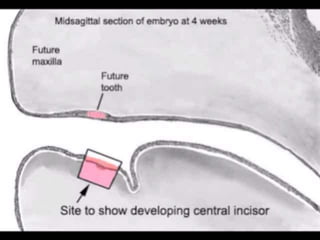
Development of the pulp
5
6
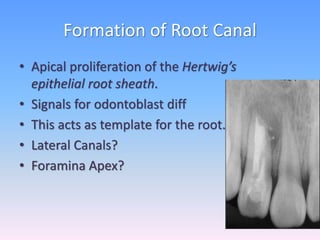
Formation of Root Canal
• Apical proliferation of the Hertwig’s
epithelial root sheath.
• Signals for odontoblast diff
• This acts as template for the root.
• Lateral Canals?
• Foramina Apex?
7
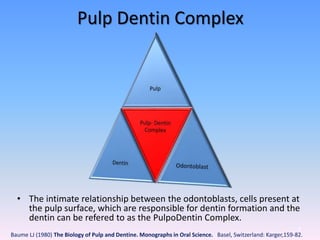
Pulp Dentin Complex
• The intimate relationship between the odontoblasts, cells present at
the pulp surface, which are responsible for dentin formation and the
dentin can be refered to as the PulpoDentin Complex.
8
Baume LJ (1980) The Biology of Pulp and Dentine. Monographs in Oral Science. Basel, Switzerland: Karger,159-82.
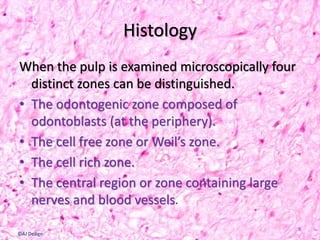
Histology
When the pulp is examined microscopically four
distinct zones can be distinguished.
• The odontogenic zone composed of
odontoblasts (at the periphery).
• The cell free zone or Weil’s zone.
• The cell rich zone.
• The central region or zone containing large
nerves and blood vessels.
9
©AJ Design
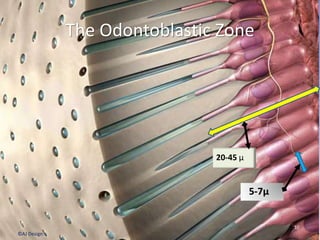
The Odontoblastic Zone
10
20-45 µ
5-7µ
©AJ Design
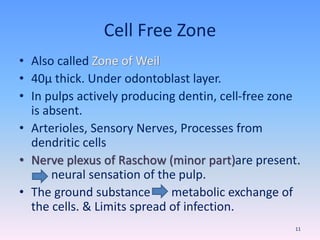
Cell Free Zone
• Also called Zone of Weil
• 40µ thick. Under odontoblast layer.
• In pulps actively producing dentin, cell-free zone
is absent.
• Arterioles, Sensory Nerves, Processes from
dendritic cells
• Nerve plexus of Raschow (minor part)are present.
neural sensation of the pulp.
• The ground substance metabolic exchange of
the cells. & Limits spread of infection.
11
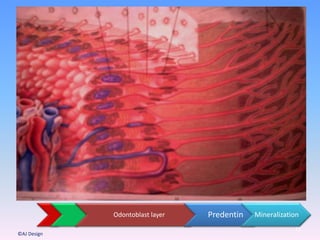
Odontoblast layer Predentin Mineralization
12
©AJ Design
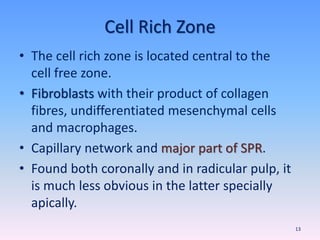
Cell Rich Zone
• The cell rich zone is located central to the
cell free zone.
• Fibroblasts with their product of collagen
fibres, undifferentiated mesenchymal cells
and macrophages.
• Capillary network and major part of SPR.
• Found both coronally and in radicular pulp, it
is much less obvious in the latter specially
apically.
13
Pulp core
• The central connective tissue mass from the
cell rich zone inward
• It contains blood vessels and nerves
embedded in the pulp matrix together with
fibroblasts.
• In young pulps, the cell population is greater
while in older pulps fibre density is higher.
• The neurovascular bundles enter / exit this
core through the apical foramen
14
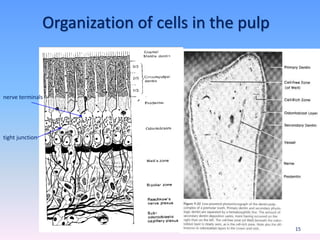
Organization of cells in the pulp
tight junction
nerve terminals
15
16
Fun Fact:
Each year, the 20th of September is an
official holiday in China; this day is called
“Love your teeth day”. Great people,
aren’t they?
Pulp Cells
• Pulpal cells are in 4 groups
 Progenitor cells – Fibroblast, Odontoblast
Defense cells – Lymphocytes, Macrophages
Amorphous interstitial substance –
Proteoglycans and Glycoproteins
Fibrous interstitial substance – Collagen
fibres
•Osborn JW, Ten Cate AR, Histologia Dental Avancada. 4th ed. Quintessence 1988. Pg 886
•Stanley HR. The cells of the dental pulp. Oral Surg Oral Med Oral Path 1962 15:849-58
17
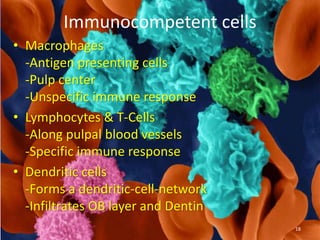
Immunocompetent cells
• Macrophages
-Antigen presenting cells
-Pulp center
-Unspecific immune response
• Lymphocytes & T-Cells
-Along pulpal blood vessels
-Specific immune response
• Dendritic cells
-Forms a dendritic-cell-network
-Infiltrates OB layer and Dentin
18
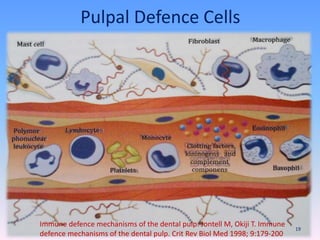
Pulpal Defence Cells
Immune defence mechanisms of the dental pulp. Jontell M, Okiji T. Immune
defence mechanisms of the dental pulp. Crit Rev Biol Med 1998; 9:179-200
19
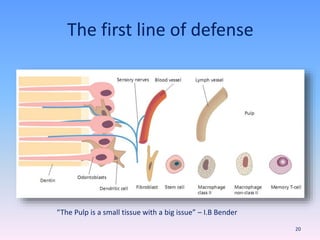
The first line of defense
“The Pulp is a small tissue with a big issue” – I.B Bender
20
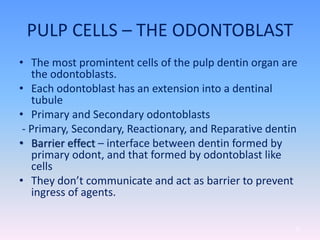
PULP CELLS – THE ODONTOBLAST
• The most promintent cells of the pulp dentin organ are
the odontoblasts.
• Each odontoblast has an extension into a dentinal
tubule
• Primary and Secondary odontoblasts
- Primary, Secondary, Reactionary, and Reparative dentin
• Barrier effect – interface between dentin formed by
primary odont, and that formed by odontoblast like
cells
• They don’t communicate and act as barrier to prevent
ingress of agents.
21
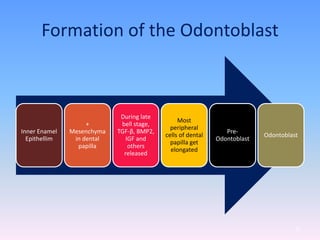
Formation of the Odontoblast
Inner Enamel
Epithellim
+
Mesenchyma
in dental
papilla
During late
bell stage,
TGF-β, BMP2,
IGF and
others
released
Most
peripheral
cells of dental
papilla get
elongated
Pre-
Odontoblast
Odontoblast
22
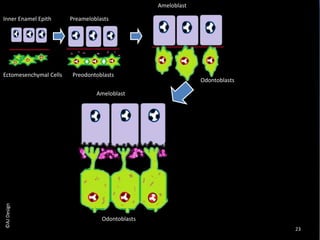
Ectomesenchymal Cells Preodontoblasts
Odontoblasts
Inner Enamel Epith Preameloblasts
Ameloblasts
Ameloblasts
Odontoblasts
23
©AJDesign
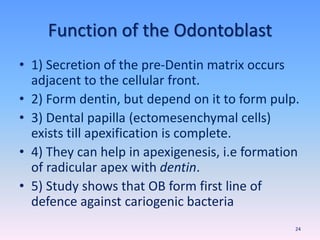
Function of the Odontoblast
• 1) Secretion of the pre-Dentin matrix occurs
adjacent to the cellular front.
• 2) Form dentin, but depend on it to form pulp.
• 3) Dental papilla (ectomesenchymal cells)
exists till apexification is complete.
• 4) They can help in apexigenesis, i.e formation
of radicular apex with dentin.
• 5) Study shows that OB form first line of
defence against cariogenic bacteria
24
Studies mentioned here regarding the
Odontoblast
• Holland GR – the extent of the odontoblast in the pulp, J Anat 1976
; 120:133-149
• Byers MR, Sugaya A. Odontoblast processes in dentine revealed by
fluorescence. J Histochem Cytochem 1995; 43: 159-168
• Yoshiba K, Ejiri S, Yoshiba K, Iwaku M, Ozawa H. Distribution of
odontoblast processes in human coronal dentin.
• Shimono M, Maeda T, Suda H, Takahshi K (eds). Dentin Pulp
complex. Tokyo: Quintessence 1996: 287-288
• Köling A, Rask-Andersen H. Membrane junctions between
odontoblasts and associated cells. A freeze fracture study of the
human odontoblastic cell layer with reference to nerve supply. Acta
Odontol Scand 1984; 42:13-22
• Ruch JV, Lesot H, Begue-Kirn C: Odontoblast differentiation.
25
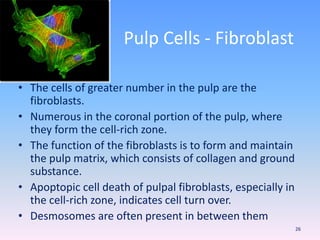
Pulp Cells - Fibroblast
• The cells of greater number in the pulp are the
fibroblasts.
• Numerous in the coronal portion of the pulp, where
they form the cell-rich zone.
• The function of the fibroblasts is to form and maintain
the pulp matrix, which consists of collagen and ground
substance.
• Apoptopic cell death of pulpal fibroblasts, especially in
the cell-rich zone, indicates cell turn over.
• Desmosomes are often present in between them
26
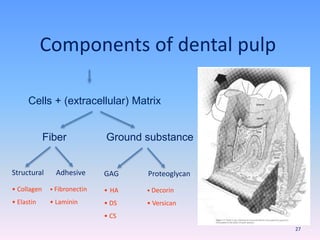
Components of dental pulp
Cells + (extracellular) Matrix
Fiber Ground substance
• Collagen
• Elastin
Structural Adhesive
• Fibronectin
• Laminin
• HA
• DS
• CS
GAG Proteoglycan
• Decorin
• Versican
27
Extracellular matrix of the dental pulp
- fibres
• Collagen is the main organic component of the dental
pulp
• Main types of collagen present are Type I and Type III
• Type I – responsible for pulpal & core architecture,
secreted by fibroblasts. Ca – 56%
• Type III – backbone for vessels, nerves in the central
pulp; mainly distributed in cell rich, and acellular zones
Ca – 41%
• Type V and Type VI collagen form a mesh on the
stroma of the pulpal conn. Tissue.
• Type IV and VI is a component of the basal membrane
of the pulpal capillaries
28
Extracellular matrix of the dental pulp
– ground substance
• Water- 88%
• Of the remining 12%: GAGs
 Chondroitin sulphate -most abundant in the
body (CS)-- 60%
Dermatan sulphate (DS) 34%
 Hyaluronic acid 2%
29
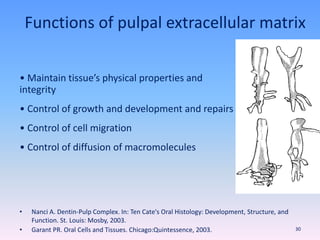
• Maintain tissue’s physical properties and
integrity
• Control of growth and development and repairs
• Control of cell migration
• Control of diffusion of macromolecules
Functions of pulpal extracellular matrix
• Nanci A. Dentin-Pulp Complex. In: Ten Cate's Oral Histology: Development, Structure, and
Function. St. Louis: Mosby, 2003.
• Garant PR. Oral Cells and Tissues. Chicago:Quintessence, 2003. 30
Collagen in dental pulp
• Concentration varies from species to species, 32% in
human pulp.
• Higher content in the middle and apical pulp.
• Total collagen decreases with age.
• Interestingly high level of collagen type III. (43%) : vascular
content, tissue extensibility (cf. Elastin)
• Absence of elastin (except in b.v.).
31
32
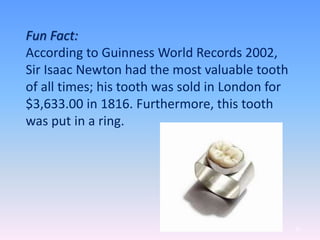
Fun Fact:
According to Guinness World Records 2002,
Sir Isaac Newton had the most valuable tooth
of all times; his tooth was sold in London for
$3,633.00 in 1816. Furthermore, this tooth
was put in a ring.
Functions of the Pulp
• INDUCTIVE:
-Induce oral epithelial differentiation into
dental lamina and enamel organ formation.
-Also induces developing enamel organ to
become a particular type of tooth.
33
©AJ Design
FORMATIVE AND MORPHOLOGIC
FUNCTIONS:
• -Produces the dentin that surrounds and
protects the pulp.
-Odontoblasts develop the organic matrix and
function in its calcification.
-The cells also determine the form acquired by
the coronal pulp chamber as well as volume of
the pulp.
34©AJ Design
Lisi S, Peterkova R et al: Tooth Morphogenesis and pattern of odontoblast diff, Conn
Tiss Res 44(sppl 1) 167, 2003.
• NUTRITIVE:
- Dentin being avascular, depends on the
underlying pulp for blood & drainage.
- Nourishing the dentin through the
odontoblasts and their processes and the
blood vascular system of the pulp.
35
©AJ Design
Lijima T, Zhang J: Three dimensional wall structure and innervation of
dental pulp. Microsc Res Tech 56:32,2002
Kramer IRH, The vascular architecture of the human pulp, Arch Oral Bio
2:177, 1960
• PROTECTIVE:
- The sensory nerves respond with pain to all
stimuli. These initiate reflexes that control
circulation in the pulp.
- This sympathetic function is a reflex,
providing stimulation to visceral motor fibres
terminating on the muscles of the blood
vessels
36
©AJ Design
Haug SR, Heyeraas KJ: Modulation of the dental inflammation by the
sympathetic nervous system, J Dent Res 85: 488-495, 2006
DEFENSIVE OR REPARATIVE:
• - It responds to insults whether mechanical, thermal,
chemical or bacterial by producing reparative dentin
and tubular sclerosis.
• Also acute stimulation may provoke inflammatory
reactions and cardinal symptoms are set in motion
including pain.
• Various cells of the pulp aid in the repair process. The
rigid dentinal wall and the unyielding, enclosure can
lead to partial or complete vascular collapse and
necrosis of the pulp.
• However, if the inflammation is not too severe, the
pulp will heal via its excellent regenerative properties.
37
Kim S: Neurovasclar interactions in the dental pulp in inflammation, J Endod
16: 48-53, 1990
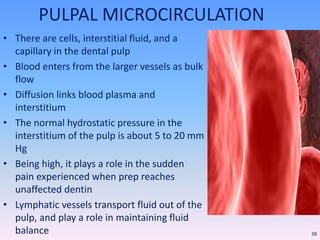
PULPAL MICROCIRCULATION
• There are cells, interstitial fluid, and a
capillary in the dental pulp
• Blood enters from the larger vessels as bulk
flow
• Diffusion links blood plasma and
interstitium
• The normal hydrostatic pressure in the
interstitium of the pulp is about 5 to 20 mm
Hg
• Being high, it plays a role in the sudden
pain experienced when prep reaches
unaffected dentin
• Lymphatic vessels transport fluid out of the
pulp, and play a role in maintaining fluid
balance 38
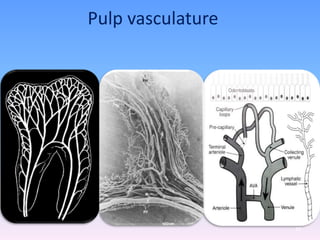
Pulp vasculature
39
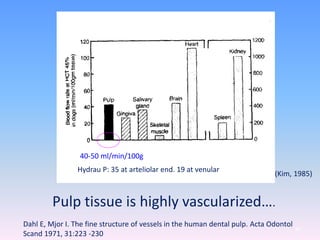
Pulp tissue is highly vascularized….
40-50 ml/min/100g
(Kim, 1985)
40
Hydrau P: 35 at arteliolar end. 19 at venular
Dahl E, Mjor I. The fine structure of vessels in the human dental pulp. Acta Odontol
Scand 1971, 31:223 -230
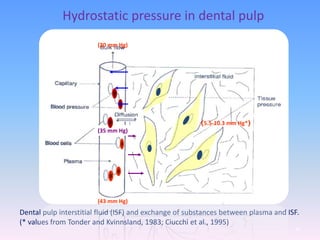
Dental pulp interstitial fluid (ISF) and exchange of substances between plasma and ISF.
(* values from Tonder and Kvinnsland, 1983; Ciucchi et al., 1995)
(5.5-10.3 mm Hg*)
(43 mm Hg)
(20 mm Hg)
(35 mm Hg)
Hydrostatic pressure in dental pulp
41
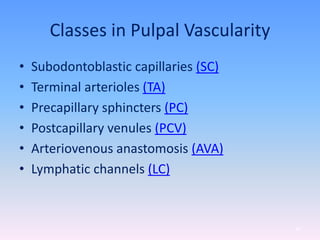
Classes in Pulpal Vascularity
• Subodontoblastic capillaries (SC)
• Terminal arterioles (TA)
• Precapillary sphincters (PC)
• Postcapillary venules (PCV)
• Arteriovenous anastomosis (AVA)
• Lymphatic channels (LC)
42
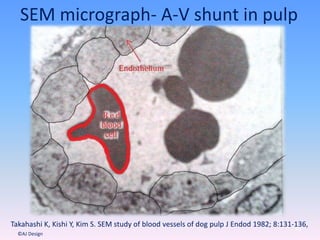
SEM micrograph- A-V shunt in pulp
43
©AJ Design
Takahashi K, Kishi Y, Kim S. SEM study of blood vessels of dog pulp J Endod 1982; 8:131-136,
44
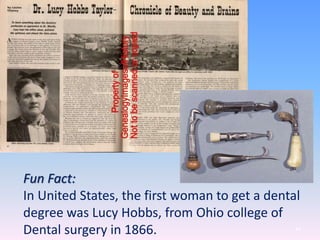
Fun Fact:
In United States, the first woman to get a dental
degree was Lucy Hobbs, from Ohio college of
Dental surgery in 1866.
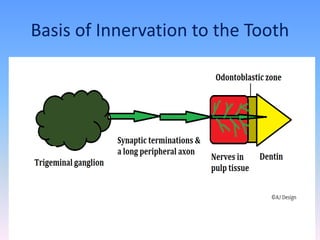
Basis of Innervation to the Tooth
45
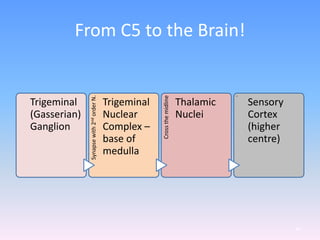
From C5 to the Brain!
Trigeminal
(Gasserian)
Ganglion
Synapsewith2ndorderN.
Trigeminal
Nuclear
Complex –
base of
medulla
Crossthemidline
Thalamic
Nuclei
`
Sensory
Cortex
(higher
centre)
46
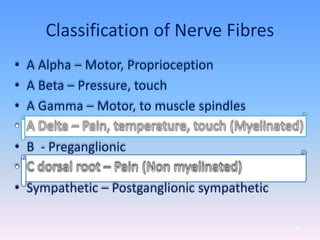
Classification of Nerve Fibres
• A Alpha – Motor, Proprioception
• A Beta – Pressure, touch
• A Gamma – Motor, to muscle spindles
• B - Preganglionic
• Sympathetic – Postganglionic sympathetic
47
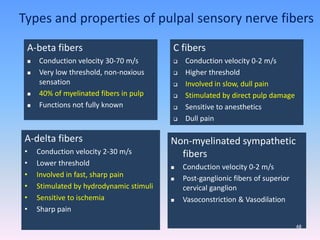
A-delta fibers
• Conduction velocity 2-30 m/s
• Lower threshold
• Involved in fast, sharp pain
• Stimulated by hydrodynamic stimuli
• Sensitive to ischemia
• Sharp pain
C fibers
 Conduction velocity 0-2 m/s
 Higher threshold
 Involved in slow, dull pain
 Stimulated by direct pulp damage
 Sensitive to anesthetics
 Dull pain
Types and properties of pulpal sensory nerve fibers
A-beta fibers
 Conduction velocity 30-70 m/s
 Very low threshold, non-noxious
sensation
 40% of myelinated fibers in pulp
 Functions not fully known
Non-myelinated sympathetic
fibers
 Conduction velocity 0-2 m/s
 Post-ganglionic fibers of superior
cervical ganglion
 Vasoconstriction & Vasodilation
48
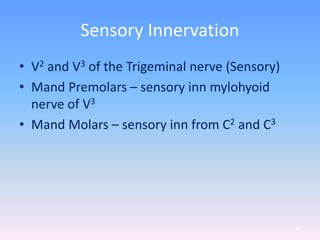
Sensory Innervation
• V2 and V3 of the Trigeminal nerve (Sensory)
• Mand Premolars – sensory inn mylohyoid
nerve of V3
• Mand Molars – sensory inn from C2 and C3
49
NeuroAnatomy
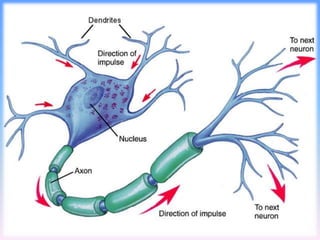
• Both myelinated and non-myelinated axons
• Most are Aδ axons  Nociception
- Slow conducting, narrow, myelinated
• Less are Aβ axons.  Proprioception &
Mechanoreception
- Faster conducting, wider, myelinated
Both are seen in the dentin too!
• Few are C fibres  non-myelinated
• Termination is always unmyelinated.
• Where? -
50
51
Sympathetic Inn.
From T1, C8 and T2 via the
superior cervical ganglion
Vasomotor tone in
precapillary sphincters
Pressure and distribution
of blood
52
Innervations of the Dental Pulp
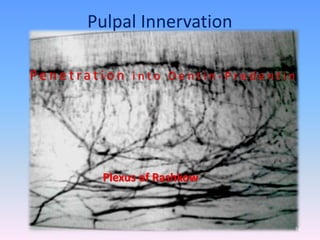
• Nerves enter by the apical foramen, along with
afferent vessels forming the neurovascular
bundle.
• The branches of these free, unmyelinated nerves
end in an extensive plexus of nerves in coronal
pulp – SPR
• In the root no plexus exists, only branches that
arborize further in a specific territory.
• A small number of nerve endings bypass the
plexus, and pass between the odontoblastic
process, to enter the dentinal tubules.
53
Pulpal Innervation
Plexus of Rashkow
P e n e t r a t i o n i n t o D e n t i n - P r e d e n t i n
54
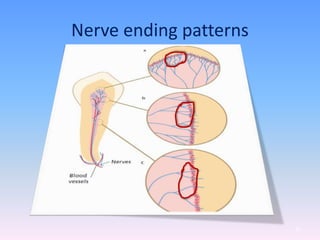
Nerve ending patterns
55
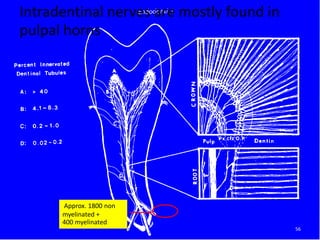
Approx. 1800 non
myelinated +
400 myelinated
Intradentinal nerves are mostly found in
pulpal horns
56
Fun Fact:
In Germany, in the Middle
Ages, kissing a donkey
was the only treatment
for painful teeth.
57
PULPAL INFLAMMATION
58
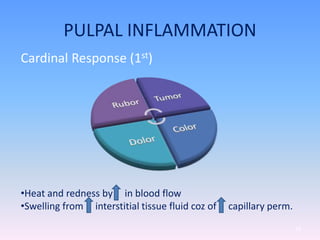
Cardinal Response (1st)
•Heat and redness by in blood flow
•Swelling from interstitial tissue fluid coz of capillary perm.
PULPAL INFL. (Contd)
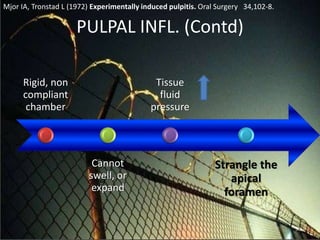
Rigid, non
compliant
chamber
Cannot
swell, or
expand
Tissue
fluid
pressure
Strangle the
apical
foramen
59
Mjor IA, Tronstad L (1972) Experimentally induced pulpitis. Oral Surgery 34,102-8.
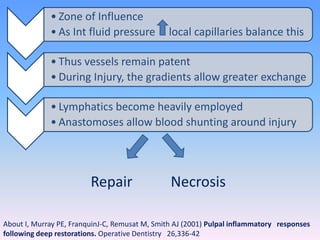
• Zone of Influence
• As Int fluid pressure local capillaries balance this
• Thus vessels remain patent
• During Injury, the gradients allow greater exchange
• Lymphatics become heavily employed
• Anastomoses allow blood shunting around injury
60
Repair Necrosis
About I, Murray PE, FranquinJ-C, Remusat M, Smith AJ (2001) Pulpal inflammatory responses
following deep restorations. Operative Dentistry 26,336-42
Pulpal Injury
• Pulpal injury can occur through deep seated
dental caries, apical periodontitis, and even
tooth preperation involving the tertiary
dentin.
• The pulp responds to injury in a typical
inflammatory response
• This response is termed as Pulpitis
• It can be acute or chronic, depending on the
factors that triggered it.
61
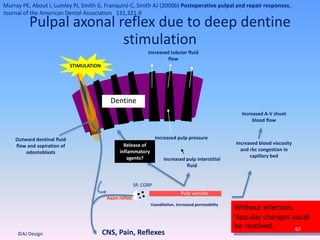
Pulp venules
STIMULATION
Increased pulp interstitial
fluid
Increased pulp pressure
Increased tubular fluid
flow
Release of
inflammatory
agents?
Increased blood viscosity
and rbc congestion in
capillary bed
Increased A-V shunt
blood flow
Outward dentinal fluid
flow and aspiration of
odontoblasts
CNS, Pain, Reflexes
Vasodilation, Increased permeability
Pulpal axonal reflex due to deep dentine
stimulation
Without infection,
Vascular changes could
be resolved.
Axon reflex
SP, CGRP
Dentine
62
©AJ Design
Murray PE, About I, Lumley PJ, Smith G, FranquinJ-C, Smith AJ (2000b) Postoperative pulpal and repair responses.
Journal of the American Dental Association 131,321-9
Localized
Response
Localized
Effect
Extension of
Effect
Progression
of effect
Completion
of Vicious
cycle
63
Heyeraas KJ, Sveen OB, Mjor IA (2001) Part 3. Pulpal
inflammation and its sequela. Quintessence
International 32,611-25
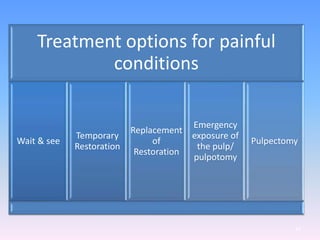
Treatment options for painful
conditions
Wait & see
Temporary
Restoration
Replacement
of
Restoration
Emergency
exposure of
the pulp/
pulpotomy
Pulpectomy
64
What to remember?
• Tissue pressure is a local phenomenon
• The pathophysiology of pulp is characterized
not by a sudden strangulation at the apex
• Circumferential spread of inflammation and
necrosis from a site of initial injury.
• Gross destruction -> loss of structural integ ->
pulp becomes an isobaric chamber -> all areas
are hydrostatic
65
Iatrogenic Effects on the Pulp
• Local Anesthesic
• Cavity/Crown prep. -- heat
• Cavity depth.. RDC rep
• Cavity cleaning and cleansing
• Etching Dentin
• Polishing restorations
• Post-op Sensitivity
66
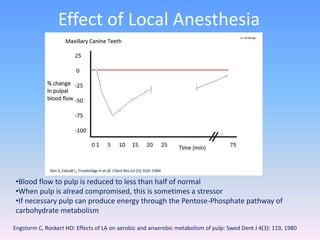
Effect of Local Anesthesia
67
•Blood flow to pulp is reduced to less than half of normal
•When pulp is alread compromised, this is sometimes a stressor
•If necessary pulp can produce energy through the Pentose-Phosphate pathway of
carbohydrate metabolism
Engstorm C, Rockert HO: Effects of LA on aerobic and anaerobic metabolism of pulp: Swed Dent J 4(3): 119, 1980
Effect of Cavity Prep
• Frictonal Heat: Esp in historical handpieces –
heavy torgue, low rpm and steel burs
• Caused scorching of pulp
• RDT of 1 mm protects pulp thermally as Dentin is
an effective insulator
• ‘Boiling away’ of tubular fluid leads to dessication
by the heat produced. Intense sensitivity
• ‘Blushing’ of dentin – hemorrhage due to
frictional heat.
• Solution: Bur-dentin interface wetness & finishing
with hand instruments
68
-Murray PE, Lumley J, Smith AJ: Preserving the vital pulp in operative dentistry: 3. Thickness of
remaining cavity dentin as a key mediator of pulpal injury: Jent Update 29 (4): 172, 2002
-Mullaney TP, Laswell HR: Iatrogenic blushing of dentin. J Prosth Dent 22(3):354, 1989
Cavity Depth
• Dentin permeability increases with cavity depth
• Due to increase in both diameter and density of
tubules
• Length of the tubule beneath the cavity is important
• That much further the substances have to diffuse
• That much more dilution & buffering by dentinal fluid
 1mm – Shields Pulp
 0.5- 0.25mm – Tertiary Reactive Dentin
 .25mm> ~ Odontoblasts die & Reperative dentin is
formed very fast.
69
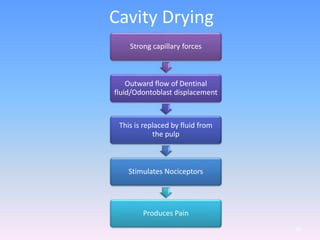
Cavity Drying
70
Strong capillary forces
Outward flow of Dentinal
fluid/Odontoblast displacement
This is replaced by fluid from
the pulp
Stimulates Nociceptors
Produces Pain
Other Effects
• Follow the same response pattern as
mentioned above
• Generally seen in –
 Etching Dentin
Smear Layer Removal
Polishing Restorations ( 20° approx in amalgam)
Post Restorative Sensitivity (Microleakage of
toxins & cytotoxic materials from restoration)
71
-Camps J, Dejou J, Remesat M et al, Factors influencing pulpal response to cavity restorations.
Dent Mater 16(6): 432, 2000
-Grajower R, Kaufman E, Rajstein J; Temp in the pulp chamber during polishing of restorations, J
Dent Res 53(5): 1189, 1974
Pulpal Microbiology
• Routes of Pulpal Infection
o Dentinal Tubules
o Direct Exposure
o Periodontal Disease
o Anachoresis
72
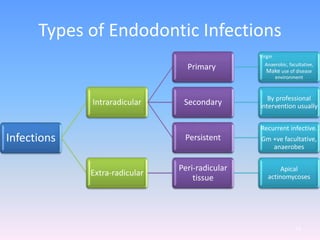
Infections
Intraradicular
Primary
Virgin
Anaerobic, facultative,
Make use of disease
environment
Secondary By professional
intervention usually
Persistent
Recurrent infective.
Gm +ve facultative,
anaerobes
Extra-radicular
Peri-radicular
tissue
Apical
actinomycoses
Types of Endodontic Infections
73
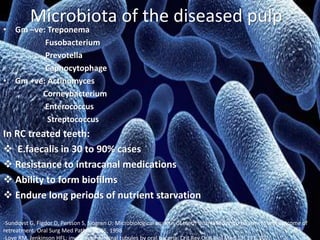
Microbiota of the diseased pulp
• Gm –ve: Treponema
Fusobacterium
Prevotella
Capnocytophage
• Gm +ve: Actinomyces
Corneybacterium
Enterococcus
Streptococcus
In RC treated teeth:
 E.faecalis in 30 to 90% cases
 Resistance to intracanal medications
 Ability to form biofilms
 Endure long periods of nutrient starvation
74
-Sundqvst G, Figdor D, Persson S, Sjogren U: Microbiological analysis of teeth with failed endo treatment and outcome of
retreatment. Oral Surg Med Pathol 85:86, 1998
-Love RM, Jenkinson HFL: invasion of dentinal tubules by oral baceria. Crit Rev Oral Biol Med 13: 171, 202
Pointers - Bacterial invasion of tubules
1. Outward movement of dentinal fluid &
contents delay tubal invasion
2. Dentinal sclerosis beneath carious lesions,
rep dentin, intratubular accumulation of host
defence cells also impede
3. If pulp is necrotic, exposed tubules can
become avenues for colonisation
75
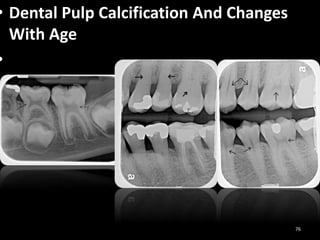
• Dental Pulp Calcification And Changes
With Age
•
76
77
STEM CELLS
• Hematapoietic Stem Cells (HSC)
• Mesenchymal Stem Cells (MSC)
• Embryonic Stem Cells
78
Potential Uses For Dental Pulp Stem
Cells
• Since these cells are multi-potent and can
repair many different types of tissue
• Research shows that preserving these stem
cells may allow your child future access to
potential regenerative therapies, such as
repair of the heart, brain, bone, cartilage
• Dental Pulp - Give your child the medical
advantage . . .
79
Definition of Terms
• Pulp Cap: Treatment of an exposed vital pulp in
which the pulpal wound is sealed with a dental
material, such as CaOH or MTA, to facilitate
formation of rep.dentin & maintenance of vital pulp
• Direct Pulp Cap: Dental Materials placed directly on
a mechanical or traumatic pulp exposure
• Pulpectomy (pulp extirpation): The complete surgical
removal of the vital pulp
• Pulpotomy (pulp amputation): Surgical removal of
the coronal portion of vital pulp as a means of
preserving vitality of the remaining radicular portion
and is performed as an emergency temporary
measure for relief of symptom or therapeutic
measure
80All definitions are from the Glossary of Terms, American Assn of Endodontics, Chicago Conf 2005
Definition of Terms (2)
• Partial Pulpotomy (Shallow/Cvek Pulpotomy): The surgical
removal of a small diseased portion of vital pulp as a measure
of preserving the remaining coronal and radicular pulp tissue
• Apexification: Inducing a calcified or artificial barrier in a root
with an open apex or the continued development of an
incompletely formed root in teeth with necrotic pulp.
• Apexogenesis: A vital pulp therapy procedure performed to
enable continued physiologic development and formation of
the root end; term used to describe initial pulp therapy that
encourages the continuation of this process
81All definitions are from the Glossary of Terms, American Assn of Endodontics, Chicago Conf 2005
Fun Fact:
In the 1700’s people would sell their teeth to
the rich people, who then used to make false
teeth with them.
82
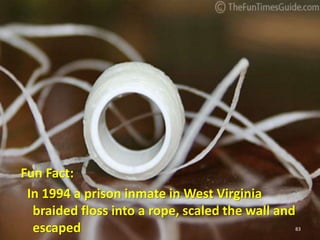
Fun Fact:
In 1994 a prison inmate in West Virginia
braided floss into a rope, scaled the wall and
escaped 83
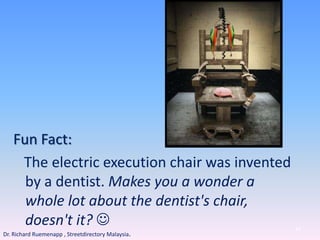
Fun Fact:
The electric execution chair was invented
by a dentist. Makes you a wonder a
whole lot about the dentist's chair,
doesn't it?  84
Dr. Richard Ruemenapp , Streetdirectory Malaysia.
Fun Facts:
50% consider the smile the first facial feature
they notice.
80% are not happy with their smile.
83% of people believe their teeth are more
important to their appearance than hair and
eyes.
85Academy of General Dentistry, USA
Fun Fact:
Many people in Western Europe
tell their children that if they
keep an extracted tooth under
their pillow before sleeping, a
tooth fairy comes and
exchanges the tooth with a gift.
86
87

Dental Pulp - Comprehensive - Dr. Abhishek John Samuel

  • 1.
  • 2.
    Heart of thematter • Every individual has a heart . And every lover knows… • So, too does every tooth have a heart. And every dentist knows... • Encased, this complex connective tissue presents a unique niche of specialization. • We call it Endodontics!! 2
  • 3.
    The situation ofthis tiny heart • Development • Structure & Components • Function • Significance • Changes Let us find out what makes this Pulp, tick -> 3
  • 4.
    • According toCohen – By definition, the pulp is a soft connective tissue of mesenchymal origin residing within the pulp chamber and root canal of teeth. 4
  • 5.
  • 6.
  • 7.
    Formation of RootCanal • Apical proliferation of the Hertwig’s epithelial root sheath. • Signals for odontoblast diff • This acts as template for the root. • Lateral Canals? • Foramina Apex? 7
  • 8.
    Pulp Dentin Complex •The intimate relationship between the odontoblasts, cells present at the pulp surface, which are responsible for dentin formation and the dentin can be refered to as the PulpoDentin Complex. 8 Baume LJ (1980) The Biology of Pulp and Dentine. Monographs in Oral Science. Basel, Switzerland: Karger,159-82.
  • 9.
    Histology When the pulpis examined microscopically four distinct zones can be distinguished. • The odontogenic zone composed of odontoblasts (at the periphery). • The cell free zone or Weil’s zone. • The cell rich zone. • The central region or zone containing large nerves and blood vessels. 9 ©AJ Design
  • 10.
    The Odontoblastic Zone 10 20-45µ 5-7µ ©AJ Design
  • 11.
    Cell Free Zone •Also called Zone of Weil • 40µ thick. Under odontoblast layer. • In pulps actively producing dentin, cell-free zone is absent. • Arterioles, Sensory Nerves, Processes from dendritic cells • Nerve plexus of Raschow (minor part)are present. neural sensation of the pulp. • The ground substance metabolic exchange of the cells. & Limits spread of infection. 11
  • 12.
    Odontoblast layer PredentinMineralization 12 ©AJ Design
  • 13.
    Cell Rich Zone •The cell rich zone is located central to the cell free zone. • Fibroblasts with their product of collagen fibres, undifferentiated mesenchymal cells and macrophages. • Capillary network and major part of SPR. • Found both coronally and in radicular pulp, it is much less obvious in the latter specially apically. 13
  • 14.
    Pulp core • Thecentral connective tissue mass from the cell rich zone inward • It contains blood vessels and nerves embedded in the pulp matrix together with fibroblasts. • In young pulps, the cell population is greater while in older pulps fibre density is higher. • The neurovascular bundles enter / exit this core through the apical foramen 14
  • 15.
    Organization of cellsin the pulp tight junction nerve terminals 15
  • 16.
    16 Fun Fact: Each year,the 20th of September is an official holiday in China; this day is called “Love your teeth day”. Great people, aren’t they?
  • 17.
    Pulp Cells • Pulpalcells are in 4 groups  Progenitor cells – Fibroblast, Odontoblast Defense cells – Lymphocytes, Macrophages Amorphous interstitial substance – Proteoglycans and Glycoproteins Fibrous interstitial substance – Collagen fibres •Osborn JW, Ten Cate AR, Histologia Dental Avancada. 4th ed. Quintessence 1988. Pg 886 •Stanley HR. The cells of the dental pulp. Oral Surg Oral Med Oral Path 1962 15:849-58 17
  • 18.
    Immunocompetent cells • Macrophages -Antigenpresenting cells -Pulp center -Unspecific immune response • Lymphocytes & T-Cells -Along pulpal blood vessels -Specific immune response • Dendritic cells -Forms a dendritic-cell-network -Infiltrates OB layer and Dentin 18
  • 19.
    Pulpal Defence Cells Immunedefence mechanisms of the dental pulp. Jontell M, Okiji T. Immune defence mechanisms of the dental pulp. Crit Rev Biol Med 1998; 9:179-200 19
  • 20.
    The first lineof defense “The Pulp is a small tissue with a big issue” – I.B Bender 20
  • 21.
    PULP CELLS –THE ODONTOBLAST • The most promintent cells of the pulp dentin organ are the odontoblasts. • Each odontoblast has an extension into a dentinal tubule • Primary and Secondary odontoblasts - Primary, Secondary, Reactionary, and Reparative dentin • Barrier effect – interface between dentin formed by primary odont, and that formed by odontoblast like cells • They don’t communicate and act as barrier to prevent ingress of agents. 21
  • 22.
    Formation of theOdontoblast Inner Enamel Epithellim + Mesenchyma in dental papilla During late bell stage, TGF-β, BMP2, IGF and others released Most peripheral cells of dental papilla get elongated Pre- Odontoblast Odontoblast 22
  • 23.
    Ectomesenchymal Cells Preodontoblasts Odontoblasts InnerEnamel Epith Preameloblasts Ameloblasts Ameloblasts Odontoblasts 23 ©AJDesign
  • 24.
    Function of theOdontoblast • 1) Secretion of the pre-Dentin matrix occurs adjacent to the cellular front. • 2) Form dentin, but depend on it to form pulp. • 3) Dental papilla (ectomesenchymal cells) exists till apexification is complete. • 4) They can help in apexigenesis, i.e formation of radicular apex with dentin. • 5) Study shows that OB form first line of defence against cariogenic bacteria 24
  • 25.
    Studies mentioned hereregarding the Odontoblast • Holland GR – the extent of the odontoblast in the pulp, J Anat 1976 ; 120:133-149 • Byers MR, Sugaya A. Odontoblast processes in dentine revealed by fluorescence. J Histochem Cytochem 1995; 43: 159-168 • Yoshiba K, Ejiri S, Yoshiba K, Iwaku M, Ozawa H. Distribution of odontoblast processes in human coronal dentin. • Shimono M, Maeda T, Suda H, Takahshi K (eds). Dentin Pulp complex. Tokyo: Quintessence 1996: 287-288 • Köling A, Rask-Andersen H. Membrane junctions between odontoblasts and associated cells. A freeze fracture study of the human odontoblastic cell layer with reference to nerve supply. Acta Odontol Scand 1984; 42:13-22 • Ruch JV, Lesot H, Begue-Kirn C: Odontoblast differentiation. 25
  • 26.
    Pulp Cells -Fibroblast • The cells of greater number in the pulp are the fibroblasts. • Numerous in the coronal portion of the pulp, where they form the cell-rich zone. • The function of the fibroblasts is to form and maintain the pulp matrix, which consists of collagen and ground substance. • Apoptopic cell death of pulpal fibroblasts, especially in the cell-rich zone, indicates cell turn over. • Desmosomes are often present in between them 26
  • 27.
    Components of dentalpulp Cells + (extracellular) Matrix Fiber Ground substance • Collagen • Elastin Structural Adhesive • Fibronectin • Laminin • HA • DS • CS GAG Proteoglycan • Decorin • Versican 27
  • 28.
    Extracellular matrix ofthe dental pulp - fibres • Collagen is the main organic component of the dental pulp • Main types of collagen present are Type I and Type III • Type I – responsible for pulpal & core architecture, secreted by fibroblasts. Ca – 56% • Type III – backbone for vessels, nerves in the central pulp; mainly distributed in cell rich, and acellular zones Ca – 41% • Type V and Type VI collagen form a mesh on the stroma of the pulpal conn. Tissue. • Type IV and VI is a component of the basal membrane of the pulpal capillaries 28
  • 29.
    Extracellular matrix ofthe dental pulp – ground substance • Water- 88% • Of the remining 12%: GAGs  Chondroitin sulphate -most abundant in the body (CS)-- 60% Dermatan sulphate (DS) 34%  Hyaluronic acid 2% 29
  • 30.
    • Maintain tissue’sphysical properties and integrity • Control of growth and development and repairs • Control of cell migration • Control of diffusion of macromolecules Functions of pulpal extracellular matrix • Nanci A. Dentin-Pulp Complex. In: Ten Cate's Oral Histology: Development, Structure, and Function. St. Louis: Mosby, 2003. • Garant PR. Oral Cells and Tissues. Chicago:Quintessence, 2003. 30
  • 31.
    Collagen in dentalpulp • Concentration varies from species to species, 32% in human pulp. • Higher content in the middle and apical pulp. • Total collagen decreases with age. • Interestingly high level of collagen type III. (43%) : vascular content, tissue extensibility (cf. Elastin) • Absence of elastin (except in b.v.). 31
  • 32.
    32 Fun Fact: According toGuinness World Records 2002, Sir Isaac Newton had the most valuable tooth of all times; his tooth was sold in London for $3,633.00 in 1816. Furthermore, this tooth was put in a ring.
  • 33.
    Functions of thePulp • INDUCTIVE: -Induce oral epithelial differentiation into dental lamina and enamel organ formation. -Also induces developing enamel organ to become a particular type of tooth. 33 ©AJ Design
  • 34.
    FORMATIVE AND MORPHOLOGIC FUNCTIONS: •-Produces the dentin that surrounds and protects the pulp. -Odontoblasts develop the organic matrix and function in its calcification. -The cells also determine the form acquired by the coronal pulp chamber as well as volume of the pulp. 34©AJ Design Lisi S, Peterkova R et al: Tooth Morphogenesis and pattern of odontoblast diff, Conn Tiss Res 44(sppl 1) 167, 2003.
  • 35.
    • NUTRITIVE: - Dentinbeing avascular, depends on the underlying pulp for blood & drainage. - Nourishing the dentin through the odontoblasts and their processes and the blood vascular system of the pulp. 35 ©AJ Design Lijima T, Zhang J: Three dimensional wall structure and innervation of dental pulp. Microsc Res Tech 56:32,2002 Kramer IRH, The vascular architecture of the human pulp, Arch Oral Bio 2:177, 1960
  • 36.
    • PROTECTIVE: - Thesensory nerves respond with pain to all stimuli. These initiate reflexes that control circulation in the pulp. - This sympathetic function is a reflex, providing stimulation to visceral motor fibres terminating on the muscles of the blood vessels 36 ©AJ Design Haug SR, Heyeraas KJ: Modulation of the dental inflammation by the sympathetic nervous system, J Dent Res 85: 488-495, 2006
  • 37.
    DEFENSIVE OR REPARATIVE: •- It responds to insults whether mechanical, thermal, chemical or bacterial by producing reparative dentin and tubular sclerosis. • Also acute stimulation may provoke inflammatory reactions and cardinal symptoms are set in motion including pain. • Various cells of the pulp aid in the repair process. The rigid dentinal wall and the unyielding, enclosure can lead to partial or complete vascular collapse and necrosis of the pulp. • However, if the inflammation is not too severe, the pulp will heal via its excellent regenerative properties. 37 Kim S: Neurovasclar interactions in the dental pulp in inflammation, J Endod 16: 48-53, 1990
  • 38.
    PULPAL MICROCIRCULATION • Thereare cells, interstitial fluid, and a capillary in the dental pulp • Blood enters from the larger vessels as bulk flow • Diffusion links blood plasma and interstitium • The normal hydrostatic pressure in the interstitium of the pulp is about 5 to 20 mm Hg • Being high, it plays a role in the sudden pain experienced when prep reaches unaffected dentin • Lymphatic vessels transport fluid out of the pulp, and play a role in maintaining fluid balance 38
  • 39.
  • 40.
    Pulp tissue ishighly vascularized…. 40-50 ml/min/100g (Kim, 1985) 40 Hydrau P: 35 at arteliolar end. 19 at venular Dahl E, Mjor I. The fine structure of vessels in the human dental pulp. Acta Odontol Scand 1971, 31:223 -230
  • 41.
    Dental pulp interstitialfluid (ISF) and exchange of substances between plasma and ISF. (* values from Tonder and Kvinnsland, 1983; Ciucchi et al., 1995) (5.5-10.3 mm Hg*) (43 mm Hg) (20 mm Hg) (35 mm Hg) Hydrostatic pressure in dental pulp 41
  • 42.
    Classes in PulpalVascularity • Subodontoblastic capillaries (SC) • Terminal arterioles (TA) • Precapillary sphincters (PC) • Postcapillary venules (PCV) • Arteriovenous anastomosis (AVA) • Lymphatic channels (LC) 42
  • 43.
    SEM micrograph- A-Vshunt in pulp 43 ©AJ Design Takahashi K, Kishi Y, Kim S. SEM study of blood vessels of dog pulp J Endod 1982; 8:131-136,
  • 44.
    44 Fun Fact: In UnitedStates, the first woman to get a dental degree was Lucy Hobbs, from Ohio college of Dental surgery in 1866.
  • 45.
    Basis of Innervationto the Tooth 45
  • 46.
    From C5 tothe Brain! Trigeminal (Gasserian) Ganglion Synapsewith2ndorderN. Trigeminal Nuclear Complex – base of medulla Crossthemidline Thalamic Nuclei ` Sensory Cortex (higher centre) 46
  • 47.
    Classification of NerveFibres • A Alpha – Motor, Proprioception • A Beta – Pressure, touch • A Gamma – Motor, to muscle spindles • B - Preganglionic • Sympathetic – Postganglionic sympathetic 47
  • 48.
    A-delta fibers • Conductionvelocity 2-30 m/s • Lower threshold • Involved in fast, sharp pain • Stimulated by hydrodynamic stimuli • Sensitive to ischemia • Sharp pain C fibers  Conduction velocity 0-2 m/s  Higher threshold  Involved in slow, dull pain  Stimulated by direct pulp damage  Sensitive to anesthetics  Dull pain Types and properties of pulpal sensory nerve fibers A-beta fibers  Conduction velocity 30-70 m/s  Very low threshold, non-noxious sensation  40% of myelinated fibers in pulp  Functions not fully known Non-myelinated sympathetic fibers  Conduction velocity 0-2 m/s  Post-ganglionic fibers of superior cervical ganglion  Vasoconstriction & Vasodilation 48
  • 49.
    Sensory Innervation • V2and V3 of the Trigeminal nerve (Sensory) • Mand Premolars – sensory inn mylohyoid nerve of V3 • Mand Molars – sensory inn from C2 and C3 49
  • 50.
    NeuroAnatomy • Both myelinatedand non-myelinated axons • Most are Aδ axons  Nociception - Slow conducting, narrow, myelinated • Less are Aβ axons.  Proprioception & Mechanoreception - Faster conducting, wider, myelinated Both are seen in the dentin too! • Few are C fibres  non-myelinated • Termination is always unmyelinated. • Where? - 50
  • 51.
    51 Sympathetic Inn. From T1,C8 and T2 via the superior cervical ganglion Vasomotor tone in precapillary sphincters Pressure and distribution of blood
  • 52.
  • 53.
    Innervations of theDental Pulp • Nerves enter by the apical foramen, along with afferent vessels forming the neurovascular bundle. • The branches of these free, unmyelinated nerves end in an extensive plexus of nerves in coronal pulp – SPR • In the root no plexus exists, only branches that arborize further in a specific territory. • A small number of nerve endings bypass the plexus, and pass between the odontoblastic process, to enter the dentinal tubules. 53
  • 54.
    Pulpal Innervation Plexus ofRashkow P e n e t r a t i o n i n t o D e n t i n - P r e d e n t i n 54
  • 55.
  • 56.
    Approx. 1800 non myelinated+ 400 myelinated Intradentinal nerves are mostly found in pulpal horns 56
  • 57.
    Fun Fact: In Germany,in the Middle Ages, kissing a donkey was the only treatment for painful teeth. 57
  • 58.
    PULPAL INFLAMMATION 58 Cardinal Response(1st) •Heat and redness by in blood flow •Swelling from interstitial tissue fluid coz of capillary perm.
  • 59.
    PULPAL INFL. (Contd) Rigid,non compliant chamber Cannot swell, or expand Tissue fluid pressure Strangle the apical foramen 59 Mjor IA, Tronstad L (1972) Experimentally induced pulpitis. Oral Surgery 34,102-8.
  • 60.
    • Zone ofInfluence • As Int fluid pressure local capillaries balance this • Thus vessels remain patent • During Injury, the gradients allow greater exchange • Lymphatics become heavily employed • Anastomoses allow blood shunting around injury 60 Repair Necrosis About I, Murray PE, FranquinJ-C, Remusat M, Smith AJ (2001) Pulpal inflammatory responses following deep restorations. Operative Dentistry 26,336-42
  • 61.
    Pulpal Injury • Pulpalinjury can occur through deep seated dental caries, apical periodontitis, and even tooth preperation involving the tertiary dentin. • The pulp responds to injury in a typical inflammatory response • This response is termed as Pulpitis • It can be acute or chronic, depending on the factors that triggered it. 61
  • 62.
    Pulp venules STIMULATION Increased pulpinterstitial fluid Increased pulp pressure Increased tubular fluid flow Release of inflammatory agents? Increased blood viscosity and rbc congestion in capillary bed Increased A-V shunt blood flow Outward dentinal fluid flow and aspiration of odontoblasts CNS, Pain, Reflexes Vasodilation, Increased permeability Pulpal axonal reflex due to deep dentine stimulation Without infection, Vascular changes could be resolved. Axon reflex SP, CGRP Dentine 62 ©AJ Design Murray PE, About I, Lumley PJ, Smith G, FranquinJ-C, Smith AJ (2000b) Postoperative pulpal and repair responses. Journal of the American Dental Association 131,321-9
  • 63.
    Localized Response Localized Effect Extension of Effect Progression of effect Completion ofVicious cycle 63 Heyeraas KJ, Sveen OB, Mjor IA (2001) Part 3. Pulpal inflammation and its sequela. Quintessence International 32,611-25
  • 64.
    Treatment options forpainful conditions Wait & see Temporary Restoration Replacement of Restoration Emergency exposure of the pulp/ pulpotomy Pulpectomy 64
  • 65.
    What to remember? •Tissue pressure is a local phenomenon • The pathophysiology of pulp is characterized not by a sudden strangulation at the apex • Circumferential spread of inflammation and necrosis from a site of initial injury. • Gross destruction -> loss of structural integ -> pulp becomes an isobaric chamber -> all areas are hydrostatic 65
  • 66.
    Iatrogenic Effects onthe Pulp • Local Anesthesic • Cavity/Crown prep. -- heat • Cavity depth.. RDC rep • Cavity cleaning and cleansing • Etching Dentin • Polishing restorations • Post-op Sensitivity 66
  • 67.
    Effect of LocalAnesthesia 67 •Blood flow to pulp is reduced to less than half of normal •When pulp is alread compromised, this is sometimes a stressor •If necessary pulp can produce energy through the Pentose-Phosphate pathway of carbohydrate metabolism Engstorm C, Rockert HO: Effects of LA on aerobic and anaerobic metabolism of pulp: Swed Dent J 4(3): 119, 1980
  • 68.
    Effect of CavityPrep • Frictonal Heat: Esp in historical handpieces – heavy torgue, low rpm and steel burs • Caused scorching of pulp • RDT of 1 mm protects pulp thermally as Dentin is an effective insulator • ‘Boiling away’ of tubular fluid leads to dessication by the heat produced. Intense sensitivity • ‘Blushing’ of dentin – hemorrhage due to frictional heat. • Solution: Bur-dentin interface wetness & finishing with hand instruments 68 -Murray PE, Lumley J, Smith AJ: Preserving the vital pulp in operative dentistry: 3. Thickness of remaining cavity dentin as a key mediator of pulpal injury: Jent Update 29 (4): 172, 2002 -Mullaney TP, Laswell HR: Iatrogenic blushing of dentin. J Prosth Dent 22(3):354, 1989
  • 69.
    Cavity Depth • Dentinpermeability increases with cavity depth • Due to increase in both diameter and density of tubules • Length of the tubule beneath the cavity is important • That much further the substances have to diffuse • That much more dilution & buffering by dentinal fluid  1mm – Shields Pulp  0.5- 0.25mm – Tertiary Reactive Dentin  .25mm> ~ Odontoblasts die & Reperative dentin is formed very fast. 69
  • 70.
    Cavity Drying 70 Strong capillaryforces Outward flow of Dentinal fluid/Odontoblast displacement This is replaced by fluid from the pulp Stimulates Nociceptors Produces Pain
  • 71.
    Other Effects • Followthe same response pattern as mentioned above • Generally seen in –  Etching Dentin Smear Layer Removal Polishing Restorations ( 20° approx in amalgam) Post Restorative Sensitivity (Microleakage of toxins & cytotoxic materials from restoration) 71 -Camps J, Dejou J, Remesat M et al, Factors influencing pulpal response to cavity restorations. Dent Mater 16(6): 432, 2000 -Grajower R, Kaufman E, Rajstein J; Temp in the pulp chamber during polishing of restorations, J Dent Res 53(5): 1189, 1974
  • 72.
    Pulpal Microbiology • Routesof Pulpal Infection o Dentinal Tubules o Direct Exposure o Periodontal Disease o Anachoresis 72
  • 73.
    Infections Intraradicular Primary Virgin Anaerobic, facultative, Make useof disease environment Secondary By professional intervention usually Persistent Recurrent infective. Gm +ve facultative, anaerobes Extra-radicular Peri-radicular tissue Apical actinomycoses Types of Endodontic Infections 73
  • 74.
    Microbiota of thediseased pulp • Gm –ve: Treponema Fusobacterium Prevotella Capnocytophage • Gm +ve: Actinomyces Corneybacterium Enterococcus Streptococcus In RC treated teeth:  E.faecalis in 30 to 90% cases  Resistance to intracanal medications  Ability to form biofilms  Endure long periods of nutrient starvation 74 -Sundqvst G, Figdor D, Persson S, Sjogren U: Microbiological analysis of teeth with failed endo treatment and outcome of retreatment. Oral Surg Med Pathol 85:86, 1998 -Love RM, Jenkinson HFL: invasion of dentinal tubules by oral baceria. Crit Rev Oral Biol Med 13: 171, 202
  • 75.
    Pointers - Bacterialinvasion of tubules 1. Outward movement of dentinal fluid & contents delay tubal invasion 2. Dentinal sclerosis beneath carious lesions, rep dentin, intratubular accumulation of host defence cells also impede 3. If pulp is necrotic, exposed tubules can become avenues for colonisation 75
  • 76.
    • Dental PulpCalcification And Changes With Age • 76
  • 77.
  • 78.
    STEM CELLS • HematapoieticStem Cells (HSC) • Mesenchymal Stem Cells (MSC) • Embryonic Stem Cells 78
  • 79.
    Potential Uses ForDental Pulp Stem Cells • Since these cells are multi-potent and can repair many different types of tissue • Research shows that preserving these stem cells may allow your child future access to potential regenerative therapies, such as repair of the heart, brain, bone, cartilage • Dental Pulp - Give your child the medical advantage . . . 79
  • 80.
    Definition of Terms •Pulp Cap: Treatment of an exposed vital pulp in which the pulpal wound is sealed with a dental material, such as CaOH or MTA, to facilitate formation of rep.dentin & maintenance of vital pulp • Direct Pulp Cap: Dental Materials placed directly on a mechanical or traumatic pulp exposure • Pulpectomy (pulp extirpation): The complete surgical removal of the vital pulp • Pulpotomy (pulp amputation): Surgical removal of the coronal portion of vital pulp as a means of preserving vitality of the remaining radicular portion and is performed as an emergency temporary measure for relief of symptom or therapeutic measure 80All definitions are from the Glossary of Terms, American Assn of Endodontics, Chicago Conf 2005
  • 81.
    Definition of Terms(2) • Partial Pulpotomy (Shallow/Cvek Pulpotomy): The surgical removal of a small diseased portion of vital pulp as a measure of preserving the remaining coronal and radicular pulp tissue • Apexification: Inducing a calcified or artificial barrier in a root with an open apex or the continued development of an incompletely formed root in teeth with necrotic pulp. • Apexogenesis: A vital pulp therapy procedure performed to enable continued physiologic development and formation of the root end; term used to describe initial pulp therapy that encourages the continuation of this process 81All definitions are from the Glossary of Terms, American Assn of Endodontics, Chicago Conf 2005
  • 82.
    Fun Fact: In the1700’s people would sell their teeth to the rich people, who then used to make false teeth with them. 82
  • 83.
    Fun Fact: In 1994a prison inmate in West Virginia braided floss into a rope, scaled the wall and escaped 83
  • 84.
    Fun Fact: The electricexecution chair was invented by a dentist. Makes you a wonder a whole lot about the dentist's chair, doesn't it?  84 Dr. Richard Ruemenapp , Streetdirectory Malaysia.
  • 85.
    Fun Facts: 50% considerthe smile the first facial feature they notice. 80% are not happy with their smile. 83% of people believe their teeth are more important to their appearance than hair and eyes. 85Academy of General Dentistry, USA
  • 86.
    Fun Fact: Many peoplein Western Europe tell their children that if they keep an extracted tooth under their pillow before sleeping, a tooth fairy comes and exchanges the tooth with a gift. 86
  • 87.